Get serious about advanced glycation end products (AGEs)

Ever heard about AGEs? Here are three papers that describe how AGEs affect humans.

First is a 2020 Italian review Common Protective Strategies in Neurodegenerative Disease: Focusing on Risk Factors to Target the Cellular Redox System:

“Neurodegenerative disease is an umbrella term for different conditions which primarily affect the neurons in the human brain. Currently, neurodegenerative diseases are incurable, and the treatments available only control the symptoms or delay the progression of the disease.

Neurotoxicity can be induced by glycation reactions. Since glycation is a nonenzymatic process, proteins characterized by a slow turnover are those that more easily accumulate AGEs.

Methylglyoxal (MG) can occur as glycolysis by-product, but it is also present in foods (especially cooked and baked), beverages (mainly those fermented), and cigarette smoke, and it is considered the most potent precursor of AGE formation. More than 20 different AGEs have been identified in foods and in human tissues.

AGE accumulation, oxidative stress, and inflammation are related to AGE ability to bind specific receptors called RAGE. RAGE expression increases during aging, cancer, cardiovascular diseases, AD [Alzheimer’s], PD [Parkinson’s], and other neurodegenerative diseases.”


A 2015 study by some of the same authors Antiglycative activity of sulforaphane: a new avenue to counteract neurodegeneration? was cited for a treatment in addition to changing one’s diet to be AGE-less.

“When MG production is increased by high glucose or oxidative stress, glycated proteins accumulate in the brain and lead to glycative stress, playing a fundamental role in the establishment of different neurodegenerative disorders.

Our results indicated that SF [sulforaphane] counteracts ROS by two possible mechanisms of action: an increase of intracellular GSH [glutathione] levels and an enhancement of MG-detoxification through the up-regulation of the glyoxalase (GLO1) systems. GLO1 up-regulation is mediated by the transcription factor Nrf2. SF has been demonstrated to activate Nrf2.

Another mechanism by which SF exerts its neuroprotective activity against MG-induced glycative damage is the modulation of mitogen-activated protein kinase (MAPK) signaling pathways involved in apoptotic cell death. All MAPK signaling pathways are activated in AD.

Brain-derived neurotrophic factor (BDNF) is associated with neuronal survival through its interactions with the tyrosine receptor kinase B (TrkB) and p75 cellular receptors. BDNF expression levels are reduced in the brain of AD patients. SF pre-treatment, before MG addition, not only further increased BDNF levels, but also significantly induced TrkB protein levels reverting MG negative effect on this receptor.

SF totally reverts the reduction of glucose uptake caused by MG exposure. SF can be defined as a multitarget agent modulating different cellular functions leading to a pro-survival frame of particular importance in the prevention / counteraction of multifactorial neurodegenerative diseases.”


A 2020 review Non-enzymatic covalent modifications: a new link between metabolism and epigenetics investigated glycation:

“Non-enzymatic covalent modifications (NECMs) by chemically reactive metabolites have been reported to manipulate chromatin architecture and gene transcription. Unlike canonical post-translational modifications (PTMs), NECMs accumulate over time and are much more dependent on the cellular microenvironment.
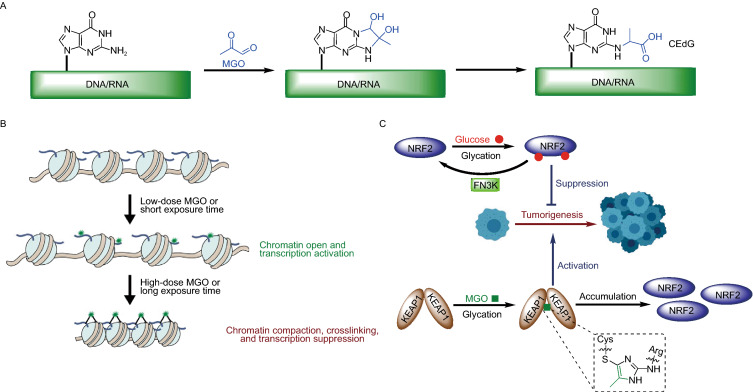
A. Guanine residues in DNA and RNA can undergo methylglyoxal glycation, thereby inducing DNA and RNA damage. This DNA damage has few corresponding repair pathways.

B. Histones are primary glycation substrates because of their long half-lives and abundant lysine and arginine residues. Histone glycation was found to induce epigenetic dysregulation through three distinct mechanisms:

  1. Competition with essential enzymatic PTMs for sites (e.g., glycation adducts replace H3K4me3 and H3R8me2);
  2. Changing the charge states of histone tails and subsequently affecting the compaction state of the fiber; and
  3. Altering three-dimensional chromatin architecture by inducing both histone-histone and histone-DNA crosslinking.

Epigenetic impacts of histone glycation were shown to be dependent on sugar concentration and exposure time. Histone and DNA glycation may lead to long term epigenetic impacts on immune responses.

C. Glycation of multiple lysine residues of NRF2 inhibits its oncogenic function. Sugar molecules can influence epigenetic events through glycation of transcription factors and/or their associated regulatory proteins.”

The Transcription factor glycation section referenced a 2011 paper Regulation of the Keap1/Nrf2 system by chemopreventive sulforaphane: implications of posttranslational modifications:

“Nrf2 mRNA level is unaffected by treatment with sulforaphane, suggesting that cellular expression of Nrf2 protein is posttranscriptionally regulated. Posttranslational modifications of Keap1 and Nrf2 proteins seem to play an important role in the regulation of ARE‐dependent gene expression.”


“Neurodegenerative diseases are incurable?” Take responsibility for your own one precious life.

Other curated AGEs papers include:

Broccoli sprout synergies

I was asked for examples of broccoli sprout synergies with supplements mentioned in Week 19 of Changing to a youthful phenotype with broccoli sprouts. I take supplements and broccoli sprouts together an hour or two before meals to keep meal contents from lowering sulforaphane bioavailability. Sulforaphane peaks in plasma between 1 and 2 hours after ingestion.

sulforaphane peak plasma

I started splitting broccoli sprout doses after reading the first study of A pair of broccoli sprout studies. The second study was Untargeted metabolomic screen reveals changes in human plasma metabolite profiles following consumption of fresh broccoli sprouts.

Those subjects ate only “a single dose of fresh broccoli sprouts (providing 200 μmol SFN equivalents) at 8 AM on study day 1.” A 200 μmol amount of sulforaphane is a 35 mg weight.

For comparison, my daily consumption is a worst-case 52 mg sulforaphane from microwaving 131 g of 3-day-old broccoli sprouts per Estimating daily consumption of broccoli sprout compounds. Every day for 22 weeks now. 🙂

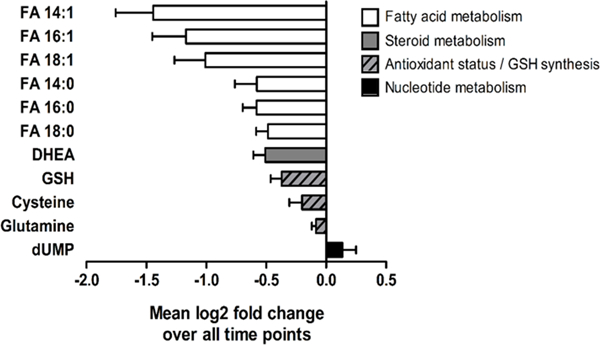
The second study’s measurements through 48 hours produced this informative graphic and text:

“Of the features we identified using metabolite databases and classified as endogenous, eleven were significantly altered.

  • Glutathione (GSH) – a major intracellular antioxidant that conjugates with SFN during metabolism – was significantly decreased in plasma at 6, 12 and 24 hours following sprout intake.
  • GSH precursors glutamine (3 and 24 hours) and cysteine (12 and 24 hours) also decreased.
  • We observed significant decreases in dehydroepiandrosterone (DHEA) at 3, 6 and 12 hours.
  • Decreases in fatty acids reported here suggest that even a single dose of broccoli sprouts may alter plasma lipids in healthy adult populations.

While this study focuses largely on potential effects of SFN, broccoli sprouts contain many other bioactive components (e.g., indoles) that could be responsible for our observations as well as additional health benefits.”

Supplements I take twice daily with broccoli sprouts:

  • 1 gram L-glutamine for replenishment and other purposes;
  • 25 mg DHEA to replenish and other effects;
  • 15 mg then 50 mg zinc, which has a role in GSH metabolism;
  • 500 mg glucosamine (anti-inflammatory, crosstalk with Nrf2 signaling pathway);
  • 500 mg acetyl-L-carnitine (induces Nrf2-dependent mitochondrial biogenesis); and
  • 1400 IU then 2000 IU Vitamin D. A major portion of its effects is Nrf2 activation, like sulforaphane. A virtuous circle develops when taken with broccoli sprouts in that the Vitamin D receptor is a Nrf2 target gene inducible by sulforaphane, which then upregulates Nrf2 expression levels.

One of the things eating Boring Chicken Vegetable Soup twice a day does is replenish cysteine. I eat that and steel-cut oats (another cysteine source) separately from broccoli sprouts.

I take 1 gram flax oil with breakfast and dinner instead of with broccoli sprouts. Haven’t found relevant research on whether broccoli sprout compounds decrease omega-3 polyunsaturated alpha linolenic acid C18:3 as they do these six endogenous fatty acids.


Both studies investigated effects of fresh broccoli sprouts. Timing of their measured decreases and increases are different for me because I microwave broccoli sprouts up to but not exceeding 60°C (140°F).

A section of Microwave broccoli seeds to create sulforaphane highlighted metabolic differences among fresh broccoli sprouts, microwaved broccoli sprouts, and broccoli sprout supplements.

“A metabolic profile resulting from my current practices is probably between the Sprout and BSE (broccoli sprout extract) divided-dose statistics:

  1. Sulforaphane intake is greater than eating raw broccoli sprouts because microwaving 3-day-old broccoli sprouts creates sulforaphane in them before eating.
  2. Sulforaphane uptake from microwaved broccoli sprouts is quicker than eating raw broccoli sprouts. It may not be as immediate as taking sulforaphane supplements, which are usually powders.
  3. Sulforaphane dose from microwaved broccoli sprouts is less dependent on an individual’s metabolism than eating raw broccoli sprouts.
  4. Sulforaphane release from microwaved broccoli sprouts continues on to the gut as does eating raw broccoli sprouts. Sulforaphane release from supplements may not per Does sulforaphane reach the colon?.”

Metabolism of broccoli sprout glucoraphanin and other glucosinolates that aren’t preferentially hydrolyzed by microwaving and thorough chewing is assisted in the gut twice a day by:

  • 6 billion IU acidophilus; and
  • 750 mg fructo-oligosaccharides.

See Treating psychopathological symptoms will somehow resolve causes? for updates.


Take responsibility for your one precious life – Trained innate immunity

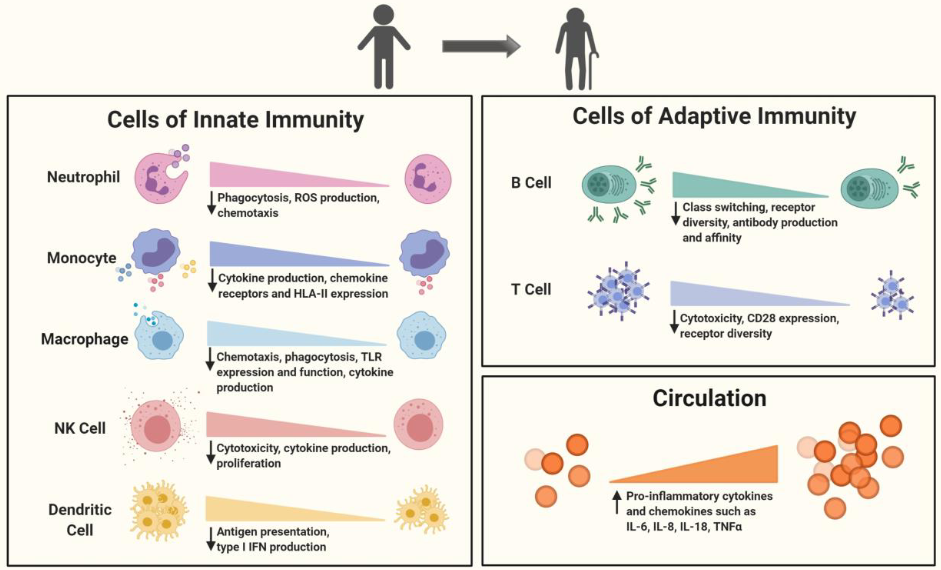
This 2020 review subject was the normal progression of our immune systems:

“Age-related alterations in the immune system result in high susceptibility to infections, increased risk of hospitalization and mortality. Defects in adaptive immunity underlie the markedly low vaccine efficiency in the elderly. Despite reduced cellular functions, a systemic increase in inflammatory markers, so-called inflammaging, is observed in aged individuals.

Trained immunity is a newly emerging concept that showed that innate immune cells possess non-specific immunological memory established through epigenetic and metabolic reprogramming upon encountering certain pathogenic stimuli.

Novel approaches targeting innate immunity to improve host responses are crucial to evade the consequences of the aged immune system. It is an emerging concept that innate immune cells can manifest memory-like properties that are not antigen-specific and exhibit enhanced responsiveness upon later challenges with heterologous stimuli. Whether trained immune responses change as people age is yet to be explored.”

https://academic.oup.com/intimm/advance-article/doi/10.1093/intimm/dxaa052/5885077 “Overcoming immune dysfunction in the elderly: trained immunity as a novel approach”


Previous papers by this review’s corresponding coauthor were curated in:

There’s no reason to rely entirely on the review’s elaborate vaccination schemes to develop trained immunity. Take responsibility for your one precious life and Train your immune system every day!

Eat broccoli sprouts for your hair!

A trio of papers, with the first a 2017 review exploring broccoli sprout compounds’ effects on head hair:

“Skin appendages, notably hair follicles (HFs), can be exposed to high levels of reactive oxygen species (ROS), which are generated through metabolic reactions occurring mostly in the mitochondria, peroxisomes, and endoplasmic reticulum, as well as in the plasma membrane. Despite their involvement in redox stress and cellular damage, ROS also have key roles in physiological signalling processes, including but not limited to, control of stem cell quiescence / differentiation, regulation of innate and adaptive immune responses and importantly, normal HF development.

HFs are composed of a series of concentric keratinocyte layers with a central hair shaft, all of which are encapsulated by a mesenchymal connective tissue sheath. Within this structure is an area known as the ‘bulge’, housing a population of epithelial and melanocyte stem cells. The hair bulb, the lowermost portion of the HF, contains transient amplifying cells that produce rapidly proliferating matrix keratinocytes that give rise to various cell types of the inner root sheath and hair shaft itself.

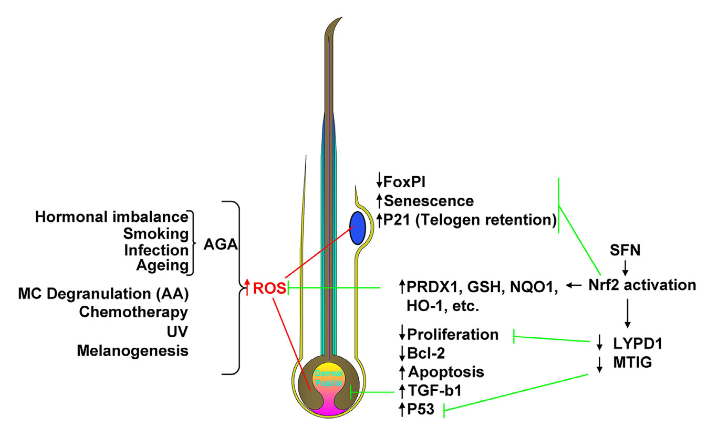
Putative impact of NRF2 activation on protection against hair disorders:

  1. Accumulation of excess ROS within crucial HF compartments (i.e. bulb and bulge) can be induced by endogenous and exogenous stressors associated with androgenetic alopecia (AGA), alopecia areata (excessive mast cell degranulation), chemotherapy, UV exposure, and even physiological processes such as melanogenesis.
  2. In the HFSCs [hair follicle stem cells] of the bulge, this can lead to reduced FOXP1 signaling, increased senescence and P21-mediated telogen retention, contributing to hair ageing.
  3. In the hair bulb, negative consequences of excessive ROS can include reduced matrix keratinocyte proliferation and Bcl-2 expression, coupled to increased p53 activity and apoptosis. This redox imbalance may also stimulate dermal papilla-derived TGF-b1 release associated with AGA.
  4. NRF2 activation via SFN [sulforaphane] can induce expression of numerous downstream targets, hence suggesting the potential to counteract excessive ROS and associated pathologies, for example via enhanced clearance of reactive species, detoxification, NADPH generation, and GSH maintenance.
  5. In addition, NRF2 may down-regulate genes that would negatively impact on proliferation and stimulate apoptosis.
  6. Ultimately, activation of NRF2 has the potential to protect against HF miniaturization, chemotherapy-induced apoptosis, HFSC aging, and hair greying, through maintenance of normal redox homeostasis.

Whereas eumelanin (black) is involved in natural UV protection by reducing generation of free radicals, pheomelanin (red) can trigger generation of ROS. It would certainly be interesting to determine whether NRF2 activity is therefore higher in individuals with red as opposed to black hair, in order to mitigate any negative impact from higher ROS generation.

Modulation of NRF2 activity is an attractive approach for further study in prevention of hair greying and HFSC ageing. The remarkable prospect for NRF2 activators in modulating other oxidative stress-linked disease states, strongly advocates for development of NRF2 targeting as a novel strategy in modulating redox-associated disorders of the HF.”

https://onlinelibrary.wiley.com/doi/abs/10.1002/bies.201700029 “Oxidative stress management in the hair follicle: Could targeting NRF2 counter age‐related hair disorders and beyond?” (not freely available)


This review was cited in a 2020 Exploring the possibility of predicting human head hair greying from DNA using whole-exome and targeted NGS data study:

“This study aimed to assess the potential of genetic data to predict hair greying in a population of nearly 1000 individuals from Poland. Most prediction information was brought by age alone. Genetic variants explained < 10% of hair greying variation, and the impact of particular SNPs on prediction accuracy was found to be small.

Study population included 673 males (67.4%) and 325 (32.6%) females. Mean age of participants was 30.5 ± 8.8.

Hair greying was recorded in 14.3% of individuals aged 18–30, and prevalence of grey hair was noted to be significantly higher in young males when comparing to young females (17.8 and 9.2%, respectively). Incidence of grey hair increased to 29.5% in the group of people aged 18–40 years, and was 84.2% when people aged ≥40 years were considered.

Because pleiotropy is so common, it would be impossible to predict natural phenotypes avoiding genes involved in determination of pathological phenotypes. The penetrance of individual SNP variants is usually low, and they altogether can only explain a small fraction of predisposition to disease.

Prediction of hair greying status solely based on genetic information is currently impossible.”


A 2020 review had a pertinent evaluation scheme:

“Geroprotectors are pharmacological agents that decrease the rate of aging and extend lifespan. We proposed a set of primary and secondary selection criteria for potential geroprotectors. Primary criteria:

  1. Life extension in experiments with wild type animal models. The geroprotector should prolong life of the model beyond the intact maximum lifespan, protecting it from one or more mechanisms of aging.
  2. Improvement of molecular, cellular, and physiological biomarkers to a younger state, or slow down progression of age-related changes in humans.
  3. Most potential geroprotectors are preventive only when applied at relatively high concentrations. The lifespan-extending dose should be several orders of magnitude less than the toxic dose.
  4. Minimal side effects at the therapeutic dosage at chronic application.
  5. The potential benefit of taking a geroprotector may come after a long period. Potential geroprotectors should initially improve some parameters of health-related quality of life: physical, mental, emotional, or social functioning of the person.”

https://www.mdpi.com/2076-3921/9/6/529/htm “Terpenoids as Potential Geroprotectors”


IMG_20200822_064852

Aging as a normal disease

This 2018 review explained:

“Aging is the sum of all age-related diseases. Aging and its diseases are inseparable, as these diseases are manifestations of aging.

An aged appearance (e.g., grey hair, wrinkles, cushingoid body types and loss of muscles) are manifestations of pre-diseases. For example, an aged appearance may reflect hypercortisolism, sarcopenia, osteoporosis, skin pre-diseases.

Instead of healthy aging, we could use the terms pre-disease aging or decelerated aging. Treatments are generally more effective at pre-disease stages, associated with hyper-function, than at disease stages, associated with functional decline.

The decision to treat or not to treat is often determined by whether it is possible to treat.

A treatment that slows aging increases both healthspan (subclinical period) and lifespan, whereas a treatment that increases lifespan (e.g., coronary bypass, defibrillation) is not necessarily increase healthspan. The goal of both anti-aging therapies and preventive medicine is to extend healthspan (by preventing diseases), thus extending total lifespan.

The fact that aging is an obligatory part of the life of all organisms is not important. Aging can be treated as a pre-disease to prevent its progression to diseases. Aging does not need to be defined as a disease to be treated.”

https://www.ncbi.nlm.nih.gov/pmc/articles/PMC6286826/ “Disease or not, aging is easily treatable”


A cherry-picked DNA methylation study

This 2020 US/Sweden/Denmark human study measured twins during their old age:

“We evaluate individual differences in DNA methylation at individual CpG sites across the methylome across 10 years in two Scandinavian samples of same‐sex aging twins. We test two competing hypotheses about the longitudinal stability and change in DNA methylation:

  1. The contribution of genetic influences changes with age, reflecting diminishing influence across time; and
  2. Nonshared factors accumulate in importance, signaling an increasing diversity of response to environmental exposures.

Understanding epigenetic changes over time in the elderly may identify pathways of decline or plasticity (e.g., maintenance or even boosts in functioning) during the aging process and help with elucidating the biology of aging and survival.

Across time, stability in methylation is primarily due to genetic contributions, while novel experiences and exposures contribute to methylation differences. Elevated genetic contributions at age‐related methylation sites suggest that adaptions to aging and senescence may be differentially impacted by genetic background.”

https://onlinelibrary.wiley.com/doi/full/10.1111/acel.13197 “A decade of epigenetic change in aging twins: Genetic and environmental contributions to longitudinal DNA methylation”


Swedish subject measurements were taken at ages 62 and 72. Danish subject measurements were taken at ages 76 and 86.

One epigenetic clock that used 2019 technology was favored over three others, including Horvath’s 2013 original clock. For some reason this study didn’t use his 2018 skin-and-blood clock that had vastly improved technology such as an 18-fold increase in genomic coverage with Illumina 450k/850k bead arrays.

These researchers’ intentions became evident with:

“The 353 Horvath clock sites were selected as best predictors of chronological age using multiple tissues. The 71 Hannum clock sites best predicted age (adjusted for sex, BMI) based on methylation observed in whole blood while the 514 sites from the Zhang prediction model relied on methylation observed in blood and saliva samples (Zhang et al., 2019).

The current findings of moderately higher heritabilities in the Zhang and Hannum sites versus the other clock sites may be in part due to our use of blood tissue.”

The 18-fold increase improved accuracy in blood for the 2018 Horvath clock. Could these researchers ignore it and claim they did their due diligence in 2019 and 2020?


A larger issue was this study’s duality paradigm of either heritability or environment being solely responsible for observed changes. Consider what A blood plasma aging clock found at ages 60 and 78 peaks:

The above changes were due to life stage. Josh Mitteldorf did his usual excellent job of providing contexts for that study with New Aging Clock based on Proteins in the Blood, including:

“The implication is that a more accurate clock can be constructed if it incorporates different information at different life stages. None of the Horvath clocks have been derived based on different CpG sites at different ages, and this suggests an opportunity for a potential improvement in accuracy.”

Weren’t changes in subjects’ life stages relevant to their epigenetic changes? Why wouldn’t their life stages have been among the causes of observed effects?

Topical sulforaphane protects skin

This 2020 Rutgers rodent study explored topical application of sulforaphane to prevent UVB-induced skin carcinogenesis:

“We investigated the transcriptomic and DNA methylomic changes during tumor initiation, promotion, and progression and its impact and reversal by sulforaphane (SFN). The production of ROS and inflammation are closely linked to UVB-induced carcinogenesis. SFN protects skin cells from UVB-induced damage mainly through promoting anti-inflammatory, antioxidative and anticancer pathways.

We observed the changes after 2, 15 and 25 weeks of UVB exposure, which would represent the three different stages of skin cancer development. After 2 weeks of UVB exposure, we did not observe any obvious tumors in the UVB group. But after 15 weeks of UVB exposure, some obvious tumors were observed in the skin.

After 15 weeks of UVB treatment in epidermal tissue, the difference between the UVB group and the control group was significantly more than that between the SFN group versus the UVB group. SFN appears to have better cancer-protective effects in earlier time points (weeks 14 and 20) than later time point (week 24). At weeks 20, SFN had significantly fewer tumors with decreased total tumor volume and tumor number.

SFN plays a highly regulatory role in various signaling pathways during UVB irradiation. SFN impacts UVB-induced alterations of DNA methylation profiles, and importantly, SFN treatment attenuates some of these DNA methylation changes. We found a subset of genes associated with SFN treatment, and the relevant changes in gene expression may be driven by promoter CpG methylation status.”

https://cancerpreventionresearch.aacrjournals.org/content/13/6/551 “Epigenome, Transcriptome, and Protection by Sulforaphane at Different Stages of UVB-Induced Skin Carcinogenesis” (not freely available)


We’re getting closer to using epigenetic clocks in sulforaphane studies. This study ignored the 2018 A multi-tissue full lifespan epigenetic clock for mice in favor of their homegrown DNA methylation measurements.

A search of ClinicalTrials.gov didn’t turn up directly relevant human studies.

Transgenerational epigenetic inheritance of epimutations

My 600th curation is a 2020 rodent study from Dr. Michael Skinner’s labs at Washington State University:

“Numerous environmental toxicants have been shown to induce the epigenetic transgenerational inheritance of disease and phenotypic variation. Alterations in the germline epigenome are necessary to transmit transgenerational phenotypes.

In previous studies, the pesticide DDT and the agricultural fungicide vinclozolin were shown to promote the transgenerational inheritance of sperm differential DNA methylation regions, non-coding RNAs and histone retention, which are termed epimutations. The current study was designed to investigate the developmental origins of the transgenerational differential histone retention sites (called DHRs) during gametogenesis of the sperm.

In addition to alterations in sperm DNA methylation and ncRNA expression previously identified, the induction of DHRs in the later stages of spermatogenesis also occurs. This novel component of epigenetic programming during spermatogenesis can be environmentally altered and transmitted to subsequent generations.

While the DHR may be consistent and present between the stages of development, the histone modifications may be altered. Several of the core histone retention sites absent in the DHRs had altered histone methylation. This adds a level of complexity to the potential role of histone retention in that it may be not only the retention, but also the alterations in histone epigenetic modifications.

The DHRs had positional associations with genes and the major functional categories were signaling, metabolism and transcription.

In the event the embryo stem cell population has a modified epigenetics and corresponding transcriptome, then all somatic cells derived from the stem cell population will have an altered cascade of epigenetic and gene expression programming to result in adult differentiated cells with altered epigenetics and transcriptomes. Previous observations have demonstrated in older adult human males alterations in histone retention develop and are associated with infertility.

Similar observations have also been provided for the development of differential DNA methylation regions (DMRs) induced by environmental toxicants such as DDT and vinclozolin. Since DHRs have a similar developmental programming, other epigenetic processes such as ncRNA are also anticipated to be similar.”

https://www.sciencedirect.com/science/article/pii/S0012160620301834 “Developmental origins of transgenerational sperm histone retention following ancestral exposures”


This study, like its dozens of predecessors performed year after year by this research facility, provided evidence for mechanisms of epigenetic transgenerational inheritance. The studied F3 generation members were great-grand-offspring, the first generation to have no direct exposure to DDT and vinclozolin.

As pointed out in A compelling review of epigenetic transgenerational inheritance:

“During the 1950s, the entire North American population was exposed to high levels of the pesticide DDT, when the obesity rate was < 5% of the population. Three generations later, the obesity frequency in North America is now ~45% of the population.”

There are varieties of mischaracterizations and hand-waving denials of epigenetically-inherited diseases. People don’t want to hear about and read proof that something we did or experienced disfavored our children, who unwittingly passed resultant problems on to their children, and which furthered on to their children’s children.

Take responsibility for your one precious life – β glucan

From the main page of https://www.betaglucan.org/, a compilation for researchers:

“Beta Glucan extracted from yeast cell wall, can be a potent immune response potentiator and modulator. A common test to determine a glucan’s immune response potentiation effectiveness is the measure of the degree to which a glucan increases the nitric oxide burst, a pathogen killing agent.

Determinants of immune response activation and effectiveness are beta glucan source, processing, sizing and uniformity of beta glucan particles ingested. Particle size of 1-4 microns is optimum. Ingestion is optimized to prevent reaggregation.”


A sample of research:

“The tested (and suggested) daily dose remains in the range of 100–500 mg for stimulation of the immune system, whereas for a decrease in cholesterol levels a daily dose of 3 g is recommended.

Glucan supplementation prevents or even treats metabolic syndrome and decreases insulin resistance, dyslipidemia, and obesity. Glucan supplementation is a highly promising and inexpensive method of treatment for chronic respiratory problems.

Reactions known to be influenced by glucan are represented in white, reactions where glucan has no confirmed effects are shown in black.”

https://www.mdpi.com/1420-3049/24/7/1251/htm “Beta Glucan: Supplement or Drug? From Laboratory to Clinical Trials”


“Supplementation with glucan and vitamin D resulted in significant increase of vitamin D levels, improvements of HDL levels, and strong decrease of the total level of cholesterol.”

https://www.ncbi.nlm.nih.gov/pmc/articles/PMC5897984/ “Effects of β-glucan and Vitamin D Supplementation on Inflammatory Parameters in Patients with Diabetic Retinopathy”


“β-glucan inhibits tumor growth through induced systemic tumor-antigen specific T cell response, increased activity of T-cells in tumor, and decreased number of tumor-caused immunosuppressive cells. Sulforaphane inhibits CRC [colorectal cancer] carcinogenesis by modulating Nrf2 activity and inhibition of HDAC enzymes.

In a women’s health initiative prospective cohort during their 11.7-year follow up of dietary fiber and omega-3, -6 fatty acids, the results pointed out a reduced incidence of CRC for the association between a low dose of soluble fiber, a high dose of insoluble fiber, and a high dose of EPA and DHA.”

https://www.ncbi.nlm.nih.gov/pmc/articles/PMC6321468/ “Chemoprevention of Colorectal Cancer by Dietary Compounds”


I first curated the above review and graphic in Train your immune system every day! 12 days into a self-quarantine after coming back from Milano, Italy, Monday, February 24, 2020. There’s a substantial probability that my traveling companion and I were exposed to COVID-19.

Yet neither of us had any symptoms then or since. My β-glucan, Vitamin D3, and zinc amounts were the same as described in that post, in Take responsibility for your one precious life – Vitamin D3, and in Take responsibility for your one precious life – Zinc.

Take responsibility for your one precious life – Zinc

This 2020 review highlighted earlier clinical data on zinc:

  • “Zinc is known to modulate antiviral and antibacterial immunity and regulate inflammatory response.
  • Zinc possesses anti-inflammatory activity by inhibiting NF-κB signaling and modulation of regulatory T-cell functions.
  • The most critical role of zinc is demonstrated for the immune system.
  • Zinc regulates proliferation, differentiation, maturation, and functioning of leukocytes and lymphocytes.

Alteration of zinc status significantly affects immune response resulting in increased susceptibility to inflammatory and infectious diseases including acquired immune deficiency syndrome, measles, malaria, tuberculosis, and pneumonia. Zinc status is associated with the prevalence of respiratory tract infections in children and adults.

In view of the high prevalence of zinc deficiency worldwide (up to 17%), its impact on population health is considered as a significant issue. Certain groups of people, including infants, especially preterm ones, and elderly, are considered to be at high risk of zinc deficiency and its adverse effects.

Zinc was shown to have a significant impact on viral infections through modulation of viral particle entry, fusion, replication, viral protein translation and further release for a number of viruses including those involved in respiratory system pathology. Increasing intracellular Zn levels through application of Zn ionophores significantly alters replication of picornavirus, the leading cause of common cold.

The results of systematic analysis confirmed the efficiency of intake of at least 75 mg/day Zn in reduction of pneumonia symptom duration but not severity, with the response being more pronounced in adults than in children.”

https://www.ncbi.nlm.nih.gov/pmc/articles/PMC7255455/ “Zinc and respiratory tract infections: Perspectives for COVID-19”


The review noted a 2014 rodent cell study which found:

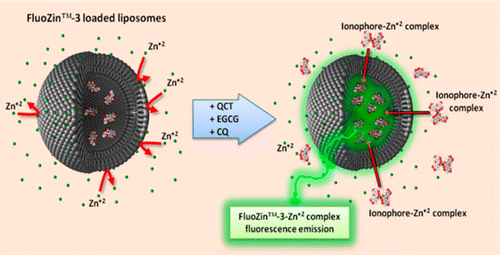
“Labile zinc, a tiny fraction of total intracellular zinc that is loosely bound to proteins and easily interchangeable, modulates the activity of numerous signaling and metabolic pathways. Dietary plant polyphenols such as the flavonoids quercetin and epigallocatechin-gallate act as antioxidants and as signaling molecules. The activities of numerous enzymes that are targeted by polyphenols are dependent on zinc.

We have demonstrated the capacity of quercetin and epigallocatechin-gallate to rapidly increase labile zinc. The polyphenols transport zinc cations across the plasma membrane independently of plasma membrane zinc transporters.

The ionophore activity of dietary polyphenols may underlay the raising of labile zinc levels triggered in cells by polyphenols and thus many of their biological actions.”

https://pubs.acs.org/doi/10.1021/jf5014633 “Zinc Ionophore Activity of Quercetin and Epigallocatechin-gallate: From Hepa 1-6 Cells to a Liposome Model” (not freely available)


I get EGCG from drinking 4-5 cups of green tea every day, and 65 mg zinc from supplements. Microwave broccoli to increase flavonoid levels demonstrated 108.5% to 129.8% increases in quercetin and kaempferol levels from microwaving grocery-store broccoli. Microwaving 3-day-old broccoli sprouts may be expected to increase my worst-case calculation of daily 134 mg total flavonoids.

I’ve taken quercetin intermittently per Preliminary findings from a senolytics clinical trial. I’m changing that to take 100 mg quercetin daily.

Take responsibility for your own one precious life.

Are sulforaphane supplements better than microwaved broccoli sprouts?

Armando asked a good question in Upgrade your brain’s switchboard with broccoli sprouts:

“Is there any way to consume sulphorafane in a supplement form? Rather than have to jump so many hops to consume it from broccoli.”

That blog post referenced a 2017 study, whose sulforaphane amount was:

“100 µmol [17.3 mg] sulforaphane as standardized broccoli sprout extract in the form of 2 gel capsules.”

One answer in A pair of broccoli sprout studies was No:

  • “Plasma and urinary levels of total SFN [sulforaphane] metabolites were ~3–5 times higher in sprout consumers compared to BSE [broccoli sprout extract] consumers.
  • In sprout consumers, plasma concentrations were 2.4-fold higher after consuming the second dose than after the first dose.
  • Calculated SFN bioavailability from broccoli sprouts exceeded 100%.”

That study was from 2015, though. Are better products than broccoli sprout extracts available now?


Image from the US Library of Congress

During Week 5 of Changing an inflammatory phenotype with broccoli sprouts, back in May when I still believed impossible things like we would:

I contacted a distributor of a dried broccoli sprout powder for evidence of their claim:

“Independent assays confirm that EnduraCELL yields more Sulforaphane per gram and per dose than any other broccoli sprout ingredient available! These assays showed that EnduraCell yields around 3.5 times more SULFORAPHANE than the next highest broccoli sprout product.”

I’ve asked three times for the lab assays. They declined each time to provide the data. In correspondence the company founder said:

“Each 700 mg capsules yields around 15mg sulforaphane.”

The company founder has written several reviews, one of which is entitled Sulforaphane and Other Nutrigenomic Nrf2 Activators: Can the Clinician’s Expectation Be Matched by the Reality? In Section 6.5 Sulforaphane it stated:

“By calculation, MYR [myrosinase]-active whole broccoli sprout supplement yielding 1% SFN could deliver 10 mg SFN per gram of powder, corresponding to ~12 grams of fresh broccoli sprouts (dried powder retains ~8% moisture).

The 2017 study’s dosage of “100 µmol [17.3 mg] sulforaphane as standardized broccoli sprout extract” weighed a gram or less, for a 1.73% sulforaphane yield. A broccoli sprout powder may have a 15 mg / 700 mg = 2.14% sulforaphane yield.

Using calculations from Estimating daily consumption of broccoli sprout compounds and Our model clinical trial for Changing to a youthful phenotype with broccoli sprouts, I eat 131 grams of 3-day-old broccoli sprouts daily. That would be 131 g / 12 = 10.9 grams of a broccoli sprout powder.

The equivalent sulforaphane dosage would be 10.9 g x 21.4 mg per gram = 233.3 mg! That’s obviously too high. What isn’t right?

Subsequent investigation of a distributor’s site found this table:

autism sprout powder

The study referenced for equivalence was Sulforaphane treatment of autism spectrum disorder (ASD). Calculations:

  • The 100 µmol sulforaphane amount for 90 kg participants weighed 17.73 mg per https://pubchem.ncbi.nlm.nih.gov/compound/sulforaphane.
  • The equivalent broccoli sprout powder sulforaphane yield is 0.01773 / 3.6 g = 0.4925%. That’s 5 mg of sulforaphane per gram of broccoli sprout powder.
  • 0.4925% / 2.14 % = 0.23. Decrementing the above sulforaphane weight gives 233.3 mg x .23 = 54 mg.

The answer to my question What isn’t right? I relied on private correspondence rather than what a vendor publicly disclosed.


I’m not particularly concerned about analytical uncertainties for myself. Whatever the numbers are, microwaving techniques for fresh broccoli sprouts increase them.

I immerse 3-day-old broccoli sprouts in 100 ml distilled water, then microwave them on 1000W full power for 35 seconds to ≤ 60°C (140°F) per Microwave broccoli to increase sulforaphane levels. Worst-case estimates are 52 mg sulforaphane with microwaving.


My answer to Armando’s question would be No for sulforaphane supplements. I’d consider a whole broccoli sprout powder after lab assays were personally verified.

A compelling review of epigenetic transgenerational inheritance

This 2020 review by coauthors of 2019’s A transgenerational view of the rise in obesity and Epigenetic transgenerational inheritance extends to the great-great-grand offspring summarized:

“The prevalence of obesity and associated diseases has reached pandemic levels.

Ancestral and direct exposures to environmental toxicants and altered nutrition have been shown to increase susceptibility for obesity and metabolic dysregulation. Environmental insults can reprogram the epigenome of the germline (sperm and eggs), which transmits the susceptibility for disease to future generations through epigenetic transgenerational inheritance.

During the 1950s, the entire North American population was exposed to high levels of the pesticide DDT, when the obesity rate was < 5% of the population. Three generations later, the obesity frequency in North America is now ~45% of the population.”

https://www.sciencedirect.com/science/article/abs/pii/S1043276020300515 “Epigenetic Transgenerational Inheritance of Obesity Susceptibility” (not freely available)


Do any of us have accurate and complete medical histories of our parents back to our great-great-grandparents? Did any of our ancestors record their exposures to environmental toxicants?

The research community has been conditioned to not trust research done primarily from one source. Dr. Michael Skinner’s labs at Washington State University are suspect by this preconception.

A researcher there addressed the situation when I asked. Their answer in A self-referencing study of transgenerational epigenetic inheritance ended with:

“We hope to see other labs contributing to this particular field and we will be delighted to cite them. In the meantime, our only option is to reference our previous work.”

It’s especially time for toxicologists to overcome their behavioral conditioning. If they don’t understand how epigenetic transgenerational inheritance impacts their field now, will they ever get a clue?

Our ancestors’ experiences have much to do with our physiologies. The biological evidence is compelling, yet it continues to be ignored and misconstrued.

Day 70 results from Changing to a youthful phenotype with broccoli sprouts

Here are my Day 70 measurements* to follow up Our model clinical trial for Changing to a youthful phenotype with broccoli sprouts, which had these findings:


Keep in mind that I’m not in the population represented by the clinical trial sample:

  1. My chronological age is above their inclusion range;
  2. My BMI is below their inclusion range; and
  3. I take supplements and meet other exclusion criteria.

I also didn’t take Day 0 measurements.

June 2019 BMI: 24.8

June 2020 BMI: 22.4

2020 IL-6: 1.0 pg / ml. See Part 2 of Rejuvenation therapy and sulforaphane for comparisons.

2020 C-reactive protein: < 1 mg / l.

IL-6 2020

2019 and 2020 No biological age measurements. Why aren’t epigenetic clocks standard and affordable?


I’ve made four lifestyle “interventions” since last summer:

  1. In July 2019 I started to reduce my consumption of advanced glycation end products after reading Dr. Vlassara’s AGE-Less Diet: How a Chemical in the Foods We Eat Promotes Disease, Obesity, and Aging and the Steps We Can Take to Stop It.
  2. In September I started non-prescription daily treatments of Vitamin D, zinc, and DHEA per clinical trial Reversal of aging and immunosenescent trends.
  3. Also in September, I started non-prescription intermittent quercetin treatments of Preliminary findings from a senolytics clinical trial.
  4. I started eating broccoli sprouts every day eleven weeks ago.

1. Broccoli sprouts oppose effects of advanced glycation end products (AGEs) provided examples of Items 1 and 4 interactions.

2. Two examples of Item 2 treatment interactions with Item 4 are in Reversal of aging and immunosenescent trends with sulforaphane:

  • “The effects of the combined treatment with BSE [broccoli sprout extract] and zinc were always greater than those of single treatments.” [Zinc and broccoli sprouts – a winning combination]
  • “Vitamin D administration decreased tumor incidence and size, and the co-administration with SFN [sulforaphane] magnified the effects. The addition of SFN decreased the activity of histone deacetylase and increased autophagy.”

3. How broccoli sprout compounds may complement three supplements I take was in a 2020 review Central and Peripheral Metabolic Defects Contribute to the Pathogenesis of Alzheimer’s Disease: Targeting Mitochondria for Diagnosis and Prevention:

“The nutrients benefit mitochondria in four ways, by:

  • Ameliorating oxidative stress, for example, lipoic acid;
  • Activating phase II enzymes that improve antioxidant defenses, for example, sulforaphane;
  • Enhancing mitochondrial remodeling, for example, acetyl-l-carnitine; and
  • Protecting mitochondrial enzymes and/or stimulating mitochondrial enzyme activities, for example, enzyme cofactors, such as B vitamins and coenzyme Q10 .

In addition to using mitochondrial nutrients individually, the combined use of mitochondrial nutrients may provide a better strategy for mitochondrial protection.”

The review provided a boatload of mitochondrial multifactorial analyses for Alzheimer’s. But these analyses didn’t include effective mitochondrial treatments of ultimate aging causes. I didn’t see evidence of why, after fifteen years of treating mitochondrial effects with supplements, treating one more effect could account for my Week 9 vastly different experiences.


I nod to An environmental signaling paradigm of aging explanations. Its Section 10 reviewed IL-6, C-reactive protein, senescence, and NF-κB in terms of feedback loops, beginning with:

“It is clear that the increasing number of senescent cells depends on the post-adult developmental stage rather than chronological age. The coincidence that these processes result in particular forms of impairment in old age does not seem to be random as it is present in all mammals, and may be causative of many aspects of aging.”

A derived hypothesis: After sufficient strength and duration, broccoli sprout compounds changed my signaling environment, with appreciable effects beginning in Week 9.

I offered weak supporting evidence in Upgrade your brain’s switchboard with broccoli sprouts where a study’s insufficient one week duration of an insufficient daily 17.3 mg sulforaphane dosage still managed to change a blood antioxidant that may have changed four thalamus-brain-area metabolites. For duration and weight comparisons, I doubled my daily amount of broccoli seeds from one to two tablespoons just before Week 6 (Day 35), and from that point onward consumed a estimated 52 mg sulforaphane with microwaving 3-day-old broccoli sprouts every day.

Maybe a promised “In a submitted study, we will report that peripheral GSH levels may be correlated with cognitive functions” will provide stronger evidence? I’m not holding my breath for relevant studies because:

  • There wouldn’t be potential payoffs for companies to study any broccoli sprout compound connections with research areas such as aging, migraines, etc. Daily clinically-relevant broccoli sprout dosages can be grown for < $500 a year.
  • Sponsors would have to change paradigms, a very-low-probability event. They’d have to explain why enormous resources dedicated to current frameworks haven’t produced effective long-term treatments.

What long-term benefits could be expected if I continue eating broccoli sprouts every day?

The longest relevant clinical trial I’ve seen – referenced in Part 2 of Reversal of aging and immunosenescent trends with sulforaphane – was twelve weeks. Part 2 also provided epigenetic clock examples of changes measured after 9 months, which accelerated from there to the 12-month end-of-trial point.

Reviewing clinical trials of broccoli sprouts and their compounds pointed out:

“Biomarkers of effect need more time than biomarkers of exposure to be influenced by dietary treatment.”


A contrary argument: Perhaps people don’t require long durations to effectively change their signaling environments?

I apparently didn’t start eating an effective-for-me daily broccoli sprouts dosage until Day 35, when I changed from one to two tablespoons of broccoli seeds a day. If so, Weeks 6 through 8 may account for my substantial responses during Week 9.

  • Could eating broccoli sprouts every day for four weeks dramatically change a person’s signaling environment?
  • Do you have four weeks and $38 to find out? Two tablespoons of broccoli seeds = 21.4 g x 30 days = .642 kg or 1.42 lbs.

This is what twice-a-day one-tablespoon starting amounts of broccoli seeds look like through three days:


Maintaining the sprouting process hasn’t been a big effort compared with the benefits.

In the absence of determinative evidence, I’ll continue eating broccoli sprouts every day. Several areas of my annual physical have room for improvements. Extending my four lifestyle “interventions” a few more months may also provide hints toward inadequately researched connections.

* Results may not be extrapolatable to other people, to any specific condition, etc.

Our model clinical trial for Changing to a youthful phenotype with broccoli sprouts

The further I get into a daily regimen of eating broccoli sprouts for ten weeks, the more I appreciate “Effects of long-term consumption of broccoli sprouts on inflammatory markers in overweight subjects.”

“This study represents an advance in intervention studies as the broccoli sprouts were included in a daily dietary pattern in quantities that reflect a real consumption. The hypothesis of our research is that broccoli sprouts are able to reduce the inflammatory status in overweight subjects due to their content in phytochemicals, mainly glucosinolates.

Total concentration of aliphatic glucosinolates was 80.50 mg/30 gf.w. This concentration was two-fold higher than indolic glucosinolates. Volunteers consumed an average of 51 mg (117 μmol) and 20 mg (42 μmol) of glucoraphanin and neoglucobrassicin, respectively, on a daily basis, during the 70 days of the dietary intervention. Considering an amount of GRA [glucoraphanin] of 117 μmol by serving, a 4% on average was metabolized through mercapturic acid pathway.

No significant changes were observed in weight and BMI. By contrast, body fat mass slightly decreased significantly after 70 days of broccoli [sprout] consumption and returned to basal levels at day 90, a state that was maintained until day 160.

The decrease in IL-6 levels was significantly related to the increase in 24 h urine SFN [sulforaphane] levels. In case of C-reactive protein, the decrease was significantly related to the increases in 24 h urine SFN-NAC [SFN-N-acetylcysteine] and SFN-CYS [SFN-cysteine].

The possible synergistic interaction of both SFN and 3,30-DIM and the isothiocyanates erucin and sulforaphane are interconvertible, so that the anti-inflammatory effects observed with broccoli sprouts intake are likely due to the combined effects of all the hydrolysis products of glucosinolates.

https://www.sciencedirect.com/science/article/abs/pii/S0261561418301183 (Not freely available, better format) and https://researchonline.lshtm.ac.uk/id/eprint/4647168/ (freely available)


Modifications I’ve made to the clinical trial’s protocols include:

  1. I start new broccoli sprout batches twice a day with one tablespoon of seeds per A pair of broccoli sprout studies.
  2. I eat 131 grams daily as calculated in Estimating daily consumption of broccoli sprout compounds.
  3. Per 3-day-old broccoli sprouts have the optimal yields, I consume broccoli sprouts when they’re 3 days old. The clinical trial subjects ate broccoli sprouts that were at least a week old.
  4. I immerse 3-day-old broccoli sprouts in 100 ml distilled water, then microwave them on 1000W full power for 35 seconds to ≤ 60°C (140°F) per Microwave broccoli to increase sulforaphane levels.
  5. Per Enhancing sulforaphane content, after microwaving I transfer broccoli sprouts to a strainer, and allow further myrosinase hydrolization of glucoraphanin and other glucosinolates into sulforaphane and other healthy compounds.

I use the above studies as guides to create broccoli sprout hydrolysis compounds just before eating them. I don’t depend on my metabolism to create sulforaphane, indole-3-carbinol, erucin, and other hydrolysis compounds as did the clinical trial. But then again, those subjects ate super sprouts:

“We used the elicitor methyl jasmonate (MeJA) by priming the seeds as well as by spraying daily over the cotyledons from day 4-7 of germination. We observed that MeJA at concentrations of 250 μmol act as stressor in the plant and enhances the biosynthesis of the phytochemicals glucosinolates.

Compared to control plants without MeJA treatment, the content of compounds as the aliphatic glucosinolate glucoraphanin was enhanced up to a 70% and similar increases were observed with glucoiberin or glucobrassicin. In this way, we improved the content of these health-promoting compounds.”


I’ve referenced our model clinical trial in 15 previous blog posts. They are, in date descending order:

  1. A pair of broccoli sprout studies
  2. Reversal of aging and immunosenescent trends with sulforaphane
  3. A hair color anecdote
  4. Week 7 of Changing to a youthful phenotype with broccoli sprouts
  5. Part 2 of Rejuvenation therapy and sulforaphane
  6. A rejuvenation therapy and sulforaphane
  7. Week 6 of Changing an inflammatory phenotype with broccoli sprouts
  8. Week 3 of Changing an inflammatory phenotype with broccoli sprouts
  9. Broccoli sprouts oppose effects of advanced glycation end products (AGEs)
  10. Reviewing clinical trials of broccoli sprouts and their compounds
  11. Understanding a clinical trial’s broccoli sprout amount
  12. Week 2 of Changing an inflammatory phenotype with broccoli sprouts
  13. Changing an inflammatory phenotype with broccoli sprouts
  14. Growing a broccoli sprouts Victory Garden
  15. How much sulforaphane is suitable for healthy people?

Upgrade your brain’s switchboard with broccoli sprouts

Further investigating A claim of improved cognitive function, Part 3 of Rejuvenation therapy and sulforaphane offered:

“Improving brain function does not depend on neurogenesis as much as it does on synapse formation and factors such as NMDA receptors which decline in density with age.”

A PubMed “sulforaphane NMDA receptors” search turned up a 2019 cell study The glutathione cycle shapes synaptic glutamate activity:

Sulforaphane is a potent inducer of the Nrf2 transcription factor, has blood–brain barrier penetration, and might expand the size of the glutathione reservoir by our observation that it increases expression of GCL [glutamate cysteine ligase], the rate-limiting step in glutathione biogenesis. Our recent study in human subjects revealed that sulforaphane elevates peripheral glutathione levels and those of other brain metabolites.”

The referenced study was a 2017 Sulforaphane Augments Glutathione and Influences Brain Metabolites in Human Subjects: A Clinical Pilot Study:

“We found that the naturally occurring isothiocyanate sulforaphane increased blood GSH levels in healthy human subjects following 7 days of daily oral administration. In parallel, we explored the potential influence of sulforaphane on brain GSH levels in the anterior cingulate cortex, hippocampus, and thalamus via 7-T magnetic resonance spectroscopy.

A significant positive correlation between blood and thalamic GSH post- and pre-sulforaphane treatment ratios was observed, in addition to a consistent increase in brain GSH levels in response to treatment. The sulforaphane response in brain GSH levels is not influenced by age, sex, or race.

The participants were given 100 µmol sulforaphane as standardized broccoli sprout extract in the form of 2 gel capsules, and instructed to ingest the extract each morning for 1 week.

Following sulforaphane administration, the increase in blood GSH was positively correlated with GABA, Gln [glutamine], Glu [glutamate], and GSH in the THAL [thalamus]. Although these correlations were not significant following multiple comparison, they remain suggestive. Power analysis calculations suggest that a sample size of n = 50 would yield a significant result, and this will be the focus of a future study.

As has been reported for cardiovascular and cerebrovascular diseases, longer treatment duration and/or higher dosages may be warranted. In a submitted study, we will report that peripheral GSH levels may be correlated with cognitive functions.”


One week of consuming sulforaphane wasn’t long enough to achieve much. Not enough subjects and “higher dosages may be warranted” were also thrown in to explain the lack of significant results.

Sulforaphane: Its “Coming of Age” as a Clinically Relevant Nutraceutical in the Prevention and Treatment of Chronic Disease estimated the “100 µmol sulforaphane” dosage to be 17.3 mg. Worst-case estimates made in Estimating daily consumption of broccoli sprout compounds are that since doubling the starting amount of broccoli seeds from one to two tablespoons in Week 6, I’ve consumed 52 mg sulforaphane with microwaving 3-day-old broccoli sprouts every day.

Something happened where the promised “In a submitted study, we will report that peripheral GSH levels may be correlated with cognitive functions” either wasn’t performed or wasn’t published. The follow-on 2019 study became a cell study instead of a 50+ person study.


The study’s thalamus findings provided plausible explanations for why eating a clinically relevant amount of broccoli sprouts every day since at least Week 6, Week 9 was so much different from the others. Sulforaphane changed a blood antioxidant which may have changed four thalamus metabolites.

The thalamus part of our brain is analogous to a switchboard. Signals pass through it to and from other brain areas.

Signals can be routed better when we clean up and upgrade wiring, and lower circuit resistance. Connections within our brains become less inhibited, and external connections concordantly become more apparent.