A compelling review of epigenetic transgenerational inheritance

This 2020 review by coauthors of 2019’s A transgenerational view of the rise in obesity and Epigenetic transgenerational inheritance extends to the great-great-grand offspring summarized:

“The prevalence of obesity and associated diseases has reached pandemic levels.

Ancestral and direct exposures to environmental toxicants and altered nutrition have been shown to increase susceptibility for obesity and metabolic dysregulation. Environmental insults can reprogram the epigenome of the germline (sperm and eggs), which transmits the susceptibility for disease to future generations through epigenetic transgenerational inheritance.

During the 1950s, the entire North American population was exposed to high levels of the pesticide DDT, when the obesity rate was < 5% of the population. Three generations later, the obesity frequency in North America is now ~45% of the population.”

https://www.sciencedirect.com/science/article/abs/pii/S1043276020300515 “Epigenetic Transgenerational Inheritance of Obesity Susceptibility” (not freely available)


Do any of us have accurate and complete medical histories of our parents back to our great-great-grandparents? Did any of our ancestors record their exposures to environmental toxicants?

The research community has been conditioned to not trust research done primarily from one source. Dr. Michael Skinner’s labs at Washington State University are suspect by this preconception.

A researcher there addressed the situation when I asked. Their answer in A self-referencing study of transgenerational epigenetic inheritance ended with:

“We hope to see other labs contributing to this particular field and we will be delighted to cite them. In the meantime, our only option is to reference our previous work.”

It’s especially time for toxicologists to overcome their behavioral conditioning. If they don’t understand how epigenetic transgenerational inheritance impacts their field now, will they ever get a clue?

Our ancestors’ experiences have much to do with our physiologies. The biological evidence is compelling, yet it continues to be ignored and misconstrued.

Day 70 results from Changing to a youthful phenotype with broccoli sprouts

Here are my Day 70 measurements* to follow up Our model clinical trial for Changing to a youthful phenotype with broccoli sprouts, which had these findings:


Keep in mind that I’m not in the population represented by the clinical trial sample:

  1. My chronological age is above their inclusion range;
  2. My BMI is below their inclusion range; and
  3. I take supplements and meet other exclusion criteria.

I also didn’t take Day 0 measurements.

June 2019 BMI: 24.8

June 2020 BMI: 22.4

2020 IL-6: 1.0 pg / ml. See Part 2 of Rejuvenation therapy and sulforaphane for comparisons.

2020 C-reactive protein: < 1 mg / l.

IL-6 2020

2019 and 2020 No biological age measurements. Why aren’t epigenetic clocks standard and affordable?


I’ve made four lifestyle “interventions” since last summer:

  1. In July 2019 I started to reduce my consumption of advanced glycation end products after reading Dr. Vlassara’s AGE-Less Diet: How a Chemical in the Foods We Eat Promotes Disease, Obesity, and Aging and the Steps We Can Take to Stop It.
  2. In September I started non-prescription daily treatments of Vitamin D, zinc, and DHEA per clinical trial Reversal of aging and immunosenescent trends.
  3. Also in September, I started non-prescription intermittent quercetin treatments of Preliminary findings from a senolytics clinical trial.
  4. I started eating broccoli sprouts every day eleven weeks ago.

1. Broccoli sprouts oppose effects of advanced glycation end products (AGEs) provided examples of Items 1 and 4 interactions.

2. Two examples of Item 2 treatment interactions with Item 4 are in Reversal of aging and immunosenescent trends with sulforaphane:

  • “The effects of the combined treatment with BSE [broccoli sprout extract] and zinc were always greater than those of single treatments.” [Zinc and broccoli sprouts – a winning combination]
  • “Vitamin D administration decreased tumor incidence and size, and the co-administration with SFN [sulforaphane] magnified the effects. The addition of SFN decreased the activity of histone deacetylase and increased autophagy.”

3. How broccoli sprout compounds may complement three supplements I take was in a 2020 review Central and Peripheral Metabolic Defects Contribute to the Pathogenesis of Alzheimer’s Disease: Targeting Mitochondria for Diagnosis and Prevention:

“The nutrients benefit mitochondria in four ways, by:

  • Ameliorating oxidative stress, for example, lipoic acid;
  • Activating phase II enzymes that improve antioxidant defenses, for example, sulforaphane;
  • Enhancing mitochondrial remodeling, for example, acetyl-l-carnitine; and
  • Protecting mitochondrial enzymes and/or stimulating mitochondrial enzyme activities, for example, enzyme cofactors, such as B vitamins and coenzyme Q10 .

In addition to using mitochondrial nutrients individually, the combined use of mitochondrial nutrients may provide a better strategy for mitochondrial protection.”

The review provided a boatload of mitochondrial multifactorial analyses for Alzheimer’s. But these analyses didn’t include effective mitochondrial treatments of ultimate aging causes. I didn’t see evidence of why, after fifteen years of treating mitochondrial effects with supplements, treating one more effect could account for my Week 9 vastly different experiences.


I nod to An environmental signaling paradigm of aging explanations. Its Section 10 reviewed IL-6, C-reactive protein, senescence, and NF-κB in terms of feedback loops, beginning with:

“It is clear that the increasing number of senescent cells depends on the post-adult developmental stage rather than chronological age. The coincidence that these processes result in particular forms of impairment in old age does not seem to be random as it is present in all mammals, and may be causative of many aspects of aging.”

A derived hypothesis: After sufficient strength and duration, broccoli sprout compounds changed my signaling environment, with appreciable effects beginning in Week 9.

I offered weak supporting evidence in Upgrade your brain’s switchboard with broccoli sprouts where a study’s insufficient one week duration of an insufficient daily 17.3 mg sulforaphane dosage still managed to change a blood antioxidant that may have changed four thalamus-brain-area metabolites. For duration and weight comparisons, I doubled my daily amount of broccoli seeds from one to two tablespoons just before Week 6 (Day 35), and from that point onward consumed a estimated 52 mg sulforaphane with microwaving 3-day-old broccoli sprouts every day.

Maybe a promised “In a submitted study, we will report that peripheral GSH levels may be correlated with cognitive functions” will provide stronger evidence? I’m not holding my breath for relevant studies because:

  • There wouldn’t be potential payoffs for companies to study any broccoli sprout compound connections with research areas such as aging, migraines, etc. Daily clinically-relevant broccoli sprout dosages can be grown for < $500 a year.
  • Sponsors would have to change paradigms, a very-low-probability event. They’d have to explain why enormous resources dedicated to current frameworks haven’t produced effective long-term treatments.

What long-term benefits could be expected if I continue eating broccoli sprouts every day?

The longest relevant clinical trial I’ve seen – referenced in Part 2 of Reversal of aging and immunosenescent trends with sulforaphane – was twelve weeks. Part 2 also provided epigenetic clock examples of changes measured after 9 months, which accelerated from there to the 12-month end-of-trial point.

Reviewing clinical trials of broccoli sprouts and their compounds pointed out:

“Biomarkers of effect need more time than biomarkers of exposure to be influenced by dietary treatment.”


A contrary argument: Perhaps people don’t require long durations to effectively change their signaling environments?

I apparently didn’t start eating an effective-for-me daily broccoli sprouts dosage until Day 35, when I changed from one to two tablespoons of broccoli seeds a day. If so, Weeks 6 through 8 may account for my substantial responses during Week 9.

  • Could eating broccoli sprouts every day for four weeks dramatically change a person’s signaling environment?
  • Do you have four weeks and $38 to find out? Two tablespoons of broccoli seeds = 21.4 g x 30 days = .642 kg or 1.42 lbs.

This is what twice-a-day one-tablespoon starting amounts of broccoli seeds look like through three days:


Maintaining the sprouting process hasn’t been a big effort compared with the benefits.

In the absence of determinative evidence, I’ll continue eating broccoli sprouts every day. Several areas of my annual physical have room for improvements. Extending my four lifestyle “interventions” a few more months may also provide hints toward inadequately researched connections.

* Results may not be extrapolatable to other people, to any specific condition, etc.

Our model clinical trial for Changing to a youthful phenotype with broccoli sprouts

The further I get into a daily regimen of eating broccoli sprouts for ten weeks, the more I appreciate “Effects of long-term consumption of broccoli sprouts on inflammatory markers in overweight subjects.”

“This study represents an advance in intervention studies as the broccoli sprouts were included in a daily dietary pattern in quantities that reflect a real consumption. The hypothesis of our research is that broccoli sprouts are able to reduce the inflammatory status in overweight subjects due to their content in phytochemicals, mainly glucosinolates.

Total concentration of aliphatic glucosinolates was 80.50 mg/30 gf.w. This concentration was two-fold higher than indolic glucosinolates. Volunteers consumed an average of 51 mg (117 μmol) and 20 mg (42 μmol) of glucoraphanin and neoglucobrassicin, respectively, on a daily basis, during the 70 days of the dietary intervention. Considering an amount of GRA [glucoraphanin] of 117 μmol by serving, a 4% on average was metabolized through mercapturic acid pathway.

No significant changes were observed in weight and BMI. By contrast, body fat mass slightly decreased significantly after 70 days of broccoli [sprout] consumption and returned to basal levels at day 90, a state that was maintained until day 160.

The decrease in IL-6 levels was significantly related to the increase in 24 h urine SFN [sulforaphane] levels. In case of C-reactive protein, the decrease was significantly related to the increases in 24 h urine SFN-NAC [SFN-N-acetylcysteine] and SFN-CYS [SFN-cysteine].

The possible synergistic interaction of both SFN and 3,30-DIM and the isothiocyanates erucin and sulforaphane are interconvertible, so that the anti-inflammatory effects observed with broccoli sprouts intake are likely due to the combined effects of all the hydrolysis products of glucosinolates.

https://www.sciencedirect.com/science/article/abs/pii/S0261561418301183 (Not freely available, better format) and https://researchonline.lshtm.ac.uk/id/eprint/4647168/ (freely available)


Modifications I’ve made to the clinical trial’s protocols include:

  1. I start new broccoli sprout batches twice a day with one tablespoon of seeds per A pair of broccoli sprout studies.
  2. I eat 131 grams daily as calculated in Estimating daily consumption of broccoli sprout compounds.
  3. Per 3-day-old broccoli sprouts have the optimal yields, I consume broccoli sprouts when they’re 3 days old. The clinical trial subjects ate broccoli sprouts that were at least a week old.
  4. I immerse 3-day-old broccoli sprouts in 100 ml distilled water, then microwave them on 1000W full power for 35 seconds to ≤ 60°C (140°F) per Microwave broccoli to increase sulforaphane levels.
  5. Per Enhancing sulforaphane content, after microwaving I transfer broccoli sprouts to a strainer, and allow further myrosinase hydrolization of glucoraphanin and other glucosinolates into sulforaphane and other healthy compounds.

I use the above studies as guides to create broccoli sprout hydrolysis compounds just before eating them. I don’t depend on my metabolism to create sulforaphane, indole-3-carbinol, erucin, and other hydrolysis compounds as did the clinical trial. But then again, those subjects ate super sprouts:

“We used the elicitor methyl jasmonate (MeJA) by priming the seeds as well as by spraying daily over the cotyledons from day 4-7 of germination. We observed that MeJA at concentrations of 250 μmol act as stressor in the plant and enhances the biosynthesis of the phytochemicals glucosinolates.

Compared to control plants without MeJA treatment, the content of compounds as the aliphatic glucosinolate glucoraphanin was enhanced up to a 70% and similar increases were observed with glucoiberin or glucobrassicin. In this way, we improved the content of these health-promoting compounds.”


I’ve referenced our model clinical trial in 15 previous blog posts. They are, in date descending order:

  1. A pair of broccoli sprout studies
  2. Reversal of aging and immunosenescent trends with sulforaphane
  3. A hair color anecdote
  4. Week 7 of Changing to a youthful phenotype with broccoli sprouts
  5. Part 2 of Rejuvenation therapy and sulforaphane
  6. A rejuvenation therapy and sulforaphane
  7. Week 6 of Changing an inflammatory phenotype with broccoli sprouts
  8. Week 3 of Changing an inflammatory phenotype with broccoli sprouts
  9. Broccoli sprouts oppose effects of advanced glycation end products (AGEs)
  10. Reviewing clinical trials of broccoli sprouts and their compounds
  11. Understanding a clinical trial’s broccoli sprout amount
  12. Week 2 of Changing an inflammatory phenotype with broccoli sprouts
  13. Changing an inflammatory phenotype with broccoli sprouts
  14. Growing a broccoli sprouts Victory Garden
  15. How much sulforaphane is suitable for healthy people?

Upgrade your brain’s switchboard with broccoli sprouts

Further investigating A claim of improved cognitive function, Part 3 of Rejuvenation therapy and sulforaphane offered:

“Improving brain function does not depend on neurogenesis as much as it does on synapse formation and factors such as NMDA receptors which decline in density with age.”

A PubMed “sulforaphane NMDA receptors” search turned up a 2019 cell study The glutathione cycle shapes synaptic glutamate activity:

Sulforaphane is a potent inducer of the Nrf2 transcription factor, has blood–brain barrier penetration, and might expand the size of the glutathione reservoir by our observation that it increases expression of GCL [glutamate cysteine ligase], the rate-limiting step in glutathione biogenesis. Our recent study in human subjects revealed that sulforaphane elevates peripheral glutathione levels and those of other brain metabolites.”

The referenced study was a 2017 Sulforaphane Augments Glutathione and Influences Brain Metabolites in Human Subjects: A Clinical Pilot Study:

“We found that the naturally occurring isothiocyanate sulforaphane increased blood GSH levels in healthy human subjects following 7 days of daily oral administration. In parallel, we explored the potential influence of sulforaphane on brain GSH levels in the anterior cingulate cortex, hippocampus, and thalamus via 7-T magnetic resonance spectroscopy.

A significant positive correlation between blood and thalamic GSH post- and pre-sulforaphane treatment ratios was observed, in addition to a consistent increase in brain GSH levels in response to treatment. The sulforaphane response in brain GSH levels is not influenced by age, sex, or race.

The participants were given 100 µmol sulforaphane as standardized broccoli sprout extract in the form of 2 gel capsules, and instructed to ingest the extract each morning for 1 week.

Following sulforaphane administration, the increase in blood GSH was positively correlated with GABA, Gln [glutamine], Glu [glutamate], and GSH in the THAL [thalamus]. Although these correlations were not significant following multiple comparison, they remain suggestive. Power analysis calculations suggest that a sample size of n = 50 would yield a significant result, and this will be the focus of a future study.

As has been reported for cardiovascular and cerebrovascular diseases, longer treatment duration and/or higher dosages may be warranted. In a submitted study, we will report that peripheral GSH levels may be correlated with cognitive functions.”


One week of consuming sulforaphane wasn’t long enough to achieve much. Not enough subjects and “higher dosages may be warranted” were also thrown in to explain the lack of significant results.

Sulforaphane: Its “Coming of Age” as a Clinically Relevant Nutraceutical in the Prevention and Treatment of Chronic Disease estimated the “100 µmol sulforaphane” dosage to be 17.3 mg. Worst-case estimates made in Estimating daily consumption of broccoli sprout compounds are that since doubling the starting amount of broccoli seeds from one to two tablespoons in Week 6, I’ve consumed 52 mg sulforaphane with microwaving 3-day-old broccoli sprouts every day.

Something happened where the promised “In a submitted study, we will report that peripheral GSH levels may be correlated with cognitive functions” either wasn’t performed or wasn’t published. The follow-on 2019 study became a cell study instead of a 50+ person study.


The study’s thalamus findings provided plausible explanations for why eating a clinically relevant amount of broccoli sprouts every day since at least Week 6, Week 9 was so much different from the others. Sulforaphane changed a blood antioxidant which may have changed four thalamus metabolites.

The thalamus part of our brain is analogous to a switchboard. Signals pass through it to and from other brain areas.

Signals can be routed better when we clean up and upgrade wiring, and lower circuit resistance. Connections within our brains become less inhibited, and external connections concordantly become more apparent.

A review of sulforaphane and aging

This 2019 Mexican review stated:

“We describe some of the molecular and physical characteristics of SFN, its mechanisms of action, and the effects that SFN treatment induces in order to discuss its relevance as a ‘miraculous’ drug to prevent aging and neurodegeneration. SFN has been shown to modulate several cellular pathways in order to activate diverse protective responses, which might allow avoiding cancer and neurodegeneration as well as improving cellular lifespan and health span.

NF-κB is in charge of inflammatory response regulation. Under basal conditions, NF-κB is sequestrated into the cytosol by IκB, but when pro-inflammatory ligands bind to its receptors, the IKK protein family phosphorylates IκB to degrade it via proteasome, so NF-κB is able to translocate into the nucleus and transcript several inflammatory mediators. Sulforaphane is capable to inhibit IκB phosphorylation and NF-κB nuclear translocation.

SFN upregulated Nrf2 expression by reducing DNA demethylation levels of the Nrf2 promoter. In another model using the triple-transgenic mouse model of Alzheimer’s disease (3 × Tg-AD), the use of SFN regulates the expression of the Brain-derived neurotrophic factor (BDNF) via HDAC inhibition, thus increasing H3 and H4 acetylation on the BDNF promoter. Enhancing BDNF expression as an effect of SFN treatment increased the neuronal content of several synaptic molecules like MAP 2, synaptophysin, and PSD-95 in primary cortical neurons of 3 × Tg-AD.”

https://www.ncbi.nlm.nih.gov/pmc/articles/PMC6885086/ “Sulforaphane – role in aging and neurodegeneration”


I came across this review while searching PubMed for sulforaphane commonalities with presentation topics in Part 2 of Reversal of aging and immunosenescent trends with sulforaphane. The review outlined some aging aspects and presented relevant sulforaphane studies. Others such as eye and muscle decline weren’t addressed.

Since sulforaphane’s “a ‘miraculous’ drug” in the Abstract, I expected but didn’t see corresponding excitement in the review body. Just phrases like “it is known” and non-specific “more research is needed.”

Other papers published after this review were found by a PubMed “sulforaphane signal aging” search:


Part 2 of Reversal of aging and immunosenescent trends with sulforaphane

Reversal of aging and immunosenescent trends with sulforaphane covered only the first 13 minutes of a super informative presentation by the lead researcher of clinical trial Reversal of aging and immunosenescent trends.  Commonalities with sulforaphane research were found by PubMed searches of sulforaphane and each presentation topic, and used a 1/1/2015 publication date cutoff.

Continuing presentation topics from the 13:40 mark:

Cancer

Lymphocyte/monocyte ratio

CD38 monocytes

  • NQO1-induced activation of AMPK contributes to cancer cell death by oxygen-glucose deprivation

    “NQO1 plays a key role in AMPK-induced cancer cell death in OGD through the CD38/cADPR/RyR/Ca2+/CaMKII signaling pathway. Expression of NQO1 is elevated by hypoxia/reoxygenation or inflammatory stresses through nuclear accumulation of the NQO1 transcription factor, Nrf2 (NFE2-related factor 2). Activation of the cytoprotective Nrf2 antioxidant pathway by sulforaphane protects immature neurons and astrocytes from death caused by exposure to combined hypoxia and glucose deprivation.”

Thymus – no recent sulforaphane studies

Renal function

  • Rapid and Sustainable Detoxication of Airborne Pollutants by Broccoli Sprout Beverage: Results of a Randomized Clinical Trial in China

    “Rapid and sustained, statistically significant increases in levels of excretion of glutathione-derived conjugates of benzene (61%), acrolein (23%), but not crotonaldehyde were found in those receiving broccoli sprout beverage compared with placebo. Excretion of benzene-derived mercapturic acid was higher in participants who were GSTT1-positive compared to the null genotype, irrespective of study arm assignment. Measures of sulforaphane metabolites in urine indicated that bioavailability did not decline over the 12-week daily dosing period. Intervention with broccoli sprouts enhances detoxication of some airborne pollutants, and may provide a frugal means to attenuate their associated long-term health risks.”

Hair rejuvenation

Epigenetic clocks – There are no sulforaphane studies that use epigenetic clocks, although broccoli compounds have epigenetic effects on aging, as reviewed in 2019:

  • Sulforaphane – role in aging and neurodegeneration

    “SFN has been shown to modulate several cellular pathways in order to activate diverse protective responses, which might allow avoiding cancer and neurodegeneration as well as improving cellular lifespan and health span.”


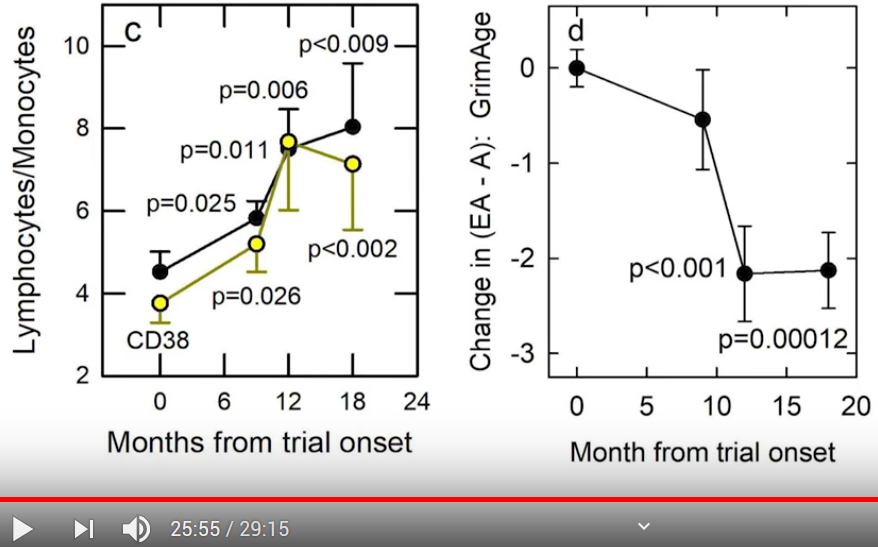
Both biomarker (Lymphocyte / monocyte ratio) and epigenetic clock (GrimAge) measurements done 6 months after the clinical trial ended suggested trial subjects’ aging phenotypes had been reset:

An environmental signaling paradigm of aging explained:

“Apart from being slowed down or sped up, the body clock can also be reset. Organisms, organs, and their cells can be reset to different age-phenotypes depending on their environment.

This is not so much a principle as an application of principle that the environment determines age-phenotype.”

There wouldn’t be a potential payoff for a company to study any broccoli compound / aging connections. People can achieve clinically relevant, daily doses of broccoli sprouts for < $500 a year.

What sponsor would be interested enough to put sulforaphane research on the clock?

Presentation topics are continued in Uses of the lymphocytes to monocytes ratio and A review of sulforaphane and aging. This pilot trial’s follow-on clinical trial was updated in The next phase of reversing aging and immunosenescent trends.

Part 3 of Rejuvenation therapy and sulforaphane

Part 1 focused on the study’s clinical biomarkers. Part 2 highlighted its epigenetic clocks. Now we’ll look at rejuvenation of cognitive function.

Charts for this study’s most relevant human aging applications – measured by the new human-rat relative biological age clock – were in supplementary data due to combining study untreated tissue samples into clock training data. Reanalyses showed:

“Using the final version of the epigenetic clocks, we find that treatment effects become even more significant especially for the hypothalamus.”

Human-rat relative clock percentages of rejuvenation were:

  • “Blood 70.6%
  • Liver 79.4%
  • Heart 61.6%
  • Hypothalamus 20.9%”

The Discussion section addressed hypothalamus rejuvenation:

“Why does plasma fraction treatment not reduce brain epigenetic age by the same magnitude as it does other organs? We can only begin to address this question after having first understood what epigenetic aging entails.

As it stands, our knowledge in this area remains limited, but it is nevertheless clear that:

  1. Epigenetic aging is distinct from the process of cellular senescence and telomere attrition,
  2. Several types of tissue stem cells are epigenetically younger than non-stem cells of the same tissue,
  3. A considerable number of age-related methylation sites, including some clock CpGs, are proximal to genes whose proteins are involved in the process of development,
  4. Epigenetic clocks are associated with developmental timing, and
  5. Relate to an epigenomic maintenance system.

Collectively, these features indicate that epigenetic aging is intimately associated with the process of development and homeostatic maintenance of the body post-maturity.

  • While most organs of the body turnover during the lifetime of the host, albeit at different rates, the brain appears at best to do this at a very much slower rate.
  • While most tissues harbor stem cells that are necessary for replenishment and turnover, stem cells in adult brain have only been detected in a defined and very limited area of the subventricular zone, olfactory bulb (in rats), hippocampus and hypothalamic proliferative region.

As such, if plasma fraction treatment’s rejuvenating effect is:

  • Mediated through the process of development and
  • Involves tissue stem cells

then its effect on epigenetic age of the brain would appear to be modest, which indeed it does.

It is to be noted however, that improving brain function does not depend on neurogenesis as much as it does on synapse formation and factors such as NMDA receptors, which decline in density with age.

Assessment of plasma fraction treatment on cognitive function (learning and memory). Rats were subjected to Barnes maze test – nine consecutive days of test where the time (in seconds) required by rats to find the escape hole (latency) was recorded and plotted. Error bars depict 2 standard errors.

Within a month of plasma fraction treatment, rats exhibited significantly reduced latency to escape, i.e., they learned and remembered better. After the second month, treated rats began with a slightly reduced latency period compared to untreated old rats, and once again, they learned much faster than the latter.

By the third month, it was clear that treated rats remembered the maze much better than untreated ones even from the first day of test as their latency period was significantly reduced. By the end of the test period, their latency was similar to that of young rats. This feature was sustained and repeated in the fourth month.”

Not sure why there’s a 62-day gap between “Second month” and “Third month.” Maybe it had something to do with “First month” starting 10 days after the first treatment and “Third month” similarly starting 13 days after the second treatment?


Many of us know older people who lived well past their time of good cognitive function:

  • We see how they’re helpless and dependent; and
  • We see how others take advantage of them in their morbidity phase, where healthspan stops increasing but lifespan continues.

We can make personal plans for that day, sure. But let’s also put some urgency into applying this study’s new human-rat relative biological age clock, and make:

“A step change in aging research. Although conservation of aging mechanism could be equally deduced from the existence of multiple individual clocks for other mammals (mouse, dog), the single formula of the human-rat clock that is equally applicable to both species effectively demonstrates this fact.”

Part 2 of Rejuvenation therapy and sulforaphane

A rejuvenation therapy and sulforaphane focused on the study’s clinical biomarkers and not its biological age measurements. This Part 2 curation of the study highlights its epigenetic clocks because:

“While clinical biomarkers have obvious advantages (being indicative of organ dysfunction or disease), they are neither sufficiently mechanistic nor proximal to fundamental mechanisms of aging to serve as indicators of them. It has long been recognized that epigenetic changes are one of several primary hallmarks of aging.

DNA methylation (DNAm) epigenetic clocks capture aspects of biological age. The discrepancy between DNAm age and chronological age (term as ‘epigenetic age acceleration’) is predictive of all-cause mortality. Pathologies and conditions that are associated with epigenetic age acceleration includes, but are not limited to, cognitive and physical functioning, centenarian status, Down syndrome, HIV infection, obesity, and early menopause.

The [new] human-rat clocks apply to both species. The two human-rat pan-tissue clocks are distinct, by way of measurement parameters. One estimates absolute age (in units of years), while the other estimates relative age, which is the ratio of chronological age to maximum lifespan; with values between 0 and 1. This ratio allows alignment and biologically meaningful comparison between species with very different lifespan (rat and human), which is not afforded by mere measurement of absolute age.

Relative age estimation was made using the formula: Relative age = Age / maxLifespan where the maximum lifespan for rats and humans were set to 3.8 years and 122.5 years, respectively.”

From Supplementary Table 3, old control and old treatment subjects were males 109 weeks old, 55% of their maximum lifespan (109 / 197.6). Young control subjects were males 30 weeks old, 15% of their maximum lifespan.

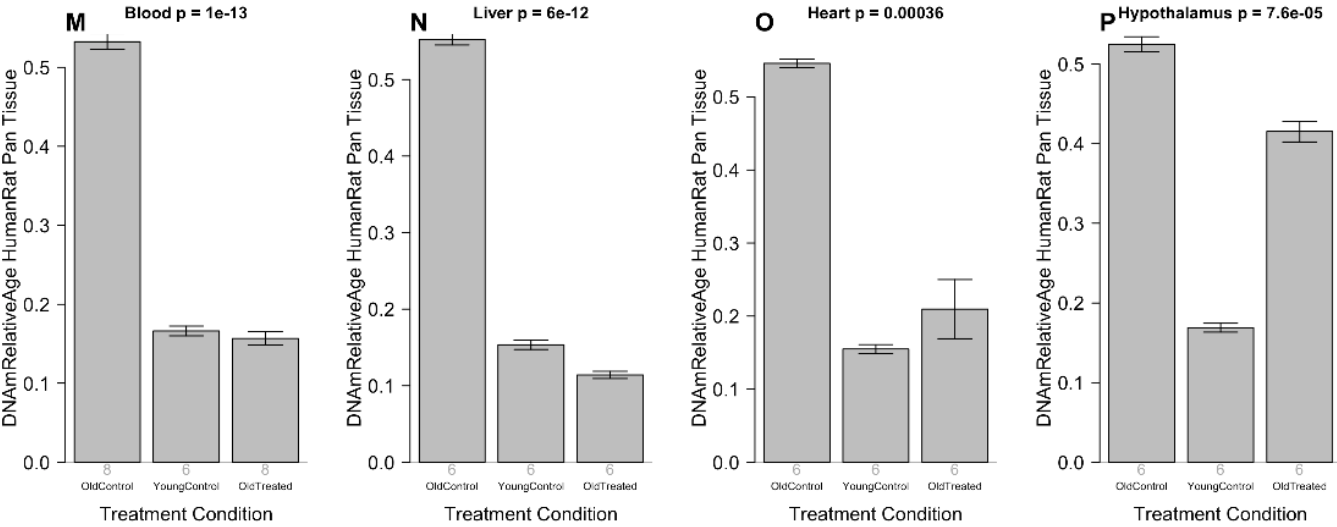
The money charts for this study’s human aging applications – measured by the new human-rat relative biological age clock – were buried in Supplementary Figure 12, bar plots M through P:

“Human-rat clock measure of relative age defined as age/maximum species lifespan. Each bar-plot reports the mean value and one standard error.”

From Supplementary Table 8, the percentages of rejuvenation for the above bar plots, calculated as “(100 * (1 – Old Treated / Old Control)” were:

  • “Blood 70.6%
  • Liver 79.4%
  • Heart 61.6%
  • Hypothalamus 20.9%”

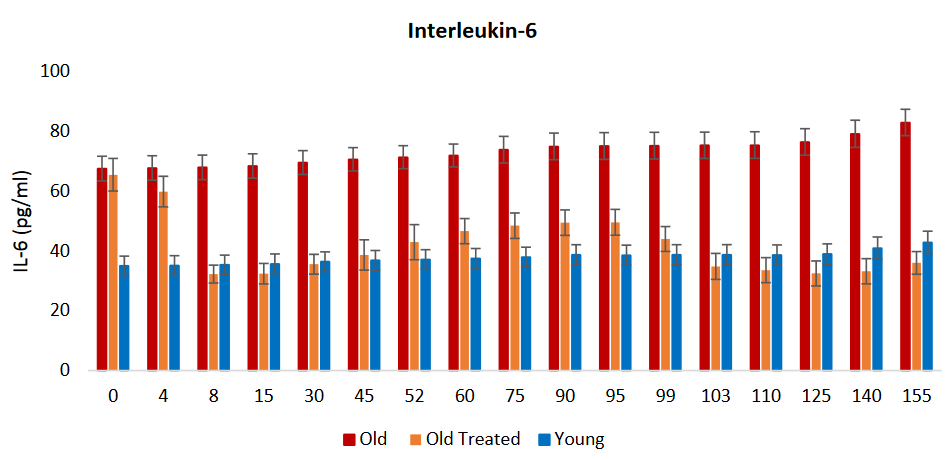
Let’s return to clinical biomarkers for comparison purposes. The current study measured pro-inflammatory cytokine IL-6 blood plasma levels at every time point, but didn’t publish numbers. Bar plots and narrative were:

“Inflammation is an important response that helps protect the body, but excess inflammation especially in terms of duration of this response can have very detrimental effects instead. This occurs when inflammation fails to subside and persists indefinitely; a condition referred to as chronic inflammation, which for reasons not well-understood, increases with age and is associated with a multitude of conditions and pathologies.

The levels of two of the most reliable and common biomarkers of chronic inflammation, interleukin 6 (IL-6) and tumor necrosis factor α (TNF-α), are found to be considerably higher in old rats, and these were very rapidly diminished, within days by plasma fraction treatment, to comparable levels with those of young rats. This was especially stark with IL-6.

In time, the levels of these inflammatory factors began to rise gradually, but they were once again very effectively reduced following the second administration of the plasma fraction on the 95th day.”

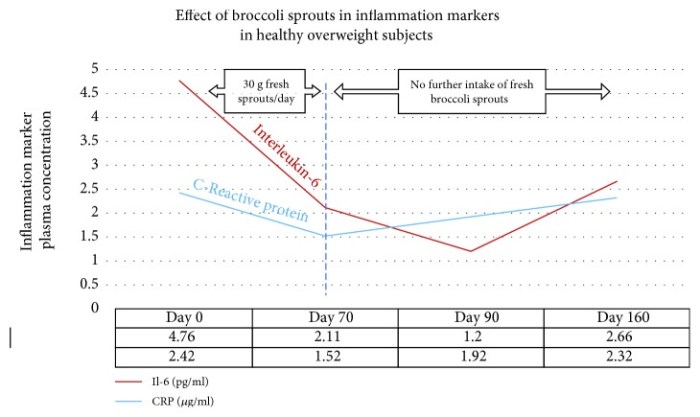
Let’s compare the above IL-6 graphic with IL-6 concentration improvements of our 2018 model clinical trial, Effects of long-term consumption of broccoli sprouts on inflammatory markers in overweight subjects, calculated as (100 * (1 – Day _ mean / Day 0 mean):

Mean pg/ml | % improvement | Period | Broccoli sprout consumption

  • 4.594 | 0% | Day 0 | “One week before the beginning of the intervention period, subjects were asked to avoid the consumption of Brassica vegetables (broccoli, radish, cauliflower, Brussel sprouts, mustards, among others) and their derived products.”
  • 1.748 | 62.0% | Day 0 to 70 | Subjects ate 30 g raw broccoli sprouts every day, and stopped eating them after Day 70.
  • 0.896 | 80.5% | Day 0 to 90 | “After the intervention period, a follow-up recovery period for all subjects continued for another 90 days with no ingestion of broccoli sprouts.”
  • 2.170 | 52.8% | Day 0 to 160 | Subjects had not eaten broccoli sprouts after Day 70.

Results between the studies were similar in that:

  1. IL-6 levels improved during early treatments through rat Day 8 and human Day 70, respectively.
  2. IL-6 levels continued decreasing shortly after treatments for 7 days (through rat Day 15) and 20 days (through human Day 90), respectively.
  3. IL-6 levels rose after rat Day 15 and human Day 90, respectively, but were still significantly below Day 0 values at rat Day 95 and human Day 160.

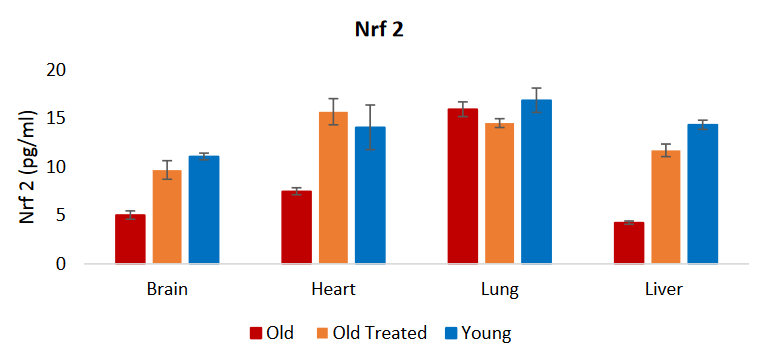
The current study measured Nrf2 but didn’t publish numbers. Bar plots and narrative were:

“The reduction of these inflammation markers is consistent with the profile of the nuclear factor erythroid 2-like 2 protein (Nrf2), which plays a major role in resolving inflammation, in part by inhibiting the expression of IL-6 and TNF-α. Nrf2 also induces the expression of antioxidants that neutralizes ROS [reactive oxygen species], which is also a significant feature in inflammation.”

A PubMed search on “nrf2 sulforaphane human” didn’t turn up relevant 2020 human in vivo studies. I disregarded reviews, cancer studies, disproven hypotheses, and other compounds listed in the below graphic.

I won’t repeat the entire Nrf2 section from the Part 1 curation, just one graphic and paragraph:

It [sulforaphane] is not only a potent Nrf2 inducer but also highly bioavailable [around 80%], so that modest practical doses can produce significant clinical responses. Other Nrf2 activators [shown in the above image] not only lack potency but also lack the bioavailability to be considered as significant intracellular Nrf2 activators.”


As noted in Reviewing clinical trials of broccoli sprouts and their compounds, there are no sulforaphane clinical trials that also use epigenetic clocks. Broccoli sprouts and their compounds’ effects on human aging is an area that hasn’t drawn attention and funding.

What effects may broccoli sprout compounds have on human aging? With this new human-rat relative biological age clock, researchers can get reliable answers from rat studies, with human clinical trials needed only to confirm those findings!

As rejuvenation research continues, what could people do easily, cheaply, and today for our long-term selves? Don’t know about the hypothalamus, but our blood, liver, and heart biological ages may decrease as we reduce inflammation and oxidative stress by eating broccoli sprouts.

I’m at a similar percentage of species maximum lifespan as were the study’s treated subjects. It’s my choice as to what my healthspan will be.

There isn’t evidence today to definitively say that changing my inflammatory phenotype with broccoli sprouts has had / will have rejuvenation effects on biological ages of my cells, organs, and body. But if eating broccoli sprouts every day not only reduces chronic inflammation and oxidative stress as expected, but also makes me younger, I could probably learn to live with that. 🙂

Continued with Part 3 of Rejuvenation therapy and sulforaphane.

An environmental signaling paradigm of aging

To follow up A rejuvenation therapy and sulforaphane, the study’s lead laboratory researcher – Dr. Harold Katcher – provided evidence for an environmental signaling paradigm of aging in this 2015 paper:

“The age-phenotype of a cell or organ depends on its environment and not its history.

Organ dysfunction is not the cause of aging, but is the result of its milieu. Therefore, the aged milieu is the cause. Though it has been thought that the aging immune system is the cause of aging, it can seen to be the result of aging.

The systemic milieu of an organism sets the age-phenotype of its cells, tissues and organs. Cells and organs secrete factors into blood, which are determined by the age-phenotype and repair-states of those cells and organs. The presence and concentrations of these blood-borne factors determine the age-phenotype of cells and organs.

Here we must be a bit more speculative. Changes in concentrations of factors present in blood, rather than their presence or absence, determines age-phenotype.

Interactions between disparate levels of the body’s hierarchy establish a consensus age-phenotype for cells and organs, and this largely occurs via the bloodstream. There appear to be positive factors that promote youthful age-phenotypes and negative factors that promote the aged phenotypes.

We readily consider development as a ‘program’, and it seems clear that we must consider post-adult development as ‘programmed’ as well. But if there is a program it is neither in genes nor chromatin, but in interaction of complex, interconnected systems spanning hierarchical levels.

If these aforementioned principles are correct, it should be easy to verify. If so, whole organism rejuvenation might require little more than:

  • Changing concentrations of all age-determining molecules of the bloodstream and various stem cell niche environments to youthful levels;
  • For a time sufficient to cause rejuvenation at the cellular level.

Once cells start secreting factors appropriate to their new, younger age-phenotypes, cognate changes should propagate through hierarchical levels.

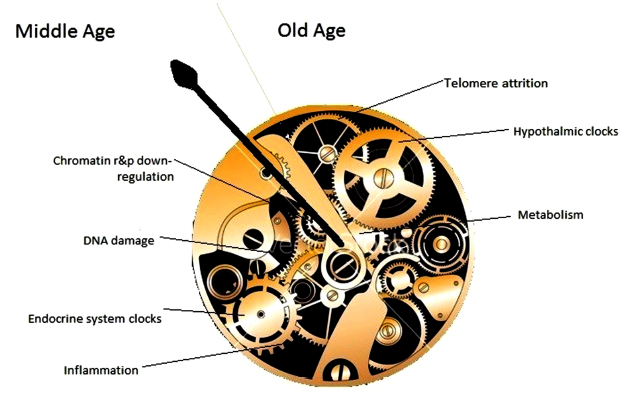
The analogy to workings of a mechanical clock is not very exact. ‘Gears’ represent individual aging clocks, both cellular and organic (shown at different levels within the mechanism) which interact, ultimately resulting in organismic age, i.e. ‘body clock’, represented by the ‘hour hand’ (no minute hand is shown).

In mammals, readout of the clock corresponds to age-related composition of blood plasma. In this model, moving the hour hand backwards should result in a turning back of composite clocks as well – a result obtained when induction to pluripotence is used to reset cellular clocks.

Apart from being slowed down or sped up, the body clock can also be reset. Organisms, organs, and their cells can be reset to different age-phenotypes depending on their environment.

We know that old transplanted tissues and organs can regain function and live for the entire life of the younger host at least in rodents. We must suppose that age-phenotype changes must have taken place at the cellular level to allow this.

Rejuvenation cannot be explained on the basis that aging represents accumulation of irreparable cellular damage.

None of these principles are rigorously established as such, but all are supported by experimental evidence.”

http://www.eurekaselect.com/130538/article “Towards an Evidence-based Model of Aging”


Here are some of his responses to comments on the blog post that first curated his current research:

“We’ve (scientists), spent the past 70 years trying to definitively prove the commonsense ‘wear and tear’ theories and have not succeeded. So I tried something different, looking at results of experiments.

This is not based on ‘theory’ (say mitochondrial aging or ‘wear and tear’) but on experimental evidence. Theory comes in explaining our results, not achieving them. There is a theory becoming clear, one very different from the commonsense view of ‘wear and tear’ aging.

We haven’t examined immune response. All that we know for sure is that chronic inflammation of aging stopped. I can definitively say that chronic inflammation due to aging can be reversed with factors present in young blood.

There are amazing things that Big Pharma won’t touch as there’s not enough profit in them (they can’t be patented). So I guess we’re somewhat the same, but we know what to do and have proven it – for us, it’s not money. However, money allows you to do things.

Being 75 myself puts a time-frame around the project. We plan to propose its use for diseases of aging – eventually, everyone will use it. It will end up changing humanity. As people already seem to have too much free time to begin with, what will people do with those extra years they will be given?”


Sections 3 “Aging Manifestations that Have Hitherto Been Proposed as the Causes of Aging are the Consequences of Aging” and 10 “Several Factors ‘Conspire’ to Promote Inflammation in Old Mammalian Bodies, Inflammation Leads to Several Diseases of Aging and Perhaps to Aging Itself” were especially informative.

The former section discussed cells that were capable of making repairs but didn’t make repairs, with aging being the consequence of this behavior. The latter reviewed topics such as senescence, IL-6, NF-κB, and C-reactive protein in terms of feedback loops.

See Reevaluate findings in another paradigm for comparisons of Section 6 with another view of hypothalamic aging.

A rejuvenation therapy and sulforaphane

The founder of the epigenetic clock methodology with the coauthor of Aging as an unintended consequence released a 2020 rodent study “Reversing age: dual species measurement of epigenetic age with a single clock” at https://www.biorxiv.org/content/10.1101/2020.05.07.082917v1.full.pdf:

“We employed six clocks to investigate the rejuvenation effects of a plasma fraction treatment in different rat tissues. Two of these epigenetic clocks apply to both humans and rats.

The treatment more than halved the epigenetic ages of blood, heart, and liver tissue. A less pronounced, but statistically significant, rejuvenation effect could be observed in the hypothalamus.

The treatment was accompanied by progressive improvement in the function of these organs as ascertained through numerous biochemical/physiological biomarkers and behavioral responses to assess cognitive functions. Cellular senescence, which is not associated with epigenetic aging, was also considerably reduced in vital organs.

Plasma fraction treatment consists of two series of intravenous injections of plasma fraction. Rats were injected four times on alternate days for 8 days. A second identical series of injections were administered 95 days later. In its entirety, the experiment lasted 155 days.

Overall, this study demonstrates that a plasma-derived treatment markedly reverses aging according to epigenetic clocks and benchmark biomarkers of aging.”

The study hasn’t been peer reviewed, so can’t be viewed yet as conclusive. Given that researchers’ single-most valuable asset is their reputations, though, will the findings have major revisions?


I was alerted to the study by Josh Mitteldorf’s blog post Age Reduction Breakthrough, who did his usual excellent curation:

“Most of the explosion in aging research (and virtually all the venture capital startups) are looking to treat aging at the cellular level. Their paradigm is that aging is an accumulation of molecular damage, and they see their job as engineering of appropriate repair mechanisms.

The truth, as Katcher [the lead lab researcher] understands it, is that, to a large extent, aging is coordinated system-wide via signal molecules in the blood. The problem is that there are thousands of constituents represented in tiny concentrations in blood plasma, but conveying messages that cells read. Which of these are responsible for aging?

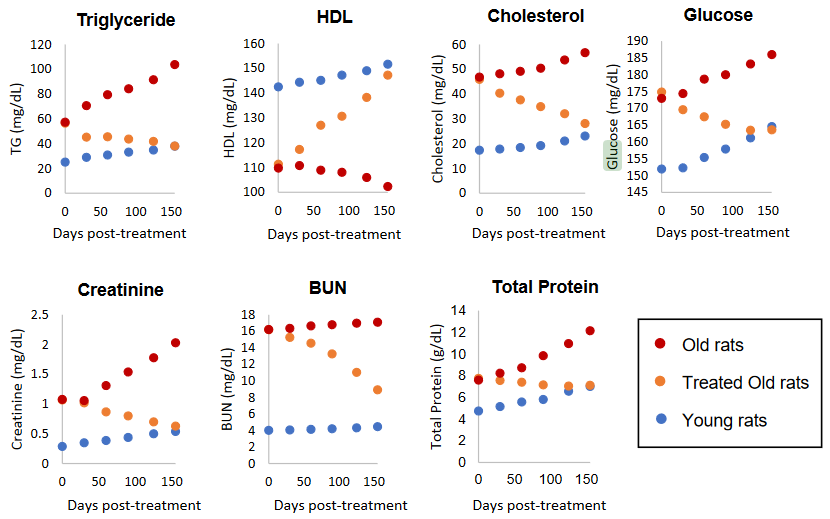
The two-species clock[s] was [were] a significant innovation, a first bridge for translating results from an animal model into their probable equivalent in humans. Besides the methylation clock[s], the paper presents evidence of rejuvenation by many other measures. For example:

  • IL-6, a marker of inflammation, was restored to low youthful levels;
  • Glutathione (GSH), superoxide dismutase (SOD), and other antioxidants were restored to higher youthful levels;
  • In tests of cognitive function (Barnes maze), treated rats scored better than old rats, but not as well as young rats.;
  • Blood triglycerides were brought down to youthful levels;
  • HDL cholesterol rose to youthful levels; and
  • Blood glucose fell toward youthful levels.

These results bring together three threads that have been gaining credibility over the last decade. Mutually reinforcing, the three have a strength that none of them could offer separately.

  1. The root cause of aging is epigenetic progression = changes in gene expression over a lifetime.
  2. Methylation patterns in nuclear DNA are not merely a marker of aging, but its primary source. Thus aging can be reversed by reprogramming DNA methylation.
  3. Information about the body’s age state is transmitted system-wide via signal molecules in the blood. Locally, tissues respond to these signals and adopt a young or an old cellular phenotype as they are directed.”

Several of these aging measurements are also positively affected by sulforaphane. Using Sulforaphane: Its “Coming of Age” as a Clinically Relevant Nutraceutical in the Prevention and Treatment of Chronic Disease as a reference:

1. “Chronic inflammation”

“Antioxidants in general and glutathione in particular can be depleted rapidly under conditions of oxidative stress, and this can signal inflammatory pathways associated with NF-κB. SFN [sulforaphane] has been shown to inhibit NF-κB in endothelial cells.

Two key inflammatory cytokines were measured at four time points in forty healthy overweight people [our model clinical trial, Effects of long-term consumption of broccoli sprouts on inflammatory markers in overweight subjects]. The levels of both interleukin-6 (Il-6) and C-reactive protein (CRP) declined over the 70 days during which the sprouts were ingested. These biomarkers were measured again at day 90, wherein it was found that Il-6 continued to decline, whereas CRP climbed again. When the final measurement was taken at day 160, CRP, although climbing, had not returned to its baseline value. Il-6 remained significantly below the baseline level at day 160.”

OMCL2019-2716870.010

2. “Oxidative stress”

“As a mediator for amplification of the mammalian defence system against various stressors, Nrf2 [nuclear factor erythroid 2-related factor 2] sits at the interface between our prior understanding of oxidative stress and the endogenous mechanisms cells use to deal with it. Diseases known to be underpinned by oxidative stress are proving to be more responsive to amplification of cellular defences via Nrf2 activation than by administration of direct-acting antioxidant supplements.

SFN, with absolute bioavailability of around 80%, [is] capable of increasing several endogenous antioxidant compounds via the transcription factor, Nrf2.

Nrf2 is ubiquitously expressed with the highest concentrations (in descending order) in the kidney, muscle, lung, heart, liver, and brain. Nrf2 was shown to prevent endothelial cells from exhibiting a proinflammatory state. Nrf2 is required for protection against glucose-induced oxidative stress and cardiomyopathy in the heart.

Well in excess of 500 genes have been identified as being activated by SFN via the Nrf2/ARE [Antioxidant Response Element] pathway, and it is likely that this underestimates the number as others are being discovered. Of the available SFN clinical trials associated with genes induced via Nrf2 activation, many demonstrate a linear dose-response. More recently, it has become apparent that SFN can behave hormetically with different effects responsive to different doses.

It [sulforaphane] is not only a potent Nrf2 inducer but also highly bioavailable so that modest practical doses can produce significant clinical responses. Other Nrf2 activators [shown in the above image] not only lack potency but also lack the bioavailability to be considered as significant intracellular Nrf2 activators.”


The study’s most relentlessly questioned, scrutinized, and criticized findings may be the two new epigenetic clocks that apply to both humans and rats. The researchers invited other researchers to validate these clocks because:

“If validated, this would be a step change in aging research. Although conservation of aging mechanism could be equally deduced from the existence of multiple individual clocks for other mammals (mouse, dog), the single formula of the human-rat clock that is equally applicable to both species effectively demonstrates this fact.”

The commonalities of this study with efforts to change my inflammatory phenotype with broccoli sprouts were summarized in the Discussion section:

“Apart from rejuvenating the vital organs of the treated rats, plasma fraction also impacted two fundamental physiological processes that underlie a great number of pathologies, namely oxidative stress and inflammation. Within a week of treatment, the markers of chronic inflammation (IL-6 and TNF-α) were significantly reduced and remained low throughout the entire experiment.

Likewise, markers of oxidative stress in brain, heart, lung and liver, which were very much higher in control old rats, were at the end of the experimental period, indistinguishable between plasma fraction-treated old rats and young ones. Concomitant with this drastic reduction in oxidative stress was the augmented levels of antioxidants (GSH, Catalase and SOD) in these tissues, indicating that modulating the levels of ROS [reactive oxygen species] to that of youthful rats is at least one way by which plasma fraction suppresses oxidative stress. It remains to be ascertained whether the rate of ROS generation is also reduced.

The levels of Nrf2, a transcription factor that impacts on oxidative stress, as well as inflammation, were raised by plasma fraction treatment of old rats to those of the young ones, indicating yet another level by which this treatment modulates these two critical processes. Collectively, these results show that plasma fraction treatment impacts not only the overt performances of organs, but also the underlying physiological processes that are pivotal for optimal organ function and health.”

Great stuff, huh? Are you ready to change your phenotype?

Continued with Part 2 of Rejuvenation therapy and sulforaphane.

Aging as an unintended consequence

The coauthors of 2018’s The epigenetic clock theory of aging reviewed progress that’s been made todate in understanding epigenetic clock mechanisms.

1. Proven DNA methylation features of epigenetic clocks:

  1. “Methylation of cytosines is undoubtedly a binary event.
  2. The increase in epigenetic age is contributed by changes of methylation profiles in a very small percent of cells in a population.
  3. The clock ticks extremely fast in early post-natal years and much slower after puberty.
  4. Clock CpGs have specific locations in the genome.
  5. It applies to prenatal biological samples and embryonic stem cells.

While consistency with all the five attributes does not guarantee veracity of a model, inconsistency with any one will signal the unlikely validity of a hypothesis.”

2. Regarding what epigenetic clocks don’t measure:

“The effects of

  • Telomere maintenance,
  • Cellular senescence,
  • DNA damage signaling,
  • Terminal differentiation and
  • Cellular proliferation

have all been tested and found to be unrelated to epigenetic ageing.”

3. Regarding cyclical features:

Both the epigenetic and circadian clocks are present in all cells of the body, but their ticking rates are regulated. Both these clocks lose synchronicity when cells are isolated from tissues and grown in vitro.

These similarities compel one to ponder potential links between them.”

This was among the points that Linear thinking about biological age clocks missed.

4. The reviewers discussed 3 of the 5 treatment elements in Reversal of aging and immunosenescent trends:

“It is not known at this stage whether the rejuvenating effect is mediated through the regeneration of the thymus or a direct effect of the treatment modality on the body. Also, it is not known if the effect is mediated by all three compounds or one or two of them.

What we know at this stage does not allow the formation of general principles regarding the impact of hormones on epigenetic age, but their involvement in development and maintenance of the body argue that they do indeed have a very significant impact on the epigenetic clock.”

Not sure why they omitted 3000 IU vitamin D and 50 mg zinc, especially since:

“It is not known if the effect is mediated by all three [five] compounds or one or two of them.”

5. They touched on the specialty of Aging as a disease researchers with:

“Muscle stem cells isolated from mice were epigenetically much younger independently of the ages of the tissue / animal from which they were derived.

The proliferation and differentiation of muscle stem cells cease upon physical maturation. These activities are initiated in adult muscles only in response to injury.

6. The reviewers agreed with those researchers in the Conclusion:

“Epigenetic ageing begins from very early moments after the embryonic stem cell stage and continues uninterrupted through the entire lifespan. The significance of this is profound as the question of why we age has been attributed to many different things, most commonly to ‘wear-and-tear.’

The ticking of the epigenetic clock from the embryonic state challenges this perspective and supports the notion that ageing is an unintended consequence of processes that are necessary for

  • The development of the organism and
  • Tissue homeostasis thereafter.”


https://journals.sagepub.com/doi/10.1177/1535370220918329 “Current perspectives on the cellular and molecular features of epigenetic ageing” (not freely available)

Linear thinking about biological age clocks

This 2020 review by a Hong Kong company’s researchers compared and contrasted measures of biological age:

“More than a dozen aging clocks use molecular features to predict an organism’s age, each of them utilizing different data types and training procedures. We offer a detailed comparison of existing mouse and human aging clocks, discuss their technological limitations and the underlying machine learning algorithms. We also discuss promising future directions of research.

Biomarkers placed on an intuitive plane of Accuracy vs Utility. Bubble size depends on the number of clocks based on a corresponding aging biomarker.

Currently, DNAm [DNA methylation] is the most accurate and the most frequently used biomarker in biohorology. However, it is harder to apply a DNAm clock compared to clocks based on clinical blood tests. Moreover, DNAm marks often take a long time to emerge in response to aging interventions.

Chromatin structure and telomeres, while intriguing, are too labor intensive and error-prone to be practical.”

https://www.sciencedirect.com/science/article/pii/S1568163719302582 “Biohorology and biomarkers of aging: current state-of-the-art, challenges and opportunities”


We think about chronological age linearly. The reviewers hinted at but didn’t directly assess the extent to which techniques such as linear regression may also influence people to think linearly about biological age.

We experience cyclical changes every day (like sleep), month, season, and longer periods. The reviewers didn’t mention techniques that incorporate our cyclical experiences or assess cyclical biological age.

1. The reviewers pointed out some biological age clock linearity flaws:

“Most aging clocks base their BA [biological age] definitions either on CA [chronological age] or mortality risk. Mortality risk in its turn is derived from demographic tables and can be assumed to be a function of CA in most animals, including human.

Thus, aging clocks are ultimately treating CA as a substitute BA with the caveat that deviations from the actual CA signify better or worse physical fitness when compared to age matched controls. Such a design has several flaws.”

2. They pointed out non-linear characteristics of chromosomal telomere length:

“DNA lesions caused by oxidative stress are repaired less efficiently in telomeric regions, which causes frailty and subsequent telomere shortening. Oxidative stress levels may fluctuate due to habitat, life style, inflammatory diseases – factors that do not necessarily represent replicative clock ticking.

Telomere length typically fluctuates within ±2-4% per month. This led scientists to hypothesize that telomere attrition is an oscillatory process.”

Since cell components show cyclical phases, why wouldn’t cells and each higher living structural level likewise demonstrate cyclical phases? That avenue wasn’t explored.

3. They mentioned the non-linearity of epigenetic clocks:

“If an organism’s DNAm profile is not directly linked to the thermodynamic root of aging [entropy] but instead is a downstream product of competing processes, the applicability of DNAm aging clock methodology is at risk. In this case different aging clocks may not be equally good for different experiment settings.

While genetic, pharmacological and dietary interventions with proven effect on life expectancy change the methylation state of the age-associated CpG sites, they do so in different ways. Caloric restriction is more efficient in preventing methylation loss at hypomethylated sites and methylation gain at hypermethylated sites than rapamycin.

These findings imply that DNAm profiles do not simply gravitate towards the average with age and that there is no single pathway through which all aging processes are imbued into an organism’s epigenetic landscape.”

4. Genetic and epigenetic regulatory pathways were presented with linear thinking:

“Protein structures encapsulating DNA and regulating its accessibility (chromatin and histones) have also been shown to change with age. Moreover, DNAm machinery and histone modifications are interlinked and change throughout aging concordantly.

For example, DNA methyltransferases are attracted by the H3K36me mark. With aging it is less tightly regulated, and thus, more sporadic DNAm occurs, which ultimately translates to epigenetic clock ticking.”


An individual’s capability to regulate their own aging phenotype wasn’t addressed, only externally applied “aging interventions.” Diseases were considered chronological-“age-associated.”

Biological aging was neither viewed as a disease nor as an unintended consequence. If these researchers don’t grasp the foundations of their field of study, why do they work in the biological aging field? It isn’t just math.

  • Could this paper reflect one company’s desire to frame arguments in favor of the company’s offered solution?
  • Could this paper reflect a “chronological age is the cause” meme that satisfied organizational imperatives for sponsors like the Buck Institute for Research on Aging?
  • Or could it be that the reviewers had other paradigms?

What do you think?

Reviewing clinical trials of broccoli sprouts and their compounds

This 2020 Spanish review analyzed recent clinical trials that used broccoli sprouts and their compounds. Stringent criteria for study selection resulted in few trials being considered:

  • “We reduced the timeframe to the last years, from 2012 to the present.
  • We focused our work on the data of studies carried out with human adults with different pathologies.
  • Articles [that] did not provide us with specific information about consumption of cruciferous foods or ingredients derived from Brassicaceae products, documents based on healthy volunteers, and patients with pathologies unrelated to our objective of study were also not included in the analysis.”

None of the 15 analyzed clinical trials were unqualified successes. Some of the problems noted were summarized in this critique of the largest study:

“The authors presented the results that there was a risk for T2DM [type 2 diabetes mellitus] with the intake of cruciferous foods and glucosinolates. However, this study presented big limitations because:

  • It did not review or consider the cooking procedures,
  • It did not quantify the amount of vegetables consumed on a daily or weekly basis, and
  • It did not quantify the glucosinolate contents in the different vegetables consumed. Besides,
  • The population sample was homogenous, because all of the participants were health-area workers, and the results are not extrapolatable to the general population. Finally, it should be highlighted that
  • Other nutrients and confounding factors were not considered in the study, and they could affect the development of these pathologies.”

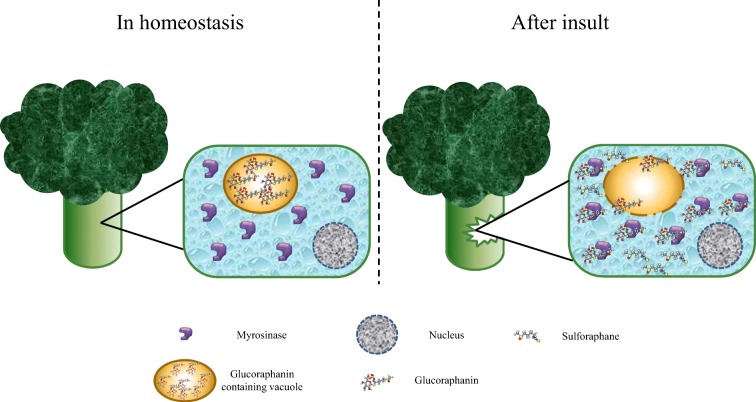
“Figure 1 – General scheme of the glucosinolates (GSLs) and common hydrolysis products. ESP: Epithiospecifer proteins.”

https://www.mdpi.com/1420-3049/25/7/1591/htm “The Role of Brassica Bioactives on Human Health: Are We Studying It the Right Way?”


The reviewers’ answer to the title’s question “Are We Studying It the Right Way?” was NO. The 15 analyzed trials lacked one or more clearly defined measurements related to their target diseases:

“It is crucial that the outcome measure is of biological relevance; biomarkers or risk factors measured must be associated to the latter development of a disease. The degree of progression of the disease greatly influences the response observed.”

So: Why not consider Aging as a disease for clinical trials with broccoli sprouts and their compounds?

  1. “Lack of cure goes hand in hand with inability to accept that this [aging] is disease. It used to be that, please do not diagnose that there’s bacterial meningitis, because there is no cure. Whatever else you can come up with, do it first. Now, diagnose it as fast as possible, so we can put patients on antibiotics immediately. The same will happen to aging.”
  2. Several of the clinical trials’ methodological and statistical problems could be resolved with recognizing aging as a disease. “Healthy” old people who have no other diseases may be scarce, but there are large populations to sample control groups from among healthy and unhealthy young people, and unhealthy old people.
  3. The reviewers already have experience in using “healthy” 46 ± 6 year-old people in a clinical trial of broccoli sprouts and their compounds.
  4. A wide range of epigenetic clocks are available to test the efficacy of broccoli sprouts and their compounds with respect to human aging phenotypes.

As far as I can tell, epigenetic clocks haven’t been used in the subject area thus far! The review’s reference [7] from 2015 didn’t mention them.

Reference [55] was the October 2019 Sulforaphane: Its “Coming of Age” as a Clinically Relevant Nutraceutical in the Prevention and Treatment of Chronic Disease, which I’ve been using as the most current and comprehensive of the subject todate. Its references of broccoli sprouts and their compounds with respect to aging included:

“Nrf2 [nuclear factor erythroid 2-related factor 2] transcriptional activity declines with age, leading to age-related GSH [reduced glutathione] loss among other losses associated with Nrf2-activated genes. This effect has implications, too, for decline in vascular function with age. Some of the age-related decline in function can be restored with Nrf2 activation by SFN [sulforaphane].

A potent Nrf2 activator is capable of inducing hundreds of genes simultaneously. Of the phytochemicals with Nrf2 inducer capacity, Brassica-derived SFN is the most potent naturally occurring biomolecule known at this time.”

However, it had only one reference of DNA methylation, the 2015 The Role of Sulforaphane in Epigenetic Mechanisms, Including Interdependence between Histone Modification and DNA Methylation. Even that was a review rather than a study, and it had no mention of epigenetic clocks.

Maybe broccoli sprouts and their compounds’ effects on human aging is an area that just hasn’t drawn attention and funding?

Changing an inflammatory phenotype with broccoli sprouts

This follow up to Growing a broccoli sprouts Victory Garden is what’s gone on during Week 1 of starting to grow broccoli sprouts for a 30 60 grams of fresh broccoli sprouts incorporated daily into the diet” [1] program. See Week 2 of Changing an inflammatory phenotype with broccoli sprouts for changes.

Day 0 – I’ve tried many things to cure chronic inflammation over the years, basing most of my actions on what’s proven to work for other people. These treatments have helped but haven’t completely worked for me. I’ve continued them with the hypothesis that they may have positive synergistic interactions with daily eating 60 grams of 3-day-old broccoli sprouts that yield 27 mg of sulforaphane after microwaving.

Day 0 treatments included two dozen supplements I’ve taken since turning 50, a diet low in advanced glycation end products started last year [2], and naproxen (a nonsteroidal anti-inflammatory drug). The chronically inflamed spots are the left thumb base (arthritis), tendons outside the left ankle (peroneal tendinosis), and left knee tendonitis, all probably consequences of playing golf for 40+ years.

Day 1 – The vertical farming equipment is a Deluxe Kitchen Crop 4-Tray Seed Sprouter Model VKP1200 made by VICTORIO Kitchen Products. I soak one tablespoon of organic broccoli seeds for 12 hours. Take them out of the stackable trays for a twice-daily rinsing, which is counter to directions of pouring water into the tower top. Microwave the Day 3 broccoli sprouts daily per [3]. Run its tray through the dishwasher (but no heat cycle). Put the tray back in rotation for Day 0.

Day 2 – Threw away one of my crutches, naproxen, as taking it had become more of a habit than a necessity. I’d been taking 220 mg twice daily for years until two weeks ago, when I switched to once daily.

“Sulforaphane increases several endogenous antioxidant compounds via the transcription factor Nrf2 [nuclear factor erythroid 2-related factor 2, discovered in 1994]. Of the phytochemicals with Nrf2 inducer capacity, Brassica-derived SFN [sulforaphane] is the most potent naturally occurring biomolecule known at this time.

Another transcription factor, NF-κB, which is associated with inflammatory pathways is downregulated by SFN. This dual action of SFN is especially intriguing in that Nrf2 and NF-κB interact via their own ‘cross talk’.” [4]

Day 3 – Stopped taking 2 mg of sulforaphane in the form of a broccoli sprout extract capsule, and 200 mg of a diindolylmethane (DIM) capsule daily. DIM was raised 195% from Day 0 to Day 70 after daily intake of broccoli sprouts in [1], noting:

“The anti-inflammatory effects observed with broccoli sprouts intake are likely due to the combined effects of all the hydrolysis products of glucosinolates.”

Don’t need either supplement when broccoli sprouts supply them.

The next supplement I’ll drop is N-acetyl-cysteine (NAC), the precursor to our endogenous antioxidant glutathione. I’ve taken a 600 mg capsule twice daily for fifteen years.

[4] goes on and on about sulforaphane / glutathione interactions. For example: “Several well-studied Nrf2-dependent target genes of possible relevance are those encoding synthesis of glutathione (GSH)” in Section 5.2. SFN as a Redox Modulator that included Figure 6 below, and in Section 6. SFN: Its Redox-Modulating Effects:

Day 4 – I’d seen studies of broccoli sprouts that ranged from 3-days old (the most frequent age) to 8-days old. Before [5], I hadn’t found analyses of broccoli sprout age differences in sulforaphane contents, and only a few studies of sulforaphane differences among broccoli sprout cultivated varieties.

Day 5 – I’ve eaten sprouts at 3 – 5 days old, and haven’t noticed a taste difference after microwaving per [3]. Here’s what they look like at Days 0, 1, 2, and 3:

Day 6 – Are you ready to change your phenotype?


References in order of citation:

[1] 2018 Effects of long-term consumption of broccoli sprouts on inflammatory markers in overweight subjects

[2] 2016 Dr. Vlassara’s AGE-Less Diet: How a Chemical in the Foods We Eat Promotes Disease, Obesity, and Aging and the Steps We Can Take to Stop It

[3] 2020 Microwave cooking increases sulforaphane level in broccoli curated in Microwave broccoli to increase sulforaphane levels and Growing a broccoli sprouts Victory Garden

[4] 2019 Sulforaphane: Its “Coming of Age” as a Clinically Relevant Nutraceutical in the Prevention and Treatment of Chronic Disease

[5] 2020 3-day-old broccoli sprouts have the optimal yields

Growing a broccoli sprouts Victory Garden

To follow up How much sulforaphane is suitable for healthy people? I’ve started growing broccoli sprouts, and a 30 60 grams of fresh broccoli sprouts incorporated daily into the diet” [1] program. See Week 2 of Changing an inflammatory phenotype with broccoli sprouts for changes.

I loosely follow [2]‘s sprouting guidelines. One preparation difference is microwaving per [3]‘s findings as follows:

My current microwaving time for 60 grams of 3-day-old broccoli sprouts in 100 ml of water with a 1000 W microwave on full power is 35 seconds. The temperature gets up to 57°C. See Enhancing sulforaphane content for changes. I immediately dump the broccoli sprouts into a colander and spray with cold water to stop heating at the desired temperature.

The first batch of broccoli sprouts was a mild, cabbage-tasting side dish to the home-style chicken soup on page 238 of [4].

The a priori hypotheses:

    1. 30 grams of fresh broccoli sprouts will not have “51 mg (117 μmol)” of glucoraphanin [1] because they “Used the elicitor methyl jasmonate (MeJA) by priming the seeds as well as by spraying daily. MeJA at concentrations of 156 μM act as stressor in the plant and enhances the biosynthesis of the phytochemicals glucosinolates. Compared to control plants without MeJA treatment, the content of compounds as the aliphatic glucosinolate glucoraphanin was enhanced up to 70%.” 117 μmol / 1.70 = 69 μmol is the expected glucoraphanin amount in 30 grams weight of fresh broccoli sprouts. 69 x 2 = 138 μmol in 60 grams.
    2. One measurement [5] of how much sulforaphane is present in fresh broccoli sprouts before microwaving is 100 μmol / 111 g = .9 μmol / g. (.9 x 30 g) = 27 μmol is the expected sulforaphane amount in 30 grams of fresh broccoli sprouts. Changed assumption to 0 μmol sulforaphane due to 2013 Sulforaphane: translational research from laboratory bench to clinic “Broccoli sprouts are correctly described as releasing, generating, or yielding but not containing SFN [sulforaphane].”
    3. Last week a [3] coauthor agreed to make the data available to facilitate calculations. While I’m waiting… The study said the Figure 3 HL60 sulforaphane amount was 2.45 μmol / g. Eyeball estimate of the below Figure 3 control (raw broccoli florets) is a glucoraphanin amount of ~2.2 μmol / g. I assume that the broccoli florets and sprouts conversion would be the same at a 2.45 μmol / 2.2 μmol ≈ 1.11 ratio. I expect that microwaving the raw broccoli sprouts to 60°C will convert the 138 μmol of glucoraphanin to a 153 μmol amount of sulforaphane at this assumed 1.11 conversion ratio.
    4. The estimated sulforaphane weight per [6] would be (153 μmol / 5.64) = 27 mg which is comparable to clinical trial dosages listed in [7] and [8].
    5. I’ve been sitting around a lot since returning from Milano, Italy, on February 24, 2020, and probably weigh around 75 kg. The estimated dosage represents 153 μmol of sulforaphane / 75 kg = 2.04 μmol of sulforaphane / kg, compared to the 1.36 μmol of glucoraphanin / kg average of [1]. (The study provided the subjects’ mean weight in Table 1 as “85.8 ± 16.7 kg.” The average dosage per kg body weight was 117 μmol of glucoraphanin / 85.8 kg = 1.36 μmol of glucoraphanin / kg.)
    6. Don’t have a practical estimate of the amount of sulforaphane I metabolize from post-microwave glucoraphanin that would add to the calculated 153 μmol of sulforaphane. Both [7] and [8] cited a 2012 study that found: “Some conversion of GRN [glucoraphanin] to SFN can occur in response to metabolism by the gut microflora; however, the response is inefficient, having been shown to vary ‘from about 1% to more than 40% of the dose.’”
    7. Don’t have a practical estimate of the “internal dose” [8] that would result from 153+ μmol of sulforaphane.

I don’t have a laboratory in my kitchen 🙂 and won’t have quantified results. See Grow a broccoli sprouts Victory Garden today! for August 2020 practices.


References in order of citation:

[1] 2018 Effects of long-term consumption of broccoli sprouts on inflammatory markers in overweight subjects

[2] 2017 You Need Sulforaphane – How and Why to Grow Broccoli Sprouts

[3] 2020 Microwave cooking increases sulforaphane level in broccoli curated in Microwave broccoli to increase sulforaphane levels

fsn31493-fig-0003-m

[4] 2016 Dr. Vlassara’s AGE-Less Diet: How a Chemical in the Foods We Eat Promotes Disease, Obesity, and Aging and the Steps We Can Take to Stop It

[5] 2016 Effect of Broccoli Sprouts and Live Attenuated Influenza Virus on Peripheral Blood Natural Killer Cells: A Randomized, Double-Blind Study

[6] 2020 https://pubchem.ncbi.nlm.nih.gov/compound/sulforaphane lists sulforaphane’s molecular weight as 177.3 g / mol. A 1 mg weight of sulforaphane equals a 5.64 μmol sulforaphane amount (.001 / 177.3).

[7] 2019 Sulforaphane: Its “Coming of Age” as a Clinically Relevant Nutraceutical in the Prevention and Treatment of Chronic Disease

[8] 2019 Broccoli or Sulforaphane: Is It the Source or Dose That Matters? Note that a coauthor didn’t disclose their business’ conflict of interest for an effectively promoted commercial product.