Sulforaphane in the Goldilocks zone

This 2020 paper reviewed hormetic effects of a broccoli sprout compound:

“Sulforaphane (SFN) induces a broad spectrum of chemoprotective effects across multiple organs that are of importance to public health and clinical medicine. This chemoprotection is dominated by hormetic dose responses that are mediated by the Nrf2/ARE pathway and its complex regulatory interactions with other factors and pathways, such as p53 and NF-κB.

The stimulatory zone for in vitro studies proved to be consistently in the 1-10 μM range. Hormetic studies of SFN strongly targeted activation of Nrf2.

Capacity to activate Nrf2 diminishes with age, and may affect capacity of SFN to effectively enhance adaptive responses.

A 4-hour exposure induced a 24 hour Nrf2-mediated increase in enzymes that reduce free-radical damage in neurons and astrocytes. Repeated 4-hour treatment for four days affected an accumulation along with a persistent protection.

In the case of continuous exposure to SFN, such as taking a daily supplement, SFN treatment did not result in an accumulation of HMOX1 [heme oxygenase (decycling) 1 gene] mRNA or protein. This suggested that HMOX1 response may experience feedback regulation, avoiding possible harmful overproduction.”

https://www.sciencedirect.com/science/article/abs/pii/S1043661820315917 “The phytoprotective agent sulforaphane prevents inflammatory degenerative diseases and age-related pathologies via Nrf2-mediated hormesis” (not freely available)


One coauthor has been on a crusade to persuade everybody of this paradigm. Hormesis’ hypothesis isn’t falsifiable in all circumstances, however.

Hormetic effects may be experimental considerations. But what’s the point of performing sulforaphane dose-response experiments in contexts that are physiologically unachievable with humans? Two examples:

  1. Autism biomarkers and sulforaphane:

    “There was no concentration-dependence in induction of any genes examined, with the higher (5 μM) concentration of SF even showing a slightly diminished effect for induction of AKR1C1 and NQO1. Although this concentration is achievable in vivo, more typical peak concentrations of SF (and its metabolites) in human plasma are 1-2 μM.”

  2. Human relevance of rodent sulforaphane studies:

    “Over two-thirds of the animal studies have used doses that exceed the highest (and bordering on intolerable) doses of sulforaphane used in humans. The greater than 4-log spread of doses used in mice appears to be driven by needs for effect reporting in publications rather than optimization of translational science.”

This paper cited many hormetic effects that were human-irrelevant without making a distinction. But it also had parts such as:

“The capacity for high concentrations of AITC [allyl isothiocyanate] to enhance genetic damage is not relevant since such high concentrations are not realistically achievable in normal human activities.

Humans ingest only the R-isomer of SFN via diet. Their dosing strategy adopted concentrations of R-SFN that were less than those employed to induce cytotoxic effects in cancer cells and that simulated its consumption as a dietary supplement.”


Landing eagle

DIM effects on BRCA carriers

This 2020 study evaluated a broccoli sprout compound’s effects on breast cancer development:

“Women who carry the BRCA mutation are at high lifetime risk of breast cancer, but there is no consensus regarding an effective and safe chemoprevention strategy. A large body of evidence suggests that 3,3-diindolylmethane (DIM), a dimer of indole-3-carbinol found in cruciferous vegetables, can potentially prevent carcinogenesis and tumor development.

A year’s supplementation with DIM 100 mg daily in BRCA carriers was associated with a significant decline in FGT [fibroglandular tissue] amount on MRI. Larger randomized studies are warranted to corroborate these findings.”

https://academic.oup.com/carcin/article/41/10/1395/5847633 “3,3-Diindolylmethane (DIM): a nutritional intervention and its impact on breast density in healthy BRCA carriers. A prospective clinical trial”


This study didn’t address DIM bioavailability. What were the DIM amounts each subject actually processed? How was DIM bioavailability related to their “significant decline in FGT” outcome?

Studies that found DIM was only 1-3% bioavailable after oral administration include:

PubChem lists DIM molecular weight as 246.31 g/mol. A 4.06 μmol DIM amount (.001 / 246.31) equals a 1 mg weight. The study’s daily DIM intake 100 mg weight was a 406 μmol amount.

(406 μmol x 1%) = 4 μmol and (406 μmol x 3%) = 12 μmol. Was DIM bioavailability in a 4 – 12 μmol range?

Eat broccoli sprouts for DIM and Our model clinical trial for Changing to a youthful phenotype with broccoli sprouts measured DIM excreted as a result of eating 30 grams raw broccoli super sprouts every day. Indolic glucosinolates were as follows:

indolic glucosinolates

DIM at the 70-day point was an average 0.650 μmol amount, which was almost twice those subjects’ 0.334 average beginning amount. Our model clinical trial provided support to the two studies on DIM bioavailability in that as a group, subjects’ DIM bioavailability was 3.01% (0.650 μmol DIM / 21.61 μmol glucobrassicin DIM precursor).

If each subject’s DIM was collected over 24-hours, glucobrassicin precursor conversion calculations may have produced individual bioavailability measurements.


Young dolphins eating breakfast

Eat broccoli sprouts for pain?

This 2018 study investigated pain-relieving effects of two broccoli sprout compounds, sulforaphane and chlorogenic acid:

“Pharmacological evidence of the antinociceptive properties of broccoli aqueous extracts and bioactive metabolites were investigated in an experimental model of pain.

It was found that sprouts produced better antinociceptive response than seeds and inflorescence of broccoli, where SFN [sulforaphane] and CA [chlorogenic acid] were partial responsible. Opioid receptors were implicated in the antinociceptive effect of SFN, whereas calcium channels were involved in the concentration-dependent spasmolytic activity.

Our results give evidence of a dose-dependent antinociceptive effect of CA that might act in a synergic interaction with SFN and other metabolites to produce antinociceptive activity.”

https://www.sciencedirect.com/science/article/abs/pii/S0753332218333286 “Broccoli sprouts produce abdominal antinociception but not spasmolytic effects like its bioactive metabolite sulforaphane” (not freely available)


8-day-old broccoli sprouts were treated Days 5-8 with methyl jasmonate to increase glucosinolates as Our model clinical trial for Changing to a youthful phenotype with broccoli sprouts did.

I hadn’t previously noticed papers on “Chlorogenic and Sinapic acid derivatives” that are part of my daily intake, but there’s much recent research. Consider these October 2020 chlorogenic acid papers for example:


I found If it stinks, it’s good for you as a result of it citing this study. See Broccoli sprout compounds include sinapic acid derivatives to follow on that subject.

I rated this study as Required further work. This is my 31st week of eating a clinically relevant amount of broccoli sprouts every day, and I still take acetaminophen.

Epigenetic clock technology

This 2020 Norwegian study investigated current epigenetic clock technology:

“Epigenetic clocks are based on CpGs from the Illumina HumanMethylation450 BeadChip (450 K) which has been replaced by the latest platform, Illumina MethylationEPIC BeadChip (EPIC). EPIC is a major improvement over its predecessor, 450 K (> 450,000 CpGs), in terms of number of probes (> 850,000 CpGs) and genomic coverage of regulatory elements.

The training set of other epigenetic clocks was mostly based on 450 K, except for Horvath Skin & Blood clock which used both 450 K and EPIC-derived DNAm data. Additional CpGs on EPIC do not enhance accuracy or precision of epigenetic clocks when the training set is reduced.

We validated epigenetic clocks in EPIC-derived blood-based DNAm data (n = 470; 305 European women and 165 South Asian women). eABEC showed that epigenetic age acceleration (EAA; residuals from regression of DNAm age on chronological age) was higher in South Asian women than in Norwegian women.

The reason for higher precision is likely due to the large training set (n = 2227) and wide age-span of samples (19 to 88 years for the training set of eABEC).

EPIC probes that are designed to cover regulatory regions did not increase precision. It is difficult to dismiss the possibility that other regulatory CpGs not currently included on EPIC might improve age prediction.”

https://bmcgenomics.biomedcentral.com/articles/10.1186/s12864-020-07168-8 “Blood-based epigenetic estimators of chronological age in human adults using DNA methylation data from the Illumina MethylationEPIC array”


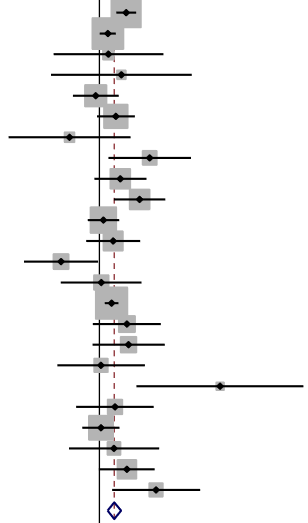
This study’s main point was deficits in current technology. The above graphic demonstrated that epigenetic clocks could do better across different ethnicities.

These researchers repeated a point from An epigenetic clock review by committee about increasing training set size. They missed a point from Do epigenetic clocks measure causes or effects? that:

“The power of these measures as diagnostic and prognostic may stem from the use of longitudinal data in training them. Rather than continuing to train chronological age predictors using diverse data, it may be more advantageous to retrain some of the existing measures by predicting longitudinal outcomes.”

They also didn’t assign much relevance to coverage improvements of The epigenetic clock now includes skin:

“Although the skin-blood clock was derived from significantly less samples (~900) than Horvath’s clock (~8000 samples), it was found to more accurately predict chronological age, not only across fibroblasts and skin, but also across blood, buccal and saliva tissue.”

What I’d like to know about epigenetic clock measurements of biological age is: Why aren’t thousands of studies using them every year? How can we expect continuous improvements in their technologies or coverages or training sets without widespread use?


Anti-tumor effects of β-glucan

This comprehensive 2020 rodent study investigated dozens of scenarios for β-glucan in the context of anti-tumor immunity:

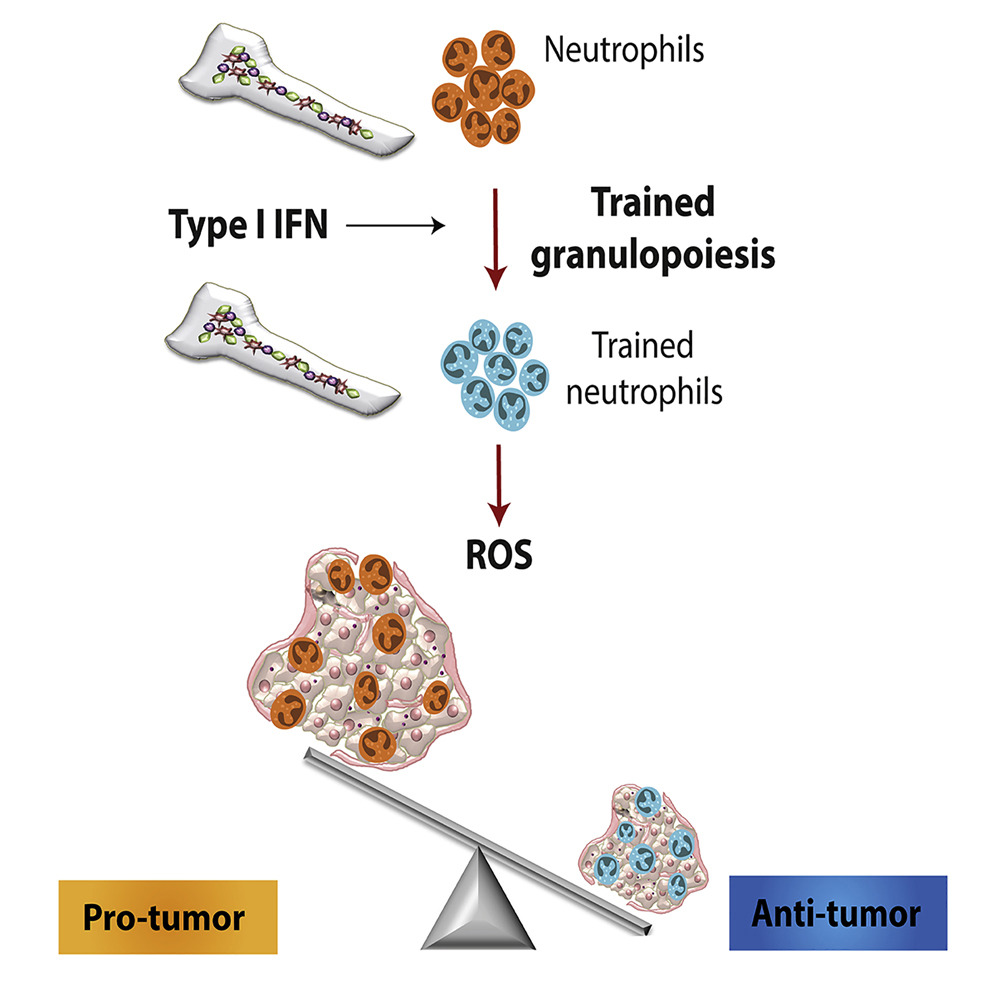
“Neutrophils and granulopoietic progenitors are major cellular effectors of β-glucan-induced trained immunity. The anti-tumor effect of β-glucan-induced trained immunity was mediated by qualitative changes in neutrophils.

A tumor-suppressive phenotype in neutrophils was associated with training of granulopoiesis mediated by type I IFN [interferon] signaling. Our analysis provided additional evidence for trained immunity-induced epigenetic rewiring of granulopoiesis toward an anti-tumor phenotype and corroborated the experimentally demonstrated IFN- and ROS-related mechanisms.

We observed inhibition of tumor growth by systemic transfer of trained neutrophils into already tumor-bearing mice. As granulocyte transfusion is currently considered as a therapy in humans with neutropenia, it is conceivable that cancer patients could receive as an adjuvant immunotherapy granulocytes from normal donors after induction of trained immunity in the latter.

Our study is the first to link the anti-tumor actions of β-glucan to trained immunity. We show here that the innate immune training and rewiring of granulopoiesis underlies the anti-tumor effect of β-glucan.”

https://www.cell.com/cell/fulltext/S0092-8674(20)31299-X “Innate Immune Training of Granulopoiesis Promotes Anti-tumor Activity”


Which do you prefer? The study’s graphical abstract:

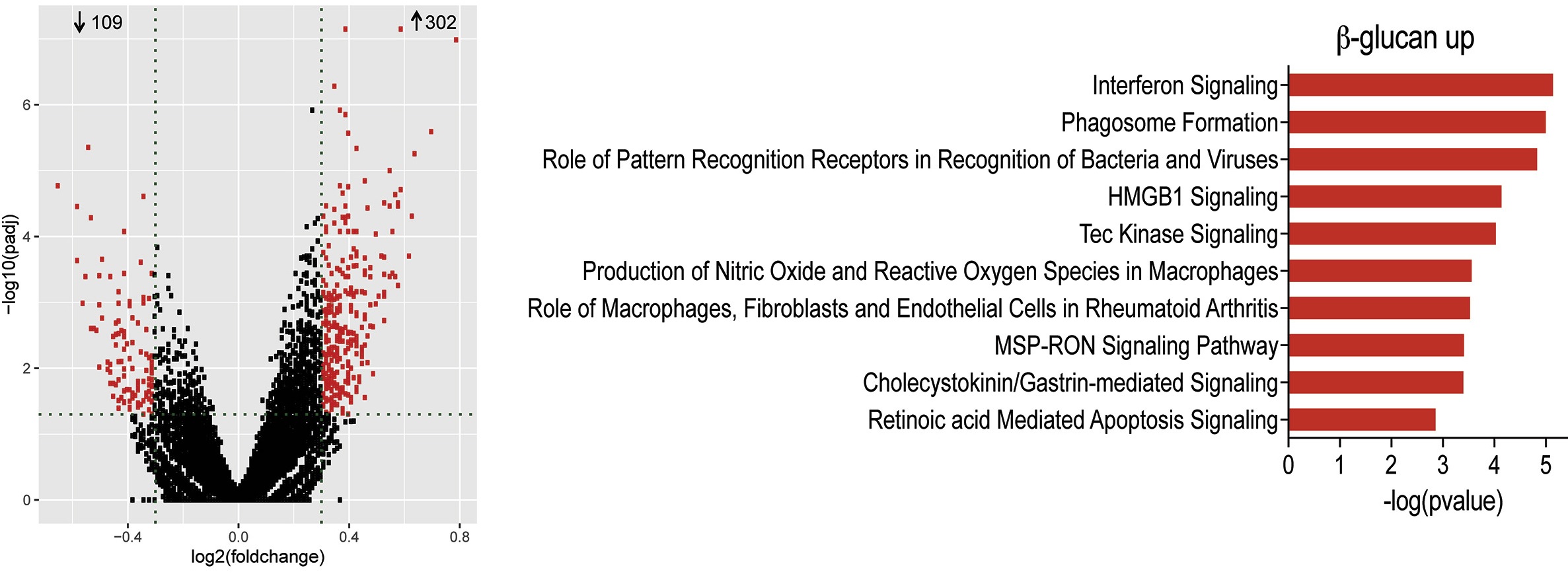
or one of its volcano plots?

Here’s an overview of one investigated direction:

“To determine whether adaptive immunity is involved in the anti-tumor effect induced by β-glucan, mice that lack B and T cells were treated with β-glucan [1 mg] prior to the secondary tumor challenge. Pre-treatment with β-glucan decreased both B16-F10 [melanoma] and LLC [Lewis lung carcinoma] tumor burden also in [these] mice, showing that the anti-tumor effect of β-glucan-induced trained immunity does not require adaptive immunity.”


This study provided another example of what they called rewiring (but I term reprogramming) of the body’s environmental signaling pathways to achieve a desired phenotype, trained innate immunity. Whatever the terminology, almost every day over the past fifteen years I’ve eaten β-glucan in an oats breakfast and a 1/3, 1/6 yeast supplement at dinner as part of individually evolving.

Reprogramming other signaling pathways are in blog posts such as:

Take responsibility for your one precious life.

Flying over waves

Nano-sulforaphane vs. barbecue chemicals

This 2020 chicken study investigated the capability of nano-sulforaphane to protect embryonic survival and neurogenesis from a barbecued meat chemical:

“Common teratogenic [of, relating to, or causing malformations of an embryo or a fetus] factors related to the development of the nervous system, such as alcohol consumption and smoking, have attracted wide attention. Teratogenic factors such as PhIP, the most abundant amine produced in common cooking procedures, can affect early embryonic development, leading to abnormal development of the nervous system.

Nano-sized medicine, in comparison with conventional medicine, leads to increased active concentrations and bioavailability. Both PhIP and nanoparticles can cross the placental barrier and enter the fetus from the external environment.

Chick embryos (100 per group) were incubated with 0.1% DMSO (Control); 20μM, 100μM, 200μM, or 300μM PhIP; or 200μM PhIP + 5μM Nano-SFN [sulforaphane] for 36 h:

  • Mortality rates were 0% for the Control, 8% with 20μM PhIP, 20% with 100μM PhIP, 53% with 200μM PhIP, 85% with 300μM PhIP, and 7% with 200μM PhIP + 5μM Nano-SFN.
  • Neural tube malformation rates [for the remaining live embryos] were 0% for the Control, 5% with 20μM PhIP, 14% with 100μM PhIP, 36% with 200μM PhIP, 14% with 300μM PhIP, and 6% with 200μM PhIP + 5μM Nano-SFN.

Women at the early stage of pregnancy should avoid barbecue. Instead, increase intake amount of cruciferous vegetables, which benefits fetal neural development.”

https://www.sciencedirect.com/science/article/abs/pii/S0940960220301618 “Nano-sulforaphane attenuates PhIP-induced early abnormal embryonic neuro-development” (not freely available)


PXL_20201022_225011002.NIGHT

Dietary contexts matter

Two papers illustrated how actions of food compounds are affected by their contexts. The first was a 2020 UCLA rodent study:

“Long-chain polyunsaturated fatty acids (PUFAs), particularly omega-3 (n-3) PUFAs, have been indicated to play important roles in various aspects of human health. Controversies are observed in epidemiological and experimental studies regarding the benefits or lack of benefits of n-3 PUFAs.

Dietary docosahexaenoic acid (DHA; 22:6 n-3) supplementation improved select metabolic traits and brain function, and induced transcriptomic and epigenetic alterations in hypothalamic and hippocampal tissues in both context-independent and context-specific manners:

  • In terms of serum triglyceride, glycemic phenotypes, insulin resistance index, and memory retention, DHA did not affect these phenotypes significantly when examined on the chow diet background, but significantly improved these phenotypes in fructose-treated animals.
  • Genes and pathways related with tissue structure were affected by DHA regardless of the dietary context, although the direction of changes are not necessarily the same between contexts. These pathways may represent the core functions of DHA in maintaining cell membrane function and cell signaling.
  • DHA affected the mTOR signaling pathway in hippocampus. In the hypothalamus, altered pathways were more related to innate immunity, such as cytokine-cytokine receptors, NF-κB signaling pathway, and Toll-like receptor signaling pathway.

DHA exhibits differential influence on epigenetic loci, genes, pathways, and metabolic and cognitive phenotypes under different dietary contexts.”

https://onlinelibrary.wiley.com/doi/10.1002/mnfr.202000788 “Multi‐tissue Multi‐omics Nutrigenomics Indicates Context‐specific Effects of DHA on Rat Brain” (not freely available)


A human equivalent age period of the subjects was 12 to 20 years old. If these researchers want to make their study outstanding, they’ll contact their UCLA colleague Dr. Steven Horvath, and apply his new human-rat relative biological age epigenetic clock per A rejuvenation therapy and sulforaphane.

The second paper was a 2016 review Interactions between phytochemicals from fruits and vegetables: Effects on bioactivities and bioavailability (not freely available):

“The biological activities of food phytochemicals depend upon their bioaccessibility and bioavailability which can be affected by the presence of other food components including other bioactive constituents. For instance, α-tocopherol mixed with a flavonol (kaempferol or myricetin) is more effective in inhibiting lipid oxidation induced by free radicals than each component alone.

Interactions of phytochemicals may enhance or reduce the bioavailability of a given compound, depending on the facilitation/competition for cellular uptake and transportation. For example, β-carotene increases the bioavailability of lycopene in human plasma, and quercetin-3-glucoside reduces the absorption of anthocyanins.

Combinations of food extracts containing hydrophilic antioxidants and lipophilic antioxidants showed very high synergistic effects on free radical scavenging activities. A number of phytochemical mixtures and food combinations provide synergistic effects on inhibiting inflammation.

More research should be conducted to understand mechanisms of bioavailability interference considering physiological concentrations, food matrices, and food processing.”


Each of us can set appropriate contexts for our food consumption. Broccoli sprout synergies covered how I take supplements and broccoli sprouts together an hour or two before meals to keep meal contents from lowering sulforaphane bioavailability.

Combinations of my 19 supplements and broccoli sprouts are too many (616,645) for complete analyses. Just pairwise comparisons like the second paper’s example below would be 190 combinations.

binary isobologram

Contexts for each combination’s synergistic, antagonistic, or additive activities may also be influenced by other combinations’ results.

My consumption of flax oil (alpha linolenic acid C18:3) probably has effects similar to DHA since it’s an omega-3 PUFA and I take it with food. The first study’s human equivalent DHA dose was 100mg/kg, with its citation for clinical trials stating “1–9 g/day (0.45–4% of calories) n-3 PUFA.”

A 2020 review Functional Ingredients From Brassicaceae Species: Overview and Perspectives had perspectives such as:

“In many circumstances, the isolated bioactive is not as bioavailable or metabolically active as in the natural food matrix.”

It discussed categories but not combinations of phenolics, carotenoids, phytoalexins, terpenes, phytosteroids, and tocopherols, along with more well-known broccoli compounds.


Diving for breakfast

Rub some broccoli sprouts on it

This 2020 human/rodent study investigated treating and preventing skin photodamage with sulforaphane:

“Alterations in NRF2 signaling have been implicated in aging and stress-induced skin pigmentation disorders in the skin and hair follicles. NRF2 signaling regulates transcriptional programs involved in adaption and survival of cells in the setting of oxidative stress, and oxidative stress occurs in the setting of photodamage.

[1st human experiment with 14 subjects] Expression levels of NRF2 and its target heme-oxygenase-1 (HO-1) were evaluated by immunofluorescence (IF) in skin biopsies. Expression of NRF2 and HO-1 was significantly reduced in skin from individuals > 45 years old.

[2nd human experiment with 7 different subjects] The left arm was chosen for treatment with BSE [broccoli sprout extract], as there is typically more photodamage on the left arm due to chronic sun exposure through the car window while driving in the US. A photoprotected area of skin on an upper inner arm was also treated.

Expression of total NRF2 and phosphorylated NRF2 (NRF2-P) by IF microscopy was detected at low baseline levels in photoprotected skin, suggesting some activity of the pathway, whereas the expression of total NRF2 and NRF2-P was undetectable in untreated photoexposed skin (Un). There was significantly elevated IF expression and fold change of IF signal of NRF2 and especially NRF2-P in SF [sulforaphane]-treated skin compared with Un skin in most individuals.

There was no evidence of increased total NRF2 or NRF2-P expression in SF-treated photoexposed skin in 2 individuals. There was also no significant improvement in mottled hyperpigmentation or difference in melanin deposition following SF treatment.

[Six mouse confirmation/exploratory studies] SF is known to have several non-NRF2–mediated targets, such as NF-κB and AP-1. However, our findings suggest that negative regulation of UV-mediated hyperpigmentation observed following SF treatment is occurring in an NRF2-dependent fashion:

  • UVB+SF treatment resulted in more than a 50% decrease in skin pigmentation and melanin deposition, indicating that SF could prevent UVB-induced skin pigmentation.
  • The therapeutic effect of SF on reducing UVB-induced skin pigmentation was dependent on keratinocyte-intrinsic IL-6 receptor α (IL-6Rα) signaling that upregulated NRF2, which led to inhibition of melanogenesis.

Our results provide direct in vivo evidence of how NRF2 is involved in response to oxidative stress associated with photodamage and chronic UV exposure. Treatment of human or mouse skin hyperpigmentation with SF provided the proof of concept for targeting the NRF2 pathway as a therapeutic intervention.”

https://insight.jci.org/articles/view/139342 “Pathogenic and therapeutic role for NRF2 signaling in ultraviolet light–induced skin pigmentation”


Didn’t understand the 2nd experiment’s human dose of 5 nM sulforaphane. The lead author’s cited 2017 study Randomized, split-body, single-blinded clinical trial of topical broccoli sprout extract: Assessing the feasibility of its use in keratin-based disorders used “500 nmol of sulforaphane/mL.” Unless my math is off, the current study and previous study’s doses weren’t equivalent since 1 nM = 0.001 nmol/mL.

I’d like to know more about subjects who didn’t respond to topical sulforaphane treatment. What happened in their lives to make them dead to an evolutionarily-selected antioxidant and anti-inflammatory signaling pathway that influences many other internal environmental signals? Guess we’ll have to wait for:

“Further clinical studies with an increased number of human subjects, longer treatment regimens, and additional body sites are needed to further assess the long-term effects of NRF2 activation on photoaging.”

See Eat broccoli sprouts for your skin! and Eat broccoli sprouts for your hair! for similar studies.


Owl before sunrise

Eat broccoli sprouts to pivot your internal environment’s signals

Two 2020 reviews covered some aspects of a broccoli sprouts primary action – NRF2 signaling pathway activation:

“Full understanding of the properties of drug candidates rely partly on the identification, validation, and use of biomarkers to optimize clinical applications. This review focuses on results from clinical trials with four agents known to target NRF2 signaling in preclinical studies, and evaluates the successes and limitations of biomarkers focused on:

  • Expression of NRF2 target genes [AKR1, GCL, GST, HMOX1, NQO1] and others [HDAC, HSP];
  • Inflammation [COX-2, CRP, IL-1β, IL-6, IP-10, MCP-1, MIG, NF-κB, TNF-α] and oxidative stress [8-OHdG, Cys/CySS, GSH/GSSG] biomarkers;
  • Carcinogen metabolism and adduct biomarkers in unavoidably exposed populations; and
  • Targeted and untargeted metabolomics [HDL, LDL, TG].

No biomarkers excel at defining pharmacodynamic actions in this setting.

SFN [sulforaphane] seems to affect multiple downstream pathways associated with anti-inflammatory actions. NRF2 signaling may be but one pivotal pathway.

SFN is generally considered to be the most potent natural product inducer of Nrf2 signaling. Studies in which these actions are diminished or abrogated in parallel experiments in Nrf2-disrupted mice provide the strongest lines of evidence for a key role of this transcription factor in its actions.

It is equally evident that other modes of action contribute to the molecular responses to SFN in animals and humans. Such polypharmacy may well contribute to the efficacy of the agent in disease prevention and mitigation, but obfuscates the value of specific pharmacodynamic biomarkers in the clinical development and evaluation of SFN.”

https://www.mdpi.com/2076-3921/9/8/716/htm “Current Landscape of NRF2 Biomarkers in Clinical Trials”


Why do researchers still not use epigenetic clocks in sulforaphane clinical trials? Forty mentions of disease in this review, but no consideration of aging?

This was another example of how researchers – even when stuck in a paradigm they know doesn’t sufficiently explain their area (“No biomarkers excel”) – don’t investigate other associated research areas. Why not?

Here’s what Part 2 of Rejuvenation therapy and sulforaphane had to say to those stuck on biomarkers:

“While clinical biomarkers have obvious advantages (being indicative of organ dysfunction or disease), they are neither sufficiently mechanistic nor proximal to fundamental mechanisms of aging to serve as indicators of them. It has long been recognized that epigenetic changes are one of several primary hallmarks of aging.

DNA methylation epigenetic clocks capture aspects of biological age.”


The second review Epigenetic Regulation of NRF2/KEAP1 by Phytochemicals also completely whiffed on epigenetic clocks. One mention of aging in this review, but it wasn’t of:

  • Citation 104 from Archives of Gerontology and Geriatrics; nor of
  • Citation 108 from the March 31, 2020, Aging journal; nor of
  • Citation 131 “Dietary epigenetics in cancer and aging.”

But epigenetic clock and aging associations were certainly in this review’s scope. For example, Citation 119 said:

“Nrf2 transcriptional activity declines with age, leading to age-related GSH loss among other losses associated with Nrf2-activated genes. This effect has implications, too, for decline in vascular function with age. Some of the age-related decline in function can be restored with Nrf2 activation by SFN.”

Why would people bother with phytochemicals (buzzword “compounds produced by plants”) unless to either ameliorate symptoms or address causes?

“Epigenetic Regulation of NRF2/KEAP1 by Phytochemicals” doesn’t occur in just laboratory situations. It’s also part of daily life.

These reviewers were straight-forward with side effects for two of the first review’s four items:

“The best known NRF2 activator that has obtained clinical approval is dimethyl fumarate for the treatment of multiple sclerosis. However, it has several side effects, including allergic reactions and gastrointestinal disturbance. There are a few related agents in clinical trials, such as Bardoxolone and SFX-01, a synthetic derivative of sulforaphane, which also exhibit less than desirable outcomes.”


Increasing carbon dioxide levels increases beneficial broccoli sprout compounds

This 2020 study used IPCC unscientific, politically-motivated, wild-ass guesses for year 2100 CO2 levels to find that broccoli sprouts – like most plants – benefit when CO2 is increased:

“Elevated CO2 (eCO2, 620 ppm, the expected IPCC-SRES B2-scenario prediction of eCO2 of the year 2100) was applied for 9 days to further improve nutritive and health-promoting values of three cultivars of broccoli sprouts.

  • eCO2 improved sprouts growth and induced GLs [glucosinolates] accumulation.
  • There were increases in myrosinase activity, which stimulated GLs hydrolysis to yield health-promoting sulforaphane.
  • Low levels of sulforaphane nitrile were detected and positively correlated with reduced epithiospecifier protein after eCO2 treatment.
  • High glucoraphanin and sulforaphane levels in eCO2 treated sprouts improved the anticarcinogenic and anti-inflammatory properties of their extracts.

In conclusion, eCO2 treatment enriches broccoli sprouts with health-promoting metabolites and bioactivities.”

https://www.sciencedirect.com/science/article/abs/pii/S030881462030964X “Elevated CO2 improves glucosinolate metabolism and stimulates anticancer and anti-inflammatory properties of broccoli sprouts” (not freely available)


This study was sponsored in Saudi Arabia. Would gathering such scientific evidence even be permitted in more “enlightened” countries?

Performing research on obvious lies and thinking for yourself isn’t allowed anymore in most “learning” institutions. You already knew that, didn’t you?

At the end of How much sulforaphane is suitable for healthy people? I applauded my high-school literature teachers for forcing their students to demonstrate that they could think for themselves. I didn’t initially mention that each monthly assignment to read two books, then compare-and-contrast them in a 3-page handwritten paper, was individualized so that students couldn’t undo the assignment’s purpose with parasitical collaboration.

This former practice remains a good measure of intentional dumbing-down of young people, the intent of which has become clearer.

Jet fuel exposure causes diseases in the great-grand offspring

This 2020 Washington State University rodent study examined how great-grandmothers’ JP-8 exposures produced diseases in their great-grand offspring:

“Ancestral exposure to environmental influences such as toxicants, abnormal nutrition, and traumatic stress can affect the germline epigenome and promote the epigenetic transgenerational inheritance of adult onset disease in various organisms from plants to humans. Biological mechanisms underlying transgenerational epigenetic inheritance induced by jet fuel exposure are further investigated in the current study.

Genome-wide association studies (GWAS) have found specific genetic mutations associated with human pathologies, however these genetic mutations generally appear in less than 1% of the disease population. In contrast, epimutations (DNA methylation, histone modifications, non-coding RNA, chromatin structure, and RNA methylation alterations) seem to have a higher frequency and appear in more individuals with the diseases. Determining epigenetic biomarkers for these diseases could become especially useful indicators of environmental exposures and disease susceptibility in the human population.

The number of differential methylated regions (DMRs) found in the transgenerational F3 males is between 100 and 500 for each individual pathology. Few DMRs overlap between the different pathologies which supports the possible use of epimutations as biomarkers of disease. Although further studies are required, the lack of a subpopulation of DMRs overlapping with all pathologies suggests that at a more stringent statistical threshold there are not common DMRs among specific diseases.

Although females develop transgenerational disease, insufficient numbers of oocytes can be obtained on individuals to allow epigenetic associations to be assessed. The study only examined male pathology and associated sperm epimutation associations.”

https://www.sciencedirect.com/science/article/pii/S0890623820301982 “Epigenome-wide association study for transgenerational disease sperm epimutation biomarkers following ancestral exposure to jet fuel hydrocarbons”


The only associations these study subjects had with JP-8 were their great-grandmothers’ jet fuel exposures while pregnant with their grandparents. Other environmental toxicants studied by this group that produced similar transgenerationally inherited diseases were DDT, atrazine, and vinclozolin.

Ever think about your great-grandchildren?

Unraveling oxytocin – is it nature’s medicine?

This 2020 review attempted to consolidate thousands of research papers on oxytocin:

“Chemical properties of oxytocin make this molecule difficult to work with and to measure. Effects of oxytocin are context-dependent, sexually dimorphic, and altered by experience. Its relationship to a related hormone, vasopressin, have created challenges for its use as a therapeutic drug.

Widely used medical interventions i.e.:

  • Exogenous oxytocin, such as Pitocin given to facilitate labor;
  • Opioid medications that block the oxytocin system; or
  • Cesarean sections that alter exposure to endogenous oxytocin

have lasting consequences for the offspring and/or mother.

Such exposures hold the potential to have epigenetic effects on the oxytocin systems, including changes in DNA methylation. These changes in turn would have lasting effects on the expression of receptors for oxytocin, leaving individuals differentially able to respond to oxytocin and also possibly to the effects of vasopressin.

Regions with especially high levels of OXTR [oxytocin receptor gene] are:

  • Various parts of the amygdala;
  • Bed nucleus of the stria terminalis;
  • Nucleus accumbens;
  • Brainstem source nuclei for the autonomic nervous system;
  • Systems that regulate the HPA axis; as well as
  • Brainstem tissues involved in pain and social attention.

Oxytocin protects neural cells against hypoxic-ischemic conditions by:

  • Preserving mitochondrial function;
  • Reducing oxidative stress; and
  • Decreasing a chromatin protein that is released during inflammation

which can activate microglia through the receptor for advanced glycation end products (RAGE). RAGE acts as an oxytocin-binding protein facilitating the transport of oxytocin across the blood-brain barrier and through other tissues.

Directionality of this transport is 5–10 times higher from the blood to the brain, in comparison with brain to blood transport. Individual differences in RAGE could help to predict cellular access to oxytocin and might also facilitate access to oxytocin under conditions of stress or illness.

Oxytocin and vasopressin and their receptors are genetically variable, epigenetically regulated, and sensitive to stressors and diet across the lifespan. As one example, salt releases vasopressin and also oxytocin.

Nicotine is a potent regulator of vasopressin. Smoking, including prenatal exposure of a fetus, holds the potential to adjust this system with effects that likely differ between males and females and that may be transgenerational.

Relative concentrations of endogenous oxytocin and vasopressin in plasma were associated with:

These studies support the usefulness of measurements of both oxytocin and vasopressin but leave many empirical questions unresolved.

The vast majority of oxytocin in biosamples evades detection using conventional approaches to measurement.”

https://pharmrev.aspetjournals.org/content/pharmrev/72/4/829.full.pdf “Is Oxytocin Nature’s Medicine?”


I appreciated efforts to extract worthwhile oxytocin research from countless poorly performed studies, research that wasted resources, and research that actually detracted from science.

I was disappointed that at least one of the reviewers didn’t take this review as an opportunity to confess their previous wastes like three flimsy studies discussed in Using oxytocin receptor gene methylation to pursue an agenda.

Frank interpretations of one’s own study findings to acknowledge limitations is one way researchers can address items upfront that will be questioned anyway. Such analyses also indicate a goal to advance science.

Although these reviewers didn’t provide concrete answers to many questions, they highlighted promising research areas, such as:

  • Improved approaches to oxytocin measurements;
  • Prenatal epigenetic experience associations with oxytocin and OXTR; and
  • Possible transgenerational transmission of these prenatal epigenetic experiences.

Take responsibility for your one precious life – DHEA

This 2020 meta-analysis subject was DHEA:

“Twenty-four qualified trials were included in this meta-analysis. Statistically significant increases in serum IGF-1 levels were found only in participants who were:

  1. Women; or
  2. Supplementing 50 mg/d; or
  3. Undergoing intervention for > 12 weeks; or
  4. Without an underlying comorbidity; or
  5. Over the age of 60 years.

DHEA supplementation led to an overall increase of ~16 ng/ml in serum IGF-1 levels, as well as increases of ~23 [women] and ~20 ng/ml [age > 60]. Diseased and healthy subjects ages ranged from 20 to 72 years old.”

Discussion section explanations of the above:

  1. “Women are more susceptible to biochemical and clinical shifts caused by DHEA supplementation.
  2. The majority of investigations tested DHEA at a dose of 50 mg/d.
  3. The majority of studies were performed for > 12 weeks.
  4. Participants with no comorbidities were also older in many studies.
  5. Older patients have a natural decline in the production of IGF-1 and DHEA.

Additional rigorous RCTs are warranted to better define whether and to what extent changes in IGF-1 levels caused by DHEA supplementation are relevant for health benefits.”

https://www.sciencedirect.com/science/article/abs/pii/S0531556520302977Impact of dehydroepian[d]rosterone (DHEA) supplementation on serum levels of insulin-like growth factor 1 (IGF-1): A dose-response meta-analysis of randomized controlled trials” (not freely available)


More on IGF-1 from The influence of zinc supplementation on IGF-1 levels in humans: A systematic review and meta-analysis which was cited for “Previous studies have demonstrated that IGF-1 levels can be affected by several factors.”

“IGF-1 is a growth factor synthesized in the liver, and elicits a myriad of effects on health due to its participation in the GH-IGF-1 axis, where it:

  • Is involved in tissue homeostasis;
  • Has anti-apoptotic, mitogenic, anti-inflammatory, antioxidant and metabolic actions;
  • Contributes to skeletal muscle plasticity, maintenance of muscle strength and muscle mass;
  • Neural and cardiovascular protection;
  • Development of the skeleton;
  • Possesses insulin-like effects, and
  • Is a key factor in brain, eye and lung development during fetal development.

IGF-1 plays important roles in both growth and development, and its levels vary depending on age, with peaks generally observed in the postnatal period and at puberty. IGF-1 levels influence the release of GH [growth hormone] from the hypophysis [pituitary gland] via a negative feedback loop.

A rapid decrease in IGF-1 levels is registered during the third decade of life. Levels gradually decrease between the third and the eighth decade of life.”


The Group 3 “> 12 weeks” finding was reinforced by perspectives such as:

Group 4 “with no comorbidities” was narrowly defined. All of us have degrees of diseases in progress. Consider aging effects:

  • Aging as a normal disease “Aging and its diseases are inseparable, as these diseases are manifestations of aging. Instead of healthy aging, we could use the terms pre-disease aging or decelerated aging.”
  • Aging as an unintended consequence “Epigenetic ageing begins from very early moments after the embryonic stem cell stage and continues uninterrupted through the entire lifespan. Ageing is an unintended consequence of processes that are necessary for development of the organism and tissue homeostasis thereafter.”
  • Organismal aging and cellular senescence “If we assume that aging already starts before birth, it can be considered simply a developmental stage, required to complete the evolutionary program associated with species-intrinsic biological functions such as reproduction, survival, and selection.”
  • An environmental signaling paradigm of aging “The age-phenotype of a cell or organ depends on its environment and not its history. Organisms, organs, and their cells can be reset to different age-phenotypes depending on their environment.”

These perspectives are less important than what each of us choose to do about our own problems. Take responsibility for your one precious life.

Get serious about advanced glycation end products (AGEs)

Ever heard about AGEs? Here are three papers that describe how AGEs affect humans.

First is a 2020 Italian review Common Protective Strategies in Neurodegenerative Disease: Focusing on Risk Factors to Target the Cellular Redox System:

“Neurodegenerative disease is an umbrella term for different conditions which primarily affect the neurons in the human brain. Currently, neurodegenerative diseases are incurable, and the treatments available only control the symptoms or delay the progression of the disease.

Neurotoxicity can be induced by glycation reactions. Since glycation is a nonenzymatic process, proteins characterized by a slow turnover are those that more easily accumulate AGEs.

Methylglyoxal (MG) can occur as glycolysis by-product, but it is also present in foods (especially cooked and baked), beverages (mainly those fermented), and cigarette smoke, and it is considered the most potent precursor of AGE formation. More than 20 different AGEs have been identified in foods and in human tissues.

AGE accumulation, oxidative stress, and inflammation are related to AGE ability to bind specific receptors called RAGE. RAGE expression increases during aging, cancer, cardiovascular diseases, AD [Alzheimer’s], PD [Parkinson’s], and other neurodegenerative diseases.”


A 2015 study by some of the same authors Antiglycative activity of sulforaphane: a new avenue to counteract neurodegeneration? was cited for a treatment in addition to changing one’s diet to be AGE-less.

“When MG production is increased by high glucose or oxidative stress, glycated proteins accumulate in the brain and lead to glycative stress, playing a fundamental role in the establishment of different neurodegenerative disorders.

Our results indicated that SF [sulforaphane] counteracts ROS by two possible mechanisms of action: an increase of intracellular GSH [glutathione] levels and an enhancement of MG-detoxification through the up-regulation of the glyoxalase (GLO1) systems. GLO1 up-regulation is mediated by the transcription factor Nrf2. SF has been demonstrated to activate Nrf2.

Another mechanism by which SF exerts its neuroprotective activity against MG-induced glycative damage is the modulation of mitogen-activated protein kinase (MAPK) signaling pathways involved in apoptotic cell death. All MAPK signaling pathways are activated in AD.

Brain-derived neurotrophic factor (BDNF) is associated with neuronal survival through its interactions with the tyrosine receptor kinase B (TrkB) and p75 cellular receptors. BDNF expression levels are reduced in the brain of AD patients. SF pre-treatment, before MG addition, not only further increased BDNF levels, but also significantly induced TrkB protein levels reverting MG negative effect on this receptor.

SF totally reverts the reduction of glucose uptake caused by MG exposure. SF can be defined as a multitarget agent modulating different cellular functions leading to a pro-survival frame of particular importance in the prevention / counteraction of multifactorial neurodegenerative diseases.”


A 2020 review Non-enzymatic covalent modifications: a new link between metabolism and epigenetics investigated glycation:

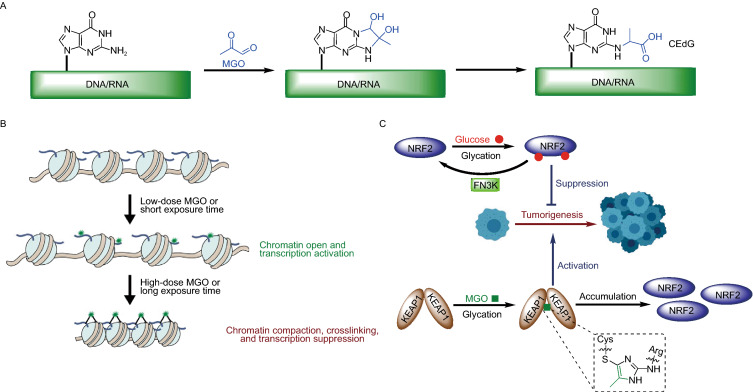
“Non-enzymatic covalent modifications (NECMs) by chemically reactive metabolites have been reported to manipulate chromatin architecture and gene transcription. Unlike canonical post-translational modifications (PTMs), NECMs accumulate over time and are much more dependent on the cellular microenvironment.

A. Guanine residues in DNA and RNA can undergo methylglyoxal glycation, thereby inducing DNA and RNA damage. This DNA damage has few corresponding repair pathways.

B. Histones are primary glycation substrates because of their long half-lives and abundant lysine and arginine residues. Histone glycation was found to induce epigenetic dysregulation through three distinct mechanisms:

  1. Competition with essential enzymatic PTMs for sites (e.g., glycation adducts replace H3K4me3 and H3R8me2);
  2. Changing the charge states of histone tails and subsequently affecting the compaction state of the fiber; and
  3. Altering three-dimensional chromatin architecture by inducing both histone-histone and histone-DNA crosslinking.

Epigenetic impacts of histone glycation were shown to be dependent on sugar concentration and exposure time. Histone and DNA glycation may lead to long term epigenetic impacts on immune responses.

C. Glycation of multiple lysine residues of NRF2 inhibits its oncogenic function. Sugar molecules can influence epigenetic events through glycation of transcription factors and/or their associated regulatory proteins.”

The Transcription factor glycation section referenced a 2011 paper Regulation of the Keap1/Nrf2 system by chemopreventive sulforaphane: implications of posttranslational modifications:

“Nrf2 mRNA level is unaffected by treatment with sulforaphane, suggesting that cellular expression of Nrf2 protein is posttranscriptionally regulated. Posttranslational modifications of Keap1 and Nrf2 proteins seem to play an important role in the regulation of ARE‐dependent gene expression.”


“Neurodegenerative diseases are incurable?” Take responsibility for your own one precious life.

Other curated AGEs papers include:

Broccoli sprout synergies

I was asked for examples of broccoli sprout synergies with supplements mentioned in Week 19 of Changing to a youthful phenotype with broccoli sprouts. I take supplements and broccoli sprouts together an hour or two before meals to keep meal contents from lowering sulforaphane bioavailability. Sulforaphane peaks in plasma between 1 and 2 hours after ingestion.

sulforaphane peak plasma

I started splitting broccoli sprout doses after reading the first study of A pair of broccoli sprout studies. The second study was Untargeted metabolomic screen reveals changes in human plasma metabolite profiles following consumption of fresh broccoli sprouts.

Those subjects ate only “a single dose of fresh broccoli sprouts (providing 200 μmol SFN equivalents) at 8 AM on study day 1.” A 200 μmol amount of sulforaphane is a 35 mg weight.

For comparison, my daily consumption is a worst-case 52 mg sulforaphane from microwaving 131 g of 3-day-old broccoli sprouts per Estimating daily consumption of broccoli sprout compounds. Every day for 22 weeks now. 🙂

The second study’s measurements through 48 hours produced this informative graphic and text:

“Of the features we identified using metabolite databases and classified as endogenous, eleven were significantly altered.

  • Glutathione (GSH) – a major intracellular antioxidant that conjugates with SFN during metabolism – was significantly decreased in plasma at 6, 12 and 24 hours following sprout intake.
  • GSH precursors glutamine (3 and 24 hours) and cysteine (12 and 24 hours) also decreased.
  • We observed significant decreases in dehydroepiandrosterone (DHEA) at 3, 6 and 12 hours.
  • Decreases in fatty acids reported here suggest that even a single dose of broccoli sprouts may alter plasma lipids in healthy adult populations.

While this study focuses largely on potential effects of SFN, broccoli sprouts contain many other bioactive components (e.g., indoles) that could be responsible for our observations as well as additional health benefits.”

Supplements I take twice daily with broccoli sprouts:

  • 1 gram L-glutamine for replenishment and other purposes;
  • 25 mg DHEA to replenish and other effects;
  • 15 mg then 50 mg zinc, which has a role in GSH metabolism;
  • 500 mg glucosamine (anti-inflammatory, crosstalk with Nrf2 signaling pathway);
  • 500 mg acetyl-L-carnitine (induces Nrf2-dependent mitochondrial biogenesis); and
  • 1400 IU then 2000 IU Vitamin D. A major portion of its effects is Nrf2 activation, like sulforaphane. A virtuous circle develops when taken with broccoli sprouts in that the Vitamin D receptor is a Nrf2 target gene inducible by sulforaphane, which then upregulates Nrf2 expression levels.

One of the things eating Boring Chicken Vegetable Soup twice a day does is replenish cysteine. I eat that and steel-cut oats (another cysteine source) separately from broccoli sprouts.

I take 1 gram flax oil with breakfast and dinner instead of with broccoli sprouts. Haven’t found relevant research on whether broccoli sprout compounds decrease omega-3 polyunsaturated alpha linolenic acid C18:3 as they do these six endogenous fatty acids.


Both studies investigated effects of fresh broccoli sprouts. Timing of their measured decreases and increases are different for me because I microwave broccoli sprouts up to but not exceeding 60°C (140°F).

A section of Microwave broccoli seeds to create sulforaphane highlighted metabolic differences among fresh broccoli sprouts, microwaved broccoli sprouts, and broccoli sprout supplements.

“A metabolic profile resulting from my current practices is probably between the Sprout and BSE (broccoli sprout extract) divided-dose statistics:

  1. Sulforaphane intake is greater than eating raw broccoli sprouts because microwaving 3-day-old broccoli sprouts creates sulforaphane in them before eating.
  2. Sulforaphane uptake from microwaved broccoli sprouts is quicker than eating raw broccoli sprouts. It may not be as immediate as taking sulforaphane supplements, which are usually powders.
  3. Sulforaphane dose from microwaved broccoli sprouts is less dependent on an individual’s metabolism than eating raw broccoli sprouts.
  4. Sulforaphane release from microwaved broccoli sprouts continues on to the gut as does eating raw broccoli sprouts. Sulforaphane release from supplements may not per Does sulforaphane reach the colon?.”

Metabolism of broccoli sprout glucoraphanin and other glucosinolates that aren’t preferentially hydrolyzed by microwaving and thorough chewing is assisted in the gut twice a day by:

  • 6 billion IU acidophilus; and
  • 750 mg fructo-oligosaccharides.

See Treating psychopathological symptoms will somehow resolve causes? for updates.