A rejuvenation therapy and sulforaphane

The founder of the epigenetic clock methodology with the coauthor of Aging as an unintended consequence released a 2020 rodent study “Reversing age: dual species measurement of epigenetic age with a single clock” at https://www.biorxiv.org/content/10.1101/2020.05.07.082917v1.full.pdf:

“We employed six clocks to investigate the rejuvenation effects of a plasma fraction treatment in different rat tissues. Two of these epigenetic clocks apply to both humans and rats.

The treatment more than halved the epigenetic ages of blood, heart, and liver tissue. A less pronounced, but statistically significant, rejuvenation effect could be observed in the hypothalamus.

The treatment was accompanied by progressive improvement in the function of these organs as ascertained through numerous biochemical/physiological biomarkers and behavioral responses to assess cognitive functions. Cellular senescence, which is not associated with epigenetic aging, was also considerably reduced in vital organs.

Plasma fraction treatment consists of two series of intravenous injections of plasma fraction. Rats were injected four times on alternate days for 8 days. A second identical series of injections were administered 95 days later. In its entirety, the experiment lasted 155 days.

Overall, this study demonstrates that a plasma-derived treatment markedly reverses aging according to epigenetic clocks and benchmark biomarkers of aging.”

The study hasn’t been peer reviewed, so can’t be viewed yet as conclusive. Given that researchers’ single-most valuable asset is their reputations, though, will the findings have major revisions?


I was alerted to the study by Josh Mitteldorf’s blog post Age Reduction Breakthrough, who did his usual excellent curation:

“Most of the explosion in aging research (and virtually all the venture capital startups) are looking to treat aging at the cellular level. Their paradigm is that aging is an accumulation of molecular damage, and they see their job as engineering of appropriate repair mechanisms.

The truth, as Katcher [the lead lab researcher] understands it, is that, to a large extent, aging is coordinated system-wide via signal molecules in the blood. The problem is that there are thousands of constituents represented in tiny concentrations in blood plasma, but conveying messages that cells read. Which of these are responsible for aging?

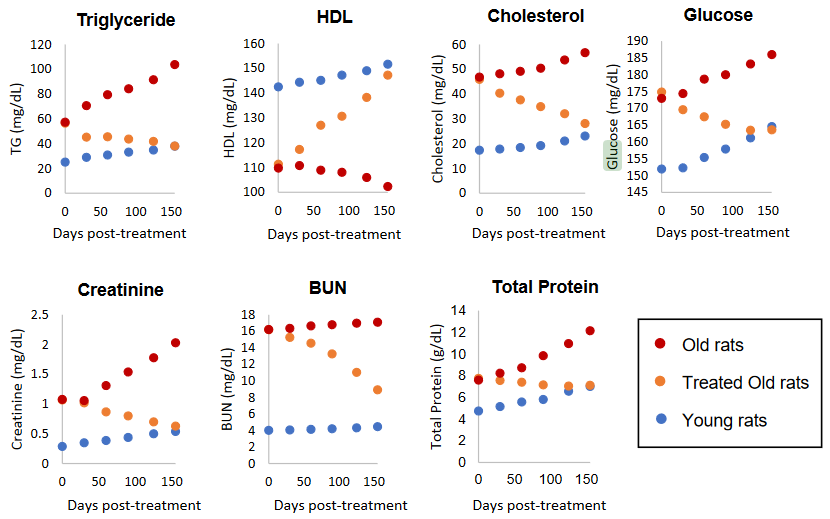
The two-species clock[s] was [were] a significant innovation, a first bridge for translating results from an animal model into their probable equivalent in humans. Besides the methylation clock[s], the paper presents evidence of rejuvenation by many other measures. For example:

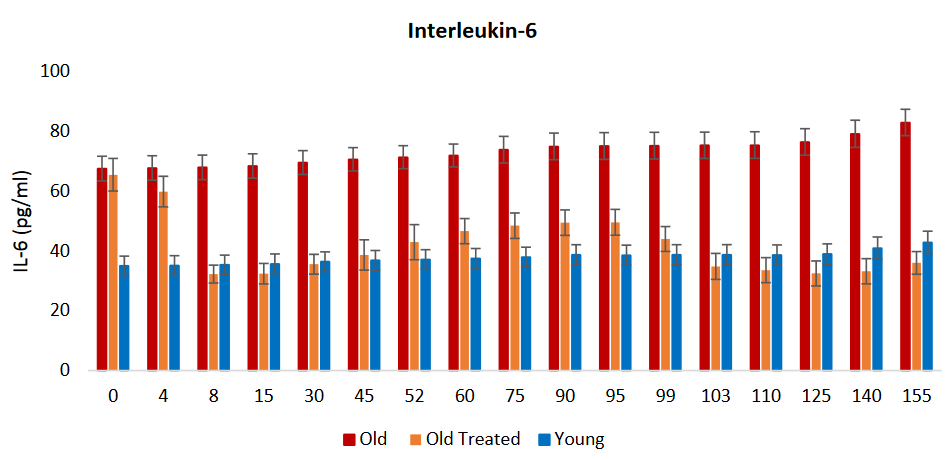
  • IL-6, a marker of inflammation, was restored to low youthful levels;
  • Glutathione (GSH), superoxide dismutase (SOD), and other antioxidants were restored to higher youthful levels;
  • In tests of cognitive function (Barnes maze), treated rats scored better than old rats, but not as well as young rats.;
  • Blood triglycerides were brought down to youthful levels;
  • HDL cholesterol rose to youthful levels; and
  • Blood glucose fell toward youthful levels.

These results bring together three threads that have been gaining credibility over the last decade. Mutually reinforcing, the three have a strength that none of them could offer separately.

  1. The root cause of aging is epigenetic progression = changes in gene expression over a lifetime.
  2. Methylation patterns in nuclear DNA are not merely a marker of aging, but its primary source. Thus aging can be reversed by reprogramming DNA methylation.
  3. Information about the body’s age state is transmitted system-wide via signal molecules in the blood. Locally, tissues respond to these signals and adopt a young or an old cellular phenotype as they are directed.”
Several of these aging measurements are also positively affected by sulforaphane. Using Sulforaphane: Its “Coming of Age” as a Clinically Relevant Nutraceutical in the Prevention and Treatment of Chronic Disease as a reference:

1. “Chronic inflammation”

“Antioxidants in general and glutathione in particular can be depleted rapidly under conditions of oxidative stress, and this can signal inflammatory pathways associated with NF-κB. SFN [sulforaphane] has been shown to inhibit NF-κB in endothelial cells.

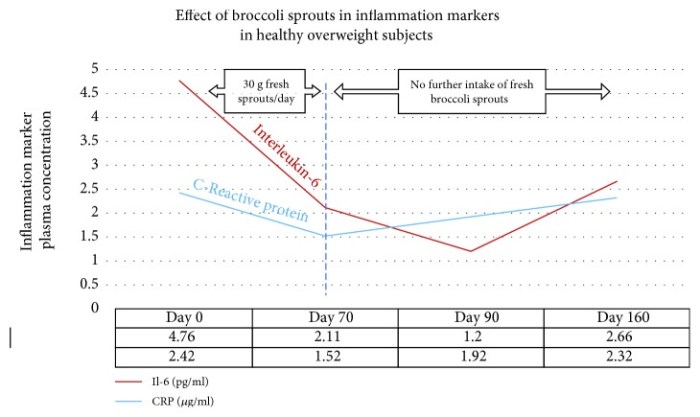
Two key inflammatory cytokines were measured at four time points in forty healthy overweight people [our model clinical trial, Effects of long-term consumption of broccoli sprouts on inflammatory markers in overweight subjects]. The levels of both interleukin-6 (Il-6) and C-reactive protein (CRP) declined over the 70 days during which the sprouts were ingested. These biomarkers were measured again at day 90, wherein it was found that Il-6 continued to decline, whereas CRP climbed again. When the final measurement was taken at day 160, CRP, although climbing, had not returned to its baseline value. Il-6 remained significantly below the baseline level at day 160.”
OMCL2019-2716870.010

2. “Oxidative stress”

“As a mediator for amplification of the mammalian defence system against various stressors, Nrf2 [nuclear factor erythroid 2-related factor 2] sits at the interface between our prior understanding of oxidative stress and the endogenous mechanisms cells use to deal with it. Diseases known to be underpinned by oxidative stress are proving to be more responsive to amplification of cellular defences via Nrf2 activation than by administration of direct-acting antioxidant supplements.

SFN, with absolute bioavailability of around 80%, [is] capable of increasing several endogenous antioxidant compounds via the transcription factor, Nrf2.
Nrf2 is ubiquitously expressed with the highest concentrations (in descending order) in the kidney, muscle, lung, heart, liver, and brain. Nrf2 was shown to prevent endothelial cells from exhibiting a proinflammatory state. Nrf2 is required for protection against glucose-induced oxidative stress and cardiomyopathy in the heart.

Well in excess of 500 genes have been identified as being activated by SFN via the Nrf2/ARE [Antioxidant Response Element] pathway, and it is likely that this underestimates the number as others are being discovered. Of the available SFN clinical trials associated with genes induced via Nrf2 activation, many demonstrate a linear dose-response. More recently, it has become apparent that SFN can behave hormetically with different effects responsive to different doses.

It [sulforaphane] is not only a potent Nrf2 inducer but also highly bioavailable so that modest practical doses can produce significant clinical responses. Other Nrf2 activators [shown in the above image] not only lack potency but also lack the bioavailability to be considered as significant intracellular Nrf2 activators.”


The study’s most relentlessly questioned, scrutinized, and criticized findings may be the two new epigenetic clocks that apply to both humans and rats. The researchers invited other researchers to validate these clocks because:

“If validated, this would be a step change in aging research. Although conservation of aging mechanism could be equally deduced from the existence of multiple individual clocks for other mammals (mouse, dog), the single formula of the human-rat clock that is equally applicable to both species effectively demonstrates this fact.”

The commonalities of this study with efforts to change my inflammatory phenotype with broccoli sprouts were summarized in the Discussion section:

“Apart from rejuvenating the vital organs of the treated rats, plasma fraction also impacted two fundamental physiological processes that underlie a great number of pathologies, namely oxidative stress and inflammation. Within a week of treatment, the markers of chronic inflammation (IL-6 and TNF-α) were significantly reduced and remained low throughout the entire experiment.

Likewise, markers of oxidative stress in brain, heart, lung and liver, which were very much higher in control old rats, were at the end of the experimental period, indistinguishable between plasma fraction-treated old rats and young ones. Concomitant with this drastic reduction in oxidative stress was the augmented levels of antioxidants (GSH, Catalase and SOD) in these tissues, indicating that modulating the levels of ROS [reactive oxygen species] to that of youthful rats is at least one way by which plasma fraction suppresses oxidative stress. It remains to be ascertained whether the rate of ROS generation is also reduced.

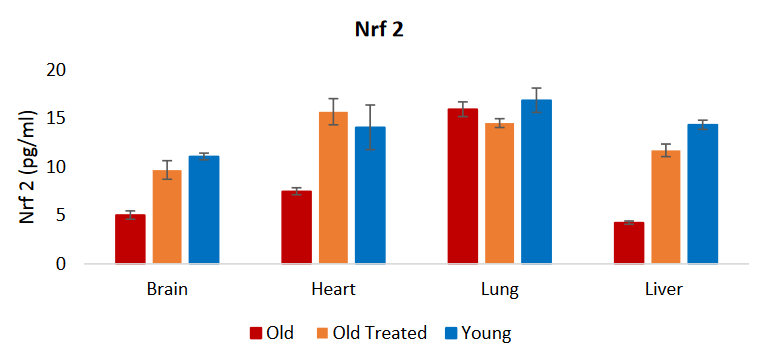
The levels of Nrf2, a transcription factor that impacts on oxidative stress, as well as inflammation, were raised by plasma fraction treatment of old rats to those of the young ones, indicating yet another level by which this treatment modulates these two critical processes. Collectively, these results show that plasma fraction treatment impacts not only the overt performances of organs, but also the underlying physiological processes that are pivotal for optimal organ function and health.”

Great stuff, huh? Are you ready to change your phenotype?

Continued with Part 2 of Rejuvenation therapy and sulforaphane.

I’m kind of asleep right now

This should stay up on YouTube for a while since it uses satire. If it used informed opinions like:

YouTube would censor it.

“I’ll stay at home for the rest of my life if they tell me to. Who knows how to make the best choices for my health and my life? Definitely not me.

The last thing you want is for people to have the freedom to make their own choices and then experience the consequences of their choices.

This new scientific data is irrelevant to me. I already made up my mind when I was the most frightened, and I’m going to keep on believing what makes me the most frightened. Because it’s more congruent to my being that way.

The more scared I am, the more obedient I am.

Yes, I would like a mandatory vaccine. Sometimes the best medicine is like the best sex: non-consensual. They work on the same premise.

It’s pretty well proven that being proactive and taking care of your health won’t keep you healthy. Our only hope is in the pharmaceutical companies protecting us. They have a very good track record of never harming anyone.

I’d like two microchips please. Just to keep me extra safe. Or maybe we should just do a baby step, and use a mandatory tracking app on our phone to keep us safe and then go to the microchips.”

It was known to everybody that the lockdown would cause a catastrophe

To follow up If people don’t stand up for their rights, their rights will be forgotten which YouTube has taken down, here are excerpts from a subsequent interview which YouTube has also taken down:

“If you don’t present bad news, that’s not good news for the media.

On April 17, the Director of the CDC presented at the Presidential Briefing, this graph. Its a count of hospitals reporting some sort of symptom that might be influenza. If the number of people who show up at the hospital peaked around March 18th, that means the number of infections peaked around March 8th.

People don’t go to the hospital for their first symptoms. They give it three or four days, and if it doesn’t get better, then they go to the hospital.

If infections peaked around March 8th, then shutting down schools and the economy ten days later is totally absurd. Shutting down the economy ten days after the curve had already turned down is heartless.

New York hospitals were not overflowing. They were laying off people. 500 sick people is a drop in the bucket for the New York City hospital system.

It may have been unfortunate for the patients that there were so many respirators. That’s a different story.

Double-checking never happened with these models. You’re never off by orders of magnitude. You’re off by 10, 20, 30%. [The Imperial College model for UK deaths from COVID-19 changed from 510,000 to 20,000 IIRC] That was more than two orders of magnitude.

It was known to everybody that the lockdown would cause a catastrophe.

Isolating the nursing homes would have been the thing that would have prevented deaths, and would have prevented hospitals from becoming overloaded. Not letting children and young adults from becoming infected and developing immunity would not prevent the load on hospitals.

You don’t need to do anything to prevent a respiratory disease from running. What you should do – and what was not done in the United States – was to protect the elderly. From the experience in Italy, we already knew that the vast majority of people who died were people in their seventies, eighties, nineties, who had comorbidities.

We also had that in Seattle, people with comorbidities died in nursing homes. At that point in time, one should have isolated at least the nursing homes.

To isolate the children, who are not at risk, and put those at risk at risk, is a catastrophe. It’s a human catastrophe that should have never, ever, happened.

I don’t know where the government finds these so-called experts who don’t understand the very basics about epidemiology.

I have never heard of him and never read any publications on epidemiology by Bill Gates but maybe I overlooked some of his qualifications.

I don’t understand this mantra that ‘We will never go back to normal.’ Why not? The virus is gone. Let’s go back and have a life.

If people would be more active. If they would take part in political decisions. If they would be more awake. If they would fight for their democratic rights. This would never have happened.

It’s a failure of the people to take control of the government, and let the government take control of them.”


The Professor misunderstood the United States form of government. As a general principle, the federal government doesn’t order states to do such and such.

Florida, for example, did exactly what the Professor suggested, “protect the elderly.” Other states didn’t, like Washington, New Jersey, Virginia, Pennsylvania, and especially New York. Don’t know why those states’ residents don’t demand responsibility and accountability.

The Professor didn’t adequately present aspects of human behavior. For example, he cited a CDC chart of a drop in hospital reporting of influenza-like symptoms for his arguments without also citing the media frenzy to scare people away from hospitals for fear that they would catch COVID-19. So of course there were fewer instances of influenza-like symptoms reported by hospitals.

He also said “The virus is gone” but that statement had qualifications. Parts of this interview misplaced their relevant contexts.

We believe what we need to believe

While getting ready for bed tonight, I mused about how my younger brother had such an idealized postmortem view of our father. As he expressed six years ago in an obituary for our high school Literature teacher:

“I’ll remember my favorite teacher and how much he’s meant to my life. My father and Martin Obrentz were the two people who made me care about the things that make me the person I am today.”

Believe what you need to believe, David. But like I said five years ago in Reflections on my four-year anniversary of spine surgery:

“I don’t remember that my three siblings ever received a paddling or belting, although they were spanked. Even before he retired, 17 years before he died, the Miami-Dade County public school system stopped him and the rest of their employees from spanking, whipping, beating, and paddling children.”


It’s extremely important for a child to have a witness to their adverse childhood experiences. Otherwise, it’s crazy-making when these experiences aren’t acknowledged as truths by anyone else.

Especially by those who saw but disavow what they saw.

It didn’t really drum into my conscious awareness until tonight that I had such a witness. It wasn’t my mother, of course, since she directed most of my being whipped with a belt, and beaten with a paddle that had holes in it to produce welts. She has denied and deflected my childhood experiences of her ever since then.

It wasn’t my siblings, regrettably for all of us. It wasn’t our Miami neighbors.

When I was twenty, I ran across a guy 300 miles north in Gainesville, Florida, named David Eisenberg, if I remember correctly. A couple of weeks after we met, he asked if my father was Fred Rice, Dean of Boys, West Miami Junior High School. He said he had been beaten by my father several times!

Those weren’t early childhood memories like mine. Those were experiences of a young man during grades 7-9 that he remembered more than a decade later.

I was shocked. It came at a time when I wasn’t ready to face facts about my life, though. I needed fantasies, beliefs to smother what I felt.


I don’t expect that the impacts of my childhood experiences will ever go away. After three years of Primal Therapy that ended a decade ago, at least mine don’t completely control my life anymore.

Dr. Arthur Janov put self-narratives of several patients’ experiences into his May 2016 book Beyond Belief which I partially curated in February 2017. It was partial because I couldn’t read much past Frank’s horrendous story in pages 89 – 105, “The Myth of a Happy Childhood.”

Forcing people to learn helplessness

Learned helplessness is a proven animal model. Its reliably-created phenotype is often the result of applying chronic unpredictable stress.

As we’re finding out worldwide, forcing humans to learn helplessness works in much the same way, with governments imposing what amounts to martial law. Never mind that related phenotypes and symptoms include:

  • “Social defeat
  • Social avoidance behavior
  • Irritable bowel syndrome
  • Depression
  • Anxiety
  • Anhedonia
  • Increased hypothalamic-pituitary-adrenal (HPA)-axis sensitivity
  • Visceral hypersensitivity” [1]

Helplessness is both a learned behavior and a cumulative set of experiences. Animal models demonstrate that these phenotypes usually continue on throughout the subjects’ entire lifespans.

Will the problems caused in humans by humans be treated by removing the causes? Or will the responses be approaches such as drugs to treat the symptoms?


A major difference between our current situation and the situation depicted below is that during communism, most people didn’t really trust or believe what the authorities, newspapers, television, and radio said:

Image from Prague’s Memorial to the Victims of Communism


[1] 2014 GABAB(1) receptor subunit isoforms differentially regulate stress resilience curated in If research provides evidence for the causes of stress-related disorders, why only focus on treating the symptoms?

Flatten the Panic Curve April 13-17, 2020

To better understand our internal origins of panic, here’s Dr. Arthur Janov’s interpretation of a 2013 Iowa study Fear and panic in humans with bilateral amygdala damage (not freely available):

“Justin Feinstein did a study with those who had a damaged amygdala, the hub of the emotional system. They did not have normal fear responses. But if oxygen supplies were lowered and carbon dioxide supplies were increased, mimicking suffocation (increasing acidity of the blood) there were panic attacks.

Where in the world did those attacks come from? Certainly not from the usual emotional structures.

They believe it includes the brainstem! Because the lowering of oxygen supplies and adding carbon dioxide provoked the lower structures to sense the danger and reacted appropriately.

Very much like what happens to a fetus when the mother smokes during pregnancy and produces those same effects.”


Since those of us who chronically experience panic aren’t going into therapy over this weekend, what else can we do?

1. Stop looking at the John Hopkins Panic map.

2. Search out realistic news such as: “Change in [New York state] ICU admissions is actually a negative number for the first time since we started this intense journey.”

3. Stop clicking sensational headline links.

4. Question your information, and investigate multiple views. Trust has been lost:

  • Dr. Scott Jensen, a Minnesota physician for 35 years and state senator, on the inappropriate CDC / WHO guidelines for reporting COVID-19 deaths:

    “It’s ridiculous. The determination of cause of death is a big deal. The idea that we’re going to allow people to massage and game the numbers is a real issue because we’re going to undermine trust.

    I would never put down influenza as the cause of death. Yet that’s what we’re being asked to do here.”

  • The same day, Dr. Fauci arrogantly grouped physicians in with conspiracy theorists if they didn’t conform to these bordering-on-fraudulent CDC / WHO guidelines:

    “Every time we have a crisis of any sort, there’s always this popping-up of conspiracy theories. I think the deaths that we’re seeing are coronavirus deaths, and the other deaths are not being counted as coronavirus deaths.”

    Telling people to trust him – a bureaucrat who hasn’t been in active practice for over three decades – because he had far superior medical judgment than did practicing doctors who for years continuously see patients?

  • Consider the evidence.
  • Don’t accept lies you feel uneasy about. Trust your internal BS detector.

Which herd will you choose to belong to?

https://nypost.com/video/bison-stampede-terrorizes-family-trapped-in-car/

or

If people don’t stand up for their rights, their rights will be forgotten

YouTube took down this interview and a follow-on interview It was known to everybody that the lockdown would cause a catastrophe.


Here’s an interview last week with a German epidemiologist, Professor Wittkowski, who isn’t on a government payroll:

“First of all the elderly and fragile should be separated from the population where the virus is circulating. Everyone else, especially the children, should keep going to school, because they will be the primary impetus for herd immunity.

Flattening the curve prolongs the time a virus stays in the population. People staying indoors keeps the virus healthy.

Like every other respiratory disease, without government intervention, the pandemic would already be over like it’s over in China and South Korea. Except, both in China and South Korea, social distancing started very close to the peak. By keeping the virus from running its course, they are now having a second wave of cases. It will keep on if we don’t let it complete.

There’s nothing to be scared about. This is a flu epidemic like others, maybe more severe. What’s changed is the internet. People get their information in a few seconds, rather than a week.

Tracking a respiratory disease is impossible. Even in times of social distancing. Nature has ways to make sure we survive.

The standard for AIDS reporting, i.e., the date of infection separated from the date of reporting, is not being followed.

If we had herd immunity now, we wouldn’t have a second wave in the fall. Herd immunity typically lasts for a couple of years. If we prevent herd immunity, it is certain that a second wave will occur.

Testing doesn’t stop anything. Antibody testing will give us estimates of herd immunity, which would be useful.

We don’t die of the virus. We die of pneumonia.

The downside of starting containment is that we should not believe that we are more intelligent than mother nature when we were evolving. Mother nature was pretty good at making sure we were a good match for the diseases that we happened to see virtually every year.

I think people, especially in the United States, are more docile than they should be. People should talk with their politicians, question them, ask them to explain. Because if people don’t stand up to their rights, their rights will be forgotten.”

Using COVID-19 as a cover story

One aspect of the coronavirus is how it’s being used for economic upheavals that weren’t previously acceptable. The view from a Hong Kong analyst:

From March 2020 MMT is now a reality:

“Under cover of the ‘coronacrisis’, we are now witnessing the introduction of Modern Monetary Theory (MMT), which isn’t modern and isn’t a theory.

The dollars that the government will inject into the Fed’s Special Purpose Vehicles (SPVs) were previously created out of nothing when the Fed monetised Treasury securities. So, the Fed creates money out of nothing. This money then goes to the government. The government then deposits some of this money into the Fed’s new SPVs, and based on this injection of ‘capital’ the Fed creates a lot more money out of nothing.

No longer will governments feel constrained by their abilities to tax the population and borrow from bond investors. From now on they will act like they have unrestricted access to a bottomless pool of money.”

The Coming Great Inflation from October 2019 showed that current developments were already in the works:

“The difference between money and every other economic good is that money is on one side of almost every economic transaction. Consequently, there is no single number that can accurately represent the price (purchasing power) of money, meaning that even the most honest and rigorous attempt to calculate the ‘general price level’ will fail. This doesn’t imply that changes in the supply of money have no effect on money purchasing power, but it does imply that the effects of changes in the money supply can’t be explained or understood via a simple equation.

The economic effects of a money-supply increase driven by commercial banks making loans to their customers will be very different from the economic effects of a money-supply increase driven by central banks monetising assets. ‘Main Street’ is the first receiver of the new money in the former case and ‘Wall Street’ is the first receiver of the new money in the latter case. This alone goes a long way towards explaining why the QE programs of Q4-2008 onward had a much greater effect on financial asset prices than on the prices that get added together to form the Consumer Price Index.

Due to the combination of the false belief that large increases in the supply of money have only a minor effect on the purchasing power of money and the equally false belief that the economy would benefit from a bit more ‘price inflation’, it’s a good bet that central banks and governments will devise ways to inject a lot more money into the economy in reaction to future economic weakness.”

Deaths in Italy attributed to COVID-19

Why have so many coronavirus patients died in Italy? from the Telegraph today:

“According to Prof Walter Ricciardi, scientific adviser to Italy’s minister of health, the country’s mortality rate is far higher due to demographics – the nation has the second oldest population worldwide – and the manner in which hospitals record deaths.

‘The age of our patients in hospitals is substantially older – the median is 67, while in China it was 46,’ Prof Ricciardi says. ‘So essentially the age distribution of our patients is squeezed to an older age and this is substantial in increasing the lethality.

But Prof Ricciardi added that Italy’s death rate may also appear high because of how doctors record fatalities.

‘The way in which we code deaths in our country is very generous in the sense that all the people who die in hospitals with the coronavirus are deemed to be dying of the coronavirus.

On re-evaluation by the National Institute of Health, only 12 per cent of death certificates have shown a direct causality from coronavirus, while 88 per cent of patients who have died have at least one pre-morbidity – many had two or three,’ he says.”


Refactoring the current 4,825 deaths in Italy attributed to COVID-19 equals 579 (4,825 x .12). That number places Italy slightly above France’s 562 current total.

Evidence-based statements wouldn’t sufficiently frighten the herd, though. The article continued on to include now-obligatory, hyperbolic, unscientific WHO statements referencing a “miracle.”

Image from “Culture Audits: We Have Been Asking the Wrong Question”

Recover your sanity

Men, it has been well said:

  • Think in herds; it will be seen that
  • They go mad in herds, while
  • They only recover their senses slowly, one by one.

During the great plague, which ravaged all Europe between the years 1345 and 1350, it was generally considered that the end of the world was at hand.

‘But the facts, my dear fellow,’ said his friend, ‘the facts do not agree with your theory.’ ‘Don’t they?’ replied the philosopher, shrugging his shoulders, ‘then, tant pis pour les faits’ – so much the worse for the facts!”

Charles Mackay, 1841

https://www.gutenberg.org/ebooks/24518 “Memoirs of Extraordinary Popular Delusions and the Madness of Crowds”

Alfred Jacob Miller “Hunting buffalo” 1837

“Establishing the hidden communication networks in large self-organized groups facilitates a quantitative understanding of behavioral contagion.

An individual will be more likely to respond (is more susceptible) if it:

  • Is strongly connected to the initiator (short path length), and if it
  • Has neighbors which are strongly connected to each other.”

Why is it so difficult to live your own life?

Wander into creativity?

This 2019 US study investigated the context of creative ideas:

“Creative inspiration routinely occurs during moments of mind wandering. Approximately 20% of ideas occurred in this manner.

Although ideas that occurred while participants were both on task and mind wandering did not differ in overall quality, there were several dimensions on which they did consistently differ. Ideas that occurred while mind wandering were reported to be experienced with a greater sense of ‘aha’ and were more likely to involve overcoming an impasse.

The present findings are consistent with the view that spontaneous task-independent mind wandering represents a source of the inventive ideas that individuals have each day. This potential function of mind wandering may help to explain why a mental state that can be associated with significant negative outcomes is nevertheless so ubiquitous.”

“Would you say the idea felt like an ‘aha!’ moment?” and “How creative do you feel the idea was?” were the closest items to emotional measures. “How important do you think this idea is?” and several months later “How important has the idea proven to be overall?” were used to measure importance.

https://labs.psych.ucsb.edu/schooler/jonathan/sites/labs.psych.ucsb.edu.schooler.jonathan/files/pubs/0956797618820626.pdf “When the Muses Strike: Creative Ideas of Physicists and Writers Routinely Occur During Mind Wandering”

I came across this study from its reference in How Productivity Apps Can Make Us Less Productive (And Less Happy).


The study’s design missed opportunities to discover sources of creative ideas and feelings of importance. It focused on effects and intentionally disregarded causes, despite asserting that “mind wandering represents a source of inventive ideas.”

Experiments were subjectively biased for a framework that considered ideas as originating solely from a person’s thinking brain. A framework like Primal Therapy that demonstrated how ideas may arise as defenses against feelings wasn’t considered, although relevant.

Let’s use the finding “Ideas that occurred while mind wandering were more likely to involve overcoming an impasse” as an example for a Primal Therapy framework’s view:

  1. A person who has a seemingly unsolvable work problem probably encounters feelings of helplessness.
  2. Staying busy with tasks can distract them from these feelings.
  3. During times of less cognitive activity, though, these feelings can have more impetus.
  4. The resultant discomfort will trigger ideas to help ward off helpless feelings.

Regarding importance judgments, there are many needs a person develops and tries to satisfy as substitutes for real needs that weren’t fulfilled. I’ve focused on the need to feel important in blog posts such as Your need to feel important will run your life, and you’ll never feel satisfied.

The epigenetics of perinatal stress

This 2019 McGill review discussed long-lasting effects of perinatal stress:

“Epigenetic processes are involved in embedding the impact of early-life experience in the genome and mediating between social environments and later behavioral phenotypes. Since these phenotypes are apparent a long time after early experience, changes in gene expression programming must be stable.

Although loss of methylation in a promoter is necessary for expression, it is not sufficient. Demethylation removes a barrier for expression, but expression might be realized at the right time or context when needed factors or signals are present.

DNA methylation anticipates future transcriptional response to triggers. Comparing steady-state expression with DNA methylation does not capture the full meaning and scope of regulatory roles of differential methylation.

A model for epigenetic programming by early life stress:

  1. Perinatal stress perceived by the brain triggers release of glucocorticoids (GC) from the adrenal in the mother prenatally or the newborn postnatally.
  2. GC activate nuclear glucocorticoid receptors across the body, which epigenetically program (demethylate) genes that are targets of GR in brain and white blood cells (WBC).
  3. Demethylation events are insufficient for activation of these genes. A brain specific factor (TF) is required for expression and will activate low expression of the gene in the brain but not in blood.
  4. During adulthood a stressful event transiently triggers a very high level of expression of the GR regulated gene specifically in the brain.

Horizontal arrow, transcription; circles, CpG sites; CH3 in circles, methylated sites; empty circles, unmethylated CpG sites; horizon[t]al curved lines, mRNA.”

Review points discussed:

  • “Epigenetic marks are laid down and maintained by enzymes that either add or remove epigenetic modifications and are therefore potentially reversible in contrast to genetic changes.
  • Response to early life stress and maternal behavior is also not limited to the brain and involves at least the immune system as well.
  • The placenta is also impacted by maternal social experience and early life stress.
  • Most studies are limited to peripheral tissues such as saliva and white blood cells, and relevance to brain physiology and pathology is uncertain.
  • Low absolute differences in methylation seen in most human behavioral EWAS raise questions about their biological significance.

  • Although post-mortem studies examine epigenetic programming in physiologically relevant tissues, they represent only a final and single stage that does not capture dynamic evolution of environments and epigenetic programming in living humans.”

https://www.ncbi.nlm.nih.gov/pmc/articles/PMC6952743/ “The epigenetics of perinatal stress”


Other reviewers try to ignore times when we were all fetuses and newborns. For example, in the same journal issue was a Boston review of PTSD that didn’t mention anything about earliest times of human lives! Those reviewers speculated around this obvious gap on their way to being paid by NIH.

Why would researchers ignore perinatal stress events that prime humans for later-life PTSD? Stress generally has a greater impact on fetuses and newborns than on infants, and a greater impact on infants than on adults.

Clearing out the 2019 queue of interesting papers

I’m clearing out the below queue of 27 studies and reviews I’ve partially read this year but haven’t taken the time to curate. I have a pesky full-time job that demands my presence elsewhere during the day. :-\

Should I add any of these back in? Let’s be ready for the next decade!


Early life

https://link.springer.com/article/10.1007/s12035-018-1328-x “Early Behavioral Alterations and Increased Expression of Endogenous Retroviruses Are Inherited Across Generations in Mice Prenatally Exposed to Valproic Acid” (not freely available)

https://www.sciencedirect.com/science/article/pii/S0166432818309392 “Consolidation of an aversive taste memory requires two rounds of transcriptional and epigenetic regulation in the insular cortex” (not freely available)

https://www.nature.com/articles/s41380-018-0265-4 “Intergenerational transmission of depression: clinical observations and molecular mechanisms” (not freely available)

mother

https://www.ncbi.nlm.nih.gov/pmc/articles/PMC6454089/ “Epigenomics and Transcriptomics in the Prediction and Diagnosis of Childhood Asthma: Are We There Yet?”

https://www.ncbi.nlm.nih.gov/pmc/articles/PMC6628997/Placental epigenetic clocks: estimating gestational age using placental DNA methylation levels”

https://www.ncbi.nlm.nih.gov/pmc/articles/PMC6770436/ “Mismatched Prenatal and Postnatal Maternal Depressive Symptoms and Child Behaviours: A Sex-Dependent Role for NR3C1 DNA Methylation in the Wirral Child Health and Development Study”

https://www.sciencedirect.com/science/article/pii/S0889159119306440 “Environmental influences on placental programming and offspring outcomes following maternal immune activation”

https://academic.oup.com/mutage/article-abstract/34/4/315/5581970 “5-Hydroxymethylcytosine in cord blood and associations of DNA methylation with sex in newborns” (not freely available)

https://physoc.onlinelibrary.wiley.com/doi/full/10.1113/JP278270 “Paternal diet impairs F1 and F2 offspring vascular function through sperm and seminal plasma specific mechanisms in mice”

https://onlinelibrary.wiley.com/doi/full/10.1111/nmo.13751 “Sex differences in the epigenetic regulation of chronic visceral pain following unpredictable early life stress” (not freely available)

https://www.ncbi.nlm.nih.gov/pmc/articles/PMC6811979/ “Genome-wide DNA methylation data from adult brain following prenatal immune activation and dietary intervention”

https://link.springer.com/article/10.1007/s00702-019-02048-2miRNAs in depression vulnerability and resilience: novel targets for preventive strategies”


Later life

https://www.ncbi.nlm.nih.gov/pmc/articles/PMC6543991/ “Effect of Flywheel Resistance Training on Balance Performance in Older Adults. A Randomized Controlled Trial”

https://www.mdpi.com/2411-5142/4/3/61/htm “Eccentric Overload Flywheel Training in Older Adults”

https://www.nature.com/articles/s41577-019-0151-6 “Epigenetic regulation of the innate immune response to infection” (not freely available)

https://link.springer.com/chapter/10.1007/978-981-13-6123-4_1 “Hair Cell Regeneration” (not freely available)

https://www.ncbi.nlm.nih.gov/pmc/articles/PMC6422915/Histone Modifications as an Intersection Between Diet and Longevity”

https://www.sciencedirect.com/science/article/abs/pii/S0306453019300733 “Serotonin transporter gene methylation predicts long-term cortisol concentrations in hair” (not freely available)

https://www.sciencedirect.com/science/article/abs/pii/S0047637419300338 “Frailty biomarkers in humans and rodents: Current approaches and future advances” (not freely available)

https://onlinelibrary.wiley.com/doi/full/10.1111/pcn.12901 “Neural mechanisms underlying adaptive and maladaptive consequences of stress: Roles of dopaminergic and inflammatory responses

https://www.ncbi.nlm.nih.gov/pmc/articles/PMC6627480/ “In Search of Panacea—Review of Recent Studies Concerning Nature-Derived Anticancer Agents”

https://www.sciencedirect.com/science/article/abs/pii/S0028390819303363 “Reversal of oxycodone conditioned place preference by oxytocin: Promoting global DNA methylation in the hippocampus” (not freely available)

https://www.futuremedicine.com/doi/10.2217/epi-2019-0102 “Different epigenetic clocks reflect distinct pathophysiological features of multiple sclerosis”

https://www.ncbi.nlm.nih.gov/pmc/articles/PMC6834159/ “The Beige Adipocyte as a Therapy for Metabolic Diseases”

https://www.sciencedirect.com/science/article/abs/pii/S8756328219304077 “Bone adaptation: safety factors and load predictability in shaping skeletal form” (not freely available)

https://www.nature.com/articles/s41380-019-0549-3 “Successful treatment of post-traumatic stress disorder reverses DNA methylation marks” (not freely available)

https://www.sciencedirect.com/science/article/abs/pii/S0166223619301821 “Editing the Epigenome to Tackle Brain Disorders” (not freely available)

A blood plasma aging clock

This 2019 Stanford human study developed an aging clock using blood plasma proteins:

“We measured 2,925 plasma proteins from 4,331 young adults to nonagenarians [18 – 95] and developed a novel bioinformatics approach which uncovered profound non-linear alterations in the human plasma proteome with age. Waves of changes in the proteome in the fourth, seventh, and eighth decades of life reflected distinct biological pathways, and revealed differential associations with the genome and proteome of age-related diseases and phenotypic traits.

To determine whether the plasma proteome can predict chronological age and serve as a “proteomic clock,” we used 2,858 randomly selected subjects to fine-tune a predictive model that was tested on the remaining 1,473 subjects. We identified a sex-independent plasma proteomic clock consisting of 373 proteins. Subjects that were predicted younger than their chronologic age based on their plasma proteome performed better on cognitive and physical tests.

The 3 age-related crests were comprised of different proteins. Few proteins, such as GDF15, were among the top 10 differentially expressed proteins in each crest, consistent with its strong increase across lifespan. Other proteins, like chordin-like protein 1 (CHRDL1) or pleiotrophin (PTN), were significantly changed only at the last two crests, reflecting their exponential increase with age.

We observed a prominent shift in multiple biological pathways with aging:

  • At young age (34 years), we observed a downregulation of proteins involved in structural pathways such as the extracellular matrix. These changes were reversed in middle and old ages (60 and 78 years, respectively).
  • At age 60, we found a predominant role of hormonal activity, binding functions and blood pathways.
  • At age 78, key processes still included blood pathways but also bone morphogenetic protein signaling, which is involved in numerous cellular functions, including inflammation.

These results suggest that aging is a dynamic, non-linear process characterized by waves of changes in plasma proteins that are reflective of a complex shift in the activity of biological processes.”

https://www.biorxiv.org/content/10.1101/751115v1.full “Undulating changes in human plasma proteome across lifespan are linked to disease”


A non-critical review of the study was published by the Life Extension Advocacy Foundation. Frequent qualifiers like “could,” “may,” and “possible” were consistent with the confirmation biases of their advocacy.

There were several misstatements of what the study did, including the innumerate:

  1. “used around half of the participant data to build a “proteomic clock”
  2. tested it on the other half of the participants
  3. a total of 3000 proteins”

Per the above study quotation, the numbers were actually:

  1. Closer to two thirds (2,858 ÷ 4,331), not “around half”;
  2. The other third (1,473 ÷ 4,331), not “the other half”; and
  3. 2,925 not 3000.

The final paragraph and other parts of the review bordered on woo. Did a review of the findings have to fit LEAF’s perspective?


In contrast, Josh Mitteldorf did his usual excellent job of providing contexts for the study with New Aging Clock based on Proteins in the Blood, emphasizing comparisons with epigenetic clock methodologies:

“For some of the proteins that feature prominently in the clock, we have a good understanding of their metabolic function, and for the most part they vindicate my belief that epigenetic changes are predominantly drivers of senescence rather than protective responses to damage.

Wyss-Coray compared the proteins in the new (human) proteome clock with the proteins that were altered in the (mouse) parabiosis experiments, and found a large overlap [46 proteins change in the same direction and define a conserved aging signature]. This may be the best evidence we have that the proteome changes are predominantly causal factors of senescence.

46 plasma proteins

Almost all the proteins identified as changing rapidly at age 78 are increasing. In contrast, a few of the fastest-changing proteins at age 60 are decreasing (though most are increasing). GDF15 deserves a story of its own.

The implication is that a more accurate clock can be constructed if it incorporates different information at different life stages. None of the Horvath clocks have been derived based on different CpG sites at different ages, and this suggests an opportunity for a potential improvement in accuracy.”

A commentator linked the below study:

https://www.sciencedirect.com/science/article/pii/S0092867419308323 “GDF15 Is an Inflammation-Induced Central Mediator of Tissue Tolerance” (not freely available)

which prompted his response:

“Thanks, Lee! This is just the kind of specific information that I was asking for. It would seem we should construct our clocks without GDF15, which otherwise might loom large.”

Using oxytocin receptor gene methylation to pursue an agenda

A pair of 2019 Virginia studies involved human mother/infant subjects:

“We show that OXTRm [oxytocin receptor gene DNA methylation] in infancy and its change is predicted by maternal engagement and reflective of behavioral temperament.”

https://www.ncbi.nlm.nih.gov/pmc/articles/PMC6795517 “Epigenetic dynamics in infancy and the impact of maternal engagement”

“Infants with higher OXTRm show enhanced responses to anger and fear and attenuated responses to happiness in right inferior frontal cortex, a region implicated in emotion processing through action-perception coupling.

Infant fNIRS [functional near-infrared spectroscopy] is limited to measuring responses from cerebral cortex. It is unknown whether OXTR is expressed in the cerebral cortex during prenatal and early postnatal human brain development.”

https://www.sciencedirect.com/science/article/pii/S187892931830207X “Epigenetic modification of the oxytocin receptor gene is associated with emotion processing in the infant brain”


Both studies had weak disclosures of limitations on their findings’ relevance and significance. The largest non-disclosed contrary finding was from the 2015 Early-life epigenetic regulation of the oxytocin receptor gene:

These results suggest that:

  • Blood Oxtr DNA methylation may reflect early experience of maternal care, and
  • Oxtr methylation across tissues is highly concordant for specific CpGs, but
  • Inferences across tissues are not supported for individual variation in Oxtr methylation.

That rat study found that blood OXTR methylation of 25 CpG sites couldn’t accurately predict the same 25 CpG sites’ OXTR methylation in each subject’s hippocampus, hypothalamus, and striatum (which includes the nucleus accumbens) brain areas. Without significant effects in these limbic system structures, there couldn’t be any associated behavioral effects.

But CpG site associations and correlations were deemed good in the two current studies because they cited:

“Recent work in prairie voles has found that both brain- and blood-derived OXTRm levels at these sites are negatively associated with gene expression in the brain and highly correlated with each other.”

https://www.sciencedirect.com/science/article/pii/S0306453018306103 “Early nurture epigenetically tunes the oxytocin receptor”

The 2018 prairie vole study – which included several of the same researchers as the two current studies – found four nucleus accumbens CpG sites that had high correlations to humans. Discarding one of these CpG sites allowed their statistics package to make a four-decimal place finding:

“The methylation state of the blood was also associated with the level of transcription in the brain at three of the four CpG sites..whole blood was capable of explaining 94.92% of the variance in Oxtr DNA methylation and 18.20% of the variance in Oxtr expression.”

Few limitations on the prairie vole study findings were disclosed. Like the two current studies, there wasn’t a limitation section that placed research findings into suitable contexts. So readers didn’t know researcher viewpoints on items such as:

  • What additional information showed that 3 of the 30+ million human CpGs accurately predicted specific brain OXTR methylation and expression from saliva OXTR methylation?
  • What additional information demonstrated how “measuring responses from cerebral cortex” although “it is unknown whether OXTR is expressed in the cerebral cortex” provided detailed and dependable estimates of limbic system CpG site OXTR methylation and expression?
  • Was the above 25-CpG study evidence considered?

Further contrast these three studies with a typical, four-point, 285-word limitation section of a study like Prenatal stress heightened adult chronic pain. The word “limit” appeared 6 times in that pain study, 3 times in the current fNIRS study, and 0 times in the current maternal engagement and cited prairie vole studies.

Frank interpretations of one’s own study findings to acknowledge limitations is one way researchers can address items upfront that will be questioned anyway. Such analyses also indicate a goal to advance science.