Activating Nrf2 pathways with sunlight

A 2025 review subject was non-electrophilic Nrf2 activators:

“NRF2 can be induced via:

  1. Non-specific electrophile/ROS generation,
  2. Disruption of the NRF2–KEAP1 protein–protein interaction,
  3. Autophagy-mediated KEAP1 degradation,
  4. Direct modulation of NRF2 protein stability, and
  5. Post-transcriptional/post-translational modifications.

Except for a single intervention, therapeutic hypothermia, every non-pharmacological strategy with defined mechanisms employs more than one of these routes, most frequently pairing post-translational modification with either protein-stability regulation or limited electrophile production. This combinatorial activation elevates both NRF2 abundance and transcriptional competence while minimizing the liabilities of purely electrophilic agents and circumventing the efficacy limitations.

Classical electrophilic NRF2 activators, despite potent activation potential, exhibit paradoxically reduced therapeutic efficacy relative to single antioxidants, attributable to concurrent oxidative stress generation, glutathione depletion, mitochondrial impairment, and systemic toxicity. Although emerging non-electrophilic pharmacological activators offer therapeutic potential, their utility remains limited by bioavailability and suboptimal potency.”

https://www.mdpi.com/2076-3921/14/9/1047 “Non-Electrophilic Activation of NRF2 in Neurological Disorders: Therapeutic Promise of Non-Pharmacological Strategies”


These researchers exaggerated problems of electrophilic Nrf2 activators such as “mitochondrial impairment, and systemic toxicity” so they could have something to write about. Just like every intervention, the dose determines the response. I can’t imagine not eating broccoli sprouts in favor of brain zapping with electroconvulsive therapy or transcranial magnetic stimulation just to avoid sulforaphane’s temporary mild oxidative stress that activates Nrf2 for 15-20 minutes.

But there are limitations to how an unwell person can benefit from Nrf2 activation. For example, I haven’t curated many cancer papers because healthy body functioning can’t be assumed.

I walk the beach at sunrise, weather permitting, because it makes me feel good, and I’m always happy afterwards that I made the effort to get outside. That doing so combines two of the above non-electrophilic Nrf2 activators, physical exercise and photobiomodulation, hasn’t been a consideration.

These reviewers didn’t include human studies of sunlight’s effects. Nevermind that hospitals used to have sundecks for patients, and John Ott published relevant human and animal studies over fifty years ago.


Many studies have an undisclosed limitation in that they were performed without controlling for light. For example, knowing that mitochondria are light-activated, I don’t trust those studies’ in vivo, ex vivo, or in vitro results.

None of the 100 most recent 2025 photobiomodulation papers examined natural sunlight. Maybe it wouldn’t sell red light, green light, and blue light lasers and other products to show that people could produce the same effects themselves with sunlight at different times of the day? Would researchers damage their reputations to study a freely-available intervention, one where they don’t “do something”?

What you expect may not be what you find

I’m halfway through a 90-day trial of plasmalogens coincident with improving peroxisomal function via resistance exercise and time-restricted eating. I haven’t curated related 2023 papers I’ve read concerning plasmalogens, peroxisomes, sphingolipids, ceramides, and mitochondrial interactions with these, mainly because I haven’t seen human-pertinent aspects similar to Dr. Goodenowe’s efforts.

The 2023 papers I’ve read have more to do with researcher incentives rather than actual human benefits. I’d guess that researchers care about these related subjects to the extent that they want to be the first to publish arcane details about them, like peroxisomes in the parotid salivary gland.

One area I expected to see a difference at the regimen’s beginning was in my peripheral nervous system Schwann cells. Instead, I had taste and smell improvements in my primary olfactory nervous system olfactory ensheathing cells, which are highly similar to Schwann cells. I was also happy to experience an immediate halt to my ulnar nerve elbow pain after what I interpret as ProdromeNeuro effects and perhaps coincident ProdromeGlia effects on items upstream of Schwann cells.

Here are three papers on Schwann cells that I haven’t yet seen as applicable to my current regimen, starting with a 2022 review:

“We summarise contributions of neurotransmitter receptors in regulation of morphogenetic events of glial cells, with particular attention paid to the role of acetylcholine receptors in Schwann cell physiology. This redundant and complex integrated regulation system could be explained as a mechanism of preserving glial cell physiology. In case of a single receptor signalling dysfunction, other neurotransmitters can overcome the deficit, preserving functions of glia and health of the nervous system.

Increased knowledge in medicinal chemistry and in bioinformatics accompanied by drug delivery studies might open a fascinating therapeutic perspective for cholinergic mimetics for treatment of several nervous system pathologies, and in reducing neuroinflammation both in the central and peripheral nervous systems.”

https://www.mdpi.com/2227-9059/11/1/41 “Emerging Roles of Cholinergic Receptors in Schwann Cell Development and Plasticity”


A 2023 study investigated the vagus nerve’s Schwann cells’ impact with gut function:

“The vagus nerve is the longest extrinsic cranial nerve in the body. It regulates gut physiology through the intrinsic nervous system (myenteric and submucosal plexus) and enteric glial cells interactions, which participate in controlling intestinal absorption, secretion, immune homeostasis, and motility.

Normal intestinal motility is critical for nutrition assimilation and several biological functions. The loss of normal gut function aggravates inflammation, oxidative stress, and other cellular stressors.”

https://bmcbiotechnol.biomedcentral.com/articles/10.1186/s12896-023-00781-x “A critical role for erythropoietin on vagus nerve Schwann cells in intestinal motility”


I haven’t curated a Buck Institute for Research on Aging sponsored study for a while, since their 2015 A study of how “age” itself wasn’t a causal factor for wound-healing differences detracted from science and their 2020 Linear thinking about biological age clocks wasted resources.

This 2023 rodent study couldn’t investigate anything outside of Buck’s limited paradigm’s echo chamber. This sponsor would rather break their arms patting themselves on their backs pretending they’re advancing science than fund relevant human research successes that do advance science:

“Following peripheral nerve injury, successful axonal growth and functional recovery require Schwann cell (SC) reprogramming into a reparative phenotype. This work provides the first characterization of senescent SCs and their influence on axonal regeneration in aging and chronic denervation.”

https://www.embopress.org/doi/full/10.15252/emmm.202317907 “Senescent Schwann cells induced by aging and chronic denervation impair axonal regeneration following peripheral nerve injury”


PXL_20231207_185309349

A good activity for bad weather days

A free educational series recorded in 2021-2022 available at https://drgoodenowe.com/dr-goodenowes-educational-seminars/ takes the viewer through underlying research and principles of Dr. Goodenowe’s approach to health. It’s advertised as lasting four hours, but took me two days to view.

The series’ discussions and references are background material to better understand later presentations and interviews. Points of interest included:

  • Seminar B100 shows that the metabolomic profile of people who regularly eat broccoli is different than others.
  • B109 clarifies how peroxisomal function is improved through resistance exercise and intermittent fasting.
  • C103 and C104 show how plasmalogens act against neurodegeneration (Parkinson’s disease and multiple sclerosis).

Texts below videos are additional information, not transcripts. C101 text is historically informative.


The B200 ProdromeScan tutorial will take more study. But unlike Labcorp tests, ordering a ProdromeScan requires using a practitioner in Dr. Goodenowe’s network.

I sent the following to Prodrome customer service earlier this month:

Please add me to your approved list for ProdromeScan.

Customer service replied:

“We only add health professionals to an approved list, not individuals.”

I responded:

Good morning. I looked at the websites of doctors who are associated with Dr. Goodenowe who are near me. All of them are too compromised for me to establish a doctor / patient relationship. But I’m glad they left up their blog posts from earlier this decade so I could see who they really were before I reached out to them.

I request an exception to the policy.

Customer service replied:

“There is no exception that can be made to this policy. You need to be a patient of a certified practitioner.”

I’ll escalate my request before my 90-day trial of Prodrome Glia and Neuro products ends so I can get an appropriate metabolomic status. Right now, I won’t involve someone I can’t trust just to know my ProdromeScan information that’s additional to next week’s Labcorp tests.

My treatment-result metabolomic data is probably not mature today on Day 29 of ProdromeGlia and ProdromeNeuro supplementation, resistance exercise, and intermittent fasting. I otherwise wouldn’t have experienced these two events:


I have a quibble with the series’ recommendations for taking N-acetyl cysteine. Relevant views and research:

Switch on your Nrf2 signaling pathway pointed out:

“We use NAC in the lab all the time because it stops an Nrf2 activation. So that weak pro-oxidant signal that activates Nrf2, you switch it off by giving a dose of NAC. It’s a potent antioxidant in that right, but it’s blocking signalling. And that’s what I don’t like about its broad use.”

If someone bombs themself everyday with antioxidants, they’re doing nothing to improve training of their endogenous systems’ defensive functions. What happens when they stop bombing? One example was a 2022 human study that found GlyNAC-induced improvements dissolved back to baseline after supplements stopped.

Also, Precondition your defenses with broccoli sprouts highlighted NAC’s deleterious effects on autophagy and lysosome functions:

“TFEB activity is required for sulforaphane (SFN)-induced protection against both acute oxidant bursts and chronic oxidative stress. SFN-induced TFEB nuclear accumulation was completely blocked by pretreatment of cells by N-acetyl-cysteine (NAC), or by other commonly used antioxidants. NAC also blocked SFN-induced mRNA expression of TFEB target genes, as well as SFN-induced autophagosome formation.”

If a secondary goal of taking NAC per is also necessary for the formation of glutathione, taurine can do that without an antioxidant bomb. Taurine supplementation will free up cysteine to do things other than synthesize taurine, like synthesize glutathione.


PXL_20231123_194849211.MP

Reversing biological age in rats

This 2023 rodent study wrapped together findings of the original study curated in A rejuvenation therapy and sulforaphane, and the second follow-on study mentioned in Signaling pathways and aging. I’ll start by highlighting specifics of the later study:

“Pronounced rejuvenation effects in male rats prompted us to conduct further confirmatory experiments. A particularly important consideration is the effectiveness of E5 with regards to sex, as sex-dependent rejuvenation by some interventions have previously been reported.

To assess E5’s applicability to both male and female Sprague Dawley rats, we studied 12 males (6 treated with E5, 6 with saline) and 12 females (6 treated with E5, 6 with saline). These rats were treated every 45 days with an injection of E5 or saline. Rats were monitored for 165 days, and blood was drawn at six time points: 0, 15, 30, 60, 150 and 165 days from the first injection.

We observed highly significant improvements in TNF alpha and IL-6 levels for both males and females in the blood of E5-injected rats over that of saline controls. We also observed a substantial improvement in grip strength.

Our study shows age reversal effects in both male and female rats, but E5 is more effective in males.”


Another experimental group was started with old rats of both sexes. Using the human / rat relative clock developed in the original study, a human equivalent age to these rats at 26 months old was ((112.7 weeks / 197.6 weeks maximum rat lifespan) x 122.5 years maximum human lifespan) = 69.8 years:

“To validate our epigenetic clock results, we conducted a second set of E5 experiments with Sprague Dawley rats of both sexes. When these rats turned 26 months old, half (9 rats) received the E5 treatment while the other half (8 rats) received only the control treatment (saline injection). We analyzed methylation data from two blood draws: blood draw before treatment (baseline) and a follow up sample (15 days after the E5/saline treatment).”

Treatment measurements were affected by one female control group outlier. Panels F through J were recalculated after removing the outlier to show significant effects in both sexes:

second follow-on results

“A) Final version of the rat clock for blood. Baseline measurement (x-axis) versus follow up measurement (15 days after treatment, y-axis). Points (rats) are colored by treatment: red=treated by E5, black=treated with saline only. Rotated grey numbers underneath each bar reports the group sizes. Each bar plot reports the mean value and one standard error.

B,D,E) Difference between follow up measurement and baseline measurement (y-axis) versus treatment status in B) all rats, D) female rats only, E) male rats only. C) is analogous to B) but uses the pan tissue clock for rats.

Panels in the second row (F,G,H,I,J) are analogous to those in the first row but the analysis omitted one control rat (corresponding to the black dot in the lower right of panel A).”

https://www.biorxiv.org/content/10.1101/2023.08.06.552148v1 “Reversal of Biological Age in Multiple Rat Organs by Young Porcine Plasma Fraction”


A description of how E5 plasma fraction was made starts on page 16 of the *.pdf file. The next E5 study will be done with dogs per July 2023 updates in blog post comments:

“On E5 our entire team is working hard towards the launch of an old Beagle dogs trial this month. We want to make them really young, healthy, happy, and jumping around like 1 and 2 year olds.

Primary endpoint is safety and toxicology to test various dose strengths and frequencies. Secondary endpoints are more than 20.

As you know, we like to test exhaustively to get a sharper perspective of what’s happening. In rat studies we tested 30 biomarkers, including functional. We are especially keen to check kidney markers.

There are two clocks for dogs we are interested in to get third party confirmation of age reversal. Horvath dog clock is ready and GlycanAge dog clock is under construction.

We are requesting all organizations that support pets and aging to financially support their project of building an accurate dog clock. Not only will it help veterinary aging research like ours, but also all the dog owners that may want to know how much improvement their dog received from treatment. Dr. Matt Kaeberlain is an advisor on their project.”

Week 127 of Changing to a youthful phenotype with sprouts

1. My third gut microbiome test results came in this week. I submitted a sample earlier this month to follow methods in the second paper of Improving dietary fiber research in a continuing effort to treat my gut microbiota well.

But that study’s vendor was unable to ship an EU-approved product from The Netherlands to the US because it wasn’t FDA-approved. Our US pets can eat dried chicory root products every day, but we can’t? I haven’t received any positive responses from US vendors of dried chicory root products, so I’ll keep taking up to 10 grams of EU-manufactured inulin daily.

I also followed Dr. Horvath’s suggestion in Epigenetic clocks so far in 2022 to “measure epigenetic age because there’s always an opportunity to make a discovery” and submitted a blood test. Will link to those results when they arrive – How to measure biological age?

2. These gut microbiome test results highlight a 16S ribosomal RNA technology flaw that Resistant starch therapy pointed out:

“Relative abundances of smaller keystone communities (e.g. primary degraders) may increase, but appear to decrease simply because cross-feeders increase in relative abundance to a greater extent.”

Here are my top two relative abundance results, genus Faecalibacterium and genus Bacteroides:

relative abundance2

  • 25.330% (46,844 total count) of my gut microbiota being a butyrate producer is relatively higher than 22.567% (42,156 total count) 14 months ago. Here’s a review of butyrate’s effects.
  • 25% cross-feeder genus Faecalibacterium didn’t relatively crowd out a primary degrader, genus Ruminococcus, which comparatively stayed at 6%. It may have relatively reduced secondary degrader genus Eubacterium abundance from 6% to 5%.

I don’t assign importance per the above graphic that other people achieve 12% relative abundance of a butyrate producer but I have 25%. Our 10,000+ microbiota species perform many overlapping functions.

Conversely, why should I care that other people host an average 25% genus Bacteroides and I relatively have 17% as I did 14 months ago? It’s similar to irrelevant comparisons of clinical biomarkers in Week 120 of Changing to a youthful phenotype with sprouts.

3. So what are appropriate gut microbiome measurements? They aren’t fine-grained relative measurements of my current gut microbiome, either vs. my previous measurements or vs. other people.

I could make a p < .05 finding out of 25.330% vs. 22.567%. But would those numbers be an adequate proxy for understanding truth?

I think science and industry will affordably catch up to these discrepancies as it has with epigenetic clocks. Haven’t come across well-designed gut microbiota studies that use technologically preferable shotgun metagenomic sequencing with absolute measures of both form and function. I’ve read plenty that are stuck in a relative abundance paradigm.

In the meantime, I’m alright, but have to toughen up quickly so that I can transition later this month from summer weather on my sunrise walk every day to a freezing destination.

PXL_20220905_102044269

Minds of their own

It’s the weekend, so it’s time for: Running errands? Watching sports? Other conditioned behavior?

Or maybe broadening our cognitive ability with Dr. Michael Levin’s follow-ups to his 2021 Basal cognition paper and 2020 Electroceuticals presentation with a 2022 paper and presentation starting around the 13:30 mark:

Michael Levin - Cell Intelligence in Physiological and Morphological Spaces

“A homeostatic feedback is usually thought of as a single variable such as temperature or pH. The set point has been found to be a large-scale geometry, a descriptor of a complex data structure.”


His 2022 paper Technological Approach to Mind Everywhere: An Experimentally-Grounded Framework for Understanding Diverse Bodies and Minds:

“It is proposed that the traditional problem-solving behavior we see in standard animals in 3D space is just a variant of evolutionarily more ancient capacity to solve problems in metabolic, physiological, transcriptional, and morphogenetic spaces (as one possible sequential timeline along which evolution pivoted some of the same strategies to solve problems in new spaces).

Developmental bioelectricity works alongside other modalities such as gene-regulatory networks, biomechanics, and biochemical systems. Developmental bioelectricity provides a bridge between the early problem-solving of body anatomy and the more recent complexity of behavioral sophistication via brains.

This unification of two disciplines suggests a number of hypotheses about the evolutionary path that pivoted morphogenetic control mechanisms into cognitive capacities of behavior, and sheds light on how Selves arise and expand.

While being very careful with powerful advances, it must also be kept in mind that existing balance was not achieved by optimizing happiness or any other quality commensurate with modern values. It is the result of dynamical systems properties shaped by meanderings of the evolutionary process and the harsh process of selection for survival capacity.”


PXL_20220904_102050409

Estimating bioavailability of oat compounds

Two papers on oat compounds’ bioavailability, starting with a 2022 review:

“There are many nutrients and bioactive chemical compounds exerting beneficial properties in oats. Results indicated that oats and their extracts possessed essential roles in preventing chronic diseases.

However, most studies focused on Avns’ [avenanthramides] functions were performed using cell models. In animal models, one disadvantage of Avns was low bioavailability.

Avns were also metabolized in the gastrointestinal tract in a gut microbiota (especially Faecalibacterium prausnitzii) dependent or independent manner. Administration of Avns usually ranged from 100−300 mg/ kg, which was much higher than that for cell treatment.

After eating cookies with 9.2 mg or 0.4 mg (control) Avns for 8 weeks, plasma level of TNF-α after exercise was significantly reduced in young women (16 women aged 18−30 years). Similar results were obtained in a study enrolling postmenopausal women (16 women aged 50−80 years), and Avns supplementation (9.2 mg in cookies) dramatically reduced plasma levels of IL-1β and C-reactive protein after exercise.

More attention should be given to studying preventative effect of Avns on chronic diseases and underlying molecular mechanisms, and further revealing potential roles of small molecules with powerful regulatory activity, such as miRNAs.”

https://pubs.acs.org/doi/full/10.1021/acs.jafc.1c05704 “The Progress of Nomenclature, Structure, Metabolism, and Bioactivities of Oat Novel Phytochemical: Avenanthramides” (not freely available)


This first paper’s Reference 25 was a 2018 paper on oat compounds’ bioaccessibility that used an in vitro digestion system without microbiota:

“Malting was performed for 5 days, from M0 (non-malted oat grains) to M5 (oat grains malted for 5 days), using the following: steeping at 20 °C for 24 h, germination in the dark at 15 °C, and kilning in an air oven at 100 °C for 12 h.

The cookie formulation with lowest phenol concentration showed highest bioaccessibility. This result was surprising, as we expected an increase in SP [soluble phenols] bioaccessibility, in parallel with increasing SP concentration of cookies.

bioavailability avena nuda avn sp

A portion of 5B cookies provides 4.8 mg of AVNs, which is more than double a maximal daily AVN intake in oat consumers.”

https://ifst.onlinelibrary.wiley.com/doi/10.1111/ijfs.14020In vitro bioaccessibility of avenanthramides in cookies made with malted oat flours” (not freely available)


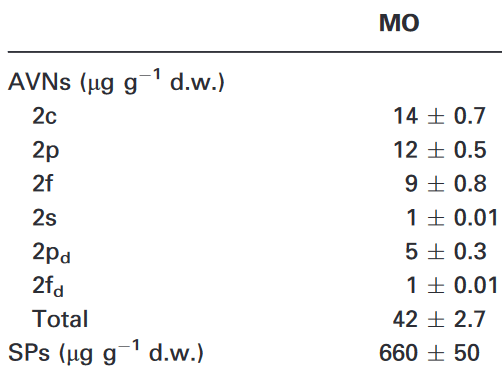
Every day I eat Avena nuda oats that start out as 82 grams of seeds, and two servings of 3-day-old Avena sativa oat sprouts that each start out as 20 grams of seeds. Using this second paper’s 50 gram Avena nuda methods to develop estimates:

avena nuda avn sp

  • (82 g / 50 g) x 42 µg = 69 µg total AVNs; and
  • (82 g / 50 g) x 660 µg = 1,082 µg soluble phenols.

My Avena nuda whole oat grain total AVNs and soluble phenol weights aren’t much. They aren’t bioavailability estimates. Their species and growing conditions are different from this second paper, etc.

That’s all okay with me. I eat Avena nuda oats primarily to make my trillion+ gut microbiota partners happy with indigestible-to-me whole grain contents, expecting that they will reciprocate.

Plugging in the study’s 3-day figures to estimate Avena sativa oat sprouts:

  • (40 g / 50 g) x 324 µg = 259 µg total AVNs; and
  • (40 g / 50 g) x 1350 µg = 1,080 µg soluble phenols.

Using the first graphic’s 3-day relative bioaccessibility percentages:

  • 259 µg x .28 = 72 µg total bioavailable AVNs; and
  • 1,080 µg x .41 = 442 µg bioavailable soluble phenols.

Both papers cited studies that found with eccentric exercise, “9.2 mg per day AVNs are sufficient to provide effects on exercise induced inflammation.” I exercise at least 30 minutes every day, but don’t perform eccentric exercises more frequently than every five days per Eat broccoli sprouts for your workouts.

Advantages of 3-day-old oat sprouts over oat grains provided methods comparable to my Avena sativa 3-day-old oat sprouts intake, although it didn’t assess bioavailability. Sprouts’ beneficial effects compared with seeds “were mainly related to their high content of avenanthramides A (2p), B (2f), and C (2c), quercetin 3-O-rutinoside [rutin], kaempferol, sinapoylquinic acid, and apigenin and luteolin derivatives.”

Couldn’t say whether I benefit more from bioavailability of 3-day-old oat sprouts’ directly soluble phenols, or from bioavailability of their phenolic breakdown byproducts provided by gut microbiota. For example, regarding oat sprouts rutin content, a 2019 review pointed out:

“Humans lack the enzyme needed to hydrolyze this bond. Consequently, microorganisms in the colon mediate hydrolysis of this rutinoside, resulting in minimal intestinal absorption, and production of phenolic acid metabolites in the colon.”


Osprey below a bird-like cloud

PXL_20220426_190518487

Eat oat avenanthramides for your gut microbiota

This 2021 paper covered a 2016 human clinical trial, and several in vitro and rodent follow-up studies:

“Oat has been widely accepted as a key food for human health. It is becoming increasingly evident that individual differences in metabolism determine how different individuals benefit from diet. Both host genetics and gut microbiota play important roles on metabolism and function of dietary compounds.

Results:

  • Avenanthramides (AVAs), the signature bioactive polyphenols of whole-grain (WG) oat, were not metabolized into their dihydro forms, dihydro-AVAs (DH-AVAs), by both human and mouse S9 fractions.
  • DH-AVAs were detected in colon and distal regions, but not in proximal and middle regions of the perfused mouse intestine, and were in specific pathogen–free (SPF) mice but not in germ-free (GF) mice.
  • A kinetic study of humans fed oat bran showed that DH-AVAs reached their maximal concentrations at much later time points than their corresponding AVAs (10.0–15.0 hours vs. 4.0–4.5 hours, respectively).
  • We observed interindividual variations in metabolism of AVAs to DH-AVAs in humans.
  • Faecalibacterium prausnitzii was identified as the individual bacterium to metabolize AVAs to DH-AVAs by 16S rRNA sequencing analysis.
  • Moreover, as opposed to GF mice, F. prausnitzii–monocolonized mice were able to metabolize AVAs to DH-AVAs.

AVA metabolizers

These findings demonstrate that intestinal F. prausnitzii is indispensable for proper metabolism of AVAs in both humans and mice. We propose that abundance of F. prausnitzii can be used to subcategorize individuals into AVA metabolizers and nonmetabolizers after WG oat intake.

Our findings pave the way to use AVAs and DH-AVAs as exposure biomarkers to reflect WG oat intake, which could more accurately record WG oat intake. Whether production of DH-AVAs is part of the beneficial effect of oats on human health will require further investigation.”

https://academic.oup.com/jn/article/151/6/1426/6165027 “Avenanthramide Metabotype from Whole-Grain Oat Intake is Influenced by Faecalibacterium prausnitzii in Healthy Adults”

Commentary at Faecalibacterium prausnitzii Abundance in Mouse and Human Gut Can Predict Metabolism of Oat Avenanthramides.


This study advanced an understanding of inter-individual variability, rather than usual practices that try to sweep individual differences under a statistical rug. Study designs such as four mentioned in Part 2 of Switch on your Nrf2 signaling pathway could have benefited from a similar approach to their research areas.

Not sure why it took over five years to get this paper published after its clinical trial’s January 21, 2016 completion. Meanwhile, science marched on to study effects of specific F. prausnitzii strains, providing results such as three human studies curated in Gut microbiota strains:

  • The third 2018 study found:

    “Only a small number of bacteria with genetic capacity for producing SCFAs were able to take advantage of this new resource and become dominant positive responders. The response, however, was strain specific: only one of the six strains of Faecalibacterium prausnitzii was promoted.”

  • The second 2021 study investigated 135 known strains of F. prausnitzii; and
  • The first 2021 study found beneficial F. prausnitzii strains not yet covered in genomic databases.

Resistant starch therapy recommended de-emphasizing relative gut microbiota abundance measurements, because:

“Relative abundances of smaller keystone communities (e.g. primary degraders) may increase, but appear to decrease simply because cross-feeders [like F. prausnitzii] increase in relative abundance to a greater extent. These limitations illustrate the necessity of sufficiently powering resistant starch interventions where microbiome composition is the primary endpoint, collecting critical baseline data and employing appropriate statistical techniques.”


Four humpback whales successively diving for lunch

PXL_20210914_164307307_exported_16255

PXL_20210914_164307307_exported_26282

PXL_20210914_164307307_exported_41871

PXL_20210914_164307307_exported_50365

Choosing your gut immune response

This 2021 paper reviewed evidence for immune system effects associated with specific gut areas:

“The intestinal immune system must not only contend with continuous exposure to food, commensal microbiota, and pathogens, but respond appropriately according to intestinal tissue differences. The entire intestine, inclusive of its lymph nodes, is considered a immunosuppressive organ overall compared to most other tissues, indicating that a state of tolerance to food and commensals – yet vigilance toward pathogens – was an evolutionarily stable strategy.

By operating in compartments, the immune system may generate multiple immune outcomes, even with simultaneous opposite goals e.g., tolerance or inflammation. Generation of unique immunologic niches within the intestine is influenced by a combination of tissue intrinsic properties, extrinsic environmental factors, and regionalized immune populations.

intestinal immune compartmentalization

Complexity of intrinsic and extrinsic driving forces shaping an intestinal niche makes it very challenging to determine causality in disease development and predicting effective therapeutic approaches. We really only stand at the beginning of understanding this interplay.”

https://www.nature.com/articles/s41385-021-00420-8 “Intestinal immune compartmentalization: implications of tissue specific determinants in health and disease”


I patterned this post after Choosing your future with β-glucan:

“So where do you choose to be? In an 80% survival group who were administered β-glucan before they encountered a serious infection? Or in a < 20% survival group who didn’t take β-glucan?”

and Long-lasting benefits of a common vaccine:

“As inferred by “induction of trained immunity by both Bacillus Calmette-Guerin tuberculosis vaccine and β-glucan” many of these findings also apply to yeast cell wall β-glucan treatments.”

This paper’s food allergy references were interesting. It’s an area that personally requires further work, although avoidance has historically been effective.

This paper briefly mentioned broccoli’s effects in the proximal small intestine. It wasn’t informative per gut compartment with this year’s focus on making my gut microbiota happy, such as what our colonic microbiota can do to reciprocate their host giving them what they want.

This review’s human studies referenced what could be done post-disease like surgery etc. in different gut compartments. Very little concerned an individual taking responsibility for their own one precious life to prevent such diseases in the first place. Its Conclusions section claim was a fallacy:

“..very challenging to determine causality in disease development and predicting effective therapeutic approaches.”

PXL_20210911_104042916

Changing your immune system / gut microbiota interactions with diet

This 2021 human clinical trial investigated associations between gut microbiota and host adaptive immune system components:

“Diet modulates gut microbiome, and gut microbes impact the immune system. We used two gut microbiota-targeted dietary interventions – plant-based fiber or fermented foods – to determine how each influences microbiome and immune system in healthy adults. Using a 17-week randomized, prospective study design combined with -omics measurements of microbiome and host and extensive immune profiling, we found distinct effects of each diet:

  • Those in the high-fiber diet arm increased their fiber consumption from an average of 21.5±8.0 g per day at baseline to 45.1±10.7 g per day at the end of the maintenance phase.
  • Participants in the high-fermented food diet arm consumed an average of 0.4±0.6 servings per day of fermented food at baseline, which increased to an average of 6.3±2.9 servings per day at the end of the maintenance phase.
  • Participants in the high-fiber diet arm did not increase their consumption of fermented foods (Figure 1.C dashed line), nor did participants consuming the high-fermented food diet increase their fiber intake.

fiber vs fermented

Fiber-induced microbiota diversity increases may be a slower process requiring longer than the six weeks of sustained high consumption achieved in this study. High-fiber consumption increased stool microbial protein density, carbohydrate-degrading capacity, and altered SCFA production, indicating that microbiome remodeling was occurring within the study time frame, just not through an increase in total species.

Comparison of immune features from baseline to the end of the maintenance phase in high-fiber diet participants revealed three clusters of participants representing distinct immune response profiles. No differences in total fiber intake were observed between inflammation clusters. A previous study demonstrated that a dietary intervention, which included increasing soluble fiber, was less effective in improving inflammation markers in individuals with lower microbiome richness.

In both diets, an individual’s microbiota composition became more similar to that of other participants within the same arm over the intervention, despite retaining the strong signal of individuality.

Coupling dietary interventions to longitudinal immune and microbiome profiling can provide individualized and population-wide insight. Our results indicate that fermented foods may be valuable in countering decreased microbiome diversity and increased inflammation.”

https://www.cell.com/cell/fulltext/S0092-8674(21)00754-6 “Gut-microbiota-targeted diets modulate human immune status” (not freely available). See https://www.biorxiv.org/content/10.1101/2020.09.30.321448v2.full for the freely available preprint version.


Didn’t care for this study’s design that ignored our innate immune system components yet claimed “extensive immune profiling.” Not.

There was sufficient relevant evidence on innate immunity cells – neutrophils, monocytes, macrophages, natural killer cells, and dendrites – when the trial started five years ago. But maybe this didn’t satisfy study sponsors?

This study found significant individual differences in the high-fiber group. These individual differences failed to stratify into subgroup p-value significance.

I won’t start eating fermented dairy or fermented vegetable brines to “counter decreased microbiome diversity and increased inflammation.” I’m rolling the die with high-fiber intake (2+ times more grams than this clinical trial, over a 3+ times longer period so far).

Changing to a high-fiber diet this year to increase varieties and numbers of gut microbiota is working out alright. No worries about “increased inflammation” because twice-daily 3-day-old microwaved broccoli sprouts since Day 70 results from Changing to a youthful phenotype with broccoli sprouts have taken care of inflammation for 15 months now.

What effects have this year’s diet changes had on my adaptive and innate immune systems? 2021’s spring allergy season wasn’t pleasant. But late summer’s ragweed onslaught hasn’t kept me indoors – unlike other years – despite day after day of readings like today’s:

ragweed

Regarding an individual’s starting point and experiences, those weren’t the same as family, friends, significant other, identified group members, or strangers. Each of us has to find our own way to getting well.

Agenda-free evidence may provide good guidelines. So does how you feel.

Your pet’s biological age

This 2021 cat study developed human-comparable epigenetic clocks:

We aimed to develop and evaluate epigenetic clocks for cats, as such biomarkers are necessary for translating promising anti-aging interventions from humans to cats and vice versa. We also provided the possibility of using epigenetic aging rate of cats to inform on feline health, for which a quantitative measure is presently unavailable. Specifically, we present here DNA methylation-based biomarkers (epigenetic clocks) of age for blood from cats.

Maximum lifespan of cats is 30 years according to the animal age data base (anAge), but most cats succumb to diseases before they are 20 years old. Age is the biggest risk factor for a vast majority of diseases in animals, and cats are no exception.

Interventions to slow aging are being sought. Ideally, testing should occur in species that are evolutionarily close to humans, similar in size, have high genetic diversity, and share the same environment as humans. It has been recognized that domestic dogs fulfill these criteria.

Investigations have yet to be extended to cats although they share similar environments and living conditions with their human owners. Identification of environmental factors and living conditions that affect aging, as well as potential mitigation measures, can be achieved by proxy with cats.

The human-cat clock for relative age exhibited high correlation regardless of whether analysis was applied to samples from both species or only to cat samples. This demonstrated that relative age circumvented skewing that is inherent when chronological age of species with very different lifespans is measured using a single formula.

Evidence is compelling that epigenetic age is an indicator of biological age. These results are consistent with the fact that epigenetic clocks developed for one mammalian species can be employed – to a limited extent – to other species, and reveal association of DNA methylation changes with age.

Human epigenetic age acceleration is associated with a wide array of primary traits, health states, and pathologies. While it is still unclear why age acceleration is connected to these characteristics, it does nevertheless suggest that extension of similar studies to cats may allow for development of epigenetic age acceleration as a surrogate or indicator of feline biological fitness.”

https://link.springer.com/article/10.1007%2Fs11357-021-00445-8 “Epigenetic clock and methylation studies in cats”


As noted earlier this summer in Smoke and die early, while your twin lives on, Dr. Steve Horvath is on a torrid publishing streak this year. He’s made it questionable for study designs based on published science to omit epigenetic clocks.

I titled this post Your pets because I’m too allergic to have cats, dogs, etc. live with me. Maybe this year’s focus on making my gut microbiota happy will change that?

My pets live free:

PXL_20210830_102958658
PXL_20210825_101005621

Eat oats for β-glucan and resistant starch

This 2021 review highlighted effects of processing oat products:

“Starch contents in oats ranges from 51% to 65%. Resistant starch (RS) accounts for 29.31% of starch content in raw granular form of oat starch.

RS in raw oat starch is RS2 starch, where its slow digestion is mainly due to the compact nature of starch granules making starch less accessible to enzymes. Since amylose–lipid complex is resistant to enzymatic breakdown, high lipid content in oats (3–7%) may be another reason why oat has a relatively high level of RS starch. This type of RS is called RS5.

Although RS2 occurs naturally, most starch needs to be cooked for consumption. RS3 that is formed due to recrystallization of gelatinized starch is more commonly consumed by processing via gelatinization and retrogradation.

β-glucans are found in cell walls of endosperm and aleurone layers of oats, accounting for 1.73-5.70% of oat grains dry basis. Oat β-glucans are not digested in the upper gastric tract, but instead can be consumed by gut microbiota in the colon. This kind of prebiotic can be fermented by colonic microbiota, resulting in production of short chain fatty acids (SCFA) metabolites.

From field to table, oats are processed into various foods for consumption, and these foods exhibit high variability of GI values:

  • β-glucan dose and molecular weight are crucial determinants affecting viscosity and gastric emptying rate; and
  • Higher content of protein in oats is an important factor that deserves attention.”

https://www.mdpi.com/2304-8158/10/6/1304/htm “Oat-Based Foods: Chemical Constituents, Glycemic Index, and the Effect of Processing”


Didn’t care for this focus on one dimension of health, glycemic index. Why not focus on healthy individuals’ behaviors? See An oats β-glucan clinical trial for more human in vivo evidence regarding β-glucan molecular weight.

I eat oats three times a day, and it’s worked out alright.

PXL_20210825_100824154

Gut microbiota strains

Three human studies investigated strains within microbiota species. The first from 2021 had obese child subjects:

“Dietary intervention is effective in human health promotion through modulation of gut microbiota. Diet can cause single-nucleotide polymorphisms (SNPs) to occur in gut microbiota, and some of these variations may lead to functional changes in human health.

Compared with normal diet, the WTP diet provided large quantities of whole-grain mix that was rich in starch, soluble and insoluble dietary fiber, protein, and amino acids, but contained a small amount of fat. When this excess and/or indigestible nutrition reached the colon, it brought environmental pressures to microbiota that stayed there.

This pressure could facilitate utilization of indigestible nutrition by causing microbial SNPs. Metabolic efficiencies of indigestible nutrition substrates would be enhanced to adapt to the shifted environment better.

Although abundance of Bifidobacterium increased significantly by the intervention and became dominant strains responsible for nutrition metabolism, they had less BiasSNPs between the pre- and post-intervention group in comparison with Faecalibacterium. Finding F. prausnitzii as important functional strains influenced by intervention highlights the superiority of applying SNP analysis in studies of gut microbiota.

Though F. prausnitzii were well known for their biodiversity, we could not find functional reports about these SNPs. Future efforts are needed to verify/discern specific effects of these SNPs on encoded protein activity, their role on metabolism under high-fiber dietary intervention, and their potential beneficial or detrimental influences on host health.”

https://www.frontiersin.org/articles/10.3389/fmicb.2021.683714/full “Gut Microbial SNPs Induced by High-Fiber Diet Dominate Nutrition Metabolism and Environmental Adaption of Faecalibacterium prausnitzii in Obese Children”


A second 2021 human study investigated strain diversity in liver cirrhosis and Crohn’s disease:

“We constructed a computational framework to study strain heterogeneity in the gut microbiome of patients with liver cirrhosis (LC). Only Faecalibacterium prausnitzii showed different single-nucleotide polymorphism patterns between LC and healthy control (HC) groups.

Strain diversity analysis discovered that although most F. prausnitzii genomes are more deficient in LC group than in HC group at the strain level, a subgroup of 19 F. prausnitzii strains showed no sensitivity to LC, which is inconsistent with the species-level result.

More experiments need to be conducted so as to confirm the hypothesis of physiological differences among subgroups of F. prausnitzii strains. Our results suggest that strain heterogeneity should receive more attention.

With rapid development of sequencing technologies and experimental approaches, an increasing number of metagenomic studies will involve strain-level analysis. Such analysis of human metagenomes can help researchers develop more reliable disease diagnoses and treatment methods from a microbiological perspective.”

https://journals.asm.org/doi/10.1128/mSystems.00775-21 “Comprehensive Strain-Level Analysis of the Gut Microbe Faecalibacterium prausnitzii in Patients with Liver Cirrhosis”


A 2018 study investigated dietary fibers’ effects on Type 2 diabetics:

“In this study, we identified a group of acetate- and butyrate-producing bacterial strains that were selectively promoted by increased availability of diverse fermentable carbohydrates in the form of dietary fibers. These positive responders are likely key players for maintaining the mutualistic relationship between gut microbiota and the human host. Promoting this active group of SCFA producers not only enhanced a beneficial function but also maintained a gut environment that keeps detrimental bacteria at bay.

Only a small number of bacteria with genetic capacity for producing SCFAs were able to take advantage of this new resource and become dominant positive responders. The response, however, was strain specific: only one of the six strains of Faecalibacterium prausnitzii was promoted.

positive responders

The 15 positive responders are from three different phyla, but they act as a guild to augment deficient SCFA production from the gut ecosystem by responding to increased fermentable carbohydrate availability in similar ways. When they are considered as a functional group, the abundance and evenness of this guild of SCFA producers correlate with host clinical outcomes.”

https://science.sciencemag.org/content/359/6380/1151.full “Gut bacteria selectively promoted by dietary fibers alleviate type 2 diabetes”


These studies favored a prebiotic approach to make gut microbiota happy and reciprocal in human health. The second study investigated 135 known strains of F. prausnitzii, and the first study found beneficial F. prausnitzii strains not yet covered in genomic databases.

I found the first two studies by them citing the third. The third study was cited in Gut microbiota guilds.

PXL_20210812_101602716

Gut microbiota functional relationships

This 2021 study investigated environmentally-organized gut microbiome functional relationships:

“There has been a substantial gap between understanding microbiome assemblage and how its functionality is organized. In this study, we demonstrated the usefulness of metaproteomics in gaining a system-level understanding of microbiome functionality.

Our current finding highlights the value of further investigation into functional hubs and hub functions in microbiome proteomic content networks. This will provide a unique and systematic insight for prediction of community functional responses, or manipulation of microbiome functioning.

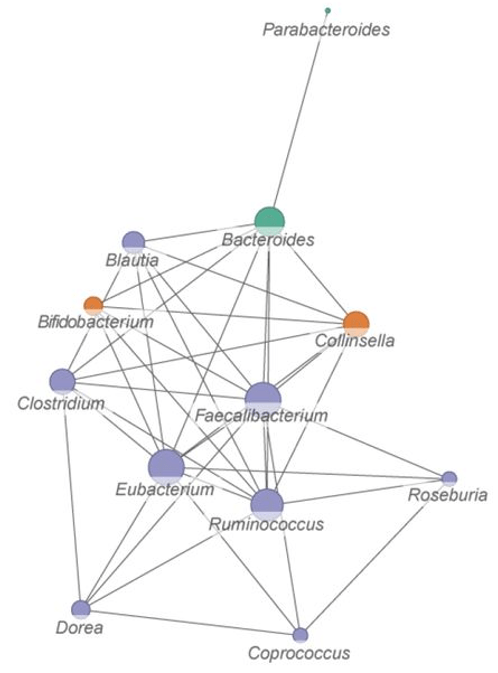
Across all metaproteomics datasets, Eubacterium, Faecalibacterium, Ruminococcus, Bacteroides, Clostridium and Coprococcus were found to be the most frequent functional hubs.

functionally related genera

Taxon-function bipartite network based on functional distances between microbial genera. Size of a node corresponds to its degree.

Highly connected functions were enriched in metabolism of carbohydrates and amino acids, suggesting that microbial acquisition of nutrients from the environment and trophic interactions between microbes could be major factors that shape their active functional organization. Our result showing robustness of between-taxa functional distances across individual microbiomes implied a more fundamental mechanism that underlies selective organization of microbiome functionalities by environment.

We observed a universal pattern of between-taxa functional distances (dij) across all analyzed datasets. Notably, this pattern was fully shifted by a global increase in dij values, and subsequently a significant decrease of normalized taxonomic diversity in a subset of inflammatory bowel disease samples mostly obtained from inflamed areas.

This finding may support, from a functional angle, the hypothesis that there are alternative stable states (bi-stability or multi-stability) in the gut ecosystem. One frequently discussed mechanism behind these alternative states has been continuous exposure of the microbiome to a altered environmental parameter:

  • An inflamed area in the gut will have a reduced mucus layer and elevated host defense responses.
  • Host mucus layer is a nutritional source of cross-feeding in the gut microbiome.
  • Loss of this layer may firstly affect network hub functions of carbohydrate and amino acid metabolism, and subsequently affect functional interactions in the whole community.

In addition, host defense responses attenuate microbial oxidative stress responses, which have been associated to microbiome dysfunction. Decrease of within-sample functional redundancy has been associated with impaired microbiome stability and resilience.

Resilient microbiota resist external pressures and return to their original state. A non-resilient microbiome is likely to shift its composition permanently and stay at an altered new state instead of restoring to its original state of equilibrium.”

https://www.biorxiv.org/content/10.1101/2021.07.15.452564v1.full “Revealing Protein-Level Functional Redundancy in the Human Gut Microbiome using Ultra-deep Metaproteomics”


My top genus Faecalibacterium – a cross-feeding, acetate-consuming, butyrate-producing commensal – would be more than twice the size of this study’s Faecalibacterium network projection in the above graphic. In this year’s efforts to make my gut microbiota happy, I’ve apparently done much to express its relevant gene network.

my genera

I came across this study by it citing Gut microbiota guilds.

PXL_20210809_101612117

Part 3 of Make your gut microbiota happy

Continuing from Part 2, my 7/15/2021 sample found that no bad bacteria needed work. Top three reasons why this may be are:

1. I’ve eaten microwaved broccoli sprouts every day for 68 weeks now. Relevant research:

helicobacter 0

2. This is the 17th year of training my immune system every day with yeast cell wall β-glucan.

acinetobacter

3. Basic hygiene practices such as brushing my teeth twice a day.

aggregatibacter 0


PXL_20210731_094258419.NIGHT