A research train wreck

I try to highlight research that advances science. Please humor a momentary break.

This 2020 study Effects of cooking methods on total isothiocyanate yield from cruciferous vegetables simulated microwaving broccoli to 210° C (410° F). These researchers knew or should have known that myrosinase inactivates at moderate temperatures, given studies published last century such as this with its “Thermal inactivation proceeded in the temperature range 30−60° C” finding. Without an active enzyme, no isothiocyanates are produced from cooking broccoli.

Incredibly, these researchers proved they knew their study detracted from science by citing Microwave broccoli to increase sulforaphane levels. That study found destructive effects on sulforaphane at temperatures above 60° C (140° F):

fsn31493-fig-0003-m

The sulforaphane (SFR) amount at HL70° on the right (broccoli heated to 70° C with a 950 W microwave operated on full power) was significantly less than uncooked broccoli (control) on the left!

“This work was supported by the National Cancer Institute.”

I haven’t found words to correspond with the coauthors. Egregious errors speak for themselves.


Eat broccoli sprouts to pivot your internal environment’s signals

Two 2020 reviews covered some aspects of a broccoli sprouts primary action – NRF2 signaling pathway activation:

“Full understanding of the properties of drug candidates rely partly on the identification, validation, and use of biomarkers to optimize clinical applications. This review focuses on results from clinical trials with four agents known to target NRF2 signaling in preclinical studies, and evaluates the successes and limitations of biomarkers focused on:

  • Expression of NRF2 target genes [AKR1, GCL, GST, HMOX1, NQO1] and others [HDAC, HSP];
  • Inflammation [COX-2, CRP, IL-1β, IL-6, IP-10, MCP-1, MIG, NF-κB, TNF-α] and oxidative stress [8-OHdG, Cys/CySS, GSH/GSSG] biomarkers;
  • Carcinogen metabolism and adduct biomarkers in unavoidably exposed populations; and
  • Targeted and untargeted metabolomics [HDL, LDL, TG].

No biomarkers excel at defining pharmacodynamic actions in this setting.

SFN [sulforaphane] seems to affect multiple downstream pathways associated with anti-inflammatory actions. NRF2 signaling may be but one pivotal pathway.

SFN is generally considered to be the most potent natural product inducer of Nrf2 signaling. Studies in which these actions are diminished or abrogated in parallel experiments in Nrf2-disrupted mice provide the strongest lines of evidence for a key role of this transcription factor in its actions.

It is equally evident that other modes of action contribute to the molecular responses to SFN in animals and humans. Such polypharmacy may well contribute to the efficacy of the agent in disease prevention and mitigation, but obfuscates the value of specific pharmacodynamic biomarkers in the clinical development and evaluation of SFN.”

https://www.mdpi.com/2076-3921/9/8/716/htm “Current Landscape of NRF2 Biomarkers in Clinical Trials”


Why do researchers still not use epigenetic clocks in sulforaphane clinical trials? Forty mentions of disease in this review, but no consideration of aging?

This was another example of how researchers – even when stuck in a paradigm they know doesn’t sufficiently explain their area (“No biomarkers excel”) – don’t investigate other associated research areas. Why not?

Here’s what Part 2 of Rejuvenation therapy and sulforaphane had to say to those stuck on biomarkers:

“While clinical biomarkers have obvious advantages (being indicative of organ dysfunction or disease), they are neither sufficiently mechanistic nor proximal to fundamental mechanisms of aging to serve as indicators of them. It has long been recognized that epigenetic changes are one of several primary hallmarks of aging.

DNA methylation epigenetic clocks capture aspects of biological age.”


The second review Epigenetic Regulation of NRF2/KEAP1 by Phytochemicals also completely whiffed on epigenetic clocks. One mention of aging in this review, but it wasn’t of:

  • Citation 104 from Archives of Gerontology and Geriatrics; nor of
  • Citation 108 from the March 31, 2020, Aging journal; nor of
  • Citation 131 “Dietary epigenetics in cancer and aging.”

But epigenetic clock and aging associations were certainly in this review’s scope. For example, Citation 119 said:

“Nrf2 transcriptional activity declines with age, leading to age-related GSH loss among other losses associated with Nrf2-activated genes. This effect has implications, too, for decline in vascular function with age. Some of the age-related decline in function can be restored with Nrf2 activation by SFN.”

Why would people bother with phytochemicals (buzzword “compounds produced by plants”) unless to either ameliorate symptoms or address causes?

“Epigenetic Regulation of NRF2/KEAP1 by Phytochemicals” doesn’t occur in just laboratory situations. It’s also part of daily life.

These reviewers were straight-forward with side effects for two of the first review’s four items:

“The best known NRF2 activator that has obtained clinical approval is dimethyl fumarate for the treatment of multiple sclerosis. However, it has several side effects, including allergic reactions and gastrointestinal disturbance. There are a few related agents in clinical trials, such as Bardoxolone and SFX-01, a synthetic derivative of sulforaphane, which also exhibit less than desirable outcomes.”


Human relevance of rodent sulforaphane studies

After reading through findings of several dozen rodent studies this evening, I thought it would be worthwhile to revisit analysis of human relevance provided by one paper of How much sulforaphane is suitable for healthy people?

“Comparisons of published oral doses of sulforaphane administered to mice or rats and sulforaphane (tablets or sulforaphane-rich broccoli preparations) or glucoraphanin-rich broccoli preparations administered to humans.

The allometric scaling of the murine doses uses the correction factor of 0.081 and those for rat doses 0.162. Human doses were based on an estimate of 70 kg body weights in each study.”

A confession followed:

“Animal studies have not delivered all that might be expected of them. Pre-clinical experimentalists have not thought carefully about the selection of dose (or route) and its relevance to clinical utility.

Over two-thirds of the animal studies have used doses that exceed the highest (and bordering on intolerable) doses of sulforaphane used in humans.

Few studies have included a dose-response. The greater than 4-log spread of doses used in mice appears to be driven by needs for effect reporting in publications rather than optimization of translational science.

Authors of this review have contributed to this dose skewing.”


Let’s narrow this graphic to a human-relevant range:

human-rodent-relevant-dosages

48 of the 114 rodent study doses were in an allometric range applicable to humans.

Clinically relevant sulforaphane human doses start at a 100 µmol amount (17.73 mg). The graphic normalized human weights to 70 kg, so 100 µmol / 70 kg is 1.43 µmol / kg. Eyeballing the graphic, 43 of the 114 rodent study doses were in an allometric range applicable to human clinical doses.

But only three of the human sulforaphane study doses were above 4 µmol / kg. This indicator of the mentioned “intolerable doses” will limit clinically relevant oral doses to no more than 17.73 mg x (4 / 1.43) ≈ 50 mg in one serving.

Reviewing clinical trials of broccoli sprouts and their compounds described a sulforaphane study with doses above 4 µmol / kg:

“They proposed the intake of 15 capsules of broccoli sprouts at a time, giving 90 mg [508 µmol, 7.26 µmol / kg] of SFN and 180 mg of glucoraphanin, a never before tested dosage, which was established because of the poor life expectancy of the patients and the aggressive characteristics of this type of cancer.

Secondary effects of the chemotherapy, the lack of appetite, nausea, vomits, diarrhea, mouth sores, etc., were factors that made it very difficult for the patients to intake 15 pills at once, as the study initially planned.

Progression of the pancreatic cancer and the GI symptomatology led to a high rate of drop-off of:

  • 72% in the treatment group; and
  • 55% abandonment in the control group!

Therefore, the results were not significant.”

Our model clinical trial Effects of long-term consumption of broccoli sprouts on inflammatory markers in overweight subjects calculated subjects’ mean weight in Table 1 as “85.8 ± 16.7 kg.” Its average glucoraphanin dose per kg body weight was 117 μmol / 85.8 kg = 1.36 μmol / kg.

Per Estimating daily consumption of broccoli sprout compounds, my twice-a-day consumption of a total 131 grams microwaved broccoli sprouts represents a worst-case 52 mg sulforaphane daily intake. This is ≈ 3 µmol / kg per day, the graphic’s second-largest sulforaphane amount cluster. Half that per serving.


Only 8% of the rodent studies were in a sulforaphane range that was both:

  • Clinically relevant to humans as a lower boundary (1.43 µmol / kg); and
  • Tolerable to humans as an upper boundary (4 µmol / kg).

human-rodent clinically relevant tolerable dosages

The main purpose of animal studies is to help humans. Which researchers conducted sulforaphane studies that could actually help humans?

Natural sources of melatonin

This 2020 review subject was melatonin:

“The emergence of naturally occurring melatonin and its isomers in fermented foods has opened an exciting new research area. Melatonin is a hormone, an indolamine that predominantly appears in plants, microorganisms, and mammals.

The precursor of this molecule is solely the amino acid L‐tryptophan. Melatonin ensures a circadian and seasonal signal to vertebrate organisms; it is synthesized through a cascade of enzymatic reactions producing melatonin from serotonin in its final phases. The synthesis of melatonin is observed in almost all organs.

One melatonin molecule has the capacity to scavenge up to 10 ROS versus the other antioxidants that scavenge 1 or even less ROS. Melatonin antioxidant properties are accomplished with the indole ring that stimulates enzyme production (i.e., superoxide dismutase (SOD), glutathione‐peroxidase (Gpx), and catalase (CAT)), which mitigate free radicals to less toxic substances.

In addition to antioxidant properties, it plays a fundamental role in the modulation of various physiological functions, including circadian rhythmicity, bone integrity, and functionalization of the human reproductive system.

The presence of melatonin and its isomers is not exclusive for grapes and grape‐derived products. Other fruits such as sweet and sour cherries and fermented juices of orange and pomegranate may be also of interest.”

https://onlinelibrary.wiley.com/doi/full/10.1111/1541-4337.12639 “Naturally occurring melatonin: Sources and possible ways of its biosynthesis”


Treating psychopathological symptoms will somehow resolve causes?

This 2020 Swiss review subject was potential glutathione therapies for stress:

“We examine available data supporting a role for GSH levels and antioxidant function in the brain in relation to anxiety and stress-related psychopathologies. Several promising compounds could raise brain GSH levels by either increasing availability of its precursors, or expression of GSH-regulating enzymes through activation of Nrf2.

GSH is the main cellular antioxidant found in all mammalian tissues. In the brain, GSH homeostasis has an additional level of complexity in that expression of GSH and GSH-related enzymes are not evenly distributed across all cell types, requiring coordination between neurons and astrocytes to neutralize oxidative insults.

Increased energy demand in situations of chronic stress leads to mitochondrial ROS overproduction, oxidative damage, and exhaustion of brain GSH pools.

Several compounds can function as precursors of GSH by acting as cysteine (Cys) donors such as taurine or glutamate (Glu) donors such as glutamine (Gln). Other compounds stimulate synthesis and recycling of GSH through activation of the Nrf2 pathway including sulforaphane and melatonin. Compounds such as acetyl-L-carnitine can increase GSH levels.”

https://www.sciencedirect.com/science/article/abs/pii/S0149763419311133 “Therapeutic potential of glutathione-enhancers in stress-related psychopathologies” (not freely available)


Many animal studies of “stress-related psychopathologies” were cited without noting applicability to humans. These reviewers instead had curious none-of-this-means-anything disclaimers like:

“Comparisons between studies investigating brain disorders of such different nature such as psychiatric disorders or neurodegenerative diseases, or even between brain or non-brain related disorders, should be made with caution.”

Regardless, this paper had informative sections for my 27th week of eating broccoli sprouts every day.

1. I forgot to mention in Broccoli sprout synergies that I’ve taken 500 mg of trimethyl glycine (aka betaine) twice a day for over 15 years. Section 3.1.2 highlighted amino acid glycine:

“Endogenous synthesis is insufficient to meet metabolic demands for most mammals (including humans) and additional glycine must be obtained from diet. While most research has focused on increasing brain cysteine levels in order to drive GSH synthesis, glycine supplementation alone or in combination with cysteine-enhancing compounds are gaining attention for their ability to enhance GSH.”

2. Taurine dropped off my supplement regimen last year after taking 500 mg twice a day for years. It’s back on now after reading Section 3.1.3:

“Most studies that reported enhanced brain GSH following taurine treatment were performed under a chronic regimen, and used in age-related disease models.

Such positive effects of taurine on GSH levels may be explained by the fact that cysteine is the essential precursor to both metabolites, whereby taurine supplementation may drive metabolism of cysteine towards GSH synthesis.”

3. A study in Upgrade your brain’s switchboard with broccoli sprouts was cited for its potential:

“Thalamic GSH values significantly correlated with blood GSH levels, suggesting that peripheral GSH levels may be a marker of brain GSH content. Studies point to the capacity of sulforaphane to function both as a prophylactic against stress-induced behavioral changes, and as a positive modulator in healthy animals.”


Sunrise minus 5 minutes

Increasing carbon dioxide levels increases beneficial broccoli sprout compounds

This 2020 study used IPCC unscientific, politically-motivated, wild-ass guesses for year 2100 CO2 levels to find that broccoli sprouts – like most plants – benefit when CO2 is increased:

“Elevated CO2 (eCO2, 620 ppm, the expected IPCC-SRES B2-scenario prediction of eCO2 of the year 2100) was applied for 9 days to further improve nutritive and health-promoting values of three cultivars of broccoli sprouts.

  • eCO2 improved sprouts growth and induced GLs [glucosinolates] accumulation.
  • There were increases in myrosinase activity, which stimulated GLs hydrolysis to yield health-promoting sulforaphane.
  • Low levels of sulforaphane nitrile were detected and positively correlated with reduced epithiospecifier protein after eCO2 treatment.
  • High glucoraphanin and sulforaphane levels in eCO2 treated sprouts improved the anticarcinogenic and anti-inflammatory properties of their extracts.

In conclusion, eCO2 treatment enriches broccoli sprouts with health-promoting metabolites and bioactivities.”

https://www.sciencedirect.com/science/article/abs/pii/S030881462030964X “Elevated CO2 improves glucosinolate metabolism and stimulates anticancer and anti-inflammatory properties of broccoli sprouts” (not freely available)


This study was sponsored in Saudi Arabia. Would gathering such scientific evidence even be permitted in more “enlightened” countries?

Performing research on obvious lies and thinking for yourself isn’t allowed anymore in most “learning” institutions. You already knew that, didn’t you?

At the end of How much sulforaphane is suitable for healthy people? I applauded my high-school literature teachers for forcing their students to demonstrate that they could think for themselves. I didn’t initially mention that each monthly assignment to read two books, then compare-and-contrast them in a 3-page handwritten paper, was individualized so that students couldn’t undo the assignment’s purpose with parasitical collaboration.

This former practice remains a good measure of intentional dumbing-down of young people, the intent of which has become clearer.

Jet fuel exposure causes diseases in the great-grand offspring

This 2020 Washington State University rodent study examined how great-grandmothers’ JP-8 exposures produced diseases in their great-grand offspring:

“Ancestral exposure to environmental influences such as toxicants, abnormal nutrition, and traumatic stress can affect the germline epigenome and promote the epigenetic transgenerational inheritance of adult onset disease in various organisms from plants to humans. Biological mechanisms underlying transgenerational epigenetic inheritance induced by jet fuel exposure are further investigated in the current study.

Genome-wide association studies (GWAS) have found specific genetic mutations associated with human pathologies, however these genetic mutations generally appear in less than 1% of the disease population. In contrast, epimutations (DNA methylation, histone modifications, non-coding RNA, chromatin structure, and RNA methylation alterations) seem to have a higher frequency and appear in more individuals with the diseases. Determining epigenetic biomarkers for these diseases could become especially useful indicators of environmental exposures and disease susceptibility in the human population.

The number of differential methylated regions (DMRs) found in the transgenerational F3 males is between 100 and 500 for each individual pathology. Few DMRs overlap between the different pathologies which supports the possible use of epimutations as biomarkers of disease. Although further studies are required, the lack of a subpopulation of DMRs overlapping with all pathologies suggests that at a more stringent statistical threshold there are not common DMRs among specific diseases.

Although females develop transgenerational disease, insufficient numbers of oocytes can be obtained on individuals to allow epigenetic associations to be assessed. The study only examined male pathology and associated sperm epimutation associations.”

https://www.sciencedirect.com/science/article/pii/S0890623820301982 “Epigenome-wide association study for transgenerational disease sperm epimutation biomarkers following ancestral exposure to jet fuel hydrocarbons”


The only associations these study subjects had with JP-8 were their great-grandmothers’ jet fuel exposures while pregnant with their grandparents. Other environmental toxicants studied by this group that produced similar transgenerationally inherited diseases were DDT, atrazine, and vinclozolin.

Ever think about your great-grandchildren?

Unraveling oxytocin – is it nature’s medicine?

This 2020 review attempted to consolidate thousands of research papers on oxytocin:

“Chemical properties of oxytocin make this molecule difficult to work with and to measure. Effects of oxytocin are context-dependent, sexually dimorphic, and altered by experience. Its relationship to a related hormone, vasopressin, have created challenges for its use as a therapeutic drug.

Widely used medical interventions i.e.:

  • Exogenous oxytocin, such as Pitocin given to facilitate labor;
  • Opioid medications that block the oxytocin system; or
  • Cesarean sections that alter exposure to endogenous oxytocin

have lasting consequences for the offspring and/or mother.

Such exposures hold the potential to have epigenetic effects on the oxytocin systems, including changes in DNA methylation. These changes in turn would have lasting effects on the expression of receptors for oxytocin, leaving individuals differentially able to respond to oxytocin and also possibly to the effects of vasopressin.

Regions with especially high levels of OXTR [oxytocin receptor gene] are:

  • Various parts of the amygdala;
  • Bed nucleus of the stria terminalis;
  • Nucleus accumbens;
  • Brainstem source nuclei for the autonomic nervous system;
  • Systems that regulate the HPA axis; as well as
  • Brainstem tissues involved in pain and social attention.

Oxytocin protects neural cells against hypoxic-ischemic conditions by:

  • Preserving mitochondrial function;
  • Reducing oxidative stress; and
  • Decreasing a chromatin protein that is released during inflammation

which can activate microglia through the receptor for advanced glycation end products (RAGE). RAGE acts as an oxytocin-binding protein facilitating the transport of oxytocin across the blood-brain barrier and through other tissues.

Directionality of this transport is 5–10 times higher from the blood to the brain, in comparison with brain to blood transport. Individual differences in RAGE could help to predict cellular access to oxytocin and might also facilitate access to oxytocin under conditions of stress or illness.

Oxytocin and vasopressin and their receptors are genetically variable, epigenetically regulated, and sensitive to stressors and diet across the lifespan. As one example, salt releases vasopressin and also oxytocin.

Nicotine is a potent regulator of vasopressin. Smoking, including prenatal exposure of a fetus, holds the potential to adjust this system with effects that likely differ between males and females and that may be transgenerational.

Relative concentrations of endogenous oxytocin and vasopressin in plasma were associated with:

These studies support the usefulness of measurements of both oxytocin and vasopressin but leave many empirical questions unresolved.

The vast majority of oxytocin in biosamples evades detection using conventional approaches to measurement.”

https://pharmrev.aspetjournals.org/content/pharmrev/72/4/829.full.pdf “Is Oxytocin Nature’s Medicine?”


I appreciated efforts to extract worthwhile oxytocin research from countless poorly performed studies, research that wasted resources, and research that actually detracted from science.

I was disappointed that at least one of the reviewers didn’t take this review as an opportunity to confess their previous wastes like three flimsy studies discussed in Using oxytocin receptor gene methylation to pursue an agenda.

Frank interpretations of one’s own study findings to acknowledge limitations is one way researchers can address items upfront that will be questioned anyway. Such analyses also indicate a goal to advance science.

Although these reviewers didn’t provide concrete answers to many questions, they highlighted promising research areas, such as:

  • Improved approaches to oxytocin measurements;
  • Prenatal epigenetic experience associations with oxytocin and OXTR; and
  • Possible transgenerational transmission of these prenatal epigenetic experiences.

Take responsibility for your one precious life – DHEA

This 2020 meta-analysis subject was DHEA:

“Twenty-four qualified trials were included in this meta-analysis. Statistically significant increases in serum IGF-1 levels were found only in participants who were:

  1. Women; or
  2. Supplementing 50 mg/d; or
  3. Undergoing intervention for > 12 weeks; or
  4. Without an underlying comorbidity; or
  5. Over the age of 60 years.

DHEA supplementation led to an overall increase of ~16 ng/ml in serum IGF-1 levels, as well as increases of ~23 [women] and ~20 ng/ml [age > 60]. Diseased and healthy subjects ages ranged from 20 to 72 years old.”

Discussion section explanations of the above:

  1. “Women are more susceptible to biochemical and clinical shifts caused by DHEA supplementation.
  2. The majority of investigations tested DHEA at a dose of 50 mg/d.
  3. The majority of studies were performed for > 12 weeks.
  4. Participants with no comorbidities were also older in many studies.
  5. Older patients have a natural decline in the production of IGF-1 and DHEA.

Additional rigorous RCTs are warranted to better define whether and to what extent changes in IGF-1 levels caused by DHEA supplementation are relevant for health benefits.”

https://www.sciencedirect.com/science/article/abs/pii/S0531556520302977Impact of dehydroepian[d]rosterone (DHEA) supplementation on serum levels of insulin-like growth factor 1 (IGF-1): A dose-response meta-analysis of randomized controlled trials” (not freely available)


More on IGF-1 from The influence of zinc supplementation on IGF-1 levels in humans: A systematic review and meta-analysis which was cited for “Previous studies have demonstrated that IGF-1 levels can be affected by several factors.”

“IGF-1 is a growth factor synthesized in the liver, and elicits a myriad of effects on health due to its participation in the GH-IGF-1 axis, where it:

  • Is involved in tissue homeostasis;
  • Has anti-apoptotic, mitogenic, anti-inflammatory, antioxidant and metabolic actions;
  • Contributes to skeletal muscle plasticity, maintenance of muscle strength and muscle mass;
  • Neural and cardiovascular protection;
  • Development of the skeleton;
  • Possesses insulin-like effects, and
  • Is a key factor in brain, eye and lung development during fetal development.

IGF-1 plays important roles in both growth and development, and its levels vary depending on age, with peaks generally observed in the postnatal period and at puberty. IGF-1 levels influence the release of GH [growth hormone] from the hypophysis [pituitary gland] via a negative feedback loop.

A rapid decrease in IGF-1 levels is registered during the third decade of life. Levels gradually decrease between the third and the eighth decade of life.”


The Group 3 “> 12 weeks” finding was reinforced by perspectives such as:

Group 4 “with no comorbidities” was narrowly defined. All of us have degrees of diseases in progress. Consider aging effects:

  • Aging as a normal disease “Aging and its diseases are inseparable, as these diseases are manifestations of aging. Instead of healthy aging, we could use the terms pre-disease aging or decelerated aging.”
  • Aging as an unintended consequence “Epigenetic ageing begins from very early moments after the embryonic stem cell stage and continues uninterrupted through the entire lifespan. Ageing is an unintended consequence of processes that are necessary for development of the organism and tissue homeostasis thereafter.”
  • Organismal aging and cellular senescence “If we assume that aging already starts before birth, it can be considered simply a developmental stage, required to complete the evolutionary program associated with species-intrinsic biological functions such as reproduction, survival, and selection.”
  • An environmental signaling paradigm of aging “The age-phenotype of a cell or organ depends on its environment and not its history. Organisms, organs, and their cells can be reset to different age-phenotypes depending on their environment.”

These perspectives are less important than what each of us choose to do about our own problems. Take responsibility for your one precious life.

Get serious about advanced glycation end products (AGEs)

Ever heard about AGEs? Here are three papers that describe how AGEs affect humans.

First is a 2020 Italian review Common Protective Strategies in Neurodegenerative Disease: Focusing on Risk Factors to Target the Cellular Redox System:

“Neurodegenerative disease is an umbrella term for different conditions which primarily affect the neurons in the human brain. Currently, neurodegenerative diseases are incurable, and the treatments available only control the symptoms or delay the progression of the disease.

Neurotoxicity can be induced by glycation reactions. Since glycation is a nonenzymatic process, proteins characterized by a slow turnover are those that more easily accumulate AGEs.

Methylglyoxal (MG) can occur as glycolysis by-product, but it is also present in foods (especially cooked and baked), beverages (mainly those fermented), and cigarette smoke, and it is considered the most potent precursor of AGE formation. More than 20 different AGEs have been identified in foods and in human tissues.

AGE accumulation, oxidative stress, and inflammation are related to AGE ability to bind specific receptors called RAGE. RAGE expression increases during aging, cancer, cardiovascular diseases, AD [Alzheimer’s], PD [Parkinson’s], and other neurodegenerative diseases.”


A 2015 study by some of the same authors Antiglycative activity of sulforaphane: a new avenue to counteract neurodegeneration? was cited for a treatment in addition to changing one’s diet to be AGE-less.

“When MG production is increased by high glucose or oxidative stress, glycated proteins accumulate in the brain and lead to glycative stress, playing a fundamental role in the establishment of different neurodegenerative disorders.

Our results indicated that SF [sulforaphane] counteracts ROS by two possible mechanisms of action: an increase of intracellular GSH [glutathione] levels and an enhancement of MG-detoxification through the up-regulation of the glyoxalase (GLO1) systems. GLO1 up-regulation is mediated by the transcription factor Nrf2. SF has been demonstrated to activate Nrf2.

Another mechanism by which SF exerts its neuroprotective activity against MG-induced glycative damage is the modulation of mitogen-activated protein kinase (MAPK) signaling pathways involved in apoptotic cell death. All MAPK signaling pathways are activated in AD.

Brain-derived neurotrophic factor (BDNF) is associated with neuronal survival through its interactions with the tyrosine receptor kinase B (TrkB) and p75 cellular receptors. BDNF expression levels are reduced in the brain of AD patients. SF pre-treatment, before MG addition, not only further increased BDNF levels, but also significantly induced TrkB protein levels reverting MG negative effect on this receptor.

SF totally reverts the reduction of glucose uptake caused by MG exposure. SF can be defined as a multitarget agent modulating different cellular functions leading to a pro-survival frame of particular importance in the prevention / counteraction of multifactorial neurodegenerative diseases.”


A 2020 review Non-enzymatic covalent modifications: a new link between metabolism and epigenetics investigated glycation:

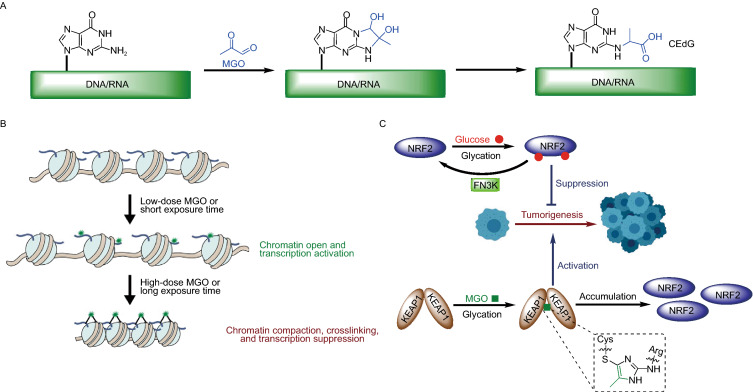
“Non-enzymatic covalent modifications (NECMs) by chemically reactive metabolites have been reported to manipulate chromatin architecture and gene transcription. Unlike canonical post-translational modifications (PTMs), NECMs accumulate over time and are much more dependent on the cellular microenvironment.

A. Guanine residues in DNA and RNA can undergo methylglyoxal glycation, thereby inducing DNA and RNA damage. This DNA damage has few corresponding repair pathways.

B. Histones are primary glycation substrates because of their long half-lives and abundant lysine and arginine residues. Histone glycation was found to induce epigenetic dysregulation through three distinct mechanisms:

  1. Competition with essential enzymatic PTMs for sites (e.g., glycation adducts replace H3K4me3 and H3R8me2);
  2. Changing the charge states of histone tails and subsequently affecting the compaction state of the fiber; and
  3. Altering three-dimensional chromatin architecture by inducing both histone-histone and histone-DNA crosslinking.

Epigenetic impacts of histone glycation were shown to be dependent on sugar concentration and exposure time. Histone and DNA glycation may lead to long term epigenetic impacts on immune responses.

C. Glycation of multiple lysine residues of NRF2 inhibits its oncogenic function. Sugar molecules can influence epigenetic events through glycation of transcription factors and/or their associated regulatory proteins.”

The Transcription factor glycation section referenced a 2011 paper Regulation of the Keap1/Nrf2 system by chemopreventive sulforaphane: implications of posttranslational modifications:

“Nrf2 mRNA level is unaffected by treatment with sulforaphane, suggesting that cellular expression of Nrf2 protein is posttranscriptionally regulated. Posttranslational modifications of Keap1 and Nrf2 proteins seem to play an important role in the regulation of ARE‐dependent gene expression.”


“Neurodegenerative diseases are incurable?” Take responsibility for your own one precious life.

Other curated AGEs papers include:

Broccoli sprout synergies

I was asked for examples of broccoli sprout synergies with supplements mentioned in Week 19 of Changing to a youthful phenotype with broccoli sprouts. I take supplements and broccoli sprouts together an hour or two before meals to keep meal contents from lowering sulforaphane bioavailability. Sulforaphane peaks in plasma between 1 and 2 hours after ingestion.

sulforaphane peak plasma

I started splitting broccoli sprout doses after reading the first study of A pair of broccoli sprout studies. The second study was Untargeted metabolomic screen reveals changes in human plasma metabolite profiles following consumption of fresh broccoli sprouts.

Those subjects ate only “a single dose of fresh broccoli sprouts (providing 200 μmol SFN equivalents) at 8 AM on study day 1.” A 200 μmol amount of sulforaphane is a 35 mg weight.

For comparison, my daily consumption is a worst-case 52 mg sulforaphane from microwaving 131 g of 3-day-old broccoli sprouts per Estimating daily consumption of broccoli sprout compounds. Every day for 22 weeks now. 🙂

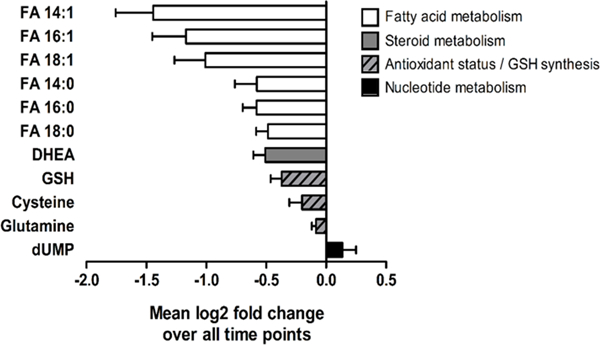
The second study’s measurements through 48 hours produced this informative graphic and text:

“Of the features we identified using metabolite databases and classified as endogenous, eleven were significantly altered.

  • Glutathione (GSH) – a major intracellular antioxidant that conjugates with SFN during metabolism – was significantly decreased in plasma at 6, 12 and 24 hours following sprout intake.
  • GSH precursors glutamine (3 and 24 hours) and cysteine (12 and 24 hours) also decreased.
  • We observed significant decreases in dehydroepiandrosterone (DHEA) at 3, 6 and 12 hours.
  • Decreases in fatty acids reported here suggest that even a single dose of broccoli sprouts may alter plasma lipids in healthy adult populations.

While this study focuses largely on potential effects of SFN, broccoli sprouts contain many other bioactive components (e.g., indoles) that could be responsible for our observations as well as additional health benefits.”

Supplements I take twice daily with broccoli sprouts:

  • 1 gram L-glutamine for replenishment and other purposes;
  • 25 mg DHEA to replenish and other effects;
  • 15 mg then 50 mg zinc, which has a role in GSH metabolism;
  • 500 mg glucosamine (anti-inflammatory, crosstalk with Nrf2 signaling pathway);
  • 500 mg acetyl-L-carnitine (induces Nrf2-dependent mitochondrial biogenesis); and
  • 1400 IU then 2000 IU Vitamin D. A major portion of its effects is Nrf2 activation, like sulforaphane. A virtuous circle develops when taken with broccoli sprouts in that the Vitamin D receptor is a Nrf2 target gene inducible by sulforaphane, which then upregulates Nrf2 expression levels.

One of the things eating Boring Chicken Vegetable Soup twice a day does is replenish cysteine. I eat that and steel-cut oats (another cysteine source) separately from broccoli sprouts.

I take 1 gram flax oil with breakfast and dinner instead of with broccoli sprouts. Haven’t found relevant research on whether broccoli sprout compounds decrease omega-3 polyunsaturated alpha linolenic acid C18:3 as they do these six endogenous fatty acids.


Both studies investigated effects of fresh broccoli sprouts. Timing of their measured decreases and increases are different for me because I microwave broccoli sprouts up to but not exceeding 60°C (140°F).

A section of Microwave broccoli seeds to create sulforaphane highlighted metabolic differences among fresh broccoli sprouts, microwaved broccoli sprouts, and broccoli sprout supplements.

“A metabolic profile resulting from my current practices is probably between the Sprout and BSE (broccoli sprout extract) divided-dose statistics:

  1. Sulforaphane intake is greater than eating raw broccoli sprouts because microwaving 3-day-old broccoli sprouts creates sulforaphane in them before eating.
  2. Sulforaphane uptake from microwaved broccoli sprouts is quicker than eating raw broccoli sprouts. It may not be as immediate as taking sulforaphane supplements, which are usually powders.
  3. Sulforaphane dose from microwaved broccoli sprouts is less dependent on an individual’s metabolism than eating raw broccoli sprouts.
  4. Sulforaphane release from microwaved broccoli sprouts continues on to the gut as does eating raw broccoli sprouts. Sulforaphane release from supplements may not per Does sulforaphane reach the colon?.”

Metabolism of broccoli sprout glucoraphanin and other glucosinolates that aren’t preferentially hydrolyzed by microwaving and thorough chewing is assisted in the gut twice a day by:

  • 6 billion IU acidophilus; and
  • 750 mg fructo-oligosaccharides.

See Treating psychopathological symptoms will somehow resolve causes? for updates.


Take responsibility for your one precious life – Trained innate immunity

This 2020 review subject was the normal progression of our immune systems:

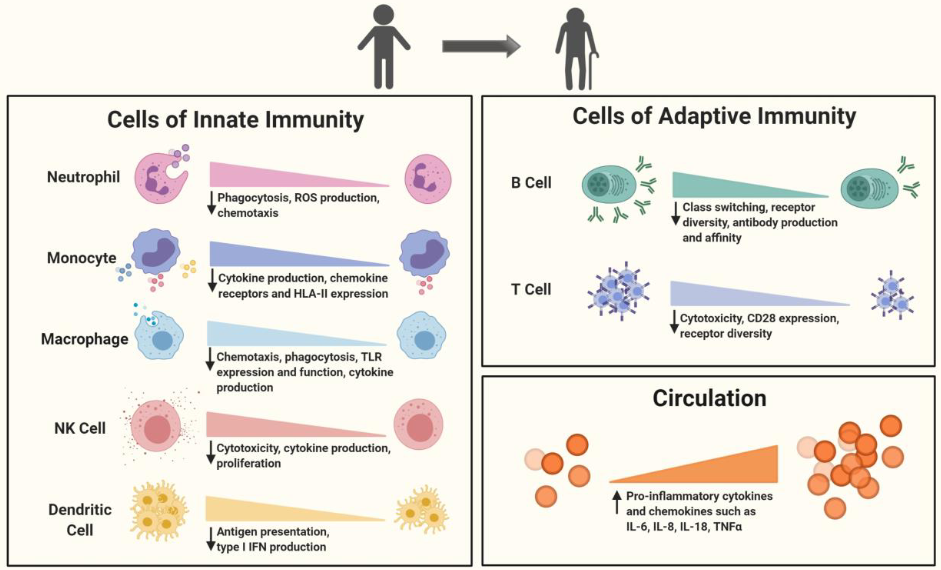
“Age-related alterations in the immune system result in high susceptibility to infections, increased risk of hospitalization and mortality. Defects in adaptive immunity underlie the markedly low vaccine efficiency in the elderly. Despite reduced cellular functions, a systemic increase in inflammatory markers, so-called inflammaging, is observed in aged individuals.

Trained immunity is a newly emerging concept that showed that innate immune cells possess non-specific immunological memory established through epigenetic and metabolic reprogramming upon encountering certain pathogenic stimuli.

Novel approaches targeting innate immunity to improve host responses are crucial to evade the consequences of the aged immune system. It is an emerging concept that innate immune cells can manifest memory-like properties that are not antigen-specific and exhibit enhanced responsiveness upon later challenges with heterologous stimuli. Whether trained immune responses change as people age is yet to be explored.”

https://academic.oup.com/intimm/advance-article/doi/10.1093/intimm/dxaa052/5885077 “Overcoming immune dysfunction in the elderly: trained immunity as a novel approach”


Previous papers by this review’s corresponding coauthor were curated in:

There’s no reason to rely entirely on the review’s elaborate vaccination schemes to develop trained immunity. Take responsibility for your one precious life and Train your immune system every day!

Sleep

If you can stand the woo of two Californians trying to outwoo each other, listen to these five podcasts with a sleep scientist.

https://peterattiamd.com/matthewwalker1/

“Ambien, sedation, hypnotives, are not sleep.

Sleep is a life support system. It’s the Swiss army knife of health.

Lack of sleep is like a broken water pipe in your home that leaks down into every nook and cranny of your physiology.

Sleep research is not being transmitted to clinical practice.”


I live on the US East Coast. Hyperbole in normal conversations outside of urban centers is an exception.

It’s different on the West Coast. For example:

  • Interviewer assertions regarding heart rate variability should be compared and contrasted with Dead physiological science zombified by psychological research evidence that:

    “A broad base of further evidence was amassed within human cardiac, circulatory, and autonomic physiology such that the hypotheses do not work as described.”

  • Interviewer favorable comments for MDMA (Ecstasy) “to deal with issues of underlying trauma, anxiety, and depression.”

Eat broccoli sprouts for your skin!

This 2020 Swiss review subject was the interaction of Nrf2 activators and skin:

“The electrophile and Nrf2 activator dimethyl fumarate (DMF) is an established and efficient drug for patients suffering from the common inflammatory skin disease psoriasis. DMF is being tested for pharmacological activity in several other inflammatory skin conditions.

dmf

Psoriasis is a chronic inflammatory skin disease affecting 2–4% of the population and plaque psoriasis is the most common type, affecting about 90% of all patients. As about 30% of all patients suffer from moderate and severe psoriasis, there is a strong need for efficient systemic treatment options with few side effects.

SFN [sulforaphane] blocks NF-κB activity by several mechanisms. SFN oxidizes IκB, thereby inhibiting its phosphorylation and downstream NF-κB activation, but also targets specific cysteine residues of p50/p65, causing a reduction in DNA binding.

More indirect effects have also been suggested. SFN induces HO-1 expression via Nrf2, which in turn inhibits NF-κB. The isothiocyanate can also react with and oxidize components of cellular redox buffers, such as glutathione and thioredoxin, which are required to retain NF-κB’s DNA-binding capacity.

NLRP3 is believed to be critically involved in common diseases, whereas its role in immunity is rather minor. The mechanisms underlying NLRP3 inflammasome activation are of high medical interest.

Electrophiles can directly inhibit inflammasome activation. SFN inhibits activation of NLRP3 in the absence of NRF2 expression in a very fast manner, suggesting that transcriptional effects are not relevant for NLRP3 inhibition. SFN inhibits NLRP3 even in KEAP1 knockout cells.

All these results demonstrate that electrophiles can inhibit the inflammasome pathway in a direct manner, perhaps via the modification of reactive cysteine residues of inflammasome proteins or those which regulate activation of these complexes.”

https://www.ncbi.nlm.nih.gov/pmc/articles/PMC7072181/ “Electrophiles against (Skin) Diseases: More Than Nrf2”


These reviewers focused on a pharmaceutical. Read this article for progress made on a generic:

“Biogen is expected to appeal this ruling against its Tecfidera patent protection, which is not due to expire until 2028. Its list price is reported to be about $2,026 for a two-week (14 day) supply at 120 mg.

‘The District Court decision clears the legal pathway for us to bring our dimethyl fumarate product to market, and we are working with the FDA to accelerate our regulatory approval target action date, which currently is November 16.'”


Broccoli or Sulforaphane: Is It the Source or Dose That Matters? listed 15 mouse studies and 4 human studies of sulforaphane treatments of skin diseases in Supplementary Material Table S3.

From Novel Nrf2 activators from microbial transformation products inhibit blood–retinal barrier permeability in rabbits:

“The cysteine residue of sulforaphane works as a weak electrophile and it interacts with cysteine residues of Keap1. Dimethyl fumarate is also a weak electrophile.

Nrf2 activity was evaluated by NQO1 induction activity in Hepa1c1c7 cells. RS9 was the most potent and the concentration needed to double (CD) the specific Nrf2 activity was 0.2 nM. The CD values for bardoxolone methyl, sulforaphane and dimethyl fumarate were 0.9 nM, 154.4 nM and 13.3 μM respectively.”


1. This review didn’t mention dimethyl fumarate’s NQO1 induction CD value because..? It’s one of Nrf2 signaling pathway’s main studied parameters, along with HO-1. For example, from Autism biomarkers and sulforaphane:

“This time point was chosen based on our earlier observations of kinetics of upregulation of Nrf2-dependent genes by SF, and was expected to capture increased mRNA production of both very fast (HO-1) and relatively slow (NQO1) responders.”

2. What about adverse effects? From Sulforaphane and RNAs:

“DMF is the most successful Nrf2 activator, FDA-approved in 2013 for the treatment of relapsing remitting multiple sclerosis. However, DMF causes leukopenia and other side-effects.

Bardoxolone cleared Phase II clinical trials for the treatment of advanced chronic kidney disease and type 2 diabetes mellitus, but was halted in Phase III trials due to cardiovascular concerns.”

3. What about prevention mechanisms for skin problems? Skin care isn’t just cancer prevention.


So – what can a person do to treat an inflammation problem in our largest organ, our skin?

  • Pay $2,026 every two weeks to take a daily 120 mg dose of a brand name pharmaceutical?
  • Wait around for some hypothetical future “development of new tailor-made molecules and drugs for the many inflammatory conditions which are associated with Nrf2, NF-κB and inflammasomes”?
  • Try other treatments that just address symptoms, not causes?

Or eat daily clinically-relevant broccoli sprout dosages for < $500 a year?

Week 19 of Changing to a youthful phenotype with broccoli sprouts

To follow up Week 18:

1. Continued attention to broccoli sprout gardening details was this week’s theme. The 12-6-6 schedule had an extra rinse during lunch time.
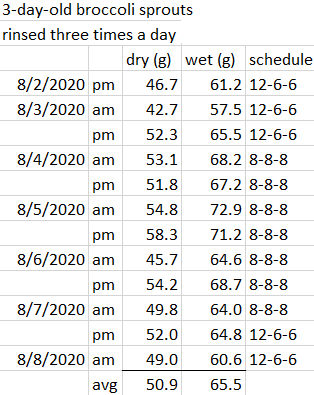
I stopped when the 8/3 evening batch smelled bad. Broccoli sprouts don’t do well with too much moisture.

I didn’t have this problem on a 12-12 schedule of two rinses. But I also didn’t have good yields.

I switched to an 8-8-8 schedule, and the problem didn’t recur. However, intervals were 5:00 a.m., 1:00 p.m., and 9:00 p.m. That led to eating broccoli sprouts too early and too late, and disrupting my sleep.

8-8-8 also didn’t produce optimal yields. The top two yields this week were both on 8/5. Those two batches started on 8/2, and apparently benefited from a 12-6-6 schedule during their initial germination stages.

I switched back to 12-6-6 on 8/7 with an extra step of rinsing my strainer and teaspoon between batch rinses. Not sure this step addresses whatever happened on 8/3, but it protects against one batch’s problems spreading to other batches. I’ll continue 12-6-6 unless I cause moisture problems, in which case I’ll return to a 12-12 routine.

The (65.5 gram x 2) = 131 g daily average of this week’s broccoli sprouts has been factored into Estimating daily consumption of broccoli sprout compounds numbers for broccoli seeds, sprouts and their compounds. Some worst-case scenarios change to evidenced estimates, such as consuming 52 mg sulforaphane daily by microwaving 131 g of 3-day-old broccoli sprouts.

I’ll update the many blog posts that reference these estimates. Most of them can be recognized from strikethrough typography.

2. During the 8-8-8 schedule I ate microwaved broccoli sprouts with supplements and sauerkraut instead of during a meal. I wondered if meal composition made any difference to broccoli sprout compounds. My meals are breakfast started with 1/2 cup (82 grams) of steel-cut oats, Boring Chicken Vegetable Soup for dinner, and leftover soup at lunch.

A 2018 Netherlands study Bioavailability of Isothiocyanates From Broccoli Sprouts in Protein, Lipid, and Fiber Gels found:

Compared to the control broccoli sprout, incorporation of sprouts in gels led to lower bioavailability for preformed sulforaphane and iberin.”

IAW, eating protein, fats, and fiber along with microwaved broccoli sprouts wouldn’t help. So I’ll keep eating them with supplements for synergies* but not immediately before or after meals.

A 2018 review with some of the same researchers Isothiocyanates from Brassica Vegetables-Effects of Processing, Cooking, Mastication, and Digestion offered one possible explanation for protein acting to lower broccoli sprout compounds’ bioavailability:

“In vitro studies show that ITCs can potentially react with amino acids, peptides, and proteins, and this reactivity may reduce the ITC bioavailability in protein‐rich foods. More in vivo studies should be performed to confirm the outcome obtained in vitro.”

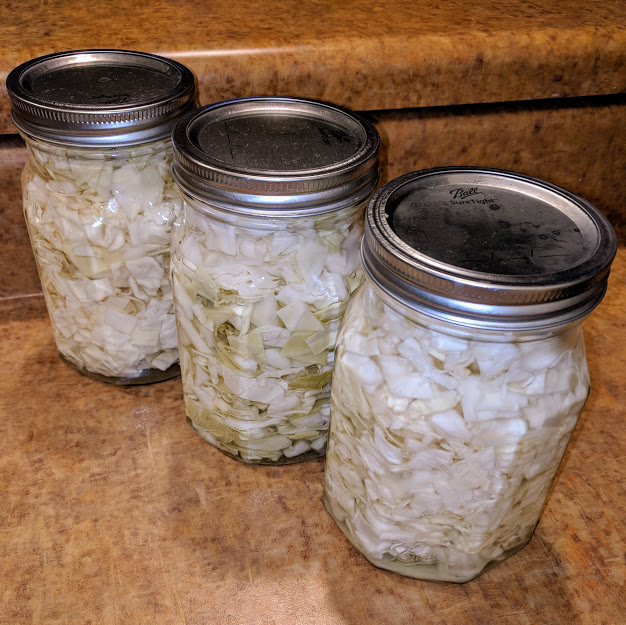
3. I mix in homemade sauerkraut when I eat microwaved broccoli sprouts. It helps ensure that I thoroughly chew sprouts. Wouldn’t expect anyone else to like unsalted sauerkraut.

Continued with Week 20 of Changing to a youthful phenotype with broccoli sprouts.

*See Broccoli sprout synergies for details.