Do broccoli sprouts treat migraines?

While rereading a review in Eat broccoli sprouts today, it occurred to me that I haven’t needed to take migraine medicine during the 9 weeks I’ve been eating broccoli sprouts every day. Since 14 weeks of lockdown overlap this period, it’s also possible that I’ve avoided triggering conditions. I look at brightly-lit screens all day, but don’t have cold air blowing on my head that’s the other half of my most common triggering condition.

I started having intermittent ~monthly episodes about ten years ago. I wouldn’t take sumatriptan unless I have a half-day-long headache that doesn’t respond to acetaminophen. It stops a headache from turning into a 3-day-long migraine.

I went over to PubMed and did a “sulforaphane migraine” search, which turned up exactly 1 (!!) result. A 2016 Chinese rodent study Activation of the nuclear factor E2-related factor 2/anitioxidant response element alleviates the nitroglycerin-induced hyperalgesia in rats found:

“Activation of the Nrf2/ARE pathway inhibited the activation of TGVS [trigeminovascular system] and prevented the induction of hyperalgesia. Sulforaphane might therefore be an effective agent for hyperalgesia.”

Plausible conclusion. Nitroglycerin definitely jolts a monster headache.

Two of the eleven papers citing this study were:


There wouldn’t be any potential payoff for a company to be interested in studying a sulforaphane-migraine connection. What sponsor would be interested enough to double the number of studies in this area?

See Part 2 of Do broccoli sprouts treat migraines? for a follow up.

A hair color anecdote

Will you excuse a poorly-evidenced observation that’s a positive development I left out of Week 8 of Changing to a youthful phenotype with broccoli sprouts?

I got a haircut last weekend after waiting for Governor Klan Robes Blackface to not arrest barbershop and hair salon owners for the crime of earning a living. A thirty-something tattooed barber wearing a face mask and face shield said my last haircut had been on February 1, 2020, so it had been 14 weeks. She used a #4 clipper to cut everything to about 1/2 inch.

I’d eaten broccoli sprouts every day for 7 weeks at that point. Post-haircut visible hair was all from that period, probably since Week 3, which was also when broccoli sprouts’ effects on inflammation became noticeable.

One evening as I brushed my teeth, I noticed overall hair appearance was mainly dark brown again, an unexpected phenomenon. Maybe white hair will show up as it gets longer?

Feedback on hair color from a back-of-the-head picture was mixed, ranging from “Yes. Definitely!” to Unsupported non-evidence since before and after pictures weren’t taken under the same lighting conditions. Even if validated, other factors could be in play, such as working from home without the stress of going into work.


While eating my usual steel cut oats for breakfast this morning, I remembered a super informative presentation by the lead researcher of clinical trial Reversal of aging and immunosenescent trends. I rewatched it, pausing after two minutes to reabsorb when he said:

“There’s a collapse that takes place somewhere between the ages of sixty to eighty in which you lose 98% of your ability to recognize foreign antigens.”

You will have forgotten why I drew your attention to this super interesting presentation by the 21:25 mark. But pause for the “Hair Rejuvenation?” slide with before and after photos:

“A couple of guys came to us and said they seemed to notice that their hair was growing in darker again. It’s an anecdote. It didn’t apply to most of the guys. But it’s a sign that maybe something interesting is going on.”

That’s followed by epigenetic clock findings using four different clocks. Note that no significant effects on biological age were found until the trial’s 9-month point, and those weren’t as strong as improvements by 12 months.

Improvements accelerated between 9 and 12 months, and at 12 months, subjects had increased their life expectancies by 2 years. The GrimAge clock showed subjects’ predicted lifespan and health span was unchanged 6 months after the trial ended.


I started and have continued four lifestyle “interventions” since last summer:

  1. In July I dramatically reduced my consumption of advanced glycation end products after reading Dr. Vlassara’s AGE-Less Diet: How a Chemical in the Foods We Eat Promotes Disease, Obesity, and Aging and the Steps We Can Take to Stop It.
  2. In September I started this trial’s non-prescription daily treatments of Vitamin D, zinc, and DHEA.
  3. Also in September, I started non-prescription intermittent quercetin treatments of Preliminary findings from a senolytics clinical trial.
  4. Eight weeks ago I started eating broccoli sprouts every day per clinical trial Effects of long-term consumption of broccoli sprouts on inflammatory markers in overweight subjects.

In a month or so I should be able to say whether or not my hair really is growing in darker. One way to find out which “intervention” had the largest effect may be to stop one or more of them. That might happen anyway because:

  1. Consistently eating AGE-less food is boring.
  2. I’m leery of taking more than RDAs.
  3. Ehh.
  4. I still sadly hope against reality that we’re past the Madness of Crowds phase and can accelerate the “recover their senses slowly, one by one” phase. It would be harder to take care of my broccoli sprout farm if I have to go into work every day.

Or maybe An environmental signaling paradigm of aging is correct, and at a certain point, clocks are reset and none of these “interventions” will be needed? What do you think?

Lab analyses of broccoli sprout compounds

To follow up Estimating daily consumption of broccoli sprout compounds, the main point of which was: how can a person guide their actions with evidence when a broccoli cultivated variety’s beneficial characteristics aren’t known?

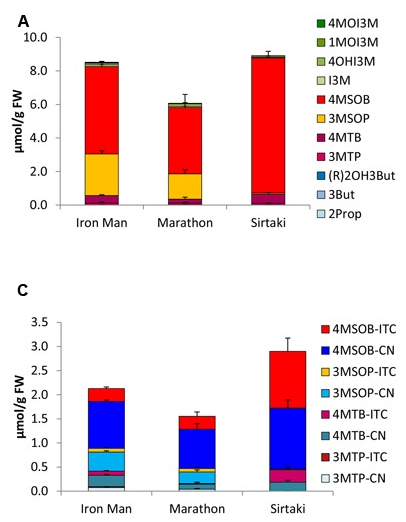
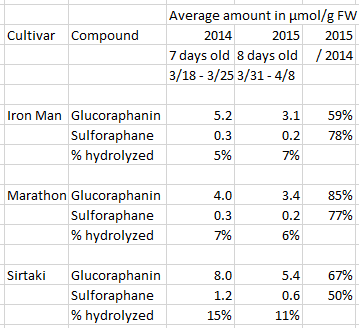
I focus on broccoli sprout lab analyses of 3 cultivars made in a 2017 German study Isothiocyanates, Nitriles, and Epithionitriles From Glucosinolates Are Affected by Genotype and Developmental Stage in Brassica oleracea Varieties. Here are rounded numbers from the supplementary material:

1. What happened in 2015 to lessen all broccoli cultivars’ sprout compound values by 2015 / 2014 percentages?

I read and reread, and didn’t come up with a satisfactory answer. Maybe it’s a language difference, but this was an insufficient explanation:

“Decreased myrosinase activity probably was the reason for the low levels of hydrolysis products formed in broccoli cv. Sirtaki in 2015 compared to 2014, while 70% [67%] of the GLS concentration of 2014 was present.”

What caused “decreased myrosinase activity?” And why would that be explanatory for just one cultivar when two others also experienced “low levels of hydrolysis products?”

Greenhouse-grown broccoli sprouts clearly varied between batches. Temperatures and sun radiation were tossed in but not shown to have been explanatory variables.

2. Could a person infer from one cultivar’s 2014 lab report how much sulforaphane they would consume from that cultivar in 2015?

No.

3. Without knowing a broccoli sprouts’ cultivar, could a person infer from a glucoraphanin amount how much sulforaphane they would consume?

No. The 2014 Iron Man 5.2 μmol per g glucoraphanin wasn’t that different from the 2015 Sirtaki 5.4 amount. But Iron Man vs. Sirtaki differences of 0.3 vs. 0.6 μmol per g sulforaphane amounts and 5% vs. 11% hydrolyzed showed Sirtaki cultivar’s unrounded numbers had double or more those of Iron Man.

4. Could a person infer from a mature broccoli glucoraphanin amount anything about its broccoli sprout glucoraphanin amount, or vice versa?

No. The Sirtaki 8.0 μmol per g sprout glucoraphanin amount was the highest cultivar, but its fully developed head was lowest at 0.27.

5. Could differences be explained by the broccoli sprout batches’ one-day age difference?

6. Did both years use the same seed lot? If so, could a one year aging of seeds explain differences?

Here’s a graphic of the 2014 batch major broccoli sprout compounds. Glucoraphanin is red 4MSOB in A, and sulforaphane is red 4MSOB-ITC in C:


This study demonstrated that there are many unknowns even with lab analyses. It would seem that not much could be accurately inferred past knowing that broccoli sprouts of one cultivar produced more sulforaphane than another.

Would similar lab reports help current purchase decisions? I haven’t come across a broccoli seed bulk supplier who had lab reports for products they’re selling. When pressed on Amazon they at best say Calabrese, which has described hundreds of cultivars. Such as Iron Man and Marathon, which are also named Calabrese Iron Man F1 and Calabrese Marathon F1.

Obtaining information for each batch would probably cost them a lot of money, which would be passed on to their customers. Lab reports for a different batch than the broccoli seed offered may have limited utility to consumers.

It would assist broccoli seed consumers to at least know the cultivar. This study’s genotypes had a greater effect than did environmental influences.

See follow up Tailoring measurements for broccoli sprouts.

Enhancing sulforaphane content

This 2020 Chinese study experimented with enhancing sulforaphane content of broccoli florets in a range of conditions:

“For direct water blanching at 60°C, sulforaphane yield increased with treatment time from 1698.0 ± 121.9 μmol per kg DW (0 min) to 2833.3 ± 118.6 μmol per kg DW (1 min) and then steadily decreased to the lowest value of 2345.8 ± 57.7 μmol per kg DW for 5 min.

The sulforaphane yield of broccoli after 5 min thermal treatment at 65 °C was even lower than the value obtained for raw broccoli. The reason could be leaching of glucoraphanin into blanching water coupled with partial inactivation of myrosinase resulting in low yield of sulforaphane.

For direct water blanching, the best treatment temperature for maximizing sulforaphane yield was 60 °C.

Sulforaphane yield depends on the relative activity of myrosinase and ESP in the broccoli matrix and 3 min treatment at 65 °C during in-pack processing in this study was found to be the best condition that favours conversion into sulforaphane instead of sulforaphane nitrile. This indicates that the condition favours inactivation of ESP to a larger extent while maintaining sufficient myrosinase activity resulting in optimal conversion into sulforaphane.

Under this condition, it seems that all extractable glucoraphanin is converted to sulforaphane assuming 1 to 1 conversion, since glucoraphanin content of broccoli samples were determined to be 3141.2 μmol per kg DW whereas the sulforaphane yield was 3983 μmol per kg DW. The slightly higher sulforaphane yield than would be predicted from the level of glucoraphanin in raw broccoli requires further investigation.”

https://pubs.rsc.org/en/content/articlehtml/2020/fo/c9fo02089f “Mild heat combined with lactic acid fermentation: a novel approach for enhancing sulforaphane yield in broccoli puree”


1. The study presented evidence for kitchen practices:

  • Per the above graphic’s point a, I’ve changed to let broccoli sprout heating continue for 1 minute after microwaving to achieve up to but no more than 60°C (140°F). This allows further myrosinase hydrolization of glucoraphanin into sulforaphane. My practice had been to immediately cool them down, which was suboptimal point c on the 60°C line. I still transfer broccoli sprouts to a strainer immediately after microwaving.
  • The 60°C cliff finding of Microwave broccoli to increase sulforaphane levels was confirmed by this study’s 65°C direct blanching finding.

2. I didn’t view this study’s in-pack or lactic acid bacteria fermentation findings as having practical kitchen use. Maybe it’s a cultural difference?

3. Poor performance at 65°C after 5 minutes was partially attributed to “leaching of glucoraphanin into the blanching water.” But poor 65°C performance was evident at the 1 minute point compared with good 60°C performance.

“Partial inactivation of myrosinase” at 65°C was more likely to be the dominant factor.

4. Regarding:

“The slightly higher sulforaphane yield than would be predicted from the level of glucoraphanin in raw broccoli requires further investigation.”

The microwaving study author was on a productive investigation track with:

“Microwave irradiation might help to release more conjugated forms of glucosinolates and then get hydrolyzed by released myrosinase.”

That track developed in part from finding that broccoli florets microwaved on full power to 60°C increased glucoraphanin past control (raw) levels:

“The control GLR amount was 2.18 µmol/g DW, while the HL60 GLR amount was 2.78 µmol/g DW.”

Not to mention the coincident 1,114% increase in sulforaphane content of ordinary broccoli purchased at a grocery store!


I arrived at this study through it being referenced in the enjoyable 2020 Spanish review Functional Ingredients From Brassicaceae Species: Overview and Perspectives. Those reviewers noted that this study’s 2019 predecessor Fermentation for enhancing the bioconversion of glucoraphanin into sulforaphane and improve the functional attributes of broccoli puree (not freely available) found:

“Preferential formation of SFN-nitrile (less potential as inducer of phase II detoxification enzymes than SFN) instead of SFN.”

Part 3 of Rejuvenation therapy and sulforaphane

Part 1 focused on the study’s clinical biomarkers. Part 2 highlighted its epigenetic clocks. Now we’ll look at rejuvenation of cognitive function.

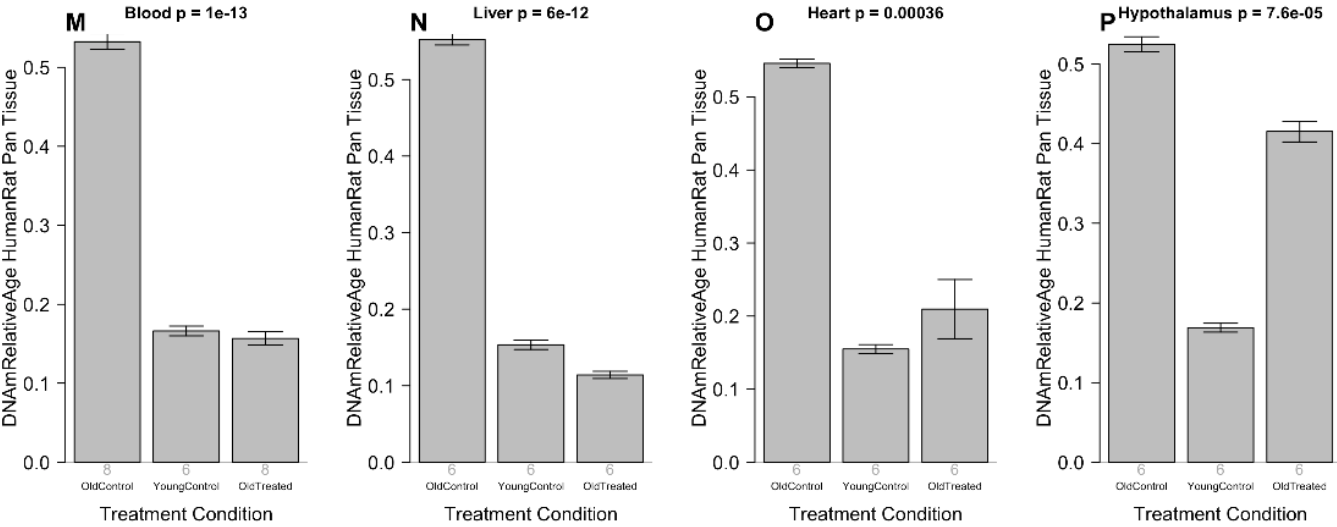
Charts for this study’s most relevant human aging applications – measured by the new human-rat relative biological age clock – were in supplementary data due to combining study untreated tissue samples into clock training data. Reanalyses showed:

“Using the final version of the epigenetic clocks, we find that treatment effects become even more significant especially for the hypothalamus.”

Human-rat relative clock percentages of rejuvenation were:

  • “Blood 70.6%
  • Liver 79.4%
  • Heart 61.6%
  • Hypothalamus 20.9%”

The Discussion section addressed hypothalamus rejuvenation:

“Why does plasma fraction treatment not reduce brain epigenetic age by the same magnitude as it does other organs? We can only begin to address this question after having first understood what epigenetic aging entails.

As it stands, our knowledge in this area remains limited, but it is nevertheless clear that:

  1. Epigenetic aging is distinct from the process of cellular senescence and telomere attrition,
  2. Several types of tissue stem cells are epigenetically younger than non-stem cells of the same tissue,
  3. A considerable number of age-related methylation sites, including some clock CpGs, are proximal to genes whose proteins are involved in the process of development,
  4. Epigenetic clocks are associated with developmental timing, and
  5. Relate to an epigenomic maintenance system.

Collectively, these features indicate that epigenetic aging is intimately associated with the process of development and homeostatic maintenance of the body post-maturity.

  • While most organs of the body turnover during the lifetime of the host, albeit at different rates, the brain appears at best to do this at a very much slower rate.
  • While most tissues harbor stem cells that are necessary for replenishment and turnover, stem cells in adult brain have only been detected in a defined and very limited area of the subventricular zone, olfactory bulb (in rats), hippocampus and hypothalamic proliferative region.

As such, if plasma fraction treatment’s rejuvenating effect is:

  • Mediated through the process of development and
  • Involves tissue stem cells

then its effect on epigenetic age of the brain would appear to be modest, which indeed it does.

It is to be noted however, that improving brain function does not depend on neurogenesis as much as it does on synapse formation and factors such as NMDA receptors, which decline in density with age.

Assessment of plasma fraction treatment on cognitive function (learning and memory). Rats were subjected to Barnes maze test – nine consecutive days of test where the time (in seconds) required by rats to find the escape hole (latency) was recorded and plotted. Error bars depict 2 standard errors.

Within a month of plasma fraction treatment, rats exhibited significantly reduced latency to escape, i.e., they learned and remembered better. After the second month, treated rats began with a slightly reduced latency period compared to untreated old rats, and once again, they learned much faster than the latter.

By the third month, it was clear that treated rats remembered the maze much better than untreated ones even from the first day of test as their latency period was significantly reduced. By the end of the test period, their latency was similar to that of young rats. This feature was sustained and repeated in the fourth month.”

Not sure why there’s a 62-day gap between “Second month” and “Third month.” Maybe it had something to do with “First month” starting 10 days after the first treatment and “Third month” similarly starting 13 days after the second treatment?


Many of us know older people who lived well past their time of good cognitive function:

  • We see how they’re helpless and dependent; and
  • We see how others take advantage of them in their morbidity phase, where healthspan stops increasing but lifespan continues.

We can make personal plans for that day, sure. But let’s also put some urgency into applying this study’s new human-rat relative biological age clock, and make:

“A step change in aging research. Although conservation of aging mechanism could be equally deduced from the existence of multiple individual clocks for other mammals (mouse, dog), the single formula of the human-rat clock that is equally applicable to both species effectively demonstrates this fact.”

Part 2 of Rejuvenation therapy and sulforaphane

A rejuvenation therapy and sulforaphane focused on the study’s clinical biomarkers and not its biological age measurements. This Part 2 curation of the study highlights its epigenetic clocks because:

“While clinical biomarkers have obvious advantages (being indicative of organ dysfunction or disease), they are neither sufficiently mechanistic nor proximal to fundamental mechanisms of aging to serve as indicators of them. It has long been recognized that epigenetic changes are one of several primary hallmarks of aging.

DNA methylation (DNAm) epigenetic clocks capture aspects of biological age. The discrepancy between DNAm age and chronological age (term as ‘epigenetic age acceleration’) is predictive of all-cause mortality. Pathologies and conditions that are associated with epigenetic age acceleration includes, but are not limited to, cognitive and physical functioning, centenarian status, Down syndrome, HIV infection, obesity, and early menopause.

The [new] human-rat clocks apply to both species. The two human-rat pan-tissue clocks are distinct, by way of measurement parameters. One estimates absolute age (in units of years), while the other estimates relative age, which is the ratio of chronological age to maximum lifespan; with values between 0 and 1. This ratio allows alignment and biologically meaningful comparison between species with very different lifespan (rat and human), which is not afforded by mere measurement of absolute age.

Relative age estimation was made using the formula: Relative age = Age / maxLifespan where the maximum lifespan for rats and humans were set to 3.8 years and 122.5 years, respectively.”

From Supplementary Table 3, old control and old treatment subjects were males 109 weeks old, 55% of their maximum lifespan (109 / 197.6). Young control subjects were males 30 weeks old, 15% of their maximum lifespan.

The money charts for this study’s human aging applications – measured by the new human-rat relative biological age clock – were buried in Supplementary Figure 12, bar plots M through P:
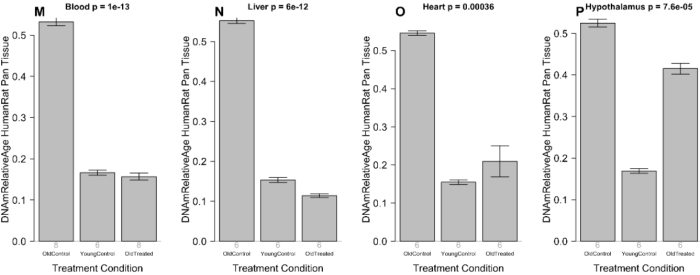
“Human-rat clock measure of relative age defined as age/maximum species lifespan. Each bar-plot reports the mean value and one standard error.”

From Supplementary Table 8, the percentages of rejuvenation for the above bar plots, calculated as “(100 * (1 – Old Treated / Old Control)” were:

  • “Blood 70.6%
  • Liver 79.4%
  • Heart 61.6%
  • Hypothalamus 20.9%”

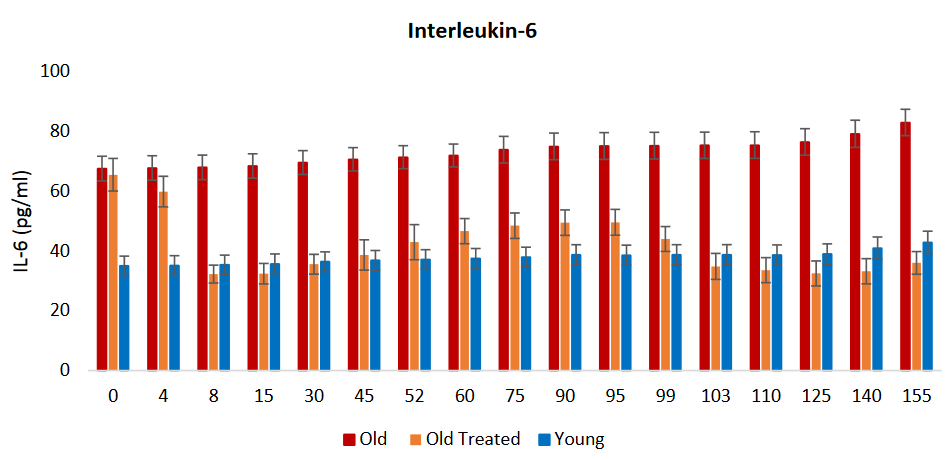
Let’s return to clinical biomarkers for comparison purposes. The current study measured pro-inflammatory cytokine IL-6 blood plasma levels at every time point, but didn’t publish numbers. Bar plots and narrative were:
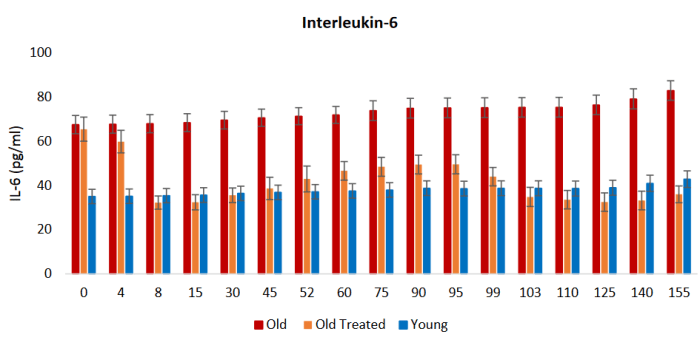
“Inflammation is an important response that helps protect the body, but excess inflammation especially in terms of duration of this response can have very detrimental effects instead. This occurs when inflammation fails to subside and persists indefinitely; a condition referred to as chronic inflammation, which for reasons not well-understood, increases with age and is associated with a multitude of conditions and pathologies.

The levels of two of the most reliable and common biomarkers of chronic inflammation, interleukin 6 (IL-6) and tumor necrosis factor α (TNF-α), are found to be considerably higher in old rats, and these were very rapidly diminished, within days by plasma fraction treatment, to comparable levels with those of young rats. This was especially stark with IL-6.

In time, the levels of these inflammatory factors began to rise gradually, but they were once again very effectively reduced following the second administration of the plasma fraction on the 95th day.”

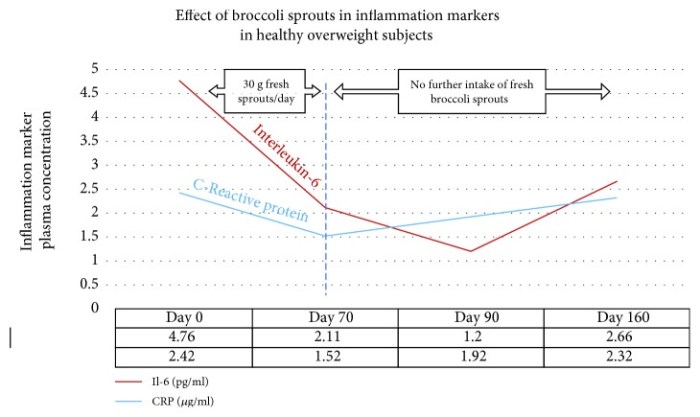
Let’s compare the above IL-6 graphic with IL-6 concentration improvements of our 2018 model clinical trial, Effects of long-term consumption of broccoli sprouts on inflammatory markers in overweight subjects, calculated as (100 * (1 – Day _ mean / Day 0 mean):

Mean pg/ml | % improvement | Period | Broccoli sprout consumption

  • 4.594 | 0% | Day 0 | “One week before the beginning of the intervention period, subjects were asked to avoid the consumption of Brassica vegetables (broccoli, radish, cauliflower, Brussel sprouts, mustards, among others) and their derived products.”
  • 1.748 | 62.0% | Day 0 to 70 | Subjects ate 30 g raw broccoli sprouts every day, and stopped eating them after Day 70.
  • 0.896 | 80.5% | Day 0 to 90 | “After the intervention period, a follow-up recovery period for all subjects continued for another 90 days with no ingestion of broccoli sprouts.”
  • 2.170 | 52.8% | Day 0 to 160 | Subjects had not eaten broccoli sprouts after Day 70.

Results between the studies were similar in that:

  1. IL-6 levels improved during early treatments through rat Day 8 and human Day 70, respectively.
  2. IL-6 levels continued decreasing shortly after treatments for 7 days (through rat Day 15) and 20 days (through human Day 90), respectively.
  3. IL-6 levels rose after rat Day 15 and human Day 90, respectively, but were still significantly below Day 0 values at rat Day 95 and human Day 160.

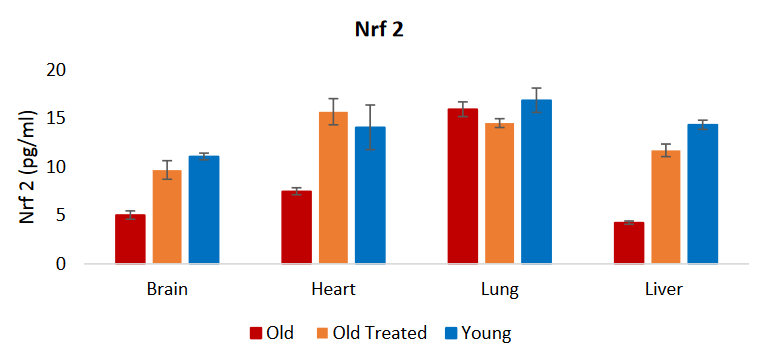
The current study measured Nrf2 but didn’t publish numbers. Bar plots and narrative were:
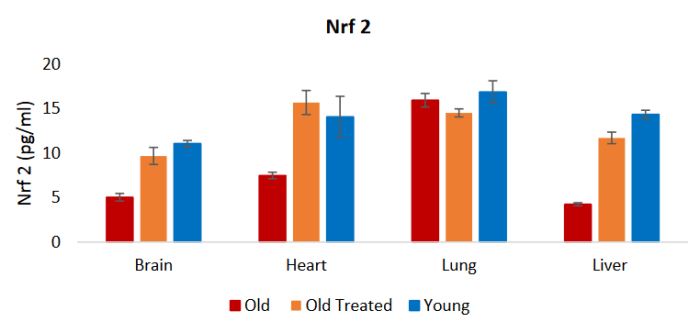
“The reduction of these inflammation markers is consistent with the profile of the nuclear factor erythroid 2-like 2 protein (Nrf2), which plays a major role in resolving inflammation, in part by inhibiting the expression of IL-6 and TNF-α. Nrf2 also induces the expression of antioxidants that neutralizes ROS [reactive oxygen species], which is also a significant feature in inflammation.”

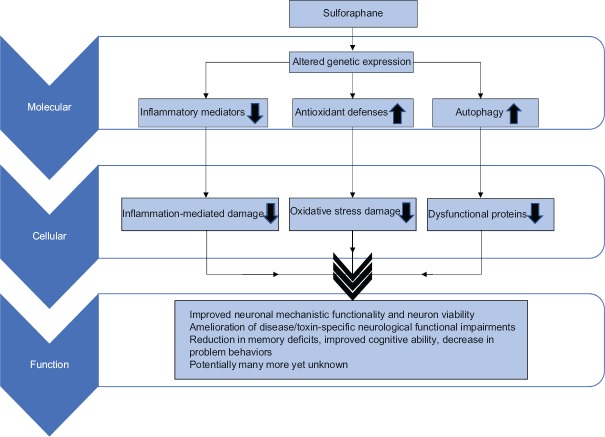
A PubMed search on “nrf2 sulforaphane human” didn’t turn up relevant 2020 human in vivo studies. I disregarded reviews, cancer studies, disproven hypotheses, and other compounds listed in the below graphic.

I won’t repeat the entire Nrf2 section from the Part 1 curation, just one graphic and paragraph:

It [sulforaphane] is not only a potent Nrf2 inducer but also highly bioavailable [around 80%], so that modest practical doses can produce significant clinical responses. Other Nrf2 activators [shown in the above image] not only lack potency but also lack the bioavailability to be considered as significant intracellular Nrf2 activators.”


As noted in Reviewing clinical trials of broccoli sprouts and their compounds, there are no sulforaphane clinical trials that also use epigenetic clocks. Broccoli sprouts and their compounds’ effects on human aging is an area that hasn’t drawn attention and funding.

What effects may broccoli sprout compounds have on human aging? With this new human-rat relative biological age clock, researchers can get reliable answers from rat studies, with human clinical trials needed only to confirm those findings!

As rejuvenation research continues, what could people do easily, cheaply, and today for our long-term selves? Don’t know about the hypothalamus, but our blood, liver, and heart biological ages may decrease as we reduce inflammation and oxidative stress by eating broccoli sprouts.

I’m at a similar percentage of species maximum lifespan as were the study’s treated subjects. It’s my choice as to what my healthspan will be.

There isn’t evidence today to definitively say that changing my inflammatory phenotype with broccoli sprouts has had / will have rejuvenation effects on biological ages of my cells, organs, and body. But if eating broccoli sprouts every day not only reduces chronic inflammation and oxidative stress as expected, but also makes me younger, I could probably learn to live with that. 🙂

Continued with Part 3 of Rejuvenation therapy and sulforaphane.
A rejuvenation therapy and sulforaphane

The founder of the epigenetic clock methodology with the coauthor of Aging as an unintended consequence released a 2020 rodent study “Reversing age: dual species measurement of epigenetic age with a single clock” at https://www.biorxiv.org/content/10.1101/2020.05.07.082917v1.full.pdf:

“We employed six clocks to investigate the rejuvenation effects of a plasma fraction treatment in different rat tissues. Two of these epigenetic clocks apply to both humans and rats.

The treatment more than halved the epigenetic ages of blood, heart, and liver tissue. A less pronounced, but statistically significant, rejuvenation effect could be observed in the hypothalamus.

The treatment was accompanied by progressive improvement in the function of these organs as ascertained through numerous biochemical/physiological biomarkers and behavioral responses to assess cognitive functions. Cellular senescence, which is not associated with epigenetic aging, was also considerably reduced in vital organs.

Plasma fraction treatment consists of two series of intravenous injections of plasma fraction. Rats were injected four times on alternate days for 8 days. A second identical series of injections were administered 95 days later. In its entirety, the experiment lasted 155 days.

Overall, this study demonstrates that a plasma-derived treatment markedly reverses aging according to epigenetic clocks and benchmark biomarkers of aging.”

The study hasn’t been peer reviewed, so can’t be viewed yet as conclusive. Given that researchers’ single-most valuable asset is their reputations, though, will the findings have major revisions?


I was alerted to the study by Josh Mitteldorf’s blog post Age Reduction Breakthrough, who did his usual excellent curation:

“Most of the explosion in aging research (and virtually all the venture capital startups) are looking to treat aging at the cellular level. Their paradigm is that aging is an accumulation of molecular damage, and they see their job as engineering of appropriate repair mechanisms.

The truth, as Katcher [the lead lab researcher] understands it, is that, to a large extent, aging is coordinated system-wide via signal molecules in the blood. The problem is that there are thousands of constituents represented in tiny concentrations in blood plasma, but conveying messages that cells read. Which of these are responsible for aging?

The two-species clock[s] was [were] a significant innovation, a first bridge for translating results from an animal model into their probable equivalent in humans. Besides the methylation clock[s], the paper presents evidence of rejuvenation by many other measures. For example:

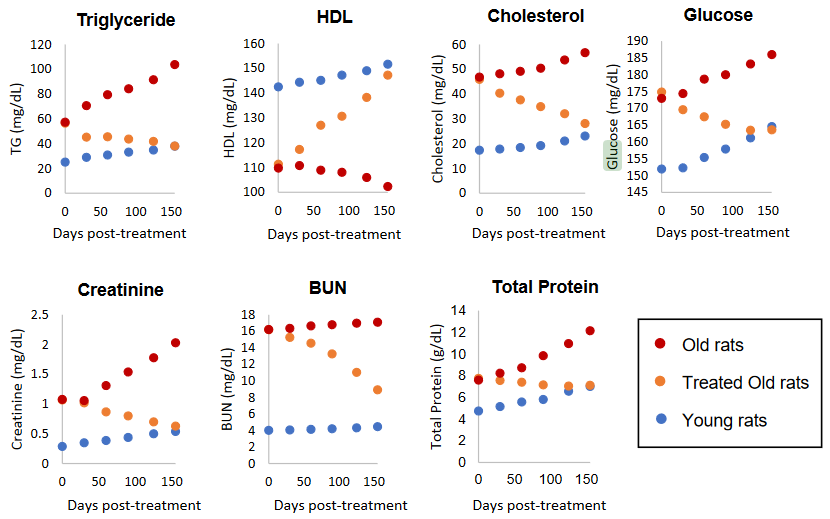
  • IL-6, a marker of inflammation, was restored to low youthful levels;
  • Glutathione (GSH), superoxide dismutase (SOD), and other antioxidants were restored to higher youthful levels;
  • In tests of cognitive function (Barnes maze), treated rats scored better than old rats, but not as well as young rats.;
  • Blood triglycerides were brought down to youthful levels;
  • HDL cholesterol rose to youthful levels; and
  • Blood glucose fell toward youthful levels.

These results bring together three threads that have been gaining credibility over the last decade. Mutually reinforcing, the three have a strength that none of them could offer separately.

  1. The root cause of aging is epigenetic progression = changes in gene expression over a lifetime.
  2. Methylation patterns in nuclear DNA are not merely a marker of aging, but its primary source. Thus aging can be reversed by reprogramming DNA methylation.
  3. Information about the body’s age state is transmitted system-wide via signal molecules in the blood. Locally, tissues respond to these signals and adopt a young or an old cellular phenotype as they are directed.”

Several of these aging measurements are also positively affected by sulforaphane. Using Sulforaphane: Its “Coming of Age” as a Clinically Relevant Nutraceutical in the Prevention and Treatment of Chronic Disease as a reference:

1. “Chronic inflammation”

“Antioxidants in general and glutathione in particular can be depleted rapidly under conditions of oxidative stress, and this can signal inflammatory pathways associated with NF-κB. SFN [sulforaphane] has been shown to inhibit NF-κB in endothelial cells.

Two key inflammatory cytokines were measured at four time points in forty healthy overweight people [our model clinical trial, Effects of long-term consumption of broccoli sprouts on inflammatory markers in overweight subjects]. The levels of both interleukin-6 (Il-6) and C-reactive protein (CRP) declined over the 70 days during which the sprouts were ingested. These biomarkers were measured again at day 90, wherein it was found that Il-6 continued to decline, whereas CRP climbed again. When the final measurement was taken at day 160, CRP, although climbing, had not returned to its baseline value. Il-6 remained significantly below the baseline level at day 160.”

OMCL2019-2716870.010

2. “Oxidative stress”

“As a mediator for amplification of the mammalian defence system against various stressors, Nrf2 [nuclear factor erythroid 2-related factor 2] sits at the interface between our prior understanding of oxidative stress and the endogenous mechanisms cells use to deal with it. Diseases known to be underpinned by oxidative stress are proving to be more responsive to amplification of cellular defences via Nrf2 activation than by administration of direct-acting antioxidant supplements.

SFN, with absolute bioavailability of around 80%, [is] capable of increasing several endogenous antioxidant compounds via the transcription factor, Nrf2.

Nrf2 is ubiquitously expressed with the highest concentrations (in descending order) in the kidney, muscle, lung, heart, liver, and brain. Nrf2 was shown to prevent endothelial cells from exhibiting a proinflammatory state. Nrf2 is required for protection against glucose-induced oxidative stress and cardiomyopathy in the heart.

Well in excess of 500 genes have been identified as being activated by SFN via the Nrf2/ARE [Antioxidant Response Element] pathway, and it is likely that this underestimates the number as others are being discovered. Of the available SFN clinical trials associated with genes induced via Nrf2 activation, many demonstrate a linear dose-response. More recently, it has become apparent that SFN can behave hormetically with different effects responsive to different doses.

It [sulforaphane] is not only a potent Nrf2 inducer but also highly bioavailable so that modest practical doses can produce significant clinical responses. Other Nrf2 activators [shown in the above image] not only lack potency but also lack the bioavailability to be considered as significant intracellular Nrf2 activators.”


The study’s most relentlessly questioned, scrutinized, and criticized findings may be the two new epigenetic clocks that apply to both humans and rats. The researchers invited other researchers to validate these clocks because:

“If validated, this would be a step change in aging research. Although conservation of aging mechanism could be equally deduced from the existence of multiple individual clocks for other mammals (mouse, dog), the single formula of the human-rat clock that is equally applicable to both species effectively demonstrates this fact.”

The commonalities of this study with efforts to change my inflammatory phenotype with broccoli sprouts were summarized in the Discussion section:

“Apart from rejuvenating the vital organs of the treated rats, plasma fraction also impacted two fundamental physiological processes that underlie a great number of pathologies, namely oxidative stress and inflammation. Within a week of treatment, the markers of chronic inflammation (IL-6 and TNF-α) were significantly reduced and remained low throughout the entire experiment.

Likewise, markers of oxidative stress in brain, heart, lung and liver, which were very much higher in control old rats, were at the end of the experimental period, indistinguishable between plasma fraction-treated old rats and young ones. Concomitant with this drastic reduction in oxidative stress was the augmented levels of antioxidants (GSH, Catalase and SOD) in these tissues, indicating that modulating the levels of ROS [reactive oxygen species] to that of youthful rats is at least one way by which plasma fraction suppresses oxidative stress. It remains to be ascertained whether the rate of ROS generation is also reduced.

The levels of Nrf2, a transcription factor that impacts on oxidative stress, as well as inflammation, were raised by plasma fraction treatment of old rats to those of the young ones, indicating yet another level by which this treatment modulates these two critical processes. Collectively, these results show that plasma fraction treatment impacts not only the overt performances of organs, but also the underlying physiological processes that are pivotal for optimal organ function and health.”

Great stuff, huh? Are you ready to change your phenotype?

Continued with Part 2 of Rejuvenation therapy and sulforaphane.
I’m kind of asleep right now

This should stay up on YouTube for a while since it uses satire. If it used informed opinions like:

YouTube would censor it.

“I’ll stay at home for the rest of my life if they tell me to. Who knows how to make the best choices for my health and my life? Definitely not me.

The last thing you want is for people to have the freedom to make their own choices and then experience the consequences of their choices.

This new scientific data is irrelevant to me. I already made up my mind when I was the most frightened, and I’m going to keep on believing what makes me the most frightened. Because it’s more congruent to my being that way.

The more scared I am, the more obedient I am.

Yes, I would like a mandatory vaccine. Sometimes the best medicine is like the best sex: non-consensual. They work on the same premise.

It’s pretty well proven that being proactive and taking care of your health won’t keep you healthy. Our only hope is in the pharmaceutical companies protecting us. They have a very good track record of never harming anyone.

I’d like two microchips please. Just to keep me extra safe. Or maybe we should just do a baby step, and use a mandatory tracking app on our phone to keep us safe and then go to the microchips.”

It was known to everybody that the lockdown would cause a catastrophe

To follow up If people don’t stand up for their rights, their rights will be forgotten which YouTube has taken down, here are excerpts from a subsequent interview which YouTube has also taken down:

“If you don’t present bad news, that’s not good news for the media.

On April 17, the Director of the CDC presented at the Presidential Briefing, this graph. Its a count of hospitals reporting some sort of symptom that might be influenza. If the number of people who show up at the hospital peaked around March 18th, that means the number of infections peaked around March 8th.

People don’t go to the hospital for their first symptoms. They give it three or four days, and if it doesn’t get better, then they go to the hospital.

If infections peaked around March 8th, then shutting down schools and the economy ten days later is totally absurd. Shutting down the economy ten days after the curve had already turned down is heartless.

New York hospitals were not overflowing. They were laying off people. 500 sick people is a drop in the bucket for the New York City hospital system.

It may have been unfortunate for the patients that there were so many respirators. That’s a different story.

Double-checking never happened with these models. You’re never off by orders of magnitude. You’re off by 10, 20, 30%. [The Imperial College model for UK deaths from COVID-19 changed from 510,000 to 20,000 IIRC] That was more than two orders of magnitude.

It was known to everybody that the lockdown would cause a catastrophe.

Isolating the nursing homes would have been the thing that would have prevented deaths, and would have prevented hospitals from becoming overloaded. Not letting children and young adults from becoming infected and developing immunity would not prevent the load on hospitals.

You don’t need to do anything to prevent a respiratory disease from running. What you should do – and what was not done in the United States – was to protect the elderly. From the experience in Italy, we already knew that the vast majority of people who died were people in their seventies, eighties, nineties, who had comorbidities.

We also had that in Seattle, people with comorbidities died in nursing homes. At that point in time, one should have isolated at least the nursing homes.

To isolate the children, who are not at risk, and put those at risk at risk, is a catastrophe. It’s a human catastrophe that should have never, ever, happened.

I don’t know where the government finds these so-called experts who don’t understand the very basics about epidemiology.

I have never heard of him and never read any publications on epidemiology by Bill Gates but maybe I overlooked some of his qualifications.

I don’t understand this mantra that ‘We will never go back to normal.’ Why not? The virus is gone. Let’s go back and have a life.

If people would be more active. If they would take part in political decisions. If they would be more awake. If they would fight for their democratic rights. This would never have happened.

It’s a failure of the people to take control of the government, and let the government take control of them.”


The Professor misunderstood the United States form of government. As a general principle, the federal government doesn’t order states to do such and such.

Florida, for example, did exactly what the Professor suggested, “protect the elderly.” Other states didn’t, like Washington, New Jersey, Virginia, Pennsylvania, and especially New York. Don’t know why those states’ residents don’t demand responsibility and accountability.

The Professor didn’t adequately present aspects of human behavior. For example, he cited a CDC chart of a drop in hospital reporting of influenza-like symptoms for his arguments without also citing the media frenzy to scare people away from hospitals for fear that they would catch COVID-19. So of course there were fewer instances of influenza-like symptoms reported by hospitals.

He also said “The virus is gone” but that statement had qualifications. Parts of this interview misplaced their relevant contexts.

Reanalysis of findings from a senolytics clinical trial

To follow up Preliminary findings from a senolytics clinical trial:

“The central hypothesis tested in our article is that a brief course of the senolytic drug combination, Dasatinib plus Quercetin (D+Q), can reduce senescent cell abundance in humans, specifically focusing on targeting adipose tissue in subjects with diabetes and kidney dysfunction, a condition in which adipose tissue senescent cell burden is known to be increased.

Although we reported a statistically significant decrease in skin senescent cells in the 9 subjects whose skin data were reported in the original article, that conclusion did not hold up upon reanalysis.

The overall conclusion of our article that D+Q can target senescent cells in humans holds upon reanalysis of the data, at least in adipose tissue and as reflected by a composite of blood SASP [senescence-associated secretory phenotype] factors, but we have not shown this in skin here.”

https://www.ncbi.nlm.nih.gov/pmc/articles/PMC6994619/ “Corrigendum to ‘Senolytics decrease senescent cells in humans: Preliminary report from a clinical trial of Dasatinib plus Quercetin in individuals with diabetic kidney disease’”

Deaths in Italy attributed to COVID-19

Why have so many coronavirus patients died in Italy? from the Telegraph today:

“According to Prof Walter Ricciardi, scientific adviser to Italy’s minister of health, the country’s mortality rate is far higher due to demographics – the nation has the second oldest population worldwide – and the manner in which hospitals record deaths.

‘The age of our patients in hospitals is substantially older – the median is 67, while in China it was 46,’ Prof Ricciardi says. ‘So essentially the age distribution of our patients is squeezed to an older age and this is substantial in increasing the lethality.

But Prof Ricciardi added that Italy’s death rate may also appear high because of how doctors record fatalities.

‘The way in which we code deaths in our country is very generous in the sense that all the people who die in hospitals with the coronavirus are deemed to be dying of the coronavirus.

On re-evaluation by the National Institute of Health, only 12 per cent of death certificates have shown a direct causality from coronavirus, while 88 per cent of patients who have died have at least one pre-morbidity – many had two or three,’ he says.”


Refactoring the current 4,825 deaths in Italy attributed to COVID-19 equals 579 (4,825 x .12). That number places Italy slightly above France’s 562 current total.

Evidence-based statements wouldn’t sufficiently frighten the herd, though. The article continued on to include now-obligatory, hyperbolic, unscientific WHO statements referencing a “miracle.”

Image from “Culture Audits: We Have Been Asking the Wrong Question”

Well done, WHO, carefully played

A follow up to The WHO has a financial incentive to declare COVID-19 a pandemic:

Today CNBC reported Investors in World Bank’s ‘pandemic bonds’ face big losses due to the coronavirus outbreak

“According to ratings agency DBRS Morningstar, investors who hold the riskier of the two bonds could be losing their entire principal amount soon, with the firm saying that the price should have dropped more than 80%.

According to the World Bank, the outbreak would need to last at least 12 weeks, and have more than 2,500 deaths for the riskier of the two bonds, and 250 deaths for the other. There must also be more than 20 deaths in a second country.

When all those conditions are fulfilled, it triggers a payout to selected countries in need of help to contain the outbreak, and investors lose some or all of their money. That date works out to be Mar. 24, going by the 12-week period, and the start date of the outbreak – Dec. 31, according to the WHO, said DBRS Morningstar.

The World Bank did not respond to CNBC’s request for comment.”


Regarding WHO terminology, from The Cyclical Nature of Disease:

“The World Health Organization (WHO) made the announcement on Wednesday, March 11, 2020, that the Coronavirus is a “pandemic” which is actually not as bad as an Epidemic which is a term that describes any problem that has grown out of control. An epidemic is therefore defined as “an outbreak of a disease that occurs over a wide geographic area and affects an exceptionally high proportion of the population.”

Consequently, an epidemic requires a high proportion of society to be infected and is an event in which a disease is actively spreading. That is clearly not the case with the coronavirus. since the proportion of society infected has not even reached 1/10th of one percent of the population.

In contrast, the term pandemic relates to geographic spread and is used to describe a disease that affects a whole country or the entire world. This has nothing to do with the proportion of the population that is infected.”


Regarding WHO timing, last week The Guardian reported:

First Covid-19 case happened in November, China government records show – report

“The first case of someone suffering from Covid-19 can be traced back to 17 November, according to media reports on unpublished Chinese government data.

The report, in the South China Morning Post, said Chinese authorities had identified at least 266 people who contracted the virus last year and who came under medical surveillance, and the earliest case was 17 November – weeks before authorities announced the emergence of the new virus.

The Chinese government was widely criticised over attempts to cover up the outbreak in the early weeks, including crackdowns on doctors who tried to warn colleagues about a new Sars-like virus which was emerging in the city of Wuhan in Hubei province.

The data obtained by the Post, which the Guardian has not been able to verify, said a 55-year-old from Hubei province could have been the first person to contract Covid-19. For about one month after that date there were one to five new cases reported each day, the report said, and by 20 December there were 60 confirmed cases.

Official statements by the Chinese government to the World Health Organisation reported that the first confirmed case had been diagnosed on 8 December.”


Looking past the headlines, we have time to ask cui bono questions while we’re sitting at home:

  • Who’s benefiting from (medical, economic, social, and political) reports on and actions taken with COVID-19?
  • Who’s suffering from these reports and actions?

An evolutionary view of transgenerational epigenetic inheritance

This 2020 Swiss/German review mainly cited weed, worm, and yeast studies:

“RNA interference-related mechanisms can mediate the deposition and transgenerational inheritance of specific chromatin modifications in a truly epigenetic fashion.

Epigenetics was initially defined as any heritable change in gene expression patterns without changes in the DNA sequence. Now, epigenetic phenomena are often characterized as ‘gene expression changes that are mutation independent and heritable in the absence of the triggering event’, a definition we will follow in this review. We note that this definition can be expanded to include protein only-based inheritance mechanisms that do not necessarily cause changes in gene expression.

Gene silencing can persist over multiple generations in the germline of C. elegans. Gene repression is typically maintained without the initial trigger for three to seven generations and occasionally for tens of generations. In contrast, silencing of somatically expressed genes mostly affects only the subsequent generation through nonepigenetic parental effects.

In the presence of an ‘enabling’ mutation, primary siRNAs [small interfering RNAs] can trigger an RNAe [RNA-induced epigenetic silencing] response. Secondary siRNA amplification is required for transgenerational inheritance.

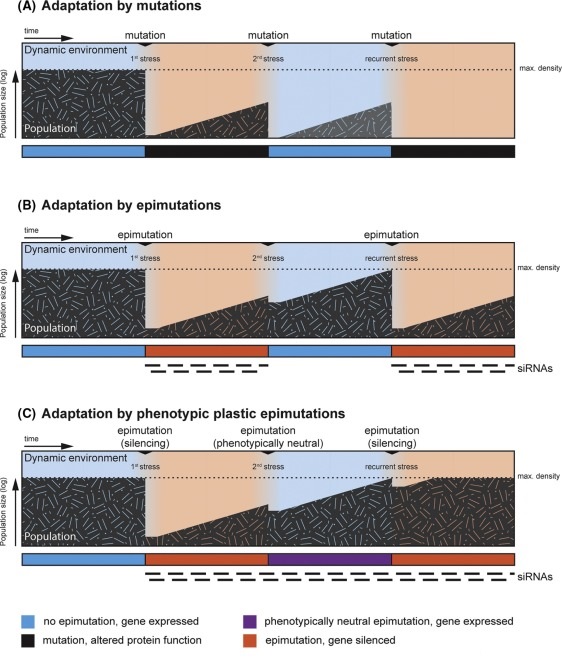
The fitness of a population in a dynamic environment strongly depends on the ability of individuals to adapt to the new condition as well as to remember, inherit, and forget such adaptation:

  • (A) A well-adapted population (grey) is at its maximal density (dotted line) in a given niche until an environmental change (1st stress) creates a bottleneck. Only few individuals can adapt through mutations and repopulate the niche. After the environment changes back to the initial blue state, only individuals that acquire rare counteracting mutations survive, often leading to extinction of the population.
  • (B) Individuals of a population in the red state can gain beneficial epimutations through siRNAs and repopulate the niche. When exposed again to the blue state, the epimutations can be quickly reversed and the population rapidly reaches maximal density. After recurrence of the red state, organisms establish de novo epimutations with the same low frequency as when they first encountered this state.
  • (C) In contrast, organisms that can maintain the memory of a beneficial silencing event can quickly re-establish beneficial epimutations and grow to full density. Such memory can be maintained by phenotypically neutral epimutations, marked by the continuously high production of siRNAs without substantial reductions in the expression of a gene. A population that can adapt through phenotypically plastic epimutations is predicted to have a maximal fitness advantage in a dynamic environment.”

The Concluding Remarks section included:

“RNA-mediated epigenetic responses could contribute to adaptation.

Even though RNAe may yield significant adaptive advantages, a high induction frequency could cause silencing of multiple essential genes and therefore be detrimental. Hence, it is plausible that mechanisms would have coevolved that counteract silencing.

Similarly, if constituting a bet-hedging strategy to cope with ever-changing environments, permanent fixation of an acquired silencing response would not constitute a selective advantage and mechanisms that modify and limit the duration of RNAe would be predicted.”

https://www.sciencedirect.com/science/article/pii/S0168952519302598 “Small RNAs in the Transgenerational Inheritance of Epigenetic Information”


The review’s arguments were based on evolutionary selective advantages and less-complex organisms. It predicted that there would be an endpoint generation as in the (A) case of the above graphic.

Were the mechanisms in the (B) case necessarily transgenerational throughout? The review further explained:

“Epimutations tend to occur in hot spots (e.g., in stress-related or nutritional pathway genes) and can potentially silence several homologous genes simultaneously. Incomplete penetrance of a beneficial epimutation by stochastic loss of siRNAs [59] can result in loss of adaptation in a given environment (red state), but can be beneficial if the previous blue state is re-established. However, when the environment changes back to the red state, epimutations must initiate de novo, at the same low frequency as when the population first encountered this state.”

The study cited at 59 found:

“A feedback between siRNAs and RNAi genes determines heritable silencing duration”

but not “Incomplete penetrance of a beneficial epimutation by stochastic loss of siRNAs.” Hmm.

In any event, the review stated:

“Evidence for naturally occurring RNAe-related phenomena in other animals is scarce and we should be cautious about inferring RNAe as a widely conserved phenomenon.”

It’s encouraging to read studies that find benefits to epigenetic transgenerational inheritance, albeit in organisms that are less complex than rodents and humans.


Do epigenetic clocks measure causes or effects?

Starting the sixth year of this blog with a 2020 article authored by the founder of the PhenoAge epigenetic clock methodology:

“The Ge[r]oscience paradigm suggests that targeting the aging process could delay or prevent the risk of multiple major age-related diseases. We need clinically valid measures of the underlying biological process and/or classification criteria for what it means to be biologically, rather than chronologically, “aged”.

The majority of aging biomarkers, including the first-generation epigenetic clocks, are developed using cross-sectional data, in which the researchers take a variable that proxies aging (e.g. chronological age) and apply supervised machine learning, or deep learning, approaches to predict that variable using tens to hundreds of thousands of input variables. The problem with this approach is that it doesn’t account for mortality selection. This biases the algorithm to select markers that are not causal, but instead correlative with aging.

When considering individuals of the same chronological age, do those with higher epigenetic age look phenotypically older on average (e.g. have higher mortality rates, greater disease burden, and worse physical and cognitive functioning)? FEV1 [forced expiratory volume in one second] declined at a faster rate for individuals with higher baseline GrimAge and/or PhenoAge. A similar finding was observed for the decline in grip strength as a function of GrimAge; however, the rate of change for any of the epigenetic clocks was not associated with rate of change in any performance measure.

Loci that show consistent trends with chronological age, even at higher ages, are likely not causal. By using a cross-sectional study design for biomarker development there was a propensity away from selecting causal loci, to the point where fewer causal loci were selected than if loci had been chosen at random.

The power of these measures as diagnostic and prognostic may stem from the use of longitudinal data in training them. Rather than continuing to train chronological age predictors using diverse data, it may be more advantageous to retrain some of the existing measures by predicting longitudinal outcomes.”

https://academic.oup.com/biomedgerontology/advance-article-abstract/doi/10.1093/gerona/glaa021/5717592 “Assessment of Epigenetic Clocks as Biomarkers of Aging in Basic and Population Research” (not freely available)


A cited 2019 study modeled corrections to “account for mortality selection.” It modified datasets “by incorporating correlates of mortality identified from longitudinal studies, allowing cross-sectional studies to effectively identify the causal factors of aging.”

https://academic.oup.com/biomedgerontology/advance-article-abstract/doi/10.1093/gerona/glz174/5540066 “Biomarkers for Aging Identified in Cross-sectional Studies Tend to Be Non-causative” (not freely available)


The article didn’t present a complete case to determine whether an individual’s epigenetic clock measurements over time may show causes of biological aging.

Other viewpoints include:

1. A blood plasma aging clock presented evidence with its 46-protein conserved aging signature that some causes of biological aging are under genetic control. If the principle of this finding applies to CpG DNA methylation, the statement:

Loci that show consistent trends with chronological age, even at higher ages, are likely not causal.

may not hold. Such epigenetic changes could be among both the causes of senescence and the effects of evolution’s selection mechanisms.

2. An epigenetic clock review by committee, particularly in:

  • Challenge 3 “Integration of epigenetics into large and diverse longitudinal population studies”;
  • Challenge 5 “Single-cell analysis of aging changes and disease”; and
  • Table 1 “Major biological and analytic issues with epigenetic DNA methylation clocks” with single-cell analysis as the solution to five Significant issues.

Clearing out the 2019 queue of interesting papers

I’m clearing out the below queue of 27 studies and reviews I’ve partially read this year but haven’t taken the time to curate. I have a pesky full-time job that demands my presence elsewhere during the day. :-\

Should I add any of these back in? Let’s be ready for the next decade!


Early life

https://link.springer.com/article/10.1007/s12035-018-1328-x “Early Behavioral Alterations and Increased Expression of Endogenous Retroviruses Are Inherited Across Generations in Mice Prenatally Exposed to Valproic Acid” (not freely available)

https://www.sciencedirect.com/science/article/pii/S0166432818309392 “Consolidation of an aversive taste memory requires two rounds of transcriptional and epigenetic regulation in the insular cortex” (not freely available)

https://www.nature.com/articles/s41380-018-0265-4 “Intergenerational transmission of depression: clinical observations and molecular mechanisms” (not freely available)

mother

https://www.ncbi.nlm.nih.gov/pmc/articles/PMC6454089/ “Epigenomics and Transcriptomics in the Prediction and Diagnosis of Childhood Asthma: Are We There Yet?”

https://www.ncbi.nlm.nih.gov/pmc/articles/PMC6628997/Placental epigenetic clocks: estimating gestational age using placental DNA methylation levels”

https://www.ncbi.nlm.nih.gov/pmc/articles/PMC6770436/ “Mismatched Prenatal and Postnatal Maternal Depressive Symptoms and Child Behaviours: A Sex-Dependent Role for NR3C1 DNA Methylation in the Wirral Child Health and Development Study”

https://www.sciencedirect.com/science/article/pii/S0889159119306440 “Environmental influences on placental programming and offspring outcomes following maternal immune activation”

https://academic.oup.com/mutage/article-abstract/34/4/315/5581970 “5-Hydroxymethylcytosine in cord blood and associations of DNA methylation with sex in newborns” (not freely available)

https://physoc.onlinelibrary.wiley.com/doi/full/10.1113/JP278270 “Paternal diet impairs F1 and F2 offspring vascular function through sperm and seminal plasma specific mechanisms in mice”

https://onlinelibrary.wiley.com/doi/full/10.1111/nmo.13751 “Sex differences in the epigenetic regulation of chronic visceral pain following unpredictable early life stress” (not freely available)

https://www.ncbi.nlm.nih.gov/pmc/articles/PMC6811979/ “Genome-wide DNA methylation data from adult brain following prenatal immune activation and dietary intervention”

https://link.springer.com/article/10.1007/s00702-019-02048-2miRNAs in depression vulnerability and resilience: novel targets for preventive strategies”


Later life

https://www.ncbi.nlm.nih.gov/pmc/articles/PMC6543991/ “Effect of Flywheel Resistance Training on Balance Performance in Older Adults. A Randomized Controlled Trial”

https://www.mdpi.com/2411-5142/4/3/61/htm “Eccentric Overload Flywheel Training in Older Adults”

https://www.nature.com/articles/s41577-019-0151-6 “Epigenetic regulation of the innate immune response to infection” (not freely available)

https://link.springer.com/chapter/10.1007/978-981-13-6123-4_1 “Hair Cell Regeneration” (not freely available)

https://www.ncbi.nlm.nih.gov/pmc/articles/PMC6422915/Histone Modifications as an Intersection Between Diet and Longevity”

https://www.sciencedirect.com/science/article/abs/pii/S0306453019300733 “Serotonin transporter gene methylation predicts long-term cortisol concentrations in hair” (not freely available)

https://www.sciencedirect.com/science/article/abs/pii/S0047637419300338 “Frailty biomarkers in humans and rodents: Current approaches and future advances” (not freely available)

https://onlinelibrary.wiley.com/doi/full/10.1111/pcn.12901 “Neural mechanisms underlying adaptive and maladaptive consequences of stress: Roles of dopaminergic and inflammatory responses

https://www.ncbi.nlm.nih.gov/pmc/articles/PMC6627480/ “In Search of Panacea—Review of Recent Studies Concerning Nature-Derived Anticancer Agents”

https://www.sciencedirect.com/science/article/abs/pii/S0028390819303363 “Reversal of oxycodone conditioned place preference by oxytocin: Promoting global DNA methylation in the hippocampus” (not freely available)

https://www.futuremedicine.com/doi/10.2217/epi-2019-0102 “Different epigenetic clocks reflect distinct pathophysiological features of multiple sclerosis”

https://www.ncbi.nlm.nih.gov/pmc/articles/PMC6834159/ “The Beige Adipocyte as a Therapy for Metabolic Diseases”

https://www.sciencedirect.com/science/article/abs/pii/S8756328219304077 “Bone adaptation: safety factors and load predictability in shaping skeletal form” (not freely available)

https://www.nature.com/articles/s41380-019-0549-3 “Successful treatment of post-traumatic stress disorder reverses DNA methylation marks” (not freely available)

https://www.sciencedirect.com/science/article/abs/pii/S0166223619301821 “Editing the Epigenome to Tackle Brain Disorders” (not freely available)