Gut microbiota and critical development periods

This 2021 rodent study focused on global histone acetylation as a model to understand roles of microbially produced short-chain fatty acids in liver function:

“Despite the utility of germ-free mice in probing complex interactions between gut microbiota and host physiology, germ-free mice are developmentally, physiologically, and metabolically unique when compared with their conventionally housed counterparts. We sought to determine whether antibiotic-mediated microbiota depletion would affect global hepatic histone acetylation states through SCFA-dependent mechanisms, as previously observed in germ-free mice.

The inability of antibiotic-mediated microbiota depletion to recapitulate findings observed in germ-free mice suggests that the transition from a germ-free to a colonized mouse leads to resilient alterations in hepatic histone acetylation states that cannot be altered by further modulating the microbial environment. This finding is distinct from other germ-free phenotypes that are considered to be partially reversible, with clear alterations in their function observed after antibiotic treatment.

histone acetylation

Comparing antibiotic-treated and untreated mice that both received CCl4 at 24 and 48 hours after injury, there were almost no histone acetylation differences. This demonstrates that hepatic injury leads to a global shift in histone acetylation that is primarily independent of gut microbiota.

Major chromatin reorganization driven by histone acetylation leads to markers of differentiation, and addition of targeted differentiation signals induces events to stabilize these histone acetylation patterns – a key feature of embryonic development and terminal cellular differentiation. Differences in histone acetylation patterns seen between germ-free and conventionally raised mice may be a developmental-like effect of hepatocytes not yet exposed to microbial by-products.

Results suggest that microbial and dietary modifications to the gut microbiome in conventionally raised mice are not a means to modulate global hepatic histone acetylation. Microbiota-dependent landscaping of the hepatic epigenome appears static in nature, while the hepatic transcriptome is responsive to alterations in the gut microbiota, yet independent of global histone acetylation.

Findings underscore significant differences between these model systems that should be taken into account when considering their relevance to human biology.”

https://aasldpubs.onlinelibrary.wiley.com/doi/10.1002/hep.32043 “Global Microbiota-Dependent Histone Acetylation Patterns Are Irreversible and Independent of Short Chain Fatty Acids” (not freely available) Thanks to Dr. Elliot S. Friedman for providing a copy.


1. By describing “a key feature of embryonic development,” this study provided a gut microbiota-liver analogy of critical periods. If developmental events don’t happen when they are required, it’s probable that their window is missed, and won’t reopen later for a second chance at normalizing.

2. Many studies used a germ-free animal model, such as:

This study provided evidence for a limitation of this model, especially when extrapolating germ-free animal results to humans without similarly testing humans.


PXL_20210914_165000840_exported_1399

Natural products vs. neurodegenerative diseases

I was recently asked about taking rapamycin for its effects on mTOR. I replied that diet could do the same thing. Here’s a 2021 review outlining such effects:

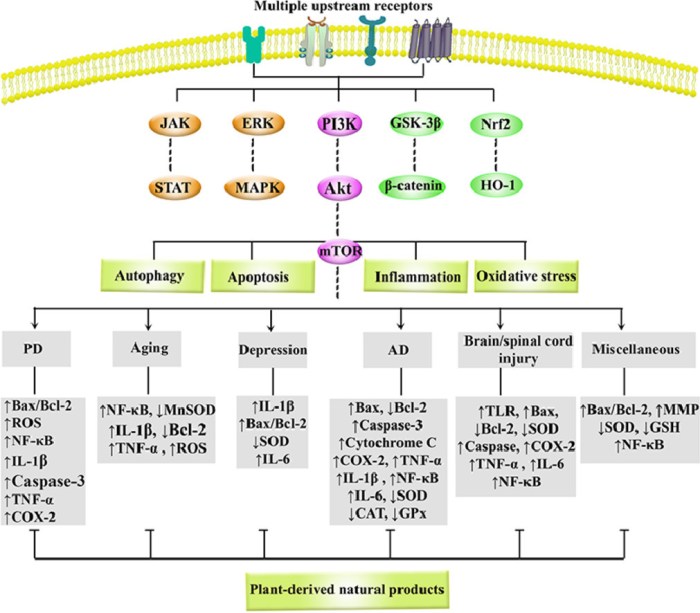
“As common, progressive, and chronic causes of disability and death, neurodegenerative diseases (NDDs) significantly threaten human health, while no effective treatment is available. Recent studies have revealed the role of phosphoinositide 3-kinase (PI3K)/Akt (Protein kinase B)/mammalian target of rapamycin (mTOR) in some diseases and natural products with therapeutic potentials.

Growing evidence highlights the dysregulated PI3K/Akt/mTOR pathway and interconnected mediators in pathogenesis of NDDs. Side effects and drug-resistance of conventional neuroprotective agents urge the need for providing alternative therapies.

1-s2.0-S0944711321002075-ga1_lrg

Polyphenols, alkaloids, carotenoids, and terpenoids have shown to be capable of a great modulation of PI3K/Akt/mTOR in NDDs. Natural products potentially target various important oxidative/inflammatory/apoptotic/autophagic molecules/mediators, such as Bax, Bcl-2, p53, caspase-3, caspase-9, NF-κB, TNF-α, GSH, SOD, MAPK, GSK-3β, Nrf2/HO-1, JAK/STAT, CREB/BDNF, ERK1/2, and LC3 towards neuroprotection.

This is the first systematic and comprehensive review with a simultaneous focus on the critical role of PI3K/Akt/mTOR in NDDs and associated targeting by natural products.”

https://www.sciencedirect.com/science/article/abs/pii/S0944711321002075 “Natural products attenuate PI3K/Akt/mTOR signaling pathway: A promising strategy in regulating neurodegeneration” (not freely available) Thanks to Dr. Sajad Fakhri for providing a copy.


Natural products mentioned in this review that I eat in everyday foods are listed below. The most effective ones are broccoli and red cabbage sprouts, and oats and oat sprouts:

  • Artichokes – luteolin;
  • Blackberries – anthocyanins;
  • Blueberries – anthocyanins, gallic acid, pterostilbene;
  • Broccoli and red cabbage sprouts – anthocyanins, kaempferol, luteolin, quercetin, sulforaphane;
  • Carrots – carotenoids;
  • Celery – apigenin, luteolin;
  • Green tea – epigallocatechin gallate;
  • Oats and oat sprouts – avenanthramides;
  • Strawberries – anthocyanins, fisetin;
  • Tomatoes – fisetin.

Four humpback whales

PXL_20210914_170732350_exported_43137

Screenshot_20210914-121800

All about vasopressin

This 2021 review subject was vasopressin:

“Vasopressin is a ubiquitous molecule playing an important role in a wide range of physiological processes, thereby implicated in pathomechanisms of many disorders. The most striking is its central effect in stress-axis regulation, as well as regulating many aspects of our behavior.

Arginine-vasopressin (AVP) is a nonapeptide that is synthesized mainly in the supraoptic, paraventricular (PVN), and suprachiasmatic nucleus of the hypothalamus. AVP cell groups of hypothalamus and midbrain were found to be glutamatergic, whereas those in regions derived from cerebral nuclei were mainly GABAergic.

In the PVN, AVP can be found together with corticotropin-releasing hormone (CRH), the main hypothalamic regulator of the HPA axis. The AVPergic system participates in regulation of several physiological processes, from stress hormone release through memory formation, thermo- and pain regulation, to social behavior.

vasopressin stress axis

AVP determines behavioral responses to environmental stimuli, and participates in development of social interactions, aggression, reproduction, parental behavior, and belonging. Alterations in AVPergic tone may be implicated in pathology of stress-related disorders (anxiety and depression), Alzheimer’s, posttraumatic stress disorder, as well as schizophrenia.

An increasing body of evidence confirms epigenetic contribution to changes in AVP or AVP receptor mRNA level, not only during the early perinatal period, but also in adulthood:

  • DNA methylation is more targeted on a single gene; and it is better characterized in relation to AVP;
  • Some hint for bidirectional interaction with histone acetylation was also described; and
  • miRNAs are implicated in the hormonal, peripheral role of AVP, and less is known about their interaction regarding behavioral alteration.”

https://www.mdpi.com/1422-0067/22/17/9415/htm “Epigenetic Modulation of Vasopressin Expression in Health and Disease”


Find your way, regardless of what the herd does.

PXL_20210911_103344386

Take taurine for your mitochondria

This 2021 review summarized taurine’s beneficial effects on mitochondrial function:

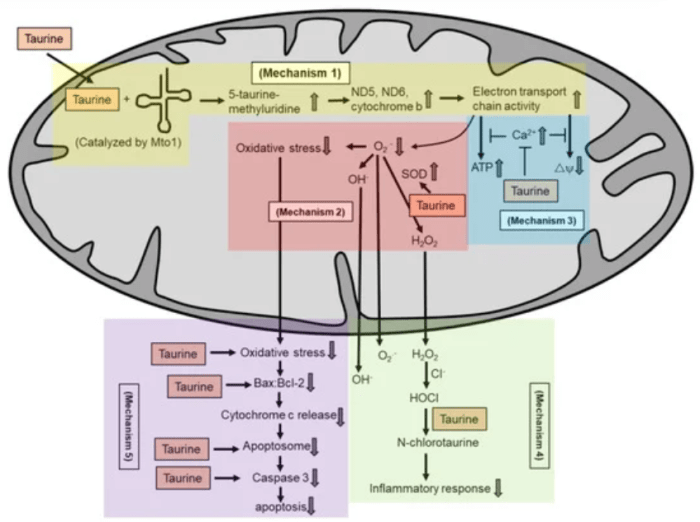
“Taurine supplementation protects against pathologies associated with mitochondrial defects, such as aging, mitochondrial diseases, metabolic syndrome, cancer, cardiovascular diseases and neurological disorders. Potential mechanisms by which taurine exerts its antioxidant activity in maintaining mitochondria health include:

  1. Conjugates with uridine on mitochondrial tRNA to form a 5-taurinomethyluridine for proper synthesis of mitochondrial proteins (mechanism 1), which regulates the stability and functionality of respiratory chain complexes;
  2. Reduces superoxide generation by enhancing the activity of intracellular antioxidants (mechanism 2);
  3. Prevents calcium overload and prevents reduction in energy production and collapse of mitochondrial membrane potential (mechanism 3);
  4. Directly scavenges HOCl to form N-chlorotaurine in inhibiting a pro-inflammatory response (mechanism 4); and
  5. Inhibits mitochondria-mediated apoptosis by preventing caspase activation or by restoring the Bax/Bcl-2 ratio and preventing Bax translocation to the mitochondria to promote apoptosis.

taurine mechanisms

An analysis on pharmacokinetics of oral supplementation (4 g) in 8 healthy adults showed a baseline taurine content in a range of 30 μmol to 60 μmol. Plasma content increased to approximately 500 μmol 1.5 h after taurine intake. Plasma content subsequently decreased to baseline level 6.5 h after intake.

We discuss antioxidant action of taurine, particularly in relation to maintenance of mitochondria function. We describe human studies on taurine supplementation in several mitochondria-associated pathologies.”

https://www.mdpi.com/1420-3049/26/16/4913/html “The Role of Taurine in Mitochondria Health: More Than Just an Antioxidant”


I take a gram of taurine at breakfast and at dinner along with other supplements and 3-day-old Avena sativa oat sprouts. Don’t think my other foods’ combined taurine contents are more than one gram, because none are found in various top ten taurine-containing food lists.

As a reminder, your mitochondria came from your mother, except in rare cases.

A time to speak

“To every thing there is a season, and a time to every purpose under heaven:
A time to break down, and a time to build up;
A time to dance, and a time to mourn;
A time you may embrace, and a time to refrain from embracing;
A time to keep silent, and a time to speak.”


A review from 2017:

“Few, if any, other drugs can rival ivermectin for its beneficial impact on human health and welfare. Perhaps more than any other drug, ivermectin is a drug for the world’s poor. For most of this century, some 250 million people have been taking it.

The following are an indication of disease-fighting potential that has been identified for ivermectin thus far:

  • Antiviral – Ivermectin has been found to potently inhibit replication of yellow fever virus, with EC50 values in the sub-nanomolar range. It inhibits replication in several other flaviviruses, including dengue, Japanese encephalitis, and tick-borne encephalitis. Ivermectin interrupts virus replication. It demonstrates antiviral activity against several RNA viruses by blocking nuclear trafficking of viral proteins. It has been shown to have potent antiviral action against HIV-1.
  • Asthma – Ivermectin suppressed mucus hypersecretion by goblet cells, establishing that ivermectin can effectively curb inflammation, such that it may be useful in treating allergic asthma and other inflammatory airway diseases.
  • Bedbugs – Ivermectin is highly effective against bedbugs, capable of eradicating or preventing bedbug infestations.
  • Disease vector control – Ivermectin is highly effective in killing a broad range of insects. Comprehensive testing against 84 species of insects showed that avermectins were toxic to almost all insects tested. At sub-lethal doses, ivermectin inhibits feeding and disrupts mating behavior, oviposition, egg hatching, and development.
  • Malaria – Mosquitoes that transmit Plasmodium falciparum, the most dangerous malaria-causing parasite, can be killed by ivermectin present in the human bloodstream after a standard oral dose.
  • Myiasis – Myiasis is an infestation of fly larvae that grow inside the host. Oral myiasis has been successfully treated with ivermectin, which has also been effective as a non-invasive treatment for orbital myiasis, a rare and preventable ocular morbidity.
  • Schistosomiasis – Schistosoma species are the causative agent of schistosomiasis, a disease afflicting more than 200 million people worldwide. Ivermectin helps control one of the world’s major neglected tropical diseases.
  • Trichinosis – Globally, approximately 11 million individuals are infected with Trichinella roundworms. Ivermectin kills Trichinella spiralis, the species responsible for most of these infections.”

https://www.nature.com/articles/ja201711 “Ivermectin: enigmatic multifaceted ‘wonder’ drug continues to surprise and exceed expectations”


72 citations in CrossRef. Didn’t see citing 2020-2021 papers that noted any safety concerns when administered at proper doses.

Train your immune system every day, because:

“Rapid clearance following ivermectin dosing, results not from direct impact of the drug, but via suppression of a parasite’s ability to evade the host’s natural immune defense mechanisms.”

It’s safe, and it’s effective. Ivermectin’s main difficulty is that its patent expired in 1997.

PXL_20210714_093031845.NIGHT

Gut and brain health

This 2021 human review subject was interactions of gut health and disease with brain health and disease:

“Actions of microbial metabolites are key for appropriate gut-brain communication in humans. Among these metabolites, short-chain fatty acids (SCFAs), tryptophan, and bile acid metabolites / pathways show strong preclinical evidence for involvement in various aspects of brain function and behaviour.

Dietary fibres, proteins, and fats ingested by the host contain components which are metabolized by microbiota. SCFAs are produced from fermentation of fibres, and tryptophan-kynurenine (TRP-KYN) metabolites from dietary proteins. Primary bile acids derived from liver metabolism aid in lipid digestion, but can be deconjugated and bio-transformed into secondary bile acids.

1-s2.0-S0149763421001032-gr1

One of the greatest challenges with human microbiota studies is making inferences about composition of colonic microbiota from faeces. There are known differences between faecal and caecal microbiota composition in humans along with spatial variation across the gastrointestinal tract.

It is difficult to interpret microbiome-host associations without identifying the driving influence in such an interaction. Large cohort studies may require thousands of participants on order to reach 20 % explanatory power for a certain host-trait with specific microbiota-associated metrics (Shannon diversity, relative microbial abundance). Collection of metadata is important to allow for a better comparison between studies, and to identify differentially abundant microbes arising from confounding variables.”

https://www.sciencedirect.com/science/article/pii/S0149763421001032 “Mining Microbes for Mental Health: Determining the Role of Microbial Metabolic Pathways in Human Brain Health and Disease”


Don’t understand why these researchers handcuffed themselves by only using PubMed searches. For example, two papers were cited for:

“Conjugated and unconjugated bile acids, as well as taurine or glycine alone, are potential neuroactive ligands in humans.”

Compare scientific coverage of PubMed with Scopus:

  • 2017 paper: PubMed citations 39; Scopus citations 69.
  • 2019 paper: PubMed citations 69; Scopus citations 102.

Large numbers of papers intentionally missing from PubMed probably influenced this review’s findings, such as:

  1. “There are too few fibromyalgia and migraine microbiome-related studies to make definitive conclusions. However, one fibromyalgia study found altered microbial species associated with SCFA and tryptophan metabolism, as well as changes in serum levels of SCFAs. Similarly, the sole migraine-microbiota study reported an increased abundance of the kynurenine synthesis GBM (gut-brain module).
  2. Due to heterogeneity of stroke and vascular disease conditions, it is difficult to make substantial comparisons between studies. There is convincing evidence for involvement of specific microbial genera / species and a neurovascular condition in humans. However, taxa were linked to LPS biosynthesis rather than SCFA production.
  3. Several studies suggest lasting microbial changes in response to prenatal or postnatal stress, though these do not provide evidence for involvement of SCFA, tryptophan, or bile-acid modifying bacteria. Similar to stress, there are very few studies assessing impact of post-traumatic stress disorder on microbiota.”

These researchers took on a difficult task. Their study design could have been better.


PXL_20210628_095746132

Wildlife

PXL_20210710_100826663

Take acetyl-L-carnitine for early-life trauma

This 2021 rodent study traumatized female mice during their last 20% of pregnancy, with effects that included:

  • Prenatally stressed pups raised by stressed mothers had normal cognitive function, but depressive-like behavior and social impairment;
  • Prenatally stressed pups raised by control mothers did not reverse behavioral deficits; and
  • Control pups raised by stressed mothers displayed prenatally stressed pups’ behavioral phenotypes.

Acetyl-L-carnitine (ALCAR) protected against and reversed depressive-like behavior induced by prenatal trauma:

alcar regime

ALCAR was supplemented in drinking water of s → S mice either from weaning to adulthood (3–8 weeks), or for one week in adulthood (7–8 weeks). ALCAR supplementation from weaning rendered s → S mice resistant to developing depressive-like behavior.

ALCAR supplementation for 1 week during adulthood rescued depressive-like behavior. One week after ALCAR cessation, however, the anti-depressant effect of ALCAR was diminished.

Intergenerational trauma induces social deficits and depressive-like behavior through divergent and convergent mechanisms of both in utero and early-life parenting environments:

  • We establish 2-HG [2-hydroxyglutaric acid, a hypoxia and mitochondrial dysfunction marker, and an epigenetic modifier] as an early predictive biomarker for trauma-induced behavioral deficits; and
  • Demonstrate that early pharmacological correction of mitochondria metabolism dysfunction by ALCAR can permanently reverse behavioral deficits.”

https://www.nature.com/articles/s42003-021-02255-2 “Intergenerational trauma transmission is associated with brain metabotranscriptome remodeling and mitochondrial dysfunction”


This study had an effusive endorsement of acetyl-L-carnitine in its Discussion section, ending with:

“This has the potential to change lives of millions of people who suffer from major depression or have risk of developing this disabling disorder, particularly those in which depression arose from prenatal traumatic stress.”

I take a gram daily. Don’t know about prenatal trauma, but I’m certain what happened during my early childhood.

I asked both these researchers and those of Reference 70 for their estimates of a human equivalent to “0.3% ALCAR in drinking water.” Will update with their replies.


No word from those researchers, so here’s what I calculate:

  • (.003 x .081) x 70 kg = 1.7% human equivalent dose.
  • 1 liter water = 1 kg, so .017 x 1000 g = 17 g per liter of water.

We all drink at least a liter of water every day. A 17 gram/liter dose is way too high for humans, considering:

I downgraded this study to Required further work. It’s likely these researchers overdosed mice to ensure their treatment produced an effect. That’s counterproductive to the purpose of animal studies: to help humans.


PXL_20210704_095621886

The brainstem’s parabrachial nucleus

I often reread blog posts that you read. Yesterday, a reader clicked Treat your gut microbiota as one of your organs. On rereading, I saw that I didn’t properly reference the parabrachial nucleus as being part of the brainstem.

A “parabrachial nucleus” search led me to a discussion of two 2020 rodent studies:

“Nociceptive signals entering the brain via the spinothalamic pathway allow us to detect location and intensity of a painful sensation. But, at least as importantly, nociceptive inputs also reach other brain regions that give pain its emotional texture.

Key to that circuitry is the parabrachial nucleus (PBN), a tiny cluster of cells in the brainstem associated with homeostatic regulation of things like temperature and food intake, response to aversive stimuli, and perceptions of many kinds. Two new papers advance understanding of PBN’s role in pain:

  1. The PBN receives inhibitory inputs from GABAergic neurons in the central nucleus of the amygdala (CeA). Those inputs are diminished in chronic pain conditions, leading to PBN hyperactivity and increased pain perception. Disinhibition of the amygdalo-parabrachial pathway may be crucial to establishing chronic pain.
  2. The dorsal PBN is the first receiver of spinal nociceptive input. It transmits certain inputs to the ventral medial hypothalamus and lateral periaqueductal gray. Certain of its neurons transmit noxious inputs to the external lateral PBN, which then transmits those inputs to the CeA and bed nucleus of the stria terminalis. This is quite new, that nociceptive information the CeA receives has already been processed by the PBN. They measured many pain-related behaviors: place aversion, avoidance, and escape. That allowed them to dissect different pain-related behaviors in relation to distinct subnuclei of the PBN.

1Inline2

Chronic pain is manufactured by the brain. It’s not a one-way process driven by something coming up from the periphery. The brain is actively constructing a chronic pain state in part by this recurring circuit.

A role of the PBN is to sound an alarm when an organism is in danger, but its roles go further. It is a key homeostatic center, weighing short-term versus long-term survival. If you’re warm, fed, and comfortable, organisms can address long-term directives like procreation. When you’re unsafe, though, you need to put those things off and deal with the emergency.”

https://www.painresearchforum.org/news/147704-parabrachial-nucleus-takes-pain-limelight “The Parabrachial Nucleus Takes the Pain Limelight”

https://www.jneurosci.org/content/40/17/3424 “An Amygdalo-Parabrachial Pathway Regulates Pain Perception and Chronic Pain”

https://www.sciencedirect.com/science/article/pii/S089662732030221X “Divergent Neural Pathways Emanating from the Lateral Parabrachial Nucleus Mediate Distinct Components of the Pain Response”


Two dozen papers have since cited these two studies. One that caught my eye was a 2021 rodent study:

“Migraines cause significant disability and contribute heavily to healthcare costs. Irritation of the meninges’ outermost layer (the dura mater), and trigeminal ganglion activation contribute to migraine initiation.

Dura manipulation in humans during neurosurgery is often painful, and dura irritation is considered an initiating factor in migraine. In rodents, dura irritation models migraine-like symptoms.

Maladaptive changes in central pain-processing regions are also important in maintaining pain. The parabrachial complex (PB) receives diverse sensory information, including a direct input from the trigeminal ganglion.

PB-projecting trigeminal ganglion neurons project also to the dura. These neurons represent a direct pathway between the dura, a structure implicated in migraine, and PB, a key node in chronic pain and aversion.”

https://www.sciencedirect.com/science/article/pii/S2452073X21000015 “Parabrachial complex processes dura inputs through a direct trigeminal ganglion-to-parabrachial connection”


PXL_20210704_095710109

The amino acid ergothioneine

A trio of papers on ergothioneine starts with a 2019 human study. 3,236 people without cardiovascular disease and diabetes mellitus ages 57.4 ± 6.0 were measured for 112 metabolites, then followed-up after 20+ years:

“We identified that higher ergothioneine was an independent marker of lower risk of cardiometabolic disease and mortality, which potentially can be induced by a specific healthy dietary intake.

overall mortality and ergothioneine

Ergothioneine exists in many dietary sources and has especially high levels in mushrooms, tempeh, and garlic. Ergothioneine has previously been associated with a higher intake of vegetables, seafood and with a lower intake of solid fats and added sugar as well as associated with healthy food patterns.”

https://heart.bmj.com/content/106/9/691 “Ergothioneine is associated with reduced mortality and decreased risk of cardiovascular disease”


I came across this study by its citation in a 2021 review:

“The body has evolved to rely on highly abundant low molecular weight thiols such as glutathione to maintain redox homeostasis but also play other important roles including xenobiotic detoxification and signalling. Some of these thiols may also be derived from diet, such as the trimethyl-betaine derivative of histidine, ergothioneine (ET).

image description

ET can be found in most (if not all) tissues, with differential rates of accumulation, owing to differing expression of the transporter. High expression of the transporter, and hence high levels of ET, is observed in certain cells (e.g. blood cells, bone marrow, ocular tissues, brain) that are likely predisposed to oxidative stress, although other tissues can accumulate high levels of ET with sustained administration. This has been suggested to be an adaptive physiological response to elevate ET in the damaged tissue and thereby limit further injury.”

https://www.sciencedirect.com/science/article/pii/S2213231721000161 “Ergothioneine, recent developments”


The coauthors of this review were also coauthors of a 2018 review:

“Ergothioneine is avidly taken up from the diet by humans and other animals through a transporter, OCTN1. Ergothioneine is not rapidly metabolised, or excreted in urine, and has powerful antioxidant and cytoprotective properties.

ergothioneine in foods

Effects of dietary ET supplementation on oxidative damage in young healthy adults found a trend to a decrease in oxidative damage, as detected in plasma and urine using several established biomarkers of oxidative damage, but no major decreases. This could arguably be a useful property of ET: not interfering with important roles of ROS/RNS in healthy tissues, but coming into play when oxidative damage becomes excessive due to tissue injury, toxin exposure or disease, and ET is then accumulated.”

https://febs.onlinelibrary.wiley.com/doi/full/10.1002/1873-3468.13123 “Ergothioneine – a diet-derived antioxidant with therapeutic potential”


I’m upping a half-pound of mushrooms every day to 3/4 lb. (340 g). Don’t think I could eat more garlic than the current six cloves.

PXL_20210606_095517049

I came across this subject in today’s video:

Does sulforaphane treat autism?

A 2021 human study investigated sulforaphane treatments of autistic 3-to-12-year-olds:

“Sulforaphane (SF) led to non-statistically significant changes in the total and all subscale scores of the primary outcome measure. Several effects of SF on biomarkers correlated to clinical improvements. SF was very well tolerated and safe and effective based on our secondary clinical measures.

13229_2021_447_Fig1

Clinical response to SF was associated with changes in mitochondrial function, and large intrasubject variability in this study was linked to underlying biological responses. The increase in ATP [adenosine triphosphate]-Linked Respiration associated with improvement in ABC [Aberrant Behavior Checklist] scores suggests that those individuals who showed improvements in behavior also had improved mitochondrial capacity to produce ATP.

Individuals who showed an improvement in ABC scores also showed a decrease in Proton Leak Respiration, suggesting that their mitochondria were better able to regulate oxidative stress. It is also possible that the increase in ATP production was related to improvement in the ability of mitochondria to handle oxidative stress.

SF had significant positive effects on oxidative stress, cytoprotective markers and cytokines, as well as mitochondrial function. These were promising findings that require further investigation of both clinical effects and mechanisms of action of SF.”

https://molecularautism.biomedcentral.com/articles/10.1186/s13229-021-00447-5 “Randomized controlled trial of sulforaphane and metabolite discovery in children with Autism Spectrum Disorder”


Differences between this clinical trial and its pilot study curated in Autism biomarkers and sulforaphane included:

“HO-1 [heme oxygenase 1] functions to couple activation of mitochondrial biogenesis to anti-inflammatory cytokine expression. It was initially increased in the pilot study, then paradoxically decreased in the main study, on continued treatment for longer periods with SF.

Increased HO-1 is consistent with decreases in proinflammatory cytokines we observed initially in IL-6, IL-1β and TNF-α. Decreased levels of cytokines continued after HO-1 returned to baseline with longer duration of treatment and suggest a decreased inflammatory state.

These cytokines are usually elevated in children with ASD, but were decreased on treatment with SF: IL-6 and TNF-α at 15 (but not 30) weeks.”

This study made a good effort with autistic children. Its insignificant effects of sulforaphane treatments pointed toward an understanding that human experiences when we are fetuses, infants, and young children can override many subsequent events, treatments, and life experiences.

Several diseases, one treatment?

This 2021 review summarized three dietary supplements’ effects on psychiatric symptoms:

“Upregulation of Nrf2 has been suggested as a common therapeutic target for major neuropsychiatric disorders. In this paper, evidence is presented showing how NAC [N-acetyl-cysteine], coenzyme Q10 (CoQ), and melatonin can ameliorate many important effects of oxidative stress by upregulating Nrf2.

Given its key role in governing cellular antioxidant response, upregulation of Nrf2 has been suggested as a common therapeutic target in neuropsychiatric illnesses such as major depressive disorder, bipolar disorder, and schizophrenia. These are associated with chronic oxidative and nitrosative stress, characterised by elevated levels of reactive oxygen species, nitric oxide, and peroxynitrite.

CoQ:

  • Acts as a superoxide scavenger in neuroglial mitochondria;
  • Instigates mitohormesis;
  • Ameliorates lipid peroxidation in the inner mitochondrial membrane;
  • Activates uncoupling proteins;
  • Promotes mitochondrial biogenesis; and
  • Has positive effects on the plasma membrane redox system.

Melatonin:

  • Scavenges mitochondrial free radicals;
  • Inhibits mitochondrial nitric oxidesynthase;
  • Restores mitochondrial calcium homeostasis;
  • Deacetylates and activates mitochondrial SIRT3;
  • Ameliorates increased permeability of the blood-brain barrier and intestine; and
  • Counters neuroinflammation and glutamate excitotoxicity.”

https://www.researchgate.net/publication/348309816_Increasing_Nrf2_Activity_as_a_Treatment_Approach_in_Neuropsychiatry “Increasing Nrf2 Activity as a Treatment Approach in Neuropsychiatry” (registration required)


These reviewers explored three selected supplements, citing 380 references. They overlooked something, though. There was only one mention of sulforaphane in their paper, yet four references’ titles included sulforaphane?

I take two of the three exogenous supplements discussed. The one I stopped taking over a year ago – NAC – was thoroughly discussed, but not in contexts directly related to the Nrf2 transcription factor. Why?

Switch on your Nrf2 signaling pathway pointed out:

“We use NAC in the lab all the time because it stops an Nrf2 activation. So that weak pro-oxidant signal that activates Nrf2, you switch it off by giving a dose of NAC. It’s a potent antioxidant in that right, but it’s blocking signalling. And that’s what I don’t like about its broad use.”

The current review noted that Nrf2 is activated by oxidative stress. NAC is a precursor to glutathione – our main endogenous antioxidant – and neither one activates Nrf2 pathways.

What does? Sulforaphane.

PXL_20210412_104353167

Week 37 of Changing to a youthful phenotype with broccoli sprouts

1. Been wrong about a few things this past week:

A. I thought in Week 28 that extrapolating A rejuvenation therapy and sulforaphane results to humans would produce personal results by this week. An 8-day rat treatment period ≈ 258 human days, and 258 / 7 ≈ 37 weeks.

There are just too many unknowns to say why that didn’t happen. So I’ll patiently continue eating a clinically relevant 65.5 gram dose of microwaved broccoli sprouts twice every day.

PXL_20201015_105645362

The study’s lead researcher answered:

“Depends, it might take 37 weeks or more for some aspects of ‘youthening’ to become obvious. It might even take years for others.

Who really cares if you are growing younger every day?

For change at the epigenomic/cellular level to travel up the biological hierarchy from cells to organ systems seems to take time. But the process can be repeated indefinitely (so far as we know) so by the second rejuvenation you’re already starting at ‘young’. (That would be every eight to ten years I believe.)”

His framework is in An environmental signaling paradigm of aging.

B. I thought that adding 2% mustard seed powder to microwaved broccoli sprouts per Does sulforaphane reach the colon? would work. Maybe it would, maybe it wouldn’t, but my stomach and gut said that wasn’t for me.

C. I thought I could easily add Sprouting whole oats to my routine. I ran another trial Sprouting hulled oats using oat seeds from a different company and Degree of oat sprouting as a model.

2. Oat sprouts analysis paired studies were very informative, don’t you think? One study produced evidence over 18 germination-parameter combinations (hulled / dehulled seeds of two varieties, for 1-to-9 days, at 12-to-20°C).

Those researchers evaluated what mix of germination parameters would simultaneously maximize four parameters (β-glucan, free phenolic compounds, protease activity, and antioxidant capacity) while minimizing two (enzymes α-amylase and lipase). Then they followed with a study that characterized oat seeds sprouted under these optimal conditions.

I doubted PubMed’s “oat sprout” 20 search results for research 1977 to the present. Don’t know why they didn’t pick up both of these 2020 studies, but I’m sure that .gov obvious hindrances to obtaining relevant information like this won’t be fixed. What other search terms won’t return adequate PubMed results?

3. The blog post readers viewed this week that I made even better was Do delusions have therapeutic value? from May 2019. Sometimes I’ve done good posts describing why papers are poorly researched.

4. I’ve often changed my Week 4 recipe for an AGE-less Chicken Vegetable Soup dinner (half) then the next day for lunch. The biggest change brought about by 33 weeks of behavioral contagion is that I now care more about whether vegetables are available than whether or not they’re organic. Coincidentally, I’ve developed a Costco addiction that may require intervention.

  • 1/2 lemon
  • 4 Roma tomatoes
  • 4 large carrots
  • 6 stalks organic celery
  • 6 mushrooms
  • 6 cloves garlic
  • 6 oz. organic chicken breast fillet
  • 1 yellow squash, alternated with 1 zucchini
  • 1 cup sauvignon blanc
  • 32 oz. “unsalted” chicken broth, which still contains 24% of the sodium RDA

Pour wine into a 6-quart Instant Pot; cut and strain squeezed lemon; cut chicken into 1/4″ cubes and add; start mixture on Sauté. Wash and cut celery and stir in. Wash and cut carrots and stir in.

When pot boils around 8 minutes, add chicken broth and stir. Wash mushrooms, slicing into spoon sizes.

Wash and slice yellow squash / zucchini. Crush and peel garlic, tear but don’t slice. Turn off pot when it boils again around 15 minutes.

Wait 2-3 minutes for boiling to subside, then add yellow squash / zucchini, mushrooms, garlic, whole tomatoes. Let set for 20 minutes; stir bottom-to-top 5 and 15 minutes after turning off, and again before serving.

AGE-less Chicken Vegetable Soup is tasty enough to not need seasoning.

Oat sprouts analysis

A research group published two 2020 studies on sprouting oat seeds. Their first study produced evidence over a range of germination parameters (hulled / dehulled seeds of two varieties, for 1-to-9 days, at 12-to-20°C):

“The aim was to investigate the influence of germination period and temperature on protein profile, bioactive potential (β-glucan and phenolic contents), antioxidant capacity, and on activity of enzymes (α-amylase, protease and lipase) from hulled and dehulled oat varieties. Multi-response optimization was used to identify optimal germination conditions that maximize sprouted oat flour quality.

  • Hulled (variety Barra) and dehulled (variety Meeri) germination was performed in dark at different temperatures (12, 14, 16, 18, and 20 ◦C) and duration (24, 60, 96, 156, and 216 h).
  • Germination at 16 ◦C for 216 h and 20 ◦C for 96 h produced the highest protein accumulation in varieties Barra and Meeri, respectively.
  • Germination for short periods (24–96 h) combined with medium temperatures (12–16 ◦C) retained β-glucan levels, but longer germination times (156–216 h) caused reductions of 47–64%. Endogenous β-glucanases increase activity during germination, causing hydrolysis of β-glucan.
  • Free phenolic compound content was between 1.6-fold and 2.8-fold higher when germination took place at high temperatures (16–18 ◦C) for longer times.
  • Antioxidant capacity was between 1.4 and 4.5-fold higher. High temperatures (16–18 ◦C) and longer germination times (156–216 h) positively influenced antioxidant capacity.

The effect of germination conditions strongly depended on genetic diversity and presence/absence of hull.

Optimal germination conditions maximize contents of β-glucan, free phenolic compounds, protease activity, and antioxidant capacity, and minimize activity of undesirable enzymes α-amylase and lipase. For variety Meeri, that corresponded to 18 ◦C and time 120 h.”

https://www.sciencedirect.com/science/article/abs/pii/S0023643820309440 “Changes in protein profile, bioactive potential and enzymatic activities of gluten-free flours obtained from hulled and dehulled oat varieties as affected by germination conditions” (not freely available)


Their second 2020 study analyzed properties of 4-day-old oat sprouts. Dehulled oat seeds (variety Meeri) were soaked at room temperature for 4 hours, then germinated in darkness at 18°C with humidity ≥ 90%.

“Sprouted oat powder was an excellent source of protein (10.7%), β-glucan (2.1%), thiamine, riboflavin, and minerals (P, K, Mg and Ca). It presented better amino acid and fatty acid compositions, and levels of γ-aminobutyric acid [GABA], free phenolics, and antioxidant capacity than control.

Protein content (g/100 g) and amino acid profile (g/100 g protein). Different letters within a row indicate p ≤ 0.05 statistical differences.

During germination, proteins are partially hydrolyzed increasing availability of free amino acids. Activity of glutamate decarboxylase enzyme is enhanced.

However, no significant reduction of glutamate content was observed. Glutamate is used for GABA and protein synthesis, but it is also produced by protein hydrolysis, glutamine synthetase-glutamate synthase cycle, and GABA transaminase reactions.

Sprouted oat powder exhibited 2.5-fold higher SPC [soluble (free) phenolic compounds] levels. De novo synthesis of phenolic compounds or liberation of phenolic compounds that are linked to macromolecules due to cell wall dismantling during germination could explain enhancement of SPC.

Sprouted oat powder displayed a 3-fold higher antioxidant capacity. Release of bound phenolic compounds and de novo synthesis of avenanthramides might be responsible.

Hydrolysis of β-glucan might also cause an increase in oxygen radical absorbance capacity. β-glucan oligosaccharides exhibit high radical scavenging activity and reducing power, and that could be related with exposure of their active hydroxyl groups and decrease of intermolecular hydrogen bonding during germination.”

https://www.sciencedirect.com/science/article/abs/pii/S0308814620318343 “Sprouted oat as a potential gluten-free ingredient with enhanced nutritional and bioactive properties” (not freely available)


Both studies started germination by:

“Twenty grams of oat seeds were used for germination. Soaking (1:6 ratio, w/v) was performed at room temperature (20 ◦C ±2 ◦C) for 4 h.”

Neither study included estimates of germination rates. I contacted the corresponding coauthor for that information, and they replied:

“The germination rate in hulled oat varieties was around 95% and in
dehulled one around 55-70% depending on the germination conditions.”


Clearing out the 2020 queue of interesting papers

I’ve partially read these 39 studies and reviews, but haven’t taken time to curate them.

Early Life

  1. Intergenerational Transmission of Cortical Sulcal Patterns from Mothers to their Children (not freely available)
  2. Differences in DNA Methylation Reprogramming Underlie the Sexual Dimorphism of Behavioral Disorder Caused by Prenatal Stress in Rats
  3. Maternal Diabetes Induces Immune Dysfunction in Autistic Offspring Through Oxidative Stress in Hematopoietic Stem Cells
  4. Maternal prenatal depression and epigenetic age deceleration: testing potentially confounding effects of prenatal stress and SSRI use
  5. Maternal trauma and fear history predict BDNF methylation and gene expression in newborns
  6. Adverse childhood experiences, posttraumatic stress, and FKBP5 methylation patterns in postpartum women and their newborn infants (not freely available)
  7. Maternal choline supplementation during the third trimester of pregnancy improves infant information processing speed: a randomized, double‐blind, controlled feeding study
  8. Preterm birth is associated with epigenetic programming of transgenerational hypertension in mice
  9. Epigenetic mechanisms activated by childhood adversity (not freely available)

Epigenetic clocks

  1. GrimAge outperforms other epigenetic clocks in the prediction of age-related clinical phenotypes and all-cause mortality (not freely available)
  2. Epigenetic age is a cell‐intrinsic property in transplanted human hematopoietic cells
  3. An epigenetic clock for human skeletal muscle
  4. Immune epigenetic age in pregnancy and 1 year after birth: Associations with weight change (not freely available)
  5. Vasomotor Symptoms and Accelerated Epigenetic Aging in the Women’s Health Initiative (WHI) (not freely available)
  6. Estimating breast tissue-specific DNA methylation age using next-generation sequencing data

Epigenetics

  1. The Intersection of Epigenetics and Metabolism in Trained Immunity (not freely available)
  2. Leptin regulates exon-specific transcription of the Bdnf gene via epigenetic modifications mediated by an AKT/p300 HAT cascade
  3. Transcriptional Regulation of Inflammasomes
  4. Adipose-derived mesenchymal stem cells protect against CMS-induced depression-like behaviors in mice via regulating the Nrf2/HO-1 and TLR4/NF-κB signaling pathways
  5. Serotonin Modulates AhR Activation by Interfering with CYP1A1-Mediated Clearance of AhR Ligands
  6. Repeated stress exposure in mid-adolescence attenuates behavioral, noradrenergic, and epigenetic effects of trauma-like stress in early adult male rats
  7. Double-edged sword: The evolutionary consequences of the epigenetic silencing of transposable elements
  8. Blueprint of human thymopoiesis reveals molecular mechanisms of stage-specific TCR enhancer activation
  9. Statin Treatment-Induced Development of Type 2 Diabetes: From Clinical Evidence to Mechanistic Insights
  10. Rewiring of glucose metabolism defines trained immunity induced by oxidized low-density lipoprotein
  11. Chronic Mild Stress Modified Epigenetic Mechanisms Leading to Accelerated Senescence and Impaired Cognitive Performance in Mice
  12. FKBP5-associated miRNA signature as a putative biomarker for PTSD in recently traumatized individuals
  13. Metabolic and epigenetic regulation of T-cell exhaustion (not freely available)

Aging

  1. Molecular and cellular mechanisms of aging in hematopoietic stem cells and their niches
  2. Epigenetic regulation of bone remodeling by natural compounds
  3. Microglial Corpse Clearance: Lessons From Macrophages
  4. Plasma proteomic biomarker signature of age predicts health and life span
  5. Ancestral stress programs sex-specific biological aging trajectories and non-communicable disease risk

Broccoli sprouts

  1. Dietary Indole-3-Carbinol Alleviated Spleen Enlargement, Enhanced IgG Response in C3H/HeN Mice Infected with Citrobacter rodentium
  2. Effects of caffeic acid on epigenetics in the brain of rats with chronic unpredictable mild stress
  3. Effects of sulforaphane in the central nervous system
  4. Thiol antioxidant thioredoxin reductase: A prospective biochemical crossroads between anticancer and antiparasitic treatments of the modern era (not freely available)
  5. Quantification of dicarbonyl compounds in commonly consumed foods and drinks; presentation of a food composition database for dicarbonyls (not freely available)
  6. Sulforaphane Reverses the Amyloid-β Oligomers Induced Depressive-Like Behavior (not freely available)

Dietary contexts matter

Two papers illustrated how actions of food compounds are affected by their contexts. The first was a 2020 UCLA rodent study:

“Long-chain polyunsaturated fatty acids (PUFAs), particularly omega-3 (n-3) PUFAs, have been indicated to play important roles in various aspects of human health. Controversies are observed in epidemiological and experimental studies regarding the benefits or lack of benefits of n-3 PUFAs.

Dietary docosahexaenoic acid (DHA; 22:6 n-3) supplementation improved select metabolic traits and brain function, and induced transcriptomic and epigenetic alterations in hypothalamic and hippocampal tissues in both context-independent and context-specific manners:

  • In terms of serum triglyceride, glycemic phenotypes, insulin resistance index, and memory retention, DHA did not affect these phenotypes significantly when examined on the chow diet background, but significantly improved these phenotypes in fructose-treated animals.
  • Genes and pathways related with tissue structure were affected by DHA regardless of the dietary context, although the direction of changes are not necessarily the same between contexts. These pathways may represent the core functions of DHA in maintaining cell membrane function and cell signaling.
  • DHA affected the mTOR signaling pathway in hippocampus. In the hypothalamus, altered pathways were more related to innate immunity, such as cytokine-cytokine receptors, NF-κB signaling pathway, and Toll-like receptor signaling pathway.

DHA exhibits differential influence on epigenetic loci, genes, pathways, and metabolic and cognitive phenotypes under different dietary contexts.”

https://onlinelibrary.wiley.com/doi/10.1002/mnfr.202000788 “Multi‐tissue Multi‐omics Nutrigenomics Indicates Context‐specific Effects of DHA on Rat Brain” (not freely available)


A human equivalent age period of the subjects was 12 to 20 years old. If these researchers want to make their study outstanding, they’ll contact their UCLA colleague Dr. Steven Horvath, and apply his new human-rat relative biological age epigenetic clock per A rejuvenation therapy and sulforaphane.

The second paper was a 2016 review Interactions between phytochemicals from fruits and vegetables: Effects on bioactivities and bioavailability (not freely available):

“The biological activities of food phytochemicals depend upon their bioaccessibility and bioavailability which can be affected by the presence of other food components including other bioactive constituents. For instance, α-tocopherol mixed with a flavonol (kaempferol or myricetin) is more effective in inhibiting lipid oxidation induced by free radicals than each component alone.

Interactions of phytochemicals may enhance or reduce the bioavailability of a given compound, depending on the facilitation/competition for cellular uptake and transportation. For example, β-carotene increases the bioavailability of lycopene in human plasma, and quercetin-3-glucoside reduces the absorption of anthocyanins.

Combinations of food extracts containing hydrophilic antioxidants and lipophilic antioxidants showed very high synergistic effects on free radical scavenging activities. A number of phytochemical mixtures and food combinations provide synergistic effects on inhibiting inflammation.

More research should be conducted to understand mechanisms of bioavailability interference considering physiological concentrations, food matrices, and food processing.”


Each of us can set appropriate contexts for our food consumption. Broccoli sprout synergies covered how I take supplements and broccoli sprouts together an hour or two before meals to keep meal contents from lowering sulforaphane bioavailability.

Combinations of my 19 supplements and broccoli sprouts are too many (616,645) for complete analyses. Just pairwise comparisons like the second paper’s example below would be 190 combinations.

binary isobologram

Contexts for each combination’s synergistic, antagonistic, or additive activities may also be influenced by other combinations’ results.

My consumption of flax oil (alpha linolenic acid C18:3) probably has effects similar to DHA since it’s an omega-3 PUFA and I take it with food. The first study’s human equivalent DHA dose was 100mg/kg, with its citation for clinical trials stating “1–9 g/day (0.45–4% of calories) n-3 PUFA.”

A 2020 review Functional Ingredients From Brassicaceae Species: Overview and Perspectives had perspectives such as:

“In many circumstances, the isolated bioactive is not as bioavailable or metabolically active as in the natural food matrix.”

It discussed categories but not combinations of phenolics, carotenoids, phytoalexins, terpenes, phytosteroids, and tocopherols, along with more well-known broccoli compounds.


Diving for breakfast