Do genes or maternal environments shape fetal brains?

This 2019 Singapore human study used Diffusion Tensor Imaging on 5-to-17-day old infants to find:

“Our findings showed evidence for region-specific effects of genotype and GxE on individual differences in human fetal development of the hippocampus and amygdala. Gene x Environment models outcompeted models containing genotype or environment only, to best explain the majority of measures but some, especially of the amygdaloid microstructure, were best explained by genotype only.

Models including DNA methylation measured in the neonate umbilical cords outcompeted the Gene and Gene x Environment models for the majority of amygdaloid measures and minority of hippocampal measures. The fact that methylation models outcompeted gene x environment models in many instances is compatible with the idea that DNA methylation is a product of GxE.

A genome-wide association study of SNP [single nucleotide polymorphism] interactions with the prenatal environments (GxE) yielded genome wide significance for 13 gene x environment models. The majority (10) explained hippocampal measures in interaction with prenatal maternal mental health and SES [socioeconomic status]. The three genome-wide significant models predicting amygdaloid measures, explained right amygdala volume in interaction with maternal depression.

The transcription factor CUX1 was implicated in the genotypic variation interaction with prenatal maternal health to shape the amygdala. It was also a central node in the subnetworks formed by genes mapping to the CpGs in neonatal umbilical cord DNA methylation data associating with both amygdala and hippocampus structure and substructure.

Our results implicated the glucocorticoid receptor (NR3C1) in population variance of neonatal amygdala structure and microstructure.

Estrogen in the hippocampus affects learning, memory, neurogenesis, synapse density and plasticity. In the brain testosterone is commonly aromatized to estradiol and thus the estrogen receptor mediates not only the effects of estrogen, but also that of testosterone.”

https://onlinelibrary.wiley.com/doi/full/10.1111/gbb.12576 “Neonatal amygdalae and hippocampi are influenced by genotype and prenatal environment, and reflected in the neonatal DNA methylome” (not freely available)

PNAS politics in the name of science

This 2019 Germany/Canada human fetal cell study was a Proceedings of the National Academy of Sciences of the United States of America direct submission:

“In a human hippocampal progenitor cell line, we assessed the short- and long-term effects of GC [glucocorticoid] exposure during neurogenesis on messenger RNA expression and DNA methylation profiles. Our data suggest that early exposure to GCs can change the set point of future transcriptional responses to stress by inducing lasting DNAm changes.”


The study’s basic finding was that cells had initial responses to stressors that primed them for subsequent stressors. Since this finding wasn’t new, the researchers tried to make it exciting by applying it to novel contexts that were yet circumscribed by official paradigms.

Hypothesis-seeking associations of human fetal hippocampal cell behaviors with human behaviors were flimsy stretches, as were correlations to placental measurements. These appeared to have been efforts to find headline-making effects.

There wasn’t even a hint of the principle described in Epigenetic variations in metabolism:

“Because of the extreme interconnectivity of cell regulatory networks, even at the cellular level, predicting the impact of a sequence variant is difficult as the resultant variation acts:

  • In the context of all other variants and
  • Their potential additive, synergistic and antagonistic interactions.

This phenomenon is known as epistasis.”

It would have condemned pet models of reality to admit that a cell exists in multiple contexts of other cells with potential additive, synergistic, and antagonistic interactions.

A research proposal to trace a specific cell type’s behaviors – while isolated from their extremely interconnected networks – to trillion-celled human behaviors would be rejected in less-politicized organizations.

Sanctioned speculations manifested in this paper with phrases such as “although not significant..” and “although not directly tested..” The study’s title was probably a disappointment in that it conformed to the study’s evidence.

Involvements of psychiatry departments at the pictured Kings College, Harvard, etc., as part of PNAS entrenched politics, retard advancements of science past approved paradigms.

This is my final curation of PNAS papers.

https://www.pnas.org/content/pnas/early/2019/08/08/1820842116.full.pdf “Glucocorticoid exposure during hippocampal neurogenesis primes future stress response by inducing changes in DNA methylation”

Perinatal stress and sex differences in circadian activity

This 2019 French/Italian rodent study used the PRS model to investigate its effects on circadian activity:

“The aim of this study was to explore the influence of PRS on the circadian oscillations of gene expression in the SCN [suprachiasmatic nucleus of the hypothalamus] and on circadian locomotor behavior, in a sex-dependent manner.

Research on transcriptional rhythms has shown that more than half of all genes in the human and rodent genome follow a circadian pattern. We focused on genes belonging to four functional classes, namely the circadian clock, HPA axis stress response regulation, signaling and glucose metabolism in male and female adult PRS rats.

Our findings provide evidence for a specific profile of dysmasculinization induced by PRS at the behavioral and molecular level, thus advocating the necessity to include sex as a biological variable to study the set-up of circadian system in animal models.”

“There was a clear-cut effect of sex on the effect of PRS on the levels of activity:

  • During the period of lower activity (light phase), both CONT and PRS females were more active than males. During the light phase, PRS increased activity in males, which reached levels of CONT females.
  • More interestingly, during the period of activity (dark phase), male PRS rats were more active than male CONT rats. In contrast, female PRS rats were less active than CONT females.
  • During the dark phase, CONT female rats were less active than CONT male rats.

The study presented evidence for sex differences in circadian activity of first generation offspring that was caused by stress experienced by the pregnant mother:

“Exposure to gestational stress and altered maternal behavior programs a life-long disruption in the reactive adaptation such as:

  •  A hyperactive response to stress and
  • A defective feedback of the hypothalamus-pituitary-adrenal (HPA) axis together with
  • Long-lasting modifications in stress/anti-stress gene expression balance in the hippocampus.”

It would advance science if these researchers carried out experiments to two more generations to investigate possible transgenerational epigenetic inheritance of effects caused by PRS. What intergenerational and transgenerational effects would they possibly find by taking a few more months and extending research efforts to F2 and F3 generations? Wouldn’t these findings likely help humans?


One aspect of the study was troubling. One of the marginally-involved coauthors was funded by the person described in How one person’s paradigms regarding stress and epigenetics impedes relevant research. Although no part of the current study was sponsored by that person, there were three gratuitous citations of their work.

All three citations were reviews. Unlike study researchers, reviewers aren’t bound to demonstrate evidence from tested hypotheses. Reviewers are free to:

  • Express their beliefs as facts;
  • Over/under emphasize study limitations; and
  • Disregard and misrepresent evidence as they see fit.

Fair or not, comparisons of reviews with Cochrane meta-analyses of the same subjects consistently show the extent of reviewers’ biases. Reviewers also aren’t obligated to make post-publication corrections for their errors and distortions.

As such, reviews can’t be cited for reliable evidence. Higher-quality studies that were more relevant and recent than a 1993 review could have elucidated points.

Sucking up to the boss and endorsing their paradigm was predictable. Since that coauthor couldn’t constrain themself to funder citations only in funder studies, it was the other coauthors’ responsibilities to edit out unnecessary citations.

https://www.frontiersin.org/articles/10.3389/fnmol.2019.00089/full “Perinatal Stress Programs Sex Differences in the Behavioral and Molecular Chronobiological Profile of Rats Maintained Under a 12-h Light-Dark Cycle”

A drug that countered effects of a traumatizing mother

This 2019 US rodent study concerned transmitting poor maternal care to the next generation:

“The quality of parental care received during development profoundly influences an individual’s phenotype, including that of maternal behavior. Infant experiences with a caregiver have lifelong behavioral consequences.

Maternal behavior is a complex behavior requiring the recruitment of multiple brain regions including the nucleus accumbens, bed nucleus of the stria terminalis, ventral tegmental area, prefrontal cortex, amygdala, and medial preoptic area. Dysregulation within this circuitry can lead to altered or impaired maternal responsiveness.

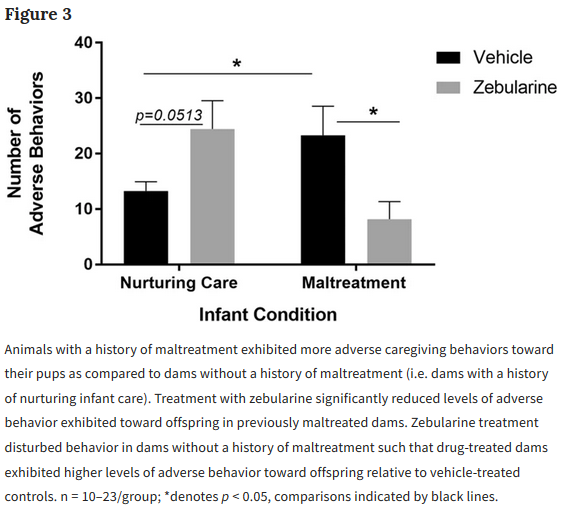
We administered zebularine, a drug known to alter DNA methylation, to dams exposed during infancy to the scarcity-adversity model of low nesting resources, and then characterized the quality of their care towards their offspring.

  1. We replicate that dams with a history of maltreatment mistreat their own offspring.
  2. We show that maltreated-dams treated with zebularine exhibit lower levels of adverse care toward their offspring.
  3. We show that administration of zebularine in control dams (history of nurturing care) enhances levels of adverse care.
  4. We show altered methylation and gene expression in maltreated dams normalized by zebularine.

These findings lend support to the hypothesis that epigenetic alterations resulting from maltreatment causally relate to behavioral outcomes.

Maternal behavior is an intergenerational behavior. It is important to establish the neurobiological underpinnings of aberrant maternal behavior and explore treatments that can improve maternal behavior to prevent the perpetuation of poor maternal care across generations.”


The study authors demonstrated intergenerational epigenetic effects, and missed an opportunity to also investigate transgenerational epigenetically inherited effects. They cited reference 60 for the first part of the above quotation, but the cited reviewer misused the transgenerational term by applying it to grand-offspring instead of the great-grand-offspring.

There were resources available to replicate the study authors’ previous findings, which didn’t show anything new. Why not use such resources to uncover evidence even more applicable to humans by extending experiments to great-grand-offspring that would have no potential germline exposure to the initial damaging cause?

Could a study design similar to A limited study of parental transmission of anxiety/stress-reactive traits have been integrated? That study’s thorough removal of parental behavior would be an outstanding methodology to confirm by falsifiability whether parental behavior is both an intergenerational and a transgenerational epigenetic inheritance mechanism.

Rodent great-grand-offspring can be studied in < 9 months. It takes > 50 years for human studies to reach the great-grand-offspring transgenerational generation.

  • Why not attempt to “prevent the perpetuation of poor maternal care across generations?”
  • Isn’t it a plausible hypothesis that humans “with a history of maltreatment mistreat their own offspring?”
  • Isn’t it worth the extra effort to extend animal research to investigate this unfortunate chain?

https://www.nature.com/articles/s41598-019-46539-4 “Pharmacological manipulation of DNA methylation normalizes maternal behavior, DNA methylation, and gene expression in dams with a history of maltreatment”

Infant DNA methylation and caregiving

This 2019 US human study attempted to replicate findings of animal studies that associated caregiver behavior with infant DNA methylation of the glucocorticoid receptor gene:

“Greater levels of maternal responsiveness and appropriate touch were related to less DNA methylation of specific regions in NR3c1 exon 1F, but only for females. There was no association with maternal responsiveness and appropriate touch or DNA methylation of NR3c1 exon 1F on prestress cortisol or cortisol reactivity. Our results are discussed in relation to programming models that implicate maternal care as an important factor in programing infant stress reactivity.”


The study had many undisclosed and a few disclosed limitations, one of which was:

“Our free-play session, while consistent with the length of free-play sessions in other studies, was short (5 min). It is unclear whether a longer length of time would have yielded significant different maternal responsiveness and appropriate touch data.”

The final sentence showed the study’s purpose was other than discovering factual evidence:

“Following replication of this work, it could ultimately be used in conjunction with early intervention, or home-visiting programs, to measure the strength of the intervention effect at the epigenetic level.”

https://onlinelibrary.wiley.com/doi/full/10.1002/imhj.21789 “DNA methylation of NR3c1 in infancy: Associations between maternal caregiving and infant sex” (not freely available)

Do delusions have therapeutic value?

This 2019 UK review discussed delusions, aka false beliefs about reality:

“Delusions are characterized by their behavioral manifestations and defined as irrational beliefs that compromise good functioning. In this overview paper, we ask whether delusions can be adaptive notwithstanding their negative features.

We consider different types of delusions and different ways in which they can be considered as adaptive: psychologically (e.g., by increasing wellbeing, purpose in life, intrapsychic coherence, or good functioning) and biologically (e.g., by enhancing genetic fitness).”

https://onlinelibrary.wiley.com/doi/full/10.1002/wcs.1502 “Are clinical delusions adaptive?”


A. Although section 4’s heading was Biological Adaptiveness of Delusions, the reviewers never got around to discussing evolved roles of brain areas and beliefs (delusions). One mention of evolutionary biology was:

“Delusions are biologically adaptive if, as a response to a crisis of some sort (anomalous perception or overwhelming distress), they enhance a person’s chances of reproductive success and survival by conferring systematic biological benefits.”

B. Although section 5’s heading was Psychological Adaptiveness of Delusions, the reviewers didn’t connect feelings and survival sensations as origins of beliefs (delusions) and behaviors. They had a few examples of feelings:

“Delusions of reference and delusions of grandeur can make the person feel important and worthy of admiration.”

and occasionally sniffed a clue:

“Some delusions (especially so‐called motivated delusions) play a defensive function, representing the world as the person would like it to be.”

where “motivated delusions” were later deemed in the Conclusion section to be a:

“Response to negative emotions that could otherwise become overwhelming.”

C. Feelings weren’t extensively discussed until section 6 Delusions in OCD and MDD, which gave readers an impression that feelings were best associated with those diseases.

D. In the Introduction, sections 4, 5, and 7 How Do We Establish and Measure Adaptiveness, the reviewers discussed feeling meaning in life, but without understanding:

  1. Feelings = meaning in life, as I quoted Dr. Arthur Janov in The pain societies instill into children:

    “Without feeling, life becomes empty and sterile. It, above all, loses its meaning.

  2. Beliefs (delusions) defend against feelings.
  3. Consequentially, the stronger and / or more numerous beliefs (delusions) a person has, the less they feel meaning in life.

E. Where, when, why, and how do beliefs (delusions) arise? Where, when, why, and how does a person sense and feel, and what are the connections with beliefs (delusions)?

F. The word “sense” was used 29 times in contexts such as “make sense” and “sense of [anxiety, coherence, control, meaning, purpose, rational agency, reality, self, uncertainty]” but no framework connected biological sensing to delusions. Papers from other fields have detailed cause-and-effect explanations and predecessor-successor diagrams for every step of a process. Not this one.


Regarding any therapeutic value of someone else’s opinion of a patient’s delusions:

I’ll reuse this quotation from the Scientific evidence page of Dr. Janov’s 2011 book “Life Before Birth: The Hidden Script that Rules Our Lives” p.166:

“Primal Therapy differs from other forms of treatment in that the patient is himself a therapist of sorts. Equipped with the insights of his history, he learns how to access himself and how to feel.

The therapist does not heal him; the therapist is only the catalyst allowing the healing forces to take place. The patient has the power to heal himself.

Another way Dr. Janov wrote this was on p.58 of his 2016 book Beyond Belief as quoted in Beyond Belief: The impact of merciless beatings on beliefs:

NO ONE HAS THE ANSWER TO LIFE’S QUESTIONS BUT YOU. How you should lead your life depends on you, not outside counsel.

We do not direct patients, nor dispense wisdom upon them. We have only to put them in touch with themselves; the rest is up to them.

Everything the patient has to learn already resides inside. The patient can make herself conscious. No one else can.”

Our brains are shaped by our early environments

This 2019 McGill paper reviewed human and animal studies on brain-shaping influences from the fetal period through childhood:

“In neonates, regions of the methylome that are highly variable across individuals are explained by the genotype alone in 25 percent of cases. The best explanation for 75 percent of variably methylated regions is the interaction of genotype with different in utero environments.

A meta-analysis including 45,821 individuals with attention-deficit/hyperactivity disorder and 9,207,363 controls suggests that conditions such as preeclampsia, Apgar score lower than 7 at 5 minutes, breech/transverse presentations, and prolapsed/nuchal cord – all of which involve some sort of poor oxygenation during delivery – are significantly associated with attention-deficit/hyperactivity disorder. The dopaminergic system seems to be one of the brain systems most affected by perinatal hypoxia-ischemia.

Exposure to childhood trauma activates the stress response systems and dysregulates serotonin transmission that can adversely impact brain development. Smaller cerebral, cerebellar, prefrontal cortex, and corpus callosum volumes were reported in maltreated young people as well as reduced hippocampal activity.

Environmental enrichment has a series of beneficial effects associated with neuroplasticity mechanisms, increasing hippocampal volume, and enhancing dorsal dentate gyrus-specific differences in gene expression. Environmental enrichment after prenatal stress decreases depressive-like behaviors and fear, and improves cognitive deficits.”


The reviewers presented strong evidence until the Possible Factors for Reversibility section, which ended with the assertion:

“All these positive environmental experiences mentioned in this section could counterbalance the detrimental effects of early life adversities, making individuals resilient to brain alterations and development of later psychopathology.”

The review’s penultimate sentence recognized that research is seldom done on direct treatments of causes:

“The cross-sectional nature of most epigenetic studies and the tissue specificity of the epigenetic changes are still challenges.”

Cross-sectional studies won’t provide definitive data on cause-and-effect relationships.

The question yet to be examined is: How can humans best address these early-life causes to ameliorate their lifelong effects?

https://onlinelibrary.wiley.com/doi/full/10.1111/dmcn.14182 “Early environmental influences on the development of children’s brain structure and function” (not freely available)

A therapy to reverse cognitive decline

This 2018 human study presented the results of 100 patients’ personalized therapies for cognitive decline:

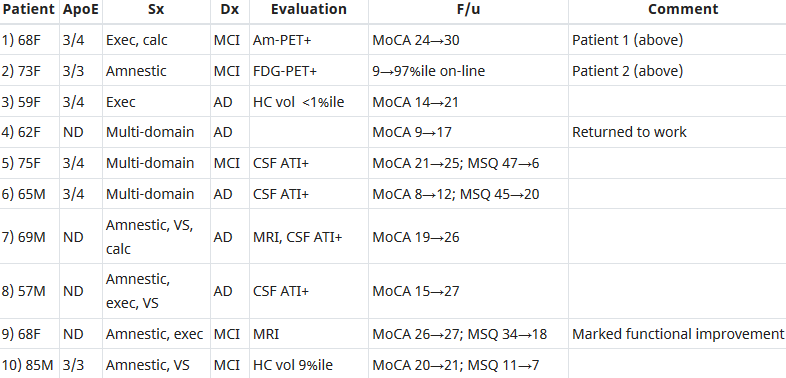
“The first examples of reversal of cognitive decline in Alzheimer’s disease and the pre-Alzheimer’s disease conditions MCI (Mild Cognitive Impairment) and SCI (Subjective Cognitive Impairment) have recently been published..showing sustained subjective and objective improvement in cognition, using a comprehensive, precision medicine approach that involves determining the potential contributors to the cognitive decline (e.g., activation of the innate immune system by pathogens or intestinal permeability, reduction in trophic or hormonal support, specific toxin exposure, or other contributors), using a computer-based algorithm to determine subtype and then addressing each contributor using a personalized, targeted, multi-factorial approach dubbed ReCODE for reversal of cognitive decline.

An obvious criticism of the initial studies is the small number of patients reported. Therefore, we report here 100 patients, treated by several different physicians, with documented improvement in cognition, in some cases with documentation of improvement in electrophysiology or imaging, as well.”

https://www.omicsonline.org/open-access/reversal-of-cognitive-decline-100-patients-2161-0460-1000450-105387.html “Reversal of Cognitive Decline: 100 Patients”


The lead author commented on Josh Mitteldorf’s informative post A cure for Alzheimer’s? Yes, a cure for Alzheimer’s!:

  1. “We have a paper in press, due to appear 10.22.18 (open access, JADP, I’ll send a copy as soon as available), showing 100 patients with documented improvement – some with MRI volumetrics improved, others with quantitative EEG improvements, others with evoked response improvements, and all with quantitative cognitive assessment improvement. Some are very striking – 12 point improvements in MoCA [Montreal Cognitive Assessment], for example – others less so, but all also have subjective improvement. Hopefully this will address some of the criticisms that we haven’t documented improvement in enough people.
  2. We were just turned down again for a randomized, controlled clinical trial, so on the one hand, we are told repeatedly that no one will believe that this approach works until we publish a randomized, controlled study, and on the other hand, we’ve been turned down (first in 2011/12, and now in 2018), with the complaint that we are trying to address more than one variable in the trial (as if AD is a single-variable disease!). Something of a catch-22. We are now resubmitting (unfortunately, the IRBs are not populated by functional medicine physicians, so they are used to seeing old-fashioned drug studies), and we’ll see what happens.
  3. I’ve been extending the studies to other neurodegenerative diseases, and it has been impressive how much of a programmatic response there seems to be in these ‘diseases.’
  4. I agree with you that there are many features in common with aging itself.
  5. You made a good point that APP [amyloid precursor protein] is a dependence receptor, and in fact it functions as an integrating dependence receptor, responding to numerous inputs (Kurakin and Bredesen, 2015).
  6. In the book and the publications, we don’t claim it is a “cure” since we don’t have pathological evidence that the disease process is gone. What we claim is ‘reversal of cognitive decline’ since that is what we document.
  7. As I mentioned in the book, AD is turning out to be a protective response to multiple insults, and this fits well with the finding that Abeta has an antimicrobial effect (Moir and Tanzi’s work). It is a network-downsizing, protective response, which is quite effective – some people live with the ongoing degenerative process for decades.
  8. We have seen several cases now in which a clinical trial of an anti-amyloid antibody made the person much worse in a time-dependent manner (each time there was an injection, the person would get much worse for 5-10 days, then begin to improve back toward where he/she was, but over time, marked decline occurred), and this makes sense for the idea that the amyloid is actually protecting against pathogens or toxins or some other insult.
  9. It is important to note that we’ve never claimed that all people get better – this is not what we’ve seen. People very late in the process, or who don’t follow the protocol, or who don’t address the various insults, do not improve. It is also turning out to be practitioner dependent – some are getting the vast majority of people to improve, others very few, so this is more like surgery than old-fashioned prescriptive medicine – you have to do a somewhat complicated therapeutic algorithm and get it right for best results.
  10. I’m very interested in what is needed to take the next step in people who have shown improvement but who started late in the course. For example, we have people now who have increased MoCA from 0 to 9 (or 0 to 3, etc.), with marked subjective improvement but plateauing at less than normal. These people had extensive synaptic and cellular loss prior to the program. So what do we need to raise the plateau? Stem cells? Intranasal trophic support? Something else?
  11. I haven’t yet seen a mono-etiologic theory of AD or a mono-therapeutic approach that has repeatedly positive results, so although I understand that there are many theories and treatments, there doesn’t seem to be one etiology to the disease, nor does there seem to be one simple treatment that works for most. It is much more like a network failure.”

At a specific level:

  • “There doesn’t seem to be one etiology to the disease,
  • Nor does there seem to be one simple treatment that works for most.
  • We don’t have pathological evidence that the disease process is gone.”

For general concepts, however:

  • “AD is turning out to be a protective response to multiple insults.
  • It is a network-downsizing, protective response, which is quite effective.
  • The amyloid is actually protecting against pathogens or toxins or some other insult.”

For a framework of an AD cure to be valid, each source of each insult that evoked each “protective response” should be traced.

Longitudinal studies would be preferred inside this framework. These study designs would investigate evidence of each insult’s potential modifying effect on each “protective response” that could affect the cumulative disease trajectory of each individual.

In many cases, existing study designs would be adequate if they extended their periods to the end of the subjects’ natural lifetimes. One AD-relevant example would be extending the prenatally-restraint-stressed model used in:

The framework would also encourage extending studies to at least three generations to investigate evidence for transgenerational effects, as were found in:

Prenatal programming of human HPA axis development

This 2017 UC Irvine human review subject provided details of how fetal hypothalamic-pituitary-adrenal components and systems develop, and how they are epigenetically changed by the mother’s environment:

“The developmental origins of disease or fetal programming model predicts that intrauterine exposures have life-long consequences for physical and psychological health. Prenatal programming of the fetal hypothalamic-pituitary-adrenal (HPA) axis is proposed as a primary mechanism by which early experiences are linked to later disease risk.

Development of the fetal HPA axis is determined by an intricately timed cascade of endocrine events during gestation and is regulated by an integrated maternal-placental-fetal steroidogenic unit. Mechanisms by which stress-induced elevations in hormones of maternal, fetal, or placental origin influence the structure and function of the emerging fetal HPA axis are discussed.

Human gestational physiology and fetal HPA axis development differ even from that of closely related nonhuman primates, thereby limiting the generalizability of animal models. This review will focus solely on studies of prenatal stress and fetal HPA axis development in humans.”


1. Every time I read a prenatal study I’m in awe of all that has to go right – and at the appropriate times and sequences – for a fetus to be undamaged. Add in what needs to happen at birth, during infancy, and throughout early childhood, and it seems impossible for any human to escape epigenetic damage.

2. The reviewers referenced animal studies and human research performed with postnatal subjects, despite the disclaimer:

This review will focus solely on studies of prenatal stress and fetal HPA axis development in humans.”

This led to blurring of what had been studied or not with human fetuses regarding the subject.

3. These reviewers uncritically listed many dubious human studies that had both stated and undisclosed severe limitations on their findings. Other reviewers offer informed analysis of cited studies, as Sex-specific impacts of childhood trauma summarized with cortisol:

“Findings are dependent upon variance in extenuating factors, including but not limited to, different measurements of:

  • early adversity,
  • age of onset,
  • basal cortisol levels, as well as
  • trauma forms and subtypes, and
  • presence and severity of psychopathology symptomology.”

4. The paper would have been better had it stayed on topic with its title “Developmental origins of the human hypothalamic-pituitary-adrenal axis.” Let other reviews cover animals, post-natal humans, and questionable evidence.

5. I asked the reviewers to provide a searchable file to facilitate using their work as a reference.

https://www.researchgate.net/publication/318469661_Developmental_origins_of_the_human_hypothalamic-pituitary-adrenal_axis “Developmental origins of the human hypothalamic-pituitary-adrenal axis” (registration required)

Epigenetic variations in metabolism

This 2018 German review was comprehensive for its subject, epigenetic control of variation and stochasticity in metabolic disease. I’ll focus on one aspect, phenotypic variation:

“Phenotypic [Mendelian] variation can result both from gain- and loss-of-function mutations. Because of the extreme interconnectivity of cell regulatory networks, even at the cellular level, predicting the impact of a sequence variant is difficult as the resultant variation acts:

  • In the context of all other variants and
  • Their potential additive, synergistic and antagonistic interactions.

This phenomenon is known as epistasis.

∼98.5% of our genome is non-protein-coding: it is pervasively transcribed, and its transcripts can support regulatory function. Among the best functionally characterized non-coding RNAs (ncRNAs) arising from these sequences are microRNAs (miRNAs).

Environmental [non-Mendelian] variation or ‘stimuli’ occurring during critical windows of susceptibility can elicit lifelong alterations in an individual’s phenotype. Intergenerational metabolic reprogramming [in fruit flies] results from global alterations in chromatin state integrity, particularly from reduced H3K27me3 and H3K9me3 [histone] domains.

The broad variation of fingerprints in humans is thought to depend to a large degree on stochastic variation in mechanical forces. These clear examples of inducible multi-stable or stochastic variation highlight how little we know about the landscape of potential phenotypic variation itself.

Consensus estimates of heritability for obesity and T2D are ∼70% and ∼35% respectively. The remaining, unexplained component is known to involve gene–environment interactions as well as non-Mendelian players.”


Although the above graphic displays transgenerational inheritance for humans, the reviewers didn’t cite any human studies that adequately demonstrated causes for and effects of transgenerational epigenetic inheritance.

I’ve read the cited Swedish and Dutch studies. Their designs, methods, and “correlate with” / “was associated with” results didn’t provide incontrovertible evidence from the F0 great-grandparents, F1 grandparents, F2 parents, and F3 children. It’s necessary to thoroughly study each generation to confirm definitive transgenerational epigenetic inheritance causes and effects.

As noted in How to hijack science: Ignore its intent and focus on the 0.0001%, there aren’t any such published studies to cite. Researchers urgently need to do this human research, and stop using these poor substitutes [1] to pretend there are already adequately evidenced transgenerational epigenetic inheritance human results.

I downgraded the review for treating research of this and other subjects as faits accomplis. It’s opposite ends of the evidential spectrum to state “how little we know about the landscape of potential phenotypic variation,” and in the same review, speciously extrapolate animal experiments into putative human results.

https://www.sciencedirect.com/science/article/pii/S2212877818301984 “Epigenetic control of variation and stochasticity in metabolic disease”


[1] As an example of the poor substitutes for evidence, a researcher referred me to the 2013 “Transgenerational effects of prenatal exposure to the 1944–45 Dutch famine” which is freely available at https://obgyn.onlinelibrary.wiley.com/doi/full/10.1111/1471-0528.12136 as a study finding human transgenerational epigenetic inheritance.

The Methods section showed:

  • The study’s non-statistical data was almost all unverified self-reports by a self-selected sample of the F2 generation, average age 37.
  • No detailed physical measurements or samples were taken of them, nor of the F1 generation, nor of the F0 generation, all of which are required as baselines for any transgenerational epigenetic inheritance findings.
  • No detailed physical measurements or samples were taken of the F3 generation, which is the generation that may provide transgenerational evidence if the previous generations also have detailed physical baselines.

The study’s researchers drew enough participants (360) such that their statistics package allowed them to impute and assume into existence a LOT of data. But the scientific method constrained them to make factual statements of what the evidence actually showed. They admitted:

“In conclusion, we did not find a transgenerational effect of prenatal famine exposure on the health of grandchildren in this study.”

Yet this study is somehow cited for evidence of human transgenerational epigenetically inherited causes and effects!

A mid-year selection of epigenetic topics

Here are the most popular of the 65 posts I’ve made so far in 2018, starting from the earliest:

The pain societies instill into children

DNA methylation and childhood adversity

Epigenetic mechanisms of muscle memory

Sex-specific impacts of childhood trauma

Sleep and adult brain neurogenesis

This dietary supplement is better for depression symptoms than placebo

The epigenetic clock theory of aging

A flying human tethered to a monkey

Immune memory in the brain

The lack of oxygen’s epigenetic effects on a fetus

Dead physiological science zombified by psychological research

This 2017 Massachusetts human review described one example of psychological research continuing to misinterpret measurements for hypotheses that have been rejected for physiological research:

“The current paper is a case study examining what happens to psychological research when its foundational biological context is invalidated or superseded. The example we use is heart rate variability (HRV) as a purported measure of cardiac sympathetic outflow.

The hypotheses in question are of direct relevance to fields including biological psychology, psychophysiology, and social neuroscience that use physiological measurements to answer applied questions with broader social scientific relevance. A broad base of further evidence was amassed within human cardiac, circulatory, and autonomic physiology such that the hypotheses do not work as described.

These were important and popular metrics, they attracted appropriate scrutiny, and were subsequently discarded. The above reflects well on the scientific process within basic research. The present ensuing period of ‘life after death’ within applied research does not.

It has been widely used as a dependent variable in studies of emotion, panic, stress, attentional state, health status in psychological science.

If the criteria for publishing a scientific article is simply that the measured results resolve to be statistically significant, an unstable measurement of an unstable phenomenon is an excellent vehicle for engineering differences between groups, especially considering the substantial flexibility in modern publication practices.”


Factors facilitating the misinterpretation of heart rate variability include:

  • A 30-year chain of citations similar to what Using citations to develop beliefs instead of evidence found.
  • Measurements are convenient and inexpensive (like salivary cortisol):

    “HRV measurement lacks barriers to collection – measurement is possible during movement and activities of daily living, is easily capable of taking multiple sequential measurements without participant fatigue, and is suitable for long-term recordings. It is also inexpensive, due to multiple commercially available hardware platforms and free software analysis programs.”

  • The experimental concept is easily explained to sponsors.

https://psyarxiv.com/637ym “Dead Science in Live Psychology: A Case Study from Heart Rate Variability (HRV)”

The lack of oxygen’s epigenetic effects on a fetus

This 2018 Loma Linda review subject was gestational hypoxia:

“Of all the stresses to which the fetus and newborn infant are subjected, perhaps the most important and clinically relevant is that of hypoxia. This review explores the impact of gestational hypoxia on maternal health and fetal development, and epigenetic mechanisms of developmental plasticity with emphasis on the uteroplacental circulation, heart development, cerebral circulation, pulmonary development, and the hypothalamic-pituitary-adrenal axis and adipose tissue.

An understanding of the specific hypoxia-induced environmental and epigenetic adaptations linked to specific organ systems will enhance the development of target-specific inhibition of DNA methylation, histone modifications, and noncoding RNAs that underlie hypoxia-induced phenotypic programming of disease vulnerability later in life.

A potential stumbling block to these efforts, however, relates to timing of the intervention. The greatest potential effect would be accomplished at the critical period in development for which the genomic plasticity is at its peak, thus ameliorating the influence of hypoxia or other stressors.

With future developments, it may even become possible to intervene before conception, before the genetic determinants of the risk of developing programmed disease are established.”

Table 3 “Antenatal hypoxia and developmental plasticity” column titles were Species | Offspring Phenotypes of Disorders and Diseases | Reference Nos.

Hypoxia phenotypes


This review was really an ebook, with 94 pages and 1,172 citations in the pdf file. As I did with Faith-tainted epigenetics, I read it with caution toward recognizing 1) the influence of the sponsor’s biases, 2) any directed narrative that ignored evidence contradicting the narrative, and 3) any storytelling.

Can you match the meaning of the review’s last sentence (“intervene before conception” quoted above) with the meaning of any sentence in its cited reference Developmental origins of noncommunicable disease: population and public health implications? I can’t.

One review topic that was misconstrued was transgenerational epigenetic inheritance of hypoxic effects. The “transgenerational” term was used inappropriately by several of the citations, and no cited study provided evidence for gestational hypoxic effects through the F3 great-grandchild generation.

One omitted topic was gestational hypoxic effects of caffeine. The first paper that came up for my PubMed search of “caffeine pregnancy hypoxia” was an outstanding 2017 Florida rodent review Long-term consequences of disrupting adenosine signaling during embryonic development that had this paragraph and figure:

“One substance that fetuses are frequently exposed to is caffeine, which is a non-selective adenosine receptor antagonist. We discovered that in utero alteration in adenosine action leads to adverse effects on embryonic and adult murine hearts. We find that cardiac A1ARs [a type of adenosine receptor] protect the embryo from in utero hypoxic stress, a condition that causes an increase in adenosine levels. 

After birth in mice, we observed that in utero caffeine exposure leads to abnormal cardiac function and morphology in adults, including an impaired response to β-adrenergic stimulation. Recently, we observed that in utero caffeine exposure induces transgenerational effects on cardiac morphology, function, and gene expression.”

The timing of in utero caffeine treatment leads to differences in adult cardiac function, gene expression, and phenotype. Exposure to caffeine from E6.5–9.5 leads the F1 generation to develop dilated cardiomyopathy with decrease % FS and increased Myh7 expression. In utero caffeine exposure from E10.5–13.5 leads to a hypertrophic cardiomyopathy in the F2 generation along with increased % FS and decreased Myh7 expression

Why was this review and its studies omitted? It was on target for both gestational hypoxia and transgenerational epigenetic inheritance of hypoxic effects!

It was alright to review smoking, cocaine, methamphetamine, etc., but the most prevalent drug addiction – caffeine – couldn’t be a review topic?


The Loma Linda review covered a lot, but I had a quick trigger due to the sponsor’s bias. I started to lose “faith” in the reviewers after reading the citation for the review’s last sentence that didn’t support the statement.

My “faith” disappeared after not understanding why a few topics were misconstrued and omitted. Why do researchers and sponsors ignore, misrepresent, and not continue experiments through the F3 generation to produce evidence for and against transgenerational epigenetic inheritance? Where was the will to follow evidence trails regardless of socially acceptable beverage norms?

The review acquired the taint of storytelling with the reviewers’ assertion:

“..timing of the intervention. The greatest potential effect would be accomplished at the critical period in development for which the genomic plasticity is at its peak, thus ameliorating the influence of hypoxia or other stressors.”

Contradictory evidence was in the omitted caffeine study’s graphic above which described two gestational critical periods where an “intervention” had opposite effects, all of which were harmful to the current fetus’ development and/or to following generations. Widening the PubMed link’s search parameters to “caffeine hypoxia” and “caffeine pregnancy” returned links to human early life studies that used caffeine in interventions, ignoring possible adverse effects on future generations.

This is my final curation of any paper sponsored by this institution.

https://www.physiology.org/doi/abs/10.1152/physrev.00043.2017 “Gestational Hypoxia and Developmental Plasticity” (not freely available) Thanks to coauthor Dr. Xiang-Qun Hu for providing a copy.

Resiliency in stress responses

This 2018 US Veterans Administration review subject was resiliency and stress responses:

Neurobiological and behavioral responses to stress are highly variable. Exposure to a similar stressor can lead to heterogeneous outcomes — manifesting psychopathology in one individual, but having minimal effect, or even enhancing resilience, in another.

We highlight aspects of stress response modulation related to early life development and epigenetics, selected neurobiological and neurochemical systems, and a number of emotional, cognitive, psychosocial, and behavioral factors important in resilience.”

The review cited studies I’ve previously curated:


There were two things I didn’t understand about this review. The first was why the paper isn’t freely available. It’s completely paid for by the US taxpayer, and no copyright is claimed. I recommend contacting the authors for a copy.

The second was why the VA hasn’t participated in either animal or human follow-on studies to the 2015 Northwestern University GABAergic mechanisms regulated by miR-33 encode state-dependent fear. That study’s relevance to PTSD, this review’s subject, and the VA’s mission is too important to ignore. For example:

“Fear-inducing memories can be state dependent, meaning that they can best be retrieved if the brain states at encoding and retrieval are similar.

“It’s difficult for therapists to help these patients,” Radulovic said, “because the patients themselves can’t remember their traumatic experiences that are the root cause of their symptoms.”

The findings imply that in response to traumatic stress, some individuals, instead of activating the glutamate system to store memories, activate the extra-synaptic GABA system and form inaccessible traumatic memories.”

I curated the research in A study that provided evidence for basic principles of Primal Therapy. These researchers have published several papers since then. Here are the abstracts from three of them:

Experimental Methods for Functional Studies of microRNAs in Animal Models of Psychiatric Disorders

“Pharmacological treatments for psychiatric illnesses are often unsuccessful. This is largely due to the poor understanding of the molecular mechanisms underlying these disorders. We are particularly interested in elucidating the mechanism of affective disorders rooted in traumatic experiences.

To date, the research of mental disorders in general has focused on the causal role of individual genes and proteins, an approach that is inconsistent with the proposed polygenetic nature of these disorders. We recently took an alternative direction, by establishing the role of miRNAs in the coding of stress-related, fear-provoking memories.

Here we describe in detail our work on the role of miR-33 in state-dependent learning, a process implicated in dissociative amnesia, wherein memories formed in a certain brain state can best be retrieved if the brain is in the same state. We present the specific experimental approaches we apply to study the role of miRNAs in this model and demonstrate that miR-33 regulates the susceptibility to state-dependent learning induced by inhibitory neurotransmission.”

Neurobiological mechanisms of state-dependent learning

“State-dependent learning (SDL) is a phenomenon relating to information storage and retrieval restricted to discrete states. While extensively studied using psychopharmacological approaches, SDL has not been subjected to rigorous neuroscientific study.

Here we present an overview of approaches historically used to induce SDL, and highlight some of the known neurobiological mechanisms, in particular those related to inhibitory neurotransmission and its regulation by microRNAs (miR).

We also propose novel cellular and circuit mechanisms as contributing factors. Lastly, we discuss the implications of advancing our knowledge on SDL, both for most fundamental processes of learning and memory as well as for development and maintenance of psychopathology.”

Neurobiological correlates of state-dependent context fear

“Retrieval of fear memories can be state-dependent, meaning that they are best retrieved if the brain states at encoding and retrieval are similar. Such states can be induced by activating extrasynaptic γ-aminobutyric acid type A receptors (GABAAR) with the broad α-subunit activator gaboxadol. However, the circuit mechanisms and specific subunits underlying gaboxadol’s effects are not well understood.

Here we show that gaboxadol induces profound changes of local and network oscillatory activity, indicative of discoordinated hippocampal-cortical activity, that were accompanied by robust and long-lasting state-dependent conditioned fear. Episodic memories typically are hippocampus-dependent for a limited period after learning, but become cortex-dependent with the passage of time.

In contrast, state-dependent memories continued to rely on hippocampal GABAergic mechanisms for memory retrieval. Pharmacological approaches with α- subunit-specific agonists targeting the hippocampus implicated the prototypic extrasynaptic subunits (α4) as the mediator of state-dependent conditioned fear.

Together, our findings suggest that continued dependence on hippocampal rather than cortical mechanisms could be an important feature of state-dependent memories that contributes to their conditional retrieval.”


Here’s an independent 2017 Netherlands/UC San Diego review that should bring these researchers’ efforts to the VA’s attention:

MicroRNAs in Post-traumatic Stress Disorder

“Post-traumatic stress disorder (PTSD) is a psychiatric disorder that can develop following exposure to or witnessing of a (potentially) threatening event. A critical issue is to pinpoint the (neuro)biological mechanisms underlying the susceptibility to stress-related disorder such as PTSD, which develops in the minority of ~15% of individuals exposed to trauma.

Over the last few years, a first wave of epigenetic studies has been performed in an attempt to identify the molecular underpinnings of the long-lasting behavioral and mental effects of trauma exposure. The potential roles of non-coding RNAs (ncRNAs) such as microRNAs (miRNAs) in moderating or mediating the impact of severe stress and trauma are increasingly gaining attention. To date, most studies focusing on the roles of miRNAs in PTSD have, however, been completed in animals, using cross-sectional study designs and focusing almost exclusively on subjects with susceptible phenotypes.

Therefore, there is a strong need for new research comprising translational and cross-species approaches that use longitudinal designs for studying trajectories of change contrasting susceptible and resilient subjects. The present review offers a comprehensive overview of available studies of miRNAs in PTSD and discusses the current challenges, pitfalls, and future perspectives of this field.”

Here’s a 2017 Netherlands human study that similarly merits the US Veterans Administration’s attention:

Circulating miRNA associated with posttraumatic stress disorder in a cohort of military combat veterans

“Posttraumatic stress disorder (PTSD) affects many returning combat veterans, but underlying biological mechanisms remain unclear. In order to compare circulating micro RNA (miRNA) of combat veterans with and without PTSD, peripheral blood from 24 subjects was collected following deployment, and isolated miRNA was sequenced.

PTSD was associated with 8 differentially expressed miRNA. Pathway analysis shows that PTSD is related to the axon guidance and Wnt signaling pathways, which work together to support neuronal development through regulation of growth cones. PTSD is associated with miRNAs that regulate biological functions including neuronal activities, suggesting that they play a role in PTSD symptomatology.”


See the below comments for reasons why I downgraded this review’s rating.

https://link.springer.com/article/10.1007/s11920-018-0887-x “Stress Response Modulation Underlying the Psychobiology of Resilience” (not freely available)

The lifelong impact of maternal postpartum behavior

This 2018 French/Italian/Swiss rodent study was an extension of the work done by the group of researchers who performed Prenatal stress produces offspring who as adults have cognitive, emotional, and memory deficiencies and Treating prenatal stress-related disorders with an oxytocin receptor agonist:

“Reduction of maternal behavior [nursing behavior, grooming, licking, carrying pups] was predictive of behavioral disturbances in PRS [prenatally restraint stressed] rats as well as of the impairment of the oxytocin and its receptor gene expression.

Postpartum carbetocin [an oxytocin receptor agonist unavailable in the US] corrected the reduction of maternal behavior induced by gestational stress as well as the impaired oxytocinergic system in the PRS progeny, which was associated with reduced risk-taking behavior.

Moreover, postpartum carbetocin had an anti-stress effect on HPA [hypothalamic-pituitary-adrenal] axis activity in the adult PRS progeny and increased hippocampal mGlu5 [type 5 metabotropic glutamate] receptor expression in aging.

Early postpartum carbetocin administration to the dam enhances maternal behavior and prevents all the pathological outcomes of PRS throughout the entire lifespan of the progeny..proves that the defect in maternal care induced by gestational stress programs the development of the offspring.


This chart from Figure 4 summarized the behavioral performance of aged adult male progeny in relation to the experimental variables of:

  1. Stress administered to the mothers three times daily every day during the second half of pregnancy up until delivery; and
  2. The effects on the mothers’ behavior of daily carbetocin administration during postpartum days 1 through 7.

The symbols denote which of these relationships had statistically significant effects:

  • “* p [Pearson’s correlation coefficient] < 0.05 PRS-Saline vs. CONT-Saline;
  • # p < 0.05 PRS-Carbetocin vs. the PRS-Saline group.”

There are many interesting aspects to this study. Ask the corresponding coauthor Dr. Sara Morley-Fletcher at sara.morley-fletcher@univ-lille1.fr for a copy.

One place the paper referenced the researchers’ previous studies was in this context:

“Postpartum carbetocin administration reversed the same molecular and behavioral parameters in the hippocampus, as does adult chronic carbetocin treatment, i.e. it led to a correction of the HPA axis negative feedback mechanisms, stress and anti-stress gene expression, and synaptic glutamate release. The fact that postpartum carbetocin administration [to the stressed mothers in this study] had the same effect [on the PRS infants in this study] as adult carbetocin treatment [to the PRS offspring in the previous study] indicates a short-term effect of carbetocin when administered in adulthood and a reprogramming (long-term) effect lasting until an advanced age when administered in early development.”

This group’s research seems to be constrained to treatments of F0 and F1 generations. What intergenerational and transgenerational effects would they possibly find by extending research efforts to F2 and F3 generations?


As the study may apply to humans:

The study demonstrated that stresses during the second half of pregnancy had lifelong impacts on both the mothers’ and offsprings’ biology and behavior. Studies and reviews that attribute similar human biological and behavioral conditions to unknown causes, or shuffle them into the black box of individual differences, should be recognized as either disingenuous or insufficient etiological investigations.

The study showed that prevention of gestational stress was a viable strategy. The control group progeny’s biology and behavior wasn’t affected by carbetocin administration to their mothers because neither they nor their mothers had experience-dependent epigenetic deficiencies.

The study demonstrated a biological and behavioral cure for the PRS offspring by changing their stressed mothers’ behaviors during a critical period of their development. The above excerpt characterized improving the mothers’ behaviors as a long-term cure for the PRS descendants, as opposed to the short-term cure of administering carbetocin to the PRS children when they were adults.

What long-term therapies may be effective for humans who had their developmental trajectories altered by their mothers’ stresses during their gestation, or who didn’t get the parental care they needed when they needed it?

https://www.sciencedirect.com/science/article/pii/S0161813X18301062 “Reduced maternal behavior caused by gestational stress is predictive of life span changes in risk-taking behavior and gene expression due to altering of the stress/anti-stress balance” (not freely available)