Canadian Thanksgiving

Canadians were in dire straights yesterday, needing something to not be depressed about. It isn’t that US citizens are less depressed, but we have our Bill of Rights 1st and 2nd amendments that we adhere to.

Several of the people on this three and a half hour conversation were Canadians. Will you listen to them?

I learned a lot, such as possible transgenerational inheritance of effects from worldwide coerced actions. Bhakdi shortly after the 1 hour 6 min point was the easiest to understand, and also the scariest.

So what were you thankful for yesterday? Exposing facts?


PXL_20230928_222908973

Neuritogenesis

Three 2023 papers on the initial stage of neuronal differentiation, starting with a rodent study of taurine’s effects:

“We aimed to assess the role of taurine (TAU) in axonal sprouting against cerebral ischemic injury, clarify the function of mitochondria in TAU-induced axonal sprouting, and further determine the underlying potential molecular mechanism.

experiment design

We determined that TAU improved motor function recovery and restored neurogenesis in ischemic stroke. This possibly occurred via improvements in mitochondrial function.

We investigated that the Sonic hedgehog (Shh) pathway exerted an important role in these effects. Our study findings highlighted the novel viewpoint that TAU promoted axonal sprouting by improving Shh-mediated mitochondrial function in cerebral ischemic stroke.”

https://www.scielo.br/j/acb/a/nxKvGXGk9g6gRkHxybMfbYJ/?lang=en “Taurine promotes axonal sprouting via Shh-mediated mitochondrial improvement in stroke”


A rodent study investigated effects of a soy isoflavone gut microbiota metabolite:

“Perinatally-infected adolescents living with HIV-1 (pALHIV) appear uniquely vulnerable to developing substance use disorders (SUD). Medium spiny neurons (MSNs) in the nucleus accumbens core (NAcc), an integrator of cortical and thalamic input, have been implicated as a key structural locus for the pathogenesis of SUD.

Treatment with estrogenic compounds (e.g., 17β-estradiol) induces prominent alterations to neuronal and dendritic spine structure in the NAcc supporting an innovative means to remodel neuronal circuitry. The carcinogenic nature of 17β-estradiol, however, limits its translational utility.

Plant-derived polycyclic phenols, or phytoestrogens, whose chemical structure resembles 17β-estradiol may afford an alternative strategy to target estrogen receptors. The phytoestrogen S-Equol (SE), permeates the blood-brain barrier, exhibits selective affinity for estrogen receptor β (ERβ), and serves as a neuroprotective and/or neurorestorative therapeutic for HIV-1-associated neurocognitive and affective alterations.

Beginning at approximately postnatal day (PD) 28, HIV-1 transgenic (Tg) animals were treated with a daily oral dose of 0.2 mg of SE. The SE dose of 0.2 mg was selected for two primary reasons, including:

  1. A dose-response experimental paradigm established 0.2 mg of SE as the most effective dose for mitigating neurocognitive deficits in sustained attention in the HIV-1 Tg rat; and
  2. The dose, which yielded a daily amount of 0.25–1.0 mg/kg/SE (i.e., approximately 2.5–10 mg in a 60 kg human), is translationally relevant (i.e., well below the daily isoflavone intake of most elderly Japanese.

Daily oral treatment continued through PD 90.

j_nipt-2023-0008_fig_002

HIV-1 Tg animals exhibited an initial increase in dendrite length (A) and the number of dendritic spines (B) early in development; parameters which subsequently decreased across time. In sharp contrast, dendrite length and the number of dendritic spines were stable across development in control animals.

Targeting these alterations with the selective ERβ agonist SE during the formative period induces long-term modifications to synaptodendritic structure, whereby MSNs in the NAcc in HIV-1 Tg animals treated with SE resemble control animals at PD 180.”

https://www.degruyter.com/document/doi/10.1515/nipt-2023-0008/html “Constitutive expression of HIV-1 viral proteins induces progressive synaptodendritic alterations in medium spiny neurons: implications for substance use disorders”


A rodent brain cell study investigated soy isoflavones’ effects on a different estrogen receptor:

“We evaluated effects of isoflavones using mouse primary cerebellar culture, astrocyte-enriched culture, Neuro-2A clonal cells, and co-culture with neurons and astrocytes. Soybean isoflavone-augmented estradiol mediated dendrite arborization in Purkinje cells.

These results indicate that ERα plays an essential role in isoflavone-induced neuritogenesis. However, G-protein-coupled ER (GPER1) signaling is also necessary for astrocyte proliferation and astrocyte–neuron communication, which may lead to isoflavone-induced neuritogenesis.

We highlight the novel possibility that isoflavones enhance dendritogenesis and neuritogenesis, indicating that they can be a useful supplementary compound during brain development or in the injured brain.”

https://www.mdpi.com/1422-0067/24/10/9011 “Isoflavones Mediate Dendritogenesis Mainly through Estrogen Receptor α”

Adverse Childhood Experiences, Part 2

A request was made to present studies that investigated epigenetic impacts of corporal punishments or physical trauma to children or adolescents. Here’s a follow-on of the 2015 Grokking an Adverse Childhood Experiences (ACE) score, since physical abuse is one factor of an ACE score.

1. The largest problem is that a person filling out an ACE questionnaire or Childhood Trauma Questionnaire can’t provide first-hand answers of their own experiences during womb life, infancy, and early childhood. These critical development periods are more impacted by adversity than are later life windows.

Human brains aren’t developed enough before age 3 to provide retrospective answers using cerebral memories. A self-reported ACE score can’t possibly address what happened during the times when we were most vulnerable to disrupted neurodevelopment. And good luck with parents providing factual histories of whether they physically or emotionally neglected, physically or emotionally abused, or otherwise adversely treated their fetus, infant, and young child.

2. Another problem is researchers can pretty much choose whatever questions they want as input criteria. I’ve seen pliable ACE scores developed from 5- to 25-item questionnaires.

Do these questionnaires cover all relevant adverse childhood experiences? For example, are researchers permitted to use as inputs societal-created adversities a child may have lived through such as the Khmer Rouge or Cultural Revolution? Studies are just starting to investigate adverse childhood experiences created by worldwide abuses of authority since 2020.

3. Other problems were discussed in a 2023 paper https://www.sciencedirect.com/science/article/abs/pii/S0145213423003162 “Adverse childhood experiences and adult outcomes using a causal framework perspective: Challenges and opportunities” (not freely available), two of which were:

  • Adding up ACE factors to a cumulative score ignores the impact of synergistic sets. For example, although both cumulative ACE scores are 2, a child who was physically and sexually abused would probably be more adversely affected than a child whose parents divorced or separated, and also had a family member incarcerated.
  • At any given time point, and especially with older people, there’s a potential selection bias against those most affected by adverse childhood experiences, such as those who died.

Using flawed, squishy, cumulative ACE scores as inputs, here are two 2023 studies that found epigenetic associations:

“We tested the following pre-registered hypotheses: Mothers’ adverse childhood experiences are correlated with DNA methylation (DNAm) in peripheral blood during pregnancy (hypothesis 1) and in cord blood samples from newborn infants (hypothesis 2), and women’s depression and anxiety symptoms during pregnancy mediate the association between mothers’ ACE exposure and prenatal/neonatal DNA methylation (hypothesis 3).

  1. Hypothesis 1: In 896 mother−infant pairs with available methylation and ACE exposure data, there were no significant associations between mothers’ ACE score and DNAm from antenatal peripheral blood, after controlling for covariates.
  2. Hypothesis 2: In infant cord blood, there were 5 CpG sites significantly differentially methylated in relation to mothers’ ACEs (false discovery rate < .05), but only in male offspring. Effect sizes were medium. CpG sites were in genes related to mitochondrial function and neuronal development in the cerebellum.
  3. Hypothesis 3: There was no mediation by maternal anxiety/depression symptoms found between mothers’ ACEs score and DNAm in the significant CpG sites in male cord blood.”

https://www.jaacap.org/article/S0890-8567(23)00313-1/fulltext “Epigenetic Intergenerational Transmission: Mothers’ Adverse Childhood Experiences and DNA Methylation”


“In this study, the effect of cumulative ACEs experienced on human maternal DNAm was estimated while accounting for interaction with domains of ACEs in prenatal peripheral blood mononuclear cell samples. Intergenerational transmission of ACE-associated DNAm was explored used paired maternal and neonatal cord blood samples. Replication in buccal samples was also explored.

We used a four-level categorical indicator variable for ACEs exposure: none (0 ACEs), low (1–3 ACEs), moderate (4–6 ACEs), and high (> 6 ACEs). 🙄

125a4c3cacfe4b922e5b864c

https://www.researchsquare.com/article/rs-2977515/v1 “Effect of Parental Adverse Childhood Experiences on Intergenerational DNA Methylation Signatures”

Paradigms determine findings

This 2023 rodent study from Dr. Michael Skinner’s labs at Washington State University investigated epigenetic transgenerationally inherited differential DNA methylation regions (DMRs). I’ll focus on a paradigm shift that enabled some of this study’s findings:

“The current study was designed to assess if morula embryos escape the erasure of DDT-induced transgenerational sperm DMR methylation. Observations demonstrate:

  • 98% of transgenerational sperm DMR sites retain DNA methylation and are not erased, appearing similar to imprinted-like sites.
  • Maintenance of DNA methylation on a variety of imprinted sites in a comparison of sperm versus morula methylation levels using methylated DNA immunoprecipitation (MeDIP) followed by next-generation sequencing (MeDIP-Seq).
  • The majority of low-density CpG genomic sites had a significant increase in DNA methylation in the morula embryo compared to sperm.

The general erasure of DNA methylation during embryogenesis appears applicable to high-density DNA methylation sites (e.g. CpG islands) but neither to transgenerational DMR methylation sites nor to low-density CpG deserts, which constitute the vast majority of the genome’s DNA methylation sites.

dvad003f1

Bisulfite procedures have been extensively used followed by next-generation sequencing (BS-Seq) to assess genome-wide DNA methylation in early embryonic development. This has led to the concept that DNA methylation erasure occurs during early embryo development and primordial germ cell development.

A limitation with BS-Seq is that it is often biased toward detecting changes in higher-density CpG sites with >5 CpG/100 bp. A critical technical limitation to BS-Seq is that bioinformatics protocols used remove low-density (<3 CpG/100 bp) regions from the genome prior to analysis. In contrast, MeDIP-Seq analysis is biased to low-density CpG sites with <5 CpG/100 bp that constitute >90% of the genome.

Alteration of morula stem cell epigenetics will impact epigenomes and transcriptomes of all subsequently derived somatic cells. This is the molecular basis for epigenetic transgenerational inheritance phenotypes and pathologies.

Future studies need to re-evaluate the current dogma of a genome-wide erasure of DNA methylation, and consider a more dynamic regulation of early embryonic stem cell epigenetic development.”

https://academic.oup.com/eep/article/9/1/dvad003/7190131 “Transgenerational sperm DMRs escape DNA methylation erasure during embryonic development and epigenetic inheritance”


PXL_20230614_014127763

Transgenerational transmission of stress

This 2023 rodent study found that effects of stress during mid-late gestation were epigenetically transmitted to the first, second, and third female generations:

“We investigated effects of gestational chronic variable stress (CVS) in rats using restraint and social isolation stress in the parental F0 generation. Only the F0 pregnant dams were subjected to stress.

When a pregnant female experiences adversity, impacts of that stress affect exposed somatic tissues (F0 generation), the fetuses (F1 generation), and the fetuses’ germline (F2 generation). A true transgenerational inheritance arises when germline epimutations are transmitted to unexposed F3 offspring.

A subset of F1 rats was housed in an enriched environment (EE) to mitigate adverse effects of CVS. F2 offspring reared in EE had increased birth weights, but their uterine gene expression patterns remained comparable to those of stressed animals.

ijms-24-03734-g001

We provide evidence that psychological and psychosocial CVS alters inflammatory status and endocrine markers in uteri of adult dams through transgenerational programming of the female germline. EE therapy in prenatally stressed F1 offspring had no beneficial effects on uterine expression of inflammatory and endocrine markers for them or their future offspring.”

https://www.mdpi.com/1422-0067/24/4/3734 “Environmental Enrichment Promotes Transgenerational Programming of Uterine Inflammatory and Stress Markers Comparable to Gestational Chronic Variable Stress”


PXL_20230611_100728709

Taurine’s effects on healthspan and lifespan

A 2023 human / primate / rodent / worm study with 56 coauthors exhaustively investigated taurine effects:

“We measured the blood concentration of taurine during aging and investigated the effect of taurine supplementation on healthspan and lifespan in several species.

  • In C57Bl/6J wild-type (WT) mice, serum taurine concentrations declined from 132.3 ± 14.2 ng/ml at 4 weeks to 40.2 ± 7.1 ng/ml at 56 weeks.
  • In 15-year-old monkeys, serum taurine concentrations were 85% lower than in 5-year-old monkeys.
  • Taurine concentrations in elderly humans were decreased by more than 80% compared with concentration in serum of younger individuals.

Regardless of their sex, taurine-fed mice survived longer than control mice. The median lifespan increase was 10 to 12%, and life expectancy at 28 months increased by 18 to 25%.

Improved survival of taurine-fed mice was not a consequence of low survival of control animals or differences in diet. Taurine deficiency is a driver of aging in mice because its reversal increases lifespan.

lifespan extension starting taurine in middle age

We investigated the health of taurine-fed middle-aged mice and found an improved functioning of bone, muscle, pancreas, brain, fat, gut, and immune system, indicating an overall increase in healthspan. Taurine reduced cellular senescence, protected against telomerase deficiency, suppressed mitochondrial dysfunction, decreased DNA damage, and attenuated inflammation.

An association analysis of metabolite clinical risk factors in humans showed that lower taurine, hypotaurine, and N-acetyltaurine concentrations were associated with adverse health, such as increased abdominal obesity, hypertension, inflammation, and prevalence of type 2 diabetes. We found that a bout of exercise increased concentrations of taurine metabolites in blood, which might partially underlie antiaging effects of exercise.

Taurine abundance decreases during aging. A reversal of this decline through taurine supplementation increases healthspan and lifespan in mice and worms, and healthspan in monkeys.”

https://www.science.org/doi/10.1126/science.abn9257 “Taurine deficiency as a driver of aging”


One area curiously not investigated in this study was that taurine supplementation freed up cysteine to do things other than synthesize taurine, like synthesize glutathione, an idea in Treating psychopathological symptoms will somehow resolve causes? An introductory article brought up this point:

“One of the most studied mechanisms of action for taurine is an increase in antioxidant capacity. Although oxidative damage is not clearly linked to mammalian lifespan, it plays a role in many age-associated pathologies.

Taurine is a poor scavenger of reactive oxygen species, with the exception of hypochlorite, which it detoxifies to N-chlorotaurine. N-Chlorotaurine is anti-inflammatory and induces expression of antioxidant enzymes in mice and humans.

Taurine supplementation might also cause an increase in levels of its precursors, including the antioxidants hypotaurine and cysteine. An interesting corollary is that up-regulating endogenous taurine synthesis would have the opposite result—consuming hypotaurine and cysteine.”

https://www.science.org/doi/10.1126/science.adi3025 “Taurine linked with healthy aging”


A human equivalent taurine dose is (1 g x .081) x 70 kg = 5.67 grams. Dose tests from supplementary data were:

“Dose and frequency of taurine administration was selected based on a pilot study, which showed that when given once daily to middle-aged WT mice, this regimen increased peak blood taurine concentrations to baseline concentrations in young (4-week-old) mice.”

taurine dose

I’ve taken 2 grams every day for the past three years, and will now bump that up to 5 grams. My diet doesn’t regularly include any foods high in taurine.

I recommend reading the study rather than commentaries. Its publisher did a very good job of linking figures so that images can be viewed, then the reader returned to the right context.

Gatekeepers are out in full force on this study, and their viewpoints are probably what you’ll see first, to include unevidenced statements like “the study’s main authors cautioned the public not to self-dose with the supplement” and the above introductory article’s unreferenced “equivalent doses used in the study by Singh et al. would be very high in humans.” Pretty pathetic that such ‘authorities’ are even publicized after recent years of deliberately misleading the world about science and medicine.

This study and all commentaries called for clinical trials that are NOT going to happen:

  • Drug companies can’t make money from a research area that’s cheap, not patentable, and readily accessible.
  • Government sponsors are likewise not incentivized to act in the public’s interest per their recent behavior.

Take responsibility for your own one precious life. See Part 2 for a sample of citing papers.

PXL_20230601_181526429

Amphibian epigenetic clocks

This 2023 study of two frog species expanded one of the cited studies in Epigenetic clocks so far in 2022 to include post-embryonic epigenetic clock measurements:

“We generated DNA methylation data from African clawed frogs (Xenopus laevis) and Western clawed frogs (Xenopus tropicalis) and built multiple epigenetic clocks. Dual species clocks were developed that apply to both humans and frogs (human-clawed frog clocks), supporting that epigenetic aging processes are evolutionary conserved outside mammals.

The two species underlying our Xenopus clocks have markedly different maximum lifespans (30.3 for X. laevis and 16 for X. tropicalis), and average ages of sexual maturity (1 year for laevis and 0.375 for tropicalis). When building our Xenopus clocks, we addressed this fact in two ways:

  • In our pan-clock, we used a log-linear transformation of age that effectively normalizes ages with respect to age at sexual maturity.
  • In our relative pan-clock, we instead estimate relative age (chronological age divided by maximum lifespan), which normalizes ages with respect to maximum lifespan.

We also created dual-species clocks, referred to as human-clawed frog clocks, for estimates of chronological age and relative age. Relative age is the ratio of chronological age to maximum lifespan, and takes on values between 0 and 1. Maximum lifespan observed for humans was 122.5 years.

The relative age clock allows for alignment and biologically meaningful comparison between species with different lifespans.

relative age

Previous studies in humans showed that a hallmark of age-related CpGs is their association with target sites of Polycomb repressive complex 2 (PRC2), which gain methylation with age. This feature is fully recapitulated in Xenopus, and physiological significance of this association is an important open question.

PRC2 plays a prominent role during embryonic development and consequently, many aging-clock-associated genes relate to developmental processes. Given its evolutionary conservation from frogs to humans, methylation status of PRC2 targets supports some critical causal relationship to systemic aging.

Since the association with PRC2 with aging stems from analyses of adult postmitotic cells, and of different tissue origin rather than from embryonic cells, it is tempting to speculate that adult methylation status will get important input during embryonic development, the very phase when PRC2 target gene expression is prominent.

Genes associated with both positive and negative age-related CpGs relate to neural processes, although in somewhat opposite direction. While DNAm increase is linked to neural developmental genes, DNAm decrease links to synaptic transmission, roughly corresponding to processes of immature vs. mature neuronal cells, respectively. This leads to the counter-intuitive suggestion that studying Xenopus neural development may yield new insights into biological aging.”

https://link.springer.com/article/10.1007/s11357-023-00840-3 “DNA methylation clocks for clawed frogs reveal evolutionary conservation of epigenetic aging”


I’ve seen dual-species epigenetic clocks – introduced in A rejuvenation therapy and sulforaphane – referenced elsewhere, most recently in Selective Breeding for High Intrinsic Exercise Capacity Slows Pan-Tissue Epigenetic Aging in Rats. These clocks still aren’t in wide use by researchers, though. Don’t know what it will take to persuade researchers to use dual-species relative age clocks in their model organism studies so that they can justifiably invoke human applicability.

PXL_20230601_182718629

Nrf2 Week #3: Epigenetics

To follow the Nrf2 Week #2 finding that chromatin accessibility parallels Nrf2 expression, this 2023 cell study explored how Nrf2 influences other epigenetic processes:

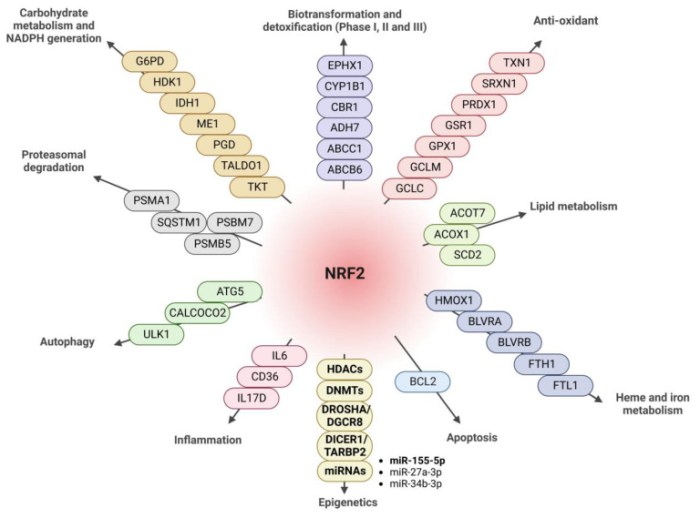
“We identified antioxidant response element sequences in promoter regions of genes encoding several epigenetic regulatory factors, such as histone deacetylases (HDACs), DNA methyltransferases (DNMTs), and proteins involved in microRNA biogenesis.

  • We treated cells with dimethyl fumarate (DMF), an activator of the NRF2 pathway through both the KEAP1 and GSK-3 pathways. NRF2 is able to modulate expression of HDAC1, HDAC2, HDAC3, and SIRT1 in different cell types.
  • DMF treatment induced DNMT1 and DNMT3b at both mRNA and protein levels. For DNMT3a, there was a slight induction of mRNA levels but not at the protein level.

antioxidants-12-00641-g007

  • Our data indicate that of all miRNAs analyzed, only miR-27a-3p, miR-27b-3p, miR-128-3p, and miR-155-5p associate with Nfe2l2 mRNA. NRF2 causes degradation of miR-155-5p, which is implicated in neuroinflammation and other pathologies, and is the main miRNA induced by LPS treatment in microglia. miR-155 alters expression of genes that regulate axon growth, supporting the bioinformatic prediction that miR-155 can regulate expression of genes involved in central nervous system development and neurogenesis.

Todate we only understand how epigenetic modifications affect expression and function of the NRF2 pathway. The fact that NRF2 can promote expression of type I HDACs, DNMTs, and proteins involved in miRNA biogenesis opens new perspectives on the spectrum of actions of NRF2 and its epigenetic influences.”

https://www.mdpi.com/2076-3921/12/3/641 “The Transcription Factor NRF2 Has Epigenetic Regulatory Functions Modulating HDACs, DNMTs, and miRNA Biogenesis”


PXL_20230515_185958612

Nrf2 Week #2: Neurons

To follow the Nrf2 Week #1 suggestion that Nrf2 target neurological disorders, this 2023 cell study investigated Nrf2 expression in neurons:

“Oxidative metabolism is inextricably linked to production of reactive oxygen species (ROS), which have the potential to damage all classes of macromolecules. Yet ROS are not invariably detrimental. Several properties make ROS useful signaling molecules, including their potential for rapid modification of proteins and close ties to cellular metabolism.

We used multiple single cell genomic datasets to explore Nrf2 expression and regulation in hundreds of neuronal and non-neuronal cell types in mouse and human. With few exceptions, Nrf2 is expressed at far lower levels in neurons than in non-neuronal support cells in both species.

This pattern is maintained in multiple disease states, and the chromatin accessibility landscape at the Nrf2 locus parallels these expression differences. These results imply that Nrf2 activity is limited in almost all neurons of the mouse and human central nervous system (CNS).

nrf2 expression

We separated cell types into neuron or non-neuronal ‘support’ cell categories. The general ‘support’ term is not meant to minimize the functional relevance of non-neuronal cells in the CNS, but is an umbrella term meant to cover everything from glial cell types (astrocytes, microglia, oligodendrocytes) to endothelial cells.

It is not clear why an important, near ubiquitous cytoprotective transcription factor like Nrf2 remains off in mature neurons, especially considering oxidative stress is a driver of many diseases. The simplest explanation is that Nrf2 activity also disrupts normal function of mature neurons.

ROS play a key role in controlling synaptic plasticity in mature neurons. These activity-dependent changes in synaptic transmission, which are important for learning and memory, are disrupted by antioxidants.

A subset of important Nrf2-targeted antioxidant genes (e.g., Slc3a2, Slc7a11, Nqo1, Prdx1) are also low in neurons. So it is likely that these and/or other Nrf2 targets must remain low or non-ROS-responsive in mature neurons. Future work exploring why this expression pattern persists in mature neurons will inform our models on roles of antioxidant genes in normal neuronal physiology and in neurological disorders.

https://www.biorxiv.org/content/10.1101/2023.05.09.540014v1.full “Limited Expression of Nrf2 in Neurons Across the Central Nervous System”


PXL_20230520_182827767

Remembering life before birth

This 2023 primate study investigated the body’s capability to remember prenatal experiences influencing later life:

“Maternal stressors and other environmental factors affect the developing embryo and fetus in ways that lead to increased susceptibility for chronic disease in later life. Developmental programming of chronic low-grade inflammation plays an important role in onset and progression of these diseases.

Establishing innate immune cell memory involves increased glycolysis, reduced oxidative phosphorylation, and expression of transcription factors which prime for pro-inflammatory activity. This memory relies on propagation of epigenetic modifications that develop in hematopoietic stem and progenitor cells (HSPCs), which can be passed on to progeny immune cells (i.e., macrophages).

These changes persist with altered epigenetic regulation for years after weaning – even when offspring are fed a conventional diet – predisposing offspring to inflammatory disease across their lifespans.

cell memory

Several factors may initiate metabolomic reprogramming in fetal HSPCs:

  • We found increased chromatin accessibility of gene regulatory regions and RNA signatures supporting activation of factors with a major role in regulating macrophage inflammatory activation, including FOS/JUN, NF-κB, C/EBPβ, and STAT6.
  • Our prior work demonstrated a persistently altered histone code in liver tissue from juvenile animals.
  • Maternal diet-supplied lipids, including oleic acid, in hematopoietic tissues may play an important role in priming inflammation and metabolism in fetal HSPCs and bone marrow-derived macrophages with postnatal persistence.

Striking changes in fetal bone marrow and liver HSPCs observed here suggest that the primary driver for developmental programming of inflammation takes place in utero. However, we cannot rule out that exposure to maternal diet during lactation postnatally triggers shifts in microbiome composition or function contributing to inflammation.

Components of maternal diet, rather than maternal obesity per se, are a modifiable risk factor with potential to alter developmental programming of offspring immune systems.”

https://www.cell.com/cell-reports/fulltext/S2211-1247(23)00404-7 “Maternal diet alters long-term innate immune cell memory in fetal and juvenile hematopoietic stem and progenitor cells in nonhuman primate offspring”


And there are other ways we remember everything that happened then and along the way. Big clues are in our out-of-context responses to present day events.

PXL_20230326_104753766

Does eating broccoli sprouts influence biological age?

A 2023 review of 28 human clinical trials investigating broccoli sprout compounds brought up this post’s title by omitting discussion of it:

“In order to determine the effective reference dose of a broccoli sprouts beverage for detoxifying carcinogenic air pollutants (benzene), Chen et al. administrated a drink enriched with glucoraphanin (GR) and sulforaphane (SFN) from 3-day-old broccoli sprouts to healthy adults. Researchers focused on excretion of metabolites SFN-NAC, SFN-CYS, and non-esterified SFN, which represent 80–81%, 12–14%, and 5–7% of total SFN forms, respectively.

Excretion percentage did not change during the intervention, indicating that bioavailability remained constant.

Enhanced excretion of the urinary biomarker of benzene detoxification S-phenylmercapturic acid (SPMA) was measured in urine collected every 12 h during the 10-day intervention. Out of 132 samples analyzed, >95% had detectable concentrations of SPMA, being significantly increased after consumption of the high dose of beverage (600 and 40 μmol GR and SFN, correspondingly), suggesting that consumption of >10 μmol SFN per 24 h may represent the lowest effective dose of the BSE affecting this biomarker.

https://www.mdpi.com/2072-6643/15/6/1424 “Systematic Review on the Metabolic Interest of Glucosinolates and Their Bioactive Derivatives for Human Health”


These reviewers did much hand waving to draw their conclusions. They ignored that the only way randomized trials become better than non-randomized trials is in dealing with confounders.

The largest confounder with glucoraphanin is that an individual’s gut microbiota, not their human cells, metabolize it into isothiocyanates. A glucoraphanin randomized trial has to have sufficient numbers of subjects in each group to adequately deal with confounding individual differences in gut microbiota.

I highlighted the largest of the 28 trials:

Basic RGB

Sulforaphane studies have fewer confounders. Even so, Upgrade your brain’s switchboard with broccoli sprouts stated:

“Power analysis calculations suggest that a sample size of n = 50 would yield a significant result.”

An insufficient number of subjects in both the half dose and full dose groups caused that study’s researchers to frame their results as “suggesting that consumption of >10 μmol SFN per 24 h may..” rather than asserting significant results.


Addressing this post’s title, it’s been ten years since epigenetic clocks came into use. This review highlighted by omission that there still hasn’t been even one investigation of isothiocyanates’ effects on human biological age as measured by epigenetic clocks.

A 40 μmol ≈ 7 mg sulforaphane “high” dose of the cited study is easily achievable with microwaved 3-day-old broccoli sprouts. There’s little question that healthy people activating AMPK, Nrf2, and associated signaling pathways, and inhibiting pro-inflammatory pathways such as NF-κB with sulforaphane, will experience beneficial effects.

The cited study found no change in sulforaphane treatment bioavailability over ten days, and a predecessor study found the same over 12 weeks. I’ll guess those bioavailability findings will extend over longer time periods.

Where are the researchers who will take the next step to show isothiocyanate treatments cause positive changes in epigenetic clock / biological age measurements?

PXL_20230304_211250499

Ancient parasite DNA within us

Two 2023 papers on endogenous retroviruses (ERVs) and aging relationships, starting with the Introduction section of a comprehensive study:

“Several causal determinants of aging-related molecular changes have been identified, such as epigenetic alterations and stimulation of senescence-associated secretory phenotype (SASP) factors. Although the majority of these studies describe aging determinants originating primarily from protein-coding genes, the non-coding part of the genome has started to garner attention as well.

ERVs belonging to long terminal repeat (LTR) retrotransposons are a relic of ancient retroviral infection, fixed in the genome during evolution, comprising about 8% of the human genome. As a result of evolutionary pressure, most human ERVs (HERVs) accumulate mutations and deletions that prevent their replication and transposition function. However, some evolutionarily young subfamilies of HERV proviruses, such as the recently integrated HERVK, maintain open reading frames encoding proteins required for viral particle formation.

In this study, using cross-species models and multiple techniques, we revealed an uncharacterized role of endogenous retrovirus resurrection as a biomarker and driver for aging. Specifically, we identified endogenous retrovirus expression associated with cellular and tissue aging and that the accumulation of HERVK retrovirus-like particles (RVLPs) mediates the aging-promoting effects in recipient cells. More importantly, we can inhibit endogenous retrovirus-mediated pro-senescence effects to alleviate cellular senescence and tissue degeneration in vivo, suggesting possibilities for developing therapeutic strategies to treat aging-related disorders.”

https://www.cell.com/cell/fulltext/S0092-8674(22)01530-6 “Resurrection of endogenous retroviruses during aging reinforces senescence”


This first paper’s foreword summarized their many experiments and findings:

“The study found that HERVK transcripts, viral proteins, and RVLPs were highly activated in prematurely aged human mesenchymal progenitor cells (hPMCs). This was similarly observed in aged human primary fibroblasts and hPMCs. They also discovered that decreasing silencing epigenetic marks DNA methylation and H3K9me3 while increasing H3K36me3 enabled HERVK expression.

erv aging mechanism

These observations also raise several intriguing questions:

  • HERVK is occasionally activated and eventually suppressed under physiological conditions, for example, in human embryonic cells. It would be fascinating to probe the possibility of mimicking physiological conditions in order to turn off the positive feedback between HERVK and senescence.
  • ERVs are hallmarks of aging in different species, including human, primate, and mouse. Future quantification of the absolute physiological level of ERVs across a broad population of various ages might provide further insights into the relationship between ERVs and organismal age.”

https://academic.oup.com/lifemedi/advance-article/doi/10.1093/lifemedi/lnad001/6982772 “Endogenous retroviruses make aging go viral”


Previously curated papers on these subjects include:

A study of our evolutionary remnants

“Repressive epigenetic marks associated with ERVs, particularly LTRs, show a remarkable switch in silencing mechanisms, depending on evolutionary age:

  • Young LTRs tend to be CpG-rich and are mainly suppressed by DNA methylation, whereas
  • Intermediate age LTRs are associated predominantly with histone modifications, particularly histone H3 lysine 9 (H3K9) methylation.
  • Evolutionarily old LTRs are more likely inactivated by accumulation of loss-of-function genetic mutations.”

Starving awakens ancient parasite DNA within us

Reality is sometimes stranger than what fiction writers dream up. 🙂

PXL_20230209_210243470

Measuring epigenetic DNA causes

This 2022 human cell study investigated DNA methylation and aging:

“Models based on DNA methylation can be used to predict the age of biological samples, but their interpretability is limited due to the lack of causal inferences. Neither existing epigenetic clocks nor DNA methylation changes are enriched in causal CpG sites. Causal CpGs include similar numbers of sites that contribute to aging and protect against it, yet their combined contribution negatively affects age-related traits.

One general approach for developing anti-aging interventions is to identify molecular changes during aging and use these changes as targets to modulate the aging process. A similar idea has also been applied to evaluate potential longevity interventions. However, this logic is intrinsically flawed, as correlation does not imply causation, and age-related changes are not necessarily causal to age-associated declines.

We developed a framework for integrating causal knowledge into epigenetic clock models and constructed DamAge and AdaptAge that measure age-related damaging and adaptive changes, respectively. DamAge acceleration is associated with various adverse conditions (e.g., mortality risk), whereas AdaptAge acceleration is related to beneficial adaptations.

causality clocks

We found that transcription factor (TF)-binding sites of BRD4 and CREB1 are enriched with CpG sites whose methylation levels promote healthy longevity, and TF-binding sites for HDAC1 are enriched with CpG sites whose methylation levels decrease healthy longevity.

  • BRD4 contributes to cell senescence and promotes inflammation, and higher DNA methylation at BRD4 binding sites may inhibit the downstream effects of BRD4 and promote healthy longevity.
  • CREB1 is related to type II diabetes and neurodegeneration, and mediates the effect of calorie restriction. Our data suggest that higher methylation at CREB1-binding sites may support its longevity effects.
  • HDAC1 is a histone deacetylase, and its activity increases with aging and may promote age-related phenotypes. Increased DNA methylation at HDAC1 binding sites may causally inhibit healthy longevity.

Our causality-informed clock models provide novel insights into the aging mechanisms and testing interventions that delay aging and reverse biological age.”

https://www.biorxiv.org/content/10.1101/2022.10.07.511382v1 “Causal Epigenetic Age Uncouples Damage and Adaptation”


PXL_20221001_224441637_exported_1932

Minds of their own

It’s the weekend, so it’s time for: Running errands? Watching sports? Other conditioned behavior?

Or maybe broadening our cognitive ability with Dr. Michael Levin’s follow-ups to his 2021 Basal cognition paper and 2020 Electroceuticals presentation with a 2022 paper and presentation starting around the 13:30 mark:

Michael Levin - Cell Intelligence in Physiological and Morphological Spaces

“A homeostatic feedback is usually thought of as a single variable such as temperature or pH. The set point has been found to be a large-scale geometry, a descriptor of a complex data structure.”


His 2022 paper Technological Approach to Mind Everywhere: An Experimentally-Grounded Framework for Understanding Diverse Bodies and Minds:

“It is proposed that the traditional problem-solving behavior we see in standard animals in 3D space is just a variant of evolutionarily more ancient capacity to solve problems in metabolic, physiological, transcriptional, and morphogenetic spaces (as one possible sequential timeline along which evolution pivoted some of the same strategies to solve problems in new spaces).

Developmental bioelectricity works alongside other modalities such as gene-regulatory networks, biomechanics, and biochemical systems. Developmental bioelectricity provides a bridge between the early problem-solving of body anatomy and the more recent complexity of behavioral sophistication via brains.

This unification of two disciplines suggests a number of hypotheses about the evolutionary path that pivoted morphogenetic control mechanisms into cognitive capacities of behavior, and sheds light on how Selves arise and expand.

While being very careful with powerful advances, it must also be kept in mind that existing balance was not achieved by optimizing happiness or any other quality commensurate with modern values. It is the result of dynamical systems properties shaped by meanderings of the evolutionary process and the harsh process of selection for survival capacity.”


PXL_20220904_102050409

Gut microbiota, SCFAs, and hypertension

Two 2022 rodent studies from the same research group on short-chain fatty acid effects, beginning with butyrate:

“Maternal nutrition, gut microbiome composition, and metabolites derived from gut microbiota are closely related to development of hypertension in offspring. A plethora of metabolites generated from diverse tryptophan metabolic pathways show both beneficial and harmful effects.

Butyrate, one of the short-chain fatty acids (SCFAs), has shown vasodilation effects. We examined whether sodium butyrate administration in pregnancy and lactation can prevent hypertension induced by a maternal tryptophan-free diet in adult progeny, and explored protective mechanisms.

Decreased tryptophan metabolites indole-3-acetamide and indoleacetic acid observed in offspring born to dams that received the trytophan-free (TF) diet coincided with hypertension. This suggested that gut microbiota-derived tryptophan metabolites might be an offsetting mechanism, but not a cause of TF-induced hypertension. Considering that TF intervention reduced abundance of Romboutsia and Akkermansia, and many species are able to metabolize tryptophan, further studies linking abundance of bacterial species and concentrations of tryptophan metabolites are still required to identify main tryptophan metabolite producers.

Sodium butyrate treatment during pregnancy and lactation offset effects of maternal tryptophan-deficiency-induced offspring hypertension, mainly related to shaping gut microbiome, mediating SCFA receptor GPR41 and GPE109A, and restoring the renin–angiotensin system. A better understanding of mechanisms behind tryptophan metabolism implicated in programming of hypertension is critical for developing gut microbiota-targeted therapies to halt hypertension.”

https://www.sciencedirect.com/science/article/abs/pii/S0955286322001619 “Sodium butyrate modulates blood pressure and gut microbiota in maternal tryptophan-free diet-induced hypertension rat offspring” (not freely available) Thanks to Dr. You-Lin Tain for providing a copy.


A second study was on propionate effects:

“Early-life disturbance of gut microbiota has an impact on adult disease in later life. Propionate, one of predominant SCFAs, has been shown to have antihypertensive property.

We examined whether perinatal propionate supplementation can prevent offspring hypertension induced by maternal chronic kidney disease (CKD). CKD is closely linked to adverse maternal and fetal outcomes, and is reported to affect at least 3%-4% women of childbearing age.

Male offspring were divided into four groups: control, CKD, control+propionate (CP), and CKD+propionate (CKDP).

nutrients-14-03435-g001

Perinatal propionate supplementation:

  • Prevented offspring hypertension;
  • Shaped gut microbiota with increases in species richness and evenness;
  • Increased plasma propionate level; and
  • Upregulated renal GPR41 expression.

Results reveal the feasibility of manipulating gut microbiota by altering their metabolites with early-life use of propionate to prevent offspring hypertension in later life.”

https://www.mdpi.com/2072-6643/14/16/3435/htm “Perinatal Propionate Supplementation Protects Adult Male Offspring from Maternal Chronic Kidney Disease-Induced Hypertension”


PXL_20220905_104145635