Measuring epigenetic changes at a single-cell level

This 2018 Canadian cell study described the development of a single-cell protocol to:

“Profile primitive hematopoietic cells of mouse and human origin to identify epigenetically distinct subpopulations. Deep sampling of the CpG content of individual HSCs allowed for the near complete reconstitution of regulatory states from epigenetically defined subpopulations of HSCs and revealed a high level of redundancy of CpG methylation states within these phenotypically defined hematopoietic cell types.

Hematopoietic stem cells (HSCs) are functionally defined cells that display evidence of extensive self-renewal of their ability to generate mature blood cells for the lifetime of the organism and following transplantation into myelosuppressed permissive hosts. Most of the epigenetic measurements underpinning these observations represent consensus values experimentally derived from thousands of cells partially enriched in HSCs or their progeny, thus failing to discern distinct epigenetic states within HSCs.

Current analytical strategies for single-cell DNA methylation measurements average DNA methylation in fixed genomic bins or over defined genomic regions.

However, inference across cells (as well as sequence context) assumes homogeneity across cells, which is at cross-purposes with the generation of single-cell molecular measurements through the potential to mask rare subpopulations.

We identified donor as a significant source of consistent epigenetic heterogeneity, which was reduced but not eliminated by correcting for personal genetic variants. This observation is consistent with previous reports that showed genetic diversity as related to but not accountable for all DNA methylation differences and suggests that in utero environmental differences may be encoded within the HSC compartment.”
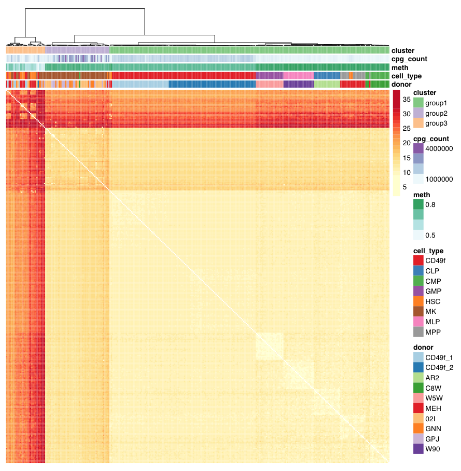

The study advanced science not only by measuring CpG methylation within each HSC, but also by producing another data point “that in utero environmental differences may be encoded within the HSC compartment.”

The paragraph with “assumes homogeneity across cells” bold text provided another example of the statistical analysis flaw that gives individually inapplicable results per Group statistics don’t necessarily describe an individual. The above graphic of human hematopoietic phenotypes demonstrated that the researchers have potentially solved this problem by measuring individual cells.

The researchers discussed another aspect of the study that’s similar to the epigenetic clock methodology:

“Phenotype-specific methylation signatures are characterized by extensive redundancy such that distinct epigenetic states can be accurately described by only a small fraction of single-CpG methylation states. In support of such a notion, the unique components of a DNA methylation “age” signature are contained in ∼353 CpGs sites, presumably representing a random sample of a total age signature that involves many more sites not detected using the reduced representation strategies from which these signatures have been derived.”

Also, in The epigenetic clock theory of aging the originator of the epigenetic clock characterized HSCs as an effective intervention against epigenetic aging:

“In vivo, haematopoietic stem cell therapy resets the epigenetic age of blood of the recipient to that of the donor.”

https://www.cell.com/stem-cell-reports/article/S2213-6711(18)30308-4/fulltext “High-Resolution Single-Cell DNA Methylation Measurements Reveal Epigenetically Distinct Hematopoietic Stem Cell Subpopulations”
Epigenetic effects of breast cancer treatments

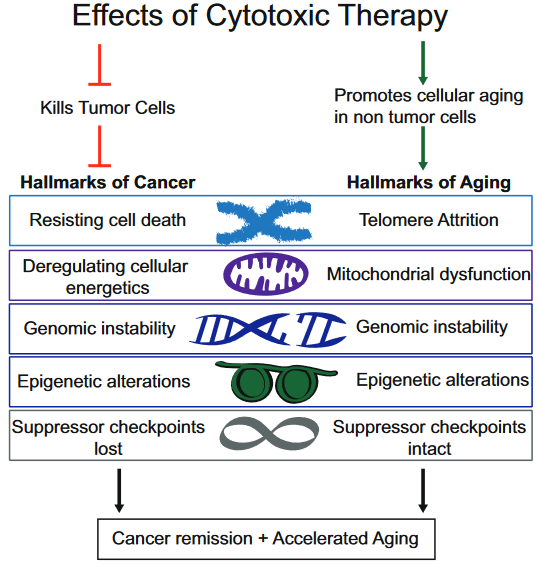
This 2018 UC San Diego review subject was the interplay between breast cancer treatments and their effects on aging:

“Although current breast cancer treatments are largely successful in producing cancer remission and extending lifespan, there is concern that these treatments may have long lasting detrimental effects on cancer survivors, in part, through their impact on non-tumor cells. It is unclear whether breast cancer and/or its treatments are associated with an accelerated aging phenotype.

In this review, we have highlighted five of nine previously described cellular hallmarks of aging that have been described in the context of cytotoxic breast cancer treatments:

  1. Telomere attrition;
  2. Mitochondrial dysfunction;
  3. Genomic instability;
  4. Epigenetic alterations; and
  5. Cellular senescence.”


The review was full of caveats weakening the above graphic’s associations:

  1. “Telomere attrition – Blood TL [telomere length] was not associated with chemotherapy in three out of four studies;
  2. Mitochondrial dysfunction – How cancer therapies affect cellular energetics as they relate to rate of aging is unclear;
  3. Genomic instability – Potentially contributing to accelerated aging;
  4. Epigenetic alterations – Although some of the key regulators of these processes have begun to be identified, including DNA and histone methylases and demethylases, histone acetylases and de-acetylases and chromatin remodelers, how they regulate the changes in aging through alteration of global transcriptional programs, remains to be elucidated; and
  5. Cellular senescence – Dysregulated pathways can be targeted by cytotoxic chemotherapies, resulting in preferential cell death of tumor cells, but how these treatments also affect normal cells with intact pathways is unclear.”

To their credit, these reviewers at least presented some of the contrary evidence, and didn’t continue on with a directed narrative as other reviewers are prone to do.

https://www.sciencedirect.com/science/article/pii/S1879406818301176 “Breast cancer treatment and its effects on aging” (not freely available)


The originator of the epigenetic clock methodology was a coauthor of the review. Only one of his works was cited in the Epigenetic alterations subsection:

https://link.springer.com/article/10.1007%2Fs10549-017-4218-4 “DNA methylation age is elevated in breast tissue of healthy women”

This freely-available 2017 study quoted below highlighted that epigenetic clock measurements as originally designed were tissue-specific:

“To our knowledge, this is the first study to demonstrate that breast tissue epigenetic age exceeds that of blood tissue in healthy female donors. In addition to validating our earlier finding of age elevation in breast tissue, we further demonstrate that the magnitude of the difference between epigenetic age of breast and blood is highest in the youngest women in our study (age 20–30 years) and gradually diminishes with advancing age. As women approach the age of the menopausal transition, we found that the epigenetic of age of blood approaches that of the breast.”

Additional caution was justified in both interpreting age measurements and extending them into “cellular hallmarks” when the tissue contained varying cell types:

“Our studies were performed on whole breast tissue. Diverse types of cells make up whole breast tissue, with the majority of cells being adipocytes. Other types of cells include epithelial cells, cuboidal cells, myoepithelial cells, fibroblasts, inflammatory cells, vascular endothelial cells, preadipocytes, and adipose tissue macrophages.

This raises the possibility that the magnitude of the effects we observe, of breast tissue DNAm age being greater than other tissues, might be an underestimation, since it is possible that not all of the cells of the heterogenous sample have experienced this effect. Since it is difficult to extract DNA from adipose tissue, we suspect that the majority of DNA extracted from our whole breast tissues was from epithelial and myoepithelial cells.”

Allergies and epigenetic histone modifications

This 2018 German review provided short summaries of 44 studies on the contribution of histone modifications to allergies. An overall summary of their search results was:

“There are at least two levels at which the role of histone modifications is manifested.

  • One is the regulation of cells that contribute to the allergic inflammation (T cells and macrophages) and those that participate in airway remodeling.
  • The other is the direct association between histone modifications and allergic phenotypes.

Inhibitors of histone-modifying enzymes may potentially be used as anti-allergic drugs. Furthermore, epigenetic patterns may provide novel tools in the diagnosis of allergic disorders.”


This type of search is what’s expected of researchers who will perform either:

  • A meta-analysis of studies selected from the search results; or
  • Their own study.

These reviewers didn’t indicate that they were proceeding along either path.

The review was fine for the purpose of presenting current studies of the subject. But this was just the preparatory stage of research.

https://aacijournal.biomedcentral.com/articles/10.1186/s13223-018-0259-4 “Histone modifications and their role in epigenetics of atopy and allergic diseases”

Epigenetic variations in metabolism

This 2018 German review was comprehensive for its subject, epigenetic control of variation and stochasticity in metabolic disease. I’ll focus on one aspect, phenotypic variation:

“Phenotypic [Mendelian] variation can result both from gain- and loss-of-function mutations. Because of the extreme interconnectivity of cell regulatory networks, even at the cellular level, predicting the impact of a sequence variant is difficult as the resultant variation acts:

  • In the context of all other variants and
  • Their potential additive, synergistic and antagonistic interactions.

This phenomenon is known as epistasis.

∼98.5% of our genome is non-protein-coding: it is pervasively transcribed, and its transcripts can support regulatory function. Among the best functionally characterized non-coding RNAs (ncRNAs) arising from these sequences are microRNAs (miRNAs).

Environmental [non-Mendelian] variation or ‘stimuli’ occurring during critical windows of susceptibility can elicit lifelong alterations in an individual’s phenotype. Intergenerational metabolic reprogramming [in fruit flies] results from global alterations in chromatin state integrity, particularly from reduced H3K27me3 and H3K9me3 [histone] domains.

The broad variation of fingerprints in humans is thought to depend to a large degree on stochastic variation in mechanical forces. These clear examples of inducible multi-stable or stochastic variation highlight how little we know about the landscape of potential phenotypic variation itself.

Consensus estimates of heritability for obesity and T2D are ∼70% and ∼35% respectively. The remaining, unexplained component is known to involve gene–environment interactions as well as non-Mendelian players.”


Although the above graphic displays transgenerational inheritance for humans, the reviewers didn’t cite any human studies that adequately demonstrated causes for and effects of transgenerational epigenetic inheritance.

I’ve read the cited Swedish and Dutch studies. Their designs, methods, and “correlate with” / “was associated with” results didn’t provide incontrovertible evidence from the F0 great-grandparents, F1 grandparents, F2 parents, and F3 children. It’s necessary to thoroughly study each generation to confirm definitive transgenerational epigenetic inheritance causes and effects.

As noted in How to hijack science: Ignore its intent and focus on the 0.0001%, there aren’t any such published studies to cite. Researchers urgently need to do this human research, and stop using these poor substitutes [1] to pretend there are already adequately evidenced transgenerational epigenetic inheritance human results.

I downgraded the review for treating research of this and other subjects as faits accomplis. It’s opposite ends of the evidential spectrum to state “how little we know about the landscape of potential phenotypic variation,” and in the same review, speciously extrapolate animal experiments into putative human results.

https://www.sciencedirect.com/science/article/pii/S2212877818301984 “Epigenetic control of variation and stochasticity in metabolic disease”


[1] As an example of the poor substitutes for evidence, a researcher referred me to the 2013 “Transgenerational effects of prenatal exposure to the 1944–45 Dutch famine” which is freely available at https://obgyn.onlinelibrary.wiley.com/doi/full/10.1111/1471-0528.12136 as a study finding human transgenerational epigenetic inheritance.

The Methods section showed:

  • The study’s non-statistical data was almost all unverified self-reports by a self-selected sample of the F2 generation, average age 37.
  • No detailed physical measurements or samples were taken of them, nor of the F1 generation, nor of the F0 generation, all of which are required as baselines for any transgenerational epigenetic inheritance findings.
  • No detailed physical measurements or samples were taken of the F3 generation, which is the generation that may provide transgenerational evidence if the previous generations also have detailed physical baselines.

The study’s researchers drew enough participants (360) such that their statistics package allowed them to impute and assume into existence a LOT of data. But the scientific method constrained them to make factual statements of what the evidence actually showed. They admitted:

“In conclusion, we did not find a transgenerational effect of prenatal famine exposure on the health of grandchildren in this study.”

Yet this study is somehow cited for evidence of human transgenerational epigenetically inherited causes and effects!

A study of our evolutionary remnants

This 2018 Michigan human cell study subject was factors affecting the expression of human endogenous retroviruses:

“We provide a comprehensive genomic and epigenomic map of the more than 500,000 endogenous retroviruses (ERVs) and fragments that populate the intergenic regions of the human genome.

The repressive epigenetic marks associated with the ERVs, particularly long terminal repeats (LTRs), show a remarkable switch in silencing mechanisms, depending on the evolutionary age of the LTRs:

  • Young LTRs tend to be CpG-rich and are mainly suppressed by DNA methylation, whereas
  • Intermediate age LTRs are associated predominantly with histone modifications, particularly histone H3 lysine 9 (H3K9) methylation.
  • The evolutionarily old LTRs are more likely inactivated by the accumulation of loss-of-function genetic mutations.

Because the expression of ERVs is potentially dangerous to the host cell, understanding the repressive mechanisms is important. Earlier studies have implicated the aberrant expression of ERVs in autoimmune disease pathogenesis. However, this “enemy within” may also play a beneficial role in cancer therapy.

The same kinds of chromatin dynamics appear to be used both by LTRs and genes.”


I wasn’t going to curate this study before I saw the above graphic of our Boreoeutherian ancestor. Evolutionary subjects seem very abstract until an artist reconstructs the data visually.

https://genome.cshlp.org/content/early/2018/07/03/gr.234229.118.full.pdf “Switching roles for DNA and histone methylation depend on evolutionary ages of human endogenous retroviruses” (not freely available)


This post has somehow become a target for spammers, and I’ve disabled comments. Readers can comment on other posts and indicate that they want their comment to apply here, and I’ll re-enable comments.

Preventing prostate cancer with a broccoli sprouts diet

This 2018 Oregon rodent study fed a 15% broccoli sprout diet beginning at four weeks of age to a mouse strain with a near-100% chance of developing prostate cancer:

“Broccoli sprouts reduced prostate cancer incidence and progression to invasive cancer. Broccoli sprout consumption also decreased histone H3 lysine 9 trimethylation in the ventral lobe (age 12 wk), and decreased histone H3 lysine 18 acetylation in all prostate lobes (age 28 wk).

The TRAMP model of prostate cancer was utilized because the tumors occur in the prostate epithelium and the tumor tissue histopathology closely mimics human disease. Additional advantages include that the tumors arise spontaneously and appear in ∼100% of mice.”


Like in utero prevention of breast cancer by a broccoli sprouts diet, this study had a problem measuring sulforaphane dosage. The relevant statements were:

“This 15% broccoli sprout diet had 400 mg SFN [sulforaphane]/kg diet, which was chosen because it is equivalent to 1 mg SFN/d which has been used in previous studies.

Food consumption was measured over the course of the study and no difference was found in the intake of food between the control and broccoli sprout–fed groups.”

To be “equivalent to 1 mg SFN/d” at a .4 mg sulforaphane/gram rate, the animals would eat 2.5 grams per day. That’s half of a normal intake. “Food consumption was measured” but not disclosed.

The study for the “1 mg SFN/d” dosage cited at http://cancerpreventionresearch.aacrjournals.org/content/early/2015/02/21/1940-6207.CAPR-14-0386.full-text.pdf was actually:

“4 week old male TRAMP mice were treated with PBS [phosphate-buffered saline] (control) or 1 mg SFN in PBS three times/week for 15-18 weeks.”

not “1 mg SFN/d which has been used in previous studies.”

The researchers didn’t sufficiently quantify their findings to help humans, which is the basic purpose of any animal study.

https://academic.oup.com/cdn/article/2/3/nzy002/4803105 “Broccoli Sprouts Delay Prostate Cancer Formation and Decrease Prostate Cancer Severity with a Concurrent Decrease in HDAC3 Protein Expression in Transgenic Adenocarcinoma of the Mouse Prostate (TRAMP) Mice”

Starving awakens ancient parasite DNA within us

This 2018 Italian human cell study conducted a series of experiments on the effects of nutrient deprivation:

“Reduced food intake, and in particular protein or amino acid (AA) restriction, extends lifespan and healthspan.

We have previously shown that, in mammalian cells, deprivation of essential AAs (methionine/cysteine or tyrosine) leads to the transcriptional reactivation of integrated silenced transgenes by a process involving epigenetic chromatic remodeling and histone acetylation.

Here we show that the deprivation of methionine/cysteine also leads to the transcriptional upregulation of endogenous retroviruses [ERVs], suggesting that essential AA starvation affects the expression not only of exogenous non-native DNA sequences, but also of endogenous anciently-integrated and silenced parasitic elements of the genome.

ERVs, comprising 8% of the human genome, represent the remnants of past infections of germ cells by exogenous retroviruses, and are mostly unable to retrotranspose in the human genome. However, they can reactivate during physiological development, or in pathological conditions like cancer, and regulate the expression of nearby genes by their LTR elements, leading to general transcriptional reprogramming.

Dissection of the underlying mechanism ruled out a role for the main AA-deficiency sensor GCN2 and pointed to the ribosome as the possible master controller.”

http://journals.plos.org/plosone/article?id=10.1371/journal.pone.0200783 “Amino acid deprivation triggers a novel GCN2-independent response leading to the transcriptional reactivation of non-native DNA sequences”


The study found that reality is sometimes stranger than what fiction writers dream up. 🙂

The authors cited a 2016 Danish review I hadn’t previously curated:

https://www.nature.com/articles/nrendo.2016.87 “The role of diet and exercise in the transgenerational epigenetic landscape of T2DM” (not freely available)

Contrary to what’s implied by its title, though, and as I noted in How to hijack science: Ignore its intent and focus on the 0.0001%, those reviewers didn’t cite any human studies that adequately demonstrated transgenerational epigenetic inheritance causes and effects. They admitted:

“Direct evidence that epigenetic factors drive the inheritance of T2DM [type 2 diabetes mellitus] in humans is lacking.”

The Danish reviewers then continued on as if proof of human transgenerational epigenetic inheritance was a foregone conclusion! It didn’t serve any valid scientific purpose to assume such evidence into existence.

A dietary supplement that trains the innate immune system

This 2018 Netherlands review topic was long-term epigenetic programming of the innate immune system:

“Immunological memory has been classically described for the adaptive immune system, in which naive B and T lymphocytes develop antigen-specific, long-lasting memory cells after encountering a new antigen.

Immunological memory is not an exclusive trait of lymphocytes. The function of cells from the innate immune system, such as monocytes, macrophages, dendritic cells, and NK cells, is also influenced by contact with different stimuli, undergoing functional reprogramming.

β-glucan, the prototypical trained immunity-inducing agonist:

  • Modulates hematopoietic stem and progenitor cells, influencing behavior and responsiveness of peripheral myeloid cells;
  • Leads to a shift of cellular metabolism from oxidative phosphorylation toward aerobic glycolysis.

Analysis of transcriptional data from macrophages stimulated with β-glucan revealed that the cholesterol synthesis pathway is highly up-regulated in trained immunity. A follow-up of this study showed that activation of the cholesterol synthesis pathway, but not its synthesis itself, is crucial for innate memory. In agreement with this, inhibition of cholesterol synthesis in mice reduced induction of trained immunity by β-glucan.

β-glucan-induced changes in trimethylation of histone 3 lysine 4 (H3K4me3) and acetylation of histone 3 lysine 27 (H3K27ac) in human monocytes 7 days after the first stimulation in vitro were associated with a switch to glycolysis, suggesting a deep, long lasting reprogramming of cells.

Inducers of cellular reprogramming such as β-glucan have shown potential as a treatment or adjuvant for osteosarcoma, influenza, or skin lesions, among others.”

https://jlb.onlinelibrary.wiley.com/doi/pdf/10.1002/JLB.MR0318-104R “Long-term reprogramming of the innate immune system”

A seasonal epigenetic effect of conception on BMI

This 2018 Swiss human/rodent study found:

“The presence of brown adipose tissue (BAT) and the season of conception are linked to BMI in humans. In mice, we demonstrate that cold exposure (CE) of males, but not females, before mating results in improved systemic metabolism and protection from diet-induced obesity of the male offspring.

Adipose tissue functions as a dynamic endocrine organ, and its ‘quality’ is considered to be an important factor in the development of obesity-associated comorbidities. Adipose tissue can be divided into the functionally and morphologically distinct white adipose tissue (WAT) and BAT. The main function of BAT is energy dissipation via nonshivering thermogenesis, which is enabled by the presence of uncoupling protein (UCP1) in the inner mitochondrial membrane.

In humans and in mice, seasonal or experimental CE induces an epigenetic programming of the sperm such that the offspring harbor hyperactive BAT and an improved adaptation to overnutrition and hypothermia.

BAT variability

We performed a retrospective study of FDG-PET/CT scans from 2007–2015 that were collected from the University Hospital of Zurich (n = 8,440 individuals). Individuals with active BAT were 3.2% more likely to have been conceived in the colder period of the year, for example, between October and February (mean temperature estimate 2° C), whereas individuals without active BAT were more likely to have been conceived in the warmer months, for example, between April and September (mean temperature estimate 13° C).”


The study provided another example of how stressful experiences of parents – even those before offspring conception – affected their offspring.

Edit 8/13/2018: I substituted the authors’ corrected graphic where the calendar month started with April vs. January.

A review of this study was made in The imperative of human transgenerational studies.

https://www.nature.com/articles/s41591-018-0102-y “Cold-induced epigenetic programming of the sperm enhances brown adipose tissue activity in the offspring” (not freely available)

A mid-year selection of epigenetic topics

Here are the most popular of the 65 posts I’ve made so far in 2018, starting from the earliest:

The pain societies instill into children

DNA methylation and childhood adversity

Epigenetic mechanisms of muscle memory

Sex-specific impacts of childhood trauma

Sleep and adult brain neurogenesis

This dietary supplement is better for depression symptoms than placebo

The epigenetic clock theory of aging

A flying human tethered to a monkey

Immune memory in the brain

The lack of oxygen’s epigenetic effects on a fetus

Addictive behavior and epigenetic DNA methylation

This 2018 McGill paper reviewed findings from animal and human studies on the relationships between drug-seeking behavior and epigenetic DNA methylation:

“Although there is an increasing line of evidence from preclinical models of addiction, there are only a few human studies that systematically assessed DNA methylation in addiction. Most of the studies were done on small cohorts and focused on one or a few candidate genes, except in the case of alcohol use where larger studies have been carried out.

A long line of evidence suggests that abnormal patterns of gene expression occur in brain regions related to drug addiction such as the nucleus accumbens, prefrontal cortex, amygdala, and the ventral tegmental area.

Using the “incubation of craving” model in rats trained to self-administer cocaine, and treated with either SAM or RG108, the genome-wide DNA methylation and gene expression landscape in the nucleus accumbens after short (1 day) and long (30 days) abstinence periods and the effects of epigenetic treatments were delineated. The main findings are:

  • A long incubation period results in robust changes in methylation;
  • Direct accumbal infusion of SAM that is paired with a “cue” after long incubation times increases drug-seeking behavior,
  • Whereas a single treatment with RG108 decreases this behavior.

Importantly, the effects of these single administrations of a DNA methylation inhibitor remain stable for 30 more days. These data suggest that DNA methylation might be mediating the impact of “incubation” on the craving phenotype and that this phenotype could be reprogrammed by a DNA demethylation agent.”


The subject has a large scope, and a narrow aspect was presented in this paper. Rodent research by one of the coauthors that was cited, Chronic pain causes epigenetic changes in the brain and immune system, provided some relevant details.

The review covered neither human dimensions of the impacts of unfulfilled needs nor investigations of exactly what pain may impel human drug-seeking behavior. The “Implications for Diagnostic and Therapeutics” were largely at the molecular level.

https://www.sciencedirect.com/science/article/pii/S1877117318300164 “The Role of DNA Methylation in Drug Addiction: Implications for Diagnostic and Therapeutics” (not freely available)

Transgenerational epigenetic effects of maternal obesity during pregnancy

This 2018 Belgian review subject was in part the transgenerational epigenetic effects of maternal obesity during pregnancy. The subject was tailored for the journal in which it appeared, Atherosclerosis, so other transgenerationally inherited epigenetic effects weren’t reviewed:

“The transgenerational impact of these alterations in methylation patterns are only shown in animal studies with HFD [high-fat diet] animals. In this respect the paternal influence also comes forward.

Alterations in methylation at the spermatozoa of male rats fed with a HFD were shown in combination with transgenerational metabolic effects, mainly on the female offspring. Methylation alterations in spermatozoa were also found in the male offspring of dams fed with HFD during their pregnancy. Consequent effects on the phenotype were again only shown in female offspring (until third generation).

A transgenerational inheritance through the female germline by mitochondrial inheritance has been suggested. A recent, small study in humans found altered mitochondrial functioning in the male offspring of overweight woman. A finding that has been confirmed in mice studies with a persistence of this transfer of aberrant oocyte mitochondria into the third generation.

The identification of a number of alterations in active cardiovascular microRNA species in the offspring of animals with obesity offer promising perspectives for the future.”

Evidence for transgenerational aspects of in utero programming included two studies I hadn’t previously curated:

  1. https://www.cell.com/cell-reports/fulltext/S2211-1247(16)30663-5 “Maternal Metabolic Syndrome Programs Mitochondrial Dysfunction via Germline Changes across Three Generations” (2016)
  2. https://www.sciencedirect.com/science/article/pii/S221287781500232X “High-fat diet reprograms the epigenome of rat spermatozoa and transgenerationally affects metabolism of the offspring” (2016)

https://www.atherosclerosis-journal.com/article/S0021-9150(18)30328-9/fulltextIn utero programming and early detection of cardiovascular disease in the offspring of mothers with obesity”

A protein involved in fasting’s epigenetic effects

This 2018 Illinois rodent study conducted a series of experiments on a protein that’s activated by fasting:

“Jumonji D3 (JMJD3) histone demethylase epigenetically regulates development and differentiation, immunity, and tumorigenesis by demethylating a gene repression histone mark, H3K27-me3. JMJD3 has what we believe to be a novel metabolic role and epigenetically regulates mitochondrial β-oxidation.

Epigenetic modifications play a critical role in linking environmental signals, such as changes in nutrient and hormonal levels and the circadian rhythm, to regulate genes to maintain homeostasis. Epigenetics is particularly relevant to metabolic regulation.

In response to fasting, the interaction of JMJD3 with both SIRT1 and PPARα is induced, which leads to epigenetic activation of their own genes and of β-oxidation network genes. Downregulation of hepatic JMJD3 leads to intrinsic defects in β-oxidation, which results in liver steatosis as well as glucose and insulin intolerance.

JMJD3 was required for the beneficial effects mediated by expression of SIRT1 in obese mice and vice versa. Restoration of JMJD3 to normal levels in HFD [high-fat diet]-fed obese mice leads to improved fatty acid β-oxidation and ameliorates metabolic symptoms of obesity and these beneficial effects are largely dependent on SIRT1.”


Have to hand it to the researchers who named this protein to coincidentally rhyme with a children’s book and movie. It certainly provokes more interest than other ways of naming discoveries, such as after what it resembles and/or the discoverer’s name.

https://www.jci.org/articles/view/97736 “Fasting-induced JMJD3 histone demethylase epigenetically activates mitochondrial fatty acid β-oxidation”

Melatonin and depression

This 2018 Polish review subject was relationships between melatonin and depression:

“Although melatonin has been known about and referred to for almost 50 years, the relationship between melatonin and depression is still not clear. In this review, we summarize current knowledge about genetic and epigenetic regulation of enzymes involved in melatonin synthesis and metabolism as potential features of depression pathophysiology and treatment.

Melatonin has an antidepressant effect by:

  • Maintaining the body’s circadian rhythm;
  • Regulating the pattern of expression of clock genes in the suprachiasmatic nucleus (SCN); and
  • Modifying key genes of serotoninergic neurotransmission that are linked with a depressive mood.

Light input causes release of γ-aminobutyric acid (GABA) by the SCN, and the inhibitory signal is transmitted to the pineal gland to inhibit melatonin production.

Melatonin is produced via metabolism of serotonin in two steps which are catalyzed by serotonin N-acetyltransferase (SNAT) and acetylserotonin-O-methyltransferase (ASMT). Serotonin, SNAT, and ASMT are key melatonin level regulation factors.

Both melatonin and serotonin are synthesized from the same amino acid, tryptophan. People on a high tryptophan diet (>10 mg/kg body weight per day) have a significantly lower level of depressive symptoms, irritation, and anxiety than people on a low tryptophan diet (<5 mg/kg body weight per day).

To our knowledge, there are only 2 studies in the literature that characterize mRNA expression of ASMT in the peripheral blood of recurrent depressive disorders. They demonstrated reduced mRNA expression of ASMT in patients with depression and cognitive impairment. Surprisingly, these studies, despite promising results, have not been replicated. Moreover, no analysis of other melatonin related-genes as potential biomarkers of depression has been provided.

The main monoamine hypothesis of pathophysiology of depression indicates that depression is induced by a change in levels of ≥1 monoamines such as serotonin, noradrenaline, and dopamine. Evidence for the serotonergic theory is an observation that antidepressants such as tricyclic antidepressants, selective serotonin reuptake inhibitors, and noradrenaline reuptake inhibitors increase the level of serotonin in the brain.

We focus on serotonin as a neurotransmitter which is a precursor of melatonin synthesis. In a depressed patient, serotonin synthesis is impaired, and poor precursor availability may prevent formation of an adequate amount of melatonin. However, only a few studies have analyzed the relationship between serotonin and melatonin levels and the correlation with blood serum.”


At eight cents a day ($.04 for women), melatonin is a cheap and effective supplement.

I hadn’t considered possible antidepressant effects until reading this review. More human studies are needed.

https://www.karger.com/Article/Pdf/489470 “Pathophysiology of Depression: Molecular Regulation of Melatonin Homeostasis – Current Status” (not freely available)

A disturbance in the paradigm of child abuse

The principal way science advances is through a principle Einstein expressed as:

“No amount of experimentation can ever prove me right; a single experiment can prove me wrong.”

The scientific community and public should be satisfied that the scientific process is working well when hypotheses are discarded due to nonconfirming evidence. Researchers should strive to develop evidence that rejects paradigms, and be lauded for their efforts.

The opposite took place with this 2018 commentary on two studies where evidence didn’t confirm current biases. I curated one of these studies in DNA methylation and childhood adversity.

Commentators’ dismissive tone was set in the opening paragraph:

“Is early exposure to adversity associated with a genetic or an epigenetic signature? At first glance, two articles in this issue -..and the other from Marzi et al., who measured genome-wide DNA methylation in a prospective twin cohort assessed at age 18 – appear to say that it is not.”

Commentators – one of whom was a coauthor of Manufacturing PTSD evidence with machine learning, – went on to protect their territory. Nevermind these two studies’ advancement of science that didn’t coincide with commentators’ vested interests.


My main concern with the curated study was that although child subjects had been studied at ages 5, 7, 10, 12, and 18, parents had never been similarly evaluated! Those researchers passed up an opportunity to develop parents as a F0 generation for understanding possible human transgenerational inherited epigenetic causes and effects.

That study focused on the children’s intergenerational epigenetic effects. However, animal studies have often demonstrated transgenerational effects that skip over F1 generation children! For example:

  1. Transgenerational pathological traits induced by prenatal immune activation found a F2 grandchild and F3 great-grandchild phenotype of impaired sociability, abnormal fear expression and behavioral despair – effects that weren’t present in F1 children;
  2. A self-referencing study of transgenerational epigenetic inheritance found histone modifications in the F3 generation that weren’t found in F1 and F2 generations; and
  3. A study not cited in – but completely appropriate for – The lack of oxygen’s epigenetic effects on a fetus found heart disease effects in the F1 generation that were different from the heart disease effects found in F2 and F3 generations.

https://ajp.psychiatryonline.org/doi/pdf/10.1176/appi.ajp.2018.18020156 “Considering the Genetic and Epigenetic Signature of Early Adversity Within a Biopsychosocial Framework” (not freely available)