A flying human tethered to a monkey

Ponder this drone photo of “a flying human tethered to a monkey” ground drawing made over 1,000 years ago as reported by National Geographic and excerpted by the Daily Star:
Flying human tethered to a monkey


1. Aren’t the geoglyph and its description pretty good expressions of our evolved condition? Especially since it’s the interpretation of people who lived more a millennium ago?

With so many information sources freely available now, though, one couldn’t successfully argue that the ancients understood the world better than we do. Our understanding comes from our “flying human” time and efforts, without which we’re as ignorant as our “monkey.”

2. A few aspects of the current comprehension of the differences between our two pictured primates are in Genetic imprinting, sleep, and parent-offspring conflict:

“I remain skeptical of a tendency to ascribe most modern woes to incongruence between our evolved nature and western cultural practices. We did not evolve to be happy or healthy but to leave genetic descendants, and an undue emphasis on mismatch risks conflating health and fitness [genetic rather than physical fitness].”

Our “flying human” can make happiness and health choices that our “monkey” can’t:

Our genetic adaptations often try to fool us into doing things that enhance fitness at costs to our happiness.

Our genes do not care about us and we should have no compunction about fooling them to deliver benefits without serving their ends.

Contraception, to take one obvious example, allows those who choose childlessness to enjoy the pleasures of sexual activity without the fitness-enhancing risk of conception.”

3. Another aspect of our two primates’ differences is illuminated in a reference to A study of DNA methylation and age:

“Aging is not and cannot be programmed. Instead, aging is a continuation of developmental growth, driven by genetic pathways.

Genetic programs determine developmental growth and the onset of reproduction. When these programs are completed, they are not switched off.

Aging has no purpose (neither for individuals nor for group), no intention. Nature does not select for quasi-programs. It selects for robust developmental growth.”

The epigenetic clock theory of aging cited the same author, and modified his point to say:

“The proposed epigenetic clock theory of ageing views biological ageing as an unintended consequence of both developmental programmes and maintenance programmes.”

Aging decisions are examples of our “flying human” making choices that aren’t available to our “monkey” concerning the structure, direction, and duration of our one precious life.

“What are you doing to reverse epigenetic processes and realize what you want? Do you have ideas and/or behaviors that interfere with taking constructive actions to change your phenotype?”

The Not-Invented-Here syndrome

I have high expectations of natural science researchers. I assume that their studies will improve over time, and develop methods and experiments that produce reliable evidence to inform us of human conditions.

My confidence is often unrealistic. Scientists are people, after all, and have the same foibles as the rest of us.

I anticipate that researchers will keep abreast of others’ work around the world. If other groups in their research areas are developing better methods and exploring hypotheses that discover better applications for humans, why not adopt them in the interest of advancing science?

That’s not what happened with this 2018 UK rodent study. The rat model some of the coauthors have built their reputations on depends on disturbing rat pregnancies by administering glucocorticoids. But both the rat model and a guinea pig model in Do you have your family’s detailed medical histories? demonstrated that physicians who disturb their pregnant human patients in this way may be acting irresponsibly toward their patients’ fetuses and their future generations.

This study didn’t find mechanisms that explained transgenerational epigenetic birth weight effects through the F2 grandchild generation:

“Although the phenotype is transmitted to a second generation, we are unable to detect specific changes in DNA methylation, common histone modifications or small RNA [including microRNA] profiles in sperm.

The inheritance mechanism for the paternally derived glucocorticoid-reprogrammed phenotype may not be linked with the specific germline DNA, sRNA and chromatin modifications that we have profiled here.”


The linked guinea pig model was developed specifically to inform physicians of the consequences through the F3 great-grandchild generation of disturbing human pregnancies with glucocorticoids:

“Antenatal exposure to multiple courses of sGC [synthetic glucocorticoid] has been associated with hyperactivity, impaired attention, and neurodevelopmental impairment in young children and animals. It is imperative that the long-term effects of antenatal exposure to multiple courses of sGC continue to be investigated since the use of a ‘rescue’ (i.e. a second) course of sGC has recently re-introduced the practice of multiple course administration.”


If a study’s purpose is to investigate potential mechanisms of epigenetic inheritance, why not adopt a model that better characterizes common human conditions, regardless of which research group initially developed it?

The prenatal stress model used in The lifelong impact of maternal postpartum behavior is one model that’s more representative of human experiences. Those researchers pointed out in Prenatal stress produces offspring who as adults have cognitive, emotional, and memory deficiencies:

“Corticosterone-treated mice and rats exposed to chronic stress are models that do not recapitulate the early programming of stress-related disorders, which likely originates in the perinatal period.”

Animal models that chemically redirect fetal development also “do not recapitulate the early programming of stress-related disorders.”

Other than research that’s done to warn against disrupted development, how can animal studies like the current study help humans when their models don’t replicate common human conditions? This failure to use more relevant models has follow-on effects such as human intergenerational and transgenerational epigenetic inheritance being denigrated due to insufficient evidence.

Of course there’s insufficient human evidence! Researchers developed and sponsors funded animal study designs that ensured there wouldn’t be wide applicability to humans!! Few derivative human studies have been developed and funded as a result.

https://genomebiology.biomedcentral.com/articles/10.1186/s13059-018-1422-4 “Investigation into the role of the germline epigenome in the transmission of glucocorticoid-programmed effects across generations”

Little evidence for mitochondrial DNA methylation

This 2018 Japanese rodent study used three different techniques to detect mitochondrial DNA methylation:

“Whilst 5-methylcytosine (5mC) is a major epigenetic mark in the nuclear DNA in mammals, whether or not mitochondrial DNA (mtDNA) receives 5mC modification remains controversial.

We used bisulfite sequencing, McrBC digestion analyses and liquid chromatography mass spectrometry, which are distinctly differing methods for detecting 5mC. We analysed mtDNAs from mouse ESCs [embryonic stem cells] and from mouse liver and brain tissues.

Taken together, we propose that 5mC is not present at any specific region(s) of mtDNA and that levels of the methylated cytosine are fairly low, provided the modification occurs. It is thus unlikely that 5mC plays a universal role in mtDNA gene expression or mitochondrial metabolism.”


Bisulfite sequencing infers the presence of CpG (CG above) and non-CpG (CH above) methylation through unconverted residues:

“Synthetic and native mtDNA gave similar patterns, suggesting that the resistance of cytosines to bisulfite conversion is not due to methylation.”


It seems that epigenetic changes to mitochondrial DNA occur primarily through histone modifications. Lysine acetylation is gnarly and dynamic is one paper that detailed aspects of this functionality in mitochondria.

https://www.nature.com/articles/s41598-018-24251-z “Accurate estimation of 5-methylcytosine in mammalian mitochondrial DNA”

The epigenetic clock theory of aging

My 400th curation is a 2018 US/UK paper by coauthors of Using an epigenetic clock to distinguish cellular aging from senescence. They reviewed the current state of epigenetic clock research, and proposed a new theory of aging:

“The proposed epigenetic clock theory of ageing views biological ageing as an unintended consequence of both developmental programmes and maintenance programmes, the molecular footprints of which give rise to DNAm [DNA methylation] age estimators.

It is best to interpret epigenetic age estimates as a higher-order property of a large number of CpGs much in the same way that the temperature of a gas is a higher-order property that reflects the average kinetic energy of the underlying molecules. This interpretation does not imply that DNAm age simply measures entropy across the entire genome.

To date, the most effective in vitro intervention against epigenetic ageing is achieved through expression of Yamanaka factors, which convert somatic cells into pluripotent stem cells, thereby completely resetting the epigenetic clock. In vivo, haematopoietic stem cell therapy resets the epigenetic age of blood of the recipient to that of the donor.

Future epidemiological studies should consider other sources of DNA (for example, buccal cells), because more powerful estimates of organismal age can be obtained by evaluating multiple tissues. Other types of epigenetic modifications such as adenine methylation or histone modifications may lend themselves for developing epigenetic age estimators.”


https://www.nature.com/articles/s41576-018-0004-3 “DNA methylation-based biomarkers and the epigenetic clock theory of ageing” (not freely available)


I curated four other papers cited in this review:

Do you want your quality of life to be under or over this curve?

What are you doing to reverse epigenetic processes and realize what you want?

  • Do you have ideas and/or behaviors that interfere with taking constructive actions to change your phenotype?
  • If you aren’t doing anything, are you honest with yourself about feelings of helplessness?
  • Do your beliefs in fate, or in technology, or in divine interventions justify inactions?

The lifelong impact of maternal postpartum behavior

This 2018 French/Italian/Swiss rodent study was an extension of the work done by the group of researchers who performed Prenatal stress produces offspring who as adults have cognitive, emotional, and memory deficiencies and Treating prenatal stress-related disorders with an oxytocin receptor agonist:

“Reduction of maternal behavior [nursing behavior, grooming, licking, carrying pups] was predictive of behavioral disturbances in PRS [prenatally restraint stressed] rats as well as of the impairment of the oxytocin and its receptor gene expression.

Postpartum carbetocin [an oxytocin receptor agonist unavailable in the US] corrected the reduction of maternal behavior induced by gestational stress as well as the impaired oxytocinergic system in the PRS progeny, which was associated with reduced risk-taking behavior.

Moreover, postpartum carbetocin had an anti-stress effect on HPA [hypothalamic-pituitary-adrenal] axis activity in the adult PRS progeny and increased hippocampal mGlu5 [type 5 metabotropic glutamate] receptor expression in aging.

Early postpartum carbetocin administration to the dam enhances maternal behavior and prevents all the pathological outcomes of PRS throughout the entire lifespan of the progeny..proves that the defect in maternal care induced by gestational stress programs the development of the offspring.


This chart from Figure 4 summarized the behavioral performance of aged adult male progeny in relation to the experimental variables of:

  1. Stress administered to the mothers three times daily every day during the second half of pregnancy up until delivery; and
  2. The effects on the mothers’ behavior of daily carbetocin administration during postpartum days 1 through 7.

The symbols denote which of these relationships had statistically significant effects:

  • “* p [Pearson’s correlation coefficient] < 0.05 PRS-Saline vs. CONT-Saline;
  • # p < 0.05 PRS-Carbetocin vs. the PRS-Saline group.”

There are many interesting aspects to this study. Ask the corresponding coauthor Dr. Sara Morley-Fletcher at sara.morley-fletcher@univ-lille1.fr for a copy.

One place the paper referenced the researchers’ previous studies was in this context:

“Postpartum carbetocin administration reversed the same molecular and behavioral parameters in the hippocampus, as does adult chronic carbetocin treatment, i.e. it led to a correction of the HPA axis negative feedback mechanisms, stress and anti-stress gene expression, and synaptic glutamate release. The fact that postpartum carbetocin administration [to the stressed mothers in this study] had the same effect [on the PRS infants in this study] as adult carbetocin treatment [to the PRS offspring in the previous study] indicates a short-term effect of carbetocin when administered in adulthood and a reprogramming (long-term) effect lasting until an advanced age when administered in early development.”

This group’s research seems to be constrained to treatments of F0 and F1 generations. What intergenerational and transgenerational effects would they possibly find by extending research efforts to F2 and F3 generations?


As the study may apply to humans:

The study demonstrated that stresses during the second half of pregnancy had lifelong impacts on both the mothers’ and offsprings’ biology and behavior. Studies and reviews that attribute similar human biological and behavioral conditions to unknown causes, or shuffle them into the black box of individual differences, should be recognized as either disingenuous or insufficient etiological investigations.

The study showed that prevention of gestational stress was a viable strategy. The control group progeny’s biology and behavior wasn’t affected by carbetocin administration to their mothers because neither they nor their mothers had experience-dependent epigenetic deficiencies.

The study demonstrated a biological and behavioral cure for the PRS offspring by changing their stressed mothers’ behaviors during a critical period of their development. The above excerpt characterized improving the mothers’ behaviors as a long-term cure for the PRS descendants, as opposed to the short-term cure of administering carbetocin to the PRS children when they were adults.

What long-term therapies may be effective for humans who had their developmental trajectories altered by their mothers’ stresses during their gestation, or who didn’t get the parental care they needed when they needed it?

https://www.sciencedirect.com/science/article/pii/S0161813X18301062 “Reduced maternal behavior caused by gestational stress is predictive of life span changes in risk-taking behavior and gene expression due to altering of the stress/anti-stress balance” (not freely available)

Prenatal stress produces offspring who as adults have cognitive, emotional, and memory deficiencies

This 2018 French/Italian/Swiss rodent study used a prenatally restraint stressed (PRS) model to create problems that could be resolved by various chemicals:

“S 47445 is a positive modulator of glutamate AMPA-type receptors, possessing neurotrophic and enhancing synaptic plasticity effects as well as pro-cognitive and anti-stress properties.

Most of studies examining the antidepressant effects of new molecules are carried out using behavioral tests performed in unstressed animals.

Corticosterone-treated mice and rats exposed to chronic stress are models that do not recapitulate the early programming of stress-related disorders, which likely originates in the perinatal period. The PRS rat model is characterized by a prolonged corticosterone response to stress and by abnormal behavior.

All the behavioral alterations induced by PRS were corrected by chronic S 47445 administration at both doses.”


The paper included a section comparing S 47445 to ketamine:

“Ketamine, however, causes severe cognitive impairment and psychotomimetic [mimics the symptoms of psychosis, reference not freely available] effects that are direct consequences of the prolonged inhibition of NMDA receptors in cortical and hippocampal interneurons, and seriously limit the chronic administration of the drug in the clinical setting. [reference not freely available]

S 47445 by inducing a direct activation of AMPARs displayed an antidepressant activity without the adverse effect of ketamine. Indeed, contrary to ketamine, S 47445 presented no psychotomimetic effects and induced no occurrence of spontaneous epileptic seizures. [reference freely available] Moreover, S 47445 also presented pro-cognitive properties.”

Compare the above with this April 2018 Chicago Tribune story that had opinions with no linked references:

“ketamine, an anesthetic used to sedate both people and animals before surgery. It’s also a notorious street drug, abused by clubgoers seeking a trancelike, hallucinatory high. But in recent years, numerous studies have found that ketamine can be an effective and speedy treatment for people with depression.”

Which coverage better informed us?


Treating prenatal stress-related disorders with an oxytocin receptor agonist was performed by several of this paper’s coauthors. One references to it was:

“We have already reported that depolarization-evoked glutamate release in the ventral hippocampus is negatively correlated with risk-taking behavior of PRS rats, and that such correlation can be corrected by chronic treatment with monoaminergic/ melatoninergic antidepressants or oxytocin receptor agonist. Thus, an impairment of glutamatergic transmission in the ventral hippocampus lies at the core of the pathological phenotype of PRS rats.”

Looking at the above graphic of the experimental design, I’m not sure why the term perinatal (occurring during or pertaining to the phase surrounding the time of birth) was used in the paper’s title and content to describe the stress period. The pregnant females were stressed three times every day during the second half of pregnancy up until delivery, so the prenatal (previous to birth) term was more applicable.


So, how does this study help humans?

One takeaway is to avoid stressing pregnant mothers-to-be if her children will be expected to become adults without cognitive, emotional, and behavioral problems.

The study demonstrated one way prenatal events cause lifelong effects. The PRS model provides another example of why it’s useless to ask adult humans to self-report causes of epigenetic problems in their lives when these originated before birth, during infancy, or in early childhood, well before humans develop sufficient cognitive capability to recognize such situations. It’s incomprehensible that this unreliable paradigm is still given significant weight in stress studies, especially when experimental designs:

“Do not recapitulate the early programming of stress-related disorders, which likely originates in the perinatal period.”

Also, a relevant difference between humans and PRS rats is that we can ourselves individually change our responses to experiential causes of ongoing adverse effects. Standard methodologies can only apply external treatments such as those mentioned above.

https://www.sciencedirect.com/science/article/pii/S0028390818301291 “The reduction in glutamate release is predictive of cognitive and emotional alterations that are corrected by the positive modulator of AMPA receptors S 47445 in perinatal stressed rats” (not freely available) Thanks to coauthors Stefania Maccari and Dr. Jerome Mairesse for providing a copy.

Manufacturing PTSD evidence with machine learning

What would you do if you were a scientist who had strong beliefs that weren’t borne out by experimental evidence?

Would you be honest with yourself about the roots of the beliefs? Would you attempt to discover why the beliefs were necessary for you, and what feelings were associated with the beliefs?

Instead of the above, the researchers of this 2017 New York human study reworked negative findings of two of the coauthors’ 2008 study until it fit their beliefs:

“The neuroendocrine response contributes to an accurate predictive signal of PTSD trajectory of response to trauma. Further, cortisol provides a stable predictive signal when measured in conjunction with other related neuroendocrine and clinical sources of information.

Further, this work provides a methodology that is relevant across psychiatry and other behavioral sciences that transcend the limitations of commonly utilized data analytic tools to match the complexity of the current state of theory in these fields.”


1. The limitations section included:

“It is important to note that ML [machine learning]-based network models are an inherently exploratory data analytic method, and as such might be seen as ‘hypotheses generating’. While such an approach is informative in situations where complex relationships cannot be proposed and tested a priori, such an approach also presents with inherent limitations as a high number of relationships are estimated simultaneously introducing a non-trivial probability of false discovery.”

2. Sex-specific impacts of childhood trauma summarized why cortisol isn’t a reliable biological measurement:

“Findings are dependent upon variance in extenuating factors, including but not limited to, different measurements of:

  • early adversity,
  • age of onset,
  • basal cortisol levels, as well as
  • trauma forms and subtypes, and
  • presence and severity of psychopathology symptomology.”

Although this study’s authors knew or should have known that review’s information, cortisol was the study’s foundation, and beliefs in its use as a biomarker were defended.

3. What will it take for childhood trauma research to change paradigms? described why self-reports of childhood trauma can NEVER provide direct evidence for trauma during the top three periods when humans are most sensitive to and affected by trauma:

The basic problem prohibiting the CTQ (Childhood Trauma Questionnaire) from discovering likely most of the subjects’ historical traumatic experiences that caused epigenetic changes is that these experiences predated the CTQ’s developmental starting point.

Self-reports were – at best – evidence of experiences after age three, distinct from the experience-dependent epigenetic changes since conception.”

Yet the researchers’ beliefs in the Trauma History Questionnaire’s capability to provide evidence for early childhood traumatic experiences allowed them to make such self-reports an important part of this study’s findings, for example:

“The reduced cortisol response in the ER [emergency room] was dependent on report of early childhood trauma exposure.”

https://www.nature.com/articles/tp201738 “Utilization of machine learning for prediction of post-traumatic stress: a re-examination of cortisol in the prediction and pathways to non-remitting PTSD”

The role of DNMT3a in fear memories

This 2018 Chinese rodent study found:

“Elevated Dnmt3a [a DNA methyltransferase] level in the dorsal dentate gyrus (dDG) of hippocampus was associated with the absence of fear renewal in an altered context after extinction training. Overexpression and knockdown of Dnmt3a in the dDG regulated the occurrence of fear renewal in a bi-directional manner.

We found that renewal of remote fear memory can be prevented, and the absence of renewal was concurrent with an elevated Dnmt3a level.

Our results indicate that Dnmt3a in the dDG is a key regulator of fear renewal after extinction, and Dnmt3a may play a critical role in controlling fear memory return and thus has therapeutic values.”


The study was a collection of five experiments investigating causes and effects of biology and behavior. The researchers used different techniques to achieve their goals. I’ve quoted extensively below to show some background and results.

“Alterations in histone acetylation and DNA methylation are involved in the formation and extinction of long-term memory. DNMTs catalyze the cytosine methylation and are required to establish and maintain genomic methylation.

Dnmt3a and Dnmt3b are de novo DNA methyltransferases. Dnmt1 is the maintenance DNA methyltransferase.

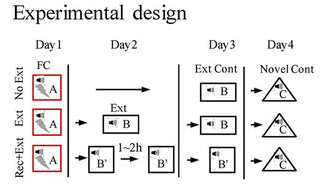
  1. Dnmt3a expression was elevated in the dDG after extinction training followed by a brief memory retrieval (Rec+Ext), which was associated with the absence of fear renewal when tested in an altered context.
  2. Increasing Dnmt3a expression in the dDG using AAV [recombinant adeno-associated virus] expression led to the prevention of fear renewal following a standard extinction training protocol. 
  3. Knockdown of Dnmt3a in the dDG using CRISPR/Cas9 resulted in fear renewal following Rec+Ext protocol.
  4. Renewal of remote fear memory can be prevented using the Rec+Ext protocol.
  5. The absence of renewal was concurrent with an elevated Dnmt3a level.

Current exposure therapy, although effective in many patients, suffers from the inability to generalize its efficacy over time, or is limited by the potential return of adverse memory in the new/novel contexts. These limitations are caused by the context-dependent nature of extinction which is widely viewed as the biological basis of exposure therapy.

Achieving a context-independent extinction may significantly reduce fear renewal to improve the efficacy of exposure therapy. Our current study suggests that the effectiveness of these approaches, and ultimately the occurrence of fear renewal, is determined by the level of Dnmt3a after extinction training, especially in the dDG.

There are two potential mechanisms underlying extinction, one is erasure or updating of the formed memory, and the other is the formation of a new extinction memory which suppresses or competes with the existing memory in a context-dependent manner. While most studies favor the suppression mechanism in the adult, limited studies do suggest that erasure occurs in the immature animals.

We propose that if Dnmt3a level is elevated with extinction training (such as with Rec+Ext protocol), modification to the existing memory occurs and as a consequence extinction does not act as a separate mechanism or form a new memory; but if Dnmt3a level is unaltered with extinction training, a separate extinction memory is formed which acts to suppress or compete with the existing memory.”


The relevant difference between humans and lab rats is that we can ourselves individually change our responses to experiential causes of ongoing adverse effects. Standard methodologies can only apply external treatments such as exposure therapy and manipulating Dnmt3a levels.

https://www.nature.com/articles/s41598-018-23533-w “Dnmt3a in the dorsal dentate gyrus is a key regulator of fear renewal”

The purpose of epigenetic mechanisms

The concluding remarks of this 2018 Chinese review were:

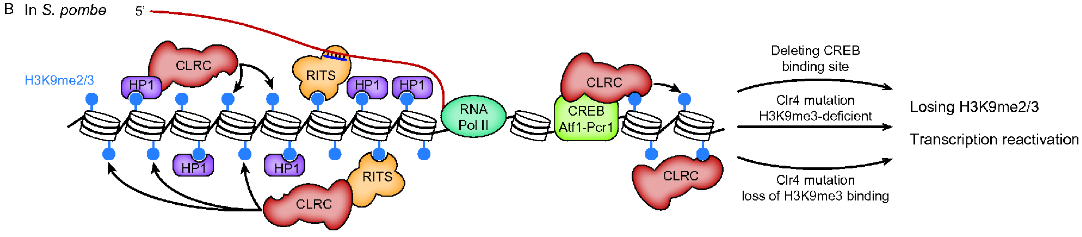
“Using heterochromatin as a model, we have reviewed here the mechanisms behind the establishment and maintenance of silent chromatin domains. We conclude that almost every component of the chromatin environment, including DNA elements, RNAs, histones and other chromatin proteins, plays a role in the process of shaping and maintaining epigenetic states.

Epigenetic mechanisms have evolved..to solve the problem of orchestrating the differentiation of cells with the same genome. Just as any stable system must preserve some degree of flexibility, crosstalk and feedback among all elements in the system are mechanistically required.

We emphasize that:

  1. Epigenetic information is inherited [from parent cell to child cell] in a relatively stable but imprecise fashion;
  2. Multiple cis and trans factors are involved in the maintenance of epigenetic information during mitosis; and
  3. The maintenance of a repressive epigenetic state requires both recruitment and self-reinforcement mechanisms.”


Studies I’ve curated in 2018 whose methodologies may have benefited from investigating multiple epigenetic mechanisms included:

Only DNA methylation:

Only microRNAs:

A review of studies that investigated DNA methylation and microRNAs but not histone modifications:

https://link.springer.com/article/10.1007/s11427-018-9276-7 “Recruitment and reinforcement: maintaining epigenetic silencing” (not freely available)

Genomic imprinting and growth

This 2018 UK paper reviewed genomic imprinting:

“Since their discovery nearly 30 years ago, imprinted genes have been a paradigm for exploring the epigenetic control of gene expression. Moreover, their roles in early life growth and placentation are undisputed.

However, it is becoming increasingly clear that imprinted gene function has a wider role in maternal physiology during reproduction – both by modulating fetal and placental endocrine products that signal to alter maternal energy homeostasis, and by altering maternal energetic set points, thus producing downstream actions on nutrient provisioning.”

“Imprinted genes in the conceptus produce products that alter maternal resource allocation by:

  1. altering the transport capacity of the placenta;
  2. increasing fetal demand for resources by their action on the intrinsic growth rate; and
  3. signalling to the mother by the production of fetal/placental hormones that modify maternal metabolism.”

Other studies/reviews I’ve curated that covered genomic imprinting are:

http://jeb.biologists.org/content/jexbio/221/Suppl_1/jeb164517.full.pdf “Genomic imprinting, growth and maternal-fetal interactions”


This post has somehow become a target for spammers, and I’ve disabled comments. Readers can comment on other posts and indicate that they want their comment to apply here, and I’ll re-enable comments.

How well do single-mother rodent studies inform us about human fathers?

Two items before getting to the review:

This 2018 Australian review subject was paternal intergenerational and transgenerational transmission of biological and behavioral phenotypes per this partial outline:

“Evidence for non-genetic inheritance of behavioral traits in human populations

  • Intergenerational inheritance modulating offspring phenotypes following paternal exposure to trauma
  • Epigenetic inheritance via the germline following paternal environmental exposures
  • Limitations of research on epigenetic inheritance in human populations

The transgenerational impact of stressful paternal environments

  • Impact of paternal stress on affective behaviors and HPA-axis regulation of progeny
  • Influence of paternal stress exposure on offspring cognition
  • Role of sperm-borne microRNAs in the epigenetic inheritance of stress

Sexually dimorphic aspects of paternal transgenerational epigenetic inheritance”

The review was comprehensive, and filled in the above outline with many details towards the goal of:

“This exciting new field of transgenerational epigenomics will facilitate the development of novel strategies to predict, prevent and treat negative epigenetic consequences on offspring health, and psychiatric disorders in particular.”

The reviewers also demonstrated that current intergenerational and transgenerational research paradigms exclude a father’s child care behavior.


The fact that studies use rat and mouse species where fathers don’t naturally provide care for their offspring has warped the translation of findings to humans. The underlying question every animal study must answer is: how can its information be used to help humans? I asked in A limited study of parental transmission of anxiety/stress-reactive traits:

“How did parental behavioral transmission of behavioral traits and epigenetic changes become a subject not worth investigating? These traits and effects can be seen everyday in real-life human interactions, and in every human’s physiology.

Who among us doesn’t still have biological and behavioral consequences from our experiences of our father’s child care actions and inactions? Why can’t researchers and sponsors investigate these back to their sources that may include grandparents and great-grandparents?

Such efforts weren’t apparent in the review’s 116 cited references that included:

The reviewer in the latter has been instrumental in excluding behavioral inheritance mechanisms from these research paradigms, leading to my questions:

  1. “If the experimental subjects had no more control over their behavioral stress-response effects than they had over their DNA methylation, histone modification, or microRNA stress-response effects, then why was such behavior not included in the “epigenetic mechanisms” term?
  2. How do behavioral inheritance mechanisms fall outside the “true epigenetic inheritance” term when behavioral stress-response effects are shown to be reliably transmitted generation after generation?
  3. Wouldn’t the cessation of behavioral inheritance mechanisms confirm their status by falsifiability as was similarly done with studies such as the 1995 Adoption reverses the long-term impairment in glucocorticoid feedback induced by prenatal stress?”

Translating rodent studies into human mothers’ behavioral transmission of biological and behavioral phenotypes isn’t hampered by the studied species’ traits as it is for human fathers. But sponsors have to have the guts to support human research that may not produce politically-correct findings.


http://www.translatingtime.org provides an inter-species comparative timeline. For example, an input of:

  • Species 1: Human
  • Process: Lifespan
  • Location: Whole Organism
  • Days (post-conception): 270
  • Species 2: Mouse

produces a list of event predictions. Note how many significant events occur before humans are born at day 270, assuming everything goes right with our developmental processes! Also, the model predictions for humans end at post-conception day 979, three weeks short of when we celebrate our second birthday.

https://www.nature.com/articles/s41380-018-0039-z “Transgenerational epigenetic influences of paternal environmental exposures on brain function and predisposition to psychiatric disorders” (not freely available) Thanks to Dr. Shlomo Yeshurun for providing a full copy.

Dealing with big data in epigenetic studies

There’s been a long-standing need for tools and mathematical techniques which effectively deal with the large amount of data present in epigenetic studies. Complete experimental conditions and results aren’t accurately described when researchers fail to transform large sets of data into information.

This 2018 Baltimore review/promotional paper described an approach that promised to resolve the following data issues.

1. Epigenetic changes occur in many ways and areas, and they often aren’t isolated from each other:

“Fully characterizing the polymorphic and stochastic nature of DNA methylation requires specification of joint probability distributions of methylation patterns formed by sets of spatially coupled CpG sites.”

2. The absence of DNA methylation or gene expression provides signals that should be processed into information. A study of DNA methylation and age reported this situation as:

“Due to the methods applied in the present study, not all the effects of DNA methylation on gene expression could be detected; this limitation is also true for previously reported results.

The textbook case of DNA methylation regulating gene expression (the methylation of a promoter and silencing of a gene) remains undetected in many cases because in an array analysis, an unexpressed gene shows no signal that can be distinguished from background and is therefore typically omitted from the analysis.”

The current review described the problem as:

“These techniques assign zero probabilities to unobserved methylation patterns despite their biological plausibility, which results in underestimating the true biological heterogeneity of methylation patterns.”

3. A subset of the above is that unknown or random past causes and effects of epigenetic changes aren’t adequately modeled:

“We demonstrated..that the empirical approach to joint methylation analysis..does not perform well when dealing with highly stochastic methylation data.”


The paper’s approach is tailored for whole genome bisulfite sequencing (WGBS), the “gold-standard experimental technique for studying DNA methylation.” It’s named informME and is publicly available at https://github.com/GarrettJenkinson/informME.

https://bmcbioinformatics.biomedcentral.com/track/pdf/10.1186/s12859-018-2086-5 “An information-theoretic approach to the modeling and analysis of whole-genome bisulfite sequencing data”

This dietary supplement is better for depression symptoms than placebo

This 2018 Italy/UK meta-analysis subject was the use of dietary supplement acetyl-L-carnitine to treat depression symptoms:

“Deficiency of acetyl-L-carnitine (ALC) appears to play a role in the risk of developing depression, indicating dysregulation of fatty acids transport across the inner membrane of mitochondria. However, the data regarding ALC supplementation in humans are limited. We thus conducted a systematic review and meta-analysis investigating the effect of ALC on depressive symptoms across randomized controlled trials (RCTs).

Pooled data across nine RCTs (231 treated with ALC versus 216 treated with placebo and 20 no intervention) showed that ALC significantly reduced depressive symptoms.

In these nine RCTs, the majority of the studies used 3 grams of ALC as intervention.

In three RCTs comparing ALC versus antidepressants (162 for each group), ALC demonstrated similar effectiveness compared with established antidepressants [fluoxetine (Prozac), duloxetine (Cymbalta), amisulpride (Solian) respectively below] in reducing depressive symptoms. In these latter RCTs, the incidence of adverse effects was significantly lower in the ALC group [79%] than in the antidepressant group.

Subgroup analyses suggested that ALC was most efficacious in older adults. Future large scale trials are required to confirm/refute these findings.”

From the Methods section:

“Studies were excluded if:

  1. did not include humans;
  2. did not include a control group;
  3. did not use validated scales for assessing depression;
  4. did not report data at follow-up evaluation regarding tests assessing depression;
  5. included the use of ALC with another agent vs. placebo/no intervention.”

The Discussion section was informative regarding possible mechanisms of ALC affecting depression, pain, and linked symptoms. Several citations were of a review rather than of the original studies, however.


Research needs to proceed on to investigate therapies that address ultimate causes for depression and pain. Researchers and sponsors shouldn’t stop at just symptoms and symptom relief, notwithstanding the requirement from a statistical point of view for “future large scale trials.”

Here are other acetyl-L-carnitine topics I’ve curated:

https://journals.lww.com/psychosomaticmedicine/Citation/2018/02000/Acetyl_L_Carnitine_Supplementation_and_the.4.aspx “Acetyl-L-Carnitine Supplementation and the Treatment of Depressive Symptoms: A Systematic Review and Meta-Analysis” (not freely available)


This post has somehow become a target for spammers, and I’ve disabled comments. Readers can comment on other posts and indicate that they want their comment to apply here, and I’ll re-enable comments.

Placebo is better than these drugs

Consider this post a reblog of Neuroskeptic’s informative About that New Antidepressant Study.

“Here’s why the new study doesn’t tell us much new. The authors..conclude that “all antidepressants were more effective than placebo,” but the benefits compared to placebo were “mostly modest.” Using the Standardized Mean Difference (SMD) measure of effect size, Cipriani et al. found an effect of 0.30, on a scale where 0.2 is considered ‘small’ and 0.5 ‘medium.’

The thing is, “effective but only modestly” has been the established view on antidepressants for at least 10 years. Just to mention one prior study, the Turner et al. (2008) meta-analysis found the overall effect size of antidepressants to be a modest SMD=0.31 – almost exactly the same as the new estimate.”


From the comments section:

“I put his data in a Forest plot and ALL of the positive effect[s] by CBT [cognitive behavior therapy] could be explained by publication bias.

Paroxetine was developed in 1975 and FDA approved for MDD in 1992. It was 2017 before we discovered the true data behind suicides in these trials. That is 25 years. The order of SSRI approval is fluoxetine-> sertraline-> paroxetine-> citalopram-> escitalopram. We know from court cases and other efforts that the suicide data for the first three are false.

PhRMA never got serious about studying clinically meaningful subtypes of “depression” so most data in the meta-analysis just bear on a weak construct called “major depression.”

The reality is these drugs do not help depression much (if any) at all – their effect is to numb the emotions in most people.

The only thing worse than Paxil is Paxil withdrawal.”

Another review of the study, Rewarding the Companies That Cheated the Most in Antidepressant Trials, from which this post is titled, had these comments:

“Patients who take part in these drug trials have been on an antidepressant before the trial. They are then put on placebo for 10 days, a so-called washout. Then half the group, now in cold turkey wit[h]drawal, is now put back on a similar drug to what they had 10 days earlier, and the other group gets to continue their Cold turkey withdrawal.

The fact that these studies are just testing relief from abstinence symptoms by taking a similar drug, could explain why there is no effect in children and young adults.

Most people don’t realize that we are talking about statistical significance, and not clinical significance. The so-called significant difference between drug and placebo is approximately two points on the Hamilton depression scale. The difference has to be at least three for either patient or therapist to notice a difference.

According to this study (https://www.ncbi.nlm.nih.gov/pubmed/23357658), changes of three points or less on the HAM-D correspond to ratings of “no change” on clinician‐rated global symptom severity.

What this study has confirmed is that antidepressants can create a totally insignificant difference compared to a placebo pill. The placebo pill is often combined with attention and close follow up with a professional, and this has a very positive effect.”

Maternal obesity causes fetal liver damage

This 2018 US baboon study was on fetal effects from maternal obesity before and during pregnancy:

“Approximately 64% of women of childbearing age in the USA [are] overweight or obese. The baboon is a well-characterized animal model sharing many physiological, metabolic, and genetic characteristics with humans allowing direct translation of findings to human pregnancy.

Our study shows that fetal exposure to the MO [maternal obesity] intrauterine environment results in dysregulation of fetal hepatic genes central to metabolism.

These findings were further supported by identification of miRNAs that were inversely expressed with key genes in these pathways..suggest important early molecular mechanisms by which MO programs fetal hepatic lipid metabolism.

Future studies are required in MO post-natal offspring to determine the extent to which the fetal phenotype persists, and the degree to which this increases offspring risk of cardiometabolic disorders in later life.”


The study provided many measurements that may be relevant to humans. Other consequential measurements were missing that may have made the study’s findings even more applicable to humans:

  • No placental measurements other than weight. The organ through which the fetus received its nutrients, signaled its needs, modulated its growth rate, and developed its organs, was only measured by weight?
  • No other epigenetic analyses such as DNA methylation and histone modifications.

Were these omitted due to limited resources?

http://onlinelibrary.wiley.com/doi/10.1113/JP275422/pdf “Primate fetal hepatic responses to maternal obesity: epigenetic signalling pathways and lipid accumulation”