Experience-induced transgenerational programming of neuronal structure and functions

The second paper of Transgenerational epigenetic inheritance week was a 2017 German/Israeli review focused on:

“The inter- and transgenerational effects of stress experience prior to and during gestation..the concept of stress-induced (re-)programming in more detail by highlighting epigenetic mechanisms and particularly those affecting the development of monoaminergic transmitter systems, which constitute the brain’s reward system.

We offer some perspectives on the development of protective and therapeutic interventions in cognitive and emotional disturbances resulting from preconception and prenatal stress.”

The reviewers noted that human studies have difficulties predicting adult responses to stress that are based on gene expression and early life experience. Clinical studies that experimentally manipulate the type, level and timing of the stressful exposure aren’t possible. Clinical studies are also predicated on the symptoms being recognized as disorders and/or diseases.

The researchers noted difficulties in human interventions and treatments. Before and during pregnancy, and perinatal periods are where stress effects are largest. But current human research hasn’t gathered sufficient findings to develop practical guidelines for early intervention programs.


I’m not persuaded by arguments that cite the difficulties of performing human research on transgenerational epigenetic inheritance. There are overwhelming numbers of people who have obvious stress symptoms: these didn’t develop in a vacuum.

Researchers:

  • Design human studies to test what’s known from transgenerational epigenetic inheritance animal studies that will include documenting the subjects’ detailed histories with sufficient biometric samples and data obtained from their lineage.
  • Induce pregnant subjects to at least temporarily avoid what’s harmful for them and/or the offspring, in favor of what’s beneficial.
  • Document the subjects’ actions with history and samples.

I acknowledge that economic incentives may not be enough to get people to participate. I’m familiar with a juvenile sickle-cell study that didn’t get enough subjects despite offering free transportation and hundreds of dollars to the caregivers per visit. The main problem seemed to be that the additional income would be reported and threaten the caregivers’ welfare benefits.

Stop whining that your jobs are difficult, researchers. Society doesn’t owe you a job. EARN IT – get yourself and the people in your organization motivated to advance science!

http://www.sciencedirect.com/science/article/pii/S014976341630731X “Experience-induced transgenerational (re-)programming of neuronal structure and functions: Impact of stress prior and during pregnancy” (not freely available)

Transgenerational effects of early environmental insults on aging and disease

The first paper of Transgenerational epigenetic inheritance week was a 2017 Canadian/Netherlands review that’s organized as follows:

“First, we address mechanisms of developmental and transgenerational programming of disease and inheritance. Second, we discuss experimental and clinical findings linking early environmental determinants to adverse aging trajectories in association with possible parental contributions and sex-specific effects. Third, we outline the main mechanisms of age-related functional decline and suggest potential interventions to reverse negative effects of transgenerational programming.”

A transgenerational phenotype was defined as an epigenetic modification that was maintained at least either to F2 grandchildren in the paternal lineage, or to F3 great-grandchildren in the maternal lineage.

The reviewers noted that mechanisms of transgenerational programming are complex and multivariate.  Severity, timing, and type of exposure; lineage of transmission; germ cell exposure; and gender of an organism were the main factors that may determine consequences. Mechanisms reviewed were:

  1. Parental exposure to an adverse environment;
  2. Altered maternal behavior and care of offspring; and
  3. Experience-dependent modifications of the epigenome.

There was a long list of diseases and impaired functionalities that were consequences of ancestral experiences and exposures. Most studies were of animals, but a few were human, such as those done on effects of extended power outages during a Quebec ice storm of January 1998.


One intervention that was effective in reversing a transgenerational phenotype induced by deficient rodent maternal care was to place pups with a caring foster female soon after birth. It’s probably unacceptable in human societies to preemptively recognize all poor-care human mothers and remove the infant to caring foster mothers. But researchers could probably find enough instances to develop studies of the effectiveness of such placements in reversing a transgenerational phenotype.

The review didn’t have suggestions for reversing human transgenerational phenotypes, just “potential interventions to reverse negative effects of transgenerational programming.” Interventions suggested for humans – exercise, enriched lifestyle, cognitive training, dietary regimens, and expressive art and writing therapies – only reduced impacts of transgenerational epigenetic effects.

Tricky wording of “reverse negative effects of transgenerational programming” showed that research paradigms weren’t aimed at resolving causes. The review was insufficient for the same reasons mentioned in How one person’s paradigms regarding stress and epigenetics impedes relevant research, prompting my same comment:

Aren’t people interested in human treatments of originating causes so that their various symptoms don’t keep bubbling up? Why wouldn’t research paradigms be aligned accordingly?

When reversals of human phenotypes aren’t researched, problems may compound by being transmitted to the next generations.

http://www.sciencedirect.com/science/article/pii/S014976341630714X “Transgenerational effects of early environmental insults on aging and disease incidence” (not freely available)

It’s transgenerational epigenetic inheritance week!

Transgenerational epigenetic inheritance is a subject whose time has come. This week I sequentially curated two 2017 reviews and two 2016 studies of the subject, and ended with a meta-analysis of human preventive treatments:


It’s the opposite of advancing science for those in the funding chain to give lip service to the subject, and then create an atmosphere where proposals to extend experiments to subsequent generations to study possible transgenerational epigenetic effects are neither encouraged nor funded.

Epigenetic effects of early life stress exposure

This 2017 Netherlands review subject was the lasting epigenetic effects of early-life stress:

“Exposure to stress during critical periods in development can have severe long-term consequences.

One of the key stress response systems mediating these long-term effects of stress is the hypothalamic-pituitary-adrenal (HPA) axis.

Early life stress (ELS) exposure has been reported to have numerous consequences on HPA-axis function in adulthood.

ELS is able to “imprint” or “program” an organism’s neuroendocrine, neural and behavioral responses to stress. Research focuses along two complementary lines:

  1. ELS during critical stages in brain maturation may disrupt specific developmental processes (by altered neurotransmitter exposure, gene transcription, or neuronal differentiation), leading to aberrant neural circuit function throughout life.
  2. ELS may induce modifications of the epigenome which lastingly affect brain function.

These epigenetic modifications are inducible, stable, and yet reversible, constituting an important emerging mechanism by which transient environmental stimuli can induce persistent changes in gene expression and ultimately behavior.”


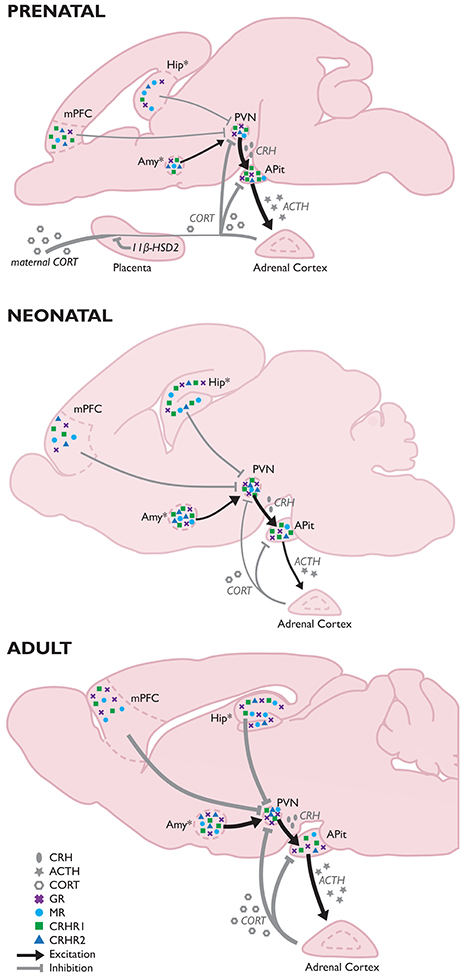
In early life, the lower brain and limbic system brain structures are more developed and dominant, whereas the cerebrum is less developed (use the above rodent graphic as a rough guide). Stress and pain generally have a greater impact on a fetus than an infant, and a greater impact on an infant than an adult.

The reviewers cited 50+ studies from years 2000-2015 in the “Early Life Stress Effects in a “Matching” Stressful Adult Environment” section to argue for the match / mismatch theory:

“Encountering ELS prepares an organism for similar (“matching”) adversities during adulthood, while a mismatching environment results in an increased susceptibility to psychopathology, indicating that ELS can exert either beneficial or disadvantageous effects depending on the environmental context.

Initial evidence for HPA-axis hypo-reactivity is observed for early social deprivation, potentially reflecting the abnormal HPA-axis function as observed in post-traumatic stress disorder.

Experiencing additional (chronic) stress in adulthood seems to normalize these alterations in HPA-axis function, supporting the match / mismatch theory.”

Evidence for this theory was contrasted with the allostatic load theory presented in How one person’s paradigms regarding stress and epigenetics impedes relevant research.


The review mainly cited evidence from rodent studies that mismatched reactions in adulthood may be consequences of early-life events. These events:

“Imprint or program an organism’s neuroendocrine, neural and behavioral responses..leading to aberrant neural circuit function throughout life..which lastingly affect brain function.”

Taking this research to a personal level:

  • Have you had feelings that you were unsafe, although your environment was objectively safe?
  • Have you felt uneasy when people are nice to you?
  • Have you felt anxious when someone pays attention to you, even after you’ve acted to gain their attention?

Mismatched human feelings are one form of mismatched reactions. These may be consequences of early-life experiences, and indicators of personal truths.

If researchers can let go of their biases and Advance science by including emotion in research, they may find that human subjects’ feelings produce better evidence for what actually happened during the subjects’ early lives than do standard scientific methods of:

Incorporating feeling evidence may bring researchers and each individual closer to discovering the major insults that knocked their development processes out of normally robust pathways and/or induced “persistent changes in gene expression and ultimately behavior.”

https://www.frontiersin.org/articles/10.3389/fncel.2017.00087/full “Modulation of the Hypothalamic-Pituitary-Adrenal Axis by Early Life Stress Exposure”


I came across this review as a result of it being cited in http://www.sciencedirect.com/science/article/pii/S1084952117302884 “Long-term effects of early environment on the brain: Lesson from rodent models” (not freely available)

Epigenetic similarities between placental and cancer cells

This 2017 New Zealand review compared and contrasted epigenetic evidence from placental and cancer research:

“Placental and cancer cells are globally hypomethylated and share an epigenetic phenomenon that is not well understood – they fail to silence repetitive DNA sequences (retrotransposons) that are silenced (methylated) in healthy somatic cells.

In the placenta, hypomethylation of retrotransposons has facilitated the evolution of new genes essential for placental function. In cancer, hypomethylation is thought to contribute to activation of oncogenes, genomic instability, and retrotransposon unsilencing; the latter, we postulate, is possibly the most important consequence.

Activation of placental retrotransposon-derived genes in cancer underpins our hypothesis that hypomethylation of these genes drives cancer cell invasion.”

http://onlinelibrary.wiley.com/doi/10.1002/bies.201700091/abstract “The Genes of Life and Death: A Potential Role for Placental-Specific Genes in Cancer” (not freely available)


The review cited a 2014 study from the same research group that covered some of the same points and is freely available:

http://journals.plos.org/plosone/article?id=10.1371/journal.pone.0095840 “Retrotransposon Hypomethylation in Melanoma and Expression of a Placenta-Specific Gene”

Epigenetic stress effects in preterm infants

This 2017 Italian review selected 9 human studies on the epigenetic effects of:

“One of the major adverse events in human development. Preterm infants are hospitalized in the Neonatal Intensive Care Unit where they are exposed to life-saving yet pain-inducing procedures and to protective care.”

Highlights of the referenced studies included:

  • “Early exposure to adverse events during the third trimester of pregnancy is capable to alter the epigenetic status of imprinted and placenta-related genes which have relevant implications for fetal development and preterm infants’ HPA [hypothalamic–pituitary–adrenal] stress reactivity during infancy.”
  • “There was an association between DNAm [DNA methylation] and white matter tract tissue integrity and shape inferred from dMRI [diffusion MRI], suggesting that epigenetic variation may contribute to the cerebral phenotype of preterm birth.”

Limitations of the referenced studies included:

  • “A multiple sampling design that includes parental samples, placental tissue, cord blood and extends across the life-course would be required to investigate the relative contributions of in utero and postnatal exposures to changes in DNAm, and the extent to which preterm birth leaves a legacy on the methylome.”
  • Saliva, blood, and other tissues’ DNA methylation may not produce valid links to brain tissue DNA methylation of the same gene, which may hamper conclusive inferences about behavior, etc.

http://www.sciencedirect.com/science/article/pii/S0149763417302117 “Preterm Behavioral Epigenetics: A systematic review” (not freely available)

http://www.nature.com/tp/journal/v6/n1/full/tp2015210a.html “Epigenomic profiling of preterm infants reveals DNA methylation differences at sites associated with neural function” (one of the studies selected, quoted above)

On Primal Therapy with Drs. Art and France Janov

Experiential feeling therapy addressing the pain of the lack of love.

Genetic imprinting, sleep, and parent-offspring conflict

This 2016 Italian review subject was the interplay of genetic imprinting and sleep regulation:

“Sleep results from the synergism between at least two major processes: a homeostatic regulatory mechanism that depends on the accumulation of the sleep drive during wakefulness, and a circadian self-sustained mechanism that sets the time for sleeping and waking throughout the 24-hour daily cycle.

REM sleep apparently contravenes the restorative aspects of sleep; however, the function of this ‘paradoxical’ state remains unknown. Although REM sleep may serve important functions, a lack of REM sleep has no major consequences for survival in humans; however, severe detrimental effects have been observed in rats.

Opposite imprinting defects at chromosome 15q11–13 are responsible for opposite sleep phenotypes as well as opposite neurodevelopmental abnormalities, namely the Prader-Willi syndrome (PWS) and the Angelman syndrome (AS). Whilst the PWS is due to loss of paternal expression of alleles, the AS is due to loss of maternal expression.

Maternal additions or paternal deletions of alleles at chromosome 15q11–13 are characterized by temperature control abnormalities, excessive sleepiness, and specific sleep architecture changes, particularly REM sleep deficits. Conversely, paternal additions or maternal deletions at chromosome 15q11–13 are characterized by reductions in sleep and frequent and prolonged night wakings.

The ‘genomic imprinting hypothesis of sleep’ remains in its infancy, and several aspects require attention and further investigation.”

http://journals.plos.org/plosgenetics/article?id=10.1371/journal.pgen.1006004 “Genomic Imprinting: A New Epigenetic Perspective of Sleep Regulation”


A commenter to the review referenced a 2014 study Troubled sleep: night waking, breastfeeding, and parent–offspring conflict that received several reactions, including one by the same commenter. Here are a few quotes from the study author’s consolidated response:

“‘Troubled sleep’ had two major purposes. The first was to draw attention to the oppositely perturbed sleep of infants with PWS and AS and explore its evolutionary implications. The involvement of imprinted genes suggests that infant sleep has been subject to antagonistic selection on genes of maternal and paternal origin with genes of maternal origin favoring less disrupted sleep.

My second major purpose was a critique of the idea that children would be happier, healthier and better-adjusted if we could only return to natural methods of child care. This way of thinking is often accompanied by a belief that modern practices put children at risk of irrevocable harm.

The truth of such claims is ultimately an empirical question, but the claims are sometimes presented as if they had the imprimatur of evolutionary biology. This appeal to scientific authority often seems to misrepresent what evolutionary theory predicts: that which evolves is not necessarily that which is healthy.

Why should pregnancy not be more efficient and more robust than other physiological systems, rather than less? Crucial checks, balances and feedback controls are lacking in the shared physiology of the maternal–fetal unit.

Infant sleep may similarly lack the exquisite organization of systems without evolutionary conflict. Postnatal development, like prenatal development, is subject to difficulties of evolutionarily credible communication between mothers and offspring.”

The author addressed comments related to attachment theory:

“Infants are classified as having insecure-resistant attachment if they maintain close proximity to their mother after a brief separation while expressing negative emotions and exhibiting contradictory behaviors that seem to both encourage and resist interaction. By contrast, infants are classified as having insecure-avoidant attachment if they do not express negative emotion and avoid contact with their mother after reunion.

Insecure-avoidant and insecure-resistant behaviors might be considered antithetic accommodations of infants to less responsive mothers; the former associated with reduced demands on maternal attention, the latter with increased demands. A parallel pattern is seen in effects on maternal sleep. Insecure-avoidant infants wake their mothers less frequently, and insecure-resistant infants more frequently, than securely attached infants.

Parent–child interactions are transformed once children can speak. Infants with more fragmented sleep at 6 months had less language at 18 and 30 months.

Infants with AS have unconsolidated sleep and never learn to speak. The absence of language in the absence of expression of one or more MEGs [maternally expressed imprinted genes] is compatible with a hypothesis in which earlier development of language reduces infant demands on mothers.”

Regarding cultural differences:

“China, Taiwan and Hong Kong have both high rates of bed-sharing and high rates of problematic sleep compared with western countries. Within this grouping, however, more children sleep in their own room but parents report fewer sleep problems in Hong Kong than in either China or Taiwan.

Clearly, cultural differences are significant, and the causes of this variation should be investigated, but the differences cannot be summarized simply as ‘west is worst’.

The fitness [genetic rather than physical fitness] gain to mothers of an extra child and the benefits for infants of longer IBIs [interbirth intervals] are substantial. These selective forces are unlikely to be orders of magnitude weaker than the advantages of lactase persistence, yet the selective forces associated with dairying have been sufficient to result in adaptive genetic differentiation among populations.

The possibility of gene–culture coevolution should not be discounted for behaviors associated with infant-care practices.”

Regarding a mismatch between modern and ancestral environments:

“I remain skeptical of a tendency to ascribe most modern woes to incongruence between our evolved nature and western cultural practices. We did not evolve to be happy or healthy but to leave genetic descendants, and an undue emphasis on mismatch risks conflating health and fitness.

McKenna [a commenter] writes ‘It isn’t really nice nor maybe even possible to fool mother nature.’ Here I disagree. Our genetic adaptations often try to fool us into doing things that enhance fitness at costs to our happiness.

Our genes do not care about us and we should have no compunction about fooling them to deliver benefits without serving their ends. Contraception, to take one obvious example, allows those who choose childlessness to enjoy the pleasures of sexual activity without the fitness-enhancing risk of conception.

Night waking evolved in environments in which there were strong fitness costs from short IBIs and in which parents lacked artificial means of birth-spacing. If night waking evolved because it prolonged IBIs, then it may no longer serve the ends for which it evolved.

Nevertheless, optimal infant development might continue to depend on frequent night feeds as part of our ingrained evolutionary heritage.

It could also be argued that when night waking is not reinforced by feeding, and infants sleep through the night, then conflict within their genomes subsides. Infants would then gain the benefit of unfragmented sleep without the pleiotropic costs of intragenomic conflict. Plausible arguments could be presented for either hypothesis and a choice between them must await discriminating evidence.”


Commenters on the 2014 study also said:

[Crespi] The profound implications of Haig’s insights into the roles of evolutionary conflicts in fetal, infant and maternal health are matched only by the remarkable absence of understanding, appreciation or application of such evolutionary principles among the research and clinical medical communities, or the general public.

[Wilkins] A mutation may be selected for its effect on the trait that is the basis of the conflict, but that mutation also likely affects other traits. In general, we expect that these pleiotropic effects to be deleterious: conflict over one trait can actually drive other traits to be less adapted. Natural selection does not necessarily guarantee positive health outcomes.

[McNamara] Assuming that AS/REM is differentially influenced by genes of paternal origin then both REM properties and REM-associated awakenings can be better explained by mechanisms of genomic conflict than by traditional claims that REM functions as an anti-predator ‘sentinel’ for the sleeping organism.

[Hinde] Given this context of simultaneous coordination and conflict between mother and infant, distinguishing honest signals of infant need from self-interested, care-extracting signals poses a challenge.

A limited study of parental transmission of anxiety/stress-reactive traits

BehavioralTraitsThis 2016 New York rodent study found:

“Parental behavioural traits can be transmitted by non-genetic mechanisms to the offspring.

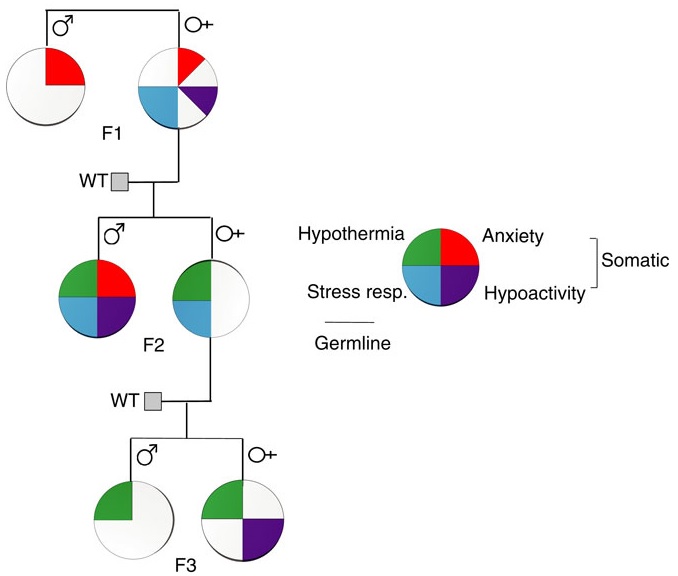
We show that four anxiety/stress-reactive traits are transmitted via independent iterative-somatic and gametic epigenetic mechanisms across multiple generations.

As the individual traits/pathways each have their own generation-dependent penetrance and gender specificity, the resulting cumulative phenotype is pleiotropic. In the context of genetic diseases, it is typically assumed that this phenomenon arises from individual differences in vulnerability to the various effects of the causative gene. However, the work presented here reveals that pleiotropy can be produced by the variable distribution and segregated transmission of behavioural traits.”


A primary focus was how anxiety was transmitted from parents to offspring:

“The iterative propagation of the male-specific anxiety-like behaviour is most compatible with a model in which proinflammatory state is propagated from H [serotonin1A receptor heterozygote] F0 to F1 [children] females and in which the proinflammatory state is acquired by F1 males from their H mothers, and then by F2 [grandchildren] males from their F1 mothers.

We propose that increased levels of gestational MIP-1β [macrophage inflammatory protein 1β] in H and F1 mothers, together with additional proinflammatory cytokines and bioactive proteins, are required to produce immune system activation in their newborn offspring, which in turn promotes the development of the anxiety-like phenotype in males.

In particular, increase in the number of monocytes and their transmigration to the brain parenchyma in F1 and F2 males could be central to the development of anxiety.”


The researchers studied transmission of behavioral traits and epigenetic changes. Due to my quick take on the study title – “Behavioural traits propagate across generations..” – I had expectations of this study that weren’t born out. What could the researchers have done versus what they did?

The study design removed prenatal and postnatal parental behavioral transmission of behavioral traits and epigenetic changes as each generation’s embryos were implanted into foster wild-type (WT) mothers.

The study design substituted the foster mothers’ prenatal and postnatal parental environments for the biological parents’ environments. So we didn’t find out, for example:

  • To what extents the overly stress-reactive F1 female children’s prenatal environments and postnatal behaviors induced behaviors and/or epigenetic changes in their children; and
  • Whether the F2 grandchildren’s parental behaviors subsequently induced behaviors and/or epigenetic changes in the F3 great-grandchildren.

How did the study meet the overall goal of rodent studies: to help humans?

    1. Only a minority of humans experienced an early-life environment that included primary caregivers other than our biological parents.
    2. Very, very few of us experienced a prenatal environment other than our biological mothers.
    3. The study’s thorough removal of parental behavior was an outstanding methodology to confirm by falsifiability whether parental behavior was both an intergenerational and transgenerational epigenetic inheritance mechanism.
    4. Maybe the researchers filled in some gaps in previous rodent studies, such as determining what is or isn’t a “true transgenerational mechanism.”

As an example of a rodent study that more closely approximated human conditions, the behavior of a mother whose DNA was epigenetically changed by stress induced the same epigenetic changes to her child’s DNA when her child was stressed per One way that mothers cause fear and emotional trauma in their infants:

“Our results provide clues to understanding transmission of specific fears across generations and its dependence upon maternal induction of pups’ stress response paired with the cue to induce amygdala-dependent learning plasticity.”


How did parental behavioral transmission of behavioral traits and epigenetic changes become a subject not worth investigating? These traits and effects can be seen everyday in real-life human interactions, and in every human’s physiology.

But when investigating human correlates with behavioral epigenetic changes of rodents in the laboratory, parental behavioral transmission of behavioral traits is often treated the way this study treated it: as a confounder.

I doubt that people who have reached some degree of honesty about their early lives and concomitant empathy for others would agree with this prioritization. The papers of Transgenerational epigenetic inheritance week show the spectrum of opportunities to advance science that were intentionally missed.

http://www.nature.com/ncomms/2016/160513/ncomms11492/full/ncomms11492.html “Behavioural traits propagate across generations via segregated iterative-somatic and gametic epigenetic mechanisms”

A study of genetic imprinting and neurodevelopmental disorders

This 2016 UK human study assessed the roles of genetic imprinting on diseases that may originate from a certain interval on chromosome 15:

“The 15q11.2-q13.3 region contains a cluster of imprinted genes, which are expressed from one parental allele only as a consequence of germline epigenetic events.

The importance of epigenetic status of duplications at this interval was further underlined by analysis of a number of families. Duplications in two unaffected mothers had a DNA-methylation pattern indicative of being paternally derived, whereas their offspring, who possessed a maternally derived duplication, suffered from psychotic illness.

We clearly implicate 15q11.2-q13.3 interstitial duplications of paternal origin in the aetiology of DD [developmental delay], but do not find them at increased rates in SZ [schizophrenia], which is significantly associated only with duplications of maternal origin.

This study refines the distinct roles of maternal and paternal duplications at 15q11.2-q13.3, underlining the critical importance of maternally active imprinted genes in the contribution to the incidence of psychotic illness.”

The researchers analyzed other studies for better estimates of paternal involvement:

“We show for the first time that paternal duplications are pathogenic. One reason why paternal duplications have been regarded as non-pathogenic in the past is their rare occurrence in patients. Here we demonstrate that they are also rare in the general population as a whole.

Paternal duplications should be less efficiently eliminated from the population by negative selection pressure, due to their lower penetrance for neurodevelopmental disorders. Secondly, some maternal duplications will change to paternal when transmitted from male carriers.

We now suggest one further explanation for their rarity: male patients with SZ and other neurodevelopmental disorders have lower fecundity. Men suffering with SZ have only half the number of offspring compared to women with SZ.”


I would have liked further discussion of the “germline epigenetic events” that apparently contribute to the studied problems. These epigenetic abnormalities may have the potential to be prevented or treated, or at least used as early biomarkers.

The reviewers instead focused on:

“This work will have tangible benefits for patients with 15q11.2-q13.3 duplications by aiding genetic counseling.”

http://journals.plos.org/plosgenetics/article?id=10.1371%2Fjournal.pgen.1005993 “Parental Origin of Interstitial Duplications at 15q11.2-q13.3 in Schizophrenia and Neurodevelopmental Disorders”

Does childhood trauma influence offspring’s birth characteristics?

This 2016 Swedish human study investigated the effects of one specific childhood trauma, parental death:

“Parental (G1) death during (G2) childhood predicts prematurity and lower birthweight in the offspring generation (G3). This response is dependent on G2 gender, G2 age at exposure and G3 parity, but not on G3 gender.

Offspring of women who lost their parent at the age of 0-2 or at the age of 13-17 had an increased risk for prematurity.

Offspring of men who lost a parent at ages 8-12 had an increased risk of prematurity.

For women exposed to a parent’s death at age 0-2, there was no significant deficit in their offspring’s birthweight in any parity class. For women exposed at later ages we observed a deficit in birthweight.

Among children whose fathers experienced parental loss..experiencing parental death at ages 8-12 in particular, or at ages 13-17, but not at ages 0-2 or 3-7, did predict having lighter offspring.”


The study design was unable to produce causal evidence for the putative intergenerational effects. An example of the limitations was:

“We had no information about behaviours and biological markers or genes.”

Its findings were best summarized as:

“Our study fails to refute the hypothesis that a male-line epigenetic mechanism exists which may be triggered by trauma during boys’ slow growth period.”

Still, the study had a firmer foundation than did A problematic study of oxytocin receptor gene methylation, childhood abuse, and psychiatric symptoms, which speciously produced politically-correct results from childhood trauma surveys of adults.

http://ije.oxfordjournals.org/content/early/2016/05/03/ije.dyw048.full “Does childhood trauma influence offspring’s birth characteristics?”

Lack of oxygen’s epigenetic effects

This 2016 Finnish review subject was epigenetic effects of hypoxia:

“Ever since the Cambrian period, oxygen availability has been in the center of energy metabolism. Hypoxia stabilizes expression of hypoxia-inducible transcription factor-1α (HIF-1α), which controls expression of hundreds of survival genes related to enhanced energy metabolism and autophagy.

There are several other signals, mostly related to stresses, which can increase expression of HIF factors and thus improve cellular survival. However, a chronic activation of HIF factors can have detrimental effects, e.g. stimulate cellular senescence and tissue fibrosis commonly enhanced in age-related diseases.

Stabilization of HIF-1α increases expression of histone lysine demethylases (KDM). Hypoxia-inducible KDMs support locally the gene transcription induced by HIF-1α, although they can also control genome-wide chromatin landscape, especially KDMs which demethylate H3K9 and H3K27 sites (repressive epigenetic marks).”

Gene areas where HIF-1α is involved include:

  • “angiogenesis
  • autophagy
  • glucose uptake
  • glycolytic enzymes
  • immune responses
  • embryonic development
  • tumorigenesis
  • generation of miRNAs.”

HIF-1a signaling

Figure 1 above was instructive in that the reviewers pointed out the lack of a feedback mechanism in HIF-1α signaling. A natural lack of feedback to the HIF-1α signaling source contributed to diseases such as:

  • “age-related macular degeneration
  • cancer progression
  • chronic kidney disease
  • cardiomyopathies
  • adipose tissue fibrosis
  • inflammation
  • detrimental effects which are linked to epigenetic changes.”

The point was similar to a study referenced in The PRice “equation” for individually evolving: Which equation describes your life? that:

“Evolution may preferentially mitigate damage to a biological system than reduce the source of this damage.”


This review subject has many interdependencies and timings within a complex network. Contexts are important:

“Cross-talk between NF-κB [nuclear factor kappa B] and HIF-1α in inflammation might be organized in cell type and context-dependent manner.

It seems that ROS [reactive oxygen species] affect HIF-1α signaling in a context-dependent manner.

Hypoxia stimulated expression of KDM3A and KDM4B genes in different cellular contexts. Given that KDM3A and KDM4B are the major histone demethylases which remove repressive H3K9 sites, their role as transcriptional cofactors seems to be important in activation of HIF-1α signaling. Members of KDM4 subfamily have a crucial role in DNA repair systems, although responses seem to be enzyme-specific and appear in a context-dependent manner.

Acute hypoxia can stimulate cell-cycle arrest but does not provoke cellular senescence in all contexts.”

It wasn’t mentioned that hypoxia evokes cellular Adaptations to stress encourage mutations in a DNA area that causes diseases.

The review was tailored for the publishing journal Aging and Disease, and the subject was best summed up by:

“HIF-1α can control cellular fate in adult animals, either stimulating proliferation or triggering cellular senescence, by regulating the expression of different KDMs in a context-dependent manner.”


This review covered hypoxic conditions during human development that are clearly origins of many immediate and later-life diseases. However, cited remedies only addressed symptoms.

That these distant causes can no longer be addressed is a hidden assumption of research and treatment of effects of health problems. Aren’t such assumptions testable here in the current year?

http://www.aginganddisease.org/article/2016/2152-5250/ad-7-2-180.shtml “Hypoxia-Inducible Histone Lysine Demethylases: Impact on the Aging Process and Age-Related Diseases”

Using salivary microRNA to diagnose autism

This 2016 New York human study found:

“Measurement of salivary miRNA in this pilot study of subjects with mild ASD [autism spectrum disorder] demonstrated differential expression of 14 miRNAs that are:

  • expressed in the developing brain,
  • impact mRNAs related to brain development, and
  • correlate with neurodevelopmental measures of adaptive behavior.”

Some problems with current diagnostic methods for autism are:

“The first sign of ASD commonly recognized by pediatricians is a deficit in communication and language that does not manifest until 18–24 months of age.

The mean age of diagnosis for children with ASD is 3 years, and approximately half of these are false-positives.

Despite a substantial genetic component, no single gene variant accounts for >1 % of ASD incidence.

Nearly 2000 individual genes have been implicated in ASD, but none are specific to the disorder.”

Study limitations included:

“Aside from the sample size and cross-sectional nature of this pilot study, another limitation is the age of ASD and control subjects it describes (4–14 years) which are not representative of the target population in which ASD biomarkers would ideally be utilized (0–2 years). However, selecting a homogenous group of subjects with mild ASD (as measured by ADOS) that was well-established and diagnosed by a developmental specialist requires subjects with long-standing diagnoses.”


Understanding later-life consequences of disrupted neurodevelopment is critical for tracing symptoms back to their causes, as noted in Grokking an Adverse Childhood Experiences (ACE) score. I wonder how long it will take for researchers in other fields to stop wasting resources and do what this study did: focus on epigenetic biomarkers that have developmental origins.

http://bmcpediatr.biomedcentral.com/articles/10.1186/s12887-016-0586-x “Salivary miRNA profiles identify children with autism spectrum disorder, correlate with adaptive behavior, and implicate ASD candidate genes involved in neurodevelopment”

A one-sided review of stress

The subject of this 2016 Italian/New York review was the stress response:

“The stress response, involving the activation of the hypothalamic-pituitary-adrenocortical [HPA] axis and the consequent release of corticosteroid hormones, is indeed aimed at promoting metabolic, functional, and behavioral adaptations. However, behavioral stress is also associated with fast and long-lasting neurochemical, structural, and behavioral changes, leading to long-term remodeling of glutamate transmission, and increased susceptibility to neuropsychiatric disorders.

Of note, early-life events, both in utero and during the early postnatal life, trigger reprogramming of the stress response, which is often associated with loss of stress resilience and ensuing neurobehavioral (mal)adaptations.”


The reviewers’ intentional dismissal of the role of GABA in favor of the role of glutamate was a key point:

“The changes in neuronal excitability and synaptic plasticity induced by stress are the result of an imbalance of excitatory (glutamatergic) and inhibitory (GABAergic) transmission, leading to long-lasting (mal)adaptive functional modifications. Although both glutamate and GABA transmission are critically associated with stress-induced alteration of neuronal excitability, the present review will focus on the modulation of glutamate release and transmission induced by stress and glucocorticoids.”

No particular reason was given for this bias. I inferred from the review’s final sentence that the review’s sponsors and funding prompted this decision:

“In-depth studies of changes in glutamate transmission and dendrite remodeling induced by stress in early and late life will help to elucidate the biological underpinnings of the (mal)adaptive strategies the brain adopts to cope with environmental challenges in one’s life.”

The bias led to ignoring evidence for areas the reviewers posed as needing further research. An example of relevant research the reviewers failed to consider was the 2015 Northwestern University study I curated in A study that provided evidence for basic principles of Primal Therapy that found:

“In response to traumatic stress, some individuals, instead of activating the glutamate system to store memories, activate the extra-synaptic GABA system and form inaccessible traumatic memories.”

http://www.ncbi.nlm.nih.gov/pmc/articles/PMC4812483/ “Stress Response and Perinatal Reprogramming: Unraveling (Mal)adaptive Strategies”

Using an epigenetic clock with children

This 2015 UK human study by many of the coauthors of What’s the origin of the problem of being fat? applied the Horvath epigenetic clock method to the same UK mother-child pairs and a Danish cohort:

“There has been no investigation on prenatal and antenatal factors that affect AA [age acceleration] in children. It is possible that the detrimental consequences of a higher AA may accrue over time, initiating in childhood. Conversely, it could be postulated that having a positive AA during early life and childhood is developmentally advantageous. To reflect this, we could refer to AA as an epigenetic measure of development in children.

We found associations between AA and sex, birth weight, caesarean section delivery and several maternal characteristics, namely smoking in pregnancy, weight, BMI, selenium and cholesterol level.

Offspring of non-drinkers had higher AA on average at birth, but this appeared to resolve during childhood. Offspring of smokers had higher AA on average and this difference became larger during childhood and adolescence.

The lack of correlation between AA and several clinical variables may also indicate that AA reflects an ‘intrinsic’ aging rate that is independent of various aging factors.

The observation that the estimated genetic component of AA increased in older study participants may indicate that the AA measure is more biologically meaningful in adults rather than children, though alternatively it could be a reflection of a decreasing environmental influence on DNA methylation patterns over time.

This accords with our finding of strengthening within subject correlation over time, which suggests the period of rapid early life changes in methylation affects epigenetic age during development to a greater extent than adulthood changes in methylation.”


The heritability of age acceleration was analyzed:

“The heritability estimate from our study (h = 0.37) is lower than that reported Horvath (h = 1.0), which was based on a small number of cord blood samples from twin pairs. Both of these heritability estimates were based on relatively few samples. Future large scale studies will be needed to arrive at precise estimates of the heritability of AA in newborns and minors.

While our heritability estimate may seem low, empirical evidence has suggested that fitness related traits tend to have lower heritability than morphological traits because selection acts to purify deleterious genetic variation, and one might consider age accelerated residuals in the former category.”

Like the coauthors’ follow-on study, causality couldn’t be definitively determined:

“Assessing the causal relationship between exposures and AA (through Mendelian randomization) is underpowered in our current data.”


Epigenetic age acceleration at birth seemed to be overall “developmentally advantageous” for offspring of non-drinking mothers. That age acceleration continued for the offspring of smokers at the second and third measurement times (ages 7 and 15-17) seemed to have “detrimental consequences.” I’d guess that the methylation state of specific CpG sites would be more informative than the overall rate in these cases.

The point about “AA..is independent of various aging factors” was similar to one made in Using an epigenetic clock to distinguish cellular aging from senescence:

“Cellular ageing is distinct from cellular senescence and independent of DNA damage response and telomere length.”

The study was a step toward establishing the Horvath epigenetic clock for widespread usage. The Hannum method was also compared and contrasted.

http://hmg.oxfordjournals.org/content/25/1/191.full “Prenatal and early life influences on epigenetic age in children: a study of mother-offspring pairs from two cohort studies”