Epigenetic inheritance and microRNAs

This 2019 Canadian rodent study found:

“Folic acid (FA) supplementation mitigates sperm miRNA profiles transgenerationally following in utero paternal exposure to POPs [persistent organic pollutants]. Across the F1 – F4 generations, sperm miRNA profiles were less perturbed with POPs + FA compared to sperm from descendants of dams treated with POPs alone..and only in F1 sperm.

The POPs mixture represents the pollutant composition found in Ringed seal blubber of Northern Quebec which is a traditional food of Inuit people in that region.

F0 founder dams were gavaged with the POPs mixture corresponding to 500 µg PCBs/kg body weight or corn oil (CTRL) thrice weekly and were fed the AIN-93G diet containing either 2 mg/kg (1X) or 6 mg/kg (3X) of FA ad libitum. Treatments were only administered to F0 founder dams for 9 weeks in total; 5 weeks before mating to untreated males at postnatal day 90 and until parturition. Subsequent lineages, F1 through F4, were neither exposed to POPs nor 3X FA – instead they received 1X FA diet ad libitum.”


Folic acid’s mechanisms weren’t clear:

“The protective role of FA supplementation in the F1 sperm may be partly explained by its antioxidant activity if the miRNA changes are caused by oxidative stress induced by POPs exposure. If, however, the miRNA changes in POPs exposed sperm are due to an altered methylation capacity or dysregulated nucleotide synthesis or mutations, then the increased availability of methyl groups provided by FA supplementation may mitigate the POPs effect by supporting DNA repair through nucleotide synthesis. Additional studies of the interaction between POPs and FA are required.”

Epigenetic inheritance mechanisms were also unclear:

“It remains puzzling how environmentally perturbed paternal miRNAs can persist across multiple generations. To become heritable, parts of the sperm chromatin must escape reprogramming, leading to the possibility that sperm miRNA profiles are subsequently modified by environmental factors. There are clear examples of sperm DNA methylation that escape reprogramming and histones can be involved.”

The study may have produced more clarity had its design investigated DNA methylation as Epigenetic transgenerational inheritance extends to the great-great-grand offspring did. That study also had an intercross breeding scheme with the populations for the F1 – F3 generations before an outcross for the F4 generation because:

“An intercross within the exposure lineage population (with no sibling or cousin breeding to avoid inbreeding artifacts) provides the optimal phenotypes (i.e. pathology) and germline epigenetic alterations.”

Which breeding scheme do you think would more fairly represent the humans of this study? I’d guess that intercross would – if all Inuits eat Ringed seal blubber and have children with other Inuits.

https://academic.oup.com/eep/article/5/4/dvz024/5677505 “Folic acid supplementation reduces multigenerational sperm miRNA perturbation induced by in utero environmental contaminant exposure”

Using oxytocin receptor gene methylation to pursue an agenda

A pair of 2019 Virginia studies involved human mother/infant subjects:

“We show that OXTRm [oxytocin receptor gene DNA methylation] in infancy and its change is predicted by maternal engagement and reflective of behavioral temperament.”

https://www.ncbi.nlm.nih.gov/pmc/articles/PMC6795517 “Epigenetic dynamics in infancy and the impact of maternal engagement”

“Infants with higher OXTRm show enhanced responses to anger and fear and attenuated responses to happiness in right inferior frontal cortex, a region implicated in emotion processing through action-perception coupling.

Infant fNIRS [functional near-infrared spectroscopy] is limited to measuring responses from cerebral cortex. It is unknown whether OXTR is expressed in the cerebral cortex during prenatal and early postnatal human brain development.”

https://www.sciencedirect.com/science/article/pii/S187892931830207X “Epigenetic modification of the oxytocin receptor gene is associated with emotion processing in the infant brain”


Both studies had weak disclosures of limitations on their findings’ relevance and significance. The largest non-disclosed contrary finding was from the 2015 Early-life epigenetic regulation of the oxytocin receptor gene:

These results suggest that:

  • Blood Oxtr DNA methylation may reflect early experience of maternal care, and
  • Oxtr methylation across tissues is highly concordant for specific CpGs, but
  • Inferences across tissues are not supported for individual variation in Oxtr methylation.

That rat study found that blood OXTR methylation of 25 CpG sites couldn’t accurately predict the same 25 CpG sites’ OXTR methylation in each subject’s hippocampus, hypothalamus, and striatum (which includes the nucleus accumbens) brain areas. Without significant effects in these limbic system structures, there couldn’t be any associated behavioral effects.

But CpG site associations and correlations were deemed good in the two current studies because they cited:

“Recent work in prairie voles has found that both brain- and blood-derived OXTRm levels at these sites are negatively associated with gene expression in the brain and highly correlated with each other.”

https://www.sciencedirect.com/science/article/pii/S0306453018306103 “Early nurture epigenetically tunes the oxytocin receptor”

The 2018 prairie vole study – which included several of the same researchers as the two current studies – found four nucleus accumbens CpG sites that had high correlations to humans. Discarding one of these CpG sites allowed their statistics package to make a four-decimal place finding:

“The methylation state of the blood was also associated with the level of transcription in the brain at three of the four CpG sites..whole blood was capable of explaining 94.92% of the variance in Oxtr DNA methylation and 18.20% of the variance in Oxtr expression.”

Few limitations on the prairie vole study findings were disclosed. Like the two current studies, there wasn’t a limitation section that placed research findings into suitable contexts. So readers didn’t know researcher viewpoints on items such as:

  • What additional information showed that 3 of the 30+ million human CpGs accurately predicted specific brain OXTR methylation and expression from saliva OXTR methylation?
  • What additional information demonstrated how “measuring responses from cerebral cortex” although “it is unknown whether OXTR is expressed in the cerebral cortex” provided detailed and dependable estimates of limbic system CpG site OXTR methylation and expression?
  • Was the above 25-CpG study evidence considered?

Further contrast these three studies with a typical, four-point, 285-word limitation section of a study like Prenatal stress heightened adult chronic pain. The word “limit” appeared 6 times in that pain study, 3 times in the current fNIRS study, and 0 times in the current maternal engagement and cited prairie vole studies.

Frank interpretations of one’s own study findings to acknowledge limitations is one way researchers can address items upfront that will be questioned anyway. Such analyses also indicate a goal to advance science.

An out-of-date review of epigenetic transgenerational inheritance

This December 3, 2019, French review title was “Transgenerational Inheritance of Environmentally Induced Epigenetic Alterations during Mammalian Development”:

“We attempt to summarize our current knowledge about transgenerational inheritance of environmentally induced epigenetic changes. While the idea that information can be inherited between generations independently of DNA’s nucleotide sequence is not new, the outcome of recent studies provides a mechanistic foundation for the concept.

Systematic resetting of epigenetic marks between generations represents the largest hurdle to conceptualizing epigenetic inheritance. Our understanding of rates and causes of epimutations remains rudimentary.

Environmental exposure to toxicants could promote changes in germline cells at any developmental stage, with more dramatic effects being observed during embryonic germ cell reprogramming. Epigenetic factors and their heritability should be considered during disease risk assessment.”


This review showed an inexplicable lack of thorough research. 2017 was its latest citation of epigenetic transgenerational inheritance studies from Washington State University labs of Dr. Michael Skinner. I’ve curated six of the labs’ 2019 studies!

  1. Transgenerational diseases caused by great-grandmother DDT exposure;
  2. Another important transgenerational epigenetic inheritance study;
  3. The transgenerational impact of Roundup exposure;
  4. Epigenetic transgenerational inheritance mechanisms that lead to prostate disease;
  5. A transgenerational view of the rise in obesity; and
  6. Epigenetic transgenerational inheritance extends to the great-great-grand offspring.

This lack led to – among other items – equivocal statements where current definitive evidence could have been cited. This review was submitted on October 31, 2019, and all above studies were available.


The publisher provided insight into the peer review process via https://www.mdpi.com/2073-4409/8/12/1559/review_report:

  • Peer reviewer 1: “Taking into account that this is not my main area of expertise..Do the authors really believe in that?”
  • Peer reviewer 2 provided a one-paragraph non-review.
  • Peer reviewer 3: “The authors are missing a large sector of what types of environmental factors can influence methylation and do not acknowledge that other sources exist.”

Authors responded with changes or otherwise addressed peer reviewer comments.

https://www.mdpi.com/2073-4409/8/12/1559/htm “Transgenerational Inheritance of Environmentally Induced Epigenetic Alterations during Mammalian Development”

Prenatal stress heightened adult chronic pain

This 2019 McGill rodent study found:

Prenatal stress exacerbates pain after injury. Analysis of mRNA expression of genes related to epigenetic regulation and stress responses in the frontal cortex and hippocampus, brain structures implicated in chronic pain, showed distinct sex and region-specific patterns of dysregulation.

In general, mRNA expression was most frequently altered in the male hippocampus and effects of prenatal stress were more prevalent than effects of nerve injury. Recent studies investigating chronic pain-related pathology in the hippocampus in humans and in rodent models demonstrate functional abnormalities in the hippocampus, changes in associated behavior, and decreases in adult hippocampal neurogenesis.

The change in expression of epigenetic- and stress-related genes is not a consequence of nerve injury but rather precedes nerve injury, consistent with the hypothesis that it might play a causal role in modulating the phenotypic response to nerve injury. These findings demonstrate the impact of prenatal stress on behavioral sensitivity to a painful injury.

Decreased frontal mRNA expression of BDNF and BDNF IV in male offspring following neuropathic pain or prenatal stress respectively. Relative mRNA expression of other stress-related genes (GR17, FKBP5) and epigenetic-related genes (DNMTs, TETs, HDACs, MBDs, MeCP2) in male offspring.

A drastic decrease in expression of HDAC1 was observed in all groups compared to sham-control animals. CCI: chronic constriction injury.”


The study’s design was similar to the PRS (prenatal restraint stress) model, except that the PRS procedure covered gestational days 11 to 21 (birth):

“Prenatal stress was induced on Embryonic days 13 to 17 by restraining the pregnant dams in transparent cylinder with 5 mm water, under bright light exposure, 3 times per day for 45 min.”

None of the French, Italian, and Swiss PRS studies were cited.

The limitation section included:

  1. “Although our study shows significant changes in expression of epigenetic enzymes, it didn’t examine the impact of these changes on genes that are epigenetically regulated by this machinery or their involvement in intensifying pain responses.
  2. The current study is limited by the focus on changes in gene expression which do not necessarily correlate with changes in protein expression.
  3. Another limitation of this study is the inability to distinguish the direct effects of stress in utero vs. changes in the dam’s maternal behavior due to stress during pregnancy; cross-fostering studies are needed to address this issue.
  4. Functional experiments that involve up and down regulation of epigenetic enzymes in specific brain regions are required to establish a causal role for these processes in chronic pain.”

What do you think about possible human applicability of this study’s “effects of prenatal stress were more prevalent than effects of nerve injury” finding?

Are there any professional therapeutic frameworks that instruct trainees to recognize that if a person’s mother was stressed while pregnant, their prenatal experiences could cause more prevalent biological and behavioral effects than a recent injury?

https://www.sciencedirect.com/science/article/pii/S0166432819315219 “Prenatal maternal stress is associated with increased sensitivity to neuropathic pain and sex-specific changes in supraspinal mRNA expression of epigenetic- and stress-related genes in adulthood” (not freely available)

A review of fetal adverse events

This 2019 Australian review subject was fetal adversities:

“Adversity during the perinatal period is a significant risk factor for the development of neurodevelopmental disorders long after the causative event. Despite stemming from a variety of causes, perinatal compromise appears to have similar effects on the developing brain, thereby resulting in behavioural disorders of a similar nature.

These behavioural disorders occur in a sex‐dependent manner, with males affected more by externalizing behaviours such as attention deficit hyperactivity disorder (ADHD) and females by internalizing behaviours such as anxiety. The term ‘perinatal compromise’ serves as an umbrella term for intrauterine growth restriction, maternal immune activation, prenatal stress, early life stress, premature birth, placental dysfunction, and perinatal hypoxia.

The above conditions are associated with imbalanced excitatory-inhibitory pathways resulting from reduced GABAergic signalling. Methylation of the GAD1/GAD67 gene, which encodes the key glutamate‐to‐GABA synthesizing enzyme Glutamate Decarboxylase 1, resulting in increased levels of glutamate is one epigenetic mechanism that may account for a tendency towards excitation in disorders such as ADHD.

The posterior cerebellum’s role in higher executive functioning is becoming well established due to its connections with the prefrontal cortex, association cortices, and limbic system. It is now suggested that disruptions to cerebellar development, which can occur due to late gestation compromises such as preterm birth, can have a major impact on the region of the brain to which it projects.

Activation of the maternal hypothalamic-pituitary adrenal (HPA) axis and placental protection. Psychological stress is perceived by the maternal HPA axis, which stimulates cortisol release from the maternal adrenal gland.

High levels of maternal cortisol are normally prevented from reaching the fetus by the 11β-hydroxysteroid dehydrogenase 2 (HSD11B2) enzyme, which converts cortisol to the much less active cortisone. Under conditions of high maternal stress, this protective mechanism can be overwhelmed, with the gene encoding the enzyme becoming methylated, which reduces its expression allowing cortisol to cross the placenta and reach the fetus.”


The reviewers extrapolated many animal study findings to humans, although most of their own work was with guinea pigs. The “suggest” and “may” qualifiers were used often – 22 and 37 times, respectively. More frequent use of the “appears,” “hypothesize,” “propose,” and “possible” terms was justified.

As a result, many reviewed items such as the above graphic and caption should be viewed as hypothetical for humans rather than reflecting solid evidence from quality human studies.

The reviewers focused on the prenatal (before birth) period more than the perinatal (last trimester of pregnancy to one month after birth) period. There were fewer mentions of birth and early infancy adversities.

https://onlinelibrary.wiley.com/doi/abs/10.1111/jne.12814 “Perinatal compromise contributes to programming of GABAergic and Glutamatergic systems leading to long-term effects on offspring behaviour” (not freely available)

Epigenetic transgenerational inheritance extends to the great-great-grand offspring

This 2019 rodent study by the Washington State University labs of Dr. Michael Skinner continued to F4 generation great-great-grand offspring, and demonstrated that epigenetic inheritance mechanisms are similar to imprinted genes:

“Epigenetic transgenerational inheritance potentially impacts disease etiology, phenotypic variation, and evolution. An increasing number of environmental factors from nutrition to toxicants have been shown to promote the epigenetic transgenerational inheritance of disease.

Imprinted genes are a special class of genes since their DNA methylation patterns are unchanged over the generation and are not affected by the methylation erasure occurring early in development. The transgenerational epigenetic alterations in the germline appear to be permanently reprogrammed like imprinted genes, and appear protected from this DNA methylation erasure and reprogramming at fertilization in the subsequent generations. Similar to imprinted genes, the epigenetic transgenerational germline epimutations appear to have a methylation erasure in the primordial germ cells involving an epigenetic molecular memory.

Comparison of the transgenerational F3 generation, with the outcross to the F4 generation through the paternal or maternal lineages, allows an assessment of parent-of-origin transmission of disease or pathology. Observations provided examples of the following:

  1. Pathology that required combined contribution of both paternal and maternal alleles to promote disease [testis and ovarian disease];
  2. Pathology that is derived from the opposite sex allele such as father to daughter [kidney disease] or mother to son [prostate disease];
  3. Pathology that is derived from either parent-of-origin alleles independently [obesity];
  4. Pathology that is transmitted within the same sex, such as maternal to daughter [mammary tumor development]; and
  5. Pathology that is observed only following a specific parent-of-origin outcross [both F4 male obesity and F4 female kidney disease in the vinclozolin lineage].”

https://www.sciencedirect.com/science/article/pii/S0012160619303471 “Epigenetic transgenerational inheritance of parent-of-origin allelic transmission of outcross pathology and sperm epimutations”


This study showed that epigenetically inherited legacies extend to the fifth generation. Do any of us know our ancestors’ medical histories back to our great-great-grandparents?

Will toxicologists take their jobs seriously, catch up to current science, and investigate possible effects in at least the F3 generation that had no direct toxicant exposure?

Do genes or maternal environments shape fetal brains?

This 2019 Singapore human study used Diffusion Tensor Imaging on 5-to-17-day old infants to find:

“Our findings showed evidence for region-specific effects of genotype and GxE on individual differences in human fetal development of the hippocampus and amygdala. Gene x Environment models outcompeted models containing genotype or environment only, to best explain the majority of measures but some, especially of the amygdaloid microstructure, were best explained by genotype only.

Models including DNA methylation measured in the neonate umbilical cords outcompeted the Gene and Gene x Environment models for the majority of amygdaloid measures and minority of hippocampal measures. The fact that methylation models outcompeted gene x environment models in many instances is compatible with the idea that DNA methylation is a product of GxE.

A genome-wide association study of SNP [single nucleotide polymorphism] interactions with the prenatal environments (GxE) yielded genome wide significance for 13 gene x environment models. The majority (10) explained hippocampal measures in interaction with prenatal maternal mental health and SES [socioeconomic status]. The three genome-wide significant models predicting amygdaloid measures, explained right amygdala volume in interaction with maternal depression.

The transcription factor CUX1 was implicated in the genotypic variation interaction with prenatal maternal health to shape the amygdala. It was also a central node in the subnetworks formed by genes mapping to the CpGs in neonatal umbilical cord DNA methylation data associating with both amygdala and hippocampus structure and substructure.

Our results implicated the glucocorticoid receptor (NR3C1) in population variance of neonatal amygdala structure and microstructure.

Estrogen in the hippocampus affects learning, memory, neurogenesis, synapse density and plasticity. In the brain testosterone is commonly aromatized to estradiol and thus the estrogen receptor mediates not only the effects of estrogen, but also that of testosterone.”

https://onlinelibrary.wiley.com/doi/full/10.1111/gbb.12576 “Neonatal amygdalae and hippocampi are influenced by genotype and prenatal environment, and reflected in the neonatal DNA methylome” (not freely available)

Transgenerational epigenetic inheritance of thyroid hormone sensitivity

My 500th curation is a 2019 Portuguese human study of Azorean islanders:

“This study demonstrates a transgenerational epigenetic inheritance in humans produced by exposure to high TH [thyroid hormone] in fetal life, in the absence of maternal influences secondary to thyrotoxicosis. The inheritance is along the male line.

The present work took advantage of the relatively frequent occurrence of fetal exposure to high TH levels in the Azorean island of São Miguel. This is the consequence of a missense mutation in the THRB gene causing the amino-acid replacement R243Q, resulting in reduced affinity of the TH receptor beta (TRβ) for TH and thus RTHβ.

Its origin has been traced to a couple who lived at the end of the 19th century. F0 represented the third generation and F3 the sixth and seventh generation descendant.”


These researchers provided the first adequately evidenced human transgenerational epigenetic inheritance study! However, the lead sentence in its Abstract wasn’t correct:

“Evidence for transgenerational epigenetic inheritance in humans is still controversial, given the requirement to demonstrate persistence of the phenotype across three generations.”

Although found in this study, there is no “requirement to demonstrate persistence of the phenotype.” Observing the same phenotype in each generation is NOT required for human transgenerational epigenetic inheritance to exist!

Animal transgenerational studies have shown that epigenetic inheritance mechanisms may both express different phenotypes for each generation:

and entirely skip a phenotype in one or more generations!

  • Transgenerational pathological traits induced by prenatal immune activation found a F2 and F3 generation phenotype of impaired sociability, abnormal fear expression and behavioral despair – effects that weren’t present in the F1 offspring;
  • The transgenerational impact of Roundup exposure “Found negligible impacts of glyphosate on the directly exposed F0 generation, or F1 generation offspring pathology. In contrast, dramatic increases in pathologies in the F2 generation grand-offspring, and F3 transgenerational great-grand-offspring were observed.” (a disease phenotype similarly skipped the first offspring generation);
  • Epigenetic transgenerational inheritance mechanisms that lead to prostate disease “There was also no increase in prostate histopathology in the directly exposed F1 or F2 generation.” (a prostate disease phenotype skipped the first two male offspring generations before it was observed in the F3 male offspring); and
  • Epigenetic transgenerational inheritance of ovarian disease “There was no increase in ovarian disease in direct fetal exposed F1 or germline exposed F2 generation. The F3 generation can have disease while the F1 and F2 generations do not, due to this difference in the molecular mechanisms involved.” (an ovarian disease phenotype similarly skipped the first two female offspring generations before it was observed in the F3 female offspring).

Details of epigenetic inheritance mechanisms were provided in Another important transgenerational epigenetic inheritance study. Mechanisms from fetal exposure to the fungicide vinclozolin were compared with mechanisms from fetal DDT exposure, and summarized as:

The fetal exposure initiates a developmental cascade of aberrant epigenetic programming, and does NOT simply induce a specific number of DMRs [DNA methylation regions] that are maintained throughout development.

I emailed references to the studies in the first five above curations to the current study’s corresponding coauthor. They replied “What is the mechanism for the transgenerational inheritance you describe?” and my reply included a link to the sixth curation’s study.

Are there still other transgenerational epigenetically inherited effects due to fetal exposure to high thyroid hormone levels?

https://www.liebertpub.com/doi/full/10.1089/thy.2019.0080 “Reduced Sensitivity to Thyroid Hormone as a Transgenerational Epigenetic Marker Transmitted Along the Human Male Line”

Developmental disorders and the epigenetic clock

This 2019 UK/Canada/Germany human study investigated thirteen developmental disorders to identify genes that changed aspects of the epigenetic clock:

“Sotos syndrome accelerates epigenetic aging [+7.64 years]. Sotos syndrome is caused by loss-of-function mutations in the NSD1 gene, which encodes a histone H3 lysine 36 (H3K36) methyltransferase.

This leads to a phenotype which can include:

  • Prenatal and postnatal overgrowth,
  • Facial gestalt,
  • Advanced bone age,
  • Developmental delay,
  • Higher cancer predisposition, and, in some cases,
  • Heart defects.

Many of these characteristics could be interpreted as aging-like, identifying Sotos syndrome as a potential human model of accelerated physiological aging.

This research will shed some light on the different processes that erode the human epigenetic landscape during aging and provide a new hypothesis about the mechanisms behind the epigenetic aging clock.”

“Proposed model that highlights the role of H3K36 methylation maintenance on epigenetic aging:

  • The H3K36me2/3 mark allows recruiting de novo DNA methyltransferases DNMT3A (in green) and DNMT3B (not shown).
  • DNA methylation valleys (DMVs) are conserved genomic regions that are normally found hypomethylated.
  • During aging, the H3K36 methylation machinery could become less efficient at maintaining the H3K36me2/3 landscape.
  • This would lead to a relocation of de novo DNA methyltransferases from their original genomic reservoirs (which would become hypomethylated) to other non-specific regions such as DMVs (which would become hypermethylated and potentially lose their normal boundaries),
  • With functional consequences for the tissues.”

The researchers improved methodologies of several techniques:

  1. “Previous attempts to account for technical variation have used the first 5 principal components estimated directly from the DNA methylation data. However, this approach potentially removes meaningful biological variation. For the first time, we have shown that it is possible to use the control probes from the 450K array to readily correct for batch effects in the context of the epigenetic clock, which reduces the error associated with the predictions and decreases the likelihood of reporting a false positive.
  2. We have confirmed the suspicion that Horvath’s model underestimates epigenetic age for older ages and assessed the impact of this bias in the screen for epigenetic age acceleration.
  3. Because of the way that the Horvath epigenetic clock was trained, it is likely that its constituent 353 CpG sites are a low-dimensional representation of the different genome-wide processes that are eroding the epigenome with age. Our analysis has shown that these 353 CpG sites are characterized by a higher Shannon entropy when compared with the rest of the genome, which is dramatically decreased in the case of Sotos patients.”

https://genomebiology.biomedcentral.com/articles/10.1186/s13059-019-1753-9 “Screening for genes that accelerate the epigenetic aging clock in humans reveals a role for the H3K36 methyltransferase NSD1”

Perinatal stress and sex differences in circadian activity

This 2019 French/Italian rodent study used the PRS model to investigate its effects on circadian activity:

“The aim of this study was to explore the influence of PRS on the circadian oscillations of gene expression in the SCN [suprachiasmatic nucleus of the hypothalamus] and on circadian locomotor behavior, in a sex-dependent manner.

Research on transcriptional rhythms has shown that more than half of all genes in the human and rodent genome follow a circadian pattern. We focused on genes belonging to four functional classes, namely the circadian clock, HPA axis stress response regulation, signaling and glucose metabolism in male and female adult PRS rats.

Our findings provide evidence for a specific profile of dysmasculinization induced by PRS at the behavioral and molecular level, thus advocating the necessity to include sex as a biological variable to study the set-up of circadian system in animal models.”

“There was a clear-cut effect of sex on the effect of PRS on the levels of activity:

  • During the period of lower activity (light phase), both CONT and PRS females were more active than males. During the light phase, PRS increased activity in males, which reached levels of CONT females.
  • More interestingly, during the period of activity (dark phase), male PRS rats were more active than male CONT rats. In contrast, female PRS rats were less active than CONT females.
  • During the dark phase, CONT female rats were less active than CONT male rats.

The study presented evidence for sex differences in circadian activity of first generation offspring that was caused by stress experienced by the pregnant mother:

“Exposure to gestational stress and altered maternal behavior programs a life-long disruption in the reactive adaptation such as:

  •  A hyperactive response to stress and
  • A defective feedback of the hypothalamus-pituitary-adrenal (HPA) axis together with
  • Long-lasting modifications in stress/anti-stress gene expression balance in the hippocampus.”

It would advance science if these researchers carried out experiments to two more generations to investigate possible transgenerational epigenetic inheritance of effects caused by PRS. What intergenerational and transgenerational effects would they possibly find by taking a few more months and extending research efforts to F2 and F3 generations? Wouldn’t these findings likely help humans?


One aspect of the study was troubling. One of the marginally-involved coauthors was funded by the person described in How one person’s paradigms regarding stress and epigenetics impedes relevant research. Although no part of the current study was sponsored by that person, there were three gratuitous citations of their work.

All three citations were reviews. Unlike study researchers, reviewers aren’t bound to demonstrate evidence from tested hypotheses. Reviewers are free to:

  • Express their beliefs as facts;
  • Over/under emphasize study limitations; and
  • Disregard and misrepresent evidence as they see fit.

Fair or not, comparisons of reviews with Cochrane meta-analyses of the same subjects consistently show the extent of reviewers’ biases. Reviewers also aren’t obligated to make post-publication corrections for their errors and distortions.

As such, reviews can’t be cited for reliable evidence. Higher-quality studies that were more relevant and recent than a 1993 review could have elucidated points.

Sucking up to the boss and endorsing their paradigm was predictable. Since that coauthor couldn’t constrain themself to funder citations only in funder studies, it was the other coauthors’ responsibilities to edit out unnecessary citations.

https://www.frontiersin.org/articles/10.3389/fnmol.2019.00089/full “Perinatal Stress Programs Sex Differences in the Behavioral and Molecular Chronobiological Profile of Rats Maintained Under a 12-h Light-Dark Cycle”

Infant DNA methylation and caregiving

This 2019 US human study attempted to replicate findings of animal studies that associated caregiver behavior with infant DNA methylation of the glucocorticoid receptor gene:

“Greater levels of maternal responsiveness and appropriate touch were related to less DNA methylation of specific regions in NR3c1 exon 1F, but only for females. There was no association with maternal responsiveness and appropriate touch or DNA methylation of NR3c1 exon 1F on prestress cortisol or cortisol reactivity. Our results are discussed in relation to programming models that implicate maternal care as an important factor in programing infant stress reactivity.”


The study had many undisclosed and a few disclosed limitations, one of which was:

“Our free-play session, while consistent with the length of free-play sessions in other studies, was short (5 min). It is unclear whether a longer length of time would have yielded significant different maternal responsiveness and appropriate touch data.”

The final sentence showed the study’s purpose was other than discovering factual evidence:

“Following replication of this work, it could ultimately be used in conjunction with early intervention, or home-visiting programs, to measure the strength of the intervention effect at the epigenetic level.”

https://onlinelibrary.wiley.com/doi/full/10.1002/imhj.21789 “DNA methylation of NR3c1 in infancy: Associations between maternal caregiving and infant sex” (not freely available)

The transgenerational impact of Roundup exposure

This 2019 Washington rodent study from Dr. Michael Skinner’s lab found adverse effects in the grand-offspring and great-grand-offspring following their ancestor’s exposure during pregnancy to the world’s most commonly used herbicide:

“Using a transient exposure of gestating F0 generation female rats found negligible impacts of glyphosate on the directly exposed F0 generation, or F1 generation offspring pathology. In contrast, dramatic increases in pathologies in the F2 generation grand-offspring, and F3 transgenerational great-grand-offspring were observed.

The transgenerational pathologies observed include prostate disease, obesity, kidney disease, ovarian disease, and parturition (birth) abnormalities:

  1. Prostate disease in approximately 30% of F3 generation glyphosate lineage males, a three-fold increase in disease rate over controls.
  2. A transgenerational (F3 generation) obese phenotype was observed in approximately 40% of the glyphosate lineage females and 42% of the glyphosate lineage males.
  3. An increased incidence of kidney disease observed in the F3 generation glyphosate lineage females affecting nearly 40% of females.
  4. A significant increase in ovarian disease observed in the F2 [48% vs. 21% for controls] and F3 [36% vs. 15% for controls] generation glyphosate lineage females.
  5. During the gestation of F2 generation mothers with the F3 generation fetuses, dramatic parturition abnormalities were observed in the glyphosate lineage. The frequency of unsuccessful parturition was 35%. To further investigate the parturition abnormalities an outcross of F3 generation glyphosate lineage males with a wildtype female was performed. There were parturition abnormalities observed with a frequency of 30%.

Classic and current toxicology studies only involve direct exposure of the individual, while impacts on future generations are not assessed. The ability of glyphosate and other environmental toxicants to impact our future generations needs to be considered, and is potentially as important as the direct exposure toxicology done today for risk assessment.”


Why isn’t coverage of this study the top story of world news organizations? Is what’s reported more important than reliable evidence of generational consequences to environmental experiences?

Current toxicology practices are a scientific disgrace:

  • What are hypotheses of practices that test only effects on somatic cells, and don’t look for generational effects on germ cells?
  • Are tests selected for their relative convenience instead of chosen for their efficacy?

Why don’t sponsors fund and researchers perform human studies of transgenerational epigenetic inheritance? For example, from Burying human transgenerational epigenetic evidence:

“From the late 1930s through the early 1970s, DES was given to nearly two million pregnant women in the US alone.

Fourth [F3] generation effects of prenatal exposures in humans have not been reported.

Zero studies of probably more than 10,000,000 F3 great-grandchildren of DES-exposed women just here in the US!

There will be abundant human evidence to discover if sponsors and researchers will take their fields seriously.

https://www.nature.com/articles/s41598-019-42860-0.pdf “Assessment of Glyphosate Induced Epigenetic Transgenerational Inheritance of Pathologies and Sperm Epimutations: Generational Toxicology”

Epigenetic transgenerational inheritance mechanisms that lead to prostate disease

This 2019 Washington State University rodent study found:

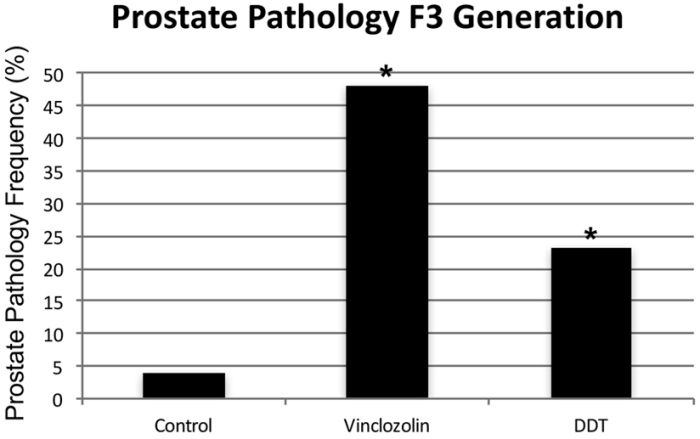
“Ancestral exposure to toxicant vinclozolin induces an epigenetic transgenerational increase in susceptibility to prostate pathology in F3 [male great-grandchildren] generation rats. These results are in agreement with previous studies which found a transgenerational increase in rates of prostatic:

  • Epithelial atrophy;
  • Cystic hyperplasia; and
  • Prostatitis

in transgenerational F3 and F4 [male great-great-grandchildren] generations after exposure of F0 [great-great-grandmother] generation pregnant rats to vinclozolin. These effects were accompanied by transgenerational changes in mRNA expression in F3 generation ventral prostate epithelial cells.

A number of previous transgenerational studies have shown no ventral prostate histopathology or disease detected. Therefore, observations suggest ancestral exposure specificity in the ability to induce transgenerational inheritance of prostate disease.

There was also no increase in prostate histopathology in directly exposed F1 [male children] or F2 [male grandchildren] generation vinclozolin lineage rats compared to controls.

prostate pathology

The mechanism by which epigenetic transgenerational inheritance affects prostate epithelium involves control of gene expression by DNA methylation and lncRNAs. It will be necessary to determine exact gene targets of these epigenetic modifications to determine further mechanisms.

Future studies need to investigate if similar mechanisms are at work in human males who have adult-onset BPH or prostate cancer. Ancestral exposures to toxicants and epigenetic transgenerational inheritance may contribute to development of prostate disease in men today.”


This study’s above bolded sentence added to evidence that epigenetic effects may skip generations. A study by the same group, Epigenetic transgenerational inheritance of ovarian disease, found in females:

There was no increase in ovarian disease in direct fetal exposed F1 or germline exposed F2 generation vinclozolin or DDT lineage rats compared to controls.

A disturbance in the paradigm of child abuse referenced other studies that found generation-skipping effects.

Researchers are closer to discovering evidence for precise mechanisms of epigenetic transgenerational inheritance. It’s well past time that other researchers performing studies like Burying human transgenerational epigenetic evidence:

  • Turn things around;
  • Take their work seriously; and
  • Truly investigate human evidence for epigenetic transgenerational inheritance.

What are more important research and funding priorities than such human studies?

https://www.nature.com/articles/s41598-019-38741-1 “Environmental Toxicant Induced Epigenetic Transgenerational Inheritance of Prostate Pathology and Stromal-Epithelial Cell Epigenome and Transcriptome Alterations: Ancestral Origins of Prostate Disease”

Epigenetic causes of sexual orientation and handedness?

This 2018 Austrian human study subject was various associations of prenatal testosterone levels to fetal development:

“The available evidence suggests, albeit not conclusively, that prenatal testosterone levels may be one cause for the association of sexual orientation with handedness. Associations among women were consistent with predictions of the Geschwind–Galaburda theory (GGT), whereas those among men were consistent with predictions of the callosal hypothesis. However, research on the associations between sexual orientation and handedness appears to be compromised by various methodological and interpretational problems which need to be overcome to arrive at a clearer picture.

The GGT posits that high prenatal testosterone levels cause a delay in the fetal development of the left cerebral hemisphere which results in a right-hemisphere dominance and hence in a tendency for left-handedness. According to the GGT, high prenatal testosterone levels entail not only a masculinization of the female fetus, but also a feminization of the male fetus (contrary to neurohormonal theory). Overall, the male fetus is subjected to higher levels of intrauterine testosterone than the female fetus. The GGT is thus consistent with the higher prevalence of left-handedness among men than among women.

The callosal hypothesis applies to men only and assumes, in line with neurohormonal theory, that low prenatal testosterone levels are associated with later homosexuality. According to the CH, high prenatal testosterone enhances processes of cerebral lateralization through mechanisms of axonal pruning, thereby resulting in stronger left-hemisphere dominance and a smaller corpus callosum. Consistent with this, women have a larger corpus callosum than men.”


The study’s Limitations section included the following:

  1. “Limitations of the current study pertain to the self-report nature of our data. Behavioral data may provide differing results from those obtained here.
  2. Assessment of sexual orientation relied on a single-item measure. Utilization of rating scales (e.g., the Kinsey Sexual Orientation Scale) or of multi-item scales, and assessing different components of sexual orientation, would have allowed for a more fine-grained analysis and for a cross-validation of sexual orientation ratings with sexual attraction.
  3. Albeit both our samples were large, the proportions of bisexual and homosexual individuals were, expectedly, only small, as were effects of lateral preferences. Thus, in analysis we could not differentiate bisexual from homosexual individuals. Bisexual and homosexual individuals may differ with regard to the distribution of lateral preferences.
  4. Some effect tests in this study have been underpowered. Independent replications with even larger samples are still needed.”

The largest unstated limitation was no fetal measurements. When a fetus’ epigenetic responses and adaptations aren’t considered, not only can the two competing hypotheses not be adequately compared, but causes for the studied phenotypic programming and other later-life effects will also be missed.

https://link.springer.com/article/10.1007/s10508-018-1346-9 “Associations of Bisexuality and Homosexuality with Handedness and Footedness: A Latent Variable Analysis Approach”

Adverse epigenetic effects of prenatal and perinatal anesthesia

This 2018 Chinese animal review subject was prenatal and perinatal anesthesia’s adverse epigenetic effects on a fetus/neonate:

“Accumulating evidence from rodent and primate studies has demonstrated that in utero or neonatal exposure to commonly used inhaled and intravenous general anesthetics is associated with neural degeneration and subsequent neurocognitive impairments, manifested in learning and memory disabilities.

So far, conflicting data exist about the effect of anesthetic agents on neurodevelopment in humans and no definite conclusion has been given yet.”

The inhibitors in the above graphic counter anesthesia’s effects on the fetus/neonate, summarized as:

“Epigenetic targeting of DNA methyltransferases and/or histone deacetylases may have some therapeutic value.”


Do physicians consider possible epigenetic alterations of a newborn’s chromatin structure and gene expression when they administer anesthesia to mothers during childbirth?

https://www.ncbi.nlm.nih.gov/pmc/articles/PMC6079265/ “Epigenetic Alterations in Anesthesia-Induced Neurotoxicity in the Developing Brain”