How do memories transfer?

This 2018 Chinese study electronically modeled the brain’s circuits to evaluate memory transfer mechanisms:

“During non-rapid-eye-movement (NREM) sleep, thalamo-cortical spindles and hippocampal sharp wave-ripples have been implicated in declarative memory consolidation. Evidence suggests that long-term memory consolidation is coordinated by the generation of:

  • Hierarchically nested hippocampal ripples (100-250 Hz),
  • Thalamo-cortical spindles (7-15 Hz), and
  • Cortical slow oscillations (<1 Hz)

enabling memory transfer from the hippocampus to the cortex.

Consolidation has also been demonstrated in other brain tasks, such as:

  • In the acquisition of motor skills, where there is a shift from activity in prefrontal cortex to premotor, posterior parietal, and cerebellar structures; and
  • In the transfer of conscious to unconscious tasks, where activity in initial unskilled tasks and activity in skilled performance are located in different regions, the so-called ‘scaffolding-storage’ framework.

By separating a neural circuit into a feedforward chain of gating populations and a second chain coupled to the gating chain (graded chain), graded information (i.e. information encoded in firing rate amplitudes) may be faithfully propagated and processed as it flows through the circuit. The neural populations in the gating chain generate pulses, which push populations in the graded chain above threshold, thus allowing information to flow in the graded chain.

In this paper, we will describe how a set of previously learned synapses may in turn be copied to another module with a pulse-gated transmission paradigm that operates internally to the circuit and is independent of the learning process.”


The study had neither been peer-reviewed, nor were the mechanisms tested in living beings.

https://www.biorxiv.org/content/early/2018/07/27/351114 “A Mechanism for Synaptic Copy between Neural Circuits”

Epigenetic effects of breast cancer treatments

This 2018 UC San Diego review subject was the interplay between breast cancer treatments and their effects on aging:

“Although current breast cancer treatments are largely successful in producing cancer remission and extending lifespan, there is concern that these treatments may have long lasting detrimental effects on cancer survivors, in part, through their impact on non-tumor cells. It is unclear whether breast cancer and/or its treatments are associated with an accelerated aging phenotype.

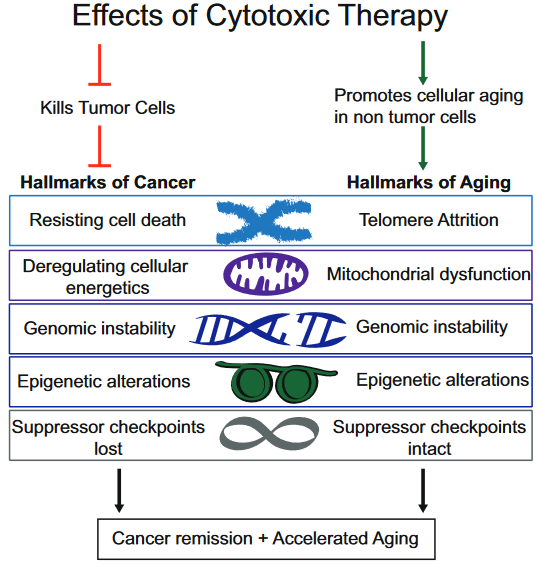
In this review, we have highlighted five of nine previously described cellular hallmarks of aging that have been described in the context of cytotoxic breast cancer treatments:

  1. Telomere attrition;
  2. Mitochondrial dysfunction;
  3. Genomic instability;
  4. Epigenetic alterations; and
  5. Cellular senescence.”


The review was full of caveats weakening the above graphic’s associations:

  1. “Telomere attrition – Blood TL [telomere length] was not associated with chemotherapy in three out of four studies;
  2. Mitochondrial dysfunction – How cancer therapies affect cellular energetics as they relate to rate of aging is unclear;
  3. Genomic instability – Potentially contributing to accelerated aging;
  4. Epigenetic alterations – Although some of the key regulators of these processes have begun to be identified, including DNA and histone methylases and demethylases, histone acetylases and de-acetylases and chromatin remodelers, how they regulate the changes in aging through alteration of global transcriptional programs, remains to be elucidated; and
  5. Cellular senescence – Dysregulated pathways can be targeted by cytotoxic chemotherapies, resulting in preferential cell death of tumor cells, but how these treatments also affect normal cells with intact pathways is unclear.”

To their credit, these reviewers at least presented some of the contrary evidence, and didn’t continue on with a directed narrative as other reviewers are prone to do.

https://www.sciencedirect.com/science/article/pii/S1879406818301176 “Breast cancer treatment and its effects on aging” (not freely available)


The originator of the epigenetic clock methodology was a coauthor of the review. Only one of his works was cited in the Epigenetic alterations subsection:

https://link.springer.com/article/10.1007%2Fs10549-017-4218-4 “DNA methylation age is elevated in breast tissue of healthy women”

This freely-available 2017 study quoted below highlighted that epigenetic clock measurements as originally designed were tissue-specific:

“To our knowledge, this is the first study to demonstrate that breast tissue epigenetic age exceeds that of blood tissue in healthy female donors. In addition to validating our earlier finding of age elevation in breast tissue, we further demonstrate that the magnitude of the difference between epigenetic age of breast and blood is highest in the youngest women in our study (age 20–30 years) and gradually diminishes with advancing age. As women approach the age of the menopausal transition, we found that the epigenetic of age of blood approaches that of the breast.”

Additional caution was justified in both interpreting age measurements and extending them into “cellular hallmarks” when the tissue contained varying cell types:

“Our studies were performed on whole breast tissue. Diverse types of cells make up whole breast tissue, with the majority of cells being adipocytes. Other types of cells include epithelial cells, cuboidal cells, myoepithelial cells, fibroblasts, inflammatory cells, vascular endothelial cells, preadipocytes, and adipose tissue macrophages.

This raises the possibility that the magnitude of the effects we observe, of breast tissue DNAm age being greater than other tissues, might be an underestimation, since it is possible that not all of the cells of the heterogenous sample have experienced this effect. Since it is difficult to extract DNA from adipose tissue, we suspect that the majority of DNA extracted from our whole breast tissues was from epithelial and myoepithelial cells.”

Allergies and epigenetic histone modifications

This 2018 German review provided short summaries of 44 studies on the contribution of histone modifications to allergies. An overall summary of their search results was:

“There are at least two levels at which the role of histone modifications is manifested.

  • One is the regulation of cells that contribute to the allergic inflammation (T cells and macrophages) and those that participate in airway remodeling.
  • The other is the direct association between histone modifications and allergic phenotypes.

Inhibitors of histone-modifying enzymes may potentially be used as anti-allergic drugs. Furthermore, epigenetic patterns may provide novel tools in the diagnosis of allergic disorders.”


This type of search is what’s expected of researchers who will perform either:

  • A meta-analysis of studies selected from the search results; or
  • Their own study.

These reviewers didn’t indicate that they were proceeding along either path.

The review was fine for the purpose of presenting current studies of the subject. But this was just the preparatory stage of research.

https://aacijournal.biomedcentral.com/articles/10.1186/s13223-018-0259-4 “Histone modifications and their role in epigenetics of atopy and allergic diseases”

Epigenetic variations in metabolism

This 2018 German review was comprehensive for its subject, epigenetic control of variation and stochasticity in metabolic disease. I’ll focus on one aspect, phenotypic variation:

“Phenotypic [Mendelian] variation can result both from gain- and loss-of-function mutations. Because of the extreme interconnectivity of cell regulatory networks, even at the cellular level, predicting the impact of a sequence variant is difficult as the resultant variation acts:

  • In the context of all other variants and
  • Their potential additive, synergistic and antagonistic interactions.

This phenomenon is known as epistasis.

∼98.5% of our genome is non-protein-coding: it is pervasively transcribed, and its transcripts can support regulatory function. Among the best functionally characterized non-coding RNAs (ncRNAs) arising from these sequences are microRNAs (miRNAs).

Environmental [non-Mendelian] variation or ‘stimuli’ occurring during critical windows of susceptibility can elicit lifelong alterations in an individual’s phenotype. Intergenerational metabolic reprogramming [in fruit flies] results from global alterations in chromatin state integrity, particularly from reduced H3K27me3 and H3K9me3 [histone] domains.

The broad variation of fingerprints in humans is thought to depend to a large degree on stochastic variation in mechanical forces. These clear examples of inducible multi-stable or stochastic variation highlight how little we know about the landscape of potential phenotypic variation itself.

Consensus estimates of heritability for obesity and T2D are ∼70% and ∼35% respectively. The remaining, unexplained component is known to involve gene–environment interactions as well as non-Mendelian players.”


Although the above graphic displays transgenerational inheritance for humans, the reviewers didn’t cite any human studies that adequately demonstrated causes for and effects of transgenerational epigenetic inheritance.

I’ve read the cited Swedish and Dutch studies. Their designs, methods, and “correlate with” / “was associated with” results didn’t provide incontrovertible evidence from the F0 great-grandparents, F1 grandparents, F2 parents, and F3 children. It’s necessary to thoroughly study each generation to confirm definitive transgenerational epigenetic inheritance causes and effects.

As noted in How to hijack science: Ignore its intent and focus on the 0.0001%, there aren’t any such published studies to cite. Researchers urgently need to do this human research, and stop using these poor substitutes [1] to pretend there are already adequately evidenced transgenerational epigenetic inheritance human results.

I downgraded the review for treating research of this and other subjects as faits accomplis. It’s opposite ends of the evidential spectrum to state “how little we know about the landscape of potential phenotypic variation,” and in the same review, speciously extrapolate animal experiments into putative human results.

https://www.sciencedirect.com/science/article/pii/S2212877818301984 “Epigenetic control of variation and stochasticity in metabolic disease”


[1] As an example of the poor substitutes for evidence, a researcher referred me to the 2013 “Transgenerational effects of prenatal exposure to the 1944–45 Dutch famine” which is freely available at https://obgyn.onlinelibrary.wiley.com/doi/full/10.1111/1471-0528.12136 as a study finding human transgenerational epigenetic inheritance.

The Methods section showed:

  • The study’s non-statistical data was almost all unverified self-reports by a self-selected sample of the F2 generation, average age 37.
  • No detailed physical measurements or samples were taken of them, nor of the F1 generation, nor of the F0 generation, all of which are required as baselines for any transgenerational epigenetic inheritance findings.
  • No detailed physical measurements or samples were taken of the F3 generation, which is the generation that may provide transgenerational evidence if the previous generations also have detailed physical baselines.

The study’s researchers drew enough participants (360) such that their statistics package allowed them to impute and assume into existence a LOT of data. But the scientific method constrained them to make factual statements of what the evidence actually showed. They admitted:

“In conclusion, we did not find a transgenerational effect of prenatal famine exposure on the health of grandchildren in this study.”

Yet this study is somehow cited for evidence of human transgenerational epigenetically inherited causes and effects!

A dietary supplement that trains the innate immune system

This 2018 Netherlands review topic was long-term epigenetic programming of the innate immune system:

“Immunological memory has been classically described for the adaptive immune system, in which naive B and T lymphocytes develop antigen-specific, long-lasting memory cells after encountering a new antigen.

Immunological memory is not an exclusive trait of lymphocytes. The function of cells from the innate immune system, such as monocytes, macrophages, dendritic cells, and NK cells, is also influenced by contact with different stimuli, undergoing functional reprogramming.

β-glucan, the prototypical trained immunity-inducing agonist:

  • Modulates hematopoietic stem and progenitor cells, influencing behavior and responsiveness of peripheral myeloid cells;
  • Leads to a shift of cellular metabolism from oxidative phosphorylation toward aerobic glycolysis.

Analysis of transcriptional data from macrophages stimulated with β-glucan revealed that the cholesterol synthesis pathway is highly up-regulated in trained immunity. A follow-up of this study showed that activation of the cholesterol synthesis pathway, but not its synthesis itself, is crucial for innate memory. In agreement with this, inhibition of cholesterol synthesis in mice reduced induction of trained immunity by β-glucan.

β-glucan-induced changes in trimethylation of histone 3 lysine 4 (H3K4me3) and acetylation of histone 3 lysine 27 (H3K27ac) in human monocytes 7 days after the first stimulation in vitro were associated with a switch to glycolysis, suggesting a deep, long lasting reprogramming of cells.

Inducers of cellular reprogramming such as β-glucan have shown potential as a treatment or adjuvant for osteosarcoma, influenza, or skin lesions, among others.”

https://jlb.onlinelibrary.wiley.com/doi/pdf/10.1002/JLB.MR0318-104R “Long-term reprogramming of the innate immune system”

A mid-year selection of epigenetic topics

Here are the most popular of the 65 posts I’ve made so far in 2018, starting from the earliest:

The pain societies instill into children

DNA methylation and childhood adversity

Epigenetic mechanisms of muscle memory

Sex-specific impacts of childhood trauma

Sleep and adult brain neurogenesis

This dietary supplement is better for depression symptoms than placebo

The epigenetic clock theory of aging

A flying human tethered to a monkey

Immune memory in the brain

The lack of oxygen’s epigenetic effects on a fetus

The hypothalamus and aging

This 2018 Korean review discussed aspects of the hypothalamus and aging:

“A majority of physiological functions that decline with aging are broadly governed by the hypothalamus, a brain region controlling development, metabolism, reproduction, circadian rhythm, and homeostasis. In addition, the hypothalamus is poised to connect the brain and the body so that the environmental information affecting aging can be transmitted through the hypothalamus to affect the systematic aging of the peripheral organs.

The hypothalamus is hypothesized to be a primary regulator of the process of aging of the entire body. This review aims to assess the contribution of hypothalamic aging to the age-related decline in body functions, particularly from the perspective of:

  • energy homeostasis,
  • hormonal balance,
  • circadian rhythm, and
  • reproduction,

and to highlight its underlying cellular mechanisms with a focus on:

  • nutrient sensing
  • inflammation,
  • loss of stem cell,
  • loss of proteostasis, and
  • epigenetic alterations.”

https://www.sciencedirect.com/science/article/pii/S0047637418300502 “Role of hypothalamus in aging and its underlying cellular mechanisms” (not freely available)


The reviewers didn’t consider aging to be an “unintended consequence” of development. This perspective was found in a reference to A study of DNA methylation and age:

“Aging is not programmed. Instead, aging is a continuation of developmental growth, driven by genetic pathways.

Genetic programs determine developmental growth and the onset of reproduction. When these programs are completed, they are not switched off.

Aging has no purpose (neither for individuals nor for group), no intention. Nature does not select for quasi-programs. It selects for robust developmental growth.”

The epigenetic clock theory of aging cited the same author, and modified his point to say:

“The proposed epigenetic clock theory of ageing views biological ageing as an unintended consequence of both developmental programmes and maintenance programmes.”

The current review’s opposite paradigm was:

“The hypothalamus is hypothesized to be a primary regulator of the process of aging.”

Almost all of the details discussed were from rodent studies.


As detailed in How to cure the ultimate causes of migraines? and its references, the hypothalamus is a brain structure that lacks feedback mechanisms for several of its activities. This structure develops shortly after conception and has an active prenatal role.

The hypothalamus plays its part in getting us developed and ready to reproduce, with certain feedback loops being evolutionarily unnecessary. The hypothalamus perfectly illustrates the point of:

“When these programs are completed, they are not switched off.”

Evolutionarily unnecessary feedback for aspects of hypothalamic activity may result in it not winding down when its developmental role is over. This activity shouldn’t be interpreted to construe a role that has some other meaning or purpose.

See Reevaluate findings in another paradigm for another view.

The lack of oxygen’s epigenetic effects on a fetus

This 2018 Loma Linda review subject was gestational hypoxia:

“Of all the stresses to which the fetus and newborn infant are subjected, perhaps the most important and clinically relevant is that of hypoxia. This review explores the impact of gestational hypoxia on maternal health and fetal development, and epigenetic mechanisms of developmental plasticity with emphasis on the uteroplacental circulation, heart development, cerebral circulation, pulmonary development, and the hypothalamic-pituitary-adrenal axis and adipose tissue.

An understanding of the specific hypoxia-induced environmental and epigenetic adaptations linked to specific organ systems will enhance the development of target-specific inhibition of DNA methylation, histone modifications, and noncoding RNAs that underlie hypoxia-induced phenotypic programming of disease vulnerability later in life.

A potential stumbling block to these efforts, however, relates to timing of the intervention. The greatest potential effect would be accomplished at the critical period in development for which the genomic plasticity is at its peak, thus ameliorating the influence of hypoxia or other stressors.

With future developments, it may even become possible to intervene before conception, before the genetic determinants of the risk of developing programmed disease are established.”

Table 3 “Antenatal hypoxia and developmental plasticity” column titles were Species | Offspring Phenotypes of Disorders and Diseases | Reference Nos.

Hypoxia phenotypes


This review was really an ebook, with 94 pages and 1,172 citations in the pdf file. As I did with Faith-tainted epigenetics, I read it with caution toward recognizing 1) the influence of the sponsor’s biases, 2) any directed narrative that ignored evidence contradicting the narrative, and 3) any storytelling.

Can you match the meaning of the review’s last sentence (“intervene before conception” quoted above) with the meaning of any sentence in its cited reference Developmental origins of noncommunicable disease: population and public health implications? I can’t.

One review topic that was misconstrued was transgenerational epigenetic inheritance of hypoxic effects. The “transgenerational” term was used inappropriately by several of the citations, and no cited study provided evidence for gestational hypoxic effects through the F3 great-grandchild generation.

One omitted topic was gestational hypoxic effects of caffeine. The first paper that came up for my PubMed search of “caffeine pregnancy hypoxia” was an outstanding 2017 Florida rodent review Long-term consequences of disrupting adenosine signaling during embryonic development that had this paragraph and figure:

“One substance that fetuses are frequently exposed to is caffeine, which is a non-selective adenosine receptor antagonist. We discovered that in utero alteration in adenosine action leads to adverse effects on embryonic and adult murine hearts. We find that cardiac A1ARs [a type of adenosine receptor] protect the embryo from in utero hypoxic stress, a condition that causes an increase in adenosine levels. 

After birth in mice, we observed that in utero caffeine exposure leads to abnormal cardiac function and morphology in adults, including an impaired response to β-adrenergic stimulation. Recently, we observed that in utero caffeine exposure induces transgenerational effects on cardiac morphology, function, and gene expression.”

The timing of in utero caffeine treatment leads to differences in adult cardiac function, gene expression, and phenotype. Exposure to caffeine from E6.5–9.5 leads the F1 generation to develop dilated cardiomyopathy with decrease % FS and increased Myh7 expression. In utero caffeine exposure from E10.5–13.5 leads to a hypertrophic cardiomyopathy in the F2 generation along with increased % FS and decreased Myh7 expression

Why was this review and its studies omitted? It was on target for both gestational hypoxia and transgenerational epigenetic inheritance of hypoxic effects!

It was alright to review smoking, cocaine, methamphetamine, etc., but the most prevalent drug addiction – caffeine – couldn’t be a review topic?


The Loma Linda review covered a lot, but I had a quick trigger due to the sponsor’s bias. I started to lose “faith” in the reviewers after reading the citation for the review’s last sentence that didn’t support the statement.

My “faith” disappeared after not understanding why a few topics were misconstrued and omitted. Why do researchers and sponsors ignore, misrepresent, and not continue experiments through the F3 generation to produce evidence for and against transgenerational epigenetic inheritance? Where was the will to follow evidence trails regardless of socially acceptable beverage norms?

The review acquired the taint of storytelling with the reviewers’ assertion:

“..timing of the intervention. The greatest potential effect would be accomplished at the critical period in development for which the genomic plasticity is at its peak, thus ameliorating the influence of hypoxia or other stressors.”

Contradictory evidence was in the omitted caffeine study’s graphic above which described two gestational critical periods where an “intervention” had opposite effects, all of which were harmful to the current fetus’ development and/or to following generations. Widening the PubMed link’s search parameters to “caffeine hypoxia” and “caffeine pregnancy” returned links to human early life studies that used caffeine in interventions, ignoring possible adverse effects on future generations.

This is my final curation of any paper sponsored by this institution.

https://www.physiology.org/doi/abs/10.1152/physrev.00043.2017 “Gestational Hypoxia and Developmental Plasticity” (not freely available) Thanks to coauthor Dr. Xiang-Qun Hu for providing a copy.

Ideaesthesia!

This 2018 UK review subject was colored-hearing experiences from music:

“Music-colour synaesthesia has a broad scope encompassing not only tone-colour synaesthesia elicited on hearing individual tones, but a complex and idiosyncratic mixture of phenomenological experiences often mediated by timbre, tempo, emotion and differing musical style.

Possession of synaesthesia or absolute pitch was shown to have very little effect on the actual colours chosen for each of the musical excerpts. But it might be reasonable to expect that music that elicits a strong emotional response may be more likely to induce synaesthesia than music that does not.

Examination of eight neuroimaging studies were found to be largely inconclusive in respect of confirming the perceptual nature of music-colour synaesthesia. Neither the hyperconnectivity nor the disinhibited feedback theory currently holds as a single categorical explanation for synaesthesia.

Theories promoting the notion of ‘ideaesthesia’ have highlighted the importance of role of concept and meaning in understanding of synaesthesia..and a replacement definition: Synaesthesia is a phenomenon in which a mental activation of a certain concept or idea is associated consistently with a certain perception-like experience.”

https://www.sciencedirect.com/science/article/pii/S1053810017305883 “Music-colour synaesthesia: Concept, context and qualia” (not freely available)


Much of the review was philosophizing and casting around for clues. The review cited interesting studies and reviews, including The Merit of Synesthesia for Consciousness Research.

One relevant element missed by the underlying research and review was critical periods of human development. A cited reference in How brains mature during critical periods was Sensitive periods in human development: Evidence from musical training (not freely available) illuminated some aspects:

“In contrast to a critical period, where a function cannot be acquired outside the specific developmental window, a sensitive period denotes a time where sensory experience has a relatively greater influence on behavioral and cortical development. Sensitive periods may also be times when exposure to specific stimuli stimulates plasticity, enhancing changes at neuronal and behavioral levels.

The developmental window for absolute pitch may be more similar to a critical than a sensitive period.

The auditory cortex appears to have an unusually long period of developmental plasticity compared with other sensory systems; changes in its cellular organization and connectivity continue into late childhood.

Effects of musical training have been shown to impact auditory processing in the brainstem as well.”


Let’s say that a researcher wanted – as one cited study did – to examine absolute pitch, a rare trait, present in a subset of synesthetes – music-color, another rare trait. The study as designed would probably be underpowered due to an insufficient number of subjects, and it would subsequently find “very little effect.”

Let’s say another researcher focused on cerebral brain areas – and like eight cited studies – ignored brainstem pons nuclei which are the first brain recipients of sound and equilibrium information from the inner ear via the eighth cranial nerve. Like those studies, the researcher was also biased against including limbic brain areas that would indicate “a strong emotional response.”

A study design that combined leaving out important brain-area participants in the synesthesia process with a few number of synesthetes would be unlikely to find conclusive evidence.

The reviewer viewed a lack of evidence from “eight neuroimaging studies” as indicating something about the “perceptual nature of music-colour synaesthesia.” An alternative view is that “inconclusive” evidence had more to do with study designs that:

  • Had a small number of subjects;
  • Omitted brain areas relevant to the music-color synesthesia process;
  • Didn’t investigate likely music-color synesthesia development periods; and
  • Didn’t investigate associations of music-color synesthesia with epigenetic states.

Consider the magnitude of omitting the thalamus brain area from synesthesia studies as one “perceptual nature of music-colour synaesthesia” example. Just background information of Thalamus gating and control of the limbic system and cerebrum is a form of memory indicated its relevance to synesthesia:

Despite fundamental differences between visual, auditory and somatosensory signals, basic layouts of thalamocortical systems for each modality are quite similar.

For a given stimulus, output neural response will not be static, but will depend on recent stimulus and response history.

Sensory signals en route to the cortex undergo profound signal transformations in the thalamus. A key thalamic transformation is sensory adaptation in which neural output adjusts to statistics and dynamics of past stimuli.”

One of this study’s researchers described ways that an individual’s “stimulus and response history” became unconscious memories with the thalamus. Including the thalamus in synesthesia studies may also have findings that involve reliving or re-experiencing a memory, possibly an emotional memory.

In such future research, it could be a design element to ask synesthetes before and after an experiment to identify feelings and memories accompanying synesthesia experiences.

It shouldn’t be a requirement, however, to insist that memories and emotions be consciously identified in order to be included in findings. Human studies such as Unconscious stimuli have a pervasive effect on our brain function and behavior have found:

“Pain responses can be shaped by learning that takes place outside conscious awareness.

Our results support the notion that nonconscious stimuli have a pervasive effect on human brain function and behavior and may affect learning of complex cognitive processes such as psychologically mediated analgesic and hyperalgesic responses.”


Does an orangey twilight of aging sunflowers help you feel?

A dietary supplement that reversed age-related hearing problems in the brainstem

This 2018 Nevada rodent study was on acetyl-L-carnitine’s action in the brainstem:

“We examined age-related changes in the efficiency of synaptic transmission at the calyx of Held, from juvenile adults (1-month old) and late middle-age (18- to 21-month old) mice. The calyx of Held synapse has been exploited as a model for understanding excitation-secretion coupling in central glutamatergic neurons, and is specialized for high-frequency transmission as part of a timing circuit for sound localization.

Our observations suggest that during aging, there is neuronal cell loss in the MNTB [Medial nucleus of the trapezoid body, a collection of brainstem nuclei in an area that’s the first recipient of sound and equilibrium information], similar to previous reports. In remaining synapses of the MNTB, we observed severe impairments in transmission timing and SV [synaptic vesicle] recycling, resulting in timing errors and increased synaptic depression in the calyx of Held synapse. These defects reduce the efficacy of this synapse to encode temporally sensitive information and are likely to result in diminished sound localization.

We orally administered ALCAR for 1 month and found that it reversed transmission defects at the calyx of Held synapse in the older mice.

These results support the concept that facilitators of mitochondrial metabolism and antioxidants may be an extremely effective therapy to increase synaptic function and restore short-term plasticity in aged brains, and provide for the first time a clear mechanism of action for ALCAR on activity-dependent synaptic transmission.


Human brainstem research is neglected, as noted by Advance science by including emotion in research. Evidence from such research doesn’t play well with beliefs in the popular models and memes of human cerebral dominance.

Do you know any “late middle-age” people who have obvious auditory and synaptic deficits? What if some of the neurobiological causes of what’s wrong in their brains could be “reversed by ALCAR?”

Before using this study as a guide, however, I asked the study’s researchers about the “daily dose of ~2.9 g/kg/d.” An equivalent for a 70 kg human is (2.9 g x 70) x .081 = 16 grams daily, compared with the 500 mg to 1 g dietary supplement dose of acetyl-L-carnitine.

The study’s corresponding coauthor replied:

“This is indeed much larger than that normally consumed by humans via dietary supplementation. We are currently working to determine the effective ‘minimal’ dose of ALCAR and alpha lipoic acid, to better assist guidelines for human application of this supplement.”

https://www.researchgate.net/publication/323941877_Age-related_defects_in_short-term_plasticity_are_reversed_by_acetyl-L-carnitine_at_the_mouse_calyx_of_Held “Age-related defects in short-term plasticity are reversed by acetyl-L-carnitine at the mouse calyx of Held”

Immune memory of pregnancies

This 2018 Israeli human study subject was natural killer cell epigenetic memory of pregnancies:

“Natural killer (NK) cells were first discovered for their ability to kill tumor cells, and later found to also kill pathogen-infected cells.

Different tissue-resident subpopulations of human NK cells exist throughout the body, displaying unique phenotypic and functional properties. One of the most fascinating tissue-resident subsets of NK cells, termed decidual NK cells, is found at the maternal fetal interface (decidua) in direct contact with the placenta.

We discovered a population found in repeated pregnancies, which has a unique transcriptome and epigenetic signature..have open chromatin around the enhancers of [growth factor genes] IFNG [essential for angiogenesis] and VEGFA [supporting vascular formation].

The pregnancy-related NK memory cells identified here might represent the first example of improved function of NK cells that occurs under healthy physiological conditions.”

One source for the experiments was:

“Decidual samples from healthy women who underwent elective first trimester terminations of normal pregnancies.”

https://www.sciencedirect.com/science/article/pii/S1074761318301286 “Trained Memory of Human Uterine NK Cells Enhances Their Function in Subsequent Pregnancies” (not freely available)

A self-referencing study of transgenerational epigenetic inheritance

This 2018 Washington rodent study subject was transgenerational epigenetic inheritance of disease caused by a fungicide that’s been phased out or banned for over a decade:

“This study was designed to help understand how three different epigenetic processes in sperm are correlated with vinclozolin-induced epigenetic transgenerational inheritance of disease.

  1. Most DMRs [differential DNA-methylated regions] identified in this study are unique between the F1, F2, and F3 generations.
  2. The number of lncRNA was much higher than the number of sncRNA [small noncoding RNA, including microRNA]. The overlap between each generation was very low or nonexistent.
  3. The F1 and the F2 generation control versus vinclozolin lineage sperm had negligible DHRs [differential histone retention sites]. This observation suggests that the direct vinclozolin exposure does not alter histone retention or trigger any changes. However, the F3 generation control versus vinclozolin lineage sperm DHRs increased considerably.

It appears that the phenomenon is more complex than just a direct exposure triggering the formation of epimutations that are then simply maintained in the subsequent generations.”


There’s something odd about a study where a third of the 87 cited references list one of the study’s coauthors, who also coauthored A review of epigenetic transgenerational inheritance of reproductive disease. I couldn’t find a satisfactory explanation for the study’s over-the-top self-referencing.

What do you think?

I asked the coauthors why a third of the cited references were self-referencing. The lead author replied:

“The field in epigenetic transgenerational inheritance is expanding, however it is still hard for us to find relevant studies in rodents or human that we can cite. Most of the time DNA methylation, ncRNA and histone modifications are investigated from a direct exposure and/or from a purely mechanistic angle (e.g. DNA methylation of specific genes).

In contrast, transgenerational phenotypes and toxicology by definition excludes direct exposure and must be transmitted through multiple generations (the F3 generation is the first transgenerational one). We are not looking at specific genes but using whole genome sequencing technologies which is a broader approach.

Besides, if you do a pubmed search with the keywords “epigenetics” and “transgenerational”, you will probably find that more than 50% of the studies have been done by Dr Michael K. Skinner. He is also one of the first researcher who started to work on the epigenetic transgenerational inheritance phenomenon 15 years ago. Not citing his previous work is challenging.

We hope to see other labs contributing to this particular field and we will be delighted to cite them. In the meantime, our only option is to reference our previous work.”

I replied:

“Thank you for your reply! It must be exasperating to see other researchers stop their studies short of the F3 generation for no apparent or disclosed reason.

Have you seen even one scientifically adequate human study of transgenerational epigenetic inheritance?”

https://academic.oup.com/eep/article/4/2/dvy010/4987173 “Alterations in sperm DNA methylation, non-coding RNA expression, and histone retention mediate vinclozolin-induced epigenetic transgenerational inheritance of disease”

Immune memory in the brain

This 2018 German rodent study was a proof-of-principle for immune epigenetic memory in the brain:

“Innate immune memory is a vital mechanism of myeloid [bone marrow] cell plasticity that occurs in response to environmental stimuli and alters subsequent immune responses.

Two types of immunological imprinting can be distinguished – training and tolerance. These are epigenetically mediated and enhance or suppress subsequent inflammation, respectively.

Certain immune stimuli train blood monocytes to generate enhanced immune responses to subsequent immune insults. By contrast, other stimuli induce immune tolerance – suppression of inflammatory responses to subsequent stimuli.

Microglia (brain-resident macrophages) are very long-lived cells. This makes them particularly interesting for studying immune memory, as virtually permanent modification of their molecular profile appears possible. Immune memory in the brain is predominantly mediated by microglia.

In a mouse model of Alzheimer’s pathology, immune training exacerbates cerebral β-amyloidosis and immune tolerance alleviates it; similarly, peripheral immune stimulation modifies pathological features after stroke. Our results identify immune memory in the brain as an important modifier of neuropathology.

Immune memory in the brain could conceivably affect the severity of any neurological disease that presents with an inflammatory component, but this will need to be studied for each individual condition.”


The researchers performed multiple experiments to test different hypotheses about how immune-response experiences are remembered. Modifications to histone methylation and acetylation were targeted.

The stimulus dosage needed to produce immune tolerance – “suppression of inflammatory responses to subsequent stimuli” – was usually four times the dosage used for immune training – “enhanced immune responses to subsequent immune insults.”

https://www.nature.com/articles/s41586-018-0023-4 “Innate immune memory in the brain shapes neurological disease hallmarks” (not freely available)

Resiliency in stress responses

This 2018 US Veterans Administration review subject was resiliency and stress responses:

Neurobiological and behavioral responses to stress are highly variable. Exposure to a similar stressor can lead to heterogeneous outcomes — manifesting psychopathology in one individual, but having minimal effect, or even enhancing resilience, in another.

We highlight aspects of stress response modulation related to early life development and epigenetics, selected neurobiological and neurochemical systems, and a number of emotional, cognitive, psychosocial, and behavioral factors important in resilience.”

The review cited studies I’ve previously curated:


There were two things I didn’t understand about this review. The first was why the paper isn’t freely available. It’s completely paid for by the US taxpayer, and no copyright is claimed. I recommend contacting the authors for a copy.

The second was why the VA hasn’t participated in either animal or human follow-on studies to the 2015 Northwestern University GABAergic mechanisms regulated by miR-33 encode state-dependent fear. That study’s relevance to PTSD, this review’s subject, and the VA’s mission is too important to ignore. For example:

“Fear-inducing memories can be state dependent, meaning that they can best be retrieved if the brain states at encoding and retrieval are similar.

“It’s difficult for therapists to help these patients,” Radulovic said, “because the patients themselves can’t remember their traumatic experiences that are the root cause of their symptoms.”

The findings imply that in response to traumatic stress, some individuals, instead of activating the glutamate system to store memories, activate the extra-synaptic GABA system and form inaccessible traumatic memories.”

I curated the research in A study that provided evidence for basic principles of Primal Therapy. These researchers have published several papers since then. Here are the abstracts from three of them:

Experimental Methods for Functional Studies of microRNAs in Animal Models of Psychiatric Disorders

“Pharmacological treatments for psychiatric illnesses are often unsuccessful. This is largely due to the poor understanding of the molecular mechanisms underlying these disorders. We are particularly interested in elucidating the mechanism of affective disorders rooted in traumatic experiences.

To date, the research of mental disorders in general has focused on the causal role of individual genes and proteins, an approach that is inconsistent with the proposed polygenetic nature of these disorders. We recently took an alternative direction, by establishing the role of miRNAs in the coding of stress-related, fear-provoking memories.

Here we describe in detail our work on the role of miR-33 in state-dependent learning, a process implicated in dissociative amnesia, wherein memories formed in a certain brain state can best be retrieved if the brain is in the same state. We present the specific experimental approaches we apply to study the role of miRNAs in this model and demonstrate that miR-33 regulates the susceptibility to state-dependent learning induced by inhibitory neurotransmission.”

Neurobiological mechanisms of state-dependent learning

“State-dependent learning (SDL) is a phenomenon relating to information storage and retrieval restricted to discrete states. While extensively studied using psychopharmacological approaches, SDL has not been subjected to rigorous neuroscientific study.

Here we present an overview of approaches historically used to induce SDL, and highlight some of the known neurobiological mechanisms, in particular those related to inhibitory neurotransmission and its regulation by microRNAs (miR).

We also propose novel cellular and circuit mechanisms as contributing factors. Lastly, we discuss the implications of advancing our knowledge on SDL, both for most fundamental processes of learning and memory as well as for development and maintenance of psychopathology.”

Neurobiological correlates of state-dependent context fear

“Retrieval of fear memories can be state-dependent, meaning that they are best retrieved if the brain states at encoding and retrieval are similar. Such states can be induced by activating extrasynaptic γ-aminobutyric acid type A receptors (GABAAR) with the broad α-subunit activator gaboxadol. However, the circuit mechanisms and specific subunits underlying gaboxadol’s effects are not well understood.

Here we show that gaboxadol induces profound changes of local and network oscillatory activity, indicative of discoordinated hippocampal-cortical activity, that were accompanied by robust and long-lasting state-dependent conditioned fear. Episodic memories typically are hippocampus-dependent for a limited period after learning, but become cortex-dependent with the passage of time.

In contrast, state-dependent memories continued to rely on hippocampal GABAergic mechanisms for memory retrieval. Pharmacological approaches with α- subunit-specific agonists targeting the hippocampus implicated the prototypic extrasynaptic subunits (α4) as the mediator of state-dependent conditioned fear.

Together, our findings suggest that continued dependence on hippocampal rather than cortical mechanisms could be an important feature of state-dependent memories that contributes to their conditional retrieval.”


Here’s an independent 2017 Netherlands/UC San Diego review that should bring these researchers’ efforts to the VA’s attention:

MicroRNAs in Post-traumatic Stress Disorder

“Post-traumatic stress disorder (PTSD) is a psychiatric disorder that can develop following exposure to or witnessing of a (potentially) threatening event. A critical issue is to pinpoint the (neuro)biological mechanisms underlying the susceptibility to stress-related disorder such as PTSD, which develops in the minority of ~15% of individuals exposed to trauma.

Over the last few years, a first wave of epigenetic studies has been performed in an attempt to identify the molecular underpinnings of the long-lasting behavioral and mental effects of trauma exposure. The potential roles of non-coding RNAs (ncRNAs) such as microRNAs (miRNAs) in moderating or mediating the impact of severe stress and trauma are increasingly gaining attention. To date, most studies focusing on the roles of miRNAs in PTSD have, however, been completed in animals, using cross-sectional study designs and focusing almost exclusively on subjects with susceptible phenotypes.

Therefore, there is a strong need for new research comprising translational and cross-species approaches that use longitudinal designs for studying trajectories of change contrasting susceptible and resilient subjects. The present review offers a comprehensive overview of available studies of miRNAs in PTSD and discusses the current challenges, pitfalls, and future perspectives of this field.”

Here’s a 2017 Netherlands human study that similarly merits the US Veterans Administration’s attention:

Circulating miRNA associated with posttraumatic stress disorder in a cohort of military combat veterans

“Posttraumatic stress disorder (PTSD) affects many returning combat veterans, but underlying biological mechanisms remain unclear. In order to compare circulating micro RNA (miRNA) of combat veterans with and without PTSD, peripheral blood from 24 subjects was collected following deployment, and isolated miRNA was sequenced.

PTSD was associated with 8 differentially expressed miRNA. Pathway analysis shows that PTSD is related to the axon guidance and Wnt signaling pathways, which work together to support neuronal development through regulation of growth cones. PTSD is associated with miRNAs that regulate biological functions including neuronal activities, suggesting that they play a role in PTSD symptomatology.”


See the below comments for reasons why I downgraded this review’s rating.

https://link.springer.com/article/10.1007/s11920-018-0887-x “Stress Response Modulation Underlying the Psychobiology of Resilience” (not freely available)

The Not-Invented-Here syndrome

I have high expectations of natural science researchers. I assume that their studies will improve over time, and develop methods and experiments that produce reliable evidence to inform us of human conditions.

My confidence is often unrealistic. Scientists are people, after all, and have the same foibles as the rest of us.

I anticipate that researchers will keep abreast of others’ work around the world. If other groups in their research areas are developing better methods and exploring hypotheses that discover better applications for humans, why not adopt them in the interest of advancing science?

That’s not what happened with this 2018 UK rodent study. The rat model some of the coauthors have built their reputations on depends on disturbing rat pregnancies by administering glucocorticoids. But both the rat model and a guinea pig model in Do you have your family’s detailed medical histories? demonstrated that physicians who disturb their pregnant human patients in this way may be acting irresponsibly toward their patients’ fetuses and their future generations.

This study didn’t find mechanisms that explained transgenerational epigenetic birth weight effects through the F2 grandchild generation:

“Although the phenotype is transmitted to a second generation, we are unable to detect specific changes in DNA methylation, common histone modifications or small RNA [including microRNA] profiles in sperm.

The inheritance mechanism for the paternally derived glucocorticoid-reprogrammed phenotype may not be linked with the specific germline DNA, sRNA and chromatin modifications that we have profiled here.”


The linked guinea pig model was developed specifically to inform physicians of the consequences through the F3 great-grandchild generation of disturbing human pregnancies with glucocorticoids:

“Antenatal exposure to multiple courses of sGC [synthetic glucocorticoid] has been associated with hyperactivity, impaired attention, and neurodevelopmental impairment in young children and animals. It is imperative that the long-term effects of antenatal exposure to multiple courses of sGC continue to be investigated since the use of a ‘rescue’ (i.e. a second) course of sGC has recently re-introduced the practice of multiple course administration.”


If a study’s purpose is to investigate potential mechanisms of epigenetic inheritance, why not adopt a model that better characterizes common human conditions, regardless of which research group initially developed it?

The prenatal stress model used in The lifelong impact of maternal postpartum behavior is one model that’s more representative of human experiences. Those researchers pointed out in Prenatal stress produces offspring who as adults have cognitive, emotional, and memory deficiencies:

“Corticosterone-treated mice and rats exposed to chronic stress are models that do not recapitulate the early programming of stress-related disorders, which likely originates in the perinatal period.”

Animal models that chemically redirect fetal development also “do not recapitulate the early programming of stress-related disorders.”

Other than research that’s done to warn against disrupted development, how can animal studies like the current study help humans when their models don’t replicate common human conditions? This failure to use more relevant models has follow-on effects such as human intergenerational and transgenerational epigenetic inheritance being denigrated due to insufficient evidence.

Of course there’s insufficient human evidence! Researchers developed and sponsors funded animal study designs that ensured there wouldn’t be wide applicability to humans!! Few derivative human studies have been developed and funded as a result.

https://genomebiology.biomedcentral.com/articles/10.1186/s13059-018-1422-4 “Investigation into the role of the germline epigenome in the transmission of glucocorticoid-programmed effects across generations”