Eat broccoli sprouts for your eyes, Part 3

Two 2025 papers cited Precondition your defenses with broccoli sprouts, starting with a review of age-related macular degeneration:

“AMD progression from intermediate to late AMD leads to a point of irreversible retinal pigmented epithelium (RPE) degeneration where treatment becomes worthless. Treating patients at the early/intermediate stages presents a better therapeutic window opportunity for AMD as the disease could potentially be prevented or slowed down.

Strong evidence points to RPE dysfunction at these stages, mainly through redox imbalance and lysosomal dysfunction in RPE oxidative injury. Restoring oxidative balance and lysosomal function may act as preventive and therapeutic measures against RPE dysfunction and degeneration.

Due to interaction with KEAP1, NRF2 is a ubiquitously expressed protein with a high turnover and half-life of about 20 minutes. Because the turnover of NRF2 is faster than KEAP1, newly synthesized NRF2 does not have free KEAP1 to bind and is translocated into the nucleus. Once in the nucleus, NRF2 dimerizes with sMAF and the complex binds to antioxidant response element (ARE) sequences, promoting the expression of ARE genes.

There is NRF2 involvement in most of the hallmarks of aging. Key transcriptional regulatory factors of related pathways, such as transcription factor EB (TFEB) and NRF2, may be targeted to restore homeostasis and/or prevent further RPE degeneration.”

https://www.mdpi.com/2076-3921/14/5/596 “Targeting Lysosomal Dysfunction and Oxidative Stress in Age-Related Macular Degeneration”

There were other informative tidbits throughout this review, such as:

  • “Anti-inflammatory effects of most electrophilic NRF2 activators are thought to be at least partly NRF2-independent, suggesting that these compounds lacking specificity may be advantageous for multitargeted pathologies.
  • TFEB can activate NRF2 under conditions devoid of oxidative stress.”

This paper also cited Bridging Nrf2 and autophagy when discussing the above graphic.


In this human cell and rodent study, several coauthors of the original 2020 study tested sulforaphane and TFEB interactions for ameliorating effects of a rare disease:

“Mutations in genes encoding lysosomal proteins could result in more than approximately 70 different lysosomal storage disorders. Niemann–Pick disease type C (NPC) is a rare lysosomal storage disorder caused by mutation in either NPC1 or NPC2 gene. Deficiency in NPC1 or NPC2 protein results in late endosomal/lysosomal accumulation of unesterified cholesterol.

Clinical symptoms of NPC include hepatosplenomegaly, progressive neurodegeneration, and central nervous system dysfunction, that is, seizure, motor impairment, and decline of intellectual function. So far there is no FDA-approved specific therapy for NPC.

Under stress conditions, that is, starvation or oxidative stress, TFEB is dephosphorylated and actively translocates into the nucleus, promoting expression of genes associated with lysosome and autophagy. TFEB overexpression or activation results in increased number of lysosomes, autophagy flux, and exocytosis.

Pharmacological activation of TFEB by sulforaphane (SFN), a previously identified TFEB agonist, significantly promoted cholesterol clearance in human and mouse NPC cells, while genetic inhibition (KO) of TFEB blocked SFN-induced cholesterol clearance. This clearance effect exerted by SFN was associated with upregulated lysosomal exocytosis and biogenesis. SFN treatment has no effect on the liver and spleen enlargement of Npc1 mice.

SFN is reportedly BBB-permeable, assuring a good candidate for efficient delivery to the brain, which is essential for targeting neurodegenerative phenotypes in neurological diseases including NPC. This is the first time that SFN was shown to directly activate TFEB in the brain.

Collectively, our results demonstrated that pharmacological activation of TFEB by a small-molecule agonist can mitigate NPC neuropathological symptoms in vivo. TFEB may be a putative target for NPC treatment, and manipulating lysosomal function via small-molecule TFEB agonists may have broad therapeutic potential for NPC.”

https://elifesciences.org/articles/103137 “Small-molecule activation of TFEB alleviates Niemann–Pick disease type C via promoting lysosomal exocytosis and biogenesis”


Practice what you preach, or shut up

A 2025 review subject was sulforaphane and brain health. This paper was the latest in a sequence where the retired lead author self-aggrandized his career by citing previous research.

He apparently doesn’t personally do what these research findings suggest people do. The lead author is a few weeks older than I am, and has completely white hair per an interview (Week 34 comments). I’ve had dark hair growing in (last week a barber said my dark hair was 90%) since Week 8 of eating broccoli sprouts every day, which is a side effect of ameliorating system-wide inflammation and oxidative stress.

If the lead author followed up with what his research investigated, he’d have dark hair, too. Unpigmented white hair and colored hair are both results of epigenetics.

Contrast this lack of personal follow-through of research findings with Dr. Goodenowe’s protocol where he compared extremely detailed personal brain measurements at 17 months and again at 31 months. He believes enough in his research findings to personally act on them, and demonstrate to others how personal agency can enhance a person’s life.

It’s every human’s choice whether or not we take responsibility for our own one precious life. I’ve read and curated on this blog many of this paper’s references. Five years ago for example:

So do more with their information than just read.

https://www.mdpi.com/2072-6643/17/8/1353 “Sulforaphane and Brain Health: From Pathways of Action to Effects on Specific Disorders”

Brain restoration with plasmalogens, Part 2

This September 2024 presentation adds data points and concepts to Part 1:

supplementation

  1. “Your brain is dynamically connected to and adaptively responsive to its environment.
  2. You are in control of this environment (nutrition, stimulation, adversity).
  3. Need to measure the environment (lab testing, physiology) and adaptive response to the environment (MRI) to optimize your environment (nutrition, lifestyle) to achieve optimal brain structure, function, health, and longevity.

neurovascular

From a global cortical volume and thickness perspective, 17 months of high dose plasmalogens reversed about 15 years of predicted brain deterioration. 31 months reversed almost 20 years. So you can get more out of life.”

https://drgoodenowe.com/immortal-neurology-building-maintaining-an-immortal-brain/


Dr. Goodenowe also added case studies of two patients:

1. A 50-year-old woman with MS who had been legally blind in one eye for 32 years who regained sight in that eye after eight months of supplementation.

“This is the adaptability of the human brain. Her eye is not actually impaired. What’s impaired is the ability, the adaptability of the brain to the signal of light, to actually start interpreting what that light signal is.”

2. A 61-year-old man with dementia from firefighting work for the U.S. Navy in a toxic environment with head injuries after nine months of supplementation.

“The brain can heal itself is the point of the story. His executive function skills in everyday life are getting better.”

Activate Nrf2 to reduce biological age

A 2024 primate study investigated effects of an off-patent drug on age-related changes:

“We evaluated geroprotective effects of metformin on adult male cynomolgus monkeys. The study encompassed a comprehensive suite of physiological, imaging, histological, and molecular evaluations, substantiating metformin’s influence on delaying age-related phenotypes at the organismal level.

monkey nrf2

Results highlighted a significant slowing of aging indicators, notably a roughly 6-year regression in brain aging. Metformin exerts a substantial neuroprotective effect, preserving brain structure and enhancing cognitive ability.

Geroprotective effects on primate neurons were partially mediated by activation of Nrf2, a transcription factor with anti-oxidative capabilities.”

https://www.cell.com/cell/abstract/S0092-8674(24)00914-0 “Metformin decelerates aging clock in male monkeys” (not freely available). Thanks to Dr. Pradeep Reddy for providing a copy.


From this study’s Nrf2 activation findings:

“Metformin treatment resulted in increased nuclear phosphorylated Nrf2, accompanied by up-regulation of Nrf2 target genes like HO-1, NQO-1, SOD3, GPX2, and GPX1, which were generally suppressed and typically down-regulated during human neuron senescence.

Genes pivotal for neuronal function, such as dendrite morphogenesis/extension and synapse assembly (e.g., GSK3B, GRID2, and NRG3), were down-regulated during aging in excitatory neurons (ExN), inhibitory neurons (InN), oligodendrocytes (OL), oligodendrocyte progenitor cells (OPC), microglia, and astrocyte but were restored by metformin treatment. By contrast, pathways that were up-regulated during aging, including activation of the immune response, complement activation, and regulation of the TGF-b receptor signaling pathway, were reset to lower levels by metformin treatment.

metformin neuronal gene pathways

We verified that markers associated with brain aging and progression of neurodegenerative diseases were restored by metformin treatment to levels similar to those observed in young monkeys. Additionally, we observed that reduced myelin sheath thickness, a characteristic of aged monkeys, was rebuilt to a younger state following metformin treatment.

These findings align with the levels of nuclear-localized phosphorylated Nrf2, suggesting that Nrf2 pathway activation is a key mechanism in metformin’s role in delaying human neuronal aging and, by extension, brain aging. Consistent with our in vitro findings, Nrf2 pathway activation was also detected across multiple tissues in metformin-treated monkeys, including frontal lobe neurons.


At last count, I’ve curated 250+ papers this decade on cruciferous vegetables, and many of these explored relationships with Nrf2 activation. Basically, eating a clinically-relevant daily dose of 3-day-old cruciferous sprouts and taking off-patent metformin both induce Nrf2 activation effects.

Don’t expect to see many researchers highlighting this equivalency. They’d rather wait another decade to nitpick other studies with not-enough-subjects / not-exactly replicated / other nitpicks before expressing opinions urging caution from their nursing home beds.

But even then, they won’t get their facts straight. For example, a contemporaneous opinion article https://www.nature.com/articles/d41586-024-02938-w “The brain aged more slowly in monkeys given a cheap diabetes drug” attempted to summarize this study, and flubbed two points:

1. The study said: “We conducted a proof-of-concept study involving male cynomolgus monkeys (Macaca fascicularis) aged between 13 and 16 years, roughly equivalent to approximately 40–50 years in humans. Monkeys adhered to this regimen for a period of 1,200 days, approximately 3.3 years, which corresponds to about 10 years in humans.”

The opinion claimed: “Animals took the drug for 40 months, which is equivalent to about 13 years for humans.”

2. The opinion quoted a New York City researcher involved in a separate metformin study and employed at a medical school for:

“Research into metformin and other anti-ageing candidates could one day mean that doctors will be able to focus more on keeping people healthy for as long as possible rather than on treating diseases.”

This statement is a big break from the realities of medical personnel daily actions at least so far this decade, which is when I started to pay close attention:

  • Doctors have very little diet and exercise training in medical school. There’s no way they can give health advice. There’s no way that a “keeping people healthy” paradigm will emerge from the current medical system.
  • Fixing a disease doesn’t restore a patient’s health. Dr. (PhD) Goodenowe cites several examples in his talks, such as a study that compared colorectal cancer therapy with post-operation patient health.
  • If you listen to yesterday’s two-hour-long podcast, the currently injured person in the first hour gave plenty of contrary evidence of doctors’ focuses: behaviors of trying to blame and gaslight the patient, thinly-disguised punitive actions, CYA etc., all of which they will be sued for one day. The doctor in the second hour provided an example of the quoted researcher in her explanation of how doctors higher in the hierarchy either can’t see or can’t admit realities of doctor/patient interactions, and what therapies have actually benefited or harmed a patient.

Maintaining your myelin, Part 1

Three papers on myelin and oligodendrocytes, starting with a 2023 review:

“Myelin is the spiral ensheathment of axons by a lipid and cholesterol-rich glial cell membrane that reduces capacitance and increases resistance of the axonal membrane. Axonal myelination speeds up nerve conduction velocity as a function of axon diameter.

While myelination proceeds rapidly after birth in the peripheral nervous system, central myelination is a spatially and temporally more regulated process. Ongoing myelination of the human brain has been documented at up to 40 years of age. This late myelination in the adult cortex is followed by exhaustion of oligodendrocyte precursor cells (OPC) with senescence and a gradual loss of myelin integrity in the aging brain.

The brain is well known for its high energy demands, specifically in gray matter areas. In white matter tracts, energy consumption is lower. Myelination poses a unique challenge for axonal energy generation where myelin sheaths cover more than 95% of the axonal surface areas.

Oligodendrocytes help support axonal integrity. Oligodendrocytes survive well in the absence of mitochondrial oxidative phosphorylation, and without signs of myelin loss, cell death, neurodegeneration or secondary inflammation.

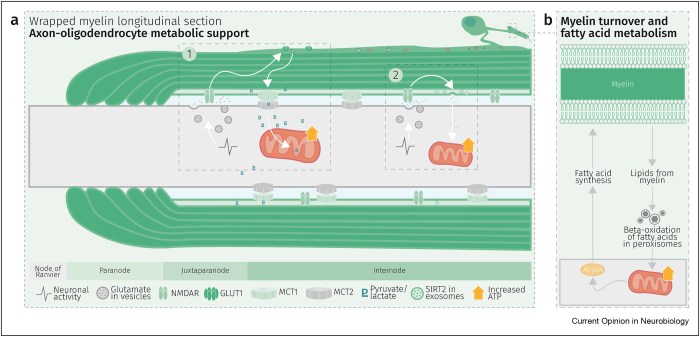
Glycolysis products of oligodendroglial origin are readily metabolized in axonal mitochondria. Oligodendroglial metabolic support is critical for larger and faster-spiking myelinated axons that also have a higher density of mitochondria. An essential requirement for the direct transfer of energy-rich metabolites from oligodendrocytes to the myelinated axonal compartment is ‘myelinic channels’ within the myelin sheath.

Interactions of oligodendrocytes and myelin with the underlying axon are complex and exceed the transfer of energy-rich metabolites. Continuous turnover of myelin membranes by lipid degradation and fatty acid beta-oxidation in mitochondria and peroxisomes leads to recycling of acetate residues by fatty acid synthesis and membrane biogenesis.
1-s2.0-S0959438823001071-gr2_lrg

In human multiple sclerosis (MS) and its animal model myelin oligodendrocyte glycoprotein-experimental autoimmune encephalomyelitis (MOG-EAE), acute inflammatory demyelination is followed by axonal degeneration in lesion sites that is mechanistically not fully understood. It is widely thought that demyelination and the lack of an axon-protective myelin sheath in the presence of numerous inflammatory mediators are the main causes of axon loss.

But unprotected axons improve rather than worsen the overall clinical phenotype of EAE mice which exhibited the same degree of autoimmunity. Thus, ‘bad myelin is worse than no myelin’ because MS-relevant myelin injuries perturb the integrity of myelinic channels and metabolic support.

Dysfunctional or injured oligodendrocytes that do not allow for compensation by any other cell types turn the affected myelin ensheathment into a burden of the underlying axonal energy metabolism, which causes irreversible axon loss. Any loss of myelin integrity, as seen acutely in demyelinating disorders or more gradually in the aging brain, becomes a risk factor for irreversible neurodegeneration.”

https://www.sciencedirect.com/science/article/pii/S0959438823001071 “Expanding the function of oligodendrocytes to brain energy metabolism”


A 2024 review focused on myelin and oligodendrocyte plasticity:

“This review summarizes our current understanding of how myelin is generated, how its function is dynamically regulated, and how oligodendrocytes support the long-term integrity of myelinated axons.

Apart from its unique ultrastructure, there are several other exceptional features of myelin. One is certainly its molecular composition. Another is its extraordinary stability. This was compellingly illustrated when 5000-year-old myelin with almost intact ultrastructure was dissected from a Tyrolean Ice Man.

Myelin is a stable system in contrast to most membranes. However, myelin is compartmentalized into structurally and biochemically distinct domains. Noncompacted regions are much more dynamic and metabolically active than tightly compacted regions that lack direct access to the membrane trafficking machinery of oligodendrocytes.

The underlying molecular basis for stability of myelin is likely its lipid composition with high levels of saturated, long chain fatty acids, together with an enrichment of glycosphingolipids (∼20% molar percentage of total lipids) and cholesterol (∼40% of molar percentage of total lipids). In addition, myelin comprises a high proportion of plasmalogens (ether lipids) with saturated long-chain fatty acids. In fact, ∼20% of the fatty acids in myelin have hydrocarbon chains longer than 18 carbon atoms (∼1% in the gray matter) and only ∼6% of the fatty acids are polyunsaturated (∼20% in gray matter).

With maturation of oligodendrocytes, the plasma membrane undergoes major transformations of its structure. Whereas OPCs are covered by a dense layer of large and negatively charged self-repulsive oligosaccharides, compacted myelin of fully matured oligodendrocytes lacks most of these glycoprotein and complex glycolipids.

Schematic depiction of an oligodendrocyte that takes up blood-derived glucose and delivers glycolysis products (pyruvate/lactate) via monocarboxylate transporters (MCT1 and MCT2) to myelinated axons. Oligodendrocytes and myelin membranes are also coupled by gap junctions to astrocytes, and thus indirectly to the blood–brain barrier.

oligodendrocyte

Adaptive myelination refers to dynamic events in oligodendroglia driven by extrinsic factors such as experience or neuronal activity, which subsequently induces changes in circuit structure and function. Understanding how these adaptive changes in neuron-oligodendroglia interactions impact brain function remains a pressing question for the field.

Transient social isolation during adulthood results in chromatin and myelin changes, but does not induce consequent behavioral alterations. When mice undergo a social isolation paradigm during early life development, they similarly exhibit deficits in prefrontal cortex function and myelination, but these deficiencies do not recover with social reintroduction. This implicates a critical period for social deprivation effects on myelin dynamics. Experience-dependent changes in myelin dynamics may depend on not only the age, brain region, and cell type studied, but also the specific myelin structural change assessed.

Local synaptic neurotransmitter release along an axon not only affects the number of OPCs and oligodendrocytes associated with that axon and local synthesis of myelin proteins, but also drives preferential selection of active axons for myelination over the ensheathment of electrically silenced neighboring axons. Neuronal activity–induced plasticity may preferentially impact brain regions that remain incompletely myelinated compared to more fully myelinated tracts.

Whereas the myelin sheath has been regarded for a long time as an inert insulating structure, it has now become clear that myelin is metabolically active with cytoplasmic-rich pathways, myelinic channels, for movement of macromolecules into the periaxonal space. The myelin sheath and its subjacent axon need to be regarded as one functional unit, which are not only morphological but also metabolically coupled.”

https://cshperspectives.cshlp.org/content/early/2024/04/15/cshperspect.a041359 “Oligodendrocytes: Myelination, Plasticity, and Axonal Support” (not freely available) Thanks to Dr. Klaus-Armin Nave for providing a copy.


A 2024 rodent study investigated oligodendrocyte precursor cell transcriptional and epigenetic changes:

“We used single-cell RNA sequencing (scRNA-seq), single-cell ATAC sequencing (scATAC-seq), and single-cell spatial transcriptomics to characterize murine cortical OPCs throughout postnatal life. One group (active, or actOPCs) is metabolically active and enriched in white matter. The second (homeostatic, or hOPCs) is less active, enriched in gray matter, and predicted to derive from actOPCs. Relative to developing OPCs, both actOPCs and hOPCs are less active metabolically and have less open chromatin.

In adulthood, these two groups are transcriptionally but not epigenetically distinct, indicating that they may represent different states of the same OPC population. If that is the case, then one model is that the parenchymal environment maintains adult OPCs within an hOPC state, whereas those OPCs recruited into white matter or exposed to demyelinated axons may transition toward an actOPC state in preparation for making new oligodendrocytes. We do not yet know the functional ramifications of these differences, but this finding has clear implications for the development of therapeutic strategies for adult remyelination.

opcs

Another finding is that developing but not adult actOPC chromatin is preferentially open for binding motifs associated with neural stem cells, transit-amplifying precursors, and neurogenesis. Although this may simply reflect their origin as the immediate progeny of neonatal neural precursor cells, it may also explain why developing but not adult OPCs have the capacity to make neurons in culture.

If we could, at least in part, reverse the global chromatin shutdown that occurs between development and adulthood, then perhaps adult OPCs may reacquire the ability to make neurons or become better able to generate new oligodendrocytes for remyelination.”

https://www.cell.com/stem-cell-reports/fulltext/S2213-6711(24)00077-8 “Single-cell approaches define two groups of mammalian oligodendrocyte precursor cells and their evolution over developmental time”

Continued in Part 2.


PXL_20240414_103442372

Improving peroxisomal function

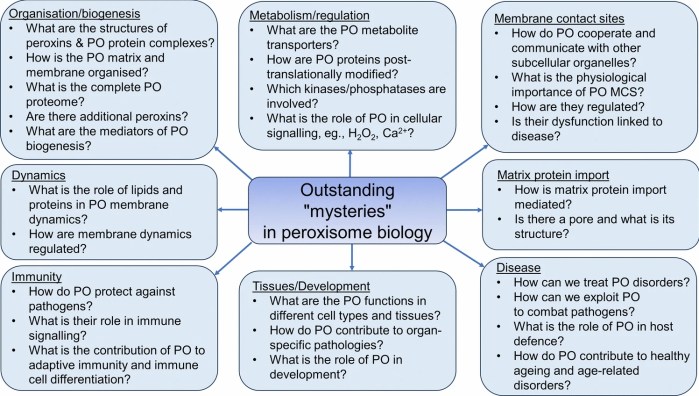
A 2024 review provided details about “mysteries” in peroxisome research:

“Peroxisomes are key metabolic organelles with essential functions in cellular lipid metabolism (e.g., β-oxidation of fatty acids and synthesis of ether phospholipids, which contribute to myelin sheath formation), and metabolism of reactive oxygen species (ROS), particularly hydrogen peroxide. Loss of peroxisomal function causes severe metabolic disorders in humans.

Additional non-metabolic roles of peroxisomes have been revealed in cellular stress responses, regulation of cellular redox balance and healthy ageing, pathogen and antiviral defence, and as cellular signalling platforms. New findings also point to a role in regulation of immune responses.

In our previous reviews, we addressed the role of peroxisomes in the brain, in neurological disorders, in development of cancer, and in antiviral defence. To avoid repetition, we refer to those articles where appropriate, and to more specialised recent reviews on peroxisome biology.

418_2023_2259_Fig5

Proper functioning of peroxisomes in metabolism requires the concerted interaction with other subcellular organelles, including the endoplasmic reticulum (ER), mitochondria, lipid droplets, lysosomes, and the cytosol. A striking example of peroxisome-ER metabolic cooperation is de novo biosynthesis of ether phospholipids.

Metabolic activities of peroxisomes, such as ɑ- and β-oxidation of fatty acids, plasmalogen synthesis, and ROS/reactive nitrogen species metabolism, have been linked to numerous immune-related pathways. Roles for peroxisomes in immune and defence mechanisms have opened a new field of peroxisome research, and highlight once more how important peroxisomes are for human health and disease.

It is still not fully understood how peroxisomal functions and abundance are regulated, what kinases/phosphatases are involved, or how peroxisomes are linked to cellular signalling pathways and how they act as signalling platforms.”

https://link.springer.com/article/10.1007/s00418-023-02259-5 “The peroxisome: an update on mysteries 3.0”


Last Friday was Day 90 of a 90-day trial of plasmalogens coincident with improving peroxisomal function via resistance exercise and time-restricted eating. A sticking point has been leg resistance exercises. Ankle issues are interfering with progress, although beach walks aren’t similarly affected. I’m almost back to an upper body exercise routine of five years ago, and I’ve added a half-dozen abs exercises.

I’ll continue taking the two Prodrome plasmalogen precursor supplements (ProdromeGlia and ProdromeNeuro) and with efforts to improve peroxisomal function. Since achieving effective resistance exercise levels is taking longer than expected, and my crystal ball is out-of-commission, I don’t have a realistic end time estimate for stopping the supplements.

A good activity for bad weather days

A free educational series recorded in 2021-2022 available at https://drgoodenowe.com/dr-goodenowes-educational-seminars/ takes the viewer through underlying research and principles of Dr. Goodenowe’s approach to health. It’s advertised as lasting four hours, but took me two days to view.

The series’ discussions and references are background material to better understand later presentations and interviews. Points of interest included:

  • Seminar B100 shows that the metabolomic profile of people who regularly eat broccoli is different than others.
  • B109 clarifies how peroxisomal function is improved through resistance exercise and intermittent fasting.
  • C103 and C104 show how plasmalogens act against neurodegeneration (Parkinson’s disease and multiple sclerosis).

Texts below videos are additional information, not transcripts. C101 text is historically informative.


The B200 ProdromeScan tutorial will take more study. But unlike Labcorp tests, ordering a ProdromeScan requires using a practitioner in Dr. Goodenowe’s network.

I sent the following to Prodrome customer service earlier this month:

Please add me to your approved list for ProdromeScan.

Customer service replied:

“We only add health professionals to an approved list, not individuals.”

I responded:

Good morning. I looked at the websites of doctors who are associated with Dr. Goodenowe who are near me. All of them are too compromised for me to establish a doctor / patient relationship. But I’m glad they left up their blog posts from earlier this decade so I could see who they really were before I reached out to them.

I request an exception to the policy.

Customer service replied:

“There is no exception that can be made to this policy. You need to be a patient of a certified practitioner.”

I’ll escalate my request before my 90-day trial of Prodrome Glia and Neuro products ends so I can get an appropriate metabolomic status. Right now, I won’t involve someone I can’t trust just to know my ProdromeScan information that’s additional to next week’s Labcorp tests.

My treatment-result metabolomic data is probably not mature today on Day 29 of ProdromeGlia and ProdromeNeuro supplementation, resistance exercise, and intermittent fasting. I otherwise wouldn’t have experienced these two events:


I have a quibble with the series’ recommendations for taking N-acetyl cysteine. Relevant views and research:

Switch on your Nrf2 signaling pathway pointed out:

“We use NAC in the lab all the time because it stops an Nrf2 activation. So that weak pro-oxidant signal that activates Nrf2, you switch it off by giving a dose of NAC. It’s a potent antioxidant in that right, but it’s blocking signalling. And that’s what I don’t like about its broad use.”

If someone bombs themself everyday with antioxidants, they’re doing nothing to improve training of their endogenous systems’ defensive functions. What happens when they stop bombing? One example was a 2022 human study that found GlyNAC-induced improvements dissolved back to baseline after supplements stopped.

Also, Precondition your defenses with broccoli sprouts highlighted NAC’s deleterious effects on autophagy and lysosome functions:

“TFEB activity is required for sulforaphane (SFN)-induced protection against both acute oxidant bursts and chronic oxidative stress. SFN-induced TFEB nuclear accumulation was completely blocked by pretreatment of cells by N-acetyl-cysteine (NAC), or by other commonly used antioxidants. NAC also blocked SFN-induced mRNA expression of TFEB target genes, as well as SFN-induced autophagosome formation.”

If a secondary goal of taking NAC per is also necessary for the formation of glutathione, taurine can do that without an antioxidant bomb. Taurine supplementation will free up cysteine to do things other than synthesize taurine, like synthesize glutathione.


PXL_20231123_194849211.MP

Brain restoration with plasmalogens

In this 2023 presentation for a professional audience, Dr. Dayan Goodenowe showed an example of what could be done (in the form of what he personally did at ages 53-54) to restore and augment brain structure and function over a 17-month period by taking plasmalogens and supporting supplements:

https://drgoodenowe.com/recording-of-dr-goodenowes-presentation-from-the-peptide-world-congress-2023-is-now-available/

Follow the video along with its interactive transcript. Restorative / augmentative supplements included:

1. Nutritional Supplementation Strategy

Forms of MRI used to document brain structure and function changes were:

2. Advanced MRI Technologies

Brain volume decreases are the rule for humans beginning at age 40. Dr. Goodenowe documented brain volume increases, which aren’t supposed to happen, but did per the below slide of overall results:

3. Reversing Brain Shrinkage

“From a global cortical volume and thickness perspective, 17 months of high-dose plasmalogens reversed ~15 years of predicted brain deterioration.”


Specific increased adaptations in brain measurements over 17 months included:

  1. Cortical thickness .07/2.51 = +3%.
  2. White matter microstructure fractional anisotropy +8%.
  3. Nucleus accumbens volume +30%.
  4. Dopaminergic striatal terminal fields’ volume +18%.
  5. Cholinergic cortical terminal fields’ volume +10%.
  6. Occipital cortex volume +10%.
  7. Optic chiasm volume +225%.
  8. Nucleus basalis connectivity.
  9. Neurovascular coupling signal controlled by noradrenaline integrity.
  10. Amygdala volume +4% and its connectivity to the insula, indicating ongoing anxiety and emotional stress response.
  11. Parahippocampus volume +7%.
  12. Hippocampus fractional anisotropy +5%.

No changes:

  1. Amygdala connectivity to the ventral lateral prefrontal cortex, the same part of the brain that relates to placebo effect.
  2. Hippocampus connectivity.

Decreased adaptations in brain measurements included:

  1. White matter microstructure radial diffusivity -10%.
  2. Amygdala connectivity to the anterior cingulate cortex to suppress / ignore / deny anxiety response.
  3. Amygdala connectivity to the dorsal lateral prefrontal cortex.
  4. Entorhinal cortex volume -14%.
  5. Hippocampus volume -6%.
  6. Hippocampus mean diffusivity (white matter improved, with more and tighter myelin) -4%.

The other half of this video was a lively and wide-ranging Q&A session.


The referenced 2023 study of 653 adults followed over ten years showed what brain deterioration could be expected with no interventions. Consider these annual volume decrease rates to be a sample of a control group:

etable 3

https://jamanetwork.com/journals/jamanetworkopen/fullarticle/2806488 “Characterization of Brain Volume Changes in Aging Individuals With Normal Cognition Using Serial Magnetic Resonance Imaging”

Also see a different population’s brain shrinkage data in Prevent your brain from shrinking.


The daily plasmalogen precursor doses Dr. Goodenowe took were equivalent to 100 mg softgel/kg, double the maximum dose of 50 mg softgel/kg provided during the 2022 clinical trial of cognitively impaired old people referenced in Plasmalogens Parts 1, 2, and 3.

He mentions taking 5 ml in the morning and 5 ml at night because he used the Prodrome oil products. 1 ml of a Prodrome oil plasmalogen precursor product equals 900 mg of their softgel product.


“My brain is trying to minimize long-term effects of pain/stress by suppressing my memory of it. But this can only go on for so long before it becomes an entrenched state.

I have solved the sustenance side of the equation. I need to work harder to solve the environmental side.”

While I agree that we each have a responsibility to ourselves to create an environment that’s conducive to our health, the above phenomenon isn’t necessarily resolvable by changing an individual’s current environment. My understanding is that long-term effects of pain, stress, and related human experiences are usually symptoms of causes that started much earlier in our lives.

Adjusting one’s present environment may have immediate results, but probably won’t have much therapeutic impact on long-term issues. Early life memories and experiences are where we have to gradually go in order to stop being driven by what happened back then.

See Dr. Arthur Janov’s Primal Therapy for its principles and explanations. I started Primal Therapy at a similar age, 53, and continued for three years.


Continued with Part 2.

Plasmalogens, Part 3

The 2022 plasmalogen clinical trial mentioned in Parts 1 and 2 bypassed peroxisome metabolism of cognitively impaired people per discussion of the below diagram:

fcell-10-864842-g003

Increasing the body’s fasting state with time-restricted eating, and preventing muscle atrophy with resistance exercise, were offered as the two most important ways to improve peroxisomal function.

I didn’t find any relevant 2023 human studies (where I could access the full study) on different non-drug treatments that I was willing to do. A 2023 review outlined aspects of peroxisomes, to include a few older human studies:

“Peroxisomes are small, single-membrane-bound organelles, which are dynamic and ubiquitous. Peroxisomes directly interact with other organelles, such as endoplasmic reticulum, mitochondria, or lysosomes. Peroxisomes exert different functions in various cells through both catabolic and anabolic pathways.

The main functions of peroxisomes can be categorized as reactive oxygen species (ROS) metabolism, lipid metabolism, and ether-phospholipid biosynthesis. Peroxisomes also play important roles in inflammatory signaling and the innate immune response.”

1-s2.0-S2667325823001425-gr3_lrg

https://www.sciencedirect.com/science/article/pii/S2667325823001425 “Peroxisome and pexophagy in neurological diseases”


1. Since I haven’t recently tried the two main ways to improve peroxisomal function, I’ll give them a go over the next three months:

  • Expect to get my feeding timeframe to within eight hours. Don’t know about making it short like 6 hours, because my first meal of the day is 35 calories of microwaved cruciferous sprouts, then I wait an hour before eating anything else.
  • Resistance exercise progress should be measurable, as I recorded exercises during the first ten weeks of eating broccoli sprouts every day 3.5+ years ago.

2. Don’t know that I’ll recognize any cognitive improvements to the extent I did during Week 9.

  • I don’t have a young brain anymore, and I’m sure some decline could be measured in memory tests. But I’m not going to become a lab rat.
  • There’s an occasional annoyance that’s been going on for some time, especially when I’m distracted. It happens when I think of something to do, and it somehow becomes a short-term memory that I did it, instead of going into a Things To Do queue. It’s largely self-correcting. For example, regardless of what I paid, I’ll drive back to the grocery store self-checkout to retrieve a third bag that didn’t make it home. A pink-haired employee said young people leave their paid-for groceries behind all the time. It’s usually more of a reality disconnect for me than forgetfulness, because I have a memory that I performed the action. Definitely room for improvement.

3. Don’t know that I’d see biochemical changes such as some described in Part 1. Maybe I’ll move up an annual physical to compare it with the last one in May?

  • I already have very little oxidative stress, very little inflammation, low triglycerides, high HDL, and no major improvements are indicated on CBC / CMP / lipid panels.
  • Take supplements to ensure other things like acetylcholine neurotransmitter availability, one-carbon / methylation metabolism, vitamin / mineral adequacy.

4. I started the two Prodrome plasmalogen precursor supplements (ProdromeGlia and ProdromeNeuro) a week ago, and take their standard doses. My thought is that resultant plasmalogens won’t degrade very much if their primary use isn’t to immediately address oxidative stress and inflammation. That could give these extra plasmalogens a chance to make larger homeostatic contributions in myelin and membrane areas.

I don’t expect any particular effects to manifest. But I’m interested to see if these two areas would be affected:

  • My left ulnar nerve has been giving me problems for over five years, and several resistance exercises aggravate it. I’ve had two nerve continuity tests during that time to confirm. Numbness and pain are intermittent, though.
  • I still take acetaminophen several times a day for other pain.

None of the above treatments are specifically indicated. But if time-restricted feeding and/or extra plasmalogens have an effect on left ulnar or other pain, maybe I’ll be able to make better progress on resistance exercise.

Update #1 11/13/2023

Update #2 11/22/2023

Update #3 12/13/2023 comments

Update #4 1/30/2024

Update #5 3/31/2024

Plasmalogens, Part 1

The person who knows the most about this subject is Dayan Goodenowe, PhD. Some recent publications include:

https://www.frontiersin.org/articles/10.3389/fcell.2022.864842/full “Targeted Plasmalogen Supplementation: Effects on Blood Plasmalogens, Oxidative Stress Biomarkers, Cognition, and Mobility in Cognitively Impaired Persons”

https://www.frontiersin.org/articles/10.3389/fcell.2022.866156/full “Brain ethanolamine phospholipids, neuropathology and cognition: A comparative post-mortem analysis of structurally specific plasmalogen and phosphatidyl species”

plasmalogens and cognition


A sample of links freely available at https://drgoodenowe.com/.

1. Presentations to professional groups. Have your mouse ready to click the pause button.

https://drgoodenowe.com/dr-goodenowe-presents-at-the-iagg2023-in-yokohama-japan/ “A rare children’s disease that may be the key to reversing neurological decline in aging”

Includes videos of a treatment’s effects on a child.

https://neomarkgroup.wistia.com/medias/0qln0wy93t “The most influential biomarkers for aging and disease”

Despite the title, a considerable number of studies were presented on prenatal, infant, and early childhood development. He misspoke a few times, so read the slides.

Phenotype is reality. Genotype is possibility. Communications links between different fields are very poorly connected in science.

Peroxisomes are islands. They don’t have DNA like your mitochondria do. Peroxisomal transport issues are important things to understand.

All aging-related cross-sectional analyses are on the rate of decline. You’re declining from a previous well state. Age-matched controls are the most ridiculous thing to do.”


2. I’ll highlight the longest of several interviews because there was plenty of room to expand on points. Maybe the best detailed explanations came as responses to that interviewer challenging with contrasting AD, traumatic brain injury, and cholesterol paradigms. Its transcript is more accurate than a usual YouTube interpretation, but there are still mistakes such as “fossil lipid” vs. phospholipid.

https://www.betterhealthguy.com/episode186 “Plasmalogens with Dr. Dayan Goodenowe, PhD”

“Science is how do you push things to its failure, until you can’t fail it again. We’ve lost that. It’s become more hypothesis proving.

Plasmalogens levels go up for a different reason than people think. The reason why it peaks in our 40s and 50s is because we’ve been myelinating. The white matter of our brain is still increasing. It’s not because we’re making more plasmalogens. It’s because the lake, the reservoir, gets full. What you’re measuring in blood is overflow from the lake. The lower plasmalogens start trickling down in your blood, the bigger drain that’s occurring on that system.

Low plasmalogens don’t just predict dementia in the elderly population. It predicts the rate of decline of that dementia. It predicts the rate of death.

The biggest drivers of plasmalogen manufacturing and the biggest reasons why they decrease with age, or in other circumstances is two things. One, the failure to maintain a fasting state of the human body. The second one is muscle atrophy.

Amyloid has absolutely nothing to do with Alzheimer’s, or dementia. It’s just a bystander on the road watching an accident happen.

Age-related cognitive decline is clearly where plasmalogens have the greatest impact. You’re always going to have mixed pathologies in the brain.

Nutritional availability of plasmalogens is virtually non-existent. As soon as they hit the hydrochloric acid of your stomach, they’re gone. They don’t make it past the stomach, or the upper intestine.”


I came across Dr. Goodenowe’s work last month from clicking a comment on this blog that linked back to her blog. Always be curious.

Continued in Part 2.

Reversing biological age in rats

This 2023 rodent study wrapped together findings of the original study curated in A rejuvenation therapy and sulforaphane, and the second follow-on study mentioned in Signaling pathways and aging. I’ll start by highlighting specifics of the later study:

“Pronounced rejuvenation effects in male rats prompted us to conduct further confirmatory experiments. A particularly important consideration is the effectiveness of E5 with regards to sex, as sex-dependent rejuvenation by some interventions have previously been reported.

To assess E5’s applicability to both male and female Sprague Dawley rats, we studied 12 males (6 treated with E5, 6 with saline) and 12 females (6 treated with E5, 6 with saline). These rats were treated every 45 days with an injection of E5 or saline. Rats were monitored for 165 days, and blood was drawn at six time points: 0, 15, 30, 60, 150 and 165 days from the first injection.

We observed highly significant improvements in TNF alpha and IL-6 levels for both males and females in the blood of E5-injected rats over that of saline controls. We also observed a substantial improvement in grip strength.

Our study shows age reversal effects in both male and female rats, but E5 is more effective in males.”


Another experimental group was started with old rats of both sexes. Using the human / rat relative clock developed in the original study, a human equivalent age to these rats at 26 months old was ((112.7 weeks / 197.6 weeks maximum rat lifespan) x 122.5 years maximum human lifespan) = 69.8 years:

“To validate our epigenetic clock results, we conducted a second set of E5 experiments with Sprague Dawley rats of both sexes. When these rats turned 26 months old, half (9 rats) received the E5 treatment while the other half (8 rats) received only the control treatment (saline injection). We analyzed methylation data from two blood draws: blood draw before treatment (baseline) and a follow up sample (15 days after the E5/saline treatment).”

Treatment measurements were affected by one female control group outlier. Panels F through J were recalculated after removing the outlier to show significant effects in both sexes:

second follow-on results

“A) Final version of the rat clock for blood. Baseline measurement (x-axis) versus follow up measurement (15 days after treatment, y-axis). Points (rats) are colored by treatment: red=treated by E5, black=treated with saline only. Rotated grey numbers underneath each bar reports the group sizes. Each bar plot reports the mean value and one standard error.

B,D,E) Difference between follow up measurement and baseline measurement (y-axis) versus treatment status in B) all rats, D) female rats only, E) male rats only. C) is analogous to B) but uses the pan tissue clock for rats.

Panels in the second row (F,G,H,I,J) are analogous to those in the first row but the analysis omitted one control rat (corresponding to the black dot in the lower right of panel A).”

https://www.biorxiv.org/content/10.1101/2023.08.06.552148v1 “Reversal of Biological Age in Multiple Rat Organs by Young Porcine Plasma Fraction”


A description of how E5 plasma fraction was made starts on page 16 of the *.pdf file. The next E5 study will be done with dogs per July 2023 updates in blog post comments:

“On E5 our entire team is working hard towards the launch of an old Beagle dogs trial this month. We want to make them really young, healthy, happy, and jumping around like 1 and 2 year olds.

Primary endpoint is safety and toxicology to test various dose strengths and frequencies. Secondary endpoints are more than 20.

As you know, we like to test exhaustively to get a sharper perspective of what’s happening. In rat studies we tested 30 biomarkers, including functional. We are especially keen to check kidney markers.

There are two clocks for dogs we are interested in to get third party confirmation of age reversal. Horvath dog clock is ready and GlycanAge dog clock is under construction.

We are requesting all organizations that support pets and aging to financially support their project of building an accurate dog clock. Not only will it help veterinary aging research like ours, but also all the dog owners that may want to know how much improvement their dog received from treatment. Dr. Matt Kaeberlain is an advisor on their project.”

Neuritogenesis

Three 2023 papers on the initial stage of neuronal differentiation, starting with a rodent study of taurine’s effects:

“We aimed to assess the role of taurine (TAU) in axonal sprouting against cerebral ischemic injury, clarify the function of mitochondria in TAU-induced axonal sprouting, and further determine the underlying potential molecular mechanism.

experiment design

We determined that TAU improved motor function recovery and restored neurogenesis in ischemic stroke. This possibly occurred via improvements in mitochondrial function.

We investigated that the Sonic hedgehog (Shh) pathway exerted an important role in these effects. Our study findings highlighted the novel viewpoint that TAU promoted axonal sprouting by improving Shh-mediated mitochondrial function in cerebral ischemic stroke.”

https://www.scielo.br/j/acb/a/nxKvGXGk9g6gRkHxybMfbYJ/?lang=en “Taurine promotes axonal sprouting via Shh-mediated mitochondrial improvement in stroke”


A rodent study investigated effects of a soy isoflavone gut microbiota metabolite:

“Perinatally-infected adolescents living with HIV-1 (pALHIV) appear uniquely vulnerable to developing substance use disorders (SUD). Medium spiny neurons (MSNs) in the nucleus accumbens core (NAcc), an integrator of cortical and thalamic input, have been implicated as a key structural locus for the pathogenesis of SUD.

Treatment with estrogenic compounds (e.g., 17β-estradiol) induces prominent alterations to neuronal and dendritic spine structure in the NAcc supporting an innovative means to remodel neuronal circuitry. The carcinogenic nature of 17β-estradiol, however, limits its translational utility.

Plant-derived polycyclic phenols, or phytoestrogens, whose chemical structure resembles 17β-estradiol may afford an alternative strategy to target estrogen receptors. The phytoestrogen S-Equol (SE), permeates the blood-brain barrier, exhibits selective affinity for estrogen receptor β (ERβ), and serves as a neuroprotective and/or neurorestorative therapeutic for HIV-1-associated neurocognitive and affective alterations.

Beginning at approximately postnatal day (PD) 28, HIV-1 transgenic (Tg) animals were treated with a daily oral dose of 0.2 mg of SE. The SE dose of 0.2 mg was selected for two primary reasons, including:

  1. A dose-response experimental paradigm established 0.2 mg of SE as the most effective dose for mitigating neurocognitive deficits in sustained attention in the HIV-1 Tg rat; and
  2. The dose, which yielded a daily amount of 0.25–1.0 mg/kg/SE (i.e., approximately 2.5–10 mg in a 60 kg human), is translationally relevant (i.e., well below the daily isoflavone intake of most elderly Japanese.

Daily oral treatment continued through PD 90.

j_nipt-2023-0008_fig_002

HIV-1 Tg animals exhibited an initial increase in dendrite length (A) and the number of dendritic spines (B) early in development; parameters which subsequently decreased across time. In sharp contrast, dendrite length and the number of dendritic spines were stable across development in control animals.

Targeting these alterations with the selective ERβ agonist SE during the formative period induces long-term modifications to synaptodendritic structure, whereby MSNs in the NAcc in HIV-1 Tg animals treated with SE resemble control animals at PD 180.”

https://www.degruyter.com/document/doi/10.1515/nipt-2023-0008/html “Constitutive expression of HIV-1 viral proteins induces progressive synaptodendritic alterations in medium spiny neurons: implications for substance use disorders”


A rodent brain cell study investigated soy isoflavones’ effects on a different estrogen receptor:

“We evaluated effects of isoflavones using mouse primary cerebellar culture, astrocyte-enriched culture, Neuro-2A clonal cells, and co-culture with neurons and astrocytes. Soybean isoflavone-augmented estradiol mediated dendrite arborization in Purkinje cells.

These results indicate that ERα plays an essential role in isoflavone-induced neuritogenesis. However, G-protein-coupled ER (GPER1) signaling is also necessary for astrocyte proliferation and astrocyte–neuron communication, which may lead to isoflavone-induced neuritogenesis.

We highlight the novel possibility that isoflavones enhance dendritogenesis and neuritogenesis, indicating that they can be a useful supplementary compound during brain development or in the injured brain.”

https://www.mdpi.com/1422-0067/24/10/9011 “Isoflavones Mediate Dendritogenesis Mainly through Estrogen Receptor α”

Adverse Childhood Experiences, Part 2

A request was made to present studies that investigated epigenetic impacts of corporal punishments or physical trauma to children or adolescents. Here’s a follow-on of the 2015 Grokking an Adverse Childhood Experiences (ACE) score, since physical abuse is one factor of an ACE score.

1. The largest problem is that a person filling out an ACE questionnaire or Childhood Trauma Questionnaire can’t provide first-hand answers of their own experiences during womb life, infancy, and early childhood. These critical development periods are more impacted by adversity than are later life windows.

Human brains aren’t developed enough before age 3 to provide retrospective answers using cerebral memories. A self-reported ACE score can’t possibly address what happened during the times when we were most vulnerable to disrupted neurodevelopment. And good luck with parents providing factual histories of whether they physically or emotionally neglected, physically or emotionally abused, or otherwise adversely treated their fetus, infant, and young child.

2. Another problem is researchers can pretty much choose whatever questions they want as input criteria. I’ve seen pliable ACE scores developed from 5- to 25-item questionnaires.

Do these questionnaires cover all relevant adverse childhood experiences? For example, are researchers permitted to use as inputs societal-created adversities a child may have lived through such as the Khmer Rouge or Cultural Revolution? Studies are just starting to investigate adverse childhood experiences created by worldwide abuses of authority since 2020.

3. Other problems were discussed in a 2023 paper https://www.sciencedirect.com/science/article/abs/pii/S0145213423003162 “Adverse childhood experiences and adult outcomes using a causal framework perspective: Challenges and opportunities” (not freely available), two of which were:

  • Adding up ACE factors to a cumulative score ignores the impact of synergistic sets. For example, although both cumulative ACE scores are 2, a child who was physically and sexually abused would probably be more adversely affected than a child whose parents divorced or separated, and also had a family member incarcerated.
  • At any given time point, and especially with older people, there’s a potential selection bias against those most affected by adverse childhood experiences, such as those who died.

Using flawed, squishy, cumulative ACE scores as inputs, here are two 2023 studies that found epigenetic associations:

“We tested the following pre-registered hypotheses: Mothers’ adverse childhood experiences are correlated with DNA methylation (DNAm) in peripheral blood during pregnancy (hypothesis 1) and in cord blood samples from newborn infants (hypothesis 2), and women’s depression and anxiety symptoms during pregnancy mediate the association between mothers’ ACE exposure and prenatal/neonatal DNA methylation (hypothesis 3).

  1. Hypothesis 1: In 896 mother−infant pairs with available methylation and ACE exposure data, there were no significant associations between mothers’ ACE score and DNAm from antenatal peripheral blood, after controlling for covariates.
  2. Hypothesis 2: In infant cord blood, there were 5 CpG sites significantly differentially methylated in relation to mothers’ ACEs (false discovery rate < .05), but only in male offspring. Effect sizes were medium. CpG sites were in genes related to mitochondrial function and neuronal development in the cerebellum.
  3. Hypothesis 3: There was no mediation by maternal anxiety/depression symptoms found between mothers’ ACEs score and DNAm in the significant CpG sites in male cord blood.”

https://www.jaacap.org/article/S0890-8567(23)00313-1/fulltext “Epigenetic Intergenerational Transmission: Mothers’ Adverse Childhood Experiences and DNA Methylation”


“In this study, the effect of cumulative ACEs experienced on human maternal DNAm was estimated while accounting for interaction with domains of ACEs in prenatal peripheral blood mononuclear cell samples. Intergenerational transmission of ACE-associated DNAm was explored used paired maternal and neonatal cord blood samples. Replication in buccal samples was also explored.

We used a four-level categorical indicator variable for ACEs exposure: none (0 ACEs), low (1–3 ACEs), moderate (4–6 ACEs), and high (> 6 ACEs). 🙄

125a4c3cacfe4b922e5b864c

https://www.researchsquare.com/article/rs-2977515/v1 “Effect of Parental Adverse Childhood Experiences on Intergenerational DNA Methylation Signatures”

Eat broccoli sprouts to protect your brain from stroke

Starting this blog’s ninth year with a 2022 rodent study of sulforaphane neuroprotection:

“An example of endogenous neuroprotection is ischemia-resistance of the hippocampal regions comprising the CA2, CA3, CA4 and dentate gyrus subfields (here abbreviated to CA2-4,DG) which can be contrasted with the ischemia-vulnerable CA1 region, which is noted in rodents as well as humans.

As with CA2-4,DG, nuclear Nrf2 levels are also higher in the olfactory bulb, while in the cortex, striatum, and cerebellum, they are similar to ones observed in the CA1 region.

brain area comparative Nrf2 activity

We found an in vitro dose-dependent response to administration of sulforaphane on neuronal viability, with an optimal effect noted where the dose was 10 µM. A protective effect was also evident in vivo when a single 5 mg/kg dose of sulforaphane was administered intraperitoneally with delay to ischemia.

Morphology of the CA1 region stratum pyramidale was significantly improved in comparison to ischemia-operated group, with mean numbers of proper cells being 35 ± 19 and 20 ± 7, respectively, for subjects injected during ischemia or 30 min into reperfusion. Morphology of the CA2-4,DG region did not reveal change between the ischemia-operated, SFN-injected, and control groups.

We suggest that high levels of nuclear Nrf2 activity in CA2-4,DG may guarantee resistance of this region to I/R episode, while at the same time offering a potential explanation for the phenomenon of differential sensitivities of hippocampal regions. Our results are in line with the existing view that Nrf2 activation may represent a promising therapeutic strategy against cerebral ischemia.

The uniqueness of Nrf2 lies in its pleiotropic action and subsequent regulation of multiple cytoprotective pathways. This may support more efficient neuroprotection compared to single-target strategies.”

https://link.springer.com/article/10.1007/s12035-022-03166-x “Is Nrf2 Behind Endogenous Neuroprotection of the Hippocampal CA2-4,DG Region?”


Winter beach shock therapy

PXL_20230129_174306200

Sulforaphane nose drops

This 2022 rodent study compared capabilities of intranasal nanoparticle sulforaphane and free sulforaphane to mitigate brain damage caused by a common cancer treatment:

“Non-invasive intranasal (IN) trafficking of therapeutic agents with nanocarriers can enhance efficacy of drug delivery, biodistribution, bioavailability, and absorption against enzymatic degradation and extracellular transportation. Direct IN trafficking of nanocarriers is expected to reduce drug wastage, administration frequency, and undesirable adverse effects.

The nasal route for brain-targeted delivery of sulforaphane (SF) loaded within iron oxide nanoparticles (Fe3O4-NPs) was based on improving physicochemical stability of SF, and to enhance its bioavailability by avoiding oral route drawbacks like extensive first-pass metabolism and intestinal drug degradation.

Cisplatin (CIS) significantly induced a significant increase in acetylcholinesterase activities and lipid peroxides, and a significant decrement in glutathione and nitric oxide contents. We aimed to explore the nanotherapeutic potential of intranasally delivered SF loaded within Fe3O4-NPs (N.SF) against CIS-induced neurotoxicity through different biochemical, behavioral, and histological investigations.

hippocampus damage

Treatment with N.SF was more capable of mitigating both CIS-induced striatal and cortical injuries. IN treatment with either SF or N.SF showed equal alleviative potential regarding CIS-induced hippocampal or cerebellar injury.

These encouraging results demonstrated the potential use of iron-oxide NPs as neurotherapeutic agents, and confirmed the possibility of developing a novel promising and non-invasive intranasal delivery system for treatment of CIS-induced neurotoxicity.”

https://link.springer.com/article/10.1007/s12640-022-00555-x “Neuroprotective Potential of Intranasally Delivered Sulforaphane-Loaded Iron Oxide Nanoparticles Against Cisplatin-Induced Neurotoxicity”


I found this study from it citing a paper in Do broccoli sprouts treat migraines?

PXL_20220815_095451252