Epigenetics research and evolution

This 2017 UK essay was a longish review of how epigenetics and other research has informed evolutionary theory:

“There are several processes by which directed evolutionary change occurs – targeted mutation, gene transposition, epigenetics, cultural change, niche construction and adaptation.

Evolution is an ongoing set of iterative interactions between organisms and the environment. Directionality is introduced by the agency of organisms themselves.”

A few takeaway items concerned:

“It is of course the functional phenotype that is ‘seen’ by natural selection. DNA sequences are not directly available for selection other than through their functional consequences.

The comparative failure of genome-wide association studies to reveal very much about the genetic origins of health and disease is one of the most important empirical findings arising from genome sequencing.

Environmental epigenetic impacts on biology and disease include:

  • Worldwide differences in regional disease frequencies
  • Low frequency of genetic component of disease as determined with genome wide association studies (GWAS)
  • Dramatic increases in disease frequencies over past decades
  • Identical twins with variable and discordant disease frequency
  • Environmental exposures associated with disease
  • Regional differences and rapid induction events in evolution

The above list was from the cited 2016 review “Developmental origins of epigenetic transgenerational inheritance” https://www.ncbi.nlm.nih.gov/pmc/articles/PMC4933018


Further points about behavior’s role in evolution:

“Differential mutation rates are not essential to enable organisms to guide their own evolution.

If organisms have agency and, within obvious limits, can choose their lifestyles, and if these lifestyles result in inheritable epigenetic changes, then it follows that organisms can at least partially make choices that can have long-term evolutionary impact.”

These discussions provided support for the central question of The PRice “equation” for individually evolving: Which equation describes your life?:

“Applying the “How does a phenotype influence its own change?” question to a person:

How can a person remedy their undesirable traits – many of which are from their ancestral phenotype – and acquire desirable traits?”

http://www.mdpi.com/2079-7737/6/4/47/htm “Was the Watchmaker Blind? Or Was She One-Eyed?”

The pain societies instill into children

The human subjects of this 2017 Swiss study had previously been intentionally traumatized by Swiss society:

“Swiss former indentured child laborers (Verdingkinder) were removed as children from their families by the authorities due to different reasons (poverty, being born out of wedlock) and were placed to live and work on farms. This was a practice applied until the 1950s and many of the Verdingkinder were subjected to childhood trauma and neglect during the indentured labor.

DNA methylation modifications indicated experiment-wide significant associations with the following complex posttraumatic symptom domains: dissociation, tension reduction behavior and dysfunctional sexual behavior.”


https://bmcresnotes.biomedcentral.com/articles/10.1186/s13104-017-3082-y “A pilot investigation on DNA methylation modifications associated with complex posttraumatic symptoms in elderly traumatized in childhood”


Imagine being taken away from your family during early childhood for no other reason than your parents weren’t married.

Consider just a few of the painful feelings such a child had to deal with then and ever since:

  • I’m unloved.
  • Alone.
  • No one can help me.

Imagine some of the ways a child had to adapt during their formative years because of this undeserved punishment:

  • How fulfilling it would be to believe that they were loved, even by someone they couldn’t see, touch, or hear.
  • How fulfilling it would be to get attention from someone, anyone.
  • How a child became conditioned to do things by themself without asking for help.

The study described a minute set of measurements of the subjects’ traumatic experiences and their consequential symptoms. The researchers tried to group this tiny sample of the subjects’ symptoms into a new invented category.


Another example was provided in Is IQ an adequate measure of the quality of a young man’s life?:

“During this time period [between 1955 and 1990], because private adoptions were prohibited by Swedish law, children were taken into institutional care by the municipalities shortly after birth and adopted at a median age of 6 mo, with very few children adopted after 12 mo of age.”

Swedish society deemed local institutional care the initial destination for disenfranchised infants, regardless of whether suitable families were willing and able to adopt the infants. What happened to infants who weren’t adopted by age 1?

Did Swedish society really need any further research to know that an adoptive family’s care would be better for a child than living in an institution?


It’s hard to recognize when our own thoughts, feelings, and behavior provide evidence of childhood pain that’s still with us.

Let’s not hope and believe that the societies we live in will resolve adverse effects of childhood trauma its members caused. Other people may guide us, but each of us has to individually get our life back:

“What is the point of life if we cannot feel and love others? Without feeling, life becomes empty and sterile.

It, above all, loses its meaning.

Every society has its horror stories. People who have reached some degree of honesty about their early lives and concomitant empathy for others can document these terrible circumstances and events.

Have traumatic effects on children from societal policies ceased?

Epigenetic study methodologies improved in 2017

Let’s start out 2018 paying more attention to advancements in science that provide sound empirical data and methodology. Let’s ignore and de-emphasize studies and reviews that aren’t much more than beliefs couched in models and memes, whatever their presumed authority.

Let sponsors direct researchers to focus on ultimate causes of diseases. Let’s put research of treatments affecting causes ahead of those that only address symptoms.

Here are two areas of epigenetic research that improved in 2017.


Improved methodologies enabled DNA methylation studies of adenine, one of the four bases of DNA, to advance, such as this 2017 Wisconsin/Minnesota study N6-methyladenine is an epigenetic marker of mammalian early life stress:

“6 mA is present in the mammalian brain, is altered within the Htr2a gene promoter by early life stress and biological sex, and increased 6 mA is associated with gene repression. These data suggest that methylation of adenosine within mammalian DNA may be used as an additional epigenetic biomarker for investigating the development of stress-induced neuropathology.”

Most DNA methylation research is performed on the cytosine and guanine bases.


Other examples of improved methodologies were discussed in this 2017 Japanese study Genome-wide identification of inter-individually variable DNA methylation sites improves the efficacy of epigenetic association studies:

“A strategy focusing on CpG sites with high DNA methylation level variability may attain an improved efficacy..estimated to be 3.7-fold higher than that of the most frequently used strategy.

With ~90% coverage of human CpGs, whole-genome bisulfite sequencing (WGBS) provides the highest coverage among the currently available DNAm [DNA methylation] profiling technologies. However, because of its high cost, it is presently infeasible to apply WGBS to large-scale EWASs [epigenome-wide association studies], which require DNAm profiling of hundreds or thousands of subjects. Therefore, microarrays and targeted bisulfite sequencing are currently practicable for large-scale EWASs and thus, effective strategies to select target regions are essentially needed to improve the efficacy of epigenetic association studies.

DNAm levels measured with microarrays are invariable for most CpG sites in the study populations. As invariable DNAm signatures cannot be associated with exposures, intermediate phenotypes, or diseases, current designs of probe sets are inefficient for blood-based EWASs.”

A review of biological variability

This 2017 UK/Spanish review subject was biological variability:

“No two cells in a cellular population are the same, and no two individuals of a multi-cellular species are identical-not even if they share the same genetic makeup like monozygotic twins or cloned animals.

Epigenetic and gene expression variability are key contributors to phenotypic differences. There are many possible sources of epigenetic and transcriptional variability, which can be divided into three main categories:

  1. individual-intrinsic factors;
  2. environmental factors; and
  3. random fluctuations, also referred to as stochasticity.”

Most of the review cited cell studies. The reviewers cited their own studies in the Introduction section, for example:

“These studies were among the first to classify disease status or aggressiveness based on variability, where the classical comparison of mean DNA methylation or gene expression levels was not informative.”

to help support a later observation:

“It is critical to obtain a measurement of variability that is independent of the mean to ensure to not confound changes in variability with shifts in mean.”


The review didn’t cover a pertinent aspect of the subject: how standard research approaches miss detecting biological variability.

For example, from Changing an individual’s future behavior even before they’re born that referred to the methodology of genome-wide association studies (GWAS):

“When phenotypic variation results from alleles that modify phenotypic variance rather than the mean, this link between genotype and phenotype will not be detected.”

Another omission was the point made in A study of DNA methylation and age:

“Due to the methods applied in the present study, not all the effects of DNA methylation on gene expression could be detected; this limitation is also true for previously reported results.

The textbook case of DNA methylation regulating gene expression (the methylation of a promoter and silencing of a gene) remains undetected in many cases because in an array analysis, an unexpressed gene shows no signal that can be distinguished from background and is therefore typically omitted from the analysis.”


The reviewers also didn’t cover variability in phenotypic behaviors. I’ll repeat my thoughts from A limited study of parental transmission of anxiety/stress-reactive traits:

“How did parental behavioral transmission of behavioral traits and epigenetic changes become a subject not worth investigating? These traits and effects can be seen everyday in real-life human interactions, and in every human’s physiology.

Perhaps these omissions reflected the reviewers’ focus on their specialties?

Perhaps it isn’t politically correct to discuss or fund research on aspects of biological variability that would advance science by falsifying preferred previous findings? Or advance science by measuring the extent of parental involvement in shaping their offspring’s behavioral and biological variability?

What do you think?

http://onlinelibrary.wiley.com/doi/10.1002/bies.201700148/full “Epigenetic and Transcriptional Variability Shape Phenotypic Plasticity”


This post has somehow become a target for spammers, and I’ve disabled comments. Readers can comment on other posts and indicate that they want their comment to apply here, and I’ll re-enable comments.

What’s an appropriate exercise recovery time?

This 2017 New Zealand human research studied the effect of one supplement on recovery from exercise-induced muscle damage:

“Eccentric exercise is known to bring about microstructural damage to muscle, initiating an inflammatory cascade involving various reactive oxygen species. This, in turn, can significantly impair physical performance over subsequent days. Taurine, a powerful endogenous antioxidant, has previously been shown to have a beneficial effect on muscle damage markers and recovery when taken for a few days to several weeks prior to eccentric exercise.

The amount of powder was set at 0.1 g∙kg−1 body weight∙day−1, based on several studies that found no adverse effects at levels of up to 10 g∙day. No participant was at a body weight that resulted in consuming more than 10 g∙day.

Supplementation with taurine twice daily for 72 h following eccentric exercise-induced muscle damage may improve eccentric performance recovery of the biceps brachii in healthy males.”


My main takeaway from the study came from this finding:

“Our results show that neither treatment group fully recovered force output by 72 h.”

I was surprised to see that even three days wasn’t enough time for a muscle to fully recover. And the study’s subjects were young males:

“Age = 26.5 ± 6.5 years, height = 180 ± 9.2 cm, mass = 80 ± 11.5 kg. All participants were recreationally fit, engaging in exercise 2–3 times per week.”

This gave me pause to reflect on how inattention to cumulative strain may have produced repetitive stress injuries. I’ve adjusted my workout routines accordingly.


The study listed a number of limitations. An unstated one was that nobody should take supplements in quantities that are many times greater than normal dosages without being informed by quality human experimental evidence.

http://www.mdpi.com/2076-3921/6/4/79/htm “The Effect of Taurine on the Recovery from Eccentric Exercise-Induced Muscle Damage in Males”

How to cure the ultimate causes of migraines?

Most of the spam I get on this blog comes in as ersatz comments on The hypothalamus couples with the brainstem to cause migraines. I don’t know what it is about the post that attracts internet bots.

The unwanted attention is too bad because the post represents a good personal illustration of “changes in the neural response to painful stimuli.” Last year I experienced three three-day migraines in one month as did the study’s subject. This led to me cycling through a half-dozen medications in an effort to address the migraine causes.

None of the medications proved to be effective at treating the causes. I found one that interrupted the progress of migraines – sumatriptan, a serotonin receptor agonist. I’ve used it when symptoms start, and the medication has kept me from having a full-blown migraine episode in the past year.

1. It may be argued that migraine headache tendencies are genetically inherited. Supporting personal evidence is that both my mother and younger sister have migraine problems. My father, older sister, and younger brother didn’t have migraine problems. Familial genetic inheritance usually isn’t the whole story of diseases, though.

2. Migraine headaches may be an example of diseases that are results of how humans have evolved. From Genetic imprinting, sleep, and parent-offspring conflict:

“Evolutionary theory predicts: that which evolves is not necessarily that which is healthy.

Why should pregnancy not be more efficient and more robust than other physiological systems, rather than less? Crucial checks, balances and feedback controls are lacking in the shared physiology of the maternal–fetal unit.

Both migraine causes and effects may be traced back to natural lacks of feedback loops. These lacks demonstrate that such physiological feedback wasn’t evolutionarily necessary in order for humans to survive and reproduce.

3. Examples of other processes occurring during prenatal development that also lack feedback loops, and their subsequent diseases, are:

A. Hypoxic conditions per Lack of oxygen’s epigenetic effects are causes of the fetus later developing:

  • “age-related macular degeneration
  • cancer progression
  • chronic kidney disease
  • cardiomyopathies
  • adipose tissue fibrosis
  • inflammation
  • detrimental effects which are linked to epigenetic changes.”

B. Stressing pregnant dams per Treating prenatal stress-related disorders with an oxytocin receptor agonist caused fetuses to develop a:

and abnormalities:

  • in social behavior,
  • in the HPA response to stress, and
  • in the expression of stress-related genes in the hippocampus and amygdala.”

1. What would be a treatment that could cure genetic causes for migraines?

I don’t know of any gene therapies.

2. What treatments could cure migraines caused by an evolved lack of feedback mechanisms?

We humans are who we have become, unless and until we can change original causes. Can we deal with “changes in the neural response to painful stimuli” without developing hopes for therapies or technologies per Differing approaches to a life wasted on beliefs?

3. What treatments could cure prenatal epigenetic causes for migraines?

The only effective solution I know of that’s been studied in humans is to prevent adverse conditions like hypoxia from taking place during pregnancy. The critical periods of our physical development are over once we’re adults, and we can’t unbake a cake.

Maybe science will offer other possibilities. Maybe researchers could do more than their funding sponsors expect?

Differing approaches to a life wasted on beliefs

Let’s start by observing that people structure their lives around beliefs. As time goes on, what actions would a person have taken to ward off non-confirming evidence?

One response may be that they would engage in ever-increasing efforts to develop new beliefs that justified how they spent their one precious life’s time so far.

Such was my take on beliefs embedded in https://www.ncbi.nlm.nih.gov/pmc/articles/PMC5684598/pdf/PSYCHIATRY2017-5491812.pdf “Epigenetic and Neural Circuitry Landscape of Psychotherapeutic Interventions”:

“Animal models have shown the benefits of continued environmental enrichment (EE) on psychopathological phenotypes, which carries exciting translational value.

This paper posits that psychotherapy serves as a positive environmental input (something akin to EE).”

The author conveyed his belief that wonderful interventions were going to happen in the future. However, when scrutinized, most human studies have demonstrated NULL effects of psychotherapeutic interventions on causes. Without sound evidence that treatments affect causes, his belief seemed driven by something else.

The author cited findings of research like A problematic study of oxytocin receptor gene methylation, childhood abuse, and psychiatric symptoms as supporting external interventions to tamp down symptoms of patients’ presenting problems. Did any of the 300+ cited references concern treatments where patients instead therapeutically addressed their problems’ root causes?


For an analogous religious example, a person’s belief caused him to spend years of his life trying to convince men to act so that they could get their own planet after death, and trying to convince women to latch onto men who had this belief. A new and apparently newsworthy belief developed from his underlying causes:

“The founder and CEO of neuroscience company Kernel wants “to expand the bounds of human intelligence.” He is planning to do this with neuroprosthetics; brain augmentations that can improve mental function and treat disorders. Put simply, Kernel hopes to place a chip in your brain.

He was raised as a Mormon in Utah and it was while carrying out two years of missionary work in Ecuador that he was struck by what he describes as an “overwhelming desire to improve the lives of others.”

He suffered from chronic depression from the ages of 24 to 34, and has seen his father and stepfather face huge mental health struggles.”

https://www.theguardian.com/small-business-network/2017/dec/14/humans-20-meet-the-entrepreneur-who-wants-to-put-a-chip-in-your-brain “Humans 2.0: meet the entrepreneur who wants to put a chip in your brain”

The article stated that he had given up Mormonism. There was nothing to suggest, though, that he had therapeutically addressed any underlying causes for his misdirected thoughts, feelings, and behavior.

So he developed other beliefs instead.


What can people do to keep their lives from being wasted on beliefs? As mentioned in What was not, is not, and will never be:

“The problem is that spending our time and efforts on these ideas, beliefs, and behaviors won’t ameliorate their motivating causes. Our efforts only push us further away from our truths, with real consequences: a wasted life.

The goal of the therapeutic approach advocated by Dr. Arthur Janov’s Primal Therapy is to remove the force of presenting problems’ motivating causes. Success in reaching this goal is realized when patients become better able to live their own lives.

Epigenetic effects of microRNA on fetal heart development

This 2017 Australian review’s subject was epigenetic impacts involving microRNA in adverse intrauterine environments, and how these affected fetal heart tissue development:

“We describe how an adverse intrauterine environment can influence the expression of miRNAs (a sub-set of non-coding RNAs) and how these changes may impact heart development. Potential consequences of altered miRNA expression in the fetal heart include; Hypoxia inducible factor (HIF) activation, dysregulation of angiogenesis, mitochondrial abnormalities and altered glucose and fatty acid transport/metabolism.

This feedback network between miRNAs and other epigenetic pathways forms an epigenetics–miRNA regulatory circuit that organizes the whole gene expression profile. The human heart encodes over 700 miRNAs.”


A 2016 review Lack of oxygen’s epigenetic effects also provided a details about hypoxia. Those reviewers importantly pointed out the natural lack of a feedback mechanism to the HIF-1α signaling source, and how this evolutionary lack contributed to diseases.

http://www.mdpi.com/1422-0067/18/12/2628/htm “Adverse Intrauterine Environment and Cardiac miRNA Expression”

Do you have your family’s detailed medical histories?

Imagine that you were a parent who puzzled over the mystery of your pre-teen daughter’s hyperactive behavior. Without detailed family medical histories, would anyone recognize this as a preprogammed phenotype?

Could anyone trace the daughter’s behavior back to her maternal great-grandmother being treated with glucocorticoids near the end of the second trimester of carrying her grandfather?

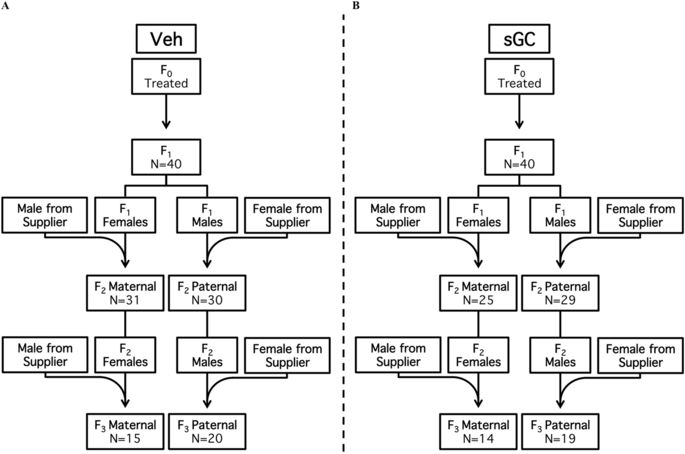
Such was a finding of a 2017 Canadian guinea pig study that was undertaken to better inform physicians of the transgenerationally inherited epigenetic effects of glucocorticoid treatments commonly prescribed during human pregnancies:

“This study presents the first evidence that prenatal treatment with sGC [synthetic glucocorticoid] results in transgenerational paternal transmission of hyperactivity and altered hypothalamic gene expression through three generations of young offspring. Female offspring appear to be more sensitive than male offspring to the programming effects of sGC, which suggests an interaction between sGC and sex hormones or sex-linked genes. Paternal transmission to F3 strongly implicates epigenetic mechanisms in the process of transmission, and small noncoding RNAs likely play a major role.”


Some details of the study included:

Veh[icle] was the control group initially treated with saline.

The study was informative and conclusive for the aspects studied. From the Methods section:

“Data from same-sex littermates were meaned to prevent litter bias. Sample sizes (N) correspond to independent litters, and not to the total number of offspring across all litters.

Power analyses based on previous studies determined N ≥ 8 sufficient to account for inter-litter variability and detect effects in the tests performed.”

https://www.nature.com/articles/s41598-017-11635-w “Prenatal Glucocorticoid Exposure Modifies Endocrine Function and Behaviour for 3 Generations Following Maternal and Paternal Transmission”

What is a father’s role in epigenetic inheritance?

The agenda of this 2017 Danish review was to establish a paternal role in intergenerational and transgenerational epigenetic inheritance of metabolic diseases:

“There are four windows of susceptibility which have major importance for epigenetic inheritance of acquired paternal epigenetic changes:

  1. paternal primordial germ cell (PGC) development,
  2. prospermatogonia stages,
  3. spermatogenesis, and
  4. during preimplantation.”

The review was a long read as the authors discussed animal studies. When it came to human studies near the paper’s end, though, the tone was of a “we know this is real, we just have to find it” variety. The authors acknowledged:

“To what extent the described DNA methylation changes influence the future health status of offspring by escaping remodeling in the preimplantation period as well as in future generations by escaping remodeling in PGC remodeling has yet to be determined.

These studies have not yet provided an in-depth understanding of the specific mechanisms behind epigenetic inheritance or exact effect size for the disease risk in offspring.

Pharmacological approaches have reached their limits..”

before presenting their belief that a hypothetical series of future CRISPR-Cas9 experiments will demonstrate the truth of their agenda.


The review focused on 0.0001% of the prenatal period for what matters with the human male – who he was at the time of a Saturday night drunken copulation – regarding intergenerational and transgenerational epigenetic inheritance of metabolic diseases.

The human female’s role – who she was at conception AND THEN what she does or doesn’t do during the remaining 99.9999% of the prenatal period to accommodate the fetus and prevent further adverse epigenetic effects from being intergenerationally and transgenerationally transmitted  – wasn’t discussed.

Who benefits from this agenda’s narrow focus?

If the review authors sincerely want to:

“Raise societal awareness of behavior to prevent a further rise in the prevalence of metabolic diseases in future generations..”

then EARN IT! Design and implement HUMAN studies to test what’s already known from epigenetic inheritance animal studies per Experience-induced transgenerational programming of neuronal structure and functions. Don’t disguise beliefs with the label of science.

http://jme.endocrinology-journals.org/content/early/2017/12/04/JME-17-0189.full.pdf “DNA methylation in epigenetic inheritance of metabolic diseases through the male germ line”

An update on brain zapping

This 2017 general-audience article entitled Ultrasound for the brain provided a hyped update on brain zapping:

“Ultrasound could potentially treat other movement disorders, as well as depression, anxiety and a host of intract­able neuropsychiatric disorders..

This could be a breakthrough..

Researchers hope one day to help people with neuropsychiatric conditions by repairing or resetting the relevant neural pathways..

The potential advantages, especially for deep brain areas, are huge..”

Though not the main thrust of the article, another potential use of ultrasound would be to activate drugs delivered to a specific area, as this image portrays:


Vanderbilt University was again at the forefront of brain zapping, as noted in What’s an appropriate control group for a schizophrenia study? for example. I hope the disclosures for subjects participating in Vanderbilt’s brain-zapping studies made it clear that:

“At high intensities, such as those used to relieve essential tremor, ultrasound’s effects are largely thermal: the tissue heats up and cells die.”


Comments are disabled because this post has somehow become a target for spammers. Readers can click the above control group link to comment.

Epigenetic mechanisms regulate bone growth

This 2017 Baltimore/China rodent study found:

“MSPC [Mesenchymal stem/progenitor cell] senescence is epigenetically controlled by the polycomb histone methyltransferase enhancer of zeste homolog 2 (Ezh2) and its trimethylation of histone H3 on Lysine 27 (H3K27me3) mark. Ezh2 maintains the repression of key cell senescence inducer genes through H3K27me3.

Our work establishes the role of Ezh2-H3K27me3 as a key epigenetic regulator that controls the onset and progression of MSPC senescence during the transition of fast- to slow-growing phase of long bones.

The self-renewal and proliferative capacity of cells in primary spongiosa of fast-growing bones are maintained by a high level of Ezh2-H3K27me3, whereas loss of Ezh2-H3K27me3 during late puberty leads to cell senescence.”

One of the experiments led to this note in the Discussion section:

“An epidemiologic study demonstrated that 60% of the risk of osteoporosis can be explained by the bone mineral acquired by early adulthood.

Our finding that deletion of Ezh2 in nestin+ cells during early puberty increases the risk of osteoporosis in later adulthood suggests that premature cellular senescence in the primary spongiosa region during the prepubertal or early pubertal phase may also be a major cause of osteoporosis/bone loss in later life.”


The study was short of explanations in several areas. For example, causes for the effect of “loss of Ezh2-H3K27me3 during late puberty” weren’t specified.

In another example, this statement referenced nestin-positive cells:

“Because these cells are likely no longer required in this particular region during adulthood, they stop proliferating and undergo senescence during late puberty.”

but what caused the cells to be “no longer required” wasn’t specified.

The “programmed” and “fate” words were used in the Abstract:

“Our data reveals a programmed cell fate change in postnatal skeleton..”

but not explained until the Discussion section:

“The senescence process is program[m]ed by a conserved mechanism because it restricts in a particular region of long bone and follows a specific time course.”

https://www.nature.com/articles/s41467-017-01509-0 “Programmed cell senescence in skeleton during late puberty”

Beliefs about genetic and environmental influences in twin studies

This 2017 Penn State simulation found:

“By taking advantage of the natural variation in genetic relatedness among identical (monozygotic: MZ) and fraternal (dizygotic: DZ) twins, twin studies are able to estimate genetic and environmental contributions to complex human behaviors.

In the standard biometric model when MZ or DZ twin similarity differs from 1.00 or 0.50, respectively, the variance that should be attributed to genetic influences is instead attributed to nonshared environmental influences, thus deflating the estimates of genetic influences and inflating the estimates of nonshared environmental influences.

Although estimates of genetic and nonshared environmental influences from the standard biometric model were found to deviate from “true” values, the bias was usually smaller than 10% points indicating that the interpretations of findings from previous twin studies are mostly correct.”

The study model’s input was five phenotypes that varied the degrees of:

  1. Genetic and epigenetic heritability;
  2. Shared environmental factors; and
  3. Nonshared environmental factors.

Item 1 above was different than the standard model’s treatment of heritable factors, which considers only additive genetic influences.

The authors cited studies for moderate and significant shared environmental influences in child and adolescent psychopathology and parenting to support the model’s finding that overall, item 2 above wasn’t underestimated.


I wasn’t satisfied with the simulation’s description of item 1 above. With

  1. Environmental influences accounted for elsewhere, and
  2. No references to transgenerational epigenetic inheritance,
  3. Randomness seemed to be the only remaining explanation for an epigenetic heritability factor.

Inserting the model’s non-environmental randomness explanation for epigenetic heritability into the abstract’s statement above exposed the non sequitur:

In the standard biometric model when MZ or DZ twin similarity differs from 1.00 or 0.50, respectively, the variance that should be attributed to genetic [and non-environmental stochastic heritability] influences is instead attributed to nonshared environmental influences, thus deflating the estimates of genetic [and non-environmental stochastic heritability] influences and inflating the estimates of nonshared environmental influences.

Why did the researchers design their model with an adjustment for non-environmental epigenetic heritability? Maybe it had something to do with:

“Estimates of genetic and nonshared environmental influences from the standard biometric model were found to deviate from “true” values.”

In any event, I didn’t see that this simulation was much more than an attempt to reaffirm a belief that:

“The interpretations of findings from previous twin studies are mostly correct.”


Empirical rather than simulated findings in human twin study research are more compelling, such as The primary causes of individual differences in DNA methylation are environmental factors with its finding:

“Differential methylation is primarily non-genetic in origin, with non-shared environment accounting for most of the variance. These non-genetic effects are mainly tissue-specific.

The full scope of environmental variation remains underappreciated.”

https://link.springer.com/article/10.1007/s10519-017-9875-x “The Impact of Variation in Twin Relatedness on Estimates of Heritability and Environmental Influences” (not freely available)

Does a societal mandate cause DNA methylation?

This 2017 worldwide meta-analysis of humans of recent European ancestry found:

“Here we provide evidence on the associations between epigenetic modifications-in our case, CpG methylation and educational attainment (EA), a biologically distal environmental factor that is arguably among the most important life-shaping experiences for individuals. Specifically, we report the results of an epigenome-wide association study [EWAS] meta-analysis of EA based on data from 27 cohort studies with a total of 10,767 individuals.”

These researchers found no association between the societal mandate of educational attainment and the most widely studied category of epigenetic marks.


Society mandates year after year of school attendance. This mandate continues on to require a four-year degree just to get an entry-level job in many lines of work.

The researchers stated:

“Our EWAS associations are small in magnitude relative to EWAS associations reported for more biologically proximal environmental factors.”

educational attainment

Panels a and b display the same results but with a different scaling of the y axis in order for smaller effect sizes to be visible.

Smoking, alcohol consumption, and maternal smoking were measured to have detrimental effects. BMI was fun with numbers.

Would a study categorize it as detrimental when an individual breaks from expectations about what they should do, and terminates their educational attainment? One individual I know didn’t go to graduate school after Princeton University although they were capable of quality graduate and doctorate work. It would be detrimental to their life if they stopped a software development career that pays a million dollars a year to go back to school.

Would a study evaluate it as beneficial when an individual lengthens their educational attainment past society’s thirteen-year educational requirement? Would these extra four years still be considered beneficial when – after foregoing four more years of full-time income, and accumulating tens of thousands of dollars of nondischargeable debt – they achieve an expected outcome of an entry-level job, and then can’t unassistedly provide for their basic needs?

Are further epigenetic studies of educational attainment as an environmental factor really worthwhile?

Why not use research funds and efforts on more promising topics like human transgenerational epigenetic inheritance? Suitable subjects may already be selected for this research, as several of the “27 cohort studies” that provided data for this meta-analysis included at least three human generations.

http://www.nature.com/mp/journal/vaop/ncurrent/full/mp2017210a.html “An epigenome-wide association study meta-analysis of educational attainment”


These authors preregistered their analysis plan. This practice discourages fishing expeditions that researchers are so often tempted to go on when study data provides evidence for the null hypothesis, as this meta-analysis did.

I was puzzled that they described part of the preregistered analysis plan to be:

“Hypothesis-free as it is performed genome-wide without an expected direction of effect for individual CpG loci.”

Their abstract, though, declared:

“If our findings regarding EA can be generalized to other biologically distal environmental factors, then they cast doubt on the hypothesis that such factors have large effects on the epigenome.”

Was this meta-analysis “hypothesis-free” or did it have “the hypothesis that such factors have large effects on the epigenome”?

Here’s 48 minutes of Brian Nosek, a co-founder of the Open Science Framework (where this meta-analysis was preregistered):

http://rationallyspeakingpodcast.org/172-why-science-needs-openness-brian-nosek/

One example of how experience changes the brain

This 2017 California rodent study found:

“Neural representations within the mouse hypothalamus, that underlie innate social behaviours, are shaped by social experience.

In sexually and socially experienced adult males, divergent and characteristic neural ensembles represented male versus female conspecifics [members of the same species]. However, in inexperienced adult males, male and female intruders activated overlapping neuronal populations.

Sex-specific neuronal ensembles gradually separated as the mice acquired social and sexual experience. In mice permitted to investigate but not to mount or attack conspecifics, ensemble divergence did not occur. However, 30 minutes of sexual experience with a female was sufficient to promote the separation of male and female ensembles.

These observations uncover an unexpected social experience-dependent component to the formation of hypothalamic neural assemblies controlling innate social behaviours. More generally, they reveal plasticity and dynamic coding in an evolutionarily ancient deep subcortical structure that is traditionally viewed as a ‘hard-wired’ system.”

Hat tip to Neuroskeptic for both alerting me to the study and simplifying its overly-dense graphics.

http://www.nature.com/nature/journal/v550/n7676/full/nature23885.html “Social behaviour shapes hypothalamic neural ensemble representations of conspecific sex” (not freely available)