Humans individually evolve by..?

This 2020 UK evolutionary biology article was part of a “Fifty years of the Price equation” issue:

“Genetic and non-genetic inheritance usually produce a phenotype [the composite of an organism’s characteristics, including its developmental, biophysical, and behavioral traits] through a highly complex developmental process that also relies on many features of the world over which the parents have little, if any, control. As a consequence, the relationship between the phenotypes of parents and offspring, the offspring–parent distribution, can take on many forms and vary from one place or time to another.

The extension of transmission and quantitative genetic models retain the assumption that the relationship between inheritance and phenotypic variation is such that it is sufficient to focus on the transmissibility of inherited variants or additive variance rather than phenotype development.

The concept of heredity as a developmental process is a more significant departure from traditional notions of inheritance. The mechanisms of non-genetic inheritance, such as parental behaviour, do not only affect the parent–offspring resemblance, but also the generation of variation and individual fitness.

Any feature of the parents, including their DNA sequence, physiology and behaviour can carry information about the conditions that the offspring will encounter. That this information content itself must be an evolving property is perhaps most evident when heredity is viewed as a developmental process; a developmental perspective is particularly useful when the aim is to study how the evolutionary process itself is evolving.”

https://royalsocietypublishing.org/doi/full/10.1098/rstb.2019.0366 “Different perspectives on non-genetic inheritance illustrate the versatile utility of the Price equation in evolutionary biology”


This article and the “Fifty years of the Price equation” issue’s other articles had numerous mentions of individual evolution and behavior. They acknowledged “a diversity of perspectives” but I didn’t see my 2015 page’s perspective that it’s up to each individual to mold their own phenotype. In it, the Price equation prompted the question:

“How does a phenotype influence its own change?”

which I applied to a person individually evolving.

The article and the issue’s other articles tinkered with equations, and cited plant, animal, and human studies with frameworks that didn’t include investigating causes for the observed effects. These often wasted resources by providing solutions that addressed symptoms instead of addressing the uninvestigated causes.

For example, I didn’t see any mentions of how an individual’s pain may drive their phenotype. Pain induced by threats to survival are common parts of animal experiments that create and investigate phenotypes of epigenetic responses to stressors.

Regarding possible human applicability, how can a person remedy their undesirable traits and acquire desirable traits without addressing a root cause?

Unlike animals, people can therapeutically resolve underlying causes without the timing, duration, and intensity of efforts being externally determined. A human’s efforts to change their phenotype don’t have to mimic animal studies’ forcible approaches with drugs, etc., directed on someone else’s schedule. Addressing pain may be required for such efforts.


The article also promoted an outdated paradigm of epigenetic transgenerational inheritance:

“The transgenerational stability of some epigenetic states may fall within the same range as the stability of behaviours that are learnt from parents. Quantifying the environmental sensitivity and transgenerational stability of epigenetic variation has emerged as a major research focus over the past decade.”

As explained in Transgenerational epigenetic inheritance of thyroid hormone sensitivity:

“Observing the same phenotype in each generation is NOT required for transgenerational epigenetic inheritance to exist. Animal transgenerational studies have shown that epigenetic inheritance mechanisms may both express different phenotypes for each generation, and entirely skip a phenotype in one or more generations.”

Considering only “transgenerational stability of epigenetic variation” as proof will misinterpret this supporting evidence.

Aging as a disease

This 2020 interview was with UC Berkeley researchers:

“Lack of cure goes hand in hand with inability to accept that this [aging] is disease. For example, there was some resistance to accept tuberculosis as the actual disease. When there was no antibiotics or cure against it, people tended to discard it and said, oh, it’s just nerves, you need to go to a sanatorium and relax.

It used to be that, please do not diagnose that there’s bacterial meningitis, because there is no cure. Whatever else you can come up with, do it first. Now, diagnose it as fast as possible, so we can put patients on antibiotics immediately. My prediction is that the same will happen to aging.

We and others have demonstrated that you can, from the outside, either by some signal or blood therapy, parabiosis, something like that, some intervention, jump-start aged resident stem cells in tissue and get them to behave as, by whatever means you’re measuring it, young or a lot closer to young than they would normally be. Intrinsic capacity of them to act that way is there.

As we grow old, the environment of differentiated niche stem cells does not provide productive instruction. It provides counterproductive instruction, which, overall, tells them just to remain quiescent and do nothing.

It’s not a program to kill you. It’s the lack of a program to keep you young and healthy for longer than 90 years.

If your program was that whenever you’re a damaged, differentiated cell, you simply trigger apoptosis and activate stem cells to make new cells, we would live much longer and healthy. The program right now is to resist being dead and replaced as much as you can for as long as you can.

So cells produce too much TGF beta [transforming growth factor-β] because it helps them to keep functioning even when they’re damaged. That too much TGF beta, ironically, inhibits resident stem cells, so they are not replacing old cells with new ones. It’s almost like you have old bureaucrats that are running an organization and do not want to be replaced.

Our thoughts are probably different from most people, because we go to the data and the data show that they’re not really fully what authors wrote in the abstract or conclusion. When you look at that, my thought is that much more work needs to be done before it [partial cellular reprogramming] could be even thought to be commercialized.”

https://www.lifespan.io/news/apheresis-with-profs-irina-michael-conboy/ “Irina & Michael Conboy – Resetting Aged Blood to Restore Youth”


Keep in mind that although the interviewers’ organization had changed, their advocacy position as displayed in A blood plasma aging clock persisted. One of the interviewees is on the interviewers’ organization scientific advisory board, and they also have an interest in downgrading competing approaches.

Despite caveats, this interview was these researchers’ perspective in their decades-long investigations of aging. I included a graphic and below quote from Organismal aging and cellular senescence to note how their paradigm compared with other aging researchers:

“In our view, recent evidence that

  • Senescence is based on an unterminated developmental growth program and finding that
  • The concept of post-mitotic senescence requires activation of expansion, or ‘growth’ factors as a second hit,

favor the assumption that aging underlies a grating of genetic determination similarly to what is summarized above under the pseudo-programmed causative approach.”

Well done, WHO, carefully played

A follow up to The WHO has a financial incentive to declare COVID-19 a pandemic:

Today CNBC reported Investors in World Bank’s ‘pandemic bonds’ face big losses due to the coronavirus outbreak

“According to ratings agency DBRS Morningstar, investors who hold the riskier of the two bonds could be losing their entire principal amount soon, with the firm saying that the price should have dropped more than 80%.

According to the World Bank, the outbreak would need to last at least 12 weeks, and have more than 2,500 deaths for the riskier of the two bonds, and 250 deaths for the other. There must also be more than 20 deaths in a second country.

When all those conditions are fulfilled, it triggers a payout to selected countries in need of help to contain the outbreak, and investors lose some or all of their money. That date works out to be Mar. 24, going by the 12-week period, and the start date of the outbreak – Dec. 31, according to the WHO, said DBRS Morningstar.

The World Bank did not respond to CNBC’s request for comment.”


Regarding WHO terminology, from The Cyclical Nature of Disease:

“The World Health Organization (WHO) made the announcement on Wednesday, March 11, 2020, that the Coronavirus is a “pandemic” which is actually not as bad as an Epidemic which is a term that describes any problem that has grown out of control. An epidemic is therefore defined as “an outbreak of a disease that occurs over a wide geographic area and affects an exceptionally high proportion of the population.”

Consequently, an epidemic requires a high proportion of society to be infected and is an event in which a disease is actively spreading. That is clearly not the case with the coronavirus. since the proportion of society infected has not even reached 1/10th of one percent of the population.

In contrast, the term pandemic relates to geographic spread and is used to describe a disease that affects a whole country or the entire world. This has nothing to do with the proportion of the population that is infected.”


Regarding WHO timing, last week The Guardian reported:

First Covid-19 case happened in November, China government records show – report

“The first case of someone suffering from Covid-19 can be traced back to 17 November, according to media reports on unpublished Chinese government data.

The report, in the South China Morning Post, said Chinese authorities had identified at least 266 people who contracted the virus last year and who came under medical surveillance, and the earliest case was 17 November – weeks before authorities announced the emergence of the new virus.

The Chinese government was widely criticised over attempts to cover up the outbreak in the early weeks, including crackdowns on doctors who tried to warn colleagues about a new Sars-like virus which was emerging in the city of Wuhan in Hubei province.

The data obtained by the Post, which the Guardian has not been able to verify, said a 55-year-old from Hubei province could have been the first person to contract Covid-19. For about one month after that date there were one to five new cases reported each day, the report said, and by 20 December there were 60 confirmed cases.

Official statements by the Chinese government to the World Health Organisation reported that the first confirmed case had been diagnosed on 8 December.”


Looking past the headlines, we have time to ask cui bono questions while we’re sitting at home:

  • Who’s benefiting from (medical, economic, social, and political) reports on and actions taken with COVID-19?
  • Who’s suffering from these reports and actions?

Recover your sanity

Men, it has been well said:

  • Think in herds; it will be seen that
  • They go mad in herds, while
  • They only recover their senses slowly, one by one.

During the great plague, which ravaged all Europe between the years 1345 and 1350, it was generally considered that the end of the world was at hand.

‘But the facts, my dear fellow,’ said his friend, ‘the facts do not agree with your theory.’ ‘Don’t they?’ replied the philosopher, shrugging his shoulders, ‘then, tant pis pour les faits’ – so much the worse for the facts!”

Charles Mackay, 1841

https://www.gutenberg.org/ebooks/24518 “Memoirs of Extraordinary Popular Delusions and the Madness of Crowds”

Alfred Jacob Miller “Hunting buffalo” 1837
“Establishing the hidden communication networks in large self-organized groups facilitates a quantitative understanding of behavioral contagion.

An individual will be more likely to respond (is more susceptible) if it:

  • Is strongly connected to the initiator (short path length), and if it
  • Has neighbors which are strongly connected to each other.”

Why is it so difficult to live your own life?

The WHO has a financial incentive to declare COVID-19 a pandemic

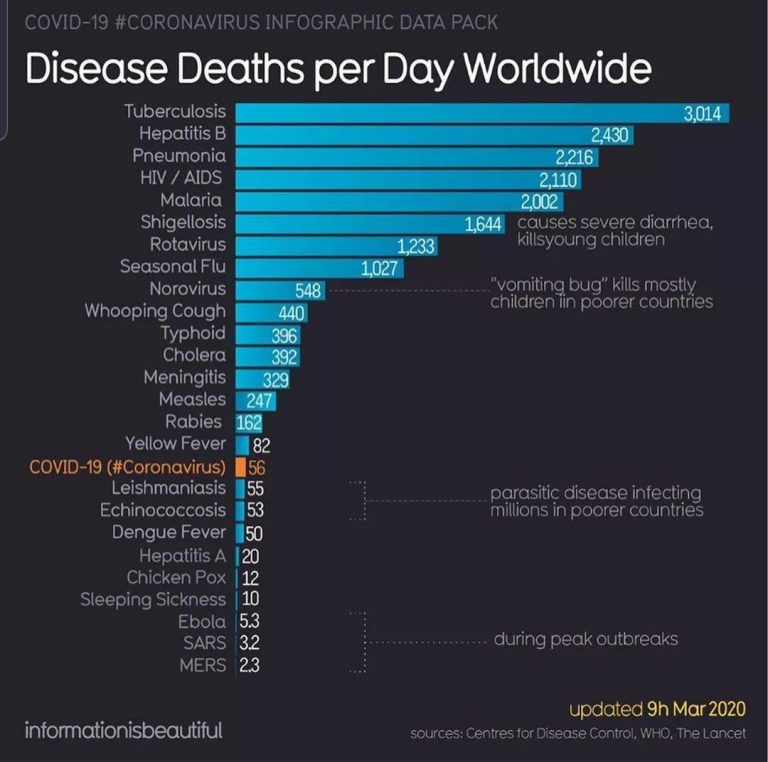
“The percent of the population being affected has not even reached 1/10th of one percent. When we look at this Coronavirus scare, it does not even compare to all the deaths taking place every single day from a host of other diseases nobody bothers to ever mention. This really makes me wonder just who is orchestrating this panic and is the purpose really to expand government powers?”

The Cyclical Nature of Disease

“The WHO has a financial incentive in declaring this a pandemic. It issued Pandemic Bonds paying 7% interest which now the WHO does not have to repay.”

Half-Billion $ Pandemic Derivatives

See Well done, WHO, carefully played to follow up.

Train your immune system every day!

This 2019 US review subject was β-glucan:

“β-1,3-Glucans (hereafter referred to as glucan) are natural molecules able to significantly improve our health. In human studies, the tested (and suggested) daily dose remains in the range of 100–500 mg for stimulation of the immune system, whereas for a decrease in cholesterol levels a daily dose of 3 g is recommended.

Glucan does not represent essential nutrients, but it might be successfully used not only for:

  • Improvement of immune functions, but also to improve the general quality of life via
  • Improvements of immune status,
  • Lowering cholesterol,
  • Improving blood glucose levels and
  • Reduction of stress.

ClinicalTrials.gov summarizes 177 [now 207 with 110 completed] β-glucan clinical trials, mostly in cancer, gastrointestinal tract therapy, lowering cholesterol and improvements of immune reactions.

The question is not if glucans will move from food supplement to widely accepted drug, but how soon.

Reactions known to be influenced by glucan are represented in white, reactions where glucan has no confirmed effects are shown in black. The first defensive body response to infection results from formation of the anorexia cytokines (IL-1, IL-6, IL-8, and TNF-α).”

https://www.mdpi.com/1420-3049/24/7/1251/htm “Beta Glucan: Supplement or Drug? From Laboratory to Clinical Trials”

The review is also indexed at https://www.betaglucan.org/i-p/ under “Immunomodulator”


I’m curating this review on Day 12 of a self-quarantine after coming back from Milano, Italy, Monday, February 24, 2020. The previous Friday into Saturday I flew to Milano sitting with a group of elderly Italians who were returning from vacation.

On Saturday my traveling companion and I used the Milano rail and crowded subway system to go downtown. On Sunday we used their crowded rail, crowded bus, and crowded ferry systems to visit Como, Bellagio, and Menaggio.

I don’t think we could have mixed in more with people during transits, touristing, and Carnevale celebrations.

IMG_9539

After returning to our hotel Sunday evening, we heard about the coronavirus outbreak south of Milano and the closing of ten towns. We changed flights and departed for the US early Monday morning.

Neither of us have had any signature symptoms of COVID-19 (fever, shortness of breath, dry cough). Our daily diet the past few years included β-glucan from steel-cut oats (~3 g) and from a 1/3, 1/6 yeast cell wall supplement.

Coincidence?

Each of our futures will depend on what we do Now to prepare.

Take responsibility for your one precious life.

Moonrise at sunrise with Venus

Wander into creativity?

This 2019 US study investigated the context of creative ideas:

“Creative inspiration routinely occurs during moments of mind wandering. Approximately 20% of ideas occurred in this manner.

Although ideas that occurred while participants were both on task and mind wandering did not differ in overall quality, there were several dimensions on which they did consistently differ. Ideas that occurred while mind wandering were reported to be experienced with a greater sense of ‘aha’ and were more likely to involve overcoming an impasse.

The present findings are consistent with the view that spontaneous task-independent mind wandering represents a source of the inventive ideas that individuals have each day. This potential function of mind wandering may help to explain why a mental state that can be associated with significant negative outcomes is nevertheless so ubiquitous.”

“Would you say the idea felt like an ‘aha!’ moment?” and “How creative do you feel the idea was?” were the closest items to emotional measures. “How important do you think this idea is?” and several months later “How important has the idea proven to be overall?” were used to measure importance.

https://labs.psych.ucsb.edu/schooler/jonathan/sites/labs.psych.ucsb.edu.schooler.jonathan/files/pubs/0956797618820626.pdf “When the Muses Strike: Creative Ideas of Physicists and Writers Routinely Occur During Mind Wandering”

I came across this study from its reference in How Productivity Apps Can Make Us Less Productive (And Less Happy).


The study’s design missed opportunities to discover sources of creative ideas and feelings of importance. It focused on effects and intentionally disregarded causes, despite asserting that “mind wandering represents a source of inventive ideas.”

Experiments were subjectively biased for a framework that considered ideas as originating solely from a person’s thinking brain. A framework like Primal Therapy that demonstrated how ideas may arise as defenses against feelings wasn’t considered, although relevant.

Let’s use the finding “Ideas that occurred while mind wandering were more likely to involve overcoming an impasse” as an example for a Primal Therapy framework’s view:

  1. A person who has a seemingly unsolvable work problem probably encounters feelings of helplessness.
  2. Staying busy with tasks can distract them from these feelings.
  3. During times of less cognitive activity, though, these feelings can have more impetus.
  4. The resultant discomfort will trigger ideas to help ward off helpless feelings.

Regarding importance judgments, there are many needs a person develops and tries to satisfy as substitutes for real needs that weren’t fulfilled. I’ve focused on the need to feel important in blog posts such as Your need to feel important will run your life, and you’ll never feel satisfied.

An evolutionary view of transgenerational epigenetic inheritance

This 2020 Swiss/German review mainly cited weed, worm, and yeast studies:

“RNA interference-related mechanisms can mediate the deposition and transgenerational inheritance of specific chromatin modifications in a truly epigenetic fashion.

Epigenetics was initially defined as any heritable change in gene expression patterns without changes in the DNA sequence. Now, epigenetic phenomena are often characterized as ‘gene expression changes that are mutation independent and heritable in the absence of the triggering event’, a definition we will follow in this review. We note that this definition can be expanded to include protein only-based inheritance mechanisms that do not necessarily cause changes in gene expression.

Gene silencing can persist over multiple generations in the germline of C. elegans. Gene repression is typically maintained without the initial trigger for three to seven generations and occasionally for tens of generations. In contrast, silencing of somatically expressed genes mostly affects only the subsequent generation through nonepigenetic parental effects.

In the presence of an ‘enabling’ mutation, primary siRNAs [small interfering RNAs] can trigger an RNAe [RNA-induced epigenetic silencing] response. Secondary siRNA amplification is required for transgenerational inheritance.

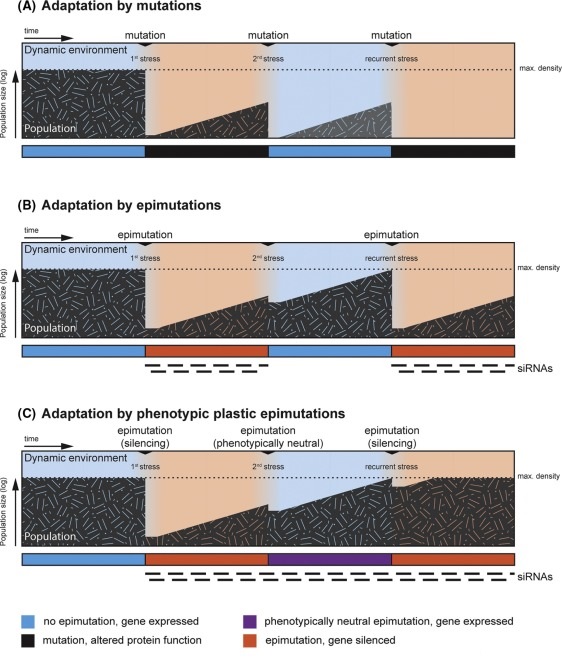
The fitness of a population in a dynamic environment strongly depends on the ability of individuals to adapt to the new condition as well as to remember, inherit, and forget such adaptation:

  • (A) A well-adapted population (grey) is at its maximal density (dotted line) in a given niche until an environmental change (1st stress) creates a bottleneck. Only few individuals can adapt through mutations and repopulate the niche. After the environment changes back to the initial blue state, only individuals that acquire rare counteracting mutations survive, often leading to extinction of the population.
  • (B) Individuals of a population in the red state can gain beneficial epimutations through siRNAs and repopulate the niche. When exposed again to the blue state, the epimutations can be quickly reversed and the population rapidly reaches maximal density. After recurrence of the red state, organisms establish de novo epimutations with the same low frequency as when they first encountered this state.
  • (C) In contrast, organisms that can maintain the memory of a beneficial silencing event can quickly re-establish beneficial epimutations and grow to full density. Such memory can be maintained by phenotypically neutral epimutations, marked by the continuously high production of siRNAs without substantial reductions in the expression of a gene. A population that can adapt through phenotypically plastic epimutations is predicted to have a maximal fitness advantage in a dynamic environment.”

The Concluding Remarks section included:

“RNA-mediated epigenetic responses could contribute to adaptation.

Even though RNAe may yield significant adaptive advantages, a high induction frequency could cause silencing of multiple essential genes and therefore be detrimental. Hence, it is plausible that mechanisms would have coevolved that counteract silencing.

Similarly, if constituting a bet-hedging strategy to cope with ever-changing environments, permanent fixation of an acquired silencing response would not constitute a selective advantage and mechanisms that modify and limit the duration of RNAe would be predicted.”

https://www.sciencedirect.com/science/article/pii/S0168952519302598 “Small RNAs in the Transgenerational Inheritance of Epigenetic Information”


The review’s arguments were based on evolutionary selective advantages and less-complex organisms. It predicted that there would be an endpoint generation as in the (A) case of the above graphic.

Were the mechanisms in the (B) case necessarily transgenerational throughout? The review further explained:

“Epimutations tend to occur in hot spots (e.g., in stress-related or nutritional pathway genes) and can potentially silence several homologous genes simultaneously. Incomplete penetrance of a beneficial epimutation by stochastic loss of siRNAs [59] can result in loss of adaptation in a given environment (red state), but can be beneficial if the previous blue state is re-established. However, when the environment changes back to the red state, epimutations must initiate de novo, at the same low frequency as when the population first encountered this state.”

The study cited at 59 found:

“A feedback between siRNAs and RNAi genes determines heritable silencing duration”

but not “Incomplete penetrance of a beneficial epimutation by stochastic loss of siRNAs.” Hmm.

In any event, the review stated:

“Evidence for naturally occurring RNAe-related phenomena in other animals is scarce and we should be cautious about inferring RNAe as a widely conserved phenomenon.”

It’s encouraging to read studies that find benefits to epigenetic transgenerational inheritance, albeit in organisms that are less complex than rodents and humans.


The epigenetics of perinatal stress

This 2019 McGill review discussed long-lasting effects of perinatal stress:

“Epigenetic processes are involved in embedding the impact of early-life experience in the genome and mediating between social environments and later behavioral phenotypes. Since these phenotypes are apparent a long time after early experience, changes in gene expression programming must be stable.

Although loss of methylation in a promoter is necessary for expression, it is not sufficient. Demethylation removes a barrier for expression, but expression might be realized at the right time or context when needed factors or signals are present.

DNA methylation anticipates future transcriptional response to triggers. Comparing steady-state expression with DNA methylation does not capture the full meaning and scope of regulatory roles of differential methylation.

A model for epigenetic programming by early life stress:

  1. Perinatal stress perceived by the brain triggers release of glucocorticoids (GC) from the adrenal in the mother prenatally or the newborn postnatally.
  2. GC activate nuclear glucocorticoid receptors across the body, which epigenetically program (demethylate) genes that are targets of GR in brain and white blood cells (WBC).
  3. Demethylation events are insufficient for activation of these genes. A brain specific factor (TF) is required for expression and will activate low expression of the gene in the brain but not in blood.
  4. During adulthood a stressful event transiently triggers a very high level of expression of the GR regulated gene specifically in the brain.

Horizontal arrow, transcription; circles, CpG sites; CH3 in circles, methylated sites; empty circles, unmethylated CpG sites; horizon[t]al curved lines, mRNA.”

Review points discussed:

  • “Epigenetic marks are laid down and maintained by enzymes that either add or remove epigenetic modifications and are therefore potentially reversible in contrast to genetic changes.
  • Response to early life stress and maternal behavior is also not limited to the brain and involves at least the immune system as well.
  • The placenta is also impacted by maternal social experience and early life stress.
  • Most studies are limited to peripheral tissues such as saliva and white blood cells, and relevance to brain physiology and pathology is uncertain.
  • Low absolute differences in methylation seen in most human behavioral EWAS raise questions about their biological significance.

  • Although post-mortem studies examine epigenetic programming in physiologically relevant tissues, they represent only a final and single stage that does not capture dynamic evolution of environments and epigenetic programming in living humans.”

https://www.ncbi.nlm.nih.gov/pmc/articles/PMC6952743/ “The epigenetics of perinatal stress”


Other reviewers try to ignore times when we were all fetuses and newborns. For example, in the same journal issue was a Boston review of PTSD that didn’t mention anything about earliest times of human lives! Those reviewers speculated around this obvious gap on their way to being paid by NIH.

Why would researchers ignore perinatal stress events that prime humans for later-life PTSD? Stress generally has a greater impact on fetuses and newborns than on infants, and a greater impact on infants than on adults.

Masters of manipulating their host

This 2020 French review subject was parasitical influences on host epigenetic processes:

“Parasites have become masters of manipulating their host cells, exploiting signaling, and metabolic pathways to hijack host gene expression to their own advantage. These intracellular parasites have developed a wide range of strategies that affect transcriptional machineries and epigenetic events in the host cell nucleus.

Parasite effectors regulate host transcription. Secretion of numerous parasite effector proteins are key processes during parasite infection. Parasite effectors deregulate host expression profile which lead to host cell transformation, or escape from the host immune system to allow parasite persistence and survival.”

parasites
The first two of the six strategies discussed are shown above:

  1. “Induction of a host epigenetic enzyme. Parasite infection leads to upregulation of SMYD3, a methyltransferase that activates genes involved in host transformation, through H3K4 trimethylation.
  2. Secreting effector proteins that drive epigenetic repression of host genes. TEEGR activates a host chromatin modifier able to repress transcription of immune system genes through H3K27 trimethylation.”

https://link.springer.com/article/10.1007/s00281-020-00779-z “The clever strategies used by intracellular parasites to hijack host gene expression” (not freely available)


I used a “parasites” paradigm while living in the Washington DC area for three decades to help understand what goes on there. Moved away several years ago, but haven’t changed my thinking that all six of this paper’s parasite strategies had analogous human actions.

Other curated papers that explored the review’s topic include:

Do epigenetic clocks measure causes or effects?

Starting the sixth year of this blog with a 2020 article authored by the founder of the PhenoAge epigenetic clock methodology:

“The Ge[r]oscience paradigm suggests that targeting the aging process could delay or prevent the risk of multiple major age-related diseases. We need clinically valid measures of the underlying biological process and/or classification criteria for what it means to be biologically, rather than chronologically, “aged”.

The majority of aging biomarkers, including the first-generation epigenetic clocks, are developed using cross-sectional data, in which the researchers take a variable that proxies aging (e.g. chronological age) and apply supervised machine learning, or deep learning, approaches to predict that variable using tens to hundreds of thousands of input variables. The problem with this approach is that it doesn’t account for mortality selection. This biases the algorithm to select markers that are not causal, but instead correlative with aging.

When considering individuals of the same chronological age, do those with higher epigenetic age look phenotypically older on average (e.g. have higher mortality rates, greater disease burden, and worse physical and cognitive functioning)? FEV1 [forced expiratory volume in one second] declined at a faster rate for individuals with higher baseline GrimAge and/or PhenoAge. A similar finding was observed for the decline in grip strength as a function of GrimAge; however, the rate of change for any of the epigenetic clocks was not associated with rate of change in any performance measure.

Loci that show consistent trends with chronological age, even at higher ages, are likely not causal. By using a cross-sectional study design for biomarker development there was a propensity away from selecting causal loci, to the point where fewer causal loci were selected than if loci had been chosen at random.

The power of these measures as diagnostic and prognostic may stem from the use of longitudinal data in training them. Rather than continuing to train chronological age predictors using diverse data, it may be more advantageous to retrain some of the existing measures by predicting longitudinal outcomes.”

https://academic.oup.com/biomedgerontology/advance-article-abstract/doi/10.1093/gerona/glaa021/5717592 “Assessment of Epigenetic Clocks as Biomarkers of Aging in Basic and Population Research” (not freely available)


A cited 2019 study modeled corrections to “account for mortality selection.” It modified datasets “by incorporating correlates of mortality identified from longitudinal studies, allowing cross-sectional studies to effectively identify the causal factors of aging.”

https://academic.oup.com/biomedgerontology/advance-article-abstract/doi/10.1093/gerona/glz174/5540066 “Biomarkers for Aging Identified in Cross-sectional Studies Tend to Be Non-causative” (not freely available)


The article didn’t present a complete case to determine whether an individual’s epigenetic clock measurements over time may show causes of biological aging.

Other viewpoints include:

1. A blood plasma aging clock presented evidence with its 46-protein conserved aging signature that some causes of biological aging are under genetic control. If the principle of this finding applies to CpG DNA methylation, the statement:

Loci that show consistent trends with chronological age, even at higher ages, are likely not causal.

may not hold. Such epigenetic changes could be among both the causes of senescence and the effects of evolution’s selection mechanisms.

2. An epigenetic clock review by committee, particularly in:

  • Challenge 3 “Integration of epigenetics into large and diverse longitudinal population studies”;
  • Challenge 5 “Single-cell analysis of aging changes and disease”; and
  • Table 1 “Major biological and analytic issues with epigenetic DNA methylation clocks” with single-cell analysis as the solution to five Significant issues.

Drink tea today

This 2020 Chinese paper reviewed this century’s research into tea:

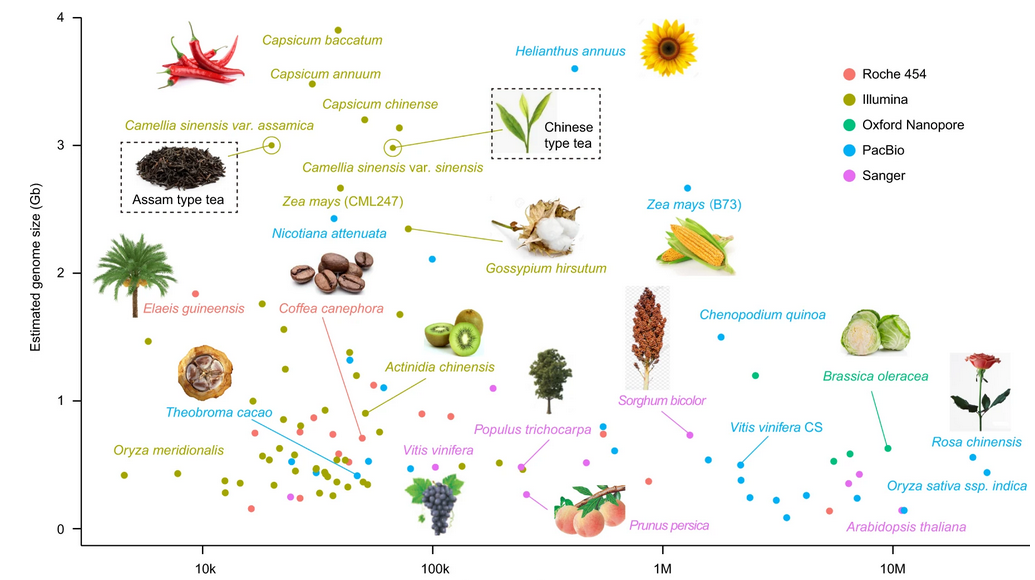
“Tea plants contain rich and unique characteristic secondary metabolites, such as catechins, theanine, and caffeine, which are essential to the formation of tea quality. It is not only the three major types of secondary metabolites but also the volatile terpenoids, saponins, polysaccharides, and other phenolic conjugates that contribute to the beneficial health effects and the enjoyable flavors of various teas.

The contents of these secondary metabolites vary greatly among different varieties and Camellia species. They also differ significantly in several morphological traits (e.g., leaf size) and stress resistance characteristics (e.g., cold tolerance), showing a divergent genetic makeup. The genome sequence of a single individual of a tea plant variety cannot represent the entire gene pool.

Modern transgenic breeding technology has provided us a new solution for the molecular design of breeding strategies. Although great progress has been made in the last two decades, the genomics and molecular biology of tea plants are still not fully understood. Compared to other crops such as rice, there is a long way to go.”

https://www.nature.com/articles/s41438-019-0225-4 “Tea plant genomics: achievements, challenges and perspectives”

Trained immunity responses to bacterial infections

This 2019 Swiss rodent study investigated immune responses to five types of bacterial infections:

“The innate immune system recalls a challenge to adapt to a secondary challenge, a phenomenon called trained immunity. Trained immunity protected mice from a large panel of clinically relevant bacterial pathogens inoculated systematically and locally to induce peritonitis, enteritis and pneumonia.

Induction of trained immunity remodeled bone marrow and blood cellular compartments, providing efficient barriers against bacterial infections. Protection was remarkably broad when considering the pathogens and sites of infection tested.

We are running experiments to delineate the length of protection conferred by trained immunity. Trained immunity is most typically induced with β-glucan.

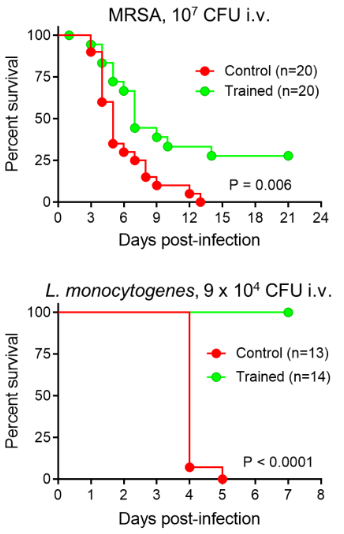
Mice were injected with methicillin-resistant Staphylococcus aureus (MRSA). Trained mice survived better than control mice (31% vs. 0% survival) and had 10-fold less bacteria in blood 2 days post-infection.

Mice were challenged with a lethal dose of Listeria monocytogenes. Most strikingly, all trained mice survived infection while all control mice died within 5 days. Bacteria were not detected in blood collected from trained mice 2 and 3 days post-infection.”

https://academic.oup.com/jid/advance-article/doi/10.1093/infdis/jiz692/5691195 “Trained immunity confers broad-spectrum protection against bacterial infections”


One of the coauthors also published: