A book review of “Neuroepigenetics and Mental Illness”

A 2018 online book “Neuroepigenetics and Mental Illness” was published at https://www.sciencedirect.com/bookseries/progress-in-molecular-biology-and-translational-science/vol/158/suppl/C (not freely available). Three chapters are reviewed here, with an emphasis on human studies:


Actually, I won’t waste my time or your time with what I planned to do. The lack of scientific integrity and ethics displayed by the book’s publisher, editor, and contributors in the below chapter spoke volumes.

How can the information in any other chapter of this book be trusted?


“Chapter Twelve: Transgenerational Epigenetics of Traumatic Stress”

This chapter continued propagating a transgenerational meme that had more to do with extending paradigms than advancing science. The meme is that there are adequately evidenced transgenerational epigenetic inheritance human results.

As noted in Epigenetic variations in metabolism, there aren’t any published human studies that provide incontrovertible evidence from the F0 great-grandparents, F1 grandparents, F2 parents, and F3 children to confirm definitive transgenerational epigenetic inheritance causes and effects. Researchers urgently need to do this human research, and stop pretending that it’s already been done.

How did the book’s editor overlook what this chapter admitted?

“Literature about the inheritance of the effects of traumatic stress in humans has slowly accumulated in the past decade. However, it remains thin and studies in humans also generally lack clear “cause and effect” association, mechanistic explanations or germline assessment.”

Were the publisher and editor determined to keep the chapter heading – and the reviewers determined to add another entry to their CVs – in the face of this weasel-wording?

“In conclusion, although less studied from a mechanistic point of view, inter- and possibly transgenerational inheritance of the effects of traumatic stress is supported by empirical evidence in humans.”

See the comments below for one example of the poor substitutes for evidence that propagators of this transgenerational meme use to pronounce human transgenerational epigenetic inheritance a fait accompli. Researchers supporting the meme and its funding pipeline most certainly know that not only this one example, but also ALL human transgenerational epigenetic inheritance studies:

“Lack clear “cause and effect” association, mechanistic explanations or germline assessment.”

Lack of scientific integrity is one reason why such human research hasn’t been undertaken with the urgency it deserves. Propagating this meme is unethical, and adversely affects anyone who values evidence-based research.
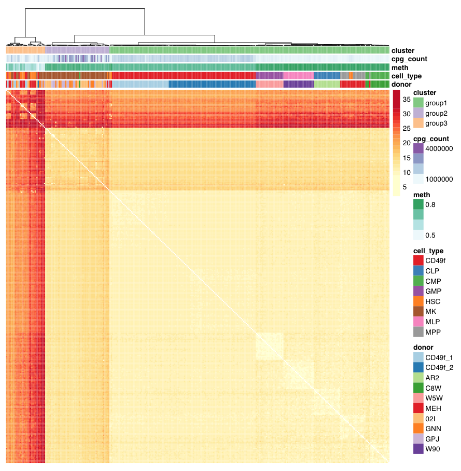
Measuring epigenetic changes at a single-cell level

This 2018 Canadian cell study described the development of a single-cell protocol to:

“Profile primitive hematopoietic cells of mouse and human origin to identify epigenetically distinct subpopulations. Deep sampling of the CpG content of individual HSCs allowed for the near complete reconstitution of regulatory states from epigenetically defined subpopulations of HSCs and revealed a high level of redundancy of CpG methylation states within these phenotypically defined hematopoietic cell types.

Hematopoietic stem cells (HSCs) are functionally defined cells that display evidence of extensive self-renewal of their ability to generate mature blood cells for the lifetime of the organism and following transplantation into myelosuppressed permissive hosts. Most of the epigenetic measurements underpinning these observations represent consensus values experimentally derived from thousands of cells partially enriched in HSCs or their progeny, thus failing to discern distinct epigenetic states within HSCs.

Current analytical strategies for single-cell DNA methylation measurements average DNA methylation in fixed genomic bins or over defined genomic regions.

However, inference across cells (as well as sequence context) assumes homogeneity across cells, which is at cross-purposes with the generation of single-cell molecular measurements through the potential to mask rare subpopulations.

We identified donor as a significant source of consistent epigenetic heterogeneity, which was reduced but not eliminated by correcting for personal genetic variants. This observation is consistent with previous reports that showed genetic diversity as related to but not accountable for all DNA methylation differences and suggests that in utero environmental differences may be encoded within the HSC compartment.”


The study advanced science not only by measuring CpG methylation within each HSC, but also by producing another data point “that in utero environmental differences may be encoded within the HSC compartment.”

The paragraph with “assumes homogeneity across cells” bold text provided another example of the statistical analysis flaw that gives individually inapplicable results per Group statistics don’t necessarily describe an individual. The above graphic of human hematopoietic phenotypes demonstrated that the researchers have potentially solved this problem by measuring individual cells.

The researchers discussed another aspect of the study that’s similar to the epigenetic clock methodology:

“Phenotype-specific methylation signatures are characterized by extensive redundancy such that distinct epigenetic states can be accurately described by only a small fraction of single-CpG methylation states. In support of such a notion, the unique components of a DNA methylation “age” signature are contained in ∼353 CpGs sites, presumably representing a random sample of a total age signature that involves many more sites not detected using the reduced representation strategies from which these signatures have been derived.”

Also, in The epigenetic clock theory of aging the originator of the epigenetic clock characterized HSCs as an effective intervention against epigenetic aging:

“In vivo, haematopoietic stem cell therapy resets the epigenetic age of blood of the recipient to that of the donor.”

https://www.cell.com/stem-cell-reports/article/S2213-6711(18)30308-4/fulltext “High-Resolution Single-Cell DNA Methylation Measurements Reveal Epigenetically Distinct Hematopoietic Stem Cell Subpopulations”

Allergies and epigenetic histone modifications

This 2018 German review provided short summaries of 44 studies on the contribution of histone modifications to allergies. An overall summary of their search results was:

“There are at least two levels at which the role of histone modifications is manifested.

  • One is the regulation of cells that contribute to the allergic inflammation (T cells and macrophages) and those that participate in airway remodeling.
  • The other is the direct association between histone modifications and allergic phenotypes.

Inhibitors of histone-modifying enzymes may potentially be used as anti-allergic drugs. Furthermore, epigenetic patterns may provide novel tools in the diagnosis of allergic disorders.”


This type of search is what’s expected of researchers who will perform either:

  • A meta-analysis of studies selected from the search results; or
  • Their own study.

These reviewers didn’t indicate that they were proceeding along either path.

The review was fine for the purpose of presenting current studies of the subject. But this was just the preparatory stage of research.

https://aacijournal.biomedcentral.com/articles/10.1186/s13223-018-0259-4 “Histone modifications and their role in epigenetics of atopy and allergic diseases”

Epigenetic variations in metabolism

This 2018 German review was comprehensive for its subject, epigenetic control of variation and stochasticity in metabolic disease. I’ll focus on one aspect, phenotypic variation:

“Phenotypic [Mendelian] variation can result both from gain- and loss-of-function mutations. Because of the extreme interconnectivity of cell regulatory networks, even at the cellular level, predicting the impact of a sequence variant is difficult as the resultant variation acts:

  • In the context of all other variants and
  • Their potential additive, synergistic and antagonistic interactions.

This phenomenon is known as epistasis.

∼98.5% of our genome is non-protein-coding: it is pervasively transcribed, and its transcripts can support regulatory function. Among the best functionally characterized non-coding RNAs (ncRNAs) arising from these sequences are microRNAs (miRNAs).

Environmental [non-Mendelian] variation or ‘stimuli’ occurring during critical windows of susceptibility can elicit lifelong alterations in an individual’s phenotype. Intergenerational metabolic reprogramming [in fruit flies] results from global alterations in chromatin state integrity, particularly from reduced H3K27me3 and H3K9me3 [histone] domains.

The broad variation of fingerprints in humans is thought to depend to a large degree on stochastic variation in mechanical forces. These clear examples of inducible multi-stable or stochastic variation highlight how little we know about the landscape of potential phenotypic variation itself.

Consensus estimates of heritability for obesity and T2D are ∼70% and ∼35% respectively. The remaining, unexplained component is known to involve gene–environment interactions as well as non-Mendelian players.”


Although the above graphic displays transgenerational inheritance for humans, the reviewers didn’t cite any human studies that adequately demonstrated causes for and effects of transgenerational epigenetic inheritance.

I’ve read the cited Swedish and Dutch studies. Their designs, methods, and “correlate with” / “was associated with” results didn’t provide incontrovertible evidence from the F0 great-grandparents, F1 grandparents, F2 parents, and F3 children. It’s necessary to thoroughly study each generation to confirm definitive transgenerational epigenetic inheritance causes and effects.

As noted in How to hijack science: Ignore its intent and focus on the 0.0001%, there aren’t any such published studies to cite. Researchers urgently need to do this human research, and stop using these poor substitutes [1] to pretend there are already adequately evidenced transgenerational epigenetic inheritance human results.

I downgraded the review for treating research of this and other subjects as faits accomplis. It’s opposite ends of the evidential spectrum to state “how little we know about the landscape of potential phenotypic variation,” and in the same review, speciously extrapolate animal experiments into putative human results.

https://www.sciencedirect.com/science/article/pii/S2212877818301984 “Epigenetic control of variation and stochasticity in metabolic disease”


[1] As an example of the poor substitutes for evidence, a researcher referred me to the 2013 “Transgenerational effects of prenatal exposure to the 1944–45 Dutch famine” which is freely available at https://obgyn.onlinelibrary.wiley.com/doi/full/10.1111/1471-0528.12136 as a study finding human transgenerational epigenetic inheritance.

The Methods section showed:

  • The study’s non-statistical data was almost all unverified self-reports by a self-selected sample of the F2 generation, average age 37.
  • No detailed physical measurements or samples were taken of them, nor of the F1 generation, nor of the F0 generation, all of which are required as baselines for any transgenerational epigenetic inheritance findings.
  • No detailed physical measurements or samples were taken of the F3 generation, which is the generation that may provide transgenerational evidence if the previous generations also have detailed physical baselines.

The study’s researchers drew enough participants (360) such that their statistics package allowed them to impute and assume into existence a LOT of data. But the scientific method constrained them to make factual statements of what the evidence actually showed. They admitted:

“In conclusion, we did not find a transgenerational effect of prenatal famine exposure on the health of grandchildren in this study.”

Yet this study is somehow cited for evidence of human transgenerational epigenetically inherited causes and effects!

A mid-year selection of epigenetic topics

Here are the most popular of the 65 posts I’ve made so far in 2018, starting from the earliest:

The pain societies instill into children

DNA methylation and childhood adversity

Epigenetic mechanisms of muscle memory

Sex-specific impacts of childhood trauma

Sleep and adult brain neurogenesis

This dietary supplement is better for depression symptoms than placebo

The epigenetic clock theory of aging

A flying human tethered to a monkey

Immune memory in the brain

The lack of oxygen’s epigenetic effects on a fetus

Transgenerational epigenetic effects of maternal obesity during pregnancy

This 2018 Belgian review subject was in part the transgenerational epigenetic effects of maternal obesity during pregnancy. The subject was tailored for the journal in which it appeared, Atherosclerosis, so other transgenerationally inherited epigenetic effects weren’t reviewed:

“The transgenerational impact of these alterations in methylation patterns are only shown in animal studies with HFD [high-fat diet] animals. In this respect the paternal influence also comes forward.

Alterations in methylation at the spermatozoa of male rats fed with a HFD were shown in combination with transgenerational metabolic effects, mainly on the female offspring. Methylation alterations in spermatozoa were also found in the male offspring of dams fed with HFD during their pregnancy. Consequent effects on the phenotype were again only shown in female offspring (until third generation).

A transgenerational inheritance through the female germline by mitochondrial inheritance has been suggested. A recent, small study in humans found altered mitochondrial functioning in the male offspring of overweight woman. A finding that has been confirmed in mice studies with a persistence of this transfer of aberrant oocyte mitochondria into the third generation.

The identification of a number of alterations in active cardiovascular microRNA species in the offspring of animals with obesity offer promising perspectives for the future.”

Evidence for transgenerational aspects of in utero programming included two studies I hadn’t previously curated:

  1. https://www.cell.com/cell-reports/fulltext/S2211-1247(16)30663-5 “Maternal Metabolic Syndrome Programs Mitochondrial Dysfunction via Germline Changes across Three Generations” (2016)
  2. https://www.sciencedirect.com/science/article/pii/S221287781500232X “High-fat diet reprograms the epigenome of rat spermatozoa and transgenerationally affects metabolism of the offspring” (2016)

https://www.atherosclerosis-journal.com/article/S0021-9150(18)30328-9/fulltextIn utero programming and early detection of cardiovascular disease in the offspring of mothers with obesity”

A disturbance in the paradigm of child abuse

The principal way science advances is through a principle Einstein expressed as:

“No amount of experimentation can ever prove me right; a single experiment can prove me wrong.”

The scientific community and public should be satisfied that the scientific process is working well when hypotheses are discarded due to nonconfirming evidence. Researchers should strive to develop evidence that rejects paradigms, and be lauded for their efforts.

The opposite took place with this 2018 commentary on two studies where evidence didn’t confirm current biases. I curated one of these studies in DNA methylation and childhood adversity.

Commentators’ dismissive tone was set in the opening paragraph:

“Is early exposure to adversity associated with a genetic or an epigenetic signature? At first glance, two articles in this issue -..and the other from Marzi et al., who measured genome-wide DNA methylation in a prospective twin cohort assessed at age 18 – appear to say that it is not.”

Commentators – one of whom was a coauthor of Manufacturing PTSD evidence with machine learning, – went on to protect their territory. Nevermind these two studies’ advancement of science that didn’t coincide with commentators’ vested interests.


My main concern with the curated study was that although child subjects had been studied at ages 5, 7, 10, 12, and 18, parents had never been similarly evaluated! Those researchers passed up an opportunity to develop parents as a F0 generation for understanding possible human transgenerational inherited epigenetic causes and effects.

That study focused on the children’s intergenerational epigenetic effects. However, animal studies have often demonstrated transgenerational effects that skip over F1 generation children! For example:

  1. Transgenerational pathological traits induced by prenatal immune activation found a F2 grandchild and F3 great-grandchild phenotype of impaired sociability, abnormal fear expression and behavioral despair – effects that weren’t present in F1 children;
  2. A self-referencing study of transgenerational epigenetic inheritance found histone modifications in the F3 generation that weren’t found in F1 and F2 generations; and
  3. A study not cited in – but completely appropriate for – The lack of oxygen’s epigenetic effects on a fetus found heart disease effects in the F1 generation that were different from the heart disease effects found in F2 and F3 generations.

https://ajp.psychiatryonline.org/doi/pdf/10.1176/appi.ajp.2018.18020156 “Considering the Genetic and Epigenetic Signature of Early Adversity Within a Biopsychosocial Framework” (not freely available)

The hypothalamus and aging

This 2018 Korean review discussed aspects of the hypothalamus and aging:

“A majority of physiological functions that decline with aging are broadly governed by the hypothalamus, a brain region controlling development, metabolism, reproduction, circadian rhythm, and homeostasis. In addition, the hypothalamus is poised to connect the brain and the body so that the environmental information affecting aging can be transmitted through the hypothalamus to affect the systematic aging of the peripheral organs.

The hypothalamus is hypothesized to be a primary regulator of the process of aging of the entire body. This review aims to assess the contribution of hypothalamic aging to the age-related decline in body functions, particularly from the perspective of:

  • energy homeostasis,
  • hormonal balance,
  • circadian rhythm, and
  • reproduction,

and to highlight its underlying cellular mechanisms with a focus on:

  • nutrient sensing
  • inflammation,
  • loss of stem cell,
  • loss of proteostasis, and
  • epigenetic alterations.”

https://www.sciencedirect.com/science/article/pii/S0047637418300502 “Role of hypothalamus in aging and its underlying cellular mechanisms” (not freely available)


The reviewers didn’t consider aging to be an “unintended consequence” of development. This perspective was found in a reference to A study of DNA methylation and age:

“Aging is not programmed. Instead, aging is a continuation of developmental growth, driven by genetic pathways.

Genetic programs determine developmental growth and the onset of reproduction. When these programs are completed, they are not switched off.

Aging has no purpose (neither for individuals nor for group), no intention. Nature does not select for quasi-programs. It selects for robust developmental growth.”

The epigenetic clock theory of aging cited the same author, and modified his point to say:

“The proposed epigenetic clock theory of ageing views biological ageing as an unintended consequence of both developmental programmes and maintenance programmes.”

The current review’s opposite paradigm was:

“The hypothalamus is hypothesized to be a primary regulator of the process of aging.”

Almost all of the details discussed were from rodent studies.


As detailed in How to cure the ultimate causes of migraines? and its references, the hypothalamus is a brain structure that lacks feedback mechanisms for several of its activities. This structure develops shortly after conception and has an active prenatal role.

The hypothalamus plays its part in getting us developed and ready to reproduce, with certain feedback loops being evolutionarily unnecessary. The hypothalamus perfectly illustrates the point of:

“When these programs are completed, they are not switched off.”

Evolutionarily unnecessary feedback for aspects of hypothalamic activity may result in it not winding down when its developmental role is over. This activity shouldn’t be interpreted to construe a role that has some other meaning or purpose.

See Reevaluate findings in another paradigm for another view.

The lack of oxygen’s epigenetic effects on a fetus

This 2018 Loma Linda review subject was gestational hypoxia:

“Of all the stresses to which the fetus and newborn infant are subjected, perhaps the most important and clinically relevant is that of hypoxia. This review explores the impact of gestational hypoxia on maternal health and fetal development, and epigenetic mechanisms of developmental plasticity with emphasis on the uteroplacental circulation, heart development, cerebral circulation, pulmonary development, and the hypothalamic-pituitary-adrenal axis and adipose tissue.

An understanding of the specific hypoxia-induced environmental and epigenetic adaptations linked to specific organ systems will enhance the development of target-specific inhibition of DNA methylation, histone modifications, and noncoding RNAs that underlie hypoxia-induced phenotypic programming of disease vulnerability later in life.

A potential stumbling block to these efforts, however, relates to timing of the intervention. The greatest potential effect would be accomplished at the critical period in development for which the genomic plasticity is at its peak, thus ameliorating the influence of hypoxia or other stressors.

With future developments, it may even become possible to intervene before conception, before the genetic determinants of the risk of developing programmed disease are established.”

Table 3 “Antenatal hypoxia and developmental plasticity” column titles were Species | Offspring Phenotypes of Disorders and Diseases | Reference Nos.

Hypoxia phenotypes


This review was really an ebook, with 94 pages and 1,172 citations in the pdf file. As I did with Faith-tainted epigenetics, I read it with caution toward recognizing 1) the influence of the sponsor’s biases, 2) any directed narrative that ignored evidence contradicting the narrative, and 3) any storytelling.

Can you match the meaning of the review’s last sentence (“intervene before conception” quoted above) with the meaning of any sentence in its cited reference Developmental origins of noncommunicable disease: population and public health implications? I can’t.

One review topic that was misconstrued was transgenerational epigenetic inheritance of hypoxic effects. The “transgenerational” term was used inappropriately by several of the citations, and no cited study provided evidence for gestational hypoxic effects through the F3 great-grandchild generation.

One omitted topic was gestational hypoxic effects of caffeine. The first paper that came up for my PubMed search of “caffeine pregnancy hypoxia” was an outstanding 2017 Florida rodent review Long-term consequences of disrupting adenosine signaling during embryonic development that had this paragraph and figure:

“One substance that fetuses are frequently exposed to is caffeine, which is a non-selective adenosine receptor antagonist. We discovered that in utero alteration in adenosine action leads to adverse effects on embryonic and adult murine hearts. We find that cardiac A1ARs [a type of adenosine receptor] protect the embryo from in utero hypoxic stress, a condition that causes an increase in adenosine levels. 

After birth in mice, we observed that in utero caffeine exposure leads to abnormal cardiac function and morphology in adults, including an impaired response to β-adrenergic stimulation. Recently, we observed that in utero caffeine exposure induces transgenerational effects on cardiac morphology, function, and gene expression.”

The timing of in utero caffeine treatment leads to differences in adult cardiac function, gene expression, and phenotype. Exposure to caffeine from E6.5–9.5 leads the F1 generation to develop dilated cardiomyopathy with decrease % FS and increased Myh7 expression. In utero caffeine exposure from E10.5–13.5 leads to a hypertrophic cardiomyopathy in the F2 generation along with increased % FS and decreased Myh7 expression

Why was this review and its studies omitted? It was on target for both gestational hypoxia and transgenerational epigenetic inheritance of hypoxic effects!

It was alright to review smoking, cocaine, methamphetamine, etc., but the most prevalent drug addiction – caffeine – couldn’t be a review topic?


The Loma Linda review covered a lot, but I had a quick trigger due to the sponsor’s bias. I started to lose “faith” in the reviewers after reading the citation for the review’s last sentence that didn’t support the statement.

My “faith” disappeared after not understanding why a few topics were misconstrued and omitted. Why do researchers and sponsors ignore, misrepresent, and not continue experiments through the F3 generation to produce evidence for and against transgenerational epigenetic inheritance? Where was the will to follow evidence trails regardless of socially acceptable beverage norms?

The review acquired the taint of storytelling with the reviewers’ assertion:

“..timing of the intervention. The greatest potential effect would be accomplished at the critical period in development for which the genomic plasticity is at its peak, thus ameliorating the influence of hypoxia or other stressors.”

Contradictory evidence was in the omitted caffeine study’s graphic above which described two gestational critical periods where an “intervention” had opposite effects, all of which were harmful to the current fetus’ development and/or to following generations. Widening the PubMed link’s search parameters to “caffeine hypoxia” and “caffeine pregnancy” returned links to human early life studies that used caffeine in interventions, ignoring possible adverse effects on future generations.

This is my final curation of any paper sponsored by this institution.

https://www.physiology.org/doi/abs/10.1152/physrev.00043.2017 “Gestational Hypoxia and Developmental Plasticity” (not freely available) Thanks to coauthor Dr. Xiang-Qun Hu for providing a copy.

in utero prevention of breast cancer by a broccoli sprouts diet

This 2018 Alabama rodent study investigated the epigenetic effects on developing breast cancer of timing a sulforaphane-based broccoli sprouts diet. Timing of the diet was as follows:

  1. Conception through weaning (postnatal day 28), named the Prenatal/maternal BSp (broccoli sprouts) treatment (what the mothers ate starting when they were adults at 12 weeks until their pups were weaned; the pups were never on a broccoli sprouts diet);
  2. Postnatal day 28 through the termination of the experiment, named the Postnatal early-life BSp treatment (what the offspring ate starting at 4 weeks; the mothers were never on a broccoli sprouts diet); and
  3. Postnatal day 56 through the termination of the experiment, named the Postnatal adult BSp treatment (what the offspring ate starting when they were adults at 8 weeks; the mothers were never on a broccoli sprouts diet).

“The experiment was terminated when the mean tumor diameter in the control mice exceeded 1.0 cm.

Our study indicates a prenatal/maternal BSp dietary treatment exhibited maximal preventive effects in inhibiting breast cancer development compared to postnatal early-life and adult BSp treatments in two transgenic mouse models that can develop breast cancer.

Postnatal early-life BSp treatment starting prior to puberty onset showed protective effects in prevention of breast cancer but was not as effective as the prenatal/maternal BSp treatment. However, adulthood-administered BSp diet did not reduce mammary tumorigenesis.

The prenatal/maternal BSp diet may:

  • Primarily influence histone modification processes rather than DNA methylation processes that may contribute to its early breast cancer prevention effects;
  • Exert its transplacental breast cancer chemoprevention effects through enhanced histone acetylation activator markers due to reduced HDAC1 expression and enzymatic activity.

This may be also due to the importance of a dietary intervention window that occurs during a critical oncogenic transition period, which is in early life for these two tested transgenic mouse models. Determination of a critical oncogenic transition period could be complicated in humans, which may partially explain the controversial findings of the adult BSp treatment on breast cancer development in the tested mouse models as compared the previous studies. Thus long-term consumption of BSp diet is recommended to prevent cancers in humans.”

“The dietary concentration for BSp used in the mouse studies was 26% BSp in formulated diet, which is equivalent to 266 g (~4 cups) BSp/per day for human consumption. Therefore, the concentration of BSp in this diet is physiological available and represents a practical consumption level in the human diet.

Prior to the experiment, we tested the potential influences of this prenatal/maternal BSp regimen on maternal and offspring health as well as mammary gland development in the offspring. Our results showed there was no negative effect of this dietary regimen on the above mentioned factors (data not shown) suggesting this diet is safe to use during pregnancy.”


I downgraded the study’s rating because I didn’t see where the above-labelled “Broccoli Sprout Seeds” content of the diet was defined. It’s one thing to state:

“SFN as the most abundant and bioactive compound in the BSp diet has been identified as a potent HDAC inhibitor that preferably influences histone acetylation processes.”

and describe how sulforaphane may do this and may do that, and include it in the study’s title. It’s another thing to quantify an animal study into findings that can help humans.

The study’s food manufacturer offers dietary products to the public without quantifying all of the contents. Good for them if they can stay in business by serving customers who can’t be bothered with scientific evidence.

What’s the difference between the above-labelled “Broccoli Sprout Seeds” and broccoli seeds? Where was the evidence that “Broccoli Sprout Seeds” and SPROUTED “Broccoli Sprout Seeds” were equivalent to the point of claiming:

“Equivalent to 266 g (~4 cups) BSp/per day for human consumption. Therefore, the concentration of BSp in this diet is physiological available and represents a practical consumption level in the human diet.”

To help humans, this animal study had to have more details than the food manufacturer provided. The researchers should have either tasked the manufacturer to specify the “Broccoli Sprout Seeds” content, or contracted out the analysis if they weren’t going to do it themselves.

Regarding timing of a broccoli sprouts diet for humans, the study didn’t provide evidence for recommending:

“Thus long-term consumption of BSp diet is recommended to prevent cancers in humans.”

http://cancerpreventionresearch.aacrjournals.org/content/early/2018/05/15/1940-6207.CAPR-17-0423.full-text.pdf “Temporal efficacy of a sulforaphane-based broccoli sprout diet in prevention of breast cancer through modulation of epigenetic mechanisms”

Immune memory of pregnancies

This 2018 Israeli human study subject was natural killer cell epigenetic memory of pregnancies:

“Natural killer (NK) cells were first discovered for their ability to kill tumor cells, and later found to also kill pathogen-infected cells.

Different tissue-resident subpopulations of human NK cells exist throughout the body, displaying unique phenotypic and functional properties. One of the most fascinating tissue-resident subsets of NK cells, termed decidual NK cells, is found at the maternal fetal interface (decidua) in direct contact with the placenta.

We discovered a population found in repeated pregnancies, which has a unique transcriptome and epigenetic signature..have open chromatin around the enhancers of [growth factor genes] IFNG [essential for angiogenesis] and VEGFA [supporting vascular formation].

The pregnancy-related NK memory cells identified here might represent the first example of improved function of NK cells that occurs under healthy physiological conditions.”

One source for the experiments was:

“Decidual samples from healthy women who underwent elective first trimester terminations of normal pregnancies.”

https://www.sciencedirect.com/science/article/pii/S1074761318301286 “Trained Memory of Human Uterine NK Cells Enhances Their Function in Subsequent Pregnancies” (not freely available)

A trio of epigenetic clock studies

We’ll start with a 2018 epigenetic clock human study from Finland:

“We evaluated the association between maternal antenatal depression and a novel biomarker of aging at birth, namely epigenetic gestational age (GA) based on fetal cord blood methylation data. We also examined whether this biomarker prospectively predicts and mediates maternal effects on early childhood psychiatric problems.

Maternal history of depression diagnosed before pregnancy and greater antenatal depressive symptoms were associated with child’s lower epigenetic GA. Child’s lower epigenetic GA, in turn, prospectively predicted total and internalizing problems and partially mediated the effects of maternal antenatal depression on internalizing problems in boys.”


Listening to a podcast by one of the coauthors, although the researchers’ stated intent was to determine the etiology of the findings, I didn’t hear any efforts to study the parents in sufficient detail to be able to detect possible intergenerational and transgenerational epigenetic inheritance causes and effects. There were the usual “associated with” and “it could be this, it could be that” hedges, which were also indicators of the limited methods employed toward the study’s limited design.

Why was an opportunity missed to advance human research in this area? Are researchers satisfied with non-causal individual differences non-explanations instead of making efforts in areas that may produce etiological findings?

https://www.jaacap.org/article/S0890-8567(18)30107-2/pdf “The Epigenetic Clock at Birth: Associations With Maternal Antenatal Depression and Child Psychiatric Problems” (not freely available)


The second 2018 epigenetic clock human study was from Alabama:

“We estimated measures of epigenetic age acceleration in 830 Caucasian participants from the Genetics Of Lipid Lowering Drugs and diet Network (GOLDN) considering two epigenetic age calculations.

Both DNA methylation age estimates were highly correlated with chronological age. We found that the Horvath and Hannum measures of epigenetic age acceleration were moderately correlated.

The Horvath age acceleration measure exhibited marginal associations with increased postprandial [after eating a meal] HDL [high-density lipoprotein], increased postprandial total cholesterol, and decreased soluble interleukin 2 receptor subunit alpha (IL2sRα). The Hannum measure of epigenetic age acceleration was inversely associated with fasting HDL and positively associated with postprandial TG [triglyceride], interleukin-6 (IL-6), C-reactive protein (CRP), and tumor necrosis factor alpha (TNFα).

Overall, the observed effect sizes were small.


https://clinicalepigeneticsjournal.biomedcentral.com/track/pdf/10.1186/s13148-018-0481-4 “Metabolic and inflammatory biomarkers are associated with epigenetic aging acceleration estimates in the GOLDN study”


The third 2018 epigenetic clock human study was a meta-analysis of cohorts from the UK, Italy, Sweden, and Scotland:

“The trajectories of Δage showed a declining trend in almost all of the cohorts with adult sample collections. This indicates that epigenetic age increases at a slower rate than chronological age, especially in the oldest population.

Some of the effect is likely driven by survival bias, where healthy individuals are those maintained within a longitudinal study, although other factors like underlying training population for the respective clocks may also have influenced this trend. It may also be possible that there is a ceiling effect for Δage whereby epigenetic clock estimates plateau.”

https://academic.oup.com/biomedgerontology/advance-article/doi/10.1093/gerona/gly060/4944478 “Tracking the Epigenetic Clock Across the Human Life Course: A Meta-analysis of Longitudinal Cohort Data”

How to hijack science: Ignore its intent and focus on the 0.0001%

This 2018 Belgian review hijacked science to further an agenda:

“We addressed this issue at the LATSIS Symposium ‘Transgenerational Epigenetic Inheritance: Impact for Biology and Society’, in Zürich, 28–30 August 2017, and here provide important arguments why environmental and lifestyle-related exposures in young men should be studied.”

The reviewer DETRACTED from science in the studied area – transgenerational epigenetic inheritance – by ignoring its intent. As shown by A self-referencing study of transgenerational epigenetic inheritance which I also curated today, the purpose of such animal studies is to find the mechanisms in order to help humans.


Putting that study’s graphic into human terms, F3 male great-grandchildren may be adversely affected by their F0 great-grandmothers being poisoned while pregnant with their F1 grandfathers, who – with their F2 fathers – may have also been adversely affected.


What the reviewer asserted without proof:

“The importance of maternal lifestyle, diet and other environmental exposures before and during gestation period is well recognized.”

is NOT TRUE for the studied area.

The evidence disproving this assertion is that NO HUMAN STUDIES scientifically demonstrating causes for transgenerational epigenetic inheritance effects have been published!

EVER!!

There’s a huge gap between “The importance..is well recognized” of anything regarding transgenerational epigenetic inheritance and ZERO human studies.

Why has no one published scientifically adequate human evidence to demonstrate “Transgenerational Epigenetic Inheritance: Impact for Biology and Society” effects on ALL of the F1, F2, and F3 human generations as consequences “of maternal lifestyle, diet and other environmental exposures before and during gestation period?” What are we waiting for?

The reviewer said “young men should be studied” but said nothing about resolving bottlenecks in funding human research of the studied area. Do researchers even have opportunities to make a NON-AGENDA-DRIVEN difference in this field?

With ZERO published human studies, transgenerational epigenetic inheritance research can’t be recharacterized into a female vs. male agenda. The reviewer’s attempt to do so diminished the importance of research into human critical development periods.

This agenda’s viewpoint ignored human correlates of evidence from animal studies like The lifelong impact of maternal postpartum behavior:

“The defect in maternal care induced by gestational stress programs the development of the offspring.”

Will the reviewer’s suggested interventions – such as changing an adult’s lifestyle a long time after their development was altered – somehow make up for what went wrong early in their life, even before they were born?

With the evidence from animal studies such as:

is there any doubt that similar mechanisms may be involved in humans, and that human phenotypes may likewise be intergenerationally and/or transgenerationally transmitted?

The reviewer asserted:

“Studying humans is challenging, because of ethical reasons”

But do “ethical reasons” prohibit non-instigating human studies of stress, the intergenerationally and transgenerationally transmitted effects of which seem to be ubiquitous among humans?

In The Not-Invented-Here syndrome I pointed out another problem that the reviewer’s agenda is less than helpful in resolving:

“How can animal studies like the current study help humans when their models don’t replicate common human conditions? This failure to use more relevant models has follow-on effects such as human intergenerational and transgenerational epigenetic inheritance being denigrated due to insufficient evidence.”


I’ll repeat What is a father’s role in epigenetic inheritance? in closing:

“The review focused on 0.0001% of the prenatal period for what matters with the human male – who he was at the time of a Saturday night drunken copulation – regarding intergenerational and transgenerational epigenetic inheritance of metabolic diseases.

The human female’s role – who she was at conception AND THEN what she does or doesn’t do during the remaining 99.9999% of the prenatal period to accommodate the fetus and prevent further adverse epigenetic effects from being intergenerationally and transgenerationally transmitted – wasn’t discussed.

Who benefits from this agenda’s narrow focus?”

https://academic.oup.com/eep/article/4/2/dvy007/4987171 “POHaD: why we should study future fathers”

A self-referencing study of transgenerational epigenetic inheritance

This 2018 Washington rodent study subject was transgenerational epigenetic inheritance of disease caused by a fungicide that’s been phased out or banned for over a decade:

“This study was designed to help understand how three different epigenetic processes in sperm are correlated with vinclozolin-induced epigenetic transgenerational inheritance of disease.

  1. Most DMRs [differential DNA-methylated regions] identified in this study are unique between the F1, F2, and F3 generations.
  2. The number of lncRNA was much higher than the number of sncRNA [small noncoding RNA, including microRNA]. The overlap between each generation was very low or nonexistent.
  3. The F1 and the F2 generation control versus vinclozolin lineage sperm had negligible DHRs [differential histone retention sites]. This observation suggests that the direct vinclozolin exposure does not alter histone retention or trigger any changes. However, the F3 generation control versus vinclozolin lineage sperm DHRs increased considerably.

It appears that the phenomenon is more complex than just a direct exposure triggering the formation of epimutations that are then simply maintained in the subsequent generations.”


There’s something odd about a study where a third of the 87 cited references list one of the study’s coauthors, who also coauthored A review of epigenetic transgenerational inheritance of reproductive disease. I couldn’t find a satisfactory explanation for the study’s over-the-top self-referencing.

What do you think?

I asked the coauthors why a third of the cited references were self-referencing. The lead author replied:

“The field in epigenetic transgenerational inheritance is expanding, however it is still hard for us to find relevant studies in rodents or human that we can cite. Most of the time DNA methylation, ncRNA and histone modifications are investigated from a direct exposure and/or from a purely mechanistic angle (e.g. DNA methylation of specific genes).

In contrast, transgenerational phenotypes and toxicology by definition excludes direct exposure and must be transmitted through multiple generations (the F3 generation is the first transgenerational one). We are not looking at specific genes but using whole genome sequencing technologies which is a broader approach.

Besides, if you do a pubmed search with the keywords “epigenetics” and “transgenerational”, you will probably find that more than 50% of the studies have been done by Dr Michael K. Skinner. He is also one of the first researcher who started to work on the epigenetic transgenerational inheritance phenomenon 15 years ago. Not citing his previous work is challenging.

We hope to see other labs contributing to this particular field and we will be delighted to cite them. In the meantime, our only option is to reference our previous work.”

I replied:

“Thank you for your reply! It must be exasperating to see other researchers stop their studies short of the F3 generation for no apparent or disclosed reason.

Have you seen even one scientifically adequate human study of transgenerational epigenetic inheritance?”

https://academic.oup.com/eep/article/4/2/dvy010/4987173 “Alterations in sperm DNA methylation, non-coding RNA expression, and histone retention mediate vinclozolin-induced epigenetic transgenerational inheritance of disease”

Are there epigenetic causes for sexual orientation and gender identity?

This US 2018 review lead author was a gynecologic oncologist in private practice:

“Sexual orientation is biologically conferred in the first trimester of pregnancy. Gender identity is biologically conferred during the middle trimester of pregnancy.

Since the genitals differentiate in the first trimester, and the brain becomes imprinted in the latter half of gestation, it is possible for the fetal brain to be imprinted differently than the genitals. As children mature, this innate imprinting expresses as genital anatomy, gender identity, sexual orientation and other physiologic capabilities and natural preferences along a continuum, between masculine and feminine.

The evidence shows that both orientation and identity are biologic features that co-vary with a very large number of other biologic sexually dimorphic traits.”


1. A fetus’ development is influenced by survival reactions to their environment. Although fetal and placental responses to environmental stressors are relevant to sexual orientation and gender identity, the reviewers didn’t explore the subject.

2. Epigenetic adaptations to the prenatal environment involving microRNA were mentioned in a small subsection. But the reviewers didn’t cite relevant studies involving DNA methylation, chromatin and histone modifications for epigenetic causes of and effects on sexual orientation and gender identity.

3. The reviewers included a half-dozen anecdotal quotations from personal correspondence that promoted their narrative. These impressed as appeals to authority rather than evidence for scientific understanding of the subject.

It was insufficient for the review to note “a continuum between masculine and feminine” without also exploring evidence for an individual’s placement on the continuum. The question of possible epigenetic causes for sexual orientation and gender identity remains.

https://www.sciencedirect.com/science/article/pii/S009082581731510X “Biological origins of sexual orientation and gender identity: Impact on health” (not freely available)