in utero prevention of breast cancer by a broccoli sprouts diet

This 2018 Alabama rodent study investigated the epigenetic effects on developing breast cancer of timing a sulforaphane-based broccoli sprouts diet. Timing of the diet was as follows:

  1. Conception through weaning (postnatal day 28), named the Prenatal/maternal BSp (broccoli sprouts) treatment (what the mothers ate starting when they were adults at 12 weeks until their pups were weaned; the pups were never on a broccoli sprouts diet);
  2. Postnatal day 28 through the termination of the experiment, named the Postnatal early-life BSp treatment (what the offspring ate starting at 4 weeks; the mothers were never on a broccoli sprouts diet); and
  3. Postnatal day 56 through the termination of the experiment, named the Postnatal adult BSp treatment (what the offspring ate starting when they were adults at 8 weeks; the mothers were never on a broccoli sprouts diet).

“The experiment was terminated when the mean tumor diameter in the control mice exceeded 1.0 cm.

Our study indicates a prenatal/maternal BSp dietary treatment exhibited maximal preventive effects in inhibiting breast cancer development compared to postnatal early-life and adult BSp treatments in two transgenic mouse models that can develop breast cancer.

Postnatal early-life BSp treatment starting prior to puberty onset showed protective effects in prevention of breast cancer but was not as effective as the prenatal/maternal BSp treatment. However, adulthood-administered BSp diet did not reduce mammary tumorigenesis.

The prenatal/maternal BSp diet may:

  • Primarily influence histone modification processes rather than DNA methylation processes that may contribute to its early breast cancer prevention effects;
  • Exert its transplacental breast cancer chemoprevention effects through enhanced histone acetylation activator markers due to reduced HDAC1 expression and enzymatic activity.

This may be also due to the importance of a dietary intervention window that occurs during a critical oncogenic transition period, which is in early life for these two tested transgenic mouse models. Determination of a critical oncogenic transition period could be complicated in humans, which may partially explain the controversial findings of the adult BSp treatment on breast cancer development in the tested mouse models as compared the previous studies. Thus long-term consumption of BSp diet is recommended to prevent cancers in humans.”

“The dietary concentration for BSp used in the mouse studies was 26% BSp in formulated diet, which is equivalent to 266 g (~4 cups) BSp/per day for human consumption. Therefore, the concentration of BSp in this diet is physiological available and represents a practical consumption level in the human diet.

Prior to the experiment, we tested the potential influences of this prenatal/maternal BSp regimen on maternal and offspring health as well as mammary gland development in the offspring. Our results showed there was no negative effect of this dietary regimen on the above mentioned factors (data not shown) suggesting this diet is safe to use during pregnancy.”


I downgraded the study’s rating because I didn’t see where the above-labelled “Broccoli Sprout Seeds” content of the diet was defined. It’s one thing to state:

“SFN as the most abundant and bioactive compound in the BSp diet has been identified as a potent HDAC inhibitor that preferably influences histone acetylation processes.”

and describe how sulforaphane may do this and may do that, and include it in the study’s title. It’s another thing to quantify an animal study into findings that can help humans.

The study’s food manufacturer offers dietary products to the public without quantifying all of the contents. Good for them if they can stay in business by serving customers who can’t be bothered with scientific evidence.

What’s the difference between the above-labelled “Broccoli Sprout Seeds” and broccoli seeds? Where was the evidence that “Broccoli Sprout Seeds” and SPROUTED “Broccoli Sprout Seeds” were equivalent to the point of claiming:

“Equivalent to 266 g (~4 cups) BSp/per day for human consumption. Therefore, the concentration of BSp in this diet is physiological available and represents a practical consumption level in the human diet.”

To help humans, this animal study had to have more details than the food manufacturer provided. The researchers should have either tasked the manufacturer to specify the “Broccoli Sprout Seeds” content, or contracted out the analysis if they weren’t going to do it themselves.

Regarding timing of a broccoli sprouts diet for humans, the study didn’t provide evidence for recommending:

“Thus long-term consumption of BSp diet is recommended to prevent cancers in humans.”

http://cancerpreventionresearch.aacrjournals.org/content/early/2018/05/15/1940-6207.CAPR-17-0423.full-text.pdf “Temporal efficacy of a sulforaphane-based broccoli sprout diet in prevention of breast cancer through modulation of epigenetic mechanisms”

A dietary supplement that reversed age-related hearing problems in the brainstem

This 2018 Nevada rodent study was on acetyl-L-carnitine’s action in the brainstem:

“We examined age-related changes in the efficiency of synaptic transmission at the calyx of Held, from juvenile adults (1-month old) and late middle-age (18- to 21-month old) mice. The calyx of Held synapse has been exploited as a model for understanding excitation-secretion coupling in central glutamatergic neurons, and is specialized for high-frequency transmission as part of a timing circuit for sound localization.

Our observations suggest that during aging, there is neuronal cell loss in the MNTB [Medial nucleus of the trapezoid body, a collection of brainstem nuclei in an area that’s the first recipient of sound and equilibrium information], similar to previous reports. In remaining synapses of the MNTB, we observed severe impairments in transmission timing and SV [synaptic vesicle] recycling, resulting in timing errors and increased synaptic depression in the calyx of Held synapse. These defects reduce the efficacy of this synapse to encode temporally sensitive information and are likely to result in diminished sound localization.

We orally administered ALCAR for 1 month and found that it reversed transmission defects at the calyx of Held synapse in the older mice.

These results support the concept that facilitators of mitochondrial metabolism and antioxidants may be an extremely effective therapy to increase synaptic function and restore short-term plasticity in aged brains, and provide for the first time a clear mechanism of action for ALCAR on activity-dependent synaptic transmission.


Human brainstem research is neglected, as noted by Advance science by including emotion in research. Evidence from such research doesn’t play well with beliefs in the popular models and memes of human cerebral dominance.

Do you know any “late middle-age” people who have obvious auditory and synaptic deficits? What if some of the neurobiological causes of what’s wrong in their brains could be “reversed by ALCAR?”

Before using this study as a guide, however, I asked the study’s researchers about the “daily dose of ~2.9 g/kg/d.” An equivalent for a 70 kg human is (2.9 g x 70) x .081 = 16 grams daily, compared with the 500 mg to 1 g dietary supplement dose of acetyl-L-carnitine.

The study’s corresponding coauthor replied:

“This is indeed much larger than that normally consumed by humans via dietary supplementation. We are currently working to determine the effective ‘minimal’ dose of ALCAR and alpha lipoic acid, to better assist guidelines for human application of this supplement.”

https://www.researchgate.net/publication/323941877_Age-related_defects_in_short-term_plasticity_are_reversed_by_acetyl-L-carnitine_at_the_mouse_calyx_of_Held “Age-related defects in short-term plasticity are reversed by acetyl-L-carnitine at the mouse calyx of Held”

A self-referencing study of transgenerational epigenetic inheritance

This 2018 Washington rodent study subject was transgenerational epigenetic inheritance of disease caused by a fungicide that’s been phased out or banned for over a decade:

“This study was designed to help understand how three different epigenetic processes in sperm are correlated with vinclozolin-induced epigenetic transgenerational inheritance of disease.

  1. Most DMRs [differential DNA-methylated regions] identified in this study are unique between the F1, F2, and F3 generations.
  2. The number of lncRNA was much higher than the number of sncRNA [small noncoding RNA, including microRNA]. The overlap between each generation was very low or nonexistent.
  3. The F1 and the F2 generation control versus vinclozolin lineage sperm had negligible DHRs [differential histone retention sites]. This observation suggests that the direct vinclozolin exposure does not alter histone retention or trigger any changes. However, the F3 generation control versus vinclozolin lineage sperm DHRs increased considerably.

It appears that the phenomenon is more complex than just a direct exposure triggering the formation of epimutations that are then simply maintained in the subsequent generations.”


There’s something odd about a study where a third of the 87 cited references list one of the study’s coauthors, who also coauthored A review of epigenetic transgenerational inheritance of reproductive disease. I couldn’t find a satisfactory explanation for the study’s over-the-top self-referencing.

What do you think?

I asked the coauthors why a third of the cited references were self-referencing. The lead author replied:

“The field in epigenetic transgenerational inheritance is expanding, however it is still hard for us to find relevant studies in rodents or human that we can cite. Most of the time DNA methylation, ncRNA and histone modifications are investigated from a direct exposure and/or from a purely mechanistic angle (e.g. DNA methylation of specific genes).

In contrast, transgenerational phenotypes and toxicology by definition excludes direct exposure and must be transmitted through multiple generations (the F3 generation is the first transgenerational one). We are not looking at specific genes but using whole genome sequencing technologies which is a broader approach.

Besides, if you do a pubmed search with the keywords “epigenetics” and “transgenerational”, you will probably find that more than 50% of the studies have been done by Dr Michael K. Skinner. He is also one of the first researcher who started to work on the epigenetic transgenerational inheritance phenomenon 15 years ago. Not citing his previous work is challenging.

We hope to see other labs contributing to this particular field and we will be delighted to cite them. In the meantime, our only option is to reference our previous work.”

I replied:

“Thank you for your reply! It must be exasperating to see other researchers stop their studies short of the F3 generation for no apparent or disclosed reason.

Have you seen even one scientifically adequate human study of transgenerational epigenetic inheritance?”

https://academic.oup.com/eep/article/4/2/dvy010/4987173 “Alterations in sperm DNA methylation, non-coding RNA expression, and histone retention mediate vinclozolin-induced epigenetic transgenerational inheritance of disease”

Immune memory in the brain

This 2018 German rodent study was a proof-of-principle for immune epigenetic memory in the brain:

“Innate immune memory is a vital mechanism of myeloid [bone marrow] cell plasticity that occurs in response to environmental stimuli and alters subsequent immune responses.

Two types of immunological imprinting can be distinguished – training and tolerance. These are epigenetically mediated and enhance or suppress subsequent inflammation, respectively.

Certain immune stimuli train blood monocytes to generate enhanced immune responses to subsequent immune insults. By contrast, other stimuli induce immune tolerance – suppression of inflammatory responses to subsequent stimuli.

Microglia (brain-resident macrophages) are very long-lived cells. This makes them particularly interesting for studying immune memory, as virtually permanent modification of their molecular profile appears possible. Immune memory in the brain is predominantly mediated by microglia.

In a mouse model of Alzheimer’s pathology, immune training exacerbates cerebral β-amyloidosis and immune tolerance alleviates it; similarly, peripheral immune stimulation modifies pathological features after stroke. Our results identify immune memory in the brain as an important modifier of neuropathology.

Immune memory in the brain could conceivably affect the severity of any neurological disease that presents with an inflammatory component, but this will need to be studied for each individual condition.”


The researchers performed multiple experiments to test different hypotheses about how immune-response experiences are remembered. Modifications to histone methylation and acetylation were targeted.

The stimulus dosage needed to produce immune tolerance – “suppression of inflammatory responses to subsequent stimuli” – was usually four times the dosage used for immune training – “enhanced immune responses to subsequent immune insults.”

https://www.nature.com/articles/s41586-018-0023-4 “Innate immune memory in the brain shapes neurological disease hallmarks” (not freely available)

Resiliency in stress responses

This 2018 US Veterans Administration review subject was resiliency and stress responses:

Neurobiological and behavioral responses to stress are highly variable. Exposure to a similar stressor can lead to heterogeneous outcomes — manifesting psychopathology in one individual, but having minimal effect, or even enhancing resilience, in another.

We highlight aspects of stress response modulation related to early life development and epigenetics, selected neurobiological and neurochemical systems, and a number of emotional, cognitive, psychosocial, and behavioral factors important in resilience.”

The review cited studies I’ve previously curated:


There were two things I didn’t understand about this review. The first was why the paper isn’t freely available. It’s completely paid for by the US taxpayer, and no copyright is claimed. I recommend contacting the authors for a copy.

The second was why the VA hasn’t participated in either animal or human follow-on studies to the 2015 Northwestern University GABAergic mechanisms regulated by miR-33 encode state-dependent fear. That study’s relevance to PTSD, this review’s subject, and the VA’s mission is too important to ignore. For example:

“Fear-inducing memories can be state dependent, meaning that they can best be retrieved if the brain states at encoding and retrieval are similar.

“It’s difficult for therapists to help these patients,” Radulovic said, “because the patients themselves can’t remember their traumatic experiences that are the root cause of their symptoms.”

The findings imply that in response to traumatic stress, some individuals, instead of activating the glutamate system to store memories, activate the extra-synaptic GABA system and form inaccessible traumatic memories.”

I curated the research in A study that provided evidence for basic principles of Primal Therapy. These researchers have published several papers since then. Here are the abstracts from three of them:

Experimental Methods for Functional Studies of microRNAs in Animal Models of Psychiatric Disorders

“Pharmacological treatments for psychiatric illnesses are often unsuccessful. This is largely due to the poor understanding of the molecular mechanisms underlying these disorders. We are particularly interested in elucidating the mechanism of affective disorders rooted in traumatic experiences.

To date, the research of mental disorders in general has focused on the causal role of individual genes and proteins, an approach that is inconsistent with the proposed polygenetic nature of these disorders. We recently took an alternative direction, by establishing the role of miRNAs in the coding of stress-related, fear-provoking memories.

Here we describe in detail our work on the role of miR-33 in state-dependent learning, a process implicated in dissociative amnesia, wherein memories formed in a certain brain state can best be retrieved if the brain is in the same state. We present the specific experimental approaches we apply to study the role of miRNAs in this model and demonstrate that miR-33 regulates the susceptibility to state-dependent learning induced by inhibitory neurotransmission.”

Neurobiological mechanisms of state-dependent learning

“State-dependent learning (SDL) is a phenomenon relating to information storage and retrieval restricted to discrete states. While extensively studied using psychopharmacological approaches, SDL has not been subjected to rigorous neuroscientific study.

Here we present an overview of approaches historically used to induce SDL, and highlight some of the known neurobiological mechanisms, in particular those related to inhibitory neurotransmission and its regulation by microRNAs (miR).

We also propose novel cellular and circuit mechanisms as contributing factors. Lastly, we discuss the implications of advancing our knowledge on SDL, both for most fundamental processes of learning and memory as well as for development and maintenance of psychopathology.”

Neurobiological correlates of state-dependent context fear

“Retrieval of fear memories can be state-dependent, meaning that they are best retrieved if the brain states at encoding and retrieval are similar. Such states can be induced by activating extrasynaptic γ-aminobutyric acid type A receptors (GABAAR) with the broad α-subunit activator gaboxadol. However, the circuit mechanisms and specific subunits underlying gaboxadol’s effects are not well understood.

Here we show that gaboxadol induces profound changes of local and network oscillatory activity, indicative of discoordinated hippocampal-cortical activity, that were accompanied by robust and long-lasting state-dependent conditioned fear. Episodic memories typically are hippocampus-dependent for a limited period after learning, but become cortex-dependent with the passage of time.

In contrast, state-dependent memories continued to rely on hippocampal GABAergic mechanisms for memory retrieval. Pharmacological approaches with α- subunit-specific agonists targeting the hippocampus implicated the prototypic extrasynaptic subunits (α4) as the mediator of state-dependent conditioned fear.

Together, our findings suggest that continued dependence on hippocampal rather than cortical mechanisms could be an important feature of state-dependent memories that contributes to their conditional retrieval.”


Here’s an independent 2017 Netherlands/UC San Diego review that should bring these researchers’ efforts to the VA’s attention:

MicroRNAs in Post-traumatic Stress Disorder

“Post-traumatic stress disorder (PTSD) is a psychiatric disorder that can develop following exposure to or witnessing of a (potentially) threatening event. A critical issue is to pinpoint the (neuro)biological mechanisms underlying the susceptibility to stress-related disorder such as PTSD, which develops in the minority of ~15% of individuals exposed to trauma.

Over the last few years, a first wave of epigenetic studies has been performed in an attempt to identify the molecular underpinnings of the long-lasting behavioral and mental effects of trauma exposure. The potential roles of non-coding RNAs (ncRNAs) such as microRNAs (miRNAs) in moderating or mediating the impact of severe stress and trauma are increasingly gaining attention. To date, most studies focusing on the roles of miRNAs in PTSD have, however, been completed in animals, using cross-sectional study designs and focusing almost exclusively on subjects with susceptible phenotypes.

Therefore, there is a strong need for new research comprising translational and cross-species approaches that use longitudinal designs for studying trajectories of change contrasting susceptible and resilient subjects. The present review offers a comprehensive overview of available studies of miRNAs in PTSD and discusses the current challenges, pitfalls, and future perspectives of this field.”

Here’s a 2017 Netherlands human study that similarly merits the US Veterans Administration’s attention:

Circulating miRNA associated with posttraumatic stress disorder in a cohort of military combat veterans

“Posttraumatic stress disorder (PTSD) affects many returning combat veterans, but underlying biological mechanisms remain unclear. In order to compare circulating micro RNA (miRNA) of combat veterans with and without PTSD, peripheral blood from 24 subjects was collected following deployment, and isolated miRNA was sequenced.

PTSD was associated with 8 differentially expressed miRNA. Pathway analysis shows that PTSD is related to the axon guidance and Wnt signaling pathways, which work together to support neuronal development through regulation of growth cones. PTSD is associated with miRNAs that regulate biological functions including neuronal activities, suggesting that they play a role in PTSD symptomatology.”


See the below comments for reasons why I downgraded this review’s rating.

https://link.springer.com/article/10.1007/s11920-018-0887-x “Stress Response Modulation Underlying the Psychobiology of Resilience” (not freely available)

The truth about complex traits and GWAS

This 2017 Colorado analysis, “No Evidence That Schizophrenia Candidate Genes Are More Associated With Schizophrenia Than Noncandidate Genes,” found:

“A recent analysis of 25 historical candidate gene polymorphisms for schizophrenia in the largest genome-wide association study [GWAS] conducted to date suggested that these commonly studied variants were no more associated with the disorder than would be expected by chance.

However, the same study identified other variants within those candidate genes that demonstrated genome-wide significant associations with schizophrenia. As such, it is possible that variants within historic schizophrenia candidate genes are associated with schizophrenia at levels above those expected by chance, even if the most-studied specific polymorphisms are not.

As a group, variants in the most-studied candidate genes were no more associated with schizophrenia than were variants in control sets of noncandidate genes. While a small subset of candidate genes did appear to be significantly associated with schizophrenia, these genes were not particularly noteworthy given the large number of more strongly associated noncandidate genes.

The history of schizophrenia research should serve as a cautionary tale to candidate gene investigators examining other phenotypes: our findings indicate that the most investigated candidate gene hypotheses of schizophrenia are not well supported by genome-wide association studies, and it is likely that this will be the case for other complex traits as well.”


One reason I admire scientists is that many of them are genuinely interested in advancing science. They eventually expose the storytelling and directed narratives in reviews such as:

They uncover questionable methods and moneygrubbing to fund research with a goal of confirming sponsors’ biases such as:

They impartially examine evidence supporting agendas and personal aggrandizements in studies such as:

Unbiased facts and analyses are eventually reported by these dedicated scientists. The problem is that their works aren’t on page 1 of journals and search results.

https://www.biologicalpsychiatryjournal.com/article/S0006-3223(17)31772-9/fulltext “No Evidence That Schizophrenia Candidate Genes Are More Associated With Schizophrenia Than Noncandidate Genes” (not freely available)

The lifelong impact of maternal postpartum behavior

This 2018 French/Italian/Swiss rodent study was an extension of the work done by the group of researchers who performed Prenatal stress produces offspring who as adults have cognitive, emotional, and memory deficiencies and Treating prenatal stress-related disorders with an oxytocin receptor agonist:

“Reduction of maternal behavior [nursing behavior, grooming, licking, carrying pups] was predictive of behavioral disturbances in PRS [prenatally restraint stressed] rats as well as of the impairment of the oxytocin and its receptor gene expression.

Postpartum carbetocin [an oxytocin receptor agonist unavailable in the US] corrected the reduction of maternal behavior induced by gestational stress as well as the impaired oxytocinergic system in the PRS progeny, which was associated with reduced risk-taking behavior.

Moreover, postpartum carbetocin had an anti-stress effect on HPA [hypothalamic-pituitary-adrenal] axis activity in the adult PRS progeny and increased hippocampal mGlu5 [type 5 metabotropic glutamate] receptor expression in aging.

Early postpartum carbetocin administration to the dam enhances maternal behavior and prevents all the pathological outcomes of PRS throughout the entire lifespan of the progeny..proves that the defect in maternal care induced by gestational stress programs the development of the offspring.


This chart from Figure 4 summarized the behavioral performance of aged adult male progeny in relation to the experimental variables of:

  1. Stress administered to the mothers three times daily every day during the second half of pregnancy up until delivery; and
  2. The effects on the mothers’ behavior of daily carbetocin administration during postpartum days 1 through 7.

The symbols denote which of these relationships had statistically significant effects:

  • “* p [Pearson’s correlation coefficient] < 0.05 PRS-Saline vs. CONT-Saline;
  • # p < 0.05 PRS-Carbetocin vs. the PRS-Saline group.”

There are many interesting aspects to this study. Ask the corresponding coauthor Dr. Sara Morley-Fletcher at sara.morley-fletcher@univ-lille1.fr for a copy.

One place the paper referenced the researchers’ previous studies was in this context:

“Postpartum carbetocin administration reversed the same molecular and behavioral parameters in the hippocampus, as does adult chronic carbetocin treatment, i.e. it led to a correction of the HPA axis negative feedback mechanisms, stress and anti-stress gene expression, and synaptic glutamate release. The fact that postpartum carbetocin administration [to the stressed mothers in this study] had the same effect [on the PRS infants in this study] as adult carbetocin treatment [to the PRS offspring in the previous study] indicates a short-term effect of carbetocin when administered in adulthood and a reprogramming (long-term) effect lasting until an advanced age when administered in early development.”

This group’s research seems to be constrained to treatments of F0 and F1 generations. What intergenerational and transgenerational effects would they possibly find by extending research efforts to F2 and F3 generations?


As the study may apply to humans:

The study demonstrated that stresses during the second half of pregnancy had lifelong impacts on both the mothers’ and offsprings’ biology and behavior. Studies and reviews that attribute similar human biological and behavioral conditions to unknown causes, or shuffle them into the black box of individual differences, should be recognized as either disingenuous or insufficient etiological investigations.

The study showed that prevention of gestational stress was a viable strategy. The control group progeny’s biology and behavior wasn’t affected by carbetocin administration to their mothers because neither they nor their mothers had experience-dependent epigenetic deficiencies.

The study demonstrated a biological and behavioral cure for the PRS offspring by changing their stressed mothers’ behaviors during a critical period of their development. The above excerpt characterized improving the mothers’ behaviors as a long-term cure for the PRS descendants, as opposed to the short-term cure of administering carbetocin to the PRS children when they were adults.

What long-term therapies may be effective for humans who had their developmental trajectories altered by their mothers’ stresses during their gestation, or who didn’t get the parental care they needed when they needed it?

https://www.sciencedirect.com/science/article/pii/S0161813X18301062 “Reduced maternal behavior caused by gestational stress is predictive of life span changes in risk-taking behavior and gene expression due to altering of the stress/anti-stress balance” (not freely available)

Prenatal stress produces offspring who as adults have cognitive, emotional, and memory deficiencies

This 2018 French/Italian/Swiss rodent study used a prenatally restraint stressed (PRS) model to create problems that could be resolved by various chemicals:

“S 47445 is a positive modulator of glutamate AMPA-type receptors, possessing neurotrophic and enhancing synaptic plasticity effects as well as pro-cognitive and anti-stress properties.

Most of studies examining the antidepressant effects of new molecules are carried out using behavioral tests performed in unstressed animals.

Corticosterone-treated mice and rats exposed to chronic stress are models that do not recapitulate the early programming of stress-related disorders, which likely originates in the perinatal period. The PRS rat model is characterized by a prolonged corticosterone response to stress and by abnormal behavior.

All the behavioral alterations induced by PRS were corrected by chronic S 47445 administration at both doses.”


The paper included a section comparing S 47445 to ketamine:

“Ketamine, however, causes severe cognitive impairment and psychotomimetic [mimics the symptoms of psychosis, reference not freely available] effects that are direct consequences of the prolonged inhibition of NMDA receptors in cortical and hippocampal interneurons, and seriously limit the chronic administration of the drug in the clinical setting. [reference not freely available]

S 47445 by inducing a direct activation of AMPARs displayed an antidepressant activity without the adverse effect of ketamine. Indeed, contrary to ketamine, S 47445 presented no psychotomimetic effects and induced no occurrence of spontaneous epileptic seizures. [reference freely available] Moreover, S 47445 also presented pro-cognitive properties.”

Compare the above with this April 2018 Chicago Tribune story that had opinions with no linked references:

“ketamine, an anesthetic used to sedate both people and animals before surgery. It’s also a notorious street drug, abused by clubgoers seeking a trancelike, hallucinatory high. But in recent years, numerous studies have found that ketamine can be an effective and speedy treatment for people with depression.”

Which coverage better informed us?


Treating prenatal stress-related disorders with an oxytocin receptor agonist was performed by several of this paper’s coauthors. One references to it was:

“We have already reported that depolarization-evoked glutamate release in the ventral hippocampus is negatively correlated with risk-taking behavior of PRS rats, and that such correlation can be corrected by chronic treatment with monoaminergic/ melatoninergic antidepressants or oxytocin receptor agonist. Thus, an impairment of glutamatergic transmission in the ventral hippocampus lies at the core of the pathological phenotype of PRS rats.”

Looking at the above graphic of the experimental design, I’m not sure why the term perinatal (occurring during or pertaining to the phase surrounding the time of birth) was used in the paper’s title and content to describe the stress period. The pregnant females were stressed three times every day during the second half of pregnancy up until delivery, so the prenatal (previous to birth) term was more applicable.


So, how does this study help humans?

One takeaway is to avoid stressing pregnant mothers-to-be if her children will be expected to become adults without cognitive, emotional, and behavioral problems.

The study demonstrated one way prenatal events cause lifelong effects. The PRS model provides another example of why it’s useless to ask adult humans to self-report causes of epigenetic problems in their lives when these originated before birth, during infancy, or in early childhood, well before humans develop sufficient cognitive capability to recognize such situations. It’s incomprehensible that this unreliable paradigm is still given significant weight in stress studies, especially when experimental designs:

“Do not recapitulate the early programming of stress-related disorders, which likely originates in the perinatal period.”

Also, a relevant difference between humans and PRS rats is that we can ourselves individually change our responses to experiential causes of ongoing adverse effects. Standard methodologies can only apply external treatments such as those mentioned above.

https://www.sciencedirect.com/science/article/pii/S0028390818301291 “The reduction in glutamate release is predictive of cognitive and emotional alterations that are corrected by the positive modulator of AMPA receptors S 47445 in perinatal stressed rats” (not freely available) Thanks to coauthors Stefania Maccari and Dr. Jerome Mairesse for providing a copy.

The role of DNMT3a in fear memories

This 2018 Chinese rodent study found:

“Elevated Dnmt3a [a DNA methyltransferase] level in the dorsal dentate gyrus (dDG) of hippocampus was associated with the absence of fear renewal in an altered context after extinction training. Overexpression and knockdown of Dnmt3a in the dDG regulated the occurrence of fear renewal in a bi-directional manner.

We found that renewal of remote fear memory can be prevented, and the absence of renewal was concurrent with an elevated Dnmt3a level.

Our results indicate that Dnmt3a in the dDG is a key regulator of fear renewal after extinction, and Dnmt3a may play a critical role in controlling fear memory return and thus has therapeutic values.”


The study was a collection of five experiments investigating causes and effects of biology and behavior. The researchers used different techniques to achieve their goals. I’ve quoted extensively below to show some background and results.

“Alterations in histone acetylation and DNA methylation are involved in the formation and extinction of long-term memory. DNMTs catalyze the cytosine methylation and are required to establish and maintain genomic methylation.

Dnmt3a and Dnmt3b are de novo DNA methyltransferases. Dnmt1 is the maintenance DNA methyltransferase.

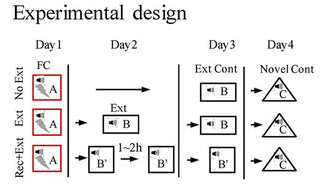
  1. Dnmt3a expression was elevated in the dDG after extinction training followed by a brief memory retrieval (Rec+Ext), which was associated with the absence of fear renewal when tested in an altered context.
  2. Increasing Dnmt3a expression in the dDG using AAV [recombinant adeno-associated virus] expression led to the prevention of fear renewal following a standard extinction training protocol. 
  3. Knockdown of Dnmt3a in the dDG using CRISPR/Cas9 resulted in fear renewal following Rec+Ext protocol.
  4. Renewal of remote fear memory can be prevented using the Rec+Ext protocol.
  5. The absence of renewal was concurrent with an elevated Dnmt3a level.

Current exposure therapy, although effective in many patients, suffers from the inability to generalize its efficacy over time, or is limited by the potential return of adverse memory in the new/novel contexts. These limitations are caused by the context-dependent nature of extinction which is widely viewed as the biological basis of exposure therapy.

Achieving a context-independent extinction may significantly reduce fear renewal to improve the efficacy of exposure therapy. Our current study suggests that the effectiveness of these approaches, and ultimately the occurrence of fear renewal, is determined by the level of Dnmt3a after extinction training, especially in the dDG.

There are two potential mechanisms underlying extinction, one is erasure or updating of the formed memory, and the other is the formation of a new extinction memory which suppresses or competes with the existing memory in a context-dependent manner. While most studies favor the suppression mechanism in the adult, limited studies do suggest that erasure occurs in the immature animals.

We propose that if Dnmt3a level is elevated with extinction training (such as with Rec+Ext protocol), modification to the existing memory occurs and as a consequence extinction does not act as a separate mechanism or form a new memory; but if Dnmt3a level is unaltered with extinction training, a separate extinction memory is formed which acts to suppress or compete with the existing memory.”


The relevant difference between humans and lab rats is that we can ourselves individually change our responses to experiential causes of ongoing adverse effects. Standard methodologies can only apply external treatments such as exposure therapy and manipulating Dnmt3a levels.

https://www.nature.com/articles/s41598-018-23533-w “Dnmt3a in the dorsal dentate gyrus is a key regulator of fear renewal”

This dietary supplement is better for depression symptoms than placebo

This 2018 Italy/UK meta-analysis subject was the use of dietary supplement acetyl-L-carnitine to treat depression symptoms:

“Deficiency of acetyl-L-carnitine (ALC) appears to play a role in the risk of developing depression, indicating dysregulation of fatty acids transport across the inner membrane of mitochondria. However, the data regarding ALC supplementation in humans are limited. We thus conducted a systematic review and meta-analysis investigating the effect of ALC on depressive symptoms across randomized controlled trials (RCTs).

Pooled data across nine RCTs (231 treated with ALC versus 216 treated with placebo and 20 no intervention) showed that ALC significantly reduced depressive symptoms.

In these nine RCTs, the majority of the studies used 3 grams of ALC as intervention.

In three RCTs comparing ALC versus antidepressants (162 for each group), ALC demonstrated similar effectiveness compared with established antidepressants [fluoxetine (Prozac), duloxetine (Cymbalta), amisulpride (Solian) respectively below] in reducing depressive symptoms. In these latter RCTs, the incidence of adverse effects was significantly lower in the ALC group [79%] than in the antidepressant group.

Subgroup analyses suggested that ALC was most efficacious in older adults. Future large scale trials are required to confirm/refute these findings.”

From the Methods section:

“Studies were excluded if:

  1. did not include humans;
  2. did not include a control group;
  3. did not use validated scales for assessing depression;
  4. did not report data at follow-up evaluation regarding tests assessing depression;
  5. included the use of ALC with another agent vs. placebo/no intervention.”

The Discussion section was informative regarding possible mechanisms of ALC affecting depression, pain, and linked symptoms. Several citations were of a review rather than of the original studies, however.


Research needs to proceed on to investigate therapies that address ultimate causes for depression and pain. Researchers and sponsors shouldn’t stop at just symptoms and symptom relief, notwithstanding the requirement from a statistical point of view for “future large scale trials.”

Here are other acetyl-L-carnitine topics I’ve curated:

https://journals.lww.com/psychosomaticmedicine/Citation/2018/02000/Acetyl_L_Carnitine_Supplementation_and_the.4.aspx “Acetyl-L-Carnitine Supplementation and the Treatment of Depressive Symptoms: A Systematic Review and Meta-Analysis” (not freely available)


This post has somehow become a target for spammers, and I’ve disabled comments. Readers can comment on other posts and indicate that they want their comment to apply here, and I’ll re-enable comments.

Maternal obesity causes fetal liver damage

This 2018 US baboon study was on fetal effects from maternal obesity before and during pregnancy:

“Approximately 64% of women of childbearing age in the USA [are] overweight or obese. The baboon is a well-characterized animal model sharing many physiological, metabolic, and genetic characteristics with humans allowing direct translation of findings to human pregnancy.

Our study shows that fetal exposure to the MO [maternal obesity] intrauterine environment results in dysregulation of fetal hepatic genes central to metabolism.

These findings were further supported by identification of miRNAs that were inversely expressed with key genes in these pathways..suggest important early molecular mechanisms by which MO programs fetal hepatic lipid metabolism.

Future studies are required in MO post-natal offspring to determine the extent to which the fetal phenotype persists, and the degree to which this increases offspring risk of cardiometabolic disorders in later life.”


The study provided many measurements that may be relevant to humans. Other consequential measurements were missing that may have made the study’s findings even more applicable to humans:

  • No placental measurements other than weight. The organ through which the fetus received its nutrients, signaled its needs, modulated its growth rate, and developed its organs, was only measured by weight?
  • No other epigenetic analyses such as DNA methylation and histone modifications.

Were these omitted due to limited resources?

http://onlinelibrary.wiley.com/doi/10.1113/JP275422/pdf “Primate fetal hepatic responses to maternal obesity: epigenetic signalling pathways and lipid accumulation”

What will it take for childhood trauma research to change paradigms?

This 2018 German human study found:

“DNA methylation in a biologically relevant region of NR3C1-1F [glucocorticoid receptor gene] moderates the specific direction of HPA-axis dysregulation (hypo- vs. hyperreactivity) in adults exposed to moderate-severe CT [childhood trauma].

In contrast, unexposed and mildly-moderately exposed individuals displayed moderately sized cortisol stress responses irrespective of NR3C1-1F DNA methylation. Contrary to some prior work, however, our data provides no evidence for a direct association of CT and NR3C1-1F DNA methylation status.”


The study was an example of why researchers investigating the lasting impacts of human traumatic experiences won’t find causes, effects, and productive therapies until their paradigms change.

1. Limited subject histories

A. Why weren’t the subjects asked for historical information about their parents, grandparents, and great-grandparents?

The researchers had no problem using animal studies to guide the study design, EXCEPT for animal studies of the etiologic bases of intergenerational and transgenerational transmission of biological and behavioral phenotypes. Just the approximate places and dates of three generations of the German subjects’ ancestors’ births, childhoods, adolescences, and early adulthoods may have provided relevant trauma indicators.

B. Why are studies still using the extremely constrained Childhood Trauma Questionnaire? Only one CTQ aspect was acknowledged as a study design limitation:

“Our findings rely on retrospective self-report measures of CT, which could be subject to bias.”

But bias was among the lesser limiting factors of the CTQ.

The study correlated epigenetic changes with what the subjects selectively remembered, beginning when their brains developed sufficient cognitive functionalities to put together the types of memories that could provide CTQ answers – around age four. The basic problem that kept the CTQ from discovering likely most of the subjects’ traumatic experiences causing epigenetic changes was that these experiences predated the CTQ’s developmental starting point:

  1. A human’s conception through prenatal period is when both the largest and the largest number of epigenetic changes occur, and is when our susceptibility and sensitivity to our environment is greatest;
  2. Birth through infancy is the second-largest; and
  3. Early childhood through the age of three is the third largest.

CTQ self-reports were – at best – evidence of experiences after age three, distinct from the  experience-dependent epigenetic changes since conception. If links existed between the subjects’ early-life DNA methylation and later-life conditions, they weren’t necessarily evidenced by CTQ answers about later life that can’t self-report relevant early-life experiences that may have caused DNA methylation.

2. Limited subject selection

The researchers narrowed down the initial 622 potential subjects to the eventual 200 subjects aged 18 to 30. An exclusion criteria that was justified as eliminating confounders led to this limitation statement:

“Our results might be based on a generally more resilient sample as we had explicitly excluded individuals with current or past psychopathology.”

Was it okay for the researchers to assert:

“Exposure to environmental adversity such as childhood trauma (CT) affects over 10% of the Western population and ranges among the best predictors for psychopathology later in life.”

but not develop evidence for the statement by letting people who may have been already affected by age 30 and received treatment participate in the study?

Was the study design so fragile that it couldn’t adjust to the very people who may be helped by the research findings?

3. Limited consequential measurements

The current study design conformed to previous studies’ protocols. The researchers chose cortisol and specific DNA methylation measurements.

A. Here’s what Sex-specific impacts of childhood trauma had to say about cortisol:

“Findings are dependent upon variance in extenuating factors, including but not limited to, different measurements of:

  • early adversity,
  • age of onset,
  • basal cortisol levels, as well as
  • trauma forms and subtypes, and
  • presence and severity of psychopathology symptomology.”

The researchers knew or should have known all of the above since this quotation came from a review.

B. What other consequential evidence for prenatal, infancy, and early childhood experience-dependent epigenetic changes can be measured? One overlooked area was including human emotions as evidence.

There are many animal studies from which to draw inferences about human emotions. There are many animal models of creating measurable behavioral and biological phenotypes of human emotion correlates, with many methods, including manipulating environmental variables during prenatal, infancy, and early childhood periods.

Studies that take detailed histories may arrive at current emotional evidence for human subjects’ earliest experience-dependent changes. Researchers who correlate specific historical environments and events, stress measurements, and lasting human emotions expressed as “I’m all alone” and “No one can help me” will better understand causes and effects.

CTQ answers weren’t sufficiently detailed histories.

4. Limited effective treatments and therapies

The current study only addressed this area in the final sentence:

“Given their potential reversibility, uncovering epigenetic contributions to differential trajectories following childhood adversity may serve the long-term goal of delivering personalized prevention strategies.”


Researchers – if your paradigms demonstrate these characteristics:

  • Why are you spending your working life in efforts that can’t make a difference?
  • Aren’t your working efforts more valuable than that?
  • What else could you investigate that could make a difference in your field?

I hope that researchers will value their professions enough to make a difference with their expertise. And that sponsors won’t thwart researchers’ desires for difference-making science by putting them into endless funding queues.

http://www.psyneuen-journal.com/article/S0306-4530(17)31355-0/pdf “Glucocorticoid receptor gene methylation moderates the association of childhood trauma and cortisol stress reactivity” (not freely available)

Cell senescence and DNA methylation

This 2018 Baltimore cell study found:

“Based on similarities in overall methylation patterns in replicative senescence and cancers, it is hypothesized that tumor-promoting DNA methylation in cancers derives from cells escaping senescence.

We show that the tumor-associated methylation changes evolve independently of senescence and are pro-survival events with functional implications contrasting that in senescence.

In our analyses, although overall global gains and losses in DNA methylation are similar, at individual genomic regions the methylation patterns are very different for senescence versus transformation.”

https://www.sciencedirect.com/science/article/pii/S1535610818300084 “DNA Methylation Patterns Separate Senescence from Transformation Potential and Indicate Cancer Risk” (not freely available)


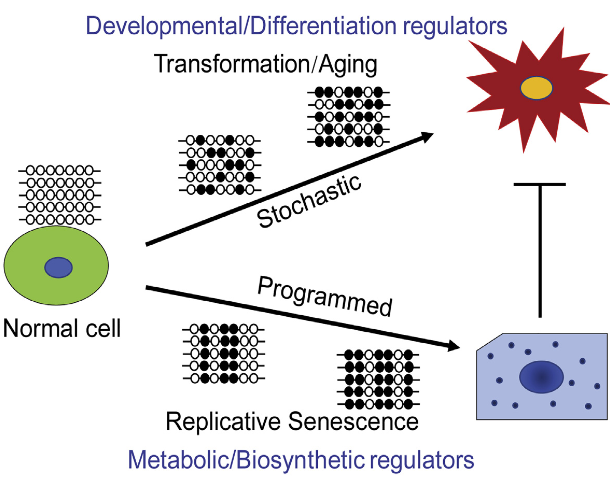
I hesitated to use the study’s main graphic:
because the “Stochastic” labeling of the upper branch didn’t represent the vector’s meaning. The In Brief and the Summary sections contributed to the misrepresentation by stating:

“transformation-associated methylation changes arise stochastically.”

which wasn’t the study’s main finding:

“Our data outlined in the above sections strongly suggest against this senescence bypass hypothesis.”

Although the experimental design and methods evoked randomness:

“Immortalization on the path to malignant transformation involves stochastic epigenetic patterns from which cells contributing to transformation may evolve.”

the graphic’s upper branch vector represented the cells’ evolutionary responses. The Significance section best characterized what the study found:

“Tumor-associated methylation changes evolve independently of senescence and are pro-survival events.”

Would anyone at John Hopkins argue, as the graphic’s upper branch labeling suggested, that cellular aging is a predominantly random process? NO!


1. Epigenetics research and evolution promoted understanding the graphic’s upper branch vector:

“Evolution is an ongoing set of iterative interactions between organisms and the environment. Directionality is introduced by the agency of organisms themselves.”

2. The current study provided another data point about the uselessness of convenient but non-etiologic, inconsequential measurements of global methylation:

“Although overall global gains and losses in DNA methylation are similar, at individual genomic regions the methylation patterns are very different.”

3. The current study was congruent with the below finding of Using an epigenetic clock to distinguish cellular aging from senescence regarding the differentiation of cellular aging from senescence:

“Cellular ageing is distinct from cellular senescence and independent of DNA damage response and telomere length.”

Obtaining convictions with epigenetic statistics?

This 2018 Austrian review subject was forensic applications of epigenetic clock methodologies:

“The methylation-sensitive analysis of carefully selected DNA markers (CpG sites) has brought the most promising results by providing prediction accuracies of ±3–4 years, which can be comparable to, or even surpass those from, eyewitness reports. This mini-review puts recent developments in age estimation via (epi)genetic methods in the context of the requirements and goals of forensic genetics and highlights paths to follow in the future of forensic genomics.”


The point of forensic analysis techniques should be to find the truth about an individual. Doesn’t the principle of “All presumptive evidence of felony should be admitted cautiously; for the law holds it better that ten guilty persons escape, than that one innocent party suffer” still hold?

The methods’ limitations weren’t discussed. Here are some concepts not mentioned in the review:

1) Summary statistics that describe a group or population NEVER necessarily describe an individual member.

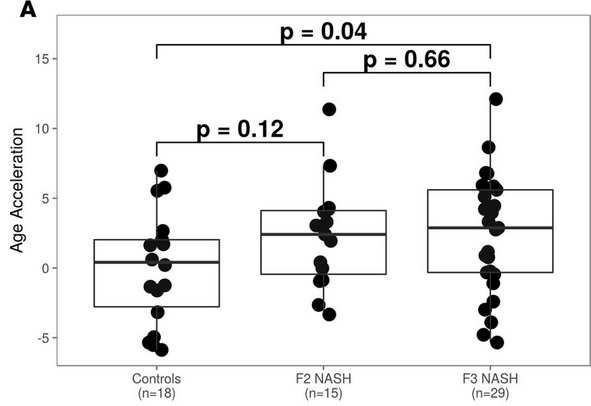
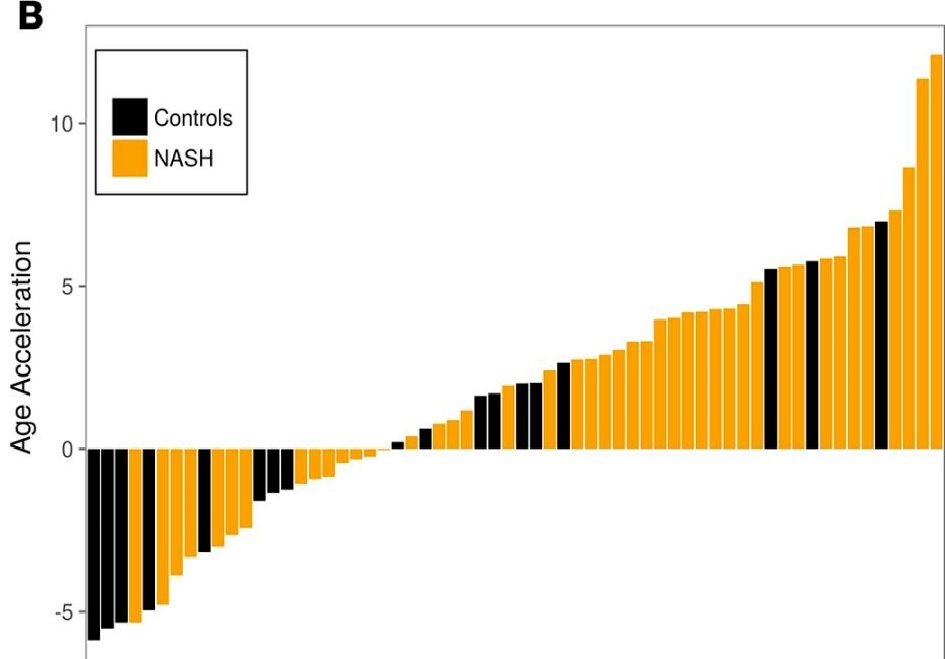
For an epigenetic clock methodology example, take a look at Figure 2A in Using an epigenetic clock to assess liver disease. 16 of the 18 individual age acceleration estimates of the control group subjects aren’t close to the median value!

2) The reviewer outlined basic DNA methylation analysis:

“The most commonly pursued approach for analysing CpG sites is sequence analysis of bisulfite-converted DNA, during which single-stranded genomic DNA is treated with sodium bisulfite that deaminates unmethylated cytosine to uracil, while methylated cytosine remains unaffected.

With increasing age, not only genome-wide DNA hypomethylation has been observed but also regional DNA hypermethylation of CpG islands.”

The basic limitation of this analysis wasn’t mentioned, but A study of DNA methylation and age said:

“Due to the methods applied in the present study, not all the effects of DNA methylation on gene expression could be detected; this limitation is also true for previously reported results.

The textbook case of DNA methylation regulating gene expression (the methylation of a promoter and silencing of a gene) remains undetected in many cases because in an array analysis, an unexpressed gene shows no signal that can be distinguished from background and is therefore typically omitted from the analysis.

3) Another omission was that the numbers and types of targets in the discussed DNA methylation technique were severely limited per The primary causes of individual differences in DNA methylation are environmental factors:

“A main limitation with studies using the Illumina 450 K array is that the platform only covers ~1.5 % of overall genomic CpGs, which are biased towards promoters and strongly underrepresented in distal regulatory elements, i.e., enhancers.

The reviewer didn’t provide convincing justifications for using gene expression profiling to obtain convictions. Was it too much to expect a mini-review to offer a balanced view of using epigenetic age estimation in forensic analyses?

https://www.karger.com/Article/FullText/486239 “Age Estimation with DNA: From Forensic DNA Fingerprinting to Forensic (Epi)Genomics: A Mini-Review”

Using an epigenetic clock to assess liver disease

This 2018 UC San Diego human study investigated the capability of the epigenetic clock methodology to detect biological aging with nonalcoholic steatohepatitis (NASH) patients:

“The ability to measure a surrogate marker of liver aging from a peripheral blood sample has broad implications for assessing clinically “silent” chronic diseases, such as NASH, and, potentially, their response to interventions.

In the current study, we validate the utility of the Horvath clock in measuring age acceleration in a defined cohort of NASH patients with moderate to severe liver fibrosis.”

The study demonstrated several aspects of age acceleration and disease conditions, including:

– Use of clinical trial data.

“This study, however, included patients who were part of a clinical trial in which protocol-obtained biopsies were read by a central pathologist (ZG) and morphometric quantification of collagen standardized.”

– Continuous measures were more relevant than “Stage X” measures.

“The findings in the current work are in contrast to an earlier study that found no association of DNAm with the NAFLD activity score or stage of liver fibrosis in patients with NASH. Importantly, that study assessed liver fibrosis based on conventional histological staging only, using the ordinal METAVIR classification. Similarly, we also found no difference in age acceleration between patients with stage 2 and 3 fibrosis according to the NASH Clinical Research Network (CRN) classification.

On the contrary, by evaluating two continuous measures of fibrosis (hepatic collagen content by morphometry and the serum ELF test), which have a greater dynamic range than traditional histological staging, we found that patients with higher age acceleration have increased hepatic fibrosis.”

– Causalities may not necessarily be ascribed.

“Although these reports establish a potential relationship between fibrosis and specific epigenetic modifications, targeted individual CpG sites may not accurately reflect the complex interaction between causal and compensatory measures in chronic diseases such as NASH.”

https://insight.jci.org/articles/view/96685 “DNA methylation signatures reflect aging in patients with nonalcoholic steatohepatitis”