Adverse Childhood Experiences, Part 2

A request was made to present studies that investigated epigenetic impacts of corporal punishments or physical trauma to children or adolescents. Here’s a follow-on of the 2015 Grokking an Adverse Childhood Experiences (ACE) score, since physical abuse is one factor of an ACE score.

1. The largest problem is that a person filling out an ACE questionnaire or Childhood Trauma Questionnaire can’t provide first-hand answers of their own experiences during womb life, infancy, and early childhood. These critical development periods are more impacted by adversity than are later life windows.

Human brains aren’t developed enough before age 3 to provide retrospective answers using cerebral memories. A self-reported ACE score can’t possibly address what happened during the times when we were most vulnerable to disrupted neurodevelopment. And good luck with parents providing factual histories of whether they physically or emotionally neglected, physically or emotionally abused, or otherwise adversely treated their fetus, infant, and young child.

2. Another problem is researchers can pretty much choose whatever questions they want as input criteria. I’ve seen pliable ACE scores developed from 5- to 25-item questionnaires.

Do these questionnaires cover all relevant adverse childhood experiences? For example, are researchers permitted to use as inputs societal-created adversities a child may have lived through such as the Khmer Rouge or Cultural Revolution? Studies are just starting to investigate adverse childhood experiences created by worldwide abuses of authority since 2020.

3. Other problems were discussed in a 2023 paper https://www.sciencedirect.com/science/article/abs/pii/S0145213423003162 “Adverse childhood experiences and adult outcomes using a causal framework perspective: Challenges and opportunities” (not freely available), two of which were:

  • Adding up ACE factors to a cumulative score ignores the impact of synergistic sets. For example, although both cumulative ACE scores are 2, a child who was physically and sexually abused would probably be more adversely affected than a child whose parents divorced or separated, and also had a family member incarcerated.
  • At any given time point, and especially with older people, there’s a potential selection bias against those most affected by adverse childhood experiences, such as those who died.

Using flawed, squishy, cumulative ACE scores as inputs, here are two 2023 studies that found epigenetic associations:

“We tested the following pre-registered hypotheses: Mothers’ adverse childhood experiences are correlated with DNA methylation (DNAm) in peripheral blood during pregnancy (hypothesis 1) and in cord blood samples from newborn infants (hypothesis 2), and women’s depression and anxiety symptoms during pregnancy mediate the association between mothers’ ACE exposure and prenatal/neonatal DNA methylation (hypothesis 3).

  1. Hypothesis 1: In 896 mother−infant pairs with available methylation and ACE exposure data, there were no significant associations between mothers’ ACE score and DNAm from antenatal peripheral blood, after controlling for covariates.
  2. Hypothesis 2: In infant cord blood, there were 5 CpG sites significantly differentially methylated in relation to mothers’ ACEs (false discovery rate < .05), but only in male offspring. Effect sizes were medium. CpG sites were in genes related to mitochondrial function and neuronal development in the cerebellum.
  3. Hypothesis 3: There was no mediation by maternal anxiety/depression symptoms found between mothers’ ACEs score and DNAm in the significant CpG sites in male cord blood.”

https://www.jaacap.org/article/S0890-8567(23)00313-1/fulltext “Epigenetic Intergenerational Transmission: Mothers’ Adverse Childhood Experiences and DNA Methylation”


“In this study, the effect of cumulative ACEs experienced on human maternal DNAm was estimated while accounting for interaction with domains of ACEs in prenatal peripheral blood mononuclear cell samples. Intergenerational transmission of ACE-associated DNAm was explored used paired maternal and neonatal cord blood samples. Replication in buccal samples was also explored.

We used a four-level categorical indicator variable for ACEs exposure: none (0 ACEs), low (1–3 ACEs), moderate (4–6 ACEs), and high (> 6 ACEs). 🙄

125a4c3cacfe4b922e5b864c

https://www.researchsquare.com/article/rs-2977515/v1 “Effect of Parental Adverse Childhood Experiences on Intergenerational DNA Methylation Signatures”

Natural ways to modify GDF11

Three 2023 studies to follow up mention of GDF11 in the Brain endothelial cells post. Two are selected for non-pharmaceutical interventions people can do on their own. Let’s start with a human exercise study:

“We explored the exercise-related regulation of Growth Differentiation Factor 11 (GDF11) in cerebrospinal fluid (CSF) and blood. Samples of serum, plasma, and CSF were obtained before and 60 min after acute exercise (90 min run) from twenty healthy young individuals. Additional serum and plasma samples were collected immediately after run. GDF11 protein content, body composition, physical fitness, and cognitive functions were evaluated.

Controversies regarding the role of GDF11 in aging originate mainly from the absence of a reliable, validated and widely accepted method of GDF11 detection. To support the reliability of our findings as well as to distinguish GDF11 from its close homologue GDF8, we determined GDF11 in CSF, serum, and plasma, by immunoblotting, using two different GDF11-specific antibodies, as well as GDF11/GDF8 non-specific antibody. These antibodies have been previously successfully used by others. Reliability of our findings is further supported by correlations between GDF11 in serum and plasma, as well as between GDF11 and serum GDF11/GDF8.

We report an association between levels of GDF11 and adiponectin in CSF as well as in serum after acute endurance exercise. These observations support potentially synergic effects of GDF11 and adiponectin on the brain. The experimental design we implement seems to represent a reliable model to study regulation of bioactive molecules, potential mediators of neuroprotective effects of exercise in the human brain.

We show for the first time a direct link between endurance exercise and GDF11 levels in human cerebrospinal fluid. This study provided the first albeit indirect (correlative) evidence on the putative role of GDF11 in promoting healthy aging in humans, by demonstrating a tight relationship between serum GDF11 and peak power output. We extend this observation by showing that the level of physical fitness is an important determinant of regulation of GDF11 by acute exercise.

In this work, we confirm in a bigger cohort our previous finding that blood-brain barrier permeability, as assessed by CSF/serum albumin ratio, is decreased after an acute bout of endurance exercise. We observed a modest positive correlation between CSF/serum albumin ratio and CSF/serum GDF11/GDF8 ratio, with a trend also for GDF11. However, exercise-induced changes of CSF/serum albumin ratio and that of GDF11 or GDF11/GDF8 did not correlate, indicating that there are other factors that could modulate levels of this growth factor rather than blood-brain barrier permeability.”

https://www.frontiersin.org/articles/10.3389/fendo.2023.1137048/full “Acute endurance exercise modulates growth differentiation factor 11 in cerebrospinal fluid of healthy young adults”


Next is a rodent study of intermittent fasting before and after cerebral ischemia:

“The present study focused on the cerebral angiogenesis effect of intermittent fasting (IF) on ischemic rats. Rats were fed within strict time periods for 8 h out of every 24 h, with free access to food between 0800 and 1600 h.

In the first step, we designed different time schedules (10 d, 1 month, and 3 months) of IF before middle cerebral artery occlusion (MCAO). We monitored whether IF accelerated neurobehavioral recovery and induced expression of endothelial cells after MCAO. Then we explored whether GDF11 and downstream signals mediated angiogenesis in the peri-infarct area.

journal.pone.0282338.g006

We found that 3 months (p < 0.01) and 1 month (p < 0.05) of IF conditioning, respectively, markedly increased GDF11-positive cells in the peri-infarct area 3 d after MCAO compared with ad libitum dietary regimen. There were no significant differences between the cerebral ischemia (CI) + ad libitum group and the CI + IF 10-day group.

We also assayed plasma expression pattern of GDF11 protein. Plasma level of GDF11 protein was significantly upregulated in the IF dietary groups compared with the ad libitum dietary group 3 d after MCAO, which was consistent with the brain level. However, short-term CI + IF 10-day group results were not statistically different from CI + ad libitum group.

Taken together, our results strongly indicated that pretreatment of long-term IF might promote circulation of GDF11 and cerebral GDF11 protein during the post-ischemic, recovery period. Preoperative long-term IF might be beneficial for inducing cerebral angiogenesis in acute cerebral infarction.

These findings suggested that the longer the period of IF before MCAO, the better the protective effects after surgery.”

https://journals.plos.org/plosone/article?id=10.1371/journal.pone.0282338 “Long-term intermittent fasting improves neurological function by promoting angiogenesis after cerebral ischemia via growth differentiation factor 11 signaling activation”

Per Week 28 of Changing to a youthful phenotype with broccoli sprouts, using species maximum lifespan to estimate a human-equivalent multiplication factor that can be applied to a rat post-development time period is 122.5 years / 3.8 years = 32.2. Applying it to this study’s findings:

  • 10 rat days (322 human days) of intermittent fasting provided little protection from cerebral ischemia;
  • 1 rat month (32.2 human months) of intermittent fasting had better protection; and
  • 3 rat months (a little over 8 human years) of intermittent fasting had even stronger protection.

Is it worth the hassle of intermittently fasting every day for years to prevent a future stroke, or better recover from one, or keep other subclinical / clinical diseases from accelerating, or keep aging from accelerating? This study also cited more immediate benefits of intermittent fasting.


Might be too late for a gradual approach for people who are already diseased or close, though, like subjects in this human study:

“We aimed to explore the correlation among serum GDF11, the severity of coronary artery lesions, and the prognosis of patients with ST-segment elevation myocardial infarction (STEMI). A total of 367 patients were enrolled and divided into control (n = 172) and STEMI (n = 195) groups. Control group fulfilled the following criteria:

  1. Presented with typical chest tightness, chest pain, or other discomfort symptoms on admission;
  2. Electrocardiogram examination suggested ST-T changes;
  3. Levels of myocardial injury markers did not suggest abnormalities; and
  4. The diagnosis of unstable angina was considered clinically valid.

14 variables that were significant in univariate logistic regression analysis were included in the subsequent multivariate logistic regression analysis. Multivariate analysis indicated that smoking, diabetes, C-reactive protein, homocysteine, and lipoprotein (a) were positively correlated with STEMI occurrence, whereas serum GDF11 and the Apolipoprotein A1-to-Apolipoprotein B ratio were negatively correlated with STEMI occurrence.

Serum GDF11 was negatively correlated with severity of coronary lesions, and was also an independent prognostic indicator of major adverse cardiovascular events in patients with STEMI.”

https://link.springer.com/article/10.1007/s12265-023-10358-w “Correlation Between GDF11 Serum Levels, Severity of Coronary Artery Lesions, and the Prognosis of Patients with ST-segment Elevation Myocardial Infarction” (not freely available)

Brain endothelial cells

Six 2023 papers on the subject, starting with a rodent study:

“One of the primary discoveries of our study is that the endothelial cell (EC) transcriptome is dynamically regulated by both aging and heterochronic parabiosis. We found that ECs, when compared with other brain cell types, exhibited one of the highest fractions of aging-related genes that were rescued after heterochronic parabiosis in the old brain, and similarly, the highest fraction of aging-related genes that were disrupted after heterochronic parabiosis in the young brain. This finding supports our previous research that vasculature is strongly affected by aging and disease, and is capable of regrowth after heterochronic parabiosis or systemic GDF11 treatment.

parabiosis

We observed that a subset of ECs was classified as mitogenic. It is reasonable to speculate that the growth of these cells, which is probably prevented or suspended by the inflammatory environment of the aged brain, may be among the cell populations that respond to these interventions.

Although proteostasis in brain ECs has not been thoroughly investigated, they are apparently long-lived cells and, like neurons, might therefore accumulate protein aggregates with age, potentially compromising their function. ECs become senescent with age, but parabiosis may reverse that phenotype as well.

These findings underline the strong susceptibility and malleability of ECs, which are directly exposed to secreted factors in both brain parenchyma and blood, to adapt to changes in their microenvironment. ECs, despite comprising <5% of the total number of brain cells, are a promising and accessible target for treatment of aging and its associated diseases.”

https://www.nature.com/articles/s43587-023-00373-6 “Heterochronic parabiosis reprograms the mouse brain transcriptome by shifting aging signatures in multiple cell types”


A review elaborated on endothelial cell senescence:

“ECs form highly dynamic and differentiated monolayers arranged in a vascular network. Within brain tissue, the ECs of arteries, capillaries, and veins present different molecular characteristics. The main functions of ECs as a major cellular component of the blood-brain barrier (BBB) are to express cell membrane transport proteins, produce inflammatory mediators, deliver nutrients to brain tissue, and prevent drugs and toxins from entering the central nervous system.

ECs are the first echelons of cells affected at the onset of senescence due to their special structural position in the vascular network. Senescent ECs produce reactive oxygen species (ROS), which directly inhibit smooth muscle potassium channels and cause vasoconstriction.

The vascular endothelium is in a constant process of damage and repair, and once damage occurs, ECs replenish themselves to remove damaged cells. EC senescence makes the endothelium less capable of self-repair. With the decline in endothelial function, excess accumulated senescent cells express senescence-associated secretory phenotypes (SASPs), which result in senescence of adjacent cells, and eventually degeneration of vascular function.”

https://www.aginganddisease.org/EN/10.14336/AD.2023.0226-1 “Endothelial Senescence in Neurological Diseases”


A human study investigated above-mentioned differences in brain endothelial cells:

“We performed single nucleus RNAseq on tissue from 32 Alzheimer’s Disease (AD) and non-AD donors each with five cortical regions: entorhinal cortex, inferior temporal gyrus, prefrontal cortex, visual association cortex, and primary visual cortex. Analysis of 51,586 endothelial cells revealed unique gene expression patterns across the five regions in non-AD donors.

Visual cortex areas, which are affected late in AD progression and experience less neurodegeneration, expressed more genes related to vasculogenesis and angiogenesis. Highly vulnerable areas such as the entorhinal cortex expressed more oxidative stress-related genes in normal aged brain, suggesting endothelial dysfunction in this region even in the absence of severe AD pathology.

The present work shows that senescence-related gene signatures are increased across several brain regions, and confirms these changes in endothelial cells in the absence of other vascular cell types. While endothelial cells are not typically associated with protein aggregation, upregulated protein folding pathways suggest that proteostatic stress is a key pathway in this cell type.”

https://www.biorxiv.org/content/10.1101/2023.02.16.528825v1.full “Endothelial Cells are Heterogeneous in Different Brain Regions and are Dramatically Altered in Alzheimer’s Disease”


A human cell study abstract on above-mentioned blood-brain barrier endothelial cells:

“The BBB is a semi-permeable and protective barrier of the brain, primarily composed of endothelial cells interconnected by tight junction proteins, that regulates movement of ions and molecules between blood and neural matter. In pathological conditions such as traumatic brain injury (TBI), disruption of the BBB contributes to leakage of solutes and fluids into brain parenchyma, resulting in onset of cerebral edema and elevation of intracranial pressure.

The objective of this study was to determine upstream regulators of NLRP3 signaling and BBB hyperpermeability, particularly to determine if extracellular adenosine triphosphate (ATP) via P2X7R, a purinergic receptor, promotes NLRP3 inflammasome activation. Extracellular ATP is a major contributor of secondary injuries following TBI.

Our results suggest that extracellular ATP promotes NLRP3 inflammasome activation. Subsequent caspase-1 and MMP-9-mediated tight junction disorganization are major pathways that lead to BBB dysfunction and hyperpermeability following conditions such as TBI.”

https://journals.physiology.org/doi/abs/10.1152/physiol.2023.38.S1.5732827 “Regulation of Blood-Brain Barrier Endothelial Cell Hyperpermeability by NLRP3 Inflammasome Inhibition”


A human study further investigated effects of traumatic brain injury on brain endothelial cells:

“We previously demonstrated that extracellular vesicles (EVs) released from injured brains led to endothelial barrier disruption and vascular leakage. Here, we enriched plasma EVs from TBI patients (TEVs), detected high mobility group box 1 (HMGB1) exposure to 50.33 ± 10.17% of TEVs, and found the number of HMGB1+TEVs correlated with injury severity. We then investigated for the first time the impact of TEVs on endothelial function using adoptive transfer models.

HMGB1 is secreted by activated cells or passively released by necrotic or injured cells. After post-translational modifications, it interacts with receptors such as toll-like receptors (TLRs; e.g., TLRs 2, 4, and 9) and the receptor for advanced glycation end products (RAGE) to trigger multiple signaling pathways and mediate inflammatory and immune responses. Extracellular HMGB1 promotes endothelial dysfunction, leukocyte activation and recruitment, as well as thrombosis.

These results suggest that circulating EVs isolated from patients with TBI alone are sufficient to induce endothelial dysfunction. They contribute to secondary brain injury that are dependent on immunologically active HMGB1 exposed on their surface. This finding provided new insight for development of potential therapeutic targets and diagnostic biomarkers for TBI.”

https://www.sciencedirect.com/science/article/pii/S1043661823001470 “Circulating extracellular vesicles from patients with traumatic brain injury induce cerebrovascular endothelial dysfunction”


To wrap up, eat mushrooms to protect your brain endothelial cells!

“Natural compound ergothioneine (ET), which is synthesised by certain fungi and bacteria, has considerable cytoprotective potential. We previously demonstrated anti-inflammatory effects of ET on 7-ketocholesterol (7KC)-induced endothelial injury in human blood-brain barrier endothelial cells (hCMEC/D3). 7KC is an oxidised form of cholesterol present in atheromatous plaques and sera of patients with hypercholesterolaemia and diabetes mellitus. The aim of this study was to elucidate the protective effect of ET on 7KC-induced mitochondrial damage.

Protective effects of ET were diminished when endothelial cells were coincubated with verapamil hydrochloride (VHCL), a nonspecific inhibitor of the ET transporter OCTN1 (SLC22A4). This outcome demonstrates that ET-mediated protection against 7KC-induced mitochondrial damage occurred intracellularly and not through direct interaction with 7KC.

OCTN1 mRNA expression itself was significantly increased in endothelial cells after 7KC treatment, consistent with the notion that stress and injury may increase ET uptake. Our results indicate that ET can protect against 7KC-induced mitochondrial injury in brain endothelial cells.”

https://www.mdpi.com/1422-0067/24/6/5498 “Protective Effect of Ergothioneine against 7-Ketocholesterol-Induced Mitochondrial Damage in hCMEC/D3 Human Brain Endothelial Cells”

A flawed broccoli sprouts clinical trial

This 2023 human study investigated commercially available broccoli sprouts’ effects on platelets. I’ll provide details of some procedures, but not of findings, as there were several issues:

“Administration of intervention (sulforaphane/placebo) was followed in 90 min by administration of standardized caloric challenge PhenFlex. Urine samples were classified into three groups: (A) baseline, green line, (B) after intervention or placebo, blue lines, and (C) after PhenFlex challenge, red lines. Samples were divided into 5 timepoints: (0) baseline, (1) <60 min after intervention or placebo, (2) >60 min after intervention or placebo, (3) <60 min after PhenFlex challenge, and (4) >60 min after PhenFlex challenge.

fnut-10-1204561-g001

Shortly (maximum of 3 min) before administration, sprouts were cut approximately 1 cm below the leaves, weighed, and mashed with a small amount of tap water (approximately 13°C) in a kitchen blender for 30s at room temperature. Subsequently, tap water was added to a total amount of 250 mL and participants were instructed to drink the entire mixture.

Commercially available pea sprouts (Affilla Cress®) were used as placebo in this study since pea sprouts do not contain glucoraphanin/sulforaphane. Affilla Cress (16 g) was prepared and administered in a similar fashion. Blinding of participants was ensured by the even appearance of both drinks and the use of nasal plugs during consumption of the investigational products. 🙂

Ninety minutes after administration of investigational products, participants were asked to drink PhenFlex, a high-fat, high-glucose, high-caloric product. PhenFlex mixtures were freshly prepared, and participants were instructed to consume the drink within 5 min.”

https://www.frontiersin.org/articles/10.3389/fnut.2023.1204561/full “The beneficial effect of sulforaphane on platelet responsiveness during caloric load: a single-intake, double-blind, placebo-controlled, crossover trial in healthy participants”


Two main issues were:

1. It was stated throughout that sulforaphane did or could do this and that. None of this was supported by sulforaphane intake measurements / estimates, although measuring equipment was available.

Researchers couldn’t assume that blending 16 grams of broccoli sprouts of unknown age creates x amount of sulforaphane. 3-day-old broccoli sprouts have the optimal yields measured 6 broccoli varieties’ sulforaphane content over 3, 5, and 7-day ages, and published 15 different answers.

Sulforaphane and two metabolites’ urinary output was measured. Supposing that only output measurements were adequate leads to the second main issue.

2. Genes were asserted for certain effects. Plausible alternate explanations such as individual differences in gut microbiota composition, excretion, and metabolism weren’t explored.

These researchers knew or should have known about the 2016 https://onlinelibrary.wiley.com/doi/abs/10.1002/mnfr.201600766 “Stabilized Sulforaphane for Clinical Use: Phytochemical Delivery Efficiency” (not freely available). That study measured two known sulforaphane inputs, and in ten people each, blood plasma and urinary outputs.

The first sulforaphane input had sulforaphane bioavailability from 19.5% to 86.9% of dose. The second input ranged from 48% to 96% of dose. Widely different responses to sulforaphane intake prompted those researchers to state:

“These differences in SF bioavailability may be due to differences in gut microbial metabolism, in the levels of drug metabolizing enzymes (e.g. well-known polymorphisms of glutathione S-transferases that catalyze the conjugation of SF with glutathione), and in excretion kinetics. Innate metabolic differences must not be discounted when assessing the metabolism of SF.”

PXL_20230705_093411243

The brain-gut-lung circuit

This 2023 rodent study investigated mechanisms of improving stress-worsened respiratory viral infection:

“Our study demonstrates that chronic psychological stress significantly increases host vulnerability to influenza A virus (IAV) infection characterized by a distorted gut microbiome and deregulated alveolar macrophages (AMs) response. We show that microbiome-derived γ-aminobutyric acid (GABA) functions as a tonic signal to support survival, self-renewing, and immunoregulation of AMs, and hence optimized pulmonary defensive response.

Chronic psychological stress causes gut microbiome dysbiosis and defective GABA generation, leading to loss of AMs homeostasis and aggravated viral pneumonia. The data indicate that:

  1. Microbial GABA is released in the circulation,
  2. Sensed by AMs via the GABAA receptor,
  3. Promoting cellular mitochondrial metabolism,
  4. For increased production of α-ketoglutarate (αKG),
  5. Which triggers Tet2-mediated DNA hydroxymethylation,
  6. To enable PPARγ-centered gene program,
  7. Supporting AMs homeostasis and function.

ga1_lrg

  • Re-localization of GABA-generating probiotics,
  • Supplementation of αKG, or
  • Adoptive transfer of GABA-conditioned macrophages,
  • Substantially rectifies stress-induced disruption inter-organ communication, and
  • Alleviates symptoms of viral pneumonia.

Our current study unveils an unappreciated regulatory circuitry that connects the brain, gut, and lung to mediate neurological modulation of host defensive response.”

https://www.sciencedirect.com/science/article/pii/S2090123223001716 “Gut microbial GABAergic signaling improves stress-associated innate immunity to respiratory viral infection”


consentofthegoverned

Impact of processing and storage methods on nutritional values of a dozen fruits and vegetables

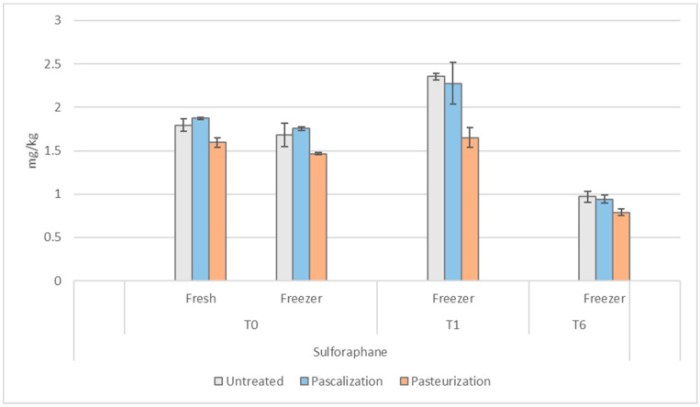
This 2023 study investigated a dozen fruits and vegetables processed with three methods and freezer times for impacts on their sixteen main nutrients. I’ll focus on sulforaphane:

“This paper compares how different processing methods (pasteurization vs. high hydrostatic pressure processing or pascalization) affect phytochemical concentrations of a complex mixture of fruits and vegetables, and investigates how these methods influence their stability during freezing and over time in frozen storage. Phytochemicals tested were vitamin C, quercetin-3-glucoside, delphinidin-3-glucoside, cyanidin-3-glucoside, peonidin-3-glucoside, catechin, epigallocatechin-3-gallate, epicatechin, epicatechin gallate, chlorogenic acid, sulforaphane, resveratrol, lycopene, lutein, alpha-carotene, and beta-carotene.

After freezing to −18 °C, one bottle from each condition was immediately removed from the freezer and thawed at 4 °C, which took about two days. Measurements at t = 0 for the fresh and frozen condition were technically made two days after processing.

antioxidants-12-01252-g001

antioxidants-12-01252-g010

The effect of immediate freezing and thawing on broccoli, cauliflower, and Brussels sprouts sulforaphane levels was consistent despite the processing method (−6% for pascalized and untreated samples, and −8% for pasteurized) at t = 0. Pasteurized samples at t = 0 were 11% lower in sulforaphane than untreated in fresh samples and 13% lower in frozen.

At one month in the freezer, levels of sulforaphane increased in each processing method from t = 0:

  • Untreated by +18%;
  • Pascalized by +57%; and
  • Pasteurized by +94%.

At six months in the freezer, sulforaphane levels in all samples decreased below their t = 0 levels:

  • Untreated by -31%;
  • Pascalized by -35%; and
  • Pasteurized by -35%.

Optimal processing method seems to vary based on the phytochemical of interest. These impacts should be considered to produce foods aimed at preventing chronic disease development.'”

https://www.mdpi.com/2076-3921/12/6/1252 “Impact of Processing Method and Storage Time on Phytochemical Concentrations in an Antioxidant-Rich Food Mixture”


Untreated samples’ sulforaphane took a hit in this study from fresh levels to initial freezing at -18°C then thawing for two days at 4°C. Untreated levels recovered after a month to be more than their two-day levels, but lowered again after six months.

My refrigerator / freezer has one control for both compartments. Pretty sure the freezer can’t get to 0°F / -18°C without ruining refrigerator fruits and vegetables.

In any event, a (1 – .06) x 1.18 = +11% sulforaphane gain after a month isn’t worth my effort. We can increase sulforaphane more than 1100% by microwaving broccoli sprouts in a 1000W microwave on full power for 35 seconds to 60°C (140°F) per Week 6 of Changing an inflammatory phenotype with broccoli sprouts.

PXL_20230610_093652335

A biomarker for impaired cognitive function?

This 2023 rodent study investigated associations between a drug, a gut microbiota species, cognitive function, and proinflammatory cytokine interleukin-6:

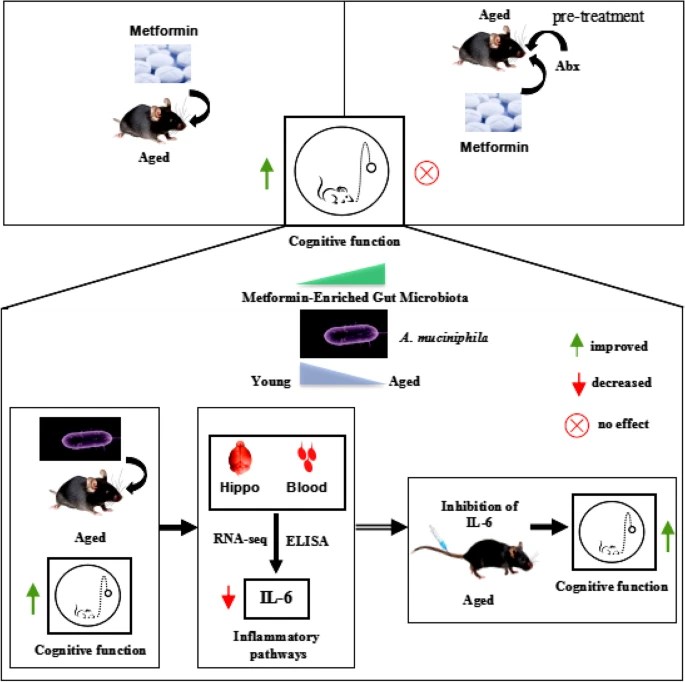
“We show that gut microbiota is altered by metformin, which is necessary for protection against ageing-associated cognitive function declines in aged mice.

  • Mice treated with antibiotics did not exhibit metformin-mediated cognitive function protection.
  • Treatment with Akkermansia muciniphila improved cognitive function in aged mice.
  • A. muciniphila decreased proinflammatory-associated pathways, particularly that of proinflammatory cytokine interleukin (IL)-6, in both peripheral blood and hippocampal profiles, which was correlated with cognitive function improvement.
  • An IL-6 antibody protected cognitive function, and an IL-6 recombinant protein abolished the protective effect of A. muciniphila on cognitive function in aged mice.

40168_2023_1567_Figa_HTML

A. muciniphila, which is mediated in gut microbiota by metformin, modulates inflammation-related pathways in the host and improves cognitive function in aged mice by reducing proinflammatory cytokine IL-6 both systemically and in the hippocampus. This is direct evidence to validate that gut microbiota mediate the effect of metformin on cognitive improvement.”

https://microbiomejournal.biomedcentral.com/articles/10.1186/s40168-023-01567-1Akkermansia muciniphila, which is enriched in the gut microbiota by metformin, improves cognitive function in aged mice by reducing the proinflammatory cytokine interleukin-6″


IL-6 may be useful with other biomarkers of impaired cognitive function. It’s too coarse to track improved cognitive function past a certain point, though. Maybe the current IL-6 blood test can be refined as high-specificity CRP and regular CRP blood tests were done?

We don’t need to take this drug or be concerned about this gut bacteria species in order to lower inflammation. Click the IL-6 link above and see blog posts such as Part 2 of Rejuvenation therapy and sulforaphane for other methods.

PXL_20230630_092833465

Paradigms determine findings

This 2023 rodent study from Dr. Michael Skinner’s labs at Washington State University investigated epigenetic transgenerationally inherited differential DNA methylation regions (DMRs). I’ll focus on a paradigm shift that enabled some of this study’s findings:

“The current study was designed to assess if morula embryos escape the erasure of DDT-induced transgenerational sperm DMR methylation. Observations demonstrate:

  • 98% of transgenerational sperm DMR sites retain DNA methylation and are not erased, appearing similar to imprinted-like sites.
  • Maintenance of DNA methylation on a variety of imprinted sites in a comparison of sperm versus morula methylation levels using methylated DNA immunoprecipitation (MeDIP) followed by next-generation sequencing (MeDIP-Seq).
  • The majority of low-density CpG genomic sites had a significant increase in DNA methylation in the morula embryo compared to sperm.

The general erasure of DNA methylation during embryogenesis appears applicable to high-density DNA methylation sites (e.g. CpG islands) but neither to transgenerational DMR methylation sites nor to low-density CpG deserts, which constitute the vast majority of the genome’s DNA methylation sites.

dvad003f1

Bisulfite procedures have been extensively used followed by next-generation sequencing (BS-Seq) to assess genome-wide DNA methylation in early embryonic development. This has led to the concept that DNA methylation erasure occurs during early embryo development and primordial germ cell development.

A limitation with BS-Seq is that it is often biased toward detecting changes in higher-density CpG sites with >5 CpG/100 bp. A critical technical limitation to BS-Seq is that bioinformatics protocols used remove low-density (<3 CpG/100 bp) regions from the genome prior to analysis. In contrast, MeDIP-Seq analysis is biased to low-density CpG sites with <5 CpG/100 bp that constitute >90% of the genome.

Alteration of morula stem cell epigenetics will impact epigenomes and transcriptomes of all subsequently derived somatic cells. This is the molecular basis for epigenetic transgenerational inheritance phenotypes and pathologies.

Future studies need to re-evaluate the current dogma of a genome-wide erasure of DNA methylation, and consider a more dynamic regulation of early embryonic stem cell epigenetic development.”

https://academic.oup.com/eep/article/9/1/dvad003/7190131 “Transgenerational sperm DMRs escape DNA methylation erasure during embryonic development and epigenetic inheritance”


PXL_20230614_014127763

Comparing ten dietary fibers’ effects on obesity

This 2023 rodent study compared a high-fat high-sugar diet’s deleterious effects with adding ten bioactive dietary fibers vs. adding the weight-loss pill Orlistat vs. a normal diet:

“Different dietary fibers supplementation improved obesity in rats with diversely positive responses, improvement of dyslipidemia, serum hormone, serum metabolome, and gut microbiota disorders.

Model group ate 66.5% normal chow diet, 10% lard, 20% sucrose, 2.5% cholesterol and 1% sodium cholate. Normal group ate normal chow.

Treatment groups ate high-fat high-sugar diet plus 270 mg/kg each of either barley β-glucan, glucomannan, arabinoxylan, inulin, guar gum, xanthan gum, carrageenan, apple pectin, arabinogalactan, or xylan dietary fibers. Orlistat (Y) supplementation was equivalent to 120 mg taken 3 times per day for 70 kg humans.

dietary fiber effects

We found that supplementation with β-glucan, arabinoxylan, xanthan gum, guar gum, apple pectin, carrageenan, inulin, and xylan significantly reduced body weight and dyslipidemia, whereas glucomannan and arabinogalactan did not. Apple pectin, β-glucan and arabinoxylan improved the most biomarkers (15, 17 and 18 kinds) relevant to obesity.

Most dietary fibers improved physiological indicators which have a risk with obesity, including accumulation of body fat, dyslipidemia, glucose metabolic abnormality, oxidative stress, and adipocytokines secreted by adipose tissue, while β-glucan reversed almost all physiological indicators. Consequently, intake of β-glucan could be considered as therapy for obesity management induced by high fat diet.”

https://www.sciencedirect.com/science/article/abs/pii/S0268005X23001637 “Different dietary fibers unequally remodel gut microbiota and charge up anti-obesity effects” (not freely available). Thanks to Dr. Jiajia Wen for providing a copy.


A human equivalent to this study’s 270 mg/kg daily dietary fiber intake is (270 mg x .162) x 70 kg = 3062 mg. I eat > 4 grams of oat β-glucan daily, and much less than that of orange pectin. No human will eat > 10 grams of inulin every day without having severe gastrointestinal adverse effects.

I didn’t curate this study’s gut microbiota findings because it used fecal samples. Per Measuring gut microbiota, Part 1 and Part 2, fecal microbiota don’t adequately represent gut microbiota in either the entire gastrointestinal tract, or in any section of it.

Replicating other studies’ fecal microbiota findings doesn’t advance science when these don’t define subjects’ gastrointestinal tract situations. More work is needed to improve methods of investigating gut microbiota.

PXL_20230615_092427922

Transgenerational transmission of stress

This 2023 rodent study found that effects of stress during mid-late gestation were epigenetically transmitted to the first, second, and third female generations:

“We investigated effects of gestational chronic variable stress (CVS) in rats using restraint and social isolation stress in the parental F0 generation. Only the F0 pregnant dams were subjected to stress.

When a pregnant female experiences adversity, impacts of that stress affect exposed somatic tissues (F0 generation), the fetuses (F1 generation), and the fetuses’ germline (F2 generation). A true transgenerational inheritance arises when germline epimutations are transmitted to unexposed F3 offspring.

A subset of F1 rats was housed in an enriched environment (EE) to mitigate adverse effects of CVS. F2 offspring reared in EE had increased birth weights, but their uterine gene expression patterns remained comparable to those of stressed animals.

ijms-24-03734-g001

We provide evidence that psychological and psychosocial CVS alters inflammatory status and endocrine markers in uteri of adult dams through transgenerational programming of the female germline. EE therapy in prenatally stressed F1 offspring had no beneficial effects on uterine expression of inflammatory and endocrine markers for them or their future offspring.”

https://www.mdpi.com/1422-0067/24/4/3734 “Environmental Enrichment Promotes Transgenerational Programming of Uterine Inflammatory and Stress Markers Comparable to Gestational Chronic Variable Stress”


PXL_20230611_100728709

Taurine’s effects on healthspan and lifespan

A 2023 human / primate / rodent / worm study with 56 coauthors exhaustively investigated taurine effects:

“We measured the blood concentration of taurine during aging and investigated the effect of taurine supplementation on healthspan and lifespan in several species.

  • In C57Bl/6J wild-type (WT) mice, serum taurine concentrations declined from 132.3 ± 14.2 ng/ml at 4 weeks to 40.2 ± 7.1 ng/ml at 56 weeks.
  • In 15-year-old monkeys, serum taurine concentrations were 85% lower than in 5-year-old monkeys.
  • Taurine concentrations in elderly humans were decreased by more than 80% compared with concentration in serum of younger individuals.

Regardless of their sex, taurine-fed mice survived longer than control mice. The median lifespan increase was 10 to 12%, and life expectancy at 28 months increased by 18 to 25%.

Improved survival of taurine-fed mice was not a consequence of low survival of control animals or differences in diet. Taurine deficiency is a driver of aging in mice because its reversal increases lifespan.

lifespan extension starting taurine in middle age

We investigated the health of taurine-fed middle-aged mice and found an improved functioning of bone, muscle, pancreas, brain, fat, gut, and immune system, indicating an overall increase in healthspan. Taurine reduced cellular senescence, protected against telomerase deficiency, suppressed mitochondrial dysfunction, decreased DNA damage, and attenuated inflammation.

An association analysis of metabolite clinical risk factors in humans showed that lower taurine, hypotaurine, and N-acetyltaurine concentrations were associated with adverse health, such as increased abdominal obesity, hypertension, inflammation, and prevalence of type 2 diabetes. We found that a bout of exercise increased concentrations of taurine metabolites in blood, which might partially underlie antiaging effects of exercise.

Taurine abundance decreases during aging. A reversal of this decline through taurine supplementation increases healthspan and lifespan in mice and worms, and healthspan in monkeys.”

https://www.science.org/doi/10.1126/science.abn9257 “Taurine deficiency as a driver of aging”


One area curiously not investigated in this study was that taurine supplementation freed up cysteine to do things other than synthesize taurine, like synthesize glutathione, an idea in Treating psychopathological symptoms will somehow resolve causes? An introductory article brought up this point:

“One of the most studied mechanisms of action for taurine is an increase in antioxidant capacity. Although oxidative damage is not clearly linked to mammalian lifespan, it plays a role in many age-associated pathologies.

Taurine is a poor scavenger of reactive oxygen species, with the exception of hypochlorite, which it detoxifies to N-chlorotaurine. N-Chlorotaurine is anti-inflammatory and induces expression of antioxidant enzymes in mice and humans.

Taurine supplementation might also cause an increase in levels of its precursors, including the antioxidants hypotaurine and cysteine. An interesting corollary is that up-regulating endogenous taurine synthesis would have the opposite result—consuming hypotaurine and cysteine.”

https://www.science.org/doi/10.1126/science.adi3025 “Taurine linked with healthy aging”


A human equivalent taurine dose is (1 g x .081) x 70 kg = 5.67 grams. Dose tests from supplementary data were:

“Dose and frequency of taurine administration was selected based on a pilot study, which showed that when given once daily to middle-aged WT mice, this regimen increased peak blood taurine concentrations to baseline concentrations in young (4-week-old) mice.”

taurine dose

I’ve taken 2 grams every day for the past three years, and will now bump that up to 5 grams. My diet doesn’t regularly include any foods high in taurine.

I recommend reading the study rather than commentaries. Its publisher did a very good job of linking figures so that images can be viewed, then the reader returned to the right context.

Gatekeepers are out in full force on this study, and their viewpoints are probably what you’ll see first, to include unevidenced statements like “the study’s main authors cautioned the public not to self-dose with the supplement” and the above introductory article’s unreferenced “equivalent doses used in the study by Singh et al. would be very high in humans.” Pretty pathetic that such ‘authorities’ are even publicized after recent years of deliberately misleading the world about science and medicine.

This study and all commentaries called for clinical trials that are NOT going to happen:

  • Drug companies can’t make money from a research area that’s cheap, not patentable, and readily accessible.
  • Government sponsors are likewise not incentivized to act in the public’s interest per their recent behavior.

Take responsibility for your own one precious life. See Part 2 for a sample of citing papers.

PXL_20230601_181526429

Nrf2 Week #8: Epithelium

A 2023 review of Nrf2 regulating repair of epithelial cells in the skin, eye, lung, liver, and kidney:

“Major functions of epithelial cells include secretion/excretion of material, absorption of nutrients, as well as filtration. Some epithelial cells also act as a barrier to, and sensor of, the external environment, and are actively involved in inflammatory processes.

The epithelium is equipped with efficient protective capabilities to handle diverse environmental challenges while maintaining its function, or in the case of injury, mounting an effective repair response. It coordinates a combination of proliferation, migration, cell spreading, and differentiation to restore the lost tissue and its functionality. Defects in any of these cellular processes can result in chronic tissue damage as seen, for example, in chronic skin ulcers.

m_bst-2022-0228c.02

We summarize evidence for a direct involvement of NRF2 in repair processes after injury has occurred and relevant NRF2 target genes whose function extend beyond cytoprotection. We report on tissues and organs for which such data are available, including skin, eye, lung, liver, and kidney. Roles of NRF2 in repair of additional epithelial tissues are likely, but remain to be determined.

A beneficial effect of NRF2 activation on epithelial repair was confirmed in multiple studies. However, prolonged activation negatively impacted repair of the lung, liver, and kidney under certain conditions.

Compounds or treatment regimens that allow a precise timing of the extent and duration of NRF2 activation are required for promoting tissue repair. Identification of further NRF2 target genes and their function could help predict for what tissues or injury situations NRF2 activation may offer the greatest benefit.”

https://portlandpress.com/biochemsoctrans/article/51/1/101/232562/Targeting-NRF2-to-promote-epithelial-repair “Targeting NRF2 to promote epithelial repair”

Nrf2 Week #7: Immunity

Two reviews of Nrf2 relationships with our two immune systems, starting with adaptive immunity:

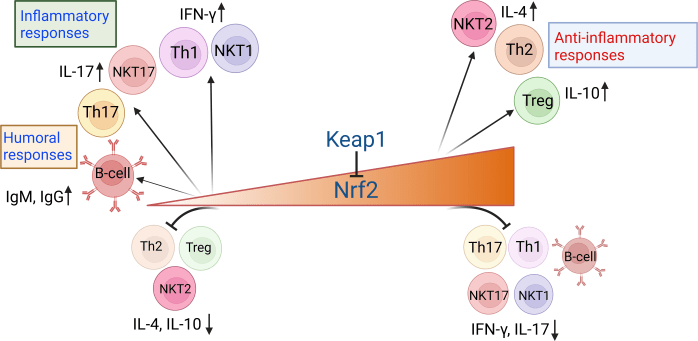
“We highlight recent findings about the influence of Keap1 and Nrf2 in development and effector functions of adaptive immune cells, T lymphocytes and B lymphocytes. We summarize Nrf2 research potential and targetability for treating immune pathologies.

Immune cells have mechanisms in place to strike a perfect redox balance, and to modulate levels of ROS differentially during their naive, activated, and effector stages for tailored immune responses. Cells of the lymphoid lineage (T, B, and NK cells) and myeloid lineage (macrophages, granulocytes, dendritic cells, and myeloid-derived suppressor cells) are generated from self-renewing progenitors, hematopoietic stem cell (HSCs) in the bone marrow.

Nrf2 activation in HSCs skews hematopoietic differentiation toward the myeloid lineage at the cost of the lymphoid lineage cells. Nrf2 does not participate in late T cell development leading to generation of single-positive CD4 and CD8 T cells.

ih2200061f2

  • Nrf2 activation supports differentiation of the Th2 subset, regulatory T cells (Tregs), and the NKT2 subset while inhibiting differentiation of Th1, Th17, NKT1, and NKT17 subsets.
  • The absence of or low Nrf2 results in enhanced proinflammatory responses, characterized by differentiation of Th1, Th17, NKT1, and NKT17 subsets, and subdued generation of Th2, Treg, and NKT2 subsets.

Nrf2 activation levels also influence generation of humoral responses.

  • Low Nrf2 levels favor T cell–dependent production of IgG and IgM Abs by activated B cells.
  • High Nrf2 suppresses B cell responses such as differentiation of germinal center B cells and plasma cells.

Nrf2 negatively regulates T–cell mediated inflammatory responses and T-dependent B cell responses.

https://journals.aai.org/immunohorizons/article/7/4/288/263657/Beyond-Antioxidation-Keap1-Nrf2-in-the-Development “Beyond Antioxidation: Keap1–Nrf2 in the Development and Effector Functions of Adaptive Immune Cells”


And our innate immune system:

“Nrf2 regulates the immune response by interacting directly or indirectly with one or more of the major innate immune signaling components that maintain cellular homeostasis. Toll-like receptors (TLR) signaling can induce Nrf2 activation, and this is primarily found to be through autophagy-mediated degradation of Keap1.

TLR agonists may be considered as stimuli that induce Nrf2 to reduce stress and inflammation, linking the immune and antioxidant pathways. Conversely, Nrf2 activation may restrain TLR-mediated inflammatory response through induction of antioxidant proteins and inhibition of pro-inflammatory cytokines.

Following LPS stimulation, the NF-κB pathway is engaged to initiate a host of pro-inflammatory responses such as IL-6 and interleukin 1 beta (IL-1β) gene expression. Nrf2 induction inhibits LPS-mediated activation of pro-inflammatory cytokines in macrophages.

Inflammasome activation is an essential component of the innate immune response, and is critical for clearance of pathogens or damaged cells through pro-inflammatory cytokine secretion and/or cell-death induction. While Nrf2 activation is in general associated with an anti-inflammatory state, Nrf2 has also been reported to be required for optimal NLRP3 inflammasome activity.

The type-I interferon (IFN) system constitutes an essential part of innate immunity. Type-I IFNs are produced upon recognition of foreign or self-DNA or RNA, and are best-known for inducing an antiviral state through the induction of interferon-stimulated genes. While Nrf2 interferes with IRF3 activation, STING expression, and type-I IFN signaling, none of these crucial players in innate immunity have been demonstrated to be direct targets of Nrf2.

The antiviral effect of Nrf2 activation by 4-OI may use various pathways to limit viral replication that have not been identified yet. It is important to consider that Nrf2-activating metabolites may also act as immunomodulators in a Nrf2-independent manner.

Anti-inflammatory properties of Nrf2 are independent of redox control. Further mechanistic studies are needed to decipher the exact indirect and/or direct interactions between Nrf2 and innate immune players.”

https://www.sciencedirect.com/science/article/pii/S0952791522000942 “Regulation of innate immunity by Nrf2”

Nrf2 Week #6: Phytochemicals

This 2023 review explored Nrf2 relationships with plant chemicals:

“This review focuses on possible mechanisms of Nrf2 activation by natural phytochemicals in preventing or treating chronic diseases, and regulating oxidative stress. Excess oxidative stress is closely related to many kinds of chronic diseases, such as cardiovascular diseases, cancer, neurodegenerative diseases, diabetes, obesity, and other inflammatory diseases.

Mitochondrial dysfunction and hyperglycemia lead to the massive production of ROS, which triggers molecular damage, inflammation, ferroptosis, insulin resistance, and β-cell dysfunction.

antioxidants-12-00236-g001

Crosstalk between Keap1-Nrf2-ARE pathway and other signaling pathways endows it with high complexity and significance in the multi-function of phytochemicals. Limited human data makes an urgent need to open the new field of phytochemical-original supplement application in human chronic disease prevention.”

https://www.mdpi.com/2076-3921/12/2/236 “The Regulatory Effect of Phytochemicals on Chronic Diseases by Targeting Nrf2-ARE Signaling Pathway”


Top ten mentions, not including references:

  • 21 Sulforaphane
  • 16 Broccoli
  • 9 Curcumin
  • 5 Resveratrol
  • 5 Green tea catechins
  • 4 Luteolin
  • 3 Garlic
  • 3 Soy isoflavones
  • 3 Lycopene
  • 3 Quercetin

PXL_20230518_191008431

Nrf2 Week #5: Elements

Two 2023 papers, starting with a cell study of Nrf2 regulating sulfur:

“We demonstrated that NRF2 increased intracellular persulfides by upregulating cystine transporter xCT encoded by Slc7a11, a well-known NRF2 target gene. Persulfides have been shown to play an important role in mitochondrial function.

Supplementation with glutathione trisulfide (GSSSG), which is a form of persulfide, elevated mitochondrial membrane potential, increased oxygen consumption rate (OCR), and promoted ATP production.

glutathione trisulfide

The sulfur oxidation pathway is thought to protect cells from sulfide toxicity and to support electron transport efficiency. This study clarified that facilitating persulfide production and sulfur metabolism in mitochondria by increasing cysteine availability is one of the mechanisms for NRF2-dependent mitochondrial activation.”

https://www.sciencedirect.com/science/article/pii/S2213231723000253 “Contribution of NRF2 to sulfur metabolism and mitochondrial activity”


The second paper reviewed Nrf2 regulating iron:

“The central role of Nrf2 in dictating multiple facets of cellular stress response has defined the Nrf2 pathway as a general mediator of cell survival. Ferroptosis is an iron- and lipid peroxidation-dependent form of cell death. While Nrf2 was initially thought to have anti-ferroptotic function primarily through regulating antioxidant response, accumulating evidence has indicated that Nrf2 also exerts anti-ferroptotic effects via regulating key aspects of iron and lipid metabolism.

molce-46-3-165-f2

Iron exists in two redox states, ferrous (Fe2+) and ferric (Fe3+). While constant loss or gain of electrons to switch between two redox states makes iron useful for metabolic reactions, generation of free radicals due to an excess of the highly reactive Fe2+ form is toxic to cells. To prevent iron toxicity, free labile iron in the form of (Fe2+) is controlled by multiple systems at both systemic and cellular levels to maintain iron homeostasis.

Nrf2 regulates iron homeostasis by controlling both ferritin synthesis and degradation. Overall, Nrf2 regulation of iron homeostasis is a critical determinant of a cell’s sensitivity or resistance to ferroptosis, which is independent of its antioxidant function.”

https://www.molcells.org/journal/view.html?doi=10.14348/molcells.2023.0005 “Anti-Ferroptotic Effects of Nrf2: Beyond the Antioxidant Response”


PXL_20230520_183122738