Get a little stress into your life, Part 2

A 2025 reply to a letter to the editor cited 56 references to elaborate on Part 1 and related topics:

“A positive effect does not necessarily mean benefit, and positive effects on individual organisms may mean adverse effects on other coexisting organisms. However, a vast literature shows that hormetic stimulation can result in benefits depending on the context, for instance, clear growth, yield, and survival improvement.

There is some energetic cost to support hormetic stimulation, with a likely positive energy budget, which might also have negative consequences if there is insufficient energy substrate, especially under concurrent severe environmental challenges. Moreover, hormetic preconditioning could be particularly costly when there is a mismatch between the predicted environment and the actual environment the same individuals or their offspring might face in the future.

Hormesis should not be unilaterally linked to positive and beneficial effects without considering dose levels. For any research to answer the question of whether a stimulation represents hormesis and whether it is beneficial, robust dose–response evaluations are needed, which should be designed a priori for this purpose, meeting the requirements of the proper number, increment, and range of doses.

Both additivity and synergism are possible in the hormetic stimulatory zone, depending also on the duration of exposure and the relative ratio of different components. This might happen, for example, when a chemical primes stress pathways (e.g., heat shock proteins and antioxidants), thus enabling another chemical to trigger hormesis (defense cross-activation) and/or because combined low subtoxicity may modulate receptors (e.g., aryl hydrocarbon receptor and nuclear factor erythroid 2-related factor 2) differently than individual exposures (receptor binding synergy).

Moreover, even when stimulation occurs in the presence of individual components, stimulation may no longer be present when combined, and therefore, effects of mixtures cannot be accurately predicted based on the effects of individual components. There may be hormesis trade-offs; hormesis should be judged based on fitness-critical end points.

While often modeled mathematically, hormesis is fundamentally a dynamic biological process and should not be seen as a purely mathematical function, certainly not a linear one. Much remains to be learned about the role of hormesis in global environmental change, and an open mind is needed to not miss the forest for the trees.”

https://pubs.acs.org/doi/10.1021/acs.est.5c05892 “Correspondence on ‘Hormesis as a Hidden Hand in Global Environmental Change?’ A Reply”


Reference 38 was a 2024 paper cited for:

“Hormetic-based interventions, particularly priming (or preconditioning), do not weaken organisms but strengthen them, enhancing their performance and health under different environmental challenges, which are often more massive than the priming exposure.

The catabolic aspect of hormesis is primarily protective whereas the anabolic aspect promotes growth, and their integration could optimize performance and health. The concept of preconditioning has also gained widespread attention in biomedical sciences.”

https://www.sciencedirect.com/science/article/abs/pii/S1568163724004069 “The catabolic – anabolic cycling hormesis model of health and resilience” (not freely available)


Reference 40 was a 2021 review that characterized hormesis as a hallmark of health:

“Health is usually defined as the absence of pathology. Here, we endeavor to define health as a compendium of organizational and dynamic features that maintain physiology.

Biological causes or hallmarks of health include features of:

  • Spatial compartmentalization (integrity of barriers and containment of local perturbations),
  • Maintenance of homeostasis over time (recycling and turnover, integration of circuitries, and rhythmic oscillations), and
  • An array of adequate responses to stress (homeostatic resilience, hormetic regulation, and repair and regeneration).

Disruption of any of these interlocked features is broadly pathogenic, causing an acute or progressive derailment of the system.

A future ‘medicine of health’ might detect perilous trajectories to intercept them by targeted interventions well before the traditional ‘medicine of disease’ comes into action.”

https://www.sciencedirect.com/science/article/pii/S0092867420316068 “Hallmarks of Health”


Betaine as an exercise mimetic

A 2025 human study investigated effects of long-term exercise:

“Exercise has well-established health benefits, yet its molecular underpinnings remain incompletely understood. We conducted an integrated multi-omics analysis to compare effects of acute vs. long-term exercise in healthy males.

Acute exercise induced transient responses, whereas repeated exercise triggered adaptive changes, notably reducing cellular senescence and inflammation and enhancing betaine metabolism. Exercise-driven betaine enrichment, partly mediated by renal biosynthesis, exerts geroprotective effects and rescues age-related health decline in mice.

Betaine binds to and inhibits TANK-binding kinase 1 (TBK1), retarding the kinetics of aging.

Betaine effectively alleviated senescence phenotypes by reduced senescence-associated β-galactosidase (SA-β-Gal)-positive cells, decreased p21 expression, lowered DNA damage indicator γ-H2A.X, and elevated heterochromatin mark H3K9me3. Betaine treatment also enhanced cellular antioxidant capacity, as evidenced by increased NRF2 phosphorylation and reduced ROS accumulation.

These findings systematically elucidate the molecular benefits of exercise, and position betaine as an exercise mimetic for healthy aging.”

https://doi.org/10.1016/j.cell.2025.06.001 “Systematic profiling reveals betaine as an exercise mimetic for geroprotection” (not freely available) Thanks to Dr. Weimin Ci for providing a copy.


Stay away from NAC

A 2025 rodent study added several reasons to avoid non-emergency use of N-acetylcysteine:

“We previously showed that antioxidants induced an impairment of negative feedback of the hypothalamus-pituitary-adrenal (HPA) axis in rats, in parallel to a down-regulation of glucocorticoid receptor (GR) and nuclear factor erythroid 2-related factor 2 (Nrf2) expression in the pituitary gland. This study evaluated the role of the Nrf2-heme-oxygenase-1 (HO-1) pathway on impairment of negative feedback of the HPA axis induced by N-acetylcysteine (NAC).

Male Swiss-Webster mice were orally supplemented with NAC for 5 consecutive days. The Nrf2-HO-1 pathway activator cobalt protoporphyrin IX (CoPPIX) was injected intraperitoneally on days 2 and 5 after starting NAC supplementation.

NAC reduced expression of Nrf2 in the pituitary of mice. NAC induced adrenal enlargement and hypercorticoidism, along with a decrease in GRα expression and an increase of GRβ expression in the pituitary gland.

We observed that dietary supplementation with NAC ( Figure 4A ) significantly increased plasma corticosterone levels in mice 24h ( Figure 4B ) as well as 15 days ( Figure 4C ) after the last administration of the antioxidant with the same magnitude of response (3.5-fold and 3.4-fold, respectively).

Chronic activation of the HPA axis can have damaging effects on immune, cardiovascular, metabolic, and neural functions, increasing the risk of immune system dysfunction, mood disorders, and metabolic and cardiovascular diseases. To prevent these deleterious effects of chronic hypercortisolism, HPA axis function is controlled by a glucocorticoid-dependent negative feedback system that is essential for ending the stress response.

These findings showed that NAC reduced Nrf2-HO-1 pathway activation in the pituitary gland, in a mechanism probably related to a local downregulation of GRα and an up-regulation of GRβ, leading to a failure of negative feedback of the HPA axis and consequently to the hyperactivity of this neuroendocrine axis.”

https://pmc.ncbi.nlm.nih.gov/articles/PMC11827418/ “Activation of the Nrf2/HO-1 pathway restores N-acetylcysteine-induced impairment of the hypothalamus-pituitary-adrenal axis negative feedback by up-regulating GRα expression and down-regulating GRβ expression into pituitary glands”


A human equivalent to this study’s NAC dose is (150 mg x .081) x 70 kg = 851 mg. Human supplements are sold in 600 mg and 1000 mg doses.

Grok 3 replied to a question: Human equivalent time to 15 days in male Swiss-Webster mice aged between 4 and 6 weeks? by stating: “15 days in male Swiss-Webster mice aged 4 to 6 weeks corresponds to approximately 4.1 human years, advancing their equivalent human age from about 10–12 years to roughly 14–16 years.” Four+ years seems like a long time for NAC to steadily and continuously affect humans’ HPA axes per the above graphic. What do you think?

Previously mentioned reasons to avoid daily use of NAC were in the lower part of A good activity for bad weather days.

Practice what you preach, or shut up

A 2025 review subject was sulforaphane and brain health. This paper was the latest in a sequence where the retired lead author self-aggrandized his career by citing previous research.

He apparently doesn’t personally do what these research findings suggest people do. The lead author is a few weeks older than I am, and has completely white hair per an interview (Week 34 comments). I’ve had dark hair growing in (last week a barber said my dark hair was 90%) since Week 8 of eating broccoli sprouts every day, which is a side effect of ameliorating system-wide inflammation and oxidative stress.

If the lead author followed up with what his research investigated, he’d have dark hair, too. Unpigmented white hair and colored hair are both results of epigenetics.

Contrast this lack of personal follow-through of research findings with Dr. Goodenowe’s protocol where he compared extremely detailed personal brain measurements at 17 months and again at 31 months. He believes enough in his research findings to personally act on them, and demonstrate to others how personal agency can enhance a person’s life.

It’s every human’s choice whether or not we take responsibility for our own one precious life. I’ve read and curated on this blog many of this paper’s references. Five years ago for example:

So do more with their information than just read.

https://www.mdpi.com/2072-6643/17/8/1353 “Sulforaphane and Brain Health: From Pathways of Action to Effects on Specific Disorders”

Nrf2 regulation

This 2025 review explored what’s known so far about Nrf2 post-translational regulators:

“Nrf2 is controlled at multiple levels, including epigenetic, transcriptional, translational, and post-translational. The focus of this review is on proteins that control Nrf2 at the post-translational level because in normal cells they are of preeminent importance.

We outline mechanisms by which multiple E3 ubiquitin ligases act to repress Nrf2 expression, how derepression of Nrf2 (and induction of its target genes) by oxidative stressors occurs, and why tissue injury and endoplasmic reticulum stress downregulate Nrf2. This update also explains how Nrf2 is embedded in thiol biochemistry, and outlines signaling pathways and endogenous signaling molecules that control its activity.

Nrf2 not only positively controls the basal and/or inducible expression of a substantial number of genes in all tissues but also downregulates many genes. Estimates of the number of antioxidant/electrophile-responsive element (ARE/EpRE)-driven genes that are positively regulated by Nrf2 vary from several hundred to >2000 depending on the experimental method, species, cell type, physiology, age, sex, diet, and the magnitude of the change that is deemed to be significant.

Induction of ARE/EpRE-driven genes allows adaptation to oxidative, electrophilic, and inflammatory stress. Nrf2 positively regulates clusters of genes encoding proteins classed broadly as antioxidant, drug-, heme-, and iron-metabolizing, pentose phosphate pathway, NADPH-generating, and autophagy-related, as well as fatty acid oxidation enzymes, lipases, transcription factors, and Keap1.

Genes that are negatively regulated by Nrf2 include those encoding the cytokines IL-1β and IL-6, myosin light-chain kinase (MYLK), and NADPH oxidase 4 (NOX4). Nrf2 also regulates some microRNAs, which represents another mechanism by which Nrf2 can downregulate the expression of genes such as those encoding collagens 1A2, 3A1, and 5A1, heat shock protein 47, fibronectin, and elastin. In addition, several lipogenesis-related genes such as fatty acid synthase 1 (FASN1) and acetyl-CoA carboxylase 1 (ACC1), stearoyl-CoA desaturase (SCD1), and fatty acid elongase 6 (ELOVL6) are downregulated upon Nrf2 activation, particularly under conditions of lipid overload. Given that lipogenesis is a highly NADPH-consuming process, it seems that Nrf2 activation redirects NADPH consumption from lipid synthesis towards redox reactions, although the mechanisms underlying the negative regulation of these genes are incompletely understood.

de novo synthesized Nrf2 upon Keap1 inactivation enables a rapid increase of levels of the transcription factor in response to metabolic changes and environmental challenges, allowing cells to adapt and restore homeostasis.”

https://www.cell.com/trends/biochemical-sciences/fulltext/S0968-0004(24)00282-2 “Regulating Nrf2 activity: ubiquitin ligases and signaling molecules in redox homeostasis”

This review’s primary audience is other researchers, and it ended with 15 outstanding items that Nrf2 research hasn’t yet adequately addressed.


Reversing hair greying, Part 2

Three papers that cited the 2021 Reversing hair greying study, starting with a 2024 rodent study:

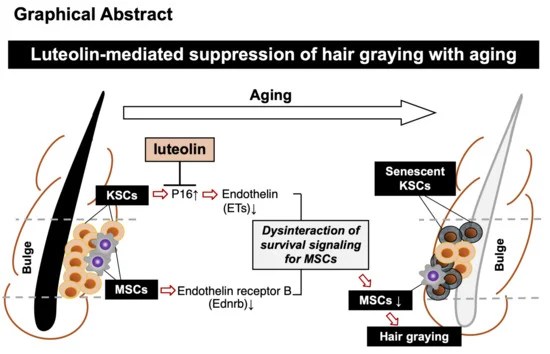
“External treatment with luteolin, but not that with hesperetin or diosmetin, alleviated hair graying in  model mice. Internal treatment with luteolin also mitigated hair graying.

Both treatments suppressed the increase in p16ink4a-positive cells in bulges [senescent keratinocyte stem cells (KSCs)]. Both treatments also suppressed decreases in expression levels of endothelins in KSCs and their receptor (Ednrb) in melanocyte stem cells (MSCs), and alleviated hair graying in mice.”

https://www.mdpi.com/2076-3921/13/12/1549 “Anti-Graying Effects of External and Internal Treatments with Luteolin on Hair in Model Mice”

This study treated subjects internally and externally with luteolin and hesperetin, which are ranked #7 (effective treatment) and #14 (not an effective treatment) per Nrf2 activator rankings. I wonder what these researchers would have found if they used the #1 ranked Nrf2 activator, sulforaphane.


A 2024 review managed to cover the Nrf2 activation subject without mentioning sulforaphane:

“Certain types of hair graying can be prevented or treated by enhancing MSC maintenance or melanocyte function, reducing oxidative stress, and managing secretion and action of stress hormones.

Tactical approaches to pursue this goal may include a selective activation of the p38 MAPK–MITF axis, enhancing cellular antioxidant capacity through activating NRF2, and modulating the norepinephrine–β2AR–PKA signaling pathway.”

https://www.mdpi.com/2076-3417/14/17/7450 “Intrinsic and Extrinsic Factors Associated with Hair Graying (Canities) and Therapeutic Potential of Plant Extracts and Phytochemicals”

This reviewer also avoided citing the 2021 Sulforaphane and hair loss, although hair loss was mentioned multiple times. I suspect that institutional politics was involved, as both papers are from South Korea.


Reference 32 of this review was a 2023 review that covered mainly unintentional hair greying reversal as a side effect noted when people had pharmaceutical treatments for various diseases:

“Hair graying is a common and visible sign of aging resulting from decreased or absence of melanogenesis. It has long been thought that reversal of gray hair on a large scale is rare. However, a recent study reported that individual gray hair darkening is a common phenomenon, suggesting the possibility of large-scale reversal of gray hair.

All these treatments rely on the presence of a sufficient population of active McSCs. Maintaining a healthy population of McSCs is also an urgent problem that needs to be addressed.”

https://www.ijbs.com/v19p4588.htm “Reversing Gray Hair: Inspiring the Development of New Therapies Through Research on Hair Pigmentation and Repigmentation Progress”


I published A hair color anecdote two months into eating broccoli sprouts every day when I first noticed dark hair growing in. Since it’s been over 4 years that I’ve continued eating broccoli sprouts daily, I think it’s alright to stop referring to my continuing reversal of hair greying as an anecdote.

But it was apparently too late to address hair loss, which started before I turned 30. So now you know what to do. 🙂

Polyphenol Nrf2 activators

Two 2024 reviews by the same group that published Sulforaphane in the Goldilocks zone investigated dietary polyphenols’ effects as “hormetic nutrients”:

“Polyphenols display biphasic dose–response effects by activating at a low dose the Nrf2 pathway resulting in the upregulation of antioxidant vitagenes [see diagram]. We aimed to discuss hormetic nutrients, including polyphenols and/or probiotics, targeting the Nrf2 pathway and vitagenes for the development of promising neuroprotective and therapeutic strategies to suppress oxidative stress, inflammation and microbiota deregulation, and consequently improve cognitive performance and brain health.

antioxidants-13-00484-g001

Hormetic nutrition through polyphenols and/or probiotics targeting the antioxidant Nrf2 pathway and stress resilient vitagenes to inhibit oxidative stress and inflammatory pathways, as well as ferroptosis, could represent an effective therapy to manipulate alterations in the gut microbiome leading to brain dysfunction in order to prevent or slow the onset of major cognitive disorders. Notably, hormetic nutrients can stimulate the vagus nerve as a means of directly modulating microbiota-brain interactions for therapeutic purposes to mitigate or reverse the pathophysiological process, restoring gut and brain homeostasis, as reported by extensive preclinical and clinical studies.”

https://www.mdpi.com/2076-3921/13/4/484 “Hormetic Nutrition and Redox Regulation in Gut–Brain Axis Disorders”


I’m not onboard with this study’s probiotic assertions because most of the cited studies contained unacknowledged measurement errors. Measuring gut microbiota, Part 2 found:

“The fecal microbiome does not represent the overall composition of the gut microbiome. Despite significant roles of gut microbiome in various phenotypes and diseases of its host, causative microbes for such characteristics identified by one research fail to be reproduced in others.

Since fecal microbiome is a result of the gut microbiome rather than the representative microbiome of the GI tract of the host, there is a limitation in identifying causative intestinal microbes related to these phenotypes and diseases by studying fecal microbiome.”

These researchers also erroneously equated isothiocyanate sulforaphane’s Nrf2-activating mechanisms with polyphenols activating Nrf2.


This research group did better in clarifying polyphenols’ mechanisms in a review of hormetic dose-response effects of the polyphenol rosmarinic acid:

“This article evaluates whether rosmarinic acid may act as a hormetic agent, mediating its chemoprotective effects as has been shown for similar agents, such as caffeic acid, a derivative of rosmarinic acid.

Rosmarinic acid enhanced memory in institute of cancer research male mice in the Morris water maze (escape latency).

untitled

Of importance in the evaluation of rosmarinic acid are its bioavailability, metabolism, and tissue distribution (including the capacity to affect and/or cross the BBB and its distribution and half-life within the brain). In the case of polyphenols, including rosmarinic acid, they are typically delivered at low doses in the diet and, in most instances, they do not escape first-pass metabolism, with the prominent chemical forms being conjugates of glucuronides and sulfates, with or without methylation.

These conjugated metabolites are chemically distinct from the parent compound, showing considerable differences in size, polarity, and ionic form. Their biological actions are quite different from the parent compound.

Bioavailability studies reveal that maximum concentrations in plasma typically do not exceed 1 µM following consumption of 10–100 mg of a single phenolic compound, with the maximum concentration occurring typically less than 2 h after ingestion, then dropping quickly thereafter. In the case of the in vitro studies assessed herein, and with few exceptions, most of the studies employed concentrations >10 µM with some studies involving concentrations in the several hundred µM range, with the duration of exposure typically in the range of 24–72 h, far longer duration than the very short time interval of a few minutes to several hours in human in vivo situations.

We strongly recommend that all experiments using in vitro models to study biological responses to dietary polyphenols use only physiologically relevant flavonoids and their conjugates at appropriate concentrations, provide evidence to support their use, and justify any conclusions generated. When authors fail to do this, referees and editors must act to ensure that data obtained in vitro are relevant to what might occur in vivo.”

https://www.degruyter.com/document/doi/10.1515/med-2024-1065/html “The chemoprotective hormetic effects of rosmarinic acid”

Taurine’s effects on healthspan and lifespan, Part 2

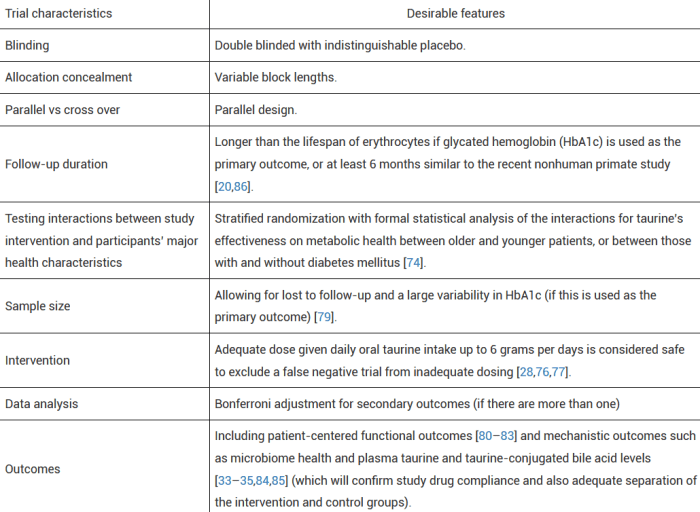
Four 2023 papers that cited Part 1, starting with a review of hypothetical parameters for taurine clinical trials that aren’t going to happen because:

  • Drug companies can’t make money from a research area that’s cheap, not patentable, and readily accessible.
  • Government sponsors are likewise not incentivized to act in the public’s interest per their recent behavior.

“We propose the rationale that an adequately powered randomized-controlled-trial (RCT) is needed to confirm whether taurine can meaningfully improve metabolic and microbiome health, and biological age.

taurine hypothetical trial

Using long-term survival as a primary outcome is desirable but difficult; any demonstrable difference in this outcome will require a substantial sample size with prolonged follow-up (e.g., 5 years or longer) if the effect size is relatively small (or modest at best). Biological age based on DNA methylation biomarkers according to the Levine PhenoAge or newer biological age models is increasingly being recognized as an important dynamic health parameter, and hence it can also be used as a surrogate outcome in assessing benefits of taurine supplementation.

The recent taurine trial on nonhuman primates used an equivalent dose that was between 3 and 6 g per day for an 80-kg person, and this could represent a reasonable dose range for any human RCTs. We believe that a 6-month or longer interventional period matching what was successfully done on nonhuman primates will be an acceptable time frame in assessing potential efficacy of taurine on human metabolic health in a RCT.”

https://www.sciopen.com/article/10.26599/1671-5411.2023.11.004 “Flattening the biological age curve by improving metabolic health: to taurine or not to taurine, that’s the question”

A six-month duration and a 6 grams per day dose were in the above table’s desirable features column, but epigenetic clock measurements weren’t included as an outcome. I’d guess that its omission reflected disagreements among coauthors, because the desirability of using epigenetic clocks as surrogate measures of human healthspan and lifespan was mentioned several times.


Another review:

“As described in the first half of this review, recent advances in omics analysis technology have led to research to detect the causative gene of dilated cardiomyopathy. It has been found that rare mutations in the taurine transporter gene contribute to the development of dilated cardiomyopathy in humans. It is unlikely that a taurine-deficient diet is a factor in dilated cardiomyopathy, but taurine intake may have positive cardiovascular effects.

The second half summarizes the relationship between taurine and healthspan and lifespan. It is difficult to summarize the effect of age in whole body taurine content, which may vary in species, strain, sex, and age of animal models. Future human studies will clarify the relationship between dietary taurine intake and healthy life expectancy.”

https://www.sciencedirect.com/science/article/pii/S1347861323000749 “Taurine deficiency associated with dilated cardiomyopathy and aging”


A human study investigated brain chemicals that fluctuate with our circadian rhythm:

“We conducted a MRS study at 7 T, where occipital NAD content, lactate, and other metabolites were assessed in two different morning and afternoon diurnal states in healthy participants. Salivary cortisol levels were determined to confirm that the experiment was done in two circadian different physiological conditions.

Although no significant differences in NAD+, NADH, and NAD+/NADH were detected between the morning and afternoon sessions, there was a significant variance difference in NAD+/NADH, with a higher variance of NAD+/NADH redox ratio in the morning.

None of the over 30 measured brain metabolites were significantly affected by the circadian rhythm (CR) except for taurine, which decreased in the afternoon. Further CR studies should consider the prospective measurement of taurine levels in different regions of the human brain, and explore how taurine supplements could impact brain CR metabolism in health and diseases.”

https://www.frontiersin.org/articles/10.3389/fphys.2023.1285776/full “Effect of circadian rhythm on NAD and other metabolites in human brain”

I omitted findings regarding this study’s pathetic Balloon Analogue Risk Task (BART) test. Older studies that drew spurious findings from this video game include:


A rodent study modeled human childhood cataracts:

“Our analysis identified targets that are required for early normal differentiation steps and altered in cataractous lenses, particularly metabolic pathways involving glutathione and amino acids. Glutathione and taurine were spatially altered, and both taurine and the ratio of reduced glutathione to oxidized glutathione, two indicators of redox status, were differentially compromised in lens biology.

1-s2.0-S2213231723002707-ga1_lrg

Dietary amino acid supplementation has been shown to prevent cataract development, and dietary intake of taurine was protective in a glutathione depletion-derived opacity model. This opens up the possibility that dietary supplementation of taurine could be used as a strategy to prevent human congenital cataracts.

Our findings shed light on molecular mechanisms associated with congenital cataracts, and point out that unbalanced redox status due to reduced levels of taurine and glutathione, metabolites already linked to age-related cataracts, could be a major underlying mechanism behind lens opacities that appear early in life.”

https://www.sciencedirect.com/science/article/pii/S2213231723002707 “Unbalanced redox status network as an early pathological event in congenital cataracts”


PXL_20240103_191340418

Take acetyl-L-carnitine if you are healthy

Eight 2023 acetyl-L-carnitine / L-carnitine papers, starting with three healthy human studies:

“Thirty healthy volunteers aged between 19 and 52 years were divided randomly into two equal groups, one of which received 1000 mg of L-carnitine (LC) per day over a 12-week period. Total cholesterol and HDL-C increased significantly after supplementation. LC could be useful in impeding development of heart diseases in subjects with low HDL-C.”

https://journaljammr.com/index.php/JAMMR/article/view/5166 “L-Carnitine Increases High Density Lipoprotein-Cholesterol in Healthy Individuals: A Randomized Trial”

Rationale for dose selection wasn’t provided, and the possibility of limited results due to poor study design wasn’t mentioned.


“This study examined effects of 12 weeks of LC supplementation on bone mineral density (BMD) and selected blood markers involved in bone metabolism of postmenopausal women participating in a resistance training (RT) program. Participants’ diets were supplemented with either 1 g of LC-L-tartrate and 3 g of leucine per day (LC group) or 4 g of leucine per day as a placebo (PLA group), in a double-blind fashion.

Because the study protocol consisted of both exercise and supplementation, some favorable changes in the BMD could be expected. However, it was not possible to detect them in the short study period. No significant modification in BMDs of the spine, hip, and total skeleton and no differences between groups in one-repetition maximum could be due to the relatively short duration of the RT intervention.”

https://nutritionandmetabolism.biomedcentral.com/articles/10.1186/s12986-023-00752-1 “Effect of a 3-month L-carnitine supplementation and resistance training program on circulating markers and bone mineral density in postmenopausal women: a randomized controlled trial”

Same comments as the first study regarding no rationale for dose selection, and no mention that limited results were possibly due to an inadequate dose.


In a letter to the editor, a researcher took issue with a study’s methodology:

“Based on finding that intravenous provision with carnitine alone does not increase muscle carnitine accretion, and on the above-reevaluated data, it appears that the basis for carnitine with caffeine being able to increase muscle carnitine levels, and thereby manipulation of muscle metabolism and exercise performance, is uncertain.

Carnitine bioavailability in any group would have been 9.5%. This assessment would be in line with previously recorded values of 5%–18% carnitine bioavailability. It is firmly believed that low carnitine bioavailability is attributable to the inability of kidneys to reabsorb carnitine when the threshold concentration for tubular reabsorption (about 40–60 μmol/L) has passed this value.

The authors’ proposed long-term use of carnitine supplementation as an aid to improve fat oxidation in type II diabetes also seems to lack provision.”

https://physoc.onlinelibrary.wiley.com/doi/10.14814/phy2.15736 “LTE: Does caffeine truly raise muscle carnitine in humans?”


Two genetic studies:

“Our findings suggest that humans have lost a gene involved in carnitine biosynthesis. Hydroxytrimethyllysine aldolase (the second enzyme of carnitine biosynthesis) activity of serine hydroxymethyl transferase partially compensates for its function.”

https://www.researchsquare.com/article/rs-3295520/v1 “One substrate-many enzymes virtual screening uncovers missing genes of carnitine biosynthesis in human and mouse”


“Reported prevalence of primary carnitine deficiency (PCD) in the Faroe Islands of 1:300 is the highest in the world. The Faroese PCD patient cohort has been closely monitored and we now report results from a 10-year follow-up study of 139 PCD patients.

PCD is an autosomal recessive disorder that affects the function of organic cation transporter 2 (OCTN2) high-affinity carnitine transporters, that localizes to the cell membrane and transport carnitine actively inside the cell. Without proper functioning OCTN2 carnitine transporters, renal reabsorption of carnitine is impaired, and as a consequence, patients suffering from PCD have low plasma levels of carnitine. This can disturb cellular energy production and cause fatigue, but also in extreme cases lead to cellular dysfunction and severe symptoms of coma and sudden death.

PCD patients seem to adhere well to L-carnitine treatment, even though they have to ingest L-carnitine tablets at least three times a day. Overall mean L-carnitine dosage was 66.3 mg/kg/day.”

https://onlinelibrary.wiley.com/doi/10.1002/jmd2.12383 “Patients with primary carnitine deficiency treated with L-carnitine are alive and doing well—A 10-year follow-up in the Faroe Islands”

The average daily dose is (66.3 mg x 70 kg) = 4,641 mg. A third of this dose would be about 1.5 g.

The first study of Acetyl-L-carnitine dosing also suggested dosing L-carnitine three times a day because of 10-20% bioavailability.


A study with unhealthy humans:

“This retrospective study analyzed medical records of adult patients between March 2007 and April 2019, with presenting complaints of fatigue and lethargy. Acetyl-L-carnitine has physiological functions similar to L-carnitine but has higher bioavailability and antioxidant properties. This study confirmed that a triple combination therapy with γ-linolenic acid, V. vinifera extract, and acetyl-L-carnitine can improve arterial stiffness in patients.

Our study had some limitations:

  1. The study population may not be representative of the entire Korean adult population.
  2. The study did not have a medication-free control group. Instead, the comparison group comprised patients with medication compliance <80%.
  3. Drop-out rate of the triple-combination therapy (46.2%, 147/318) was relatively high, indicating the possibility of bias due to loss to follow-up.
  4. The study did not consider lifestyle factors such as smoking, diet, and physical activity level, which may affect arterial stiffness.
  5. The study did not examine interactions among drugs comprising the combination therapy, although all drugs are known to positively impact blood vessels.”

https://onlinelibrary.wiley.com/doi/10.1111/jch.14708 “Efficacy of γ-linolenic acid, Vitis vinifera extract, and acetyl-L-carnitine combination therapy for improving arterial stiffness in Korean adults: Real-world evidence”

This study’s acetyl-L-carnitine dose was 500 mg three times a day.


Wrapping up with two rodent studies:

“Acetyl L-carnitine (ALCAR) has proved useful in treatment of different types of chronic pain with excellent tolerability. The present work aimed at evaluating the anti-hyperalgesic efficacy of ALCAR in a model of persistent visceral pain associated with colitis.

The acetyl group in the ALCAR molecule can enhance cholinergic signalling by promoting synthesis of neurotransmitter acetylcholine, which plays an important role in both the enteric and central nervous systems. Acetylcholine signalling has significant antinociceptive effects in development of visceral pain, so it has been proposed as a therapeutic target.

ijms-24-14841-g001

ALCAR significantly reduced establishment of visceral hyperalgesia in DNBS-treated animals, though the interventive protocol showed a greater efficacy than the preventive one.

  • The interventive protocol partially reduced colon damage in rats, counteracting enteric glia and spinal astrocyte activation resulting from colitis.
  • The preventive protocol effectively protected enteric neurons from inflammatory insult.

These findings suggest the putative usefulness of ALCAR as a food supplement for patients suffering from inflammatory bowel diseases.”

https://www.mdpi.com/1422-0067/24/19/14841 “Anti-Hyperalgesic Efficacy of Acetyl L-Carnitine (ALCAR) Against Visceral Pain Induced by Colitis: Involvement of Glia in the Enteric and Central Nervous System

This study cited multiple animal studies that found acetyl-L-carnitine was effective for different types of pain. I’ve taken it every day for nineteen years, and haven’t noticed that effect.


“Repetitive mild traumatic brain injuries (rmTBI) may contribute to development of neurodegenerative diseases through secondary injury pathways. Acetyl-L-carnitine (ALC) shows neuroprotection through anti-inflammatory effects, and via regulation of neuronal synaptic plasticity by counteracting post-trauma excitotoxicity. This study aimed to investigate mechanisms implicated in etiology of neurodegeneration in rmTBI mice treated with ALC.

ALC is an endogenously produced carnitine metabolite present in tissue and plasma, and readily crosses the blood brain barrier, unlike its unacetylated form. ALC is also a commonly available nutritional supplement, with a known safety profile, and had been well-studied for its role in aiding β-oxidation of long chain fatty acids in the mitochondria.

While some studies have shown promise for improving clinical and psychometric outcomes in individuals with probable Alzheimer’s disease (AD) and mild cognitive impairment, other studies that included participants with moderate AD progression were less conclusive. It may be that this lack of improvement is related to a therapeutic window of opportunity. Once neurodegenerative mechanisms have commenced, a reversal of these processes is not attainable.

There is currently a lack of evidence for safe therapeutics that can be administered long-term to reduce the risk of individuals developing cognitive and neuropsychological deficits after rmTBIs. Prophylactic ALC treatment in a paradigm of neurotrauma may be a way to maximize its therapeutic potential.

While brain structures display differential vulnerability to insult as evidenced by location specific postimpact disruption of key genes, this study shows correlative mRNA neurodegeneration and functional impairment that was ameliorated by ALC treatment in several key genes. ALC may mitigate damage inflicted in various secondary neurodegenerative cascades – confirmed by improvements in behavioral and cognitive function – and contribute to functional protection following rmTBI.”

https://www.frontiersin.org/articles/10.3389/fphar.2023.1254382/full “Repetitive mild traumatic brain injury-induced neurodegeneration and inflammation is attenuated by acetyl-L-carnitine in a preclinical model”

I read many traumatic brain injury papers earlier this year, but only curated two in Brain endothelial cells. I came away thinking that there’s no permanent recovery from TBIs, as just symptoms are effectively treated.

Most TBIs happen to old people who have diminished brain reserves. I didn’t see studies that factored in evidence of what happened earlier in injured people’s lives that created TBI susceptibility but wasn’t remembered.

Unlike other years, I haven’t watched any football this season. It’s unsettling that transient entertainment value continues to take precedence over permanent effects on players’ lives.


PXL_20231223_175628957

36 holes in your roof

An August 2023 interview with Dr. Dale Bredesen, who has reversed Alheizmer’s disease in many people, which will never be acknowledged by the corrupt paradigm:

“How much do you want me to go into things that are relatively controversial and how much do you want me to stick with kind of the more standard line?

For Alzheimer’s we noticed initially there are 36 different potential contributors. You need to patch as many as possible to have an effect.

All of these things, your estradiol level, your progesterone level, pregnenolone, free T3, TSH, Vitamin D, testosterone, these things are all critical. They all feed into the equation.

You have over a hundred trillion contacts in your brain. Will you be able to keep them? Or do you not have what it takes to keep them, and you have to downsize?

The reality is Alzheimer’s disease should be a rare disease. If everybody would get on appropriate prevention or early reversal, we could make it a rare disease.”

https://brokenscience.org/podcasts-ep-5/ “Dale Bredesen – Reversing Alzheimer’s Fate”


See A therapy to reverse cognitive decline for previous curation of Dr. Bredesen’s work.

Transgenerational transmission of stress

This 2023 rodent study found that effects of stress during mid-late gestation were epigenetically transmitted to the first, second, and third female generations:

“We investigated effects of gestational chronic variable stress (CVS) in rats using restraint and social isolation stress in the parental F0 generation. Only the F0 pregnant dams were subjected to stress.

When a pregnant female experiences adversity, impacts of that stress affect exposed somatic tissues (F0 generation), the fetuses (F1 generation), and the fetuses’ germline (F2 generation). A true transgenerational inheritance arises when germline epimutations are transmitted to unexposed F3 offspring.

A subset of F1 rats was housed in an enriched environment (EE) to mitigate adverse effects of CVS. F2 offspring reared in EE had increased birth weights, but their uterine gene expression patterns remained comparable to those of stressed animals.

ijms-24-03734-g001

We provide evidence that psychological and psychosocial CVS alters inflammatory status and endocrine markers in uteri of adult dams through transgenerational programming of the female germline. EE therapy in prenatally stressed F1 offspring had no beneficial effects on uterine expression of inflammatory and endocrine markers for them or their future offspring.”

https://www.mdpi.com/1422-0067/24/4/3734 “Environmental Enrichment Promotes Transgenerational Programming of Uterine Inflammatory and Stress Markers Comparable to Gestational Chronic Variable Stress”


PXL_20230611_100728709

No exit

This 2023 rodent study investigated aging processes and gut microbiota in crowded conditions:

“Our study provides clear evidence that high-density crowding accelerates the aging process of Brandt’s voles. We also found that ‘high-density microbiota’ promote the aging-related phenotype in voles.

Because we minimized effects of direct fighting on mortality of voles, observed changes in lifespan in this study should mostly represent the natural aging processes of voles.

high-density survival

High density increased the level of stress hormone corticosterone, which disrupted gut microbiota composition by:

  • Decreasing abundance of anti-aging or anti-inflammatory bacterial species; and
  • Increasing the proportion of pathogenic bacteria.

This caused an increase in DNA oxidation and inflammation through upregulation of NF-kB and COX-2 pathways.

Although high-density relief and butyric acid administration interventions could reverse aging-related processes of adult voles, it remains unclear whether they could reverse the aging process in terms of lifespan.

Our results suggest that gut microbiota play a significant role in mediating aging-related processes of voles under high-density conditions, and can be used as a potential therapeutic target for treating stress-related diseases in humans.”

https://onlinelibrary.wiley.com/doi/10.1002/advs.202205346 “Gut Microbiota is Associated with Aging-Related Processes of a Small Mammal Species under High-Density Crowding Stress”


I came across this study by it citing Reversing hair greying for effects of stress interventions.

PXL_20230505_185253518.MP

What do we know about human aging from mouse models?

Here is a 2021 rodent study and relevant parts from 3 of its 26 citing papers:

“A long line of evidence has established the laboratory mouse as the prime model of human aging. However, relatively little is known about detailed behavioral and functional changes that occur across their lifespan, and how this maps onto the phenotype of human aging.

To better understand age-related changes across the lifespan, we characterized functional aging in male C57BL/6J mice of five different ages (3, 6, 12, 18, and 22 months of age) using a multi-domain behavioral test battery. Assessment of functional aging in humans and mice: age-related patterns were determined based on representative data (Table 2), and then superimposed onto survival rate. (A) Body weight, (B) locomotor activity, (C) gait velocity, (D) grip strength, (E) trait anxiety, (F) memory requiring low attention level, and (G) memory requiring high attention level.

fnagi-13-697621-g012

These functional alterations across ages are non-linear, and patterns are unique for each behavioral trait. Physical function progressively declines, starting as early as 6 months of age in mice, while cognitive function begins to decline later, with considerable impairment present at 22 months of age.

Functional aging of male C57BL/6J mice starts at younger relative ages compared to when it starts in humans. Our study suggests that human-equivalent ages of mice might be better determined on the basis of its functional capabilities.”

https://www.frontiersin.org/articles/10.3389/fnagi.2021.697621/full “Functional Aging in Male C57BL/6J Mice Across the Life-Span: A Systematic Behavioral Analysis of Motor, Emotional, and Memory Function to Define an Aging Phenotype”


“Studies in mice show that physical function (i.e., locomotor activity, gait velocity, grip strength) begins to deteriorate around post-natal day (PND) 180, but cognitive functions (i.e., memory) do not exhibit impairment until roughly PND 660. Our results should be considered within the context of behavior changing throughout vole adulthood. Caution should be taken to avoid categorizing the oldest age group in our study as ‘elderly’ or ‘geriatric.'”

https://journals.plos.org/plosone/article?id=10.1371/journal.pone.0276897 “Behavioral trajectories of aging prairie voles (Microtus ochrogaster): Adapting behavior to social context wanes with advanced age”


“We used adult mice ranging in age from 5-6 months, not enough to modify experimental autoimmune encephalomyelitis progression. Mice are considered adult after 8 weeks; however, rapid growth for most biological processes is observed until 3 months of age, while past 6 months, mice might be affected by senescence.”

https://www.frontiersin.org/articles/10.3389/fimmu.2022.1036680/full “Age related immune modulation of experimental autoimmune encephalomyelitis in PINK1 knockout mice”


“Locomotor activity and gait velocity of 12 months old male C57BL/6 correlates with an elderly human being aged 60 or older, supporting that the ~15 months old mice we used in our study were aged mice at the time of tissue collection.”

https://www.mdpi.com/1422-0067/23/20/12461 “Genomic Basis for Individual Differences in Susceptibility to the Neurotoxic Effects of Diesel Exhaust”


PXL_20221122_200643133

If you were given a lens to see clearly, would you accept it?

Two papers, starting with a 2022 rodent study of maternal behaviors’ effects on offspring physiologies:

Early life adversity (ELA) is a major risk factor for development of pathology. Predictability of parental care may be a distinguishing feature of different forms of ELA.

We tested the hypothesis that changes in maternal behavior in mice would be contingent on the type of ELA experienced, directly comparing predictability of care in limited bedding and nesting (LBN) and maternal separation (MS) paradigms. We then tested whether predictability of ELA environment altered expression of corticotropin-releasing hormone (Crh), a sexually-dimorphic neuropeptide that regulates threat-related learning.

MS was associated with increased expression of Crh-related genes in males, but not females. LBN primarily increased expression of these genes in females, but not males.”

https://www.sciencedirect.com/science/article/pii/S2352289522000595 “Resource scarcity but not maternal separation provokes unpredictable maternal care sequences in mice and both upregulate Crh-associated gene expression in the amygdala”


I came across this first study by it citing a republished version of 2005 epigenetic research from McGill University:

“Early experience permanently alters behavior and physiology. A critical question concerns the mechanism of these environmental programming effects.

We propose that epigenomic changes serve as an intermediate process that imprints dynamic environmental experiences on the fixed genome, resulting in stable alterations in phenotype. These findings demonstrate that structural modifications of DNA can be established through environmental programming and that – in spite of inherent stability of this epigenomic marker – it is dynamic and potentially reversible.”

https://www.tandfonline.com/doi/full/10.31887/DCNS.2005.7.2/mmeaney “Environmental programming of stress responses through DNA methylation: life at the interface between a dynamic environment and a fixed genome”


This post commemorates the five-year anniversary of Dr. Arthur Janov’s death. Its title is taken from my reaction to his comment on Beyond Belief: Symptoms of hopelessness. Search his blog for mentions of the second paper’s coauthors, Drs. Meaney and Szyf.


Our lives are substantially a product of our parents’ actualized and unsatisfied needs. Our children and their children are reflections of us with our problems (unfelt needs) or elucidations (felt needs).

What if the price we pay for avoiding and pressuring down our feelings is: A wasted life?

What if the grand hypothesis worth proving is: For one’s life to have meaning, each individual has to regain their feelings?

PXL_20221010_104026908.NIGHT

Non-patentable boron benefits

To follow up Is boron important to health? I’ll highlight a 2022 review of boron intake:

“Boron is essential for activity of several metabolic enzymes, hormones, and micronutrients. It is important for growth and maintenance of bone, reduction in inflammatory biomarkers, and increasing levels of antioxidant enzymes.

The average person’s daily diet contains 1.5 to 3 milligrams of boron. Boron intakes of 1–3 mg/day have been shown to improve bone and brain health in adults when compared to intakes of 0.25–0.50 mg/day.

One week of 10 mg/d boron supplementation resulted in a 20% reduction in inflammatory biomarkers TNF-α, as well as significant reductions (nearly 50%) in plasma concentrations of hs-CRP and IL-6. Calcium fructoborate, a naturally occurring, plant-based boron-carbohydrate complex, had beneficial effects on osteoarthritis (OA) symptoms. A double-blind study in middle-aged patients with primary OA found that all groups except the placebo group saw a reduction in inflammatory biomarkers after 15 days of food supplementation with calcium fructoborate.

Dietary boron intake significantly improves brain function and cognitive functioning in humans. Electroencephalograms showed that boron pharmacological intervention after boron deficiency improved functioning in older men and women, such as less drowsiness and mental alertness, better psychomotor skills (for example, motor speed and dexterity), and better cognitive processing (e.g., attention and short-term memory). Boron compounds can help with both impaired recognition and spatial memory problems.

We discussed the role of boron-based diet in memory, boron and microbiome relation, boron as anti-inflammatory agents, and boron in neurodegenerative diseases. Boron reagents will play a significant role to improve dysbiosis.”

https://www.mdpi.com/1420-3049/27/11/3402/htm “The Role of Microbiome in Brain Development and Neurodegenerative Diseases”


PXL_20220814_101418757