Transgenerational effects of early environmental insults on aging and disease

The first paper of Transgenerational epigenetic inheritance week was a 2017 Canadian/Netherlands review that’s organized as follows:

“First, we address mechanisms of developmental and transgenerational programming of disease and inheritance. Second, we discuss experimental and clinical findings linking early environmental determinants to adverse aging trajectories in association with possible parental contributions and sex-specific effects. Third, we outline the main mechanisms of age-related functional decline and suggest potential interventions to reverse negative effects of transgenerational programming.”

A transgenerational phenotype was defined as an epigenetic modification that was maintained at least either to F2 grandchildren in the paternal lineage, or to F3 great-grandchildren in the maternal lineage.

The reviewers noted that mechanisms of transgenerational programming are complex and multivariate.  Severity, timing, and type of exposure; lineage of transmission; germ cell exposure; and gender of an organism were the main factors that may determine consequences. Mechanisms reviewed were:

  1. Parental exposure to an adverse environment;
  2. Altered maternal behavior and care of offspring; and
  3. Experience-dependent modifications of the epigenome.

There was a long list of diseases and impaired functionalities that were consequences of ancestral experiences and exposures. Most studies were of animals, but a few were human, such as those done on effects of extended power outages during a Quebec ice storm of January 1998.


One intervention that was effective in reversing a transgenerational phenotype induced by deficient rodent maternal care was to place pups with a caring foster female soon after birth. It’s probably unacceptable in human societies to preemptively recognize all poor-care human mothers and remove the infant to caring foster mothers. But researchers could probably find enough instances to develop studies of the effectiveness of such placements in reversing a transgenerational phenotype.

The review didn’t have suggestions for reversing human transgenerational phenotypes, just “potential interventions to reverse negative effects of transgenerational programming.” Interventions suggested for humans – exercise, enriched lifestyle, cognitive training, dietary regimens, and expressive art and writing therapies – only reduced impacts of transgenerational epigenetic effects.

Tricky wording of “reverse negative effects of transgenerational programming” showed that research paradigms weren’t aimed at resolving causes. The review was insufficient for the same reasons mentioned in How one person’s paradigms regarding stress and epigenetics impedes relevant research, prompting my same comment:

Aren’t people interested in human treatments of originating causes so that their various symptoms don’t keep bubbling up? Why wouldn’t research paradigms be aligned accordingly?

When reversals of human phenotypes aren’t researched, problems may compound by being transmitted to the next generations.

http://www.sciencedirect.com/science/article/pii/S014976341630714X “Transgenerational effects of early environmental insults on aging and disease incidence” (not freely available)

It’s transgenerational epigenetic inheritance week!

Transgenerational epigenetic inheritance is a subject whose time has come. This week I sequentially curated two 2017 reviews and two 2016 studies of the subject, and ended with a meta-analysis of human preventive treatments:


It’s the opposite of advancing science for those in the funding chain to give lip service to the subject, and then create an atmosphere where proposals to extend experiments to subsequent generations to study possible transgenerational epigenetic effects are neither encouraged nor funded.

Epigenetic similarities between placental and cancer cells

This 2017 New Zealand review compared and contrasted epigenetic evidence from placental and cancer research:

“Placental and cancer cells are globally hypomethylated and share an epigenetic phenomenon that is not well understood – they fail to silence repetitive DNA sequences (retrotransposons) that are silenced (methylated) in healthy somatic cells.

In the placenta, hypomethylation of retrotransposons has facilitated the evolution of new genes essential for placental function. In cancer, hypomethylation is thought to contribute to activation of oncogenes, genomic instability, and retrotransposon unsilencing; the latter, we postulate, is possibly the most important consequence.

Activation of placental retrotransposon-derived genes in cancer underpins our hypothesis that hypomethylation of these genes drives cancer cell invasion.”

http://onlinelibrary.wiley.com/doi/10.1002/bies.201700091/abstract “The Genes of Life and Death: A Potential Role for Placental-Specific Genes in Cancer” (not freely available)


The review cited a 2014 study from the same research group that covered some of the same points and is freely available:

http://journals.plos.org/plosone/article?id=10.1371/journal.pone.0095840 “Retrotransposon Hypomethylation in Melanoma and Expression of a Placenta-Specific Gene”

A study of perinatal malnutrition where the paradigm excluded epigenetic inheritance

This 2017 New York/Swedish rodent study subject was the epigenetic effects on the F1 children of maternal low protein diet during pregnancy and lactation:

“Male, but not female, offspring of LPD [low protein diet] mothers consistently displayed anxiety– and depression-like behaviors under acute stress.

Our proposed pathway connecting early malnutrition, sex-independent regulatory changes in Egr1 [an Early growth response gene], and sex-specific epigenetic reprogramming of its effector gene, Npy1r [neuropeptide Y receptor Y1 gene], represents the first molecular evidence of how early life risk factors may generate sex-specific epigenetic effects relevant for mental disorders.”


The study was purposely incomplete regarding transgenerational epigenetic effects that may be transmitted from the F1 children to their F2 grandchildren and F3 great-grandchildren. Similar to How one person’s paradigms regarding stress and epigenetics impedes relevant research, the paradigm continued by one of this study’s coauthors restricted inquiry into epigenetic inheritance.

How can the other coauthors respond when a controller of funding publishes the paper referenced in What is epigenetic inheritance? and otherwise makes his narrow views regarding epigenetic inheritance well-known? If the controller’s restricted views won’t allow the funding scope to extend testing to study F2 grandchildren and F3 great-grandchildren, the experiments end, and our understanding of epigenetic inheritance isn’t advanced.

This purposely incomplete study showed that the coauthor only gave lip service to advancing science when he made statements like:

“Further work is needed to understand whether and to what extent true epigenetic inheritance of stress vulnerability adds to the well-established and powerful influence of genetics and environmental exposures.”

The papers of Transgenerational epigenetic inheritance week show the spectrum of opportunities to advance science that were intentionally missed.

https://www.nature.com/articles/s41598-017-10803-2 “Perinatal Malnutrition Leads to Sexually Dimorphic Behavioral Responses with Associated Epigenetic Changes in the Mouse Brain”

Parental lying thwarted both their children and researchers

This 2017 German human study explored the relationship between birth stress and handedness. The authors summarized previous research which, among other points, estimated epigenetic contributions to handedness as great as 75%.

The research hypothesis itself was worthwhile based on the prior studies cited and elsewhere such as Group statistics don’t necessarily describe an individual. But the study hit a snag in its reliance on the sixty participants (average age 24) completing, with the assistance of their parents and medical records, a 24-item questionnaire of maternal health problems during pregnancy, substance use during pregnancy, and birth complications.

It’s extremely unlikely that the sixty subjects provided accurate information. For example:

  • Only one of the subjects reported maternal alcohol use during pregnancy. An expected number would have been twenty-six!
  • None of the subjects reported maternal mental illness during pregnancy. An expected number would have been at least seven!

I’d guess that the subjects’ parents willingly misled their children about facts of their child’s important earliest development periods. It’s my view that parental lies and omissions are not only unethical to the children, but also, whenever the lies and omissions became recognized, they potentially diminish or destroy the society among family members.

As mentioned on the Welcome page, lies and omissions ruin the standard scientific methodology of surveying parents and caregivers. The absence of reliable evidence made it impossible for the current study’s researchers to determine causes of epigenetic effects still present in the subjects’ lives.

Parental lies and omissions also diminish or destroy the society between the sources of information – the research subjects – and the users of the information. Such lies and omissions adversely affect anyone who values evidence-based research.

http://www.tandfonline.com/doi/full/10.1080/1357650X.2017.1377726 “DNA methylation in candidate genes for handedness predicts handedness direction” (not freely available)

How one person’s paradigms regarding stress and epigenetics impedes relevant research

This 2017 review laid out the tired, old, restrictive guidelines by which current US research on the epigenetic effects of stress is funded. The reviewer rehashed paradigms circumscribed by his authoritative position in guiding funding, and called for more government funding to support and extend his reach.

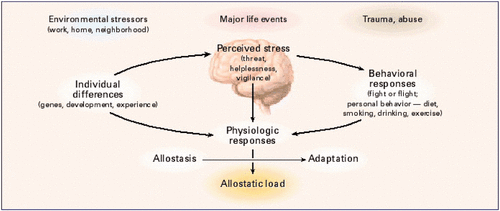
The reviewer won’t change his beliefs regarding individual differences and allostatic load pictured above since he helped to start those memes. US researchers with study hypotheses that would develop evidence beyond such memes may have difficulties finding funding except outside of his sphere of influence.


Here’s one example of the reviewer’s restrictive views taken from the Conclusion section:

Adverse experiences and environments cause problems over the life course in which there is no such thing as “reversibility” (i.e., “rolling the clock back”) but rather a change in trajectory [10] in keeping with the original definition of epigenetics [132] as the emergence of characteristics not previously evident or even predictable from an earlier developmental stage. By the same token, we mean “redirection” instead of “reversibility”—in that changes in the social and physical environment on both a societal and a personal level can alter a negative trajectory in a more positive direction.”

What would happen if US researchers proposed tests of his “there is no such thing as reversibility” axiom? To secure funding, the prospective studies’ experiments would be steered toward altering “a negative trajectory in a more positive direction” instead.

An example of this influence may be found in the press release of Familiar stress opens up an epigenetic window of neural plasticity where the lead researcher stated a goal of:

“Not to ‘roll back the clock’ but rather to change the trajectory of such brain plasticity toward more positive directions.”

I found nothing in citation [10] (of which the reviewer is a coauthor) where the rodent study researchers even attempted to directly reverse the epigenetic changes! The researchers under his guidance simply asserted:

“A history of stress exposure can permanently alter gene expression patterns in the hippocampus and the behavioral response to a novel stressor”

without making any therapeutic efforts to test the permanence assumption!

Nevermind that researchers outside the reviewer’s sphere of influence have done exactly that, reverse both gene expression patterns and behavioral responses!!

In any event, citation [10] didn’t support an “there is no such thing as reversibility” axiom.

The reviewer also implied that humans respond just like lab rats and can be treated as such. Notice that the above graphic conflated rodent and human behaviors. Further examples of this inappropriate rodent / human merger of behaviors are in the Conclusion section.


What may be a more promising research approach to human treatments of the epigenetic effects of stress? As pointed out in The current paradigm of child abuse limits pre-childhood causal research:

“If the current paradigm encouraged research into treatment of causes, there would probably already be plenty of evidence to demonstrate that directly reducing the source of the damage would also reverse damaging effects. There would have been enough studies done so that the generalized question of reversibility wouldn’t be asked.

Aren’t people interested in human treatments of originating causes so that their various symptoms don’t keep bubbling up? Why wouldn’t research paradigms be aligned accordingly?”

http://journals.sagepub.com/doi/full/10.1177/2470547017692328 “Neurobiological and Systemic Effects of Chronic Stress”

Epigenetic stress effects in preterm infants

This 2017 Italian review selected 9 human studies on the epigenetic effects of:

“One of the major adverse events in human development. Preterm infants are hospitalized in the Neonatal Intensive Care Unit where they are exposed to life-saving yet pain-inducing procedures and to protective care.”

Highlights of the referenced studies included:

  • “Early exposure to adverse events during the third trimester of pregnancy is capable to alter the epigenetic status of imprinted and placenta-related genes which have relevant implications for fetal development and preterm infants’ HPA [hypothalamic–pituitary–adrenal] stress reactivity during infancy.”
  • “There was an association between DNAm [DNA methylation] and white matter tract tissue integrity and shape inferred from dMRI [diffusion MRI], suggesting that epigenetic variation may contribute to the cerebral phenotype of preterm birth.”

Limitations of the referenced studies included:

  • “A multiple sampling design that includes parental samples, placental tissue, cord blood and extends across the life-course would be required to investigate the relative contributions of in utero and postnatal exposures to changes in DNAm, and the extent to which preterm birth leaves a legacy on the methylome.”
  • Saliva, blood, and other tissues’ DNA methylation may not produce valid links to brain tissue DNA methylation of the same gene, which may hamper conclusive inferences about behavior, etc.

http://www.sciencedirect.com/science/article/pii/S0149763417302117 “Preterm Behavioral Epigenetics: A systematic review” (not freely available)

http://www.nature.com/tp/journal/v6/n1/full/tp2015210a.html “Epigenomic profiling of preterm infants reveals DNA methylation differences at sites associated with neural function” (one of the studies selected, quoted above)

Epigenetic effects on genetic diseases

This 2017 review provided evidence for epigenetic effects on a disease widely considered to be of genetic origins:

“For a T1D [type 1 diabetes] identical twin the concordance rate (both twins affected) is consistently less than 100%, which implies a non-genetically determined effect. However, the concordance rate declines with age at diagnosis of the index twin, indicating that in adult-onset T1D the genetic impact is limited, and certainly lower than that in childhood-onset disease.

Genes associated with T1D are well-established and have four broad functions. However, T1D is unlikely to be a single disease since there is disease heterogeneity. The incidence of T1D has even increased several-fold in the last 30 years-a timeframe which rules out genetic evolution. In addition, studies of the incidence of T1D in migrant populations have shown a convergence towards the risk of the host population.

Alongside histone modifications and transcription factors, several cis-regulatory elements, including enhancers, promoters, silencers and insulators, are crucial to the function of the genome. There are more than a million enhancers; therefore, many more than there are genes, so that a number of genes are regulated by the same enhancer, which may co-localise with CpGs. Gene enhancers can be found upstream or downstream of genes and do not necessarily act on the closest promoter. Enhancers may be accompanied by insulators, which are located between the enhancers and promoters of adjacent genes and can limit phenotypic gene expression despite genetic activation.”


The review was weak in a few areas:

1. The authors repeated a laughable claim for gross national product as a non-genetic effect for Type 1 diabetes.

2. They also made other hyperbolic statements such as “This observation illustrates the power of epigenetic analysis to identify those cells which are actively using the genes associated with a given tissue, given that all cells contain every gene.” that were out of place with the review’s evidential bases.

https://link.springer.com/article/10.1007/s11892-017-0916-x “The Role of Epigenetics in Type 1 Diabetes”

Epigenetics account for two-thirds of Alzheimer’s disease

The genetics percentage from a 2017 summary of Alzheimer’s disease research caught my eye:

“Although numerous single nucleotide polymorphisms (SNPs) have now been robustly associated with AD via genome-wide association studies and subsequent meta-analyses, collectively these common SNPs are believed to only account for 33% of attributable risk and the mechanism behind their action remains largely unknown.”

This citation aligned with other studies’ findings per Using twins to estimate the extent of epigenetic effects that on cellular levels, our experiences account for two-thirds of who we are.


The promise of this category of epigenetics research?

“One of the most exciting aspects of identifying disease-associated epigenomic dysfunction is that these mechanisms are potentially reversible.”

Let’s make research on reversing epigenetic changes a priority for funding, and get studies underway here in 2017!

https://www.epigenomicsnet.com/users/27784-katie-lunnon/posts/14634-robust-evidence-for-dna-methylomic-variation-in-alzheimer-s-disease “Robust evidence for DNA methylomic variation in Alzheimer’s disease” (Registration required)

Epigenetics and addiction

Dr. Moshe Szyf of McGill University explains current rodent epigenetic research into addiction in this October 2016 interview.

“What happens during the time when there’s no drug [cocaine] exposure, there’s just the memory of the original drug exposure? And we found huge epigenetics changes during this time, the time of abstinence.

It actually suggests that abstinence cannot cure addiction. It might even aggravate it.

We found out that timing is very important. Pairing the drug [a DNA methylation inhibitor] administration with the cue was critical with reversing the epigenetic effects and the behavioral effects.

Epigenetic treatment should theoretically reprogram the animal to forget or erase the epigenetic consequences of the initial exposure. And therefore the animal should be protected from addiction for a long time if indeed we found what we thought we did with epigenetic reprogramming.”

https://www.epigenomicsnet.com/users/3002-georgia-patey/videos/13003-video2

On Primal Therapy with Drs. Art and France Janov

Experiential feeling therapy addressing the pain of the lack of love.

Genetic imprinting, sleep, and parent-offspring conflict

This 2016 Italian review subject was the interplay of genetic imprinting and sleep regulation:

“Sleep results from the synergism between at least two major processes: a homeostatic regulatory mechanism that depends on the accumulation of the sleep drive during wakefulness, and a circadian self-sustained mechanism that sets the time for sleeping and waking throughout the 24-hour daily cycle.

REM sleep apparently contravenes the restorative aspects of sleep; however, the function of this ‘paradoxical’ state remains unknown. Although REM sleep may serve important functions, a lack of REM sleep has no major consequences for survival in humans; however, severe detrimental effects have been observed in rats.

Opposite imprinting defects at chromosome 15q11–13 are responsible for opposite sleep phenotypes as well as opposite neurodevelopmental abnormalities, namely the Prader-Willi syndrome (PWS) and the Angelman syndrome (AS). Whilst the PWS is due to loss of paternal expression of alleles, the AS is due to loss of maternal expression.

Maternal additions or paternal deletions of alleles at chromosome 15q11–13 are characterized by temperature control abnormalities, excessive sleepiness, and specific sleep architecture changes, particularly REM sleep deficits. Conversely, paternal additions or maternal deletions at chromosome 15q11–13 are characterized by reductions in sleep and frequent and prolonged night wakings.

The ‘genomic imprinting hypothesis of sleep’ remains in its infancy, and several aspects require attention and further investigation.”

http://journals.plos.org/plosgenetics/article?id=10.1371/journal.pgen.1006004 “Genomic Imprinting: A New Epigenetic Perspective of Sleep Regulation”


A commenter to the review referenced a 2014 study Troubled sleep: night waking, breastfeeding, and parent–offspring conflict that received several reactions, including one by the same commenter. Here are a few quotes from the study author’s consolidated response:

“‘Troubled sleep’ had two major purposes. The first was to draw attention to the oppositely perturbed sleep of infants with PWS and AS and explore its evolutionary implications. The involvement of imprinted genes suggests that infant sleep has been subject to antagonistic selection on genes of maternal and paternal origin with genes of maternal origin favoring less disrupted sleep.

My second major purpose was a critique of the idea that children would be happier, healthier and better-adjusted if we could only return to natural methods of child care. This way of thinking is often accompanied by a belief that modern practices put children at risk of irrevocable harm.

The truth of such claims is ultimately an empirical question, but the claims are sometimes presented as if they had the imprimatur of evolutionary biology. This appeal to scientific authority often seems to misrepresent what evolutionary theory predicts: that which evolves is not necessarily that which is healthy.

Why should pregnancy not be more efficient and more robust than other physiological systems, rather than less? Crucial checks, balances and feedback controls are lacking in the shared physiology of the maternal–fetal unit.

Infant sleep may similarly lack the exquisite organization of systems without evolutionary conflict. Postnatal development, like prenatal development, is subject to difficulties of evolutionarily credible communication between mothers and offspring.”

The author addressed comments related to attachment theory:

“Infants are classified as having insecure-resistant attachment if they maintain close proximity to their mother after a brief separation while expressing negative emotions and exhibiting contradictory behaviors that seem to both encourage and resist interaction. By contrast, infants are classified as having insecure-avoidant attachment if they do not express negative emotion and avoid contact with their mother after reunion.

Insecure-avoidant and insecure-resistant behaviors might be considered antithetic accommodations of infants to less responsive mothers; the former associated with reduced demands on maternal attention, the latter with increased demands. A parallel pattern is seen in effects on maternal sleep. Insecure-avoidant infants wake their mothers less frequently, and insecure-resistant infants more frequently, than securely attached infants.

Parent–child interactions are transformed once children can speak. Infants with more fragmented sleep at 6 months had less language at 18 and 30 months.

Infants with AS have unconsolidated sleep and never learn to speak. The absence of language in the absence of expression of one or more MEGs [maternally expressed imprinted genes] is compatible with a hypothesis in which earlier development of language reduces infant demands on mothers.”

Regarding cultural differences:

“China, Taiwan and Hong Kong have both high rates of bed-sharing and high rates of problematic sleep compared with western countries. Within this grouping, however, more children sleep in their own room but parents report fewer sleep problems in Hong Kong than in either China or Taiwan.

Clearly, cultural differences are significant, and the causes of this variation should be investigated, but the differences cannot be summarized simply as ‘west is worst’.

The fitness [genetic rather than physical fitness] gain to mothers of an extra child and the benefits for infants of longer IBIs [interbirth intervals] are substantial. These selective forces are unlikely to be orders of magnitude weaker than the advantages of lactase persistence, yet the selective forces associated with dairying have been sufficient to result in adaptive genetic differentiation among populations.

The possibility of gene–culture coevolution should not be discounted for behaviors associated with infant-care practices.”

Regarding a mismatch between modern and ancestral environments:

“I remain skeptical of a tendency to ascribe most modern woes to incongruence between our evolved nature and western cultural practices. We did not evolve to be happy or healthy but to leave genetic descendants, and an undue emphasis on mismatch risks conflating health and fitness.

McKenna [a commenter] writes ‘It isn’t really nice nor maybe even possible to fool mother nature.’ Here I disagree. Our genetic adaptations often try to fool us into doing things that enhance fitness at costs to our happiness.

Our genes do not care about us and we should have no compunction about fooling them to deliver benefits without serving their ends. Contraception, to take one obvious example, allows those who choose childlessness to enjoy the pleasures of sexual activity without the fitness-enhancing risk of conception.

Night waking evolved in environments in which there were strong fitness costs from short IBIs and in which parents lacked artificial means of birth-spacing. If night waking evolved because it prolonged IBIs, then it may no longer serve the ends for which it evolved.

Nevertheless, optimal infant development might continue to depend on frequent night feeds as part of our ingrained evolutionary heritage.

It could also be argued that when night waking is not reinforced by feeding, and infants sleep through the night, then conflict within their genomes subsides. Infants would then gain the benefit of unfragmented sleep without the pleiotropic costs of intragenomic conflict. Plausible arguments could be presented for either hypothesis and a choice between them must await discriminating evidence.”


Commenters on the 2014 study also said:

[Crespi] The profound implications of Haig’s insights into the roles of evolutionary conflicts in fetal, infant and maternal health are matched only by the remarkable absence of understanding, appreciation or application of such evolutionary principles among the research and clinical medical communities, or the general public.

[Wilkins] A mutation may be selected for its effect on the trait that is the basis of the conflict, but that mutation also likely affects other traits. In general, we expect that these pleiotropic effects to be deleterious: conflict over one trait can actually drive other traits to be less adapted. Natural selection does not necessarily guarantee positive health outcomes.

[McNamara] Assuming that AS/REM is differentially influenced by genes of paternal origin then both REM properties and REM-associated awakenings can be better explained by mechanisms of genomic conflict than by traditional claims that REM functions as an anti-predator ‘sentinel’ for the sleeping organism.

[Hinde] Given this context of simultaneous coordination and conflict between mother and infant, distinguishing honest signals of infant need from self-interested, care-extracting signals poses a challenge.

The persistence of epigenetic marks in Type 1 diabetes

This 2016 California human study found:

“A persistency of DNA methylation over time at key genomic loci associated with diabetic complications. Two sets of DNAs collected at least 16–17 years apart from the same participants are used to show the persistency of DNA-me over time.

Twelve annotated differentially methylated loci were common in both WB [whole blood] and Monos [blood monocytes], including thioredoxin-interacting protein (TXNIP), known to be associated with hyperglycemia and related complications.

The top 38 hyperacetylated promoters in cases included 15 genes associated with the nuclear factor kappa-light-chain-enhancer of activated B cells (NF-κB) inflammatory pathway, which is strongly associated with diabetic complications.”

The researchers built on a series of studies that showed how subjects with early intensive interventions didn’t develop further complications, whereas subjects with later intensive interventions:

“Continued to develop complications, such as nephropathy, retinopathy, and macrovascular diseases, at significantly higher rates.

This persistence of benefit from early application of intensive therapy, called ‘metabolic memory,’ is an enigma.”


These researchers needed to also consider a point of Enduring memories? Or continuous toxic stimulation? that:

“The lasting epigenomic effect would not be due to memory, but continuous stimulation by persistent pathogens or persistent components.”

Other studies that involved specific genes of this study include:

http://www.pnas.org/content/113/21/E3002.full “Epigenomic profiling reveals an association between persistence of DNA methylation and metabolic memory in the DCCT/EDIC type 1 diabetes cohort”

A study of genetic imprinting and neurodevelopmental disorders

This 2016 UK human study assessed the roles of genetic imprinting on diseases that may originate from a certain interval on chromosome 15:

“The 15q11.2-q13.3 region contains a cluster of imprinted genes, which are expressed from one parental allele only as a consequence of germline epigenetic events.

The importance of epigenetic status of duplications at this interval was further underlined by analysis of a number of families. Duplications in two unaffected mothers had a DNA-methylation pattern indicative of being paternally derived, whereas their offspring, who possessed a maternally derived duplication, suffered from psychotic illness.

We clearly implicate 15q11.2-q13.3 interstitial duplications of paternal origin in the aetiology of DD [developmental delay], but do not find them at increased rates in SZ [schizophrenia], which is significantly associated only with duplications of maternal origin.

This study refines the distinct roles of maternal and paternal duplications at 15q11.2-q13.3, underlining the critical importance of maternally active imprinted genes in the contribution to the incidence of psychotic illness.”

The researchers analyzed other studies for better estimates of paternal involvement:

“We show for the first time that paternal duplications are pathogenic. One reason why paternal duplications have been regarded as non-pathogenic in the past is their rare occurrence in patients. Here we demonstrate that they are also rare in the general population as a whole.

Paternal duplications should be less efficiently eliminated from the population by negative selection pressure, due to their lower penetrance for neurodevelopmental disorders. Secondly, some maternal duplications will change to paternal when transmitted from male carriers.

We now suggest one further explanation for their rarity: male patients with SZ and other neurodevelopmental disorders have lower fecundity. Men suffering with SZ have only half the number of offspring compared to women with SZ.”


I would have liked further discussion of the “germline epigenetic events” that apparently contribute to the studied problems. These epigenetic abnormalities may have the potential to be prevented or treated, or at least used as early biomarkers.

The reviewers instead focused on:

“This work will have tangible benefits for patients with 15q11.2-q13.3 duplications by aiding genetic counseling.”

http://journals.plos.org/plosgenetics/article?id=10.1371%2Fjournal.pgen.1005993 “Parental Origin of Interstitial Duplications at 15q11.2-q13.3 in Schizophrenia and Neurodevelopmental Disorders”

Why drugs aren’t ultimately therapeutic

This 2016 Oregon review’s concept was the inadequacy of drug-based therapies, explored with the specific subject of epilepsy:

“Currently used antiepileptic drugs:

  • [aren’t] effective in over 30% of patients
  • [don’t] affect the comorbidities of epilepsy
  • [don’t] prevent the development and progression of epilepsy (epileptogenesis).

Prevention of epilepsy and its progression [requires] novel conceptual advances.”

The overall concept that current drug-based therapies poorly address evolutionary biological realities was illustrated by a pyramid, with the comment that:

“If the basis of the pyramid depicted in Figure 1 is overlooked, it becomes obvious that a traditional pharmacological top-down treatment approach has limitations.”

Why drug ultimately aren't therapeutic


I would have liked the reviewer to further address the “therapeutic reconstruction of the epigenome” point he made in the Abstract:

“New findings based on biochemical manipulation of the DNA methylome suggest that:

  1. Epigenetic mechanisms play a functional role in epileptogenesis; and
  2. Therapeutic reconstruction of the epigenome is an effective antiepileptogenic therapy.”

As it was, the reviewer lapsed into the prevalent belief that the causes of and cures for human diseases will always be found on the molecular level – for example, the base of the above pyramid – and never in human experiences. This preconception leads to discounting human elements – notably absent in the above pyramid – that generate epigenetic changes.

A consequence of ignoring experiential causes of diseases is that the potential of experiential therapies to effect “therapeutic reconstruction of the epigenome” isn’t investigated.

http://journal.frontiersin.org/article/10.3389/fnmol.2016.00026/full “The Biochemistry and Epigenetics of Epilepsy: Focus on Adenosine and Glycine”