Epigenetic effects of plasma concentrate

“We use data from a safety study (n = 18, mean age 74) to investigate whether human umbilical cord plasma concentrate (hereinafter Plasma Concentrate) injected weekly (1 ml intramuscular) into elderly human subjects over a 10-week period affects different biomarkers, including epigenetic age measures, standard clinical biomarkers of organ dysfunction, mitochondrial DNA copy number (mtDNA-CN), and leukocyte telomere length.

More than 20 clinical biomarkers were significantly and beneficially altered. Telomere length and mtDNA-CN were not significantly affected by treatment.

An increase in entropy means that the methylome becomes noisier. We found that entropy was significantly decreased after treatment. Decreased entropy may implicate rejuvenation of the epigenetic landscape after plasma concentrate treatments.

changes in methylation entropy

Treatment reduced DNA methylation-based GrimAge by an average of 0.82 years, suggesting a reduction in morbidity and mortality risk. By contrast, no significant results could be observed for epigenetic clocks that estimate chronological age.

Our study lends credence to the notion that there are youth-promoting factors in the secretome of umbilical cord plasma. This conclusion has also been reached by other researchers that have provided treatment with stem cells, which do not work by plasma dilution but primarily by providing humoral factors and changing the microenvironment of cells and tissues. While there may be youth-promoting microvesicles or humoral factors that are at work, we do not want to rule out the possibility that it is ‘young and undamaged’ albumin that leads to the improvements noted, especially in light of recent evidence for such a mechanism.

This first human epigenetic clock study of plasma concentrate treatments revealed age-reversal effects according to a well-established DNA methylation-based estimator of morbidity and mortality risk. Future placebo-controlled replication studies are warranted with a larger number of participants over a longer study period, which our laboratory has undertaken to pursue.”

https://onlinelibrary.wiley.com/doi/10.1111/acel.13696 “Umbilical cord plasma concentrate has beneficial effects on DNA methylation GrimAge and human clinical biomarkers”


PXL_20220903_101625819

Epigenetic clocks so far in 2022

2022’s busiest researcher took time out this month to update progress on epigenetic clocks. If I curated every study he’s contributed to, it would require at least three blog posts a week. I’ll link to a few he’s posted in August 2022 that are more appreciated in the researcher community.

“In my lab, we are looking for clocks that apply to multiple species at the same time, for example, universal pan-mammalian clocks. It’s all about enhancing translation.

If you have an intervention that rejuvenates a mouse, a rat, a dog, and a cat according to the same clock, then chances are high that it will also work in humans. Naked Mole-Rat Hyaluronan Synthase 2 Promotes Longevity and Enhances Healthspan in Mice

Several groups, including mine, are working on single cell methylation clocks. Researchers are building clocks that respond to lifestyle interventions, such as exercise.

Moving away from methylation, it would be nice to build similar clocks for other ‘omics’ data. Many researchers build clocks on the basis of other omics data, such as for chromatin, proteomics, and gene expression.

There are different platforms, but they all attempt to measure the same thing: biological age. LINE-1 RNA causes heterochromatin erosion and is a target for amelioration of senescent phenotypes in progeroid syndromes

Epigenetic clocks are ‘life course clocks.’ I don’t know any other biomarkers of aging that applies to fetal tissues as well, because most other biomarkers measure organ dysfunction. Epigenetic profiling and incidence of disrupted development point to gastrulation as aging ground zero in Xenopus laevis

There’s this company called Intervene Immune, founded by Greg Fahy, and they are using GrimAge and other epigenetic clocks in clinical trials. They are doing a Phase II clinical trial. By the way, I’m one of the participants.

I could name several other groups who are using epigenetic clocks in clinical trials. It would be interesting if more people would measure epigenetic age in clinical trials in humans, at least as a secondary outcome, because there’s always an opportunity to make a discovery.

If you compare GrimAge to other biomarkers, such as cholesterol or glucose levels, you will see similar noise levels there. Epigenetic clocks are remarkably robust compared to what else is used in the clinic. I would say that the issue with technical noise in epigenetic clocks has been solved.

I’m really glad that different companies and researchers pursue different avenues, since it diversifies our risk. If one of these approaches works, it will change the world.”

https://www.lifespan.io/news/steve-horvath-on-the-present-and-future-of-epigenetic-clocks/ “Steve Horvath on the Present and Future of Epigenetic Clocks”


PXL_20220819_095802653

Broccoli sprouts and your brain

A 2022 review of Nrf2 signaling hilariously avoided mentioning sulforaphane, although of ~4,000 sulforaphane published articles, two were cited. I’ll curate it anyway to highlight referenced brain effects.

“A good stability of NRF2 activity is crucial to maintain redox balance and therefore brain homeostasis. In this review, we have gathered recent data about the contribution of the NRF2 pathway in the healthy brain as well as during metabolic diseases, ageing, and ageing-related neurodegenerative diseases.

A functional NRF2 system is important to regulate both neuroinflammation, i.e., activation of microglia and astrocytes, and oxidative stress in the brain. NRF2 and NF-κB transcription factors regulate cellular responses to inflammation and oxidative stress in order to maintain brain homeostasis. Both pathways have been described to inhibit each other.

Nrf2 brain aging

Future challenges will be to establish novel therapies to:

  • Increase NRF2 activation in specific cell types and/or brain regions; and
  • Modulate NRF2 pathway in senescent cells.

Modulation of NRF2 signalling pathway by using specific food products [like unmentioned broccoli sprouts] and phytochemicals [like unmentioned sulforaphane], dietary supplements [like unmentioned Vitamin D3], drugs, and epigenetic modifiers, alone or in combination, will help to limit inflammatory diseases, ageing process, and subsequently ageing-related diseases.”

https://www.mdpi.com/2076-3921/11/8/1426/htm “Normal and Pathological NRF2 Signalling in the Central Nervous System”


PXL_20220808_095334058

Eat broccoli sprouts for your offspring

This 2022 rodent study investigated effects of glucoraphanin supplementation during pregnancy and lactation:

“We investigated whether dietary intake of sulforaphane glucosinolate (SGS [properly termed glucoraphanin]) during pregnancy and lactation influenced composition of gut microbiota in offspring:

  • Dietary intake of SGS during pregnancy and lactation caused significant changes in diversity of gut microbiota in 3-week-old offspring (SGS-3W) and 10-week-old offspring (SGS-10W).
  • Plasma levels of interleukin-6 (IL-6) and tumor necrosis factor-α (TNF-α) in SGS-10W after injection of lipopolysaccharide were significantly lower than those of CON-10W group.
  • There were sex differences of gut microbiota composition in both SGS-3W and SGS-10W offspring.

glucoraphanin during pregnancy and lactation

This study has some limitations:

  1. We did not investigate mechanisms of how dietary intake of SGS during pregnancy and lactation modulated gut microbial communities in offspring.
  2. We found several signaling pathways in beneficial effects of SGS food pellet, and further study of the role of maternal intake of SGS food in these pathways is needed.
  3. We did not investigate mechanisms of relationships between maternal intake of SGS and long-term anti-inflammatory action in adult offspring, and further detailed study including epigenetic modification is needed.

These data suggest that dietary intake of SGS during pregnancy and lactation might produce long-lasting beneficial effects in adult offspring through persistent modulation of gut microbiota. It is likely that modulation of gut microbiota by maternal nutrition may confer resilience versus vulnerability to stress-related psychiatric disorders in offspring.”

https://www.sciencedirect.com/science/article/pii/S0955286322001681 “Long-lasting beneficial effects of maternal intake of sulforaphane glucosinolate on gut microbiota in adult offspring”


This study published results of a mother’s glucoraphanin intake where offspring never ate glucoraphanin, with beneficial effects at both 3 weeks (~prepubescent human) and 10 weeks (~young human adult). Maybe future studies will continue this paradigm on to a second or third generation to see whether there are also transgenerational epigenetic effects.

This study’s methods extracted glucoraphanin from 1-day-old broccoli sprouts into a powder containing 135 mg (0.31 mmol) glucoraphanin per gram. Each 1 kg of treatment chow included pellets containing (2.3 mmol / 0.31 mmol) x 135 mg = 1 gram of broccoli sprout powder, 0.1% of food intake.

Per Drying broccoli sprouts, dried 3-day-old broccoli sprouts contain 10% moisture, and fresh 3-day-old broccoli sprouts contain 82.6% moisture. A gram of 1-day-old broccoli sprout powder may be an approximate equivalent of (.826 / .1) = 8 grams fresh 3-day-old broccoli sprouts for a mouse / kg of daily food intake. A human equivalent dose is (.826 / .1) x .081 x 70 kg = 47 grams of fresh 3-day-old broccoli sprouts / kg of daily food intake.

That’s about how much 3-day-old, microwaved, glucoraphanin-containing broccoli and red cabbage sprouts I eat every day, starting from 7.2 grams of seeds. I sprout another 3.5 grams of yellow mustard seeds into the mixture for taste.


PXL_20220802_094252945.NIGHT

Beneficial dietary erucic acid?

A 2022 review to follow up Caution on broccoli seed erucic acid content?:

“Erucic acid is found to cause cardiac lipidosis in young animals, yet direct evidence of cardiac injury does not exist for young humans. Concerns about erucic acid safety and cardiotoxicity have been published in the press which are based on scientific reports in the 1970s that erucic acid disrupted oxidative phosphorylation and lead to accumulation of lipids in rat cardiac tissue.

Spanish toxic oil syndrome was a major concern, leading to questions about erucic acid cardiotoxicity. Yet it was found that not rapeseed oil per se, rather its carcinogen anilin-dye refined derivative caused cardiotoxicity.

Later, it was understood that reduced ATP production with erucic acid treatment was due to unapt isolation of rat cardiac mitochondria and lipid accumulation that was unique to rats that inherently harbour a low β-oxidative peroxisomal activity and tissue-specific metabolism of erucic acid. Similar structural or metabolic perturbations and tissue injuries were not encountered in monkeys, humans, and pigs.

Potential mechanisms regarding antineoplastic effects of erucic acid in brain tumors:

erucic acid

In children (0 to 14 years), medulloblastomas accounted for less than 10% of brain neoplasias in China, African countries, and Ireland. The ratio was in the range 20%–29% in Brazil, Argentina, Thailand, Korea and Poland, the proportion was 30% in Ecuador, 31% in Taiwan and Jordan.

In adults, the ratio of brain neoplasias diagnosed as glioblastoma was:

  • Below 10% only in China;
  • In the range 10%–29% in India, Thailand, Malaysia, Nigeria, Algeria, Malta, Costa Rica, Ecuador, and the Russian Federation;
  • In the range 30%–49% in some South American countries, Singapore, Taiwan, Japan, Korea, Turkey, Denmark, Iceland, Italy, and Spain among others; and
  • In the range 50%–70% in North America, Puerto Rico, Martinique, Israel, Cyprus, Jordan, Kuwait, and in Oceania.

The low ratio of medulloblastomas in children and of glioblastomas in adult Chinese population cannot be easily attributed to a single genetic and nurture pattern. Very likely, many complex factors interact to explain this difference regarding the Chinese population.

Several hypotheses can be put forward to illuminate the cause of reduced ratios of high grade brain tumors in Chinese which would be of benefit for global reduction and prevention of brain tumors. Erucic acid is very highly consumed in the Chinese diet, and 8-fold higher erucic acid levels exist in Chinese women’s milk in comparison to many other countries.

We hypothesized that dietary erucic acid may be – at least among many factors – associated with reduced ratios of high grade brain tumors in Chinese. If epidemiological and animal studies would prove such an association, an effective, cheap, and relatively non-toxic dietary supplementary strategy may be employed to prevent brain tumors at erucic acid doses lower than those associated with any cardiotoxic effects.”

https://link.springer.com/article/10.1007/s11011-022-01022-4 “Could dietary erucic acid lower risk of brain tumors? An epidemiological look to Chinese population with implications for prevention and treatment” (not freely available) Thanks to Dr. Meric Altinoz for providing a copy.


PXL_20220718_093918636

Taurine week #7: Brain

Finishing a week’s worth of 2022 taurine research with two reviews of taurine’s brain effects:

“We provide a overview of brain taurine homeostasis, and review mechanisms by which taurine can afford neuroprotection in individuals with obesity and diabetes. Alterations to taurine homeostasis can impact a number of biological processes such as osmolarity control, calcium homeostasis, and inhibitory neurotransmission, and have been reported in both metabolic and neurodegenerative disorders.

Models of neurodegenerative disorders show reduced brain taurine concentrations. On the other hand, models of insulin-dependent diabetes, insulin resistance, and diet-induced obesity display taurine accumulation in the hippocampus. Given cytoprotective actions of taurine, such accumulation of taurine might constitute a compensatory mechanism that attempts to prevent neurodegeneration.

nutrients-14-01292-g003

Taurine release is mainly mediated by volume-regulated anion channels (VRAC) that are activated by hypo-osmotic conditions and electrical activity. They can be stimulated via glutamate metabotropic (mGluR) and ionotropic receptors (mainly NMDA and AMPA), adenosine A1 receptors (A1R), and metabotropic ATP receptors (P2Y).

Taurine mediates its neuromodulatory effects by binding to GABAA, GABAB, and glycine receptors. While taurine binding to GABAA and GABAB is weaker than to GABA, taurine is a rather potent ligand of the glycine receptor. Reuptake of taurine occurs via taurine transporter TauT.

Cytoprotective actions of taurine contribute to brain health improvements in subjects with obesity and diabetes through various mechanisms that improve neuronal function, such as:

  • Modulating inhibitory neurotransmission, which promotes an excitatory–inhibitory balance;
  • Stimulating antioxidant systems; and
  • Stabilizing mitochondria energy production and Ca2+ homeostasis.”

https://www.mdpi.com/2072-6643/14/6/1292/htm “Taurine Supplementation as a Neuroprotective Strategy upon Brain Dysfunction in Metabolic Syndrome and Diabetes”


A second review focused on taurine’s secondary bile acids produced by gut microbiota:

“Most neurodegenerative disorders are diseases of protein homeostasis, with misfolded aggregates accumulating. The neurodegenerative process is mediated by numerous metabolic pathways, most of which lead to apoptosis. Hydrophilic bile acids, particularly tauroursodeoxycholic acid (TUDCA), have shown important anti-apoptotic and neuroprotective activities, with numerous experimental and clinical evidence suggesting their possible therapeutic use as disease-modifiers in neurodegenerative diseases.

Biliary acids may influence each of the following three mechanisms through which interactions within the brain-gut-microbiota axis take place: neurological, immunological, and neuroendocrine. These microbial metabolites can act as direct neurotransmitters or neuromodulators, serving as key modulators of the brain-gut interactions.

The gut microbial community, through their capacity to produce bile acid metabolites distinct from the liver, can be thought of as an endocrine organ with potential to alter host physiology, perhaps to their own favour. Hydrophilic bile acids, currently regarded as important hormones, exert modulatory effects on gut microbiota composition to produce secondary bile acids which seem to bind a number of receptors with a higher affinity than primary biliary acids, expressed on many different cells.

40035_2022_307_Fig1_HTML

TUDCA regulates expression of genes involved in cell cycle regulation and apoptotic pathways, promoting neuronal survival. TUDCA:

  • Improves protein folding capacity through its chaperoning activity, in turn reducing protein aggregation and deposition;
  • Reduces reactive oxygen species production, leading to protection against mitochondrial dysfunction;
  • Ameliorates endoplasmic reticulum stress; and
  • Inhibits expression of pro-inflammatory cytokines, exerting an anti-neuroinflammatory effect.

Although Alzheimer’s disease, Huntington’s disease, Parkinson’s disease, amyotrophic lateral sclerosis (ALS), and cerebral ischemia have different disease progressions, they share similar pathways which can be targeted by TUDCA. This makes this bile acid a potentially strong therapeutic option to be tested in human diseases. Clinical evidence collected so far has reported comprehensive data on ALS only.”

https://www.ncbi.nlm.nih.gov/pmc/articles/PMC9166453/ “Tauroursodeoxycholic acid: a potential therapeutic tool in neurodegenerative diseases”

The misnomer of nonessential amino acids

Three papers, starting with a 2022 review:

“Ideal diets must provide all physiologically and nutritionally essential amino acids (AAs).

Proposed optimal ratios and amounts of true digestible AAs in diets during different phases of growth and production. Because dynamic requirements of animals for dietary AAs are influenced by a plethora of factors, data below as well as the literature serve only as references to guide feeding practices and nutritional research.

10.1177_15353702221082658-table5

Nutritionists should move beyond the ‘ideal protein’ concept to consider optimum ratios and amounts of all proteinogenic AAs in diets for mammals, birds, and aquatic animals, and, in the case of carnivores, also taurine. This will help formulate effectively low-protein diets for livestock (including swine and high-producing dairy cattle), poultry, fish, and crustaceans, as well as zoo and companion animals.”

https://journals.sagepub.com/doi/10.1177/15353702221082658 “The ‘ideal protein’ concept is not ideal in animal nutrition”


A second 2022 review focused on serine:

“The main dietary source of L-serine is protein, in which L-serine content ranges between 2 and 5%. At the daily intake of ~1 g protein per kg of body weight, the amount of serine obtained from food ranges between 1.4 and 3.5 g (13.2–33.0 mmol) per day in an adult.

Mechanisms of potential benefits of supplementing L-serine include increased synthesis of sphingolipids, decreased synthesis of 1-deoxysphingolipids, decrease in homocysteine levels, and increased synthesis of cysteine and its metabolites, including glutathione. L-serine supplementation has been suggested as a rational therapeutic approach in several disorders, particularly primary disorders of L-serine synthesis, neurodegenerative disorders, and diabetic neuropathy.

Unfortunately, the number of clinical studies evaluating dietary supplementation of L-serine as a possible therapy is small. Studies examining therapeutic effects of L-serine in CNS injury and chronic renal diseases, in which it is supposed that L-serine weakens glutamate neurotoxicity and lowers homocysteine levels, respectively, are missing.”

https://www.mdpi.com/2072-6643/14/9/1987/htm “Serine Metabolism in Health and Disease and as a Conditionally Essential Amino Acid”


A 2021 review subject was D-serine, L-serine’s D-isoform:

“The N-methyl-D-aspartate glutamate receptor (NMDAR) and its co-agonist D-serine are currently of great interest as potential important contributors to cognitive function in normal aging and dementia. D-serine is necessary for activation of NMDAR and in maintenance of long-term potentiation, and is involved in brain development, neuronal connectivity, synaptic plasticity, and regulation of learning and memory.

The source of D-amino acids in mammals was historically attributed to diet or intestinal bacteria until racemization of L-serine by serine racemase was identified as the endogenous source of D-serine. The enzyme responsible for catabolism (breakdown) of D-serine is D-amino acid oxidase; this enzyme is most abundant in cerebellum and brainstem, areas with low levels of D-serine.

Activation of the NMDAR co-agonist-binding site by D-serine and glycine is mandatory for induction of synaptic plasticity. D-serine acts primarily at synaptic NMDARs whereas glycine acts primarily at extrasynaptic NMDARs.

In normal aging there is decreased expression of serine racemase and decreased levels of D-serine and down-regulation of NMDARs, resulting in impaired synaptic plasticity and deficits in learning and memory. In contrast, in AD there appears to be activation of serine racemase, increased levels of D-serine and overstimulation of NMDARs, resulting in cytotoxicity, synaptic deficits, and dementia.”

https://www.frontiersin.org/articles/10.3389/fpsyt.2021.754032/full “An Overview of the Involvement of D-Serine in Cognitive Impairment in Normal Aging and Dementia”


PXL_20220518_093600487

Take β-glucan for new blood vessels

This 2022 cell study investigated yeast cell wall β-glucan’s effects on angiogenesis:

“Angiogenesis, the formation of new blood vessels, is essential for embryonic development and physiological damage repair, such as wound healing and post-ischemic tissue restoration. It is also essential for pathological processes, such as diabetic retinopathy, rheumatoid arthritis, and atherosclerosis.

We evaluated physical and functional interactions of β-glucan with HDAC5, including the scratched wound, tube formation, and rat aortic ring assays. β-glucan-induced HDAC5 pathway mediates cell migration and formation of tubes and microvessels in vitro and ex vivo.

β-glucan angiogenesis

Our findings demonstrate that β-glucan-induced HDAC5 phosphorylation is important in endothelial cell angiogenesis. Further investigations into how β-glucan phosphorylates HDAC5 are required. There is also a need to identify a receptor that specifically binds to β-glucan in vascular endothelial cells.

β-glucan could be useful in developing new strategies in therapeutic angiogenesis for conditions such as cardiovascular disease and diabetes.”

https://www.sciencedirect.com/science/article/abs/pii/S0141813022010273 “Yeast beta-glucan mediates histone deacetylase 5-induced angiogenesis in vascular endothelial cells” (not freely available). Thanks to Dr. Chan-Gi Pack for providing a copy.


PXL_20220521_133100360

Thyroid function

This 2022 review subject was thyroid function changes:

“Circulating concentrations of thyrotropin (TSH) and thyroxine (T4) are tightly regulated. Each individual has setpoints for TSH and free T4 which are genetically determined, and subject to environmental and epigenetic influence.

What is normal for one individual may not be normal for another, even within conventional definitions of euthyroidism. Notably, circulating TSH exists in several different isoforms with varying degrees of glycosylation, sialylation, and sulfonation which affect tissue availability and bioactivity. This is not reflected in immunoreactive TSH concentrations determined by routine laboratory assays.

enm-2022-1463f2

TSH and free T4 relationship analyzed by age in 120,403 patients who were not taking thyroxine treatment. Median TSH for each free T4 integer value (in pmol/ L) was calculated, then plotted as 20-year age bands in adults. Dotted horizontal and vertical lines mark the TSH reference range (0.4 to 4.0 mU/L) and free T4 reference range (10 to 20 pmol/L), respectively.

Mild TSH elevation in older people does not predict adverse health outcomes. In fact, higher TSH is associated with greater life expectancy, including extreme longevity.

In older people, TSH increases with aging without an accompanying fall in free T4. Clinical guidelines now recommend against routine levothyroxine treatment in older people with mild subclinical hypothyroidism.”

https://e-enm.org/journal/view.php?doi=10.3803/EnM.2022.1463 “Thyroid Function across the Lifespan: Do Age-Related Changes Matter?”


PXL_20220427_190457415

Epigenetic clocks and entropy

Two epigenetic clock papers, starting with a 2022 rodent study:

“We tested performance of new pan-tissue and liver-specific epigenetic mouse clocks, evaluating how these related to metabolic states, genotype-dependent life expectancy, and methylome entropy.

Entropy, a measure of noise and information loss, increases as a function of time and age. In context of the methylome, higher entropy represents a tendency for the highly organized hypo- and hypermethylated landscape to erode towards a more hemi-methylated [discordant] state.

This increase in disorder, particularly across CpGs that are highly conserved, could have important functional consequences. Entropy of age-gain CpGs was increased by high fat diet, and predicted strain lifespan.

Overall, we find that mice belonging to longer-lived BXD strains had a more youthful methylome with lower entropy at age-gain CpGs. Entropy of age-loss CpGs on the other hand, was related to body weight.

entropy associations

(h) Residual plot (adjusted for age, diet, BWF [final body weight], glucose, cholesterol, and batch) shows an inverse association between entropy at age-gain sites, and lifespan. (i) A similar residual plot shows the association between BWF and age-loss entropy.

The rate of noise accumulation, an aspect of epigenomic aging, can vary between individuals. Resilience or susceptibility to higher noise may be partly modulated by diet as well as genetic factors.

Convergence of evidence from genetic and gene expression analyses indicates that genes involved in metabolism and energy balance contribute to age-dependent restructuring of the methylome, which in turn forms the basis of epigenetic clocks.”

https://elifesciences.org/articles/75244 “Genetic loci and metabolic states associated with murine epigenetic aging”


Reference 28 was a 2021 human study cited for “identified the APOE locus as the strongest GWAS hit for two measures of biological age acceleration”

“We observed inverse APOE e2 and e4 associations and unique pathway enrichments when comparing two biological age measures. Genes associated with BioAgeAccel were enriched in lipid related pathways, while genes associated with PhenoAgeAccel showed enrichment for immune system, cell function, and carbohydrate homeostasis pathways, suggesting the two measures capture different aging domains.

Our study reaffirms that aging patterns are heterogeneous across individuals, and the manner in which a person ages may be partly attributed to genetic predisposition. Understanding personalized aging susceptibility phenotypes has important implications for primary and secondary disease interventions.”

https://onlinelibrary.wiley.com/doi/10.1111/acel.13376 “Genetic associations for two biological age measures point to distinct aging phenotypes”


PXL_20220322_191309272

Vascular memory

This 2022 rodent study investigated effects of inducing hypertension for two weeks:

“Hypertension is conventionally associated with a neurohormonal activation from the sympathetic nervous and the renin-angiotensin-aldosterone systems. Angiotensin II (AngII) is a potent regulator of blood pressure, and is also a key player in hypertension development.

An initial 2-week exposure to AngII induced profound changes in cardiac and vascular remodeling, including endothelial activation, vascular inflammation and oxidant stress, all of which were maintained up to 3 weeks after AngII withdrawal. This phenotype was sustained despite early normalization of blood pressure after AngII withdrawal.

Our RNAseq pathway analysis suggests involvement of epigenetic regulators involved in methylation, such as PRC2. PRC2 complex catalyzes trimethylation of histone H3 on lysine 27 (H3K27me3), a histone mark necessary for maintaining transcriptional repression during multicellular development.

H3K27me3 AngII

Cell type-specific patterns of H3K27me3 are crucial for preserving cell identity. Consistent with this analysis, we observed a significant increase in H3K27me3 epigenetic mark in aortic tissue, intriguingly, only in both memory conditions.

Transient exposure to Ang II produces prolonged vascular remodeling with robust ACTA2 downregulation, associated with epigenetic imprinting, supporting a memory effect despite stimulus withdrawal. Future characterization of underlying AngII-dependent signaling might unveil new targets for its therapeutic modulation and reversal of this adverse legacy effect.”

https://www.frontiersin.org/articles/10.3389/fcvm.2022.854361/full “Sustained Downregulation of Vascular Smooth Muscle Acta2 After Transient Angiotensin II Infusion: A New Model of Vascular Memory”


These subjects’ ages were equivalent to a 20-year-old human:

  • How much earlier could our vascular system retain events we experienced such as epigenetic H3K27me3 increases? Teenaged, late childhood, early childhood, infancy, fetal parts of our lives?
  • How long would these vascular system memories and their continued signaling linger?
  • What experiences could change these long-lasting memories?

Icy fire

PXL_20220329_185742880

Kickstarting endogenous regenerative pathways

A 2022 amphibian study by the Electroceuticals team investigated limb regeneration:

“Organisms such as Xenopus laevis – whose limited regenerative capacities in adulthood mirror those of humans – are important models with which to test interventions that can restore form and function. We demonstrate long-term (18 months) regrowth, marked tissue repatterning, and functional restoration of an amputated X. laevis hindlimb following a 24-hour exposure to a multidrug, pro-regenerative treatment delivered by a wearable bioreactor.

  • Regenerated multidrug treatment (MDT) hindlimbs were longer than the no added factors (BD) and no device (ND) groups by 2.5 mpa, as indicated by growth beyond resection site (red dashed line).
  • At 4 mpa, vascularized structures developed at the distal extension of MDT (yellow arrow), but not BD or ND regenerates.
  • At 9 mpa, digit-like projections appeared (blue arrow), contrasting hypomorphic spikes of BD and ND regenerates (pink arrows).

limb regeneration

We suggest that the overall strategy of providing wound cells with an aqueous, amniotic-like environment, which is uniquely given through our bioreactor, that contains pro-regenerative signals is likely to be an effective method for kickstarting biomedically relevant growth and patterning cascades that are too complex to directly implement. One additional direction that may present new opportunities for enhanced regeneration is to assess immune function in relation to tissue remodeling.”

https://www.science.org/doi/10.1126/sciadv.abj2164 “Acute multidrug delivery via a wearable bioreactor facilitates long-term limb regeneration and functional recovery in adult Xenopus laevis”

Intergenerational epigenetic inheritance of trained immunity, Part 2

A 2022 McGill University rodent study couldn’t replicate Part 1 findings:

“We find that using similar mouse models of trained immunity induced by:

  1. Live vaccination (BCG);
  2. PAMPs (β-glucan); or
  3. Infection (C. albicans),

protection against:

  1. Viral (influenza virus);
  2. Bacterial (Mycobacterium tuberculosis (Mtb)); or
  3. Fungal (C. albicans)

infections was the same between offspring of trained and non-trained parents.

BCG-vaccination-in-the-offspring-of-vaccinated-parents-does-not-enhance-trained-immunity_W640

BCG vaccination in the offspring of vaccinated parents does not enhance trained immunity in macrophages.

a) Mice were vaccinated with BCG-iv (1 × 10⁶ CFU) for one month and mated with vaccinated or naive counterparts. 6–8 week-old F1.1 and F1.3 offspring were then vaccinated or not with BCG-iv (1 × 10⁶ CFU).

b), c) At 1 month post BCG vaccination, protective capacities of BMDM from BCG-iv vaccinated and nonvaccinated F1.1 (b), or F1.3 (c) offspring from naïve or BCG-iv vaccinated parents were assessed against M. tuberculosis (H37Rv, MOI 1) infection. * p < 0.05.”

https://www.nature.com/articles/s41590-021-01102-0 “Lack of evidence for intergenerational inheritance of immune resistance to infections” (not freely available)


Part 1 coauthors replied:

“We are very encouraged that this topic is gaining increased interest. The reason for the discrepancy between findings in the two studies is unclear. It likely involves local differences in mouse substrains, housing, diet, microbiome, infection models, or other factors.

These findings underscore the effect of environment on intergenerational inheritance of infection resistance. What these environmental factors are and how these factors are integrated with regards to intergenerational inheritance remains largely elusive at this time.

One intriguing possibility that needs to be tested in future studies is whether such effects may be more robust in outbred wild mice, in which subtle environmental changes may have less strong impact.”

https://www.nature.com/articles/s41590-021-01103-z “Reply to: ‘Lack of evidence for intergenerational inheritance of immune resistance to infections'”


PXL_20211031_112819792

Lifespan Uber Correlation

This 2022 study developed new epigenetic clocks:

“Maximum lifespan is deemed to be a stable trait in species. The rate of biological function decline (i.e., aging) would be expected to correlate inversely with maximum species lifespan. Although aging and maximum lifespan are intimately intertwined, they nevertheless appear in some investigations to be distinct processes.

Some cytosines conserved across mammals exhibit age-related methylation changes so consistent that they were used to successfully develop cross-species age predictors. In a similar vein, methylation levels of some conserved cytosines correlate highly with species lifespan, leading to the development of highly accurate lifespan predictors. Surprisingly, little to no commonality is found between these two sets of cytosines.

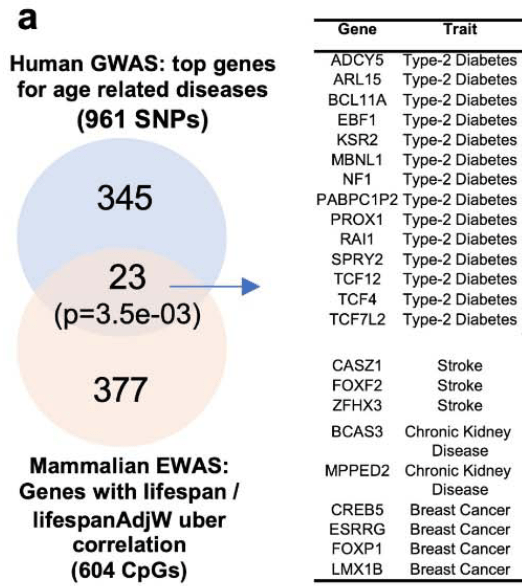
We correlated the intra-species age correlation with maximum lifespan across mammalian species. We refer to this correlation of correlations as Lifespan Uber Correlation (LUC).

We overlapped genes from the LUC signature with genes found in human genome-wide association studies (GWAS) of various pathologies and conditions. With all due caution, we report that some genes from the LUC signature were those highlighted by GWAS to be associated with type II diabetes, stroke, chronic kidney disease, and breast cancer.

Human aging genes vs mammalian LUC

We used the subset of CpGs found to be significant in our LUC to build age estimators (epigenetic clocks). We demonstrated that these clocks are able to capture effects of interventions that are known to alter age as well as lifespan, such as caloric restriction, growth hormone receptor knockout, and high-fat diet.

We found that Bcl11b heterozygous knockout mice exhibited an increased epigenetic age in the striatum. BCL11B is a zinc finger protein with a wide range of functions, including development of the brain, immune system, and cardiac system.

This gene is also implicated in several human diseases including, but not limited to, Huntington disease, Alzheimer’s diseases, HIV, and T-cell malignancies. BCL11B plays an important role in adult neurogenesis, but is less studied in the context of lifespan disparities in mammals.

Bcl11b knockout affected both DNA methylation and mRNA expression of LUC genes. Our current study does not inform us about the potential role of Bcl11b in aging processes during adulthood since observed patterns could be attributed to developmental defects.

We are characterizing other genetic and non-genetic interventions that perturb the LUC clocks. These we will feature in a separate report that will uncover biological processes regulated by LUC cytosines and their associated genes.”

https://www.biorxiv.org/content/10.1101/2022.01.16.476530v1 “Divergent age-related methylation patterns in long and short-lived mammals”


PXL_20220106_201346155

Sulforaphane vs. too much oxygen

This 2021 rodent study investigated perinatal effects of hyperoxia and sulforaphane:

“We demonstrated that early-life oxidant-induced acute lung injury had significant consequences later in life on NRF2-dependent respiratory syncytial virus (RSV) susceptibility in mice. We also determined that increased antioxidant conditions in utero potentially contribute to a decreased risk of postnatal airway disease as we found that prenatal antioxidant sulforaphane (SFN) protected developing lungs from bronchopulmonary dysplasia (BPD)-like oxidative pathogenesis in mice.

Unexpectedly, our results indicated that prenatal SFN-mediated postnatal protection against BPD-like phenotypes are not NRF2-dependent. Prenatal SFN markedly improved hyperoxia-caused severe BPD-like lung injury parameters in Nrf2−/− pups while we observed relatively marginal protection by in utero SFN in hyperoxia-resistant Nrf2+/+ pups.

SFN is a strong NRF2 and ARE gene inducer for cytoprotection by NRF2 stabilization. However, SFN also acts through other mechanisms, including NF-κB inhibition, MAPK activation, and histone deacetylase inhibition for anti-inflammation, chemoprevention, apoptosis, and autophagy.

Our study provided new insights into infant oxidant lung injury severity influence on persistence of pulmonary morbidity and therapeutic intervention for NRF2 agonists. Our results also provided justification for further studies on feto–placental barrier crossing of SFN metabolites and SFN-triggered molecular and epigenetic aspects of maternal cues for barrier and fetal lung signaling.”

https://www.mdpi.com/2076-3921/10/12/1874/htm “Murine Neonatal Oxidant Lung Injury: NRF2-Dependent Predisposition to Adulthood Respiratory Viral Infection and Protection by Maternal Antioxidant”


This study’s oral human-equivalent dose for treatment dams was 9 mg sulforaphane (1.67 mg x .081 x 70 kg) every other day during the last half of pregnancy. A small dose per How much sulforaphane is suitable for healthy people?

“The daily SFN dose found to achieve beneficial outcomes in most of the available clinical trials is around 20-40 mg.”

PXL_20211226_120528134