Hope sells

I used a browser yesterday that didn’t have ad blocker software installed. The below pictures came from one of the ads that displayed:

helpless

hope

A young girl in a dance position and outfit juxtaposed with an appeal: “No situation is HELPLESS because there is HOPE.” How interesting!

I didn’t click through the ad yesterday to see what was being sold by engaging customers’ beliefs, within which lay hope. When I clicked the ad today, it asked for donations to “Sponsor a Child,” develop “the perfect recipe for sustainable success,” and, at the bottom of the page, “We love because Jesus loves.”

What do we know about this ad’s appeal from reading Dr. Arthur Janov’s May 2016 book Beyond Belief? Can hope change a helpless situation per the ad?

On one level – yes, in a believer’s brain, by blocking helpless feelings. Otherwise – no. Hope ultimately isn’t a remedy for the causes of what created helpless feelings.

I donated to a similar organization for a few years, but not anymore.

Beyond Belief: Why do we accept being propagandized?

Continuing to read Dr. Arthur Janov’s May 2016 book Beyond Belief:

“p.13 Beliefs are medicine for the hopeless. They attenuate despair, vitiate loneliness, and dissipate helplessness.

p. 14 We need hope more than we need truth. Beliefs divert us from past traumas and current pains because inside the belief lies hope.

p.15 Hope is ‘the meaning of life.’ It shimmers and sparkles and blinds us from seeing the bars of our prisons of belief.

We are all, in one way or another, victims of early unfulfilled need. Never think that intelligence prohibits this kind of behavior.

We search for hope here and there based on early hopelessness of which we are unaware. Nothing in one’s current life points to the problem, and nothing even in one’s childhood clarifies it.

One’s expectations may exceed reality when feelings are thrust into the arena of ideas. One no longer sees reality, but rather a projection of need.”


“We need hope more than we need truth.” Is this part of why we accept headlines as facts, and don’t pay attention to the stories’ subsequent corrections? Why do we accept as facts news articles that don’t link to the cited sources?

I had dinner earlier this week with an intelligent woman. She mentioned that she constantly listened to National Public Radio. I asked her what value she got from it, and she replied that it kept her current with events.

I asked what other news sources she sought out. She said that she didn’t usually have the time, and that NPR was a reliable source.

I didn’t further challenge her beliefs. It’s up to each individual to realize that their beliefs are symptoms of what’s ruining their one precious life.

Last weekend I engaged in essentially the same conversation over lunch with another intelligent woman who relied on conservative news sources. She also became defensive, and ended that part of our conversation as a matter of “agreeing to disagree.”

Why does intelligence seem to have little to do with accepting being propagandized?

Beyond Belief: Symptoms of hopelessness

I’ve started to read Dr. Arthur Janov’s May 2016 book Beyond Belief. Here are a few thoughts I’ve expressed to friends that were prompted by the first dozen pages of the paperback version.

“p. 5 We need a painless liberation from our insidious emotional wounds..a leader who will take the place of an emotionally distant parent for whom we will sacrifice anything just for the promise of love, protection, and caring.”

The elections of the past two presidents were symptoms of the hopelessness that most Americans feel. Both elections promised hope.

“p. 6 Beliefs sell and sell well. People will pay dearly for even the promise of fulfillment, even if it is in the next life.”

Religion can have a much worse and lasting effect on people than any politician or political system can. Politicians can drag out and delay living up to their promises.

Religious leaders don’t have to deliver much at all during their followers’ lives. In fact, it works in the leaders’ favor to minimally address their followers’ current sufferings, as that strengthens the appeal of the imaginary next life!


The past three weeks I’ve gone to 7-11 to get a morning coffee. More often than not, I see people buying lottery tickets during the 2-3 minutes when I’m there.

What accounts for this behavior? Not everyone who buys a lottery ticket is innumerate.

I’d guess that it’s a symptom of hopelessness. Feelings of hopelessness cause us to generate a faith that an exceedingly-improbable event will benefit our life. Lottery-ticket behavior follows.

State governments are responsible for these lotteries. It’s one of the ways governments prey upon their citizens’ feelings of hopelessness.

I once worked as a contractor in a government office where everyone except me pooled money every week to buy lottery tickets. I was also the only nonreligious person there.

Coincidence?

Epigenetics account for two-thirds of Alzheimer’s disease

The genetics percentage from a 2017 summary of Alzheimer’s disease research caught my eye:

“Although numerous single nucleotide polymorphisms (SNPs) have now been robustly associated with AD via genome-wide association studies and subsequent meta-analyses, collectively these common SNPs are believed to only account for 33% of attributable risk and the mechanism behind their action remains largely unknown.”

This citation aligned with other studies’ findings per Using twins to estimate the extent of epigenetic effects that on cellular levels, our experiences account for two-thirds of who we are.


The promise of this category of epigenetics research?

“One of the most exciting aspects of identifying disease-associated epigenomic dysfunction is that these mechanisms are potentially reversible.”

Let’s make research on reversing epigenetic changes a priority for funding, and get studies underway here in 2017!

https://www.epigenomicsnet.com/users/27784-katie-lunnon/posts/14634-robust-evidence-for-dna-methylomic-variation-in-alzheimer-s-disease “Robust evidence for DNA methylomic variation in Alzheimer’s disease” (Registration required)

Epigenetics and addiction

Dr. Moshe Szyf of McGill University explains current rodent epigenetic research into addiction in this October 2016 interview.

“What happens during the time when there’s no drug [cocaine] exposure, there’s just the memory of the original drug exposure? And we found huge epigenetics changes during this time, the time of abstinence.

It actually suggests that abstinence cannot cure addiction. It might even aggravate it.

We found out that timing is very important. Pairing the drug [a DNA methylation inhibitor] administration with the cue was critical with reversing the epigenetic effects and the behavioral effects.

Epigenetic treatment should theoretically reprogram the animal to forget or erase the epigenetic consequences of the initial exposure. And therefore the animal should be protected from addiction for a long time if indeed we found what we thought we did with epigenetic reprogramming.”

https://www.epigenomicsnet.com/users/3002-georgia-patey/videos/13003-video2

On Primal Therapy with Drs. Art and France Janov

Experiential feeling therapy addressing the pain of the lack of love.

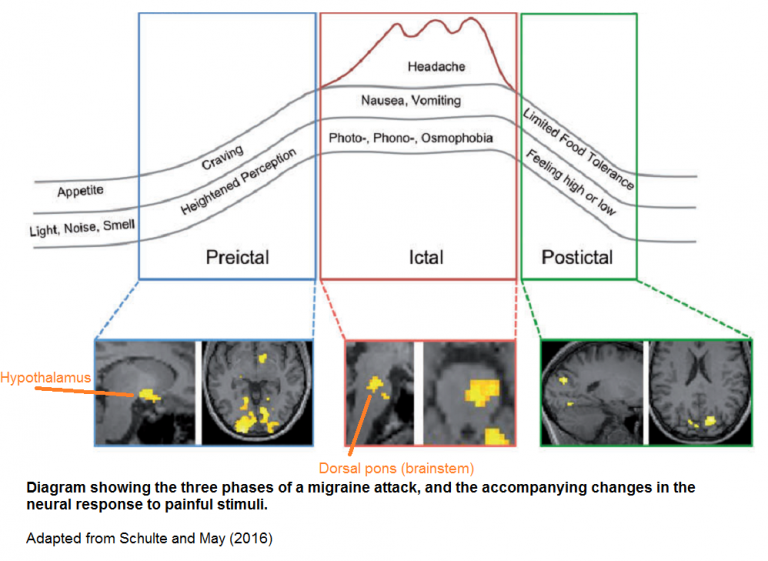
The hypothalamus couples with the brainstem to cause migraines

This 2016 German human study with one subject found:

“The hypothalamus to be the primary generator of migraine attacks which, due to specific interactions with specific areas in the higher and lower brainstem, could alter the activity levels of the key regions of migraine pathophysiology.”

The subject underwent daily fMRI scans, and procedures to evoke brain activity. She didn’t take any medications, and suffered three migraine attacks during the 31-day experimental period.

Neuroskeptic commented:

“The dorsal pons has previously been found to be hyperactive during migraine. It’s been dubbed the brain’s ‘migraine generator.’ Schulte and May’s data suggest that this is not entirely true – rather, it looks like the hypothalamus may be the true generator of migraine, while the brainstem could be a downstream mediator of the disorder.

A hypothalamic origin of migraines would help to explain some of the symptoms of the disorder, such as changes in appetite, that often accompany the headaches.”


The above graphic looks to me like the result of feedback mechanisms that either didn’t exist or inadequately handled the triggering event. Other examples of the hypothalamus lacking feedback or being involved in a deviated feedback loop include:

There are many unanswered questions with a one-person study, of course. Addressing the cause of this painful condition would find out when, where, and how a person’s hypothalamus became modified to express migraine tendencies.

I’d guess that migraine tendencies may appear as early as the first trimester of pregnancy, given that a highly functional hypothalamus is needed for survival and development in our earliest lives. Gaining as much familial and historical information as possible from the person would be necessary steps in therapies that address migraine causes.

http://blogs.discovermagazine.com/neuroskeptic/2016/05/22/pinpointing-origins-of-migraine/ “Pinpointing the Origins of Migraine in the Brain”

https://academic.oup.com/brain/article/139/7/1987/2464241 “The migraine generator revisited: continuous scanning of the migraine cycle over 30 days and three spontaneous attacks”


As mentioned in How to cure the ultimate causes of migraines? comments are turned off for this post due to it somehow becoming a magnet for spammers. Readers can comment on that post instead.

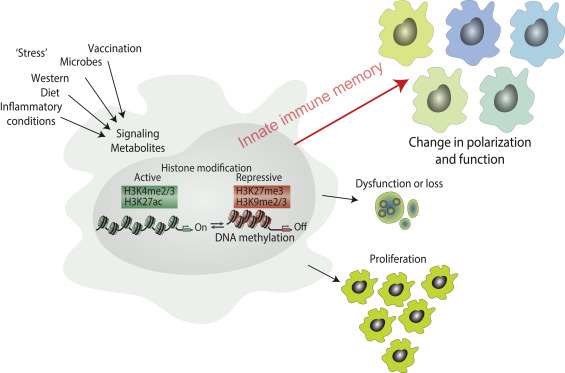
Epigenetic remodeling creates immune system memory

This 2016 German review subject was memory characteristics of immune cells:

“Innate immune memory has likely evolved as an ancient mechanism to protect against pathogens. However, dysregulated processes of immunological imprinting mediated by trained innate immunity may also be detrimental under certain conditions.

Evidence is rapidly accumulating that innate immune cells can adopt a persistent pro-inflammatory phenotype after brief exposure to a variety of stimuli, a phenomenon that has been termed ‘trained innate immunity.’ The epigenome of myeloid (progenitor) cells is presumably modified for prolonged periods of time, which, in turn, could evoke a condition of continuous immune cell over-activation.”

These reviewers focused on an example of atherosclerosis, although other examples were discussed of epigenetic remodeling to acquire immune memory:

“In the last ten years, several novel non-traditional risk factors for atherosclerosis have been identified that are all associated with activation of the immune system. These include chronic inflammatory diseases such as:

  • Rheumatoid arthritis,
  • Gout,
  • Psoriatic arthritis, and
  • Ankylosing spondylitis,

as well as infections with bacteria or viruses.”

Innate immune memory

http://www.sciencedirect.com/science/article/pii/S1044532316300185 “Long-term activation of the innate immune system in atherosclerosis”


Diets were discussed, mainly regarding their various negative effects. I was interested to see a study that referenced a common dietary supplement:

“Pathway analysis of promoters that were potentiated by β-glucan identified several innate immune and signaling pathways upregulated in trained cells that are responsible for induction of trained immunity.”

Other curated research into epigenetic remodeling of immune system memory includes:

The inevitable effects of avoidable wars

“It was like Tom had tried to return home,” says Jacky Sweetnam. “But he didn’t quite make it.”

http://news.nationalpost.com/features/the-ghosts-of-vietnam-the-last-days-of-a-decorated-canadian-vet “The Ghosts of Vietnam”


In memoriam to my father who died twenty years ago last week. World War II ruined his life with undiagnosed PTSD, some of the effects of which affected his children.

His brother – my uncle – was a Navy hospital corpsman during the slaughter at Iwo Jima, and was even more afflicted.

Neither of them were ever treated.

Using salivary microRNA to diagnose autism

This 2016 New York human study found:

“Measurement of salivary miRNA in this pilot study of subjects with mild ASD [autism spectrum disorder] demonstrated differential expression of 14 miRNAs that are:

  • expressed in the developing brain,
  • impact mRNAs related to brain development, and
  • correlate with neurodevelopmental measures of adaptive behavior.”

Some problems with current diagnostic methods for autism are:

“The first sign of ASD commonly recognized by pediatricians is a deficit in communication and language that does not manifest until 18–24 months of age.

The mean age of diagnosis for children with ASD is 3 years, and approximately half of these are false-positives.

Despite a substantial genetic component, no single gene variant accounts for >1 % of ASD incidence.

Nearly 2000 individual genes have been implicated in ASD, but none are specific to the disorder.”

Study limitations included:

“Aside from the sample size and cross-sectional nature of this pilot study, another limitation is the age of ASD and control subjects it describes (4–14 years) which are not representative of the target population in which ASD biomarkers would ideally be utilized (0–2 years). However, selecting a homogenous group of subjects with mild ASD (as measured by ADOS) that was well-established and diagnosed by a developmental specialist requires subjects with long-standing diagnoses.”


Understanding later-life consequences of disrupted neurodevelopment is critical for tracing symptoms back to their causes, as noted in Grokking an Adverse Childhood Experiences (ACE) score. I wonder how long it will take for researchers in other fields to stop wasting resources and do what this study did: focus on epigenetic biomarkers that have developmental origins.

http://bmcpediatr.biomedcentral.com/articles/10.1186/s12887-016-0586-x “Salivary miRNA profiles identify children with autism spectrum disorder, correlate with adaptive behavior, and implicate ASD candidate genes involved in neurodevelopment”

Contending with epigenetic consequences of violence to women

This 2016 UK review subject was the interplay of genomic imprinting and intergenerational epigenetic information transfer:

“A range of evolutionary adaptations associated with placentation transfers disproportionate control of this process to the matriline, a period unique in mammalian development in that there are three matrilineal genomes interacting in the same organism at the same time (maternal, foetal, and postmeiotic oocytes).

Genomic imprinting is absent in egg laying mammals and only around 6 imprinted genes have been detected in a range of marsupial species; this is in contrast to eutherian mammals where around 150 imprinted genes have been described.

The interactions between the maternal and developing foetal hypothalamus and placenta can provide a template by which a mother can transmit potentially adaptive information concerning potential future environmental conditions to the developing brain.

In circumstances either where the early environment provides inaccurate cues to the environmental conditions prevailing when adult due to rapid environmental change or when disruptions to normal neural development occur, the mismatch between the environmental predictions made during early development and subsequent reality may mean that an organism may have a poorly adapted phenotype to its adult environment. An appreciation of these underlying evolutionary salient processes may provide a novel perspective on the [causal] mechanisms of a range of health problems.

The concept of a brain that is not pathological in the classical sense but it is simply mismatched to its environment has been most extensively studied in the context of ancestral and early developmental nutrition. However, this concept can be extended to provide insights into the development of a range of alternative neural phenotypes.”

The review’s final sentence was:

“Examination of the adaptive potential of a range of neural and cognitive deficits in the context of evolutionary derived foetocentric brain and placental development, epigenetics and environmental adaptation may provide novel insights into the development and potential treatment of a range of health, neurological, and cognitive disorders.”

One of the reviewers was cited in Epigenetic DNA methylation and demethylation with the developing fetus, which the review cited along with Epigenetic changes in the developing brain change behavior.


Researchers who avoid hypotheses that can’t be proven wrong could certainly test the subject matter of this review if they investigated their subjects’ histories.

For example, let’s say a patient/subject had symptoms where the “150 imprinted genes” were implicated. What are the chances a clinician or researcher would be informed by this review’s material and investigate the mother’s and grandmother’s histories?

For clinicians or researchers who view histories as irrelevant busywork: How many tens of millions of people alive today have mothers who were fetuses when their grandmothers were adversely affected by violence? Wouldn’t it be appropriate to assess possible historical contributions of:

“The mismatch between the environmental predictions made during early development and subsequent reality”

to the patient’s/subject’s current symptoms?

http://www.hindawi.com/journals/np/2016/6827135/ “Placental, Matrilineal, and Epigenetic Mechanisms Promoting Environmentally Adaptive Development of the Mammalian Brain”

The cerebellum ages more slowly than other body and brain areas

This 2015 UCLA human study used the epigenetic clock methodology to find:

“All brain regions have similar DNAm ages in subjects younger than 80, but brain region becomes an increasingly significant determinant of age acceleration in older subjects. The cerebellum has a lower epigenetic age than other brain regions in older subjects.

To study age acceleration effects in non-brain tissues as well, we profiled a total of 30 tissues of a 112 year old woman. The cerebellum exhibited the lowest (negative) age acceleration effect compared to the remaining 29 other regions. In contrast, bone, bone marrow, and blood exhibit relatively older DNAm ages.”

Limitations included:

  • “While the epigenetic age of blood has been shown to relate to biological age, the same cannot yet be said about brain tissue.
  • Cellular heterogeneity may confound these results since the cerebellum involves distinct cell types.
  • This cross-sectional analysis does not lend itself for dissecting cause and effect relationships.”

The study didn’t determine why the cerebellum was relatively younger. Some hypotheses were:

  • “Our findings suggest that cerebellar DNA is epigenetically more stable and requires less ‘maintenance work.’
  • The cerebellum has a lower metabolic rate than cortex.
  • It has far fewer mitochondrial DNA (mtDNA) deletions than cortex especially in older subjects, and it accumulates less oxidative damage to both mtDNA and nuclear DNA than does cortex.”

http://impactaging.com/papers/v7/n5/full/100742.html “The cerebellum ages slowly according to the epigenetic clock”

Observing pain in others had long-lasting brain effects

This 2016 Israeli human study used whole-head magnetoencephalography (MEG) to study pain perception in military veterans:

Our findings demonstrate alterations in pain perception following extreme pain exposure, chart the sequence from automatic to evaluative pain processing, and emphasize the importance of considering past experiences in studying the neural response to others’ states.

Differences in brain activation to ‘pain’ and ‘no pain’ in the PCC [posterior cingulate cortex] emerged only among controls. This suggests that prior exposure to extreme pain alters the typical brain response to pain by blurring the distinction between painful and otherwise identical but nonpainful stimuli, and that this blurring of the ‘pain effect’ stems from increased responses to ‘no pain’ rather than from attenuated response to pain.”


Limitations included:

  • “The pain-exposed participants showed posttraumatic symptoms, which may also be related to the observed alterations in the brain response to pain.
  • We did not include pain threshold measurements. However, the participants’ sensitivity to experienced pain may have had an effect on the processing of observed pain.
  • The regions of interest for the examination of pain processing in the pain-exposed group were defined on the basis of the results identified in the control group.
  • We did not detect pain-related activations in additional regions typically associated with pain perception, such as the anterior insula and ACC. This may be related to differences between the MEG and fMRI neuroimaging approaches.”

The subjects self-administered oxytocin or placebo per the study’s design. However:

“We chose to focus on the placebo condition and to test group differences at baseline only, in light of the recent criticism on underpowered oxytocin administration studies, and thus all following analyses are reported for the placebo condition.”


A few questions:

  1. If observing others’ pain caused “increased responses to ‘no pain’,” wouldn’t the same effect or more be expected from experiencing one’s own pain?
  2. If there’s evidence for item 1, then why aren’t “increased responses to ‘no pain'” of affected people overtly evident in everyday life?
  3. If item 2 is often observed, then what are the neurobiological consequences for affected people’s suppression of “increased responses to ‘no pain’?”
  4. Along with the effects of item 3, what may be behavioral, emotional, and other evidence of this suppressed pain effect?
  5. What would it take for affected people to regain a normal processing of others’ “‘pain’ and ‘no pain’?”

https://www.researchgate.net/publication/299546838_Prior_exposure_to_extreme_pain_alters_neural_response_to_pain_in_others “Prior exposure to extreme pain alters neural response to pain in others” Thanks to one of the authors, Ruth Feldman, for providing the full study

Epigenetic contributions to hypertension

This 2016 Australian review subject was epigenetic contributions to hypertension:

“Hypertension (HT) affects more than 1 billion people globally and is a major risk factor for stroke, chronic kidney disease, and myocardial infarction.

Essential hypertension (EH) is a complex, polygenic condition with no single causative agent. There is increasing evidence that epigenetic modifications are as important as genetic predisposition in the development of EH.

Many epigenetic studies are, however, limited by the fact that only blood is studied rather than the effector tissues. The utility of blood methylation status in epigenetic research is yet to be determined. Furthermore, the polygenic complexity of HT and the limited knowledge on some of the non-coding RNAs makes it more challenging to decipher the exact mechanisms involved.”

The review had sections for hypertension studies on DNA methylation, histone modification, and microRNA/other non-coding RNA types. Here’s a sample of the findings:

“HSD11B2-mediated degradation of cortisol to cortisone is disrupted when the promoter region of the HSD11B2 gene is hypermethylated. The resulting imbalance in the active metabolites of cortisol and cortisone, tetrahydrocortisol, and tetrahydocortisone, respectively, promotes the onset of HT.

Histone modification affecting arterial pressure levels has been documented in a variety of human and animal tissues, including vascular smooth muscle. Vascular oxidative stress can contribute to endothelial dysfunction—a hallmark of HT—and the development of HT.

Two miRNAs (has-miR-181a and has-miR-663) with the ability to bind to the 3′ UTR of renin mRNA were found to be under-expressed in EH. These miRNAs were able to regulate the expression of a reporter gene and renin-mRNA itself, which explains over-expression of renin mRNA seen in EH kidney.”


The publisher, International Journal of Molecular Sciences, makes ALL of its articles open access. Another of its requirements is:

“The full experimental details must be provided so that the results can be reproduced.”

There also aren’t artificial limitations on either the length of the study or the number of supplementary files.

http://www.mdpi.com/1422-0067/17/4/451/htm “Epigenetic Modifications in Essential Hypertension”

A followup study of DNA methylation and age

This 2016 Finnish human study was a followup to A study of DNA methylation and age:

“At the 2.55-year follow-up, we identified 19 mortality-associated CpG sites that mapped to genes functionally clustering around the nuclear factor kappa B (NF-κB) complex. None of the mortality-associated CpG sites overlapped with the established aging-associated DNAm sites.

Our results are in line with previous findings on the role of NF-κB in controlling animal life spans and demonstrate the role of this complex in human longevity.”


I was again impressed with the researchers’ frankness in the Discussion section:

“Our data do not provide a mechanistic link between the hypomethylation of these CpG sites and the risk of mortality.

Our data do not allow us to determine whether disrupted regulation of chromatin permissiveness underlies the increased mortality risk.

None of our top 250 mortality-associated methylomic sites were among the 525 common age-associated CpG sites that have been observed in more than one study.”

Regarding the lack of confirmation at the 4-year followup:

“The number of mortality-associated CpG sites was markedly reduced from the 2.55-years follow-up to the 4-years follow-up.

A substantial part of the genomic CpG sites might be constantly remodeled, and during 4 years, their methylation levels are likely to change to an extent that their predictive ability in our population is reduced. The longer follow-up time also allows more time for stochastic mortality determinants, such as trauma, to operate, which may thus weaken the role of the genomic predictors.”

The epigenetic clock method was investigated:

“The DNAm age has also been recently demonstrated to predict all-cause mortality in four different cohorts of elderly individuals and in Danish twins. However, the DNAm age was not predictive of mortality in our study.

One reason for the negative finding might be that individuals in our cohort were all very old at baseline (90 years), and death at this age likely has different underpinnings than at younger old ages and when assessed in cohorts with wider age spectra.”

http://www.impactjournals.com/oncotarget/index.php?journal=oncotarget&page=article&op=view&path[]=8278&path[]=24504 “Methylomic predictors demonstrate the role of NF-κB in old-age mortality and are unrelated to the aging-associated epigenetic drift”