Bridging Nrf2 and autophagy

Three more 2023 papers that cited Precondition your defenses with broccoli sprouts, starting with a review:

“Examining crosstalk between Nrf2 antioxidant signaling and autophagy provides insights into how they are interconnected and proteins that mediate their communication. These factors are potential therapeutic targets for diseases with both autophagy dysfunction and oxidative stress.

A working model illustrates mechanisms of bridging factors (SQSTM1, TFEB, Sestrin2, TRIM16, Ca2+, and miRNAs) connecting autophagy (left) and the main antioxidant Nrf2-Keap1-ARE pathway (right) and feedback loops between these factors.

fcell-11-1232241-g003

  • A network forms that connects Nrf2, SQSTM1, TFEB, and mTOR.
  • Other non-canonical autophagy regulatory proteins like Sestrin2 and tripartite motif-containing protein 16 (TRIM16) also participate in regulation of Nrf2 and mTOR via direct or indirect interactions.
  • Ca2+ is the most widespread intracellular messenger whose role in autophagy has been studied extensively.
  • At post-transcriptional level, microRNAs have been reported to impact both the regulation of autophagy and Nrf2 antioxidant signaling.

Since these regulatory proteins seem intricately entangled, potential side effects in practical scenarios should also be taken into consideration. Further studies on understanding the complex crosstalk between autophagy and antioxidant pathways are yet to be conducted.”

https://www.frontiersin.org/articles/10.3389/fcell.2023.1232241/full “An update on the bridging factors connecting autophagy and Nrf2 antioxidant pathway”


A second review subject was improving autophagy:

Lysosomes are crucial degradative organelles that maintain cellular homeostasis. During the pathogenesis of neurodegenerative diseases and aging, functions of lysosomes are impaired, and lysosomal degradative capacity is consequently reduced.

Transcription factor EB-mediated lysosome biogenesis enhances autolysosome-dependent degradation, which subsequently alleviates neurodegenerative diseases. Small-molecule compounds that enhance TFEB activity and lysosome biogenesis are potential therapeutic agents.”

https://journals.lww.com/nrronline/fulltext/2023/11000/enhancement_of_lysosome_biogenesis_as_a_potential.7.aspx “Enhancement of lysosome biogenesis as a potential therapeutic approach for neurodegenerative diseases”


A third review tied mitochondrial participation into these processes:

“Mitochondria play an essential role in neural function, such as supporting normal energy metabolism, regulating reactive oxygen species, buffering physiological calcium loads, and maintaining the balance of morphology, subcellular distribution, and overall health through mitochondrial dynamics. Given recent technological advances in the assessment of mitochondrial structure and functions, mitochondrial dysfunction has been regarded as the early and key pathophysiological mechanism of cognitive disorders.

Mitochondrial dysfunction caused by acute and chronic brain injury is difficult to be distinguished because they may exhibit similar structural and functional impairments. Mitochondrial physiological function and morphology are integral, so when one is damaged, the other is also involved.

We recommend that all of the above methods can be used to explore mitochondrial dysfunction in different pathological pathways of cognitive disorders. Results may be related to special pathological pathways, sensitivity of the method, experiment cost, and degree of proficiency.”

https://journals.lww.com/nrronline/fulltext/2024/04000/latest_assessment_methods_for_mitochondrial.18.aspx “Latest assessment methods for mitochondrial homeostasis in cognitive diseases”


PXL_20231003_110600182

Take Vitamin K2 to protect against aluminum toxicity

This 2023 rodent study investigated relationships of MK-7 menaquinone, aluminum trichloride, and brain health:

“A variety of endogenous and exogenous agents, such as metals and environmental toxins (aluminum, mercury, etc.), can contribute to neurodegeneration, which is of multifactorial clinical occurrence.

The current study showed that Alzheimer’s Disease (AD)-like condition was induced in mice by AlCl3 treatment affecting spatial and recognition memory. Neuropathological alterations included neuroinflammation, oxidative stress, an increase in brain amyloid β levels, and loss of hippocampal neurons.

Aluminium chloride (AlCl3; 100 mg/kg for 3 weeks orally) was administered to Swiss albino mice to induce neurodegeneration and Vitamin K2 (100 mcg/kg for 3 weeks orally) was applied as treatment. This was followed by behavioral studies to determine memory changes.

Antioxidants like glutathione and SOD were low compared to the control group, while oxidative stress marker MDA was elevated. BDNF levels increased in the Vitamin K2 treated animals, suggesting its neuroprotective functions.

k2 abstract

vitamin K2 BDNF

Vitamin K2 could partially reverse AlCl3-mediated cognitive decline. It increased hippocampal acetylcholine and BDNF levels while reducing oxidative stress, neuroinflammation, and β-amyloid deposition, protecting hippocampal neurons from AlCl3-mediated damage.

https://link.springer.com/article/10.1007/s10787-023-01290-1 “Vitamin K2 protects against aluminium chloride-mediated neurodegeneration” (not freely available)


This study’s human equivalent Vitamin K2 dose is (100 mcg x .081) x 70 kg = 567 mcg. I’ve taken 600 mcg MK-7 every day for the past two years.

Found out last week that I’ve also been inadvertently dosing myself with aluminum every day. This is the underside of my former 3-year-old drip coffee maker with its cover removed:

PXL_20230813_172709641

I’m certain its aluminum tubing that heats reservoir water started to corrode a long time ago. Currently trying out methods of making aluminum-free coffee.

Neuritogenesis

Three 2023 papers on the initial stage of neuronal differentiation, starting with a rodent study of taurine’s effects:

“We aimed to assess the role of taurine (TAU) in axonal sprouting against cerebral ischemic injury, clarify the function of mitochondria in TAU-induced axonal sprouting, and further determine the underlying potential molecular mechanism.

experiment design

We determined that TAU improved motor function recovery and restored neurogenesis in ischemic stroke. This possibly occurred via improvements in mitochondrial function.

We investigated that the Sonic hedgehog (Shh) pathway exerted an important role in these effects. Our study findings highlighted the novel viewpoint that TAU promoted axonal sprouting by improving Shh-mediated mitochondrial function in cerebral ischemic stroke.”

https://www.scielo.br/j/acb/a/nxKvGXGk9g6gRkHxybMfbYJ/?lang=en “Taurine promotes axonal sprouting via Shh-mediated mitochondrial improvement in stroke”


A rodent study investigated effects of a soy isoflavone gut microbiota metabolite:

“Perinatally-infected adolescents living with HIV-1 (pALHIV) appear uniquely vulnerable to developing substance use disorders (SUD). Medium spiny neurons (MSNs) in the nucleus accumbens core (NAcc), an integrator of cortical and thalamic input, have been implicated as a key structural locus for the pathogenesis of SUD.

Treatment with estrogenic compounds (e.g., 17β-estradiol) induces prominent alterations to neuronal and dendritic spine structure in the NAcc supporting an innovative means to remodel neuronal circuitry. The carcinogenic nature of 17β-estradiol, however, limits its translational utility.

Plant-derived polycyclic phenols, or phytoestrogens, whose chemical structure resembles 17β-estradiol may afford an alternative strategy to target estrogen receptors. The phytoestrogen S-Equol (SE), permeates the blood-brain barrier, exhibits selective affinity for estrogen receptor β (ERβ), and serves as a neuroprotective and/or neurorestorative therapeutic for HIV-1-associated neurocognitive and affective alterations.

Beginning at approximately postnatal day (PD) 28, HIV-1 transgenic (Tg) animals were treated with a daily oral dose of 0.2 mg of SE. The SE dose of 0.2 mg was selected for two primary reasons, including:

  1. A dose-response experimental paradigm established 0.2 mg of SE as the most effective dose for mitigating neurocognitive deficits in sustained attention in the HIV-1 Tg rat; and
  2. The dose, which yielded a daily amount of 0.25–1.0 mg/kg/SE (i.e., approximately 2.5–10 mg in a 60 kg human), is translationally relevant (i.e., well below the daily isoflavone intake of most elderly Japanese.

Daily oral treatment continued through PD 90.

j_nipt-2023-0008_fig_002

HIV-1 Tg animals exhibited an initial increase in dendrite length (A) and the number of dendritic spines (B) early in development; parameters which subsequently decreased across time. In sharp contrast, dendrite length and the number of dendritic spines were stable across development in control animals.

Targeting these alterations with the selective ERβ agonist SE during the formative period induces long-term modifications to synaptodendritic structure, whereby MSNs in the NAcc in HIV-1 Tg animals treated with SE resemble control animals at PD 180.”

https://www.degruyter.com/document/doi/10.1515/nipt-2023-0008/html “Constitutive expression of HIV-1 viral proteins induces progressive synaptodendritic alterations in medium spiny neurons: implications for substance use disorders”


A rodent brain cell study investigated soy isoflavones’ effects on a different estrogen receptor:

“We evaluated effects of isoflavones using mouse primary cerebellar culture, astrocyte-enriched culture, Neuro-2A clonal cells, and co-culture with neurons and astrocytes. Soybean isoflavone-augmented estradiol mediated dendrite arborization in Purkinje cells.

These results indicate that ERα plays an essential role in isoflavone-induced neuritogenesis. However, G-protein-coupled ER (GPER1) signaling is also necessary for astrocyte proliferation and astrocyte–neuron communication, which may lead to isoflavone-induced neuritogenesis.

We highlight the novel possibility that isoflavones enhance dendritogenesis and neuritogenesis, indicating that they can be a useful supplementary compound during brain development or in the injured brain.”

https://www.mdpi.com/1422-0067/24/10/9011 “Isoflavones Mediate Dendritogenesis Mainly through Estrogen Receptor α”

Brain endothelial cells

Six 2023 papers on the subject, starting with a rodent study:

“One of the primary discoveries of our study is that the endothelial cell (EC) transcriptome is dynamically regulated by both aging and heterochronic parabiosis. We found that ECs, when compared with other brain cell types, exhibited one of the highest fractions of aging-related genes that were rescued after heterochronic parabiosis in the old brain, and similarly, the highest fraction of aging-related genes that were disrupted after heterochronic parabiosis in the young brain. This finding supports our previous research that vasculature is strongly affected by aging and disease, and is capable of regrowth after heterochronic parabiosis or systemic GDF11 treatment.

parabiosis

We observed that a subset of ECs was classified as mitogenic. It is reasonable to speculate that the growth of these cells, which is probably prevented or suspended by the inflammatory environment of the aged brain, may be among the cell populations that respond to these interventions.

Although proteostasis in brain ECs has not been thoroughly investigated, they are apparently long-lived cells and, like neurons, might therefore accumulate protein aggregates with age, potentially compromising their function. ECs become senescent with age, but parabiosis may reverse that phenotype as well.

These findings underline the strong susceptibility and malleability of ECs, which are directly exposed to secreted factors in both brain parenchyma and blood, to adapt to changes in their microenvironment. ECs, despite comprising <5% of the total number of brain cells, are a promising and accessible target for treatment of aging and its associated diseases.”

https://www.nature.com/articles/s43587-023-00373-6 “Heterochronic parabiosis reprograms the mouse brain transcriptome by shifting aging signatures in multiple cell types”


A review elaborated on endothelial cell senescence:

“ECs form highly dynamic and differentiated monolayers arranged in a vascular network. Within brain tissue, the ECs of arteries, capillaries, and veins present different molecular characteristics. The main functions of ECs as a major cellular component of the blood-brain barrier (BBB) are to express cell membrane transport proteins, produce inflammatory mediators, deliver nutrients to brain tissue, and prevent drugs and toxins from entering the central nervous system.

ECs are the first echelons of cells affected at the onset of senescence due to their special structural position in the vascular network. Senescent ECs produce reactive oxygen species (ROS), which directly inhibit smooth muscle potassium channels and cause vasoconstriction.

The vascular endothelium is in a constant process of damage and repair, and once damage occurs, ECs replenish themselves to remove damaged cells. EC senescence makes the endothelium less capable of self-repair. With the decline in endothelial function, excess accumulated senescent cells express senescence-associated secretory phenotypes (SASPs), which result in senescence of adjacent cells, and eventually degeneration of vascular function.”

https://www.aginganddisease.org/EN/10.14336/AD.2023.0226-1 “Endothelial Senescence in Neurological Diseases”


A human study investigated above-mentioned differences in brain endothelial cells:

“We performed single nucleus RNAseq on tissue from 32 Alzheimer’s Disease (AD) and non-AD donors each with five cortical regions: entorhinal cortex, inferior temporal gyrus, prefrontal cortex, visual association cortex, and primary visual cortex. Analysis of 51,586 endothelial cells revealed unique gene expression patterns across the five regions in non-AD donors.

Visual cortex areas, which are affected late in AD progression and experience less neurodegeneration, expressed more genes related to vasculogenesis and angiogenesis. Highly vulnerable areas such as the entorhinal cortex expressed more oxidative stress-related genes in normal aged brain, suggesting endothelial dysfunction in this region even in the absence of severe AD pathology.

The present work shows that senescence-related gene signatures are increased across several brain regions, and confirms these changes in endothelial cells in the absence of other vascular cell types. While endothelial cells are not typically associated with protein aggregation, upregulated protein folding pathways suggest that proteostatic stress is a key pathway in this cell type.”

https://www.biorxiv.org/content/10.1101/2023.02.16.528825v1.full “Endothelial Cells are Heterogeneous in Different Brain Regions and are Dramatically Altered in Alzheimer’s Disease”


A human cell study abstract on above-mentioned blood-brain barrier endothelial cells:

“The BBB is a semi-permeable and protective barrier of the brain, primarily composed of endothelial cells interconnected by tight junction proteins, that regulates movement of ions and molecules between blood and neural matter. In pathological conditions such as traumatic brain injury (TBI), disruption of the BBB contributes to leakage of solutes and fluids into brain parenchyma, resulting in onset of cerebral edema and elevation of intracranial pressure.

The objective of this study was to determine upstream regulators of NLRP3 signaling and BBB hyperpermeability, particularly to determine if extracellular adenosine triphosphate (ATP) via P2X7R, a purinergic receptor, promotes NLRP3 inflammasome activation. Extracellular ATP is a major contributor of secondary injuries following TBI.

Our results suggest that extracellular ATP promotes NLRP3 inflammasome activation. Subsequent caspase-1 and MMP-9-mediated tight junction disorganization are major pathways that lead to BBB dysfunction and hyperpermeability following conditions such as TBI.”

https://journals.physiology.org/doi/abs/10.1152/physiol.2023.38.S1.5732827 “Regulation of Blood-Brain Barrier Endothelial Cell Hyperpermeability by NLRP3 Inflammasome Inhibition”


A human study further investigated effects of traumatic brain injury on brain endothelial cells:

“We previously demonstrated that extracellular vesicles (EVs) released from injured brains led to endothelial barrier disruption and vascular leakage. Here, we enriched plasma EVs from TBI patients (TEVs), detected high mobility group box 1 (HMGB1) exposure to 50.33 ± 10.17% of TEVs, and found the number of HMGB1+TEVs correlated with injury severity. We then investigated for the first time the impact of TEVs on endothelial function using adoptive transfer models.

HMGB1 is secreted by activated cells or passively released by necrotic or injured cells. After post-translational modifications, it interacts with receptors such as toll-like receptors (TLRs; e.g., TLRs 2, 4, and 9) and the receptor for advanced glycation end products (RAGE) to trigger multiple signaling pathways and mediate inflammatory and immune responses. Extracellular HMGB1 promotes endothelial dysfunction, leukocyte activation and recruitment, as well as thrombosis.

These results suggest that circulating EVs isolated from patients with TBI alone are sufficient to induce endothelial dysfunction. They contribute to secondary brain injury that are dependent on immunologically active HMGB1 exposed on their surface. This finding provided new insight for development of potential therapeutic targets and diagnostic biomarkers for TBI.”

https://www.sciencedirect.com/science/article/pii/S1043661823001470 “Circulating extracellular vesicles from patients with traumatic brain injury induce cerebrovascular endothelial dysfunction”


To wrap up, eat mushrooms to protect your brain endothelial cells!

“Natural compound ergothioneine (ET), which is synthesised by certain fungi and bacteria, has considerable cytoprotective potential. We previously demonstrated anti-inflammatory effects of ET on 7-ketocholesterol (7KC)-induced endothelial injury in human blood-brain barrier endothelial cells (hCMEC/D3). 7KC is an oxidised form of cholesterol present in atheromatous plaques and sera of patients with hypercholesterolaemia and diabetes mellitus. The aim of this study was to elucidate the protective effect of ET on 7KC-induced mitochondrial damage.

Protective effects of ET were diminished when endothelial cells were coincubated with verapamil hydrochloride (VHCL), a nonspecific inhibitor of the ET transporter OCTN1 (SLC22A4). This outcome demonstrates that ET-mediated protection against 7KC-induced mitochondrial damage occurred intracellularly and not through direct interaction with 7KC.

OCTN1 mRNA expression itself was significantly increased in endothelial cells after 7KC treatment, consistent with the notion that stress and injury may increase ET uptake. Our results indicate that ET can protect against 7KC-induced mitochondrial injury in brain endothelial cells.”

https://www.mdpi.com/1422-0067/24/6/5498 “Protective Effect of Ergothioneine against 7-Ketocholesterol-Induced Mitochondrial Damage in hCMEC/D3 Human Brain Endothelial Cells”

A biomarker for impaired cognitive function?

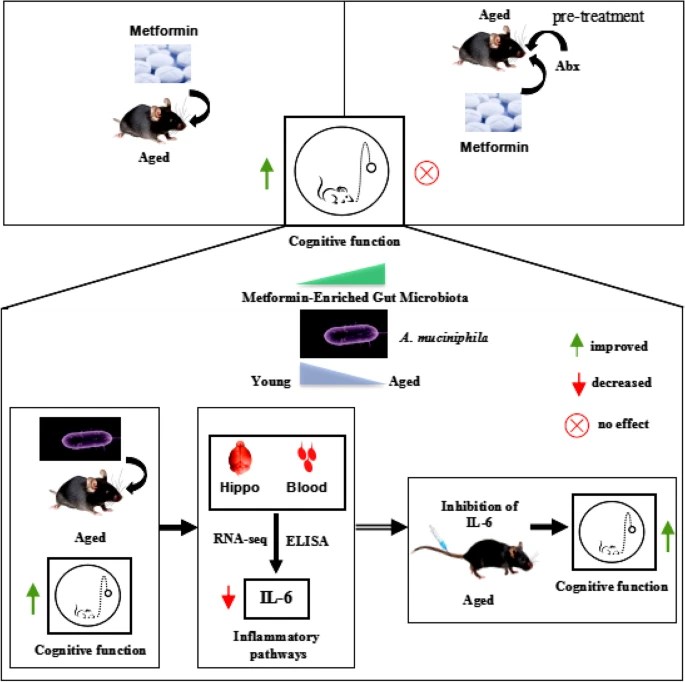
This 2023 rodent study investigated associations between a drug, a gut microbiota species, cognitive function, and proinflammatory cytokine interleukin-6:

“We show that gut microbiota is altered by metformin, which is necessary for protection against ageing-associated cognitive function declines in aged mice.

  • Mice treated with antibiotics did not exhibit metformin-mediated cognitive function protection.
  • Treatment with Akkermansia muciniphila improved cognitive function in aged mice.
  • A. muciniphila decreased proinflammatory-associated pathways, particularly that of proinflammatory cytokine interleukin (IL)-6, in both peripheral blood and hippocampal profiles, which was correlated with cognitive function improvement.
  • An IL-6 antibody protected cognitive function, and an IL-6 recombinant protein abolished the protective effect of A. muciniphila on cognitive function in aged mice.

40168_2023_1567_Figa_HTML

A. muciniphila, which is mediated in gut microbiota by metformin, modulates inflammation-related pathways in the host and improves cognitive function in aged mice by reducing proinflammatory cytokine IL-6 both systemically and in the hippocampus. This is direct evidence to validate that gut microbiota mediate the effect of metformin on cognitive improvement.”

https://microbiomejournal.biomedcentral.com/articles/10.1186/s40168-023-01567-1Akkermansia muciniphila, which is enriched in the gut microbiota by metformin, improves cognitive function in aged mice by reducing the proinflammatory cytokine interleukin-6″


IL-6 may be useful with other biomarkers of impaired cognitive function. It’s too coarse to track improved cognitive function past a certain point, though. Maybe the current IL-6 blood test can be refined as high-specificity CRP and regular CRP blood tests were done?

We don’t need to take this drug or be concerned about this gut bacteria species in order to lower inflammation. Click the IL-6 link above and see blog posts such as Part 2 of Rejuvenation therapy and sulforaphane for other methods.

PXL_20230630_092833465

All about walnuts’ effects

Five 2022 papers focusing on walnuts, starting with a comparison of eight tree nuts:

“The aim of the present study was to examine 8 different popular nuts – pecan, pine, hazelnuts, pistachio, almonds, cashew, walnuts, and macadamia. Total content of phenolic compounds in nuts ranged from 5.9 (pistachio) to 432.9 (walnuts) mg/100 g.

Walnuts had the highest content of polymeric procyanidins, which are of great interest as important compounds in nutrition and biological activity, as they exhibit antioxidant, anti-inflammatory, antimicrobial, cardio- and neuroprotective action. Walnuts are good sources of fatty acids, especially omega-3 and omega-6.”

https://www.sciencedirect.com/science/article/pii/S2590157522002164 “Nuts as functional foods: Variation of nutritional and phytochemical profiles and their in vitro bioactive properties”


A second study compared the same eight tree nuts plus Brazil nuts and peanuts:

“The highest total content of all analyzed flavonoids was determined in walnuts (114.861 µg/g) with epicatechin the most abundant, while the lowest was in almonds (1.717 µg/g). Epicatechin has antioxidant, anti-inflammatory, antitumor, and anti-diabetic properties. Epicatechin has beneficial effects on the nervous system, enhances muscle performance, and improves cardiac function.”

https://www.mdpi.com/1420-3049/27/14/4326/htm “The Content of Phenolic Compounds and Mineral Elements in Edible Nuts”


Next, two systematic reviews and meta-analyses of human studies:

“We carried out a systematic review of cohort studies and randomized controlled trials (RCTs) investigating walnut consumption, compared with no or lower walnut consumption, including those with subjects from within the general population and those with existing health conditions, published from 2017 to 5 May 2021.

  • Evidence published since 2017 is consistent with previous research suggesting that walnut consumption improves lipid profiles and is associated with reduced CVD risk.
  • Evidence pointing to effects on blood pressure, inflammation, hemostatic markers, and glucose metabolism remains conflicting.
  • Evidence from human studies showing that walnut consumption may benefit cognitive health, which is needed to corroborate findings from animal studies, is now beginning to accumulate.”

https://academic.oup.com/nutritionreviews/advance-article/doi/10.1093/nutrit/nuac040/6651942 “Walnut consumption and health outcomes with public health relevance – a systematic review of cohort studies and randomized controlled trials published from 2017 to present”


“We aimed to perform a systematic review and meta-analysis of RCTs to thoroughly assess data concerning effects of walnut intake on selected markers of inflammation and metabolic syndrome in mature adults. Our findings showed that:

  • Walnut-enriched diets significantly decreased TG, TC, and LDL-C concentrations, while HDL-C levels were not significantly affected.
  • No significant changes were noticed on anthropometric, cardiometabolic, and glycemic indices after higher walnut consumption.
  • Inflammatory biomarkers did not record statistically significant results.”

https://www.mdpi.com/2076-3921/11/7/1412/htm “Walnut Intake Interventions Targeting Biomarkers of Metabolic Syndrome and Inflammation in Middle-Aged and Older Adults: A Systematic Review and Meta-Analysis of Randomized Controlled Trials”


Finishing with a rodent study that gave subjects diabetes with a high-fat diet, then mixed two concentrations of walnut extract in with the treatment groups’ chow:

“This study was conducted to evaluate the protective effect of Gimcheon 1ho cultivar walnut (GC) on cerebral disorder by insulin resistance, oxidative stress, and inflammation in HFD-induced diabetic disorder mice. After HFD feed was supplied for 12 weeks, samples were orally ingested for 4 weeks to GC20 and GC50 groups (20 and 50 mg/kg of body weight, respectively).

  • Administration of GC improved mitochondrial membrane potential function, and suppressed oxidative stress in the brain.
  • GC inhibited hepatic and cerebral lipid peroxidation and the formation of serum AGEs, and increased serum antioxidant activity to improve HFD-induced oxidative stress.
  • The HFD group showed significant memory impairment in behavioral tests. On the other hand, administration of GC showed improvement in spatial learning and memory function.

walnut brain effects

Based on these physiological activities, GC showed protective effects against HFD-induced diabetic dysfunctions through complex and diverse pathways.”

https://www.mdpi.com/1420-3049/27/16/5316/htm “Walnut Prevents Cognitive Impairment by Regulating the Synaptic and Mitochondrial Dysfunction via JNK Signaling and Apoptosis Pathway in High-Fat Diet-Induced C57BL/6 Mice”


How do you like my sand art?PXL_20221016_154923750

Sulforaphane nose drops

This 2022 rodent study compared capabilities of intranasal nanoparticle sulforaphane and free sulforaphane to mitigate brain damage caused by a common cancer treatment:

“Non-invasive intranasal (IN) trafficking of therapeutic agents with nanocarriers can enhance efficacy of drug delivery, biodistribution, bioavailability, and absorption against enzymatic degradation and extracellular transportation. Direct IN trafficking of nanocarriers is expected to reduce drug wastage, administration frequency, and undesirable adverse effects.

The nasal route for brain-targeted delivery of sulforaphane (SF) loaded within iron oxide nanoparticles (Fe3O4-NPs) was based on improving physicochemical stability of SF, and to enhance its bioavailability by avoiding oral route drawbacks like extensive first-pass metabolism and intestinal drug degradation.

Cisplatin (CIS) significantly induced a significant increase in acetylcholinesterase activities and lipid peroxides, and a significant decrement in glutathione and nitric oxide contents. We aimed to explore the nanotherapeutic potential of intranasally delivered SF loaded within Fe3O4-NPs (N.SF) against CIS-induced neurotoxicity through different biochemical, behavioral, and histological investigations.

hippocampus damage

Treatment with N.SF was more capable of mitigating both CIS-induced striatal and cortical injuries. IN treatment with either SF or N.SF showed equal alleviative potential regarding CIS-induced hippocampal or cerebellar injury.

These encouraging results demonstrated the potential use of iron-oxide NPs as neurotherapeutic agents, and confirmed the possibility of developing a novel promising and non-invasive intranasal delivery system for treatment of CIS-induced neurotoxicity.”

https://link.springer.com/article/10.1007/s12640-022-00555-x “Neuroprotective Potential of Intranasally Delivered Sulforaphane-Loaded Iron Oxide Nanoparticles Against Cisplatin-Induced Neurotoxicity”


I found this study from it citing a paper in Do broccoli sprouts treat migraines?

PXL_20220815_095451252

Non-patentable boron benefits

To follow up Is boron important to health? I’ll highlight a 2022 review of boron intake:

“Boron is essential for activity of several metabolic enzymes, hormones, and micronutrients. It is important for growth and maintenance of bone, reduction in inflammatory biomarkers, and increasing levels of antioxidant enzymes.

The average person’s daily diet contains 1.5 to 3 milligrams of boron. Boron intakes of 1–3 mg/day have been shown to improve bone and brain health in adults when compared to intakes of 0.25–0.50 mg/day.

One week of 10 mg/d boron supplementation resulted in a 20% reduction in inflammatory biomarkers TNF-α, as well as significant reductions (nearly 50%) in plasma concentrations of hs-CRP and IL-6. Calcium fructoborate, a naturally occurring, plant-based boron-carbohydrate complex, had beneficial effects on osteoarthritis (OA) symptoms. A double-blind study in middle-aged patients with primary OA found that all groups except the placebo group saw a reduction in inflammatory biomarkers after 15 days of food supplementation with calcium fructoborate.

Dietary boron intake significantly improves brain function and cognitive functioning in humans. Electroencephalograms showed that boron pharmacological intervention after boron deficiency improved functioning in older men and women, such as less drowsiness and mental alertness, better psychomotor skills (for example, motor speed and dexterity), and better cognitive processing (e.g., attention and short-term memory). Boron compounds can help with both impaired recognition and spatial memory problems.

We discussed the role of boron-based diet in memory, boron and microbiome relation, boron as anti-inflammatory agents, and boron in neurodegenerative diseases. Boron reagents will play a significant role to improve dysbiosis.”

https://www.mdpi.com/1420-3049/27/11/3402/htm “The Role of Microbiome in Brain Development and Neurodegenerative Diseases”


PXL_20220814_101418757

The goddess of rainbows

Two 2022 papers, starting with a review of irisin:

“This article is an overview of irisin generation, secretion, and tissue distribution. Its targeting of tissues or organs for prevention and treatment of chronic diseases is systematically summarized, with discussion of underlying molecular mechanisms.

Irisin is an exercise-induced myokine expressed as a bioactive peptide in multiple tissues and organs. Exercise and cold exposure are major inducers for its secretion.

Mechanistic studies confirm that irisin is closely correlated with lipid metabolism, insulin resistance, inflammation, ROS, endocrine, neurotrophic factors, cell regeneration and repairing, and central nervous system regulation. Irisin decreases with age, and is closely associated with a wide range of aging-related diseases.

A number of studies in elderly humans and animal models have shown that exercise can promote the body’s circulation and increase irisin levels in some tissues and organs. Resistance, aerobic, or combined exercise seem to play a positive role. However, exercise could not change serum irisin in some reported studies.

irisin human studies

There are large individual differences in exercise training in the elderly population. Since the half-life of irisin in the body is less than 1 h, it is necessary to pay attention to the time of blood sampling after a single exercise intervention. Some factors that impede detection of irisin levels in vivo include the half-life of irisin protein, sampling time, different tissues, and different health statuses before and after intervention.

It is worth noting that high-intensity exercise shows higher irisin levels even with the same energy expenditure during exercise. Precision studies of irisin in elderly subjects following exercise intervention need to be further clarified.”

https://www.sciencedirect.com/science/article/pii/S1568163722001222 “Irisin, An Exercise-induced Bioactive Peptide Beneficial for Health Promotion During Aging Process” (not freely available) Thanks to Dr. Ning Chen for providing a copy.


A second paper was a human study too recent to be cited by the first paper. I’ll highlight its irisin findings:

“We investigated the complex relationship among DNAm based biomarkers of aging, including DNAmFitAge, a variety of physiological functioning variables, blood serum measures including cholesterol, irisin level, and redox balance, and the microbiome on 303 healthy individuals aged between 33 and 88 years with a diverse level of physical fitness. Regular exercise was associated with younger biological age, better memory, and more protective blood serum levels.

Our research intends to show that regular physical exercise is related to microbiota and methylation differences which are both beneficial to aging and measurable. Our research provides the first investigation between microbiome derived metabolic pathways and DNAm based aging biomarkers.

Irisin levels decrease with age (0.23 average decrease for every 1 year older). We found age-related decreases in irisin levels were attenuated by exercise training. The link between irisin to GrimAge Acceleration and FitAge Acceleration is a novel observation.

HDL is positively associated with irisin. HDL and irisin have complex roles in physiology, and the positive relationship we observe between physical exercise and HDL and irisin align with protective effects seen between HDL and irisin with glucose homeostasis.

This work further supports the biological importance of irisin to the aging process. It is possible our research motivates interventions to boost irisin, like through physical exercise, as possible anti-aging therapies.”

https://www.medrxiv.org/content/10.1101/2022.07.22.22277842v1 “DNA methylation clock DNAmFitAge shows regular exercise is associated with slower aging and systemic adaptation


PXL_20220725_095201761

Variable aging measurements

Two papers on aging measurements, starting with a 2022 human study:

“We collected longitudinally across the adult age range a comprehensive list of phenotypes within four domains (body composition, energetics, homeostatic mechanisms and neurodegeneration / neuroplasticity) and functional outcomes. We integrated individual deviations from population trajectories into a global longitudinal phenotypic metric of aging.

blsa participant ages

We demonstrate that accelerated longitudinal phenotypic aging is associated with faster physical and cognitive decline, faster accumulation of multimorbidity, and shorter survival.”

https://www.nature.com/articles/s43587-022-00243-7 “Longitudinal phenotypic aging metrics in the Baltimore Longitudinal Study of Aging”


I disagree with this study’s methodology.

1. Although it acknowledged individual variability, nothing was done to positively adjust to those facts. What could have been done per A review of biological variability was:

“Obtain a measurement of variability that is independent of the mean to ensure to not confound changes in variability with shifts in mean.”

2. A usual research practice is to take at least three measurements, and use their average as representative. That wasn’t done here, maybe because of time and expense considerations?

3. An important measurement for physical function was the time to finish a 400 meter walk. I walk more than ten times that almost every day. I use the first 400 meters as a warmup period while getting to the beach to walk eastward and enjoy the predawn light and water animal activity. I concentrate on gait speed during the last third while walking westward on a straightaway bike path.

This study would measure my gait speed as a sometimes old person during the first 400 meters, rather than a gait speed that usually approaches a young person’s during the last 400 meters. Even if I tried to walk my fastest right out of the gate, I wouldn’t be surprised to find a decade or two difference by this study’s measurements between a morning walk’s first and last 400 meter gait speeds.

4. An important cognitive function measurement was the Digital Symbol Substitution Test, apparently taken during subjects’ fasted state? Sometimes after exercising, I’m okay cognitively when starting work in a fasted state at 6:30 a.m., and other times I’m tired.

Two days ago during the last hour of work 1:30-2:30 p.m., I did outstanding work, four hours after eating whole oats for breakfast, and after drinking two coffees and three teas. I took time to put together pieces of puzzles into proper contexts for management’s attention. My bosses weren’t too pleased with the story it told, but it is what it is.

5. Are measurements of how you start what matters? Or is it how you finish, as is common in competitive sports?

This study would measure my cognitive function as a sometimes old person, rather than performance that approaches a young person’s later in the workday. For both physical and cognitive function, my abilities to ramp up and come close to young people’s capabilities are features that I work on, not random, inconvenient measurement variability.

6. Blood measurements were downgraded as having “limited coverage of the four phenotypic domains.” These were taken to fit into specific paradigms and epigenetic clocks. They predictably failed to show causality, as acknowledged with:

“Our analysis showed strong associations between global longitudinal phenotypic score and changes in physical and cognitive function. We did not have sufficient observations to fully separate these two dimensions over time, which would have strengthened the assumption of causality.”

Nowhere in this study was it hinted that all measurements were downstream effects of unmeasured causes. A follow-on study could reanalyze these subjects’ blood samples, MRI, and other measurements for originating upstream factors of signaling pathways and cascades per Signaling pathways and aging and An environmental signaling paradigm of aging.


Reference 35 of this first study was a 2021 human and rodent study that was tossed in as a limitation with:

“We might not have all of the relevant phenotypic measures (for example, more detailed immune profiles) for all participants.”

Its findings included:

“From the blood immunome of 1,001 individuals aged 8–96 years, we developed a deep-learning method based on patterns of systemic age-related inflammation. The resulting inflammatory clock of aging (iAge) tracked with multimorbidity, immunosenescence, frailty and cardiovascular aging, and is also associated with exceptional longevity in centenarians.

Canonical markers of acute infection such as IL-6 and tumor necrosis factor-α were not major contributors to iAge, indicating that, except for IL-1β, infection-driven inflammatory markers of the acute inflammatory response do not contribute to age-related chronic inflammation.

We conducted a follow-up study in an independent cohort of 97 extremely healthy adults (aged 25–90 years) matched for cardiovascular risk factors (including conserved levels of high-sensitivity C-reactive protein), selected from a total of 151 recruited participants using strict selection criteria. In this healthy cohort, inflammation markers were measured using a 48-plex cytokine panel. Only 6 circulating immune proteins were significantly correlated with age, with CXCL9 again the largest contributor to age-related inflammation.

CXCL9 is a T-cell chemoattractant induced by IFN-γ and is mostly produced by neutrophils, macrophages and endothelial cells (ECs). We find that CXCL9 is mainly produced by aged endothelium and predicts subclinical levels of cardiovascular aging in nominally healthy individuals.

We did not find any significant correlation between known disease risk factors reported in the study (BMI, smoking, dyslipidemia) and levels of CXCL9 gene or protein expression. We hypothesize that one root cause of CXCL9 overproduction is cellular aging per se, which can trigger metabolic dysfunction.

As ECs but not cardiomyocytes expressed the CXCL9 receptor, CXCR3, we hypothesize that this chemokine acts both in a paracrine fashion (when it is produced by macrophages to attract T cells to the site of injury) and in an autocrine fashion (when it is produced by the endothelium) creating a positive feedback loop. In this model, increasing doses of CXCL9 and expression of its receptor in these cells leads to cumulative deterioration of endothelial function in aging.

IFN-γ did not increase in expression in our cellular aging RNA-seq experiment, suggesting that there are triggers of CXCL9 (other than IFN-γ) that play a role in cellular senescence in the endothelium that are currently unknown. However, in our 1KIP study, IFN-γ was in fact the second-most important negative contributor to iAge, which could be explained by the cell-priming effect of cytokines, where the effect of a first cytokine alters the response to a different one.

iAge derived from immunological cytokines gives us an insight into the salient cytokines that are related to aging and disease. A notable difference compared to other clocks is that iAge is clearly actionable as shown by our experiments in CXCL9 where we can reverse aging phenotypes. More practical approaches range from altering a person’s exposomes (lifestyle) and/or the use of interventions to target CXCL9 and other biomarkers described here.

Our immune metric for human health can identify within healthy older adults with no clinical or laboratory evidence of cardiovascular disease, those at risk for early cardiovascular aging. We demonstrate that CXCL9 is a master regulator of vascular function and cellular senescence, which indicates that therapies targeting CXCL9 could be used to prevent age-related deterioration of the vascular system and other physiological systems as well.”

https://www.nature.com/articles/s43587-021-00082-y “An inflammatory aging clock (iAge) based on deep learning tracks multimorbidity, immunosenescence, frailty and cardiovascular aging”


PXL_20220721_093128925.NIGHT

Blanching broccoli sprouts

Three 2022 papers of interest cited Sulforaphane: Its “Coming of Age” as a Clinically Relevant Nutraceutical in the Prevention and Treatment of Chronic Disease. Let’s start with a fairly straightforward analysis of blanching broccoli sprouts to produce sulforaphane:

“We investigated the effect of blanching conditions to determine the optimal treatment that maximizes sulforaphane (SFN) content in broccoli sprouts. Broccoli seeds grown under controlled conditions were harvested after 11 days from germination and subjected to different blanching conditions based on a central composite design with temperature and time as experimental factors.

Optimum conditions were blanching at 61 °C for 4.8 min, resulting in 54.3 ± 0.20 µmol SFN/g dry weight, representing a 3.3-fold increase with respect to untreated sprouts. This is the highest SFN content reported for sprouts subjected to any treatment so far.

sfn heat response curve

Broccoli sprouts (20 g) were put in plastic bags, which were vacuum-sealed, and then subjected to time (3.4–11 min)–temperature (32–88 °C) combinations.

  • Blanching at 60 °C for less than 8 min resulted in the highest SFN content.
  • Above this temperature, SFN content decreases.
  • The exceptionally high values obtained in this work may be related to treatment, but also to broccoli cultivar and culture conditions.

Different broccoli tissues and developmental stages express different myrosinase isoforms, and catalytic properties of the enzyme may vary among different tissues. Myrosinase found in broccoli florets has an optimal temperature of around 40 °C, and considering myrosinases from other sources, this temperature may vary between 30 and 70 °C.”

https://www.mdpi.com/2304-8158/11/13/1906/htm “Maximization of Sulforaphane Content in Broccoli Sprouts by Blanching”

This first study used heat-only techniques similar to the uncited Enhancing sulforaphane content. It similarly found a 60°C (140°F) myrosinase cliff as have many other uncited studies.


A second paper was a rodent study:

“We investigated the role of sulforaphane, a well-known NRF2 activator, on age-related mitochondrial and kidney dysfunction. Young (2–4 month) and aged (20–24 month) male Fischer 344 rats were treated with sulforaphane (15 mg/kg body wt/day) in drinking water for four weeks.

Sulforaphane significantly improved mitochondrial function and ameliorated kidney injury by increasing cortical NRF2 expression and activity and decreasing protein expression of KEAP1, a NRF2 repressor. Sulforaphane treatment did not affect renal NRF2 expression or activity and mitochondrial function in young rats.”

https://www.mdpi.com/2076-3921/11/1/156/htm “Age-Related Mitochondrial Impairment and Renal Injury Is Ameliorated by Sulforaphane via Activation of Transcription Factor NRF2”

A human equivalent to this second study’s daily dose was intolerable at (.162 x 15 mg) x 70 kg = 170 mg. I curated this study anyway just to show an example of negligible treatment effects in young animals even when a dose is too high for humans.


A third paper was a review that focused on sulforaphane and its analogs’ chemistry:

“Analysis of the Web of Science database shows that, since 1992, about 3,890 articles have been published on SFN, and over 5,600 on isothiocyanates. Its natural analogs include iberin, alyssin, iberverin, erucin, berteroin, cheirolin, and erysolin.

SFN is a biologically active, natural isothiocyanate found in cruciferous vegetables, and is non-toxic. It has been selected for phase I and II clinical trials, where it is administered in the form of an extract or broccoli sprouts. There are no differences in biological activity between SFN and its natural analogs, such as erucin or alyssin.

No synthetic analogs of SFN described in this review qualified for clinical trials. This is likely due to the toxicity of these compounds in higher doses.”

https://www.mdpi.com/1420-3049/27/5/1750/htm “Sulforaphane and Its Bifunctional Analogs: Synthesis and Biological Activity”


PXL_20220712_100018566

Taurine week #7: Brain

Finishing a week’s worth of 2022 taurine research with two reviews of taurine’s brain effects:

“We provide a overview of brain taurine homeostasis, and review mechanisms by which taurine can afford neuroprotection in individuals with obesity and diabetes. Alterations to taurine homeostasis can impact a number of biological processes such as osmolarity control, calcium homeostasis, and inhibitory neurotransmission, and have been reported in both metabolic and neurodegenerative disorders.

Models of neurodegenerative disorders show reduced brain taurine concentrations. On the other hand, models of insulin-dependent diabetes, insulin resistance, and diet-induced obesity display taurine accumulation in the hippocampus. Given cytoprotective actions of taurine, such accumulation of taurine might constitute a compensatory mechanism that attempts to prevent neurodegeneration.

nutrients-14-01292-g003

Taurine release is mainly mediated by volume-regulated anion channels (VRAC) that are activated by hypo-osmotic conditions and electrical activity. They can be stimulated via glutamate metabotropic (mGluR) and ionotropic receptors (mainly NMDA and AMPA), adenosine A1 receptors (A1R), and metabotropic ATP receptors (P2Y).

Taurine mediates its neuromodulatory effects by binding to GABAA, GABAB, and glycine receptors. While taurine binding to GABAA and GABAB is weaker than to GABA, taurine is a rather potent ligand of the glycine receptor. Reuptake of taurine occurs via taurine transporter TauT.

Cytoprotective actions of taurine contribute to brain health improvements in subjects with obesity and diabetes through various mechanisms that improve neuronal function, such as:

  • Modulating inhibitory neurotransmission, which promotes an excitatory–inhibitory balance;
  • Stimulating antioxidant systems; and
  • Stabilizing mitochondria energy production and Ca2+ homeostasis.”

https://www.mdpi.com/2072-6643/14/6/1292/htm “Taurine Supplementation as a Neuroprotective Strategy upon Brain Dysfunction in Metabolic Syndrome and Diabetes”


A second review focused on taurine’s secondary bile acids produced by gut microbiota:

“Most neurodegenerative disorders are diseases of protein homeostasis, with misfolded aggregates accumulating. The neurodegenerative process is mediated by numerous metabolic pathways, most of which lead to apoptosis. Hydrophilic bile acids, particularly tauroursodeoxycholic acid (TUDCA), have shown important anti-apoptotic and neuroprotective activities, with numerous experimental and clinical evidence suggesting their possible therapeutic use as disease-modifiers in neurodegenerative diseases.

Biliary acids may influence each of the following three mechanisms through which interactions within the brain-gut-microbiota axis take place: neurological, immunological, and neuroendocrine. These microbial metabolites can act as direct neurotransmitters or neuromodulators, serving as key modulators of the brain-gut interactions.

The gut microbial community, through their capacity to produce bile acid metabolites distinct from the liver, can be thought of as an endocrine organ with potential to alter host physiology, perhaps to their own favour. Hydrophilic bile acids, currently regarded as important hormones, exert modulatory effects on gut microbiota composition to produce secondary bile acids which seem to bind a number of receptors with a higher affinity than primary biliary acids, expressed on many different cells.

40035_2022_307_Fig1_HTML

TUDCA regulates expression of genes involved in cell cycle regulation and apoptotic pathways, promoting neuronal survival. TUDCA:

  • Improves protein folding capacity through its chaperoning activity, in turn reducing protein aggregation and deposition;
  • Reduces reactive oxygen species production, leading to protection against mitochondrial dysfunction;
  • Ameliorates endoplasmic reticulum stress; and
  • Inhibits expression of pro-inflammatory cytokines, exerting an anti-neuroinflammatory effect.

Although Alzheimer’s disease, Huntington’s disease, Parkinson’s disease, amyotrophic lateral sclerosis (ALS), and cerebral ischemia have different disease progressions, they share similar pathways which can be targeted by TUDCA. This makes this bile acid a potentially strong therapeutic option to be tested in human diseases. Clinical evidence collected so far has reported comprehensive data on ALS only.”

https://www.ncbi.nlm.nih.gov/pmc/articles/PMC9166453/ “Tauroursodeoxycholic acid: a potential therapeutic tool in neurodegenerative diseases”

Eat broccoli sprouts for depression, Part 2

Here are three papers that cited last year’s Part 1. First is a 2021 rodent study investigating a microRNA’s pro-depressive effects:

“Depressive rat models were established via chronic unpredicted mild stress (CUMS) treatment. Cognitive function of rats was assessed by a series of behavioral tests.

Nrf2 CUMS

Nrf2 was weakly expressed in CUMS-treated rats, whereas Nrf2 upregulation alleviated cognitive dysfunction and brain inflammatory injury.

Nrf2 inhibited miR-17-5p expression via binding to the miR-17-5p promoter. miR-17-5p was also found to limit wolfram syndrome 1 (Wfs1) transcription.

We found that Nrf2 inhibited miR-17-5p expression and promoted Wfs1 transcription, thereby alleviating cognitive dysfunction and inflammatory injury in rats with depression-like behaviors. We didn’t investigate the role of Nrf2 in other depression models (chronic social stress model and chronic restraint stress model) and important brain regions other than hippocampus, such as prefrontal cortex and nucleus accumbens. Accordingly, other depression models and brain regions need to be designed and explored to further validate the role of Nrf2 in depression in future studies.”

https://link.springer.com/article/10.1007/s10753-021-01554-4 “Nrf2 Alleviates Cognitive Dysfunction and Brain Inflammatory Injury via Mediating Wfs1 in Rats with Depression‑Like Behaviors” (not freely available)

This study demonstrated that activating the Nrf2 pathway inhibited brain inflammation, cognitive dysfunction, and depression. Would modulating one microRNA and one gene in vivo without Nrf2 activation achieve similar results?


A 2021 review focused on the immune system’s role in depression:

“Major depressive disorder is one of the most common psychiatric illnesses. The mean age of patients with this disorder is 30.4 years, and the prevalence is twice higher in women than in men.

Activation of inflammatory pathways in the brain is considered to be an important producer of excitotoxicity and oxidative stress inducer that contributes to neuronal damage seen in the disorder. This activation is mainly due to pro-inflammatory cytokines activating the tryptophan-kynurenine (KP) pathway in microglial cells and astrocytes.

Elevated levels of cortisol exert an inhibitory feedback mechanism on its receptors in the hippocampus and hypothalamus, stopping stimulation of these structures to restore balance. When this balance is disrupted, hypercortisolemia directly stimulates extrahepatic enzyme 2,3-indolimine dioxygenase (IDO) located in various tissues (intestine, placenta, liver, and brain) and immune system macrophages and dendritic cells.

Elevation of IDO activities causes metabolism of 99% of available tryptophan in the KP pathway, substantially reducing serotonin synthesis, and producing reactive oxygen species and nitrogen radicals. The excitotoxicity generated produces tissue lesions, and activates the inflammatory response.”

https://academic.oup.com/ijnp/article/25/1/46/6415265 “Inflammatory Process and Immune System in Major Depressive Disorder”

This review highlighted that stress via cortisol and IDO may affect the brain and other parts of the body.


A 2022 review elaborated on Part 1’s findings of MeCP2 as a BDNF inhibitor:

“Methyl-CpG-binding protein 2 (MeCP2) is a transcriptional regulator that is highly abundant in the brain. It binds to methylated genomic DNA to regulate a range of physiological functions implicated in neuronal development and adult synaptic plasticity.

Ability to cope with stressors relies upon activation of the hypothalamic–pituitary–adrenal (HPA) axis. MeCP2 has been shown to contribute to early life stress-dependent epigenetic programming of genes that enhance HPA-axis activity.

We describe known functions of MeCP2 as an epigenetic regulator, and provide evidence for its role in modulating synaptic plasticity via transcriptional regulation of BDNF or other proteins involved in synaptogenesis and synaptic strength like reelin. We conclude that MeCP2 is a promising target for development of novel, more efficacious therapeutics for treatment of stress-related disorders such as depression.”

https://www.mdpi.com/2073-4409/11/4/748/htm “The Role of MeCP2 in Regulating Synaptic Plasticity in the Context of Stress and Depression”


Osprey lunch

PXL_20220221_192924474

Gut microbiota’s positive epigenetic effects

Three papers with the first a 2021 review:

“Gut microbiota along with their metabolites are involved in health and disease through multiple epigenetic mechanisms including:

  • Affecting transporter activities, e.g. DNA methyltransferases (DNMTs), histone methyltransferases (HMTs), histone acetyltransferases (HATs), and histone deacetylases (HDACs);
  • Providing methyl donors to participate in DNA methylation and histone modifications; and
  • miRNAs that can lead to gene transcriptional modifications.

ijms-22-06933-g003

These mechanisms can participate in a variety of biological processes such as:

  • Maturation of intestinal epithelial cells (IECs);
  • Maintenance of intestinal homeostasis;
  • Inflammatory response;
  • Development of metabolic disorders; and
  • Prevention of colon cancer.”

https://www.mdpi.com/1422-0067/22/13/6933/htm “Dissecting the Interplay Mechanism between Epigenetics and Gut Microbiota: Health Maintenance and Disease Prevention”


A second 2022 review added subjects such as crotonate (aka unsaturated butyrate):

“Studies are carving out potential roles for additional histone modifications, such as crotonylation and ethylation, in facilitating crosstalk between microbiota and host. Lysine crotonylation is a relatively less studied histone modification that is often enriched at active promoters and enhancers in mammalian cells.

While addition or removal of crotonyl motifs can be catalyzed by specialized histone crotonyltransferases and decrotonylases, HATs and HDACs have also been reported to exhibit histone crotonyl-modifying activity. Microbiota stimulate multiple types of histone modifications and regulate activity of histone-modifying enzymes to calibrate local and extra-intestinal chromatin landscapes.”

https://www.tandfonline.com/doi/full/10.1080/19490976.2021.2022407 “Epigenetic regulation by gut microbiota”


A third 2021 review added subjects such as broccoli sprout compounds’ epigenetic effects:

“Glucosinolates are converted into isothiocyanates (ITCs) by bacteria that regulate host epigenetics. Levels of ITCs produced following broccoli consumption are highly dependent on the functional capacity of individual microbiomes, as much interindividual variability exists in gut microbiota composition and function in humans.

Sulforaphane inhibits HDAC activity both in vitro and in vivo, and protects against tumor development. Microbial-mediated production of ITCs represents a strong diet-microbe interaction that has a direct impact on host epigenome and health.”

https://www.sciencedirect.com/science/article/pii/S0955286321000516 “The interplay between diet, gut microbes, and host epigenetics in health and disease”


Clearing the channel

PXL_20220118_203446833

Defend yourself with taurine

This densely packed 2021 review subject was taurine:

“Taurine (Tau), a sulphur-containing non-proteinogenic β-amino acid, has a special place as an important natural modulator of antioxidant defence networks:

  • Direct antioxidant effect of Tau due to scavenging free radicals is limited, and could be expected only in a few tissues (heart and eye) with comparatively high concentrations.
  • Maintaining optimal Tau status of mitochondria controls free radical production.
  • Indirect antioxidant activities of Tau due to modulating transcription factors leading to upregulation of the antioxidant defence network are likely to be major molecular mechanisms of Tau’s antioxidant and anti-inflammatory activities.
  • A range of toxicological models clearly show protective antioxidant-related effects of Tau.”

antioxidants-10-01876-g001-550

https://www.mdpi.com/2076-3921/10/12/1876/htm “Taurine as a Natural Antioxidant: From Direct Antioxidant Effects to Protective Action in Various Toxicological Models”


PXL_20211226_120547077