Coffee improves information’s signal-to-noise ratio

This 2022 rodent study investigated caffeine’s effects:

“A majority of molecular and neurophysiological studies explored the impact of acute rather than repeated exposure to caffeine. We show that, in bulk tissue analysis, chronic caffeine treatment reduced metabolic processes related to lipids, mitochondria, and translation in mouse hippocampus. In sharp contrast to what was observed in bulk tissue, we found that caffeine induced a neuronal autonomous epigenomic response related to synaptic plasticity activation.

149371-JCI-RG-RV-3_ga_591026

Regular caffeine intake exerts a long-term effect on neuronal activity/plasticity in the adult brain, lowering metabolic-related processes, and simultaneously finely tuning activity-dependent regulations. In non-neuronal cells, caffeine decreases activities under basal conditions, and improves signal-to-noise ratio during information encoding in brain circuits, contributing to bolster salience of information.

Overall, our data prompt the novel concept that regular caffeine intake promotes a more efficient ability of the brain to encode experience-related events. By coordinating epigenomic changes in neuronal and non-neuronal cells, regular caffeine intake promotes a fine-tuning of metabolism in resting conditions.”

https://www.jci.org/articles/view/149371 “Caffeine intake exerts dual genome-wide effects on hippocampal metabolism and learning-dependent transcription”


PXL_20220514_181401668

Brain changes

This 2022 human study investigated healthy young adult brain changes using MRI and epigenetic clock technologies:

“We aimed to characterize the association of epigenetic age (i.e. estimated DNA methylation age) and its acceleration with surface area, cortical thickness, and volume in healthy young adults. It is largely unknown how accelerated epigenetic age affects multiple cortical features among young adults from 19 to 49 years. Prior findings imply not only that these dynamic changes reveal different aspects of cortical aging, but also that chronological age itself is not a reliable factor to understand the process of cortical aging.

accelerated epigenetic age vs brain features

Seventy-nine young healthy individuals participated in this study. Findings of our study should be interpreted within the context of relatively small sample size, without older adults, and with epigenetic age assessed from saliva.

Additional and unique regional changes due to advanced and accelerated epigenetic age, compared to chronological age-related changes, suggest that epigenetic age could be a viable biomarker of cortical aging. Longitudinal and cross-sectional studies with a larger sample and wider age range are necessary to characterize ongoing effects of epigenetic cortical aging, not only for healthy but also for pathological aging.”

https://doi.org/10.1093/cercor/bhac043 “The effects of epigenetic age and its acceleration on surface area, cortical thickness, and volume in young adults” (not freely available) Thanks to Dr. Yong Jeon Cheong for providing a copy.

Young immune system, young brain

This 2022 study investigated brain aging:

“We aimed to explore key genes underlying cognitively normal brain aging and its potential molecular mechanisms. Cellular and molecular mechanisms of brain aging are complex and mainly include:

  1. Dysfunction of mitochondria;
  2. Accumulation of oxidatively damaged proteins, nucleic acids, and lipids in brain cells;
  3. Disorders of energy metabolism;
  4. Impaired ‘waste disposal’ mechanism (autophagosome and proteasome functionality);
  5. Impaired signal transduction of adaptive stress response;
  6. Impaired DNA repair;
  7. Abnormal neural network activity;
  8. Imbalance of neuronal Ca2+ processing;
  9. Stem cell exhaustion; and
  10. Increased inflammation.

mrna brain expression

Expression of CD44, CD93, and CD163 mRNA detected by qPCR in hippocampal tissue of cognitively normal aged and young mice.

Underlying molecular mechanisms for maintaining healthy brain aging are related to decline of immune-inflammatory responses. CD44, CD93, and CD 163 are potential biomarkers.”

https://www.frontiersin.org/articles/10.3389/fnagi.2022.833402/full “Identification of Key Biomarkers and Pathways for Maintaining Cognitively Normal Brain Aging Based on Integrated Bioinformatics Analysis”


PXL_20220506_184430747

Reinvigorated

A follow-on to Beginning of the cure for aging:

“So, I rubbed a small sample of E5 on my right hand and after three days the results were visible. The skin on the treated hand is visibly thicker and lighter. Certainly not a definitive test, but wow, my hand looks decades younger. Dr. Harold Katcher

maos

Hi all,

I applied a little bit of an old freeze-dried prep – there’s no trick here Jay (how could there be), my right-hand looks 30 years younger, even my veins are narrower and less prominent, (I wonder if they’ve let go of their calcification) they also seem less visible because the skin appears thicker

Obviously, the experiment needs to be tried on many people, but I’m certain their reaction will be the same as mine. The interesting thing is, as you noted Jay that the E5 used was essentially just the precipitate, (so therefore crude), but if only for external use, it would not have to meet the same criteria for use as something used internally.

I’m looking at my hands right now and am amazed, a real miracle. I suppose it will fade (as my blood contains pro-aging factors) – but surprisingly, we now have real evidence that E5 works on people. Yesterday Kavita said it doesn’t look like both hands could belong to the same person).

I only applied a small bit to the upper surface of my right hand, nothing more. It was actually historic.

Best to all, Harold


One thing I remember about my father’s parents was spots on their hands and forearms. As a child, I didn’t understand how that happened. After growing up in Miami, and visiting dermatologists 2-3 times a year decades later, it’s apparent.

PXL_20220502_185746582

All about AGEs

My 900th curation is a 2022 review by the lead author of Reversibility of AGEs concentrations that fleshed out details of advanced glycation end products (AGEs) topics:

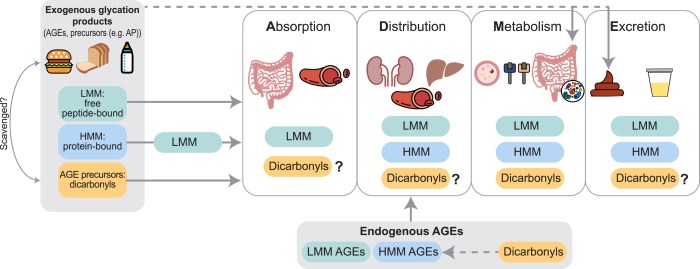
“This review aims to provide a state-of-the-art overview of the toxicokinetics and toxicodynamics of endogenously formed and exogenous dietary AGEs and their precursors. AGEs are a heterogenous group of:

  • Low molecular mass (LMM) glycation products formed by reaction with a free amino acid residue and/or to dicarbonyl precursors; and
  • High molecular mass (HMM) glycation products formed by reaction with a protein-bound amino acid residue, including cross-linked products (i.e. when two amino acid residues are involved instead of one).

Cross-linking of body proteins results in:

  • Altered structure and function of the proteins;
  • Proteins are less easily degraded;
  • An increase in stiffness in tissues that are rich in these proteins, including arterial, lung tissue, joints, and extracellular matrix. Stiffness in these tissues has been associated with diseases including hypertension, cataracts, dementia, atherosclerosis, glomerulosclerosis, emphysema, and joint pain.

In endogenous formation of AGEs and their precursors, the same pathways as exogenous proceed via non-enzymatic reactions, although they occur at lower rates due to the lower physiological temperatures. In addition, specific endogenous AGE formation pathways include glycolysis and the polyol pathway active under hyperglycemic conditions.

Considering heterogeneity of glycation products, as also reflected in different ADME outcomes, AGEs and their precursors cannot be grouped together. Specific, individual information is required for a proper evaluation, especially considering ADME properties.

file:///D:/MYFILES/ELSEVIER/FCT/00112987/FINALXML/GRAPHICS/NATI

The role of exogenous HMM AGEs and precursors seems to be restricted by limited bioavailability to local effects on the intestine including its microbiota, unless being degraded to their LMM form. An important role is probably left for reactive (endogenously formed) dicarbonyl AGE precursors and as a consequence the endogenously formed AGEs.

The direct contribution of reactive dicarbonyl precursors to dicarbonyl stress and their indirect contribution to endogenous HMM AGE formation and subsequent AGE receptor activation remain to be further studied.”

https://www.sciencedirect.com/science/article/pii/S0278691522001855 “Differences in kinetics and dynamics of endogenous versus exogenous advanced glycation end products (AGEs) and their precursors”

State-dependent memory

This 2021 review by two coauthors of What can cause memories that are accessible only when returning to the original brain state? provided evidence for alternative interpretations of memory experiments:

“Memory consolidation hypotheses postulate a long series of various and time consuming elaborate processes that come to protect memory from disruption after various periods of time. For more than fifty years, consolidation hypotheses led to the idea that:

  1. Memories are fragile and can easily be disrupted; and
  2. Memories require several hours to be encoded (Cellular Consolidation), and extensive periods of time (days to weeks and even months and years), to be definitely stabilized (Systems Consolidation).

Although these views rely on well substantiated findings, their interpretation can be called into question.

An alternative position is that amnesia reflects retrieval difficulties due to contextual changes. This simple explanation is able to account for most, if not all, results obtained in consolidation studies.

memory state dependency

Systems Consolidation can be explained in terms of a form of state-dependency.

Recent memory remains detailed, context-specific (in animals), and vivid (in humans) and very susceptible to contextual changes. With the passage of time, memories become less precise, and retention performance less and less affected by contextual changes.”

https://www.sciencedirect.com/science/article/abs/pii/S0149763421005510 “Revisiting systems consolidation and the concept of consolidation” (not freely available)


I came across this review while trying to understand why a 2022 rodent study felt wrong. That study followed the standard memory paradigm, and I appreciate its lead author providing a copy since it wasn’t otherwise available.

But those researchers boxed themselves in with consolidation explanations for findings. They used drugs to change subjects’ memories’ contexts between training and testing. They didn’t see that tested memories were dependent on subjects’ initial brain states.

This review cited a paper abstracted in Resiliency in stress responses, namely Neurobiological mechanisms of state-dependent learning.


Crab for lunch

PXL_20220419_190655701

MET minutes

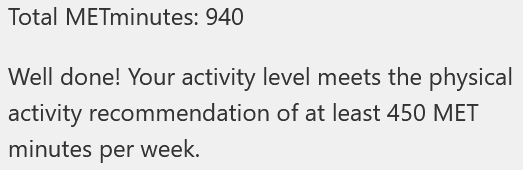
This 2022 meta-analysis investigated the relationship between cognition and exercise expressed in MET minutes (metabolic equivalent for task, a unit that estimates amount of energy used during physical activity compared to resting metabolism):

“44 studies (4793 participants aged 50 years or over) were included. There was a non-linear, dose-response association between overall exercise and cognition.

We found no minimal threshold for beneficial effect of exercise on cognition. The estimated minimal exercise dose associated with clinically relevant changes in cognition was 724 METs-min per week, and doses beyond 1200 METs-min per week provided less clear benefits.

Obesity status was the main moderator of effects of exercise on cognition. Our results suggest that overweight/obese older adults may benefit from lower exercise levels than recommended for the general population.

Exercise is one of the few interventions shown to prevent and treat dementia or cognitive decline in older adults.”

https://www.sciencedirect.com/science/article/pii/S1568163722000332 “Optimal dose and type of exercise to improve cognitive function in older adults: A systematic review and bayesian model-based network meta-analysis of RCTs”


Similar to Biological age and zinc, this study found that our metabolic zones determine how our choices can achieve desired effects.

There’s no substitute for exercise. Take responsibility for your one precious life: nobody else exercises for you.

METminutes

Came home this afternoon after my daily walk on the beach, thinking about how – in a way – this honored ancestors. We are the products of who they were and what they did to survive.

PXL_20220328_185039287

Vascular memory

This 2022 rodent study investigated effects of inducing hypertension for two weeks:

“Hypertension is conventionally associated with a neurohormonal activation from the sympathetic nervous and the renin-angiotensin-aldosterone systems. Angiotensin II (AngII) is a potent regulator of blood pressure, and is also a key player in hypertension development.

An initial 2-week exposure to AngII induced profound changes in cardiac and vascular remodeling, including endothelial activation, vascular inflammation and oxidant stress, all of which were maintained up to 3 weeks after AngII withdrawal. This phenotype was sustained despite early normalization of blood pressure after AngII withdrawal.

Our RNAseq pathway analysis suggests involvement of epigenetic regulators involved in methylation, such as PRC2. PRC2 complex catalyzes trimethylation of histone H3 on lysine 27 (H3K27me3), a histone mark necessary for maintaining transcriptional repression during multicellular development.

H3K27me3 AngII

Cell type-specific patterns of H3K27me3 are crucial for preserving cell identity. Consistent with this analysis, we observed a significant increase in H3K27me3 epigenetic mark in aortic tissue, intriguingly, only in both memory conditions.

Transient exposure to Ang II produces prolonged vascular remodeling with robust ACTA2 downregulation, associated with epigenetic imprinting, supporting a memory effect despite stimulus withdrawal. Future characterization of underlying AngII-dependent signaling might unveil new targets for its therapeutic modulation and reversal of this adverse legacy effect.”

https://www.frontiersin.org/articles/10.3389/fcvm.2022.854361/full “Sustained Downregulation of Vascular Smooth Muscle Acta2 After Transient Angiotensin II Infusion: A New Model of Vascular Memory”


These subjects’ ages were equivalent to a 20-year-old human:

  • How much earlier could our vascular system retain events we experienced such as epigenetic H3K27me3 increases? Teenaged, late childhood, early childhood, infancy, fetal parts of our lives?
  • How long would these vascular system memories and their continued signaling linger?
  • What experiences could change these long-lasting memories?

Icy fire

PXL_20220329_185742880

Gut microbiota knowledge through 2021

I’ll curate this 2022 review of what’s known and unknown about our trillions of gut microbiota through its topic headings:

“Most microbial taxa and species of the human microbiome are still unknown. Without revealing the identity of these microbes as a first step, we cannot appreciate their role in human health and diseases.

A. Understanding the Microbiome Composition and Factors That Shape Its Diversity
Effect of Diet Composition on the Microbiome Diversity

  • Macronutrients and Microbiome Diversity
  • Nutrient and Mineral Supplements and Microbiome Diversity

Stress

Drugs

Race and Host Genetics

Aging

Lifestyle

  • Exercise
  • Smoking
  • Urbanization

B. Understanding the Microbiome Function and Its Association With Onset and Progression of Many Diseases

Microbiome Association With Inflammatory and Metabolic Disorders

  • Chronic Inflammation in GIT and Beyond
  • Development of Malignant Tumors
  • Obesity
  • Coronary Artery Disease
  • Respiratory Diseases

Microbiome Role in Psychiatric, Behavioral, and Emotional Disorders

C. Understanding the Microbiome Function as Mediated by Secreted Molecules

D. Conclusion and Future Directions – A pioneering study aimed to computationally predict functions of microbes on earth estimates the presence of 35.5 million functions in bacteria of which only 0.02% are known. Our knowledge of its functions and how they mediate health and diseases is preliminary.”

https://www.frontiersin.org/articles/10.3389/fmicb.2022.825338 “Recent Advances in Understanding the Structure and Function of the Human Microbiome”


I took another test last month at the 14-month point of treating my gut microbiota better. Compared with the 7-month top level measurements, what stood out was an increase in relative abundance from 1% to 7% in the Verrucomicrophia phylum that pretty much exclusively comprises species Akkermansia muciniphilia in humans:

top 5 phylum 2-2022

This review termed Akkermansia muciniphilia relative increases as beneficial. Go with the Alzheimer’s Disease evidence didn’t.

Preventing human infections with dietary fibers inferred that insufficient dietary fiber may disproportionately increase abundance of this species. But I already eat much more fiber than our human ancestors’ estimated 100 grams of fiber every day, so lack of fiber definitely didn’t cause this relative increase.

Resistant starch therapy observed:

“Relative abundances of smaller keystone communities (e.g. primary degraders) may increase, but appear to decrease simply because cross-feeders increase in relative abundance to a greater extent.”

I’ll wait for further evidence while taking responsibility for my own one precious life.

Didn’t agree with this review’s statements regarding microbial associations with fear. These reviewers framed such associations as if gut microbiota in the present had stronger influences on an individual’s fear responses than did any of the individual’s earlier experiences. No way.

I came across this review by it citing The microbiome: An emerging key player in aging and longevity, which was Reference 25 of Dr. Paul Clayton’s blog post What are You Thinking?

Also didn’t agree with some of the doctor’s post:

  • Heterochronic parabiosis of young and old animals is wildly different from fecal transfer. Can’t really compare them to any level of detail.
  • Using a rodent young-to-old fecal microbiota transplant study to imply the same effects would happen in humans? Humans don’t live in controlled environments, so why would a young human individual’s gut microbiota necessarily have healthier effects than an old individual’s?
  • Another example was the penultimate paragraph: “By adding a mix of prebiotic fibers to your diet and maintaining a more youthful and less inflammatory microbiome you will have less inflammation, less endotoxaemia and less inflammageing. You will therefore live healthier and longer.” I’m okay with the first sentence. Equivalating the first sentence to both healthspan and lifespan increases in the second sentence wasn’t supported by any of the 45 cited references.

Reversing hair greying

I’ll highlight this 2021 human study’s findings regarding stress:

“We profiled hair pigmentation patterns (HPPs) along individual human hair shafts, producing quantifiable physical timescales of rapid greying transitions. White/grey hairs that naturally regain pigmentation across sex, ethnicities, ages, and body regions, quantitatively define reversibility of greying in humans.

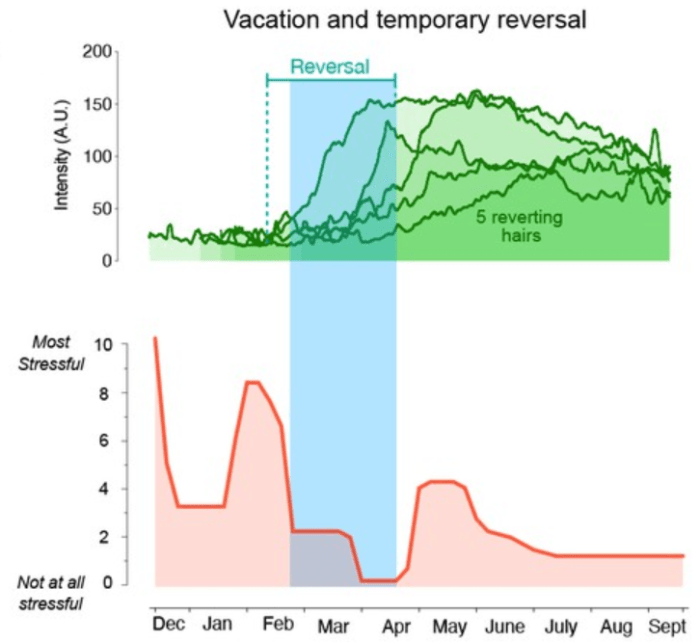
A systematic survey of two-colored hairs on the scalp of a 35-year-old Caucasian male with auburn hair color over a 2-day period yielded five two-colored hair shafts (HSs) from the frontal and temporal scalp regions. Unexpectedly, all HSs exhibited reversal. HPP analysis further showed that all HSs underwent reversal of greying around the same time period.

A retrospective assessment of psychosocial stress levels using a time-anchored visual analog scale (participants rate and link specific life events with start and end dates) was then compared to HPPs. Reversal of greying for all hairs coincided closely with decline in stress and a 1-month period of lowest stress over the past year (0 on a scale of 0–10) following a 2-week vacation.

vacay

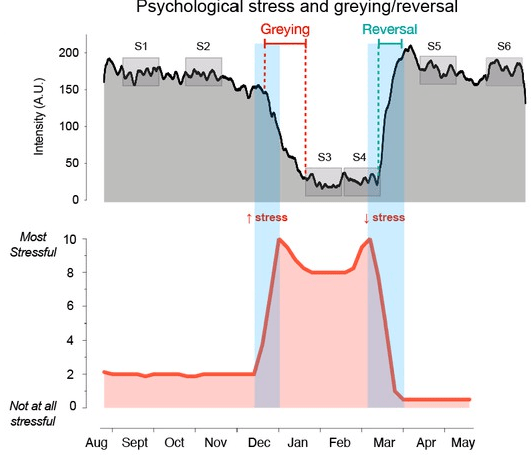
We were also able to examine a two-colored hair characterized by an unusual pattern of complete HS greying followed by rapid and complete reversal plucked from the scalp of a 30-year-old Asian female participant with black hair. HPP analysis of this HS showed a white segment representing approximately 2 cm.

Quantitative life stress assessment revealed a specific 2-month period associated with an objective life stressor (marital conflict and separation, concluded with relocation) where the participant rated her perceived stress as highest (9–10 out of 10) over the past year. The increase in stress corresponded in time with complete but reversible hair greying.

separation

We document a complete switch-on/off phenomena during a single anagen cycle. Proteomic features of hair greying directly implicate multiple metabolic pathways that are both reversible in nature and sensitive to stress-related neuroendocrine factors.

This new method to quantitatively map recent life history in HPPs provides an opportunity to longitudinally examine the influence of recent life exposures on human biology. Additional prospective studies with larger sample sizes are needed to confirm robust reproducibility and generalizability of our findings.”

https://elifesciences.org/articles/67437 “Quantitative mapping of human hair greying and reversal in relation to life stress”

See Reversing hair greying, Part 2 for selected papers through 2024 that cited this study.

Signaling pathways and disordered proteins

This 2022 review explored the title subject:

“Cell signaling imposes many demands on proteins that comprise these pathways, including abilities to form active and inactive states, and to engage in multiple protein interactions. Signaling often requires amplifying signals, regulating or tuning responses to signals, combining information sourced from multiple pathways, all while ensuring process fidelity.

Sensitivity, adaptability, and tunability are possible, in part, due to inclusion of intrinsically disordered regions in many proteins involved in cell signaling.  This review highlights the critical role of intrinsically disordered proteins for signaling:

  • In widely diverse organisms (animals, plants, bacteria, fungi);
  • In every category of cell signaling pathway (autocrine, juxtacrine, intracrine, paracrine, and endocrine); and
  • At each stage (ligand, receptor, transducer, effector, terminator) in the cell signaling process.

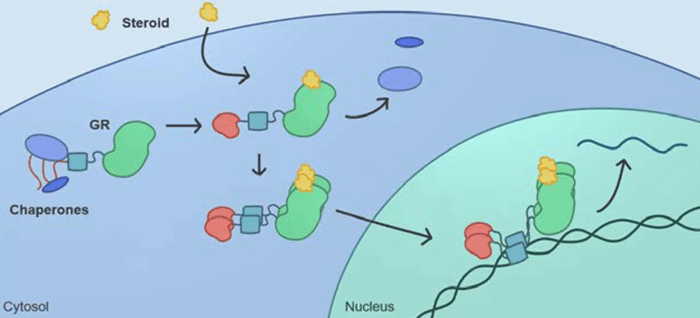
Function of the glucocorticoid receptor is regulated in part by its intrinsically disordered C-terminal tail. Prior to activation, the glucocorticoid receptor resides in cytosol:

glucocorticoid receptor

Intrinsic disorder in the glucocorticoid receptor not only enables multiple allosteric regulatory interactions to impact function, but also allows deployment of different surfaces of the protein to enable binding to many different sets of macromolecules, and regulation of these interactions via mRNA splicing and phosphorylation.

Combinations of alternative translation initiation and alternative mRNA splicing result in production of multiple glucocorticoid receptor isoforms from one gene. Various isoforms exhibit distinctive tissue distribution patterns and altered transcriptional regulatory profiles.

Greater than 90% of transcription factors either contain intrinsically disordered regions of proteins or are entirely intrinsically disordered. The many advantages conferred by disorder to cell signaling cascades means that:

  1. Understanding signaling required definition of roles disorder plays in each pathway;
  2. Many more examples of disordered proteins in cell signaling pathways are likely to be discovered; and
  3. More mechanisms by which disorder functions remain to be elucidated.”

https://biosignaling.biomedcentral.com/articles/10.1186/s12964-022-00821-7 “Intrinsically disordered proteins play diverse roles in cell signaling”


Cells in vivo seldom act on their own impetus. I would have liked discussion – or at least mention – of bidirectional signals between genes / cells / tissues / organs / organism / environment. This review’s topic of cell signaling pathways excluded “interactions of complex, interconnected systems spanning hierarchical levels” as explored in An environmental signaling paradigm of aging.

Eat broccoli sprouts for depression, Part 2

Here are three papers that cited last year’s Part 1. First is a 2021 rodent study investigating a microRNA’s pro-depressive effects:

“Depressive rat models were established via chronic unpredicted mild stress (CUMS) treatment. Cognitive function of rats was assessed by a series of behavioral tests.

Nrf2 CUMS

Nrf2 was weakly expressed in CUMS-treated rats, whereas Nrf2 upregulation alleviated cognitive dysfunction and brain inflammatory injury.

Nrf2 inhibited miR-17-5p expression via binding to the miR-17-5p promoter. miR-17-5p was also found to limit wolfram syndrome 1 (Wfs1) transcription.

We found that Nrf2 inhibited miR-17-5p expression and promoted Wfs1 transcription, thereby alleviating cognitive dysfunction and inflammatory injury in rats with depression-like behaviors. We didn’t investigate the role of Nrf2 in other depression models (chronic social stress model and chronic restraint stress model) and important brain regions other than hippocampus, such as prefrontal cortex and nucleus accumbens. Accordingly, other depression models and brain regions need to be designed and explored to further validate the role of Nrf2 in depression in future studies.”

https://link.springer.com/article/10.1007/s10753-021-01554-4 “Nrf2 Alleviates Cognitive Dysfunction and Brain Inflammatory Injury via Mediating Wfs1 in Rats with Depression‑Like Behaviors” (not freely available)

This study demonstrated that activating the Nrf2 pathway inhibited brain inflammation, cognitive dysfunction, and depression. Would modulating one microRNA and one gene in vivo without Nrf2 activation achieve similar results?


A 2021 review focused on the immune system’s role in depression:

“Major depressive disorder is one of the most common psychiatric illnesses. The mean age of patients with this disorder is 30.4 years, and the prevalence is twice higher in women than in men.

Activation of inflammatory pathways in the brain is considered to be an important producer of excitotoxicity and oxidative stress inducer that contributes to neuronal damage seen in the disorder. This activation is mainly due to pro-inflammatory cytokines activating the tryptophan-kynurenine (KP) pathway in microglial cells and astrocytes.

Elevated levels of cortisol exert an inhibitory feedback mechanism on its receptors in the hippocampus and hypothalamus, stopping stimulation of these structures to restore balance. When this balance is disrupted, hypercortisolemia directly stimulates extrahepatic enzyme 2,3-indolimine dioxygenase (IDO) located in various tissues (intestine, placenta, liver, and brain) and immune system macrophages and dendritic cells.

Elevation of IDO activities causes metabolism of 99% of available tryptophan in the KP pathway, substantially reducing serotonin synthesis, and producing reactive oxygen species and nitrogen radicals. The excitotoxicity generated produces tissue lesions, and activates the inflammatory response.”

https://academic.oup.com/ijnp/article/25/1/46/6415265 “Inflammatory Process and Immune System in Major Depressive Disorder”

This review highlighted that stress via cortisol and IDO may affect the brain and other parts of the body.


A 2022 review elaborated on Part 1’s findings of MeCP2 as a BDNF inhibitor:

“Methyl-CpG-binding protein 2 (MeCP2) is a transcriptional regulator that is highly abundant in the brain. It binds to methylated genomic DNA to regulate a range of physiological functions implicated in neuronal development and adult synaptic plasticity.

Ability to cope with stressors relies upon activation of the hypothalamic–pituitary–adrenal (HPA) axis. MeCP2 has been shown to contribute to early life stress-dependent epigenetic programming of genes that enhance HPA-axis activity.

We describe known functions of MeCP2 as an epigenetic regulator, and provide evidence for its role in modulating synaptic plasticity via transcriptional regulation of BDNF or other proteins involved in synaptogenesis and synaptic strength like reelin. We conclude that MeCP2 is a promising target for development of novel, more efficacious therapeutics for treatment of stress-related disorders such as depression.”

https://www.mdpi.com/2073-4409/11/4/748/htm “The Role of MeCP2 in Regulating Synaptic Plasticity in the Context of Stress and Depression”


Osprey lunch

PXL_20220221_192924474

Studying AGEs and neurodegeneration

This 2022 review suggested more effective ways to conduct in vitro studies of advanced glycation end products (AGEs) and neurodegenerative diseases:

“The main goal of this review was to present and discuss in vitro models that were applied or have the potential to be used in research on AGEs and ND.

  • We introduced and explained current knowledge on AGEs regarding their formation and accumulation in humans.
  • We presented existing evidence linking involvement of AGEs in ND and explained basic concepts of brain physiology and immunology affected by AGEs.
  • We presented and discussed available in vitro models to study AGE-mediated neurodegeneration by dividing them into sections from simple models. These have been applied to more complex models that have not been yet applied in the field of AGEs, but offer opportunities.
  • We gathered advisable in vitro tools based on their relevance to three primary endpoints that AGEs can impact brain pathophysiology and their characteristics and suitability to mimic ND pathophysiology.

nutrients-14-00363-g002

Several studies have indicated intracellular formation of AGEs by microglia or neurons, but identification of intracellular AGEs in those cases is made by immunoassays, which have received much criticism regarding their reliability to identify and quantify AGEs. Concerns about these techniques are mostly related to undefined specificity and affinity of anti-AGE antibodies.

The source of observed AGE accumulation in the brain of patients (dietary or endogenous) is not yet fully understood. For that reason, studies on AGE digestion and absorption (i.e., in vitro digestion models) are crucial to understanding the type of dietary AGEs that will circulate and cross the BBB to reach the brain.

On the other hand, endogenous AGEs can also be formed due to increased glucose levels derived from a high glycemic diet. Highly reactive molecules in the brain can contribute to locally produced AGEs extracellularly or intracellularly.

Clinical studies mainly focus on the fate and metabolism of dietary AGEs. Exposure based on consumption of certain foods is difficult to translate to a concentration that cells are going to be exposed to. The complexity and multiple sources of protein glycation require application of in vitro models to understand potential contribution to neurodegeneration.”

https://www.mdpi.com/2072-6643/14/2/363/htmIn Vitro Methodologies to Study the Role of Advanced Glycation End Products (AGEs) in Neurodegeneration”


While we’re waiting for research to catch up, we can hedge neurodegenerative disease bets by:

  • Not spiking our blood glucose levels;
  • Avoiding foods with medium and high levels of AGEs;
  • Giving our gut microbiota the intake they need instead of what our unconscious programming dictates; and
  • Maintaining youthful activities.

PXL_20220212_194256506

Kickstarting endogenous regenerative pathways

A 2022 amphibian study by the Electroceuticals team investigated limb regeneration:

“Organisms such as Xenopus laevis – whose limited regenerative capacities in adulthood mirror those of humans – are important models with which to test interventions that can restore form and function. We demonstrate long-term (18 months) regrowth, marked tissue repatterning, and functional restoration of an amputated X. laevis hindlimb following a 24-hour exposure to a multidrug, pro-regenerative treatment delivered by a wearable bioreactor.

  • Regenerated multidrug treatment (MDT) hindlimbs were longer than the no added factors (BD) and no device (ND) groups by 2.5 mpa, as indicated by growth beyond resection site (red dashed line).
  • At 4 mpa, vascularized structures developed at the distal extension of MDT (yellow arrow), but not BD or ND regenerates.
  • At 9 mpa, digit-like projections appeared (blue arrow), contrasting hypomorphic spikes of BD and ND regenerates (pink arrows).

limb regeneration

We suggest that the overall strategy of providing wound cells with an aqueous, amniotic-like environment, which is uniquely given through our bioreactor, that contains pro-regenerative signals is likely to be an effective method for kickstarting biomedically relevant growth and patterning cascades that are too complex to directly implement. One additional direction that may present new opportunities for enhanced regeneration is to assess immune function in relation to tissue remodeling.”

https://www.science.org/doi/10.1126/sciadv.abj2164 “Acute multidrug delivery via a wearable bioreactor facilitates long-term limb regeneration and functional recovery in adult Xenopus laevis”

Intergenerational epigenetic inheritance of trained immunity, Part 2

A 2022 McGill University rodent study couldn’t replicate Part 1 findings:

“We find that using similar mouse models of trained immunity induced by:

  1. Live vaccination (BCG);
  2. PAMPs (β-glucan); or
  3. Infection (C. albicans),

protection against:

  1. Viral (influenza virus);
  2. Bacterial (Mycobacterium tuberculosis (Mtb)); or
  3. Fungal (C. albicans)

infections was the same between offspring of trained and non-trained parents.

BCG-vaccination-in-the-offspring-of-vaccinated-parents-does-not-enhance-trained-immunity_W640

BCG vaccination in the offspring of vaccinated parents does not enhance trained immunity in macrophages.

a) Mice were vaccinated with BCG-iv (1 × 10⁶ CFU) for one month and mated with vaccinated or naive counterparts. 6–8 week-old F1.1 and F1.3 offspring were then vaccinated or not with BCG-iv (1 × 10⁶ CFU).

b), c) At 1 month post BCG vaccination, protective capacities of BMDM from BCG-iv vaccinated and nonvaccinated F1.1 (b), or F1.3 (c) offspring from naïve or BCG-iv vaccinated parents were assessed against M. tuberculosis (H37Rv, MOI 1) infection. * p < 0.05.”

https://www.nature.com/articles/s41590-021-01102-0 “Lack of evidence for intergenerational inheritance of immune resistance to infections” (not freely available)


Part 1 coauthors replied:

“We are very encouraged that this topic is gaining increased interest. The reason for the discrepancy between findings in the two studies is unclear. It likely involves local differences in mouse substrains, housing, diet, microbiome, infection models, or other factors.

These findings underscore the effect of environment on intergenerational inheritance of infection resistance. What these environmental factors are and how these factors are integrated with regards to intergenerational inheritance remains largely elusive at this time.

One intriguing possibility that needs to be tested in future studies is whether such effects may be more robust in outbred wild mice, in which subtle environmental changes may have less strong impact.”

https://www.nature.com/articles/s41590-021-01103-z “Reply to: ‘Lack of evidence for intergenerational inheritance of immune resistance to infections'”


PXL_20211031_112819792