Week 8 of Changing to a youthful phenotype with broccoli sprouts

To follow up Week 7 of Changing to a youthful phenotype with broccoli sprouts:

1. I changed practices per Enhancing sulforaphane content. After microwaving to achieve 60°C, I now transfer broccoli sprouts to a strainer, and allow further myrosinase hydrolization of glucoraphanin and other glucosinolates into sulforaphane and other healthy compounds. I previously cooled them immediately.

They taste better, and I stopped putting mustard in them to make them more palatable. What does letting 3-day-old broccoli sprouts cool down by themselves to increase sulforaphane do that makes them more agreeable?

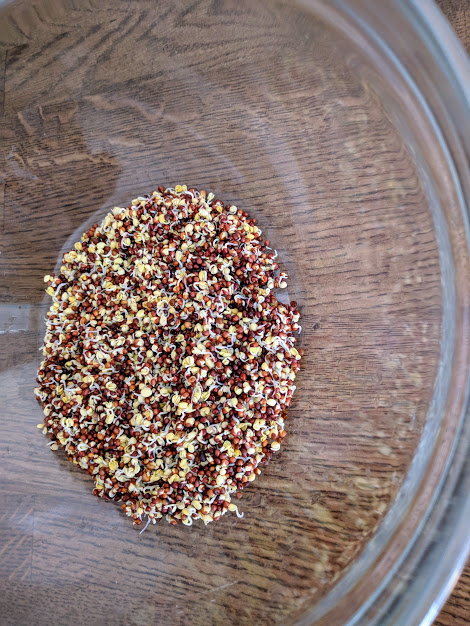
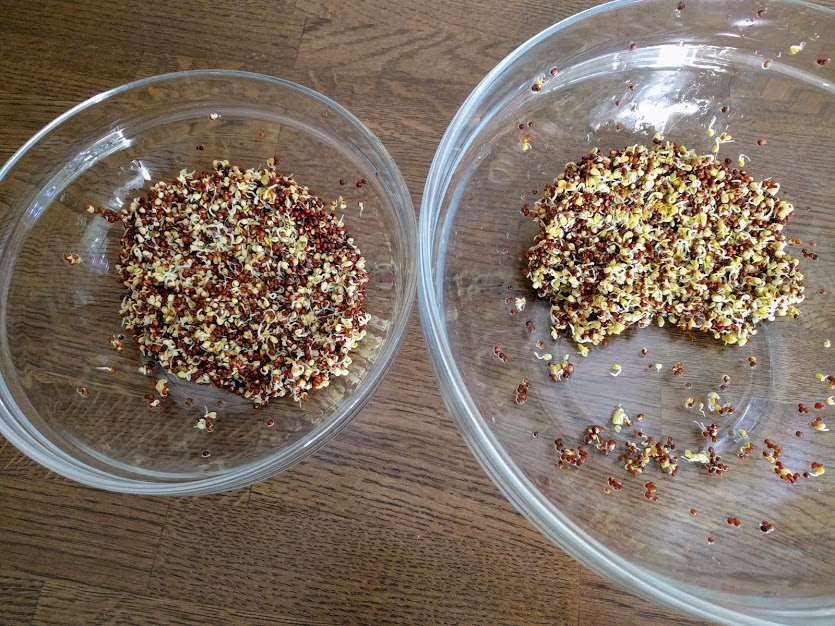
Despite improving yields two weeks ago, 3-day-old broccoli sprouts started from two tablespoons of broccoli seeds still fit into a Corning Ware 16 fl. oz. / 473 ml container:

2. I made a worst-case estimate in Estimating daily consumption of broccoli sprout compounds of 52 mg sulforaphane with microwaving 3-day-old broccoli sprouts. This exceeds:

“The daily SFN [sulforaphane] dose found to achieve beneficial outcomes in most of the available clinical trials is around 20-40 mg.”

The post’s point was: how can a person guide their actions with evidence when a broccoli cultivated variety’s beneficial characteristics aren’t known? I’ll repeat a sulforaphane yields graphic from the 3-day-old broccoli sprouts have the optimal yields study for examples of unknowns:

A. If sulforaphane content was a consumer’s overriding concern. the above evidence suggests that it would be better to always eat the seeds of an unknown cultivar. A tablespoon seems like a good choice, but be sure to chew the broccoli seeds thoroughly (try for five minutes) to release myrosinase and glucoraphanin.

The first minute goes alright. Sometime after that, your mouth and the back of your throat starts to burn. That will be a reminder of an evolved function that protects plants from predators.

I haven’t successfully swallowed a mouthful of thoroughly chewed broccoli seeds without also eating something else or drinking more than just water. That might not go along with your plan for a snack or eating before bedtime.

B. The study recommended consuming 3-day-old sprouts because:

Although germination reduces SF [sulforaphane] yield to some extent, it is beneficial to the formation and accumulation of total phenol and flavonoids, ensuring the health properties of sprouts.”

Fine, but if your unknown cultivar’s sulforaphane characteristics look like the third cultivar’s 3-day-old sprouts, you’ll have a 53% reduction in the sulforaphane weight. Should you take a 1-in-6 chance with Day 5 sprouts? Or stick with Day 3, guessing that they may still yield more sulforaphane than 3 of the 5 other cultivars’ Day 3 broccoli sprouts?

C. What if you can’t stomach the appearance of 3-day-old broccoli sprouts per the above photo, and you prefer microgreens? Should you wait until Day 7, and take a 1-in-6 chance that your unknown cultivar’s characteristics are like the highest Day 7 of the fourth cultivar? When you roll the die, does it come up 4?

Broccoli seed bulk suppliers aren’t providing evidence for their products and educating customers. Their marketing strategy depends more on buzzwords and price.

3. I compared lab reports of 3 broccoli sprouts’ cultivars in Lab analyses of broccoli sprout compounds to see if they helped rationally deal with these unknowns. It turned out that not much could be accurately inferred from lab reports, past knowing that broccoli sprouts of one cultivar produced more sulforaphane than another.

I haven’t found studies of cultivar characteristics for items I could actually purchase in bulk. I contacted five small US and Canadian suppliers to ask “Do you sell broccoli seeds that have lab evidence of the cultivar’s sulforaphane content?” Two said no so far. I contacted another supplier for the home garden business who has two dozen cultivars listed for sale and asked them the same question.

None of the broccoli seed bulk suppliers specified the cultivar on their offering. When pressed on Amazon they at best said Calabrese, which has described hundreds of cultivars. Such as two in this study, Iron Man and Marathon, which are also named Calabrese Iron Man F1 and Calabrese Marathon F1.

4. I’ve had only sporadic inflammation, and I’m tempted to write anecdotes of positive things. But self-reports are better evidence for emotions than for other internal events.

See Week 9 of Changing to a youthful phenotype with broccoli sprouts for follow ups.

Enhancing sulforaphane content

This 2020 Chinese study experimented with enhancing sulforaphane content of broccoli florets in a range of conditions:

“For direct water blanching at 60°C, sulforaphane yield increased with treatment time from 1698.0 ± 121.9 μmol per kg DW (0 min) to 2833.3 ± 118.6 μmol per kg DW (1 min) and then steadily decreased to the lowest value of 2345.8 ± 57.7 μmol per kg DW for 5 min.

The sulforaphane yield of broccoli after 5 min thermal treatment at 65 °C was even lower than the value obtained for raw broccoli. The reason could be leaching of glucoraphanin into blanching water coupled with partial inactivation of myrosinase resulting in low yield of sulforaphane.

For direct water blanching, the best treatment temperature for maximizing sulforaphane yield was 60 °C.

Sulforaphane yield depends on the relative activity of myrosinase and ESP in the broccoli matrix and 3 min treatment at 65 °C during in-pack processing in this study was found to be the best condition that favours conversion into sulforaphane instead of sulforaphane nitrile. This indicates that the condition favours inactivation of ESP to a larger extent while maintaining sufficient myrosinase activity resulting in optimal conversion into sulforaphane.

Under this condition, it seems that all extractable glucoraphanin is converted to sulforaphane assuming 1 to 1 conversion, since glucoraphanin content of broccoli samples were determined to be 3141.2 μmol per kg DW whereas the sulforaphane yield was 3983 μmol per kg DW. The slightly higher sulforaphane yield than would be predicted from the level of glucoraphanin in raw broccoli requires further investigation.”

https://pubs.rsc.org/en/content/articlehtml/2020/fo/c9fo02089f “Mild heat combined with lactic acid fermentation: a novel approach for enhancing sulforaphane yield in broccoli puree”


1. The study presented evidence for kitchen practices:

  • Per the above graphic’s point a, I’ve changed to let broccoli sprout heating continue for 1 minute after microwaving to achieve up to but no more than 60°C (140°F). This allows further myrosinase hydrolization of glucoraphanin into sulforaphane. My practice had been to immediately cool them down, which was suboptimal point c on the 60°C line. I still transfer broccoli sprouts to a strainer immediately after microwaving.
  • The 60°C cliff finding of Microwave broccoli to increase sulforaphane levels was confirmed by this study’s 65°C direct blanching finding.

2. I didn’t view this study’s in-pack or lactic acid bacteria fermentation findings as having practical kitchen use. Maybe it’s a cultural difference?

3. Poor performance at 65°C after 5 minutes was partially attributed to “leaching of glucoraphanin into the blanching water.” But poor 65°C performance was evident at the 1 minute point compared with good 60°C performance.

“Partial inactivation of myrosinase” at 65°C was more likely to be the dominant factor.

4. Regarding:

“The slightly higher sulforaphane yield than would be predicted from the level of glucoraphanin in raw broccoli requires further investigation.”

The microwaving study author was on a productive investigation track with:

“Microwave irradiation might help to release more conjugated forms of glucosinolates and then get hydrolyzed by released myrosinase.”

That track developed in part from finding that broccoli florets microwaved on full power to 60°C increased glucoraphanin past control (raw) levels:

“The control GLR amount was 2.18 µmol/g DW, while the HL60 GLR amount was 2.78 µmol/g DW.”

Not to mention the coincident 1,114% increase in sulforaphane content of ordinary broccoli purchased at a grocery store!


I arrived at this study through it being referenced in the enjoyable 2020 Spanish review Functional Ingredients From Brassicaceae Species: Overview and Perspectives. Those reviewers noted that this study’s 2019 predecessor Fermentation for enhancing the bioconversion of glucoraphanin into sulforaphane and improve the functional attributes of broccoli puree (not freely available) found:

“Preferential formation of SFN-nitrile (less potential as inducer of phase II detoxification enzymes than SFN) instead of SFN.”

Estimating daily consumption of broccoli sprout compounds

Strikethroughs are mainly from Week 18 and Week 19 of Changing to a youthful phenotype with broccoli sprouts measurements.

Rainy day thought for the 13th week of lockdown: What are methods of estimating the minimum contents of broccoli sprouts for those of us who aren’t willing to turn their kitchen into a laboratory?

With the 3-day-old broccoli sprouts have the optimal yields study as a reference, minimum values of the six broccoli cultivated varieties studied were:

  1. Lowest weight of 100 seeds: .33 grams.
  2. 100 of that cultivar’s 3-day-old sprouts weighed 1.55 grams.
  3. A different cultivar had the lowest total phenolics (gallic acid equivalents): 0.94 mg per gram of 3-day-old sprouts.
  4. That second cultivar also had the lowest total flavonoids (rutin equivalents): 1.02 mg per gram of 3-day-old sprouts.
  5. A third cultivar had the lowest weight of sulforaphane in its seeds: 2.43 mg per gram of seeds.
  6. Reduction of sulforaphane content during germination from seeds to 3-day-old sprouts is evident from the below chart. The only 3-day-old sprout chart number the study provided was the best case, though. I requested the study data, but in the meantime..I enlarged the chart, measured the worst cultivar as a 8.5 cm bar where the seed bar was 16 cm. Its 3-day-old sprout sulforaphane yield was ~53% of its seed yield.

sprout ages 1B

Another caveat for contents: Researchers had to process broccoli seeds and 3-day-old broccoli sprouts in order to make measurements. Total phenolics and total flavonoids may not have been affected by processing. However, processing generated sulforaphane.

Broccoli seeds and 3-day-old broccoli sprouts contain little or no sulforaphane. They have glucoraphanin and myrosinase enzyme which are structurally separated. Disturbing their cells mixes the two, and the enzyme hydrolyzes glucoraphanin and other glucosinolates into sulforaphane and other healthy compounds.


I start out each daily batch with two tablespoons of broccoli seeds of an unknown cultivar. I counted 812 broccoli seeds in a teaspoon (yes, I did), and multiplied by 6 for 4,872 total seeds.

Runt-of-the-litter calculations for the six broccoli cultivars studied are:

  • (4,872 / 100) x .33 g = 16.08 10.7 g x 2 = 21.4 g broccoli seeds [my measurements];
  • (4,872 / 100) x 1.55 g = 75.52 65.5 x 2 = 131 g 3-day-old broccoli sprouts [my measurements];
  • 75.52 131 g x 0.94 mg per gram of 3-day-old sprouts = 70.99 123.1 mg total phenolics [worst-case];
  • 75.52 131 g x 1.02 mg per gram of 3-day-old sprouts = 77.03 133.6 mg total flavonoids [worst-case];
  • 16.08 21.4 g broccoli seeds x 2.43 mg per gram of seeds = 39.07 52.0 mg sulforaphane [worst-case].

I’ll use the Microwave broccoli to increase sulforaphane levels study as a reference for an alternate sulforaphane calculation. The cultivar wasn’t mentioned, only that it was ordinary broccoli purchased in Silver Spring, Maryland, grocery stores.

One assumption is that microwaving broccoli sprouts will have the same effects as microwaving broccoli florets to increase sulforaphane content. Are the similarities between broccoli floret and broccoli sprout characteristics enough to say whether or not that’s a valid assumption?

Another assumption is that there’s no beginning amount of sulforaphane in 3-day-old broccoli sprouts. Microwaving them on full power to 60°C produces all of the sulforaphane.

A third assumption is that the sulforaphane increase from .22 to 2.45 µmol / g of the tested broccoli florets fairly represents other broccoli florets.

((2.45 – .22 µmol / g)

x 75.52 131 g 3-day-old broccoli sprouts)

/ 5.64 μmol conversion of amount to weight

= 29.86 51.8 mg sulforaphane


Sulforaphane: Its “Coming of Age” as a Clinically Relevant Nutraceutical in the Prevention and Treatment of Chronic Disease concluded:

“The daily SFN [sulforaphane] dose found to achieve beneficial outcomes in most of the available clinical trials is around 20-40 mg.”

My daily consumption of broccoli sprout compounds is greater than this clinical trial range, with evidenced calculations of 29.86 51.8 ≈ 30 52 mg sulforaphane from microwaving 131 g of 3-day-old broccoli sprouts. I’ll include this estimate in Week 8 of Changing to a youthful phenotype with broccoli sprouts.

Microwave broccoli to increase flavonoid levels demonstrated 108.5% to 129.8% increases in quercetin and kaempferol levels from microwaving ordinary broccoli purchased in a Beltsville, Maryland, grocery store. I won’t use their method of a 1200W microwave on full power for one minute, but microwaving may be expected to increase the worst-case calculation of 77.03 133.6 ≈ 77 134 mg total flavonoids.

Broccoli seed suppliers are missing a marketing opportunity by not specifying their cultivars. They could be advertising specific benefits, etc.

The first study showed that sulforaphane weights vary widely among broccoli cultivars, from the 2.43 mg used above to 12.07 mg per gram of seeds. The best-case would be 21.4 g broccoli seeds x 12.07 mg per gram of seeds = 258.3 mg sulforaphane!

If your product was almost 5 times better than a competitor’s, why wouldn’t you advertise it?

Week 7 of Changing to a youthful phenotype with broccoli sprouts

To follow up Week 6 of Changing an inflammatory phenotype with broccoli sprouts:

1. I changed this week’s title as a result of reading A rejuvenation therapy and sulforaphane study. It wasn’t about sulforaphane, but its clinical findings had commonalities with this broccoli sprouts effort. It’s become my blog’s most popular post, read by people in 50+ countries.

A close second is An environmental signaling paradigm of aging. The current study’s lead laboratory researcher presented his view five years ago on where aging evidence was pointing.

Part 2 of Rejuvenation therapy and sulforaphane better curated this study’s innovative epigenetic clock results. There are no sulforaphane clinical trials that also use epigenetic clocks.

What effects may broccoli sprout compounds have on human aging? With this new human-rat relative biological age clock, researchers can get reliable answers from rat studies, with human clinical trials needed only to confirm those findings!

2. This week I found out that exercising control over my charges to protect them from disease was counterproductive. I exposed them to harm, destroyed their community, and stunted their growth by forcing them to distance from each other for their own good.

Am I a politician, an unelected bureaucrat, or some other form of busybody? No. I admit my mistakes right away, I apologize, then I immediately try to do better.

A proper context:

  • In Week 2 I switched from sprouting trays with 1/16″ high ridges in the bottom to Russian-doll bowls. That solved a problem of excess moisture, with which broccoli sprouts don’t do well but bacteria do.
  • In Week 3 I rotated in the next larger sized bowl to replace the smallest bowl. My thought was that Day 3 broccoli sprouts were too crowded to dry in the smallest bowl.
  • At the end of Week 5 I doubled my starting amount of broccoli seeds from one to two tablespoons. To accommodate that increase, I again rotated in the next larger size bowl.

Starting in Week 6, I had uneven batch yields. The two larger bowls yielded noticeably fewer sprouts than did batches in the two smaller bowls.

What did bowl size have to do with yield?

Nothing, it was me. Turned out I’d neglected Plant Care 101 instructions to provide adequate moisture.

After rinsing, straining, and wicking out excess moisture with a paper towel twice daily, I then spread out seeds and sprouts to prevent problems with excess moisture. Broccoli seeds and sprouts in the two larger bowls were more separated than in the two smaller bowls.

All of which led to moisture levels that were inadequate for broccoli seeds and sprouts. All batches sprouted less well than their potential yield. The larger the bowl, the more my behavior adversely affected the batch.

Here’s what Day 2 and Day 3 yields were with my previous practices.  Batch volume of Day 2 in the smaller bowl was larger than Day 3!

I changed practices to group broccoli seeds and sprouts together at a step where I used to spread them out. Here’s the same bowl with my current practice, but at Day 2. It’s a larger volume than the previous practice’s Day 2:

I’ll guess that batch yield volumes have improved by 75%. I increased distilled water from 100 ml to 175 ml before microwaving since 100 ml no longer completely immersed increased Day 3 broccoli sprout volume. My 1000W full power microwave time concomitantly increased from 45 seconds to 65 seconds to achieve 58°C.

Better-developed batches also taste better. I still mix in mustard and eat Day 3 broccoli sprouts with other food.

3. My sulforaphane intake has probably decreased with current practices. 3-day-old broccoli sprouts have the optimal yields study said:

Although germination reduces SF [sulforaphane] yield to some extent, it is beneficial to formation and accumulation of total phenol and flavonoids, ensuring health properties of sprouts. SF contents in sprouts were 46% – 97% of seeds, whereas TP [total phenolic] and TF [total flavonoid] contents in sprouts were 1.12 – 3.58 times higher than seeds among [broccoli] varieties.”

I’m not concerned about less sulforaphane with a two tablespoons starting amount of broccoli seeds. Even a one tablespoon starting amount yields 60 g of broccoli sprouts, twice that of Effects of long-term consumption of broccoli sprouts on inflammatory markers in overweight subjects. See our discussion in Understanding a clinical trial’s broccoli sprout amount.

4. Another week of no inflammatory problems after four-to-six-mile-long beach walks. I’m not pushing myself, just walking often, and working out my upper body every fourth day.

I emphasize eccentric motions in upper body workouts. I haven’t curated the below 2019 papers although they’re informative:

I don’t expect recovery times from workouts to shorten. What’s an appropriate exercise recovery time? found with 26.5 ± 6.5 year-old male subjects that even three days wasn’t enough time for biceps brachii to fully recover from eccentric exercise.

5. During Friday’s walk I accidentally startled a large turkey hen who was on the ground, and she flew up on a fence. Can you see her moments before she hopped down?

Don’t have any idea what bugs a turkey found attractive near a beach.

See Week 8 of Changing to a youthful phenotype with broccoli sprouts for follow ups.

An environmental signaling paradigm of aging

To follow up A rejuvenation therapy and sulforaphane, the study’s lead laboratory researcher – Dr. Harold Katcher – provided evidence for an environmental signaling paradigm of aging in this 2015 paper:

“The age-phenotype of a cell or organ depends on its environment and not its history.

Organ dysfunction is not the cause of aging, but is the result of its milieu. Therefore, the aged milieu is the cause. Though it has been thought that the aging immune system is the cause of aging, it can seen to be the result of aging.

The systemic milieu of an organism sets the age-phenotype of its cells, tissues and organs. Cells and organs secrete factors into blood, which are determined by the age-phenotype and repair-states of those cells and organs. The presence and concentrations of these blood-borne factors determine the age-phenotype of cells and organs.

Here we must be a bit more speculative. Changes in concentrations of factors present in blood, rather than their presence or absence, determines age-phenotype.

Interactions between disparate levels of the body’s hierarchy establish a consensus age-phenotype for cells and organs, and this largely occurs via the bloodstream. There appear to be positive factors that promote youthful age-phenotypes and negative factors that promote the aged phenotypes.

We readily consider development as a ‘program’, and it seems clear that we must consider post-adult development as ‘programmed’ as well. But if there is a program it is neither in genes nor chromatin, but in interaction of complex, interconnected systems spanning hierarchical levels.

If these aforementioned principles are correct, it should be easy to verify. If so, whole organism rejuvenation might require little more than:

  • Changing concentrations of all age-determining molecules of the bloodstream and various stem cell niche environments to youthful levels;
  • For a time sufficient to cause rejuvenation at the cellular level.

Once cells start secreting factors appropriate to their new, younger age-phenotypes, cognate changes should propagate through hierarchical levels.

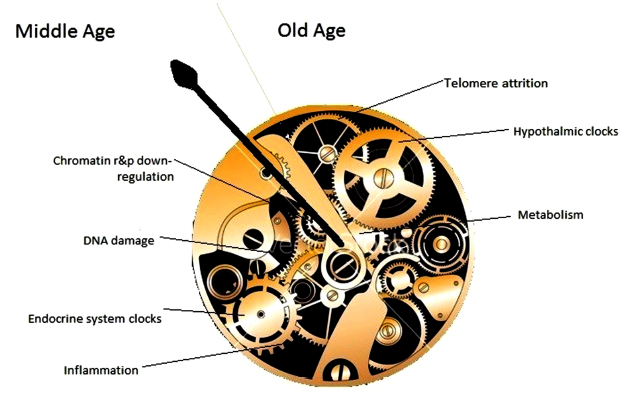
The analogy to workings of a mechanical clock is not very exact. ‘Gears’ represent individual aging clocks, both cellular and organic (shown at different levels within the mechanism) which interact, ultimately resulting in organismic age, i.e. ‘body clock’, represented by the ‘hour hand’ (no minute hand is shown).

In mammals, readout of the clock corresponds to age-related composition of blood plasma. In this model, moving the hour hand backwards should result in a turning back of composite clocks as well – a result obtained when induction to pluripotence is used to reset cellular clocks.

Apart from being slowed down or sped up, the body clock can also be reset. Organisms, organs, and their cells can be reset to different age-phenotypes depending on their environment.

We know that old transplanted tissues and organs can regain function and live for the entire life of the younger host at least in rodents. We must suppose that age-phenotype changes must have taken place at the cellular level to allow this.

Rejuvenation cannot be explained on the basis that aging represents accumulation of irreparable cellular damage.

None of these principles are rigorously established as such, but all are supported by experimental evidence.”

http://www.eurekaselect.com/130538/article “Towards an Evidence-based Model of Aging”


Here are some of his responses to comments on the blog post that first curated his current research:

“We’ve (scientists), spent the past 70 years trying to definitively prove the commonsense ‘wear and tear’ theories and have not succeeded. So I tried something different, looking at results of experiments.

This is not based on ‘theory’ (say mitochondrial aging or ‘wear and tear’) but on experimental evidence. Theory comes in explaining our results, not achieving them. There is a theory becoming clear, one very different from the commonsense view of ‘wear and tear’ aging.

We haven’t examined immune response. All that we know for sure is that chronic inflammation of aging stopped. I can definitively say that chronic inflammation due to aging can be reversed with factors present in young blood.

There are amazing things that Big Pharma won’t touch as there’s not enough profit in them (they can’t be patented). So I guess we’re somewhat the same, but we know what to do and have proven it – for us, it’s not money. However, money allows you to do things.

Being 75 myself puts a time-frame around the project. We plan to propose its use for diseases of aging – eventually, everyone will use it. It will end up changing humanity. As people already seem to have too much free time to begin with, what will people do with those extra years they will be given?”


Sections 3 “Aging Manifestations that Have Hitherto Been Proposed as the Causes of Aging are the Consequences of Aging” and 10 “Several Factors ‘Conspire’ to Promote Inflammation in Old Mammalian Bodies, Inflammation Leads to Several Diseases of Aging and Perhaps to Aging Itself” were especially informative.

The former section discussed cells that were capable of making repairs but didn’t make repairs, with aging being the consequence of this behavior. The latter reviewed topics such as senescence, IL-6, NF-κB, and C-reactive protein in terms of feedback loops.

See Reevaluate findings in another paradigm for comparisons of Section 6 with another view of hypothalamic aging.

Week 6 of Changing an inflammatory phenotype with broccoli sprouts

To follow up Week 5 of Changing an inflammatory phenotype with broccoli sprouts:

1. I had an informative exchange with an author of Microwave broccoli to increase sulforaphane levels. The study provided an optimal sulforaphane end result of “(2.45 µmol/g DW)”. I asked a study author for additional data, and they replied:

“The control GLR and SLR amount was 2.18 and 0.22 µmol/g DW, respectively, while the HL60 GLR amount was 2.78 µmol/g DW.”

Microwaving broccoli florets to 60°C (140°F) increased the sulforaphane amount by 1,114% (2.45 / .22)! That also increased the glucoraphanin amount by 27% (2.78 / 2.18) for further processing into sulforaphane after eating.

I replied: That’s an exciting result, increasing sulforaphane more than 11 times, while also increasing glucoraphanin! I haven’t found similar experiments with broccoli sprouts. Would you expect similar results?

The study author responded:

“We didn’t expect this result, and think microwave irradiation might help to release more conjugated forms of glucosinolates and then get hydrolyzed by released myrosinase. Further studies are being carried out.”

2. I stopped panning out spent broccoli seed coats. The 3-day-old broccoli sprouts have the optimal yields study didn’t directly address coats, and coats were presumably discarded before broccoli sprout analyses.

However, since broccoli seeds were ground, coats were part of broccoli seed analyses. Broccoli seeds had higher sulforaphane weights than did broccoli sprouts. So 3-day-old spent broccoli seed coats probably don’t reduce sulforaphane amounts.

“The SF [sulforaphane] contents were calculated and expressed by mg SF per gram of seeds or fresh sprouts. Furthermore, to be comparable with the seeds, the contents of SF and the following bioactive compounds in 100 fresh sprouts were divided by the weight of 100 seeds and then the contents of bioactive compounds in fresh sprout were expressed as mg per gram of seeds.

Although germination reduces SF yield to some extent, it is beneficial to the formation and accumulation of total phenol and flavonoids, ensuring the health properties of sprouts. SF contents in sprouts were 46% – 97% of seeds, whereas TP [total phenolic] and TF [total flavonoid] contents in sprouts were 1.12 – 3.58 times higher than seeds among varieties.”

3. Doubling the starting amount of broccoli seeds from one to two tablespoons is going well. My traveling companion’s latest measurement of yield for a batch of 3-day-old broccoli sprouts was 84.6 grams. She immersed broccoli sprouts in 350 ml water and microwaved them on full 1000W power for 2 minutes to achieve 61°C.

I put daily batches in 100 ml distilled water, and microwave on full 1000W power for 45 seconds to achieve 58°C. For comparison with the 3-day-old point of starting with one tablespoon of broccoli seeds, that took 35 seconds to achieve 57°C.

Two tablespoons of broccoli seeds produce a lot of broccoli sprouts for me to eat in a single serving. I mix in spicy brown mustard after microwaving and cooling them down. It complements the taste and makes them more palatable. The mixture goes better with a meal than eating it by itself.

4. Not sure what went on with last week’s inflammatory problems after four-to-six-mile-long beach walks. I did similar walks on Thursday and Saturday, and didn’t have those problems afterwards.

Did a small amount of running in Weeks 3 and 4 trigger something? Did my body adapt to a one tablespoon starting amount of broccoli seeds dosage, such that it wasn’t effective anymore?

Did raising the starting amount of broccoli seeds to two tablespoons cause the problems to quiet down this week? Or was the quiescence because I didn’t run even a short distance? This week’s occasional left ankle / left knee twinge makes me think that running, like golf, may not be a future activity.

5. I intend to follow the model clinical trial Effects of long-term consumption of broccoli sprouts on inflammatory markers in overweight subjects curated in How much sulforaphane is suitable for healthy people? and measure IL-6 and C-reactive protein after Week 10. These two weren’t among the 50+ measurements taken during last June’s annual physical, so I’ll request them along with HbA1c.

6. I credit my son for getting me started on the current investigation into broccoli sprouts. He repeatedly asked me for evidence of minimum effective sulforaphane dosage. Still haven’t found complete answers.

The treatments mentioned in Week 1, and the unmentioned months of physical therapy and years of periodic cortisone injections hadn’t worked. I could have been doing more to better address the causes of a long-term problem rather than just treat the symptoms. Now I am, thank you.

See Week 7 of Changing to a youthful phenotype with broccoli sprouts for follow ups.
It was known to everybody that the lockdown would cause a catastrophe

To follow up If people don’t stand up for their rights, their rights will be forgotten which YouTube has taken down, here are excerpts from a subsequent interview which YouTube has also taken down:

“If you don’t present bad news, that’s not good news for the media.

On April 17, the Director of the CDC presented at the Presidential Briefing, this graph. Its a count of hospitals reporting some sort of symptom that might be influenza. If the number of people who show up at the hospital peaked around March 18th, that means the number of infections peaked around March 8th.

People don’t go to the hospital for their first symptoms. They give it three or four days, and if it doesn’t get better, then they go to the hospital.

If infections peaked around March 8th, then shutting down schools and the economy ten days later is totally absurd. Shutting down the economy ten days after the curve had already turned down is heartless.

New York hospitals were not overflowing. They were laying off people. 500 sick people is a drop in the bucket for the New York City hospital system.

It may have been unfortunate for the patients that there were so many respirators. That’s a different story.

Double-checking never happened with these models. You’re never off by orders of magnitude. You’re off by 10, 20, 30%. [The Imperial College model for UK deaths from COVID-19 changed from 510,000 to 20,000 IIRC] That was more than two orders of magnitude.

It was known to everybody that the lockdown would cause a catastrophe.

Isolating the nursing homes would have been the thing that would have prevented deaths, and would have prevented hospitals from becoming overloaded. Not letting children and young adults from becoming infected and developing immunity would not prevent the load on hospitals.

You don’t need to do anything to prevent a respiratory disease from running. What you should do – and what was not done in the United States – was to protect the elderly. From the experience in Italy, we already knew that the vast majority of people who died were people in their seventies, eighties, nineties, who had comorbidities.

We also had that in Seattle, people with comorbidities died in nursing homes. At that point in time, one should have isolated at least the nursing homes.

To isolate the children, who are not at risk, and put those at risk at risk, is a catastrophe. It’s a human catastrophe that should have never, ever, happened.

I don’t know where the government finds these so-called experts who don’t understand the very basics about epidemiology.

I have never heard of him and never read any publications on epidemiology by Bill Gates but maybe I overlooked some of his qualifications.

I don’t understand this mantra that ‘We will never go back to normal.’ Why not? The virus is gone. Let’s go back and have a life.

If people would be more active. If they would take part in political decisions. If they would be more awake. If they would fight for their democratic rights. This would never have happened.

It’s a failure of the people to take control of the government, and let the government take control of them.”


The Professor misunderstood the United States form of government. As a general principle, the federal government doesn’t order states to do such and such.

Florida, for example, did exactly what the Professor suggested, “protect the elderly.” Other states didn’t, like Washington, New Jersey, Virginia, Pennsylvania, and especially New York. Don’t know why those states’ residents don’t demand responsibility and accountability.

The Professor didn’t adequately present aspects of human behavior. For example, he cited a CDC chart of a drop in hospital reporting of influenza-like symptoms for his arguments without also citing the media frenzy to scare people away from hospitals for fear that they would catch COVID-19. So of course there were fewer instances of influenza-like symptoms reported by hospitals.

He also said “The virus is gone” but that statement had qualifications. Parts of this interview misplaced their relevant contexts.

Week 5 of Changing an inflammatory phenotype with broccoli sprouts

To follow up Week 4 of Changing an inflammatory phenotype with broccoli sprouts:

1. I didn’t get around to curating a 2019 Spanish review Sorting out the Value of Cruciferous Sprouts as Sources of Bioactive Compounds for Nutrition and Health. Some highlights:

“Sprouts represent a valuable source of diverse micronutrients (vitamins, minerals, and amino acids), macronutrients (proteins, low in carbohydrates, and a high content of dietary fiber), and plant secondary metabolites (mainly phenolic compounds and glucosinolates (GLSs)). Due to this composition, edible sprouts are a valuable vehicle and opportunity to impact health, delivering beneficial bioactive compounds once incorporated in the diet on a regular basis.

This range of molecular mechanisms, which is susceptible to activation or inhibition by the GLSs, ITCs [isothiocyanates], and (poly)phenols present in cruciferous sprouts triggers diverse pathways governed by expression of a broad variety of genes. Among them, to date, the following pathways have been identified:

  • Inhibition of DNA binding of carcinogens,
  • Stimulation of detoxification of potentially damaging compounds,
  • DNA repair,
  • Repression of cell proliferation and angiogenesis (directly related to tumor growth and metastasis),
  • Induction of apoptosis of malignant cells, and
  • Ability to enhance the antioxidant tools of cells and promote free radical scavenging.

Regarding this biological activity, modulation of the inflammatory cascade, and more specifically, transcription factor NF-κB by GLSs, ITCs, and (poly)phenols, are also involved in anticancer activity.”


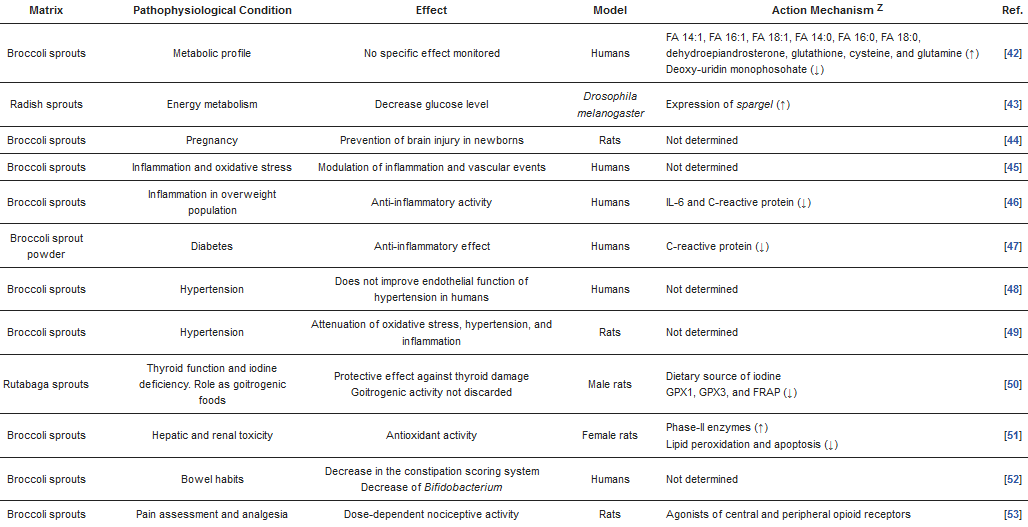
See these reviewers’ 2020 Reviewing clinical trials of broccoli sprouts and their compounds for further examples of why “Not determined” frequently occurred.

2. Inflammatory problems mentioned in Week 1 twinged throughout Week 5 and flared up yesterday. I didn’t run during my four-to-six-mile-long beach walks this week in case that aggravated things.

Not sure what’s going on, because these problems were quiescent during Weeks 3 and 4 with the same levels of exercise and diet. Maybe this development was a result of homeostatic adjustments to the previous month’s daily broccoli sprout dosage?

Two days ago I began doubling the starting amount of broccoli seeds from one to two tablespoons. I’ll see what effects eating 120 grams of 3-day-old broccoli sprouts have during the coming week.

3. I was stonewalled twice by a commercial supplier of broccoli sprout powder who advertised:

“Independent assays confirm that EnduraCELL yields more Sulforaphane per gram and per dose than any other broccoli sprout ingredient available! These assays showed that EnduraCell yields around 3.5 times more SULFORAPHANE than the next highest broccoli sprout product.”

They wouldn’t provide evidence of their claim to a prospective customer?

Sulforaphane is immediately produced by combining glucoraphanin and myrosinase. Sulforaphane degrades relatively quickly, and requires special handling in commercial products.

It costs me very little to grow broccoli sprouts, < $0.50 USD per day. Could a commercial product even deliver equivalent benefits at a competitive price?

4. I reactivated my Twitter account after a year’s dormancy. I credit my traveling companion for having better things to do. I blame this political power grab for me becoming bored enough to be herded back onto Twitter.

Week 4 of Changing an inflammatory phenotype with broccoli sprouts

To follow up Week 3 of Changing an inflammatory phenotype with broccoli sprouts:

1. I started panning 3-day-old broccoli sprouts before microwaving them in 100 ml of water with a 1000 W microwave on full power for 35 seconds. See Week 6 of Changing an inflammatory phenotype with broccoli sprouts for why I stopped panning. This is a typical yield from one tablespoon of broccoli seeds:

Before panning
After panning

If I have fewer broccoli sprouts, I did something to stunt their normal development.

Still not sure that spent broccoli seed coats cause heartburn as mentioned last week. Being locked down for months – or drinking a lot of coffee and tea – may have more to do with it.

2. I continue to see encouraging signs. Made four-to-six-mile-long beach walks Friday, yesterday, and today, and haven’t felt any left-ankle or left-knee inflammation afterwards! Ran a mile yesterday for the first time in a long time, though, and my quads are sore.

3. More often than not, this is my AGE-less dinner (half) then the next day for lunch. I adapted it from pages 198 (Chicken with Lemon-Caper Sauce) and 238 (Homestyle Chicken Soup) of Dr. Vlassara’s AGE-Less Diet: How a Chemical in the Foods We Eat Promotes Disease, Obesity, and Aging and the Steps We Can Take to Stop It.

  • 1 organic lemon
  • 1 organic tomato
  • 2 organic carrots
  • 3 stalks organic celery
  • 4 organic mushrooms
  • 4 cloves organic garlic
  • 6 oz. organic chicken breast fillet
  • 1 cup organic pasta
  • 1 cup frozen organic peas
  • 1 cup sauvignon blanc
  • 32 oz. “unsalted” chicken broth, which still contains 24% of the sodium RDA
  • 2 tablespoons drained capers
  • ground black pepper to taste

Peel the lemon, slice into 1/4″ rounds, de-seed, combine with chicken and wine in a 6-quart Instant Pot.

Add tomato, carrots, celery, mushrooms, garlic, chicken broth. Start a 30-minute Saute.

Take the chicken out at Minute 20, dice it, add back in with the pasta. Add peas at Minute 25. Add capers and pepper five minutes after the Instant Pot turns off.

4. My AGE-less breakfast is 1/2 cup steel-cut oats soaked overnight in 2 cups distilled water. Cook for 18 minutes at 80% power in a 1000W microwave. Eat with a handful of walnuts.


Boring, I know. Waiting for young people to shrug off their behavioral conditioning and lead the way out.

“The angrier you got, the more silly it became. Then you just found yourself in a bigger cage.

We live in a world now of social media where you can say something stupid and get a bunch of attention. But now you’re just imprisoned in some other paradigm.”

Work your voluntary muscles today

This 2020 review by the Aging as a disease research group highlighted their specialty:

“A theory that fits both the aging and the rejuvenation data suggests that aging is caused primarily by the functional (and notably, experimentally reversible) inactivation of resident stem cells, which precipitates deteriorated tissue maintenance and repair and leads to the loss of organ homeostasis.

The damaged and unrepaired tissues suffer changes in their biochemistry, including the molecular crosstalk with resident stem cells, which further inhibits productive, regenerative responses. The inflammatory and fibrotic secretome can then propagate systemically, affecting the entire organism.

Skeletal muscle accounts for almost 40% of the total adult human body mass. This tissue is indispensable for vital functions such as respiration, locomotion, and voluntary movements and is among the most age-sensitive in mammals.

Muscle is capable of active repair in response to daily wear and tear, intense exercises, or injuries. Muscle regeneration relies on the adult muscle stem cells, also called satellite cells.

Rather than a significant decline in the total number with age, most of the data support a dramatic lack of activation of muscle stem cells after injury and a concomitant lack in the formation of progenitors that are needed for repair.

Multiple experimental approaches have been used for tissue rejuvenation and/or systemic rejuvenation; these include ablation of senescent cells and re-calibration of key signaling pathways that are needed for productive stem cell responses. To test the success in experimental rejuvenation, 1-4 approaches are typically applied, and skeletal muscle is well-suited for assaying each one.”

https://www.ncbi.nlm.nih.gov/pmc/articles/PMC7007696/ “Skeletal muscle as an experimental model of choice to study tissue aging and rejuvenation”


The review had a short section on inflammation details. Not enough, and there’s no tissue repair. Continuing unchecked is a systemic issue that led the reviewers to their paradigm of aging as a disease.

The review concluded with a subject that’s taught in high school, and should be understood at least before college graduation. It’s curious that an item like sample size required emphasis. Maybe research that doesn’t adhere to basics is a current issue?

Week 3 of Changing an inflammatory phenotype with broccoli sprouts

To follow up Week 2 of Changing an inflammatory phenotype with broccoli sprouts:

1. I intend to follow the model clinical trial [1] and pause eating broccoli sprouts after ten weeks. The clinical trial subjects experienced benefits after stopping at Day 70, as measured at Day 90 and Day 160.

Sprouting broccoli seeds takes time and care every day. I may not have that time when everyone gets back to work.

Then again, I live in a state headed by Governor Klan Robes Blackface. Here’s his 1984 Eastern Virginia Medical School yearbook entry, 16 years after Martin Luther King Jr. was assassinated:


He has no empathy for people like the young black man – laid off for four weeks now – who was severely burned as a child, and who was enthusiastically working at Dunkin Donuts. Or the older lady who was trying to get her life back together at Hair Cuttery, still closed.

Who knows when or if people around here will get their jobs back? Politics are a magnet for the worst.

2. I’ve started to see encouraging signs. Over the last few years, I’ve tried to avoid walking long distances where the surface was tilted to my right in order to not overpronate my left foot and aggravate problems mentioned in Week 1.

That was neither an immediate concern during six-mile-long beach walks yesterday and today, nor have I felt any inflammation afterwards!

3. I have quart Mason jars for sprouting per many YouTube videos, but don’t use them. They’re unsuited for broccoli seeds, which don’t handle extra moisture well.

I’ve had good results with Russian-doll glass bowls. I use a strainer for Round 1, transfer them to a bowl, and wick out extra moisture with a paper towel during Round 2 before putting them back on a pantry shelf. It would be hard to maneuver a paper towel inside a Mason jar.


The bowl at the top left has been replaced by the next size larger than the bowl at the bottom left. Day 3 broccoli sprouts were too crowded to dry in the small bowl.

4. I had heartburn Friday and Saturday after eating 60 grams of 3-day-old broccoli sprouts in 100 ml of water processed with a 1000 W microwave on full power for 35 seconds. Today I removed a thousand spent broccoli seed coats before microwaving, and didn’t have heartburn afterwards. More experiments are required.


[1] 2018 Effects of long-term consumption of broccoli sprouts on inflammatory markers in overweight subjects curated in How much sulforaphane is suitable for healthy people?

Aging as an unintended consequence

The coauthors of 2018’s The epigenetic clock theory of aging reviewed progress that’s been made todate in understanding epigenetic clock mechanisms.

1. Proven DNA methylation features of epigenetic clocks:

  1. “Methylation of cytosines is undoubtedly a binary event.
  2. The increase in epigenetic age is contributed by changes of methylation profiles in a very small percent of cells in a population.
  3. The clock ticks extremely fast in early post-natal years and much slower after puberty.
  4. Clock CpGs have specific locations in the genome.
  5. It applies to prenatal biological samples and embryonic stem cells.

While consistency with all the five attributes does not guarantee veracity of a model, inconsistency with any one will signal the unlikely validity of a hypothesis.”

2. Regarding what epigenetic clocks don’t measure:

“The effects of

  • Telomere maintenance,
  • Cellular senescence,
  • DNA damage signaling,
  • Terminal differentiation and
  • Cellular proliferation

have all been tested and found to be unrelated to epigenetic ageing.”

3. Regarding cyclical features:

Both the epigenetic and circadian clocks are present in all cells of the body, but their ticking rates are regulated. Both these clocks lose synchronicity when cells are isolated from tissues and grown in vitro.

These similarities compel one to ponder potential links between them.”

This was among the points that Linear thinking about biological age clocks missed.

4. The reviewers discussed 3 of the 5 treatment elements in Reversal of aging and immunosenescent trends:

“It is not known at this stage whether the rejuvenating effect is mediated through the regeneration of the thymus or a direct effect of the treatment modality on the body. Also, it is not known if the effect is mediated by all three compounds or one or two of them.

What we know at this stage does not allow the formation of general principles regarding the impact of hormones on epigenetic age, but their involvement in development and maintenance of the body argue that they do indeed have a very significant impact on the epigenetic clock.”

Not sure why they omitted 3000 IU vitamin D and 50 mg zinc, especially since:

“It is not known if the effect is mediated by all three [five] compounds or one or two of them.”

5. They touched on the specialty of Aging as a disease researchers with:

“Muscle stem cells isolated from mice were epigenetically much younger independently of the ages of the tissue / animal from which they were derived.

The proliferation and differentiation of muscle stem cells cease upon physical maturation. These activities are initiated in adult muscles only in response to injury.

6. The reviewers agreed with those researchers in the Conclusion:

“Epigenetic ageing begins from very early moments after the embryonic stem cell stage and continues uninterrupted through the entire lifespan. The significance of this is profound as the question of why we age has been attributed to many different things, most commonly to ‘wear-and-tear.’

The ticking of the epigenetic clock from the embryonic state challenges this perspective and supports the notion that ageing is an unintended consequence of processes that are necessary for

  • The development of the organism and
  • Tissue homeostasis thereafter.”


https://journals.sagepub.com/doi/10.1177/1535370220918329 “Current perspectives on the cellular and molecular features of epigenetic ageing” (not freely available)

Broccoli sprouts oppose effects of advanced glycation end products (AGEs)

This 2020 Australian/UK review subject was AGEs:

“AGEs are formed during cooking and food processing or produced endogenously as a consequence of metabolism. Deleterious effects of AGEs are underpinned by their ability to trigger mechanisms well known to elicit metabolic dysfunction, including activation of inflammatory pathways, oxidative stress and impaired mitochondrial oxidative metabolism. They have been widely implicated in complications of diabetes affecting cardiovascular health, the nervous system, eyes and kidneys.

Reactive carbonyl groups are constantly being produced via normal metabolism and when production overrides detoxification, AGEs accumulate. AGE formation may take several days or weeks to complete in the body.

Factors affecting AGE content of food depends on composition of protein, fat, and sugar and types of processing and cooking methods employed, predominantly on temperature and duration of preparation. Circulating free-AGEs concentrations are a good marker for dietary AGE intake while plasma protein-bound AGEs better represent endogenously produced AGEs.

Receptor for Advanced glycation end products (RAGE) signals via transcription factor NF-kB increasing gene expression of inflammatory mediators and production of ROS (reactive oxygen species).”

https://onlinelibrary.wiley.com/doi/abs/10.1002/mnfr.201900934 “The Role of Dietary Advanced Glycation End Products (AGEs) in Metabolic Dysfunction” (not freely available)


Let’s use the Australian 2019 Sulforaphane: Its “Coming of Age” as a Clinically Relevant Nutraceutical in the Prevention and Treatment of Chronic Disease as a reference for how sulforaphane may counter effects of AGEs:

1. “Activation of inflammatory pathways”

“Antioxidants in general and glutathione in particular can be depleted rapidly under conditions of oxidative stress, and this can signal inflammatory pathways associated with NF-κB. SFN [sulforaphane] has been shown to inhibit NF-κB in endothelial cells.

Two key inflammatory cytokines were measured at four time points in forty healthy overweight people [our model clinical trial, Effects of long-term consumption of broccoli sprouts on inflammatory markers in overweight subjects]. Levels of both interleukin-6 (Il-6) and C-reactive protein (CRP) declined over the 70 days during which sprouts were ingested. These biomarkers were measured again at day 90, wherein it was found that Il-6 continued to decline, whereas CRP climbed again. When the final measurement was taken at day 160, CRP, although climbing, had not returned to its baseline value. Il-6 remained significantly below the baseline level at day 160.”

OMCL2019-2716870.010

2. “When production overrides detoxification”

“SFN significantly activates Nrf2 and as such has the potential to modulate the expression of genes associated with redox balance, inflammation, detoxification, and antimicrobial capacity, all key components of the upstream cellular defence processes.

Toxins presented to Phase 1 enzymes produce intermediate compounds which are sometimes more toxic to cells than the initial toxin. It is therefore important that Phase 2 is sufficiently active that intermediate products cannot accumulate in the cellular environment.

As a monofunctional inducer, SFN has been described as an ideal detoxifier, as its effect on Phase 1 is minimal compared with its significant activity on Phase 2.”

3. “Oxidative stress”

“As a mediator for amplification of the mammalian defence system against various stressors, Nrf2 sits at the interface between our prior understanding of oxidative stress and endogenous mechanisms cells use to deal with it. Diseases known to be underpinned by oxidative stress are proving to be more responsive to amplification of cellular defences via Nrf2 activation than by administration of direct-acting antioxidant supplements.

SFN, with absolute bioavailability of around 80%, is capable of increasing several endogenous antioxidant compounds via transcription factor Nrf2.”

4. “Complications of diabetes affecting cardiovascular health, the nervous system, eyes and kidneys”

“Nrf2 is ubiquitously expressed with highest concentrations (in descending order) in the kidney, muscle, lung, heart, liver, and brain. Nrf2 was shown to prevent endothelial cells from exhibiting a proinflammatory state. Nrf2 is required for protection against glucose-induced oxidative stress and cardiomyopathy in the heart.

Well in excess of 500 genes have been identified as being activated by SFN via the Nrf2/ARE [Antioxidant Response Element] pathway, and it is likely that this underestimates the number as others are being discovered. Of available SFN clinical trials associated with genes induced via Nrf2 activation, many demonstrate a linear dose-response. More recently, it has become apparent that SFN can behave hormetically with different effects responsive to different doses.

It [sulforaphane] is not only a potent Nrf2 inducer but also highly bioavailable so that modest practical doses can produce significant clinical responses. Other Nrf2 activators [shown in the above image] not only lack potency but also lack the bioavailability to be considered as significant intracellular Nrf2 activators.”


As mentioned in Changing an inflammatory phenotype with broccoli sprouts, per the above bolded part of section 3, I stopped taking N-acetyl-cysteine, the precursor to our endogenous antioxidant glutathione. I stopped taking curcumin last year due to no noticeable effects, probably because of its poor bioavailability. I may soon stop taking more vitamin E than the RDA, and β-carotene.

I changed my diet last summer to reduce AGEs, with mild effects. I expect stronger effects from also daily eating 60 grams of 3-day-old broccoli sprouts that yield 27 mg of sulforaphane after microwaving.

Understanding a clinical trial’s broccoli sprout amount

To follow up Week 2 of Changing an inflammatory phenotype with broccoli sprouts, I contacted the model clinical trial’s corresponding coauthor to clarify a citation. Our correspondence was as follows:

Hello Dr.! Could you further describe Citation 11 of your 2018 clinical study Effects of long-term consumption of broccoli sprouts on inflammatory markers in overweight subjects or say where it may be found? “Services, F. a. D. A. F. U. D. o. H. a. H., 2001.” was cited for 30 grams of fresh broccoli sprouts being a half-serving.


Ref. 11. Sulforaphane: translational research from laboratory bench to clinic CA Houghton, RG Fassett, JS Coombes – Nutrition reviews, 2013.

If you check in the table 2, about clinical trials, different studies using broccoli sprouts were establishing daily dosage around 60 g/day (e.g. 56 – 68, etc.). In a similar way, in our previous studies for bioavailability with broccoli sprouts (Domínguez-Perles et al.) we also considered 30 g and 60 g was 1/2 and 1 portion per day, respectively, of broccoli sprouts.

When we carried out tests with consumers, previous to the bioavailability studies (Domínguez-Perles et al., Baenas et al.), higher amounts per day, were not easy to consume and to get eaten by participants. The people or general public in Spain is not very familiar (yet) with these fresh sprouts as may be in USA, or UK, for example. That why we took a “realistic” amount of broccoli sprouts per day, to be incorporated in daily diet.

Of course, with higher amounts we could even probably see better results, but that would not be realistic for a food to be incorporated in daily diet – the purpose of the “prevention” perspective of this work.

I hope that I help you to understand why we selected that amount or the doubts about it. Thank you very much for your interest in the work.


Thank you very much Dr.! It’s encouraging that healthy people were the subjects of your 2018 clinical trial.

May I obtain your permission to use your excellent explanation as a follow up to my blog post?

I and several other people are using your study as the model to improve our health during this lockdown. There have been a lot of errors on my part, but our methods are improving.


Yes, you can use the information, of course. The participants were “healthy” overweight subjects (without medication or treatments of any disease, just adults with overweight). Please, keep safe and have a nice week.


Attached to the last email was his latest coauthored review The Role of Brassica Bioactives on Human Health: Are We Studying It the Right Way? published March 30, 2020, curated in Reviewing clinical trials of broccoli sprouts and their compounds.

“Figure 1 – General scheme of the glucosinolates (GSLs) and common hydrolysis products. ESP: Epithiospecifer proteins.”

Week 2 of Changing an inflammatory phenotype with broccoli sprouts

To follow up Changing an inflammatory phenotype with broccoli sprouts:

1. My traveling companion used a kitchen scale to measure the weight of broccoli sprouts at Day 3. She started them from one tablespoon of broccoli seeds, and they weighed 60 grams!

The model clinical trial [1] used 30 grams to produce great results:

“The intervention consisted of a 10-week period which included daily consumption of a portion (30 g) of raw, fresh broccoli sprouts. This amount is consistent with a half-serving.”

I asked the study’s corresponding coauthor for clarification of “a half-serving.” Our conversation is at Understanding a clinical trial’s broccoli sprout amount.

Eating a 60 gram “full serving” of 3-day-old broccoli sprouts yielding 27 mg of sulforaphane after microwaving [2] fits [3]‘s guidelines:

“The daily SFN [sulforaphane] dose found to achieve beneficial outcomes in most of the available clinical trials is around 20-40 mg.”

2. My current microwaving time for 60 grams of 3-day-old broccoli sprouts in 100 ml of water with a 1000 W microwave on full power is 35 seconds. Their temperature gets up to 57°C. YMMV.

I immediately cool down the microwaved broccoli sprouts in a colander. See Enhancing sulforaphane content for changes. Go up to the 60°C cliff but don’t fall into the 70°C 65°C canyon:

cliff

The desired range [2]:

“In the temperature range of 50–60°C, a positive correlation was observed between GLR [glucoraphanin] or SFR [sulforaphane] contents and temperature. However, these two physiochemical contents were negatively correlated with temperature when it increased to 70°C.”

3. I had several days of failed crops during Week 2. I switched over to Russian-doll glass bowls with success:

I’d guess that failures were related to excess moisture, which broccoli sprouts hate, hate, hate! Look closely at the top left Day 0 tray below:

Notice concentric raised ribs that are about 1/16″ high. Their effects may have either kept broccoli seeds too wet over a 3-day period, or promoted bacterial growth (although I ran them through a dishwasher after Day 3).

4. I started to put items on the edge of my microwave’s carousel because they don’t heat evenly when placed in the center. I thought uneven heating was a problem that was solved a long time ago, but not for the microwave I bought (Sharp model SMC1131C, which was the least expensive at Best Buy on the day I needed a carousel microwave oven.)


[1] 2018 Effects of long-term consumption of broccoli sprouts on inflammatory markers in overweight subjects curated in How much sulforaphane is suitable for healthy people?

[2] 2020 Microwave cooking increases sulforaphane level in broccoli curated in Microwave broccoli to increase sulforaphane levels and Growing a broccoli sprouts Victory Garden

[3] 2019 Sulforaphane: Its “Coming of Age” as a Clinically Relevant Nutraceutical in the Prevention and Treatment of Chronic Disease curated in How much sulforaphane is suitable for healthy people?