Gut microbiota topics

Here are thirty 2019 and 2020 papers related to Switch on your Nrf2 signaling pathway topics. Started gathering research on this particular theme three months ago.

There are more researchers alive today than in the sum of all history, and they’re publishing. I can’t keep up with the torrent of interesting papers.

on

2020 A prebiotic fructo-oligosaccharide promotes tight junction assembly in intestinal epithelial cells via an AMPK-dependent pathway

2019 Polyphenols and Intestinal Permeability: Rationale and Future Perspectives

2020 Prebiotic effect of dietary polyphenols: A systematic review

2019 Protease‐activated receptor signaling in intestinal permeability regulation

2020 Intestinal vitamin D receptor signaling ameliorates dextran sulfate sodium‐induced colitis by suppressing necroptosis of intestinal epithelial cells

2019 Intestinal epithelial cells: at the interface of the microbiota and mucosal immunity

2020 The Immature Gut Barrier and Its Importance in Establishing Immunity in Newborn Mammals

2019 Prebiotics and the Modulation on the Microbiota-GALT-Brain Axis

2019 Prebiotics, Probiotics, and Bacterial Infections

2020 Vitamin D Modulates Intestinal Microbiota in Inflammatory Bowel Diseases

2020 Microbial tryptophan metabolites regulate gut barrier function via the aryl hydrocarbon receptor

2019 Involvement of Astrocytes in the Process of Metabolic Syndrome

2020 Intestinal Bacteria Maintain Adult Enteric Nervous System and Nitrergic Neurons via Toll-like Receptor 2-induced Neurogenesis in Mice (not freely available)

2019 Akkermansia muciniphila ameliorates the age-related decline in colonic mucus thickness and attenuates immune activation in accelerated aging Ercc1−/Δ7 mice

2020 Plasticity of Paneth cells and their ability to regulate intestinal stem cells

2020 Coagulopathy associated with COVID-19 – Perspectives & Preventive strategies using a biological response modifier Glucan

2020 Synergy between Cell Surface Glycosidases and Glycan-Binding Proteins Dictates the Utilization of Specific Beta(1,3)-Glucans by Human Gut Bacteroides

2020 Shaping the Innate Immune Response by Dietary Glucans: Any Role in the Control of Cancer?

2020 Systemic microbial TLR2 agonists induce neurodegeneration in Alzheimer’s disease mice

2019 Prebiotic supplementation in frail older people affects specific gut microbiota taxa but not global diversity

2020 Effectiveness of probiotics, prebiotics, and prebiotic‐like components in common functional foods

2020 Postbiotics-A Step Beyond Pre- and Probiotics

2019 Pain regulation by gut microbiota: molecular mechanisms and therapeutic potential

2020 Postbiotics: Metabolites and mechanisms involved in microbiota-host interactions

2020 Postbiotics against Pathogens Commonly Involved in Pediatric Infectious Diseases

2019 Glutamatergic Signaling Along The Microbiota-Gut-Brain Axis

2019 Lipoteichoic acid from the cell wall of a heat killed Lactobacillus paracasei D3-5 ameliorates aging-related leaky gut, inflammation and improves physical and cognitive functions: from C. elegans to mice

2020 Live and heat-killed cells of Lactobacillus plantarum Zhang-LL ease symptoms of chronic ulcerative colitis induced by dextran sulfate sodium in rats

2019 Health Benefits of Heat-Killed (Tyndallized) Probiotics: An Overview

2020 New Horizons in Microbiota and Metabolic Health Research (not freely available)

Long-lasting benefits of a common vaccine

This 2021 review subject was effects of the 100-year-old tuberculosis vaccine:

“Bacillus Calmette-Guerin (BCG) vaccine is one of the most widely used vaccines. It protects against many non-mycobacterial infections secondary to its nonspecific immune effects.

The mechanism for these effects includes modification of innate and adaptive immunity. BCG vaccine is known to not only boost immune responses to many vaccines when they are co-administered, but also decreases severity of these infections when used alone.

Alteration in innate immunity is through histone modifications and epigenetic reprogramming of monocytes to develop an inflammatory phenotype, a process called trained immunity. Memory T cells of adaptive immunity are also responsible for resistance against secondary infections after administration of BCG vaccine, a process called heterologous immunity.

The PI3K/AKT pathway, another pathway for mediating immunity, was upregulated. This was supported by recent studies demonstrating its involvement in induction of trained immunity by both BCG and β-glucan.

BCG vaccine can modify both innate and adaptive immunity, and provide immunity not only against Mycobacterium tuberculosis but also other pathogens. Heterologous immunity and trained immunity contribute to pathophysiologic mechanisms which explain how a vaccine protects against unrelated pathogens.”

https://www.amjmedsci.org/article/S0002-9629(21)00092-6/fulltext “Bacillus Calmette-Guerin Vaccine and Nonspecific Immunity”


As inferred by “induction of trained immunity by both BCG and β-glucan” many of these findings also apply to yeast cell wall β-glucan treatments. See Choosing your future with β-glucan for a representative study.

Our first 1000 days

This 2021 review subject was a measurable aspect of our early lives:

“The first 1000 days from conception are a sensitive period for human development programming. During this period, environmental exposures may result in long-lasting epigenetic imprints that contribute to future developmental trajectories.

The present review reports on effects of adverse and protective environmental conditions occurring on glucocorticoid receptor gene (NR3C1) regulation in humans. Thirty-four studies were included.

The hypothalamic-pituitary-adrenal (HPA) axis is key in regulating mobilization of energy. It is involved in stress reactivity and regulation, and it supports development of behavioral, cognitive, and socio-emotional domains.

The NR3C1 gene encodes for specific glucocorticoid receptors (GRs) in the mammalian brain, and it is epigenetically regulated by environmental exposures.

When mixed stressful conditions were not differentiated for their effects on NR3C1 methylation, no significant results were obtained, which speaks in favor of specificity of epigenetic vestiges of different adverse conditions. Specific maternal behaviors and caregiving actions – such as breastfeeding, sensitive and contingent interactive behavior, and gentle touch – consistently correlated with decreased NR3C1 methylation.

If the neuroendocrine system of a developing fetus and infant is particularly sensitive to environmental stimulations, this model may provide the epigenetic basis to inform promotion of family-centered prevention, treatment, and supportive interventions for at-risk conditions. A more ambiguous picture emerged for later effects of NR3C1 methylation on developmental outcomes during infancy and childhood, suggesting that future research should favor epigenome-wide approaches to long-term epigenetic programming in humans.”

https://www.sciencedirect.com/science/article/abs/pii/S0149763421001081 “Glucocorticoid receptor gene (NR3C1) methylation during the first thousand days: Environmental exposures and developmental outcomes” (not freely available). Thanks to Dr. Livio Provenci for providing a copy.


I respectfully disagree with recommendations for an EWAS approach during infancy and childhood. What happened to each of us wasn’t necessarily applicable to a group. Group statistics may make interesting research topics, but they won’t change anything for each individual.

Regarding treatment, our individual experiences and needs during our first 1000 days should be repeatedly sensed and felt in order to be therapeutic. Those memories are embedded in our needs because cognitive aspects of our brains weren’t developed then.

To become curative, we first sense and feel early needs and experiences. Later, we understand their contributions and continuations in our emotions, behavior, and thinking.

And then we can start to change who we were made into.

Rhythmicity

This 2021 review subject was circadian signaling in the digestive system:

“The circadian system controls diurnal rhythms in gastrointestinal digestion, absorption, motility, hormones, barrier function, and gut microbiota. The master clock, located in the suprachiasmatic nucleus (SCN) region of the hypothalamus, is synchronized or entrained by the light–dark cycle and, in turn, synchronizes clocks present in peripheral tissues and organs.

Rhythmic clock gene expression can be observed in almost every cell outside the SCN. These rhythms persist in culture, indicating that these cells also contain an endogenous circadian clock system.

Processes in the gastrointestinal tract and its accessory digestive organs display 24-hour rhythmicity:

Clock disruption has been associated with disturbances in gut motility. In an 8-day randomized crossover study, in which 14 healthy young adults were subjected to simulated day-shift or night-shift sleeping schedules, circadian misalignment increased postprandial hunger hormone ghrelin levels by 10.4%.

Leptin, a satiety hormone produced by white adipose tissue, peaks at night in human plasma. A volunteer ate and slept at all phases of the circadian cycle by scheduling seven recurring 28-hour ‘days’ in dim light and eating four isocaloric meals every ‘day’. Plasma leptin levels followed the forced 28-hour behavioural cycle, while their endogenous 24-hour rhythm was lost. However, since meal timing can entrain the circadian system, this forced desynchrony study could not exclude a potential role of the circadian system.

Another constant routine protocol study with 20 healthy participants showed that rhythms in plasma lipids differed substantially between individuals, suggesting the existence of different circadian metabolic phenotypes.

Composition, function, and absolute abundance of gut microbiota oscillate diurnally. For example, microbial pathways involved in cell growth, DNA repair and energy metabolism peaked during the dark phase, while detoxification, environmental sensing and motility peaked during the day.

It is unclear how phase information is communicated to gut microbiota. However, human commensal bacterium Enterobacter aerogenes showed an endogenous, temperature-compensated 24-hour pattern of swarming and motility in response to melatonin, suggesting that the host circadian system might regulate microbiota by entraining bacterial clocks.

With increasing popularity of time-restricted eating as a dietary intervention, which entrains peripheral clocks of the gastrointestinal tract, studies investigating circadian clocks in the human digestive system are highly needed. Additionally, further research is needed to comprehend shifts in temporal relationships between different gut hormones during chronodisruption.”

https://www.nature.com/articles/s41575-020-00401-5 “Circadian clocks in the digestive system” (not freely available). Thanks to Dr. Inge Depoortere for providing a copy.


This review included many more human examples. I mainly quoted gut interactions.

A long time ago I was successively stationed on four submarines. An 18-hour schedule while underwater for weeks and months wiped out my circadian rhythms.

The U.S. Navy got around to studying 18-hour schedule effects this century. In 2014, submarine Commanding Officers were reportedly authorized to switch their crews to a 24-hour schedule.

Surface! Surface! Surface!

Adaptive and innate immunity

Two 2021 reviews presented aspects of human immune systems:

“The adaptive immune system’s challenge is to protect the host through generation and differentiation of pathogen‐specific short‐lived effector T cells, while in parallel developing long‐lived memory cells to control future encounters with the same pathogen.

The system highly relies on self‐renewal of naïve and memory T cells, which is robust, but eventually fails. Genetic and epigenetic modifications contribute to functional differences in responsiveness and differentiation potential.

Less than 20% of nascent T cells are produced from the thymus in young adults, which dwindles to less than 1% after the age of 50 years. Even in young adults, the majority of T cells are produced in the periphery. A pickup in proliferation has been described in late life, possibly as a consequence of increased cell death and evolving lymphopenia.

One challenge of the aging process is to replenish cells while keeping integrity of the organ. The dynamic lymphoid system employs a vast number of T cells (>1011) and maintains a balance between cell production, death, and differentiation.

Enormous TCR ( T cell receptor) diversity is required to be able to respond to the universe of possible peptides (>209). Only T cell generation in the thymus can add new TCR specificities. Homoeostatic proliferation at best maintains diversity, >108 unique TCRs in a given adult.

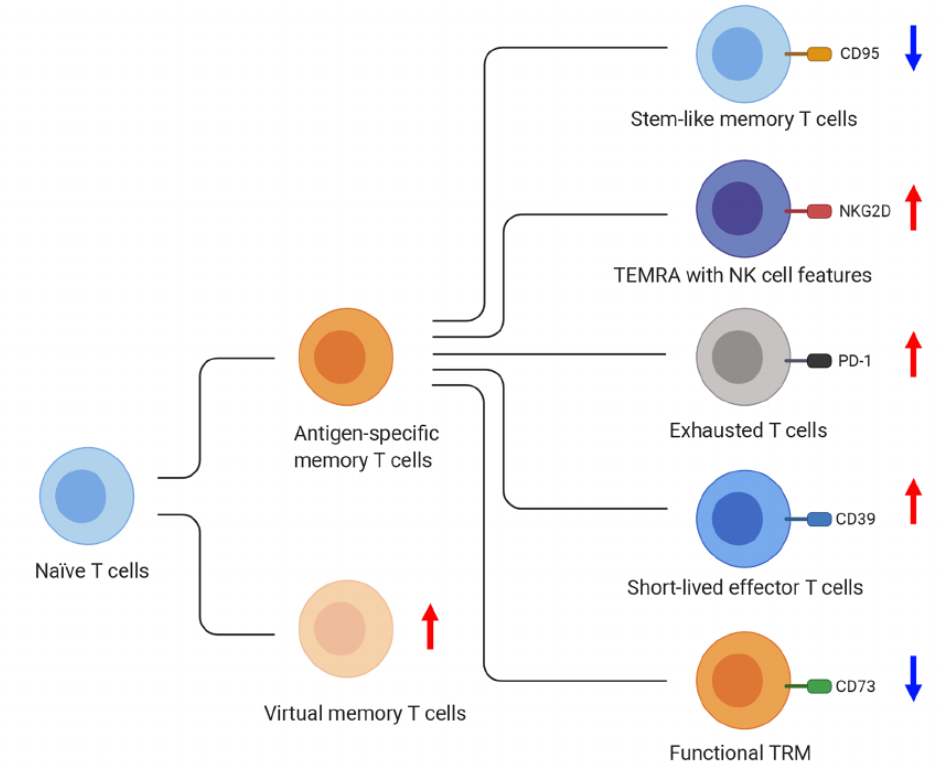
Antigen-specific memory T cells adopt several fates with age:

  • Decrease in stem-like memory T cells;
  • Increase in NK (natural killer) cell-like TEMRA (terminally differentiated effector T cells);
  • Increase in exhausted T cells;
  • Increase in short-lived effector memory T cells; and
  • Decrease in tissue-residing T memory cells.

Virtual memory T cells without prior experience of antigen encounter also increase with age.”

https://febs.onlinelibrary.wiley.com/doi/epdf/10.1111/febs.15770 “Hallmarks of the aging T cell system”


“Trained immunity is characterized by long‐term functional reprogramming of innate immune cells following challenge with pathogens or microbial ligands during infection or vaccination. This cellular reprogramming leads to increased responsiveness upon re‐stimulation, and is mediated through epigenetic and metabolic modifications.

Trained immunity has been shown to last for at least 3 months and up to 1 year, while heterologous protection against infections can last for at least 5 years. These long-term effects are mediated through reprogramming of myeloid progenitor cells in bone marrow, which in turn generate myeloid cells with a trained immunity phenotype.

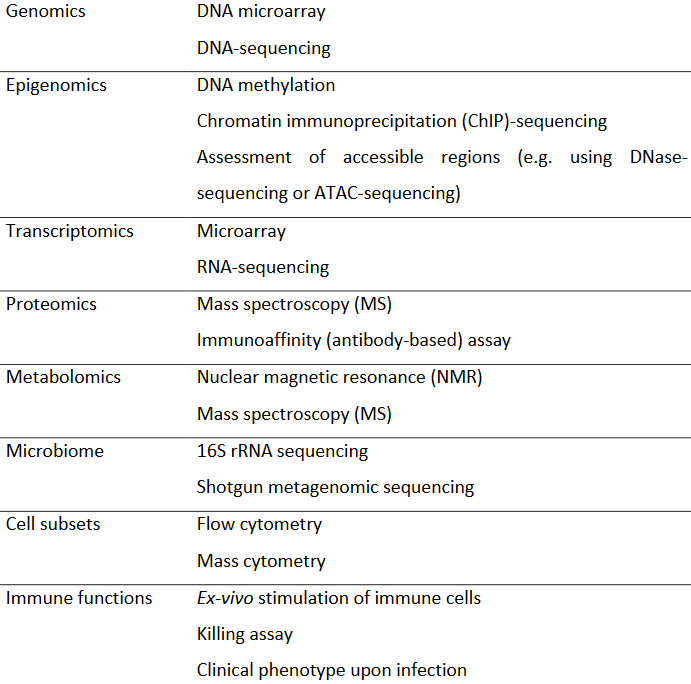
Molecular mechanisms underlying trained immunity, for example induced by β-glucan or Bacille Calmette‐Guérin (BCG) vaccination, can be investigated by using and integrating different layers of information, including genome, epigenome, transcriptome, proteome, metabolome, microbiome, immune cell phenotyping and function. Interplay between epigenetic and metabolic reprogramming is necessary for induction of trained immunity, as certain metabolites have a direct effect on enzymes involved in epigenetic remodeling.

High-throughput methods allow researchers to use an unbiased approach examining many potential genes or markers in relation to health and disease, rather than examining a limited number of candidate genes or markers.

One strength of integrating multiple levels of data is an increased power to identify key regulatory molecular networks driving trained immunity. For example, results obtained from one level (i.e. genes) can be used to reduce the number of traits to test in a second level (i.e. proteins), thereby increasing power.

One important pitfall when it comes to designing effective omics studies, is sample size. With a large number of markers measured, and the relatively small contributing effect size of individual analytes, the risks of both type 1 and 2 errors are high without sufficient sample sizes for both discovery and validation cohorts.”

https://onlinelibrary.wiley.com/doi/pdf/10.1002/eji.202048882 “Resolving trained immunity with systems biology”

Eat broccoli sprouts to prevent lung infections

A 2021 rodent study investigated lung infections:

“Mycobacterium avium complex (MAC) is the most common cause of pulmonary nontuberculous mycobacteria disease worldwide. It is thought that both environmental exposure and host susceptibility are required for the establishment of pulmonary MAC disease, because pulmonary MAC diseases are most commonly observed in slender, postmenopausal women without a clearly recognized immunodeficiency.

Host factors that regulate MAC susceptibility have not been elucidated until now. The Nrf2 system is activated in alveolar macrophages, the most important cells during MAC infection, as both the main reservoir of infection and bacillus-killing cells.

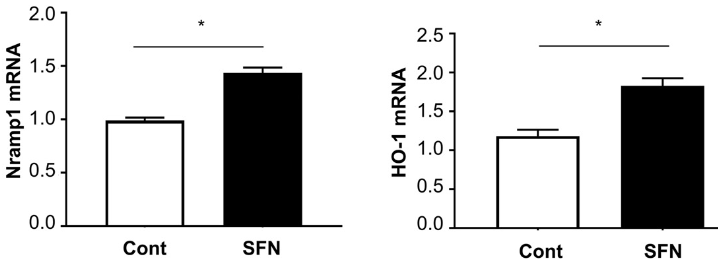
Treatment with sulforaphane (SFN) decreases Mycobacterium growth upregulating the expression of Nramp1 (natural resistance-associated macrophage protein 1, a susceptibility gene for pulmonary nontuberculous mycobacteria disease) and HO-1 (heme oxygenase 1). Mycobacterial counts in the lung, liver, and spleen were reduced after SFN treatment.

These results indicate that Nramp1 and HO-1, regulated by Nrf2, are essential in defending against MAC infection due to the promotion of phagolysosome fusion and granuloma formation, respectively. Nrf2 is thought to be a critical determinant of host resistance to MAC infection.”

https://mbio.asm.org/content/12/1/e01947-20 “Nrf2 Regulates Granuloma Formation and Macrophage Activation during Mycobacterium avium Infection via Mediating Nramp1 and HO-1 Expressions”


Don’t brew oat sprouts – eat them!

This 2020 study chemically analyzed four grains and their brew-processing products:

“Side-stream products of malting, particularly rootlet, are currently treated as animal feed. Instead of ending up in final products (e.g., malt and beer), a substantial portion of phytochemicals end up in side streams.

Rootlets are being increasingly investigated to overcome their bitter taste and to unleash their potential. Adding the fact that side-stream products produced in high quantity are also rich in protein, their nutritional value may be too high to justify usage as feed rather than food.

Grains were steeped for 26 to 30 h with a wet–dry–wet steeping program. Oats were wet steeped for 4 h at 13 °C before and after 18 h of dry steeping at 15 °C.

All grains were germinated for 6 days at 15 °C, after which they were dried with a gentle kilning program to a final temperature of 83 °C and moisture of 4%. Rootlets were separated from malt after drying.

Statistically significant changes occurred in abundance of all 285 annotated phytochemicals during malting, when comparing whole grain with malted grain or rootlet. In oats, cumulative levels of avenanthramides increased by 2.6-fold in the malted grain compared to intact whole grain. Up to 25-fold increase has been reported previously after a slightly longer germination.

Phenolamides cumulative levels in oats increased in both malted grain (11-fold) and rootlet (50-fold). Cumulative flavonoid levels were nearly 3-fold higher in malted grain and rootlet compared to whole grain.

Avenanthramides and phenolamides had much lower extractability into the water extract and wort.

To our knowledge, this is the first time avenanthramides are reported from any other species than oats, suggesting that the synthesis pathway for avenanthramides evolved before oats diverged from the other cereals. Furthermore, benzoxazinoids are herein reported for the first time in oats.

Several previously uncharacterized saponins were found in oats in addition to the previously known avenacins and avenacosides. However, because of limited reference data currently available, their identity could not be determined beyond compound class and molecular formula in this study.

Plants can synthetize up to hundreds of thousands of secondary metabolites, and current spectral databases only contain a fraction of them to allow identification. Compounds found in this study do not represent the complete range of phytochemicals existing in cereals.”

https://www.nature.com/articles/s41538-020-00081-0 “Side-stream products of malting: a neglected source of phytochemicals”


Twice a day for six weeks I’ve eaten oat sprouts 3-to-6-days old from two species and three varieties. I’ve never noticed any “bitter taste” of rootlets mentioned.

Maybe “a final temperature of 83 °C and moisture of 4%” had something to do with it? Oat sprouts I ate never got above 25°C, and I doubt their moisture content was < 80%.

Maybe “Oats were wet steeped for 4 h at 13 °C before and after 18 h of dry steeping at 15 °C” gave oat sprouts a bitter taste? I process oat sprout batches the same way I do broccoli sprout batches. A new batch soaks to start germination every 12 hours, then is rinsed three times every 24 hours on a 6 hours – 6 hours – 12 hours cycle. Temperature in my kitchen is 21°C (70°F) because it’s winter outside.

The above graphic is a heat map of 29 studied C-type avenanthramides. Don’t know why 26 known A-type avenanthramides described in Eat oats today! weren’t analyzed. The second study of Sprouting oats stated:

“There is a higher concentration of A-type AVAs [avenanthramides] than C-type AVAs in sprouted oats.”

Reference 33’s “up to 25-fold increase” is curated in Eat oat sprouts for AVAs.

Treat your gut microbiota as one of your organs

Two 2021 reviews covered gut microbiota. The first was gut microbial origins of metabolites produced from our diets, and mutual effects:

“Gut microbiota has emerged as a virtual endocrine organ, producing multiple compounds that maintain homeostasis and influence function of the human body. Host diets regulate composition of gut microbiota and microbiota-derived metabolites, which causes a crosstalk between host and microbiome.

There are bacteria with different functions in the intestinal tract, and they perform their own duties. Some of them provide specialized support for other functional bacteria or intestinal cells.

Short-chain fatty acids (SCFAs) are metabolites of dietary fibers metabolized by intestinal microorganisms. Acetate, propionate, and butyrate are the most abundant (≥95%) SCFAs. They are present in an approximate molar ratio of 3 : 1 : 1 in the colon.

95% of produced SCFAs are rapidly absorbed by colonocytes. SCFAs are not distributed evenly; they are decreased from proximal to distal colon.

Changing the distribution of intestinal flora and thus distribution of metabolites may have a great effect in treatment of diseases because there is a concentration threshold for acetate’s different impacts on the host. Butyrate has a particularly important role as the preferred energy source for the colonic epithelium, and a proposed role in providing protection against colon cancer and colitis.

There is a connection between acetate and butyrate distinctly, which suggests significance of this metabolite transformation for microbiota survival. The significance may even play an important role in disease development.

  • SCFAs can modulate progression of inflammatory diseases by inhibiting HDAC activity.
  • They decrease cytokines such as IL-6 and TNF-α.
  • Their inhibition of HDAC may work through modulating NF-κB activity via controlling DNA transcription.”

https://www.hindawi.com/journals/cjidmm/2021/6658674/ “Gut Microbiota-Derived Metabolites in the Development of Diseases”


A second paper provided more details about SCFAs:

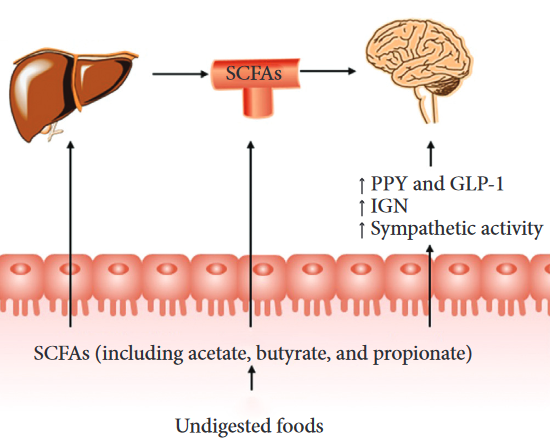
“SCFAs not only have an essential role in intestinal health, but also enter systemic circulation as signaling molecules affecting host metabolism. We summarize effects of SCFAs on glucose and energy homeostasis, and mechanisms through which SCFAs regulate function of metabolically active organs.

Butyrate is the primary energy source for colonocytes, and propionate is a gluconeogenic substrate. After being absorbed by colonocytes, SCFAs are used as substrates in mitochondrial β-oxidation and the citric acid cycle to generate energy. SCFAs that are not metabolized in colonocytes are transported to the liver.

  • Uptake of propionate and butyrate in the liver is significant, whereas acetate uptake in the liver is negligible.
  • Only 40%, 10%, and 5% of microbial acetate, propionate, and butyrate, respectively, reach systemic circulation.
  • In the brain, acetate is used as an important energy source for astrocytes.

Butyrate-mediated inhibition of HDAC increases Nrf2 expression, which has been shown to lead to an increase of its downstream targets to protect against oxidative stress and inflammation. Deacetylase inhibition induced by butyrate also enhances mitochondrial activity.

SCFAs affect the gut-brain axis by regulating secretion of metabolic hormones, induction of intestinal gluconeogenesis (IGN), stimulation of vagal afferent neurons, and regulation of the central nervous system. The hunger-curbing effect of the portal glucose signal induced by IGN involves activation of afferents from the spinal cord and specific neurons in the parabrachial nucleus, rather than afferents from vagal nerves.

Clinical studies have indicated a causal role for SCFAs in metabolic health. A novel targeting method for colonic delivery of SCFAs should be developed to achieve more consistent and reliable dosing.

The gut-host signal axis may be more resistant to such intervention by microbial SCFAs, so this method should be tested for ≥3 months. In addition, due to inter-individual variability in microbiota and metabolism, factors that may directly affect host substrate and energy metabolism, such as diet and physical activity, should be standardized or at least assessed.”

https://www.hindawi.com/journals/cjidmm/2021/6632266/ “Modulation of Short-Chain Fatty Acids as Potential Therapy Method for Type 2 Diabetes Mellitus”


Eat broccoli sprouts for your kidneys

Starting Year 7 of curating research with a 2021 review of kidney disease and sulforaphane:

“Many chronic kidney disease (CKD) patients progress to end-stage kidney disease – the ultimate in failed prevention. While increased oxidative stress is a major molecular underpinning of CKD progression, no treatment modality specifically targeting oxidative stress has been established clinically.

Pathophysiologic effects occur when there is an imbalance between oxidation and reduction – an altered redox state in which excess free radicals react with other molecules, including lipids, proteins, and nuclear DNA. Mitochondrial DNA is also susceptible to oxidative damage.

All mechanisms discussed above have been shown to be present in CKD. When levels of antioxidant agents such as SOD, CAT, GPx/glutathione, and NRF2 are reduced, harmful effects of oxidation and generation of ROS cannot be appropriately mitigated.

Data suggest continued SFN [sulforaphane] administration is needed to maintain activation of the NRF2 pathway to confer protection against oxidative damage of diabetes. Renal protective effect of SFN has been demonstrated in many other models of kidney injury.

SFN may have therapeutic potential in kidney disease by stimulating the NRF2 pathway.”

https://www.mdpi.com/2072-6643/13/1/266/htm “Eat Your Broccoli: Oxidative Stress, NRF2, and Sulforaphane in Chronic Kidney Disease”


Didn’t see where these researchers intended to perform a suggested “clinical study to assess the effect of SFN in CKD.” Keep reading before experimentally treating patients, please. Targets they missed included:

  • Parameters of myrosinase hydrolizing glucoraphanin;
  • “Consumption of broccoli strains with more glucoraphanin leads to higher plasma levels of SFN” and
  • “It follows that SFN could also pose similar adverse effects, particularly if taken in an isolated preparation.”

Also missing from this kidney review were connections to broccoli sprouts’ effectiveness in preventing bladder disease. Isothiocyanate metabolites accumulate in the bladder.

I came across this paper from it citing Sulforaphane: Its “Coming of Age” as a Clinically Relevant Nutraceutical in the Prevention and Treatment of Chronic Disease. I curated it due to informatively citing Microwave broccoli to increase sulforaphane levels.

Harnessing endogenous defenses with broccoli sprouts

This 2019 article was by the author of Sulforaphane: Its “Coming of Age” as a Clinically Relevant Nutraceutical in the Prevention and Treatment of Chronic Disease. It isn’t widely available, so I’ll quote liberally:

“Demand for solutions to digestive health issues is accelerating, especially since both scientific literature and popular press dedicate significant resources to promoting awareness of what has come to be known as ‘gut health’. In considering available therapies and the possibility that a somewhat different approach may more comprehensively optimise function of the gut ecosystem, a number of questions which do not yet have satisfactory answers are ponderable dilemmas:

  1. If diet alone can dramatically shift composition of the microbiome within 24 hours, what do we expect of a probiotic supplement?
  2. Even though probiotics as food or supplements demonstrate favourable clinical outcomes, they typically don’t colonise the gut. How do we expect them to restore diversity and lost species to the gut microbiome after antibiotics? If no trace of an administered probiotic organism can be found a few weeks later, is there any sustained benefit?
  3. Presence of obesity and other diseases is indirectly proportional to diversity of microbial organisms inhabiting the human gut. What can we expect of a few selected probiotic strains in helping to solve this problem?
  4. No antimicrobial approach selectively destroys a pathogen without impacting commensals to some degree. If we select a tool to eradicate gut pathogens, pathobionts or rogue commensals, how do we avoid damaging protective commensals with which we live symbiotically?
  5. The value of using a probiotic supplement after antibiotic therapy to recolonise the gut is uncertain. A 2018 multi-centre study showed that probiotic supplementation after antibiotics delayed gut microbiome reconstitution by around five months.
  6. If the gut can harbour around 1,000 different species, why do we expect a probiotic supplement harbouring just a few species to favourably modify a human microbiome?
  7. If Lactobacilli make up <0.1% of total microbes, why do we so readily choose them as probiotic supplements?
  8. If L-glutamine is a preferred energy source for the small intestine and not the colon, why is it used almost universally in gut repair programmes regardless of the affected region?

Removal of gluten and administration of probiotics have lesser impact than endogenous factors like elevated HbA1c:

Shift emphasis closer to optimising colonocyte metabolism as the primary driver of dysbiosis in the colon. Since these mechanisms within the human gut ecosystem already exist, intervene at this level, as distinct from using antimicrobials and exogenous probiotic strains to influence host cell function.

Phytonutrients that potently activate these core processes have been identified and are sufficiently bioavailable to achieve this end. Restoring homeostasis to intestinal epithelial cells can be readily justified as a key initial step.

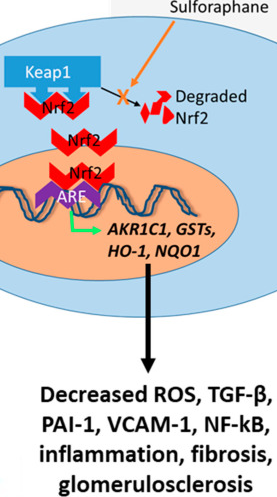
Sulforaphane is a potent inducer of hundreds of genes associated with cellular defences mechanisms. In this context, these genes include those that code for antioxidant and phase II detoxification enzymes, glutathione and metallothionein.

Sulforaphane exhibits other more specific gut and immune-related effects. As the most potent single food-derived activator of Nrf2, sulforaphane is capable of upregulating protective genes in colonocytes and other cells.

A growing body of work has identified the colonocyte as the driver of dysbiosis. Targeting colonocyte function provides an alternative to targeting microbes for remediation of dysbiosis.”

https://www.researchgate.net/publication/336578800_Restoring_Gut_Ecology_Harnessing_the_Inbuilt_Defence_Mechanisms_of_the_Gut_Epithelium “Restoring Gut Ecology: Harnessing the Inbuilt Defence Mechanisms of the Gut Epithelium” (registration required)


If you can’t access this paper, read The future of your brain is in your gut right now. If you can’t access that paper, listen to Switch on your Nrf2 signaling pathway.

Sprouting hulless oats

I finished a 3-lb. bag of hulled Avena sativa oats used in Sprouting hulled oats after starting 20 gram batches twice a day. Amazon said that Montana farmer’s products were “Currently unavailable. We don’t know when or if this item will be back in stock.” I went to their website and emailed an inquiry.

Turns out it’s Amazon’s problem in restocking pallets that are already received! I placed an order directly with the farmer.

In the meantime, I’m trying another oat species, Avena nuda, from an Illinois farmer. I’ll reuse Degree of oat sprouting as the model, since it was also an Avena nuda oat variety.

  • Oat seed size was 7-9 mm x 2-3 mm. The model used “huskless oat ‘Gehl’” which may be a different variety.
  • 100 seeds weighed 2.9 grams. There were close to 700 seeds per 20 g batches.
  • Oat sprout batches were processed the same way I do broccoli sprout batches. A new batch started soaking to start germination every 12 hours, then was rinsed three times every 24 hours on a 6 hours – 6 hours – 12 hours cycle.
  • Temperature in my kitchen was 21°C (70°F) because it’s snowing outside. The model findings included “Temperatures between 20° and 25°C yielded the most dramatic changes in properties of sprouted oats.”

I evaluated germination results per the model’s Degree of Sprouting finding:

“Length of the coleoptile [shoot] was selected as a criterion of categorization of degree of sprouting. Grains of degree 0 do not show any radicle [root] or coleoptile growth. Degree:

  1. Has visible embryos (small white point), while radicles and coleoptile are not visible;
  2. Shows a developed embryo emerging from the seed coat;
  3. Coleoptile lengths of at least half the oat grain length;
  4. Coleoptile lengths between half and a full grain length; and
  5. Coleoptile longer than a full grain length.”

Here’s what this hulless oat variety’s seeds and 3-day-old sprouts looked like:

The tedious part was evaluating degrees of sprouting. I took as large a bottom-to-top sample as I could tolerate sorting (160 seeds / sprouts, about 23%), with these results:

A 91% germination rate. 🙂 Average weight of 3-day-old batches was 42.5 grams, for a 213% weight gain. That wasn’t as much as 3-day-old hulled oats’ 97% germination rate and 260% weight gain.

For degree-of-sprouting comparisons, here are my eyeball estimates of the model study’s 3-day-old hulless oats:

These 3-day-old hulless oat sprouts taste starchier with less enzyme aftertaste than 3-day-old hulled oat sprouts. Will extending their growth to four days increase degree-of-sprouting categories 4 and 5, and change their taste?

An extra day from 5 to 6 didn’t make a difference in Sprouting whole oats germination rate. I don’t expect non-germinated percentages to change from 3 to 4 days, but we’ll see.

I expect similar overall increases in antioxidants, GABA, phenolic compounds, protein, amino acids, β-glucan, and polyunsaturated fatty acids as hulled oat sprouts.

Update: Four-day-old hulless oat sprouts have a little more sweetness and enzyme aftertaste. Their degree-of-sprouting and germination rate didn’t change much, though.

Broccoli sprouts activate the AMPK pathway

I’ll curate this 2020 rodent study through its summary graphic and caption:

“Type 2 diabetes exhibits elevated levels of circulating fatty acids and CD36. This results in excessive fatty acids binding with CD36 to suppress AMPK [adenosine 5′ monophosphate-activated protein kinase, a key player in regulating energy metabolism].

Inactivation of AMPK breaks homeostasis in lipid metabolism and the antioxidative system, and subsequently induces cardiac oxidative stress, inflammation, and fibrosis. These damages contribute to diabetic cardiomyopathy.

SFN [sulforaphane] treatment significantly induces AMPK activation, which:

  • Enhances mitochondrial fatty acids oxidation via PPARα/CPT-1B and PGC1-α pathways; and
  • Inhibits SCD-1 to down-regulate lipid synthesis.

This greatly alleviates cardiac lipid accumulation.

NRF2-mediated antioxidative effects can be activated via AMPK/AKT/GSK3β pathway, developing another pathway to confront cardiac oxidative damage.

AMPK is indispensable in SFN-mediated cardiac prevention against T2D.”

https://www.metabolismjournal.com/article/S0026-0495(19)30217-3/fulltext “Protective effects of sulforaphane on type 2 diabetes-induced cardiomyopathy via AMPK-mediated activation of lipid metabolic pathways and NRF2 function” (not freely available)


1. A human-mouse relative age perspective:

  • Experiments started with subjects at 2-months-old, equivalent to 20 human years. Treatment subjects ate a high-fat diet.
  • Sulforaphane was injected subcutaneously at 0.5 mg/kg every working day. It didn’t have significant effects on cardiac lipid accumulation at 5 months (a 30-year-old human), but did at 8 months (a 42-year-old human).

2. This study demonstrated that for sulforaphane to produce evidenced Nrf2 pathway effects, it first activated the AMPK/AKT/GSK3β pathway. For 5 days a week, over periods of human-equivalent decades.

3. CPT-1B pictured above is carnitine palmitoyltransferase-1B, an enzyme in the outer membrane of mitochondria. It controls transfer of long-chain fatty acyl CoA into mitochondria to convert fat into energy.

AMPK pathway activation also subsequently activates “PPARα/CPT-1B and PGC1-α pathways.” See A case for carnitine supplementation for a review.


It’s the fiber, not the fat

I came across this 2020 fiber-vs-fat rodent study from its citation in Gut microbiota and aging:

“Dietary intervention studies largely revolve around altering fat content. Little consideration has been given to amount of fiber and whether or not it is soluble.

We examined age- and sex-specific effects of a refined high-fat/low soluble fiber diet (rHFD) on body weight and gut microbiota composition relative to mice fed a refined low-fat diet (rLFD) that is nutritionally and compositionally matched to rHFD.

Chow diet supplied energy as 13.4% fat, 28% protein, 57.9% carbohydrates, and 15% dietary fiber (range of total dietary fiber between 15 and 25% with 15–20% insoluble and 2–5% soluble fiber).

Two refined diets were used: rLFD supplying energy as 12% fat, 21% protein, and 67% carbohydrates; and rHFD supplying energy as 45% fat, 20% protein, and 35% carbohydrates. [Both rLFD and rHFD contained] 5% fiber in the form of insoluble cellulose.

Young adult animals consumed chow diet for 17 weeks, and 1-year aged animals consumed chow diet for 60 weeks. We included a 1-week transition period wherein all mice were fed rLFD. For the following 4 weeks, half of the animals remained on rLFD while the other half consumed rHFD.

After 4 weeks, young adult female mice showed resistance to weight gain to rHFD, consistent with previous reports. Aged females fed rHFD showed rapid body weight gain relative to rLFD-fed aged females.

Young adult and 1-year aged males showed a significant gain in body weight that was independent of refined diet formulation, suggesting that other components of the refined diet contribute to body weight gain that is independent of dietary fat.

Transition from chow diet to rLFD resulted in changes to microbiota community structure and composition in all groups, regardless of sex and age. This dietary transition was characterized by a loss within phylum Bacteroidetes and a concomitant bloom of Clostridia and Proteobacteria in a sex- and age-specific manner.

No changes to gut microbiota community structure and composition were observed between mice consuming either rLFD or rHFD, suggesting that transition to rLFD that lacks soluble fiber is the primary driver of gut microbiota alterations, with limited additional impact of dietary fat on gut microbiota.”

https://microbiomejournal.biomedcentral.com/articles/10.1186/s40168-020-0791-6 “It’s the fiber, not the fat: significant effects of dietary challenge on the gut microbiome”


It’s alright for researchers in the Abstract and Introduction section to interpret how their rodent study may apply to humans. I appreciate when they confine their statements elsewhere to what they actually measured and found.

This study didn’t measure inflammation, behaviors, neurobiologics, metabolic parameters, immune biomarkers, or hormones. They can qualify statements with “may” all they want, but there wasn’t direct evidence for either:

“Age-specific vulnerability to diet-induced body weight gain in females may be related to aging-related changes to estrogens.”

or

“The lack of differences between rLFD- and rHFD-fed mice may indicate that gut microbiota structure and composition can be dissociated from body weight and systemic inflammation.”

Papers that cite this study can’t rely on its Abstract for “regulating metabolic, immune, behavioral, and neurobiological outcomes” because its experiments didn’t directly measure such outcomes.

Removing 2-5% soluble fiber from subjects’ diet had large effects. I look forward to reading human studies that are informed by this study.

Gut microbiota and aging

This 2020 review explored the title subject:

“The human body contains 1013 human cells and 1014 commensal microbiota. Gut microbiota play vital roles in human development, physiology, immunity, and nutrition.

Human lifespan was thought to be determined by the combined influence of genetic, epigenetic, and environmental factors including lifestyle-associated factors such as exercise or diet. The role of symbiotic microorganisms has been ignored.

Age-associated alterations in composition, diversity, and functional features of gut microbiota are closely correlated with an age-related decline in immune system functioning (immunosenescence) and low-grade chronic inflammation (inflammaging). Immunosenescence and inflammaging do not have a unidirectional relationship. They exist in a mutually maintained state where immunosenescence is induced by inflammaging and vice versa.

Immunosenescence changes result in both quantitative and qualitative modifications of specific cellular subpopulations such as T cells, macrophages and natural killer cells as opposed to a global deterioration of the immune system. Neutrophils and macrophages from aged hosts are less active with diminished phagocytosing capability.

Gut microbiota transform environmental signals and dietary molecules into signaling metabolites to communicate with different organs and tissues in the host, mediating inflammation. Gut microbiota modulations via dietary or probiotics are useful anti-inflammaging and immunosenescence interventions.

The presence of microbiomic clocks in the human body makes noninvasive, accurate lifespan prediction possible. Prior to occurrence of aging-related diseases [shown above], bidirectional interactions between the gut and extraenteric tissue will change.

Correction of accelerated aging-associated gut dysbiosis is beneficial, suggesting a link between aging and gut microbiota that provides a rationale for microbiota-targeted interventions against age-related diseases. However, it is still unclear whether gut microbiota alterations are the cause or consequence of aging, and when and how to modulate gut microbiota to have anti-aging effects remain to be determined.”

https://www.tandfonline.com/doi/abs/10.1080/10408398.2020.1867054 “Gut microbiota and aging” (not freely available; thanks to Dr. Zongxin Ling for providing a copy)


1. The “Stable phase” predecessor to this review’s subject deserved its own paper:

“After initial exposure and critical transitional windows within 3 years after birth, it is generally agreed that human gut microbiota develops into the typical adult structure and composition that is relatively stable in adults.

gut microbiota by age phenotype

However, the Human Microbiome Project revealed that various factors such as food modernization, vaccines, antibiotics, and taking extreme hygiene measures will reduce human exposure to microbial symbionts and led to shrinkage of the core microbiome, while the reduction in microbiome biodiversity can compromise the human immune system and predispose individuals to several modern diseases.”

2. I looked for the ten germ-free references in the “How germ-free animals help elucidate the mechanisms” section of The gut microbiome: its role in brain health in this review, but didn’t find them cited. Likewise, the five germ-free references in this review weren’t cited in that paper. Good to see a variety of relevant research.

There were a few overlapping research groups with this review’s “Gut-brain axis aging” section, although it covered only AD and PD research.

3. Inflammaging is well-documented, but is chronic inflammation a condition of chronological age?

A twenty-something today who ate highly-processed food all their life could have gut microbiota roughly equivalent to their great-great grandparents’ at advanced ages. Except their ancestors’ conditions may have been byproducts of “an unintended consequence of both developmental programmes and maintenance programmes.

Would gut microbiota be a measure of such a twenty-something’s biological age? Do we wait until they’re 60, and explain their conditions by demographics? What could they do to reset themself back to a chronological-age-appropriate phenotype?


The future of your brain is in your gut right now

A 2020 paper by the author of Sulforaphane: Its “Coming of Age” as a Clinically Relevant Nutraceutical in the Prevention and Treatment of Chronic Disease:

“The gut and brain communicate bidirectionally via several pathways which include:

  1. Neural via the vagus nerve;
  2. Endocrine via the HPA axis;
  3. Neurotransmitters, some of which are synthesized by microbes;
  4. Immune via cytokines; and
  5. Metabolic via microbially generated short-chain fatty acids.

How does nature maintain the gut-microbiome-brain axis? Mechanisms to maintain homeostasis of intestinal epithelial cells and their underlying cells are a key consideration.

The symbiotic relationship that exists between microbiota and the human host is evident when considering nutrient requirements of each. The host provides food for microbes, which consume that food to produce metabolites necessary for health of the host.

Consider function of the human nervous system, not in isolation but in integration with the gastrointestinal ecosystem of the host, in expectation of a favorable impact on human health and behavior.”

https://www.sciencedirect.com/science/article/pii/B9780128205938000148 “Chapter 14 – The gut microbiome: its role in brain health” (not freely available)


Always more questions:

  1. What did you put into your gut today?
  2. What type of internal environment did it support?
  3. What “favorable impact on human health and behavior” do you expect from today’s intake?
  4. How will you feel?
  5. Will you let evidence guide feeding your gut environment?

See Harnessing endogenous defenses with broccoli sprouts for further elaboration. See Switch on your Nrf2 signaling pathway for an interview with these papers’ author.