Young gut, young eyes

I’ll highlight this 2022 rodent study findings of effects on eye health:

“We tested the hypothesis that manipulating intestinal microbiota influences development of major comorbidities associated with aging and, in particular, inflammation affecting the brain and retina. Using fecal microbiota transplantation, we exchanged intestinal microbiota of young (3 months), old (18 months), and aged (24 months) mice.

Transfer of aged donor microbiota into young mice accelerates age-associated central nervous system inflammation, retinal inflammation, and cytokine signaling. It promotes loss of key functional protein in the eye, effects which are coincident with increased intestinal barrier permeability.

These detrimental effects can be reversed by transfer of young donor microbiota.

young and aged fmt

We provide the first direct evidence that aged intestinal microbiota drives retinal inflammation, and regulates expression of the functional visual protein RPE65. RPE65 is vital for maintaining normal photoceptor function via trans-retinol conversion. Mutations or loss of function are associated with retinitis pigmentosa, and are implicated in age-related macular degeneration.

Our finding that age-associated decline in host retinal RPE65 expression is induced by an aged donor microbiota, and conversely is rescued by young donor microbiota transfer, suggests age-associated gut microbiota functions or products regulate visual function.”

https://microbiomejournal.biomedcentral.com/articles/10.1186/s40168-022-01243-w “Fecal microbiota transfer between young and aged mice reverses hallmarks of the aging gut, eye, and brain”


PXL_20220517_190954606

Exercise substitutes?

Two papers, starting with a 2022 abstract of an ongoing in vitro study with rodent cells:

“Exercise mimetics may target and activate the same mechanisms that are upregulated with exercise administration alone. This is particularly useful under conditions where contractile activity is compromised due to muscle disuse, disease, or aging.

Sulforaphane and Urolithin A represent our preliminary candidates for antioxidation and mitophagy, respectively, for maintaining mitochondrial turnover and homeostasis. Preliminary results suggest that these agents may be suitable candidates as exercise mimetics, and set the stage for an examination of synergistic effects.”

https://faseb.onlinelibrary.wiley.com/doi/10.1096/fasebj.2022.36.S1.R3745 “Exercise mimicry: Characterization of nutraceutical agents that may contribute to mitochondrial homeostasis in skeletal muscle” (study not available)


A second 2022 paper reviewed what’s known todate regarding urolithins:

“Urolithins (Uros) are metabolites produced by gut microbiota from the polyphenols ellagitannins (ETs) and ellagic acid (EA). ETs are one of the main groups of hydrolyzable tannins. They can occur in different plant foods, including pomegranates, berries (strawberries, raspberries, blackberries, etc.), walnuts, many tropical fruits, medicinal plants, and herbal teas, including green and black teas.

Bioavailability of ETs and EA is very low. Absorption of these metabolites could be increased by co-ingestion with dietary fructooligosaccharides (FOS).

Effects of other experimental factors: post-intake time, duration of administration, diet type (standard and high-fat), and ET dosage (without, low, and high ET intake) in ETs metabolism were evaluated in blood serum and urine of rats consuming strawberry phenolics. Highest concentrations were obtained after 2–4 days of administration.

Various crucial issues need further research despite significant evolution of urolithin research. Overall, whether in vivo biological activity endorsed to Uros is due to each specific metabolite and(or) physiological circulating mixture of metabolites and(or) gut microbial ecology associated with their production is still poorly understood.

  • Ability of Uros to cross the blood-brain barrier and the nature of metabolites and concentrations reached in brain tissues need to be clarified.
  • Specific in vivo activity for each free and conjugated Uro metabolite is unknown. Studies on different Uro metabolites and their phase-II conjugates are needed to understand their role in human health.
  • Evidence on safety and impact of Uros on human health is still scarce and only partially available for Uro-A.
  • It is unknown whether there are potential common links between gut microbial ecologies of the two unambiguously described metabotypes so far, i.e., equol (isoflavones) and Uros (ellagitannins).
  • Gut microbes responsible for producing different Uros still need to be better identified and characterized, and biochemical pathways and enzymes involved.”

https://onlinelibrary.wiley.com/doi/10.1002/mnfr.202101019 “Urolithins: a Comprehensive Update on their Metabolism, Bioactivity, and Associated Gut Microbiota”


PXL_20220514_181229426

Coffee improves information’s signal-to-noise ratio

This 2022 rodent study investigated caffeine’s effects:

“A majority of molecular and neurophysiological studies explored the impact of acute rather than repeated exposure to caffeine. We show that, in bulk tissue analysis, chronic caffeine treatment reduced metabolic processes related to lipids, mitochondria, and translation in mouse hippocampus. In sharp contrast to what was observed in bulk tissue, we found that caffeine induced a neuronal autonomous epigenomic response related to synaptic plasticity activation.

149371-JCI-RG-RV-3_ga_591026

Regular caffeine intake exerts a long-term effect on neuronal activity/plasticity in the adult brain, lowering metabolic-related processes, and simultaneously finely tuning activity-dependent regulations. In non-neuronal cells, caffeine decreases activities under basal conditions, and improves signal-to-noise ratio during information encoding in brain circuits, contributing to bolster salience of information.

Overall, our data prompt the novel concept that regular caffeine intake promotes a more efficient ability of the brain to encode experience-related events. By coordinating epigenomic changes in neuronal and non-neuronal cells, regular caffeine intake promotes a fine-tuning of metabolism in resting conditions.”

https://www.jci.org/articles/view/149371 “Caffeine intake exerts dual genome-wide effects on hippocampal metabolism and learning-dependent transcription”


PXL_20220514_181401668

Young immune system, young brain

This 2022 study investigated brain aging:

“We aimed to explore key genes underlying cognitively normal brain aging and its potential molecular mechanisms. Cellular and molecular mechanisms of brain aging are complex and mainly include:

  1. Dysfunction of mitochondria;
  2. Accumulation of oxidatively damaged proteins, nucleic acids, and lipids in brain cells;
  3. Disorders of energy metabolism;
  4. Impaired ‘waste disposal’ mechanism (autophagosome and proteasome functionality);
  5. Impaired signal transduction of adaptive stress response;
  6. Impaired DNA repair;
  7. Abnormal neural network activity;
  8. Imbalance of neuronal Ca2+ processing;
  9. Stem cell exhaustion; and
  10. Increased inflammation.

mrna brain expression

Expression of CD44, CD93, and CD163 mRNA detected by qPCR in hippocampal tissue of cognitively normal aged and young mice.

Underlying molecular mechanisms for maintaining healthy brain aging are related to decline of immune-inflammatory responses. CD44, CD93, and CD 163 are potential biomarkers.”

https://www.frontiersin.org/articles/10.3389/fnagi.2022.833402/full “Identification of Key Biomarkers and Pathways for Maintaining Cognitively Normal Brain Aging Based on Integrated Bioinformatics Analysis”


PXL_20220506_184430747

Are blood epigenetic clock measurements optimal?

This 2022 human study investigated tissue-specific epigenetic clock measurements:

“We used DNA methylation data representing 11 human tissues (adipose, blood, bone marrow, heart, kidney, liver, lung, lymph node, muscle, spleen, and pituitary gland) to quantify the extent to which epigenetic age acceleration (EAA) in one tissue correlates with EAA in another tissue.

Epigenetic age was moderately correlated across tissues:

  • Blood had the greatest number and degree of correlation, most notably with spleen and bone marrow. Blood did not correlate with epigenetic age of liver.
  • EAA in liver was weakly correlated with EAA in kidney, adipose, lung, and bone marrow.
  • Hypertension was associated with EAA in several tissues, consistent with multiorgan impacts of this illness.
  • HIV infection was associated with positive age acceleration in kidney and spleen.
  • Men were found to exhibit higher EAA than women across all tissues when analyzed together. Significant results were also observed in individual tissues (muscle, spleen, and lymph nodes).

men age faster

Blood alone will often fail to detect EAA in other tissues. It will be advisable to profile several sources of DNA (including blood, buccal cells, adipose, and skin) to get a comprehensive picture of the epigenetic aging state of an individual.”

https://link.springer.com/article/10.1007/s11357-022-00560-0 “HIV, pathology and epigenetic age acceleration in different human tissues”


PXL_20220415_184720157

Gut microbiota knowledge through 2021

I’ll curate this 2022 review of what’s known and unknown about our trillions of gut microbiota through its topic headings:

“Most microbial taxa and species of the human microbiome are still unknown. Without revealing the identity of these microbes as a first step, we cannot appreciate their role in human health and diseases.

A. Understanding the Microbiome Composition and Factors That Shape Its Diversity
Effect of Diet Composition on the Microbiome Diversity

  • Macronutrients and Microbiome Diversity
  • Nutrient and Mineral Supplements and Microbiome Diversity

Stress

Drugs

Race and Host Genetics

Aging

Lifestyle

  • Exercise
  • Smoking
  • Urbanization

B. Understanding the Microbiome Function and Its Association With Onset and Progression of Many Diseases

Microbiome Association With Inflammatory and Metabolic Disorders

  • Chronic Inflammation in GIT and Beyond
  • Development of Malignant Tumors
  • Obesity
  • Coronary Artery Disease
  • Respiratory Diseases

Microbiome Role in Psychiatric, Behavioral, and Emotional Disorders

C. Understanding the Microbiome Function as Mediated by Secreted Molecules

D. Conclusion and Future Directions – A pioneering study aimed to computationally predict functions of microbes on earth estimates the presence of 35.5 million functions in bacteria of which only 0.02% are known. Our knowledge of its functions and how they mediate health and diseases is preliminary.”

https://www.frontiersin.org/articles/10.3389/fmicb.2022.825338 “Recent Advances in Understanding the Structure and Function of the Human Microbiome”


I took another test last month at the 14-month point of treating my gut microbiota better. Compared with the 7-month top level measurements, what stood out was an increase in relative abundance from 1% to 7% in the Verrucomicrophia phylum that pretty much exclusively comprises species Akkermansia muciniphilia in humans:

top 5 phylum 2-2022

This review termed Akkermansia muciniphilia relative increases as beneficial. Go with the Alzheimer’s Disease evidence didn’t.

Preventing human infections with dietary fibers inferred that insufficient dietary fiber may disproportionately increase abundance of this species. But I already eat much more fiber than our human ancestors’ estimated 100 grams of fiber every day, so lack of fiber definitely didn’t cause this relative increase.

Resistant starch therapy observed:

“Relative abundances of smaller keystone communities (e.g. primary degraders) may increase, but appear to decrease simply because cross-feeders increase in relative abundance to a greater extent.”

I’ll wait for further evidence while taking responsibility for my own one precious life.

Didn’t agree with this review’s statements regarding microbial associations with fear. These reviewers framed such associations as if gut microbiota in the present had stronger influences on an individual’s fear responses than did any of the individual’s earlier experiences. No way.

I came across this review by it citing The microbiome: An emerging key player in aging and longevity, which was Reference 25 of Dr. Paul Clayton’s blog post What are You Thinking?

Also didn’t agree with some of the doctor’s post:

  • Heterochronic parabiosis of young and old animals is wildly different from fecal transfer. Can’t really compare them to any level of detail.
  • Using a rodent young-to-old fecal microbiota transplant study to imply the same effects would happen in humans? Humans don’t live in controlled environments, so why would a young human individual’s gut microbiota necessarily have healthier effects than an old individual’s?
  • Another example was the penultimate paragraph: “By adding a mix of prebiotic fibers to your diet and maintaining a more youthful and less inflammatory microbiome you will have less inflammation, less endotoxaemia and less inflammageing. You will therefore live healthier and longer.” I’m okay with the first sentence. Equivalating the first sentence to both healthspan and lifespan increases in the second sentence wasn’t supported by any of the 45 cited references.

Advanced glycation / lipoxidation end products

Three papers on what can be expected from AGEs, beginning with a 2022 review:

“Carbonyl stress is a condition characterized by an increase in the steady-state levels of reactive carbonyl species (RCS) that leads to accumulation of their irreversible covalent adducts with biological molecules. In addition to causing damage directly, the RCS adducts advanced glycation end-products (AGEs) and advanced lipoxidation end-products (ALEs) elicit chronic inflammation through receptor-mediated mechanisms.

Endogenously formed RCS and AGEs/ALEs accumulation induced by hyperglycemia, hyperlipidemia, and oxidative stress have been long recognized as critical factors in pathogenesis of cardiovascular, renal, and eye complications. The role of dietary glyco/lipotoxins in vascular complications is debated, as the metabolic fate of most ingested AGEs/ALEs and RCS remains unknown, and their contribution to systemic carbonyl stress is uncertain.

rcs ages ales

Plasma glucose spikes after a meal rich in readily absorbable carbohydrates, particularly in association with an unfavorable lipid composition, may promote proinflammatory and pro-oxidant responses by inducing a transient increase in RCS levels and consequent AGE formation. As protein-bound AGEs are not easily eliminated from the body, they can eventually accumulate in vascular and metabolic tissues because of repeated cycles of nutrient-induced carbonyl stress, favoring establishment of systemic low chronic inflammation.

Post-challenge glucose excursions are associated with a transient increase in circulating RCS levels, particularly in diabetic and prediabetic individuals. Diet-induced weight loss is associated with decreases in postprandial carbonyl stress in obese subjects. Data on lean and metabolically healthy individuals are limited.”

https://www.mdpi.com/2072-6643/14/5/1061/htm “Food-Related Carbonyl Stress in Cardiometabolic and Cancer Risk Linked to Unhealthy Modern Diet”

I understand that researchers feel obligated to end papers with suggestions for future research. It’s a little irritating, though, when these are pie-in-the-sky.

People who wait for endogenous vs. exogenous AGE / ALE questions to be answered in their lifetimes are at risk for giving themselves diseases.


A second paper is a 2021 human cell study:

“Sulforaphane (SFN) found in cruciferous vegetables is a potent activator of the Nrf2 transcription factor, the master regulator of redox biology in mammalian cells. Nrf2 modulates expression of several antioxidant enzymes, such as γ-glutamylcysteine ligase (γ-GCL). This is the rate-limiting step in synthesis of the major non-enzymatic antioxidant glutathione (GSH). Silencing of Nrf2 or inhibition of GSH synthesis abolished SFN-promoted mitochondrial protection in cells exposed to methylglyoxal (MG), a pro-oxidant agent whose levels are high in several human diseases.

sfn vs mg

MG is a reactive dicarbonyl presenting both endogenous (e.g. glycolysis) and exogenous (e.g. food cooking) sources. MG induces neurotoxicity, at least in part, by affecting mitochondrial function, including a decline in oxidative phosphorylation (OXPHOS) system activity, bioenergetics failure, and redox disturbances.

We found that SFN prevented MG-induced OXPHOS dysfunction and mitochondrial redox impairment. SFN protected mitochondria of MG-challenged cells by a mechanism involving the Nrf2/γ-GCL/GSH axis.”

https://link.springer.com/article/10.1007/s11064-020-03204-x “The Isothiocyanate Sulforaphane Depends on the Nrf2/γ‑GCL/GSH Axis to Prevent Mitochondrial Dysfunction in Cells Exposed to Methylglyoxal” (not freely available)

Although this study’s 5 µM sulforaphane treatment is achievable in human plasma, that level isn’t sustainable for 24 hours as the study did in vitro. Would sulforaphane’s in vivo effects likewise prevent methylglyoxal from inducing AGEs?


A third paper is a 2022 human study:

“AGEs have been widely reported to play an important role in osteoporosis (OP). We investigated the effect of AGEs on osteoblast function and underlying mechanisms.

op lumbar vertebrae

Levels of bone mineral density (BMD), serum AGEs, and fasting blood glucose (FBG) were measured in patients with OP and healthy individuals:

  • Patients with OP had a higher level of serum AGEs and FBG compared with healthy individuals.
  • The level of serum AGEs in patients with OP was negatively correlated with BMD, but was positively correlated with FBG.
  • AGEs and serum from patients with OP markedly inhibited hFOB1.19 osteoblast cell proliferation, alkaline phosphatase production, and mineralized nodule formation.
  • Apoptosis and ferroptosis were significantly promoted by AGEs and serum from patients with OP.
  • Serum from OP patients with T2DM caused stronger effect than that from OP patients with normal FBG.

Collectively, AGEs could disrupt functions of osteoblasts by inducing cell ferroptosis, thus contributing to OP.”

https://www.spandidos-publications.com/10.3892/mmr.2022.12656 “Advanced glycation end products promote osteoporosis by inducing ferroptosis in osteoblasts”

Signaling pathways and disordered proteins

This 2022 review explored the title subject:

“Cell signaling imposes many demands on proteins that comprise these pathways, including abilities to form active and inactive states, and to engage in multiple protein interactions. Signaling often requires amplifying signals, regulating or tuning responses to signals, combining information sourced from multiple pathways, all while ensuring process fidelity.

Sensitivity, adaptability, and tunability are possible, in part, due to inclusion of intrinsically disordered regions in many proteins involved in cell signaling.  This review highlights the critical role of intrinsically disordered proteins for signaling:

  • In widely diverse organisms (animals, plants, bacteria, fungi);
  • In every category of cell signaling pathway (autocrine, juxtacrine, intracrine, paracrine, and endocrine); and
  • At each stage (ligand, receptor, transducer, effector, terminator) in the cell signaling process.

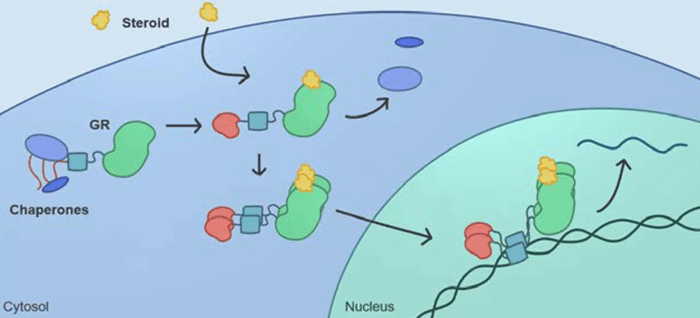
Function of the glucocorticoid receptor is regulated in part by its intrinsically disordered C-terminal tail. Prior to activation, the glucocorticoid receptor resides in cytosol:

glucocorticoid receptor

Intrinsic disorder in the glucocorticoid receptor not only enables multiple allosteric regulatory interactions to impact function, but also allows deployment of different surfaces of the protein to enable binding to many different sets of macromolecules, and regulation of these interactions via mRNA splicing and phosphorylation.

Combinations of alternative translation initiation and alternative mRNA splicing result in production of multiple glucocorticoid receptor isoforms from one gene. Various isoforms exhibit distinctive tissue distribution patterns and altered transcriptional regulatory profiles.

Greater than 90% of transcription factors either contain intrinsically disordered regions of proteins or are entirely intrinsically disordered. The many advantages conferred by disorder to cell signaling cascades means that:

  1. Understanding signaling required definition of roles disorder plays in each pathway;
  2. Many more examples of disordered proteins in cell signaling pathways are likely to be discovered; and
  3. More mechanisms by which disorder functions remain to be elucidated.”

https://biosignaling.biomedcentral.com/articles/10.1186/s12964-022-00821-7 “Intrinsically disordered proteins play diverse roles in cell signaling”


Cells in vivo seldom act on their own impetus. I would have liked discussion – or at least mention – of bidirectional signals between genes / cells / tissues / organs / organism / environment. This review’s topic of cell signaling pathways excluded “interactions of complex, interconnected systems spanning hierarchical levels” as explored in An environmental signaling paradigm of aging.

Vitamin K forms

Two papers on Vitamin K, beginning with a 2021 review:

“Vitamin K is involved in many biological processes. Menaquinones (MK) [Vitamin K2] and phylloquinone [Vitamin K1] vary in biological activity, showing different bioavailability, half-life, and transport mechanisms.

The effective dose to decrease uncarboxylated osteocalcin was six times lower for MK-7 than for MK-4. Similarly, MK-7 affected blood coagulation system at dose three to four times lower than vitamin K1.

Both vitamin K1 and MK-7 inhibited decline in bone mineral density. However, benefits for occurrence of cardiovascular diseases have been observed only for long-chain menaquinones. There are currently no guidelines for recommended doses and forms of vitamin K in prevention of osteoporosis, atherosclerosis, and other cardiovascular disorders.”

https://www.mdpi.com/2304-8158/10/12/3136/htm “Relationship between Structure and Biological Activity of Various Vitamin K Forms”


This first paper cited a 2019 meta-analysis for:

“Vitamin K2 supplementation is a preventative measure rather than an osteoporosis treatment.

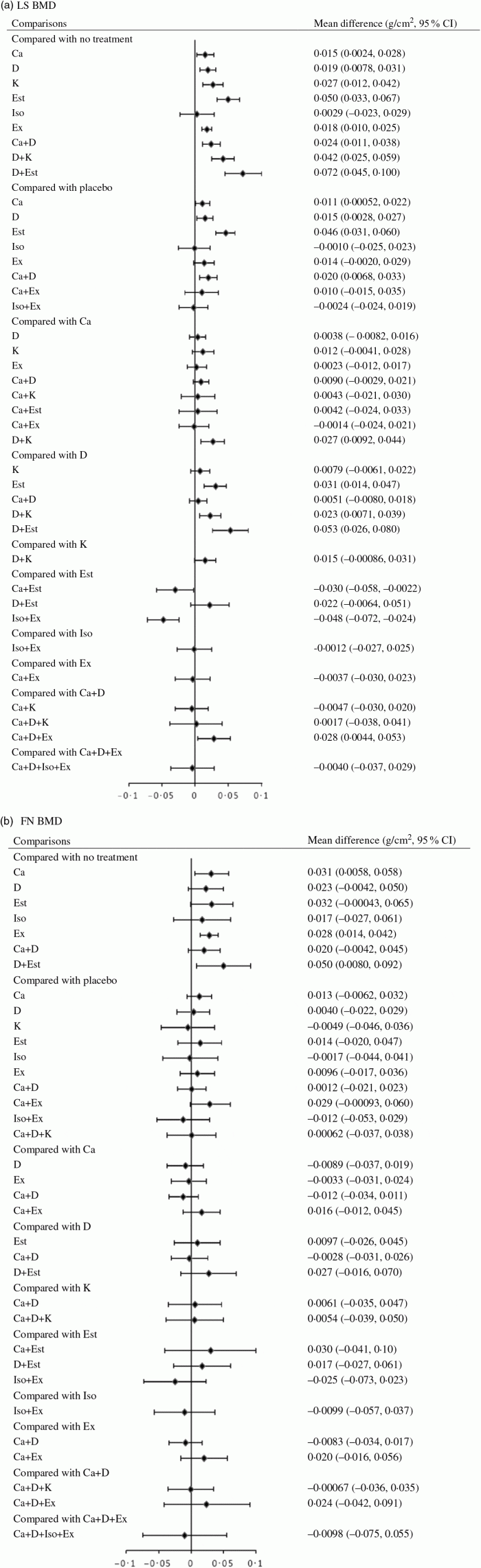
Meta-analysis of various interventions for improving BMD revealed that vitamin K2 can increase lumbar spine BMD. It ranked sixth among eighteen different single or combined interventions including Ca, vitamin D, estrogen, isoflavone and exercise.

Effect size for change in bone mineral density (BMD) using forest plots. LS, lumbar spine; D, vitamin D; Est, oestrogen; Ex, exercise; K, vitamin K; Iso, isoflavone; FN, femoral neck.

urn cambridge.org id binary-alt 20211204100437-73338-optimisedImage-S0007114519002290_fig3g

Lumbar spine:

  • Ca, vitamin D, vitamin K, oestrogen, exercise, Ca + vitamin D, vitamin D + vitamin K, and vitamin D + oestrogen were associated with significantly beneficial effects relative to no treatment.
  • Ca, vitamin D, oestrogen, and Ca + vitamin D were associated with beneficial effects compared with placebo.
  • Vitamin D + vitamin K was associated with positive effect with Ca.
  • Oestrogen, vitamin D + vitamin K, and vitamin D + oestrogen were associated with beneficial effect compared with vitamin D.
  • Ca + vitamin D + exercise had a beneficial effect compared with Ca + vitamin D.
  • Ca + oestrogen, and isoflavone + exercise were related to negative effects relative to oestrogen.

Femoral neck:

  • Ca, exercise, and vitamin D + oestrogen were associated with significant beneficial intervention effects relative to no treatment.

The present study demonstrated that many interventions were valuable for improving BMD in the LS and FN of postmenopausal women. It confirmed the need for postmenopausal women to improve BMD through preventive measures such as nutrients or oestrogen.

It also confirmed that different single or combined preventions can affect BMD at different sites in different orders. This reveals to medical and health workers and postmenopausal women which methods can be selected preferentially to prevent bone loss.”

https://doi.org/10.1017/S0007114519002290 “Impact of calcium, vitamin D, vitamin K, oestrogen, isoflavone and exercise on bone mineral density for osteoporosis prevention in postmenopausal women: a network meta-analysis”


Amazingly oblivious that this freely-available second 2019 paper has been cited only by this first paper. What recent literature is more relevant to postmenopausal women’s health?

Eat broccoli sprouts for depression, Part 2

Here are three papers that cited last year’s Part 1. First is a 2021 rodent study investigating a microRNA’s pro-depressive effects:

“Depressive rat models were established via chronic unpredicted mild stress (CUMS) treatment. Cognitive function of rats was assessed by a series of behavioral tests.

Nrf2 CUMS

Nrf2 was weakly expressed in CUMS-treated rats, whereas Nrf2 upregulation alleviated cognitive dysfunction and brain inflammatory injury.

Nrf2 inhibited miR-17-5p expression via binding to the miR-17-5p promoter. miR-17-5p was also found to limit wolfram syndrome 1 (Wfs1) transcription.

We found that Nrf2 inhibited miR-17-5p expression and promoted Wfs1 transcription, thereby alleviating cognitive dysfunction and inflammatory injury in rats with depression-like behaviors. We didn’t investigate the role of Nrf2 in other depression models (chronic social stress model and chronic restraint stress model) and important brain regions other than hippocampus, such as prefrontal cortex and nucleus accumbens. Accordingly, other depression models and brain regions need to be designed and explored to further validate the role of Nrf2 in depression in future studies.”

https://link.springer.com/article/10.1007/s10753-021-01554-4 “Nrf2 Alleviates Cognitive Dysfunction and Brain Inflammatory Injury via Mediating Wfs1 in Rats with Depression‑Like Behaviors” (not freely available)

This study demonstrated that activating the Nrf2 pathway inhibited brain inflammation, cognitive dysfunction, and depression. Would modulating one microRNA and one gene in vivo without Nrf2 activation achieve similar results?


A 2021 review focused on the immune system’s role in depression:

“Major depressive disorder is one of the most common psychiatric illnesses. The mean age of patients with this disorder is 30.4 years, and the prevalence is twice higher in women than in men.

Activation of inflammatory pathways in the brain is considered to be an important producer of excitotoxicity and oxidative stress inducer that contributes to neuronal damage seen in the disorder. This activation is mainly due to pro-inflammatory cytokines activating the tryptophan-kynurenine (KP) pathway in microglial cells and astrocytes.

Elevated levels of cortisol exert an inhibitory feedback mechanism on its receptors in the hippocampus and hypothalamus, stopping stimulation of these structures to restore balance. When this balance is disrupted, hypercortisolemia directly stimulates extrahepatic enzyme 2,3-indolimine dioxygenase (IDO) located in various tissues (intestine, placenta, liver, and brain) and immune system macrophages and dendritic cells.

Elevation of IDO activities causes metabolism of 99% of available tryptophan in the KP pathway, substantially reducing serotonin synthesis, and producing reactive oxygen species and nitrogen radicals. The excitotoxicity generated produces tissue lesions, and activates the inflammatory response.”

https://academic.oup.com/ijnp/article/25/1/46/6415265 “Inflammatory Process and Immune System in Major Depressive Disorder”

This review highlighted that stress via cortisol and IDO may affect the brain and other parts of the body.


A 2022 review elaborated on Part 1’s findings of MeCP2 as a BDNF inhibitor:

“Methyl-CpG-binding protein 2 (MeCP2) is a transcriptional regulator that is highly abundant in the brain. It binds to methylated genomic DNA to regulate a range of physiological functions implicated in neuronal development and adult synaptic plasticity.

Ability to cope with stressors relies upon activation of the hypothalamic–pituitary–adrenal (HPA) axis. MeCP2 has been shown to contribute to early life stress-dependent epigenetic programming of genes that enhance HPA-axis activity.

We describe known functions of MeCP2 as an epigenetic regulator, and provide evidence for its role in modulating synaptic plasticity via transcriptional regulation of BDNF or other proteins involved in synaptogenesis and synaptic strength like reelin. We conclude that MeCP2 is a promising target for development of novel, more efficacious therapeutics for treatment of stress-related disorders such as depression.”

https://www.mdpi.com/2073-4409/11/4/748/htm “The Role of MeCP2 in Regulating Synaptic Plasticity in the Context of Stress and Depression”


Osprey lunch

PXL_20220221_192924474

CD38 and balance

I’ll highlight this 2022 review’s relationships between inflammation and cluster of differentiation 38:

“We review the nicotinamide adenine dinucleotide (NAD) catabolizing enzyme CD38, which plays critical roles in pathogenesis of diseases related to infection, inflammation, fibrosis, metabolism, and aging.

NAD is a cofactor of paramount importance for an array of cellular processes related to mitochondrial function and metabolism, redox reactions, signaling, cell division, inflammation, and DNA repair. Dysregulation of NAD is associated with multiple diseases. Since CD38 is the main NADase in mammalian tissues, its contribution to pathological processes has been explored in multiple disease models.

CD38 is upregulated in a cell-dependent manner by several stimuli in the presence of pro-inflammatory or secreted senescence factors or in response to a bacterial infection, retinoic acid, or gonadal steroids. CD38 is stimulated in a cell-specific manner by lipopolysaccharide, tumor necrosis factor alpha, interleukin-6, and interferon-γ.

dysregulated inflammation

CD38 plays a critical role in inflammation, migration, and immunometabolism, but equally important is resolution of the inflammatory response which left unchecked leads to loss of self-tolerance, tissue infiltration of lymphocytes, and circulation of autoantibodies.

  • Depending upon context, CD38 can either promote or protect against an autoimmune response.
  • Chronic mucosal inflammation and tissue damage characteristic of inflammatory bowel disease predisposes IBD patients to development of colorectal cancer, and the risks increase with duration, extent, and severity of inflammation.
  • Pulmonary fibrosis occurs in the presence of unresolved inflammation and dysregulated tissue repair, and results from an array of injurious stimuli including infection, toxicant exposure, adverse effects of drugs, and autoimmune response.
  • Modulating CD38 and NAD levels in kidney disease may provide therapeutic approaches for prevention of inflammatory conditions of the kidney.
  • Inflammation as well as evidence of senescence are present in pathophysiology of chronic liver diseases that progress to cirrhosis.
  • Inflammation-associated metabolic diseases impair vascular function. Chronic inflammation can lead to vascular senescence and dysfunction.

One cause of NAD decline during aging is due to increase of NAD breakdown in the presence of increased CD38 expression and activity on immune cells, thus linking inflammaging with tissue NAD decline. Other sources of NAD decline include increased DNA-damage requiring PARP1 activation, and decreased NAMPT levels leading to diminished NAD synthesis through the salvage pathway.

Inflammation is among the major risk factors that predispose organisms to age-associated diseases. During aging, accumulation of senescent cells creates an environment rich in proinflammatory signals, leading to ‘inflammaging.’ Metabolically active cells lose their replicative capacity by entering an irreversible quiescent state, and are considered both a cause and a consequence of inflammaging.

Recent findings uncover a major role of CD38 in inflammation and senescence, showing that age-related NAD+ decline and the sterile inflammation of aging are partially mediated by a senescence / senescence associated secretory phenotype (SASP)-induced accumulation of CD38+ inflammatory cells in tissues. Given the clear association between the phenomenon of inflammaging, senescence, and CD38, as well as the impact of CD38 on degradation of NAD and the NAD precursor NMN, future studies should focus on CD38 as a druggable target in viral illnesses.”

https://journals.physiology.org/doi/abs/10.1152/ajpcell.00451.2021 “The CD38 glycohydrolase and the NAD sink: implications for pathological conditions”


We extend good-vs.-bad thinking to nature. Does that paradigm explain much, though?

All pieces of a puzzle are important. Otherwise, evolution would have eliminated what wasn’t necessary for its purposes.

Restoring balance to an earlier phenotype suits my purposes. Don’t want to eliminate inflammatory responses, but instead, calm them down so that they’re evoked appropriately.

Studying AGEs and neurodegeneration

This 2022 review suggested more effective ways to conduct in vitro studies of advanced glycation end products (AGEs) and neurodegenerative diseases:

“The main goal of this review was to present and discuss in vitro models that were applied or have the potential to be used in research on AGEs and ND.

  • We introduced and explained current knowledge on AGEs regarding their formation and accumulation in humans.
  • We presented existing evidence linking involvement of AGEs in ND and explained basic concepts of brain physiology and immunology affected by AGEs.
  • We presented and discussed available in vitro models to study AGE-mediated neurodegeneration by dividing them into sections from simple models. These have been applied to more complex models that have not been yet applied in the field of AGEs, but offer opportunities.
  • We gathered advisable in vitro tools based on their relevance to three primary endpoints that AGEs can impact brain pathophysiology and their characteristics and suitability to mimic ND pathophysiology.

nutrients-14-00363-g002

Several studies have indicated intracellular formation of AGEs by microglia or neurons, but identification of intracellular AGEs in those cases is made by immunoassays, which have received much criticism regarding their reliability to identify and quantify AGEs. Concerns about these techniques are mostly related to undefined specificity and affinity of anti-AGE antibodies.

The source of observed AGE accumulation in the brain of patients (dietary or endogenous) is not yet fully understood. For that reason, studies on AGE digestion and absorption (i.e., in vitro digestion models) are crucial to understanding the type of dietary AGEs that will circulate and cross the BBB to reach the brain.

On the other hand, endogenous AGEs can also be formed due to increased glucose levels derived from a high glycemic diet. Highly reactive molecules in the brain can contribute to locally produced AGEs extracellularly or intracellularly.

Clinical studies mainly focus on the fate and metabolism of dietary AGEs. Exposure based on consumption of certain foods is difficult to translate to a concentration that cells are going to be exposed to. The complexity and multiple sources of protein glycation require application of in vitro models to understand potential contribution to neurodegeneration.”

https://www.mdpi.com/2072-6643/14/2/363/htmIn Vitro Methodologies to Study the Role of Advanced Glycation End Products (AGEs) in Neurodegeneration”


While we’re waiting for research to catch up, we can hedge neurodegenerative disease bets by:

  • Not spiking our blood glucose levels;
  • Avoiding foods with medium and high levels of AGEs;
  • Giving our gut microbiota the intake they need instead of what our unconscious programming dictates; and
  • Maintaining youthful activities.

PXL_20220212_194256506

Gut signals

I’ll highlight signaling pathway aspects of this 2022 review:

“The gut bacterial community plays an important role in regulation of multiple aspects of metabolic disorders. This regulation depends, among other things, on production of a wide variety of metabolites by microbiota and on their interactions with receptors on host cells that can activate or inhibit signalling pathways, and either be beneficial and detrimental to the host’s health.

Colonocytes and endocrine cells express a variety of receptors able to sense and transmit signals from the microbial environment:

gutjnl-2021-326789-F4.large

  • TLRs cover a wide range of both external stimuli (PAMPs) and internal signals derived from tissue damage. Their activation induces antigen-presenting cell activation, thereby bridging innate and adaptive immune responses, and stimulates signalling cascades as an attempt to fend off microbial invaders or repair damaged tissue.
  • The endocannabinoid signalling system appears to play a key role in regulating energy, glucose, and lipid metabolism but also in immunity, inflammation, and more recently in microbiota-host interactions.
  • Although the primary function of bile acids (BAs) is to regulate digestion and absorption of cholesterol, triglycerides, and fat-soluble vitamins, it has been recently recognised that BAs also serve an endocrine function as they act as signalling molecules. BAs have been shown to modulate epithelial cell proliferation, gene expression, lipid, glucose, and energy metabolism by activating several receptors. Because of their signalling capacities and the fact that BAs are chemically transformed by gut microbiota, BAs can be considered as microbiota-derived signalling metabolites.
  • Numerous AhR ligands exist including environmental triggers, nutrition-derived signals, various phytochemicals, and bacterial metabolites such as tryptophan.

Most signalling metabolites can be produced by large numbers of different gut bacteria, and hence have limited specificity.”

https://gut.bmj.com/content/early/2022/01/31/gutjnl-2021-326789.long “Gut microbiome and health: mechanistic insights”

Defend yourself with taurine

This densely packed 2021 review subject was taurine:

“Taurine (Tau), a sulphur-containing non-proteinogenic β-amino acid, has a special place as an important natural modulator of antioxidant defence networks:

  • Direct antioxidant effect of Tau due to scavenging free radicals is limited, and could be expected only in a few tissues (heart and eye) with comparatively high concentrations.
  • Maintaining optimal Tau status of mitochondria controls free radical production.
  • Indirect antioxidant activities of Tau due to modulating transcription factors leading to upregulation of the antioxidant defence network are likely to be major molecular mechanisms of Tau’s antioxidant and anti-inflammatory activities.
  • A range of toxicological models clearly show protective antioxidant-related effects of Tau.”

antioxidants-10-01876-g001-550

https://www.mdpi.com/2076-3921/10/12/1876/htm “Taurine as a Natural Antioxidant: From Direct Antioxidant Effects to Protective Action in Various Toxicological Models”


PXL_20211226_120547077

Gut microbiota vs. disease risks

This 2021 review subject was risk relationships between diseases from the perspective of gut microbiota:

“There is a significant inverse relationship between the onset of Alzheimer’s disease/Parkinson’s disease (AD/PD) and cancer, but the mechanism is still unclear. Considering that intestinal flora can connect them, we briefly introduced the relationship among AD/PD, cancer, and intestinal flora, studied metabolites or components of the intestinal flora, and the role of intestinal barriers and intestinal hormones in AD/PD and cancer.

According to existing evidence:

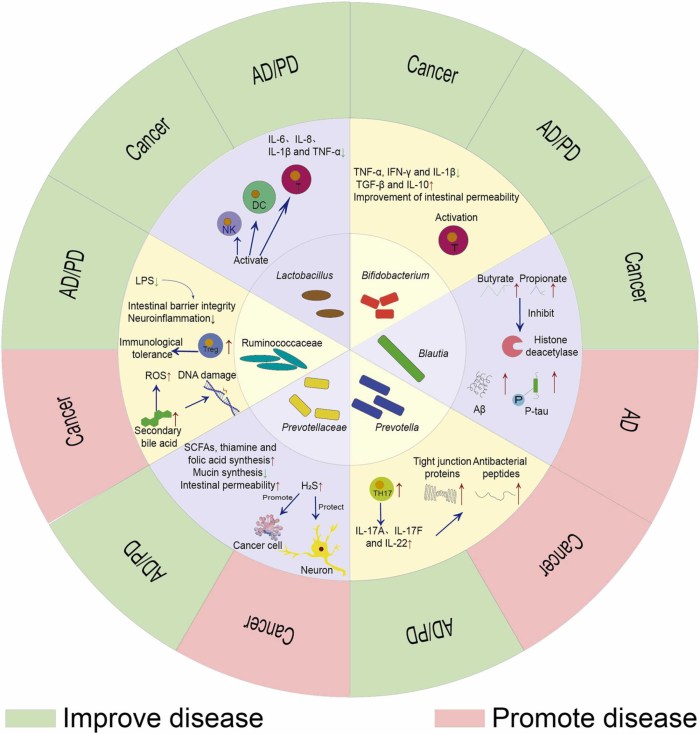
  • Bifidobacterium and Lactobacillus positively affect AD/PD and cancer;
  • Ruminococcaceae, Prevotellaceae, and Prevotella significantly improve on AD/PD but harm cancer; and
  • Blautia has universal anticancer ability, but it may aggravate AD pathology.

1-s2.0-S0753332221011276-gr1_lrg

This may partially explain the antagonistic relationship between neurodegenerative diseases and cancer. When some individuals suffer from one disease, their intestinal flora change to obtain a stronger resistance to the other disease than healthy individuals, which is consistent with statistical data.”

https://www.sciencedirect.com/science/article/pii/S0753332221011276 “Composition of intestinal flora affects the risk relationship between Alzheimer’s disease/Parkinson’s disease and cancer”


PXL_20211224_180111266