Practice what you preach, or shut up

A 2025 review subject was sulforaphane and brain health. This paper was the latest in a sequence where the retired lead author self-aggrandized his career by citing previous research.

He apparently doesn’t personally do what these research findings suggest people do. The lead author is a few weeks older than I am, and has completely white hair per an interview (Week 34 comments). I’ve had dark hair growing in (last week a barber said my dark hair was 90%) since Week 8 of eating broccoli sprouts every day, which is a side effect of ameliorating system-wide inflammation and oxidative stress.

If the lead author followed up with what his research investigated, he’d have dark hair, too. Unpigmented white hair and colored hair are both results of epigenetics.

Contrast this lack of personal follow-through of research findings with Dr. Goodenowe’s protocol where he compared extremely detailed personal brain measurements at 17 months and again at 31 months. He believes enough in his research findings to personally act on them, and demonstrate to others how personal agency can enhance a person’s life.

It’s every human’s choice whether or not we take responsibility for our own one precious life. I’ve read and curated on this blog many of this paper’s references. Five years ago for example:

So do more with their information than just read.

https://www.mdpi.com/2072-6643/17/8/1353 “Sulforaphane and Brain Health: From Pathways of Action to Effects on Specific Disorders”

An elevator pitch for plasmalogen precursors

An excerpt from the latest video at Dr. Goodenowe’s Health Matters podcast, Episode 7 “The Truth about Parkinson’s”, starting at 50:30:

“What’s exciting about this community medicine focus that we’ve switched to which basically says: How do we develop technologies in a way that they can be incorporated into a community model versus a pharmaceutical drug model? People can actually do I would say self-experiment just the way you self-experiment with your own diet because these are fundamentally dietary nutrition molecules.

Could you give me an elevator pitch because there are probably people listening who are thinking what is this plasmalogen precursor and for sure how is it having this dramatic effect?

Plasmalogens are the most important nutrient that nobody knows about. Normally you don’t know about it because the body is usually pretty good at making them. What makes plasmalogens unique is that your body makes them kind of like cannon fodder, the first group of people that go into war. Your body throws them out for destruction. They absorb oxidative stress and get destroyed in the process.

They’re stored in your cell membranes. 50% of the membranes of your heart are these plasmalogen molecules. When your heart gets inflamed, what your heart does is it dumps these plasmalogens out of its membranes to douse the flame of inflammation. After inflammation is under control, your body naturally builds these things back up again.

But if you have an inability to make enough plasmalogens, these inflammation events knock you down and keep you down. So plasmalogen precursors are critical for maintaining high levels of plasmalogens across your body, not just in your brain (30% of the lipids in your brain) but in your heart, your lungs, your kidneys.”


PXL_20241117_185248742~2

Consequences of perinatal stress

A 2024 rodent study followed up earlier studies of perinatal stress:

“Stress is a multisystemic and multiscale reaction experienced by living beings in response to a wide range of stimuli, encompassing a highly complex order of biological and behavioral responses in mammals, including humans. In the present study, we evaluated changes in mRNA levels in 88 regions of interest (ROIs) in male rats both exposed to perinatal stress and not exposed.

Depending on critical life stage (e.g., perinatal life, infancy, childhood, adolescence, aging), duration, and type of stressor, different effects can be detected by examining behavioral and physiological functions. Stress is related to several cognitive processes, including spatial and declarative memory (involving the hippocampus), fear and memories of emotionally charged events (involving the amygdala), and executive functions and fear extinction (involving the prefrontal cortex).

This PRS paradigm is a well-characterized animal model in which offspring is exposed to stress during pregnancy and after birth because of receiving defective maternal care. Offspring exhibit behavioral hyperreactivity, as well as increased susceptibility to drug addiction and decreased risk-taking behavior.

Starting from day 11 of gestation until delivery, pregnant females were subjected to restraint in a transparent plastic cylinder and exposed to bright light during three daily sessions of 45 min. Since gestational stress induces a <40% reduction of maternal behavior in stressed mothers, we refer to the whole procedure as Perinatal Stress.

Intercorrelation between the orbitofrontal cortex (OFC) and various brain regions such as the thalamus and amygdala were found disrupted in the PRS group. These functional correlations appear to be associated with regulation of executive functions, goal-directed behavior, and directed attention. Also, discrete functional links between the OFC and limbic regions and striatum were lost in the PRS group.

Decreased expression of the Homer1a gene across multiple brain regions after perinatal stress exposure may derange normal architecture of glutamatergic synapses during neurodevelopment and after birth. Changes at the glutamatergic synapse have been considered pivotal in adaptive stress behaviors.

Our results show that PRS preferentially reinforces the centrality of subcortical nodes, resulting in increased centrality of structures such as amygdala, caudate-putamen, and nucleus accumbens, suggestive of reduced cortical control over these regions. In conclusion, when analyzing Homer gene expression after stress exposure not only in terms of quantitative changes compared to the control group, but also as a basis for conducting brain connectivity graph analysis, we observed that perinatal stress could significantly affect the functional connectivity of brain regions implicated in modeling pathophysiology of severe psychiatric disorders.”

https://www.sciencedirect.com/science/article/pii/S0278584624001003 “Perinatal stress modulates glutamatergic functional connectivity: A post-synaptic density immediate early gene-based network analysis”


PXL_20240528_094419674

Maintaining your myelin, Part 1

Three papers on myelin and oligodendrocytes, starting with a 2023 review:

“Myelin is the spiral ensheathment of axons by a lipid and cholesterol-rich glial cell membrane that reduces capacitance and increases resistance of the axonal membrane. Axonal myelination speeds up nerve conduction velocity as a function of axon diameter.

While myelination proceeds rapidly after birth in the peripheral nervous system, central myelination is a spatially and temporally more regulated process. Ongoing myelination of the human brain has been documented at up to 40 years of age. This late myelination in the adult cortex is followed by exhaustion of oligodendrocyte precursor cells (OPC) with senescence and a gradual loss of myelin integrity in the aging brain.

The brain is well known for its high energy demands, specifically in gray matter areas. In white matter tracts, energy consumption is lower. Myelination poses a unique challenge for axonal energy generation where myelin sheaths cover more than 95% of the axonal surface areas.

Oligodendrocytes help support axonal integrity. Oligodendrocytes survive well in the absence of mitochondrial oxidative phosphorylation, and without signs of myelin loss, cell death, neurodegeneration or secondary inflammation.

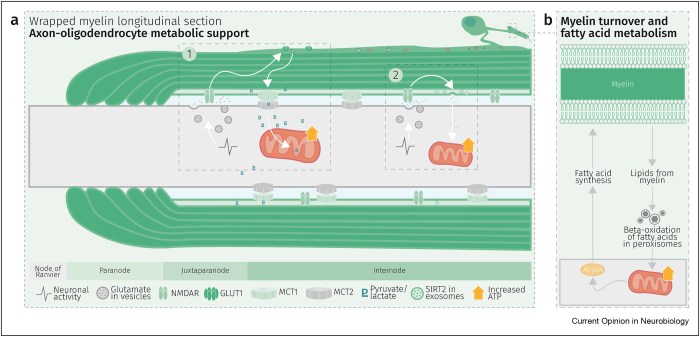
Glycolysis products of oligodendroglial origin are readily metabolized in axonal mitochondria. Oligodendroglial metabolic support is critical for larger and faster-spiking myelinated axons that also have a higher density of mitochondria. An essential requirement for the direct transfer of energy-rich metabolites from oligodendrocytes to the myelinated axonal compartment is ‘myelinic channels’ within the myelin sheath.

Interactions of oligodendrocytes and myelin with the underlying axon are complex and exceed the transfer of energy-rich metabolites. Continuous turnover of myelin membranes by lipid degradation and fatty acid beta-oxidation in mitochondria and peroxisomes leads to recycling of acetate residues by fatty acid synthesis and membrane biogenesis.
1-s2.0-S0959438823001071-gr2_lrg

In human multiple sclerosis (MS) and its animal model myelin oligodendrocyte glycoprotein-experimental autoimmune encephalomyelitis (MOG-EAE), acute inflammatory demyelination is followed by axonal degeneration in lesion sites that is mechanistically not fully understood. It is widely thought that demyelination and the lack of an axon-protective myelin sheath in the presence of numerous inflammatory mediators are the main causes of axon loss.

But unprotected axons improve rather than worsen the overall clinical phenotype of EAE mice which exhibited the same degree of autoimmunity. Thus, ‘bad myelin is worse than no myelin’ because MS-relevant myelin injuries perturb the integrity of myelinic channels and metabolic support.

Dysfunctional or injured oligodendrocytes that do not allow for compensation by any other cell types turn the affected myelin ensheathment into a burden of the underlying axonal energy metabolism, which causes irreversible axon loss. Any loss of myelin integrity, as seen acutely in demyelinating disorders or more gradually in the aging brain, becomes a risk factor for irreversible neurodegeneration.”

https://www.sciencedirect.com/science/article/pii/S0959438823001071 “Expanding the function of oligodendrocytes to brain energy metabolism”


A 2024 review focused on myelin and oligodendrocyte plasticity:

“This review summarizes our current understanding of how myelin is generated, how its function is dynamically regulated, and how oligodendrocytes support the long-term integrity of myelinated axons.

Apart from its unique ultrastructure, there are several other exceptional features of myelin. One is certainly its molecular composition. Another is its extraordinary stability. This was compellingly illustrated when 5000-year-old myelin with almost intact ultrastructure was dissected from a Tyrolean Ice Man.

Myelin is a stable system in contrast to most membranes. However, myelin is compartmentalized into structurally and biochemically distinct domains. Noncompacted regions are much more dynamic and metabolically active than tightly compacted regions that lack direct access to the membrane trafficking machinery of oligodendrocytes.

The underlying molecular basis for stability of myelin is likely its lipid composition with high levels of saturated, long chain fatty acids, together with an enrichment of glycosphingolipids (∼20% molar percentage of total lipids) and cholesterol (∼40% of molar percentage of total lipids). In addition, myelin comprises a high proportion of plasmalogens (ether lipids) with saturated long-chain fatty acids. In fact, ∼20% of the fatty acids in myelin have hydrocarbon chains longer than 18 carbon atoms (∼1% in the gray matter) and only ∼6% of the fatty acids are polyunsaturated (∼20% in gray matter).

With maturation of oligodendrocytes, the plasma membrane undergoes major transformations of its structure. Whereas OPCs are covered by a dense layer of large and negatively charged self-repulsive oligosaccharides, compacted myelin of fully matured oligodendrocytes lacks most of these glycoprotein and complex glycolipids.

Schematic depiction of an oligodendrocyte that takes up blood-derived glucose and delivers glycolysis products (pyruvate/lactate) via monocarboxylate transporters (MCT1 and MCT2) to myelinated axons. Oligodendrocytes and myelin membranes are also coupled by gap junctions to astrocytes, and thus indirectly to the blood–brain barrier.

oligodendrocyte

Adaptive myelination refers to dynamic events in oligodendroglia driven by extrinsic factors such as experience or neuronal activity, which subsequently induces changes in circuit structure and function. Understanding how these adaptive changes in neuron-oligodendroglia interactions impact brain function remains a pressing question for the field.

Transient social isolation during adulthood results in chromatin and myelin changes, but does not induce consequent behavioral alterations. When mice undergo a social isolation paradigm during early life development, they similarly exhibit deficits in prefrontal cortex function and myelination, but these deficiencies do not recover with social reintroduction. This implicates a critical period for social deprivation effects on myelin dynamics. Experience-dependent changes in myelin dynamics may depend on not only the age, brain region, and cell type studied, but also the specific myelin structural change assessed.

Local synaptic neurotransmitter release along an axon not only affects the number of OPCs and oligodendrocytes associated with that axon and local synthesis of myelin proteins, but also drives preferential selection of active axons for myelination over the ensheathment of electrically silenced neighboring axons. Neuronal activity–induced plasticity may preferentially impact brain regions that remain incompletely myelinated compared to more fully myelinated tracts.

Whereas the myelin sheath has been regarded for a long time as an inert insulating structure, it has now become clear that myelin is metabolically active with cytoplasmic-rich pathways, myelinic channels, for movement of macromolecules into the periaxonal space. The myelin sheath and its subjacent axon need to be regarded as one functional unit, which are not only morphological but also metabolically coupled.”

https://cshperspectives.cshlp.org/content/early/2024/04/15/cshperspect.a041359 “Oligodendrocytes: Myelination, Plasticity, and Axonal Support” (not freely available) Thanks to Dr. Klaus-Armin Nave for providing a copy.


A 2024 rodent study investigated oligodendrocyte precursor cell transcriptional and epigenetic changes:

“We used single-cell RNA sequencing (scRNA-seq), single-cell ATAC sequencing (scATAC-seq), and single-cell spatial transcriptomics to characterize murine cortical OPCs throughout postnatal life. One group (active, or actOPCs) is metabolically active and enriched in white matter. The second (homeostatic, or hOPCs) is less active, enriched in gray matter, and predicted to derive from actOPCs. Relative to developing OPCs, both actOPCs and hOPCs are less active metabolically and have less open chromatin.

In adulthood, these two groups are transcriptionally but not epigenetically distinct, indicating that they may represent different states of the same OPC population. If that is the case, then one model is that the parenchymal environment maintains adult OPCs within an hOPC state, whereas those OPCs recruited into white matter or exposed to demyelinated axons may transition toward an actOPC state in preparation for making new oligodendrocytes. We do not yet know the functional ramifications of these differences, but this finding has clear implications for the development of therapeutic strategies for adult remyelination.

opcs

Another finding is that developing but not adult actOPC chromatin is preferentially open for binding motifs associated with neural stem cells, transit-amplifying precursors, and neurogenesis. Although this may simply reflect their origin as the immediate progeny of neonatal neural precursor cells, it may also explain why developing but not adult OPCs have the capacity to make neurons in culture.

If we could, at least in part, reverse the global chromatin shutdown that occurs between development and adulthood, then perhaps adult OPCs may reacquire the ability to make neurons or become better able to generate new oligodendrocytes for remyelination.”

https://www.cell.com/stem-cell-reports/fulltext/S2213-6711(24)00077-8 “Single-cell approaches define two groups of mammalian oligodendrocyte precursor cells and their evolution over developmental time”

Continued in Part 2.


PXL_20240414_103442372

A good activity for bad weather days

A free educational series recorded in 2021-2022 available at https://drgoodenowe.com/dr-goodenowes-educational-seminars/ takes the viewer through underlying research and principles of Dr. Goodenowe’s approach to health. It’s advertised as lasting four hours, but took me two days to view.

The series’ discussions and references are background material to better understand later presentations and interviews. Points of interest included:

  • Seminar B100 shows that the metabolomic profile of people who regularly eat broccoli is different than others.
  • B109 clarifies how peroxisomal function is improved through resistance exercise and intermittent fasting.
  • C103 and C104 show how plasmalogens act against neurodegeneration (Parkinson’s disease and multiple sclerosis).

Texts below videos are additional information, not transcripts. C101 text is historically informative.


The B200 ProdromeScan tutorial will take more study. But unlike Labcorp tests, ordering a ProdromeScan requires using a practitioner in Dr. Goodenowe’s network.

I sent the following to Prodrome customer service earlier this month:

Please add me to your approved list for ProdromeScan.

Customer service replied:

“We only add health professionals to an approved list, not individuals.”

I responded:

Good morning. I looked at the websites of doctors who are associated with Dr. Goodenowe who are near me. All of them are too compromised for me to establish a doctor / patient relationship. But I’m glad they left up their blog posts from earlier this decade so I could see who they really were before I reached out to them.

I request an exception to the policy.

Customer service replied:

“There is no exception that can be made to this policy. You need to be a patient of a certified practitioner.”

I’ll escalate my request before my 90-day trial of Prodrome Glia and Neuro products ends so I can get an appropriate metabolomic status. Right now, I won’t involve someone I can’t trust just to know my ProdromeScan information that’s additional to next week’s Labcorp tests.

My treatment-result metabolomic data is probably not mature today on Day 29 of ProdromeGlia and ProdromeNeuro supplementation, resistance exercise, and intermittent fasting. I otherwise wouldn’t have experienced these two events:


I have a quibble with the series’ recommendations for taking N-acetyl cysteine. Relevant views and research:

Switch on your Nrf2 signaling pathway pointed out:

“We use NAC in the lab all the time because it stops an Nrf2 activation. So that weak pro-oxidant signal that activates Nrf2, you switch it off by giving a dose of NAC. It’s a potent antioxidant in that right, but it’s blocking signalling. And that’s what I don’t like about its broad use.”

If someone bombs themself everyday with antioxidants, they’re doing nothing to improve training of their endogenous systems’ defensive functions. What happens when they stop bombing? One example was a 2022 human study that found GlyNAC-induced improvements dissolved back to baseline after supplements stopped.

Also, Precondition your defenses with broccoli sprouts highlighted NAC’s deleterious effects on autophagy and lysosome functions:

“TFEB activity is required for sulforaphane (SFN)-induced protection against both acute oxidant bursts and chronic oxidative stress. SFN-induced TFEB nuclear accumulation was completely blocked by pretreatment of cells by N-acetyl-cysteine (NAC), or by other commonly used antioxidants. NAC also blocked SFN-induced mRNA expression of TFEB target genes, as well as SFN-induced autophagosome formation.”

If a secondary goal of taking NAC per is also necessary for the formation of glutathione, taurine can do that without an antioxidant bomb. Taurine supplementation will free up cysteine to do things other than synthesize taurine, like synthesize glutathione.


PXL_20231123_194849211.MP

Brain restoration with plasmalogens

In this 2023 presentation for a professional audience, Dr. Dayan Goodenowe showed an example of what could be done (in the form of what he personally did at ages 53-54) to restore and augment brain structure and function over a 17-month period by taking plasmalogens and supporting supplements:

https://drgoodenowe.com/recording-of-dr-goodenowes-presentation-from-the-peptide-world-congress-2023-is-now-available/

Follow the video along with its interactive transcript. Restorative / augmentative supplements included:

1. Nutritional Supplementation Strategy

Forms of MRI used to document brain structure and function changes were:

2. Advanced MRI Technologies

Brain volume decreases are the rule for humans beginning at age 40. Dr. Goodenowe documented brain volume increases, which aren’t supposed to happen, but did per the below slide of overall results:

3. Reversing Brain Shrinkage

“From a global cortical volume and thickness perspective, 17 months of high-dose plasmalogens reversed ~15 years of predicted brain deterioration.”


Specific increased adaptations in brain measurements over 17 months included:

  1. Cortical thickness .07/2.51 = +3%.
  2. White matter microstructure fractional anisotropy +8%.
  3. Nucleus accumbens volume +30%.
  4. Dopaminergic striatal terminal fields’ volume +18%.
  5. Cholinergic cortical terminal fields’ volume +10%.
  6. Occipital cortex volume +10%.
  7. Optic chiasm volume +225%.
  8. Nucleus basalis connectivity.
  9. Neurovascular coupling signal controlled by noradrenaline integrity.
  10. Amygdala volume +4% and its connectivity to the insula, indicating ongoing anxiety and emotional stress response.
  11. Parahippocampus volume +7%.
  12. Hippocampus fractional anisotropy +5%.

No changes:

  1. Amygdala connectivity to the ventral lateral prefrontal cortex, the same part of the brain that relates to placebo effect.
  2. Hippocampus connectivity.

Decreased adaptations in brain measurements included:

  1. White matter microstructure radial diffusivity -10%.
  2. Amygdala connectivity to the anterior cingulate cortex to suppress / ignore / deny anxiety response.
  3. Amygdala connectivity to the dorsal lateral prefrontal cortex.
  4. Entorhinal cortex volume -14%.
  5. Hippocampus volume -6%.
  6. Hippocampus mean diffusivity (white matter improved, with more and tighter myelin) -4%.

The other half of this video was a lively and wide-ranging Q&A session.


The referenced 2023 study of 653 adults followed over ten years showed what brain deterioration could be expected with no interventions. Consider these annual volume decrease rates to be a sample of a control group:

etable 3

https://jamanetwork.com/journals/jamanetworkopen/fullarticle/2806488 “Characterization of Brain Volume Changes in Aging Individuals With Normal Cognition Using Serial Magnetic Resonance Imaging”

Also see a different population’s brain shrinkage data in Prevent your brain from shrinking.


The daily plasmalogen precursor doses Dr. Goodenowe took were equivalent to 100 mg softgel/kg, double the maximum dose of 50 mg softgel/kg provided during the 2022 clinical trial of cognitively impaired old people referenced in Plasmalogens Parts 1, 2, and 3.

He mentions taking 5 ml in the morning and 5 ml at night because he used the Prodrome oil products. 1 ml of a Prodrome oil plasmalogen precursor product equals 900 mg of their softgel product.


“My brain is trying to minimize long-term effects of pain/stress by suppressing my memory of it. But this can only go on for so long before it becomes an entrenched state.

I have solved the sustenance side of the equation. I need to work harder to solve the environmental side.”

While I agree that we each have a responsibility to ourselves to create an environment that’s conducive to our health, the above phenomenon isn’t necessarily resolvable by changing an individual’s current environment. My understanding is that long-term effects of pain, stress, and related human experiences are usually symptoms of causes that started much earlier in our lives.

Adjusting one’s present environment may have immediate results, but probably won’t have much therapeutic impact on long-term issues. Early life memories and experiences are where we have to gradually go in order to stop being driven by what happened back then.

See Dr. Arthur Janov’s Primal Therapy for its principles and explanations. I started Primal Therapy at a similar age, 53, and continued for three years.


Continued with Part 2.

Plasmalogens, Part 3

The 2022 plasmalogen clinical trial mentioned in Parts 1 and 2 bypassed peroxisome metabolism of cognitively impaired people per discussion of the below diagram:

fcell-10-864842-g003

Increasing the body’s fasting state with time-restricted eating, and preventing muscle atrophy with resistance exercise, were offered as the two most important ways to improve peroxisomal function.

I didn’t find any relevant 2023 human studies (where I could access the full study) on different non-drug treatments that I was willing to do. A 2023 review outlined aspects of peroxisomes, to include a few older human studies:

“Peroxisomes are small, single-membrane-bound organelles, which are dynamic and ubiquitous. Peroxisomes directly interact with other organelles, such as endoplasmic reticulum, mitochondria, or lysosomes. Peroxisomes exert different functions in various cells through both catabolic and anabolic pathways.

The main functions of peroxisomes can be categorized as reactive oxygen species (ROS) metabolism, lipid metabolism, and ether-phospholipid biosynthesis. Peroxisomes also play important roles in inflammatory signaling and the innate immune response.”

1-s2.0-S2667325823001425-gr3_lrg

https://www.sciencedirect.com/science/article/pii/S2667325823001425 “Peroxisome and pexophagy in neurological diseases”


1. Since I haven’t recently tried the two main ways to improve peroxisomal function, I’ll give them a go over the next three months:

  • Expect to get my feeding timeframe to within eight hours. Don’t know about making it short like 6 hours, because my first meal of the day is 35 calories of microwaved cruciferous sprouts, then I wait an hour before eating anything else.
  • Resistance exercise progress should be measurable, as I recorded exercises during the first ten weeks of eating broccoli sprouts every day 3.5+ years ago.

2. Don’t know that I’ll recognize any cognitive improvements to the extent I did during Week 9.

  • I don’t have a young brain anymore, and I’m sure some decline could be measured in memory tests. But I’m not going to become a lab rat.
  • There’s an occasional annoyance that’s been going on for some time, especially when I’m distracted. It happens when I think of something to do, and it somehow becomes a short-term memory that I did it, instead of going into a Things To Do queue. It’s largely self-correcting. For example, regardless of what I paid, I’ll drive back to the grocery store self-checkout to retrieve a third bag that didn’t make it home. A pink-haired employee said young people leave their paid-for groceries behind all the time. It’s usually more of a reality disconnect for me than forgetfulness, because I have a memory that I performed the action. Definitely room for improvement.

3. Don’t know that I’d see biochemical changes such as some described in Part 1. Maybe I’ll move up an annual physical to compare it with the last one in May?

  • I already have very little oxidative stress, very little inflammation, low triglycerides, high HDL, and no major improvements are indicated on CBC / CMP / lipid panels.
  • Take supplements to ensure other things like acetylcholine neurotransmitter availability, one-carbon / methylation metabolism, vitamin / mineral adequacy.

4. I started the two Prodrome plasmalogen precursor supplements (ProdromeGlia and ProdromeNeuro) a week ago, and take their standard doses. My thought is that resultant plasmalogens won’t degrade very much if their primary use isn’t to immediately address oxidative stress and inflammation. That could give these extra plasmalogens a chance to make larger homeostatic contributions in myelin and membrane areas.

I don’t expect any particular effects to manifest. But I’m interested to see if these two areas would be affected:

  • My left ulnar nerve has been giving me problems for over five years, and several resistance exercises aggravate it. I’ve had two nerve continuity tests during that time to confirm. Numbness and pain are intermittent, though.
  • I still take acetaminophen several times a day for other pain.

None of the above treatments are specifically indicated. But if time-restricted feeding and/or extra plasmalogens have an effect on left ulnar or other pain, maybe I’ll be able to make better progress on resistance exercise.

Update #1 11/13/2023

Update #2 11/22/2023

Update #3 12/13/2023 comments

Update #4 1/30/2024

Update #5 3/31/2024

Neuritogenesis

Three 2023 papers on the initial stage of neuronal differentiation, starting with a rodent study of taurine’s effects:

“We aimed to assess the role of taurine (TAU) in axonal sprouting against cerebral ischemic injury, clarify the function of mitochondria in TAU-induced axonal sprouting, and further determine the underlying potential molecular mechanism.

experiment design

We determined that TAU improved motor function recovery and restored neurogenesis in ischemic stroke. This possibly occurred via improvements in mitochondrial function.

We investigated that the Sonic hedgehog (Shh) pathway exerted an important role in these effects. Our study findings highlighted the novel viewpoint that TAU promoted axonal sprouting by improving Shh-mediated mitochondrial function in cerebral ischemic stroke.”

https://www.scielo.br/j/acb/a/nxKvGXGk9g6gRkHxybMfbYJ/?lang=en “Taurine promotes axonal sprouting via Shh-mediated mitochondrial improvement in stroke”


A rodent study investigated effects of a soy isoflavone gut microbiota metabolite:

“Perinatally-infected adolescents living with HIV-1 (pALHIV) appear uniquely vulnerable to developing substance use disorders (SUD). Medium spiny neurons (MSNs) in the nucleus accumbens core (NAcc), an integrator of cortical and thalamic input, have been implicated as a key structural locus for the pathogenesis of SUD.

Treatment with estrogenic compounds (e.g., 17β-estradiol) induces prominent alterations to neuronal and dendritic spine structure in the NAcc supporting an innovative means to remodel neuronal circuitry. The carcinogenic nature of 17β-estradiol, however, limits its translational utility.

Plant-derived polycyclic phenols, or phytoestrogens, whose chemical structure resembles 17β-estradiol may afford an alternative strategy to target estrogen receptors. The phytoestrogen S-Equol (SE), permeates the blood-brain barrier, exhibits selective affinity for estrogen receptor β (ERβ), and serves as a neuroprotective and/or neurorestorative therapeutic for HIV-1-associated neurocognitive and affective alterations.

Beginning at approximately postnatal day (PD) 28, HIV-1 transgenic (Tg) animals were treated with a daily oral dose of 0.2 mg of SE. The SE dose of 0.2 mg was selected for two primary reasons, including:

  1. A dose-response experimental paradigm established 0.2 mg of SE as the most effective dose for mitigating neurocognitive deficits in sustained attention in the HIV-1 Tg rat; and
  2. The dose, which yielded a daily amount of 0.25–1.0 mg/kg/SE (i.e., approximately 2.5–10 mg in a 60 kg human), is translationally relevant (i.e., well below the daily isoflavone intake of most elderly Japanese.

Daily oral treatment continued through PD 90.

j_nipt-2023-0008_fig_002

HIV-1 Tg animals exhibited an initial increase in dendrite length (A) and the number of dendritic spines (B) early in development; parameters which subsequently decreased across time. In sharp contrast, dendrite length and the number of dendritic spines were stable across development in control animals.

Targeting these alterations with the selective ERβ agonist SE during the formative period induces long-term modifications to synaptodendritic structure, whereby MSNs in the NAcc in HIV-1 Tg animals treated with SE resemble control animals at PD 180.”

https://www.degruyter.com/document/doi/10.1515/nipt-2023-0008/html “Constitutive expression of HIV-1 viral proteins induces progressive synaptodendritic alterations in medium spiny neurons: implications for substance use disorders”


A rodent brain cell study investigated soy isoflavones’ effects on a different estrogen receptor:

“We evaluated effects of isoflavones using mouse primary cerebellar culture, astrocyte-enriched culture, Neuro-2A clonal cells, and co-culture with neurons and astrocytes. Soybean isoflavone-augmented estradiol mediated dendrite arborization in Purkinje cells.

These results indicate that ERα plays an essential role in isoflavone-induced neuritogenesis. However, G-protein-coupled ER (GPER1) signaling is also necessary for astrocyte proliferation and astrocyte–neuron communication, which may lead to isoflavone-induced neuritogenesis.

We highlight the novel possibility that isoflavones enhance dendritogenesis and neuritogenesis, indicating that they can be a useful supplementary compound during brain development or in the injured brain.”

https://www.mdpi.com/1422-0067/24/10/9011 “Isoflavones Mediate Dendritogenesis Mainly through Estrogen Receptor α”

Taurine week #7: Brain

Finishing a week’s worth of 2022 taurine research with two reviews of taurine’s brain effects:

“We provide a overview of brain taurine homeostasis, and review mechanisms by which taurine can afford neuroprotection in individuals with obesity and diabetes. Alterations to taurine homeostasis can impact a number of biological processes such as osmolarity control, calcium homeostasis, and inhibitory neurotransmission, and have been reported in both metabolic and neurodegenerative disorders.

Models of neurodegenerative disorders show reduced brain taurine concentrations. On the other hand, models of insulin-dependent diabetes, insulin resistance, and diet-induced obesity display taurine accumulation in the hippocampus. Given cytoprotective actions of taurine, such accumulation of taurine might constitute a compensatory mechanism that attempts to prevent neurodegeneration.

nutrients-14-01292-g003

Taurine release is mainly mediated by volume-regulated anion channels (VRAC) that are activated by hypo-osmotic conditions and electrical activity. They can be stimulated via glutamate metabotropic (mGluR) and ionotropic receptors (mainly NMDA and AMPA), adenosine A1 receptors (A1R), and metabotropic ATP receptors (P2Y).

Taurine mediates its neuromodulatory effects by binding to GABAA, GABAB, and glycine receptors. While taurine binding to GABAA and GABAB is weaker than to GABA, taurine is a rather potent ligand of the glycine receptor. Reuptake of taurine occurs via taurine transporter TauT.

Cytoprotective actions of taurine contribute to brain health improvements in subjects with obesity and diabetes through various mechanisms that improve neuronal function, such as:

  • Modulating inhibitory neurotransmission, which promotes an excitatory–inhibitory balance;
  • Stimulating antioxidant systems; and
  • Stabilizing mitochondria energy production and Ca2+ homeostasis.”

https://www.mdpi.com/2072-6643/14/6/1292/htm “Taurine Supplementation as a Neuroprotective Strategy upon Brain Dysfunction in Metabolic Syndrome and Diabetes”


A second review focused on taurine’s secondary bile acids produced by gut microbiota:

“Most neurodegenerative disorders are diseases of protein homeostasis, with misfolded aggregates accumulating. The neurodegenerative process is mediated by numerous metabolic pathways, most of which lead to apoptosis. Hydrophilic bile acids, particularly tauroursodeoxycholic acid (TUDCA), have shown important anti-apoptotic and neuroprotective activities, with numerous experimental and clinical evidence suggesting their possible therapeutic use as disease-modifiers in neurodegenerative diseases.

Biliary acids may influence each of the following three mechanisms through which interactions within the brain-gut-microbiota axis take place: neurological, immunological, and neuroendocrine. These microbial metabolites can act as direct neurotransmitters or neuromodulators, serving as key modulators of the brain-gut interactions.

The gut microbial community, through their capacity to produce bile acid metabolites distinct from the liver, can be thought of as an endocrine organ with potential to alter host physiology, perhaps to their own favour. Hydrophilic bile acids, currently regarded as important hormones, exert modulatory effects on gut microbiota composition to produce secondary bile acids which seem to bind a number of receptors with a higher affinity than primary biliary acids, expressed on many different cells.

40035_2022_307_Fig1_HTML

TUDCA regulates expression of genes involved in cell cycle regulation and apoptotic pathways, promoting neuronal survival. TUDCA:

  • Improves protein folding capacity through its chaperoning activity, in turn reducing protein aggregation and deposition;
  • Reduces reactive oxygen species production, leading to protection against mitochondrial dysfunction;
  • Ameliorates endoplasmic reticulum stress; and
  • Inhibits expression of pro-inflammatory cytokines, exerting an anti-neuroinflammatory effect.

Although Alzheimer’s disease, Huntington’s disease, Parkinson’s disease, amyotrophic lateral sclerosis (ALS), and cerebral ischemia have different disease progressions, they share similar pathways which can be targeted by TUDCA. This makes this bile acid a potentially strong therapeutic option to be tested in human diseases. Clinical evidence collected so far has reported comprehensive data on ALS only.”

https://www.ncbi.nlm.nih.gov/pmc/articles/PMC9166453/ “Tauroursodeoxycholic acid: a potential therapeutic tool in neurodegenerative diseases”

State-dependent memory

This 2021 review by two coauthors of What can cause memories that are accessible only when returning to the original brain state? provided evidence for alternative interpretations of memory experiments:

“Memory consolidation hypotheses postulate a long series of various and time consuming elaborate processes that come to protect memory from disruption after various periods of time. For more than fifty years, consolidation hypotheses led to the idea that:

  1. Memories are fragile and can easily be disrupted; and
  2. Memories require several hours to be encoded (Cellular Consolidation), and extensive periods of time (days to weeks and even months and years), to be definitely stabilized (Systems Consolidation).

Although these views rely on well substantiated findings, their interpretation can be called into question.

An alternative position is that amnesia reflects retrieval difficulties due to contextual changes. This simple explanation is able to account for most, if not all, results obtained in consolidation studies.

memory state dependency

Systems Consolidation can be explained in terms of a form of state-dependency.

Recent memory remains detailed, context-specific (in animals), and vivid (in humans) and very susceptible to contextual changes. With the passage of time, memories become less precise, and retention performance less and less affected by contextual changes.”

https://www.sciencedirect.com/science/article/abs/pii/S0149763421005510 “Revisiting systems consolidation and the concept of consolidation” (not freely available)


I came across this review while trying to understand why a 2022 rodent study felt wrong. That study followed the standard memory paradigm, and I appreciate its lead author providing a copy since it wasn’t otherwise available.

But those researchers boxed themselves in with consolidation explanations for findings. They used drugs to change subjects’ memories’ contexts between training and testing. They didn’t see that tested memories were dependent on subjects’ initial brain states.

This review cited a paper abstracted in Resiliency in stress responses, namely Neurobiological mechanisms of state-dependent learning.


Crab for lunch

PXL_20220419_190655701

Human agency vs. brain dysfunction

This 2021 human study used epigenetic clock technology to assess chronic inflammation as a driver of cognitive decline through its effects on brain structure:

“An epigenetic measure of C-reactive protein (DNAm CRP) was assembled for each participant. We found that higher inflammatory burden, indexed by DNAm CRP scores, associated with poor cognitive and neuroimaging brain health outcomes.

inflammation vs cognitive ability

DNAm CRP exhibited significantly larger associations with brain structural MRI metrics (including global grey and white matter atrophy, poorer white matter microstructure, and increased white matter hyperintensity burden) than serum CRP. Given that the 7 CpGs which make up DNAm CRP score reside in inflammation and vascular-related genes, these DNAm CRP-brain MRI associations may be capturing the impact of upstream inflammatory activity above and beyond that of serum CRP levels.

Our results indicate that some cognitive domains (processing speed) may be more mediated by brain structural consequences of chronic inflammation than others (verbal memory, visuospatial ability).

Our results add to the evidence base that DNAm-based predictors of inflammation may act as a quantifiable archive of longitudinal effects of these exposures – and other unaccounted for health and genetic profiles – that serum CRP levels fail to capture. By utilising an epigenetic inflammation measure, which integrates information from multiple immune-related CpG sites, we may provide a more reliable measure of chronic inflammation and thus a more comprehensive overview of consequences of chronic inflammation on brain structure and function.”

https://n.neurology.org/content/early/2021/11/17/WNL.0000000000012997.long “DNA Methylation and Protein Markers of Chronic Inflammation and Their Associations With Brain and Cognitive Aging”


These researchers essentially negated many of their findings by acknowledging:

“Although we endeavoured to remove participants with cognition-related pathology, these were screened via self-reported diagnoses, and we may be missing undiagnosed or subclinical incident neurodegenerative pathology.”

It wasn’t sufficient to claim in the Abstract section “Participants (N = 521) were cognitively normal, around 73 years of age” then include in the Discussion section a one-sentence limitation of relying on self-reports. Everyone defends themself against current and past realities and experiences.

Hard to imagine that objective measures such as the three comprising cognitive ability weren’t better screens. But then too many 73-year-old subjects may not have been “cognitively normal” and this study wouldn’t be adequately powered?

Can humans counteract inflammation? Non-communicable diseases? Smoking? Immune system degradation? Yes. No personal-agency actions were mentioned.

Also note this study’s social norming. The above-pictured 30-year-old female was busy at work, and subsequently hoisted a cat instead of a child in later years.

Take responsibility for your own one precious life.

PXL_20211118_114858264

Blood pressure and pain

A trio of papers, with the second and third citing a 2013 review:

“The relationship between pain and hypertension is potentially of great pathophysiological and clinical interest, but is poorly understood. Perception of acute pain initially plays an adaptive role, which results in prevention of tissue damage.

The consequence of ascending nociception is recruitment of segmental spinal reflexes through physiological neuronal connections:

  • In proportion to magnitude and duration of the stimulus, these spinal reflexes cause sympathetic nervous system activation, which increases peripheral resistances, heart rate, and stroke volume; and
  • The response also involves the neuroendocrine system, in particular, the hypothalamic-pituitary-adrenal axis, in addition to further activation of the sympathetic system by adrenal glands.

Persistent pain tends to become chronic and to increase BP values. After a long time, dysfunction of release of endogenous opioids results in a reduction of their analgesic effect. A vicious circle is established, where further pain leads to a reduction in pain tolerance, associated with decreased analgesia mediated by baroreceptors, in a kind of process of exhaustion.”

https://onlinelibrary.wiley.com/doi/epdf/10.1111/jch.12145 “The Relationship Between Blood Pressure and Pain”


A second paper was a 2021 human experimental pain study:

“We investigated the effectiveness of physiological signals for automatic pain intensity estimation that can either substitute for, or complement patients’ self-reported information. Results indicate that for both subject-independent and subject-dependent scenarios, electrodermal activity (EDA) – which is also referred to as skin conductance (SC) or galvanic skin response – was the best signal for pain intensity estimation.

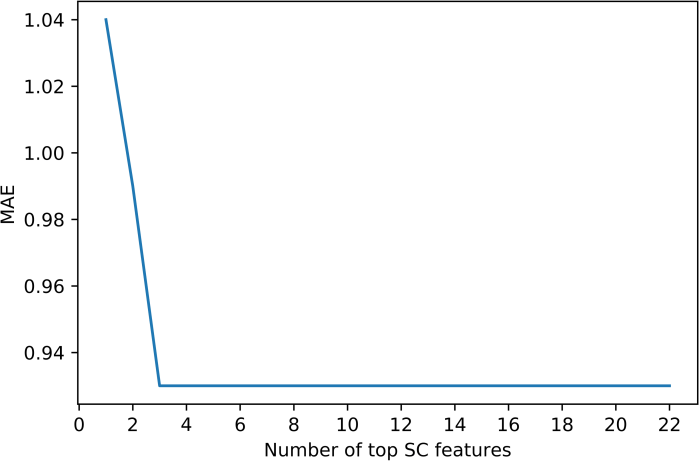
EDA gave mean absolute error (MAE) = 0.93 using only 3 time-series features:

  1. Time intervals between successive extreme events above the mean;
  2. Time intervals between successive extreme events below the mean; and
  3. Exponential fit to successive distances in 2-dimensional embedding space.

Although we obtained good results using 22 EDA features, we further explored to see if we could reach similar or better results with fewer EDA features. This plot highlights that by considering only the top 3 features, we obtained the same level of performance given by all 22 features together.

journal.pone.0254108.g002

This is the first study that achieved less than 1-unit error for continuous pain intensity estimation using only one physiological sensor’s 3 time-series feature, and a Support Vector Regression machine learning model. Considering that this is an encouraging result, we can estimate objective pain using only the EDA sensor, which needs neither a complex setup nor a complex computationally intense machine learning algorithm.

This study paves the way for developing a smart pain measurement wearable device that can change the quality of pain management significantly.”

https://doi.org/10.1371/journal.pone.0254108 “Exploration of physiological sensors, features, and machine learning models for pain intensity estimation”


A third paper was a 2020 human rotator cuff surgery study:

“Results of our study demonstrated that:

  • Pain during the early postoperative period;
  • Time until occurrence of a retear; and
  • Existence of hypertension

were correlated with severity of pain in patients with a retorn rotator cuff.

Pain was selected as the sole outcome parameter of this study because:

  • Pain is an important factor that compels patients to seek treatment for rotator cuff tears, along with functional disability;
  • Pain and subjective functional deficits are important factors that influence a surgeon’s decision to continue with treatment in cases of retearing; and
  • Analyzing pain severity can be a good way to determine patients’ overall satisfaction after rotator cuff repair.

However, pain is not always correlated with disease severity or tear size and vice versa. A lack of pain does not necessarily depend on integrity of the repaired tendon or constitute a good prognosis. In fact, patients with partial-thickness rotator cuff tears showed more pain than did those with full-thickness tears.

Existence of hypertension had a proportional relationship with pain at 12 months postoperatively in patients with retears. This can be interpreted as a suggestion that pain in patients with retears is not acute, but rather chronic, and may be connected to pain in the early postoperative period at 3 months. However, results of this study cannot explain benefits of controlling hypertension in alleviating pain in patients with retears.”

https://journals.sagepub.com/doi/10.1177/2325967120947414 “Factors Related to Pain in Patients With Retorn Rotator Cuffs: Early Postoperative Pain Predicts Pain at 12 Months Postoperatively”


PXL_20210722_100353787

The brainstem’s parabrachial nucleus

I often reread blog posts that you read. Yesterday, a reader clicked Treat your gut microbiota as one of your organs. On rereading, I saw that I didn’t properly reference the parabrachial nucleus as being part of the brainstem.

A “parabrachial nucleus” search led me to a discussion of two 2020 rodent studies:

“Nociceptive signals entering the brain via the spinothalamic pathway allow us to detect location and intensity of a painful sensation. But, at least as importantly, nociceptive inputs also reach other brain regions that give pain its emotional texture.

Key to that circuitry is the parabrachial nucleus (PBN), a tiny cluster of cells in the brainstem associated with homeostatic regulation of things like temperature and food intake, response to aversive stimuli, and perceptions of many kinds. Two new papers advance understanding of PBN’s role in pain:

  1. The PBN receives inhibitory inputs from GABAergic neurons in the central nucleus of the amygdala (CeA). Those inputs are diminished in chronic pain conditions, leading to PBN hyperactivity and increased pain perception. Disinhibition of the amygdalo-parabrachial pathway may be crucial to establishing chronic pain.
  2. The dorsal PBN is the first receiver of spinal nociceptive input. It transmits certain inputs to the ventral medial hypothalamus and lateral periaqueductal gray. Certain of its neurons transmit noxious inputs to the external lateral PBN, which then transmits those inputs to the CeA and bed nucleus of the stria terminalis. This is quite new, that nociceptive information the CeA receives has already been processed by the PBN. They measured many pain-related behaviors: place aversion, avoidance, and escape. That allowed them to dissect different pain-related behaviors in relation to distinct subnuclei of the PBN.

1Inline2

Chronic pain is manufactured by the brain. It’s not a one-way process driven by something coming up from the periphery. The brain is actively constructing a chronic pain state in part by this recurring circuit.

A role of the PBN is to sound an alarm when an organism is in danger, but its roles go further. It is a key homeostatic center, weighing short-term versus long-term survival. If you’re warm, fed, and comfortable, organisms can address long-term directives like procreation. When you’re unsafe, though, you need to put those things off and deal with the emergency.”

https://www.painresearchforum.org/news/147704-parabrachial-nucleus-takes-pain-limelight “The Parabrachial Nucleus Takes the Pain Limelight”

https://www.jneurosci.org/content/40/17/3424 “An Amygdalo-Parabrachial Pathway Regulates Pain Perception and Chronic Pain”

https://www.sciencedirect.com/science/article/pii/S089662732030221X “Divergent Neural Pathways Emanating from the Lateral Parabrachial Nucleus Mediate Distinct Components of the Pain Response”


Two dozen papers have since cited these two studies. One that caught my eye was a 2021 rodent study:

“Migraines cause significant disability and contribute heavily to healthcare costs. Irritation of the meninges’ outermost layer (the dura mater), and trigeminal ganglion activation contribute to migraine initiation.

Dura manipulation in humans during neurosurgery is often painful, and dura irritation is considered an initiating factor in migraine. In rodents, dura irritation models migraine-like symptoms.

Maladaptive changes in central pain-processing regions are also important in maintaining pain. The parabrachial complex (PB) receives diverse sensory information, including a direct input from the trigeminal ganglion.

PB-projecting trigeminal ganglion neurons project also to the dura. These neurons represent a direct pathway between the dura, a structure implicated in migraine, and PB, a key node in chronic pain and aversion.”

https://www.sciencedirect.com/science/article/pii/S2452073X21000015 “Parabrachial complex processes dura inputs through a direct trigeminal ganglion-to-parabrachial connection”


PXL_20210704_095710109

The amino acid ergothioneine

A trio of papers on ergothioneine starts with a 2019 human study. 3,236 people without cardiovascular disease and diabetes mellitus ages 57.4 ± 6.0 were measured for 112 metabolites, then followed-up after 20+ years:

“We identified that higher ergothioneine was an independent marker of lower risk of cardiometabolic disease and mortality, which potentially can be induced by a specific healthy dietary intake.

overall mortality and ergothioneine

Ergothioneine exists in many dietary sources and has especially high levels in mushrooms, tempeh, and garlic. Ergothioneine has previously been associated with a higher intake of vegetables, seafood and with a lower intake of solid fats and added sugar as well as associated with healthy food patterns.”

https://heart.bmj.com/content/106/9/691 “Ergothioneine is associated with reduced mortality and decreased risk of cardiovascular disease”


I came across this study by its citation in a 2021 review:

“The body has evolved to rely on highly abundant low molecular weight thiols such as glutathione to maintain redox homeostasis but also play other important roles including xenobiotic detoxification and signalling. Some of these thiols may also be derived from diet, such as the trimethyl-betaine derivative of histidine, ergothioneine (ET).

image description

ET can be found in most (if not all) tissues, with differential rates of accumulation, owing to differing expression of the transporter. High expression of the transporter, and hence high levels of ET, is observed in certain cells (e.g. blood cells, bone marrow, ocular tissues, brain) that are likely predisposed to oxidative stress, although other tissues can accumulate high levels of ET with sustained administration. This has been suggested to be an adaptive physiological response to elevate ET in the damaged tissue and thereby limit further injury.”

https://www.sciencedirect.com/science/article/pii/S2213231721000161 “Ergothioneine, recent developments”


The coauthors of this review were also coauthors of a 2018 review:

“Ergothioneine is avidly taken up from the diet by humans and other animals through a transporter, OCTN1. Ergothioneine is not rapidly metabolised, or excreted in urine, and has powerful antioxidant and cytoprotective properties.

ergothioneine in foods

Effects of dietary ET supplementation on oxidative damage in young healthy adults found a trend to a decrease in oxidative damage, as detected in plasma and urine using several established biomarkers of oxidative damage, but no major decreases. This could arguably be a useful property of ET: not interfering with important roles of ROS/RNS in healthy tissues, but coming into play when oxidative damage becomes excessive due to tissue injury, toxin exposure or disease, and ET is then accumulated.”

https://febs.onlinelibrary.wiley.com/doi/full/10.1002/1873-3468.13123 “Ergothioneine – a diet-derived antioxidant with therapeutic potential”


I’m upping a half-pound of mushrooms every day to 3/4 lb. (340 g). Don’t think I could eat more garlic than the current six cloves.

PXL_20210606_095517049

I came across this subject in today’s video:

Red cabbage pigments and the brain

This 2020 sheep study measured red cabbage anthocyanin concentrations:

“Study aim was to determine whether strongly bioactive hydrophilic red cabbage anthocyanins cross the blood-cerebrospinal fluid barrier (blood-CSF barrier) and whether there is a selectivity of this barrier towards these compounds.

The blood-CSF barrier, apart from the vascular blood-brain barrier, is the second important barrier. Despite very tight connections between endothelial cells of blood vessels of the choroid plexus, blood-CSF barrier allows selective passing of substances from blood to CSF, which is considered as a medium actively involved in transport of information to nerve cells.

Uncharged, lipophilic, and small-sized substances (≤ 600 Da) can cross the brain barriers without major obstacles thanks to diffusion. The rate of these substances’ penetration into brain tissue is directly proportional to their lipid solubility, and inversely proportional to particle size. Hydrophilic substances require special carriers.

The average percentage level of native anthocyanins over the whole experiment was almost 39.5%, while their metabolites constituted just over 60.5%. However, the proportion of native forms vs. metabolites did not develop identically:

  1. Early term (0.5-4 hrs) was distinguished by native derivatives (> 76%).
  2. Second period (4.5 h) had a similar contribution of native anthocyanins (49.85%) and their metabolites (50.15%).
  3. Third interval (5.0-10 h) more than 87% of anthocyanins were metabolites.

For comparison, a human experiment showed only one period with maximum blood plasma anthocyanins concentration (2 h) after red cabbage consumption.

Only one of 17 native anthocyanins found in blood plasma was detected in CSF. Eleven of 17 metabolites found in blood were identified in CSF.

sheep csf cyanins

Due to their hydrophilic nature and considerable size (≥ 611 Da), there seems to be no possibility to use diffusion for permeation of red cabbage anthocyanins through the blood-CSF barrier. These pigments may pass through this barrier only by the use of special carriers. Other mechanisms of anthocyanins permeation through blood-CSF barrier cannot be eliminated.

Two maximal values of total anthocyanins concentration appeared in both blood and CSF. When the pool of cyanidin compounds available in blood became depleted, the decline of total anthocyanin concentration in CSF was also noted.

Nonacylated cyanidin derivatives penetrated the blood-CSF barrier, but acylated cyanidin derivatives did not. A significantly higher proportion of cyanidin sulfate forms in CSF (31%) compared to blood plasma (9%).

Further targeted studies are needed to determine which paths of permeation via blood-CSF barrier are actually responsible for anthocyanins passing, as well as what mechanisms are present during these processes. In addition, it is worth remembering that low molecular weight compounds formed mainly by colonic microbiota are very important metabolites of anthocyanins, and could be relevant in the context of permeation through brain barriers.”

https://pubs.acs.org/doi/10.1021/acs.jafc.0c03170 “The Blood–Cerebrospinal Fluid Barrier Is Selective for Red Cabbage Anthocyanins and Their Metabolites” (not freely available)


Don’t understand why this study hasn’t been cited even once. These researchers’ methods could be performed with broccoli and other red cabbage compounds.