The misnomer of nonessential amino acids

Three papers, starting with a 2022 review:

“Ideal diets must provide all physiologically and nutritionally essential amino acids (AAs).

Proposed optimal ratios and amounts of true digestible AAs in diets during different phases of growth and production. Because dynamic requirements of animals for dietary AAs are influenced by a plethora of factors, data below as well as the literature serve only as references to guide feeding practices and nutritional research.

10.1177_15353702221082658-table5

Nutritionists should move beyond the ‘ideal protein’ concept to consider optimum ratios and amounts of all proteinogenic AAs in diets for mammals, birds, and aquatic animals, and, in the case of carnivores, also taurine. This will help formulate effectively low-protein diets for livestock (including swine and high-producing dairy cattle), poultry, fish, and crustaceans, as well as zoo and companion animals.”

https://journals.sagepub.com/doi/10.1177/15353702221082658 “The ‘ideal protein’ concept is not ideal in animal nutrition”


A second 2022 review focused on serine:

“The main dietary source of L-serine is protein, in which L-serine content ranges between 2 and 5%. At the daily intake of ~1 g protein per kg of body weight, the amount of serine obtained from food ranges between 1.4 and 3.5 g (13.2–33.0 mmol) per day in an adult.

Mechanisms of potential benefits of supplementing L-serine include increased synthesis of sphingolipids, decreased synthesis of 1-deoxysphingolipids, decrease in homocysteine levels, and increased synthesis of cysteine and its metabolites, including glutathione. L-serine supplementation has been suggested as a rational therapeutic approach in several disorders, particularly primary disorders of L-serine synthesis, neurodegenerative disorders, and diabetic neuropathy.

Unfortunately, the number of clinical studies evaluating dietary supplementation of L-serine as a possible therapy is small. Studies examining therapeutic effects of L-serine in CNS injury and chronic renal diseases, in which it is supposed that L-serine weakens glutamate neurotoxicity and lowers homocysteine levels, respectively, are missing.”

https://www.mdpi.com/2072-6643/14/9/1987/htm “Serine Metabolism in Health and Disease and as a Conditionally Essential Amino Acid”


A 2021 review subject was D-serine, L-serine’s D-isoform:

“The N-methyl-D-aspartate glutamate receptor (NMDAR) and its co-agonist D-serine are currently of great interest as potential important contributors to cognitive function in normal aging and dementia. D-serine is necessary for activation of NMDAR and in maintenance of long-term potentiation, and is involved in brain development, neuronal connectivity, synaptic plasticity, and regulation of learning and memory.

The source of D-amino acids in mammals was historically attributed to diet or intestinal bacteria until racemization of L-serine by serine racemase was identified as the endogenous source of D-serine. The enzyme responsible for catabolism (breakdown) of D-serine is D-amino acid oxidase; this enzyme is most abundant in cerebellum and brainstem, areas with low levels of D-serine.

Activation of the NMDAR co-agonist-binding site by D-serine and glycine is mandatory for induction of synaptic plasticity. D-serine acts primarily at synaptic NMDARs whereas glycine acts primarily at extrasynaptic NMDARs.

In normal aging there is decreased expression of serine racemase and decreased levels of D-serine and down-regulation of NMDARs, resulting in impaired synaptic plasticity and deficits in learning and memory. In contrast, in AD there appears to be activation of serine racemase, increased levels of D-serine and overstimulation of NMDARs, resulting in cytotoxicity, synaptic deficits, and dementia.”

https://www.frontiersin.org/articles/10.3389/fpsyt.2021.754032/full “An Overview of the Involvement of D-Serine in Cognitive Impairment in Normal Aging and Dementia”


PXL_20220518_093600487

Young gut, young eyes

I’ll highlight this 2022 rodent study findings of effects on eye health:

“We tested the hypothesis that manipulating intestinal microbiota influences development of major comorbidities associated with aging and, in particular, inflammation affecting the brain and retina. Using fecal microbiota transplantation, we exchanged intestinal microbiota of young (3 months), old (18 months), and aged (24 months) mice.

Transfer of aged donor microbiota into young mice accelerates age-associated central nervous system inflammation, retinal inflammation, and cytokine signaling. It promotes loss of key functional protein in the eye, effects which are coincident with increased intestinal barrier permeability.

These detrimental effects can be reversed by transfer of young donor microbiota.

young and aged fmt

We provide the first direct evidence that aged intestinal microbiota drives retinal inflammation, and regulates expression of the functional visual protein RPE65. RPE65 is vital for maintaining normal photoceptor function via trans-retinol conversion. Mutations or loss of function are associated with retinitis pigmentosa, and are implicated in age-related macular degeneration.

Our finding that age-associated decline in host retinal RPE65 expression is induced by an aged donor microbiota, and conversely is rescued by young donor microbiota transfer, suggests age-associated gut microbiota functions or products regulate visual function.”

https://microbiomejournal.biomedcentral.com/articles/10.1186/s40168-022-01243-w “Fecal microbiota transfer between young and aged mice reverses hallmarks of the aging gut, eye, and brain”


PXL_20220517_190954606

Exercise substitutes?

Two papers, starting with a 2022 abstract of an ongoing in vitro study with rodent cells:

“Exercise mimetics may target and activate the same mechanisms that are upregulated with exercise administration alone. This is particularly useful under conditions where contractile activity is compromised due to muscle disuse, disease, or aging.

Sulforaphane and Urolithin A represent our preliminary candidates for antioxidation and mitophagy, respectively, for maintaining mitochondrial turnover and homeostasis. Preliminary results suggest that these agents may be suitable candidates as exercise mimetics, and set the stage for an examination of synergistic effects.”

https://faseb.onlinelibrary.wiley.com/doi/10.1096/fasebj.2022.36.S1.R3745 “Exercise mimicry: Characterization of nutraceutical agents that may contribute to mitochondrial homeostasis in skeletal muscle” (study not available)


A second 2022 paper reviewed what’s known todate regarding urolithins:

“Urolithins (Uros) are metabolites produced by gut microbiota from the polyphenols ellagitannins (ETs) and ellagic acid (EA). ETs are one of the main groups of hydrolyzable tannins. They can occur in different plant foods, including pomegranates, berries (strawberries, raspberries, blackberries, etc.), walnuts, many tropical fruits, medicinal plants, and herbal teas, including green and black teas.

Bioavailability of ETs and EA is very low. Absorption of these metabolites could be increased by co-ingestion with dietary fructooligosaccharides (FOS).

Effects of other experimental factors: post-intake time, duration of administration, diet type (standard and high-fat), and ET dosage (without, low, and high ET intake) in ETs metabolism were evaluated in blood serum and urine of rats consuming strawberry phenolics. Highest concentrations were obtained after 2–4 days of administration.

Various crucial issues need further research despite significant evolution of urolithin research. Overall, whether in vivo biological activity endorsed to Uros is due to each specific metabolite and(or) physiological circulating mixture of metabolites and(or) gut microbial ecology associated with their production is still poorly understood.

  • Ability of Uros to cross the blood-brain barrier and the nature of metabolites and concentrations reached in brain tissues need to be clarified.
  • Specific in vivo activity for each free and conjugated Uro metabolite is unknown. Studies on different Uro metabolites and their phase-II conjugates are needed to understand their role in human health.
  • Evidence on safety and impact of Uros on human health is still scarce and only partially available for Uro-A.
  • It is unknown whether there are potential common links between gut microbial ecologies of the two unambiguously described metabotypes so far, i.e., equol (isoflavones) and Uros (ellagitannins).
  • Gut microbes responsible for producing different Uros still need to be better identified and characterized, and biochemical pathways and enzymes involved.”

https://onlinelibrary.wiley.com/doi/10.1002/mnfr.202101019 “Urolithins: a Comprehensive Update on their Metabolism, Bioactivity, and Associated Gut Microbiota”


PXL_20220514_181229426

Blood pressure and brain age

This 2021 human study investigated associations between blood pressure and MRI measurements:

“We estimated how a validated measure of brain health related to changes in BP over a period of 12 years. The main findings of this study were:

  • All BP measures were associated with older BrainAGE;
  • Associations were stronger in men than women;
  • Associations were not only detected in hypertensive individuals but across the whole BP range; and
  • Individuals with optimal blood pressure (110/70) presented with the lowest BrainAGE.

These findings support the view that maintaining blood pressure in an optimal range (SBP < 115, DBP < 75) across the lifespan starting before mid-life (i.e., in early adulthood and before) is essential to maintain good cerebral health.”

https://www.ncbi.nlm.nih.gov/pmc/articles/PMC8523821/ “Optimal Blood Pressure Keeps Our Brains Younger”


I’m making progress on a New Year’s resolution. Here’s how I started 2022:

bp 2021

Current readings show both lower averages and variability:

bp 2022

~12% decreases in average systolic (111 – 126)/126 and diastolic (69 – 78)/78 pressures over 135 days. 🙂 I measure blood pressure every day right after I wake up.

What caused these decreases? Continuing what I was already doing. The top factor is probably that at lunch every day I take 600 mcg of Vitamin K2 MK-7 along with a gram of flax oil.

I started taking K2 this time last year per Vitamin K2 – What can it do? Apparently its effects are gradual and develop slowly. Vitamin K2 and hypertension may also be relevant.

I came across this study from its mention in today’s video:

Coffee improves information’s signal-to-noise ratio

This 2022 rodent study investigated caffeine’s effects:

“A majority of molecular and neurophysiological studies explored the impact of acute rather than repeated exposure to caffeine. We show that, in bulk tissue analysis, chronic caffeine treatment reduced metabolic processes related to lipids, mitochondria, and translation in mouse hippocampus. In sharp contrast to what was observed in bulk tissue, we found that caffeine induced a neuronal autonomous epigenomic response related to synaptic plasticity activation.

149371-JCI-RG-RV-3_ga_591026

Regular caffeine intake exerts a long-term effect on neuronal activity/plasticity in the adult brain, lowering metabolic-related processes, and simultaneously finely tuning activity-dependent regulations. In non-neuronal cells, caffeine decreases activities under basal conditions, and improves signal-to-noise ratio during information encoding in brain circuits, contributing to bolster salience of information.

Overall, our data prompt the novel concept that regular caffeine intake promotes a more efficient ability of the brain to encode experience-related events. By coordinating epigenomic changes in neuronal and non-neuronal cells, regular caffeine intake promotes a fine-tuning of metabolism in resting conditions.”

https://www.jci.org/articles/view/149371 “Caffeine intake exerts dual genome-wide effects on hippocampal metabolism and learning-dependent transcription”


PXL_20220514_181401668

Brain changes

This 2022 human study investigated healthy young adult brain changes using MRI and epigenetic clock technologies:

“We aimed to characterize the association of epigenetic age (i.e. estimated DNA methylation age) and its acceleration with surface area, cortical thickness, and volume in healthy young adults. It is largely unknown how accelerated epigenetic age affects multiple cortical features among young adults from 19 to 49 years. Prior findings imply not only that these dynamic changes reveal different aspects of cortical aging, but also that chronological age itself is not a reliable factor to understand the process of cortical aging.

accelerated epigenetic age vs brain features

Seventy-nine young healthy individuals participated in this study. Findings of our study should be interpreted within the context of relatively small sample size, without older adults, and with epigenetic age assessed from saliva.

Additional and unique regional changes due to advanced and accelerated epigenetic age, compared to chronological age-related changes, suggest that epigenetic age could be a viable biomarker of cortical aging. Longitudinal and cross-sectional studies with a larger sample and wider age range are necessary to characterize ongoing effects of epigenetic cortical aging, not only for healthy but also for pathological aging.”

https://doi.org/10.1093/cercor/bhac043 “The effects of epigenetic age and its acceleration on surface area, cortical thickness, and volume in young adults” (not freely available) Thanks to Dr. Yong Jeon Cheong for providing a copy.

A healthspan improvement

Two 2022 publishments, starting with an excerpt from an informative interview with the Director of one of the three Interventions Testing Program centers:

“A paper submitted this week is one in which we tried a combination of rapamycin plus acarbose. Rapamycin works very well in male and female mice, while acarbose works significantly in both sexes but has a much stronger effect in males.

What we found in males is that when you give rapamycin and acarbose together, you do better than either rapamycin by itself or acarbose by itself. That combination of drugs together gives male survival a 29% boost.

That’s the largest percentage increase we’ve seen in males or females. This combination is the best thing we’ve ever had for either sex.

When you give acarbose and rapamycin together to females, they don’t do any better or any worse than on rapamycin alone. This is not too surprising because acarbose gives only a small effect in females. We expected it wouldn’t have a big boost over rapamycin alone in female animals, and that’s what we found.”

https://www.lifespan.io/news/prof-richard-miller-on-the-intervention-testing-program/


The study mentioned above:

“C57BL/6 mice were fed a cocktail diet containing one-half the dose of each drug compared to full dose cocktail diet and control diet. Half-dose drug cocktail was just as effective as full dose in preventing age-related cognitive impairment, but was less effective in other physical performance tests. Half-dose cocktail also had no effect on reducing pathological lesions.

Rapamycin was the major contributor for the cocktail’s effect on suppressing cognitive impairment. Decreased neuronal activation and impaired cognitive performance during aging occurs in both humans and rodents. Chronic mTOR attenuation by rapamycin has shown benefits of restoring deficits in neurovascular coupling response and cerebrovascular dysfunction in aging rodent models.

C57BL/6 female mice fed chow with acarbose performed equally well in grip strength as females fed chow with cocktail. That this sex-dependent result in strength performance was not seen in cocktail treated mice suggests that rapamycin and phenylbutyrate contributed in some way.

grip strength

HET3 4-way cross is a useful strain to help validate effects of the cocktail on aging parameters in C57BL/6 mice. HET3 mice were tested in the same manner, age, and timing as C57BL/6 mice, but only with the drug cocktail compared to control chow.

grip strength het3 mice

Grip strength force was normalized by body weight measured on the testing date so that peak force was expressed relative to body weight.

The drug cocktail was very effective in delaying progression of age-related pathology in all organs examined. We view this as a vital component of the study since mice were treated for only three months.

Administration of a cocktail has a major advantage over any individual drug tested in this study. A combination of three drugs previously shown to enhance lifespan and health span in mice is able to delay aging phenotypes more effectively and more robustly than any individual drug in the cocktail when started at middle age and given for a short period of time.”

https://www.nature.com/articles/s41598-022-11229-1 “Short term treatment with a cocktail of rapamycin, acarbose and phenylbutyrate delays aging phenotypes in mice”


It makes evolutionary sense for male mice to benefit more from anti-aging treatments than females.  Per How well do single-mother rodent studies inform us about human fathers?

“The Rattus and Mus genera used in almost all rodent research aren’t part of the 6% in which fathers also provide offspring care.”

There probably isn’t an evolutionary advantage for male mice to live much longer after sperm donation. Female mice don’t cache sperm.

It’s similar to studies in which treatments only benefited subjects who started out deficient. This interview hinted at how females’ healthspans and lifespans were already evolutionarily protected, with only male mice benefiting from 17α-estradiol treatment.

Female protection may have limits in humans. For example, most whale species don’t experience menopause. In those that do, like Orca, menopause is thought to be evolutionarily determined in order to keep females’ children from competing for resources with females’ grandchildren and great-grandchildren. That’s a hypothesis, though, as those species’ male lifespans aren’t adequately measured.

Rodent research and development on interventions and doses continues. 37 months is a human equivalent to this study’s 3-month treatment. What will effective anti-aging treatments be for humans?


More strange birds

PXL_20220507_193018118

Young immune system, young brain

This 2022 study investigated brain aging:

“We aimed to explore key genes underlying cognitively normal brain aging and its potential molecular mechanisms. Cellular and molecular mechanisms of brain aging are complex and mainly include:

  1. Dysfunction of mitochondria;
  2. Accumulation of oxidatively damaged proteins, nucleic acids, and lipids in brain cells;
  3. Disorders of energy metabolism;
  4. Impaired ‘waste disposal’ mechanism (autophagosome and proteasome functionality);
  5. Impaired signal transduction of adaptive stress response;
  6. Impaired DNA repair;
  7. Abnormal neural network activity;
  8. Imbalance of neuronal Ca2+ processing;
  9. Stem cell exhaustion; and
  10. Increased inflammation.

mrna brain expression

Expression of CD44, CD93, and CD163 mRNA detected by qPCR in hippocampal tissue of cognitively normal aged and young mice.

Underlying molecular mechanisms for maintaining healthy brain aging are related to decline of immune-inflammatory responses. CD44, CD93, and CD 163 are potential biomarkers.”

https://www.frontiersin.org/articles/10.3389/fnagi.2022.833402/full “Identification of Key Biomarkers and Pathways for Maintaining Cognitively Normal Brain Aging Based on Integrated Bioinformatics Analysis”


PXL_20220506_184430747

State-dependent memory

This 2021 review by two coauthors of What can cause memories that are accessible only when returning to the original brain state? provided evidence for alternative interpretations of memory experiments:

“Memory consolidation hypotheses postulate a long series of various and time consuming elaborate processes that come to protect memory from disruption after various periods of time. For more than fifty years, consolidation hypotheses led to the idea that:

  1. Memories are fragile and can easily be disrupted; and
  2. Memories require several hours to be encoded (Cellular Consolidation), and extensive periods of time (days to weeks and even months and years), to be definitely stabilized (Systems Consolidation).

Although these views rely on well substantiated findings, their interpretation can be called into question.

An alternative position is that amnesia reflects retrieval difficulties due to contextual changes. This simple explanation is able to account for most, if not all, results obtained in consolidation studies.

memory state dependency

Systems Consolidation can be explained in terms of a form of state-dependency.

Recent memory remains detailed, context-specific (in animals), and vivid (in humans) and very susceptible to contextual changes. With the passage of time, memories become less precise, and retention performance less and less affected by contextual changes.”

https://www.sciencedirect.com/science/article/abs/pii/S0149763421005510 “Revisiting systems consolidation and the concept of consolidation” (not freely available)


I came across this review while trying to understand why a 2022 rodent study felt wrong. That study followed the standard memory paradigm, and I appreciate its lead author providing a copy since it wasn’t otherwise available.

But those researchers boxed themselves in with consolidation explanations for findings. They used drugs to change subjects’ memories’ contexts between training and testing. They didn’t see that tested memories were dependent on subjects’ initial brain states.

This review cited a paper abstracted in Resiliency in stress responses, namely Neurobiological mechanisms of state-dependent learning.


Crab for lunch

PXL_20220419_190655701

Gut microbiota knowledge through 2021

I’ll curate this 2022 review of what’s known and unknown about our trillions of gut microbiota through its topic headings:

“Most microbial taxa and species of the human microbiome are still unknown. Without revealing the identity of these microbes as a first step, we cannot appreciate their role in human health and diseases.

A. Understanding the Microbiome Composition and Factors That Shape Its Diversity
Effect of Diet Composition on the Microbiome Diversity

  • Macronutrients and Microbiome Diversity
  • Nutrient and Mineral Supplements and Microbiome Diversity

Stress

Drugs

Race and Host Genetics

Aging

Lifestyle

  • Exercise
  • Smoking
  • Urbanization

B. Understanding the Microbiome Function and Its Association With Onset and Progression of Many Diseases

Microbiome Association With Inflammatory and Metabolic Disorders

  • Chronic Inflammation in GIT and Beyond
  • Development of Malignant Tumors
  • Obesity
  • Coronary Artery Disease
  • Respiratory Diseases

Microbiome Role in Psychiatric, Behavioral, and Emotional Disorders

C. Understanding the Microbiome Function as Mediated by Secreted Molecules

D. Conclusion and Future Directions – A pioneering study aimed to computationally predict functions of microbes on earth estimates the presence of 35.5 million functions in bacteria of which only 0.02% are known. Our knowledge of its functions and how they mediate health and diseases is preliminary.”

https://www.frontiersin.org/articles/10.3389/fmicb.2022.825338 “Recent Advances in Understanding the Structure and Function of the Human Microbiome”


I took another test last month at the 14-month point of treating my gut microbiota better. Compared with the 7-month top level measurements, what stood out was an increase in relative abundance from 1% to 7% in the Verrucomicrophia phylum that pretty much exclusively comprises species Akkermansia muciniphilia in humans:

top 5 phylum 2-2022

This review termed Akkermansia muciniphilia relative increases as beneficial. Go with the Alzheimer’s Disease evidence didn’t.

Preventing human infections with dietary fibers inferred that insufficient dietary fiber may disproportionately increase abundance of this species. But I already eat much more fiber than our human ancestors’ estimated 100 grams of fiber every day, so lack of fiber definitely didn’t cause this relative increase.

Resistant starch therapy observed:

“Relative abundances of smaller keystone communities (e.g. primary degraders) may increase, but appear to decrease simply because cross-feeders increase in relative abundance to a greater extent.”

I’ll wait for further evidence while taking responsibility for my own one precious life.

Didn’t agree with this review’s statements regarding microbial associations with fear. These reviewers framed such associations as if gut microbiota in the present had stronger influences on an individual’s fear responses than did any of the individual’s earlier experiences. No way.

I came across this review by it citing The microbiome: An emerging key player in aging and longevity, which was Reference 25 of Dr. Paul Clayton’s blog post What are You Thinking?

Also didn’t agree with some of the doctor’s post:

  • Heterochronic parabiosis of young and old animals is wildly different from fecal transfer. Can’t really compare them to any level of detail.
  • Using a rodent young-to-old fecal microbiota transplant study to imply the same effects would happen in humans? Humans don’t live in controlled environments, so why would a young human individual’s gut microbiota necessarily have healthier effects than an old individual’s?
  • Another example was the penultimate paragraph: “By adding a mix of prebiotic fibers to your diet and maintaining a more youthful and less inflammatory microbiome you will have less inflammation, less endotoxaemia and less inflammageing. You will therefore live healthier and longer.” I’m okay with the first sentence. Equivalating the first sentence to both healthspan and lifespan increases in the second sentence wasn’t supported by any of the 45 cited references.

Eat broccoli sprouts for depression, Part 2

Here are three papers that cited last year’s Part 1. First is a 2021 rodent study investigating a microRNA’s pro-depressive effects:

“Depressive rat models were established via chronic unpredicted mild stress (CUMS) treatment. Cognitive function of rats was assessed by a series of behavioral tests.

Nrf2 CUMS

Nrf2 was weakly expressed in CUMS-treated rats, whereas Nrf2 upregulation alleviated cognitive dysfunction and brain inflammatory injury.

Nrf2 inhibited miR-17-5p expression via binding to the miR-17-5p promoter. miR-17-5p was also found to limit wolfram syndrome 1 (Wfs1) transcription.

We found that Nrf2 inhibited miR-17-5p expression and promoted Wfs1 transcription, thereby alleviating cognitive dysfunction and inflammatory injury in rats with depression-like behaviors. We didn’t investigate the role of Nrf2 in other depression models (chronic social stress model and chronic restraint stress model) and important brain regions other than hippocampus, such as prefrontal cortex and nucleus accumbens. Accordingly, other depression models and brain regions need to be designed and explored to further validate the role of Nrf2 in depression in future studies.”

https://link.springer.com/article/10.1007/s10753-021-01554-4 “Nrf2 Alleviates Cognitive Dysfunction and Brain Inflammatory Injury via Mediating Wfs1 in Rats with Depression‑Like Behaviors” (not freely available)

This study demonstrated that activating the Nrf2 pathway inhibited brain inflammation, cognitive dysfunction, and depression. Would modulating one microRNA and one gene in vivo without Nrf2 activation achieve similar results?


A 2021 review focused on the immune system’s role in depression:

“Major depressive disorder is one of the most common psychiatric illnesses. The mean age of patients with this disorder is 30.4 years, and the prevalence is twice higher in women than in men.

Activation of inflammatory pathways in the brain is considered to be an important producer of excitotoxicity and oxidative stress inducer that contributes to neuronal damage seen in the disorder. This activation is mainly due to pro-inflammatory cytokines activating the tryptophan-kynurenine (KP) pathway in microglial cells and astrocytes.

Elevated levels of cortisol exert an inhibitory feedback mechanism on its receptors in the hippocampus and hypothalamus, stopping stimulation of these structures to restore balance. When this balance is disrupted, hypercortisolemia directly stimulates extrahepatic enzyme 2,3-indolimine dioxygenase (IDO) located in various tissues (intestine, placenta, liver, and brain) and immune system macrophages and dendritic cells.

Elevation of IDO activities causes metabolism of 99% of available tryptophan in the KP pathway, substantially reducing serotonin synthesis, and producing reactive oxygen species and nitrogen radicals. The excitotoxicity generated produces tissue lesions, and activates the inflammatory response.”

https://academic.oup.com/ijnp/article/25/1/46/6415265 “Inflammatory Process and Immune System in Major Depressive Disorder”

This review highlighted that stress via cortisol and IDO may affect the brain and other parts of the body.


A 2022 review elaborated on Part 1’s findings of MeCP2 as a BDNF inhibitor:

“Methyl-CpG-binding protein 2 (MeCP2) is a transcriptional regulator that is highly abundant in the brain. It binds to methylated genomic DNA to regulate a range of physiological functions implicated in neuronal development and adult synaptic plasticity.

Ability to cope with stressors relies upon activation of the hypothalamic–pituitary–adrenal (HPA) axis. MeCP2 has been shown to contribute to early life stress-dependent epigenetic programming of genes that enhance HPA-axis activity.

We describe known functions of MeCP2 as an epigenetic regulator, and provide evidence for its role in modulating synaptic plasticity via transcriptional regulation of BDNF or other proteins involved in synaptogenesis and synaptic strength like reelin. We conclude that MeCP2 is a promising target for development of novel, more efficacious therapeutics for treatment of stress-related disorders such as depression.”

https://www.mdpi.com/2073-4409/11/4/748/htm “The Role of MeCP2 in Regulating Synaptic Plasticity in the Context of Stress and Depression”


Osprey lunch

PXL_20220221_192924474

CD38 and balance

I’ll highlight this 2022 review’s relationships between inflammation and cluster of differentiation 38:

“We review the nicotinamide adenine dinucleotide (NAD) catabolizing enzyme CD38, which plays critical roles in pathogenesis of diseases related to infection, inflammation, fibrosis, metabolism, and aging.

NAD is a cofactor of paramount importance for an array of cellular processes related to mitochondrial function and metabolism, redox reactions, signaling, cell division, inflammation, and DNA repair. Dysregulation of NAD is associated with multiple diseases. Since CD38 is the main NADase in mammalian tissues, its contribution to pathological processes has been explored in multiple disease models.

CD38 is upregulated in a cell-dependent manner by several stimuli in the presence of pro-inflammatory or secreted senescence factors or in response to a bacterial infection, retinoic acid, or gonadal steroids. CD38 is stimulated in a cell-specific manner by lipopolysaccharide, tumor necrosis factor alpha, interleukin-6, and interferon-γ.

dysregulated inflammation

CD38 plays a critical role in inflammation, migration, and immunometabolism, but equally important is resolution of the inflammatory response which left unchecked leads to loss of self-tolerance, tissue infiltration of lymphocytes, and circulation of autoantibodies.

  • Depending upon context, CD38 can either promote or protect against an autoimmune response.
  • Chronic mucosal inflammation and tissue damage characteristic of inflammatory bowel disease predisposes IBD patients to development of colorectal cancer, and the risks increase with duration, extent, and severity of inflammation.
  • Pulmonary fibrosis occurs in the presence of unresolved inflammation and dysregulated tissue repair, and results from an array of injurious stimuli including infection, toxicant exposure, adverse effects of drugs, and autoimmune response.
  • Modulating CD38 and NAD levels in kidney disease may provide therapeutic approaches for prevention of inflammatory conditions of the kidney.
  • Inflammation as well as evidence of senescence are present in pathophysiology of chronic liver diseases that progress to cirrhosis.
  • Inflammation-associated metabolic diseases impair vascular function. Chronic inflammation can lead to vascular senescence and dysfunction.

One cause of NAD decline during aging is due to increase of NAD breakdown in the presence of increased CD38 expression and activity on immune cells, thus linking inflammaging with tissue NAD decline. Other sources of NAD decline include increased DNA-damage requiring PARP1 activation, and decreased NAMPT levels leading to diminished NAD synthesis through the salvage pathway.

Inflammation is among the major risk factors that predispose organisms to age-associated diseases. During aging, accumulation of senescent cells creates an environment rich in proinflammatory signals, leading to ‘inflammaging.’ Metabolically active cells lose their replicative capacity by entering an irreversible quiescent state, and are considered both a cause and a consequence of inflammaging.

Recent findings uncover a major role of CD38 in inflammation and senescence, showing that age-related NAD+ decline and the sterile inflammation of aging are partially mediated by a senescence / senescence associated secretory phenotype (SASP)-induced accumulation of CD38+ inflammatory cells in tissues. Given the clear association between the phenomenon of inflammaging, senescence, and CD38, as well as the impact of CD38 on degradation of NAD and the NAD precursor NMN, future studies should focus on CD38 as a druggable target in viral illnesses.”

https://journals.physiology.org/doi/abs/10.1152/ajpcell.00451.2021 “The CD38 glycohydrolase and the NAD sink: implications for pathological conditions”


We extend good-vs.-bad thinking to nature. Does that paradigm explain much, though?

All pieces of a puzzle are important. Otherwise, evolution would have eliminated what wasn’t necessary for its purposes.

Restoring balance to an earlier phenotype suits my purposes. Don’t want to eliminate inflammatory responses, but instead, calm them down so that they’re evoked appropriately.

Defend yourself with taurine

This densely packed 2021 review subject was taurine:

“Taurine (Tau), a sulphur-containing non-proteinogenic β-amino acid, has a special place as an important natural modulator of antioxidant defence networks:

  • Direct antioxidant effect of Tau due to scavenging free radicals is limited, and could be expected only in a few tissues (heart and eye) with comparatively high concentrations.
  • Maintaining optimal Tau status of mitochondria controls free radical production.
  • Indirect antioxidant activities of Tau due to modulating transcription factors leading to upregulation of the antioxidant defence network are likely to be major molecular mechanisms of Tau’s antioxidant and anti-inflammatory activities.
  • A range of toxicological models clearly show protective antioxidant-related effects of Tau.”

antioxidants-10-01876-g001-550

https://www.mdpi.com/2076-3921/10/12/1876/htm “Taurine as a Natural Antioxidant: From Direct Antioxidant Effects to Protective Action in Various Toxicological Models”


PXL_20211226_120547077

Gut microbiota vs. disease risks

This 2021 review subject was risk relationships between diseases from the perspective of gut microbiota:

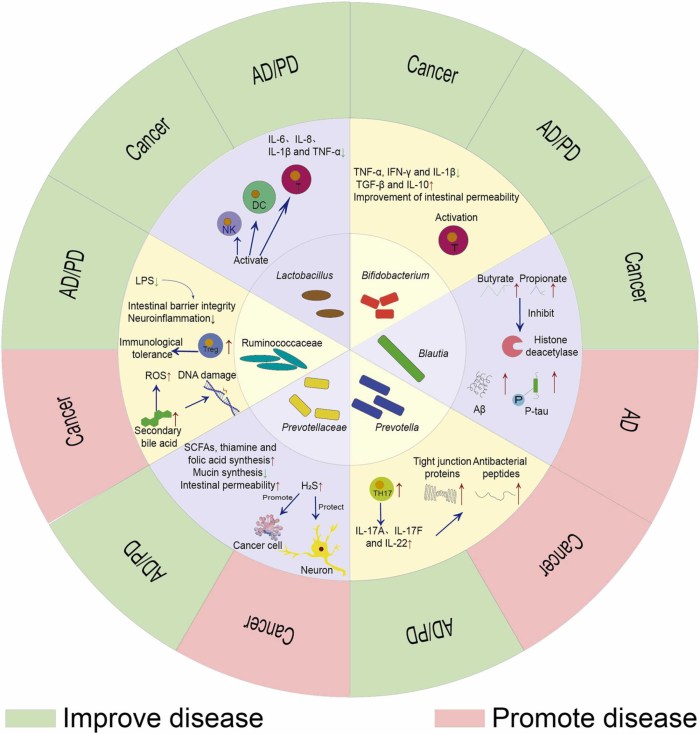
“There is a significant inverse relationship between the onset of Alzheimer’s disease/Parkinson’s disease (AD/PD) and cancer, but the mechanism is still unclear. Considering that intestinal flora can connect them, we briefly introduced the relationship among AD/PD, cancer, and intestinal flora, studied metabolites or components of the intestinal flora, and the role of intestinal barriers and intestinal hormones in AD/PD and cancer.

According to existing evidence:

  • Bifidobacterium and Lactobacillus positively affect AD/PD and cancer;
  • Ruminococcaceae, Prevotellaceae, and Prevotella significantly improve on AD/PD but harm cancer; and
  • Blautia has universal anticancer ability, but it may aggravate AD pathology.

1-s2.0-S0753332221011276-gr1_lrg

This may partially explain the antagonistic relationship between neurodegenerative diseases and cancer. When some individuals suffer from one disease, their intestinal flora change to obtain a stronger resistance to the other disease than healthy individuals, which is consistent with statistical data.”

https://www.sciencedirect.com/science/article/pii/S0753332221011276 “Composition of intestinal flora affects the risk relationship between Alzheimer’s disease/Parkinson’s disease and cancer”


PXL_20211224_180111266

Immune system aging

This 2021 review by three coauthors of Take responsibility for your one precious life – Trained innate immunity cast a wide net:

“Non-specific innate and antigen-specific adaptive immunological memories are vital evolutionary adaptations that confer long-lasting protection against a wide range of pathogens. However, these mechanisms of memory generation and maintenance are compromised as organisms age.

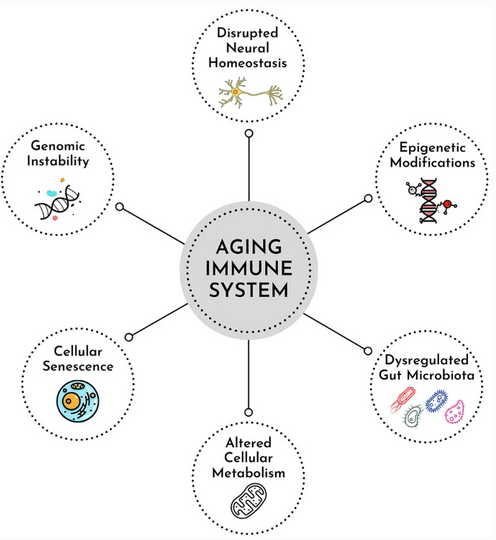
This review discusses how immune function regulates and is regulated by epigenetics, metabolic processes, gut microbiota, and the central nervous system throughout life. We aimed to present a comprehensive view of the aging immune system and its consequences, especially in terms of immunological memory.

aging immune system

A comprehensive strategy is essential for human beings striving to lead long lives with healthy guts, functional brains, and free of severe infections.”

https://link.springer.com/article/10.1007/s12016-021-08905-x “Immune Memory in Aging: a Wide Perspective Covering Microbiota, Brain, Metabolism, and Epigenetics”


Attempts to cover a wide range of topics well are usually uneven. For example, older information in the DNA Methylation In Adaptive Immunity section was followed by a more recent Histone Modifications in Adaptive Immunity section.

This group specializes in tuberculosis vaccine trained immunity studies, and much of what they presented also applied to β-glucan trained immunity. A dozen previously curated papers were cited.

PXL_20211218_190653401