Immune system aging

This 2021 review by three coauthors of Take responsibility for your one precious life – Trained innate immunity cast a wide net:

“Non-specific innate and antigen-specific adaptive immunological memories are vital evolutionary adaptations that confer long-lasting protection against a wide range of pathogens. However, these mechanisms of memory generation and maintenance are compromised as organisms age.

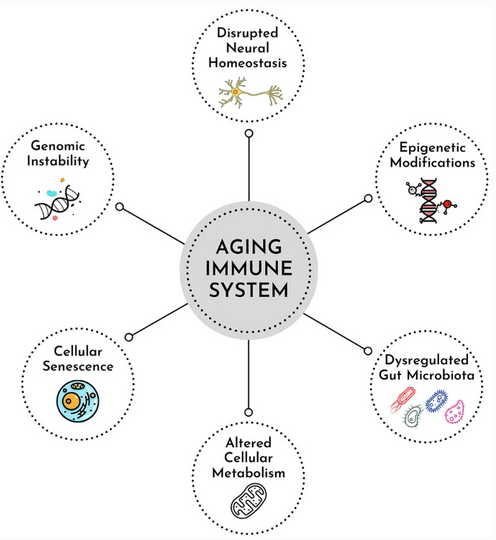
This review discusses how immune function regulates and is regulated by epigenetics, metabolic processes, gut microbiota, and the central nervous system throughout life. We aimed to present a comprehensive view of the aging immune system and its consequences, especially in terms of immunological memory.

aging immune system

A comprehensive strategy is essential for human beings striving to lead long lives with healthy guts, functional brains, and free of severe infections.”

https://link.springer.com/article/10.1007/s12016-021-08905-x “Immune Memory in Aging: a Wide Perspective Covering Microbiota, Brain, Metabolism, and Epigenetics”


Attempts to cover a wide range of topics well are usually uneven. For example, older information in the DNA Methylation In Adaptive Immunity section was followed by a more recent Histone Modifications in Adaptive Immunity section.

This group specializes in tuberculosis vaccine trained immunity studies, and much of what they presented also applied to β-glucan trained immunity. A dozen previously curated papers were cited.

PXL_20211218_190653401

Glutathione primes β-glucan-trained immunity

Two 2021 papers on glutathione interactions with β-glucan, with the first studying human cells from healthy donors:

“(1→3)-β-D-Glucan stimulation induces epigenetic and transcriptomic changes in monocytes associated with increased glutathione (GSH) synthesis and metabolism. Intracellular glutathione levels were crucial in regulating several monocyte antifungal functions including resilience to oxidative stress, immunometabolism, nitric oxide production, phagocytosis, and cytokine production.

Our findings demonstrate an important role for GSH in immunity, and outline a better understanding of the acute response of monocytes to infections.”

https://www.frontiersin.org/articles/10.3389/fimmu.2021.694152/full “Glutathione Metabolism Is a Regulator of the Acute Inflammatory Response of Monocytes to (1→3)-β-D-Glucan”


A second study investigated the subject with a dozen rodent experiments:

“We demonstrated that antioxidation by GSH supported an environment essential for β-glucan-induced metabolic and epigenetic changes in monocytes. We found that GSH induced glycolysis and glutaminolysis in β-glucan-trained immunity in a mTOR-dependent manner.

These results uncovered the GSH/mTOR/c-Myc signaling axis as the central effector of metabolic reprogramming in trained immunity. We revealed that the delicate GSH/ROS redox balance determines discrete, long lasting metabolic modifications that are causal to β-glucan-trained immunity.

Our results suggest that H3K27me3 demethylation is a necessary event. We identified H3K27me3 demethylation as a novel histone modification mark that was impaired by GSH deficiency in β-glucan-trained bone marrow derived macrophages.

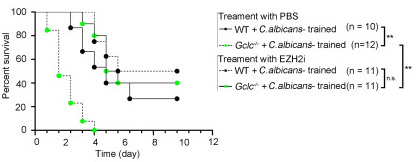
We identified EZH2 as a potential tool to boost trained immunity under GSH deficiency conditions, or to enhance trained immunity in clinical settings where excessive inflammatory responses could be beneficial.

ezh2 survival

Overall, these insights contribute to unraveling metabolic and epigenetic changes during trained immunity.”

https://www.sciencedirect.com/science/article/pii/S2213231721003669 “Glutathione synthesis primes monocytes metabolic and epigenetic pathway for β-glucan-trained immunity”


The second paper of Remembering encounters provides future benefits also explored this subject.

PXL_20211215_183316335

The impact of transgenerational epigenetic inheritance and early life experiences

A 2021 interview with McGill University’s Moshe Szyf:

There is a rejection of transgenerational inheritance as it goes against progressive thinking because it ties us to previous generations. The theory faces rejection because it sounds deterministic.

But if you understand what epigenetics is, it’s not deterministic. There is stability, and there’s also room for dynamic change.

The only way things change in the body for the long term is via epigenetics. We don’t know everything yet, new discoveries are yet to happen, and then we will just say, ‘Wow, it’s so obvious!’

The immune system is tightly connected to the brain and is directly affected by early adversity. Even though we will not be able to learn what’s going on in the brain, as far as epigenetics in living people, we will gain a lot of information from how the immune system responds to early adversity, and how this is correlated with behavioral phenotype and with mental health.

This brings into question the whole field of neuroimmunology, of which there is a lot of data. But it seems that a lot of psychiatrists are totally oblivious to these data, which is astounding, because the glucocorticoid hormone – the major player in this mechanism due to its involvement in early life stress as well as control of behavior – also controls immune function.

Nobody can live long enough to oversee a human transgenerational study. In humans, correlations are usually in peripheral tissue, where changes are small. The jury’s not out yet, but if evolution used it for so many different organisms, some of which are very close to us in the evolutionary ladder, it’s impossible that humans don’t use it.

How are current findings in animal models relevant to humans? How do we develop human paradigms that will allow us to achieve a higher level of evidence than what we have now?

  • One way is the immune-inflammatory connection to other diseases. I think this is where the secret of epigenetic aging lies, as well as epigenetics of other diseases.
  • Every disease is connected to the immune system. The brain translates the behavioral environment to the immune system, and then the immune system sends chemical signals across the body to respond to these challenges.

We need to understand that epigenetic programs are a network. Move beyond candidate genes, understand the concept of a network, and really understand the challenge: Reset the epigenetic network.

Epigenetics is going to be rapidly translated to better predictors, better therapeutics, and more interesting therapeutics. Not necessarily the traditional drug modeled against a crystal structure of an enzyme, but a more networked approach. Ideas about early life stress are critical and have impacted the field of childcare by highlighting the importance of early childhood relationships.”

https://www.futuremedicine.com/doi/10.2217/epi-2021-0483 “The epigenetics of early life adversity and trauma inheritance: an interview with Moshe Szyf”


Week 87 of Changing to a youthful phenotype with sprouts

This week I dialed back eating microwaved 3-day-old broccoli / red cabbage / mustard sprouts from twice a day to once a day. For my reasoning, here are two papers on broccoli sprouts and thyroid function, with the first a 2018 human study:

“We analyzed biochemical measures of thyroid function and thyroid autoimmunity in a subset of participants in a broccoli sprout clinical trial. The present work is a retrospective analysis of a subset of serum samples collected during a clinical trial conducted from mid-October 2011 to early January 2012.

130 individuals received placebo beverage, and 137 received broccoli sprout beverage for 84 consecutive days (12 weeks). Blood samples from day 0 and day 84 were analyzed in a subset of 45 female participants (19 placebo, 26 broccoli sprout beverage) for serum thyroid-stimulating hormone (TSH), free thyroxine (fT4), thyroglobulin (TG), anti-TG, and anti-thyroid peroxidase (anti-TPO) antibodies.

The percentage of patients with subclinical hypothyroidism (elevated TSH with normal fT4) was not significantly different between the two groups either before or after treatment.
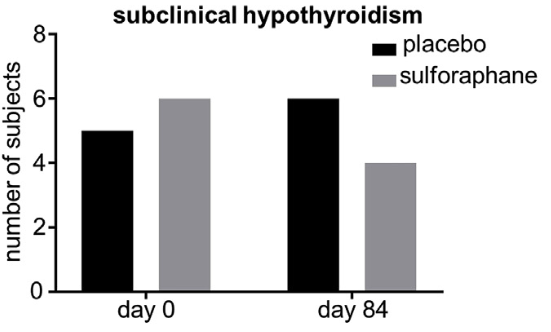
subclinical hypothyroidism

Daily ingestion of a broccoli sprout extract beverage over 84 days had no deleterious effect on thyroid function tests or measures of thyroid autoimmunity. It may be prudent to evaluate thyroidal safety of plant-based food supplements on a case-by-case basis.”

https://www.sciencedirect.com/science/article/abs/pii/S0278691519300547 “Broccoli sprout beverage is safe for thyroid hormonal and autoimmune status: Results of a 12-week randomized trial” (not freely available)


A 2020 review by three of these coauthors summarized further details:

“One difference between the thyroid and other tissues is that ROS are not primarily a byproduct of its physiology, but an indispensable part of it. Thyroid follicular cells actively produce H2O2 to facilitate a cascade of redox reactions that sequentially oxidize iodide, iodinate tyrosine residues within Tg, and couple iodinated tyrosine residues of Tg to each other to form T4 and T3 (triiodothyronine).

There exists a fail-safe mechanism in which specific combinations of four Keap1 cysteines can form a disulfide bond to sense H2O2. This sensing mechanism appears to be distinct from that triggered by other Nrf2 inducers, such as electrophiles.

Findings from Keap1KD mice suggest that chronic genetic activation of Nrf2 signaling may have negative consequences for the thyroid gland. However, analysis of data from a clinical trial has shown that consumption of a broccoli sprout beverage (yielding pharmacologically active amounts of the Nrf2-activating compound sulforaphane) is safe for thyroid hormonal and autoimmune status during a 12-week administration period.

Nevertheless, it appears prudent to monitor thyroid function and thyroid volume (at least by palpation) in patients treated with Nrf2-modulating compounds in clinical trials or clinical practice.”

https://www.mdpi.com/2076-3921/9/11/1082/htm “The Keap1/Nrf2 Signaling Pathway in the Thyroid—2020 Update”


My Day 70 lab results for inflammation markers were great:

IL-6 2020

A year later, IL-6 was below the test’s detection limit, and high-sensitivity C-reactive protein could hardly have been better at 0.24 mg/L.

But TSH (reference interval 0.45 – 4.50 μIU/mL) increased from 3.01 to 7.50. Here’s what Labcorp Technical Review L8186 said:

“The panel concluded that despite the fact that serum TSH concentrations higher than 2.5 μIU/mL but less than 4.5 μIU/mL may identify some individuals with the earliest stage of hypothyroidism, there is no evidence for associated adverse consequences. Additionally, consequences of subclinical hypothyroidism with serum TSH levels between 4.5 μIU/mL and 10 μIU/mL are minimal, and the panel recommends against routine treatment of patients with TSH levels in these ranges.”

I went in last weekend to retest. Although the provider verbally agreed to test TSH, free T3, and free T4, a different test was ordered.

TSH was still high at 5.85 μIU/mL. Other measurements (Total T4, T3 Uptake, and Free Thyroxine Index) aren’t suitable substitutes for free T3 and free T4. I’ll specify Labcorp test numbers next time.


My hypothesis is that preconditioning my endogenous ARE system twice daily worked alright elsewhere, but not for my thyroid. We’ll find out in 2022 whether halving the electrophilic activations of my Nrf2 signaling pathway has any effect on thyroid measurements.

I don’t take anything with, or an hour before or after these very reactive isothiocyanates. I continue to eat 3-day-old oat sprouts twice a day with other foods.

PXL_20211125_171335252

Is liver damage reversible?

This 2021 rodent study measured sequential liver changes caused by a high-fat diet:

“Using a longitudinal mouse study of diet-induced obesity in male mice, we investigated kinetics of hepatic DNA methylation and gene expression compared to those of obesity-induction to assess if they could be causal for development of insulin resistance. We aimed to find out if these changes were reversed by massive weight loss induced by vertical sleeve gastrectomy or metformin treatment.

We identified two CpG sites within exon 1 of Fgf21 that became gradually hypomethylated upon HFD feeding. DNA demethylation started between week two and four, to become significant at week five, and significantly correlated with hepatic Fgf21 gene expression.

These DNA methylation changes preceded development of insulin resistance, and were potentially causally involved in increased Fgf21 expression and plasma levels associated with insulin resistance. This points to a key regulatory function of gene body DNA methylation, which was eventually a compensatory response to counteract the developing insulin resistance.

HFD-induced decrease in Fgf21 DNA methylation could not be reversed by vertical sleeve gastrectomy or metformin treatment. As soon as weight loss slowed down or mice started to re-gain weight, differences in DNA methylation were no longer detected compared to sham-operated mice.

1-s2.0-S0955286321003272-ga1_lrg

As the altered DNA methylation pattern was acquired during adulthood in differentiated cells, our data emphasize that metabolic programming via DNA methylation is dynamic and not restricted to fetal development. This supports the concept that individuals can actively influence their DNA methylation patterns by lifestyle choices.

Our data indicate that DNA methylation alterations in key metabolic tissues can be acquired by an obesogenic diet, and not easily be reversed by interventions common in obese and diabetic subjects.”

https://www.sciencedirect.com/science/article/pii/S0955286321003272 “Dietary induction and reversal of obesity and insulin resistance is associated with changes in Fgf21 DNA methylation in liver of mice”


This study attempted two interventions that didn’t have desired effects. All about the betaine mentioned others that may reverse liver epigenetic changes.

PXL_20211125_170854068

Human agency vs. brain dysfunction

This 2021 human study used epigenetic clock technology to assess chronic inflammation as a driver of cognitive decline through its effects on brain structure:

“An epigenetic measure of C-reactive protein (DNAm CRP) was assembled for each participant. We found that higher inflammatory burden, indexed by DNAm CRP scores, associated with poor cognitive and neuroimaging brain health outcomes.

inflammation vs cognitive ability

DNAm CRP exhibited significantly larger associations with brain structural MRI metrics (including global grey and white matter atrophy, poorer white matter microstructure, and increased white matter hyperintensity burden) than serum CRP. Given that the 7 CpGs which make up DNAm CRP score reside in inflammation and vascular-related genes, these DNAm CRP-brain MRI associations may be capturing the impact of upstream inflammatory activity above and beyond that of serum CRP levels.

Our results indicate that some cognitive domains (processing speed) may be more mediated by brain structural consequences of chronic inflammation than others (verbal memory, visuospatial ability).

Our results add to the evidence base that DNAm-based predictors of inflammation may act as a quantifiable archive of longitudinal effects of these exposures – and other unaccounted for health and genetic profiles – that serum CRP levels fail to capture. By utilising an epigenetic inflammation measure, which integrates information from multiple immune-related CpG sites, we may provide a more reliable measure of chronic inflammation and thus a more comprehensive overview of consequences of chronic inflammation on brain structure and function.”

https://n.neurology.org/content/early/2021/11/17/WNL.0000000000012997.long “DNA Methylation and Protein Markers of Chronic Inflammation and Their Associations With Brain and Cognitive Aging”


These researchers essentially negated many of their findings by acknowledging:

“Although we endeavoured to remove participants with cognition-related pathology, these were screened via self-reported diagnoses, and we may be missing undiagnosed or subclinical incident neurodegenerative pathology.”

It wasn’t sufficient to claim in the Abstract section “Participants (N = 521) were cognitively normal, around 73 years of age” then include in the Discussion section a one-sentence limitation of relying on self-reports. Everyone defends themself against current and past realities and experiences.

Hard to imagine that objective measures such as the three comprising cognitive ability weren’t better screens. But then too many 73-year-old subjects may not have been “cognitively normal” and this study wouldn’t be adequately powered?

Can humans counteract inflammation? Non-communicable diseases? Smoking? Immune system degradation? Yes. No personal-agency actions were mentioned.

Also note this study’s social norming. The above-pictured 30-year-old female was busy at work, and subsequently hoisted a cat instead of a child in later years.

Take responsibility for your own one precious life.

PXL_20211118_114858264

Epigenetic clocks vs. individual choices

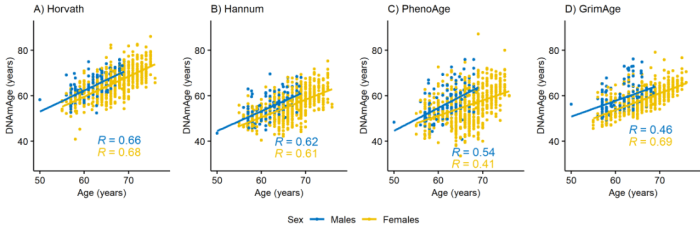
This 2021 human twin study used four epigenetic clocks:

“We examined the mediating role of lifestyle factors on the association between sex and biological aging in younger and older adults. The Finnish Twin Cohort (FTC) includes three large cohort studies:

  1. The older FTC includes twins born before 1958;
  2. Finntwin16 includes twins born in 1975-1979; and
  3. Finntwin12 includes twins born in 1983-1987.

In comparison to women, men were biologically older and, in general, they had unhealthier life habits. The effect of sex on biological aging was partly mediated by body mass index and, in older twins, by smoking. Sex was directly associated with biological aging, and the association was stronger in older twins.

over 50 twins

Declining smoking prevalence among men is a plausible explanation for narrowing of the difference in life expectancy between sexes. Data generated by epigenetic clocks may help in estimating effects of lifestyle and environmental factors on aging and in predicting aging in future generations.”

https://academic.oup.com/biomedgerontology/advance-article/doi/10.1093/gerona/glab337/6424421 “Do epigenetic clocks provide explanations for sex differences in lifespan? A cross-sectional twin study”


It was too much to ask of epigenetic clocks to ferret out preclinical symptoms of lifestyles and environments accelerating aging in younger twins. Levine’s Phenotypic Age clinical measurements could assess accelerated aging trajectories, but may not have been available for this study. People who are busy abusing their bodies into non-communicable diseases have plenty of other warning signs, like abdominal obesity, high blood pressure, high blood sugar, high serum triglycerides, and low serum high-density lipoprotein.

Preclinical symptoms may be reversible by individual choices that influence lifestyle and/or environment. Effective healthspan and lifespan changes measurable by epigenetic clocks are usually limited once clinical symptoms emerge, though.

Consider this rodent study’s graphic from Part 2 of Eat broccoli sprouts for your eyes:

retina function

This chart demonstrated that preventing diabetes’ negative effects on retinal function (i.e. controls) was measurably better than trying to fix subjects’ vision after onset of diabetes.

I would have liked this study to address a morbidity phase, where healthspan stops increasing but lifespan increases. That seems possible in twin studies, where one twin’s choices cause a healthspan halt compared to the other twin’s choices.

PXL_20211113_112252503

Reworking evolutionary theory

Dr. Michael Skinner coauthored a 2021 review arguing for inclusion of epigenetic transgenerational inheritance into evolutionary theory:

“Over the past 50 years, molecular technology has been used to investigate evolutionary biology. Many examples of finding no correlated genetic mutations or a low frequency of DNA sequence mutations suggest that additional mechanisms are also involved.

  • Identical twins have essentially the same genetics, but generally develop discordant disease as they age.
  • Only a low frequency (generally 1% or less) of individuals that have a specific disease have a correlated genetic mutation.
  • Dramatic increases in disease frequency in the population cannot be explained with genetics alone.

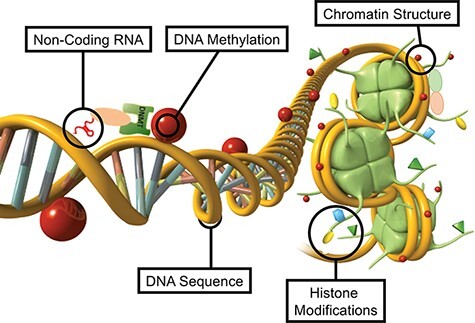
DNA methylation, histone modifications, changes to chromatin structure, expression of non-coding RNA, and RNA methylation can directly regulate gene expression independent of DNA sequence. These different epigenetic factors do not only act independently, but integrate with each other to provide a level of epigenetic complexity to accommodate the needs of cellular development and differentiation.

dvab012f1

Environmental epigenetics is the primary molecular mechanism in any organism that is used to promote physiological and phenotypic alterations. Actions of environmental factors early in development can permanently program the cellular molecular function, which then impacts later life disease or phenotypes.

dvab012f2

Integration of epigenetics and genetics contribute to a Unified Theory of Evolution that explains environmental impacts, phenotypic variation, genetic variation, and adaptation that natural selection acts on. The current review expands this proposed concept and provides a significant amount of supporting literature and experimental models to support the role of environmentally induced epigenetic transgenerational inheritance in evolution.”

https://www.ncbi.nlm.nih.gov/pmc/articles/PMC8557805/ “Role of environmentally induced epigenetic transgenerational inheritance in evolutionary biology: Unified Evolution Theory”


Organisms cited in this review’s references are similar to humans in ancestral influences and developmental influences during the first 1000 days of our lives. Humans are different in that even after all these influences, we can choose to influence our own change and individually evolve. We can also change our internal environments per Switch on your Nrf2 signaling pathway and An environmental signaling paradigm of aging.

PXL_20211031_111835802

Remembering encounters provides future benefits

Two 2021 papers on trained immunity, with the first a review:

“Effective memory immune responses rely on interaction between innate and adaptive immune cells. While activation of innate immunity provides the first line of defense against infections, it also primes the adaptive immune response.

Adaptive immunity can enhance antimicrobial machinery of innate cells, making them more effective at clearing pathogenic microorganisms. An additional layer of complexity adds to this network of interactions, with innate cells adopting a memory phenotype, which used to apply to only adaptive immunity. Furthermore, non-immune cells can develop some features of this memory-like phenotype.

fimmu-12-745332-g001

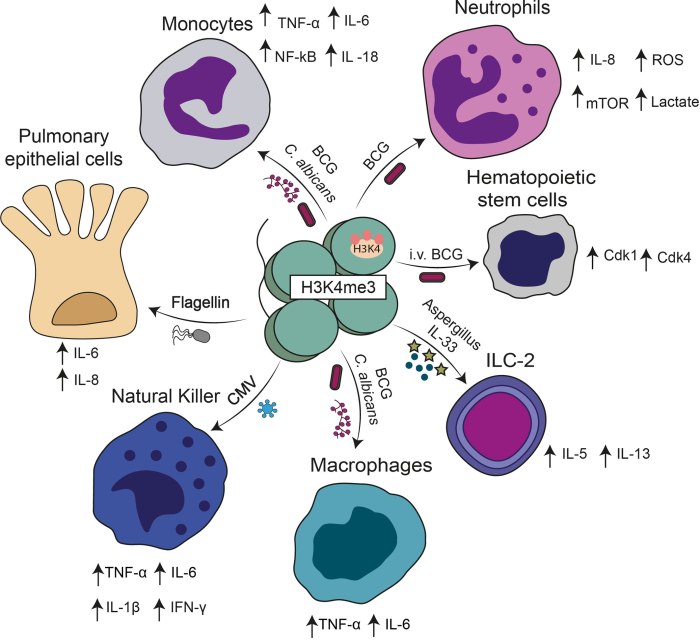
Cell subsets in which trained immunity has been described. Different stimuli including Bacillus Calmette Guerin (BCG), β-glucan, cytokines, cytomegalovirus (CMV), and bacterial components can induce a trained immunity phenotype. A common hallmark of trained immunity in these cases is H3K4me3 in promoters of genes encoding for different cytokines.

  • Mechanisms Underlying Establishment of Trained Immunity
  • Trained Immunity in Neutrophils
  • Trained Immunity in Monocytes and Macrophages: General Features
  • Metabolic Pathways Involved in Training of Monocytes and Macrophages
  • Hormonal Control of Trained Immunity Responses in Monocytes and Macrophages
  • Trained Immunity on Alveolar Macrophages and Involvement of Resident Cells
  • Trained Immunity in NK Cells
  • Trained Immunity in Innate Lymphoid Cells
  • Trained Immunity on Hematopoietic Stem Cells
  • Trained Immunity in Bronchial Epithelial Cells
  • Trained Immunity in Skin Stem Cells
  • Trained Immunity in the Gastrointestinal Tract
  • Immunity Training Against Protozoan-Mediated Pathologies
  • Trained Immunity in Non-Infectious Pathologies

Many gaps of knowledge remain in this field. For example, how long changes associated to trained immunity last, and if, in addition to epigenetic modulation, there are other post-translational modifications on proteins relevant for induction of trained immunity.”

https://www.frontiersin.org/articles/10.3389/fimmu.2021.745332/full “Molecular and Cellular Mechanisms Modulating Trained Immunity by Various Cell Types in Response to Pathogen Encounter”


This second paper was a human study cited for its glutathione findings as follows:

  • “Plasma concentration of IL-1β from BCG-vaccinated individuals are positively associated with serum glutathione concentrations.
  • Trained immunity up-regulates expression of genes involved in glutathione metabolism, suggesting an increase in glutathione synthesis and a higher glutathione recycling rate.
  • Single nucleotide polymorphisms in these genes are associated with changes in pro-inflammatory cytokine production after in vitro training by β-glucan and BCG.

Enzymes whose activities are dependent on glutathione could be used as novel targets to modulate trained immunity.”

IL-1β production

“We found a positive association between plasma glutathione concentration and ex vivo IL-1β production 90 days after BCG vaccination upon in vitro exposure to heterologous stimulus Staphylococcus aureus. Up-regulation of IL-1β production by BCG vaccination was also positively associated with circulating concentrations of other metabolites involved in glutathione metabolism, such as methionine, cysteine, glutamate, and glycine.

GSH metabolism was associated with trained immunity traits in 278 healthy individuals. Trained immunity mechanisms that are shaped by GSH metabolism remain to be further explored.”

https://www.mdpi.com/2073-4409/10/5/971/htm “Glutathione Metabolism Contributes to the Induction of Trained Immunity”


PXL_20211031_113233113

Endless shingles

This 2021 review subject was the follow-on condition of chicken pox:

“Varicella-zoster virus (VZV) is a pathogenic human alpha herpes virus which is a significant cause of morbidity. VZV causes a primary infection, usually in children, called varicella (chicken pox), following which it establishes ganglionic latency in neurons. Latency is established in ganglia throughout the entire neuroaxis including dorsal root ganglia, trigeminal ganglia, and also autonomic ganglia including enteric ganglia.

After a variable period, which can span several decades, VZV may reactivate to cause the well-recognised syndrome of herpes zoster (shingles), which is an extremely painful vesicular rash. While viral reactivation may occur spontaneously, it can also follow one or more triggering factors such as diminished cell-mediated immunity to the virus as occurs with older age or immunosuppression due to drug treatment or disease, X-ray irradiation, infection, trauma, or malignancy.

The disease spectrum caused by VZV reactivation is much wider than previously thought. A possible diagnosis of VZV reactivation-induced neurological disease should be considered in all cases of undiagnosed acute, subacute or chronic brain or spinal cord syndromes, particularly if there is an accompanying cerebrospinal fluid (CSF) pleocytosis.

Virus latency and reactivation is associated with specific modifications of bound histones. Consensus is that CpG island methylation is not involved.

Precise immune cells and immune mediators required for protective immunity in primary infection versus reactivation have not been clarified. Individual contributions from different cell types, including lymphocytes, macrophages, plasmacytoid dendritic cells, and epithelial and endothelial cells, which are all present in human ganglia, remains insufficiently understood and explored.

Immunological evaluation revealed the presence of VZV DNA as well as an immunological cell infiltrate composed of CD4 T cells, CD8 T cells, and CD20 B cells. This provided somewhat surprising evidence of an ongoing immunological reaction and inflammation years after the reactivation of VZV from latency.

Latency is characterized by maintenance of the virus genome in an endless (episomal) configuration. Since alpha human herpes virus latency is established so early in life, it is unlikely that viral latency can be completely prevented.”

https://www.mdpi.com/1999-4915/13/10/2018/htm “Recent Issues in Varicella-Zoster Virus Latency”


More investigation was needed in working backwards from recent reports of shingles outbreaks to activation causes. Common lab tests easily provide evidence of immune cell populations.

So what happened to cause removal of immune protective mechanisms that prevented varicella-zoster virus reactivation? It wasn’t the X-ray etc. reasons listed above.

Recent shingles outbreaks are telling an important story. Who is looking into it?

These and other researchers won’t find evidence if they don’t get out of their labs and look at people’s cases. They’ll also need to report findings regardless of the political climate.

IMG_20210608_132139

Do genes determine monogamy / polygamy?

This 2021 rodent study developed epigenetic clocks for deer mice:

“We have undertaken a genome-wide analysis of DNA methylation in Peromyscus, spanning different species, stocks, sexes, tissues, and age cohorts. We present CpGs and enriched pathways that relate to different conditions such as chronological age, high altitude, and monogamous behavior.

  • Analysis involved tails, whole brain, and liver samples that are not major target tissues for sex hormones. This implies that sex-specific patterns of methylation are inflicted early during development, and persist at adulthood.
  • Altitude-specific age-related changes are adjacent to genes that play a role in brain development, immune system functioning, and T-cell development.
  • Comparison of brain specimens between older P. leucopus and P. maniculatus indicated that in the latter, coordination of the unfolded protein response is compromised, and evidence of neurodegenerative pathology was obtained.
  • Our study involved three monogamous (P. californicus, P. polionotus, and P. eremicus) and two polygamous (P. maniculatus and P. leucopus) species. The most significant EWAS hits for monogamy included decreased methylation in Zeb2 intron, a key regulator of midbrain dopaminergic neuron development. These results derived from tail tissues, suggesting that inherent differences in bonding behavior instruct specific epigenetic changes in peripheral tissues that may be translated into distinct physiological outcomes. Whether this is due to differential regulation of specific neurohormonal circuits in response to hormones and neurotransmitters related to bonding, and what the exact physiological outputs are, remains to be determined.

Our study provided the first epigenetic clock for Peromyscus, and illustrated the hierarchical association between various biological variables in determining methylation profiles across different scales of biological organization.”

https://link.springer.com/article/10.1007/s11357-021-00472-5 “Methylation studies in Peromyscus: aging, altitude adaptation, and monogamy”


PXL_20211023_112318583

All about the betaine, Part 2

Continuing Part 1 by curating a partial outline of a 2021 review:

“This review focuses on the biological and beneficial effects of dietary betaine (trimethylglycine), a naturally occurring and crucial methyl donor.

Betaine has a neuroprotective role, preserves myocardial function, and prevents pancreatic steatosis. Betaine also attenuates oxidant stress, endoplasmic reticulum stress, inflammation, and cancer development. Betaine:

  • Protects against Development of Alcohol-Induced Hepatic Steatosis
  • Protects against Detrimental Effects of HCV and Ethanol on Innate Immunity
  • Maintains Intestinal Epithelial Barrier Integrity
  • Maintains Adipose Function

biology-10-00456-g002

Human intervention studies showed no adverse effects with 4 g/day supplemental administration of betaine in healthy subjects. However, overweight subjects with metabolic syndrome showed a significant increase in total and LDL-cholesterol concentrations. These effects were not observed with 3 g/day of betaine administration.

We suggest betaine as a promising therapeutic for clinical use to treat these aforementioned diseases as well as other liver-/non-liver-related diseases and conditions.”

https://www.mdpi.com/2079-7737/10/6/456/htm “Beneficial Effects of Betaine: A Comprehensive Review”


This review cited a 2020 study Transgenerational Inheritance of Betaine-Induced Epigenetic Alterations in Estrogen-Responsive IGF-2/IGFBP2 Genes in Rat Hippocampus (not freely available):

“Hippocampal expression of aromatase, estrogen receptor α, and estrogen-related receptor β is downregulated in F1, together with estrogen-responsive insulin-like growth factor 2/insulin-like growth factor binding protein 2 (IGF-2/IGFBP2) genes. However, all these genes are upregulated in F2, which follows the same pattern of F0.

Imprinting control region of IGF-2 gene is hypomethylated in F1 but hypermethylated in F2 and F0. In contrast, the promoter DNA methylation status of all affected genes is hypermethylated in F1 but hypomethylated in F2 and F0.”

  • Intergenerational flip-flops of F0 phenotypes to opposite F1 phenotypes back to F0 phenotypes in the F2 generation can’t conclusively demonstrate transgenerational epigenetic inheritance of alterations due to betaine consumption during pregnancy.
  • Those researchers had to continue on to a F3 female generation for transgenerational results, because F2 generation cells were present in F1 fetuses, and were potentially affected during pregnant F0 treatments.

I came across this paper through a citation chain initiated by Dr. Paul Clayton’s blog post Foie Gras:

“Thanks to our modern diet and lifestyle, nonalcoholic fatty liver disease (NAFLD) is now reckoned to affect an astonishing quarter of the world’s population.”

PXL_20211023_112144256

The Illusion of Knowledge: The paradigm shift in aging research that shows the way to human rejuvenation

Dr. Harold Katcher increased interviews to coincide with release of his book this month. Here’s one in four parts that provides highlights of his rejuvenation research progress:


Previously curated papers of his work include:

Epigenetic clocks so far in 2021

2021’s busiest researcher took time out this month to update progress on epigenetic clocks:

Hallmarks of aging aren’t all associated with epigenetic aging.

epigenetic aging vs. hallmarks of aging

Interventions that increase cellular lifespan aren’t all associated with epigenetic aging.

epigenetic aging vs. cellular lifespan

Many of his authored or coauthored 2021 papers developed human / mammalian species relative-age epigenetic clocks.

epigenetic clock mammalian maximum lifespan

Relative-age epigenetic clocks better predict human results from animal testing.

pan-mammalian epigenetic clock


Previously curated papers that were mentioned or relevant included:

All about vasopressin

This 2021 review subject was vasopressin:

“Vasopressin is a ubiquitous molecule playing an important role in a wide range of physiological processes, thereby implicated in pathomechanisms of many disorders. The most striking is its central effect in stress-axis regulation, as well as regulating many aspects of our behavior.

Arginine-vasopressin (AVP) is a nonapeptide that is synthesized mainly in the supraoptic, paraventricular (PVN), and suprachiasmatic nucleus of the hypothalamus. AVP cell groups of hypothalamus and midbrain were found to be glutamatergic, whereas those in regions derived from cerebral nuclei were mainly GABAergic.

In the PVN, AVP can be found together with corticotropin-releasing hormone (CRH), the main hypothalamic regulator of the HPA axis. The AVPergic system participates in regulation of several physiological processes, from stress hormone release through memory formation, thermo- and pain regulation, to social behavior.

vasopressin stress axis

AVP determines behavioral responses to environmental stimuli, and participates in development of social interactions, aggression, reproduction, parental behavior, and belonging. Alterations in AVPergic tone may be implicated in pathology of stress-related disorders (anxiety and depression), Alzheimer’s, posttraumatic stress disorder, as well as schizophrenia.

An increasing body of evidence confirms epigenetic contribution to changes in AVP or AVP receptor mRNA level, not only during the early perinatal period, but also in adulthood:

  • DNA methylation is more targeted on a single gene; and it is better characterized in relation to AVP;
  • Some hint for bidirectional interaction with histone acetylation was also described; and
  • miRNAs are implicated in the hormonal, peripheral role of AVP, and less is known about their interaction regarding behavioral alteration.”

https://www.mdpi.com/1422-0067/22/17/9415/htm “Epigenetic Modulation of Vasopressin Expression in Health and Disease”


Find your way, regardless of what the herd does.

PXL_20210911_103344386