What’s an appropriate exercise recovery time?

This 2017 New Zealand human research studied the effect of one supplement on recovery from exercise-induced muscle damage:

“Eccentric exercise is known to bring about microstructural damage to muscle, initiating an inflammatory cascade involving various reactive oxygen species. This, in turn, can significantly impair physical performance over subsequent days. Taurine, a powerful endogenous antioxidant, has previously been shown to have a beneficial effect on muscle damage markers and recovery when taken for a few days to several weeks prior to eccentric exercise.

The amount of powder was set at 0.1 g∙kg−1 body weight∙day−1, based on several studies that found no adverse effects at levels of up to 10 g∙day. No participant was at a body weight that resulted in consuming more than 10 g∙day.

Supplementation with taurine twice daily for 72 h following eccentric exercise-induced muscle damage may improve eccentric performance recovery of the biceps brachii in healthy males.”


My main takeaway from the study came from this finding:

“Our results show that neither treatment group fully recovered force output by 72 h.”

I was surprised to see that even three days wasn’t enough time for a muscle to fully recover. And the study’s subjects were young males:

“Age = 26.5 ± 6.5 years, height = 180 ± 9.2 cm, mass = 80 ± 11.5 kg. All participants were recreationally fit, engaging in exercise 2–3 times per week.”

This gave me pause to reflect on how inattention to cumulative strain may have produced repetitive stress injuries. I’ve adjusted my workout routines accordingly.


The study listed a number of limitations. An unstated one was that nobody should take supplements in quantities that are many times greater than normal dosages without being informed by quality human experimental evidence.

http://www.mdpi.com/2076-3921/6/4/79/htm “The Effect of Taurine on the Recovery from Eccentric Exercise-Induced Muscle Damage in Males”

Differing approaches to a life wasted on beliefs

Let’s start by observing that people structure their lives around beliefs. As time goes on, what actions would a person have taken to ward off non-confirming evidence?

One response may be that they would engage in ever-increasing efforts to develop new beliefs that justified how they spent their one precious life’s time so far.

Such was my take on beliefs embedded in https://www.ncbi.nlm.nih.gov/pmc/articles/PMC5684598/pdf/PSYCHIATRY2017-5491812.pdf “Epigenetic and Neural Circuitry Landscape of Psychotherapeutic Interventions”:

“Animal models have shown the benefits of continued environmental enrichment (EE) on psychopathological phenotypes, which carries exciting translational value.

This paper posits that psychotherapy serves as a positive environmental input (something akin to EE).”

The author conveyed his belief that wonderful interventions were going to happen in the future. However, when scrutinized, most human studies have demonstrated NULL effects of psychotherapeutic interventions on causes. Without sound evidence that treatments affect causes, his belief seemed driven by something else.

The author cited findings of research like A problematic study of oxytocin receptor gene methylation, childhood abuse, and psychiatric symptoms as supporting external interventions to tamp down symptoms of patients’ presenting problems. Did any of the 300+ cited references concern treatments where patients instead therapeutically addressed their problems’ root causes?


For an analogous religious example, a person’s belief caused him to spend years of his life trying to convince men to act so that they could get their own planet after death, and trying to convince women to latch onto men who had this belief. A new and apparently newsworthy belief developed from his underlying causes:

“The founder and CEO of neuroscience company Kernel wants “to expand the bounds of human intelligence.” He is planning to do this with neuroprosthetics; brain augmentations that can improve mental function and treat disorders. Put simply, Kernel hopes to place a chip in your brain.

He was raised as a Mormon in Utah and it was while carrying out two years of missionary work in Ecuador that he was struck by what he describes as an “overwhelming desire to improve the lives of others.”

He suffered from chronic depression from the ages of 24 to 34, and has seen his father and stepfather face huge mental health struggles.”

https://www.theguardian.com/small-business-network/2017/dec/14/humans-20-meet-the-entrepreneur-who-wants-to-put-a-chip-in-your-brain “Humans 2.0: meet the entrepreneur who wants to put a chip in your brain”

The article stated that he had given up Mormonism. There was nothing to suggest, though, that he had therapeutically addressed any underlying causes for his misdirected thoughts, feelings, and behavior.

So he developed other beliefs instead.


What can people do to keep their lives from being wasted on beliefs? As mentioned in What was not, is not, and will never be:

“The problem is that spending our time and efforts on these ideas, beliefs, and behaviors won’t ameliorate their motivating causes. Our efforts only push us further away from our truths, with real consequences: a wasted life.

The goal of the therapeutic approach advocated by Dr. Arthur Janov’s Primal Therapy is to remove the force of presenting problems’ motivating causes. Success in reaching this goal is realized when patients become better able to live their own lives.

Epigenetic effects of microRNA on fetal heart development

This 2017 Australian review’s subject was epigenetic impacts involving microRNA in adverse intrauterine environments, and how these affected fetal heart tissue development:

“We describe how an adverse intrauterine environment can influence the expression of miRNAs (a sub-set of non-coding RNAs) and how these changes may impact heart development. Potential consequences of altered miRNA expression in the fetal heart include; Hypoxia inducible factor (HIF) activation, dysregulation of angiogenesis, mitochondrial abnormalities and altered glucose and fatty acid transport/metabolism.

This feedback network between miRNAs and other epigenetic pathways forms an epigenetics–miRNA regulatory circuit that organizes the whole gene expression profile. The human heart encodes over 700 miRNAs.”


A 2016 review Lack of oxygen’s epigenetic effects also provided a details about hypoxia. Those reviewers importantly pointed out the natural lack of a feedback mechanism to the HIF-1α signaling source, and how this evolutionary lack contributed to diseases.

http://www.mdpi.com/1422-0067/18/12/2628/htm “Adverse Intrauterine Environment and Cardiac miRNA Expression”

Do you have your family’s detailed medical histories?

Imagine that you were a parent who puzzled over the mystery of your pre-teen daughter’s hyperactive behavior. Without detailed family medical histories, would anyone recognize this as a preprogammed phenotype?

Could anyone trace the daughter’s behavior back to her maternal great-grandmother being treated with glucocorticoids near the end of the second trimester of carrying her grandfather?

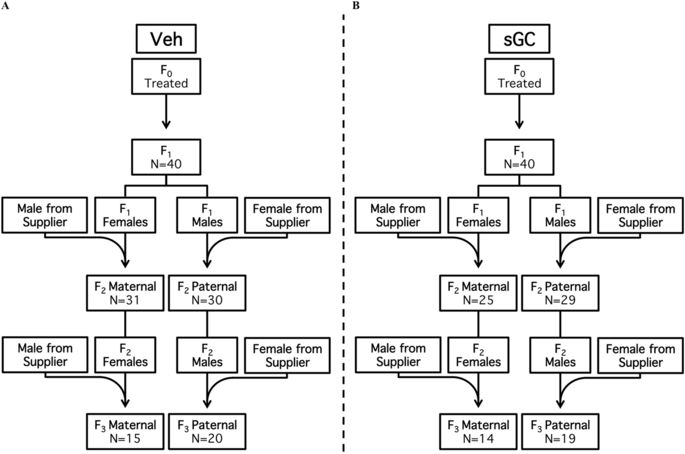
Such was a finding of a 2017 Canadian guinea pig study that was undertaken to better inform physicians of the transgenerationally inherited epigenetic effects of glucocorticoid treatments commonly prescribed during human pregnancies:

“This study presents the first evidence that prenatal treatment with sGC [synthetic glucocorticoid] results in transgenerational paternal transmission of hyperactivity and altered hypothalamic gene expression through three generations of young offspring. Female offspring appear to be more sensitive than male offspring to the programming effects of sGC, which suggests an interaction between sGC and sex hormones or sex-linked genes. Paternal transmission to F3 strongly implicates epigenetic mechanisms in the process of transmission, and small noncoding RNAs likely play a major role.”


Some details of the study included:

Veh[icle] was the control group initially treated with saline.

The study was informative and conclusive for the aspects studied. From the Methods section:

“Data from same-sex littermates were meaned to prevent litter bias. Sample sizes (N) correspond to independent litters, and not to the total number of offspring across all litters.

Power analyses based on previous studies determined N ≥ 8 sufficient to account for inter-litter variability and detect effects in the tests performed.”

https://www.nature.com/articles/s41598-017-11635-w “Prenatal Glucocorticoid Exposure Modifies Endocrine Function and Behaviour for 3 Generations Following Maternal and Paternal Transmission”

One example of how experience changes the brain

This 2017 California rodent study found:

“Neural representations within the mouse hypothalamus, that underlie innate social behaviours, are shaped by social experience.

In sexually and socially experienced adult males, divergent and characteristic neural ensembles represented male versus female conspecifics [members of the same species]. However, in inexperienced adult males, male and female intruders activated overlapping neuronal populations.

Sex-specific neuronal ensembles gradually separated as the mice acquired social and sexual experience. In mice permitted to investigate but not to mount or attack conspecifics, ensemble divergence did not occur. However, 30 minutes of sexual experience with a female was sufficient to promote the separation of male and female ensembles.

These observations uncover an unexpected social experience-dependent component to the formation of hypothalamic neural assemblies controlling innate social behaviours. More generally, they reveal plasticity and dynamic coding in an evolutionarily ancient deep subcortical structure that is traditionally viewed as a ‘hard-wired’ system.”

Hat tip to Neuroskeptic for both alerting me to the study and simplifying its overly-dense graphics.

http://www.nature.com/nature/journal/v550/n7676/full/nature23885.html “Social behaviour shapes hypothalamic neural ensemble representations of conspecific sex” (not freely available)

Searching for personal truths – a review of Blade Runner 2049

I saw Blade Runner 2049 yesterday with my 22-year old son. We chose seats with no one in front of us, and got the full impact of sight and sound.

The primary story was one person’s search for his truths: of his origins; of his memories; of his feelings. Who was the infant in the woman’s arms? Are my earliest memories real? Are my feelings true?

The lead character might as well have been lifeless. His activities were dictated by his designated role in society, by what was expected of him. It was no surprise that he preferred ethereal company over people.

He constantly repressed the memories and feelings that were most important to him, that could have given his life meaning. Despite being repressed, his memories and feelings impelled him to discover and confront his truths.

It was a defining moment when his earliest memory was recognized as real:

  • He could feel at last.
  • He could cry at last.
  • He could scream through the cracks in the repression that had produced an unreal, unfeeling existence.

The miracle of life was celebrated, especially at the end. Like the first Blade Runner, society’s members who were deemed unworthy of life were the ones who cherished this fleeting moment most dearly.

See it up close and personal, in a theater with a good screen and sound system.


This post has somehow become a target for spammers, and I’ve disabled comments. Readers can comment on other posts and indicate that they want their comment to apply here, and I’ll re-enable comments.

It’s transgenerational epigenetic inheritance week!

Transgenerational epigenetic inheritance is a subject whose time has come. This week I sequentially curated two 2017 reviews and two 2016 studies of the subject, and ended with a meta-analysis of human preventive treatments:


It’s the opposite of advancing science for those in the funding chain to give lip service to the subject, and then create an atmosphere where proposals to extend experiments to subsequent generations to study possible transgenerational epigenetic effects are neither encouraged nor funded.

Review of The Honest Truth About Dishonesty: How We Lie to Everyone–Especially Ourselves

Here’s an Amazon book review I wrote six years ago when I regularly read 2-3 books a week while on the train to and from work. The book served as an example of how behavioral researchers couldn’t reach their stated goals by using standard scientific methods.

Review of The Honest Truth About Dishonesty: How We Lie to Everyone–Especially Ourselves by Dan Ariely

Everybody would benefit from reading this collection of experiments with human behavior.

It would be fair to compare the book’s accomplishments with its declared goals. The author stated the book’s primary goal early on when he wrote:

“We need to first figure out what forces really cause people to cheat and then apply this improved understanding to curb dishonesty. That’s exactly what this book is about.

Once we more clearly understand the forces that really drive us, we discover that we are not helpless in the face of our human follies (dishonesty included), that we can restructure our environment, and that by doing so we can achieve better behaviors and outcomes.”

I appreciated the author’s research that described and delineated what his experiments chose to observe. For example, in one series of experiments, people lied in order to get tokens that a few seconds later were exchanged into money. These subjects cheated to an extent that was almost twice the amount of people who lied in order to directly get money.

Another series of experiments showed that when people were tired or stressed, they were more likely to cheat. The amount that mentally exhausted subjects cheated was almost three times the amount of non-stressed subjects.

There was also a series of experiments that tested the “what the hell” effect. The researchers found that the amount of cheating was not linear. A point was frequently reached where the subjects apparently decided to abandon a little bit of cheating, and started to cheat at every opportunity.

The author proposed that a “fake it until you make it” approach doesn’t ultimately lead to honest behavior. He suggested that it would probably start a chain of events that proceeded through the “what the hell” context, where a little bit of cheating became a lot, and ended up with suffering when the truth was eventually revealed.


What these experiments examined wasn’t the origins of dishonest behavior, but rather the middle and ending parts of dishonest behaviors. As such, I didn’t see how the book’s primary goal could be achieved.

Without exploring the precedents to dishonest behavior, we’re also left with a patchwork approach to achieving the secondary goal of changing outcomes by influencing the salient aspects of behavior.

Understanding that I’m not an expert or a researcher, let me offer an approach that could be more conducive to achieving the primary and secondary goals of the book. The necessary but unexplored research area would be along the lines of “What do I feel just before I act dishonestly?”

The subjects’ probable answers to this unasked question would indicate that the person’s unfulfilled needs were in play. These needs are for the most part unconscious, and are the sources of automatic behavior that seeks to fulfill these needs. The outward manifestations of this automatic behavior will lead the subjects to symbolic fulfillment of their old needs.

The subjects in the experiments may not be able to make the connection between their behaviors of say, cheating on a pledge to quit smoking, and their driving forces. This is probably because the subjects weren’t consciously aware of the feelings they had just before they acted.

The researchers may be able to bridge this gap with information obtained from measurements done by fMRIs and other instruments. They can integrate these measurements with the subjects’ reports of their feelings.

To meet the goals of the book, it’s important that the researchers uncover the subjects’ underlying feelings. This is necessary because feelings are usually closer to the causes of a person’s behavior.

The subjects’ behaviors were symptoms of their problems, not the problems themselves. The researchers would be better served to study the entire situation as best they can.


All of us anticipate while we read a book that there will be prescriptions and answers to the circumstances and troubles presented. But because The (Honest) Truth About Dishonesty didn’t identify “what forces really cause people to cheat,” the primary goal, to “clearly understand the forces that really drive us” wasn’t attained.

Realization of the secondary goal is undecided. The author presented several examples of how environments affect people’s dishonesty, such as conflicts of interests. He showed how people’s rationalizations allow them to permit a level of dishonesty that doesn’t harm their ideas about their own morality.

But how can effective and enduring solutions arise “so we can achieve better behaviors and outcomes” when the roots of the behaviors aren’t examined?
Do we need to study the brain to understand the mind?

A coauthor of the studies referenced in:

offered an opinion piece in A Paper a Day Keeps the Scientist Okay entitled “Do We Need To Study The Brain To Understand The Mind?”

“The emerging consensus appears to be that implementation is important. Interestingly, the inverse question is also being asked by neurobiologists—do we need consider the mind to understand the brain?—and answered largely and increasingly in the affirmative.

Is pain different from negative emotions such as sadness and anger, or are they variants on a common theme? Pain appears to be distinct from negative emotion, but commonalities suggest ways in which they may share underlying processes such as heightened attention.

One of the biggest pitfalls is the temptation to observe brain activity and make inferences about the psychological state—for example, to infer:

  • Episodic memory retrieval from hippocampal activity,
  • Fear from amygdala activity, or
  • Visual processing from activity in the ‘visual cortex.’

These inferences ignore the scope of processes which may activate each of these areas and involve a fallacy in reasoning: “if memory then hippocampus” is not the same thing as “if hippocampus then memory.”

The fact that few brain areas, including the ‘visual cortex,’ are dedicated to one process means that self-report is still the gold standard for assessing emotional experience and the contents of thought. This is a serious challenge for those who would like, for example, to assess your brand preferences or your political affiliation from a brain scan. (And isn’t it easier just to ask?)”

Epigenetic similarities between placental and cancer cells

This 2017 New Zealand review compared and contrasted epigenetic evidence from placental and cancer research:

“Placental and cancer cells are globally hypomethylated and share an epigenetic phenomenon that is not well understood – they fail to silence repetitive DNA sequences (retrotransposons) that are silenced (methylated) in healthy somatic cells.

In the placenta, hypomethylation of retrotransposons has facilitated the evolution of new genes essential for placental function. In cancer, hypomethylation is thought to contribute to activation of oncogenes, genomic instability, and retrotransposon unsilencing; the latter, we postulate, is possibly the most important consequence.

Activation of placental retrotransposon-derived genes in cancer underpins our hypothesis that hypomethylation of these genes drives cancer cell invasion.”

http://onlinelibrary.wiley.com/doi/10.1002/bies.201700091/abstract “The Genes of Life and Death: A Potential Role for Placental-Specific Genes in Cancer” (not freely available)


The review cited a 2014 study from the same research group that covered some of the same points and is freely available:

http://journals.plos.org/plosone/article?id=10.1371/journal.pone.0095840 “Retrotransposon Hypomethylation in Melanoma and Expression of a Placenta-Specific Gene”

Epigenetic effects of THC differ between female adolescents and adults

This 2017 Italian rodent study found:

“THC [delta9-tetrahydrocannabinol, the psychoactive compound of cannabis] exposure affects histone modifications in the brain of female rats in a region- and age-specific manner. Specifically, THC acts on different targets depending on the considered brain area and, remarkably, the adolescent brain is generally more sensitive to THC than the adult brain.

Adolescent exposure to THC, or to synthetic cannabinoids, induced sex-dependent brain and behavioral alterations at adulthood. In female rats, the phenotype was more complex, as both depressive-like and psychotic-like signs were present.

Development of the depressive/psychotic-like phenotype is restricted to adolescent THC exposure. Not only the behavioral phenotype developed after adolescent, and not adult, exposure, but also changes in both histone modifications and gene expression were more widespread and intense after adolescent treatment, further confirming a specific adolescent susceptibility.

The primary effect in the adolescent brain was represented by changes leading to transcriptional repression, whereas the one observed after adult treatment led to transcriptional activation. Moreover, only in the adolescent brain, the primary effect was followed by a homeostatic response to counterbalance the THC-induced repressive effect, except in the amygdala.”

The authors’ interpretation of the brain area results was:

“The amygdala is more responsive in adult than adolescent animals. Since it has been established that the amygdala is activated during exposure to aversive stimuli, functioning as a “behavioral brake”, different response between adult and adolescent animals could represent the biological bases of the adolescent propensity for risk-taking and novelty-seeking behaviors. Also in adolescent humans, neuroimaging studies have shown a weaker involvement of the amygdala, and a greater contribution of the NAc [nucleus accumbens], in response to negative and positive stimuli compared to adults.”

http://www.mdpi.com/1422-0067/18/10/2094 “Chronic Δ9-THC Exposure Differently Affects Histone Modifications in the Adolescent and Adult Rat Brain”

Prisoners of our childhoods

Same old shit – another failed relationship.

Coincident with the start of our relationship, I was struck by a phrase by Dr. Janov, posted in Beyond Belief: What we do instead of getting well:

“It doesn’t matter about the facts we know if we cannot maintain a relationship with someone else.”

I kept that thought in the forefront.

Both of us are prisoners of our childhoods. I’ve tried to see and feel the walls and bars for what they are.

Like all of us, J hadn’t tried to process the reality of her childhood and life. For example, on her birthday I asked her how she celebrated her birthdays when she was growing up. She provided a few details, then mentioned that her parents had skipped some of her birthdays. Although I had no immediate reaction, she quickly said that she had a happy childhood.

I was at fault, too, of course. I again asked a woman to marry me who hadn’t ever told me she loved me, except in jest.

I asked J to marry me around the six-month point of our relationship. I felt wonderful, in love with her that August morning after she slept with me at my house. I made an impromptu plan: in the middle of a four-mile walk, I asked her to marry me while kneeling before her as she sat on a bench outside a jewelry store. But she wouldn’t go in to choose a ring. She said she’d think about it.

A month later, after several dates, sleepovers at her house, and a four-day trip to Montreal, I again brought up marriage while we rested on her large couch in her nice sun room. The thing I felt would be wonderful brought about the end.

I tried to understand why she couldn’t accept me for the person who I intentionally showed her I am. She abstracted everything that she said.

I tried to get her to identify why, after all the times we cared for each other, after all our shared experiences, she didn’t want me around anymore.

Didn’t happen. She didn’t tell me things that made sense as answers to my questions.

One thing she said without abstraction was that I was weak for showing my feelings. She told me I was clingy.

Another thing she communicated at the end shocked me. She somehow thought that I was going to dump her. I said that the thought never even crossed my mind.

I didn’t recognize it as projection at the time. Prompted by her underlying feelings, she attributed to me the actions and thoughts that only she herself had.

I’ve tried to put myself in J’s place.

  • How horrible must it have been for her to be steadily intimate with a man and not feel that his touches, kisses, words, affection, expressed love?
  • That he couldn’t really love me, and so I couldn’t love him?
  • That he was actually after something else, because it was impossible that he loved me?

One thing I’ve felt after the end was that the need underlying my only stated relationship goal – to live with a woman I love who also loves me – is again ruining my life. My latest efforts towards that goal were rife with unconscious symbolic act outs of an unsatisfied need from my early life.

That unrelenting need is for a woman’s love. The women I’ve chosen, though, have always given me what I got from my mother: they wouldn’t accept me as I am, and didn’t love me.

And there can never be a substitute. Most of my Primal Therapy sessions included the PAIN OF FEELING exactly that.

My prison cell is what Dr. Janov calls the imprint where I – as a child, teenager, young man, middle-aged man, old man – futilely ATTEMPT TO CHANGE THE PAST.

“Standing next to me in this lonely crowd
Is a man who swears he’s not to blame
All day long I hear him shout so loud
Crying out that he was framed

I see my light come shining
From the west down to the east
Any day now, any day now
I shall be released”


P.S. – We got back together seven months later, and are still going strong.

Epigenetic effects of cruciferous vegetable compounds

This 2017 German review discussed the results of many of the studies performed over the past thirty years investigating the health-promoting effects of cruciferous vegetable compounds:

“SFN [sulforaphane] [is] the ITC [isothiocyanate] that is the most extensively studied for its chemopreventive and anti-inflammatory properties in vitro, as well as in vivo.

Due to the reversible nature of epigenetic aberrations, a modulation of epigenetically caused changes in gene expression by phytochemicals may be a promising approach in cancer prevention at the initiation step of carcinogenesis. Both SFN and DIM [diindolemethane] reversed many of the cancer-associated promotor methylations, including abnormally-methylated genes that are dysregulated during cancer progression..modulate the abnormal expression of miRNAs in different types of cancer.”

http://www.mdpi.com/1422-0067/18/9/1890/htm “Brassica-Derived Plant Bioactives as Modulators of Chemopreventive and Inflammatory Signaling Pathways”


A 2017 Polish human cell study that wasn’t cited above due to its recent publication found:

“We show for the first time that SFN is an epigenetic modulator in breast cancer cells that results in cell cycle arrest and senescence.”

https://www.ncbi.nlm.nih.gov/pmc/articles/PMC5596436/pdf/thnov07p3461.pdf “Sulforaphane-Induced Cell Cycle Arrest and Senescence are accompanied by DNA Hypomethylation and Changes in microRNA Profile in Breast Cancer Cells”


This post has somehow become a target for spammers, and I’ve disabled comments. Readers can comment on other posts and indicate that they want their comment to apply here, and I’ll re-enable comments.

Epigenetic stress effects in preterm infants

This 2017 Italian review selected 9 human studies on the epigenetic effects of:

“One of the major adverse events in human development. Preterm infants are hospitalized in the Neonatal Intensive Care Unit where they are exposed to life-saving yet pain-inducing procedures and to protective care.”

Highlights of the referenced studies included:

  • “Early exposure to adverse events during the third trimester of pregnancy is capable to alter the epigenetic status of imprinted and placenta-related genes which have relevant implications for fetal development and preterm infants’ HPA [hypothalamic–pituitary–adrenal] stress reactivity during infancy.”
  • “There was an association between DNAm [DNA methylation] and white matter tract tissue integrity and shape inferred from dMRI [diffusion MRI], suggesting that epigenetic variation may contribute to the cerebral phenotype of preterm birth.”

Limitations of the referenced studies included:

  • “A multiple sampling design that includes parental samples, placental tissue, cord blood and extends across the life-course would be required to investigate the relative contributions of in utero and postnatal exposures to changes in DNAm, and the extent to which preterm birth leaves a legacy on the methylome.”
  • Saliva, blood, and other tissues’ DNA methylation may not produce valid links to brain tissue DNA methylation of the same gene, which may hamper conclusive inferences about behavior, etc.

http://www.sciencedirect.com/science/article/pii/S0149763417302117 “Preterm Behavioral Epigenetics: A systematic review” (not freely available)

http://www.nature.com/tp/journal/v6/n1/full/tp2015210a.html “Epigenomic profiling of preterm infants reveals DNA methylation differences at sites associated with neural function” (one of the studies selected, quoted above)

What are we to believe?

This 2017 blog post from Antiwar.com’s Justin Raimondo outlines the latest instance of exploiting beliefs:

“Neither the sources of this story nor those who are reporting it can be trusted. Journalism is not a means of discovering knowledge, but a weapon to be deployed in a political-ideological conflict.”

Similar to the development of other beliefs, the reporting of the referenced story discouraged inquiries into “Information about the real world..giving us a highly distorted version of events.” It followed the blueprint of Using citations to develop beliefs instead of evidence in that once the faulty information became widely cited, refuting evidence would be ignored, and the false belief was used for other purposes.

http://original.antiwar.com/justin/2017/08/10/what-are-we-to-believe/ “What Are We To Believe? Fake news plus phony “intelligence” equals disaster”


This post has somehow become a target for spammers, and I’ve disabled comments. Readers can comment on other posts and indicate that they want their comment to apply here, and I’ll re-enable comments.