Telomere dynamics, stress, and aging across generations

This 2015 Pennsylvania/North Dakota animal and human review noted:

“The mechanisms linking stress exposure to disease progression and ageing either within individuals or across generations are still unclear, but recent work suggests that telomere dynamics (length and loss rate) may play an important role.

Parental stress may directly influence the parental germline telomeres pre-fertilization, affecting the telomere length inherited by offspring. Alternatively, parental stress may affect telomere dynamics indirectly either pre- or post-natally. The physiological mechanisms by which stress elicits changes in telomere length are also diverse.

We need more information about how these effects vary between developmental stages, among individuals, and within tissues of individuals..to mitigate the effects of early life adversity on human health.”

I was disappointed that the reviewers chose Problematic research with telomere length as a reference. Then again, maybe their statement:

“how these traits are related to one another clearly deserves more study”

is a polite way of saying that study’s methodology was flawed?

Regarding evolutionary biology:

“While most evidence suggests that the effect of parental stress exposure on offspring telomeres is negative, it is important to remember that this is just one trait that can contribute to parental and offspring fitness.

Investment in traits that increase fitness is expected to be favoured, even if they come at a cost to traits associated with longevity, such as telomere length.”

A similar point was made in a reference of A study of DNA methylation and age that:

“Aging has no purpose (neither for individuals nor for group), no intention. Nature does not select for quasi-programs. It selects for robust developmental growth.”


http://rsbl.royalsocietypublishing.org/content/11/11/20150396 “Telomere dynamics may link stress exposure and ageing across generations”
Psychological therapy and DNA methylation

This 2015 worldwide human study was:

“The largest study to date investigating the role of HPA [hypothalamic–pituitary–adrenal] axis related genes in response to a psychological therapy. Furthermore, this is the first study to demonstrate that DNA methylation changes may be associated with response to psychological therapies in a genotype-dependent manner.

In this study, we tested the association between polymorphisms of FKBP5 [a gene that produces a protein that dampens glucocorticoid receptor sensitivity primarily in areas of the limbic system such as the hippocampus and amygdala] and GR [glucocorticoid receptor gene] and response to CBT [cognitive behavior therapy] in children with anxiety disorders (N = 1,152), and examined change in DNA methylation at specific regions of these genes during the course of CBT in a subset of the sample (n = 98).

No significant association was found between GR methylation and response. Allele-specific change in FKBP5 methylation was associated with treatment response.”

Regarding “treatment response:”

“Subjects aged 5–18 (mean: 9.8 years) met DSM-IV criteria for primary diagnosis of an anxiety disorder.

Clinical severity ratings (CSRs) were usually based on composite parent and child reports, and were assigned on a scale of 0–8. [36] [linked below]

Treatment response was defined as the change in primary anxiety disorder severity from pretreatment to follow-up. A diagnosis was made when the child met diagnostic criteria and received a CSR of 4 or more. Remission was regarded as the absence of the primary anxiety according to diagnostic criteria, as determined by the clinicians at the follow-up interview.”


Scenarios where nine-year-olds and their parents may have benefited from skewing their “composite parent and child reports” either way:

  1. Parents benefited from an anxious-child report (financial support provided, social services provided, avoided undesirable activities like going to work, continued psychological dependence, provided victim celebrity, enabled their own problems)
  2. Parents benefited from a well-child report (freed up time to pursue desirable activities, financial relief, relief from court-ordered or social-services-required activities, covered up their own contributions to the child’s problems)
  3. Nine-year-olds benefited from an anxious report (relief from undesirable activities like school attendance, continued psychological dependence, provided victim celebrity, activities structured around their condition, enabled the parents’ problems)
  4. Nine-year-olds benefited from a well report (symptom reduction, met parental expectations, freed up time to pursue desirable activities, covered up the parents’ contributions to the child’s problems).

I wonder what “treatment response” criteria were available other than self-serving reports and “diagnostic criteria, as determined by the clinicians.” Every day medical personnel hear patients self-report conditions where biological measurements may confirm or indicate something different. Did the “diagnostic criteria, as determined by the clinicians” include comparisons to relevant biological measurements?


The related study linked below points out:

“Although CBT has been established as an efficacious treatment, roughly 40% of children retain their disorder after treatment.”

Its focus was also on predictors (other than genetic) of CBT outcomes.

Neither study provided evidence of attempts to find originating causes for the children’s conditions. Were the international CBT approaches only interested in treating symptoms?


http://onlinelibrary.wiley.com/doi/10.1002/da.22430/full “HPA AXIS RELATED GENES AND RESPONSE TO PSYCHOLOGICAL THERAPIES: GENETICS AND EPIGENETICS”

Related 2015 study: http://www.jaacap.com/article/S0890-8567%2815%2900191-4/pdf “Clinical Predictors of Response to Cognitive-Behavioral Therapy in Pediatric Anxiety Disorders: The Genes for Treatment (GxT) Study”

Fetal exposure to sex hormones and female anxiety

This 2015 Swedish rodent study found:

“Women with polycystic ovary syndrome (PCOS) display high circulating androgen levels that may affect the fetus and increase the risk of mood disorders in offspring.

Although clinical data are inconsistent, there are indications that androgens play a crucial role in behavior and mood regulation in females.

Studies on the link between testosterone and anxiety behavior in males have generated inconsistent results.

Higher circulating testosterone has previously been reported in female rat PNA [prenatal androgen] offspring. This discrepancy may be a result of the higher doses of maternal testosterone (5 mg) used in the previous study compared with the present study (0.5 mg).

Although the anxiety-like behavior observed in the female PNA offspring in the present study cannot be directly explained by high circulating androgens, the reduced AR [androgen receptor] expression in the amygdala suggests a compensatory response to the high prenatal testosterone exposure, a result implicating the amygdala as the CNS site underlying the changes in anxiety in the PNA offspring. This idea is further strengthened by our experiment showing that subchronic testosterone exposure into amygdala is sufficient to produce anxiety-like behavior in adult females.

Maternal testosterone exposure causes anxiety-like behavior in female, and to a lesser extent male offspring, an effect that seems to occur during fetal life and to be mediated via AR in the amygdala, together with changes in ER [estrogen receptor] and in the serotonergic and GABAergic pathways in the amygdala and hippocampus of female PNA rats.”

The news coverage – too much testosterone caused anxiety-like symptoms in females whether they are adults or fetuses – was NOT what the study found. The headlines disregarded its caveat:

“The anxiety-like behavior observed in the female PNA offspring in the present study cannot be directly explained by high circulating androgens.”

I look forward to research on floor levels of testosterone, below which there are also adverse effects on females. There is such evidence, but would it play well with popular memes?

See Sex hormone exposure to the developing female fetus causes infertility in adulthood for another study that used the PCOS phenotype.

http://www.pnas.org/content/112/46/14348.full “Maternal testosterone exposure increases anxiety-like behavior and impacts the limbic system in the offspring”

A molecular study of the epigenetic regulation of memory

This 2015 Norwegian rodent study provided:

“New insights into the molecular underpinnings of synaptic plasticity.

We report the first global transcriptome [all RNA found in specific cells] analysis of in vivo synaptic plasticity, using the well-established model of LTP [long-term potentiation, an increase in synaptic strength that underlies memory] in the rat dentate gyrus [a region of the hippocampus where neurogenesis occurs].

We have identified a number of novel lncRNAs [long (more than 200 nucleotides) noncoding (non-protein coding) RNA] that are dynamically regulated in response to LTP. In addition, we also observed an altered expression of multiple classes of repeat elements [mobile DNA sequences often involved in mutations] including retrotransposons [a repeat element type formed by copy-and-paste mechanisms].

The results presented here reveal a vast extension of mRNAs [messenger RNA, a large RNA that carries codes for protein production] previously not associated with neuronal plasticity; the discovery of extensive, dynamic regulation of lncRNAs, repeat elements, and tRNA [transfer RNA that links mRNA and amino acids during protein production] following LTP induction in the adult rat brain.

These findings provide a broader foundation for elucidating the transcriptional and epigenetic regulation of synaptic plasticity.”

Regarding lncRNA:

“We annotate a total of 10,256 novel lncRNAs in the rat transcriptome.

To infer possible functions of lncRNAs, we correlated [71] differentially expressed lncRNAs with regulated protein coding genes.

There are no established rules for predicting the function of lncRNAs.”

Regarding repeat elements:

“It is intriguing to consider that expression of repeat elements during LTP is the first step toward retrotransposition and reshaping of the neuronal genome. A hypothetical mechanism for how these repeat elements could be linked to memory, would be that a certain stimuli, whether it is stress or a learning task (here LTP), deregulate the repression of repeat elements which are then rapidly and transiently transcribed. These elements reinsert themselves back into the genome of stimulated neurons where they influence the expression of neighboring genes.

The present work supports the intriguing hypothesis that dynamic retrotransposition may act as a molecular means to reprogram the neuronal genome as part of long-term synaptic plasticity and memory formation.”

See RNA as a proxy signal for context-specific biological activity for more about lncRNA.

http://journal.frontiersin.org/article/10.3389/fnins.2015.00351/full “Dynamic expression of long noncoding RNAs and repeat elements in synaptic plasticity”

Transgenerational epigenetic programming with stress and microRNA

This 2015 Pennsylvania rodent study found:

“Sperm miRs [microRNAs, a small non-coding RNA that has a role in gene expression] function to reduce maternal mRNA [messenger RNA, a large RNA that carries codes for protein production] stores in early zygotes, ultimately reprogramming gene expression in the offspring hypothalamus and recapitulating the offspring stress dysregulation phenotype.”

These researchers caused stress-induced changes at an early stage of embryonic development with microRNA injections. Resultant adverse effects weren’t observed until subjects were adults!

Most news coverage focused on it being a male’s stress, not a female’s, that affected a developing embryo. Either or both sexes can epigenetically disadvantage a fetus – okay.

Demonstrating how a damaging influence can begin immediately after conception, but symptoms didn’t present until adulthood made this study newsworthy.


Although the term “transgenerational” was used in the study’s title, abstract, and elsewhere, studied epigenetic effects were intergenerational rather than transgenerational. Per A review of epigenetic transgenerational inheritance of reproductive disease, for the term to apply, researchers need to provide evidence in at least the next 2 male or non-gestating female generations and/or 3 gestating female generations of:

“Altered epigenetic information between generations in the absence of continued environmental exposure.”


From a press release, a study coauthor who also coauthored How to make a child less capable even before they are born: stress the pregnant mother-to-be stated:

“Bale suspects that when a male experiences stress it may trigger the release of miRs contained in exosomes from epithelial cells that line the epididymis, the storage and maturation site for sperm between the testes and the vas deferens. These miRs may be incorporated into maturing sperm and influence development at fertilization.”

Not all stress-related gene expression in pituitary and adrenal glands differed.

http://www.pnas.org/content/112/44/13699.full “Transgenerational epigenetic programming via sperm microRNA recapitulates effects of paternal stress”

The roles of DNA methylation and demethylation in forming memories

This 2015 Alabama combined animal and human review noted:

“Memories can last a lifetime, yet the proteins that enable synaptic plasticity, allowing for the establishment and maintenance of the memory trace, are subject to perpetual turnover.

DNA methylation may likely serve as the principle cellular information storage device capable of stably and perpetually regulating cellular phenotype.”

The authors developed a framework for understanding disparate findings of DNA methylation and demethylation concerning memory.


The dependencies expressed in the framework among the numerous factors – with their relative strengths, timings, and durations – reminded me of this video:

1) If such an error-prone framework accurately reflected the evolved architecture of our memory, we wouldn’t have the variety and number and intensity of memories that we have.

2) The framework neither accounted for prenatal memory processes nor differentiated emotional memories, although some of the referenced studies’ findings were applicable.

3) DNA methylation and demethylation aren’t the entirety of memory formation explanations. For example, they don’t explain state-dependent memories that can be instantiated, reactivated, and amnesia induced without involving “the proteins that enable synaptic plasticity” described in the authors’ framework. For completeness, the authors could have assessed the relative contributions of other memory processes, or at least enumerated them.

4) DNA methylation and demethylation explanations don’t cover all epigenetic biochemical processes. There are also placental interactions, histone/protein interactions, microRNA interactions, etc. For completeness, the authors could have placed the review’s topic within appropriate contexts of other epigenetic processes that influence memory.

This review of DNA methylation and demethylation roles in memory formation opened up a few slats in the blind covering one window. There’s more to be done to fully open that blind, and more window blinds to be opened before the workings of our memory are illuminated.

http://nro.sagepub.com/content/21/5/475.full “DNA Methylation in Memory Formation: Emerging Insights”

A review of the epigenetic basis for mental illness

This 2015 New York combined animal and human review of epigenetic studies noted:

“While genetic factors are important in the etiology of most mental disorders, the relatively high rates of discordance among identical twins, particularly for depression and other stress-related syndromes, clearly indicate the importance of additional mechanisms.

Environmental factors such as stress are known to play a role in the onset of these illnesses.

Exposure to such environmental insults induces stable changes in gene expression, neural circuit function, and ultimately behavior, and these maladaptations appear distinct between developmental versus adult exposures.

Increasing evidence indicates that these sustained abnormalities are maintained by epigenetic modifications in specific brain regions.”

Placing the “maladaptations” and “sustained abnormalities” phrases into their contexts:

  • A fetus biologically adapted to their environment – however toxic it was – in order to best survive.
  • These adaptations for survival were subsequently viewed as Disrupted Neurodevelopment and “maladaptations” from the perspectives of normal development and environments.
  • The “sustained abnormalities” caused within the earlier environments “are maintained by epigenetic modifications.” An improved environment wasn’t impetus enough to change developmental “maladaptations.”

Per the below link, it’s been a month since this review was published. Why has there been ZERO news coverage of it?

One reason may be that the Friedman Brain Institute, Icahn School of Medicine at Mount Sinai, didn’t issue a press release or otherwise publicize it. Another reason may be the groups that are opposed to its findings:

  • Parents who provided harmful environments for their children, beginning at conception;
  • People who feel threatened when scientific causal evidence resonates with what happened in their own lives, and in response, limit their empathetic understanding of others’ problems;
  • Social workers, psychologists, and others in industries whose paychecks depend on efforts that aren’t directed towards ameliorating the causes for these later-life effects;
  • Psychiatrists and medical personnel whose livelihoods depend on pharmaceutical and other treatments that only alleviate symptoms;
  • Researchers whose funding depends on producing non-etiologic findings.

Despite resistance to this review’s findings, a large number of people would benefit from publicizing evidence for:

“These sustained abnormalities are maintained by epigenetic modifications in specific brain regions.”

http://nro.sagepub.com/content/early/2015/09/24/1073858415608147 “Epigenetic Basis of Mental Illness”

Conclusions without evidence regarding emotional memories

The last sentence in the Significance section of this 2015 Emory/Harvard rodent study was:

“These data highlight the potential to exploit sensory system plasticity as a means of ameliorating negative emotional memories that may be tied to peripheral sensory systems.”

The “ameliorating negative emotional memories” part of this statement was incongruent with what the study actually found, as summarized by the Abstract’s last sentence:

“These data suggest that learning-induced freezing behavior, structural alterations, and enhanced neural sensory representation can be reversed in adult mice following extinction training.”

The study performed fear extinction experiments. The researchers and reviewer knew or should have known about prior studies such as Fear extinction is the learned inhibition of retrieval of previously acquired responses whose findings demonstrated that fear extinction doesn’t depend on memory retrieval.

Based on the previous research, the subjects’ “negative emotional memories” possibly weren’t affected at all by the current study’s extinction experiments!

The researchers provided neither direct evidence for “ameliorating negative emotional memories” nor studied areas of the subjects’ brains that contained or processed emotional memories, such as the hippocampus, amygdala, and prefrontal cortex. But – after all – Harvard.

What purposes did it serve for the researchers to make a Significance statement about “ameliorating negative emotional memories” when this wasn’t supported by the study’s findings? What part did the reviewer play in approving this statement?


Where was the study’s evidence to support the headline and statements in the news release such as:

“New Study Indicates That Sense of Smell Could Play Major Role in New Approaches to Treating PTSD

It’s possible for fear behaviors associated with emotional learning to be reversed through exposure-based talk therapy.”

Could this rodent study’s olfactory system findings be properly extrapolated to human talk therapy?

NO! But – Harvard.

http://www.pnas.org/content/112/41/12846.full “Extinction reverses olfactory fear-conditioned increases in neuron number and glomerular size”

Genetic causes for epigenetic symptoms

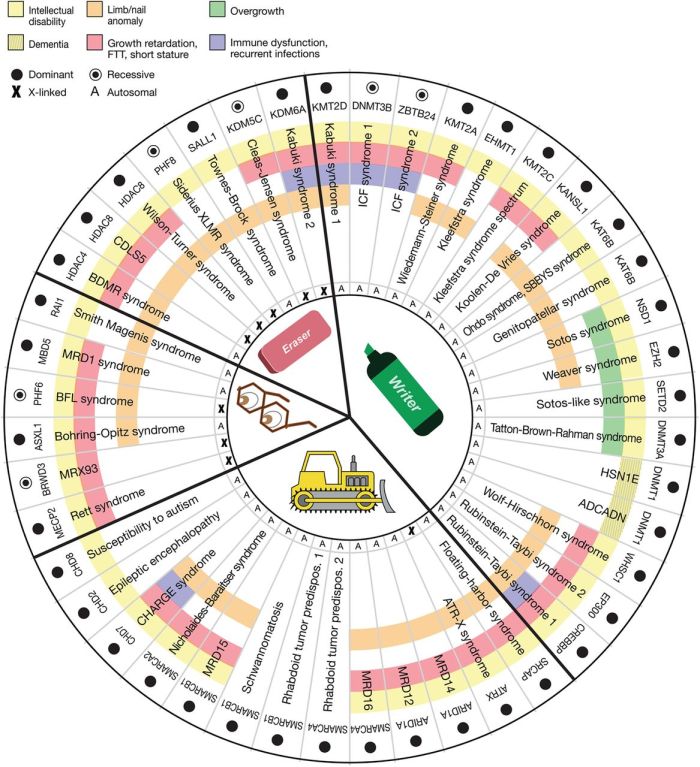
This 2015 human summary study was of 44 genetic disorders that disrupt the maintenance of epigenetic modifications:

“..making them likely to have significant downstream epigenetic consequences. Interestingly, these patients often demonstrate neurological dysfunction, suggesting that precise epigenetic regulation may be critical for neuronal homeostasis. However, at the same time, it is important to keep in mind that many of these proteins have additional non-epigenetic roles.

Mutations in many of these components have now been linked to a number of well-known causes of intellectual disability. Intellectual disability is generally defined as deficits of intellectual function and adaptive behavior that occur during the developmental period.

Given the opposing activity of many of the components of the epigenetic machinery, the pathogenic sequence in these disorders involves an imbalance of chromatin states. Keeping a subset of genes under “pressure” from two opposing systems may allow the cellular system to rapidly respond to environmental stimuli.

These disorders, on average, have unusual phenotypic breadth. Similarly, there is a shift in distribution toward a higher number of organ systems affected.

In addition to developmental phenotypes (multiple congenital anomalies), in some cases there appear to be ongoing defects that remain consequential in post-natal life. An example of the latter is the hippocampal memory defects seen in many of the mouse models.

This raises the question whether cells undergoing neurogenesis and synaptogenesis are particularly sensitive to subtle defects of the epigenetic machinery and downstream epigenetic abnormalities. A major remaining question is whether neurogenesis defects and/or abnormalities of synaptic plasticity are a unifying pathophysiological process.”

The researchers represented the 44 genetic disorders on a wheel graph:

F1.large

I look forward to further research that includes non-genetic disruptors of epigenetic modifications.

http://genome.cshlp.org/content/25/10/1473.full “The Mendelian disorders of the epigenetic machinery”

What can cause memories that are accessible only when returning to the original brain state?

This 2015 French rodent study found:

“Memories can be established and maintained without de novo protein synthesis and that experimental amnesia may not result from a disruption of memory consolidation/reconsolidation.

Posttraining/postreactivation treatments induce an internal state, which becomes encoded with the memory, and should be present at the time of testing to ensure a successful retrieval.

This integration concept includes most of the previous explanations of memory recovery after retrograde amnesia and critically challenges the traditional memory consolidation/reconsolidation hypothesis, providing a more dynamic and flexible view of memory.”

From Neuroskeptic’s analysis of the study:

“A different drug, lithium chloride, produces the same pattern of effects – it blocks ‘reconsolidation’, but this can be reversed by a second dose at the time of recall. However, lithium chloride is not an amnestic [a drug that blocks memory formation] – it doesn’t block protein synthesis. Rather, it causes nausea.

The implication of the lithium experiment is that any drug that causes an ‘internal state change’, even if it’s just nausea, can trigger state-dependent memory and behave just like an ‘amnestic’.”


As this study may apply to humans, a drug wouldn’t necessarily be required to “induce an internal state.” If the findings of studies such as Are 50 Shades of Grey behaviors learned in infancy? extend to humans, an emotional or physical experience may be sufficient to produce a state-dependent memory. For example, A study that provided evidence for basic principles of Primal Therapy found, albeit with rodents and use of a drug:

“Fear-inducing memories can be state dependent, meaning that they can best be retrieved if the brain states at encoding and retrieval are similar.”

Memories triggered while in a brain state reentered through an emotion or a physical reaction are experienced by Primal Therapy patients and observed by therapists every day. However, as mentioned in What scientific evidence can be offered for Primal Therapy’s capability to benefit people’s lives? there’s a difficulty in developing human evidence for such state-dependent emotional memories.

Standard procedures would use human subjects and control groups in a way that retrieved memories according to the researchers’ schedule and experimental parameters. In order for the retrieval of an emotional memory to be therapeutic, though, the methods of an experiential therapy such as Dr. Arthur Janov’s Primal Therapy leave the timing of entering a triggering brain state up to the patient.

When a brain state protects a human emotional memory from being accessed, it probably wouldn’t be therapeutic to:

  • Force a return to that brain state, and thereby
  • Remove the memory’s protection, then
  • Retrieve and re-experience the memory

just for the sake of research.

The evidence for retrieving and re-experiencing a state-dependent memory lies mainly within the individual’s experiences.

A challenge is to find innovative ways to document human evidence for state-dependent emotional memories while ensuring a therapeutic process.

http://www.jneurosci.org/content/35/33/11623 “Integration of New Information with Active Memory Accounts for Retrograde Amnesia: A Challenge to the Consolidation/Reconsolidation Hypothesis?”

A study that provided evidence for basic principles of Primal Therapy

This 2015 Northwestern University rodent study found:

“Fear-inducing memories can be state dependent, meaning that they can best be retrieved if the brain states at encoding and retrieval are similar.

Memories formed in a particular mood, arousal or drug-induced state can best be retrieved when the brain is back in that state.

‘It’s difficult for therapists to help these patients,’ Radulovic said, ‘because the patients themselves can’t remember their traumatic experiences that are the root cause of their symptoms.’

The best way to access the memories in this system is to return the brain to the same state of consciousness as when the memory was encoded.”

The study demonstrated one method of activating neurobiological pathways with a drug to remove a hippocampal memory’s protection, which played a part in enabling subjects to relive their remembered experiences. This rodent study’s methods weren’t designed to therapeutically access similarly protected memories with humans.

From the Northwestern press release:

“There are two kinds of GABA [gamma-Aminobutyric acid] receptors. One kind, synaptic GABA receptors, works in tandem with glutamate receptors to balance the excitation of the brain in response to external events such as stress.

The other population, extra-synaptic GABA receptors, are independent agents.

If a traumatic event occurs when these extra-synaptic GABA receptors are activated, the memory of this event cannot be accessed unless these receptors are activated once again.

‘It’s an entirely different system even at the genetic and molecular level than the one that encodes normal memories,’ said lead study author Vladimir Jovasevic, who worked on the study when he was a postdoctoral fellow in Radulovic’s lab.

This different system is regulated by a small microRNA, miR-33, and may be the brain’s protective mechanism when an experience is overwhelmingly stressful.

The findings imply that in response to traumatic stress, some individuals, instead of activating the glutamate system to store memories, activate the extra-synaptic GABA system and form inaccessible traumatic memories.”

I’d point out that “can’t remember” and “inaccessible traumatic memories” phrases used above were in reference to what’s usually called “memory” i.e., a recall initiated by the cerebrum.


The study’s findings should inform memory-study researchers if they care to understand how emotional memories can be formed and re-experienced.

The study provided evidence for fundamentals of Dr. Arthur Janov’s Primal Therapy, such as:

  • Experiences associated with pain can be remembered below our conscious awareness.
  • The retrieval and re-experiencing of emotional memories can engage our lower-level brain areas without our higher-level brain areas’ participation.

The obvious nature of this study’s straightforward experimental methods made me wonder why other researchers hadn’t used the same methods decades ago.

Use of this study’s methodology could have resulted in dozens of informative follow-on study variations by now, and subsequently found whether subjects’ physiological, behavioral, and epigenetic measurements differed from control group subjects, as in:

“miR-33 is downregulated in response to gaboxadol [the drug used to change subjects’ brain state] and modulates its effects on state-dependent fear.”


See Resiliency in stress responses for abstracts of three follow-on papers by these researchers.

http://www.nature.com/neuro/journal/v18/n9/full/nn.4084.html “GABAergic mechanisms regulated by miR-33 encode state-dependent fear”

MP3 with lead researcher Dr. Jelena Radulovic: http://www.thenakedscientists.com/HTML/specials/show/20150825/

Leaky gates, anxiety, and grocery store trips without buying list items

An interview with Jeff Link, the editor of Dr. Arthur Janov’s 2011 book “Life Before Birth: The Hidden Script that Rules Our Lives” with Ken Rose:

“Even further confirmation for some of the views of Janov, that maybe weren’t widely accepted for a time, it’s new research now being done into memory and what a lot of scientist are seeing, a lot of different studies is that memory reactivates the same neuroimpulses that were initially firing off when the event happened.

So a traumatic event when you remember it, the act of remembering it is actually creating a neuromirror of what went on initially.

In a lot of ways that is what Primal Therapy is attempting to do; is to go back to that place and reconnect, or as it’s sometimes referred to, reconsolidate the brain state so that real healing can take place.”

Transcript (part 4 of 6): http://cigognenews.blogspot.com/2015/09/ken-rose-on-life-before-birth-part-46.html

MP3: http://www.pantedmonkey.org/podcastgen/download.php?filename=2011-12-15_1300_what_now_jeff_link.mp3

A hippocampal protein that increases when stress increases

This 2015 Michigan human/rodent study found:

“Gene expression profiling in postmortem human brain and studies using animal models have implicated the fibroblast growth factor (FGF) family in affect regulation and suggest a potential role in the pathophysiology of major depressive disorder (MDD).

We show that FGF9 expression is up-regulated in the hippocampus of individuals with MDD, and that FGF9 expression is inversely related to the expression of FGF2.”

The researchers went down the evolutionary scale from human findings to replicate many of the findings with rodents:

“We found that chronic social defeat stress, an animal model recapitulating some aspects of MDD, leads to a significant increase in hippocampal FGF9 expression.

Collectively, these results suggest that high levels of hippocampal FGF9 play an important role in the development or expression of mood and anxiety disorders.”

http://www.pnas.org/content/112/38/11953.full “Fibroblast growth factor 9 is a novel modulator of negative affect”

Adverse effects of inflammation and stress on hippocampal synapses

This dense and highly-jargoned 2015 rodent study found:

“The suppression of BDNF [brain-derived neurotrophic factor] signaling, LTP [long-term potentiation], and memory may be driven by an increased sensitivity to IL-1β [the proinflammatory cytokine interleukin 1β] that occurs directly at synapses.”

The researchers reversed the adverse effects of IL-1β after they induced stress and inflammation. Blocking IL-1β when there wasn’t stress or inflammation, however, also caused adverse effects:

“Interestingly, administration of AS1 [the compound that blocked the proinflammatory responses] in the absence of LPS [the bacterial compound used to stress the subjects’ immune systems] treatment also impaired OLM [the object location memory test where control group rodents exhibited a preference for a novel location over a familiar location].

This finding is consistent with the notion that endogenous IL-1β at physiologically low levels may be essential for hippocampal memory function.”


The researchers asserted:

“Our data reveal a previously unidentified mechanism that explains the age-related vulnerability of hippocampal function to impairment by inflammation.”

Instead of couching their findings with a non-causal “age-related” term, could the researchers have specifically identified causes?

“IL-1β activates different pathways via AcP (proinflammatory) or AcPb (prosurvival) IL-1 receptor subunits.

This study demonstrates that the IL-1 receptor subunit system undergoes an age-dependent reconfiguration in hippocampal synapses.

This previously undescribed reconfiguration, characterized by an increase in the AcP/AcPb ratio, is responsible for potentiating impairments of synaptic plasticity and memory by IL-1β.”

What were the underlying causes for the relatively increased AcP activation over AcPb activation? The researchers didn’t say. Their explanations were left hanging at a correlated-but-not-causal “age-dependent” level rather than a “mechanism that explains.”

http://www.pnas.org/content/112/36/E5078.full “Synapse-specific IL-1 receptor subunit reconfiguration augments vulnerability to IL-1β in the aged hippocampus”

A mechanistic study of neurotransmitters in the hippocampus

This 2015 UK rodent study found:

“A mechanistic understanding of how alterations in dopamine and NMDAR [a type of glutamate receptor that participates in excitatory neurotransmission] function can lead to the disruption of hippocampal–PFC [prefrontal cortex] functional connectivity.

These results show how dopaminergic activation induces long-term hypofunction of NMDARs, which can contribute to disordered functional connectivity, a characteristic that is a hallmark of psychiatric disorders such as schizophrenia.”

One of the experiments applied theta-frequency (5 Hz) waves to the rats’ hippocampi and dampened the electrical activity of the NMDAR type of glutamate receptor.

However, this effect of theta waves was dependent on the activation of D2 dopamine receptors. The study’s findings should inform researchers who treat brain waves as base causes of behavior in studies such as What’s an appropriate control group for a schizophrenia study?

This study’s findings may also inform researchers of studies such as the What causes disconnection between the limbic system and the cerebrum? of a neurochemical basis for “the disruption of hippocampal–PFC functional connectivity.”

http://www.pnas.org/content/112/35/11096.full “Disruption of hippocampal–prefrontal cortex activity by dopamine D2R-dependent LTD of NMDAR transmission”