The role of recall neurons in traumatic memories

This 2018 Swiss rodent study found:

“Our data show that:

  • A subset of memory recall–induced neurons in the DG [dentate gyrus] becomes reactivated after memory attenuation,
  • The degree of fear reduction positively correlates with this reactivation, and
  • The continued activity of memory recall–induced neurons is critical for remote fear memory attenuation.

Although other brain areas such as the prefrontal cortex and the amygdala are likely to be implicated in remote fear memories and remain to be investigated, these results suggest that fear attenuation at least partially occurs in memory recall–induced ensembles through updating or unlearning of the original memory trace of fear.

These data thereby provide the first evidence at an engram-specific level that fear attenuation may not be driven only by extinction learning, that is, by an inhibitory memory trace different from the original fear trace.

Rather, our findings indicate that during remote fear memory attenuation both mechanisms likely coexist, albeit with the importance of the continued activity of memory recall–induced neurons experimentally documented herein. Such activity may not only represent the capacity for a valence change in DG engram cells but also be a prerequisite for memory reconsolidation, namely, an opportunity for learning inside the original memory trace.

As such, this activity likely constitutes a physiological correlate sine qua non for effective exposure therapies against traumatic memories in humans: the engagement, rather than the suppression, of the original trauma.”

The researchers also provided examples of human trauma:

“We dedicate this work to O.K.’s father, Mohamed Salah El-Dien, and J.G.’s mother, Wilma, who both sadly passed away during its completion.”


So, how can this study help humans? The study had disclosed and undisclosed limitations:

1. Humans aren’t lab rats. We can ourselves individually change our responses to experiential causes of ongoing adverse effects. Standard methodologies can only apply external treatments.

2. It’s a bridge too far to go from neural activity in transgenic mice to expressing unfounded opinions on:

“A physiological correlate sine qua non for effective exposure therapies against traumatic memories in humans.”

Human exposure therapies have many drawbacks, in addition to being applied externally to the patient on someone else’s schedule. A few others were discussed in The role of DNMT3a in fear memories:

  • “Inability to generalize its efficacy over time,
  • Potential return of adverse memory in the new/novel contexts,
  • Context-dependent nature of extinction which is widely viewed as the biological basis of exposure therapy.”

3. Rodent neural activity also doesn’t elevate recall to become an important goal of effective human therapies. Clearly, what the rodents experienced should have been translated into human reliving/re-experiencing, not recall! Terminology used in animal studies preferentially has the same meaning with humans, since the purpose of animal studies is to help humans.

4. The researchers acknowledged that:

“Other brain areas such as the prefrontal cortex and the amygdala are likely to be implicated in remote fear memories and remain to be investigated.”

A study that provided evidence for basic principles of Primal Therapy determined another brain area:

“The findings imply that in response to traumatic stress, some individuals, instead of activating the glutamate system to store memories, activate the extra-synaptic GABA system and form inaccessible traumatic memories.”

The study I curated yesterday, Organ epigenetic memory, demonstrated organ memory storage. It’s hard to completely rule out that other body areas may also store traumatic memories.

The wide range of epigenetic memory storage vehicles is one reason why effective human therapies need to address the whole person, the whole body, and each individual’s entire history.

http://science.sciencemag.org/content/360/6394/1239 “Reactivation of recall-induced neurons contributes to remote fear memory attenuation” (not freely available)

Here’s one of the researchers’ outline:


This post has somehow become a target for spammers, and I’ve disabled comments. Readers can comment on other posts and indicate that they want their comment to apply here, and I’ll re-enable comments.

Organ epigenetic memory

This 2018 Japanese review subject was the relationships of organ memory and non-communicable diseases:

“Organ memory is the engraved phenotype of altered organ responsiveness acquired by a time-dependent accumulation of organ stress responses. This phenomenon is known as “metabolic memory” or “legacy effect,” which is similar to neuronal and immune memory.

Not only is the epigenetic change of key genes involved in the formation of organ memory but the alteration of multiple factors, including low molecular weight energy metabolites, immune mediators, and tissue structures, is involved as well. These factors intercommunicate during every stress response and carry out incessant remodeling in a certain direction in a spiral fashion through positive feedback mechanisms.

The systematic review revealed that each intervention type, that is:

  • Glucose lowering,
  • Blood pressure lowering, or
  • LDL-cholesterol lowering,

possessed unique characteristics of the memory phenomenon. Most of the observational periods of these studies lasted for > 10 years. Memory phenomenon was suggested to last for a long time and is thought to have a considerable effect on the clinical course of NCDs [non-communicable diseases].

Organs cannot possess consciousness, so it might not be appropriate to consider whether a recalling process exists in organs. However, the properties of organs are incessantly altered by external stimuli loaded on organs as if it is updating.

It is clinically important to investigate whether organ memory can be updated by our behaviors. Once organ memory is established in an organ, organ memory in each organ can influence one another and affect organ memory in a different organ.

Epigenome-modification enzymes, such as histone deacetylases and DNA methyltransferases, and transcription factors seem to be essential for the epigenetic regulation of gene expression, which is involved in the generation of organ memory. Cellular metabolism can epigenetically modulate the expression of genes that are related to the progression of diseases.”

https://www.nature.com/articles/s41440-018-0081-x “Organ memory: a key principle for understanding the pathophysiology of hypertension and other non-communicable diseases” (not freely available)


1. The reviewers asserted:

“Organs cannot possess consciousness, so it might not be appropriate to consider whether a recalling process exists in organs.”

Memory studies don’t require this consciousness to investigate even brain areas and functions. Researchers observe memory by measuring stimulus/response items like neuron activation and various levels of behavior. Consciousness is an emergent property.

2. Regarding recall: An organ’s “engraved phenotype of altered organ responsiveness” may not have recall itself, but it doesn’t have a separate existence apart from its body. An organ can’t be removed from its body for very long and still be part of its body.

When an organ is in its normal state as part of a body, it has access to recall-like functions via “inter-organ communication of organ memory.” The review also mentioned:

“Organ memory in each organ can influence one another and affect organ memory in a different organ.

Evolution didn’t support unnecessary duplication for a kidney’s memory to include recall because it’s part of a body that includes a brain that has recall. Evolution didn’t duplicate functions of a kidney’s memory in a brain, either.

Flawed epigenetic measurements of behavioral experiences

This 2018 New York rodent study not only wasted resources but also speciously attempted to extrapolate animal study findings to humans:

“While it is clear that behavioral experience modulates epigenetic profiles, it is less evident how the nature of that experience influences outcomes and whether epigenetic/genetic “biomarkers” could be extracted to classify different types of behavioral experience.

Male and female mice were subjected to either:

  • a Fixed Interval (FI) schedule of food reward, or
  • a single episode of forced swim followed by restraint stress, or
  • no explicit behavioral experience

after which global expression levels of two activating (H3K9ac and H3K4me3) and two repressive (H3K9me2 and H3k27me3) post-translational histone modifications (PTHMs), were measured in hippocampus (HIPP) and frontal cortex (FC).

A random subset of 5 of the 12 animals from each sex/behavioral experience group were used for these analyses. FC and HIPP were dissected from each of those 5 brains and homogenized for subsequent analyses. Thus, sample size for PTHM expression levels was n = 5 for each region/sex/behavioral treatment group and all PTHM expression level analyses utilized the homogenized tissue.

The specific nature of the behavioral experience differentiated profiles of PTHMs in a sex- and brain region-dependent manner, with all 4 PTHMs changing in parallel in response to different behavioral experiences. Global PTHMs may provide a higher-order pattern recognition function.”


The researchers knew or should have known that measuring “global expression levels” in “homogenized tissue” of “n = 5” subjects was flawed, and they did it anyway. They acknowledged some of the numerous study design defects with qualifiers such as:

“Even though these were global levels of histone modifications (and thus not indicative of changes at specific genes or sites on genes)..

As FS-RS behavioral experience was completed before FI behavioral experience, a longer overall post-behavior experience time (approximately 1 week) elapsed for this group, resulting in some differences in overall timing between these experiences and global PTHM assessment. However, extending the duration of the FS-RS experience (i.e., repeated exposures) would also have led to habituation..”

Did they purposely make these mistakes because of the “biomarkers” paradigm?

What would they have found if they had followed their judgments and training to design a better study? Experience-dependent histone modifications that differed by gender and brain region was certainly a promising research opportunity.

As for extrapolating the cited animal study findings to humans? Ummm..NO!

https://www.ncbi.nlm.nih.gov/pmc/articles/PMC6060276/ “Different Behavioral Experiences Produce Distinctive Parallel Changes in, and Correlate With, Frontal Cortex and Hippocampal Global Post-translational Histone Levels”

Unindexed comment links?

It’s dawned on me that although links in blog posts are indexed by search engines, links in comments may not be. Here’s a post to elevate links in three comments that may have escaped notice.


From A review of biological variability:

“It is my view that all researchers have a narrow focus on what they want to research, without having an over-riding paradigm in which to fit the research and its results. Janovian Primal Therapy and theory, with its focus and understanding of the three different levels of consciousness would provide for a much needed over-arching paradigm, especially in the area of mental health.”

Congratulations on an excellent podcast, Gil!
59. Gilbert Bates in “Feel It Still” // Love, Primal Therapy & the Three Levels of Consciousness


From Remembering Dr. Arthur Janov:

“You are right on. The Norcross survey, in particular, is utter crap. More than half of those “experts” surveyed were CBT therapists who knew nothing about PT and yet deemed themselves confident to judge “primal scream therapy” as “discredited.” I feel the therapy will never be understood for what it is.”

Thanks for the detailed explanation, Bruce!
The Worst Comparative Psychotherapy Study Ever Published


From How one person’s paradigms regarding stress and epigenetics impedes relevant research:

“There is of course, reversibility. Michael Meaney’s baby rats had their epigenetic changes reversed with loving maternal care. There are several compounds in development which have been shown to reverse methylation. This former physician and researcher says, “Epigenetic changes affect the level of activity of our genes. Genetic activity levels affect our emotions, beliefs, and our bodies. Exploring epigenetics and chronic illness may help us understand causes that many of us suspect have played a role in the onset and evolution of our illnesses. Furthermore, these epigenetic changes have been found to be reversible, at least some of the time, even with a seemingly indirect treatment such as psychotherapy.” Epigenetics and Chronic Illness: Why Symptoms May Be Reversible

I looked up the psychotherapy references and found this: Serotonin tranporter methylation and response to cognitive behaviour therapy in children with anxiety disorders (reversible even with CBT, the weakest therapy of all!)

And this:
MAOA gene hypomethylation in panic disorder—reversibility of an epigenetic risk pattern by psychotherapy (also CBT)

So what gives? I suspect that your researcher is working with his/her head in the sand, hamstrung by their ideological biases. If CBT can effect epigenetic changes, imagine what primal therapy can do.”


And a seven-year anniversary repost of events that affect me every day:

Reflections on my four-year anniversary of spine surgery

Prenatal programming of human HPA axis development

This 2017 UC Irvine human review subject provided details of how fetal hypothalamic-pituitary-adrenal components and systems develop, and how they are epigenetically changed by the mother’s environment:

“The developmental origins of disease or fetal programming model predicts that intrauterine exposures have life-long consequences for physical and psychological health. Prenatal programming of the fetal hypothalamic-pituitary-adrenal (HPA) axis is proposed as a primary mechanism by which early experiences are linked to later disease risk.

Development of the fetal HPA axis is determined by an intricately timed cascade of endocrine events during gestation and is regulated by an integrated maternal-placental-fetal steroidogenic unit. Mechanisms by which stress-induced elevations in hormones of maternal, fetal, or placental origin influence the structure and function of the emerging fetal HPA axis are discussed.

Human gestational physiology and fetal HPA axis development differ even from that of closely related nonhuman primates, thereby limiting the generalizability of animal models. This review will focus solely on studies of prenatal stress and fetal HPA axis development in humans.”


1. Every time I read a prenatal study I’m in awe of all that has to go right – and at the appropriate times and sequences – for a fetus to be undamaged. Add in what needs to happen at birth, during infancy, and throughout early childhood, and it seems impossible for any human to escape epigenetic damage.

2. The reviewers referenced animal studies and human research performed with postnatal subjects, despite the disclaimer:

This review will focus solely on studies of prenatal stress and fetal HPA axis development in humans.”

This led to blurring of what had been studied or not with human fetuses regarding the subject.

3. These reviewers uncritically listed many dubious human studies that had both stated and undisclosed severe limitations on their findings. Other reviewers offer informed analysis of cited studies, as Sex-specific impacts of childhood trauma summarized with cortisol:

“Findings are dependent upon variance in extenuating factors, including but not limited to, different measurements of:

  • early adversity,
  • age of onset,
  • basal cortisol levels, as well as
  • trauma forms and subtypes, and
  • presence and severity of psychopathology symptomology.”

4. The paper would have been better had it stayed on topic with its title “Developmental origins of the human hypothalamic-pituitary-adrenal axis.” Let other reviews cover animals, post-natal humans, and questionable evidence.

5. I asked the reviewers to provide a searchable file to facilitate using their work as a reference.

https://www.researchgate.net/publication/318469661_Developmental_origins_of_the_human_hypothalamic-pituitary-adrenal_axis “Developmental origins of the human hypothalamic-pituitary-adrenal axis” (registration required)

Day after day

Gaze at the sky
And picture a memory of days in your life
You knew what it meant to be happy and free
With time on your side

Remember your daddy when no one was wiser
Your ma used to say
That you would go farther than he ever could
With time on your side

Think of a boy with the stars in his eyes
Longing to reach them
But frightened to try
Sadly,
You’d say
Someday
Someday

But day after day
The show must go on
And time slipped away
Before you could build any castles in Spain
The chance had gone by

With nothing to say
And no one to say it to
Nothing has changed
You still got it all to do
Surely you know
The chance has gone by

Think of a boy with the stars in his eyes
Longing to reach them
But frightened to try
Sadly,
You’d say
Someday
Someday

But day after day
The show must go on
And you gaze at the sky
And picture a memory of days in your life
With time on your side

Going off the rails with the biomarker paradigm

This 2018 US government rodent study used extreme dosages to achieve its directed goals of demonizing nicotine and extolling the biomarker paradigm:

“This study examined whether adolescent nicotine exposure alters adult hippocampus-dependent learning, involving persistent changes in hippocampal DNA methylation and if choline, a dietary methyl donor, would reverse and mitigate these alterations.

Mice were chronically treated with nicotine (12.6mg/kg/day) starting at post-natal day 23 (pre-adolescent), p38 (late adolescent), or p54 (adult) for 12 days followed by a 30-day period during which they consumed either standard chow or chow supplemented with choline (9g/kg).

Our gene expression analyses support this model and point to two particular genes involved in chromatin remodeling, Smarca2 and Bahcc1. Both Smarca2 and Bahcc1 showed a similar inverse correlation pattern between promoter methylation and gene expression.

Our findings support a role for epigenetic modification of hippocampal chromatin remodeling genes in long-term learning deficits induced by adolescent nicotine and their amelioration by dietary choline supplementation.”


Let’s use the average weight of a US adult male – published by the US Centers for Disease Control as 88.8 kg – to compare the study’s dosages with human equivalents:

  1. Nicotine at ((“12.6mg/kg/day” x .081) x 88.8 kg) = 90.6 mg.
  2. Choline at ((“9g/kg” x .081) x 88.8 kg) = 65 g. The US National Institutes of Health published the Tolerable Upper Intake Levels for Choline as 3.5 g!!

Neither of these dosages are even remotely connected to human realities:

  1. The human-equivalent dosage of nicotine used in this study would probably kill an adult human before the end of 12 days.
  2. What effects would an adult human suffer from exceeding the choline “Tolerable Upper Intake Level” BY 18 TIMES for 30 days?

Isn’t the main purpose of animal studies to help humans? What’s the justification for performing animal studies simply to promote an agenda?


A funding source of this study was National Institute on Drug Abuse (NIDA) Identification of Biomarkers for Nicotine Addiction award (T-DA-1002 MG). Has the biomarker paradigm been institutionalized to the point where research proposals that don’t have biomarkers as goals aren’t funded?

https://www.sciencedirect.com/science/article/pii/S107474271830193X “Choline ameliorates adult learning deficits and reverses epigenetic modification of chromatin remodeling factors related to adolescent nicotine exposure” (not freely available)

How do memories transfer?

This 2018 Chinese study electronically modeled the brain’s circuits to evaluate memory transfer mechanisms:

“During non-rapid-eye-movement (NREM) sleep, thalamo-cortical spindles and hippocampal sharp wave-ripples have been implicated in declarative memory consolidation. Evidence suggests that long-term memory consolidation is coordinated by the generation of:

  • Hierarchically nested hippocampal ripples (100-250 Hz),
  • Thalamo-cortical spindles (7-15 Hz), and
  • Cortical slow oscillations (<1 Hz)

enabling memory transfer from the hippocampus to the cortex.

Consolidation has also been demonstrated in other brain tasks, such as:

  • In the acquisition of motor skills, where there is a shift from activity in prefrontal cortex to premotor, posterior parietal, and cerebellar structures; and
  • In the transfer of conscious to unconscious tasks, where activity in initial unskilled tasks and activity in skilled performance are located in different regions, the so-called ‘scaffolding-storage’ framework.

By separating a neural circuit into a feedforward chain of gating populations and a second chain coupled to the gating chain (graded chain), graded information (i.e. information encoded in firing rate amplitudes) may be faithfully propagated and processed as it flows through the circuit. The neural populations in the gating chain generate pulses, which push populations in the graded chain above threshold, thus allowing information to flow in the graded chain.

In this paper, we will describe how a set of previously learned synapses may in turn be copied to another module with a pulse-gated transmission paradigm that operates internally to the circuit and is independent of the learning process.”


The study had neither been peer-reviewed, nor were the mechanisms tested in living beings.

https://www.biorxiv.org/content/early/2018/07/27/351114 “A Mechanism for Synaptic Copy between Neural Circuits”

Hidden hypotheses of epigenetic studies

This 2018 UK review discussed three pre-existing conditions of epigenetic genome-wide association studies:

“Genome-wide technology has facilitated epigenome-wide association studies (EWAS), permitting ‘hypothesis-free’ examinations in relation to adversity and/or mental health problems. Results of EWAS are in fact conditional on several a priori hypotheses:

  1. EWAS coverage is sufficient for complex psychiatric problems;
  2. Peripheral tissue is meaningful for mental health problems; and
  3. The assumption that biology can be informative to the phenotype.

1. CpG sites were chosen as potentially biologically informative based on consultation with a consortium of DNA methylation experts. Selection was, in part, based on data from a number of phenotypes (some medical in nature such as cancer), and thus is not specifically targeted to brain-based, stress-related complex mental health phenotypes.

2. The assumption is often that distinct peripheral tissues are interchangeable and equally suited for biomarker detection, when in fact it is highly probable that peripheral tissues themselves correspond differently to environmental adversity and/or disease state.

3. Analyses result in general statements such as ‘neurodevelopment’ or the ‘immune system’ being involved in the aetiology of a given phenotype. Whether these broad categories play indeed a substantial role in the aetiology of the mental health problem is often hard to determine given the post hoc nature of the interpretation.”


The reviewers mentioned in item #2 the statistical flaw of assuming that measured entities are interchangeable with one another. They didn’t mention that the problem also affected item #1 methodologies of averaging CpG methylation measurements in fixed genomic bins or over defined genomic regions, as discussed in:

The reviewers offered suggestions for reducing the impacts of these three hypotheses. But will doing more of the same, only better, advance science?

Was it too much to ask of researchers whose paychecks and reputations depended on a framework’s paradigm – such as the “biomarker” mentioned a dozen and a half times – to admit the uselessness of gathering data when the framework in which the data operated wasn’t viable? They already knew or should have known this.

Changing an individual’s future behavior even before they’re born provided one example of what the GWAS/EWAS framework missed:

“When phenotypic variation results from alleles that modify phenotypic variance rather than the mean, this link between genotype and phenotype will not be detected.”

DNA methylation and childhood adversity concluded that:

“Blood-based EWAS may yield limited information relating to underlying pathological processes for disorders where brain is the primary tissue of interest.”

The truth about complex traits and GWAS added another example of how this framework and many of its paradigms haven’t produced effective explanations of “the aetiology of the mental health problem”

“The most investigated candidate gene hypotheses of schizophrenia are not well supported by genome-wide association studies, and it is likely that this will be the case for other complex traits as well.”

Researchers need to reevaluate their framework if they want to make a difference in their fields. Recasting GWAS as EWAS won’t make it more effective.

https://www.sciencedirect.com/science/article/pii/S2352250X18300940 “Hidden hypotheses in ‘hypothesis-free’ genome-wide epigenetic associations”

Restoration of a “normal” epigenetic landscape

This 2018 Texas human review subject was prostate cancer epigenetics:

“We comprehensively review the up-to-date roles of epigenetics in the development and progression of prostate cancer. We especially focus on three epigenetic mechanisms: DNA methylation, histone modifications, and noncoding RNAs. We elaborate on current models/theories that explain the necessity of these epigenetic programs in driving the malignant phenotypes of prostate cancer cells.

It is now generally accepted that epigenetics contributes to the development of nearly every stage of PCa [prostate cancer]. Considering the highly heterogeneous nature of PCa, it is quite likely that [the] effect of a particular epigenetic pattern on growth of cancer cells varies from case to case and [is] context specific.

Restoration of a “normal” epigenetic landscape holds promise as a cure for prostate cancer.”

The review’s Epigenetic Therapy section explained much of what’s going on in the above graphic. Its Table 3 was instructive for up-to-date clinical trial information on epigenetic treatments of prostate cancer.


“Restoration of a “normal” epigenetic landscape” won’t guarantee a healthy outcome once diseases start. Prevention seems desirable to avoid the situation where:

“Numerous epigenetic alterations reinforce the establishment of a context-specific transcriptional profile that favors self-renewal, survival, and invasion of PCa cells.”

http://www.ajandrology.com/article.asp?issn=1008-682X;year=2019;volume=21;issue=3;spage=279;epage=290;aulast=Liao “Epigenetic regulation of prostate cancer: the theories and the clinical implications”

A book review of “Neuroepigenetics and Mental Illness”

A 2018 online book “Neuroepigenetics and Mental Illness” was published at https://www.sciencedirect.com/bookseries/progress-in-molecular-biology-and-translational-science/vol/158/suppl/C (not freely available). Three chapters are reviewed here, with an emphasis on human studies:


Actually, I won’t waste my time or your time with what I planned to do. The lack of scientific integrity and ethics displayed by the book’s publisher, editor, and contributors in the below chapter spoke volumes.

How can the information in any other chapter of this book be trusted?


“Chapter Twelve: Transgenerational Epigenetics of Traumatic Stress”

This chapter continued propagating a transgenerational meme that had more to do with extending paradigms than advancing science. The meme is that there are adequately evidenced transgenerational epigenetic inheritance human results.

As noted in Epigenetic variations in metabolism, there aren’t any published human studies that provide incontrovertible evidence from the F0 great-grandparents, F1 grandparents, F2 parents, and F3 children to confirm definitive transgenerational epigenetic inheritance causes and effects. Researchers urgently need to do this human research, and stop pretending that it’s already been done.

How did the book’s editor overlook what this chapter admitted?

“Literature about the inheritance of the effects of traumatic stress in humans has slowly accumulated in the past decade. However, it remains thin and studies in humans also generally lack clear “cause and effect” association, mechanistic explanations or germline assessment.”

Were the publisher and editor determined to keep the chapter heading – and the reviewers determined to add another entry to their CVs – in the face of this weasel-wording?

“In conclusion, although less studied from a mechanistic point of view, inter- and possibly transgenerational inheritance of the effects of traumatic stress is supported by empirical evidence in humans.”

See the comments below for one example of the poor substitutes for evidence that propagators of this transgenerational meme use to pronounce human transgenerational epigenetic inheritance a fait accompli. Researchers supporting the meme and its funding pipeline most certainly know that not only this one example, but also ALL human transgenerational epigenetic inheritance studies:

“Lack clear “cause and effect” association, mechanistic explanations or germline assessment.”

Lack of scientific integrity is one reason why such human research hasn’t been undertaken with the urgency it deserves. Propagating this meme is unethical, and adversely affects anyone who values evidence-based research.

Measuring epigenetic changes at a single-cell level

This 2018 Canadian cell study described the development of a single-cell protocol to:

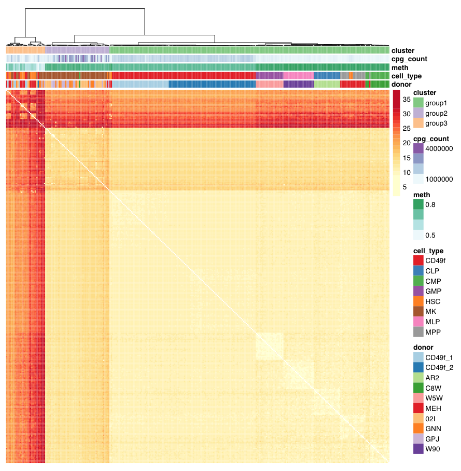
“Profile primitive hematopoietic cells of mouse and human origin to identify epigenetically distinct subpopulations. Deep sampling of the CpG content of individual HSCs allowed for the near complete reconstitution of regulatory states from epigenetically defined subpopulations of HSCs and revealed a high level of redundancy of CpG methylation states within these phenotypically defined hematopoietic cell types.

Hematopoietic stem cells (HSCs) are functionally defined cells that display evidence of extensive self-renewal of their ability to generate mature blood cells for the lifetime of the organism and following transplantation into myelosuppressed permissive hosts. Most of the epigenetic measurements underpinning these observations represent consensus values experimentally derived from thousands of cells partially enriched in HSCs or their progeny, thus failing to discern distinct epigenetic states within HSCs.

Current analytical strategies for single-cell DNA methylation measurements average DNA methylation in fixed genomic bins or over defined genomic regions.

However, inference across cells (as well as sequence context) assumes homogeneity across cells, which is at cross-purposes with the generation of single-cell molecular measurements through the potential to mask rare subpopulations.

We identified donor as a significant source of consistent epigenetic heterogeneity, which was reduced but not eliminated by correcting for personal genetic variants. This observation is consistent with previous reports that showed genetic diversity as related to but not accountable for all DNA methylation differences and suggests that in utero environmental differences may be encoded within the HSC compartment.”


The study advanced science not only by measuring CpG methylation within each HSC, but also by producing another data point “that in utero environmental differences may be encoded within the HSC compartment.”

The paragraph with “assumes homogeneity across cells” bold text provided another example of the statistical analysis flaw that gives individually inapplicable results per Group statistics don’t necessarily describe an individual. The above graphic of human hematopoietic phenotypes demonstrated that the researchers have potentially solved this problem by measuring individual cells.

The researchers discussed another aspect of the study that’s similar to the epigenetic clock methodology:

“Phenotype-specific methylation signatures are characterized by extensive redundancy such that distinct epigenetic states can be accurately described by only a small fraction of single-CpG methylation states. In support of such a notion, the unique components of a DNA methylation “age” signature are contained in ∼353 CpGs sites, presumably representing a random sample of a total age signature that involves many more sites not detected using the reduced representation strategies from which these signatures have been derived.”

Also, in The epigenetic clock theory of aging the originator of the epigenetic clock characterized HSCs as an effective intervention against epigenetic aging:

“In vivo, haematopoietic stem cell therapy resets the epigenetic age of blood of the recipient to that of the donor.”

https://www.cell.com/stem-cell-reports/article/S2213-6711(18)30308-4/fulltext “High-Resolution Single-Cell DNA Methylation Measurements Reveal Epigenetically Distinct Hematopoietic Stem Cell Subpopulations”

Epigenetic effects of breast cancer treatments

This 2018 UC San Diego review subject was the interplay between breast cancer treatments and their effects on aging:

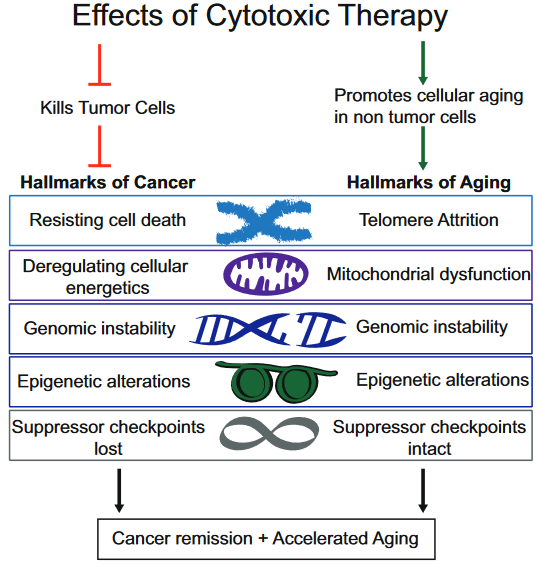
“Although current breast cancer treatments are largely successful in producing cancer remission and extending lifespan, there is concern that these treatments may have long lasting detrimental effects on cancer survivors, in part, through their impact on non-tumor cells. It is unclear whether breast cancer and/or its treatments are associated with an accelerated aging phenotype.

In this review, we have highlighted five of nine previously described cellular hallmarks of aging that have been described in the context of cytotoxic breast cancer treatments:

  1. Telomere attrition;
  2. Mitochondrial dysfunction;
  3. Genomic instability;
  4. Epigenetic alterations; and
  5. Cellular senescence.”


The review was full of caveats weakening the above graphic’s associations:

  1. “Telomere attrition – Blood TL [telomere length] was not associated with chemotherapy in three out of four studies;
  2. Mitochondrial dysfunction – How cancer therapies affect cellular energetics as they relate to rate of aging is unclear;
  3. Genomic instability – Potentially contributing to accelerated aging;
  4. Epigenetic alterations – Although some of the key regulators of these processes have begun to be identified, including DNA and histone methylases and demethylases, histone acetylases and de-acetylases and chromatin remodelers, how they regulate the changes in aging through alteration of global transcriptional programs, remains to be elucidated; and
  5. Cellular senescence – Dysregulated pathways can be targeted by cytotoxic chemotherapies, resulting in preferential cell death of tumor cells, but how these treatments also affect normal cells with intact pathways is unclear.”

To their credit, these reviewers at least presented some of the contrary evidence, and didn’t continue on with a directed narrative as other reviewers are prone to do.

https://www.sciencedirect.com/science/article/pii/S1879406818301176 “Breast cancer treatment and its effects on aging” (not freely available)


The originator of the epigenetic clock methodology was a coauthor of the review. Only one of his works was cited in the Epigenetic alterations subsection:

https://link.springer.com/article/10.1007%2Fs10549-017-4218-4 “DNA methylation age is elevated in breast tissue of healthy women”

This freely-available 2017 study quoted below highlighted that epigenetic clock measurements as originally designed were tissue-specific:

“To our knowledge, this is the first study to demonstrate that breast tissue epigenetic age exceeds that of blood tissue in healthy female donors. In addition to validating our earlier finding of age elevation in breast tissue, we further demonstrate that the magnitude of the difference between epigenetic age of breast and blood is highest in the youngest women in our study (age 20–30 years) and gradually diminishes with advancing age. As women approach the age of the menopausal transition, we found that the epigenetic of age of blood approaches that of the breast.”

Additional caution was justified in both interpreting age measurements and extending them into “cellular hallmarks” when the tissue contained varying cell types:

“Our studies were performed on whole breast tissue. Diverse types of cells make up whole breast tissue, with the majority of cells being adipocytes. Other types of cells include epithelial cells, cuboidal cells, myoepithelial cells, fibroblasts, inflammatory cells, vascular endothelial cells, preadipocytes, and adipose tissue macrophages.

This raises the possibility that the magnitude of the effects we observe, of breast tissue DNAm age being greater than other tissues, might be an underestimation, since it is possible that not all of the cells of the heterogenous sample have experienced this effect. Since it is difficult to extract DNA from adipose tissue, we suspect that the majority of DNA extracted from our whole breast tissues was from epithelial and myoepithelial cells.”

Allergies and epigenetic histone modifications

This 2018 German review provided short summaries of 44 studies on the contribution of histone modifications to allergies. An overall summary of their search results was:

“There are at least two levels at which the role of histone modifications is manifested.

  • One is the regulation of cells that contribute to the allergic inflammation (T cells and macrophages) and those that participate in airway remodeling.
  • The other is the direct association between histone modifications and allergic phenotypes.

Inhibitors of histone-modifying enzymes may potentially be used as anti-allergic drugs. Furthermore, epigenetic patterns may provide novel tools in the diagnosis of allergic disorders.”


This type of search is what’s expected of researchers who will perform either:

  • A meta-analysis of studies selected from the search results; or
  • Their own study.

These reviewers didn’t indicate that they were proceeding along either path.

The review was fine for the purpose of presenting current studies of the subject. But this was just the preparatory stage of research.

https://aacijournal.biomedcentral.com/articles/10.1186/s13223-018-0259-4 “Histone modifications and their role in epigenetics of atopy and allergic diseases”

Epigenetic variations in metabolism

This 2018 German review was comprehensive for its subject, epigenetic control of variation and stochasticity in metabolic disease. I’ll focus on one aspect, phenotypic variation:

“Phenotypic [Mendelian] variation can result both from gain- and loss-of-function mutations. Because of the extreme interconnectivity of cell regulatory networks, even at the cellular level, predicting the impact of a sequence variant is difficult as the resultant variation acts:

  • In the context of all other variants and
  • Their potential additive, synergistic and antagonistic interactions.

This phenomenon is known as epistasis.

∼98.5% of our genome is non-protein-coding: it is pervasively transcribed, and its transcripts can support regulatory function. Among the best functionally characterized non-coding RNAs (ncRNAs) arising from these sequences are microRNAs (miRNAs).

Environmental [non-Mendelian] variation or ‘stimuli’ occurring during critical windows of susceptibility can elicit lifelong alterations in an individual’s phenotype. Intergenerational metabolic reprogramming [in fruit flies] results from global alterations in chromatin state integrity, particularly from reduced H3K27me3 and H3K9me3 [histone] domains.

The broad variation of fingerprints in humans is thought to depend to a large degree on stochastic variation in mechanical forces. These clear examples of inducible multi-stable or stochastic variation highlight how little we know about the landscape of potential phenotypic variation itself.

Consensus estimates of heritability for obesity and T2D are ∼70% and ∼35% respectively. The remaining, unexplained component is known to involve gene–environment interactions as well as non-Mendelian players.”


Although the above graphic displays transgenerational inheritance for humans, the reviewers didn’t cite any human studies that adequately demonstrated causes for and effects of transgenerational epigenetic inheritance.

I’ve read the cited Swedish and Dutch studies. Their designs, methods, and “correlate with” / “was associated with” results didn’t provide incontrovertible evidence from the F0 great-grandparents, F1 grandparents, F2 parents, and F3 children. It’s necessary to thoroughly study each generation to confirm definitive transgenerational epigenetic inheritance causes and effects.

As noted in How to hijack science: Ignore its intent and focus on the 0.0001%, there aren’t any such published studies to cite. Researchers urgently need to do this human research, and stop using these poor substitutes [1] to pretend there are already adequately evidenced transgenerational epigenetic inheritance human results.

I downgraded the review for treating research of this and other subjects as faits accomplis. It’s opposite ends of the evidential spectrum to state “how little we know about the landscape of potential phenotypic variation,” and in the same review, speciously extrapolate animal experiments into putative human results.

https://www.sciencedirect.com/science/article/pii/S2212877818301984 “Epigenetic control of variation and stochasticity in metabolic disease”


[1] As an example of the poor substitutes for evidence, a researcher referred me to the 2013 “Transgenerational effects of prenatal exposure to the 1944–45 Dutch famine” which is freely available at https://obgyn.onlinelibrary.wiley.com/doi/full/10.1111/1471-0528.12136 as a study finding human transgenerational epigenetic inheritance.

The Methods section showed:

  • The study’s non-statistical data was almost all unverified self-reports by a self-selected sample of the F2 generation, average age 37.
  • No detailed physical measurements or samples were taken of them, nor of the F1 generation, nor of the F0 generation, all of which are required as baselines for any transgenerational epigenetic inheritance findings.
  • No detailed physical measurements or samples were taken of the F3 generation, which is the generation that may provide transgenerational evidence if the previous generations also have detailed physical baselines.

The study’s researchers drew enough participants (360) such that their statistics package allowed them to impute and assume into existence a LOT of data. But the scientific method constrained them to make factual statements of what the evidence actually showed. They admitted:

“In conclusion, we did not find a transgenerational effect of prenatal famine exposure on the health of grandchildren in this study.”

Yet this study is somehow cited for evidence of human transgenerational epigenetically inherited causes and effects!