How to cure the ultimate causes of migraines?

Most of the spam I get on this blog comes in as ersatz comments on The hypothalamus couples with the brainstem to cause migraines. I don’t know what it is about the post that attracts internet bots.

The unwanted attention is too bad because the post represents a good personal illustration of “changes in the neural response to painful stimuli.” Last year I experienced three three-day migraines in one month as did the study’s subject. This led to me cycling through a half-dozen medications in an effort to address the migraine causes.

None of the medications proved to be effective at treating the causes. I found one that interrupted the progress of migraines – sumatriptan, a serotonin receptor agonist. I’ve used it when symptoms start, and the medication has kept me from having a full-blown migraine episode in the past year.

1. It may be argued that migraine headache tendencies are genetically inherited. Supporting personal evidence is that both my mother and younger sister have migraine problems. My father, older sister, and younger brother didn’t have migraine problems. Familial genetic inheritance usually isn’t the whole story of diseases, though.

2. Migraine headaches may be an example of diseases that are results of how humans have evolved. From Genetic imprinting, sleep, and parent-offspring conflict:

“Evolutionary theory predicts: that which evolves is not necessarily that which is healthy.

Why should pregnancy not be more efficient and more robust than other physiological systems, rather than less? Crucial checks, balances and feedback controls are lacking in the shared physiology of the maternal–fetal unit.

Both migraine causes and effects may be traced back to natural lacks of feedback loops. These lacks demonstrate that such physiological feedback wasn’t evolutionarily necessary in order for humans to survive and reproduce.

3. Examples of other processes occurring during prenatal development that also lack feedback loops, and their subsequent diseases, are:

A. Hypoxic conditions per Lack of oxygen’s epigenetic effects are causes of the fetus later developing:

  • “age-related macular degeneration
  • cancer progression
  • chronic kidney disease
  • cardiomyopathies
  • adipose tissue fibrosis
  • inflammation
  • detrimental effects which are linked to epigenetic changes.”

B. Stressing pregnant dams per Treating prenatal stress-related disorders with an oxytocin receptor agonist caused fetuses to develop a:

and abnormalities:

  • in social behavior,
  • in the HPA response to stress, and
  • in the expression of stress-related genes in the hippocampus and amygdala.”

1. What would be a treatment that could cure genetic causes for migraines?

I don’t know of any gene therapies.

2. What treatments could cure migraines caused by an evolved lack of feedback mechanisms?

We humans are who we have become, unless and until we can change original causes. Can we deal with “changes in the neural response to painful stimuli” without developing hopes for therapies or technologies per Differing approaches to a life wasted on beliefs?

3. What treatments could cure prenatal epigenetic causes for migraines?

The only effective solution I know of that’s been studied in humans is to prevent adverse conditions like hypoxia from taking place during pregnancy. The critical periods of our physical development are over once we’re adults, and we can’t unbake a cake.

Maybe science will offer other possibilities. Maybe researchers could do more than their funding sponsors expect?
Differing approaches to a life wasted on beliefs

Let’s start by observing that people structure their lives around beliefs. As time goes on, what actions would a person have taken to ward off non-confirming evidence?

One response may be that they would engage in ever-increasing efforts to develop new beliefs that justified how they spent their one precious life’s time so far.

Such was my take on beliefs embedded in https://www.ncbi.nlm.nih.gov/pmc/articles/PMC5684598/pdf/PSYCHIATRY2017-5491812.pdf “Epigenetic and Neural Circuitry Landscape of Psychotherapeutic Interventions”:

“Animal models have shown the benefits of continued environmental enrichment (EE) on psychopathological phenotypes, which carries exciting translational value.

This paper posits that psychotherapy serves as a positive environmental input (something akin to EE).”

The author conveyed his belief that wonderful interventions were going to happen in the future. However, when scrutinized, most human studies have demonstrated NULL effects of psychotherapeutic interventions on causes. Without sound evidence that treatments affect causes, his belief seemed driven by something else.

The author cited findings of research like A problematic study of oxytocin receptor gene methylation, childhood abuse, and psychiatric symptoms as supporting external interventions to tamp down symptoms of patients’ presenting problems. Did any of the 300+ cited references concern treatments where patients instead therapeutically addressed their problems’ root causes?


For an analogous religious example, a person’s belief caused him to spend years of his life trying to convince men to act so that they could get their own planet after death, and trying to convince women to latch onto men who had this belief. A new and apparently newsworthy belief developed from his underlying causes:

“The founder and CEO of neuroscience company Kernel wants “to expand the bounds of human intelligence.” He is planning to do this with neuroprosthetics; brain augmentations that can improve mental function and treat disorders. Put simply, Kernel hopes to place a chip in your brain.

He was raised as a Mormon in Utah and it was while carrying out two years of missionary work in Ecuador that he was struck by what he describes as an “overwhelming desire to improve the lives of others.”

He suffered from chronic depression from the ages of 24 to 34, and has seen his father and stepfather face huge mental health struggles.”

https://www.theguardian.com/small-business-network/2017/dec/14/humans-20-meet-the-entrepreneur-who-wants-to-put-a-chip-in-your-brain “Humans 2.0: meet the entrepreneur who wants to put a chip in your brain”

The article stated that he had given up Mormonism. There was nothing to suggest, though, that he had therapeutically addressed any underlying causes for his misdirected thoughts, feelings, and behavior.

So he developed other beliefs instead.


What can people do to keep their lives from being wasted on beliefs? As mentioned in What was not, is not, and will never be:

“The problem is that spending our time and efforts on these ideas, beliefs, and behaviors won’t ameliorate their motivating causes. Our efforts only push us further away from our truths, with real consequences: a wasted life.

The goal of the therapeutic approach advocated by Dr. Arthur Janov’s Primal Therapy is to remove the force of presenting problems’ motivating causes. Success in reaching this goal is realized when patients become better able to live their own lives.

Experience-induced transgenerational programming of neuronal structure and functions

The second paper of Transgenerational epigenetic inheritance week was a 2017 German/Israeli review focused on:

“The inter- and transgenerational effects of stress experience prior to and during gestation..the concept of stress-induced (re-)programming in more detail by highlighting epigenetic mechanisms and particularly those affecting the development of monoaminergic transmitter systems, which constitute the brain’s reward system.

We offer some perspectives on the development of protective and therapeutic interventions in cognitive and emotional disturbances resulting from preconception and prenatal stress.”

The reviewers noted that human studies have difficulties predicting adult responses to stress that are based on gene expression and early life experience. Clinical studies that experimentally manipulate the type, level and timing of the stressful exposure aren’t possible. Clinical studies are also predicated on the symptoms being recognized as disorders and/or diseases.

The researchers noted difficulties in human interventions and treatments. Before and during pregnancy, and perinatal periods are where stress effects are largest. But current human research hasn’t gathered sufficient findings to develop practical guidelines for early intervention programs.


I’m not persuaded by arguments that cite the difficulties of performing human research on transgenerational epigenetic inheritance. There are overwhelming numbers of people who have obvious stress symptoms: these didn’t develop in a vacuum.

Researchers:

  • Design human studies to test what’s known from transgenerational epigenetic inheritance animal studies that will include documenting the subjects’ detailed histories with sufficient biometric samples and data obtained from their lineage.
  • Induce pregnant subjects to at least temporarily avoid what’s harmful for them and/or the offspring, in favor of what’s beneficial.
  • Document the subjects’ actions with history and samples.

I acknowledge that economic incentives may not be enough to get people to participate. I’m familiar with a juvenile sickle-cell study that didn’t get enough subjects despite offering free transportation and hundreds of dollars to the caregivers per visit. The main problem seemed to be that the additional income would be reported and threaten the caregivers’ welfare benefits.

Stop whining that your jobs are difficult, researchers. Society doesn’t owe you a job. EARN IT – get yourself and the people in your organization motivated to advance science!

http://www.sciencedirect.com/science/article/pii/S014976341630731X “Experience-induced transgenerational (re-)programming of neuronal structure and functions: Impact of stress prior and during pregnancy” (not freely available)

A gaping hole in a review of nutritional psychiatry

This December 2016 Australian review published in September 2017 concerned:

“..the nutritional psychiatry field..the neurobiological mechanisms likely modulated by diet, the use of dietary and nutraceutical interventions in mental disorders, and recommendations for further research.”


The reviewers inexplicably omitted acetyl-L-carnitine, which I first covered in A common dietary supplement that has rapid and lasting antidepressant effects. A PubMed search on “acetyl carnitine” showed over a dozen studies from the past twelve months that were relevant to the review’s subject areas. Here’s a sample, beginning with follow-on research published in June 2016 of the study I linked above:

Reply to Arduini et al.: Acetyl-l-carnitine and the brain: Epigenetics, energetics, and stress

Dietary supplementation with acetyl-l-carnitine counteracts age-related alterations of mitochondrial biogenesis, dynamics and antioxidant defenses in brain of old rats

Neuroprotective effects of acetyl-l-carnitine on lipopolysaccharide-induced neuroinflammation in mice: Involvement of brain-derived neurotrophic factor

ALCAR promote adult hippocampal neurogenesis by regulating cell-survival and cell death-related signals in rat model of Parkinson’s disease like-phenotypes

Analgesia induced by the epigenetic drug, L-acetylcarnitine, outlasts the end of treatment in mouse models of chronic inflammatory and neuropathic pain

The cited references in these recent studies were older, of course, and in the time scope of the review. There’s no excuse for this review’s omission of acetyl-L-carnitine.

https://www.cambridge.org/core/journals/proceedings-of-the-nutrition-society/article/nutritional-psychiatry-the-present-state-of-the-evidence/88924C819D21E3139FBC48D4D9DF0C08 “Nutritional psychiatry: the present state of the evidence” (not freely available)

How one person’s paradigms regarding stress and epigenetics impedes relevant research

This 2017 review laid out the tired, old, restrictive guidelines by which current US research on the epigenetic effects of stress is funded. The reviewer rehashed paradigms circumscribed by his authoritative position in guiding funding, and called for more government funding to support and extend his reach.

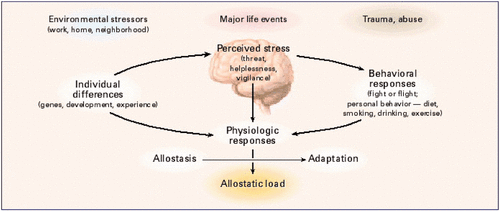
The reviewer won’t change his beliefs regarding individual differences and allostatic load pictured above since he helped to start those memes. US researchers with study hypotheses that would develop evidence beyond such memes may have difficulties finding funding except outside of his sphere of influence.


Here’s one example of the reviewer’s restrictive views taken from the Conclusion section:

Adverse experiences and environments cause problems over the life course in which there is no such thing as “reversibility” (i.e., “rolling the clock back”) but rather a change in trajectory [10] in keeping with the original definition of epigenetics [132] as the emergence of characteristics not previously evident or even predictable from an earlier developmental stage. By the same token, we mean “redirection” instead of “reversibility”—in that changes in the social and physical environment on both a societal and a personal level can alter a negative trajectory in a more positive direction.”

What would happen if US researchers proposed tests of his “there is no such thing as reversibility” axiom? To secure funding, the prospective studies’ experiments would be steered toward altering “a negative trajectory in a more positive direction” instead.

An example of this influence may be found in the press release of Familiar stress opens up an epigenetic window of neural plasticity where the lead researcher stated a goal of:

“Not to ‘roll back the clock’ but rather to change the trajectory of such brain plasticity toward more positive directions.”

I found nothing in citation [10] (of which the reviewer is a coauthor) where the rodent study researchers even attempted to directly reverse the epigenetic changes! The researchers under his guidance simply asserted:

“A history of stress exposure can permanently alter gene expression patterns in the hippocampus and the behavioral response to a novel stressor”

without making any therapeutic efforts to test the permanence assumption!

Never mind that researchers outside the reviewer’s sphere of influence have done exactly that, reverse both gene expression patterns and behavioral responses!!

In any event, citation [10] didn’t support an “there is no such thing as reversibility” axiom.

The reviewer also implied that humans respond just like lab rats and can be treated as such. Notice that the above graphic conflated rodent and human behaviors. Further examples of this inappropriate rodent / human merger of behaviors are in the Conclusion section.


What may be a more promising research approach to human treatments of the epigenetic effects of stress? As pointed out in The current paradigm of child abuse limits pre-childhood causal research:

“If the current paradigm encouraged research into treatment of causes, there would probably already be plenty of evidence to demonstrate that directly reducing the source of the damage would also reverse damaging effects. There would have been enough studies done so that the generalized question of reversibility wouldn’t be asked.

Aren’t people interested in human treatments of originating causes so that their various symptoms don’t keep bubbling up? Why wouldn’t research paradigms be aligned accordingly?”

http://journals.sagepub.com/doi/full/10.1177/2470547017692328 “Neurobiological and Systemic Effects of Chronic Stress”

The current paradigm of child abuse limits pre-childhood causal research

As an adult, what would be your primary concern if you suspected that your early life had something to do with current problems? Would you be interested in effective treatments for causes of your symptoms?

Such information wasn’t available in this 2016 Miami review of the effects of child abuse. The review laid out the current paradigm mentioned in Grokking an Adverse Childhood Experiences (ACE) score, one that limits research into pre-childhood causes for later-life symptoms.

The review’s goal was to describe:

“How numerous clinical and basic studies have contributed to establish the now widely accepted idea that adverse early life experiences can elicit profound effects on the development and function of the nervous system.”

The hidden assumptions of almost all of the cited references were that these distant causes could no longer be addressed. Aren’t such assumptions testable today?

As an example, the Discussion section posed the top nine “most pressing unanswered questions related to the neurobiological effects of early life trauma.” In line with the current paradigm, the reviewer assigned “Are the biological consequences of ELS [early life stress] reversible?” into the sixth position.

If the current paradigm encouraged research into treatment of causes, there would probably already be plenty of evidence to demonstrate that directly reducing the source of damage would also reverse damaging effects. There would have been enough studies done so that the generalized question of reversibility wouldn’t be asked.

Aren’t people interested in treatments of originating causes so that their various symptoms don’t keep bubbling up? Why wouldn’t research paradigms be aligned accordingly?


The review also demonstrated how the current paradigm of child abuse misrepresented items like telomere length and oxytocin. Researchers on the bandwagon tend to forget about the principle Einstein expressed as:

“No amount of experimentation can ever prove me right; a single experiment can prove me wrong.”

That single experiment for telomere length arrived in 2016 with Using an epigenetic clock to distinguish cellular aging from senescence. The review’s seven citations for telomere length that all had findings “associated with” or “linked to” child abuse should now be viewed in a different light.

The same light shone on oxytocin with Testing the null hypothesis of oxytocin’s effects in humans and Oxytocin research null findings come out of the file drawer. See their references, and decide for yourself whether or not:

“Claimed research findings may often be simply accurate measures of the prevailing bias.”

http://www.cell.com/neuron/fulltext/S0896-6273%2816%2900020-9 “Paradise Lost: The Neurobiological and Clinical Consequences of Child Abuse and Neglect”


This post has somehow become a target for spammers, and I’ve disabled comments. Readers can comment on other posts and indicate that they want their comment to apply here, and I’ll re-enable comments.

Epigenetic consequences of early-life trauma: What are we waiting for?

This 2015 UK human review discussed:

“The progress that has been made by studies that have investigated the relationship between depression, early trauma, the HPA axis and the NR3C1 [glucocorticoid receptor] (GR) gene.

Gene linkage studies for depression, as well as for other common complex disorders, have been perceived by some to be of only limited success; hence the focus on GWAS [genome-wide association studies]. However, even for simple traits, genetic variants identified by GWAS are rarely shown to account for more than 20% of the heritability.

Epigenetic changes are potentially reversible and therefore amenable to intervention, as has been seen in cancer, cardiovascular disease and neurological disorders.”


Five of the review’s references included FKBP5 (a gene that produces a protein that dampens glucocorticoid receptor sensitivity) in their titles, but it wasn’t mentioned in the review itself. A search on FKBP5 also showed human studies such as the 2014 Placental FKBP5 Genetic and Epigenetic Variation Is Associated with Infant Neurobehavioral Outcomes in the RICHS Cohort that found:

“Adverse maternal environments can lead to increased fetal exposure to maternal cortisol, which can cause infant neurobehavioral deficits. The placenta regulates fetal cortisol exposure and response, and placental DNA methylation can influence this function.

Placental FKBP5 methylation reduces expression in a genotype specific fashion, and genetic variation supersedes this effect. These genetic and epigenetic differences in expression may alter the placenta’s ability to modulate cortisol response and exposure, leading to altered neurobehavioral outcomes.”


The authors listed seven human studies conducted 2008-2015 “investigating interactions between methylation of NR3C1, depression and early adversity”:

“Newborn offspring exposed to maternal depression in utero had increased methylation at [a GR CpG site] as well as adverse neurobehavioural outcomes.

Unlike the majority of animal studies examining NR3C1 methylation, many types of potential stressors, sometimes at different developmental stages, have been used to represent early human adversity.

Substantial differences can be expected in the nature of stresses prenatally compared with postnatally, as well as their developmental consequences.”

Seven human studies over the past eight years was a very small number considering both the topic’s importance and the number of relevant animal studies during the period.

Is the topic too offensive for human studies? What makes people pretend that adverse prenatal and perinatal environments have no lasting consequences to the child?

“Many more studies will be needed before effects directly attributable to early life trauma can be separated from those relating to tissue type.

Although investigators have amassed a considerable amount of evidence for an association between differential methylation and HPA axis function in humans, a causal relationship still needs to be fully established.”

Factors that disrupt neurodevelopment may be the largest originators of epigenetic changes that are sustained throughout an individual’s entire lifespan.

Are the multitude of agendas that have resources thrown at them more important than ensuring the well-being of a human before and after they are born?

https://www.researchgate.net/publication/282048312_Early_life_trauma_depression_and_the_glucocorticoid_receptor_gene_-_an_epigenetic_perspective “Early life trauma, depression and the glucocorticoid receptor gene–an epigenetic perspective”

Testing the null hypothesis of psychological therapy

What forms of medicine don’t require an etiological approach, other than psychology and psychiatry?

This 2015 UK human study found:

“Supported cCBT [computerised cognitive behaviour therapy] does not substantially improve depression outcomes compared with usual GP [general practitioner] care alone.

In this study, neither a commercially available nor free to use computerised CBT intervention was superior to usual GP care.”

Subjects had concurrent access to most of the relevant UK health system:

“We imposed no constraints on usual GP care in the control or intervention groups, and participants were therefore free during the trial to access any treatment usually available in primary care, including the use of antidepressants, counselling, psychological services (including Improving Access to Psychological Therapy services, which were present in most sites during the course of the trial), or secondary care mental health services.”


The study’s null hypothesis was developed as follows:

“We based our sample size calculation on the usual care arm of primary care depression trials, where the proportion of patients responding to usual care was in the region of 0.6. This proportion is similar to that found in a UK Health Technology Assessment trial of antidepressants in primary care.

We regarded a figure of not more than 0.15 below this proportion as being acceptable, given the additional care options that are available to patients who do not initially respond to cCBT within a stepped care framework. In our original calculation, to detect non-inferiority with the percentage success in both groups as 60% and a non-inferiority margin of 15% with over 80% power and assuming 25% attrition, we required 200 participants in each of the three arms.”

The study’s null hypothesis was: the two cCBT methods wouldn’t improve on the “60%” “success” of both “the usual care arm” and “antidepressants in primary care.”


What outcome does a person desire when they seek out psychological care? I’d guess that their first need would be to stop their current suffering.

From a patient’s short-term perspective, the null hypothesis – any form of psychological therapy in the UK healthcare system wouldn’t improve their short-term condition – is likely to be initially disproved.

So, what accounts for the 40% failure rate? Or, as phrased in Psychological therapy and DNA methylation:

“Although CBT has been established as an efficacious treatment, roughly 40% of children retain their disorder after treatment.”

The treatments’ methods aren’t capable of anything more than temporarily suppressing symptoms. But the symptoms return, and require further interventions in order to stay suppressed.


From a patient’s long-term perspective, what would it take to disprove the null hypothesis – any form of psychological therapy in the UK healthcare system wouldn’t improve their long-term condition?

To effectively treat patients in the long term, and to prevent future suffering, the originating causes need to be addressed. IAW, hold psychological therapy to the same standard of care expected in other medical treatments.

http://www.bmj.com/content/351/bmj.h5627 “Computerised cognitive behaviour therapy (cCBT) as treatment for depression in primary care (REEACT trial): large scale pragmatic randomised controlled trial”

A study of stress factors and neuroplasticity during infancy/early childhood

This 2015 French rodent study found:

“The coordinated actions of BDNF and glucocorticoids promote neuronal plasticity and that disruption in either pathway could set the stage for the development of stress-induced psychiatric diseases.

Genetic strategies that disrupted GR [glucocorticoid receptor] phosphorylation or TrkB [the BDNF receptor] signaling in vivo impaired the neuroplasticity to chronic stress and the effects of the antidepressant fluoxetine.

We demonstrate that fluoxetine prevented the neuroplasticity of chronic stress by priming GR phosphorylation at BDNF-sensitive sites.”


It wasn’t too difficult to see how many of the stressors had human equivalents during infancy/early childhood:

“To determine the plasticity of GR phosphorylation upon changes in the endogenous levels of BDNF and glucocorticoids, mice were exposed to a chronic unpredictable stress that included one daily random stressor for 10 consecutive days from P21 [immediately after weaning] to 1 mo of age.

Chronic unpredictable stress includes one of the following daily random stressors (wet bedding, no bedding, food deprivation, crowded cage, 2 h or 6 h restraining, forced swim, tail suspension).”

But who would give fluoxetine – Prozac – to a human infant or young child to prevent “the neuroplasticity of chronic stress” from having adverse effects?

http://www.pnas.org/content/112/51/15737.full “Neurotrophic-priming of glucocorticoid receptor signaling is essential for neuronal plasticity to stress and antidepressant treatment”

A problematic study of DNA methylation in frontal cortex development and schizophrenia

This 2015 Baltimore human study found:

CpGs that differ between schizophrenia patients and controls that were enriched for genes related to development and neurodifferentiation.

The schizophrenia-associated CpGs strongly correlate with changes related to the prenatal-postnatal transition and show slight enrichment for GWAS [genome-wide association study] risk loci while not corresponding to CpGs differentiating adolescence from later adult life.

Only a fraction of the illness-associated CpGs, 4.6%, showed association to nearby genetic variants in the meQTL [methylation quantitative trait loci] analysis, further suggesting that these findings may be more related to the epiphenomena of the illness state than to the genetic causes of the disorder.

These data implicate an epigenetic component to the developmental origins of this disorder.”

It wasn’t surprising in 2015 to find “an epigenetic component to the developmental origins of this disorder.” From the supplementary material:

“Diverse chromatin states suggest vastly different epigenetic landscapes of the prenatal versus postnatal human brain.

Approximately half of the CpGs had DNAm [DNA methylation] levels positively correlated with expression across the lifespan, and half had DNAm levels negatively correlated.

These results suggest that many of the epigenetic changes occurring between prenatal and postnatal life in prefrontal cortex manifest in the transcriptome, and that the directionality of association is not strictly linked to the location of the CpG or DMR [differentially methylated region] with respect to an annotated gene.

Diagnosis-associated CpGs were relatively small compared with those differentially methylated between fetal and postnatal samples.”


The studied brain area was limited to the dorsolateral portion of the prefrontal cortex, which isn’t mature in humans until we’re in our late teens/early twenties.

The researchers ignored brain areas that were fully developed or further along in development – such as the limbic system – during “the prenatal-postnatal transition.”

The researchers intentionally blinded themselves from discovering “many of the epigenetic changes occurring between prenatal and postnatal life” possibly associated with schizophrenia and these more-developed brain areas.

Where’s the evidence that the developmental origins of schizophrenia have no associations with brain structures whose development closely approximates their lifelong functionalities at birth?


The study’s limitations didn’t hamper researcher hubris in a press release for a site that touts business news, such as:

“This conclusion, while perhaps not the final verdict on the subject, is hard to resist given this remarkable evidence”

Did the spokesperson really understand GWAS? Or was he trying to exploit public ignorance of GWAS?

There’s a scientist’s view of GWAS at What do GWAS signals mean? that better puts this study’s findings into perspective. When understanding GWAS at an individual level, it should also be acknowledged that Genetic statistics don’t necessarily predict the effects of an individual’s genes.

http://www.nature.com/neuro/journal/vaop/ncurrent/full/nn.4181.html “Mapping DNA methylation across development, genotype and schizophrenia in the human frontal cortex” (not freely available). Use the full study link from the above-mentioned press release.

Trapped, suffocating, unable to move – a Primal imprint

“The malady of needing to move constantly: organizing trips, making reasons to go here and there, and in general, keeping on the move..below all that movement is a giant, silent scream.

The price we pay is never knowing our feelings or where they come from.

We have the mechanism for our own liberation inside of us, if we only knew it.

When we see constant motion we understand, but we never see the agony. Why no agony? Because it is busy being acted-out to relieve the agony before it is fully felt.”

http://cigognenews.blogspot.com/2015/11/epigenetics-and-primal-therapy-cure-for_30.html “The Miracle of Memory – Epigenetics and Primal Therapy: The Cure for Neurosis (Part 13/20)”

Familiar stress opens up an epigenetic window of neural plasticity

This 2015 Italian rodent study found:

“There is a window of plasticity that allows familiar and novel experiences to alter anxiety– and depressive-like behaviors, reflected also in electrophysiological changes in the dentate gyrus (DG).

A consistent biomarker of mood-related behaviors in DG is reduced type 2 metabotropic glutamate (mGlu2), which regulates the release of glutamate. Within this window, familiar stress rapidly and epigenetically up-regulates mGlu2..and improves mood behaviors.

These hippocampal responses reveal a window of epigenetic plasticity that may be useful for treatment of disorders in which glutamatergic transmission is dysregulated.”

The current study included two of the authors of A common dietary supplement that has rapid and lasting antidepressant effects.

The supplementary material showed the:

“Light–dark test as a screening method allowed identification of clusters of animals with a different baseline anxiety profile”

for the BDNF Val66Met subjects. This research methodology better handled the individual differences that often confound studies.

The study’s press release provided further details such as:

“Here again, in experiments relevant to humans, we saw the same window of plasticity, with the same up-then-down fluctuations in mGlu2 and P300 in the hippocampus, Nasca says. This result suggests we can take advantage of these windows of plasticity through treatments, including the next generation of drugs, such as acetyl-L-carnitine, that target mGlu2—not to ‘roll back the clock’ but rather to change the trajectory of such brain plasticity toward more positive directions.”


I disagree with the authoring researchers’ extrapolation of these rodent findings to humans, which seemed to favor chemical intervention. Causes of human stress should be removed or otherwise addressed.

I hope that the study’s “familiar stress” findings won’t be use to attempt to justify potentially harmful practices such as Critical Incident Stress Debriefing, which mandatorily guides people to process recent trauma. Instead, An interview with Dr. Rachel Yehuda on biological and conscious responses to stress made a point about “windows of plasticity” that’s relevant to who we are as feeling human beings:

“What I hear from trauma survivors — what I’m always struck with is how upsetting it is when other people don’t help, or don’t acknowledge, or respond very poorly to needs or distress.”

http://www.pnas.org/content/112/48/14960.full “Stress dynamically regulates behavior and glutamatergic gene expression in hippocampus by opening a window of epigenetic plasticity”

A review of genetic and epigenetic approaches to autism

This 2015 Chicago review noted:

“Recent developments in the research of ASD [autistic spectrum disorder] with a focus on epigenetic pathways as a complement to current genetic screening.

Not all children with a predisposing genotype develop ASD. This suggests that additional environmental factors likely interact with the genome in producing ASD.

Increased risk of ASD is associated with mutations in genes that overlap with chromatin remodeling proteins, transcriptional regulators and synapse-associated proteins. Interestingly, these genes are also targets of environmentally induced changes in gene expression.”

Evidence was discussed for both broad and specific epigenetic ASD causes originating in the prenatal environment:

  • Maternal stress:

    “Prenatal stress exerts a profound epigenetic influence on GABAergic interneurons by altering the levels of proteins such as DNMT1 and Tet1 and decreasing the expression of various targets such as BDNF.

    Ultimately, this results in reducing the numbers of fully functional GABAergic neurons postnatally and a concomitant increased susceptibility toward hyperexcitability. The delayed migration of GABAergic interneuron progenitors results in reduced gene expression postnatally which is likely the consequence of increased amounts of DNA methylation.

    The net effect of stress during early development is to disrupt the balance of excitatory/inhibitory neuronal firing due to the loss of function associated with disrupted neuronal migration and maturation.”

  • Prenatal nutrition:

    “Exposure to a wide range of environmental toxins that impact neurodevelopment also result in global DNA hypomethylation. This model was extended to connect pathways between dietary nutrition and environmental exposures in the context of DNA hypomethylation. More recently, this hypothesis was expanded to show how dietary nutrients, environmental toxins, genome instability and neuroinflammation interact to produce changes to the DNA methylome.”

  • Maternal infections:

    “Inflammation, autoimmunity and maternal immune activation have long been suspected in the context of aberrant neurodevelopment and ASD risk.”

  • Exposure to pollutants, medications, alcohol

This was a current review with many 2015 and 2014 references. However, one word in the reviewers’ vernacular that’s leftover from previous centuries was “idiopathic,” as in:

“Idiopathic (nonsyndromic) ASD, for which an underlying cause has not been identified, represent the majority of cases.”

It wasn’t sufficiently explanatory to use categorization terminology from thousands of years ago.

Science has progressed enough with measured evidence from the referenced studies that the reviewers could have discarded the “idiopathic” category and expressed probabilistic understanding of causes. They could have generalized conditional origins of a disease, and not reverted to “an underlying cause has not been identified.”


Another word the reviewers used was “pharmacotherapeutic,” as in:

“The goal for the foreseeable future is to provide a better understanding of how specific genes function to disrupt specific biological pathways and whether these pathways are amenable to pharmacotherapeutic interventions.”

Taking “idiopathic” and “pharmacotherapeutic” together – causes for the disease weren’t specifically identified, but the goal of research should be to find specific drug treatments?

Of course reviewers from the Department of Psychiatry, The Psychiatric Institute, University of Illinois at Chicago are biased to believe that “the design of better pharmacotherapeutic treatments” will fulfill peoples’ needs.

Are their beliefs supported by evidence? Without using drugs, are humans largely incapable of therapeutic actions such as:

  • Preventing epigenetic diseases from beginning in the prenatal environment?
  • Treating epigenetic causes for and alleviating symptoms of their own disease?

http://www.futuremedicine.com/doi/full/10.2217/epi.15.92 “Merging data from genetic and epigenetic approaches to better understand autistic spectrum disorder”

A review of the epigenetic basis for mental illness

This 2015 New York combined animal and human review of epigenetic studies noted:

“While genetic factors are important in the etiology of most mental disorders, the relatively high rates of discordance among identical twins, particularly for depression and other stress-related syndromes, clearly indicate the importance of additional mechanisms.

Environmental factors such as stress are known to play a role in the onset of these illnesses.

Exposure to such environmental insults induces stable changes in gene expression, neural circuit function, and ultimately behavior, and these maladaptations appear distinct between developmental versus adult exposures.

Increasing evidence indicates that these sustained abnormalities are maintained by epigenetic modifications in specific brain regions.”

Placing the “maladaptations” and “sustained abnormalities” phrases into their contexts:

  • A fetus biologically adapted to their environment – however toxic it was – in order to best survive.
  • These adaptations for survival were subsequently viewed as Disrupted Neurodevelopment and “maladaptations” from the perspectives of normal development and environments.
  • The “sustained abnormalities” caused within the earlier environments “are maintained by epigenetic modifications.” An improved environment wasn’t impetus enough to change developmental “maladaptations.”

Per the below link, it’s been a month since this review was published. Why has there been ZERO news coverage of it?

One reason may be that the Friedman Brain Institute, Icahn School of Medicine at Mount Sinai, didn’t issue a press release or otherwise publicize it. Another reason may be the groups that are opposed to its findings:

  • Parents who provided harmful environments for their children, beginning at conception;
  • People who feel threatened when scientific causal evidence resonates with what happened in their own lives, and in response, limit their empathetic understanding of others’ problems;
  • Social workers, psychologists, and others in industries whose paychecks depend on efforts that aren’t directed towards ameliorating the causes for these later-life effects;
  • Psychiatrists and medical personnel whose livelihoods depend on pharmaceutical and other treatments that only alleviate symptoms;
  • Researchers whose funding depends on producing non-etiologic findings.

Despite resistance to this review’s findings, a large number of people would benefit from publicizing evidence for:

“These sustained abnormalities are maintained by epigenetic modifications in specific brain regions.”

http://nro.sagepub.com/content/early/2015/09/24/1073858415608147 “Epigenetic Basis of Mental Illness”

What’s an appropriate control group for a schizophrenia study?

The researchers who did Our long-term memory usually selects what we pay closer visual attention to study were back zapping subjects’ brains again in this 2015 human study.

Prior to zapping subjects’ brains:

“In healthy individuals, these theta waves were steady and synchronized, but in people with schizophrenia, the waves were weak and disorganized, suggesting that they were having a harder time processing the mistake. And the subjects’ behavior bore that out—the healthy subjects slowed down by a few milliseconds when they made mistakes and did better in the next round, while the subjects with schizophrenia did not.”

Processing of an appropriate control group wasn’t clear to me from reading supplementary material. Subject patients were diagnosed with schizophrenia and took psychoactive medication which these researchers equated to chlorpromazine (Thorazine) dosages. Control group subjects had neither the condition nor were prescribed medications.

  • How did these researchers differentiate influences of psychoactive medications on experimental results from other influences on subjects’ conditions?
  • Were there numerical calculations not shown in supplementary material that somehow nullified effects of psychoactive medications?
  • To be sure that zapping was effective for subjects’ conditions, wouldn’t control group subjects need to take the same medications so that experimental data reflected only differences attributable to schizophrenia?

These researchers also asserted:

“Causal changes in the low-frequency oscillations improved behavioral responses to errors and long-range connectivity at the single-trial level.”

However, brain waves can’t be termed as base causes of human behavior. Studies such as:

clearly established that brain waves are effects of base causes.

http://www.pnas.org/content/112/30/9448.full “Synchronizing theta oscillations with direct-current stimulation strengthens adaptive control in the human brain”


This post has somehow become a target for spammers, and I’ve disabled comments. Readers can comment on other posts and indicate that they want their comment to apply here, and I’ll re-enable comments.