Vitamin K2 forms and effects

Two human studies using two forms of Vitamin K2. The first published in 2021 was with premenopausal women taking the MK-7 form:

“The aim of this 6-month randomised, controlled trial was to examine effects on bone metabolism of a nutritional supplement in women aged 25 to 44. The nutritional supplement was a protein-rich beverage powder fortified with multi-micronutrients including calcium (600 mg), vitamin D (400 IU), and vitamin K (55 mcg) per daily serving.

Co-primary outcome variables were the changes from baseline after 6 months of treatment in:

  • Bone resorption marker serum C-terminal cross-linking telopeptide of type I collagen (s-CTX-I); and
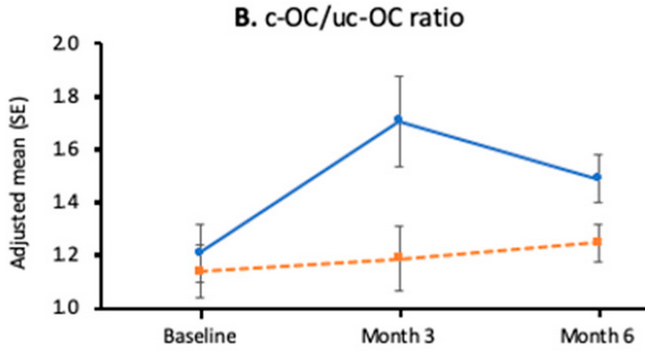
  • Bone formation marker expressed as ratio of carboxylated osteocalcin to under carboxylated-osteocalcin (c-OC/uc-OC).

The ratio of carboxylated to undercarboxylated OC is a marker of vitamin K status:

c-OC to uc-OC ratio

A meta-analysis of randomised controlled trials indicated that vitamin K2 administration reduces uc-OC and increases c-OC, and is associated with reduced bone loss and possibly a reduction in risk of fractures. The MK-7 dose of 55 mcg given in this study had a significant benefit (increase) at 3 months, but not at 6 months.

This randomised controlled 6-month trial of a nutritional supplement showed favorable changes in bone turnover markers (decreased) and calcium homeostasis. Such changes in older adults have been associated with slowing of bone loss and reduced fracture risk.”

https://www.mdpi.com/2072-6643/13/2/364/htm “Randomised Controlled Trial of Nutritional Supplement on Bone Turnover Markers in Indian Premenopausal Women”


A second study published in 2019 was with postmenopausal women taking the MK-4 form:

“This study assessed improvement in carboxylation of osteocalcin (OC) in response to escalating doses of MK-4 supplementation. A nine-week, open-labeled, prospective cohort study was conducted in 29 postmenopausal women who suffered hip or vertebral compression fractures. Mean ± SD age of participants was 69 ± 9 years.

Participants took:

  • Low-dose MK-4 (0.5 mg) for 3 weeks; then
  • Medium-dose MK-4 (5 mg) for 3 weeks; then
  • High-dose MK-4 (45 mg) for 3 weeks.

MK-4 dose, but neither age nor other relevant medications (e.g. bisphosphonates), correlated with improvement in %ucOC. Compared with baseline concentrations of 16.8 ± 2.4:

  • 0.5 mg supplementation halved %ucOC to 8.7 ± 2.2; and
  • 5-mg dose halved %ucOC again to 3.9 ± 2.2.

However, compared to 5 mg/day, there was no additional benefit of 45 mg/day (%ucOC 4.6).

MK-4 supplementation resulted in borderline increases in γ-carboxylated osteocalcin (glaOC; p = 0.07). There were no major side effects of MK-4 supplementation.

In postmenopausal women with osteoporotic fractures, supplementation with either 5 or 45 mg/day of MK-4 reduced ucOC to concentrations typical of healthy premenopausal women.”

https://econtent.hogrefe.com/doi/10.1024/0300-9831/a000554 “Maximal dose-response of vitamin K2 (menaquinone-4) on undercarboxylated osteocalcin in women with osteoporosis” (not freely available)


I asked coauthors of the first study for an estimate of MK-7 trans isomer content. Will update with their answer.

PXL_20210628_091432077.NIGHT

Eat broccoli sprouts every day

This 2020 rodent study demonstrated benefits from daily cooked broccoli intake, even when it contained no myrosinase enzyme and no sulforaphane:

“Broccoli consumption by rats influenced several metabolic pathways that impact liver health. Plasma metabolite changes are potential biomarkers of liver health, and also monitor broccoli benefits.

Rats fed a broccoli diet exhibited an enhanced Nrf2-Nqo1 pathway by day 4:

nrf2-nq01 pathway activation

Amino acid synthesis and glutathione (GSH) synthesis pathways were upregulated by Day 7. Fatty acid synthesis pathways, specifically α-linoleic acid synthesis pathways, were downregulated by Day 14.

Glucosinolate (GSL) metabolite sulforaphane alters liver GSH metabolism. It might be that consumption of any brassica, since all have GSLs, may lead to plasma glutamine and S-methyl-L-cysteine (SMC) as biomarkers. Future studies are needed to confirm whether glutamine and SMC are broccoli-specific or GSL-specific biomarkers.

Dietary broccoli caused plasma metabolite changes that correlate with:

  • Improved GSH status, suggesting protection from oxidative stress; and
  • Diversity and abundance of gut microbiota, suggesting that changes in gut microbiome may contribute to health benefits caused by dietary broccoli.”

https://www.mdpi.com/2072-6643/12/9/2514/htm “Biomarkers of Broccoli Consumption: Implications for Glutathione Metabolism and Liver Health”


I came across this study as a result of it citing the second study of A pair of broccoli sprout studies:

“A human clinical study reported changes in plasma fatty acids and GSH/GSH component levels after even a single meal of broccoli sprouts, similar to pathways we report here for rat plasma. We saw levels drop initially, then rise.

In that 2-day study, levels dropped like ours, but it was not sufficiently long to see the recovery and overshoot that we saw by 14 days when glutamine abundance and liver Nrf2 and NQO1 expression were all increased, suggesting increased GSH production, which might provide protection of liver from reactive oxygen species.”

Maybe a better comparison would have been against 0, 1-day, and 2-day rodent measurements, since the human study sampled at 0, 3, 6, 12, 24, and 48-hour intervals? People ate fresh broccoli sprouts only at time 0, though, whereas rodents ate a 10% cooked broccoli diet (0.11 mg/g glucoraphanin) ad libitum.


PXL_20210628_092632681

Vitamin K-dependent proteins

This 2020 review focused on three Vitamin K-dependent proteins (VKDPs):

“We summarize three important emerging VKDPs: Growth arrest‑specific protein 6 (Gas 6), Gla‑rich protein (GRP) and periostin in terms of their functions in physiological and pathological conditions. As examples:

  • Carboxylated Gas 6 and GRP effectively protect blood vessels from calcification;
  • Gas 6 protects from acute kidney injury and is involved in chronic kidney disease;
  • GRP contributes to bone homeostasis and delays progression of osteoarthritis; and
  • Periostin is involved in all phases of fracture healing and assists myocardial regeneration in the early stages of myocardial infarction.

IJMM-47-03-4835-g00

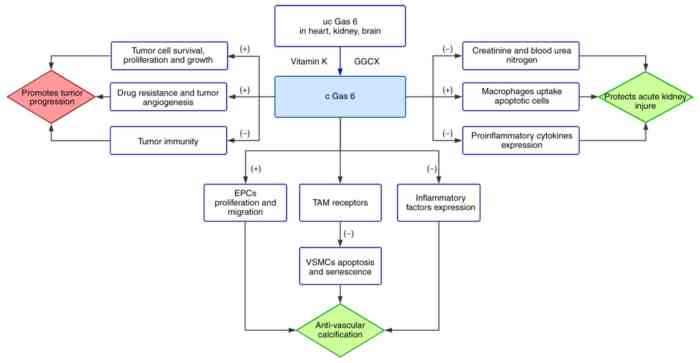
The ‘+’ refers to promotion and ‘-‘ refers to inhibition. Green represents Gas 6 physiological effects and red represents its pathological effects.

  • Gas 6 resists vascular calcification: i) Gas 6 promotes proliferation and migration of endothelial progenitor cells (EPCs); ii) Gas 6 inhibits apoptosis and senescence of vascular smooth muscle cells (VSMCs) by binding Tyro3, Axl and Mer (TAM) receptors; iii) Gas 6 decreases expression of inflammatory factors, including TNF-α and ICAM-1.
  • Gas 6 protects from acute kidney injury: i) Gas 6 significantly reduces creatinine and blood urea nitrogen; ii) Gas 6 enhances macrophages to uptake apoptotic cells; iii) Gas 6 reduces the expression of pro-inflammatory cytokines, such as IL-1β.
  • Gas 6 assists tumor progression: i) Gas 6 is necessary for survival, proliferation and growth of tumor cells; ii) Gas 6 contributes to drug resistance and tumor angiogenesis; iii) Gas 6 negatively regulates tumor immunity.

Numerous physiological benefits of vitamin K2 have been identified, such as anti-vascular calcification, glycemic control, and lipid-lowering effects. However, some questions about relationships between vitamin K2 and cancers remain unsolved. VKDPs are expected to be biomarkers for many diseases.”

https://www.spandidos-publications.com/10.3892/ijmm.2020.4835?text=fulltext “Role of emerging vitamin K‑dependent proteins: Growth arrest‑specific protein 6, Gla‑rich protein and periostin (Review)”


This review’s VKPD biomarkers included:

  • Vascular calcification;
  • Asthma;
  • Bronchial obstruction;
  • Diabetic nephropathy; and
  • Fracture risk.

Elaborating on this last item:

“In a cohort of 607 postmenopausal women from France that were followed up for 7 years, a positive correlation between serum periostin and fracture risk was observed. The association was independent of bone mineral density and prior fractures, indicating that periostin is an independent predictive marker of fracture risk.”

As pointed out in Chronological age by itself is an outdated clinical measurement, bone mineral density is one of several historical measurements that were selected for their relative convenience instead of chosen for their efficacy. We’re in a different century now.

PXL_20210628_094545802

Part 2 of Week 63 of Changing to a youthful phenotype with sprouts

To follow up Part 1, received Thursday’s lab results yesterday. Downloaded the workbook at https://michaellustgarten.com/2019/09/09/quantifying-biological-age/ and filled it in. Went to http://aging.ai/, selected 3.0, and entered values.

My starting point’s calculated values were:

biological age 1

A biological age snapshot from a year ago‘s video included optimal ranges:

optimizing biological age

Values in these optimal ranges were:

  • Albumin: 46;
  • Creatinine: 1.07;
  • high-sensitivity C-reactive protein: 0.24;
  • Red cell distribution width: 11.8; and
  • White blood cell count: 4.6.

I have some work to do on the other four. Good health while aging seldom happens on its own.

Reading more about Phenotypic age and its biological relationships. It definitely doesn’t mean I can do things I did 9.5 years ago like play golf and Frisbee football on the weekends.

I’d probably use DNAm PhenoAge to compare with other epigenetic clocks. Not sure how to use Aging.ai 3.0 calculations.

Sometime over the past year, Labcorp changed their adult alkaline phosphatase reference range from 39-117 to 48-121. Don’t know whether alkaline phosphatase’s optimal range will change with Labcorp’s new range, since < 48 was based on all-cause-mortality data.

PXL_20210622_093759263

Go for the win-win with taurine

This 2021 rodent study investigated taurine effects on colitis:

“Taurine plays an important role in various essential biological processes. Health beneficial effects of taurine have been generally attributable to its antioxidant and anti-inflammatory effects.

Taurine chloramine (TauCl) is an endogenous anti-inflammatory substance derived from taurine. In fighting exogenous pathogens, neutrophils utilize one powerful weapon in their arsenal: generating the strong oxidant hypochlorous acid (HOCl), which is nature’s germ killer.

Taurine can act as a trap for HOCl forming the long-lived oxidant TauCl, which is more stable and less toxic than HOCl. TauCl (20 mg/kg) was given on daily basis by gavage for 10 days before and for 3 days after intrarectal administration of 2.5% TNBS:

antioxidants-10-00479-g008-550

TauCl inhibits generation of proinflammatory mediators by phagocytic cells. Taurine exerts an anti-inflammatory as well as antioxidant action by preventing cytolytic damage caused by HOCl generated by inflammatory cells, particularly neutrophils.

These results suggest that TauCl exerts a protective effect against colitis through upregulation of Nrf2-dependent cytoprotective gene expression, while blocking proinflammatory signaling mediated by NFκB and STAT3.”

https://www.mdpi.com/2076-3921/10/3/479/htm “Protective Effects of Taurine Chloramine on Experimentally Induced Colitis: NFκB, STAT3, and Nrf2 as Potential Targets”


Train your gut microbiota with taurine showed how taurine supplementation can be a win-win for both our brain and gut microbiota.

Smoke and die early, while your twin lives on

A 2021 human twin study investigated epigenetic clocks:

“This study showed that accelerated epigenetic aging is associated with increased mortality, and smoking plays a role in explaining this association. Present findings suggest that DNAm GrimAge is a strong predictor of mortality independent of genetic influences among female twin pairs.

An invitation to participate in the study was sent to 414 female twin pairs, aged 63–76 years. Of 199 twin pairs, at least one twin died in 112 pairs during follow-up:

twins

This epigenetic age estimate that measures biological age and runs alongside, but not always in parallel with chronological age, may inform life expectancy predictions. Further research is needed to determine whether results apply to men, and the extent to which DNA methylation age can be used as a clinical biomarker of lifespan.”

https://clinicalepigeneticsjournal.biomedcentral.com/articles/10.1186/s13148-021-01112-7 “Does the epigenetic clock GrimAge predict mortality independent of genetic influences: an 18 year follow-up study in older female twin pairs”


If you don’t have a twin, substitute yourself as an analogous entity who has opposite behaviors. Don’t assume that smoking cannabis will produce different results from tobacco.

Meanwhile, Dr. Steven Horvath, who has a twin, continued his 2021 torrent of coauthored studies last week with Epigenetic clock and methylation studies in elephants. Amazing epigenetic clock information being published this year. Dr. Horvath is completely open to evidence, IAW, a real scientist.

Precondition your defenses with broccoli sprouts

This 2020 human cell study elaborated on mechanisms mentioned in Eat broccoli sprouts for your hearing and Sulforaphane in the Goldilocks zone:

“NFE2L2/NRF2, a transcriptional factor that controls expression of multiple detoxifying enzymes through antioxidant response elements (AREs), is a target of sulforaphane (SFN). NFE2L2/NRF2 is a target gene of TFEB (transcription factor EB), a master regulator of autophagic and lysosomal functions, which we show here to be potently activated by SFN.

SFN induces TFEB activation by stimulating a moderate increase in reactive oxygen species (ROS). Subsequently, cells are preconditioned to activate a self-defense mechanism that protects against oxidative damage.

TFEB activity is required for SFN-induced protection against both acute oxidant bursts and chronic oxidative stress. By simultaneously activating macroautophagy / autophagy and detoxifying pathways, natural compound SFN may trigger a self-defense cellular mechanism that can effectively mitigate oxidative stress commonly associated with many metabolic and age-related diseases.

KAUP_A_1739442_F0009_OC

SFN-induced TFEB nuclear accumulation was completely blocked by pretreatment of cells by N-acetyl-cysteine (NAC), or by other commonly used antioxidants. NAC also blocked SFN-induced mRNA expression of TFEB target genes, as well as SFN-induced autophagosome formation.

SFN offers an exceptional therapeutic opportunity for many metabolic and age-related diseases, in which oxidative stress and impaired autophagy both contribute to pathologies.”

https://europepmc.org/article/PMC/PMC8078734 “Sulforaphane activates a lysosome-dependent transcriptional program to mitigate oxidative stress”


This study explored cell mechanisms and confirmed opposing effects of NAC. I dropped NAC supplementation 62 weeks ago during Week 1 of eating broccoli sprouts every day, and dropped other antioxidants later.

PXL_20210618_093028413

Osprey breakfast

Broccoli sprouts positively influence Sestrin proteins

Four papers on Sestrin, with the first a 2021 review:

“Sestrin 2 (Sesn2) is a member of the evolutionarily conserved and stress-inducible sestrin family. In mammals, this family is composed of Sesn1–3, and Sesn2 is the main member that responds to oxidative stress.

Sesn2 inhibits mammalian target of rapamycin (mTOR)-mediated cell over-proliferation by activating adenosine monophosphate-activated protein kinase (AMPK) and its kinase activity. Sesn2 also regulates redox balance by directly exerting antioxidant enzyme activity and regulating antioxidant signaling.

Inflammation, which is not regulated by oxidative stress, also plays an important role in cardiovascular diseases (CVDs). Sesn2 is involved in inflammation and immune regulation in many systems.

There is a positive feedback loop between Sesn2 and Nrf2:

sestrin2 nrf2

Sesn2 and p62 are expressed under oxidative stress. Sesn2 binds to ULK1 and p62 to form a functional complex, which promotes p62 phosphorylation, promoting p62-dependent autophagy degradation of Keap1.

Consequently, Nrf2 accumulates in cells, transfers to the nucleus, and promotes transcriptional activation of genes controlled by antioxidant response elements (ARE).

Circulating Sesn2 levels are elevated in a variety of CVDs, such as coronary heart disease, heart failure and atrial fibrillation, which indicates that Sesn2 is induced and plays a protective role in CVDs.”

https://www.sciencedirect.com/science/article/abs/pii/S0891584920316270 “Sestrin 2, a potential star of antioxidant stress in cardiovascular diseases” (not freely available)


A second paper was also a 2021 review:

“Sestrin2 acts as an antioxidant protein that diminishes accumulation of ROS and inhibits mTORC1 signaling. Both accumulation of ROS and activation of mTORC1 are associated with aging and age-related diseases.

Since plasma sestrin2 levels in patients with CAD and those with carotid atherosclerosis were shown to be high, it remains unclear whether or not an exogenous administration of sestrin2 could be beneficial for prevention of atherosclerotic disease.”

https://www.mdpi.com/1422-0067/22/3/1200/htm “The Protective Role of Sestrin2 in Atherosclerotic and Cardiac Diseases”


A third paper was a 2020 human study:

“Sesn 1 and Sesn 2 levels were significantly reduced in sarcopenic compared to non-sarcopenic subjects. It can be concluded that sarcopenia can be diagnosed at the early stage by using serum sestrin as one potential biomarker.”

https://link.springer.com/article/10.1007/s40520-020-01642-9 “Serum sestrins: potential predictive molecule in human sarcopenia” (not freely available)


A fourth paper was a 2020 rodent study:

“Sulforaphane (SFN) alleviated hematological variations, oxidative stress, heart dysfunction and structure disorder, and cardiomyocyte apoptosis induced by potassium dichromate. Moreover, SFN:

  • Reduced p53;
  • Cleaved caspase-3, Bcl2-associated X protein, nuclear factor kappa-B, and interleukin-1β levels; and
  • Increased Sesn2, Nrf2, heme oxygenase-1, NAD(P)H quinone oxidoreductase-1, and phosphorylated AMPK levels.

This study demonstrated that SFN ameliorates Cr(VI)-induced cardiotoxicity via activation of the Sesn2/AMPK/Nrf2 signaling pathway.”

https://pubs.rsc.org/en/content/articlelanding/2020/mt/d0mt00124 “Sulforaphane attenuates hexavalent chromium-induced cardiotoxicity via the activation of the Sesn2/AMPK/Nrf2 signaling pathway” (not freely available)


I found these studies as well as the previous post Cow milk causes disease from their citing a 2015 study The antioxidant function of sestrins is mediated by promotion of autophagic degradation of Keap1 and Nrf2 activation and by inhibition of mTORC1 (not freely available).

Cow milk causes disease

This 2021 review followed up Epigenetic effects of cow’s milk and many papers since then:

“Epidemiological studies associate intake of cow milk with an increased risk of diseases, which are associated with overactivated mechanistic target of rapamycin complex 1 (mTORC1) signaling. Milk’s physiological function to maintain high mTORC1 signaling at the beginning of mammalian life turns into adverse health effects when this postnatal endocrine and epigenetic system is not discontinued as designated by physiological processing of the lactation genome.

Milk is a signaling interface between the maternal lactation genome and the infant’s cellular mTORC1 system that orchestrates growth, anabolism, metabolic, immunological, and neurological programming. Pasteurization combined with refrigeration exposed human milk consumers to bioactive milk exosome (MEX)-derived micro-ribonucleic acids (miRs), augmenting milk’s mTORC1 activity compared to boiled, ultra-heat-treated, or fermented milk.

milk-mediated mTORC1 signaling

Milk consumption activates five major pathways stimulating mTORC1 via:

  1. Growth factors, including growth hormone, insulin, and insulin-like growth factor 1;
  2. Amino acids, especially branched-chain amino acids;
  3. Milk fat-derived palmitic acid;
  4. Milk sugar lactose; and
  5. Epigenetic modifiers, especially MEX-derived miRs.

Understanding milk’s interaction with the central hub of metabolic regulation, mTORC1, will open new avenues for prevention of common diseases.”

https://www.mdpi.com/2218-273X/11/3/404/htm “Lifetime Impact of Cow’s Milk on Overactivation of mTORC1: From Fetal to Childhood Overgrowth, Acne, Diabetes, Cancers, and Neurodegeneration”


This reviewer is somewhat of a zealot. Still, he cited 555 references.

His genotype may tolerate lactose, but he didn’t argue for it:

“After breast feeding, mucosal expression of lactase, an intestinal enzyme hydrolyzing lactose into glucose and galactose, is downregulated in all mammals with the exception of Neolithic humans, who developed LCT [lactase gene] mutations allowing persistent lactase expression.

Lactose content of milk makes up around 2–8% by weight. Lactose hydrolysis provides glucose and galactose, which both activate mTORC1:

  • During glucose abundance and glycolysis, sufficient cellular energy is produced in the form of ATP, which suppresses AMPK activity. Aldolase operates as a sensor for glucose availability that directly links glucose shortage to activation of AMPK.
  • Galactose via induction of oxidative stress activates mTORC1. Galactose-induced overactivation of mTORC1 promotes senescence of neural stem cells and aging of mesenchymal stem cells.

Lactobacilli used in food and dairy fermentation increase NRF2 activation, resulting in NRF2-induced sestrin expression, which attenuates mTORC1 activation.”

Basal cognition

To follow up Electroceuticals, a 2021 article by Dr. Michael Levin:

“A key philosophical idea, borrowed from computer science, is substrate independence. Components of a living system can carry out appropriate, clearly specified cognitive functions.

Cognitive processes in embryogenesis and regeneration:

rstb20200458f01

    • (a) An egg will reliably give rise to a species-specific anatomical outcome.
    • (b) This process is usually described as a feed-forward system where activity of gene-regulatory networks (GRNs) within cells results in expression of effector proteins that, via structural properties of proteins and physical forces, will result in the emergence of complex shape. This class of models (bottom-up process driven by self-organization and parallel activity of large numbers of local agents) is difficult to apply to several biological phenomena. Regulative development can alter subsequent steps to reach the correct anatomical goal state despite drastic deviations of the starting state.
    • (c) For example, mammalian embryos can be divided in half, giving rise to perfectly normal monozygotic twins, each of which has regenerated the missing cell mass.
    • (d) Mammalian embryos can also be combined, giving rise to a normal embryo in which no parts are duplicated.
    • (e) Such capabilities suggest that pattern control is fundamentally a homeostatic process—a closed-loop system using feedback to minimize error (distance) between a current shape and a target morphology. Although these kinds of decision-making models are commonplace in engineering, they are only recently beginning to be employed in biology. This kind of pattern-homeostatic process must store a setpoint that serves as a stop condition; however, as with most types of memory, it can be specifically modified by experience.
    • (f) In the phenomenon of trophic memory, damage created at a specific point on the branched structure of deer antlers is recalled as ectopic branch points in subsequent years’ antler regeneration. This reveals ability of cells at the scalp to remember spatial location of specific damage events and alter cell behaviour to adjust the resulting pattern appropriately—a pattern memory that stretches across months of time and considerable spatial distance and is able to modify low-level (cellular) growth rules to construct a pre-determined stored pattern that differs from genome-default for this species.
    • (g) A similar capability was recently shown in a molecularly tractable model system, in which genetically normal planarian flatworms were bioelectrically reprogrammed to regenerate two-headed animals when cut in subsequent rounds of asexual reproduction in plain water.
    • (h) The decision making revealed by cells, tissues and organs in these examples of dynamic remodelling toward specific target states could be implemented by cybernetic processes at various positions along a scale of proto-cognitive complexity.

A challenge for the field of basal cognition is to reveal gradualism of cellular properties underwriting this critical biological function to leverage an understanding of clear phase transitions observed in cognitive capacities. The origin and development of nervous systems is so far the most dramatic example.”

https://royalsocietypublishing.org/doi/10.1098/rstb.2020.0458 “Uncovering cognitive similarities and differences, conservation and innovation”


Why aren’t more resources being directed toward these research efforts? Glad to see that at least one co-founder of Microsoft, Paul Allen, posthumously used his billions to sponsor science for human good.

Eat broccoli sprouts for your hearing

Two 2021 papers, both of which I found by each citing a 2009 Molecular mechanisms underlying cochlear degeneration in the tubby mouse and the therapeutic effect of sulforaphane (not freely available). First was a review:

“Hair cell damage and loss mediated by oxidative stress are important causes of hearing loss. Sensorineural hearing loss is the most common type of hearing loss, including noise induced hearing loss (NIHL), age-related hearing loss (ARHL), and ototoxic hearing loss.

Nrf2 reduces cell damage caused by oxidative stress, and maintains the dynamic balance of systematic redox by inducing and regulating expression of various antioxidant factors. This review summarizes correlation studies of Nrf2 in hearing loss, providing ideas for prevention and treatment of hearing loss with Nrf2 as the target.

fphar-12-620921-g002

There is positive feedback between p62-mediated autophagy and Nrf2. p62 promotes accumulation of Nrf2 and nuclear translocation. Concurrently, increased Nrf2 promotes p62 expression.

How Nrf2 regulates ROS changes in hair cells, and the upstream and downstream regulatory network of Nrf2 in hair cells, are still not fully understood. Studies on early prevention and treatment of hearing loss through the Keap1-Nrf2-ARE [antioxidant response element] signaling axis are still at the exploratory stage.”

https://www.frontiersin.org/articles/10.3389/fphar.2021.620921/full “The Role of Nrf2 in Hearing Loss”


Second paper was a rodent study:

“We examined oxidative stress and antioxidant response of the p62-Keap1-Nrf2 pathway in cochleae during age-related hearing loss (ARHL) and noise-induced hearing loss (NIHL). We elucidated the function of full-length and variant p62/Sqstm1 (referred to here as p62) in regulation of Nrf2 activation.

Cochlear damage was assessed by analyzing auditory brainstem response (ABR) and by counting hair cells (HCs). Malondialdehyde (MDA, a lipid peroxidation product) levels were measured in young and old mice to determine whether oxidative stress contributed to ARHL.

auditory brainstem response

  • (A) Audiometric threshold (dB) determined from click and pure tone evoked ABRs. Thresholds were each significantly different (P < 0.001) between young mice and old mice.
  • (B) HC loss percentage in basal cochlear turns. Significant differences (P < 0.001) were observed between young and old mice.
  • (C) MDA levels in the cochleae of old mice were significantly higher (P = 0.034) than those of young mice.

ROS accumulation is closely related to ARHL and NIHL. The inability of ROS accumulation to activate the Nrf2 antioxidant stress pathway under physiological conditions may be related to alternative splicing of p62 mRNA in cochleae.

However, the agonist of the Nrf2 pathway enhanced Nrf2 nuclear translocation. This suggests a mechanism in which the antioxidant pathway was difficult to be activated in the context of accumulation of ROS.”

https://www.researchsquare.com/article/rs-535219/v1 “New Target of Oxidative Stress Regulation in Cochleae: Alternative Splicing of the p62/Sqstm1 gene”


The study’s two-month-old mice were equivalent to a 20-year-old human. Its 13-to-14-month-old mice were equivalent to humans in their 60s to 70s.

I expected preconditioning to be mentioned in both papers. Maybe these researchers thought it was too obvious and didn’t need to be stated that:

  • Repeated use of a Nrf2 activator produces transient mild stress;
  • Which elicits a stronger response; and
  • Preconditions cells for future stress?

Sulforaphane in the Goldilocks zone and its cited papers exhaustively emphasized preconditioning’s importance. The main thing I’m trying to do with isothiocyanates is to send a weak pro-inflammatory signal to my endogenous ARE system to exercise natural defenses.

Twice-daily drills make me more proficient at responding to actual emergencies. Post-drill, my body recycles material to be ready to respond the next time.

I do the same thing once a day with yeast cell wall β-glucan 1,3/1,6 to train my innate immune system. Microphages in my gut are the first responders. Like the very reactive isothiocyanates, I don’t take anything with, or an hour before or after β-glucan 1,3/1,6.

Why tolerate “the antioxidant pathway was difficult to be activated in the context of accumulation of ROS” when a sulforaphane “agonist of the Nrf2 pathway enhanced Nrf2 nuclear translocation”? For all we know, diminished natural defenses and hearing loss may exist to turn old mammals into prey.

Continued in Part 2.

Part 3 of Broccoli sprouts activate the AMPK pathway

This 2020 cell study investigated sulforaphane and three transcription pathways:

“Novel findings of this study are:

  1. AMPK controls only a subset within the Nrf2-dependent transcriptome;
  2. Altered Nrf2 levels or altered accessibility of regulatory ARE sites do not account for observed differences in target gene transcription between used wt and AMPK −/− cells;
  3. Rather, AMPK presence/activity ensures reduced Bach1 abundance with preferential Nrf2 over Bach1 binding to regulatory ARE sites, and finally stronger transactivation of selected target genes; and
  4. AMPK negatively controls bach1 mRNA expression.

fcell-08-00628-g009

In AMPK−/− cells, levels of BTB and CNC homology 1 (Bach1), a competitor of Nrf2 for ARE sites with predominant repressor function, were higher. Bach1 also bound to a greater relative extent to the examined ARE sites when compared to Nrf2.

Observed AMPK-mediated boost in transactivation of a subset of Nrf2 target genes involves downregulation of Bach1 and subsequent favored binding of activating Nrf2 over repressing Bach1 to examined ARE sites.

fcell-08-00628-g001

The discovered link between AMPK and Bach1 as well as the resulting selective influence on Nrf2 target gene expression are compelling and touch existing data:

  • Bach1 contributed to expression of only selected Nrf2 target genes in endothelial cells under hypoxic conditions which, in turn, are known to influence AMPK activity.
  • Bach1 levels are elevated during aging, in metastatic lung tumors or triple negative breast tumors with concomitant mitochondrial dysfunction, all events also partly connected with AMPK- and/or Nrf2 activity.

These issues strongly advocate for a closer look into interplay between cellular sensors and executors of the oxidative/xenobiotic and metabolic stress response, which likely will uncover additional layers of regulation of cellular stress resilience.”

https://www.frontiersin.org/articles/10.3389/fcell.2020.00628/full “AMPK Enhances Transcription of Selected Nrf2 Target Genes via Negative Regulation of Bach1”


This study hasn’t been cited even once since it was published eleven months ago (update in Part 4). These researchers did a very good job of producing evidence for mechanisms of signaling pathways competing with and complementing each other.

This study provided further details to support Broccoli sprouts activate the AMPK pathway findings that sulforaphane first activates the AMPK pathway on the way to its main effect of Nrf2 pathway activation:

figure 8

Electroceuticals

To follow up A top-down view of biological goal-directed mechanisms, 2020 and 2021 presentations by Dr. Michael Levin of Tufts University:

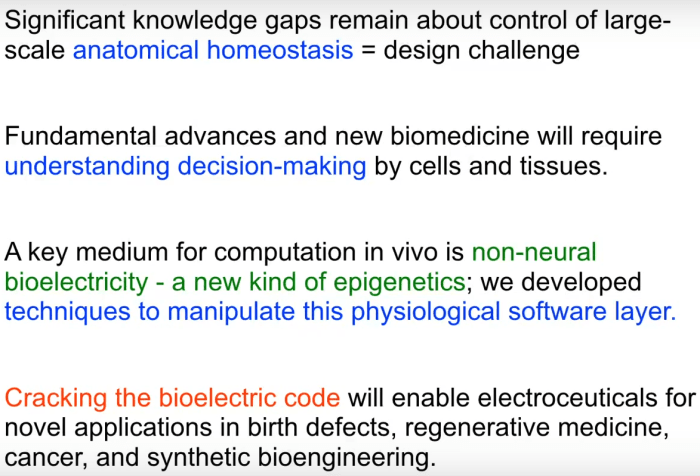
“We want to able to design a living form at the level of anatomy, and have the system compile it down into a set of low level instructions that you would have to give to the cellular collective to make it do this. What we would like to do is to offload all that complexity onto cells, and control this  whole thing with inputs, experiences, or stimuli.

What evolution does is to exploit bioelectricity to implement networks that store these patterns, patterns that serve as memories and goal states.”


electroceuticals


Appreciate Dr. Levin sticking with his findings for three decades now. Credit my son for refreshing my memory.

Brown your white fat cells with broccoli sprouts

A 2021 rodent study and a blog post with 51 references investigated fat cells:

“Sulforaphane (SFN) is a potent indirect antioxidant and a promising agent for controlling metabolic disorder disease. We evaluated efficacy of SFN against high fat diet (HFD)-induced-obesity mice, and investigated potential mechanisms.

SFN:

  • Suppressed HFD-induced body weight gain;
  • Reduced fat cell [adipocyte] size;
  • Suppressed expression of key genes in adipogenesis;
  • Inhibited lipid accumulation in C3H10T1/2 [pre-adipocyte] cells;
  • Increased expression of brown adipocyte-specific markers and mitochondrial biogenesis in vivo and in vitro; and
  • Decreased cellular and mitochondrial oxidative stress.

sulforaphane influences fat cells

Gene expression profile of C3H10T1/2 cells after SFN treatment showed that SFN inhibited expression of core adipogenesis genes (Ppar-γ, Fas, Cebpβ and Scd1) and enhanced expression of browning genes (Chop, Temem 26, Ucp1, Pgc-1α, and Prdm16) in adipocyte differentiation and trans-differentiation. This result suggested possible conversion of white adipocytes into beige cells.

We report that SFN induces browning of mature C3H10T1/2 adipocytes based on promotion of mitochondrial biogenesis by means of upregulation of the AMPK and NRF2 signaling pathways, and enhancement of mitochondrial function. Our further research revealed that SFN can prevent HFD-induced obesity in C57BL/6N mice by inducing browning of white adipose tissue.”

https://www.frontiersin.org/articles/10.3389/fphar.2021.665894/full “The Protective Effects of Sulforaphane on High-Fat Diet-Induced Obesity in Mice Through Browning of White Fat”


Dr. Paul Clayton had a nuanced view of body fat and its browning:

“You can divide adipose tissue into three cell types:

  • White adipocytes account for 95% of all adipocytes and have a primarily storage function;
  • The primary function of brown adipocytes, which range from 1-5% depending on cold exposure and very specific types of chemo-stimulation i.e. β3-adrenergic, is generation of heat via mitochondrial uncoupling.
  • Beige adipocytes are intermediate. They aren’t interspersed in depots of white adipose tissue and can transform into brown-like adipocytes following cold exposure or adrenergic stimulation.

Bone marrow adipose tissue plays an important role in haematopoiesis and bone metabolism in more than one form:

  • One is located in distal bones (forearm and lower leg) and is pretty much stable;
  • The other form is in spine and proximal limb bones, and is inducible by environmental factors such as cold exposure, fasting, and anaemia.

White adipose tissue can be divided into visceral and sub-cutaneous deposits, and these tissues have different behaviours and functions, too.

From a clinical perspective, it’s important to know that adipocyte-related inflammatory effects can be neutralised with omega 3 fatty acids, which return fat cells to a ‘healthy’ configuration. Their inflammatory effects can also be inhibited by various polyphenols which, among other things, block release of pro-inflammatory microRNAs.

In my experience, combining omega 3s with lipophile polyphenols and AMPK-activators such as dammarane saponins and metformin, provide supra-additive benefits.”

https://drpaulclayton.eu/blog/turn-fat-into-muscle/ “Turn Fat into Muscle”


Still no mention of sulforaphane on the doctor’s blog, although it’s:

I came across this first study through a “PPAR sulforaphane” search. Discarding a supplement as a result, because I’m already doing enough!

PXL_20210606_095305180

The amino acid ergothioneine

A trio of papers on ergothioneine starts with a 2019 human study. 3,236 people without cardiovascular disease and diabetes mellitus ages 57.4 ± 6.0 were measured for 112 metabolites, then followed-up after 20+ years:

“We identified that higher ergothioneine was an independent marker of lower risk of cardiometabolic disease and mortality, which potentially can be induced by a specific healthy dietary intake.

overall mortality and ergothioneine

Ergothioneine exists in many dietary sources and has especially high levels in mushrooms, tempeh, and garlic. Ergothioneine has previously been associated with a higher intake of vegetables, seafood and with a lower intake of solid fats and added sugar as well as associated with healthy food patterns.”

https://heart.bmj.com/content/106/9/691 “Ergothioneine is associated with reduced mortality and decreased risk of cardiovascular disease”


I came across this study by its citation in a 2021 review:

“The body has evolved to rely on highly abundant low molecular weight thiols such as glutathione to maintain redox homeostasis but also play other important roles including xenobiotic detoxification and signalling. Some of these thiols may also be derived from diet, such as the trimethyl-betaine derivative of histidine, ergothioneine (ET).

image description

ET can be found in most (if not all) tissues, with differential rates of accumulation, owing to differing expression of the transporter. High expression of the transporter, and hence high levels of ET, is observed in certain cells (e.g. blood cells, bone marrow, ocular tissues, brain) that are likely predisposed to oxidative stress, although other tissues can accumulate high levels of ET with sustained administration. This has been suggested to be an adaptive physiological response to elevate ET in the damaged tissue and thereby limit further injury.”

https://www.sciencedirect.com/science/article/pii/S2213231721000161 “Ergothioneine, recent developments”


The coauthors of this review were also coauthors of a 2018 review:

“Ergothioneine is avidly taken up from the diet by humans and other animals through a transporter, OCTN1. Ergothioneine is not rapidly metabolised, or excreted in urine, and has powerful antioxidant and cytoprotective properties.

ergothioneine in foods

Effects of dietary ET supplementation on oxidative damage in young healthy adults found a trend to a decrease in oxidative damage, as detected in plasma and urine using several established biomarkers of oxidative damage, but no major decreases. This could arguably be a useful property of ET: not interfering with important roles of ROS/RNS in healthy tissues, but coming into play when oxidative damage becomes excessive due to tissue injury, toxin exposure or disease, and ET is then accumulated.”

https://febs.onlinelibrary.wiley.com/doi/full/10.1002/1873-3468.13123 “Ergothioneine – a diet-derived antioxidant with therapeutic potential”


I’m upping a half-pound of mushrooms every day to 3/4 lb. (340 g). Don’t think I could eat more garlic than the current six cloves.

PXL_20210606_095517049

I came across this subject in today’s video: