Do you have your family’s detailed medical histories?

Imagine that you were a parent who puzzled over the mystery of your pre-teen daughter’s hyperactive behavior. Without detailed family medical histories, would anyone recognize this as a preprogammed phenotype?

Could anyone trace the daughter’s behavior back to her maternal great-grandmother being treated with glucocorticoids near the end of the second trimester of carrying her grandfather?

Such was a finding of a 2017 Canadian guinea pig study that was undertaken to better inform physicians of the transgenerationally inherited epigenetic effects of glucocorticoid treatments commonly prescribed during human pregnancies:

“This study presents the first evidence that prenatal treatment with sGC [synthetic glucocorticoid] results in transgenerational paternal transmission of hyperactivity and altered hypothalamic gene expression through three generations of young offspring. Female offspring appear to be more sensitive than male offspring to the programming effects of sGC, which suggests an interaction between sGC and sex hormones or sex-linked genes. Paternal transmission to F3 strongly implicates epigenetic mechanisms in the process of transmission, and small noncoding RNAs likely play a major role.”


Some details of the study included:
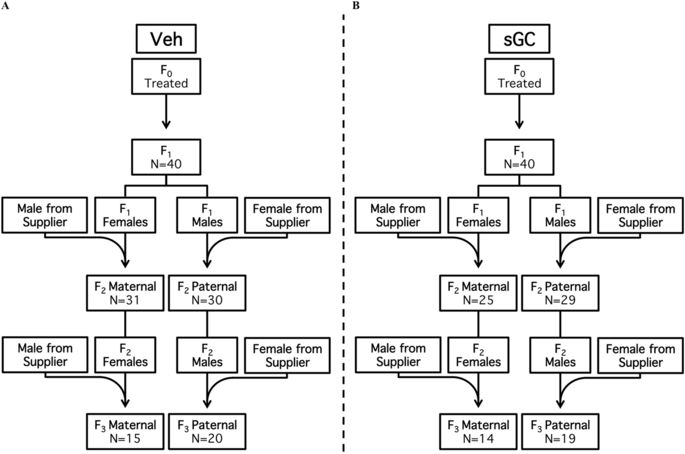
Veh[icle] was the control group initially treated with saline.

The study was informative and conclusive for the aspects studied. From the Methods section:

“Data from same-sex littermates were meaned to prevent litter bias. Sample sizes (N) correspond to independent litters, and not to the total number of offspring across all litters.

Power analyses based on previous studies determined N ≥ 8 sufficient to account for inter-litter variability and detect effects in the tests performed.”

https://www.nature.com/articles/s41598-017-11635-w “Prenatal Glucocorticoid Exposure Modifies Endocrine Function and Behaviour for 3 Generations Following Maternal and Paternal Transmission”
What is a father’s role in epigenetic inheritance?

The agenda of this 2017 Danish review was to establish a paternal role in intergenerational and transgenerational epigenetic inheritance of metabolic diseases:

“There are four windows of susceptibility which have major importance for epigenetic inheritance of acquired paternal epigenetic changes:

  1. paternal primordial germ cell (PGC) development,
  2. prospermatogonia stages,
  3. spermatogenesis, and
  4. during preimplantation.”

The review was a long read as the authors discussed animal studies. When it came to human studies near the paper’s end, though, the tone was of a “we know this is real, we just have to find it” variety. The authors acknowledged:

“To what extent the described DNA methylation changes influence the future health status of offspring by escaping remodeling in the preimplantation period as well as in future generations by escaping remodeling in PGC remodeling has yet to be determined.

These studies have not yet provided an in-depth understanding of the specific mechanisms behind epigenetic inheritance or exact effect size for the disease risk in offspring.

Pharmacological approaches have reached their limits..”

before presenting their belief that a hypothetical series of future CRISPR-Cas9 experiments will demonstrate the truth of their agenda.


The review focused on 0.0001% of the prenatal period for what matters with the human male – who he was at the time of a Saturday night drunken copulation – regarding intergenerational and transgenerational epigenetic inheritance of metabolic diseases.

The human female’s role – who she was at conception AND THEN what she does or doesn’t do during the remaining 99.9999% of the prenatal period to accommodate the fetus and prevent further adverse epigenetic effects from being intergenerationally and transgenerationally transmitted  – wasn’t discussed.

Who benefits from this agenda’s narrow focus?

If the review authors sincerely want to:

“Raise societal awareness of behavior to prevent a further rise in the prevalence of metabolic diseases in future generations..”

then EARN IT! Design and implement HUMAN studies to test what’s already known from epigenetic inheritance animal studies per Experience-induced transgenerational programming of neuronal structure and functions. Don’t disguise beliefs with the label of science.

http://jme.endocrinology-journals.org/content/early/2017/12/04/JME-17-0189.full.pdf “DNA methylation in epigenetic inheritance of metabolic diseases through the male germ line”

Transgenerational pathological traits induced by prenatal immune activation

The third paper of Transgenerational epigenetic inheritance week was a 2016 Swiss rodent study of immune system epigenetic effects:

“Our study demonstrates for, we believe, the first time that prenatal immune activation can negatively affect brain and behavioral functions in multiple generations. These findings thus highlight a novel pathological aspect of this early-life adversity in shaping disease risk across generations.”

The epigenetic effects noted in the initial round of experiments included:

  • F1 child and F2 grandchild impaired sociability;
  • F1 and F2 abnormal fear expression;
  • F1 but not F2 sensorimotor gating deficiencies; and
  • F2 but not F1 behavioral despair associated with depressive-like behavior.

These transgenerational effects emerged in both male and female offspring. The prenatal immune activation timing corresponded to the middle of the first trimester of human pregnancy.

The effects were found to be mediated by the paternal but not maternal lineage. The researchers didn’t develop a maternal lineage F3 great-grandchild generation.

The next round of experiments done with the paternal lineage F3 great-grandchildren noted these epigenetic effects:

  • The F3 great-grandchildren had impaired sociability, abnormal fear expression and behavioral despair; and
  • The F3 great-grandchildren had normal sensorimotor gating.

Since the first round of tests didn’t show sex-dependent effects, the F3 great-grandchildren were male-only to minimize the number of animals.

Samples of only the amygdalar complex were taken to develop findings of transcriptomic effects of prenatal immune activation.

Items in the Discussion section included:

  1. The F2 grandchild and F3 great-grandchild generations’ phenotype of impaired sociability, abnormal fear expression and behavioral despair demonstrated that prenatal immune activation likely altered epigenetic marks in the germ line of the F1 children which resisted erasure and epigenetic reestablishment during germ cell development.
  2. Abnormal F1 child sensorimotor gating followed by normal F2 grandchild and F3 great-grandchild sensorimotor gating demonstrated that prenatal immune activation may also modify somatic but not germ cells.
  3. Non-significant F1 child behavioral despair followed by F2 grandchild and F3 great-grandchild behavioral despair demonstrated that prenatal immune activation may modify F1 germ cells sufficiently to develop a transgenerational phenotype, but unlike item 1 above, somatic cells were insufficiently modified, and the phenotype skipped the F1 children.
  4. Studies were cited that prenatal immune activation later in the gestational process may produce different effects.

The initial round of experiments wasn’t definitive for the maternal lineage. As argued in Transgenerational effects of early environmental insults on aging and disease and A review of epigenetic transgenerational inheritance of reproductive disease, testing of maternal lineage F3 great-grandchildren was needed to control for the variable of direct F2 grandchild germ-line exposure.

Also, effects that didn’t reach statistical significance in the maternal lineage F1 children and F2 grandchildren may have been different in the F3 great-grandchildren. The researchers indirectly acknowledged this lack by noting that these and other effects of immune challenges in a maternal lineage weren’t excluded by the study.

https://www.nature.com/mp/journal/v22/n1/pdf/mp201641a.pdf “Transgenerational transmission and modification of pathological traits induced by prenatal immune activation” (not freely available)


The study’s lead researcher authored a freely-available 2017 review that placed this study in context and provided further details from other studies:

http://www.nature.com/tp/journal/v7/n5/full/tp201778a.html “Epigenetic and transgenerational mechanisms in infection-mediated neurodevelopmental disorders”

Experience-induced transgenerational programming of neuronal structure and functions

The second paper of Transgenerational epigenetic inheritance week was a 2017 German/Israeli review focused on:

“The inter- and transgenerational effects of stress experience prior to and during gestation..the concept of stress-induced (re-)programming in more detail by highlighting epigenetic mechanisms and particularly those affecting the development of monoaminergic transmitter systems, which constitute the brain’s reward system.

We offer some perspectives on the development of protective and therapeutic interventions in cognitive and emotional disturbances resulting from preconception and prenatal stress.”

The reviewers noted that human studies have difficulties predicting adult responses to stress that are based on gene expression and early life experience. Clinical studies that experimentally manipulate the type, level and timing of the stressful exposure aren’t possible. Clinical studies are also predicated on the symptoms being recognized as disorders and/or diseases.

The researchers noted difficulties in human interventions and treatments. Before and during pregnancy, and perinatal periods are where stress effects are largest. But current human research hasn’t gathered sufficient findings to develop practical guidelines for early intervention programs.


I’m not persuaded by arguments that cite the difficulties of performing human research on transgenerational epigenetic inheritance. There are overwhelming numbers of people who have obvious stress symptoms: these didn’t develop in a vacuum.

Researchers:

  • Design human studies to test what’s known from transgenerational epigenetic inheritance animal studies that will include documenting the subjects’ detailed histories with sufficient biometric samples and data obtained from their lineage.
  • Induce pregnant subjects to at least temporarily avoid what’s harmful for them and/or the offspring, in favor of what’s beneficial.
  • Document the subjects’ actions with history and samples.

I acknowledge that economic incentives may not be enough to get people to participate. I’m familiar with a juvenile sickle-cell study that didn’t get enough subjects despite offering free transportation and hundreds of dollars to the caregivers per visit. The main problem seemed to be that the additional income would be reported and threaten the caregivers’ welfare benefits.

Stop whining that your jobs are difficult, researchers. Society doesn’t owe you a job. EARN IT – get yourself and the people in your organization motivated to advance science!

http://www.sciencedirect.com/science/article/pii/S014976341630731X “Experience-induced transgenerational (re-)programming of neuronal structure and functions: Impact of stress prior and during pregnancy” (not freely available)

Transgenerational effects of early environmental insults on aging and disease

The first paper of Transgenerational epigenetic inheritance week was a 2017 Canadian/Netherlands review that’s organized as follows:

“First, we address mechanisms of developmental and transgenerational programming of disease and inheritance. Second, we discuss experimental and clinical findings linking early environmental determinants to adverse aging trajectories in association with possible parental contributions and sex-specific effects. Third, we outline the main mechanisms of age-related functional decline and suggest potential interventions to reverse negative effects of transgenerational programming.”

A transgenerational phenotype was defined as an epigenetic modification that was maintained at least either to F2 grandchildren in the paternal lineage, or to F3 great-grandchildren in the maternal lineage.

The reviewers noted that mechanisms of transgenerational programming are complex and multivariate.  Severity, timing, and type of exposure; lineage of transmission; germ cell exposure; and gender of an organism were the main factors that may determine consequences. Mechanisms reviewed were:

  1. Parental exposure to an adverse environment;
  2. Altered maternal behavior and care of offspring; and
  3. Experience-dependent modifications of the epigenome.

There was a long list of diseases and impaired functionalities that were consequences of ancestral experiences and exposures. Most studies were of animals, but a few were human, such as those done on effects of extended power outages during a Quebec ice storm of January 1998.


One intervention that was effective in reversing a transgenerational phenotype induced by deficient rodent maternal care was to place pups with a caring foster female soon after birth. It’s probably unacceptable in human societies to preemptively recognize all poor-care human mothers and remove the infant to caring foster mothers. But researchers could probably find enough instances to develop studies of the effectiveness of such placements in reversing a transgenerational phenotype.

The review didn’t have suggestions for reversing human transgenerational phenotypes, just “potential interventions to reverse negative effects of transgenerational programming.” Interventions suggested for humans – exercise, enriched lifestyle, cognitive training, dietary regimens, and expressive art and writing therapies – only reduced impacts of transgenerational epigenetic effects.

Tricky wording of “reverse negative effects of transgenerational programming” showed that research paradigms weren’t aimed at resolving causes. The review was insufficient for the same reasons mentioned in How one person’s paradigms regarding stress and epigenetics impedes relevant research, prompting my same comment:

Aren’t people interested in human treatments of originating causes so that their various symptoms don’t keep bubbling up? Why wouldn’t research paradigms be aligned accordingly?

When reversals of human phenotypes aren’t researched, problems may compound by being transmitted to the next generations.

http://www.sciencedirect.com/science/article/pii/S014976341630714X “Transgenerational effects of early environmental insults on aging and disease incidence” (not freely available)

It’s transgenerational epigenetic inheritance week!

Transgenerational epigenetic inheritance is a subject whose time has come. This week I sequentially curated two 2017 reviews and two 2016 studies of the subject, and ended with a meta-analysis of human preventive treatments:


It’s the opposite of advancing science for those in the funding chain to give lip service to the subject, and then create an atmosphere where proposals to extend experiments to subsequent generations to study possible transgenerational epigenetic effects are neither encouraged nor funded.

Does living near a forest keep your amygdala healthier?

A thought-provoking post from A Paper a Day Keeps the Scientist Okay entitled “Living Near a Forest Keeps Your Amygdala Healthier” referenced a 2017 German human study which found:

“..a relationship between place of residence and brain health: those city dwellers living close to a forest were more likely to show indications of a physiologically healthy amygdala structure and were therefore presumably better able to cope with stress.”

The researchers accomplished the imperative of meeting the study’s stated objective:

“We set out to identify and characterize the geographical elements of a city that are associated with these brain structures following a suggestion by Kennedy and Adolph that studies should begin to derive recommendations for urban planning and architecture.

The results of our study may suggest that forests in and around the cities are a valuable resource that should be promoted. However future longitudinal studies are needed to investigate the causal directionality of the effect in order to disentangle whether more forest in ones habitat facilitates brain structural integrity or potentially those people with better brain structural integrity choose to live closer to forests. Moreover we need to investigate whether living close to the forest is associated with an absence of risk factors such as noise, air pollution or stress and thereby has beneficial effects or whether the forest itself constitutes a salutary factor that promotes well-being.”

https://www.nature.com/articles/s41598-017-12046-7 “In search of features that constitute an “enriched environment” in humans: Associations between geographical properties and brain structure”


A major limitation of this study’s methodology was intentional non-use of an available data source. Referring to Do we need to study the brain to understand the mind? posted earlier this week:

“Self-report is still the gold standard for assessing emotional experience and the contents of thought. Isn’t it easier just to ask?”

These researchers put the forest before the trees, and designed a study that didn’t ask subjects important questions such as why they lived where they lived. The researchers inferred sketchy fMRI-geography associations because they didn’t solicit relevant primary information via individual self-reports.


I don’t live in Berlin, and I’m not part of the selected cohort, but I otherwise generally meet this study’s subject parameters. Something in my past causes me to actively select housing that isn’t in a noisy environment. If I were asked why I lived where I lived, my answer would have included:

  • A deciding factor in why I sold my second house was traffic noise in wintertime;
  • A deciding factor in why I bought my fourth house was its location in the housing development’s center, away from street noise; and
  • A deciding factor in why I live where I now live is the house’s orientation away from both direct and reflective traffic noise sources.

Processing my hypothetical fMRI data with my self-reported historical housing choices may or may not have found:

“Geographical features in the proximal participants’ habitat are associated with brain integrity.”

Using better-quality information of self-reports, though, it’s unlikely that an association this study would have found to be significant – a chance fact that I live within one kilometer of a forest – would have been deemed significant.

Epigenetic effects of early life stress exposure

This 2017 Netherlands review subject was the lasting epigenetic effects of early-life stress:

“Exposure to stress during critical periods in development can have severe long-term consequences.

One of the key stress response systems mediating these long-term effects of stress is the hypothalamic-pituitary-adrenal (HPA) axis.

Early life stress (ELS) exposure has been reported to have numerous consequences on HPA-axis function in adulthood.

ELS is able to “imprint” or “program” an organism’s neuroendocrine, neural and behavioral responses to stress. Research focuses along two complementary lines:

  1. ELS during critical stages in brain maturation may disrupt specific developmental processes (by altered neurotransmitter exposure, gene transcription, or neuronal differentiation), leading to aberrant neural circuit function throughout life.
  2. ELS may induce modifications of the epigenome which lastingly affect brain function.

These epigenetic modifications are inducible, stable, and yet reversible, constituting an important emerging mechanism by which transient environmental stimuli can induce persistent changes in gene expression and ultimately behavior.”


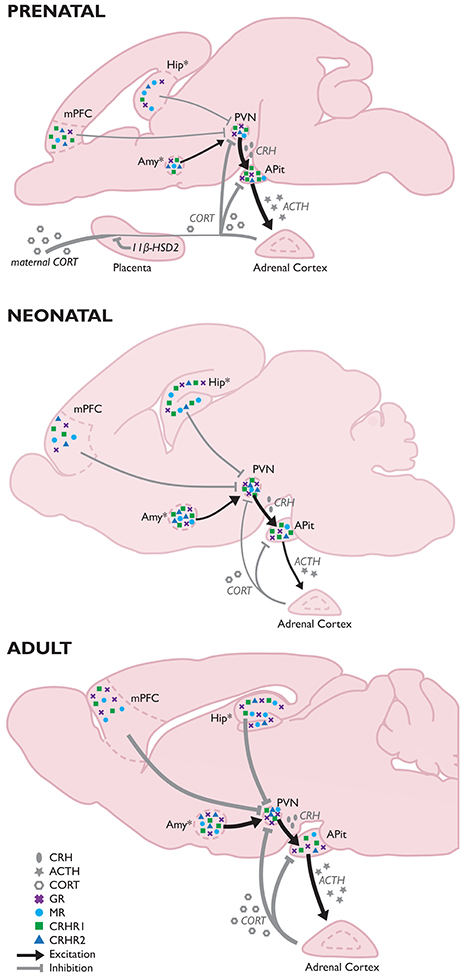
In early life, the lower brain and limbic system brain structures are more developed and dominant, whereas the cerebrum is less developed (use the above rodent graphic as a rough guide). Stress and pain generally have a greater impact on a fetus than an infant, and a greater impact on an infant than an adult.

The reviewers cited 50+ studies from years 2000-2015 in the “Early Life Stress Effects in a “Matching” Stressful Adult Environment” section to argue for the match / mismatch theory:

“Encountering ELS prepares an organism for similar (“matching”) adversities during adulthood, while a mismatching environment results in an increased susceptibility to psychopathology, indicating that ELS can exert either beneficial or disadvantageous effects depending on the environmental context.

Initial evidence for HPA-axis hypo-reactivity is observed for early social deprivation, potentially reflecting the abnormal HPA-axis function as observed in post-traumatic stress disorder.

Experiencing additional (chronic) stress in adulthood seems to normalize these alterations in HPA-axis function, supporting the match / mismatch theory.”

Evidence for this theory was contrasted with the allostatic load theory presented in How one person’s paradigms regarding stress and epigenetics impedes relevant research.


The review mainly cited evidence from rodent studies that mismatched reactions in adulthood may be consequences of early-life events. These events:

“Imprint or program an organism’s neuroendocrine, neural and behavioral responses..leading to aberrant neural circuit function throughout life..which lastingly affect brain function.”

Taking this research to a personal level:

  • Have you had feelings that you were unsafe, although your environment was objectively safe?
  • Have you felt uneasy when people are nice to you?
  • Have you felt anxious when someone pays attention to you, even after you’ve acted to gain their attention?

Mismatched human feelings are one form of mismatched reactions. These may be consequences of early-life experiences, and indicators of personal truths.

If researchers can let go of their biases and Advance science by including emotion in research, they may find that human subjects’ feelings produce better evidence for what actually happened during the subjects’ early lives than do standard scientific methods of:

Incorporating feeling evidence may bring researchers and each individual closer to discovering the major insults that knocked their development processes out of normally robust pathways and/or induced “persistent changes in gene expression and ultimately behavior.”

https://www.frontiersin.org/articles/10.3389/fncel.2017.00087/full “Modulation of the Hypothalamic-Pituitary-Adrenal Axis by Early Life Stress Exposure”


I came across this review as a result of it being cited in http://www.sciencedirect.com/science/article/pii/S1084952117302884 “Long-term effects of early environment on the brain: Lesson from rodent models” (not freely available)

A study of perinatal malnutrition where the paradigm excluded epigenetic inheritance

This 2017 New York/Swedish rodent study subject was the epigenetic effects on the F1 children of maternal low protein diet during pregnancy and lactation:

“Male, but not female, offspring of LPD [low protein diet] mothers consistently displayed anxiety– and depression-like behaviors under acute stress.

Our proposed pathway connecting early malnutrition, sex-independent regulatory changes in Egr1 [an Early growth response gene], and sex-specific epigenetic reprogramming of its effector gene, Npy1r [neuropeptide Y receptor Y1 gene], represents the first molecular evidence of how early life risk factors may generate sex-specific epigenetic effects relevant for mental disorders.”


The study was purposely incomplete regarding transgenerational epigenetic effects that may be transmitted from the F1 children to their F2 grandchildren and F3 great-grandchildren. Similar to How one person’s paradigms regarding stress and epigenetics impedes relevant research, the paradigm continued by one of this study’s coauthors restricted inquiry into epigenetic inheritance.

How can the other coauthors respond when a controller of funding publishes the paper referenced in What is epigenetic inheritance? and otherwise makes his narrow views regarding epigenetic inheritance well-known? If the controller’s restricted views won’t allow the funding scope to extend testing to study F2 grandchildren and F3 great-grandchildren, the experiments end, and our understanding of epigenetic inheritance isn’t advanced.

This purposely incomplete study showed that the coauthor only gave lip service to advancing science when he made statements like:

“Further work is needed to understand whether and to what extent true epigenetic inheritance of stress vulnerability adds to the well-established and powerful influence of genetics and environmental exposures.”

The papers of Transgenerational epigenetic inheritance week show the spectrum of opportunities to advance science that were intentionally missed.

https://www.nature.com/articles/s41598-017-10803-2 “Perinatal Malnutrition Leads to Sexually Dimorphic Behavioral Responses with Associated Epigenetic Changes in the Mouse Brain”

A gaping hole in a review of nutritional psychiatry

This December 2016 Australian review published in September 2017 concerned:

“..the nutritional psychiatry field..the neurobiological mechanisms likely modulated by diet, the use of dietary and nutraceutical interventions in mental disorders, and recommendations for further research.”


The reviewers inexplicably omitted acetyl-L-carnitine, which I first covered in A common dietary supplement that has rapid and lasting antidepressant effects. A PubMed search on “acetyl carnitine” showed over a dozen studies from the past twelve months that were relevant to the review’s subject areas. Here’s a sample, beginning with follow-on research published in June 2016 of the study I linked above:

Reply to Arduini et al.: Acetyl-l-carnitine and the brain: Epigenetics, energetics, and stress

Dietary supplementation with acetyl-l-carnitine counteracts age-related alterations of mitochondrial biogenesis, dynamics and antioxidant defenses in brain of old rats

Neuroprotective effects of acetyl-l-carnitine on lipopolysaccharide-induced neuroinflammation in mice: Involvement of brain-derived neurotrophic factor

ALCAR promote adult hippocampal neurogenesis by regulating cell-survival and cell death-related signals in rat model of Parkinson’s disease like-phenotypes

Analgesia induced by the epigenetic drug, L-acetylcarnitine, outlasts the end of treatment in mouse models of chronic inflammatory and neuropathic pain

The cited references in these recent studies were older, of course, and in the time scope of the review. There’s no excuse for this review’s omission of acetyl-L-carnitine.

https://www.cambridge.org/core/journals/proceedings-of-the-nutrition-society/article/nutritional-psychiatry-the-present-state-of-the-evidence/88924C819D21E3139FBC48D4D9DF0C08 “Nutritional psychiatry: the present state of the evidence” (not freely available)

Epigenetic effects of cruciferous vegetable compounds

This 2017 German review discussed the results of many of the studies performed over the past thirty years investigating the health-promoting effects of cruciferous vegetable compounds:

“SFN [sulforaphane] [is] the ITC [isothiocyanate] that is the most extensively studied for its chemopreventive and anti-inflammatory properties in vitro, as well as in vivo.

Due to the reversible nature of epigenetic aberrations, a modulation of epigenetically caused changes in gene expression by phytochemicals may be a promising approach in cancer prevention at the initiation step of carcinogenesis. Both SFN and DIM [diindolemethane] reversed many of the cancer-associated promotor methylations, including abnormally-methylated genes that are dysregulated during cancer progression..modulate the abnormal expression of miRNAs in different types of cancer.”

http://www.mdpi.com/1422-0067/18/9/1890/htm “Brassica-Derived Plant Bioactives as Modulators of Chemopreventive and Inflammatory Signaling Pathways”


A 2017 Polish human cell study that wasn’t cited above due to its recent publication found:

“We show for the first time that SFN is an epigenetic modulator in breast cancer cells that results in cell cycle arrest and senescence.”

https://www.ncbi.nlm.nih.gov/pmc/articles/PMC5596436/pdf/thnov07p3461.pdf “Sulforaphane-Induced Cell Cycle Arrest and Senescence are accompanied by DNA Hypomethylation and Changes in microRNA Profile in Breast Cancer Cells”


This post has somehow become a target for spammers, and I’ve disabled comments. Readers can comment on other posts and indicate that they want their comment to apply here, and I’ll re-enable comments.

Parental lying thwarted both their children and researchers

This 2017 German human study explored the relationship between birth stress and handedness. The authors summarized previous research which, among other points, estimated epigenetic contributions to handedness as great as 75%.

The research hypothesis itself was worthwhile based on the prior studies cited and elsewhere such as Group statistics don’t necessarily describe an individual. But the study hit a snag in its reliance on the sixty participants (average age 24) completing, with the assistance of their parents and medical records, a 24-item questionnaire of maternal health problems during pregnancy, substance use during pregnancy, and birth complications.

It’s extremely unlikely that the sixty subjects provided accurate information. For example:

  • Only one of the subjects reported maternal alcohol use during pregnancy. An expected number would have been twenty-six!
  • None of the subjects reported maternal mental illness during pregnancy. An expected number would have been at least seven!

I’d guess that the subjects’ parents willingly misled their children about facts of their child’s important earliest development periods. It’s my view that parental lies and omissions are not only unethical to the children, but also, whenever the lies and omissions became recognized, they potentially diminish or destroy the society among family members.

As mentioned on the Welcome page, lies and omissions ruin the standard scientific methodology of surveying parents and caregivers. The absence of reliable evidence made it impossible for the current study’s researchers to determine causes of epigenetic effects still present in the subjects’ lives.

Parental lies and omissions also diminish or destroy the society between the sources of information – the research subjects – and the users of the information. Such lies and omissions adversely affect anyone who values evidence-based research.

http://www.tandfonline.com/doi/full/10.1080/1357650X.2017.1377726 “DNA methylation in candidate genes for handedness predicts handedness direction” (not freely available)

How one person’s paradigms regarding stress and epigenetics impedes relevant research

This 2017 review laid out the tired, old, restrictive guidelines by which current US research on the epigenetic effects of stress is funded. The reviewer rehashed paradigms circumscribed by his authoritative position in guiding funding, and called for more government funding to support and extend his reach.

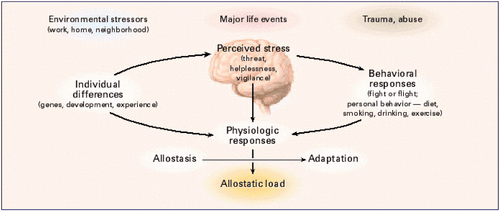
The reviewer won’t change his beliefs regarding individual differences and allostatic load pictured above since he helped to start those memes. US researchers with study hypotheses that would develop evidence beyond such memes may have difficulties finding funding except outside of his sphere of influence.


Here’s one example of the reviewer’s restrictive views taken from the Conclusion section:

Adverse experiences and environments cause problems over the life course in which there is no such thing as “reversibility” (i.e., “rolling the clock back”) but rather a change in trajectory [10] in keeping with the original definition of epigenetics [132] as the emergence of characteristics not previously evident or even predictable from an earlier developmental stage. By the same token, we mean “redirection” instead of “reversibility”—in that changes in the social and physical environment on both a societal and a personal level can alter a negative trajectory in a more positive direction.”

What would happen if US researchers proposed tests of his “there is no such thing as reversibility” axiom? To secure funding, the prospective studies’ experiments would be steered toward altering “a negative trajectory in a more positive direction” instead.

An example of this influence may be found in the press release of Familiar stress opens up an epigenetic window of neural plasticity where the lead researcher stated a goal of:

“Not to ‘roll back the clock’ but rather to change the trajectory of such brain plasticity toward more positive directions.”

I found nothing in citation [10] (of which the reviewer is a coauthor) where the rodent study researchers even attempted to directly reverse the epigenetic changes! The researchers under his guidance simply asserted:

“A history of stress exposure can permanently alter gene expression patterns in the hippocampus and the behavioral response to a novel stressor”

without making any therapeutic efforts to test the permanence assumption!

Nevermind that researchers outside the reviewer’s sphere of influence have done exactly that, reverse both gene expression patterns and behavioral responses!!

In any event, citation [10] didn’t support an “there is no such thing as reversibility” axiom.

The reviewer also implied that humans respond just like lab rats and can be treated as such. Notice that the above graphic conflated rodent and human behaviors. Further examples of this inappropriate rodent / human merger of behaviors are in the Conclusion section.


What may be a more promising research approach to human treatments of the epigenetic effects of stress? As pointed out in The current paradigm of child abuse limits pre-childhood causal research:

“If the current paradigm encouraged research into treatment of causes, there would probably already be plenty of evidence to demonstrate that directly reducing the source of the damage would also reverse damaging effects. There would have been enough studies done so that the generalized question of reversibility wouldn’t be asked.

Aren’t people interested in human treatments of originating causes so that their various symptoms don’t keep bubbling up? Why wouldn’t research paradigms be aligned accordingly?”

http://journals.sagepub.com/doi/full/10.1177/2470547017692328 “Neurobiological and Systemic Effects of Chronic Stress”

Epigenetic stress effects in preterm infants

This 2017 Italian review selected 9 human studies on the epigenetic effects of:

“One of the major adverse events in human development. Preterm infants are hospitalized in the Neonatal Intensive Care Unit where they are exposed to life-saving yet pain-inducing procedures and to protective care.”

Highlights of the referenced studies included:

  • “Early exposure to adverse events during the third trimester of pregnancy is capable to alter the epigenetic status of imprinted and placenta-related genes which have relevant implications for fetal development and preterm infants’ HPA [hypothalamic–pituitary–adrenal] stress reactivity during infancy.”
  • “There was an association between DNAm [DNA methylation] and white matter tract tissue integrity and shape inferred from dMRI [diffusion MRI], suggesting that epigenetic variation may contribute to the cerebral phenotype of preterm birth.”

Limitations of the referenced studies included:

  • “A multiple sampling design that includes parental samples, placental tissue, cord blood and extends across the life-course would be required to investigate the relative contributions of in utero and postnatal exposures to changes in DNAm, and the extent to which preterm birth leaves a legacy on the methylome.”
  • Saliva, blood, and other tissues’ DNA methylation may not produce valid links to brain tissue DNA methylation of the same gene, which may hamper conclusive inferences about behavior, etc.

http://www.sciencedirect.com/science/article/pii/S0149763417302117 “Preterm Behavioral Epigenetics: A systematic review” (not freely available)

http://www.nature.com/tp/journal/v6/n1/full/tp2015210a.html “Epigenomic profiling of preterm infants reveals DNA methylation differences at sites associated with neural function” (one of the studies selected, quoted above)

On Primal Therapy with Drs. Art and France Janov

Experiential feeling therapy addressing the pain of the lack of love.