Re-evaluating a broccoli sprouts study

A 2026 re-evaluation of a broccoli sprout clinical trial proposed a model:

“Broccoli sprouts produce sulforaphane (SFN), a dietary isothiocyanate with anti-cancer and anti-inflammatory properties. Human intervention trials observe large variation in metabolite generation and bioactivity with broccoli sprout consumption across individuals.
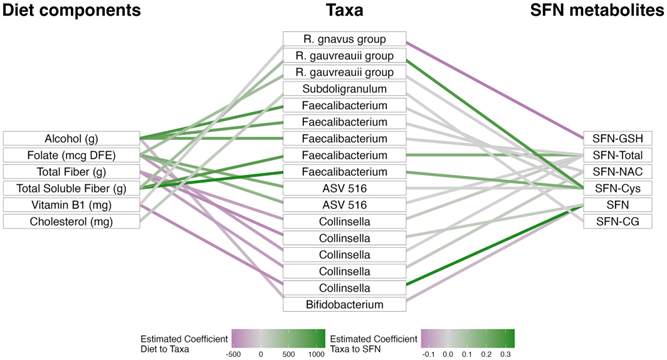
We hypothesize that interactions between pre-intervention diet and personalized gut microbiome composition contribute to this variation. This work does not delve into the mechanism behind these patterns, but points to future candidate taxa that should next be tested in vitro.”

https://onlinelibrary.wiley.com/doi/10.1002/fsn3.72211 “The Gut Microbiome and Diet Interact to Dictate Personalized Response to Broccoli Sprout Consumption”


I’m always fascinated by researcher efforts that ignore simplicity in favor of building complex models. The result is often what this paper did, finding nothing useful to achieve its stated goal of “Personalized Response to Broccoli Sprout Consumption.”

1. This group previously published informative papers such as A pair of broccoli sprout studies and Broccoli sprout compounds and gut microbiota with statements such as: “Bioavailability of ITCs from GLS has been shown to be greatly impacted by processing before ingestion. When ITCs are given preformed, they possess the greatest level of bioavailability and are readily absorbed by humans.” and

“There are two different intervals in time when GLS metabolism occurs in the large intestine: A. Metabolism of GLS directly following consumption when GLS are not absorbed in the small intestine; and B. When GLS are absorbed in the small intestine and go through enterohepatic circulation, returning as GLS in the gut where factors influencing microbial metabolism (such as food matrix, pH, and other compounds present) may be different from the first interval.”

2. This study didn’t address unresolved measurement problems with gut microbiota that they knew or should have known.

  • Per Measuring gut microbiota, Part 2:The fecal microbiome does not represent the overall composition of the gut microbiome. Since fecal microbiome is a result of the gut microbiome rather than the representative microbiome of the GI tract of the host, there is a limitation in identifying causative intestinal microbes related to these phenotypes and diseases by studying fecal microbiome.”
  • Their 16S technology measured microbiome relative abundance, which is problematic per Resistant starch therapy: “Microbiome sequencing data are compositional, meaning that gene amplicon read counts do not necessarily reflect bacterial absolute abundances. Instead, read counts are typically normalized to sum to 100%. For this reason, relative abundances of smaller keystone communities (e.g. primary degraders) may increase, but appear to decrease simply because cross-feeders increase in relative abundance to a greater extent.”

I’ve continued to eat broccoli sprouts every day for over six years now. I chew them thoroughly for at least a minute before swallowing to involve small intestine processing that’s bypassed when taking pills. I host all of the large intestine microbiota mentioned in this study, and I’m sure that they don’t participate in broccoli sprouts’ main effects for me.

Why would these researchers bother wasting resources with non-causal, “is associated with,” inconsequential busy work? Why not investigate basic problems such as testing why people have large individual differences in responding to even preformed sulforaphane?

Sulforaphane and cardio exercise

A 2026 human study investigated the subject:

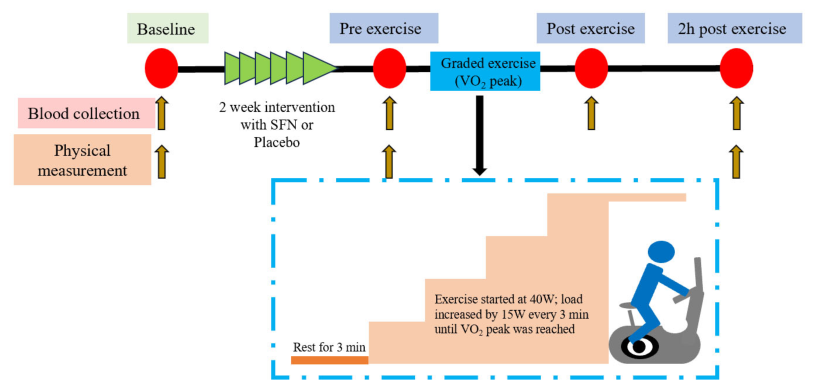
“This study investigated effects of short-term sulforaphane (SFN) precursor supplementation on maximal exercise-induced muscle damage, oxidative stress and endurance capacity in healthy adults.

In a double-blind placebo-controlled crossover design, 14 healthy participants (7 males, 7 females; age, 25.07 ± 1.04 years) received SFN glucosinolate capsules (200 µmol/day) or placebo for 2 weeks during the first trial. Test capsules contained TrueBroc® broccoli seed extract, a broccoli seed extract standardized to 13% glucoraphanin, together with mustard seed powder as a natural source of myrosinase to facilitate conversion of glucoraphanin to SFN.

Following a three-week washout period, participants crossed over to the alternate treatment. Participants were recreationally active (were involved in regular activity and considered fit) and free from chronic illness. The maximal exercise test was performed to determine peak oxygen uptake (VO2 peak).

Creatine kinase (CK) and myoglobin (Mb) leak from damaged muscle into circulation following intense exercise and have been used as indirect markers of muscle damage. Derivatives of reactive oxygen metabolites (d-ROMs) and biological antioxidant potential (BAP) tests can be used with small amounts of serum samples. An Oxy-adsorbent test evaluates non-enzymatic antioxidants and their capacity to neutralize ROS.

  • Participants were not restricted from consuming cruciferous vegetables during the intervention. As these foods contain SFN and related isothiocyanates, their background intake may have introduced inter-individual variability in redox responses.
  • Although the crossover design reduced between-subject variability, the modest sample size may have limited statistical power to detect smaller treatment effects and increased the possibility of Type II errors [false negatives].
  • Molecular markers of Nrf2 signaling were not evaluated in the present study.

Short-term SFN supplementation was associated with selective modulation of reactive oxygen metabolites and muscle damage markers, whereas no significant improvement in endurance capacity was observed. SFN intake may be a beneficial, non-invasive strategy to modulate acute biochemical responses to exercise via the antioxidant defense system in physically active individuals.”

https://www.mdpi.com/2072-6643/18/16/2617 “Proof of Principle: Short-Term Sulforaphane Precursor Intake Alters Selected Circulating Oxidative Stress and Muscle Damage Biomarkers Following Maximal Exercise: A Double-Blind Crossover Trial”


Without these researchers measuring a supplement’s conversion into sulforaphane, it was a stretch for them to state that sulforaphane may have had this or that effect. I’ve curated several studies, most recently Add vitamin C to broccoli sprouts? with the same supplement manufacturer, that showed people have large individual differences in metabolizing glucoraphanin into sulforaphane. Their statistical analyses didn’t show what was actually going on with each young person subject.

Vitamin C and bone marrow aging

A 2026 primate study from the same group that performed The return of the free radical theory of aging investigated effects of vitamin C on bone marrow cells:

“We map the single-cell transcriptomic landscape of primate bone marrow aging and demonstrate that long-term oral vitamin C (VC) supplementation attenuates selected molecular and progenitor-level decline. Aging drives severe common lymphoid progenitor (CLP) depletion, myeloid-biased hematopoietic stem and progenitor cell (HSPC) output, and anatomical site-specific molecular adaptations.

VC administration partially offsets these phenotypes, expanding the CLP pool and rebalancing lineage commitment trajectories. This aligns with a ∼4-year reduction in transcriptomic age estimates, cross-validated by an epigenetic clock. Cell-cell communication analyses revealed that VC remodels intercellular signaling, nominating a VC-responsive, progranulin (GRN)-linked candidate pathway.

As the core of the hematopoietic system, bone marrow sustains lifelong production of all blood lineages, making it a central determinant of immunity and systemic homeostasis. With advancing age, however, bone marrow function declines markedly. This deterioration is characterized by diminished regenerative capacity of HSPCs, myeloid-biased differentiation, and impaired lymphoid potential. Complexity of bone marrow aging is further amplified by its anatomical heterogeneity.

We conducted a 40-month longitudinal study (roughly equivalent to 10 human years). Aged female cynomolgus monkeys (12–16 years old, equivalent to approximately 40–53 human years) were randomized into two groups: one receiving daily oral VC (30 mg/kg) and a control group receiving water.

We combined a prolonged oral VC regimen in non-human primates with deep single-cell transcriptomic mapping of anatomically distinct bone marrow compartments to investigate aging-related molecular adaptations. We observed that VC supplementation was characterized by a partial mitigation of aging-associated compositional dysregulation, including higher observed CLP frequencies, and correlated with lowered biological age predictions at both transcriptomic and epigenetic levels.

This study provides a valuable resource and a benchmark dataset for dissecting modifiable components of primate bone marrow aging, establishing a programmatic framework to guide future functional interrogation of VC-responsive candidate pathways.”

https://www.sciencedirect.com/science/article/abs/pii/S193459092600233X “Vitamin C attenuates primate bone marrow aging at the molecular and progenitor level” (not freely available)


These researchers didn’t confirm, but this study’s intervention group may have been the same as “Vitamin C conveys geroprotection on primate ovaries” mentioned in 2026 diet and supplement changes.

It was encouraging that vitamin C partially reverses bone marrow cells’ age-associated myeloid skewing and lymphoid depletion. It may be too intrusive to directly assess HSPCs in human trials.