The lack of oxygen’s epigenetic effects on a fetus

This 2018 Loma Linda review subject was gestational hypoxia:

“Of all the stresses to which the fetus and newborn infant are subjected, perhaps the most important and clinically relevant is that of hypoxia. This review explores the impact of gestational hypoxia on maternal health and fetal development, and epigenetic mechanisms of developmental plasticity with emphasis on the uteroplacental circulation, heart development, cerebral circulation, pulmonary development, and the hypothalamic-pituitary-adrenal axis and adipose tissue.

An understanding of the specific hypoxia-induced environmental and epigenetic adaptations linked to specific organ systems will enhance the development of target-specific inhibition of DNA methylation, histone modifications, and noncoding RNAs that underlie hypoxia-induced phenotypic programming of disease vulnerability later in life.

A potential stumbling block to these efforts, however, relates to timing of the intervention. The greatest potential effect would be accomplished at the critical period in development for which the genomic plasticity is at its peak, thus ameliorating the influence of hypoxia or other stressors.

With future developments, it may even become possible to intervene before conception, before the genetic determinants of the risk of developing programmed disease are established.”

Table 3 “Antenatal hypoxia and developmental plasticity” column titles were Species | Offspring Phenotypes of Disorders and Diseases | Reference Nos.

Hypoxia phenotypes


This review was really an ebook, with 94 pages and 1,172 citations in the pdf file. As I did with Faith-tainted epigenetics, I read it with caution toward recognizing 1) the influence of the sponsor’s biases, 2) any directed narrative that ignored evidence contradicting the narrative, and 3) any storytelling.

Can you match the meaning of the review’s last sentence (“intervene before conception” quoted above) with the meaning of any sentence in its cited reference Developmental origins of noncommunicable disease: population and public health implications? I can’t.

One review topic that was misconstrued was transgenerational epigenetic inheritance of hypoxic effects. The “transgenerational” term was used inappropriately by several of the citations, and no cited study provided evidence for gestational hypoxic effects through the F3 great-grandchild generation.

One omitted topic was gestational hypoxic effects of caffeine. The first paper that came up for my PubMed search of “caffeine pregnancy hypoxia” was an outstanding 2017 Florida rodent review Long-term consequences of disrupting adenosine signaling during embryonic development that had this paragraph and figure:

“One substance that fetuses are frequently exposed to is caffeine, which is a non-selective adenosine receptor antagonist. We discovered that in utero alteration in adenosine action leads to adverse effects on embryonic and adult murine hearts. We find that cardiac A1ARs [a type of adenosine receptor] protect the embryo from in utero hypoxic stress, a condition that causes an increase in adenosine levels. 

After birth in mice, we observed that in utero caffeine exposure leads to abnormal cardiac function and morphology in adults, including an impaired response to β-adrenergic stimulation. Recently, we observed that in utero caffeine exposure induces transgenerational effects on cardiac morphology, function, and gene expression.”

The timing of in utero caffeine treatment leads to differences in adult cardiac function, gene expression, and phenotype. Exposure to caffeine from E6.5–9.5 leads the F1 generation to develop dilated cardiomyopathy with decrease % FS and increased Myh7 expression. In utero caffeine exposure from E10.5–13.5 leads to a hypertrophic cardiomyopathy in the F2 generation along with increased % FS and decreased Myh7 expression

Why was this review and its studies omitted? It was on target for both gestational hypoxia and transgenerational epigenetic inheritance of hypoxic effects!

It was alright to review smoking, cocaine, methamphetamine, etc., but the most prevalent drug addiction – caffeine – couldn’t be a review topic?


The Loma Linda review covered a lot, but I had a quick trigger due to the sponsor’s bias. I started to lose “faith” in the reviewers after reading the citation for the review’s last sentence that didn’t support the statement.

My “faith” disappeared after not understanding why a few topics were misconstrued and omitted. Why do researchers and sponsors ignore, misrepresent, and not continue experiments through the F3 generation to produce evidence for and against transgenerational epigenetic inheritance? Where was the will to follow evidence trails regardless of socially acceptable beverage norms?

The review acquired the taint of storytelling with the reviewers’ assertion:

“..timing of the intervention. The greatest potential effect would be accomplished at the critical period in development for which the genomic plasticity is at its peak, thus ameliorating the influence of hypoxia or other stressors.”

Contradictory evidence was in the omitted caffeine study’s graphic above which described two gestational critical periods where an “intervention” had opposite effects, all of which were harmful to the current fetus’ development and/or to following generations. Widening the PubMed link’s search parameters to “caffeine hypoxia” and “caffeine pregnancy” returned links to human early life studies that used caffeine in interventions, ignoring possible adverse effects on future generations.

This is my final curation of any paper sponsored by this institution.

https://www.physiology.org/doi/abs/10.1152/physrev.00043.2017 “Gestational Hypoxia and Developmental Plasticity” (not freely available) Thanks to coauthor Dr. Xiang-Qun Hu for providing a copy.

Resiliency in stress responses

This 2018 US Veterans Administration review subject was resiliency and stress responses:

Neurobiological and behavioral responses to stress are highly variable. Exposure to a similar stressor can lead to heterogeneous outcomes — manifesting psychopathology in one individual, but having minimal effect, or even enhancing resilience, in another.

We highlight aspects of stress response modulation related to early life development and epigenetics, selected neurobiological and neurochemical systems, and a number of emotional, cognitive, psychosocial, and behavioral factors important in resilience.”

The review cited studies I’ve previously curated:


There were two things I didn’t understand about this review. The first was why the paper isn’t freely available. It’s completely paid for by the US taxpayer, and no copyright is claimed. I recommend contacting the authors for a copy.

The second was why the VA hasn’t participated in either animal or human follow-on studies to the 2015 Northwestern University GABAergic mechanisms regulated by miR-33 encode state-dependent fear. That study’s relevance to PTSD, this review’s subject, and the VA’s mission is too important to ignore. For example:

“Fear-inducing memories can be state dependent, meaning that they can best be retrieved if the brain states at encoding and retrieval are similar.

“It’s difficult for therapists to help these patients,” Radulovic said, “because the patients themselves can’t remember their traumatic experiences that are the root cause of their symptoms.”

The findings imply that in response to traumatic stress, some individuals, instead of activating the glutamate system to store memories, activate the extra-synaptic GABA system and form inaccessible traumatic memories.”

I curated the research in A study that provided evidence for basic principles of Primal Therapy. These researchers have published several papers since then. Here are the abstracts from three of them:

Experimental Methods for Functional Studies of microRNAs in Animal Models of Psychiatric Disorders

“Pharmacological treatments for psychiatric illnesses are often unsuccessful. This is largely due to the poor understanding of the molecular mechanisms underlying these disorders. We are particularly interested in elucidating the mechanism of affective disorders rooted in traumatic experiences.

To date, the research of mental disorders in general has focused on the causal role of individual genes and proteins, an approach that is inconsistent with the proposed polygenetic nature of these disorders. We recently took an alternative direction, by establishing the role of miRNAs in the coding of stress-related, fear-provoking memories.

Here we describe in detail our work on the role of miR-33 in state-dependent learning, a process implicated in dissociative amnesia, wherein memories formed in a certain brain state can best be retrieved if the brain is in the same state. We present the specific experimental approaches we apply to study the role of miRNAs in this model and demonstrate that miR-33 regulates the susceptibility to state-dependent learning induced by inhibitory neurotransmission.”

Neurobiological mechanisms of state-dependent learning

“State-dependent learning (SDL) is a phenomenon relating to information storage and retrieval restricted to discrete states. While extensively studied using psychopharmacological approaches, SDL has not been subjected to rigorous neuroscientific study.

Here we present an overview of approaches historically used to induce SDL, and highlight some of the known neurobiological mechanisms, in particular those related to inhibitory neurotransmission and its regulation by microRNAs (miR).

We also propose novel cellular and circuit mechanisms as contributing factors. Lastly, we discuss the implications of advancing our knowledge on SDL, both for most fundamental processes of learning and memory as well as for development and maintenance of psychopathology.”

Neurobiological correlates of state-dependent context fear

“Retrieval of fear memories can be state-dependent, meaning that they are best retrieved if the brain states at encoding and retrieval are similar. Such states can be induced by activating extrasynaptic γ-aminobutyric acid type A receptors (GABAAR) with the broad α-subunit activator gaboxadol. However, the circuit mechanisms and specific subunits underlying gaboxadol’s effects are not well understood.

Here we show that gaboxadol induces profound changes of local and network oscillatory activity, indicative of discoordinated hippocampal-cortical activity, that were accompanied by robust and long-lasting state-dependent conditioned fear. Episodic memories typically are hippocampus-dependent for a limited period after learning, but become cortex-dependent with the passage of time.

In contrast, state-dependent memories continued to rely on hippocampal GABAergic mechanisms for memory retrieval. Pharmacological approaches with α- subunit-specific agonists targeting the hippocampus implicated the prototypic extrasynaptic subunits (α4) as the mediator of state-dependent conditioned fear.

Together, our findings suggest that continued dependence on hippocampal rather than cortical mechanisms could be an important feature of state-dependent memories that contributes to their conditional retrieval.”


Here’s an independent 2017 Netherlands/UC San Diego review that should bring these researchers’ efforts to the VA’s attention:

MicroRNAs in Post-traumatic Stress Disorder

“Post-traumatic stress disorder (PTSD) is a psychiatric disorder that can develop following exposure to or witnessing of a (potentially) threatening event. A critical issue is to pinpoint the (neuro)biological mechanisms underlying the susceptibility to stress-related disorder such as PTSD, which develops in the minority of ~15% of individuals exposed to trauma.

Over the last few years, a first wave of epigenetic studies has been performed in an attempt to identify the molecular underpinnings of the long-lasting behavioral and mental effects of trauma exposure. The potential roles of non-coding RNAs (ncRNAs) such as microRNAs (miRNAs) in moderating or mediating the impact of severe stress and trauma are increasingly gaining attention. To date, most studies focusing on the roles of miRNAs in PTSD have, however, been completed in animals, using cross-sectional study designs and focusing almost exclusively on subjects with susceptible phenotypes.

Therefore, there is a strong need for new research comprising translational and cross-species approaches that use longitudinal designs for studying trajectories of change contrasting susceptible and resilient subjects. The present review offers a comprehensive overview of available studies of miRNAs in PTSD and discusses the current challenges, pitfalls, and future perspectives of this field.”

Here’s a 2017 Netherlands human study that similarly merits the US Veterans Administration’s attention:

Circulating miRNA associated with posttraumatic stress disorder in a cohort of military combat veterans

“Posttraumatic stress disorder (PTSD) affects many returning combat veterans, but underlying biological mechanisms remain unclear. In order to compare circulating micro RNA (miRNA) of combat veterans with and without PTSD, peripheral blood from 24 subjects was collected following deployment, and isolated miRNA was sequenced.

PTSD was associated with 8 differentially expressed miRNA. Pathway analysis shows that PTSD is related to the axon guidance and Wnt signaling pathways, which work together to support neuronal development through regulation of growth cones. PTSD is associated with miRNAs that regulate biological functions including neuronal activities, suggesting that they play a role in PTSD symptomatology.”


See the below comments for reasons why I downgraded this review’s rating.

https://link.springer.com/article/10.1007/s11920-018-0887-x “Stress Response Modulation Underlying the Psychobiology of Resilience” (not freely available)

This dietary supplement is better for depression symptoms than placebo

This 2018 Italy/UK meta-analysis subject was the use of dietary supplement acetyl-L-carnitine to treat depression symptoms:

“Deficiency of acetyl-L-carnitine (ALC) appears to play a role in the risk of developing depression, indicating dysregulation of fatty acids transport across the inner membrane of mitochondria. However, the data regarding ALC supplementation in humans are limited. We thus conducted a systematic review and meta-analysis investigating the effect of ALC on depressive symptoms across randomized controlled trials (RCTs).

Pooled data across nine RCTs (231 treated with ALC versus 216 treated with placebo and 20 no intervention) showed that ALC significantly reduced depressive symptoms.

In these nine RCTs, the majority of the studies used 3 grams of ALC as intervention.

In three RCTs comparing ALC versus antidepressants (162 for each group), ALC demonstrated similar effectiveness compared with established antidepressants [fluoxetine (Prozac), duloxetine (Cymbalta), amisulpride (Solian) respectively below] in reducing depressive symptoms. In these latter RCTs, the incidence of adverse effects was significantly lower in the ALC group [79%] than in the antidepressant group.

Subgroup analyses suggested that ALC was most efficacious in older adults. Future large scale trials are required to confirm/refute these findings.”

From the Methods section:

“Studies were excluded if:

  1. did not include humans;
  2. did not include a control group;
  3. did not use validated scales for assessing depression;
  4. did not report data at follow-up evaluation regarding tests assessing depression;
  5. included the use of ALC with another agent vs. placebo/no intervention.”

The Discussion section was informative regarding possible mechanisms of ALC affecting depression, pain, and linked symptoms. Several citations were of a review rather than of the original studies, however.


Research needs to proceed on to investigate therapies that address ultimate causes for depression and pain. Researchers and sponsors shouldn’t stop at just symptoms and symptom relief, notwithstanding the requirement from a statistical point of view for “future large scale trials.”

Here are other acetyl-L-carnitine topics I’ve curated:

https://journals.lww.com/psychosomaticmedicine/Citation/2018/02000/Acetyl_L_Carnitine_Supplementation_and_the.4.aspx “Acetyl-L-Carnitine Supplementation and the Treatment of Depressive Symptoms: A Systematic Review and Meta-Analysis” (not freely available)


This post has somehow become a target for spammers, and I’ve disabled comments. Readers can comment on other posts and indicate that they want their comment to apply here, and I’ll re-enable comments.

RNA and neurodegenerative diseases

This 2018 Chinese paper reviewed the associations among long non-coding RNA and four neurodegenerative diseases:

“lncRNAs are widely implicated in various physiological and pathological processes, such as epigenetic regulation, cell cycle regulation, cell differentiation regulation, cancer, and neurodegenerative diseases, through their interactions with chromatin, protein, and other RNAs. Numerous studies have suggested that lncRNAs are closely linked with the occurrence and development of a variety of diseases, especially neurodegenerative diseases, of which the etiologies are complicated and the underlying mechanisms remain elusive.

We focus on how lncRNA dysfunctions are involved in the pathogenesis of Alzheimer’s disease, Parkinson’s disease, Huntington’s disease, and amyotrophic lateral sclerosis.”


Table 1 showed specific lncRNAs that acted as “bodyguards” in inherited Huntington’s disease, “culprits” in Alzheimer’s disease, and as both in Parkinson’s disease. The table didn’t include lncRNAs associated with amyotrophic lateral sclerosis although the review text mentioned several.

https://www.sciencedirect.com/science/article/pii/S2162253117303104 “Long Non-coding RNAs, Novel Culprits, or Bodyguards in Neurodegenerative Diseases”

Sex-specific impacts of childhood trauma

This 2018 Canadian paper reviewed evidence for potential sex-specific differences in the lasting impacts of childhood trauma:

“This paper will provide a contextualized summary of neuroendocrine, neuroimaging, and behavioral epigenetic studies on biological sex differences contributing to internalizing psychopathology, specifically posttraumatic stress disorder and depression, among adults with a history of childhood abuse.

Given the breadth of this review, we limit our definition [of] trauma to intentional and interpersonal experiences (i.e., childhood abuse and neglect) in childhood. Psychopathological outcomes within this review will be limited to commonly explored internalizing disorders, specifically PTSD and depression.

Despite the inconsistent and limited findings in this review, a critical future consideration will be whether the biological effects of early life stress can be reversed in the face of evidence-based behavioral interventions, and furthermore, whether these changes may relate to potentially concurrent reductions in susceptibility to negative mental health outcomes.”


It was refreshing to read a paper where the reviewers often interrupted the reader’s train of thought to interject contradictory evidence, and display the scientific method. For example, immediately after citing a trio of well-respected studies that found:

“Psychobiological research on relationships linking impaired HPA axis functioning and adult internalizing disorders are suggestive of lower basal and afternoon levels of plasma cortisol in PTSD phenotype.”

the reviewers stated:

“However, a recent meta-analysis suggests no association between basal cortisol with PTSD.”

and effectively ended the cortisol discussion with:

“Findings are dependent upon variance in extenuating factors, including but not limited to, different measurements of:

  • early adversity,
  • age of onset,
  • basal cortisol levels, as well as
  • trauma forms and subtypes, and
  • presence and severity of psychopathology symptomology.”

The reviewers also provided good summaries of aspects of the reviewed subject. For example, the “Serotonergic system genetic research, childhood trauma and risk of psychopathology” subsection ended with:

“Going forward, studies must explore the longitudinal effects of early trauma on methylation as well as comparisons of multiple loci methylation patterns and interactions to determine the greatest factors contributing to health outcomes. Only then, can we start to consider the role of sex in moderating risk.”


I didn’t agree with the cause-ignoring approach of the behavior therapy mentioned in the review. Does it make sense to approach one category of symptoms:

“the biological effects of early life stress”

by treating another category of symptoms?

“can be reversed in the face of evidence-based behavioral interventions.”

But addressing symptoms instead of the sometimes-common causes that generate both biological and behavioral effects continues to be the direction.

After receiving short-term symptom relief, wouldn’t people prefer treatments of originating causes so that their various symptoms don’t keep bubbling up? Why wouldn’t research paradigms be aligned accordingly?

I was encouraged by the intergenerational and transgenerational focus of one of the reviewer’s research:

“Dr. Gonzalez’s current research focus is to understand the mechanisms by which early experiences are transmitted across generations and how preventive interventions may affect this transmission.”

This line of hypotheses requires detailed histories, and should uncover causes for many effects that researchers may otherwise shrug off as unexplainable individual differences. Its aims include the preconception through prenatal periods when both the largest and the largest number of epigenetic changes occur, and is when our susceptibility and sensitivity to our environment is greatest. There are fewer opportunities for effective “preventive interventions” in later life compared with these early periods.

Unlike lab rats, women and men can reach some degree of honesty about our early lives’ experiential causes of ongoing adverse effects. Experiential therapies that allow humans to potentially change their responses to these causes deserve more investigation than do therapies that apply external “interventions.”

https://www.sciencedirect.com/science/article/pii/S0272735817302647 “Biological alterations affecting risk of adult psychopathology following childhood trauma: A review of sex differences” (not freely available) Thanks to lead author Dr. Ashwini Tiwari for providing a copy.

Non-CpG DNA methylation

This 2017 Korean review compared and contrasted CpG and non-CpG DNA methylation:

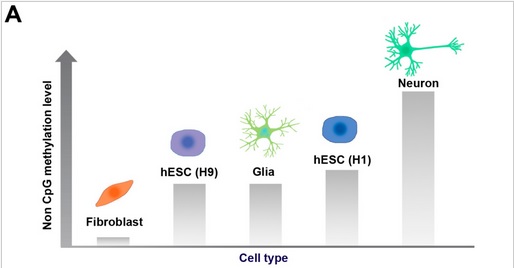
“Non-CpG methylation is restricted to specific cell types, such as pluripotent stem cells, oocytes, neurons, and glial cells. Accumulation of methylation at non-CpG sites and CpG sites in neurons seems to be involved in development and disease etiology.

Non-CpG methylation is established during postnatal development of the hippocampus and its levels increase over time. Similarly, non-CpG methylation is scarcely detected in human fetal frontal cortex, but is dramatically increased in later life. This increase in non-CpG methylation occurs simultaneously with synaptic development and increases in synaptic density.

In contrast, CpG methylation occurs during early development and does not increase over time.

Neurons have considerably higher levels of non-CpG methylation than glial cells. The human male ES [embryonic stem] cell line (H1) is more highly methylated than the female ES cell line (H9).

Among the different types of non-CpG methylation (CpA [adenosine], CpT [thymine], and CpC [another cytosine]), methylation is most common at CpA sites. For instance, in human iPS [induced pluripotent stem] cells, 5mCs are found in approximately 68.31%, 7.81%, 1.99%, and 1.05% of CpG, CpA, CpT, and CpC sites, respectively.”


The reviewers’ referenced statement:

“CpG methylation occurs during early development and does not increase over time.”

was presented outside of its context. The 2013 cited source’s statement was restricted to “selected loci” in the rodent hippocampus:

“Consistent with a recent study of the cortex, time-course analyses revealed that CpH [non-CpG] methylation at the selected loci was established during postnatal development of the hippocampus and was then present throughout life, whereas CpG methylation was established during early development.”

Epigenetic study methodologies improved in 2017 had more information on CpA methylation.

http://www.mdpi.com/2073-4425/8/6/148/htm “CpG and Non-CpG Methylation in Epigenetic Gene Regulation and Brain Function”

Differing approaches to a life wasted on beliefs

Let’s start by observing that people structure their lives around beliefs. As time goes on, what actions would a person have taken to ward off non-confirming evidence?

One response may be that they would engage in ever-increasing efforts to develop new beliefs that justified how they spent their one precious life’s time so far.

Such was my take on beliefs embedded in https://www.ncbi.nlm.nih.gov/pmc/articles/PMC5684598/pdf/PSYCHIATRY2017-5491812.pdf “Epigenetic and Neural Circuitry Landscape of Psychotherapeutic Interventions”:

“Animal models have shown the benefits of continued environmental enrichment (EE) on psychopathological phenotypes, which carries exciting translational value.

This paper posits that psychotherapy serves as a positive environmental input (something akin to EE).”

The author conveyed his belief that wonderful interventions were going to happen in the future. However, when scrutinized, most human studies have demonstrated NULL effects of psychotherapeutic interventions on causes. Without sound evidence that treatments affect causes, his belief seemed driven by something else.

The author cited findings of research like A problematic study of oxytocin receptor gene methylation, childhood abuse, and psychiatric symptoms as supporting external interventions to tamp down symptoms of patients’ presenting problems. Did any of the 300+ cited references concern treatments where patients instead therapeutically addressed their problems’ root causes?


For an analogous religious example, a person’s belief caused him to spend years of his life trying to convince men to act so that they could get their own planet after death, and trying to convince women to latch onto men who had this belief. A new and apparently newsworthy belief developed from his underlying causes:

“The founder and CEO of neuroscience company Kernel wants “to expand the bounds of human intelligence.” He is planning to do this with neuroprosthetics; brain augmentations that can improve mental function and treat disorders. Put simply, Kernel hopes to place a chip in your brain.

He was raised as a Mormon in Utah and it was while carrying out two years of missionary work in Ecuador that he was struck by what he describes as an “overwhelming desire to improve the lives of others.”

He suffered from chronic depression from the ages of 24 to 34, and has seen his father and stepfather face huge mental health struggles.”

https://www.theguardian.com/small-business-network/2017/dec/14/humans-20-meet-the-entrepreneur-who-wants-to-put-a-chip-in-your-brain “Humans 2.0: meet the entrepreneur who wants to put a chip in your brain”

The article stated that he had given up Mormonism. There was nothing to suggest, though, that he had therapeutically addressed any underlying causes for his misdirected thoughts, feelings, and behavior.

So he developed other beliefs instead.


What can people do to keep their lives from being wasted on beliefs? As mentioned in What was not, is not, and will never be:

“The problem is that spending our time and efforts on these ideas, beliefs, and behaviors won’t ameliorate their motivating causes. Our efforts only push us further away from our truths, with real consequences: a wasted life.

The goal of the therapeutic approach advocated by Dr. Arthur Janov’s Primal Therapy is to remove the force of presenting problems’ motivating causes. Success in reaching this goal is realized when patients become better able to live their own lives.

Experience-induced transgenerational programming of neuronal structure and functions

The second paper of Transgenerational epigenetic inheritance week was a 2017 German/Israeli review focused on:

“The inter- and transgenerational effects of stress experience prior to and during gestation..the concept of stress-induced (re-)programming in more detail by highlighting epigenetic mechanisms and particularly those affecting the development of monoaminergic transmitter systems, which constitute the brain’s reward system.

We offer some perspectives on the development of protective and therapeutic interventions in cognitive and emotional disturbances resulting from preconception and prenatal stress.”

The reviewers noted that human studies have difficulties predicting adult responses to stress that are based on gene expression and early life experience. Clinical studies that experimentally manipulate the type, level and timing of the stressful exposure aren’t possible. Clinical studies are also predicated on the symptoms being recognized as disorders and/or diseases.

The researchers noted difficulties in human interventions and treatments. Before and during pregnancy, and perinatal periods are where stress effects are largest. But current human research hasn’t gathered sufficient findings to develop practical guidelines for early intervention programs.


I’m not persuaded by arguments that cite the difficulties of performing human research on transgenerational epigenetic inheritance. There are overwhelming numbers of people who have obvious stress symptoms: these didn’t develop in a vacuum.

Researchers:

  • Design human studies to test what’s known from transgenerational epigenetic inheritance animal studies that will include documenting the subjects’ detailed histories with sufficient biometric samples and data obtained from their lineage.
  • Induce pregnant subjects to at least temporarily avoid what’s harmful for them and/or the offspring, in favor of what’s beneficial.
  • Document the subjects’ actions with history and samples.

I acknowledge that economic incentives may not be enough to get people to participate. I’m familiar with a juvenile sickle-cell study that didn’t get enough subjects despite offering free transportation and hundreds of dollars to the caregivers per visit. The main problem seemed to be that the additional income would be reported and threaten the caregivers’ welfare benefits.

Stop whining that your jobs are difficult, researchers. Society doesn’t owe you a job. EARN IT – get yourself and the people in your organization motivated to advance science!

http://www.sciencedirect.com/science/article/pii/S014976341630731X “Experience-induced transgenerational (re-)programming of neuronal structure and functions: Impact of stress prior and during pregnancy” (not freely available)

Epigenetic effects of early life stress exposure

This 2017 Netherlands review subject was the lasting epigenetic effects of early-life stress:

“Exposure to stress during critical periods in development can have severe long-term consequences.

One of the key stress response systems mediating these long-term effects of stress is the hypothalamic-pituitary-adrenal (HPA) axis.

Early life stress (ELS) exposure has been reported to have numerous consequences on HPA-axis function in adulthood.

ELS is able to “imprint” or “program” an organism’s neuroendocrine, neural and behavioral responses to stress. Research focuses along two complementary lines:

  1. ELS during critical stages in brain maturation may disrupt specific developmental processes (by altered neurotransmitter exposure, gene transcription, or neuronal differentiation), leading to aberrant neural circuit function throughout life.
  2. ELS may induce modifications of the epigenome which lastingly affect brain function.

These epigenetic modifications are inducible, stable, and yet reversible, constituting an important emerging mechanism by which transient environmental stimuli can induce persistent changes in gene expression and ultimately behavior.”


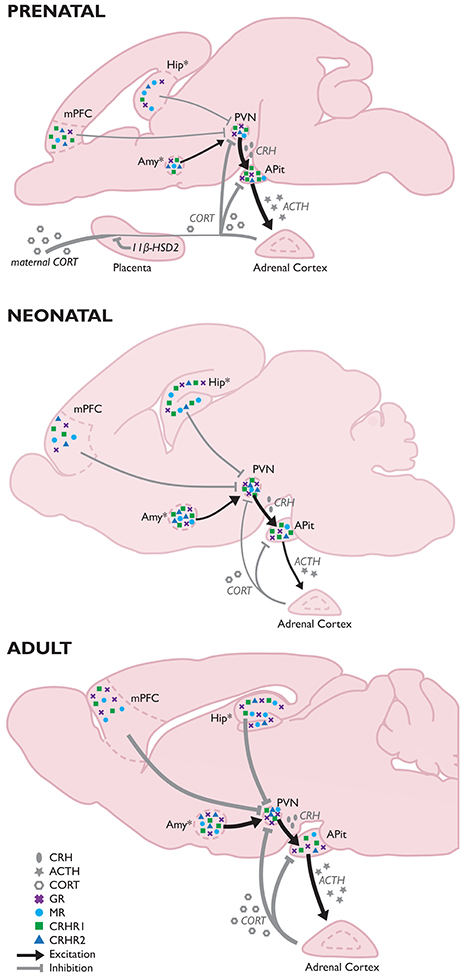
In early life, the lower brain and limbic system brain structures are more developed and dominant, whereas the cerebrum is less developed (use the above rodent graphic as a rough guide). Stress and pain generally have a greater impact on a fetus than an infant, and a greater impact on an infant than an adult.

The reviewers cited 50+ studies from years 2000-2015 in the “Early Life Stress Effects in a “Matching” Stressful Adult Environment” section to argue for the match / mismatch theory:

“Encountering ELS prepares an organism for similar (“matching”) adversities during adulthood, while a mismatching environment results in an increased susceptibility to psychopathology, indicating that ELS can exert either beneficial or disadvantageous effects depending on the environmental context.

Initial evidence for HPA-axis hypo-reactivity is observed for early social deprivation, potentially reflecting the abnormal HPA-axis function as observed in post-traumatic stress disorder.

Experiencing additional (chronic) stress in adulthood seems to normalize these alterations in HPA-axis function, supporting the match / mismatch theory.”

Evidence for this theory was contrasted with the allostatic load theory presented in How one person’s paradigms regarding stress and epigenetics impedes relevant research.


The review mainly cited evidence from rodent studies that mismatched reactions in adulthood may be consequences of early-life events. These events:

“Imprint or program an organism’s neuroendocrine, neural and behavioral responses..leading to aberrant neural circuit function throughout life..which lastingly affect brain function.”

Taking this research to a personal level:

  • Have you had feelings that you were unsafe, although your environment was objectively safe?
  • Have you felt uneasy when people are nice to you?
  • Have you felt anxious when someone pays attention to you, even after you’ve acted to gain their attention?

Mismatched human feelings are one form of mismatched reactions. These may be consequences of early-life experiences, and indicators of personal truths.

If researchers can let go of their biases and Advance science by including emotion in research, they may find that human subjects’ feelings produce better evidence for what actually happened during the subjects’ early lives than do standard scientific methods of:

Incorporating feeling evidence may bring researchers and each individual closer to discovering the major insults that knocked their development processes out of normally robust pathways and/or induced “persistent changes in gene expression and ultimately behavior.”

https://www.frontiersin.org/articles/10.3389/fncel.2017.00087/full “Modulation of the Hypothalamic-Pituitary-Adrenal Axis by Early Life Stress Exposure”


I came across this review as a result of it being cited in http://www.sciencedirect.com/science/article/pii/S1084952117302884 “Long-term effects of early environment on the brain: Lesson from rodent models” (not freely available)

A study of perinatal malnutrition where the paradigm excluded epigenetic inheritance

This 2017 New York/Swedish rodent study subject was the epigenetic effects on the F1 children of maternal low protein diet during pregnancy and lactation:

“Male, but not female, offspring of LPD [low protein diet] mothers consistently displayed anxiety– and depression-like behaviors under acute stress.

Our proposed pathway connecting early malnutrition, sex-independent regulatory changes in Egr1 [an Early growth response gene], and sex-specific epigenetic reprogramming of its effector gene, Npy1r [neuropeptide Y receptor Y1 gene], represents the first molecular evidence of how early life risk factors may generate sex-specific epigenetic effects relevant for mental disorders.”


The study was purposely incomplete regarding transgenerational epigenetic effects that may be transmitted from the F1 children to their F2 grandchildren and F3 great-grandchildren. Similar to How one person’s paradigms regarding stress and epigenetics impedes relevant research, the paradigm continued by one of this study’s coauthors restricted inquiry into epigenetic inheritance.

How can the other coauthors respond when a controller of funding publishes the paper referenced in What is epigenetic inheritance? and otherwise makes his narrow views regarding epigenetic inheritance well-known? If the controller’s restricted views won’t allow the funding scope to extend testing to study F2 grandchildren and F3 great-grandchildren, the experiments end, and our understanding of epigenetic inheritance isn’t advanced.

This purposely incomplete study showed that the coauthor only gave lip service to advancing science when he made statements like:

“Further work is needed to understand whether and to what extent true epigenetic inheritance of stress vulnerability adds to the well-established and powerful influence of genetics and environmental exposures.”

The papers of Transgenerational epigenetic inheritance week show the spectrum of opportunities to advance science that were intentionally missed.

https://www.nature.com/articles/s41598-017-10803-2 “Perinatal Malnutrition Leads to Sexually Dimorphic Behavioral Responses with Associated Epigenetic Changes in the Mouse Brain”

A gaping hole in a review of nutritional psychiatry

This December 2016 Australian review published in September 2017 concerned:

“..the nutritional psychiatry field..the neurobiological mechanisms likely modulated by diet, the use of dietary and nutraceutical interventions in mental disorders, and recommendations for further research.”


The reviewers inexplicably omitted acetyl-L-carnitine, which I first covered in A common dietary supplement that has rapid and lasting antidepressant effects. A PubMed search on “acetyl carnitine” showed over a dozen studies from the past twelve months that were relevant to the review’s subject areas. Here’s a sample, beginning with follow-on research published in June 2016 of the study I linked above:

Reply to Arduini et al.: Acetyl-l-carnitine and the brain: Epigenetics, energetics, and stress

Dietary supplementation with acetyl-l-carnitine counteracts age-related alterations of mitochondrial biogenesis, dynamics and antioxidant defenses in brain of old rats

Neuroprotective effects of acetyl-l-carnitine on lipopolysaccharide-induced neuroinflammation in mice: Involvement of brain-derived neurotrophic factor

ALCAR promote adult hippocampal neurogenesis by regulating cell-survival and cell death-related signals in rat model of Parkinson’s disease like-phenotypes

Analgesia induced by the epigenetic drug, L-acetylcarnitine, outlasts the end of treatment in mouse models of chronic inflammatory and neuropathic pain

The cited references in these recent studies were older, of course, and in the time scope of the review. There’s no excuse for this review’s omission of acetyl-L-carnitine.

https://www.cambridge.org/core/journals/proceedings-of-the-nutrition-society/article/nutritional-psychiatry-the-present-state-of-the-evidence/88924C819D21E3139FBC48D4D9DF0C08 “Nutritional psychiatry: the present state of the evidence” (not freely available)

A one-sided review of stress

The subject of this 2016 Italian/New York review was the stress response:

“The stress response, involving the activation of the hypothalamic-pituitary-adrenocortical [HPA] axis and the consequent release of corticosteroid hormones, is indeed aimed at promoting metabolic, functional, and behavioral adaptations. However, behavioral stress is also associated with fast and long-lasting neurochemical, structural, and behavioral changes, leading to long-term remodeling of glutamate transmission, and increased susceptibility to neuropsychiatric disorders.

Of note, early-life events, both in utero and during the early postnatal life, trigger reprogramming of the stress response, which is often associated with loss of stress resilience and ensuing neurobehavioral (mal)adaptations.”


The reviewers’ intentional dismissal of the role of GABA in favor of the role of glutamate was a key point:

“The changes in neuronal excitability and synaptic plasticity induced by stress are the result of an imbalance of excitatory (glutamatergic) and inhibitory (GABAergic) transmission, leading to long-lasting (mal)adaptive functional modifications. Although both glutamate and GABA transmission are critically associated with stress-induced alteration of neuronal excitability, the present review will focus on the modulation of glutamate release and transmission induced by stress and glucocorticoids.”

No particular reason was given for this bias. I inferred from the review’s final sentence that the review’s sponsors and funding prompted this decision:

“In-depth studies of changes in glutamate transmission and dendrite remodeling induced by stress in early and late life will help to elucidate the biological underpinnings of the (mal)adaptive strategies the brain adopts to cope with environmental challenges in one’s life.”

The bias led to ignoring evidence for areas the reviewers posed as needing further research. An example of relevant research the reviewers failed to consider was the 2015 Northwestern University study I curated in A study that provided evidence for basic principles of Primal Therapy that found:

“In response to traumatic stress, some individuals, instead of activating the glutamate system to store memories, activate the extra-synaptic GABA system and form inaccessible traumatic memories.”

http://www.ncbi.nlm.nih.gov/pmc/articles/PMC4812483/ “Stress Response and Perinatal Reprogramming: Unraveling (Mal)adaptive Strategies”

Epigenetic effects of diet, and reversing DNA methylation

This 2015 French review focused on:

“The role of maternal health and nutrition in the initiation and progression of metabolic and other disorders.

The effects of various in utero exposures and maternal nutritional status may have different effects on the epigenome. However, critical windows of exposure that seem to exist during development need to be better defined.

The epigenome can be considered as an interface between the genome and the environment that is central to the generation of phenotypes and their stability throughout the life course.”

The reviewer used the term “transgenerational” to refer to effects that were more appropriately termed parental or intergenerational. Per the definition in A review of epigenetic transgenerational inheritance of reproductive disease, for the term to apply there needed to be evidence in at least the next 2 male and/or 3 female generations of:

“Altered epigenetic information between generations in the absence of continued environmental exposure.”

The review had separate sections for animal and human studies.

http://www.ncbi.nlm.nih.gov/pmc/articles/PMC4663595/ “Impact of Maternal Diet on the Epigenome during In Utero Life and the Developmental Programming of Diseases in Childhood and Adulthood”


I arrived at the above review as a result of it citing the 2014 Harvard Reversing DNA Methylation: Mechanisms, Genomics, and Biological Functions. I’ll quote a few items from that review’s informative “Role of DNA demethylation in neural development” section:

“Distinct parts of mammalian brains, including frontal cortex, hippocampus, and cerebellum, all exhibit age-dependent acquisition of 5hmC [an oxidized derivative of 5mC [methylation of the fifth position of cytosine]].

In fact, the genome of mature neurons in adult central nervous system contains the highest level of 5hmC of any mammalian cell-type (~40% as abundant as 5mC in Purkinje neurons in cerebellum). These observations indicate that 5mC oxidation and potentially DNA demethylation may be functionally important for neuronal differentiation and maturation processes.

A comprehensive base-resolution analyses of 5mC and 5hmC in mammalian frontal cortex in both fetal and adult stages indicate that non-CpG methylation (mCH) and CpG hydroxymethylation (hCG) drastically build up in cortical neurons after birth, coinciding with the peak of synaptogenesis and synaptic pruning in the cortex. This study demonstrated that mCH could become a dominant form of cytosine modifications in adult brains, accounting for 53% in adult human cortical neuronal genome.

In mature neurons, intragenic mCH is preferentially enriched at inactive non-neuronal lineage-specific genes, indicating a role in negative regulation of the associated transcripts. By contrast, genic hCG is positively correlated with gene expression levels.”

What’s the underlying question for every brain study to answer?

Is the underlying question for every brain study to answer:

  • How do our brains internally represent the external world?

Is it:

  • How did we learn what we know?
  • How do we forget or disregard what we’ve learned?
  • What keeps us from acquiring and learning newer or better information?

How about:

  • What affects how we pay attention to our environments?
  • How do our various biochemical states affect our perceptions, learning, experiences, and behavior?
  • How do these factors in turn affect our biology?

Or maybe:

  • Why do we do what we do?
  • How is our behavior affected by our experiences?
  • How did we become attracted and motivated toward what we like?
  • How do we develop expectations?
  • Why do we avoid certain situations?

Not to lose sight of:

  • How do the contexts affect all of the above?
  • What happens over time to affect all of the above?

This 2015 UCLA paper reviewed the above questions from the perspective of Pavlovian conditioning:

“The common definition of Pavlovian conditioning, that via repeated pairings of a neutral stimulus with a stimulus that elicits a reflex the neutral stimulus acquires the ability to elicit that the reflex, is neither accurate nor reflective of the richness of Pavlovian conditioning. Rather, Pavlovian conditioning is the way we learn about dependent relationships between stimuli.

Pavlovian conditioning is one of the few areas in biology in which there is direct experimental evidence of biological fitness.”


The most important question unanswered by the review was:

  • How can its information be used to help humans?

How can Pavlovian conditioning answer: What can a human do about the thoughts, feelings, behavior, epigenetic effects – the person – the phenotype – that they’ve been shaped into?

One example of the unanswered question: the review pointed out in a section about fear extinction that this process doesn’t involve unlearning. Fear extinction instead inhibits the symptoms of fear response. The fear memory is still intact, awaiting some other context to be reactivated and expressed.

How can this information be used to help humans?

  • Is inhibiting the symptoms and leaving the fear memory in place costless with humans?
  • Or does this practice have both potential and realized adverse effects?
  • Where’s the human research on methods that may directly address a painful emotional memory?

One relevant hypothesis of Dr. Arthur Janov’s Primal Therapy is that a person continues to be their conditioned self until they address the sources of their pain. A corollary is that efforts to relieve symptoms seldom address causes.

How could it be otherwise? A problem isn’t cured by ameliorating its effects.

http://cshperspectives.cshlp.org/content/8/1/a021717.full “The Origins and Organization of Vertebrate Pavlovian Conditioning”

Empathy, value, pain, control: Psychological functions of the human striatum

This 2016 US human study found:

“A link between existing data on the anatomical and physiological characteristics of striatal regions and psychological functions.

Because we did not limit our metaanalysis to studies that specifically targeted striatal function, our results extend previous knowledge of the involvement of the striatum in reward-related decision-making tasks, and provide a detailed functional map of regional specialization for diverse psychological functions, some of which are sometimes thought of as being the exclusive domain of the PFC [prefrontal cortex].”

The analysis led to dividing the striatum into five segments:

Ventral striatum (VS):

  • Stimulus Value
  • Terms such as “reward,” “losses,” and “craving”
  • The most representative study reported that monetary and social rewards activate overlapping regions within the VS.
  • Together with the above finding of a reliable coactivation with OFC [orbitofrontal cortex] and ventromedial PFC, this finding suggests a broad involvement of this area in representing stimulus value and related stimulus-driven motivational states.

Anterior caudate (Ca) Nucleus:

  • Incentive Behavior
  • Terms such as “grasping,” “reaching,” and “reinforcement”
  • The most representative study reported a stronger blood-oxygen level-dependent (BOLD) response in this region during trials in which participants had a chance of winning or losing money in a card guessing game, in comparison to trials where participants merely received feedback about the accuracy of their guess.
  • This result suggests a role in evaluating the value of different actions, contrasting with the above role of the VS in evaluating the value of stimuli.

Posterior putamen (Pp):

  • Sensorimotor Processes
  • Terms such as “foot,” “noxious,” and “taste”
  • The most representative study reported activation of this region in response to painful stimulation at the back of the left hand and foot of participants. Anatomically, the most reliable and specific coactivation is with sensorimotor cortices, and the posterior and midinsula and operculum (secondary somatosensory cortex SII) in particular, some parts of which are specifically associated with pain.
  • Together, these findings suggest a broad involvement of this area in sensorimotor functions, including aspects of their affective qualities.

Anterior putamen (Pa):

  • Social- and Language-Related Functions
  • Terms such as “read,” “vocal,” and “empathic”
  • The most representative study partially supports a role of this area in social- and language-related functions; it reported a stronger activation of the Pa in experienced singers, but not when novices were singing.
  • It is coactivated with frontal areas anterior to the ones coactivated with the Pp, demonstrating topography in frontostriatal associations. These anterior regions have been implicated in language processes.

Posterior caudate (Cp) Nucleus:

  • Executive Functions
  • Terms such as “causality,” “rehearsal,” and “arithmetic”
  • The representative study reported this region to be part of a network that included dorsolateral PFC and ACC, which supported inhibitory control and task set-shifting.
  • These results suggest a broad, and previously underappreciated, role for the Cp in cognitive control.

The authors presented comparisons of the above striatal segments with other analyses of striatal zones.


One of the coauthors was the lead researcher of the 2015 Advance science by including emotion in research. The current study similarly used a coactivation view rather than a connectivity paradigm of:

“Inferring striatal function indirectly via psychological functions of connected cortical regions.”

Another of the coauthors was a developer of the system used by the current study and by The function of the dorsal ACC is to monitor pain in survival contexts, and he provided feedback to those authors regarding proper use of the system.


The researchers’ “unbiased, data-driven approach” had to work around the cortical biases evident in many of the 5,809 human imaging studies analyzed. The authors referred to the biases in statements such as:

“The majority of studies investigating these psychological functions report activity preferentially in cortical areas, except for studies investigating reward-related and motor functions.”

The methods and results of research with cortical biases influenced the study’s use of:

“Word frequencies of psychological terms in the full text of studies, rather than a detailed analysis of psychological tasks and statistical contrasts.”

http://www.pnas.org/content/113/7/1907.full “Regional specialization within the human striatum for diverse psychological functions”