Beyond Belief: What we do instead of getting well

Continuing Dr. Arthur Janov’s May 2016 book Beyond Belief:

“p. 61 Heavy pains with no place to go just pressures the cortex into concocting an idea commensurate with the feeling.

The feeling itself makes no sense since the original feeling has no scene with it nor verbal capacity; it was laid down in a preverbal time without context, save for the feeling itself.

We cling to those ideas as strongly as the feelings driving us are.

Sometimes we argue with someone not realizing that we are battling a defense which is implacable. They don’t want to hear what we have to say. They want to protect their psyche.

p. 63 Suffocation at birth is registered not as an idea, but as a physiologic fact. It becomes an idea when the brain evolves enough to produce ideas. Then it can produce, ‘There is no air in here.’

A slightly stifling atmosphere in the present can set off this great pain and with it an exaggerated response. ‘I have to leave this woman because she stifles me.’

p. 64 It doesn’t matter about the facts we know if we cannot stop drinking or if we cannot maintain a relationship with someone else.

p. 68 My task is to examine why individuals adopt belief systems, whatever they are, and how certain feelings provoke specific kinds of belief systems..to demonstrate how feeling feelings can alter those beliefs without once addressing the beliefs at all.

Deprogramming is not necessary. Probing need is. Resolving feelings seems to render belief systems inoperative.

p. 71 We are a nation and a world of seekers, a people who seek refuge in all manner of beliefs.

p. 75-76 Later in life, equipped with the cortical ability to substitute ideation for feeling, the traumatized baby can call upon a god to save him from his inner pain, even when he doesn’t know where the pain originated, or even that there is pain. He just calls upon a god to watch over him, to see that he gets justice, who won’t let him down, and above all, who will help him make it into life.

p. 106 Neurosis is the only malady on the face of this earth that feels good..numbs the feeling. Numb feels good – not ‘good’ in the absolute sense, just not ‘bad.’

So we settle..we get numbed out and feel no pain and in return, life is blah blah. The person then feels she is not getting anything out of life and seeks out salvation or a guru in one form or another.”


“We are a nation and a world of seekers, a people who seek refuge in all manner of beliefs.” The patient’s story on pages 89 – 105 told of HORRIFIC damages inflicted by believers and the subsequent consequences!

Variations of his story with its adverse childhood experiences could be told by tens of millions of people in the US alone!

Why isn’t the internet flooded with 10+ million similar stories of people who have faced their realities, and effectively addressed the real causes of what’s wrong in their lives?

Said another way: Why is the internet instead flooded with stories of 10+ million people

  • NOT facing their realities,
  • Doing things to prolong their conditions, and
  • Avoiding getting well?

The many reasons why people do things that don’t truly get them well are covered in Beyond Belief and Dr. Janov’s other publications. One obstacle for people who want enduring therapeutic help is the intentional misrepresentation of Primal Therapy.

Every day I look at the results of an automated search that uses “primal therapy” as the search term. Along with the scams and irrelevancies are the “scream” results.

This misrepresentation is addressed here:

“Primal Therapy is not Primal ‘Scream’ Therapy. Primal Therapy is not just making people scream; it was never ‘screaming’ therapy. The Primal Scream was the name of the 1st book by Dr. Janov about Primal Therapy.”

People who perpetuate the “scream” meme are only a few seconds away from search results that would inform them and their readers of accurate representations of Primal Therapy.

What purpose does it serve to misdirect people away from doing something to effectively address the real causes of what’s wrong in their lives?

Beyond Belief: The impact of merciless beatings on beliefs

Continuing with Dr. Arthur Janov’s May 2016 book Beyond Belief:

“p. 17 When someone insults us, we immediately create reasons and rationales for it. We cover the pain. Now imagine a whole early childhood of insults and assaults and how that leaves a legacy that must be dealt with.

The mind of ideas and philosophies doesn’t know it is being used; doesn’t know it serves as a barricade against the danger of feeling.

It is why no one can convince the person out of her ideas. They serve a key purpose and should not be tampered with. We are tampering with a survival function.

p. 19 It seems like a miracle that something as intangible and invisible as an idea has the power to transform our biologic system. It makes us see what doesn’t exist and sometimes not see what does. What greater power exists than that? To be fooled is not only to convince someone to believe the false, but also to convince others to not believe the truth.

The unloved child who cannot bear the terrible feelings of hopelessness shuts down his own feeling centers and grows insensitive, not only to his pain, but to that of others. So he commits the same error on his child that was visited upon him, and he does so because of the way he was unloved early on. He cannot see his own hopelessness or that of his child.

p. 56 All defensive beliefs must have a kernel of hope inside of them. It is the embedded hopelessness that gives rise to its opposite – hope – and its accompanying biochemistry of inhibition or gating.

To be even more precise, it is the advent of pain surrounding hopelessness that produces the belief entwined with hope. All defensive belief serves the same function – repression, absorbing the energy of pain.

p. 57 An unloved child is a potential future believer.

p. 58 NO ONE HAS THE ANSWER TO LIFE’S QUESTIONS BUT YOU. How you should lead your life depends on you, not outside counsel.

We do not direct patients, nor dispense wisdom upon them. We have only to put them in touch with themselves; the rest is up to them.

Everything the patient has to learn already resides inside. The patient can make herself conscious. No one else can.”


“p. 29 The personal experience stories throughout the book are written by my patients and, with the exception of a few grammatical corrections, they are presented here exactly as they were given to me.”

All of the Primal Therapy patients’ stories started with HORRENDOUS childhoods that produced correspondingly strong beliefs!

I came across a public figure example today in 10 Defining Moments In The Childhood Of Martin Luther King Jr. The author included two items germane to an understanding of how beliefs may develop from adverse childhood experiences:

  • 8. King Sr. “Would beat Martin and his brother, Alfred, senseless for any infraction, usually with a belt.”
  • 6. “By the time King was 13, he’d tried to kill himself twice.”

Every reference I found tied King Jr.’s suicide attempts to his grandmother’s death. What an implausible narrative!

A whole early childhood of insults and assaultscertainly had more to do with the causes for his preteen suicide attempts.

Consider a child’s feelings of helplessness, worthlessness, pain, and betrayal when the people who are supposed to love them are cruel to them instead. Feelings like what I expressed in Reflections on my four-year anniversary of spine surgery.

Consider the appeal of escaping from this life when “The unloved child cannot bear the terrible feelings of hopelessness.”

Granted that it’s only the patient who can put together what happened in their life so that it’s therapeutic. Beyond Belief and Dr. Janov’s other publications outline the framework.

Beyond Belief: Why do we accept being propagandized?

Continuing to read Dr. Arthur Janov’s May 2016 book Beyond Belief:

“p.13 Beliefs are medicine for the hopeless. They attenuate despair, vitiate loneliness, and dissipate helplessness.

p. 14 We need hope more than we need truth. Beliefs divert us from past traumas and current pains because inside the belief lies hope.

p.15 Hope is ‘the meaning of life.’ It shimmers and sparkles and blinds us from seeing the bars of our prisons of belief.

We are all, in one way or another, victims of early unfulfilled need. Never think that intelligence prohibits this kind of behavior.

We search for hope here and there based on early hopelessness of which we are unaware. Nothing in one’s current life points to the problem, and nothing even in one’s childhood clarifies it.

One’s expectations may exceed reality when feelings are thrust into the arena of ideas. One no longer sees reality, but rather a projection of need.”


“We need hope more than we need truth.” Is this part of why we accept headlines as facts, and don’t pay attention to the stories’ subsequent corrections? Why do we accept as facts news articles that don’t link to the cited sources?

I had dinner earlier this week with an intelligent woman. She mentioned that she constantly listened to National Public Radio. I asked her what value she got from it, and she replied that it kept her current with events.

I asked what other news sources she sought out. She said that she didn’t usually have the time, and that NPR was a reliable source.

I didn’t further challenge her beliefs. It’s up to each individual to realize that their beliefs are symptoms of what’s ruining their one precious life.

Last weekend I engaged in essentially the same conversation over lunch with another intelligent woman who relied on conservative news sources. She also became defensive, and ended that part of our conversation as a matter of “agreeing to disagree.”

Why does intelligence seem to have little to do with accepting being propagandized?

Beyond Belief: Symptoms of hopelessness

I’ve started to read Dr. Arthur Janov’s May 2016 book Beyond Belief. Here are a few thoughts I’ve expressed to friends that were prompted by the first dozen pages of the paperback version.

“p. 5 We need a painless liberation from our insidious emotional wounds..a leader who will take the place of an emotionally distant parent for whom we will sacrifice anything just for the promise of love, protection, and caring.”

The elections of the past two presidents were symptoms of the hopelessness that most Americans feel. Both elections promised hope.

“p. 6 Beliefs sell and sell well. People will pay dearly for even the promise of fulfillment, even if it is in the next life.”

Religion can have a much worse and lasting effect on people than any politician or political system can. Politicians can drag out and delay living up to their promises.

Religious leaders don’t have to deliver much at all during their followers’ lives. In fact, it works in the leaders’ favor to minimally address their followers’ current sufferings, as that strengthens the appeal of the imaginary next life!


The past three weeks I’ve gone to 7-11 to get a morning coffee. More often than not, I see people buying lottery tickets during the 2-3 minutes when I’m there.

What accounts for this behavior? Not everyone who buys a lottery ticket is innumerate.

I’d guess that it’s a symptom of hopelessness. Feelings of hopelessness cause us to generate a faith that an exceedingly-improbable event will benefit our life. Lottery-ticket behavior follows.

State governments are responsible for these lotteries. It’s one of the ways governments prey upon their citizens’ feelings of hopelessness.

I once worked as a contractor in a government office where everyone except me pooled money every week to buy lottery tickets. I was also the only nonreligious person there.

Coincidence?

Epigenetics account for two-thirds of Alzheimer’s disease

The genetics percentage from a 2017 summary of Alzheimer’s disease research caught my eye:

“Although numerous single nucleotide polymorphisms (SNPs) have now been robustly associated with AD via genome-wide association studies and subsequent meta-analyses, collectively these common SNPs are believed to only account for 33% of attributable risk and the mechanism behind their action remains largely unknown.”

This citation aligned with other studies’ findings per Using twins to estimate the extent of epigenetic effects that on cellular levels, our experiences account for two-thirds of who we are.


The promise of this category of epigenetics research?

“One of the most exciting aspects of identifying disease-associated epigenomic dysfunction is that these mechanisms are potentially reversible.”

Let’s make research on reversing epigenetic changes a priority for funding, and get studies underway here in 2017!

https://www.epigenomicsnet.com/users/27784-katie-lunnon/posts/14634-robust-evidence-for-dna-methylomic-variation-in-alzheimer-s-disease “Robust evidence for DNA methylomic variation in Alzheimer’s disease” (Registration required)

On Primal Therapy with Drs. Art and France Janov

Experiential feeling therapy addressing the pain of the lack of love.

Genetic imprinting, sleep, and parent-offspring conflict

This 2016 Italian review subject was the interplay of genetic imprinting and sleep regulation:

“Sleep results from the synergism between at least two major processes: a homeostatic regulatory mechanism that depends on the accumulation of the sleep drive during wakefulness, and a circadian self-sustained mechanism that sets the time for sleeping and waking throughout the 24-hour daily cycle.

REM sleep apparently contravenes the restorative aspects of sleep; however, the function of this ‘paradoxical’ state remains unknown. Although REM sleep may serve important functions, a lack of REM sleep has no major consequences for survival in humans; however, severe detrimental effects have been observed in rats.

Opposite imprinting defects at chromosome 15q11–13 are responsible for opposite sleep phenotypes as well as opposite neurodevelopmental abnormalities, namely the Prader-Willi syndrome (PWS) and the Angelman syndrome (AS). Whilst the PWS is due to loss of paternal expression of alleles, the AS is due to loss of maternal expression.

Maternal additions or paternal deletions of alleles at chromosome 15q11–13 are characterized by temperature control abnormalities, excessive sleepiness, and specific sleep architecture changes, particularly REM sleep deficits. Conversely, paternal additions or maternal deletions at chromosome 15q11–13 are characterized by reductions in sleep and frequent and prolonged night wakings.

The ‘genomic imprinting hypothesis of sleep’ remains in its infancy, and several aspects require attention and further investigation.”

http://journals.plos.org/plosgenetics/article?id=10.1371/journal.pgen.1006004 “Genomic Imprinting: A New Epigenetic Perspective of Sleep Regulation”


A commenter to the review referenced a 2014 study Troubled sleep: night waking, breastfeeding, and parent–offspring conflict that received several reactions, including one by the same commenter. Here are a few quotes from the study author’s consolidated response:

“‘Troubled sleep’ had two major purposes. The first was to draw attention to the oppositely perturbed sleep of infants with PWS and AS and explore its evolutionary implications. The involvement of imprinted genes suggests that infant sleep has been subject to antagonistic selection on genes of maternal and paternal origin with genes of maternal origin favoring less disrupted sleep.

My second major purpose was a critique of the idea that children would be happier, healthier and better-adjusted if we could only return to natural methods of child care. This way of thinking is often accompanied by a belief that modern practices put children at risk of irrevocable harm.

The truth of such claims is ultimately an empirical question, but the claims are sometimes presented as if they had the imprimatur of evolutionary biology. This appeal to scientific authority often seems to misrepresent what evolutionary theory predicts: that which evolves is not necessarily that which is healthy.

Why should pregnancy not be more efficient and more robust than other physiological systems, rather than less? Crucial checks, balances and feedback controls are lacking in the shared physiology of the maternal–fetal unit.

Infant sleep may similarly lack the exquisite organization of systems without evolutionary conflict. Postnatal development, like prenatal development, is subject to difficulties of evolutionarily credible communication between mothers and offspring.”

The author addressed comments related to attachment theory:

“Infants are classified as having insecure-resistant attachment if they maintain close proximity to their mother after a brief separation while expressing negative emotions and exhibiting contradictory behaviors that seem to both encourage and resist interaction. By contrast, infants are classified as having insecure-avoidant attachment if they do not express negative emotion and avoid contact with their mother after reunion.

Insecure-avoidant and insecure-resistant behaviors might be considered antithetic accommodations of infants to less responsive mothers; the former associated with reduced demands on maternal attention, the latter with increased demands. A parallel pattern is seen in effects on maternal sleep. Insecure-avoidant infants wake their mothers less frequently, and insecure-resistant infants more frequently, than securely attached infants.

Parent–child interactions are transformed once children can speak. Infants with more fragmented sleep at 6 months had less language at 18 and 30 months.

Infants with AS have unconsolidated sleep and never learn to speak. The absence of language in the absence of expression of one or more MEGs [maternally expressed imprinted genes] is compatible with a hypothesis in which earlier development of language reduces infant demands on mothers.”

Regarding cultural differences:

“China, Taiwan and Hong Kong have both high rates of bed-sharing and high rates of problematic sleep compared with western countries. Within this grouping, however, more children sleep in their own room but parents report fewer sleep problems in Hong Kong than in either China or Taiwan.

Clearly, cultural differences are significant, and the causes of this variation should be investigated, but the differences cannot be summarized simply as ‘west is worst’.

The fitness [genetic rather than physical fitness] gain to mothers of an extra child and the benefits for infants of longer IBIs [interbirth intervals] are substantial. These selective forces are unlikely to be orders of magnitude weaker than the advantages of lactase persistence, yet the selective forces associated with dairying have been sufficient to result in adaptive genetic differentiation among populations.

The possibility of gene–culture coevolution should not be discounted for behaviors associated with infant-care practices.”

Regarding a mismatch between modern and ancestral environments:

“I remain skeptical of a tendency to ascribe most modern woes to incongruence between our evolved nature and western cultural practices. We did not evolve to be happy or healthy but to leave genetic descendants, and an undue emphasis on mismatch risks conflating health and fitness.

McKenna [a commenter] writes ‘It isn’t really nice nor maybe even possible to fool mother nature.’ Here I disagree. Our genetic adaptations often try to fool us into doing things that enhance fitness at costs to our happiness.

Our genes do not care about us and we should have no compunction about fooling them to deliver benefits without serving their ends. Contraception, to take one obvious example, allows those who choose childlessness to enjoy the pleasures of sexual activity without the fitness-enhancing risk of conception.

Night waking evolved in environments in which there were strong fitness costs from short IBIs and in which parents lacked artificial means of birth-spacing. If night waking evolved because it prolonged IBIs, then it may no longer serve the ends for which it evolved.

Nevertheless, optimal infant development might continue to depend on frequent night feeds as part of our ingrained evolutionary heritage.

It could also be argued that when night waking is not reinforced by feeding, and infants sleep through the night, then conflict within their genomes subsides. Infants would then gain the benefit of unfragmented sleep without the pleiotropic costs of intragenomic conflict. Plausible arguments could be presented for either hypothesis and a choice between them must await discriminating evidence.”


Commenters on the 2014 study also said:

[Crespi] The profound implications of Haig’s insights into the roles of evolutionary conflicts in fetal, infant and maternal health are matched only by the remarkable absence of understanding, appreciation or application of such evolutionary principles among the research and clinical medical communities, or the general public.

[Wilkins] A mutation may be selected for its effect on the trait that is the basis of the conflict, but that mutation also likely affects other traits. In general, we expect that these pleiotropic effects to be deleterious: conflict over one trait can actually drive other traits to be less adapted. Natural selection does not necessarily guarantee positive health outcomes.

[McNamara] Assuming that AS/REM is differentially influenced by genes of paternal origin then both REM properties and REM-associated awakenings can be better explained by mechanisms of genomic conflict than by traditional claims that REM functions as an anti-predator ‘sentinel’ for the sleeping organism.

[Hinde] Given this context of simultaneous coordination and conflict between mother and infant, distinguishing honest signals of infant need from self-interested, care-extracting signals poses a challenge.

Why drugs aren’t ultimately therapeutic

This 2016 Oregon review’s concept was the inadequacy of drug-based therapies, explored with the specific subject of epilepsy:

“Currently used antiepileptic drugs:

  • [aren’t] effective in over 30% of patients
  • [don’t] affect the comorbidities of epilepsy
  • [don’t] prevent the development and progression of epilepsy (epileptogenesis).

Prevention of epilepsy and its progression [requires] novel conceptual advances.”

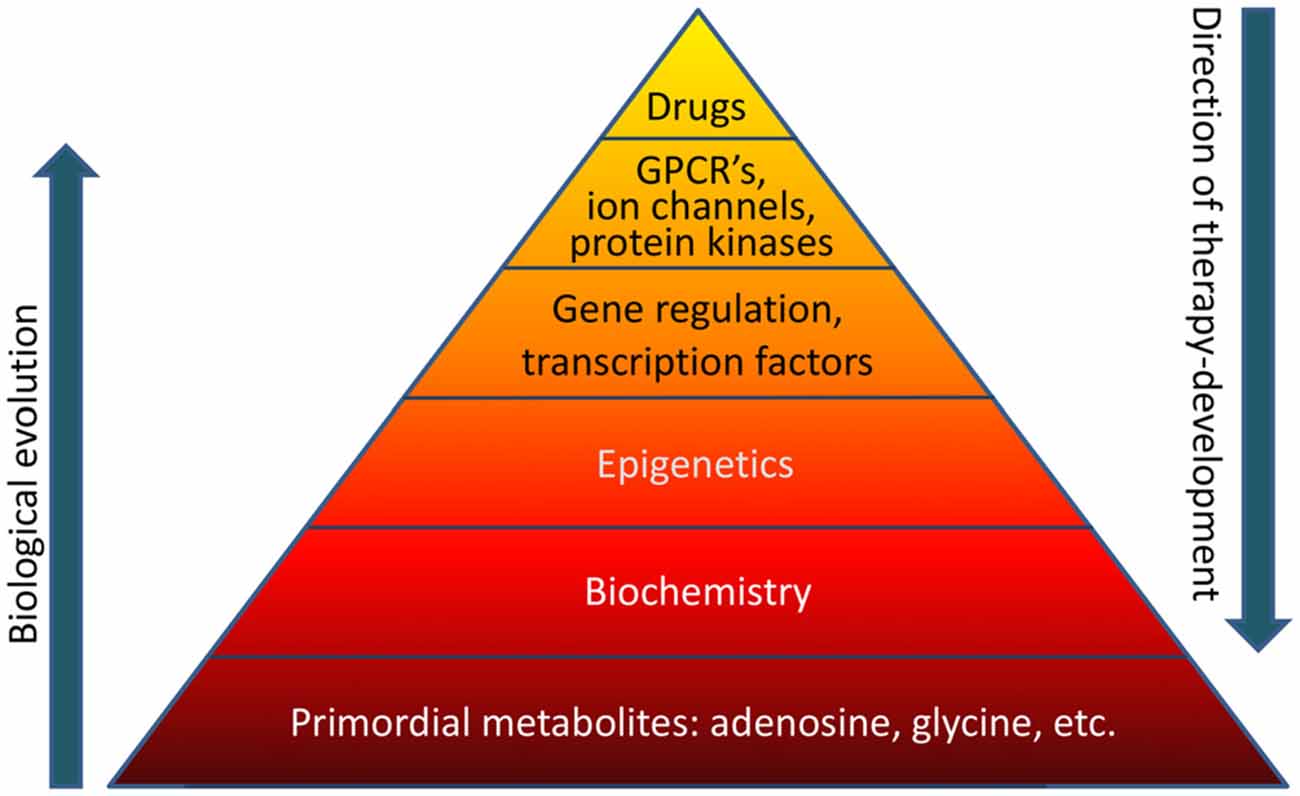
The overall concept that current drug-based therapies poorly address evolutionary biological realities was illustrated by a pyramid, with the comment that:

“If the basis of the pyramid depicted in Figure 1 is overlooked, it becomes obvious that a traditional pharmacological top-down treatment approach has limitations.”

Why drug ultimately aren't therapeutic


I would have liked the reviewer to further address the “therapeutic reconstruction of the epigenome” point he made in the Abstract:

“New findings based on biochemical manipulation of the DNA methylome suggest that:

  1. Epigenetic mechanisms play a functional role in epileptogenesis; and
  2. Therapeutic reconstruction of the epigenome is an effective antiepileptogenic therapy.”

As it was, the reviewer lapsed into the prevalent belief that the causes of and cures for human diseases will always be found on the molecular level – for example, the base of the above pyramid – and never in human experiences. This preconception leads to discounting human elements – notably absent in the above pyramid – that generate epigenetic changes.

A consequence of ignoring experiential causes of diseases is that the potential of experiential therapies to effect “therapeutic reconstruction of the epigenome” isn’t investigated.

http://journal.frontiersin.org/article/10.3389/fnmol.2016.00026/full “The Biochemistry and Epigenetics of Epilepsy: Focus on Adenosine and Glycine”

Using salivary microRNA to diagnose autism

This 2016 New York human study found:

“Measurement of salivary miRNA in this pilot study of subjects with mild ASD [autism spectrum disorder] demonstrated differential expression of 14 miRNAs that are:

  • expressed in the developing brain,
  • impact mRNAs related to brain development, and
  • correlate with neurodevelopmental measures of adaptive behavior.”

Some problems with current diagnostic methods for autism are:

“The first sign of ASD commonly recognized by pediatricians is a deficit in communication and language that does not manifest until 18–24 months of age.

The mean age of diagnosis for children with ASD is 3 years, and approximately half of these are false-positives.

Despite a substantial genetic component, no single gene variant accounts for >1 % of ASD incidence.

Nearly 2000 individual genes have been implicated in ASD, but none are specific to the disorder.”

Study limitations included:

“Aside from the sample size and cross-sectional nature of this pilot study, another limitation is the age of ASD and control subjects it describes (4–14 years) which are not representative of the target population in which ASD biomarkers would ideally be utilized (0–2 years). However, selecting a homogenous group of subjects with mild ASD (as measured by ADOS) that was well-established and diagnosed by a developmental specialist requires subjects with long-standing diagnoses.”


Understanding later-life consequences of disrupted neurodevelopment is critical for tracing symptoms back to their causes, as noted in Grokking an Adverse Childhood Experiences (ACE) score. I wonder how long it will take for researchers in other fields to stop wasting resources and do what this study did: focus on epigenetic biomarkers that have developmental origins.

http://bmcpediatr.biomedcentral.com/articles/10.1186/s12887-016-0586-x “Salivary miRNA profiles identify children with autism spectrum disorder, correlate with adaptive behavior, and implicate ASD candidate genes involved in neurodevelopment”

Contending with epigenetic consequences of violence to women

This 2016 UK review subject was the interplay of genomic imprinting and intergenerational epigenetic information transfer:

“A range of evolutionary adaptations associated with placentation transfers disproportionate control of this process to the matriline, a period unique in mammalian development in that there are three matrilineal genomes interacting in the same organism at the same time (maternal, foetal, and postmeiotic oocytes).

Genomic imprinting is absent in egg laying mammals and only around 6 imprinted genes have been detected in a range of marsupial species; this is in contrast to eutherian mammals where around 150 imprinted genes have been described.

The interactions between the maternal and developing foetal hypothalamus and placenta can provide a template by which a mother can transmit potentially adaptive information concerning potential future environmental conditions to the developing brain.

In circumstances either where the early environment provides inaccurate cues to the environmental conditions prevailing when adult due to rapid environmental change or when disruptions to normal neural development occur, the mismatch between the environmental predictions made during early development and subsequent reality may mean that an organism may have a poorly adapted phenotype to its adult environment. An appreciation of these underlying evolutionary salient processes may provide a novel perspective on the [causal] mechanisms of a range of health problems.

The concept of a brain that is not pathological in the classical sense but it is simply mismatched to its environment has been most extensively studied in the context of ancestral and early developmental nutrition. However, this concept can be extended to provide insights into the development of a range of alternative neural phenotypes.”

The review’s final sentence was:

“Examination of the adaptive potential of a range of neural and cognitive deficits in the context of evolutionary derived foetocentric brain and placental development, epigenetics and environmental adaptation may provide novel insights into the development and potential treatment of a range of health, neurological, and cognitive disorders.”

One of the reviewers was cited in Epigenetic DNA methylation and demethylation with the developing fetus, which the review cited along with Epigenetic changes in the developing brain change behavior.


Researchers who avoid hypotheses that can’t be proven wrong could certainly test the subject matter of this review if they investigated their subjects’ histories.

For example, let’s say a patient/subject had symptoms where the “150 imprinted genes” were implicated. What are the chances a clinician or researcher would be informed by this review’s material and investigate the mother’s and grandmother’s histories?

For clinicians or researchers who view histories as irrelevant busywork: How many tens of millions of people alive today have mothers who were fetuses when their grandmothers were adversely affected by violence? Wouldn’t it be appropriate to assess possible historical contributions of:

“The mismatch between the environmental predictions made during early development and subsequent reality”

to the patient’s/subject’s current symptoms?

http://www.hindawi.com/journals/np/2016/6827135/ “Placental, Matrilineal, and Epigenetic Mechanisms Promoting Environmentally Adaptive Development of the Mammalian Brain”

A human study of pain avoidance

This 2016 UK human study found:

“People differ in how they learn to avoid pain, with some individuals refraining from actions that resulted in painful outcomes, whereas others favor actions that helped prevent pain.

Learning in our task was best explained as driven by an outcome prediction error that reflects the difference between expected and actual outcomes. Consistent with the expression of such a teaching signal, blood-oxygen level-dependent (BOLD) responses to outcomes in the striatum were modulated by expectation.

Positive learners showed significant functional connectivity between the insula and striatal regions, whereas negative learners showed significant functional connectivity between the insula and amygdala regions.

The degree to which a participant tended to learn from success in avoiding than experiencing shocks was predicted by the structure of a participants’ striatum, specifically by higher gray matter density where the response to shocks was consistent with a prediction error signal.

Higher gray matter density in the putamen (and lower gray matter density in the caudate) predicted better learning from shocks and poorer learning from success in avoiding shocks.”

The researchers termed the subjects’ pain responses “learning” instead of conditioning. The difference between the two terms in the experimental contexts was that the subjects weren’t presented with 100%-certain choices to avoid pain.

The experiments were also rigged to force choices at similar rates among subjects because:

“Participants who learned more from painful outcomes developed a propensity to avoid gambling, whereas participants who learned more from success in preventing pain developed a propensity to gamble.”


Human responses to pain don’t arise out of nowhere. The subjects’ pain histories were clearly relevant, but weren’t investigated.

The closest the study came to considering the subjects’ histories was:

“Before the experiment, participants completed an 80-item questionnaire composed of several measures of different mood and anxiety traits. Age, sex and mood and anxiety traits did not differ between participants later classified as positive and negative learners.”

Emotional content was neither included nor solicited. Emotions were inferred:

“Participants biased in favor of passive avoidance learning (i.e., learning what gambles should be avoided), striatal response to painful outcomes was consistent with an aversive prediction error, as seen in fear conditioning.”

As a result, there weren’t causal explanations for the subjects’ differing pain responses. How, when, and why did the behavioral, functional, and structural differences develop?


I didn’t see the level of detail needed to characterize striatal regions into the Empathy, value, pain, control: Psychological functions of the human striatum segments. I’d guess that the findings of “higher gray matter density in the putamen (and lower gray matter density in the caudate)” applied to the posterior putamen and the anterior caudate nucleus.

Two of the coauthors were also coauthors of If a study didn’t measure feelings, then its findings may not pertain to genuine empathy which I rated < 0 Detracted from science. The technique of Why do we cut short our decision-making process? was referenced.

http://www.pnas.org/content/early/2016/04/06/1519829113.full “Striatal structure and function predict individual biases in learning to avoid pain”

A one-sided review of stress

The subject of this 2016 Italian/New York review was the stress response:

“The stress response, involving the activation of the hypothalamic-pituitary-adrenocortical [HPA] axis and the consequent release of corticosteroid hormones, is indeed aimed at promoting metabolic, functional, and behavioral adaptations. However, behavioral stress is also associated with fast and long-lasting neurochemical, structural, and behavioral changes, leading to long-term remodeling of glutamate transmission, and increased susceptibility to neuropsychiatric disorders.

Of note, early-life events, both in utero and during the early postnatal life, trigger reprogramming of the stress response, which is often associated with loss of stress resilience and ensuing neurobehavioral (mal)adaptations.”


The reviewers’ intentional dismissal of the role of GABA in favor of the role of glutamate was a key point:

“The changes in neuronal excitability and synaptic plasticity induced by stress are the result of an imbalance of excitatory (glutamatergic) and inhibitory (GABAergic) transmission, leading to long-lasting (mal)adaptive functional modifications. Although both glutamate and GABA transmission are critically associated with stress-induced alteration of neuronal excitability, the present review will focus on the modulation of glutamate release and transmission induced by stress and glucocorticoids.”

No particular reason was given for this bias. I inferred from the review’s final sentence that the review’s sponsors and funding prompted this decision:

“In-depth studies of changes in glutamate transmission and dendrite remodeling induced by stress in early and late life will help to elucidate the biological underpinnings of the (mal)adaptive strategies the brain adopts to cope with environmental challenges in one’s life.”

The bias led to ignoring evidence for areas the reviewers posed as needing further research. An example of relevant research the reviewers failed to consider was the 2015 Northwestern University study I curated in A study that provided evidence for basic principles of Primal Therapy that found:

“In response to traumatic stress, some individuals, instead of activating the glutamate system to store memories, activate the extra-synaptic GABA system and form inaccessible traumatic memories.”

http://www.ncbi.nlm.nih.gov/pmc/articles/PMC4812483/ “Stress Response and Perinatal Reprogramming: Unraveling (Mal)adaptive Strategies”

The cerebellum ages more slowly than other body and brain areas

This 2015 UCLA human study used the epigenetic clock methodology to find:

“All brain regions have similar DNAm ages in subjects younger than 80, but brain region becomes an increasingly significant determinant of age acceleration in older subjects. The cerebellum has a lower epigenetic age than other brain regions in older subjects.

To study age acceleration effects in non-brain tissues as well, we profiled a total of 30 tissues of a 112 year old woman. The cerebellum exhibited the lowest (negative) age acceleration effect compared to the remaining 29 other regions. In contrast, bone, bone marrow, and blood exhibit relatively older DNAm ages.”

Limitations included:

  • “While the epigenetic age of blood has been shown to relate to biological age, the same cannot yet be said about brain tissue.
  • Cellular heterogeneity may confound these results since the cerebellum involves distinct cell types.
  • This cross-sectional analysis does not lend itself for dissecting cause and effect relationships.”

The study didn’t determine why the cerebellum was relatively younger. Some hypotheses were:

  • “Our findings suggest that cerebellar DNA is epigenetically more stable and requires less ‘maintenance work.’
  • The cerebellum has a lower metabolic rate than cortex.
  • It has far fewer mitochondrial DNA (mtDNA) deletions than cortex especially in older subjects, and it accumulates less oxidative damage to both mtDNA and nuclear DNA than does cortex.”

http://impactaging.com/papers/v7/n5/full/100742.html “The cerebellum ages slowly according to the epigenetic clock”

Observing pain in others had long-lasting brain effects

This 2016 Israeli human study used whole-head magnetoencephalography (MEG) to study pain perception in military veterans:

Our findings demonstrate alterations in pain perception following extreme pain exposure, chart the sequence from automatic to evaluative pain processing, and emphasize the importance of considering past experiences in studying the neural response to others’ states.

Differences in brain activation to ‘pain’ and ‘no pain’ in the PCC [posterior cingulate cortex] emerged only among controls. This suggests that prior exposure to extreme pain alters the typical brain response to pain by blurring the distinction between painful and otherwise identical but nonpainful stimuli, and that this blurring of the ‘pain effect’ stems from increased responses to ‘no pain’ rather than from attenuated response to pain.”


Limitations included:

  • “The pain-exposed participants showed posttraumatic symptoms, which may also be related to the observed alterations in the brain response to pain.
  • We did not include pain threshold measurements. However, the participants’ sensitivity to experienced pain may have had an effect on the processing of observed pain.
  • The regions of interest for the examination of pain processing in the pain-exposed group were defined on the basis of the results identified in the control group.
  • We did not detect pain-related activations in additional regions typically associated with pain perception, such as the anterior insula and ACC. This may be related to differences between the MEG and fMRI neuroimaging approaches.”

The subjects self-administered oxytocin or placebo per the study’s design. However:

“We chose to focus on the placebo condition and to test group differences at baseline only, in light of the recent criticism on underpowered oxytocin administration studies, and thus all following analyses are reported for the placebo condition.”


A few questions:

  1. If observing others’ pain caused “increased responses to ‘no pain’,” wouldn’t the same effect or more be expected from experiencing one’s own pain?
  2. If there’s evidence for item 1, then why aren’t “increased responses to ‘no pain'” of affected people overtly evident in everyday life?
  3. If item 2 is often observed, then what are the neurobiological consequences for affected people’s suppression of “increased responses to ‘no pain’?”
  4. Along with the effects of item 3, what may be behavioral, emotional, and other evidence of this suppressed pain effect?
  5. What would it take for affected people to regain a normal processing of others’ “‘pain’ and ‘no pain’?”

https://www.researchgate.net/publication/299546838_Prior_exposure_to_extreme_pain_alters_neural_response_to_pain_in_others “Prior exposure to extreme pain alters neural response to pain in others” Thanks to one of the authors, Ruth Feldman, for providing the full study

The current paradigm of child abuse limits pre-childhood causal research

As an adult, what would be your primary concern if you suspected that your early life had something to do with current problems? Would you be interested in effective treatments for causes of your symptoms?

Such information wasn’t available in this 2016 Miami review of the effects of child abuse. The review laid out the current paradigm mentioned in Grokking an Adverse Childhood Experiences (ACE) score, one that limits research into pre-childhood causes for later-life symptoms.

The review’s goal was to describe:

“How numerous clinical and basic studies have contributed to establish the now widely accepted idea that adverse early life experiences can elicit profound effects on the development and function of the nervous system.”

The hidden assumptions of almost all of the cited references were that these distant causes could no longer be addressed. Aren’t such assumptions testable today?

As an example, the Discussion section posed the top nine “most pressing unanswered questions related to the neurobiological effects of early life trauma.” In line with the current paradigm, the reviewer assigned “Are the biological consequences of ELS [early life stress] reversible?” into the sixth position.

If the current paradigm encouraged research into treatment of causes, there would probably already be plenty of evidence to demonstrate that directly reducing the source of damage would also reverse damaging effects. There would have been enough studies done so that the generalized question of reversibility wouldn’t be asked.

Aren’t people interested in treatments of originating causes so that their various symptoms don’t keep bubbling up? Why wouldn’t research paradigms be aligned accordingly?


The review also demonstrated how the current paradigm of child abuse misrepresented items like telomere length and oxytocin. Researchers on the bandwagon tend to forget about the principle Einstein expressed as:

“No amount of experimentation can ever prove me right; a single experiment can prove me wrong.”

That single experiment for telomere length arrived in 2016 with Using an epigenetic clock to distinguish cellular aging from senescence. The review’s seven citations for telomere length that all had findings “associated with” or “linked to” child abuse should now be viewed in a different light.

The same light shone on oxytocin with Testing the null hypothesis of oxytocin’s effects in humans and Oxytocin research null findings come out of the file drawer. See their references, and decide for yourself whether or not:

“Claimed research findings may often be simply accurate measures of the prevailing bias.”

http://www.cell.com/neuron/fulltext/S0896-6273%2816%2900020-9 “Paradise Lost: The Neurobiological and Clinical Consequences of Child Abuse and Neglect”


This post has somehow become a target for spammers, and I’ve disabled comments. Readers can comment on other posts and indicate that they want their comment to apply here, and I’ll re-enable comments.