A gaping hole in a review of nutritional psychiatry

This December 2016 Australian review published in September 2017 concerned:

“..the nutritional psychiatry field..the neurobiological mechanisms likely modulated by diet, the use of dietary and nutraceutical interventions in mental disorders, and recommendations for further research.”


The reviewers inexplicably omitted acetyl-L-carnitine, which I first covered in A common dietary supplement that has rapid and lasting antidepressant effects. A PubMed search on “acetyl carnitine” showed over a dozen studies from the past twelve months that were relevant to the review’s subject areas. Here’s a sample, beginning with follow-on research published in June 2016 of the study I linked above:

Reply to Arduini et al.: Acetyl-l-carnitine and the brain: Epigenetics, energetics, and stress

Dietary supplementation with acetyl-l-carnitine counteracts age-related alterations of mitochondrial biogenesis, dynamics and antioxidant defenses in brain of old rats

Neuroprotective effects of acetyl-l-carnitine on lipopolysaccharide-induced neuroinflammation in mice: Involvement of brain-derived neurotrophic factor

ALCAR promote adult hippocampal neurogenesis by regulating cell-survival and cell death-related signals in rat model of Parkinson’s disease like-phenotypes

Analgesia induced by the epigenetic drug, L-acetylcarnitine, outlasts the end of treatment in mouse models of chronic inflammatory and neuropathic pain

The cited references in these recent studies were older, of course, and in the time scope of the review. There’s no excuse for this review’s omission of acetyl-L-carnitine.

https://www.cambridge.org/core/journals/proceedings-of-the-nutrition-society/article/nutritional-psychiatry-the-present-state-of-the-evidence/88924C819D21E3139FBC48D4D9DF0C08 “Nutritional psychiatry: the present state of the evidence” (not freely available)

Epigenetic effects of cruciferous vegetable compounds

This 2017 German review discussed the results of many of the studies performed over the past thirty years investigating the health-promoting effects of cruciferous vegetable compounds:

“SFN [sulforaphane] [is] the ITC [isothiocyanate] that is the most extensively studied for its chemopreventive and anti-inflammatory properties in vitro, as well as in vivo.

Due to the reversible nature of epigenetic aberrations, a modulation of epigenetically caused changes in gene expression by phytochemicals may be a promising approach in cancer prevention at the initiation step of carcinogenesis. Both SFN and DIM [diindolemethane] reversed many of the cancer-associated promotor methylations, including abnormally-methylated genes that are dysregulated during cancer progression..modulate the abnormal expression of miRNAs in different types of cancer.”

http://www.mdpi.com/1422-0067/18/9/1890/htm “Brassica-Derived Plant Bioactives as Modulators of Chemopreventive and Inflammatory Signaling Pathways”


A 2017 Polish human cell study that wasn’t cited above due to its recent publication found:

“We show for the first time that SFN is an epigenetic modulator in breast cancer cells that results in cell cycle arrest and senescence.”

https://www.ncbi.nlm.nih.gov/pmc/articles/PMC5596436/pdf/thnov07p3461.pdf “Sulforaphane-Induced Cell Cycle Arrest and Senescence are accompanied by DNA Hypomethylation and Changes in microRNA Profile in Breast Cancer Cells”


This post has somehow become a target for spammers, and I’ve disabled comments. Readers can comment on other posts and indicate that they want their comment to apply here, and I’ll re-enable comments.

Parental lying thwarted both their children and researchers

This 2017 German human study explored the relationship between birth stress and handedness. The authors summarized previous research which, among other points, estimated epigenetic contributions to handedness as great as 75%.

The research hypothesis itself was worthwhile based on the prior studies cited and elsewhere such as Group statistics don’t necessarily describe an individual. But the study hit a snag in its reliance on the sixty participants (average age 24) completing, with the assistance of their parents and medical records, a 24-item questionnaire of maternal health problems during pregnancy, substance use during pregnancy, and birth complications.

It’s extremely unlikely that the sixty subjects provided accurate information. For example:

  • Only one of the subjects reported maternal alcohol use during pregnancy. An expected number would have been twenty-six!
  • None of the subjects reported maternal mental illness during pregnancy. An expected number would have been at least seven!

I’d guess that the subjects’ parents willingly misled their children about facts of their child’s important earliest development periods. It’s my view that parental lies and omissions are not only unethical to the children, but also, whenever the lies and omissions became recognized, they potentially diminish or destroy the society among family members.

As mentioned on the Welcome page, lies and omissions ruin the standard scientific methodology of surveying parents and caregivers. The absence of reliable evidence made it impossible for the current study’s researchers to determine causes of epigenetic effects still present in the subjects’ lives.

Parental lies and omissions also diminish or destroy the society between the sources of information – the research subjects – and the users of the information. Such lies and omissions adversely affect anyone who values evidence-based research.

http://www.tandfonline.com/doi/full/10.1080/1357650X.2017.1377726 “DNA methylation in candidate genes for handedness predicts handedness direction” (not freely available)

How one person’s paradigms regarding stress and epigenetics impedes relevant research

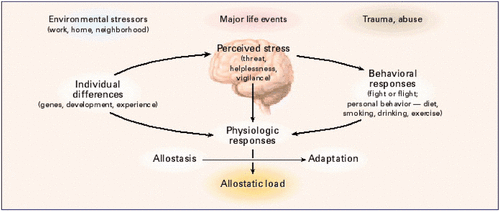
This 2017 review laid out the tired, old, restrictive guidelines by which current US research on the epigenetic effects of stress is funded. The reviewer rehashed paradigms circumscribed by his authoritative position in guiding funding, and called for more government funding to support and extend his reach.

The reviewer won’t change his beliefs regarding individual differences and allostatic load pictured above since he helped to start those memes. US researchers with study hypotheses that would develop evidence beyond such memes may have difficulties finding funding except outside of his sphere of influence.


Here’s one example of the reviewer’s restrictive views taken from the Conclusion section:

Adverse experiences and environments cause problems over the life course in which there is no such thing as “reversibility” (i.e., “rolling the clock back”) but rather a change in trajectory [10] in keeping with the original definition of epigenetics [132] as the emergence of characteristics not previously evident or even predictable from an earlier developmental stage. By the same token, we mean “redirection” instead of “reversibility”—in that changes in the social and physical environment on both a societal and a personal level can alter a negative trajectory in a more positive direction.”

What would happen if US researchers proposed tests of his “there is no such thing as reversibility” axiom? To secure funding, the prospective studies’ experiments would be steered toward altering “a negative trajectory in a more positive direction” instead.

An example of this influence may be found in the press release of Familiar stress opens up an epigenetic window of neural plasticity where the lead researcher stated a goal of:

“Not to ‘roll back the clock’ but rather to change the trajectory of such brain plasticity toward more positive directions.”

I found nothing in citation [10] (of which the reviewer is a coauthor) where the rodent study researchers even attempted to directly reverse the epigenetic changes! The researchers under his guidance simply asserted:

“A history of stress exposure can permanently alter gene expression patterns in the hippocampus and the behavioral response to a novel stressor”

without making any therapeutic efforts to test the permanence assumption!

Never mind that researchers outside the reviewer’s sphere of influence have done exactly that, reverse both gene expression patterns and behavioral responses!!

In any event, citation [10] didn’t support an “there is no such thing as reversibility” axiom.

The reviewer also implied that humans respond just like lab rats and can be treated as such. Notice that the above graphic conflated rodent and human behaviors. Further examples of this inappropriate rodent / human merger of behaviors are in the Conclusion section.


What may be a more promising research approach to human treatments of the epigenetic effects of stress? As pointed out in The current paradigm of child abuse limits pre-childhood causal research:

“If the current paradigm encouraged research into treatment of causes, there would probably already be plenty of evidence to demonstrate that directly reducing the source of the damage would also reverse damaging effects. There would have been enough studies done so that the generalized question of reversibility wouldn’t be asked.

Aren’t people interested in human treatments of originating causes so that their various symptoms don’t keep bubbling up? Why wouldn’t research paradigms be aligned accordingly?”

http://journals.sagepub.com/doi/full/10.1177/2470547017692328 “Neurobiological and Systemic Effects of Chronic Stress”

Epigenetic stress effects in preterm infants

This 2017 Italian review selected 9 human studies on the epigenetic effects of:

“One of the major adverse events in human development. Preterm infants are hospitalized in the Neonatal Intensive Care Unit where they are exposed to life-saving yet pain-inducing procedures and to protective care.”

Highlights of the referenced studies included:

  • “Early exposure to adverse events during the third trimester of pregnancy is capable to alter the epigenetic status of imprinted and placenta-related genes which have relevant implications for fetal development and preterm infants’ HPA [hypothalamic–pituitary–adrenal] stress reactivity during infancy.”
  • “There was an association between DNAm [DNA methylation] and white matter tract tissue integrity and shape inferred from dMRI [diffusion MRI], suggesting that epigenetic variation may contribute to the cerebral phenotype of preterm birth.”

Limitations of the referenced studies included:

  • “A multiple sampling design that includes parental samples, placental tissue, cord blood and extends across the life-course would be required to investigate the relative contributions of in utero and postnatal exposures to changes in DNAm, and the extent to which preterm birth leaves a legacy on the methylome.”
  • Saliva, blood, and other tissues’ DNA methylation may not produce valid links to brain tissue DNA methylation of the same gene, which may hamper conclusive inferences about behavior, etc.

http://www.sciencedirect.com/science/article/pii/S0149763417302117 “Preterm Behavioral Epigenetics: A systematic review” (not freely available)

http://www.nature.com/tp/journal/v6/n1/full/tp2015210a.html “Epigenomic profiling of preterm infants reveals DNA methylation differences at sites associated with neural function” (one of the studies selected, quoted above)

Epigenetic effects on genetic diseases

This 2017 review provided evidence for epigenetic effects on a disease widely considered to be of genetic origins:

“For a T1D [type 1 diabetes] identical twin the concordance rate (both twins affected) is consistently less than 100%, which implies a non-genetically determined effect. However, the concordance rate declines with age at diagnosis of the index twin, indicating that in adult-onset T1D the genetic impact is limited, and certainly lower than that in childhood-onset disease.

Genes associated with T1D are well-established and have four broad functions. However, T1D is unlikely to be a single disease since there is disease heterogeneity. The incidence of T1D has even increased several-fold in the last 30 years-a timeframe which rules out genetic evolution. In addition, studies of the incidence of T1D in migrant populations have shown a convergence towards the risk of the host population.

Alongside histone modifications and transcription factors, several cis-regulatory elements, including enhancers, promoters, silencers and insulators, are crucial to the function of the genome. There are more than a million enhancers; therefore, many more than there are genes, so that a number of genes are regulated by the same enhancer, which may co-localise with CpGs. Gene enhancers can be found upstream or downstream of genes and do not necessarily act on the closest promoter. Enhancers may be accompanied by insulators, which are located between the enhancers and promoters of adjacent genes and can limit phenotypic gene expression despite genetic activation.”


The review was weak in a few areas:

1. The authors repeated a laughable claim for gross national product as a non-genetic effect for Type 1 diabetes.

2. They also made other hyperbolic statements such as “This observation illustrates the power of epigenetic analysis to identify those cells which are actively using the genes associated with a given tissue, given that all cells contain every gene.” that were out of place with the review’s evidential bases.

https://link.springer.com/article/10.1007/s11892-017-0916-x “The Role of Epigenetics in Type 1 Diabetes”

What are we to believe?

This 2017 blog post from Antiwar.com’s Justin Raimondo outlines the latest instance of exploiting beliefs:

“Neither the sources of this story nor those who are reporting it can be trusted. Journalism is not a means of discovering knowledge, but a weapon to be deployed in a political-ideological conflict.”

Similar to the development of other beliefs, the reporting of the referenced story discouraged inquiries into “Information about the real world..giving us a highly distorted version of events.” It followed the blueprint of Using citations to develop beliefs instead of evidence in that once the faulty information became widely cited, refuting evidence would be ignored, and the false belief was used for other purposes.

http://original.antiwar.com/justin/2017/08/10/what-are-we-to-believe/ “What Are We To Believe? Fake news plus phony “intelligence” equals disaster”


This post has somehow become a target for spammers, and I’ve disabled comments. Readers can comment on other posts and indicate that they want their comment to apply here, and I’ll re-enable comments.

Using citations to develop beliefs instead of evidence

This 2009 Harvard study analyzed how citations were used as tools to establish a belief.

The researched data was gathered from 1992 to 2007 on a specific subject of Alzheimer’s research. The belief was:

“β amyloid is produced by inclusion body myositis myofibres or is uniquely present in inclusion body myositis muscle.”

The author used social network analysis to determine:

“Four primary data papers, five model papers, and one review paper constituted the 10 most authoritative papers that the claim was true.

The supportive papers received 94% of the 214 citations to these primary data, whereas the six papers containing data that weakened or refuted the claim received only 6% of these citations.

95% of all citation paths flow through four review papers by the same research group.

Amplification of a claim is instead introduced into belief systems through the citing of review papers and other papers that lack data addressing the claim.”

Some of the benefits believers received included:

  1. It became easier to build models if a researcher believed:

    “Animal and cell culture experiments are valid models of inclusion body myositis”

    although:

    “The uncited data suggest that the animal and cell culture experiments are no more models of inclusion body myositis than any other neuromuscular disease in which muscle regeneration occurs.”

  2. Believers used exaggerations in their confirming research that diverted the original claim’s meaning. As an example:

    “Three supportive citations developed into 7,848 supportive citation paths—chains of false claim in the network.”

  3. Citation biases and diversions could be used to support proposals for new funding.

Just imagine how compressed this phenomenon’s timeframe is now with our social networks! The tools available for creating memes and widespread nonfactual distortions are children’s play.

A few questions for the current year:

  1. What do we believe in that isn’t thoroughly investigated, where we haven’t found the time or inclination to search for opposing results?
  2. What causes us to believe these things?
  3. What are the positive and negative consequences of our beliefs?

http://www.bmj.com/content/339/bmj.b2680 “How citation distortions create unfounded authority: analysis of a citation network”

Hat tip to Jon in the comments section of Neuroskeptic’s blog post “The Ethics of Citation” http://blogs.discovermagazine.com/neuroskeptic/2017/03/12/the-ethics-of-citation

Hope sells

I used a browser yesterday that didn’t have ad blocker software installed. The below pictures came from one of the ads that displayed:

helpless

hope

A young girl in a dance position and outfit juxtaposed with an appeal: “No situation is HELPLESS because there is HOPE.” How interesting!

I didn’t click through the ad yesterday to see what was being sold by engaging customers’ beliefs, within which lay hope. When I clicked the ad today, it asked for donations to “Sponsor a Child,” develop “the perfect recipe for sustainable success,” and, at the bottom of the page, “We love because Jesus loves.”

What do we know about this ad’s appeal from reading Dr. Arthur Janov’s May 2016 book Beyond Belief? Can hope change a helpless situation per the ad?

On one level – yes, in a believer’s brain, by blocking helpless feelings. Otherwise – no. Hope ultimately isn’t a remedy for the causes of what created helpless feelings.

I donated to a similar organization for a few years, but not anymore.

Beyond Belief: What we do instead of getting well

Continuing Dr. Arthur Janov’s May 2016 book Beyond Belief:

“p. 61 Heavy pains with no place to go just pressures the cortex into concocting an idea commensurate with the feeling.

The feeling itself makes no sense since the original feeling has no scene with it nor verbal capacity; it was laid down in a preverbal time without context, save for the feeling itself.

We cling to those ideas as strongly as the feelings driving us are.

Sometimes we argue with someone not realizing that we are battling a defense which is implacable. They don’t want to hear what we have to say. They want to protect their psyche.

p. 63 Suffocation at birth is registered not as an idea, but as a physiologic fact. It becomes an idea when the brain evolves enough to produce ideas. Then it can produce, ‘There is no air in here.’

A slightly stifling atmosphere in the present can set off this great pain and with it an exaggerated response. ‘I have to leave this woman because she stifles me.’

p. 64 It doesn’t matter about the facts we know if we cannot stop drinking or if we cannot maintain a relationship with someone else.

p. 68 My task is to examine why individuals adopt belief systems, whatever they are, and how certain feelings provoke specific kinds of belief systems..to demonstrate how feeling feelings can alter those beliefs without once addressing the beliefs at all.

Deprogramming is not necessary. Probing need is. Resolving feelings seems to render belief systems inoperative.

p. 71 We are a nation and a world of seekers, a people who seek refuge in all manner of beliefs.

p. 75-76 Later in life, equipped with the cortical ability to substitute ideation for feeling, the traumatized baby can call upon a god to save him from his inner pain, even when he doesn’t know where the pain originated, or even that there is pain. He just calls upon a god to watch over him, to see that he gets justice, who won’t let him down, and above all, who will help him make it into life.

p. 106 Neurosis is the only malady on the face of this earth that feels good..numbs the feeling. Numb feels good – not ‘good’ in the absolute sense, just not ‘bad.’

So we settle..we get numbed out and feel no pain and in return, life is blah blah. The person then feels she is not getting anything out of life and seeks out salvation or a guru in one form or another.”


“We are a nation and a world of seekers, a people who seek refuge in all manner of beliefs.” The patient’s story on pages 89 – 105 told of HORRIFIC damages inflicted by believers and the subsequent consequences!

Variations of his story with its adverse childhood experiences could be told by tens of millions of people in the US alone!

Why isn’t the internet flooded with 10+ million similar stories of people who have faced their realities, and effectively addressed the real causes of what’s wrong in their lives?

Said another way: Why is the internet instead flooded with stories of 10+ million people

  • NOT facing their realities,
  • Doing things to prolong their conditions, and
  • Avoiding getting well?

The many reasons why people do things that don’t truly get them well are covered in Beyond Belief and Dr. Janov’s other publications. One obstacle for people who want enduring therapeutic help is the intentional misrepresentation of Primal Therapy.

Every day I look at the results of an automated search that uses “primal therapy” as the search term. Along with the scams and irrelevancies are the “scream” results.

This misrepresentation is addressed here:

“Primal Therapy is not Primal ‘Scream’ Therapy. Primal Therapy is not just making people scream; it was never ‘screaming’ therapy. The Primal Scream was the name of the 1st book by Dr. Janov about Primal Therapy.”

People who perpetuate the “scream” meme are only a few seconds away from search results that would inform them and their readers of accurate representations of Primal Therapy.

What purpose does it serve to misdirect people away from doing something to effectively address the real causes of what’s wrong in their lives?
Beyond Belief: The impact of merciless beatings on beliefs

Continuing with Dr. Arthur Janov’s May 2016 book Beyond Belief:

“p. 17 When someone insults us, we immediately create reasons and rationales for it. We cover the pain. Now imagine a whole early childhood of insults and assaults and how that leaves a legacy that must be dealt with.

The mind of ideas and philosophies doesn’t know it is being used; doesn’t know it serves as a barricade against the danger of feeling.

It is why no one can convince the person out of her ideas. They serve a key purpose and should not be tampered with. We are tampering with a survival function.

p. 19 It seems like a miracle that something as intangible and invisible as an idea has the power to transform our biologic system. It makes us see what doesn’t exist and sometimes not see what does. What greater power exists than that? To be fooled is not only to convince someone to believe the false, but also to convince others to not believe the truth.

The unloved child who cannot bear the terrible feelings of hopelessness shuts down his own feeling centers and grows insensitive, not only to his pain, but to that of others. So he commits the same error on his child that was visited upon him, and he does so because of the way he was unloved early on. He cannot see his own hopelessness or that of his child.

p. 56 All defensive beliefs must have a kernel of hope inside of them. It is the embedded hopelessness that gives rise to its opposite – hope – and its accompanying biochemistry of inhibition or gating.

To be even more precise, it is the advent of pain surrounding hopelessness that produces the belief entwined with hope. All defensive belief serves the same function – repression, absorbing the energy of pain.

p. 57 An unloved child is a potential future believer.

p. 58 NO ONE HAS THE ANSWER TO LIFE’S QUESTIONS BUT YOU. How you should lead your life depends on you, not outside counsel.

We do not direct patients, nor dispense wisdom upon them. We have only to put them in touch with themselves; the rest is up to them.

Everything the patient has to learn already resides inside. The patient can make herself conscious. No one else can.”


“p. 29 The personal experience stories throughout the book are written by my patients and, with the exception of a few grammatical corrections, they are presented here exactly as they were given to me.”

All of the Primal Therapy patients’ stories started with HORRENDOUS childhoods that produced correspondingly strong beliefs!

I came across a public figure example today in 10 Defining Moments In The Childhood Of Martin Luther King Jr. The author included two items germane to an understanding of how beliefs may develop from adverse childhood experiences:

  • 8. King Sr. “Would beat Martin and his brother, Alfred, senseless for any infraction, usually with a belt.”
  • 6. “By the time King was 13, he’d tried to kill himself twice.”

Every reference I found tied King Jr.’s suicide attempts to his grandmother’s death. What an implausible narrative!

A whole early childhood of insults and assaultscertainly had more to do with the causes for his preteen suicide attempts.

Consider a child’s feelings of helplessness, worthlessness, pain, and betrayal when the people who are supposed to love them are cruel to them instead. Feelings like what I expressed in Reflections on my four-year anniversary of spine surgery.

Consider the appeal of escaping from this life when “The unloved child cannot bear the terrible feelings of hopelessness.”

Granted that it’s only the patient who can put together what happened in their life so that it’s therapeutic. Beyond Belief and Dr. Janov’s other publications outline the framework.

Beyond Belief: Why do we accept being propagandized?

Continuing to read Dr. Arthur Janov’s May 2016 book Beyond Belief:

“p.13 Beliefs are medicine for the hopeless. They attenuate despair, vitiate loneliness, and dissipate helplessness.

p. 14 We need hope more than we need truth. Beliefs divert us from past traumas and current pains because inside the belief lies hope.

p.15 Hope is ‘the meaning of life.’ It shimmers and sparkles and blinds us from seeing the bars of our prisons of belief.

We are all, in one way or another, victims of early unfulfilled need. Never think that intelligence prohibits this kind of behavior.

We search for hope here and there based on early hopelessness of which we are unaware. Nothing in one’s current life points to the problem, and nothing even in one’s childhood clarifies it.

One’s expectations may exceed reality when feelings are thrust into the arena of ideas. One no longer sees reality, but rather a projection of need.”


“We need hope more than we need truth.” Is this part of why we accept headlines as facts, and don’t pay attention to the stories’ subsequent corrections? Why do we accept as facts news articles that don’t link to the cited sources?

I had dinner earlier this week with an intelligent woman. She mentioned that she constantly listened to National Public Radio. I asked her what value she got from it, and she replied that it kept her current with events.

I asked what other news sources she sought out. She said that she didn’t usually have the time, and that NPR was a reliable source.

I didn’t further challenge her beliefs. It’s up to each individual to realize that their beliefs are symptoms of what’s ruining their one precious life.

Last weekend I engaged in essentially the same conversation over lunch with another intelligent woman who relied on conservative news sources. She also became defensive, and ended that part of our conversation as a matter of “agreeing to disagree.”

Why does intelligence seem to have little to do with accepting being propagandized?

Beyond Belief: Symptoms of hopelessness

I’ve started to read Dr. Arthur Janov’s May 2016 book Beyond Belief. Here are a few thoughts I’ve expressed to friends that were prompted by the first dozen pages of the paperback version.

“p. 5 We need a painless liberation from our insidious emotional wounds..a leader who will take the place of an emotionally distant parent for whom we will sacrifice anything just for the promise of love, protection, and caring.”

The elections of the past two presidents were symptoms of the hopelessness that most Americans feel. Both elections promised hope.

“p. 6 Beliefs sell and sell well. People will pay dearly for even the promise of fulfillment, even if it is in the next life.”

Religion can have a much worse and lasting effect on people than any politician or political system can. Politicians can drag out and delay living up to their promises.

Religious leaders don’t have to deliver much at all during their followers’ lives. In fact, it works in the leaders’ favor to minimally address their followers’ current sufferings, as that strengthens the appeal of the imaginary next life!


The past three weeks I’ve gone to 7-11 to get a morning coffee. More often than not, I see people buying lottery tickets during the 2-3 minutes when I’m there.

What accounts for this behavior? Not everyone who buys a lottery ticket is innumerate.

I’d guess that it’s a symptom of hopelessness. Feelings of hopelessness cause us to generate a faith that an exceedingly-improbable event will benefit our life. Lottery-ticket behavior follows.

State governments are responsible for these lotteries. It’s one of the ways governments prey upon their citizens’ feelings of hopelessness.

I once worked as a contractor in a government office where everyone except me pooled money every week to buy lottery tickets. I was also the only nonreligious person there.

Coincidence?

Epigenetics account for two-thirds of Alzheimer’s disease

The genetics percentage from a 2017 summary of Alzheimer’s disease research caught my eye:

“Although numerous single nucleotide polymorphisms (SNPs) have now been robustly associated with AD via genome-wide association studies and subsequent meta-analyses, collectively these common SNPs are believed to only account for 33% of attributable risk and the mechanism behind their action remains largely unknown.”

This citation aligned with other studies’ findings per Using twins to estimate the extent of epigenetic effects that on cellular levels, our experiences account for two-thirds of who we are.


The promise of this category of epigenetics research?

“One of the most exciting aspects of identifying disease-associated epigenomic dysfunction is that these mechanisms are potentially reversible.”

Let’s make research on reversing epigenetic changes a priority for funding, and get studies underway here in 2017!

https://www.epigenomicsnet.com/users/27784-katie-lunnon/posts/14634-robust-evidence-for-dna-methylomic-variation-in-alzheimer-s-disease “Robust evidence for DNA methylomic variation in Alzheimer’s disease” (Registration required)