A review that inadvertently showed how memory paradigms prevented relevant research

This 2016 Swiss review of enduring memories demonstrated what happens when scientists’ reputations and paychecks interfered with them recognizing new research and evidence in their area but outside their paradigm: “A framework containing the basic assumptions, ways of thinking, and methodology that are commonly accepted by members of a scientific community.”

A. Most of the cited references were from decades ago that established these paradigms of enduring memories. Fine, but the research these paradigms excluded was also significant.

B. All of the newer references were continuations of established paradigms. For example, a 2014 study led by one of the reviewers found:

“Successful reconsolidation-updating paradigms for recent memories fail to attenuate remote (i.e., month-old) ones.

Recalling remote memories fails to induce histone acetylation-mediated plasticity.”

The researchers elected to pursue a workaround of the memory reconsolidation paradigm when the need for a new paradigm of enduring memories directly confronted them!

C. None of the reviewers’ calls for further investigations challenged existing paradigms. For example, when the reviewers suggested research into epigenetic regulation of enduring memories, they somehow found it best to return to 1984, a time when dedicated epigenetics research had barely begun:

“Whether memories might indeed be ‘coded in particular stretches of chromosomal DNA’ as originally proposed by Crick [in 1984] and if so what the enzymatic machinery behind such changes might be remain unclear. In this regard, cell population-specific studies are highly warranted.”


Two examples of relevant research the review failed to consider:

1. A study that provided evidence for basic principles of Primal Therapy went outside existing paradigms to research state-dependent memories:

“If a traumatic event occurs when these extra-synaptic GABA receptors are activated, the memory of this event cannot be accessed unless these receptors are activated once again.

It’s an entirely different system even at the genetic and molecular level than the one that encodes normal memories.”

What impressed me about that study was the obvious nature of its straightforward experimental methods. Why hadn’t other researchers used the same methods decades ago? Doing so could have resulted in dozens of informative follow-on study variations by now, which is my point in Item A. above.

2. A relevant but ignored 2015 French study What can cause memories that are accessible only when returning to the original brain state? which supported state-dependent memories:

“Posttraining/postreactivation treatments induce an internal state, which becomes encoded with the memory, and should be present at the time of testing to ensure a successful retrieval.”


The review also showed the extent to which historical memory paradigms depend on the subjects’ emotional memories. When it comes to human studies, though, designs almost always avoid studying emotional memories.

It’s clearly past time to Advance science by including emotion in research.

http://www.hindawi.com/journals/np/2016/3425908/ “Structural, Synaptic, and Epigenetic Dynamics of Enduring Memories”
What’s a good substitute for feeling loved?

A friend of mine sent a link to this TED talk yesterday. The speaker inspired my friend to change their life along the speaker’s guidelines:

“The very act of doing the thing that scared me undid the fear.

That feeling, you can’t help but strive for greatness at any cost.

The more I work to be successful, the more I need to work.”


I wasn’t similarly inspired.

For one thing, a fear memory isn’t undone by behavior that covers it over and tamps it down. Fear extinction is the learned inhibition of retrieval of previously acquired responses provided evidence for what happens with a fear memory.

What I saw expressed in the TED talk was an exhausting pursuit of substitutes for feeling loved.

This February 18, 2016 blog post by Dr Arthur Janov framed the TED talk in the context that I understood the speaker:

“Most of us thought that once we choose a profession and follow it and succeed at it, becoming an expert and well known, that would be fulfilling. We would feel like a success.

Success is not a feeling, loved is.

Fame is other people’s idea of success; it is in a way their feeling…admiration, humbling, important, etc.

And why does the person, even most accomplished, never feel satisfied nor fulfilled?”

What do you feel is the appropriate context of the TED talk?

What do you think are likely outcomes of a person following the speaker’s guidelines?

What’s the underlying question for every brain study to answer?

Is the underlying question for every brain study to answer:

  • How do our brains internally represent the external world?

Is it:

  • How did we learn what we know?
  • How do we forget or disregard what we’ve learned?
  • What keeps us from acquiring and learning newer or better information?

How about:

  • What affects how we pay attention to our environments?
  • How do our various biochemical states affect our perceptions, learning, experiences, and behavior?
  • How do these factors in turn affect our biology?

Or maybe:

  • Why do we do what we do?
  • How is our behavior affected by our experiences?
  • How did we become attracted and motivated toward what we like?
  • How do we develop expectations?
  • Why do we avoid certain situations?

Not to lose sight of:

  • How do the contexts affect all of the above?
  • What happens over time to affect all of the above?

This 2015 UCLA paper reviewed the above questions from the perspective of Pavlovian conditioning:

“The common definition of Pavlovian conditioning, that via repeated pairings of a neutral stimulus with a stimulus that elicits a reflex the neutral stimulus acquires the ability to elicit that the reflex, is neither accurate nor reflective of the richness of Pavlovian conditioning. Rather, Pavlovian conditioning is the way we learn about dependent relationships between stimuli.

Pavlovian conditioning is one of the few areas in biology in which there is direct experimental evidence of biological fitness.”


The most important question unanswered by the review was:

  • How can its information be used to help humans?

How can Pavlovian conditioning answer: What can a human do about the thoughts, feelings, behavior, epigenetic effects – the person – the phenotype – that they’ve been shaped into?

One example of the unanswered question: the review pointed out in a section about fear extinction that this process doesn’t involve unlearning. Fear extinction instead inhibits the symptoms of fear response. The fear memory is still intact, awaiting some other context to be reactivated and expressed.

How can this information be used to help humans?

  • Is inhibiting the symptoms and leaving the fear memory in place costless with humans?
  • Or does this practice have both potential and realized adverse effects?
  • Where’s the human research on methods that may directly address a painful emotional memory?

One relevant hypothesis of Dr. Arthur Janov’s Primal Therapy is that a person continues to be their conditioned self until they address the sources of their pain. A corollary is that efforts to relieve symptoms seldom address causes.

How could it be otherwise? A problem isn’t cured by ameliorating its effects.

http://cshperspectives.cshlp.org/content/8/1/a021717.full “The Origins and Organization of Vertebrate Pavlovian Conditioning”

The effects of imposing helplessness

This 2016 New York rodent study found:

“By using unbiased and whole-brain imaging techniques, we uncover a number of cortical and subcortical brain structures that have lower activity in the animals showing helplessness than in those showing resilience following the LH [learned helplessness] procedure. We also identified the LC [locus coeruleus] as the sole subcortical area that had enhanced activity in helpless animals compared with resilient ones.

Some of the brain areas identified in this study – such as areas in the mPFC [medial prefrontal cortex], hippocampus, and amygdala – have been previously implicated in clinical depression or depression-like behavior in animal models. We also identified novel brain regions previously not associated with helplessness. For example, the OT [olfactory tubercle], an area involved in odor processing as well as high cognitive functions including reward processing, and the Edinger–Westphal nucleus containing centrally projecting neurons implicated in stress adaptation.

The brains of helpless animals are locked in a highly stereotypic pathological state.”

Concerning the study’s young adult male subjects:

“To achieve a subsequent detection of neuronal activity related to distinct behavioral responses, we used the c-fosGFP transgenic mice expressing c-FosGFP under the control of a c-fos promoter. The expression of the c-fosGFP transgene has been previously validated to faithfully represent endogenous c-fos expression.

Similar to wild-type mice, approximately 22% (32 of 144) of the c-fosGFP mice showed helplessness.”

The final sentence of the Introduction section:

“Our study..supports the view that defining neuronal circuits underlying stress-induced depression-like behavior in animal models can help identify new targets for the treatment of depression.”


Helplessness is both a learned behavior and a cumulative set of experiences during every human’s early life. Therapeutic approaches to detrimental effects of helplessness can be different with humans than with rodents in that we can address causes.

The researchers categorized activity in brain circuits as causal in the Discussion section:

“Future studies aimed at manipulating these identified neural changes are required for determining whether they are causally related to the expression of helplessness or resilience.”

Studying whether or not activity in brain circuits induces helplessness in rodents may not inform us about causes of helplessness in humans. Our experiences are often the ultimate causes of helplessness effects. Many of our experiential “neural changes” are only effects, as demonstrated by this and other studies’ induced phenotypes such as “Learned Helplessness” and “Prenatally Restraint Stressed.”

Weren’t the researchers satisfied that the study confirmed what was known and made new findings? Why attempt to extend animal models that only treat effects to humans, as implied in the Introduction above and in the final sentence of the Discussion section:

“Future studies aimed at elucidating the specific roles of these regions in the pathophysiology of depression as well as serve as neural circuit-based targets for the development of novel therapeutics.”

http://journal.frontiersin.org/article/10.3389/fncir.2016.00003/full “Whole-Brain Mapping of Neuronal Activity in the Learned Helplessness Model of Depression” (Thanks to A Paper a Day Keeps the Scientist Okay)

Outward expressions of inner truth

“Truth needs no defense except when that truth is more than the system can integrate; then it requires defenses.

Our merciful brain has found back-up ways to protect us. It keeps the truth from us even when we go on searching for the truth.

After patients have deep feelings they come up with many truths about their lives. It is buried and defended along with the pain. Thus no one has to give anyone insights; they are already there just waiting for the exit.”

In the blog post’s Comments section:

“When repression is not effective, the imprint rises for connection. But it is transformed into an act-out before it becomes conscious.

I had to get out each morning to feel free and shake my malaise. I never ever knew the origins of needing to get out. And the act out would never stop until I felt the origins and relived them.

The memory is continuously pushing and forces all kinds of act-out behaviors. The behavior has to be close to the original imprint to make act outs effective.

The brain knows, even when we don’t. And offers up all kinds of reasons for our behavior except the right one.”

http://cigognenews.blogspot.com/2016/01/the-act-out-and-more_29.html “The Act-out and More”

Lifelong effects of stress

A 2016 commentary A trilogy of glucocorticoid receptor actions that included two 2015 French rodent studies started out:

Glucocorticoids (GCs) belong to a class of endogenous, stress-stimulated steroid hormones. They have wide ranging physiologic effects capable of impacting metabolism, immunity, development, stress, cognition, and arousal.

GCs exert their cellular effects by binding to the GC receptor (GR), one of a 48-member (in humans) nuclear receptor superfamily of ligand-activated transcription factors.”

The French studies were exceedingly technical. The first GR SUMOylation and formation of an SUMO-SMRT/NCoR1-HDAC3 repressing complex is mandatory for GC-induced IR nGRE-mediated transrepression:

“GCs acting through binding to the GR are peripheral effectors of circadian and stress-related homeostatic functions fundamental for survival.

Unveils, at the molecular level, the mechanisms that underlie the GC-induced GR direct transrepression function mediated by the evolutionary conserved inverted repeated negative response element. This knowledge paves the way to the elucidation of the functions of the GR at the submolecular levels and to the future educated design and screening of drugs, which could be devoid of undesirable debilitating effects on prolonged GC therapy.”

The companion study Glucocorticoid-induced tethered transrepression requires SUMOylation of GR and formation of a SUMO-SMRT/NCoR1-HDAC3 repressing complex stated:

“GCs have been widely used to combat inflammatory and allergic disorders. However, multiple severe undesirable side effects associated with long-term GC treatments, as well as induction of glucocorticoid resistance associated with such treatments, limit their therapeutic usefulness.”

Even when researchers study causes, they often justify their efforts in terms of outcomes that address effects. Is an etiologic advancement in science somehow unsatisfactory in and of itself?


Once in a while I get a series of personal revelations while reading scientific publications. Paradoxically, understanding aspects of myself has seldom been sufficient to address historical problems.

Thoughts are only where some of the effects of problems show up, and clarifying my understanding can – at most – tamp down these effects. The causes are elsewhere, and addressing them at the source is what ultimately needs to happen.

A few glucocorticoid-related items to ponder:

  • How has stress impacted my life? When and where did it start?
  • Why do I feel wonderful after taking prednisone or other anti-inflammatories? What may be the originating causes of such effects?
  • Why have prolonged periods of my life been characterized by muted responses to stress? How did I get that way?
  • Have I really understood why I’ve reflexively put myself into stressful situations? What will break me out of that habit?
  • Why do the feelings I experience while under stressful situations feel familiar? Does my unconsciousness of their origins have something to do with “homeostatic functions fundamental for survival?”
  • Why haven’t I noticed that symptoms of stress keep showing up in my life? There are “physiologic effects capable of impacting metabolism, immunity,” etc. but I don’t do something about it?
  • How else may stress impact my biology? Brain functioning? Ideas and beliefs? Behavior?

A problematic study of testosterone’s influence on behavior and brain measurements

This 2015 US/Canadian human study of people ages 6 to 22 years found:

“Testosterone-specific associations between amygdala volume and key prefrontal areas involved in emotional regulation and impulse control:

  1. Testosterone-specific modulation of the covariance between the amygdala and medial prefrontal cortex (mPFC);
  2. A significant relationship between amygdala-mPFC covariance and levels of aggression; and
  3. Mediation effects of amygdala-mPFC covariance on the relationship between testosterone and aggression.

These effects were independent of sex, age, pubertal stage, estradiol levels and anxious-depressed symptoms.

For the great majority of individuals in this sample, higher thickness of the mPFC was associated with lower aggression levels at a given amygdala volume. This effect diminished greatly and disappeared at more extreme amygdala values.”

The study provided noncausal associations among the effects (behavioral, hormonal, and brain measurements).


From the Limitations section:

“No umbilical cord or amniotic measurements were available in this study and we therefore cannot control for testosterone levels in utero, a period during which significant testosterone-related changes in brain structure are thought to occur.”

There’s evidence that too much testosterone for a female fetus and too little testosterone for a male fetus both have lifelong adverse effects. The researchers dismissed this etiologic line of inquiry with a “supporting the notion” referral to noncausal studies.


The researchers were keen to establish:

“A very specific, aggression-related structural brain phenotype.”

This putative phenotype hinged on:

  • Older subjects’ behavioral self-reports, and
  • Parental assessments of younger subjects’ behavior

exhibited during the previous six months, and within six months of their fMRI scan.

These self-reports and interested-party observations were the entire bases for the “aggressive behavior” and “anxious–depressed” associations! The researchers disingenuously provided multiple references and models for the reliability of these assessments.


Experimental behavioral measurements – such as those done to measure performance in decision studies – may have been more accurate and informative than what the older subjects chose to self-report about their own behavior over the previous six months.

People of all ages have an imperative to NOT be completely honest about their own behavior. One motivation for this condition is that some of our historical realities are too painful to enter our conscious awareness and inform us about our own behavior. As a result, our feelings, thoughts, and behavior are sometimes driven by our histories without us being aware of it.

For example, would a teenager/young adult subject self-report an impulsive act, even if they didn’t fully understand why they acted that way? Maybe they would if the act could be viewed as prosocial, but what if it was antisocial?

What are the chances that the lives of these teenager/young adult subjects were NOT filled with impulsive actions during the six months before their fMRI scans? Could complete and accurate self-reports of such behaviors be expected?

Experimental behavioral measurements may have also been more accurate and informative than second-hand, interested-party observations of the younger subjects. Could a parent who provided half of the genes and who was responsible for many of their child’s epigenetic changes make anything other than subjective observations of their handiwork’s behavior?


Epigenetic studies have shown that adaptations to environments are among the long-lasting causes for effects that include behavior, hormones, and brain measurements. Why, in 2015, did researchers spend public funds developing what they knew or should have known would be noncausal associations, while not investigating possible causes for these effects?

Why weren’t the researchers interested enough to gather and assess etiologic genetic and epigenetic evidence? Was it that difficult to get blood samples at the same time the subjects gave saliva samples, and perform selected genetic and DNA methylation analyses?

What did the study contribute towards advancing science? Who did the study really help?

My judgment: less than nothing; and nobody. The researchers only wasted public funds advancing a meme, giving it an imprimatur of science.

http://www.psyneuen-journal.com/article/S0306-4530%2815%2900924-5/fulltext “A testosterone-related structural brain phenotype predicts aggressive behavior from childhood to adulthood”

Assessing epigenetic origins of allergies and asthma

This 2015 German paper described the study design of a birth cohort that’s being established to:

“Assess potential associations between early-life exposures and onset of childhood asthma and allergies taking into account epigenetics.

The study builds upon an existing cohort which has been recruited [1995] and in the meantime has been followed up twice [2002 and 2007].

This approach provides the unique opportunity to assess the effects of genetic predisposition, epigenetic factors, and environmental factors such as exposure to environmental tobacco smoke, living conditions, and parental occupation in a prospective and cross-generational study.”

The paper had informative references, one of which was the 2013 Epigenetic mechanisms and models in the origins of asthma:

“We need to determine whether epigenetics should be considered as a major integrator of multiple signals, or, alternatively, whether DNA methylation acts differently at various developmental stages conditional on genetic variants and exposures.

In addition, since there is a lack of critical knowledge on which genes are programmed or re-programmed at what time during gestation and in which developmental phase, birth cohort studies need to trace DNA methylation over time, and ideally over generations.

This will provide critical information about which phases in the course of life are most suitable to prevent deviant DNA methylation (preventive epigenomics) or intervene to normalize DNA methylation to prevent disease (pharmaco-epigenomics).”

http://www.ncbi.nlm.nih.gov/pmc/articles/PMC4670515/ “Establishing a birth cohort to investigate the course and aetiology of asthma and allergies across three generations – rationale, design, and methods of the ACROSSOLAR study”


I was encouraged by the referenced review’s emphasis that researchers start their investigations at the beginning of human life for causes that produce later-life effects. Subsequent emphasis on prevention was commendable.

The review also revealed a prevalent researcher bias, that causal and curative results of human disease will be found on the molecular level rather than in human experiences. This preconception leads to ignoring human elements that generate epigenetic changes that manifest themselves in symptoms such as asthma and allergies.

I don’t know how including human emotions in studies became viewed as unscientific, but here we are. I didn’t see any indication that its study design included investigating emotional states other than possibly work-related stress.

These researchers will have to pretend that proven etiologic factors such as emotional states of a pregnant woman have no affect on nervous and immune system development of her fetus. These human elements are unjustified exclusions from a study designed in 2015, but they’re easily ignored when they aren’t measured.


Here’s a search of what Dr. Arthur Janov had to say about allergies over the past eight years. A representative sample from earlier this month was:

“Every therapy we try will be temporary, something we need to do over and over again. It can be nothing else because the imprint has the force of survival, of a lifesaving memory and must endure until the life-endangering imprint is finally fully felt and resolved.

Clearly this applies to many problems, from high blood pressure to asthma and allergies. That is why it is urgent that we re-focus on the real problem.”

Emotional memories create long-term epigenetic changes

This 2015 German rodent study found:

Histone modifications predominantly changed during memory acquisition and correlated surprisingly little with changes in gene expression.

Although long-lasting changes were almost exclusive to neurons, learning-related histone modification and DNA methylation changes also occurred in non-neuronal cell types, suggesting a functional role for non-neuronal cells in epigenetic learning.”

Chromatin modifications in two limbic system brain areas were studied – the hippocampus (CA1 region) for short-term memories and the anterior cingulate cortex for short-and long-term memory formation and maintenance. The memories were induced by context (C) and context shock (CS) exposure:

“Overall, the data provides very strong and robust evidence for the establishment of long-term memory upon CS exposure, whereas C exposure alone did not induce the formation of long-term memory.”

So, without long-term shock/emotional memories, there would be no positive long-term findings for the researchers to report. There would be no lasting:

  • “Histone modifications
  • DNA methylation changes
  • Changes in gene expression”

The subjects were young adults at age 3 months. The CA1 and ACC studied brain areas are fully developed before this age.

It seemed feasible that if the study were performed with younger subjects, the results may have been different. For example:

“Context exposure alone did not induce the formation of long-term memory”

may not have been the finding for early learning situations.


The researchers qualified their results several times with the phrase “changes are limited to actively expressed genes.” A similar qualifier in A study of DNA methylation and age was a reminder that unexpressed genes may have also been important:

The textbook case of DNA methylation regulating gene expression (the methylation of a promoter and silencing of a gene) remains undetected in many cases because in an array analysis, an unexpressed gene shows no signal that can be distinguished from background and is therefore typically omitted from the analysis.”

This general qualifier may not have necessarily applied to the current study, though, because the study’s design included an unexposed control group.

http://www.nature.com/neuro/journal/vaop/ncurrent/full/nn.4194.html “DNA methylation changes in plasticity genes accompany the formation and maintenance of memory”

Trapped, suffocating, unable to move – a Primal imprint

“The malady of needing to move constantly: organizing trips, making reasons to go here and there, and in general, keeping on the move..below all that movement is a giant, silent scream.

The price we pay is never knowing our feelings or where they come from.

We have the mechanism for our own liberation inside of us, if we only knew it.

When we see constant motion we understand, but we never see the agony. Why no agony? Because it is busy being acted-out to relieve the agony before it is fully felt.”

http://cigognenews.blogspot.com/2015/11/epigenetics-and-primal-therapy-cure-for_30.html “The Miracle of Memory – Epigenetics and Primal Therapy: The Cure for Neurosis (Part 13/20)”

An interview with Dr. Rachel Yehuda on biological and conscious responses to stress

How Trauma and Resilience Cross Generations

“The purpose of epigenetic changes, I think, is simply to increase the repertoire of possible responses.

So let’s say, for some reason, your parents transmitted to you biologic changes that are very appropriate to starvation, but you don’t live in a culture where food is not plentiful.

You’re just not optimized, but I think that if we develop an awareness of what the biologic changes from stress and trauma are meant to do, then I think we can develop a better way of explaining to ourselves what our true capabilities and potentials are.


What I hear from trauma survivors — what I’m always struck with is how upsetting it is when other people don’t help, or don’t acknowledge, or respond very poorly to needs or distress.


Feel it instead of running to someone to give you a sleeping pill.”

Transcript: http://www.onbeing.org/program/rachel-yehuda-how-trauma-and-resilience-cross-generations/transcript/7791

Is the purpose of research to define opportunities for interventions?

In this 2014 review, a social scientist first presented an interpretive history of what he found to be important in the emergence of epigenetics. He proceeded into his ideas of “a possible agenda of the social studies of the life-sciences” in the “postgenomic age” with headings such as “Postgenomic biopolitics: “upgrade yourself” or born damaged for ever?”

This perspective included:

“The upgradable epigenome may become the basis for a new motivation to intervene, control and improve it through pharmacological agents or social interventions.

An important trend is the use of epigenetic and developmental findings in the so-called early-intervention programmes.

It is possible that epigenetic findings will become increasingly relevant in social policy strategies.”


In this blog I often highlight research that may help us understand details of how each of us is a unique individual. It’s my view that insofar as research helps each of us understand our unique, real self, we may be able to empathetically understand others’ unique qualities.

Click individual differences for a sample of how researchers explain away uniqueness in order to converge on a study’s desired objectives. There’s seldom an attempt to further understand what caused each subject to develop their unique qualities.

Why would this reviewer advocate that

  • Researchers,
  • People working in the social sciences,
  • People employed or involved in social services, and
  • Their sponsors and employers

intentionally disregard another individual’s unique qualities?

I’ll answer this question from a perspective that explains how this common, reflexive action derives from a person being unable to face the facts of their own life. Pertinent fundamentals of Dr Arthur Janov’s Primal Therapy are:

  1. Pain motivates a person’s unconscious act-outs of their underlying problems.
  2. The behavior that caused a problem is sometimes also the act-out behavior.
  3. Act-outs enable a person to re-experience the feelings of their historical struggles, in a vain attempt to resolve them.
  4. Due to pain barriers, people seldom become consciously aware of and – more importantly – address the causes for their own problematic behavior.
  5. “The patient has the power to heal himself.”

A consequent hypothesis is that a person will often glorify their unconscious act-outs and surround themself with justifications for these actions. For example, a person who can’t sit still may refer to their incessant activity with socially acceptable phrases such as “I’m always busy” or “I love to travel.” They’ll structure their life to enable their unconscious behavior, never questioning how they were attracted to an always-on-the-go occupation such as flight attendant, only vaguely feeling that they were made for it.

The behavior relevant to the current review may be exhibited by a person with a history of having no control over their own life. Following the above first two fundamentals, the pain of historically not having control over their life may motivate them to control other people’s lives.

Unfortunately for everyone who’s affected, such unconscious act-outs don’t resolve anything:

  1. The initiator may achieve some symbolic satisfaction by controlling others’ lives.
  2. This temporary satisfaction doesn’t make the initiator’s underlying problems less painful.
  3. The motivation impelling these unconscious act-outs isn’t thereby reduced.
  4. So the initiator soon repeats their controlling behavior, stuck in a loop of unresolved feelings.
  5. Since the self-chosen interests of someone who’s being controlled are lesser concerns to the initiator than exercising control, the controlled person may or may not be helped by the controller’s act-outs.

Research provides abundant evidence that we are unique individuals.

This is a strong indicator of who is best qualified to direct each of our unique lives.

A person who is driven to control others’ lives won’t accept epigenetic research as instructive for understanding, honoring, and respecting others as unique individuals. They’ll use research as a way to enable their own unconscious act-outs, and view it as offering opportunities for interventions into the lives of others.

This is the way that “pharmacological agents or social interventions” are often the intended “use of epigenetic and developmental findings.” Interventions receive justifications with “a possible agenda of the social studies of the life-sciences.”

Becoming aware of one’s own act-outs – and then individually addressing one’s own underlying problems – often take backseats to employment and other concerns to keep enabling one’s own behavior. That makes it likely that interventions justified by “epigenetic findings..in social policy” will continue, whether or not the subjects agree that they’re being helped.

For examples, take a look at a few of the YouTube presentations by people employed in the social sciences and social services on a topic of epigenetics. Compare them with the current state of epigenetic research in Grokking an Adverse Childhood Experiences (ACE) score.

What did you notice? How many presentations emphasized disrupted prenatal development – a period when problems can be prevented? Did you instead see that many more of the presentations emphasized controlling behavior?

http://journal.frontiersin.org/article/10.3389/fnhum.2014.00309/full “The social brain meets the reactive genome: neuroscience, epigenetics and the new social biology

The roles of DNA methylation and demethylation in forming memories

This 2015 Alabama combined animal and human review noted:

“Memories can last a lifetime, yet the proteins that enable synaptic plasticity, allowing for the establishment and maintenance of the memory trace, are subject to perpetual turnover.

DNA methylation may likely serve as the principle cellular information storage device capable of stably and perpetually regulating cellular phenotype.”

The authors developed a framework for understanding disparate findings of DNA methylation and demethylation concerning memory.


The dependencies expressed in the framework among the numerous factors – with their relative strengths, timings, and durations – reminded me of this video:

1) If such an error-prone framework accurately reflected the evolved architecture of our memory, we wouldn’t have the variety and number and intensity of memories that we have.

2) The framework neither accounted for prenatal memory processes nor differentiated emotional memories, although some of the referenced studies’ findings were applicable.

3) DNA methylation and demethylation aren’t the entirety of memory formation explanations. For example, they don’t explain state-dependent memories that can be instantiated, reactivated, and amnesia induced without involving “the proteins that enable synaptic plasticity” described in the authors’ framework. For completeness, the authors could have assessed the relative contributions of other memory processes, or at least enumerated them.

4) DNA methylation and demethylation explanations don’t cover all epigenetic biochemical processes. There are also placental interactions, histone/protein interactions, microRNA interactions, etc. For completeness, the authors could have placed the review’s topic within appropriate contexts of other epigenetic processes that influence memory.

This review of DNA methylation and demethylation roles in memory formation opened up a few slats in the blind covering one window. There’s more to be done to fully open that blind, and more window blinds to be opened before the workings of our memory are illuminated.

http://nro.sagepub.com/content/21/5/475.full “DNA Methylation in Memory Formation: Emerging Insights”

A review of the epigenetic basis for mental illness

This 2015 New York combined animal and human review of epigenetic studies noted:

“While genetic factors are important in the etiology of most mental disorders, the relatively high rates of discordance among identical twins, particularly for depression and other stress-related syndromes, clearly indicate the importance of additional mechanisms.

Environmental factors such as stress are known to play a role in the onset of these illnesses.

Exposure to such environmental insults induces stable changes in gene expression, neural circuit function, and ultimately behavior, and these maladaptations appear distinct between developmental versus adult exposures.

Increasing evidence indicates that these sustained abnormalities are maintained by epigenetic modifications in specific brain regions.”

Placing the “maladaptations” and “sustained abnormalities” phrases into their contexts:

  • A fetus biologically adapted to their environment – however toxic it was – in order to best survive.
  • These adaptations for survival were subsequently viewed as Disrupted Neurodevelopment and “maladaptations” from the perspectives of normal development and environments.
  • The “sustained abnormalities” caused within the earlier environments “are maintained by epigenetic modifications.” An improved environment wasn’t impetus enough to change developmental “maladaptations.”

Per the below link, it’s been a month since this review was published. Why has there been ZERO news coverage of it?

One reason may be that the Friedman Brain Institute, Icahn School of Medicine at Mount Sinai, didn’t issue a press release or otherwise publicize it. Another reason may be the groups that are opposed to its findings:

  • Parents who provided harmful environments for their children, beginning at conception;
  • People who feel threatened when scientific causal evidence resonates with what happened in their own lives, and in response, limit their empathetic understanding of others’ problems;
  • Social workers, psychologists, and others in industries whose paychecks depend on efforts that aren’t directed towards ameliorating the causes for these later-life effects;
  • Psychiatrists and medical personnel whose livelihoods depend on pharmaceutical and other treatments that only alleviate symptoms;
  • Researchers whose funding depends on producing non-etiologic findings.

Despite resistance to this review’s findings, a large number of people would benefit from publicizing evidence for:

“These sustained abnormalities are maintained by epigenetic modifications in specific brain regions.”

http://nro.sagepub.com/content/early/2015/09/24/1073858415608147 “Epigenetic Basis of Mental Illness”

Genetic causes for epigenetic symptoms

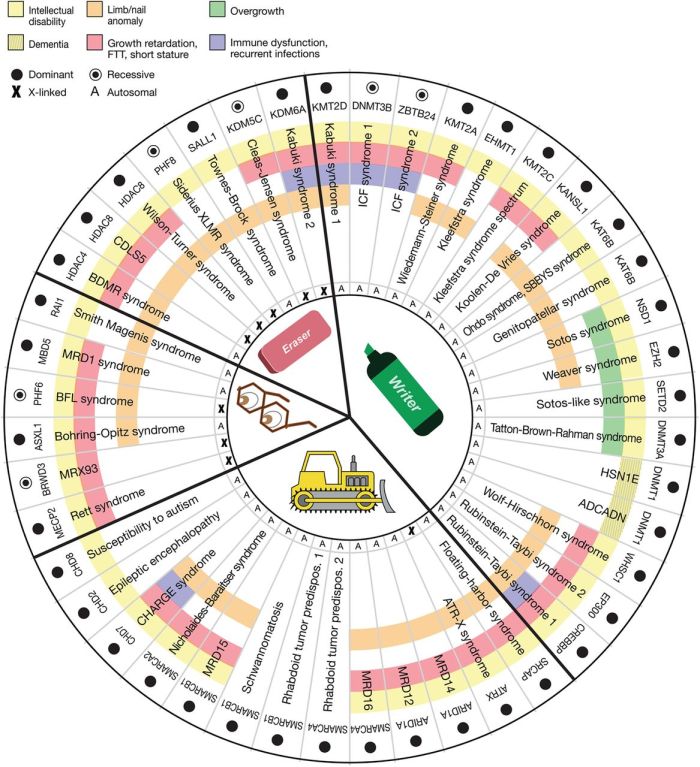
This 2015 human summary study was of 44 genetic disorders that disrupt the maintenance of epigenetic modifications:

“..making them likely to have significant downstream epigenetic consequences. Interestingly, these patients often demonstrate neurological dysfunction, suggesting that precise epigenetic regulation may be critical for neuronal homeostasis. However, at the same time, it is important to keep in mind that many of these proteins have additional non-epigenetic roles.

Mutations in many of these components have now been linked to a number of well-known causes of intellectual disability. Intellectual disability is generally defined as deficits of intellectual function and adaptive behavior that occur during the developmental period.

Given the opposing activity of many of the components of the epigenetic machinery, the pathogenic sequence in these disorders involves an imbalance of chromatin states. Keeping a subset of genes under “pressure” from two opposing systems may allow the cellular system to rapidly respond to environmental stimuli.

These disorders, on average, have unusual phenotypic breadth. Similarly, there is a shift in distribution toward a higher number of organ systems affected.

In addition to developmental phenotypes (multiple congenital anomalies), in some cases there appear to be ongoing defects that remain consequential in post-natal life. An example of the latter is the hippocampal memory defects seen in many of the mouse models.

This raises the question whether cells undergoing neurogenesis and synaptogenesis are particularly sensitive to subtle defects of the epigenetic machinery and downstream epigenetic abnormalities. A major remaining question is whether neurogenesis defects and/or abnormalities of synaptic plasticity are a unifying pathophysiological process.”

The researchers represented the 44 genetic disorders on a wheel graph:

F1.large

I look forward to further research that includes non-genetic disruptors of epigenetic modifications.

http://genome.cshlp.org/content/25/10/1473.full “The Mendelian disorders of the epigenetic machinery”