Week 2 of Changing an inflammatory phenotype with broccoli sprouts

To follow up Changing an inflammatory phenotype with broccoli sprouts:

1. My traveling companion used a kitchen scale to measure the weight of broccoli sprouts at Day 3. She started them from one tablespoon of broccoli seeds, and they weighed 60 grams!

The model clinical trial [1] used 30 grams to produce great results:

“The intervention consisted of a 10-week period which included daily consumption of a portion (30 g) of raw, fresh broccoli sprouts. This amount is consistent with a half-serving.”

I asked the study’s corresponding coauthor for clarification of “a half-serving.” Our conversation is at Understanding a clinical trial’s broccoli sprout amount.

Eating a 60 gram “full serving” of 3-day-old broccoli sprouts yielding 27 mg of sulforaphane after microwaving [2] fits [3]‘s guidelines:

“The daily SFN [sulforaphane] dose found to achieve beneficial outcomes in most of the available clinical trials is around 20-40 mg.”

2. My current microwaving time for 60 grams of 3-day-old broccoli sprouts in 100 ml of water with a 1000 W microwave on full power is 35 seconds. Their temperature gets up to 57°C. YMMV.

I immediately cool down the microwaved broccoli sprouts in a colander. See Enhancing sulforaphane content for changes. Go up to the 60°C cliff but don’t fall into the 70°C 65°C canyon:

cliff

The desired range [2]:

“In the temperature range of 50–60°C, a positive correlation was observed between GLR [glucoraphanin] or SFR [sulforaphane] contents and temperature. However, these two physiochemical contents were negatively correlated with temperature when it increased to 70°C.”

3. I had several days of failed crops during Week 2. I switched over to Russian-doll glass bowls with success:

I’d guess that failures were related to excess moisture, which broccoli sprouts hate, hate, hate! Look closely at the top left Day 0 tray below:

Notice concentric raised ribs that are about 1/16″ high. Their effects may have either kept broccoli seeds too wet over a 3-day period, or promoted bacterial growth (although I ran them through a dishwasher after Day 3).

4. I started to put items on the edge of my microwave’s carousel because they don’t heat evenly when placed in the center. I thought uneven heating was a problem that was solved a long time ago, but not for the microwave I bought (Sharp model SMC1131C, which was the least expensive at Best Buy on the day I needed a carousel microwave oven.)


[1] 2018 Effects of long-term consumption of broccoli sprouts on inflammatory markers in overweight subjects curated in How much sulforaphane is suitable for healthy people?

[2] 2020 Microwave cooking increases sulforaphane level in broccoli curated in Microwave broccoli to increase sulforaphane levels and Growing a broccoli sprouts Victory Garden

[3] 2019 Sulforaphane: Its “Coming of Age” as a Clinically Relevant Nutraceutical in the Prevention and Treatment of Chronic Disease curated in How much sulforaphane is suitable for healthy people?

Flatten the Panic Curve April 13-17, 2020

To better understand our internal origins of panic, here’s Dr. Arthur Janov’s interpretation of a 2013 Iowa study Fear and panic in humans with bilateral amygdala damage (not freely available):

“Justin Feinstein did a study with those who had a damaged amygdala, the hub of the emotional system. They did not have normal fear responses. But if oxygen supplies were lowered and carbon dioxide supplies were increased, mimicking suffocation (increasing acidity of the blood) there were panic attacks.

Where in the world did those attacks come from? Certainly not from the usual emotional structures.

They believe it includes the brainstem! Because the lowering of oxygen supplies and adding carbon dioxide provoked the lower structures to sense the danger and reacted appropriately.

Very much like what happens to a fetus when the mother smokes during pregnancy and produces those same effects.”


Since those of us who chronically experience panic aren’t going into therapy over this weekend, what else can we do?

1. Stop looking at the John Hopkins Panic map.

2. Search out realistic news such as: “Change in [New York state] ICU admissions is actually a negative number for the first time since we started this intense journey.”

3. Stop clicking sensational headline links.

4. Question your information, and investigate multiple views. Trust has been lost:

  • Dr. Scott Jensen, a Minnesota physician for 35 years and state senator, on the inappropriate CDC / WHO guidelines for reporting COVID-19 deaths:

    “It’s ridiculous. The determination of cause of death is a big deal. The idea that we’re going to allow people to massage and game the numbers is a real issue because we’re going to undermine trust.

    I would never put down influenza as the cause of death. Yet that’s what we’re being asked to do here.”

  • The same day, Dr. Fauci arrogantly grouped physicians in with conspiracy theorists if they didn’t conform to these bordering-on-fraudulent CDC / WHO guidelines:

    “Every time we have a crisis of any sort, there’s always this popping-up of conspiracy theories. I think the deaths that we’re seeing are coronavirus deaths, and the other deaths are not being counted as coronavirus deaths.”

    Telling people to trust him – a bureaucrat who hasn’t been in active practice for over three decades – because he had far superior medical judgment than did practicing doctors who for years continuously see patients?

  • Consider the evidence.
  • Don’t accept lies you feel uneasy about. Trust your internal BS detector.

Which herd will you choose to belong to?

https://nypost.com/video/bison-stampede-terrorizes-family-trapped-in-car/

or

Lowering US pneumonia death counts to increase COVID-19 death counts

To follow up CDC directs the US to attribute deaths from other causes to COVID-19, my sending its information to Tucker Carlson yesterday morning may have contributed to the information being broadcast nationally yesterday evening. The transcript at Tucker Carlson: Possible That Doctors Are Classifying Conventional Pneumonia Deaths As COVID Deaths, Increasing The Count included:

“For many years, the CDC has tracked the total number of Americans who die each week from pneumonia. For the last few weeks, that number has come in far lower than at the same moment in previous years.

How could that be? It seems entirely possible that doctors are classifying conventional pneumonia deaths as COVID-19 deaths. This would mean the epidemic is being credited for thousands of deaths that would have occurred if the virus never arrived here.”


Not sure where to find the information supporting “For the last few weeks, that number has come in far lower than at the same moment in previous years.”

Cui bono questions midway through John Hopkins will be herding the US public toward the cliff April 6-10, 2020:

  1. This change in medical reporting has had / will have what effects on the headlines we’ve seen and will see?
  2. Who has benefited / will benefit from (medical, economic, social, and political) reports on and actions taken with the change in medical reporting to: “COVID-19 being the underlying cause more often than not.”
  3. Who has suffered and will suffer from these reports and actions?

CDC directs the US to attribute deaths from other causes to COVID-19

To follow up the If people don’t stand up for their rights, their rights will be forgotten point, which YouTube has taken down:

“We don’t die of the virus. We die of pneumonia.”

The CDC at https://www.cdc.gov/nchs/nvss/covid-19.htm has been issuing guidance to merge deaths from other causes into a WHO code U07.1 that assigns COVID-19 as the primary cause of death. For example, click the March 24, 2020 “Notification of new ICD code introduced for COVID-19” guidance to see:

“The underlying cause depends upon what and where conditions are reported on the death certificate. However, the rules for coding and selection of the underlying cause of death are expected to result in COVID-19 being the underlying cause more often than not.

Click the April 2, 2020 “New Releases: Final Guidance and Provisional Death Counts” guidance to see:

“Provisional counts for COVID-19 deaths are based on a current flow of mortality data in the National Vital Statistics System (NVSS), and will include:

  • A weekly provisional count of deaths in the United States due to COVID-19
  • A provisional count of deaths from all causes
  • Percent of previous year’s deaths (the number of deaths received compared to the number of deaths expected based on data from previous years)
  • Pneumonia deaths (excluding pneumonia deaths involving influenza)

Pneumonia deaths are included in the provisional counts because deaths due to COVID-19 may be misclassified as pneumonia deaths in the absence of positive test results, and pneumonia may appear on death certificates as a comorbid condition. Thus, increases in pneumonia deaths may be an indicator of excess COVID-19-related mortality.”


  1. How probable is it now that US deaths from pneumonia will NOT be attributed to COVID-19?
  2. This change in medical reporting has had / will have what effects on the headlines we’ve seen and will see?
  3. Who has benefited / will benefit from (medical, economic, social, and political) reports on and actions taken with the change in medical reporting to: “COVID-19 being the underlying cause more often than not.”
  4. Who has suffered and will suffer from these reports and actions?

If people don’t stand up for their rights, their rights will be forgotten

YouTube took down this interview and a follow-on interview It was known to everybody that the lockdown would cause a catastrophe.


Here’s an interview last week with a German epidemiologist, Professor Wittkowski, who isn’t on a government payroll:

“First of all the elderly and fragile should be separated from the population where the virus is circulating. Everyone else, especially the children, should keep going to school, because they will be the primary impetus for herd immunity.

Flattening the curve prolongs the time a virus stays in the population. People staying indoors keeps the virus healthy.

Like every other respiratory disease, without government intervention, the pandemic would already be over like it’s over in China and South Korea. Except, both in China and South Korea, social distancing started very close to the peak. By keeping the virus from running its course, they are now having a second wave of cases. It will keep on if we don’t let it complete.

There’s nothing to be scared about. This is a flu epidemic like others, maybe more severe. What’s changed is the internet. People get their information in a few seconds, rather than a week.

Tracking a respiratory disease is impossible. Even in times of social distancing. Nature has ways to make sure we survive.

The standard for AIDS reporting, i.e., the date of infection separated from the date of reporting, is not being followed.

If we had herd immunity now, we wouldn’t have a second wave in the fall. Herd immunity typically lasts for a couple of years. If we prevent herd immunity, it is certain that a second wave will occur.

Testing doesn’t stop anything. Antibody testing will give us estimates of herd immunity, which would be useful.

We don’t die of the virus. We die of pneumonia.

The downside of starting containment is that we should not believe that we are more intelligent than mother nature when we were evolving. Mother nature was pretty good at making sure we were a good match for the diseases that we happened to see virtually every year.

I think people, especially in the United States, are more docile than they should be. People should talk with their politicians, question them, ask them to explain. Because if people don’t stand up to their rights, their rights will be forgotten.”

Changing an inflammatory phenotype with broccoli sprouts

This follow up to Growing a broccoli sprouts Victory Garden is what’s gone on during Week 1 of starting to grow broccoli sprouts for a 30 60 grams of fresh broccoli sprouts incorporated daily into the diet” [1] program. See Week 2 of Changing an inflammatory phenotype with broccoli sprouts for changes.

Day 0 – I’ve tried many things to cure chronic inflammation over the years, basing most of my actions on what’s proven to work for other people. These treatments have helped but haven’t completely worked for me. I’ve continued them with the hypothesis that they may have positive synergistic interactions with daily eating 60 grams of 3-day-old broccoli sprouts that yield 27 mg of sulforaphane after microwaving.

Day 0 treatments included two dozen supplements I’ve taken since turning 50, a diet low in advanced glycation end products started last year [2], and naproxen (a nonsteroidal anti-inflammatory drug). The chronically inflamed spots are the left thumb base (arthritis), tendons outside the left ankle (peroneal tendinosis), and left knee tendonitis, all probably consequences of playing golf for 40+ years.

Day 1 – The vertical farming equipment is a Deluxe Kitchen Crop 4-Tray Seed Sprouter Model VKP1200 made by VICTORIO Kitchen Products. I soak one tablespoon of organic broccoli seeds for 12 hours. Take them out of the stackable trays for a twice-daily rinsing, which is counter to directions of pouring water into the tower top. Microwave the Day 3 broccoli sprouts daily per [3]. Run its tray through the dishwasher (but no heat cycle). Put the tray back in rotation for Day 0.

Day 2 – Threw away one of my crutches, naproxen, as taking it had become more of a habit than a necessity. I’d been taking 220 mg twice daily for years until two weeks ago, when I switched to once daily.

“Sulforaphane increases several endogenous antioxidant compounds via the transcription factor Nrf2 [nuclear factor erythroid 2-related factor 2, discovered in 1994]. Of the phytochemicals with Nrf2 inducer capacity, Brassica-derived SFN [sulforaphane] is the most potent naturally occurring biomolecule known at this time.

Another transcription factor, NF-κB, which is associated with inflammatory pathways is downregulated by SFN. This dual action of SFN is especially intriguing in that Nrf2 and NF-κB interact via their own ‘cross talk’.” [4]

Day 3 – Stopped taking 2 mg of sulforaphane in the form of a broccoli sprout extract capsule, and 200 mg of a diindolylmethane (DIM) capsule daily. DIM was raised 195% from Day 0 to Day 70 after daily intake of broccoli sprouts in [1], noting:

“The anti-inflammatory effects observed with broccoli sprouts intake are likely due to the combined effects of all the hydrolysis products of glucosinolates.”

Don’t need either supplement when broccoli sprouts supply them.

The next supplement I’ll drop is N-acetyl-cysteine (NAC), the precursor to our endogenous antioxidant glutathione. I’ve taken a 600 mg capsule twice daily for fifteen years.

[4] goes on and on about sulforaphane / glutathione interactions. For example: “Several well-studied Nrf2-dependent target genes of possible relevance are those encoding synthesis of glutathione (GSH)” in Section 5.2. SFN as a Redox Modulator that included Figure 6 below, and in Section 6. SFN: Its Redox-Modulating Effects:

Day 4 – I’d seen studies of broccoli sprouts that ranged from 3-days old (the most frequent age) to 8-days old. Before [5], I hadn’t found analyses of broccoli sprout age differences in sulforaphane contents, and only a few studies of sulforaphane differences among broccoli sprout cultivated varieties.

Day 5 – I’ve eaten sprouts at 3 – 5 days old, and haven’t noticed a taste difference after microwaving per [3]. Here’s what they look like at Days 0, 1, 2, and 3:

Day 6 – Are you ready to change your phenotype?


References in order of citation:

[1] 2018 Effects of long-term consumption of broccoli sprouts on inflammatory markers in overweight subjects

[2] 2016 Dr. Vlassara’s AGE-Less Diet: How a Chemical in the Foods We Eat Promotes Disease, Obesity, and Aging and the Steps We Can Take to Stop It

[3] 2020 Microwave cooking increases sulforaphane level in broccoli curated in Microwave broccoli to increase sulforaphane levels and Growing a broccoli sprouts Victory Garden

[4] 2019 Sulforaphane: Its “Coming of Age” as a Clinically Relevant Nutraceutical in the Prevention and Treatment of Chronic Disease

[5] 2020 3-day-old broccoli sprouts have the optimal yields

3-day-old broccoli sprouts have the optimal yields

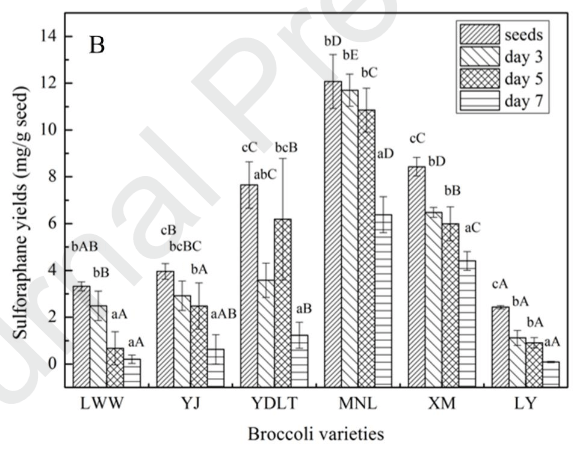
This 2020 Chinese study compared the contents of 3, 5, and 7-day-old broccoli sprouts:

“The objective of this study was:

  1. To optimize the extraction conditions of SF [sulforaphane] from seeds and sprouts at the same time to ensure the maximum SF yields from them;
  2. To compare the SF yields, total flavonoid (TF) contents, and total phenolic (TP) contents from broccoli seeds and sprouts (after 3, 5, and 7 days germination respectively) of six different cultivated varieties; and
  3. To evaluate and compare the the stability and bioaccessibility of SF, TF and TP from broccoli seeds and sprouts upon in vitro gastrointestinal digestion; total antioxidant activities of samples before and after digestion were also investigated in this section.

Most varieties obtained the maximum SF, TP and TF contents in sprouts on day 3. SF contents in sprouts were 46% – 97% of seeds, whereas TP and TF contents in sprouts were 1.12 – 3.58 times higher than seeds among varieties.

sprout ages 1B

After in vitro digestion, broccoli sprouts from MNL variety kept considerable SF, TF, and TP contents, as well as antioxidant capacities, with all values higher than seeds.

SF from seeds and sprouts both showed high bioaccessibility values of 0.91 and 1.00, respectively. The high bioaccessibility of SF in vitro experiments provide an additional evidence for its efficient utilization, as many previous researches have reported a high bioavailability of SF in vivo.”


This study provided higher measures of sulforaphane in vitro bioaccessibility compared with previous studies of in vivo bioavailability.

It was good to read a definitive study that addressed both broccoli sprout age and cultivated variety for optimizing sulforaphane. The need was there. As the study authors put it:

“From the perspective of comparison methods, broccoli varieties, and germination processes, there is still lack of a systematic comparison of SF yields and other bioactive compounds contents between broccoli seeds and sprouts.”

https://www.sciencedirect.com/science/article/pii/S0308814620300637 “Sulforaphane and its antioxidative effects in broccoli seeds and sprouts of different cultivars” (not freely available)

Growing a broccoli sprouts Victory Garden

To follow up How much sulforaphane is suitable for healthy people? I’ve started growing broccoli sprouts, and a 30 60 grams of fresh broccoli sprouts incorporated daily into the diet” [1] program. See Week 2 of Changing an inflammatory phenotype with broccoli sprouts for changes.

I loosely follow [2]‘s sprouting guidelines. One preparation difference is microwaving per [3]‘s findings as follows:

My current microwaving time for 60 grams of 3-day-old broccoli sprouts in 100 ml of water with a 1000 W microwave on full power is 35 seconds. The temperature gets up to 57°C. See Enhancing sulforaphane content for changes. I immediately dump the broccoli sprouts into a colander and spray with cold water to stop heating at the desired temperature.

The first batch of broccoli sprouts was a mild, cabbage-tasting side dish to the home-style chicken soup on page 238 of [4].

The a priori hypotheses:

    1. 30 grams of fresh broccoli sprouts will not have “51 mg (117 μmol)” of glucoraphanin [1] because they “Used the elicitor methyl jasmonate (MeJA) by priming the seeds as well as by spraying daily. MeJA at concentrations of 156 μM act as stressor in the plant and enhances the biosynthesis of the phytochemicals glucosinolates. Compared to control plants without MeJA treatment, the content of compounds as the aliphatic glucosinolate glucoraphanin was enhanced up to 70%.” 117 μmol / 1.70 = 69 μmol is the expected glucoraphanin amount in 30 grams weight of fresh broccoli sprouts. 69 x 2 = 138 μmol in 60 grams.
    2. One measurement [5] of how much sulforaphane is present in fresh broccoli sprouts before microwaving is 100 μmol / 111 g = .9 μmol / g. (.9 x 30 g) = 27 μmol is the expected sulforaphane amount in 30 grams of fresh broccoli sprouts. Changed assumption to 0 μmol sulforaphane due to 2013 Sulforaphane: translational research from laboratory bench to clinic “Broccoli sprouts are correctly described as releasing, generating, or yielding but not containing SFN [sulforaphane].”
    3. Last week a [3] coauthor agreed to make the data available to facilitate calculations. While I’m waiting… The study said the Figure 3 HL60 sulforaphane amount was 2.45 μmol / g. Eyeball estimate of the below Figure 3 control (raw broccoli florets) is a glucoraphanin amount of ~2.2 μmol / g. I assume that the broccoli florets and sprouts conversion would be the same at a 2.45 μmol / 2.2 μmol ≈ 1.11 ratio. I expect that microwaving the raw broccoli sprouts to 60°C will convert the 138 μmol of glucoraphanin to a 153 μmol amount of sulforaphane at this assumed 1.11 conversion ratio.
    4. The estimated sulforaphane weight per [6] would be (153 μmol / 5.64) = 27 mg which is comparable to clinical trial dosages listed in [7] and [8].
    5. I’ve been sitting around a lot since returning from Milano, Italy, on February 24, 2020, and probably weigh around 75 kg. The estimated dosage represents 153 μmol of sulforaphane / 75 kg = 2.04 μmol of sulforaphane / kg, compared to the 1.36 μmol of glucoraphanin / kg average of [1]. (The study provided the subjects’ mean weight in Table 1 as “85.8 ± 16.7 kg.” The average dosage per kg body weight was 117 μmol of glucoraphanin / 85.8 kg = 1.36 μmol of glucoraphanin / kg.)
    6. Don’t have a practical estimate of the amount of sulforaphane I metabolize from post-microwave glucoraphanin that would add to the calculated 153 μmol of sulforaphane. Both [7] and [8] cited a 2012 study that found: “Some conversion of GRN [glucoraphanin] to SFN can occur in response to metabolism by the gut microflora; however, the response is inefficient, having been shown to vary ‘from about 1% to more than 40% of the dose.’”
    7. Don’t have a practical estimate of the “internal dose” [8] that would result from 153+ μmol of sulforaphane.

I don’t have a laboratory in my kitchen 🙂 and won’t have quantified results. See Grow a broccoli sprouts Victory Garden today! for August 2020 practices.


References in order of citation:

[1] 2018 Effects of long-term consumption of broccoli sprouts on inflammatory markers in overweight subjects

[2] 2017 You Need Sulforaphane – How and Why to Grow Broccoli Sprouts

[3] 2020 Microwave cooking increases sulforaphane level in broccoli curated in Microwave broccoli to increase sulforaphane levels

fsn31493-fig-0003-m

[4] 2016 Dr. Vlassara’s AGE-Less Diet: How a Chemical in the Foods We Eat Promotes Disease, Obesity, and Aging and the Steps We Can Take to Stop It

[5] 2016 Effect of Broccoli Sprouts and Live Attenuated Influenza Virus on Peripheral Blood Natural Killer Cells: A Randomized, Double-Blind Study

[6] 2020 https://pubchem.ncbi.nlm.nih.gov/compound/sulforaphane lists sulforaphane’s molecular weight as 177.3 g / mol. A 1 mg weight of sulforaphane equals a 5.64 μmol sulforaphane amount (.001 / 177.3).

[7] 2019 Sulforaphane: Its “Coming of Age” as a Clinically Relevant Nutraceutical in the Prevention and Treatment of Chronic Disease

[8] 2019 Broccoli or Sulforaphane: Is It the Source or Dose That Matters? Note that a coauthor didn’t disclose their business’ conflict of interest for an effectively promoted commercial product.

Using COVID-19 as a cover story

One aspect of the coronavirus is how it’s being used for economic upheavals that weren’t previously acceptable. The view from a Hong Kong analyst:

From March 2020 MMT is now a reality:

“Under cover of the ‘coronacrisis’, we are now witnessing the introduction of Modern Monetary Theory (MMT), which isn’t modern and isn’t a theory.

The dollars that the government will inject into the Fed’s Special Purpose Vehicles (SPVs) were previously created out of nothing when the Fed monetised Treasury securities. So, the Fed creates money out of nothing. This money then goes to the government. The government then deposits some of this money into the Fed’s new SPVs, and based on this injection of ‘capital’ the Fed creates a lot more money out of nothing.

No longer will governments feel constrained by their abilities to tax the population and borrow from bond investors. From now on they will act like they have unrestricted access to a bottomless pool of money.”

The Coming Great Inflation from October 2019 showed that current developments were already in the works:

“The difference between money and every other economic good is that money is on one side of almost every economic transaction. Consequently, there is no single number that can accurately represent the price (purchasing power) of money, meaning that even the most honest and rigorous attempt to calculate the ‘general price level’ will fail. This doesn’t imply that changes in the supply of money have no effect on money purchasing power, but it does imply that the effects of changes in the money supply can’t be explained or understood via a simple equation.

The economic effects of a money-supply increase driven by commercial banks making loans to their customers will be very different from the economic effects of a money-supply increase driven by central banks monetising assets. ‘Main Street’ is the first receiver of the new money in the former case and ‘Wall Street’ is the first receiver of the new money in the latter case. This alone goes a long way towards explaining why the QE programs of Q4-2008 onward had a much greater effect on financial asset prices than on the prices that get added together to form the Consumer Price Index.

Due to the combination of the false belief that large increases in the supply of money have only a minor effect on the purchasing power of money and the equally false belief that the economy would benefit from a bit more ‘price inflation’, it’s a good bet that central banks and governments will devise ways to inject a lot more money into the economy in reaction to future economic weakness.”

How much sulforaphane is suitable for healthy people?

This post compares and contrasts two perspectives on how much sulforaphane is suitable for healthy people. One perspective was an October 2019 review from John Hopkins researchers who specialize in sulforaphane clinical trials:

Broccoli or Sulforaphane: Is It the Source or Dose That Matters?

These researchers didn’t give a consumer-practical answer, so I’ve presented a concurrent commercial perspective to the same body of evidence via an October 2019 review from the Australian founder of a company that offers sulforaphane products:

Sulforaphane: Its “Coming of Age” as a Clinically Relevant Nutraceutical in the Prevention and Treatment of Chronic Disease


1. Taste from a clinical trial perspective:

“Harsh taste (a.k.a. back-of-the-throat burning sensation) that is noticed by most people who consume higher doses of sulforaphane, must be acknowledged and anticipated by investigators. This is particularly so at higher limits of dosing with sulforaphane, and not so much of a concern when dosing with glucoraphanin, or even with glucoraphanin-plus-myrosinase.

Presence and/or enzymatic production of levels of sulforaphane in oral doses ranging above about 100 µmol, creates a burning taste that most consumers notice in the back of their throats rather than on the tongue. Higher doses of sulforaphane lead to an increased number of adverse event reports, primarily nausea, heartburn, or other gastrointestinal discomfort.”

Taste wasn’t mentioned in the commercial review. Adverse effects were mentioned in this context:

“Because SFN is derived from a commonly consumed vegetable, it is generally considered to lack adverse effects; safety of broccoli sprouts has been confirmed. However, use of a phytochemical in chemoprevention engages very different biochemical processes when using the same molecule in chemotherapy; biochemical behaviour of cancer cells and normal cells is very different.”

2. Commercial products from a clinical trial perspective:

“Using a dietary supplement formulation of glucoraphanin plus myrosinase (Avmacol®) in tablet form, we observed a median 20% bioavailability with greatly dampened inter-individual variability. Fahey et al. have observed approximately 35% bioavailability with this supplement in a different population.”

Avmacol appeared to be the John Hopkins product of choice, as it was mentioned 15 times in its clinical trials table. A further investigation of Avmacol showed that its supplier for broccoli extract, TrueBroc, was cofounded by a John Hopkins coauthor! Yet the review stated:

“The authors declare no conflict of interest.”

Please disclose easily discoverable ethical and commercial conflicts without prevarication. Other products were downgraded with statements such as:

“5 or 10 g/d of BroccoPhane powder (BSP), reported to be rich in SF, daily x 4 wks (we have assayed previously and found this not to be the case).”

They also disclaimed:

“We have indicated clinical studies in which label results have been used rather than making dose measurements prior to or during intervention.”

No commercial products – not even the author’s own company’s – were directly mentioned in a commercial perspective.

3. Dosage from a clinical trial perspective:

“Reporting of administered dose of glucoraphanin and/or sulforaphane is a poor measure of the bioavailable / bioactive dose of sulforaphane. As a consequence, we propose that the excreted amount of sulforaphane metabolites (sulforaphane + sulforaphane cysteine-glycine + sulforaphane cysteine + sulforaphane N-acetylcysteine) in urine over 24 h (2–3 half-lives), which is a measure of “internal dose”, provides a more revealing and likely consistent view of delivery of sulforaphane to study participants.

Only recently have there been attempts to define minimally effective doses in humans – an outcome made possible by development of consistently formulated, stable, bioavailable broccoli-derived preparations.”

Dosage from a commercial perspective:

“Of available SFN clinical trials associated with genes induced via Nrf2 activation, many demonstrate a linear dose-response. More recently, it has become apparent that SFN can behave hormetically with different effects responsive to different doses. This is in addition to its varying effects on different cell types and consequent to widely varying intracellular concentrations.

A 2017 clinical pilot study examined the effect of an oral dose of 100 μmol (17.3 mg) encapsulated SFN on GSH [reduced glutathione] induction in humans over 7 days. Pre- and postmeasurement of GSH in blood cells that included T cells, B cells, and NK cells showed an increase of 32%. Researchers found that in the pilot group of nine participants, age, sex, and race did not influence the outcome.

Clinical outcomes are achievable in conditions such as asthma with daily SFN doses of around 18 mg daily and from 27 to 40 mg in type 2 diabetes. The daily SFN dose found to achieve beneficial outcomes in most of the available clinical trials is around 20-40 mg.”

The author’s sulforaphane products are available in 100, 250, and 700 mg capsules of enzyme-active broccoli sprout powder.

4. Let’s see how these perspectives treated a 2018 Spanish clinical trial published as Effects of long-term consumption of broccoli sprouts on inflammatory markers in overweight subjects.

From a commercial perspective:

“In a recent study using 30 grams of fresh broccoli sprouts incorporated daily into diet, two key inflammatory cytokines were measured at four time points in forty healthy overweight [BMI 24.9 – 29.9] people. Levels of both interleukin-6 (Il-6) and C-reactive protein (CRP) declined over the 70 days during which sprouts were ingested.

These biomarkers were measured again at day 90, wherein it was found that Il-6 continued to decline, whereas CRP climbed again. When the final measurement was taken at day 160, CRP, although climbing, had not returned to its baseline value. Il-6 remained significantly below baseline level at day 160.

Sprouts contained approximately 51 mg (117 μmol) GRN [glucoraphanin], and plasma and urinary SFN metabolites were measured to confirm that SFN had been produced when sprouts were ingested.”


From a clinical trial perspective, glucoraphanin dosage was “1.67 (GR) μmol/kg BW.” This wasn’t accurate, however. It was assumed into existence by:

“In cases where authors did not indicate dosage in μmol/kg body weight (BW), we have made those calculations using a priori assumption of a 70 kg BW.”

117 μmol / 1.67 μmol/kg = 70 kg.

This study provided overweight subjects’ mean weight in its Table 1 as “85.8 ± 16.7 kg.” So its actual average glucoraphanin dosage per kg body weight was 117 μmol / 85.8 kg = 1.36 μmol/kg. Was making an accurate calculation too difficult?

A clinical trial perspective included this study in Section “3.2. Clinical Studies with Broccoli-Based Preparations: Efficacy” subsection “3.2.8. Diabetes, Metabolic Syndrome, and Related Disorders.” This was somewhat misleading, as it was grouped with studies such as a 2012 Iranian Effects of broccoli sprout with high sulforaphane concentration on inflammatory markers in type 2 diabetic patients: A randomized double-blind placebo-controlled clinical trial (not freely available).

A commercial perspective pointed out substantial differences between these two studies:

“Where the study described above by Lopez-Chillon et al. investigated healthy overweight people to assess effects of SFN-yielding broccoli sprout homogenate on biomarkers of inflammation, Mirmiran et al. in 2012 had used a SFN-yielding supplement in T2DM patients. Although the data are not directly comparable, the latter study using the powdered supplement resulted in significant lowering of Il-6, hs-CRP, and TNF-α over just 4 weeks.

It is not possible to further compare the two studies due to vastly different time periods over which each was conducted.”


The commercial perspective impressed as more balanced than the clinical trial perspective. The clinical trial perspective also had an undisclosed conflict of interest!

A. The clinical trial perspective:

  • Effectively promoted one commercial product whose supplier was associated with a coauthor;
  • Downgraded several other commercial products; and
  • Tried to shift responsibility for the lack of “minimally effective doses in humans” to commercial products with:

    “Only recently have there been attempts to define minimally effective doses in humans – an outcome made possible by the development of consistently formulated, stable, bioavailable broccoli-derived preparations.”

But unless four years previous is “recently,” using commercial products to excuse slow research progress can be dismissed. A coauthor of the clinical trial perspective was John Hopkins’ lead researcher for a November 2015 Sulforaphane Bioavailability from Glucoraphanin-Rich Broccoli: Control by Active Endogenous Myrosinase, which commended “high quality, commercially available broccoli supplements” per:

“We have now discontinued making BSE [broccoli sprout extract], because there are several high quality, commercially available broccoli supplements on the market.”

The commercial perspective didn’t specifically mention any commercial products.

B. The commercial perspective didn’t address taste, which may be a consumer acceptance problem.

C. The commercial perspective provided practical dosage recommendations, reflecting their consumer orientation. These recommendations didn’t address how much sulforaphane is suitable for healthy people, though.

The clinical trial perspective will eventually have to make practical dosage recommendations after they stop dodging their audience – which includes clinicians trying to apply clinical trial data – with unhelpful statements such as:

“Reporting of administered dose of glucoraphanin and/or sulforaphane is a poor measure of the bioavailable / bioactive dose of sulforaphane.”

How practical was their “internal dose” recommendation for non-researcher readers?


Here’s what I’m doing to answer how much sulforaphane is suitable for healthy people.

I’d like to posthumously credit my high school literature teachers Dorothy Jasiecki and Martin Obrentz for this post’s compare-and-contrast approach. They both required their students to read at least two books monthly, then minimally handwrite a 3-page (single-spaced) paper comparing and contrasting those books.

Each monthly assignment was individualized so that students couldn’t undo the assignment’s purpose – to think for yourself – with parasitical collaboration. This former practice remains a good measure of intentional dumbing-down of young people, the intent of which has become clearer.

You can see from these linked testimonials that their approach was in a bygone era, back when some teachers considered a desired outcome of public education to be that each individual learned to think for themself. My younger brother contributed:

“I can still remember everything Mr. Obrentz ever assigned for me to read. He was the epitome of what a teacher should be.”

Microwave broccoli to increase sulforaphane levels

This 2020 Chinese/USDA study investigated effects on sulforaphane amount from heating broccoli in water and microwaving at different power settings to different temperatures:

“Microwave treatment causes a sudden collapse of cell structure due to the increase in osmotic pressure difference over vacuole membrane. Mild heating could increase SFR [sulforaphane] level, possibly explained by the increased activity of MYR [the enzyme myrosinase] which can hydrolyze GLR [glucoraphanin] into SFR at high temperature (up to 60°C).

Microwave‐cooked broccoli had higher levels of these two compounds compared to broccoli heated in water. The broccoli sample without cooking as a control showed the least amount of GLR, indicating that microwave heating did help to release more GLR from the cell.

In the temperature range of 50–60°C, a positive correlation was observed between GLR or SFR contents and temperature. However, these two physiochemical contents were negatively correlated with temperature when it increased to 70°C.

The glucoraphanin (GLR) and sulforaphane (SFR) contents (μmol/g DW) in florets of broccoli during microwaving at 40, 50, 60, and 70°C using low power level (LL) or high power level (HL). Data are reported as the mean ± SD (n = 3). Values with different letters are significantly (p < .05) different.

[For example, sulforaphane levels of the control (raw), LL40, LL70, and HL40 conditions weren’t significantly different, and the HL70 level was significantly lower than those levels]. The microwave using high level at 60°C showed the greatest SFR level (2.45 µmol/g DW).”

Table S1 from the supporting material:

Temperature

(°C)

Time

(S)

Power level

(W)

Heating in water 40 185 NA
50 230
60 262
70 290
Microwave (HL) 40 65 950
50 90
60 108
70 120
Microwave (LL) 40 115 475
50 148
60 178
70 200

https://onlinelibrary.wiley.com/doi/10.1002/fsn3.1493 “Microwave cooking increases sulforaphane level in broccoli”


The researchers demonstrated a more effective method of increasing sulforaphane than did the cited and widely discussed 2004 Heating decreases epithiospecifier protein activity and increases sulforaphane formation in broccoli (not freely available). The older study methods were difficult to implement in kitchens, and evaluated heating temperature as the only factor.

The present study added microwave power level irradiation effects as a factor, and simplified heating temperature implementation. People can use Table S1 to maximize broccoli floret sulforaphane content in their kitchens. See Week 2 of Changing an inflammatory phenotype with broccoli sprouts for changes.

The study provided an optimal sulforaphane end result of “(2.45 µmol/g DW)”. I asked a study author for additional data, and they replied:

“The control GLR and SLR amount was 2.18 and 0.22 µmol/g DW, respectively, while the HL60 GLR amount was 2.78 µmol/g DW.”

Microwaving 10 grams of broccoli florets to 60°C (140°F) increased the sulforaphane amount by 1,114% (2.45 / .22)! That also increased the glucoraphanin amount by 27% (2.78 / 2.18) for further processing into sulforaphane after eating.

I replied: That’s an exciting result, increasing sulforaphane more than 11 times, while also increasing glucoraphanin! I haven’t found similar experiments with broccoli sprouts. Would you expect similar results?

The study author responded:

“We didn’t expect this result, and think microwave irradiation might help to release more conjugated forms of glucosinolates and then get hydrolyzed by released myrosinase. Further studies are being carried out.”


The study also measured broccoli stems:

“GLR and SFR were hardly detected in stems. Less than 52% of GLR was detected in the [50/50] mixture of florets and stems compared to florets.

Microwaved at 60°C, the florets had a concentration of GLR and SFR at 2.78 and 2.45 µmol/g DW, respectively, which was significantly higher than the levels detected in mixture of florets and stems (1.21 and 0.82 µmol/g DW, respectively).”

The 50% florets / 50% stems mixture’s glucoraphanin amount of 1.21 µmol was roughly comparable with the 1.08 µmol glucoraphanin amount of mature broccoli extract in item 2 below.

Reminders from Eat broccoli sprouts today:

  1. A 1 mg sulforaphane weight equals a 5.64 μmol sulforaphane amount.
  2. “Content of glucoraphanin in extract from broccoli sprouts was 16.6 μmol per gram of fresh weight. In contrast, mature broccoli extract contained 1.08 μmol per gram of fresh weight.”
  3. The bioavailability of sulforaphane in a broccoli sprout extract with the myrosinase enzyme 100 μmol gelcap was 36.1% which weighed 6.4 mg.
  4. The question of how much sulforaphane is suitable for healthy people remains unanswered.

Eat broccoli sprouts today!

This 2020 Korean letter to a journal editor cited 23 recent papers in support of sulforaphane’s positive effects, mainly in anti-cancer treatments:

“Gene expression is mediated by chromatin epigenetic changes, including DNA methylation, histone modifications, promoter-enhancer interactions, and non-coding RNA (microRNA and long non-coding RNA)-mediated regulation. Approximately 50% of all tumor suppressor genes are inactivated through epigenetic modifications, rather than by genetic mechanisms, in sporadic cancers. Accumulating evidence suggests that epigenetic modulators are important tools to improve the efficacy of disease prevention strategies.

Because sulforaphane (SFN) induces the nuclear factor erythroid 2-related factor 2 (Nrf2)-antioxidant response element pathway that induces the cellular defense against oxidative stress, SFN has received increased attention because it acts as an antioxidant, antimicrobial, anti-inflammatory, and anticancer agent.”

https://www.ncbi.nlm.nih.gov/pmc/articles/PMC7068201/ “A recent overview on sulforaphane as a dietary epigenetic modulator”


Letters to the editor aren’t peer-reviewed, though. One of the cited papers was a 2018 Czech mini-review that included metabolism, preparation and processing evidence:

“Sulforaphane is a phytochemical that occurs in plants in the form of biological inactive precursor glucoraphanin. This precursor belongs to the group of phytochemicals – glucosinolates – that are rapidly converted to isothiocyanate by the enzyme myrosinase.

The process of transformation takes place after a disruption of plant tissues by biting, chewing, slicing, and other destruction of tissues, when myrosinase is released from plant tissues. When myrosinase is destroyed during meal preparation (during cooking, steam cooking, or microwave treatment), a likely source of isothiocyanates is microbial degradation of glucosinolates by intestinal microflora. However, hydrolysis by microflora has been reported to be not very efficient, and in humans it is very diverse and variable.

Content of glucoraphanin in extract from broccoli sprouts was 16.6 μmol per gram of fresh weight. In contrast, mature broccoli extract contained 1.08 μmol per gram of fresh weight. Total amount of glucosinolates in young broccoli sprouts is 22.7 μmol per gram of fresh weight and 3.37 μmol per gram of fresh weight for mature broccoli.

Percentage amount of sulforaphane formed from its precursor glucoraphanin in broccoli which had not been heat treated and had been lyophilized [freeze-dried] was 22.8%. Broccoli steaming (5 min) and its lyophilization decrease the amount of sulforaphane formed to 4.2%.”

https://www.liebertpub.com/doi/full/10.1089/jmf.2018.0024 “Isothiocyanate from Broccoli, Sulforaphane, and Its Properties (not freely available)


Information about 43 completed sulforaphane clinical trials is here. Among them, the 2014 Effect of Broccoli Sprouts on Nasal Response to Live Attenuated Influenza Virus in Smokers: A Randomized, Double-Blind Study was of particular interest, stating:

“Nutritional interventions aimed at boosting antioxidants may be most effective in individuals who are relatively antioxidant-deficient at baseline, a condition likely to be more prevalent in smokers.”

I didn’t notice regular supplement dosage studies. Maybe I didn’t read control group information carefully enough?


https://pubchem.ncbi.nlm.nih.gov/compound/sulforaphane lists sulforaphane’s molecular weight as 177.3 g/mol. A 1 mg sulforaphane capsule weight equals a 5.64 μmol sulforaphane amount (.001 / 177.3).

From the 2015 Sulforaphane Bioavailability from Glucoraphanin-Rich Broccoli: Control by Active Endogenous Myrosinase:

  • Figure 4 showed bioavailability of sulforaphane in a broccoli sprout extract with myrosinase 100 μmol gelcap was 36.1% which weighed 6.4 mg (36.1 / 5.64).
  • Figure 3 showed bioavailability of sulforaphane in freeze-dried broccoli sprouts in pineapple-lime juice was 40.5% in 50, 100, and 200 μmol amounts and 33.8% with 100 μmol gel caps. You do the weight math.
  • Figure 2 showed that if broccoli sprout extract didn’t have the enzyme, bioavailability of sulforaphane was 10.4% whether the amount was 69 or 230 μmol, weighing 1.27 mg (69 x .104) / 5.64 and 4.24 mg (230 x .104) / 5.64.

Bioavailability ranged from Figure 2’s 10.4% to Figure 4’s 36.1%. The question of how much sulforaphane is suitable for healthy people remains unanswered.


Aging as a disease

This 2020 interview was with UC Berkeley researchers:

“Lack of cure goes hand in hand with inability to accept that this [aging] is disease. For example, there was some resistance to accept tuberculosis as the actual disease. When there was no antibiotics or cure against it, people tended to discard it and said, oh, it’s just nerves, you need to go to a sanatorium and relax.

It used to be that, please do not diagnose that there’s bacterial meningitis, because there is no cure. Whatever else you can come up with, do it first. Now, diagnose it as fast as possible, so we can put patients on antibiotics immediately. My prediction is that the same will happen to aging.

We and others have demonstrated that you can, from the outside, either by some signal or blood therapy, parabiosis, something like that, some intervention, jump-start aged resident stem cells in tissue and get them to behave as, by whatever means you’re measuring it, young or a lot closer to young than they would normally be. Intrinsic capacity of them to act that way is there.

As we grow old, the environment of differentiated niche stem cells does not provide productive instruction. It provides counterproductive instruction, which, overall, tells them just to remain quiescent and do nothing.

It’s not a program to kill you. It’s the lack of a program to keep you young and healthy for longer than 90 years.

If your program was that whenever you’re a damaged, differentiated cell, you simply trigger apoptosis and activate stem cells to make new cells, we would live much longer and healthy. The program right now is to resist being dead and replaced as much as you can for as long as you can.

So cells produce too much TGF beta [transforming growth factor-β] because it helps them to keep functioning even when they’re damaged. That too much TGF beta, ironically, inhibits resident stem cells, so they are not replacing old cells with new ones. It’s almost like you have old bureaucrats that are running an organization and do not want to be replaced.

Our thoughts are probably different from most people, because we go to the data and the data show that they’re not really fully what authors wrote in the abstract or conclusion. When you look at that, my thought is that much more work needs to be done before it [partial cellular reprogramming] could be even thought to be commercialized.”

https://www.lifespan.io/news/apheresis-with-profs-irina-michael-conboy/ “Irina & Michael Conboy – Resetting Aged Blood to Restore Youth”


Keep in mind that although the interviewers’ organization had changed, their advocacy position as displayed in A blood plasma aging clock persisted. One of the interviewees is on the interviewers’ organization scientific advisory board, and they also have an interest in downgrading competing approaches.

Despite caveats, this interview was these researchers’ perspective in their decades-long investigations of aging. I included a graphic and below quote from Organismal aging and cellular senescence to note how their paradigm compared with other aging researchers:

“In our view, recent evidence that

  • Senescence is based on an unterminated developmental growth program and finding that
  • The concept of post-mitotic senescence requires activation of expansion, or ‘growth’ factors as a second hit,

favor the assumption that aging underlies a grating of genetic determination similarly to what is summarized above under the pseudo-programmed causative approach.”

Recover your sanity

Men, it has been well said:

  • Think in herds; it will be seen that
  • They go mad in herds, while
  • They only recover their senses slowly, one by one.

During the great plague, which ravaged all Europe between the years 1345 and 1350, it was generally considered that the end of the world was at hand.

‘But the facts, my dear fellow,’ said his friend, ‘the facts do not agree with your theory.’ ‘Don’t they?’ replied the philosopher, shrugging his shoulders, ‘then, tant pis pour les faits’ – so much the worse for the facts!”

Charles Mackay, 1841

https://www.gutenberg.org/ebooks/24518 “Memoirs of Extraordinary Popular Delusions and the Madness of Crowds”

Alfred Jacob Miller “Hunting buffalo” 1837
“Establishing the hidden communication networks in large self-organized groups facilitates a quantitative understanding of behavioral contagion.

An individual will be more likely to respond (is more susceptible) if it:

  • Is strongly connected to the initiator (short path length), and if it
  • Has neighbors which are strongly connected to each other.”

Why is it so difficult to live your own life?

The WHO has a financial incentive to declare COVID-19 a pandemic

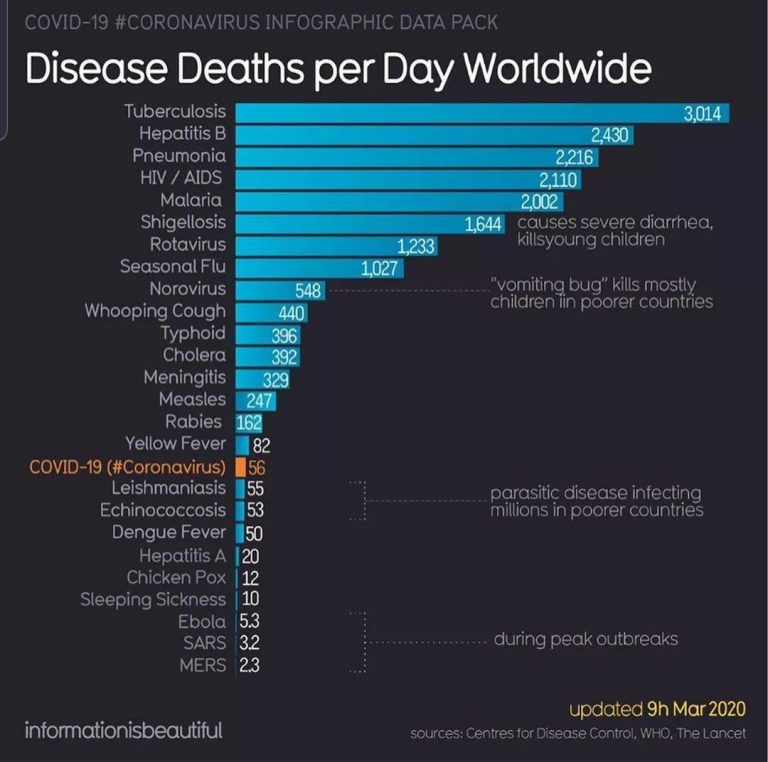
“The percent of the population being affected has not even reached 1/10th of one percent. When we look at this Coronavirus scare, it does not even compare to all the deaths taking place every single day from a host of other diseases nobody bothers to ever mention. This really makes me wonder just who is orchestrating this panic and is the purpose really to expand government powers?”

The Cyclical Nature of Disease

“The WHO has a financial incentive in declaring this a pandemic. It issued Pandemic Bonds paying 7% interest which now the WHO does not have to repay.”

Half-Billion $ Pandemic Derivatives

See Well done, WHO, carefully played to follow up.