Eat broccoli sprouts to prevent radiation damage

This 2021 rodent study investigated effects of sulforaphane on skin damage from irradiation:

“Radiotherapy is currently the main treatment for various cancers. We observed the protective effect of sulforaphane (SFN) on radiation-induced skin injury (RISI), including oxidative stress and inflammatory response indexes, and Nrf2 expression with its downstream antioxidant genes:

  • SFN prevented DNA damage caused by radiation.
  • SFN prevented and treated radiation-induced skin inflammation.
  • SFN prevented radiation-induced oxidative stress in skin.
  • Activation of Nrf2 and expressions of its downstream genes in skin induced by SFN.

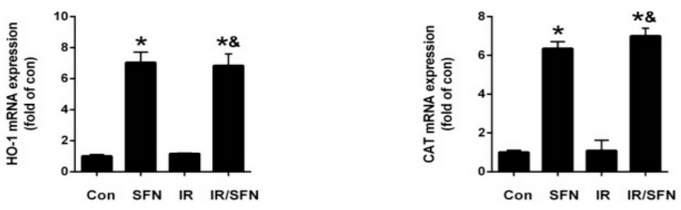
Nrf2 downstream antioxidant genes induced by SFN

Mice were randomly assigned to one of four groups (n = 8), including control group (CON), SFN group, irradiation (IR) group, and IR plus SFN (IR/SFN) group (* p < 0.05 vs. CON; & p < 0.05 vs. IR).

Our most innovative discovery was that SFN provided skin protection from IR. At present, there are a few drugs to treat RISI in clinical patients, but the effect is not very ideal, or some may cause certain side effects.

SFN extracted from natural broccoli has no toxicity and is easily accepted for usage in clinic. According to our findings, SFN will provide a new strategy for clinical treatment and prevention of RISI in the future.”

https://www.mdpi.com/2076-3921/10/11/1850/htm “Sulforaphane-Mediated Nrf2 Activation Prevents Radiation-Induced Skin Injury through Inhibiting the Oxidative-Stress-Activated DNA Damage and NLRP3 Inflammasome”


This study’s findings probably also apply to less-severe skin damage caused by sun exposure.

PXL_20211201_201315538

Eat broccoli sprouts for your liver

This 2021 rodent study investigated sulforaphane pretreatment’s role in reducing liver injuries:

“As a double blood supply organ of the portal vein and artery, the liver is highly sensitive to ischemia, and is one of the common organs to suffer from hepatic ischemia-reperfusion injury (HI/RI). HI/RI leads to overproduction of reactive oxygen species (ROS).

  • Overdoses of ROS promote reaction of lipid peroxidation and generation of the extremely aggressive oxidants nitric oxide (NO) and malondialdehyde (MDA).
  • HI/RI decreased antioxidant enzyme activity of glutathione (GSH), catalase (CAT), and superoxide dismutase (SOD).
  • Sulforaphane (SFN) intervention significantly decreased levels of MDA and NO by increasing activity of GSH, CAT, and SOD.

Inflammation is the most serious secondary injury experienced in HI/RI.

  • Monocyte chemotactic protein 1 (MCP-1) is involved in an inflammatory reaction with regulation of monocytes, T lymphocytes, and NK cells. MCP-1 can also increase infiltration of inflammatory cells by activating NF-κB.
  • Tumor necrosis factor-α (TNF-α) is a promoter of the inflammatory response. Interleukin-6 (IL-6) is an inflammatory mediator in the acute reaction period.
  • SFN treatment significantly decreased HI/RI-induced expression of TNF-a, IL-6, and MCP-1.

sulforaphane and liver inflammation

In conclusion, SFN has a protective effect on HI/RI. The mechanism is associated with activating Nrf2/HO-1 signaling to suppress oxidative stress and inflammation.”

https://www.sciencedirect.com/science/article/abs/pii/S0966327421000794 “Sulforaphane alleviates hepatic ischemia–reperfusion injury through promoting the activation of Nrf-2/HO-1 signaling” (not freely available)


A human equivalent of this study’s 5 mg / kg sulforaphane dose was (.161 x 5 mg) x 70 kg ≈ 56 mg. For comparison, my estimated daily sulforaphane intake from microwaved sprouts is 52 mg.

PXL_20211031_110903996

Human agency vs. brain dysfunction

This 2021 human study used epigenetic clock technology to assess chronic inflammation as a driver of cognitive decline through its effects on brain structure:

“An epigenetic measure of C-reactive protein (DNAm CRP) was assembled for each participant. We found that higher inflammatory burden, indexed by DNAm CRP scores, associated with poor cognitive and neuroimaging brain health outcomes.

inflammation vs cognitive ability

DNAm CRP exhibited significantly larger associations with brain structural MRI metrics (including global grey and white matter atrophy, poorer white matter microstructure, and increased white matter hyperintensity burden) than serum CRP. Given that the 7 CpGs which make up DNAm CRP score reside in inflammation and vascular-related genes, these DNAm CRP-brain MRI associations may be capturing the impact of upstream inflammatory activity above and beyond that of serum CRP levels.

Our results indicate that some cognitive domains (processing speed) may be more mediated by brain structural consequences of chronic inflammation than others (verbal memory, visuospatial ability).

Our results add to the evidence base that DNAm-based predictors of inflammation may act as a quantifiable archive of longitudinal effects of these exposures – and other unaccounted for health and genetic profiles – that serum CRP levels fail to capture. By utilising an epigenetic inflammation measure, which integrates information from multiple immune-related CpG sites, we may provide a more reliable measure of chronic inflammation and thus a more comprehensive overview of consequences of chronic inflammation on brain structure and function.”

https://n.neurology.org/content/early/2021/11/17/WNL.0000000000012997.long “DNA Methylation and Protein Markers of Chronic Inflammation and Their Associations With Brain and Cognitive Aging”


These researchers essentially negated many of their findings by acknowledging:

“Although we endeavoured to remove participants with cognition-related pathology, these were screened via self-reported diagnoses, and we may be missing undiagnosed or subclinical incident neurodegenerative pathology.”

It wasn’t sufficient to claim in the Abstract section “Participants (N = 521) were cognitively normal, around 73 years of age” then include in the Discussion section a one-sentence limitation of relying on self-reports. Everyone defends themself against current and past realities and experiences.

Hard to imagine that objective measures such as the three comprising cognitive ability weren’t better screens. But then too many 73-year-old subjects may not have been “cognitively normal” and this study wouldn’t be adequately powered?

Can humans counteract inflammation? Non-communicable diseases? Smoking? Immune system degradation? Yes. No personal-agency actions were mentioned.

Also note this study’s social norming. The above-pictured 30-year-old female was busy at work, and subsequently hoisted a cat instead of a child in later years.

Take responsibility for your own one precious life.

PXL_20211118_114858264

Epigenetic clocks vs. individual choices

This 2021 human twin study used four epigenetic clocks:

“We examined the mediating role of lifestyle factors on the association between sex and biological aging in younger and older adults. The Finnish Twin Cohort (FTC) includes three large cohort studies:

  1. The older FTC includes twins born before 1958;
  2. Finntwin16 includes twins born in 1975-1979; and
  3. Finntwin12 includes twins born in 1983-1987.

In comparison to women, men were biologically older and, in general, they had unhealthier life habits. The effect of sex on biological aging was partly mediated by body mass index and, in older twins, by smoking. Sex was directly associated with biological aging, and the association was stronger in older twins.

over 50 twins

Declining smoking prevalence among men is a plausible explanation for narrowing of the difference in life expectancy between sexes. Data generated by epigenetic clocks may help in estimating effects of lifestyle and environmental factors on aging and in predicting aging in future generations.”

https://academic.oup.com/biomedgerontology/advance-article/doi/10.1093/gerona/glab337/6424421 “Do epigenetic clocks provide explanations for sex differences in lifespan? A cross-sectional twin study”


It was too much to ask of epigenetic clocks to ferret out preclinical symptoms of lifestyles and environments accelerating aging in younger twins. Levine’s Phenotypic Age clinical measurements could assess accelerated aging trajectories, but may not have been available for this study. People who are busy abusing their bodies into non-communicable diseases have plenty of other warning signs, like abdominal obesity, high blood pressure, high blood sugar, high serum triglycerides, and low serum high-density lipoprotein.

Preclinical symptoms may be reversible by individual choices that influence lifestyle and/or environment. Effective healthspan and lifespan changes measurable by epigenetic clocks are usually limited once clinical symptoms emerge, though.

Consider this rodent study’s graphic from Part 2 of Eat broccoli sprouts for your eyes:

retina function

This chart demonstrated that preventing diabetes’ negative effects on retinal function (i.e. controls) was measurably better than trying to fix subjects’ vision after onset of diabetes.

I would have liked this study to address a morbidity phase, where healthspan stops increasing but lifespan increases. That seems possible in twin studies, where one twin’s choices cause a healthspan halt compared to the other twin’s choices.

PXL_20211113_112252503

Save the bees with Brassicaceae seeds

Two 2021 papers, with the first studying bee infections:

“Fungus Nosema ceranae represents one of the primary bee infection threats worldwide, and antibiotic fumagillin is the only registered product for nosemosis disease control. Natural bioactive compounds deriving from glucosinolate–myrosinase (GSL–MYR) in Brassicaceae plants, mainly isothiocyanates (ITCs), are known for antimicrobial activity against numerous pathogens and health-protective effects in humans.

This work explored Brassica nigra [black mustard] and Eruca sativa [arugula] defatted seed meal (DSM) GSL-containing diets against natural Nosema infection in honeybees. Feeding was administered in May to mildly N. ceranae-infected colonies for four weeks at 250 g/week.

  • N. ceranae abundance showed a slight but significant decrease.
  • No significant effects on colony development and bee mortality were observed compared to controls.
  • MYR activity was detected both in bees fed DSMs and controls.
  • ITCs were found in gut tissues from bees treated with DSMs, corroborating presence of a MYR-like enzyme capable of hydrolyzing ingested GSLs.

Use of DSMs containing GSLs represents a promising alternative to fumagillin as it would overcome the problem of toxic bee product residues encountered with antibiotic treatment.”

https://www.mdpi.com/2218-273X/11/11/1657/htm “Glucosinolate Bioactivation by Apis mellifera Workers and Its Impact on Nosema ceranae Infection at the Colony Level”


A review was cited for “ITCs are GSL hydrolysis products known for their broad-spectrum biological activities against pests and soil/food-borne fungi, bacteria, and human microorganisms.”

“ITCs are efficient agents against a wide range of fungal strains. Many plant and human pathogens, as well as other fungi, were shown to be inhibited in vitro by these agents.

ITC-containing, chemically-characterized plant matrices used to test antifungal activity are summarized. The same activities were tested in pure ITCs; in fact, several well-designed studies did both approaches.

Although there is no one-size-fits-all rule to predict antifungal activity, in general, less polar compounds are usually more potent in solution, but lag behind more volatile compounds with small molecule size in vapor-phase applications. The main biochemical targets seem to be directly related to chemical reactivity, with antioxidant machinery a well-identified target.

Excellent studies on transcriptomics show general stress responses. Inhibiting production of fungal toxins is shown in many real-life applications as well.

Additional applications include:

  • Inhibition of fungal growth, pathogenesis, and/or toxin production in a variety of stored plants and grains;
  • Inhibition of disease on post-harvest fruits; as well as
  • Increasing shelf-life of different food products.

What is more, decrease in decay is frequently accompanied by the lack of measurable changes in various quality characteristics.

ITCs’ natural origin and biodegradability make them good candidates for a wide range of possible applications. Long-term studies show effects are delivered usually without apparent side-effects to plants.”

https://www.mdpi.com/2309-608X/7/7/539/htm “Effects of Glucosinolate-Derived Isothiocyanates on Fungi: A Comprehensive Review on Direct Effects, Mechanisms, Structure-Activity Relationship Data and Possible Agricultural Applications”


PXL_20211031_110852279

Remembering encounters provides future benefits

Two 2021 papers on trained immunity, with the first a review:

“Effective memory immune responses rely on interaction between innate and adaptive immune cells. While activation of innate immunity provides the first line of defense against infections, it also primes the adaptive immune response.

Adaptive immunity can enhance antimicrobial machinery of innate cells, making them more effective at clearing pathogenic microorganisms. An additional layer of complexity adds to this network of interactions, with innate cells adopting a memory phenotype, which used to apply to only adaptive immunity. Furthermore, non-immune cells can develop some features of this memory-like phenotype.

fimmu-12-745332-g001

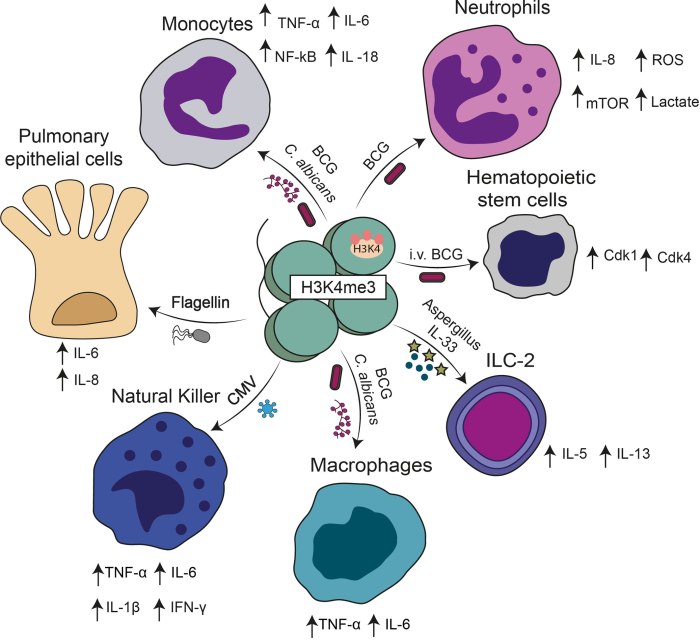
Cell subsets in which trained immunity has been described. Different stimuli including Bacillus Calmette Guerin (BCG), β-glucan, cytokines, cytomegalovirus (CMV), and bacterial components can induce a trained immunity phenotype. A common hallmark of trained immunity in these cases is H3K4me3 in promoters of genes encoding for different cytokines.

  • Mechanisms Underlying Establishment of Trained Immunity
  • Trained Immunity in Neutrophils
  • Trained Immunity in Monocytes and Macrophages: General Features
  • Metabolic Pathways Involved in Training of Monocytes and Macrophages
  • Hormonal Control of Trained Immunity Responses in Monocytes and Macrophages
  • Trained Immunity on Alveolar Macrophages and Involvement of Resident Cells
  • Trained Immunity in NK Cells
  • Trained Immunity in Innate Lymphoid Cells
  • Trained Immunity on Hematopoietic Stem Cells
  • Trained Immunity in Bronchial Epithelial Cells
  • Trained Immunity in Skin Stem Cells
  • Trained Immunity in the Gastrointestinal Tract
  • Immunity Training Against Protozoan-Mediated Pathologies
  • Trained Immunity in Non-Infectious Pathologies

Many gaps of knowledge remain in this field. For example, how long changes associated to trained immunity last, and if, in addition to epigenetic modulation, there are other post-translational modifications on proteins relevant for induction of trained immunity.”

https://www.frontiersin.org/articles/10.3389/fimmu.2021.745332/full “Molecular and Cellular Mechanisms Modulating Trained Immunity by Various Cell Types in Response to Pathogen Encounter”


This second paper was a human study cited for its glutathione findings as follows:

  • “Plasma concentration of IL-1β from BCG-vaccinated individuals are positively associated with serum glutathione concentrations.
  • Trained immunity up-regulates expression of genes involved in glutathione metabolism, suggesting an increase in glutathione synthesis and a higher glutathione recycling rate.
  • Single nucleotide polymorphisms in these genes are associated with changes in pro-inflammatory cytokine production after in vitro training by β-glucan and BCG.

Enzymes whose activities are dependent on glutathione could be used as novel targets to modulate trained immunity.”

IL-1β production

“We found a positive association between plasma glutathione concentration and ex vivo IL-1β production 90 days after BCG vaccination upon in vitro exposure to heterologous stimulus Staphylococcus aureus. Up-regulation of IL-1β production by BCG vaccination was also positively associated with circulating concentrations of other metabolites involved in glutathione metabolism, such as methionine, cysteine, glutamate, and glycine.

GSH metabolism was associated with trained immunity traits in 278 healthy individuals. Trained immunity mechanisms that are shaped by GSH metabolism remain to be further explored.”

https://www.mdpi.com/2073-4409/10/5/971/htm “Glutathione Metabolism Contributes to the Induction of Trained Immunity”


PXL_20211031_113233113

Intergenerational epigenetic inheritance of trained immunity

I’ll curate this 2021 rodent study Transmission of trained immunity and heterologous resistance to infections across generations (not freely available) through two instances of its news coverage:

“Here we provide evidence for transmission of trained immunity across generations to murine progeny that survived a sublethal systemic infection with Candida albicans or a zymosan challenge. Progeny of trained mice exhibited cellular, developmental, transcriptional, and epigenetic changes associated with the bone marrow-resident myeloid effector and progenitor cell compartment.

Progeny of trained mice showed enhanced responsiveness to endotoxin challenge, alongside improved protection against systemic heterologous [elicits a reaction in a nonspecific antibody] Escherichia coli and Listeria monocytogenes infections. These results provide evidence for inheritance of trained immunity in mammals, enhancing protection against infections.”


Its most frequent coverages were repetitions of a press release from an institution that funded this research:

“How does this transmission of immunization to subsequent generations work? In contrast to the classical theory of evolution, which assumes slow adaptation through changes in genetic code, this involves very rapid changes via epigenetic regulation of gene activities, irrespective of genetic code.”

https://medicalxpress.com/news/2021-10-epigenetics-immunization-offspring.html “Epigenetics: Immunization is passed on to offspring”

Not much objectivity in a sponsor’s press release. May as well ask a coworker if they had a good vacation.


And the second:

“When either parent was subjected to real or simulated infection, offspring showed a stronger immune response to potential pathogens, including E. coli bacteria, than controls whose parents hadn’t been subjected to an immune system challenge. They had lower numbers of the bacteria in their lungs and liver, as well as higher concentrations of immune cells and pro-inflammatory cytokines. The effect persisted further: offspring of these second-generation mice also showed a lower bacterial burden after infection.

One weakness of the study is that results do not clearly show how enhanced immunity is being transferred from parent to offspring. The study found that fungal infection induced changes in sperm DNA methylation. But female mice who recovered from infection also produced offspring with fortified immune systems.”

https://www.the-scientist.com/news-opinion/mice-that-survive-infection-pass-on-stronger-immunity-69324 “Mice that Survive Infection Pass on Stronger Immunity”

This reporter gathered good comments from unassociated researchers, but whiffed overall by misinterpreting intergenerational epigenetic inheritance as transgenerational epigenetic inheritance. Per definitions in A review of epigenetic transgenerational inheritance of reproductive disease and Transgenerational effects of early environmental insults on aging and disease, for the term “transgenerational transmission” to apply, researchers need to provide evidence in at least the next 2 male or non-gestating female generations and/or 3 gestating female generations of:

“Altered epigenetic information between generations in the absence of continued environmental exposure.”

I’ll ask about their plans regarding continuing to a F3 generation for further epigenetic inheritance evidence. The interviewed coauthor didn’t indicate that was their current direction, though.

While we wait, train your body’s antioxidant response elements and immune system every day. Exercise your endogenous responses with weak pro-inflammatory isothiocyanates in broccoli sprouts, and your gut with weak antigens in yeast cell wall β-glucan. Daily drills will keep your body’s systems tuned up and ready for both these specific challenges as well as others per this study’s referenced heterologous findings.

Seconds to sunrise

PXL_20211031_112819792

Endless shingles

This 2021 review subject was the follow-on condition of chicken pox:

“Varicella-zoster virus (VZV) is a pathogenic human alpha herpes virus which is a significant cause of morbidity. VZV causes a primary infection, usually in children, called varicella (chicken pox), following which it establishes ganglionic latency in neurons. Latency is established in ganglia throughout the entire neuroaxis including dorsal root ganglia, trigeminal ganglia, and also autonomic ganglia including enteric ganglia.

After a variable period, which can span several decades, VZV may reactivate to cause the well-recognised syndrome of herpes zoster (shingles), which is an extremely painful vesicular rash. While viral reactivation may occur spontaneously, it can also follow one or more triggering factors such as diminished cell-mediated immunity to the virus as occurs with older age or immunosuppression due to drug treatment or disease, X-ray irradiation, infection, trauma, or malignancy.

The disease spectrum caused by VZV reactivation is much wider than previously thought. A possible diagnosis of VZV reactivation-induced neurological disease should be considered in all cases of undiagnosed acute, subacute or chronic brain or spinal cord syndromes, particularly if there is an accompanying cerebrospinal fluid (CSF) pleocytosis.

Virus latency and reactivation is associated with specific modifications of bound histones. Consensus is that CpG island methylation is not involved.

Precise immune cells and immune mediators required for protective immunity in primary infection versus reactivation have not been clarified. Individual contributions from different cell types, including lymphocytes, macrophages, plasmacytoid dendritic cells, and epithelial and endothelial cells, which are all present in human ganglia, remains insufficiently understood and explored.

Immunological evaluation revealed the presence of VZV DNA as well as an immunological cell infiltrate composed of CD4 T cells, CD8 T cells, and CD20 B cells. This provided somewhat surprising evidence of an ongoing immunological reaction and inflammation years after the reactivation of VZV from latency.

Latency is characterized by maintenance of the virus genome in an endless (episomal) configuration. Since alpha human herpes virus latency is established so early in life, it is unlikely that viral latency can be completely prevented.”

https://www.mdpi.com/1999-4915/13/10/2018/htm “Recent Issues in Varicella-Zoster Virus Latency”


More investigation was needed in working backwards from recent reports of shingles outbreaks to activation causes. Common lab tests easily provide evidence of immune cell populations.

So what happened to cause removal of immune protective mechanisms that prevented varicella-zoster virus reactivation? It wasn’t the X-ray etc. reasons listed above.

Recent shingles outbreaks are telling an important story. Who is looking into it?

These and other researchers won’t find evidence if they don’t get out of their labs and look at people’s cases. They’ll also need to report findings regardless of the political climate.

IMG_20210608_132139

Do genes determine monogamy / polygamy?

This 2021 rodent study developed epigenetic clocks for deer mice:

“We have undertaken a genome-wide analysis of DNA methylation in Peromyscus, spanning different species, stocks, sexes, tissues, and age cohorts. We present CpGs and enriched pathways that relate to different conditions such as chronological age, high altitude, and monogamous behavior.

  • Analysis involved tails, whole brain, and liver samples that are not major target tissues for sex hormones. This implies that sex-specific patterns of methylation are inflicted early during development, and persist at adulthood.
  • Altitude-specific age-related changes are adjacent to genes that play a role in brain development, immune system functioning, and T-cell development.
  • Comparison of brain specimens between older P. leucopus and P. maniculatus indicated that in the latter, coordination of the unfolded protein response is compromised, and evidence of neurodegenerative pathology was obtained.
  • Our study involved three monogamous (P. californicus, P. polionotus, and P. eremicus) and two polygamous (P. maniculatus and P. leucopus) species. The most significant EWAS hits for monogamy included decreased methylation in Zeb2 intron, a key regulator of midbrain dopaminergic neuron development. These results derived from tail tissues, suggesting that inherent differences in bonding behavior instruct specific epigenetic changes in peripheral tissues that may be translated into distinct physiological outcomes. Whether this is due to differential regulation of specific neurohormonal circuits in response to hormones and neurotransmitters related to bonding, and what the exact physiological outputs are, remains to be determined.

Our study provided the first epigenetic clock for Peromyscus, and illustrated the hierarchical association between various biological variables in determining methylation profiles across different scales of biological organization.”

https://link.springer.com/article/10.1007/s11357-021-00472-5 “Methylation studies in Peromyscus: aging, altitude adaptation, and monogamy”


PXL_20211023_112318583

All about the betaine, Part 2

Continuing Part 1 by curating a partial outline of a 2021 review:

“This review focuses on the biological and beneficial effects of dietary betaine (trimethylglycine), a naturally occurring and crucial methyl donor.

Betaine has a neuroprotective role, preserves myocardial function, and prevents pancreatic steatosis. Betaine also attenuates oxidant stress, endoplasmic reticulum stress, inflammation, and cancer development. Betaine:

  • Protects against Development of Alcohol-Induced Hepatic Steatosis
  • Protects against Detrimental Effects of HCV and Ethanol on Innate Immunity
  • Maintains Intestinal Epithelial Barrier Integrity
  • Maintains Adipose Function

biology-10-00456-g002

Human intervention studies showed no adverse effects with 4 g/day supplemental administration of betaine in healthy subjects. However, overweight subjects with metabolic syndrome showed a significant increase in total and LDL-cholesterol concentrations. These effects were not observed with 3 g/day of betaine administration.

We suggest betaine as a promising therapeutic for clinical use to treat these aforementioned diseases as well as other liver-/non-liver-related diseases and conditions.”

https://www.mdpi.com/2079-7737/10/6/456/htm “Beneficial Effects of Betaine: A Comprehensive Review”


This review cited a 2020 study Transgenerational Inheritance of Betaine-Induced Epigenetic Alterations in Estrogen-Responsive IGF-2/IGFBP2 Genes in Rat Hippocampus (not freely available):

“Hippocampal expression of aromatase, estrogen receptor α, and estrogen-related receptor β is downregulated in F1, together with estrogen-responsive insulin-like growth factor 2/insulin-like growth factor binding protein 2 (IGF-2/IGFBP2) genes. However, all these genes are upregulated in F2, which follows the same pattern of F0.

Imprinting control region of IGF-2 gene is hypomethylated in F1 but hypermethylated in F2 and F0. In contrast, the promoter DNA methylation status of all affected genes is hypermethylated in F1 but hypomethylated in F2 and F0.”

  • Intergenerational flip-flops of F0 phenotypes to opposite F1 phenotypes back to F0 phenotypes in the F2 generation can’t conclusively demonstrate transgenerational epigenetic inheritance of alterations due to betaine consumption during pregnancy.
  • Those researchers had to continue on to a F3 female generation for transgenerational results, because F2 generation cells were present in F1 fetuses, and were potentially affected during pregnant F0 treatments.

I came across this paper through a citation chain initiated by Dr. Paul Clayton’s blog post Foie Gras:

“Thanks to our modern diet and lifestyle, nonalcoholic fatty liver disease (NAFLD) is now reckoned to affect an astonishing quarter of the world’s population.”

PXL_20211023_112144256

Eat oats and inulin to reverse effects of circadian disruption

This 2021 rodent study induced metabolic syndrome with a high-fat diet and switching light-dark cycles every week for 14 weeks. While continuing to disrupt circadian rhythms for ten more weeks, most metabolic effects were reversed by adding either 5% β-glucan, 5% inulin, or .05% melatonin to subjects’ high-fat diet:

“Both prebiotics (oat β-glucan and chicory inulin) and melatonin significantly reversed circadian disruption-induced metabolic syndrome (CDIMS) and alteration of gut microbiota composition. Both prebiotics also reversed increase in body weight and liver weight-to-body weight ratio, and decrease in fasting plasma insulin. Only oat β-glucan reduced plasma leptin and alleviated glucose intolerance.

body weight

All dietary interventions enhanced species richness. In altering gut microbiota, oat β-glucan reversed populations of 7 bacterial genera and increased butyrate producers including Ruminococcaceae and Lachnospiraceae which enhance gut barrier protection and regulate glucose homeostasis.

Though melatonin cannot be fermented in the gut as prebiotics, oral administration of exogenous melatonin absorbed via melatonin receptors concentrated in the intestine has been demonstrated for its effects on shaping gut microbiota. There is currently no concrete mechanism explaining how melatonin affects gut microbial ecology. We postulate that the ability of melatonin to alleviate CDIMS is not governed by changes of SCFAs, but possibly a direct host effect which subsequently affects other metabolites such as bile acids.

In contrast with melatonin, oligomeric chicory inulin as a fermentable fiber mainly affects gut microbiota which affects the host indirectly. For polymeric oat β-glucan, our results suggested that it is probably a combination of both direct and indirect effects to the host, and this is a special property not yet evidenced in other polysaccharides.

Approximately 35% of human gut microbiota undergo temporal rhythmicity. We speculate that prebiotics may affect diurnal oscillations of gut microbiota, its capacity for energy harvest and production of metabolites, which subsequently affect host central circadian clocks through gut-microbiome-brain axis, in which gut microbes interact with central nervous system via nervous, endocrine, and immune signaling pathways.”

https://www.sciencedirect.com/science/article/abs/pii/S0144861721006032 “Circadian disruption-induced metabolic syndrome in mice is ameliorated by oat β-glucan mediated by gut microbiota” (not freely available)


Humans could avoid a high-fat diet, of course. My main experiences with circadian disruptions were 18-hour days of submarine life. That didn’t cause metabolic syndrome, just disorientation to the real world after surfacing.

The end of fig season

PXL_20211023_113712747

Reinforce your immune memory every day

Three papers on trained immunity, with the first a 2021 review:

“Trained immunity is realized by epigenetic reprogramming of cells, primarily monocytes/macrophages and natural killer cells, and is less specific than adaptive immunity. It may cross-protect against other infectious agents.

Various actions of trained innate immunity on precursor cells have a strong potential for therapeutic use, particularly in infected and myelosuppressed individuals. Improvements of effects of some vaccines offer other potential use of β-glucan as an inductor of trained immunity, suggesting novel uses of a traditional therapeutic.”

https://www.mdpi.com/1422-0067/22/19/10684/htm “Trained Immunity as an Adaptive Branch of Innate Immunity”


Became tired of this review’s pedantic repetitions, that cells have a finite existence, as do cell attributes such as one-time trained immunity. Readers get it.

While belaboring the obvious, this paper missed two points:

  • As An environmental signaling paradigm of aging theorized, then demonstrated in A rejuvenation therapy and sulforaphane, and continues in current studies, cells take on phenotypes the body gives them. Focusing on cell attributes missed many signals elsewhere in cells’ environmental milieu, which make a difference in cell, organ, and body functioning.
  • Trained immunity protocol also matters. I’ve trained my immune system with yeast cell wall β-glucan every day for 17 years, recently taking nothing else an hour before or an hour after. That “no effects were found after 20 days” of only one in vitro dose isn’t relevant to my immune responses. I always have cells with one day of training, cells with (pick a number) days / weeks / months / years of training, and millions of primed cells in between.

This first paper cited a 2020 in vitro study:

“(1, 3)/(1, 6)-β-glucan can induce potent trained immunity, however, immunoregulatory activity of oat (1, 3)/(1, 4)-β-glucan has been neglected. Most studies have focused on its metabolic regulatory activity in diseases such as obesity and diabetes.

This study confirmed that β-glucan from oat dietary fiber can modulate responsiveness of innate immune cells through metabolic reprogramming. Proposed mechanism of oat β-glucan for trained immunity induction in monocytes/macrophages:

oat beta glucan trained immunity

This study showed that trained immunity induced by oat (1, 3)/(1, 4)-β-glucan was dependent on glycolysis or SDH/IRG axis in TCA cycle. These findings demonstrated that oat dietary fiber could strengthen and maintain long-term responsiveness of the innate immune system.”

https://doi.org/10.1007/s10753-020-01211-2 “Oat-Derived β-Glucans Induced Trained Immunity Through Metabolic Reprogramming” (not freely available)


A 2021 rodent study cited this second paper:

“Oat beta-glucans can stimulate secretion of anti-inflammatory cytokines, and simultaneously inhibit secretion of pro-inflammatory cytokines. The immunostimulatory effect of beta-glucan intake occurs due to its ability to activate intestinal mucosa immune cells, which results from binding of these polysaccharides to specific membrane TLR and/or Dectin-1 receptors.

We analyzed effects of oat beta-glucans at two time points, 3 and 7 days after TNBS administration:

  • High molecular mass beta-glucan forms a protective coating on the internal intestinal wall, which improves tissue recovery potential and reduces the risk of secondary microbial infection.
  • Low molar mass beta-glucan forms light solutions where short chains are well distributed and dispersed, and due to low viscosity, beta-glucan is accessible for receptors to be reached. Once reaching and complementing the receptor, bonded beta-glucan short polymeric chain induces transmission on metabolic pathways.

ijms-22-04485-g005-550

Consumption of oat beta-glucans reduced levels of inflammatory markers, and recovered signaling pathways and histological changes, with stronger effects of low molar mass beta-glucan after 7 days of colitis. Dietary oat beta-glucans can reduce colitis at the molecular and organ level, and accelerate Crohn’s disease remission.”

https://www.mdpi.com/1422-0067/22/9/4485/htm “Anti-Inflammatory Activity of Oat Beta-Glucans in a Crohn’s Disease Model: Time- and Molar Mass-Dependent Effects”


I’d seen this second study’s abstract several times, but glossed over it. I curated another 2021 rodent study from the same institution as this third paper in Oat β-glucan effects on colitis.

None of these studies investigated gut microbiota. Pretty sure our hosted microorganisms had roles in their findings.

All papers called for human studies of their findings. But it would be difficult for drug companies to make money from a research area that’s cheap and readily accessible. Take responsibility for your own one precious life.

PXL_20211014_105933977

Part 3 of Switch on your Nrf2 signaling pathway

To complement Parts 1 and 2, an informative and detailed video:

sulforaphane defense actions


My daily intake includes most of what’s mentioned in the video. For example, sulforaphane and other beneficial broccoli sprouts compounds, twice a day through 65.5 g of three-day-old broccoli / red cabbage / mustard sprouts microwaved to 60°C. And capers – a high source of quercetin (but see comparisons starting at 31:00, 80% vs. 4% bioavailability) – after soaking and rinsing them several times to reduce sodium content.

I arrived at this video via Dr. Houghton’s paper https://www.researchgate.net/publication/355201137_The_COVID_’Vaccine’_Dilemma_-_a_mechanistic_hypothesis “The COVID ‘Vaccine’ Dilemma – a mechanistic hypothesis” (registration required) posted yesterday.

PXL_20211014_110339322

Broccoli sprouts and microRNAs

This 2021 in vitro study investigated microRNAs as potential causative factors for broccoli’s beneficial effects:

“A computational analysis was performed to explore processes and pathways associated with genes targeted either by:

  1. Host-expressed miRNAs (endogenous) modulated by bioactive compounds in broccoli; or
  2. miRNAs derived from broccoli (exogenous).

miRNAs are noncoding RNAs containing between 19 and 24 nucleotides, which act as regulators of gene expression both in plants and animals via degradation or inhibition of target mRNAs. miRNAs participate in several biological processes, such as apoptosis, cell growth, differentiation, proliferation, immune response, intercellular communication, RNA stability and processing, stress response, and others.

miRNAs reported in the literature as being upregulated or downregulated in response to broccoli bioactive compounds, with a significant change in expression of at least 2-fold, were selected and used to predict possible mechanisms exerted through miRNA-related actions.

pubmed vs scopus

Sixty-one genes were targeted by both exogenous and endogenous miRNAs, while 6143 and 87 target genes were unique to exogenous and endogenous miRNAs, respectively. Biological processes and molecular functions of genes targeted by both exogenous and endogenous miRNAs were also associated with chromatin, DNA, and RNA regulation.

Cooking, frying, microwaving [2 minutes in a 800W microwave on maximum power], steaming, and blanching were tested along with raw broccoli heads and sprouts and juice. Raw broccoli sprouts showed higher miRNA levels [in half of those tested]. Nearly all treatments did not significantly reduce miRNA levels compared to raw broccoli.

Samples of raw or boiled broccoli, juice, and broccoli sprouts were subjected to in vitro digestion, simulating GI conditions. miRNA survival levels dropped to percentages ranging approximately between 0.1 and 10% at the end of in vitro digestion, although complete elimination was not observed in any case.

Overall, bioinformatic results show that anticarcinogenic and cancer-preventive properties attributed to cruciferous vegetables might be mediated, at least in part, through miRNA-related mechanisms. Moreover, results show that broccoli-derived miRNAs can survive common food-processing conditions and GI digestion.”

https://pubs.acs.org/doi/10.1021/acs.jafc.1c04087 “Connection between miRNA Mediation and the Bioactive Effects of Broccoli (Brassica oleracea var. italica): Exogenous miRNA Resistance to Food Processing and GI Digestion” (not freely available)


I included part of this study’s methods to demonstrate the futility of a PubMed search on any topic. For example, a “caffeic acid and miRNA” search on Scopus returned 499 potential papers. In comparison, that search on PubMed returned 13 papers, or 2.6% of potentially relevant research.

PXL_20211003_104539622

Eat isoflavones for your nerves

This 2021 rodent study investigated effects of dietary isoflavones and gut microbiota:

“Multiple sclerosis (MS) is a chronic neuroinflammatory disease of the central nervous system (CNS) that results in sensory, motor, and/or cognitive dysfunction. This is due to complex interactions of genetic and environmental factors that trigger activation of autoreactive T cells, leading to subsequent immune cell infiltration into the CNS, neurodegeneration, and axonal damage.

Genetic influences on MS have been well characterized, such as the strong association of certain human leukocyte antigen haplotypes with disease. In contrast, environmental factors – which account for around 70% of disease risk – remain understudied.

In humans, certain gut bacteria digest phytoestrogens, which are plant-based compounds that resemble estrogen. Isoflavones are a major class of phytoestrogens that are highly abundant in legumes such as soy. Humans do not have the necessary enzymes to break down isoflavones, and rely on gut microbiota to harvest these biologically active metabolites.

In the present study, we demonstrate that experimental autoimmune encephalomyelitis (EAE), an animal model for MS, is suppressed in mice fed a diet supplemented with isoflavones.

isoflavones eae

Adlercreutzia equolifaciens and Parabacteroides distasonis, which metabolize isoflavones, were more abundant in mice on an isoflavone diet. Both genera were enriched in healthy individuals but depleted in patients with MS. Conversely, Akkermansia muciniphila was found in greater abundance in mice on an isoflavone-free diet, and this genus is commonly enriched in patients with MS compared to healthy individuals.

isoflavones gut microbiota

We demonstrate that bacterial therapy with P. distasonis and A. equolifaciens results in markedly different clinical disease scores depending on diet of the host. In the absence of isoflavones, isoflavone-metabolizing bacteria may begin to metabolize host products, such as mucins, resulting in a proinflammatory state.

Considering the interplay between diet and gut bacteria is critical when developing dietary and gut microbiome-based therapies for MS and other diseases.”

https://www.science.org/doi/10.1126/sciadv.abd4595 “Isoflavone diet ameliorates experimental autoimmune encephalomyelitis through modulation of gut bacteria depleted in patients with multiple sclerosis”


Parabacteroides distasonis is my second most abundant gut microbiota species at 11.076%. Its main function is to metabolize carbohydrates, which are the bulk of my diet. Haven’t focused on isoflavones.

If you want to increase isoflavones with a soy product like tofu, try to eat it raw, steamed, or simmered in soup. Broiling, grilling, or sautéing tofu causes a dramatic rise in AGEs.

I came across this study by its citation in Dr. Paul Clayton’s rambling blog post Stranger together.