Papayas and goats test positive for COVID-19

The President of Tanzania John Magufuli exposed one part of the worldwide power grab:


The WHO doesn’t like criticism:

“We are convinced that the tests are not contaminated with the virus.”

Nevermind that this isn’t the cause of all false positives!

And there’s no possibility of test results being wrong because:

“Tanzania was using test kits supplied by the Africa CDC in collaboration with the Chinese Jack Ma Foundation.”

WHO rejects Tanzania claim tests faulty

What happens next with the worldwide lockdown?

1. I’ve been wrong for over a month about young people becoming the driving force to lead us out of this worldwide lockdown. I’d guess that their lifelong behavioral conditioning was too high of a hurdle to overcome.

I’m disappointed when people can’t accurately see what’s in front of them, and expressed that recently with Wake up, young people!! But I also often misperceive, so I understand.

2. Another recent post – It was known to everybody that the lockdown would cause a catastrophe – presented an epidemiologist’s arguments to support that the worldwide lockdowns’ destructive effects were known to everybody beforehand. I agree, and add that when both economic analysis like 1 above and this epidemiologist’s public health analysis show that political actions couldn’t be more wrong, there’s some other agenda going on.

I don’t fully agree with the interviewee, though, as he didn’t adequately present aspects of human behavior. For example, he cited a CDC chart of a drop in hospital reporting of influenza-like symptoms for his arguments without also citing the media frenzy to scare people away from hospitals for fear that they would catch COVID-19. So of course there were fewer instances of influenza-like symptoms reported by hospitals.

The Professor misunderstood the United States form of government. As a general principle, the federal government doesn’t order the states to do such and such.

The state of Florida, for example, did exactly what the Professor suggested, “protect the elderly.” Other states didn’t, like Washington, New Jersey, Virginia, Pennsylvania, and especially New York. Don’t know why those states’ residents don’t demand responsibility and accountability.

He also said “The virus is gone” but that statement had qualifications. Parts of this interview misplaced their relevant contexts.

3. Let me start this third item by acknowledging that I often make a half-dozen mistakes before lunch every workday. Just ask my coworkers. 🙂

I’ll suggest how to prepare for whatever happens next rather then predict what happens next. This suggestion to economically protect yourself is based on cycles, but may not work if aspects of what’s unfolding worldwide are unprecedented.

Harry Browne and Terry Coxon introduced the Permanent Portfolio concept in 1981. The concept is that there’s a best “investment” for each economic cycle. I quote “investment” because I consider positions in both cash and gold as forms of holding – saving – money, which means opting out of investing.

The economic cycle – “investment” matched pairs are:

  • Prosperity – Stocks
  • Inflation – Gold
  • Deflation – Long-term government bonds
  • Recession – Cash

The Permanent Portfolio has four equal 25% positions with periodic rebalancing to those percentages. I suggest investigating the concept, as I’ve always seen it as a way to largely remove one’s own emotions from investing and money.

The most recent search result of “harry browne permanent portfolio” is here from April 8, 2020. That post was fairly informative, and funny in that almost all commentaries on the Permanent Portfolio include similar wording:

“I don’t invest in Harry Browne’s portfolio, but my own asset allocation takes cues from this approach.”

Everybody who talks about the concept thinks they can do better. But who actually does better over the long term?

It was known to everybody that the lockdown would cause a catastrophe

To follow up If people don’t stand up for their rights, their rights will be forgotten which YouTube has taken down, here are excerpts from a subsequent interview which YouTube has also taken down:

“If you don’t present bad news, that’s not good news for the media.

On April 17, the Director of the CDC presented at the Presidential Briefing, this graph. Its a count of hospitals reporting some sort of symptom that might be influenza. If the number of people who show up at the hospital peaked around March 18th, that means the number of infections peaked around March 8th.

People don’t go to the hospital for their first symptoms. They give it three or four days, and if it doesn’t get better, then they go to the hospital.

If infections peaked around March 8th, then shutting down schools and the economy ten days later is totally absurd. Shutting down the economy ten days after the curve had already turned down is heartless.

New York hospitals were not overflowing. They were laying off people. 500 sick people is a drop in the bucket for the New York City hospital system.

It may have been unfortunate for the patients that there were so many respirators. That’s a different story.

Double-checking never happened with these models. You’re never off by orders of magnitude. You’re off by 10, 20, 30%. [The Imperial College model for UK deaths from COVID-19 changed from 510,000 to 20,000 IIRC] That was more than two orders of magnitude.

It was known to everybody that the lockdown would cause a catastrophe.

Isolating the nursing homes would have been the thing that would have prevented deaths, and would have prevented hospitals from becoming overloaded. Not letting children and young adults from becoming infected and developing immunity would not prevent the load on hospitals.

You don’t need to do anything to prevent a respiratory disease from running. What you should do – and what was not done in the United States – was to protect the elderly. From the experience in Italy, we already knew that the vast majority of people who died were people in their seventies, eighties, nineties, who had comorbidities.

We also had that in Seattle, people with comorbidities died in nursing homes. At that point in time, one should have isolated at least the nursing homes.

To isolate the children, who are not at risk, and put those at risk at risk, is a catastrophe. It’s a human catastrophe that should have never, ever, happened.

I don’t know where the government finds these so-called experts who don’t understand the very basics about epidemiology.

I have never heard of him and never read any publications on epidemiology by Bill Gates but maybe I overlooked some of his qualifications.

I don’t understand this mantra that ‘We will never go back to normal.’ Why not? The virus is gone. Let’s go back and have a life.

If people would be more active. If they would take part in political decisions. If they would be more awake. If they would fight for their democratic rights. This would never have happened.

It’s a failure of the people to take control of the government, and let the government take control of them.”


The Professor misunderstood the United States form of government. As a general principle, the federal government doesn’t order states to do such and such.

Florida, for example, did exactly what the Professor suggested, “protect the elderly.” Other states didn’t, like Washington, New Jersey, Virginia, Pennsylvania, and especially New York. Don’t know why those states’ residents don’t demand responsibility and accountability.

The Professor didn’t adequately present aspects of human behavior. For example, he cited a CDC chart of a drop in hospital reporting of influenza-like symptoms for his arguments without also citing the media frenzy to scare people away from hospitals for fear that they would catch COVID-19. So of course there were fewer instances of influenza-like symptoms reported by hospitals.

He also said “The virus is gone” but that statement had qualifications. Parts of this interview misplaced their relevant contexts.

Wake up, young people!!

One continuing aspect of the coronavirus is how it’s being used for economic upheavals that weren’t previously acceptable. A view from a Hong Kong analyst in The COVID-19 Trade-Off:

“Allocating scarce resources to satisfy one need in the present means that these resources will not be available to satisfy another need in the present or the future. [Referenced Frederic Bastiat’s Broken Window parable which illustrated why destruction, and the money spent to recover from destruction, was not actually a net benefit to society].

The trade-off associated with the COVID-19 threat is between [your] lives today and [your] lives in the future. Decision makers are clueless about the long-term costs, in terms of lost lives and lowered living standards, that likely will result from the lockdowns.


Wake up, young people!! Your future lives are being destroyed by this worldwide political power grab.

Unless you were / are already seriously ill with some other disease, you have had / will have very little chance of becoming a COVID-19 fatality.

Young people have been forced into receiving no benefits to their present lives in order to receive less than nothing in their future lives!

  • People who are herding you couldn’t care less about you. They won’t voluntarily understand Frederic Bastiat’s point from 170 years ago.
  • Their control over you has no current or future benefit to you. They’ve demonstrated that your present and future lives mean nothing to them.
  • Sitting around, doing nothing, is interpreted as you consenting to their actions. They’ll just add more skulls to their collection.

Image from Rare Historical Photos

Week 5 of Changing an inflammatory phenotype with broccoli sprouts

To follow up Week 4 of Changing an inflammatory phenotype with broccoli sprouts:

1. I didn’t get around to curating a 2019 Spanish review Sorting out the Value of Cruciferous Sprouts as Sources of Bioactive Compounds for Nutrition and Health. Some highlights:

“Sprouts represent a valuable source of diverse micronutrients (vitamins, minerals, and amino acids), macronutrients (proteins, low in carbohydrates, and a high content of dietary fiber), and plant secondary metabolites (mainly phenolic compounds and glucosinolates (GLSs)). Due to this composition, edible sprouts are a valuable vehicle and opportunity to impact health, delivering beneficial bioactive compounds once incorporated in the diet on a regular basis.

This range of molecular mechanisms, which is susceptible to activation or inhibition by the GLSs, ITCs [isothiocyanates], and (poly)phenols present in cruciferous sprouts triggers diverse pathways governed by expression of a broad variety of genes. Among them, to date, the following pathways have been identified:

  • Inhibition of DNA binding of carcinogens,
  • Stimulation of detoxification of potentially damaging compounds,
  • DNA repair,
  • Repression of cell proliferation and angiogenesis (directly related to tumor growth and metastasis),
  • Induction of apoptosis of malignant cells, and
  • Ability to enhance the antioxidant tools of cells and promote free radical scavenging.

Regarding this biological activity, modulation of the inflammatory cascade, and more specifically, transcription factor NF-κB by GLSs, ITCs, and (poly)phenols, are also involved in anticancer activity.”


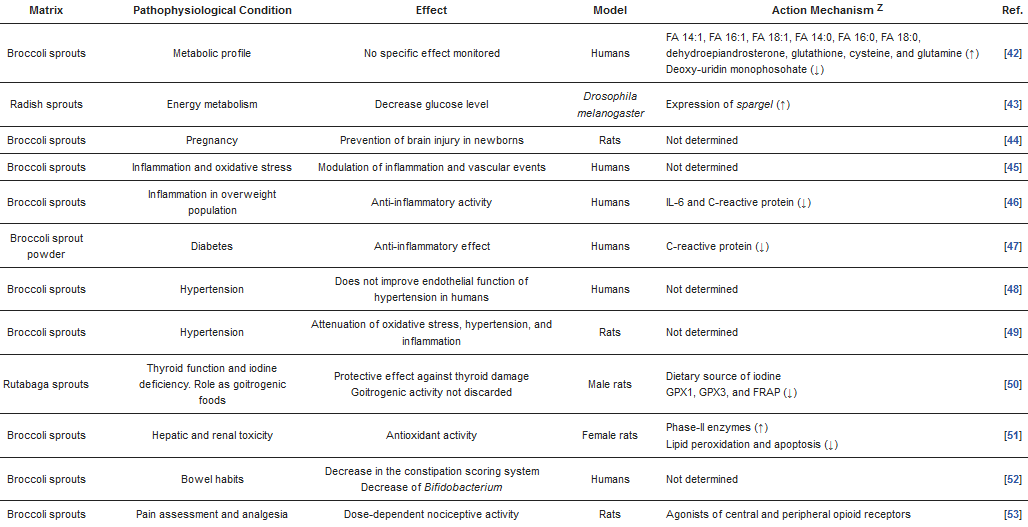
See these reviewers’ 2020 Reviewing clinical trials of broccoli sprouts and their compounds for further examples of why “Not determined” frequently occurred.

2. Inflammatory problems mentioned in Week 1 twinged throughout Week 5 and flared up yesterday. I didn’t run during my four-to-six-mile-long beach walks this week in case that aggravated things.

Not sure what’s going on, because these problems were quiescent during Weeks 3 and 4 with the same levels of exercise and diet. Maybe this development was a result of homeostatic adjustments to the previous month’s daily broccoli sprout dosage?

Two days ago I began doubling the starting amount of broccoli seeds from one to two tablespoons. I’ll see what effects eating 120 grams of 3-day-old broccoli sprouts have during the coming week.

3. I was stonewalled twice by a commercial supplier of broccoli sprout powder who advertised:

“Independent assays confirm that EnduraCELL yields more Sulforaphane per gram and per dose than any other broccoli sprout ingredient available! These assays showed that EnduraCell yields around 3.5 times more SULFORAPHANE than the next highest broccoli sprout product.”

They wouldn’t provide evidence of their claim to a prospective customer?

Sulforaphane is immediately produced by combining glucoraphanin and myrosinase. Sulforaphane degrades relatively quickly, and requires special handling in commercial products.

It costs me very little to grow broccoli sprouts, < $0.50 USD per day. Could a commercial product even deliver equivalent benefits at a competitive price?

4. I reactivated my Twitter account after a year’s dormancy. I credit my traveling companion for having better things to do. I blame this political power grab for me becoming bored enough to be herded back onto Twitter.

Rolling back your rights and making you obey was clearly the goal

“The virus itself destroyed virtually no jobs. Those jobs, these families, were destroyed by lockdowns ordered by politicians. The most destructive economic event since the second World War.

Now we’ve been assured repeatedly that all of this was absolutely necessary. After months of incalculable damage to hundreds of millions of families, the WHO is now telling us – almost casually – that actually, our model should be Sweden.

Who is the man you just saw speaking? Just a month ago, that guy’s model was not Sweden. It was the Khmer Rouge’s Cambodia.

We’re glad that the WHO is now admitting that it was insane. But it isn’t much comfort now.

The World Health Organization has always been wrong about coronavirus:

  • WHO told us it couldn’t spread from person to person. A lie.
  • They said the virus had stopped and couldn’t spread worldwide. A lie.
  • They said it was racist to talk about where the virus came from. Okay.
  • They said face masks were ineffective – indeed, counterproductive.

Again, those weren’t simply wrong statements. They were lies.

Has there ever been a bigger screw up?

Being wrong on the single most important policy decision in living memory is no reason to abandon a sweeping power grab.

Protecting public health – as it turns out – was just an excuse, a pretext. Rolling back your rights and making you obey was clearly the goal.”

https://dailycaller.com/2020/04/30/tucker-carlson-who-coronavirus-sweden-lockdown-model/


The herding continues. What will it take for people to question why their future has been destroyed?

We believe what we need to believe

While getting ready for bed tonight, I mused about how my younger brother had such an idealized postmortem view of our father. As he expressed six years ago in an obituary for our high school Literature teacher:

“I’ll remember my favorite teacher and how much he’s meant to my life. My father and Martin Obrentz were the two people who made me care about the things that make me the person I am today.”

Believe what you need to believe, David. But like I said five years ago in Reflections on my four-year anniversary of spine surgery:

“I don’t remember that my three siblings ever received a paddling or belting, although they were spanked. Even before he retired, 17 years before he died, the Miami-Dade County public school system stopped him and the rest of their employees from spanking, whipping, beating, and paddling children.”


It’s extremely important for a child to have a witness to their adverse childhood experiences. Otherwise, it’s crazy-making when these experiences aren’t acknowledged as truths by anyone else.

Especially by those who saw but disavow what they saw.

It didn’t really drum into my conscious awareness until tonight that I had such a witness. It wasn’t my mother, of course, since she directed most of my being whipped with a belt, and beaten with a paddle that had holes in it to produce welts. She has denied and deflected my childhood experiences of her ever since then.

It wasn’t my siblings, regrettably for all of us. It wasn’t our Miami neighbors.

When I was twenty, I ran across a guy 300 miles north in Gainesville, Florida, named David Eisenberg, if I remember correctly. A couple of weeks after we met, he asked if my father was Fred Rice, Dean of Boys, West Miami Junior High School. He said he had been beaten by my father several times!

Those weren’t early childhood memories like mine. Those were experiences of a young man during grades 7-9 that he remembered more than a decade later.

I was shocked. It came at a time when I wasn’t ready to face facts about my life, though. I needed fantasies, beliefs to smother what I felt.


I don’t expect that the impacts of my childhood experiences will ever go away. After three years of Primal Therapy that ended a decade ago, at least mine don’t completely control my life anymore.

Dr. Arthur Janov put self-narratives of several patients’ experiences into his May 2016 book Beyond Belief which I partially curated in February 2017. It was partial because I couldn’t read much past Frank’s horrendous story in pages 89 – 105, “The Myth of a Happy Childhood.”

Week 4 of Changing an inflammatory phenotype with broccoli sprouts

To follow up Week 3 of Changing an inflammatory phenotype with broccoli sprouts:

1. I started panning 3-day-old broccoli sprouts before microwaving them in 100 ml of water with a 1000 W microwave on full power for 35 seconds. See Week 6 of Changing an inflammatory phenotype with broccoli sprouts for why I stopped panning. This is a typical yield from one tablespoon of broccoli seeds:

Before panning
After panning

If I have fewer broccoli sprouts, I did something to stunt their normal development.

Still not sure that spent broccoli seed coats cause heartburn as mentioned last week. Being locked down for months – or drinking a lot of coffee and tea – may have more to do with it.

2. I continue to see encouraging signs. Made four-to-six-mile-long beach walks Friday, yesterday, and today, and haven’t felt any left-ankle or left-knee inflammation afterwards! Ran a mile yesterday for the first time in a long time, though, and my quads are sore.

3. More often than not, this is my AGE-less dinner (half) then the next day for lunch. I adapted it from pages 198 (Chicken with Lemon-Caper Sauce) and 238 (Homestyle Chicken Soup) of Dr. Vlassara’s AGE-Less Diet: How a Chemical in the Foods We Eat Promotes Disease, Obesity, and Aging and the Steps We Can Take to Stop It.

  • 1 organic lemon
  • 1 organic tomato
  • 2 organic carrots
  • 3 stalks organic celery
  • 4 organic mushrooms
  • 4 cloves organic garlic
  • 6 oz. organic chicken breast fillet
  • 1 cup organic pasta
  • 1 cup frozen organic peas
  • 1 cup sauvignon blanc
  • 32 oz. “unsalted” chicken broth, which still contains 24% of the sodium RDA
  • 2 tablespoons drained capers
  • ground black pepper to taste

Peel the lemon, slice into 1/4″ rounds, de-seed, combine with chicken and wine in a 6-quart Instant Pot.

Add tomato, carrots, celery, mushrooms, garlic, chicken broth. Start a 30-minute Saute.

Take the chicken out at Minute 20, dice it, add back in with the pasta. Add peas at Minute 25. Add capers and pepper five minutes after the Instant Pot turns off.

4. My AGE-less breakfast is 1/2 cup steel-cut oats soaked overnight in 2 cups distilled water. Cook for 18 minutes at 80% power in a 1000W microwave. Eat with a handful of walnuts.


Boring, I know. Waiting for young people to shrug off their behavioral conditioning and lead the way out.

“The angrier you got, the more silly it became. Then you just found yourself in a bigger cage.

We live in a world now of social media where you can say something stupid and get a bunch of attention. But now you’re just imprisoned in some other paradigm.”

Work your voluntary muscles today

This 2020 review by the Aging as a disease research group highlighted their specialty:

“A theory that fits both the aging and the rejuvenation data suggests that aging is caused primarily by the functional (and notably, experimentally reversible) inactivation of resident stem cells, which precipitates deteriorated tissue maintenance and repair and leads to the loss of organ homeostasis.

The damaged and unrepaired tissues suffer changes in their biochemistry, including the molecular crosstalk with resident stem cells, which further inhibits productive, regenerative responses. The inflammatory and fibrotic secretome can then propagate systemically, affecting the entire organism.

Skeletal muscle accounts for almost 40% of the total adult human body mass. This tissue is indispensable for vital functions such as respiration, locomotion, and voluntary movements and is among the most age-sensitive in mammals.

Muscle is capable of active repair in response to daily wear and tear, intense exercises, or injuries. Muscle regeneration relies on the adult muscle stem cells, also called satellite cells.

Rather than a significant decline in the total number with age, most of the data support a dramatic lack of activation of muscle stem cells after injury and a concomitant lack in the formation of progenitors that are needed for repair.

Multiple experimental approaches have been used for tissue rejuvenation and/or systemic rejuvenation; these include ablation of senescent cells and re-calibration of key signaling pathways that are needed for productive stem cell responses. To test the success in experimental rejuvenation, 1-4 approaches are typically applied, and skeletal muscle is well-suited for assaying each one.”

https://www.ncbi.nlm.nih.gov/pmc/articles/PMC7007696/ “Skeletal muscle as an experimental model of choice to study tissue aging and rejuvenation”


The review had a short section on inflammation details. Not enough, and there’s no tissue repair. Continuing unchecked is a systemic issue that led the reviewers to their paradigm of aging as a disease.

The review concluded with a subject that’s taught in high school, and should be understood at least before college graduation. It’s curious that an item like sample size required emphasis. Maybe research that doesn’t adhere to basics is a current issue?

Week 3 of Changing an inflammatory phenotype with broccoli sprouts

To follow up Week 2 of Changing an inflammatory phenotype with broccoli sprouts:

1. I intend to follow the model clinical trial [1] and pause eating broccoli sprouts after ten weeks. The clinical trial subjects experienced benefits after stopping at Day 70, as measured at Day 90 and Day 160.

Sprouting broccoli seeds takes time and care every day. I may not have that time when everyone gets back to work.

Then again, I live in a state headed by Governor Klan Robes Blackface. Here’s his 1984 Eastern Virginia Medical School yearbook entry, 16 years after Martin Luther King Jr. was assassinated:


He has no empathy for people like the young black man – laid off for four weeks now – who was severely burned as a child, and who was enthusiastically working at Dunkin Donuts. Or the older lady who was trying to get her life back together at Hair Cuttery, still closed.

Who knows when or if people around here will get their jobs back? Politics are a magnet for the worst.

2. I’ve started to see encouraging signs. Over the last few years, I’ve tried to avoid walking long distances where the surface was tilted to my right in order to not overpronate my left foot and aggravate problems mentioned in Week 1.

That was neither an immediate concern during six-mile-long beach walks yesterday and today, nor have I felt any inflammation afterwards!

3. I have quart Mason jars for sprouting per many YouTube videos, but don’t use them. They’re unsuited for broccoli seeds, which don’t handle extra moisture well.

I’ve had good results with Russian-doll glass bowls. I use a strainer for Round 1, transfer them to a bowl, and wick out extra moisture with a paper towel during Round 2 before putting them back on a pantry shelf. It would be hard to maneuver a paper towel inside a Mason jar.


The bowl at the top left has been replaced by the next size larger than the bowl at the bottom left. Day 3 broccoli sprouts were too crowded to dry in the small bowl.

4. I had heartburn Friday and Saturday after eating 60 grams of 3-day-old broccoli sprouts in 100 ml of water processed with a 1000 W microwave on full power for 35 seconds. Today I removed a thousand spent broccoli seed coats before microwaving, and didn’t have heartburn afterwards. More experiments are required.


[1] 2018 Effects of long-term consumption of broccoli sprouts on inflammatory markers in overweight subjects curated in How much sulforaphane is suitable for healthy people?

Aging as an unintended consequence

The coauthors of 2018’s The epigenetic clock theory of aging reviewed progress that’s been made todate in understanding epigenetic clock mechanisms.

1. Proven DNA methylation features of epigenetic clocks:

  1. “Methylation of cytosines is undoubtedly a binary event.
  2. The increase in epigenetic age is contributed by changes of methylation profiles in a very small percent of cells in a population.
  3. The clock ticks extremely fast in early post-natal years and much slower after puberty.
  4. Clock CpGs have specific locations in the genome.
  5. It applies to prenatal biological samples and embryonic stem cells.

While consistency with all the five attributes does not guarantee veracity of a model, inconsistency with any one will signal the unlikely validity of a hypothesis.”

2. Regarding what epigenetic clocks don’t measure:

“The effects of

  • Telomere maintenance,
  • Cellular senescence,
  • DNA damage signaling,
  • Terminal differentiation and
  • Cellular proliferation

have all been tested and found to be unrelated to epigenetic ageing.”

3. Regarding cyclical features:

Both the epigenetic and circadian clocks are present in all cells of the body, but their ticking rates are regulated. Both these clocks lose synchronicity when cells are isolated from tissues and grown in vitro.

These similarities compel one to ponder potential links between them.”

This was among the points that Linear thinking about biological age clocks missed.

4. The reviewers discussed 3 of the 5 treatment elements in Reversal of aging and immunosenescent trends:

“It is not known at this stage whether the rejuvenating effect is mediated through the regeneration of the thymus or a direct effect of the treatment modality on the body. Also, it is not known if the effect is mediated by all three compounds or one or two of them.

What we know at this stage does not allow the formation of general principles regarding the impact of hormones on epigenetic age, but their involvement in development and maintenance of the body argue that they do indeed have a very significant impact on the epigenetic clock.”

Not sure why they omitted 3000 IU vitamin D and 50 mg zinc, especially since:

“It is not known if the effect is mediated by all three [five] compounds or one or two of them.”

5. They touched on the specialty of Aging as a disease researchers with:

“Muscle stem cells isolated from mice were epigenetically much younger independently of the ages of the tissue / animal from which they were derived.

The proliferation and differentiation of muscle stem cells cease upon physical maturation. These activities are initiated in adult muscles only in response to injury.

6. The reviewers agreed with those researchers in the Conclusion:

“Epigenetic ageing begins from very early moments after the embryonic stem cell stage and continues uninterrupted through the entire lifespan. The significance of this is profound as the question of why we age has been attributed to many different things, most commonly to ‘wear-and-tear.’

The ticking of the epigenetic clock from the embryonic state challenges this perspective and supports the notion that ageing is an unintended consequence of processes that are necessary for

  • The development of the organism and
  • Tissue homeostasis thereafter.”


https://journals.sagepub.com/doi/10.1177/1535370220918329 “Current perspectives on the cellular and molecular features of epigenetic ageing” (not freely available)

Linear thinking about biological age clocks

This 2020 review by a Hong Kong company’s researchers compared and contrasted measures of biological age:

“More than a dozen aging clocks use molecular features to predict an organism’s age, each of them utilizing different data types and training procedures. We offer a detailed comparison of existing mouse and human aging clocks, discuss their technological limitations and the underlying machine learning algorithms. We also discuss promising future directions of research.

Biomarkers placed on an intuitive plane of Accuracy vs Utility. Bubble size depends on the number of clocks based on a corresponding aging biomarker.

Currently, DNAm [DNA methylation] is the most accurate and the most frequently used biomarker in biohorology. However, it is harder to apply a DNAm clock compared to clocks based on clinical blood tests. Moreover, DNAm marks often take a long time to emerge in response to aging interventions.

Chromatin structure and telomeres, while intriguing, are too labor intensive and error-prone to be practical.”

https://www.sciencedirect.com/science/article/pii/S1568163719302582 “Biohorology and biomarkers of aging: current state-of-the-art, challenges and opportunities”


We think about chronological age linearly. The reviewers hinted at but didn’t directly assess the extent to which techniques such as linear regression may also influence people to think linearly about biological age.

We experience cyclical changes every day (like sleep), month, season, and longer periods. The reviewers didn’t mention techniques that incorporate our cyclical experiences or assess cyclical biological age.

1. The reviewers pointed out some biological age clock linearity flaws:

“Most aging clocks base their BA [biological age] definitions either on CA [chronological age] or mortality risk. Mortality risk in its turn is derived from demographic tables and can be assumed to be a function of CA in most animals, including human.

Thus, aging clocks are ultimately treating CA as a substitute BA with the caveat that deviations from the actual CA signify better or worse physical fitness when compared to age matched controls. Such a design has several flaws.”

2. They pointed out non-linear characteristics of chromosomal telomere length:

“DNA lesions caused by oxidative stress are repaired less efficiently in telomeric regions, which causes frailty and subsequent telomere shortening. Oxidative stress levels may fluctuate due to habitat, life style, inflammatory diseases – factors that do not necessarily represent replicative clock ticking.

Telomere length typically fluctuates within ±2-4% per month. This led scientists to hypothesize that telomere attrition is an oscillatory process.”

Since cell components show cyclical phases, why wouldn’t cells and each higher living structural level likewise demonstrate cyclical phases? That avenue wasn’t explored.

3. They mentioned the non-linearity of epigenetic clocks:

“If an organism’s DNAm profile is not directly linked to the thermodynamic root of aging [entropy] but instead is a downstream product of competing processes, the applicability of DNAm aging clock methodology is at risk. In this case different aging clocks may not be equally good for different experiment settings.

While genetic, pharmacological and dietary interventions with proven effect on life expectancy change the methylation state of the age-associated CpG sites, they do so in different ways. Caloric restriction is more efficient in preventing methylation loss at hypomethylated sites and methylation gain at hypermethylated sites than rapamycin.

These findings imply that DNAm profiles do not simply gravitate towards the average with age and that there is no single pathway through which all aging processes are imbued into an organism’s epigenetic landscape.”

4. Genetic and epigenetic regulatory pathways were presented with linear thinking:

“Protein structures encapsulating DNA and regulating its accessibility (chromatin and histones) have also been shown to change with age. Moreover, DNAm machinery and histone modifications are interlinked and change throughout aging concordantly.

For example, DNA methyltransferases are attracted by the H3K36me mark. With aging it is less tightly regulated, and thus, more sporadic DNAm occurs, which ultimately translates to epigenetic clock ticking.”


An individual’s capability to regulate their own aging phenotype wasn’t addressed, only externally applied “aging interventions.” Diseases were considered chronological-“age-associated.”

Biological aging was neither viewed as a disease nor as an unintended consequence. If these researchers don’t grasp the foundations of their field of study, why do they work in the biological aging field? It isn’t just math.

  • Could this paper reflect one company’s desire to frame arguments in favor of the company’s offered solution?
  • Could this paper reflect a “chronological age is the cause” meme that satisfied organizational imperatives for sponsors like the Buck Institute for Research on Aging?
  • Or could it be that the reviewers had other paradigms?

What do you think?