Natural ways to modify GDF11

Three 2023 studies to follow up mention of GDF11 in the Brain endothelial cells post. Two are selected for non-pharmaceutical interventions people can do on their own. Let’s start with a human exercise study:

“We explored the exercise-related regulation of Growth Differentiation Factor 11 (GDF11) in cerebrospinal fluid (CSF) and blood. Samples of serum, plasma, and CSF were obtained before and 60 min after acute exercise (90 min run) from twenty healthy young individuals. Additional serum and plasma samples were collected immediately after run. GDF11 protein content, body composition, physical fitness, and cognitive functions were evaluated.

Controversies regarding the role of GDF11 in aging originate mainly from the absence of a reliable, validated and widely accepted method of GDF11 detection. To support the reliability of our findings as well as to distinguish GDF11 from its close homologue GDF8, we determined GDF11 in CSF, serum, and plasma, by immunoblotting, using two different GDF11-specific antibodies, as well as GDF11/GDF8 non-specific antibody. These antibodies have been previously successfully used by others. Reliability of our findings is further supported by correlations between GDF11 in serum and plasma, as well as between GDF11 and serum GDF11/GDF8.

We report an association between levels of GDF11 and adiponectin in CSF as well as in serum after acute endurance exercise. These observations support potentially synergic effects of GDF11 and adiponectin on the brain. The experimental design we implement seems to represent a reliable model to study regulation of bioactive molecules, potential mediators of neuroprotective effects of exercise in the human brain.

We show for the first time a direct link between endurance exercise and GDF11 levels in human cerebrospinal fluid. This study provided the first albeit indirect (correlative) evidence on the putative role of GDF11 in promoting healthy aging in humans, by demonstrating a tight relationship between serum GDF11 and peak power output. We extend this observation by showing that the level of physical fitness is an important determinant of regulation of GDF11 by acute exercise.

In this work, we confirm in a bigger cohort our previous finding that blood-brain barrier permeability, as assessed by CSF/serum albumin ratio, is decreased after an acute bout of endurance exercise. We observed a modest positive correlation between CSF/serum albumin ratio and CSF/serum GDF11/GDF8 ratio, with a trend also for GDF11. However, exercise-induced changes of CSF/serum albumin ratio and that of GDF11 or GDF11/GDF8 did not correlate, indicating that there are other factors that could modulate levels of this growth factor rather than blood-brain barrier permeability.”

https://www.frontiersin.org/articles/10.3389/fendo.2023.1137048/full “Acute endurance exercise modulates growth differentiation factor 11 in cerebrospinal fluid of healthy young adults”


Next is a rodent study of intermittent fasting before and after cerebral ischemia:

“The present study focused on the cerebral angiogenesis effect of intermittent fasting (IF) on ischemic rats. Rats were fed within strict time periods for 8 h out of every 24 h, with free access to food between 0800 and 1600 h.

In the first step, we designed different time schedules (10 d, 1 month, and 3 months) of IF before middle cerebral artery occlusion (MCAO). We monitored whether IF accelerated neurobehavioral recovery and induced expression of endothelial cells after MCAO. Then we explored whether GDF11 and downstream signals mediated angiogenesis in the peri-infarct area.

journal.pone.0282338.g006

We found that 3 months (p < 0.01) and 1 month (p < 0.05) of IF conditioning, respectively, markedly increased GDF11-positive cells in the peri-infarct area 3 d after MCAO compared with ad libitum dietary regimen. There were no significant differences between the cerebral ischemia (CI) + ad libitum group and the CI + IF 10-day group.

We also assayed plasma expression pattern of GDF11 protein. Plasma level of GDF11 protein was significantly upregulated in the IF dietary groups compared with the ad libitum dietary group 3 d after MCAO, which was consistent with the brain level. However, short-term CI + IF 10-day group results were not statistically different from CI + ad libitum group.

Taken together, our results strongly indicated that pretreatment of long-term IF might promote circulation of GDF11 and cerebral GDF11 protein during the post-ischemic, recovery period. Preoperative long-term IF might be beneficial for inducing cerebral angiogenesis in acute cerebral infarction.

These findings suggested that the longer the period of IF before MCAO, the better the protective effects after surgery.”

https://journals.plos.org/plosone/article?id=10.1371/journal.pone.0282338 “Long-term intermittent fasting improves neurological function by promoting angiogenesis after cerebral ischemia via growth differentiation factor 11 signaling activation”

Per Week 28 of Changing to a youthful phenotype with broccoli sprouts, using species maximum lifespan to estimate a human-equivalent multiplication factor that can be applied to a rat post-development time period is 122.5 years / 3.8 years = 32.2. Applying it to this study’s findings:

  • 10 rat days (322 human days) of intermittent fasting provided little protection from cerebral ischemia;
  • 1 rat month (32.2 human months) of intermittent fasting had better protection; and
  • 3 rat months (a little over 8 human years) of intermittent fasting had even stronger protection.

Is it worth the hassle of intermittently fasting every day for years to prevent a future stroke, or better recover from one, or keep other subclinical / clinical diseases from accelerating, or keep aging from accelerating? This study also cited more immediate benefits of intermittent fasting.


Might be too late for a gradual approach for people who are already diseased or close, though, like subjects in this human study:

“We aimed to explore the correlation among serum GDF11, the severity of coronary artery lesions, and the prognosis of patients with ST-segment elevation myocardial infarction (STEMI). A total of 367 patients were enrolled and divided into control (n = 172) and STEMI (n = 195) groups. Control group fulfilled the following criteria:

  1. Presented with typical chest tightness, chest pain, or other discomfort symptoms on admission;
  2. Electrocardiogram examination suggested ST-T changes;
  3. Levels of myocardial injury markers did not suggest abnormalities; and
  4. The diagnosis of unstable angina was considered clinically valid.

14 variables that were significant in univariate logistic regression analysis were included in the subsequent multivariate logistic regression analysis. Multivariate analysis indicated that smoking, diabetes, C-reactive protein, homocysteine, and lipoprotein (a) were positively correlated with STEMI occurrence, whereas serum GDF11 and the Apolipoprotein A1-to-Apolipoprotein B ratio were negatively correlated with STEMI occurrence.

Serum GDF11 was negatively correlated with severity of coronary lesions, and was also an independent prognostic indicator of major adverse cardiovascular events in patients with STEMI.”

https://link.springer.com/article/10.1007/s12265-023-10358-w “Correlation Between GDF11 Serum Levels, Severity of Coronary Artery Lesions, and the Prognosis of Patients with ST-segment Elevation Myocardial Infarction” (not freely available)

Brain endothelial cells

Six 2023 papers on the subject, starting with a rodent study:

“One of the primary discoveries of our study is that the endothelial cell (EC) transcriptome is dynamically regulated by both aging and heterochronic parabiosis. We found that ECs, when compared with other brain cell types, exhibited one of the highest fractions of aging-related genes that were rescued after heterochronic parabiosis in the old brain, and similarly, the highest fraction of aging-related genes that were disrupted after heterochronic parabiosis in the young brain. This finding supports our previous research that vasculature is strongly affected by aging and disease, and is capable of regrowth after heterochronic parabiosis or systemic GDF11 treatment.

parabiosis

We observed that a subset of ECs was classified as mitogenic. It is reasonable to speculate that the growth of these cells, which is probably prevented or suspended by the inflammatory environment of the aged brain, may be among the cell populations that respond to these interventions.

Although proteostasis in brain ECs has not been thoroughly investigated, they are apparently long-lived cells and, like neurons, might therefore accumulate protein aggregates with age, potentially compromising their function. ECs become senescent with age, but parabiosis may reverse that phenotype as well.

These findings underline the strong susceptibility and malleability of ECs, which are directly exposed to secreted factors in both brain parenchyma and blood, to adapt to changes in their microenvironment. ECs, despite comprising <5% of the total number of brain cells, are a promising and accessible target for treatment of aging and its associated diseases.”

https://www.nature.com/articles/s43587-023-00373-6 “Heterochronic parabiosis reprograms the mouse brain transcriptome by shifting aging signatures in multiple cell types”


A review elaborated on endothelial cell senescence:

“ECs form highly dynamic and differentiated monolayers arranged in a vascular network. Within brain tissue, the ECs of arteries, capillaries, and veins present different molecular characteristics. The main functions of ECs as a major cellular component of the blood-brain barrier (BBB) are to express cell membrane transport proteins, produce inflammatory mediators, deliver nutrients to brain tissue, and prevent drugs and toxins from entering the central nervous system.

ECs are the first echelons of cells affected at the onset of senescence due to their special structural position in the vascular network. Senescent ECs produce reactive oxygen species (ROS), which directly inhibit smooth muscle potassium channels and cause vasoconstriction.

The vascular endothelium is in a constant process of damage and repair, and once damage occurs, ECs replenish themselves to remove damaged cells. EC senescence makes the endothelium less capable of self-repair. With the decline in endothelial function, excess accumulated senescent cells express senescence-associated secretory phenotypes (SASPs), which result in senescence of adjacent cells, and eventually degeneration of vascular function.”

https://www.aginganddisease.org/EN/10.14336/AD.2023.0226-1 “Endothelial Senescence in Neurological Diseases”


A human study investigated above-mentioned differences in brain endothelial cells:

“We performed single nucleus RNAseq on tissue from 32 Alzheimer’s Disease (AD) and non-AD donors each with five cortical regions: entorhinal cortex, inferior temporal gyrus, prefrontal cortex, visual association cortex, and primary visual cortex. Analysis of 51,586 endothelial cells revealed unique gene expression patterns across the five regions in non-AD donors.

Visual cortex areas, which are affected late in AD progression and experience less neurodegeneration, expressed more genes related to vasculogenesis and angiogenesis. Highly vulnerable areas such as the entorhinal cortex expressed more oxidative stress-related genes in normal aged brain, suggesting endothelial dysfunction in this region even in the absence of severe AD pathology.

The present work shows that senescence-related gene signatures are increased across several brain regions, and confirms these changes in endothelial cells in the absence of other vascular cell types. While endothelial cells are not typically associated with protein aggregation, upregulated protein folding pathways suggest that proteostatic stress is a key pathway in this cell type.”

https://www.biorxiv.org/content/10.1101/2023.02.16.528825v1.full “Endothelial Cells are Heterogeneous in Different Brain Regions and are Dramatically Altered in Alzheimer’s Disease”


A human cell study abstract on above-mentioned blood-brain barrier endothelial cells:

“The BBB is a semi-permeable and protective barrier of the brain, primarily composed of endothelial cells interconnected by tight junction proteins, that regulates movement of ions and molecules between blood and neural matter. In pathological conditions such as traumatic brain injury (TBI), disruption of the BBB contributes to leakage of solutes and fluids into brain parenchyma, resulting in onset of cerebral edema and elevation of intracranial pressure.

The objective of this study was to determine upstream regulators of NLRP3 signaling and BBB hyperpermeability, particularly to determine if extracellular adenosine triphosphate (ATP) via P2X7R, a purinergic receptor, promotes NLRP3 inflammasome activation. Extracellular ATP is a major contributor of secondary injuries following TBI.

Our results suggest that extracellular ATP promotes NLRP3 inflammasome activation. Subsequent caspase-1 and MMP-9-mediated tight junction disorganization are major pathways that lead to BBB dysfunction and hyperpermeability following conditions such as TBI.”

https://journals.physiology.org/doi/abs/10.1152/physiol.2023.38.S1.5732827 “Regulation of Blood-Brain Barrier Endothelial Cell Hyperpermeability by NLRP3 Inflammasome Inhibition”


A human study further investigated effects of traumatic brain injury on brain endothelial cells:

“We previously demonstrated that extracellular vesicles (EVs) released from injured brains led to endothelial barrier disruption and vascular leakage. Here, we enriched plasma EVs from TBI patients (TEVs), detected high mobility group box 1 (HMGB1) exposure to 50.33 ± 10.17% of TEVs, and found the number of HMGB1+TEVs correlated with injury severity. We then investigated for the first time the impact of TEVs on endothelial function using adoptive transfer models.

HMGB1 is secreted by activated cells or passively released by necrotic or injured cells. After post-translational modifications, it interacts with receptors such as toll-like receptors (TLRs; e.g., TLRs 2, 4, and 9) and the receptor for advanced glycation end products (RAGE) to trigger multiple signaling pathways and mediate inflammatory and immune responses. Extracellular HMGB1 promotes endothelial dysfunction, leukocyte activation and recruitment, as well as thrombosis.

These results suggest that circulating EVs isolated from patients with TBI alone are sufficient to induce endothelial dysfunction. They contribute to secondary brain injury that are dependent on immunologically active HMGB1 exposed on their surface. This finding provided new insight for development of potential therapeutic targets and diagnostic biomarkers for TBI.”

https://www.sciencedirect.com/science/article/pii/S1043661823001470 “Circulating extracellular vesicles from patients with traumatic brain injury induce cerebrovascular endothelial dysfunction”


To wrap up, eat mushrooms to protect your brain endothelial cells!

“Natural compound ergothioneine (ET), which is synthesised by certain fungi and bacteria, has considerable cytoprotective potential. We previously demonstrated anti-inflammatory effects of ET on 7-ketocholesterol (7KC)-induced endothelial injury in human blood-brain barrier endothelial cells (hCMEC/D3). 7KC is an oxidised form of cholesterol present in atheromatous plaques and sera of patients with hypercholesterolaemia and diabetes mellitus. The aim of this study was to elucidate the protective effect of ET on 7KC-induced mitochondrial damage.

Protective effects of ET were diminished when endothelial cells were coincubated with verapamil hydrochloride (VHCL), a nonspecific inhibitor of the ET transporter OCTN1 (SLC22A4). This outcome demonstrates that ET-mediated protection against 7KC-induced mitochondrial damage occurred intracellularly and not through direct interaction with 7KC.

OCTN1 mRNA expression itself was significantly increased in endothelial cells after 7KC treatment, consistent with the notion that stress and injury may increase ET uptake. Our results indicate that ET can protect against 7KC-induced mitochondrial injury in brain endothelial cells.”

https://www.mdpi.com/1422-0067/24/6/5498 “Protective Effect of Ergothioneine against 7-Ketocholesterol-Induced Mitochondrial Damage in hCMEC/D3 Human Brain Endothelial Cells”

A biomarker for impaired cognitive function?

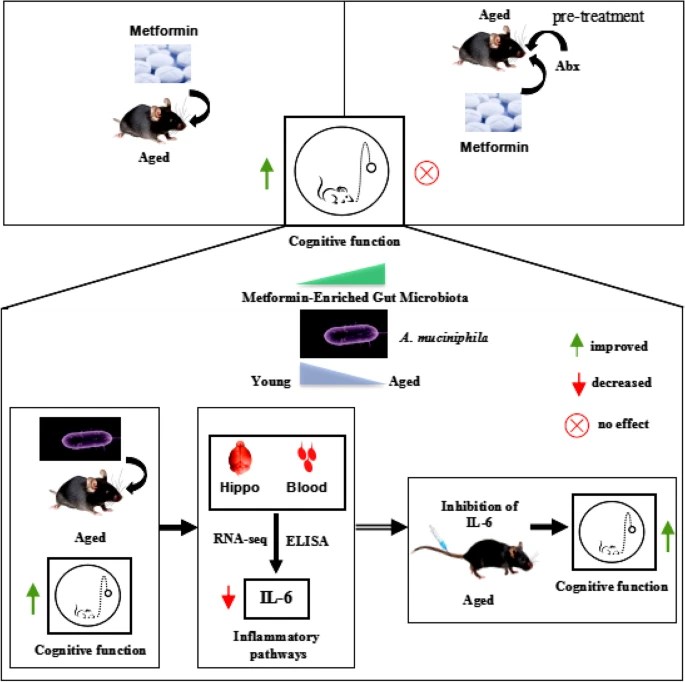
This 2023 rodent study investigated associations between a drug, a gut microbiota species, cognitive function, and proinflammatory cytokine interleukin-6:

“We show that gut microbiota is altered by metformin, which is necessary for protection against ageing-associated cognitive function declines in aged mice.

  • Mice treated with antibiotics did not exhibit metformin-mediated cognitive function protection.
  • Treatment with Akkermansia muciniphila improved cognitive function in aged mice.
  • A. muciniphila decreased proinflammatory-associated pathways, particularly that of proinflammatory cytokine interleukin (IL)-6, in both peripheral blood and hippocampal profiles, which was correlated with cognitive function improvement.
  • An IL-6 antibody protected cognitive function, and an IL-6 recombinant protein abolished the protective effect of A. muciniphila on cognitive function in aged mice.

40168_2023_1567_Figa_HTML

A. muciniphila, which is mediated in gut microbiota by metformin, modulates inflammation-related pathways in the host and improves cognitive function in aged mice by reducing proinflammatory cytokine IL-6 both systemically and in the hippocampus. This is direct evidence to validate that gut microbiota mediate the effect of metformin on cognitive improvement.”

https://microbiomejournal.biomedcentral.com/articles/10.1186/s40168-023-01567-1Akkermansia muciniphila, which is enriched in the gut microbiota by metformin, improves cognitive function in aged mice by reducing the proinflammatory cytokine interleukin-6″


IL-6 may be useful with other biomarkers of impaired cognitive function. It’s too coarse to track improved cognitive function past a certain point, though. Maybe the current IL-6 blood test can be refined as high-specificity CRP and regular CRP blood tests were done?

We don’t need to take this drug or be concerned about this gut bacteria species in order to lower inflammation. Click the IL-6 link above and see blog posts such as Part 2 of Rejuvenation therapy and sulforaphane for other methods.

PXL_20230630_092833465

Nrf2 Week #7: Immunity

Two reviews of Nrf2 relationships with our two immune systems, starting with adaptive immunity:

“We highlight recent findings about the influence of Keap1 and Nrf2 in development and effector functions of adaptive immune cells, T lymphocytes and B lymphocytes. We summarize Nrf2 research potential and targetability for treating immune pathologies.

Immune cells have mechanisms in place to strike a perfect redox balance, and to modulate levels of ROS differentially during their naive, activated, and effector stages for tailored immune responses. Cells of the lymphoid lineage (T, B, and NK cells) and myeloid lineage (macrophages, granulocytes, dendritic cells, and myeloid-derived suppressor cells) are generated from self-renewing progenitors, hematopoietic stem cell (HSCs) in the bone marrow.

Nrf2 activation in HSCs skews hematopoietic differentiation toward the myeloid lineage at the cost of the lymphoid lineage cells. Nrf2 does not participate in late T cell development leading to generation of single-positive CD4 and CD8 T cells.

ih2200061f2

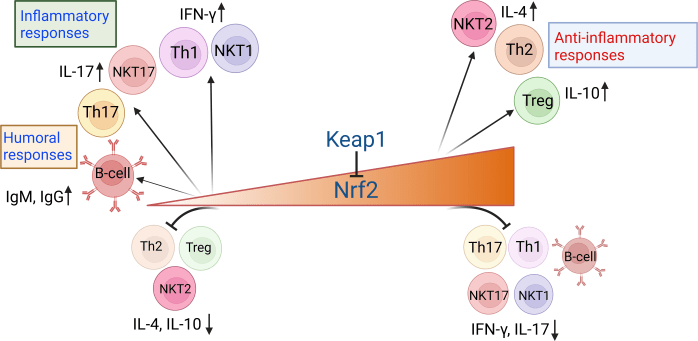
  • Nrf2 activation supports differentiation of the Th2 subset, regulatory T cells (Tregs), and the NKT2 subset while inhibiting differentiation of Th1, Th17, NKT1, and NKT17 subsets.
  • The absence of or low Nrf2 results in enhanced proinflammatory responses, characterized by differentiation of Th1, Th17, NKT1, and NKT17 subsets, and subdued generation of Th2, Treg, and NKT2 subsets.

Nrf2 activation levels also influence generation of humoral responses.

  • Low Nrf2 levels favor T cell–dependent production of IgG and IgM Abs by activated B cells.
  • High Nrf2 suppresses B cell responses such as differentiation of germinal center B cells and plasma cells.

Nrf2 negatively regulates T–cell mediated inflammatory responses and T-dependent B cell responses.

https://journals.aai.org/immunohorizons/article/7/4/288/263657/Beyond-Antioxidation-Keap1-Nrf2-in-the-Development “Beyond Antioxidation: Keap1–Nrf2 in the Development and Effector Functions of Adaptive Immune Cells”


And our innate immune system:

“Nrf2 regulates the immune response by interacting directly or indirectly with one or more of the major innate immune signaling components that maintain cellular homeostasis. Toll-like receptors (TLR) signaling can induce Nrf2 activation, and this is primarily found to be through autophagy-mediated degradation of Keap1.

TLR agonists may be considered as stimuli that induce Nrf2 to reduce stress and inflammation, linking the immune and antioxidant pathways. Conversely, Nrf2 activation may restrain TLR-mediated inflammatory response through induction of antioxidant proteins and inhibition of pro-inflammatory cytokines.

Following LPS stimulation, the NF-κB pathway is engaged to initiate a host of pro-inflammatory responses such as IL-6 and interleukin 1 beta (IL-1β) gene expression. Nrf2 induction inhibits LPS-mediated activation of pro-inflammatory cytokines in macrophages.

Inflammasome activation is an essential component of the innate immune response, and is critical for clearance of pathogens or damaged cells through pro-inflammatory cytokine secretion and/or cell-death induction. While Nrf2 activation is in general associated with an anti-inflammatory state, Nrf2 has also been reported to be required for optimal NLRP3 inflammasome activity.

The type-I interferon (IFN) system constitutes an essential part of innate immunity. Type-I IFNs are produced upon recognition of foreign or self-DNA or RNA, and are best-known for inducing an antiviral state through the induction of interferon-stimulated genes. While Nrf2 interferes with IRF3 activation, STING expression, and type-I IFN signaling, none of these crucial players in innate immunity have been demonstrated to be direct targets of Nrf2.

The antiviral effect of Nrf2 activation by 4-OI may use various pathways to limit viral replication that have not been identified yet. It is important to consider that Nrf2-activating metabolites may also act as immunomodulators in a Nrf2-independent manner.

Anti-inflammatory properties of Nrf2 are independent of redox control. Further mechanistic studies are needed to decipher the exact indirect and/or direct interactions between Nrf2 and innate immune players.”

https://www.sciencedirect.com/science/article/pii/S0952791522000942 “Regulation of innate immunity by Nrf2”

Nrf2 Week #6: Phytochemicals

This 2023 review explored Nrf2 relationships with plant chemicals:

“This review focuses on possible mechanisms of Nrf2 activation by natural phytochemicals in preventing or treating chronic diseases, and regulating oxidative stress. Excess oxidative stress is closely related to many kinds of chronic diseases, such as cardiovascular diseases, cancer, neurodegenerative diseases, diabetes, obesity, and other inflammatory diseases.

Mitochondrial dysfunction and hyperglycemia lead to the massive production of ROS, which triggers molecular damage, inflammation, ferroptosis, insulin resistance, and β-cell dysfunction.

antioxidants-12-00236-g001

Crosstalk between Keap1-Nrf2-ARE pathway and other signaling pathways endows it with high complexity and significance in the multi-function of phytochemicals. Limited human data makes an urgent need to open the new field of phytochemical-original supplement application in human chronic disease prevention.”

https://www.mdpi.com/2076-3921/12/2/236 “The Regulatory Effect of Phytochemicals on Chronic Diseases by Targeting Nrf2-ARE Signaling Pathway”


Top ten mentions, not including references:

  • 21 Sulforaphane
  • 16 Broccoli
  • 9 Curcumin
  • 5 Resveratrol
  • 5 Green tea catechins
  • 4 Luteolin
  • 3 Garlic
  • 3 Soy isoflavones
  • 3 Lycopene
  • 3 Quercetin

PXL_20230518_191008431

Nrf2 Week #5: Elements

Two 2023 papers, starting with a cell study of Nrf2 regulating sulfur:

“We demonstrated that NRF2 increased intracellular persulfides by upregulating cystine transporter xCT encoded by Slc7a11, a well-known NRF2 target gene. Persulfides have been shown to play an important role in mitochondrial function.

Supplementation with glutathione trisulfide (GSSSG), which is a form of persulfide, elevated mitochondrial membrane potential, increased oxygen consumption rate (OCR), and promoted ATP production.

glutathione trisulfide

The sulfur oxidation pathway is thought to protect cells from sulfide toxicity and to support electron transport efficiency. This study clarified that facilitating persulfide production and sulfur metabolism in mitochondria by increasing cysteine availability is one of the mechanisms for NRF2-dependent mitochondrial activation.”

https://www.sciencedirect.com/science/article/pii/S2213231723000253 “Contribution of NRF2 to sulfur metabolism and mitochondrial activity”


The second paper reviewed Nrf2 regulating iron:

“The central role of Nrf2 in dictating multiple facets of cellular stress response has defined the Nrf2 pathway as a general mediator of cell survival. Ferroptosis is an iron- and lipid peroxidation-dependent form of cell death. While Nrf2 was initially thought to have anti-ferroptotic function primarily through regulating antioxidant response, accumulating evidence has indicated that Nrf2 also exerts anti-ferroptotic effects via regulating key aspects of iron and lipid metabolism.

molce-46-3-165-f2

Iron exists in two redox states, ferrous (Fe2+) and ferric (Fe3+). While constant loss or gain of electrons to switch between two redox states makes iron useful for metabolic reactions, generation of free radicals due to an excess of the highly reactive Fe2+ form is toxic to cells. To prevent iron toxicity, free labile iron in the form of (Fe2+) is controlled by multiple systems at both systemic and cellular levels to maintain iron homeostasis.

Nrf2 regulates iron homeostasis by controlling both ferritin synthesis and degradation. Overall, Nrf2 regulation of iron homeostasis is a critical determinant of a cell’s sensitivity or resistance to ferroptosis, which is independent of its antioxidant function.”

https://www.molcells.org/journal/view.html?doi=10.14348/molcells.2023.0005 “Anti-Ferroptotic Effects of Nrf2: Beyond the Antioxidant Response”


PXL_20230520_183122738

Nrf2 Week #3: Epigenetics

To follow the Nrf2 Week #2 finding that chromatin accessibility parallels Nrf2 expression, this 2023 cell study explored how Nrf2 influences other epigenetic processes:

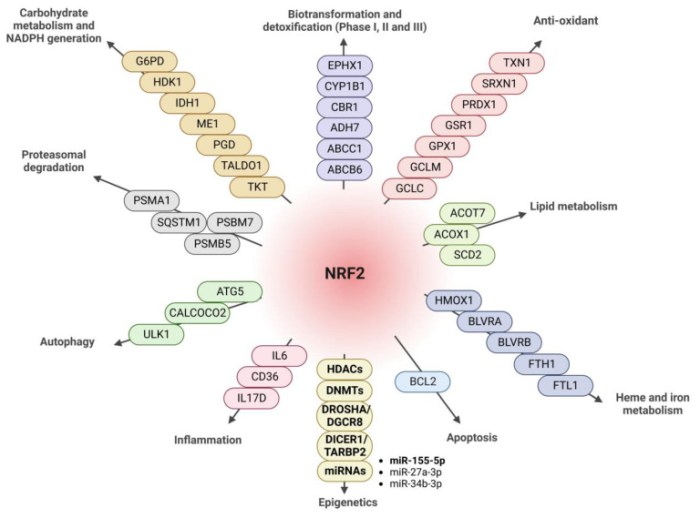
“We identified antioxidant response element sequences in promoter regions of genes encoding several epigenetic regulatory factors, such as histone deacetylases (HDACs), DNA methyltransferases (DNMTs), and proteins involved in microRNA biogenesis.

  • We treated cells with dimethyl fumarate (DMF), an activator of the NRF2 pathway through both the KEAP1 and GSK-3 pathways. NRF2 is able to modulate expression of HDAC1, HDAC2, HDAC3, and SIRT1 in different cell types.
  • DMF treatment induced DNMT1 and DNMT3b at both mRNA and protein levels. For DNMT3a, there was a slight induction of mRNA levels but not at the protein level.

antioxidants-12-00641-g007

  • Our data indicate that of all miRNAs analyzed, only miR-27a-3p, miR-27b-3p, miR-128-3p, and miR-155-5p associate with Nfe2l2 mRNA. NRF2 causes degradation of miR-155-5p, which is implicated in neuroinflammation and other pathologies, and is the main miRNA induced by LPS treatment in microglia. miR-155 alters expression of genes that regulate axon growth, supporting the bioinformatic prediction that miR-155 can regulate expression of genes involved in central nervous system development and neurogenesis.

Todate we only understand how epigenetic modifications affect expression and function of the NRF2 pathway. The fact that NRF2 can promote expression of type I HDACs, DNMTs, and proteins involved in miRNA biogenesis opens new perspectives on the spectrum of actions of NRF2 and its epigenetic influences.”

https://www.mdpi.com/2076-3921/12/3/641 “The Transcription Factor NRF2 Has Epigenetic Regulatory Functions Modulating HDACs, DNMTs, and miRNA Biogenesis”


PXL_20230515_185958612

Nrf2 Week #2: Neurons

To follow the Nrf2 Week #1 suggestion that Nrf2 target neurological disorders, this 2023 cell study investigated Nrf2 expression in neurons:

“Oxidative metabolism is inextricably linked to production of reactive oxygen species (ROS), which have the potential to damage all classes of macromolecules. Yet ROS are not invariably detrimental. Several properties make ROS useful signaling molecules, including their potential for rapid modification of proteins and close ties to cellular metabolism.

We used multiple single cell genomic datasets to explore Nrf2 expression and regulation in hundreds of neuronal and non-neuronal cell types in mouse and human. With few exceptions, Nrf2 is expressed at far lower levels in neurons than in non-neuronal support cells in both species.

This pattern is maintained in multiple disease states, and the chromatin accessibility landscape at the Nrf2 locus parallels these expression differences. These results imply that Nrf2 activity is limited in almost all neurons of the mouse and human central nervous system (CNS).

nrf2 expression

We separated cell types into neuron or non-neuronal ‘support’ cell categories. The general ‘support’ term is not meant to minimize the functional relevance of non-neuronal cells in the CNS, but is an umbrella term meant to cover everything from glial cell types (astrocytes, microglia, oligodendrocytes) to endothelial cells.

It is not clear why an important, near ubiquitous cytoprotective transcription factor like Nrf2 remains off in mature neurons, especially considering oxidative stress is a driver of many diseases. The simplest explanation is that Nrf2 activity also disrupts normal function of mature neurons.

ROS play a key role in controlling synaptic plasticity in mature neurons. These activity-dependent changes in synaptic transmission, which are important for learning and memory, are disrupted by antioxidants.

A subset of important Nrf2-targeted antioxidant genes (e.g., Slc3a2, Slc7a11, Nqo1, Prdx1) are also low in neurons. So it is likely that these and/or other Nrf2 targets must remain low or non-ROS-responsive in mature neurons. Future work exploring why this expression pattern persists in mature neurons will inform our models on roles of antioxidant genes in normal neuronal physiology and in neurological disorders.

https://www.biorxiv.org/content/10.1101/2023.05.09.540014v1.full “Limited Expression of Nrf2 in Neurons Across the Central Nervous System”


PXL_20230520_182827767

Nrf2 Week #1: Targeting

It’s been a while since I curated Nrf2 research. Read almost a dozen relevant 2023 papers last week. Let’s begin with an opinion paper by a highly qualified researcher:

“The inducible transcription factor nuclear factor erythroid 2-related factor 2 (NRF2) regulates expression of several hundred genes encoding proteins with antioxidant, anti-inflammatory, drug metabolising, and other homeostatic functions. Through its transcriptional targets, NRF2 activation orchestrates a comprehensive and long-lasting protection that allows adaptation and survival under diverse forms of cellular and organismal stress.

We highlight three NRF2 activators that have progressed furthest in clinical development. Overall outcomes of clinical trials with sulforaphane-rich preparations have strengthened preclinical evidence that sulforaphane has the potential to prevent toxic and neoplastic effects of environmental carcinogens, as well as to ameliorate conditions characterised by chronic oxidative, metabolic, and inflammatory stress.

Anti-inflammatory effects of most electrophilic NRF2 activators are partly NRF2-independent, and include inhibition of other inflammatory mediators. The majority of non-electrophilic PPI inhibitors are less potent in activating NRF2 in cellular systems than the electrophilic sulforaphane.

It remains to be shown that measurement of NRF2 activation in blood samples can reflect modulation of the pathway in target tissues. The field has yet to reach a consensus on the best approach for monitoring NRF2 activation in humans, including selection of the optimal panel of gene/protein targets.

Even after a single dose of an NRF2 activator, increased levels of the actual protectors (i.e., the downstream transcriptional targets of NRF2) persist over long periods of time (days), exceeding the half-life (hours) of the drug.

target disease

In certain contexts, the role of NRF2 is complex and cell-type-specific, for example, in mouse models of atherosclerosis. Considering that NRF2 activation functions to:

  • Restore cellular redox and protein homeostasis;
  • Preserve mitochondrial function; and
  • Inhibit inflammation.

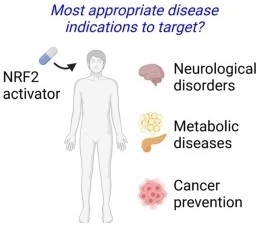
Perhaps the most logical disease areas are neurological conditions where all of these processes contribute to survival of neurons and astrocytes, as well as metabolic disease and cancer prevention.”

https://www.cell.com/trends/pharmacological-sciences/fulltext/S0165-6147(22)00277-2 “Advances and challenges in therapeutic targeting of NRF2”


PXL_20230520_182543000.MP

Ancient parasite DNA within us

Two 2023 papers on endogenous retroviruses (ERVs) and aging relationships, starting with the Introduction section of a comprehensive study:

“Several causal determinants of aging-related molecular changes have been identified, such as epigenetic alterations and stimulation of senescence-associated secretory phenotype (SASP) factors. Although the majority of these studies describe aging determinants originating primarily from protein-coding genes, the non-coding part of the genome has started to garner attention as well.

ERVs belonging to long terminal repeat (LTR) retrotransposons are a relic of ancient retroviral infection, fixed in the genome during evolution, comprising about 8% of the human genome. As a result of evolutionary pressure, most human ERVs (HERVs) accumulate mutations and deletions that prevent their replication and transposition function. However, some evolutionarily young subfamilies of HERV proviruses, such as the recently integrated HERVK, maintain open reading frames encoding proteins required for viral particle formation.

In this study, using cross-species models and multiple techniques, we revealed an uncharacterized role of endogenous retrovirus resurrection as a biomarker and driver for aging. Specifically, we identified endogenous retrovirus expression associated with cellular and tissue aging and that the accumulation of HERVK retrovirus-like particles (RVLPs) mediates the aging-promoting effects in recipient cells. More importantly, we can inhibit endogenous retrovirus-mediated pro-senescence effects to alleviate cellular senescence and tissue degeneration in vivo, suggesting possibilities for developing therapeutic strategies to treat aging-related disorders.”

https://www.cell.com/cell/fulltext/S0092-8674(22)01530-6 “Resurrection of endogenous retroviruses during aging reinforces senescence”


This first paper’s foreword summarized their many experiments and findings:

“The study found that HERVK transcripts, viral proteins, and RVLPs were highly activated in prematurely aged human mesenchymal progenitor cells (hPMCs). This was similarly observed in aged human primary fibroblasts and hPMCs. They also discovered that decreasing silencing epigenetic marks DNA methylation and H3K9me3 while increasing H3K36me3 enabled HERVK expression.

erv aging mechanism

These observations also raise several intriguing questions:

  • HERVK is occasionally activated and eventually suppressed under physiological conditions, for example, in human embryonic cells. It would be fascinating to probe the possibility of mimicking physiological conditions in order to turn off the positive feedback between HERVK and senescence.
  • ERVs are hallmarks of aging in different species, including human, primate, and mouse. Future quantification of the absolute physiological level of ERVs across a broad population of various ages might provide further insights into the relationship between ERVs and organismal age.”

https://academic.oup.com/lifemedi/advance-article/doi/10.1093/lifemedi/lnad001/6982772 “Endogenous retroviruses make aging go viral”


Previously curated papers on these subjects include:

A study of our evolutionary remnants

“Repressive epigenetic marks associated with ERVs, particularly LTRs, show a remarkable switch in silencing mechanisms, depending on evolutionary age:

  • Young LTRs tend to be CpG-rich and are mainly suppressed by DNA methylation, whereas
  • Intermediate age LTRs are associated predominantly with histone modifications, particularly histone H3 lysine 9 (H3K9) methylation.
  • Evolutionarily old LTRs are more likely inactivated by accumulation of loss-of-function genetic mutations.”

Starving awakens ancient parasite DNA within us

Reality is sometimes stranger than what fiction writers dream up. 🙂

PXL_20230209_210243470

Eat broccoli sprouts to protect your brain from stroke

Starting this blog’s ninth year with a 2022 rodent study of sulforaphane neuroprotection:

“An example of endogenous neuroprotection is ischemia-resistance of the hippocampal regions comprising the CA2, CA3, CA4 and dentate gyrus subfields (here abbreviated to CA2-4,DG) which can be contrasted with the ischemia-vulnerable CA1 region, which is noted in rodents as well as humans.

As with CA2-4,DG, nuclear Nrf2 levels are also higher in the olfactory bulb, while in the cortex, striatum, and cerebellum, they are similar to ones observed in the CA1 region.

brain area comparative Nrf2 activity

We found an in vitro dose-dependent response to administration of sulforaphane on neuronal viability, with an optimal effect noted where the dose was 10 µM. A protective effect was also evident in vivo when a single 5 mg/kg dose of sulforaphane was administered intraperitoneally with delay to ischemia.

Morphology of the CA1 region stratum pyramidale was significantly improved in comparison to ischemia-operated group, with mean numbers of proper cells being 35 ± 19 and 20 ± 7, respectively, for subjects injected during ischemia or 30 min into reperfusion. Morphology of the CA2-4,DG region did not reveal change between the ischemia-operated, SFN-injected, and control groups.

We suggest that high levels of nuclear Nrf2 activity in CA2-4,DG may guarantee resistance of this region to I/R episode, while at the same time offering a potential explanation for the phenomenon of differential sensitivities of hippocampal regions. Our results are in line with the existing view that Nrf2 activation may represent a promising therapeutic strategy against cerebral ischemia.

The uniqueness of Nrf2 lies in its pleiotropic action and subsequent regulation of multiple cytoprotective pathways. This may support more efficient neuroprotection compared to single-target strategies.”

https://link.springer.com/article/10.1007/s12035-022-03166-x “Is Nrf2 Behind Endogenous Neuroprotection of the Hippocampal CA2-4,DG Region?”


Winter beach shock therapy

PXL_20230129_174306200

Week 144 of Changing to a youthful phenotype with sprouts

Two papers, starting with a 2023 study that investigated the same red radish cultivar as Sulforaphene, a natural analog of sulforaphane:

“Availability of microgreen products is constantly rising, i.e., they are offered for sale in local farmers markets, specialty stores, and in chain grocery stores. Due to the low demands required for their cultivation and easily available LED settings, microgreens are increasingly grown on a small scale in homes and after harvesting, they are stored in kitchen refrigerators at 4 °C.

The aim of this study was to simulate such cultivation and storage conditions to examine antioxidant capacity of home-grown radish microgreens. Seven-day-old radish microgreens, grown under purple and white LED light, were harvested and stored at 4 °C for two weeks.

Measurements of total antioxidant capacity and bioactive substances were conducted on the harvesting day and on the 3rd, 7th, and 14th day of storage. All three radish cultivars (Raphanus sativus L.) with different leaf colorations:

  • Purple radish (R. sativus cult. China Rose, cvP);
  • Red radish (R. sativus cult. Sango, cvR); and
  • Green radish (Raphanus sativus var. longipinnatus, Japanese white or daikon radish, cvG)

were purchased commercially from a local supplier.

The highest contents of total soluble phenolics, proteins, and sugars, dry matter, and monomeric anthocyanin content, as well as higher overall antioxidant capacity determined in the red radish cultivar (cvR), distinguished this cultivar as the most desirable for human consumption regardless of the cultivation light spectrum.”

https://www.mdpi.com/2311-7524/9/1/76 “Antioxidant Capacity and Shelf Life of Radish Microgreens Affected by Growth Light and Cultivars”


A 2021 review summarized what was known about radishes up to then. Here’s part of its Discussion section:

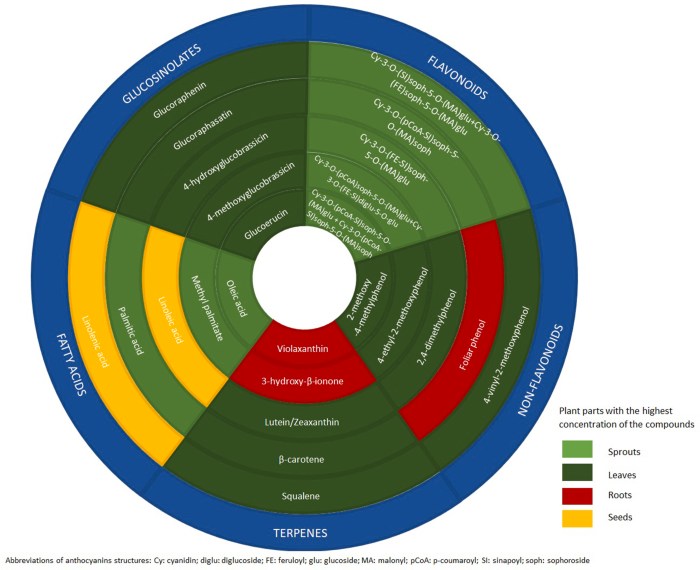
“It is worth considering radish’s organoleptic characteristics since its particular flavor can influence its acceptability among consumers. The main compound associated with its characteristic pungent flavor is raphasatin, which we have found to be the most reported isothiocyanate produced from the breakdown of glucoraphasatin.

Glucoraphasatin ranked as one of the most concentrated glucosinolates in radish, particularly in its sprouts, but also present in other parts like roots and seeds. Pungency differs among radish cultivars, environmental growth factors, agronomic, and cooking practices.”

1-s2.0-S0924224421003058-gr3_lrg

https://www.sciencedirect.com/science/article/pii/S0924224421003058 “Nutritional and phytochemical characterization of radish (Raphanus sativus): A systematic review”


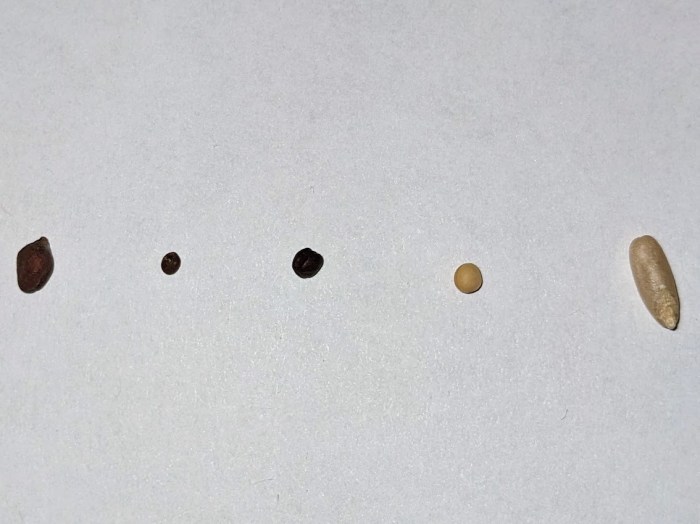
Seeds I’ve sprouted this year so far, left to right – red radish (Sango), broccoli, red cabbage (Red Acre), yellow mustard, oat (Avena sativa):

PXL_20230106_121548495

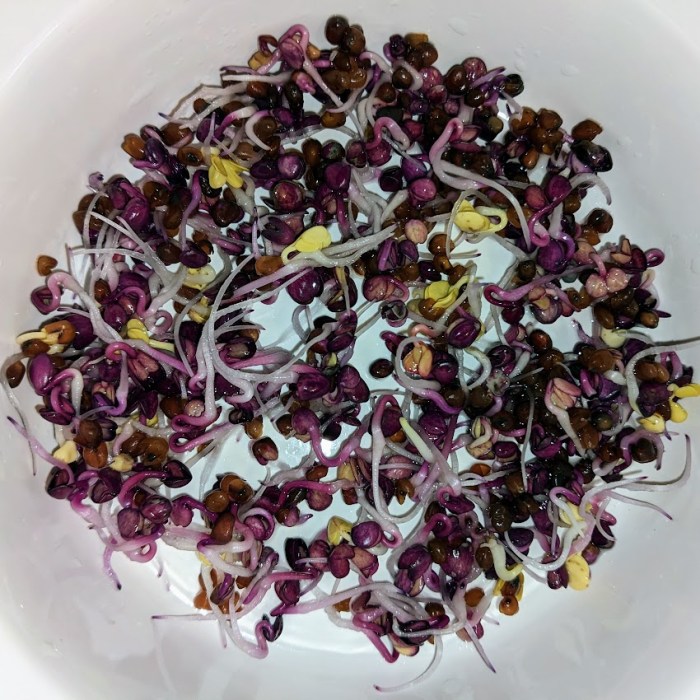
Red radish had similar growth characteristics as broccoli. Started with 3.6 grams of seeds, which increased to 22.2 g after three days using the same soaking and rinsing protocol I use for other sprouts.

PXL_20230109_121815772

The taste of red radish was too sharp for me to eat by themselves, so I combined them with my broccoli / red cabbage / mustard sprout mix. Bumped up microwaving time to 48 seconds in a 1000 W microwave while staying short of the 60°C (140°F) myrosinase cliff.

The whole mix still had a strong radish taste, though. It was as if two whole red radishes were sliced into a small salad.

Can’t add anything more to dampen that taste and expect beneficial compounds to be unaffected. From Week 19:

A 2018 Netherlands study Bioavailability of Isothiocyanates From Broccoli Sprouts in Protein, Lipid, and Fiber Gels found:

Compared to the control broccoli sprout, incorporation of sprouts in gels led to lower bioavailability for preformed sulforaphane and iberin.”

IAW, eating protein, fats, and fiber along with microwaved broccoli sprouts wouldn’t help. A 2018 review with some of the same researchers Isothiocyanates from Brassica Vegetables-Effects of Processing, Cooking, Mastication, and Digestion offered one possible explanation for protein acting to lower broccoli sprout compounds’ bioavailability:

“In vitro studies show that ITCs can potentially react with amino acids, peptides, and proteins, and this reactivity may reduce the ITC bioavailability in protein‐rich foods. More in vivo studies should be performed to confirm the outcome obtained in vitro.”

Mixing in red radish sprouts also gave me an upset stomach five of the six mornings. So I won’t continue to sprout red radish.

That said, I’d definitely consider sprouting red radish again to accelerate isothiocyanate treatment of problems where symptoms are much worse than an upset stomach, such as:

  • Neurogenerative diseases with their cognitive decline;
  • Immune system disorders;
  • Bacterial and viral infections; and
  • Other damage caused by oxidative stress conditions in eyes, vascular system, kidney function, etc.

Piping in the New Year

PXL_20230101_193048797

Eat mushrooms every day?

Three 2022 papers on amino acid ergothioneine, starting with a human study:

“We examined temporal relationships between plasma ergothioneine (ET) status and cognition in a cohort of 470 elderly subjects attending memory clinics in Singapore. All participants underwent baseline plasma ET measurements as well as neuroimaging for cerebrovascular disease (CeVD) and brain atrophy. Neuropsychological tests of cognition and function were assessed at baseline and follow-up visits for up to five years.

Lower plasma ET levels were associated with poorer baseline cognitive performance and faster rates of decline in function as well as in multiple cognitive domains including memory, executive function, attention, visuomotor speed, and language. In subgroup analyses, longitudinal associations were found only in non-demented individuals.

Mediation analyses showed that effects of ET on cognition seemed to be largely explainable by severity of concomitant CeVD, specifically white matter hyperintensities, and brain atrophy. Our findings support further assessment of plasma ET as a prognostic biomarker for accelerated cognitive and functional decline in pre-dementia and suggest possible therapeutic and preventative measures.”

https://www.mdpi.com/2076-3921/11/9/1717 “Low Plasma Ergothioneine Predicts Cognitive and Functional Decline in an Elderly Cohort Attending Memory Clinics”


Earlier this year, two of the study’s coauthors put together a collection of 11 ergothioneine papers:

“One catalyst for this upsurge of interest was the discovery in 2005 of a transporter for ET (OCTN1, often now called the ergothioneine transporter, ETT), which accounts for the fact that animals (including humans) take up and avidly retain ET from the diet. The presence of a specific transporter together with the avid retention of ET in the body implies that this compound is important to us.

To quote an old phrase ‘correlation does not imply causation.’ Low ET levels may predispose to disease, but disease could also lead to low ET levels. Possible reasons could include:

  • Alterations in diet due to illness so that less ET is consumed;
  • Decreases in ETT activity in the gut (leading to less ET uptake) or kidney (impairing ET reabsorption) with age and disease.
  • Changes in gut microbiota might influence uptake and accumulation in the body.
  • ET is being consumed as it scavenges oxygen radicals and other reactive oxygen species, the production of which is known to increase in these diseases and during ageing in general.

Only the gold standard of placebo-controlled double-blinded clinical studies can definitively establish the value (if any) of ET in preventing or treating human disease. Several such trials are being planned or in progress; we await the results with interest, and a streak of optimism.”

https://febs.onlinelibrary.wiley.com/doi/10.1002/1873-3468.14350 “Ergothioneine, where are we now?”


One of the collection’s papers focused on what ETT research findings could or could not be replicated:

“ETT is not expressed ubiquitously and only cells with high ETT cell-surface levels can accumulate ET to high concentration. Without ETT, there is no uptake because the plasma membrane is essentially impermeable. We review substrate specificity and localization of ETT, which is prominently expressed in neutrophils, monocytes/macrophages, and developing erythrocytes.

Comparison of transport efficiency (TE) for acknowledged substrates of the ETT. Bar length represents approximate TE of wild-type human ETT.

feb214269-fig-0001-m

We have not found in the literature any other ET transporters. However, it is highly probable that additional ET transporters work in the human body:

  • Uptake of ET from the small intestine into epithelial cells occurs through apically localized ETT. The very hydrophilic ET cannot then exit these cells toward the blood without help – a basolateral efflux transporter is required.
  • After oral administration of 3H-ET, a considerable amount of ET was still absorbed into the body in the ETT KO [knockout] mice. There must be another transporter for apical uptake at least in the small intestine of the mouse.
  • When ET was administered intravenously, ETT KO mice showed no change in ET concentration in the brain compared to wild type. The little ET that enters the brain must therefore pass through the BBB via a different transporter.”

https://febs.onlinelibrary.wiley.com/doi/10.1002/1873-3468.14269 “The ergothioneine transporter (ETT): substrates and locations, an inventory”


It’s persuasive that there’s an evolutionarily conserved transmitter specific to ergothioneine. It isn’t persuasive that this compound once consumed is almost always in stand-by mode to do: what?

Ergothioneine isn’t a substitute for the related glutathione, especially since its supply isn’t similarly available from an endogenous source. It isn’t an active participant in day-to-day human life.

Still, I hedge my bets. I eat ergothioneine every day via white button mushrooms in AGE-less chicken vegetable soup at a cost of about $1.30.

PXL_20221210_191511270

Eat broccoli sprouts to epigenetically regulate histones

Five papers on beneficial effects from sulforaphane inhibiting histone deacetylases (HDACs), starting with a 2022 rodent cell study:

“Sulforaphane (SFN) has tissue specificity for subtypes of HDACs that are downregulated. For example:

  • In breast cancer cells, HDAC1-3 are inhibited by SFN to induce cell apoptosis;
  • In skin cells, HDAC1-4 are regulated by SFN [anti-skin cancer]; and
  • In the cochlea, SFN inhibits HDAC2, 4, and 5 [attenuates hearing loss].

In the present study, SFN significantly inhibited HDAC2, 3, and 5 expression and HDACs activity in cardiomyocytes, thereby increasing H3 acetylation levels in the Nrf2 promoter and upregulating Nrf2 expression. Mechanism by which SFN prevents Ang II-induced cardiomyocyte apoptosis:

  • Ang II activates oxidative stress by increasing ROS leading to inflammation, oxidative stress and fibrosis in cardiomyocytes.
  • SFN prevents Ang II-induced cardiomyocyte apoptosis by inhibiting HDACs to activate Nrf2 and downstream antioxidant genes.

aging-14-204247-g007

SFN activates Nrf2 by inhibiting HDACs expression and activation.”

https://www.aging-us.com/article/204247/text “Sulforaphane inhibits angiotensin II-induced cardiomyocyte apoptosis by acetylation modification of Nrf2”


A 2021 rodent study found:

“SFN significantly attenuated diabetes-induced renal fibrosis in vivo. SFN inhibited diabetes-induced increase in HDAC2 activity.

Bone morphologic protein 7 (BMP-7) has been shown to reduce renal fibrosis induced by transforming growth factor-beta1. SFN protects against diabetes-induced renal fibrosis through epigenetic up-regulation of BMP-7.”

dmj-2020-0168f7

https://e-dmj.org/journal/view.php?doi=10.4093/dmj.2020.0168 “Sulforaphane Ameliorates Diabetes-Induced Renal Fibrosis through Epigenetic Up-Regulation of BMP-7”


A 2019 human osteosarcoma cell study found:

“SFN inhibits mTOR in a concentration- and time-dependent manner. This inhibition occurs in the presence or in the absence of NRF2.

SFN inhibits HDAC6 and decreases catalytic activity of AKT, which partially explains the mechanism by which SFN inhibits mTOR.”

https://www.sciencedirect.com/science/article/pii/S0944711319302284 “The isothiocyanate sulforaphane inhibits mTOR in an NRF2-independent manner”


A 2022 review cited a 2018 cell study:

“HDAC expression and activity are dysregulated in various diseases including asthma, chronic obstructive pulmonary disease, cancer, cardiac hypertrophy, and neurodegenerative and psychological disorders. HDAC inhibitors could be a potential therapeutic target for many diseases.

In hypertension, aortic stiffness is usually increased and vascular smooth muscle cells (VSMCs) contribute to vascular stiffness. We used VSMCs to test the degree of acetylation of histones in this study.

Sulforaphane weakly inhibited HDAC2 and effectively inhibited HDAC9.”

https://www.sciencedirect.com/science/article/pii/S0006295222002052 “Zinc-dependent histone deacetylases: Potential therapeutic targets for arterial hypertension”

https://www.sciencedirect.com/science/article/abs/pii/S0753332217364636 “Inhibition of class IIa histone deacetylase activity by gallic acid, sulforaphane, TMP269, and panobinostat” (not freely available)

PXL_20221125_211516042