Plasmalogens Week #2 – Childhood Development

Continuing Plasmalogens Week with three 2025 papers, starting with a human study of plasmalogens’ effects of decreasing breastfed infants’ infections and inflammation:

“Mothers reported on breastfeeding and infant infections in questionnaires collected at 1 month, 3 months, 6 months, 12 months, and 18 months post-birth. Parent-reported infection burden was defined as the total number of infant respiratory tract infections, gastroenteritis, conjunctivitis, and acute otitis media episodes reported by mothers between birth and 6 months for 6-month analyses, and between birth and 12 months for 12-month analyses.

We constructed a causal mediation model to estimate the proportion of effects explained by a direct effect of breastfeeding on inflammation, measured via glycoprotein acetyls (GlycA)—the average direct effect (ADE)—and the proportion that was mediated by metabolomic biomarkers/lipid—the average causal mediation effect (ACME).

Breastfeeding is negatively associated with GlycA, positively associated with plasmalogens, and plasmalogens are negatively associated with GlycA. However, the positive association between breastfeeding and plasmalogens is stronger than the negative direct association between breastfeeding and inflammation, resulting in an ACME that exceeds the total effect. This pattern indicates that plasmalogens may play a dominant role in mediating the relationship between breastfeeding and systemic inflammation.

We have recently developed a plasmalogen score that is associated with a range of cardiometabolic outcomes, including type 2 diabetes and CVD.

  • At 6 months, the plasmalogen score was estimated to mediate 162% of the total effect (proportion mediated: 1.62, i.e. average causal mediation effect (ACME) to total effect ratio of 1.62, resulting in a percentage > 100%) of breastfeeding on GlycA.
  • At 12 months, the plasmalogen score mediated an estimated 75% of the total effect of breastfeeding on GlycA.

Any breastfeeding, regardless of supplementary feeding, was associated with lower inflammation, fewer infections, and significant, potentially beneficial changes in metabolomic and lipidomic markers, particularly plasmalogens. There was evidence of bidirectional mediation: metabolomic biomarkers and lipids mediated breastfeeding’s effects on inflammation, while inflammation partly mediated breastfeeding’s impact on certain metabolites and lipids.”

https://bmcmedicine.biomedcentral.com/articles/10.1186/s12916-025-04343-0 “The protective effect of breastfeeding on infant inflammation: a mediation analysis of the plasma lipidome and metabolome”

Reference 48 was the 2024 plasmalogen score study.


A second study by many of the first study’s researchers used the same cohort as the first study to investigate effects of maternal obesity on infant obesity:

“We aimed to investigate associations between maternal pre-pregnancy body mass index (pp-BMI), lipidomic profiles of mothers, human milk, and infants, and early life growth. We were particularly interested in ether lipids as they are higher in breastfed infants compared to formula-fed infants, are enriched in human milk compared to infant formula, and are involved in metabolic health and inflammation in adult populations.

Maternal plasmalogen score was negatively associated with pp-BMI and positively associated with plasmalogens in human milk and infant plasmalogen scores from birth to four years of age. We were unable to establish clear links between plasmalogen score and infant BMI within the first 4 years.

These findings position plasmalogens and ether lipids as potential biomarkers or intervention targets for reducing transmission of obesity from mother to infant. Optimising lipid profiles through reducing maternal pp-BMI and dietary or supplemental ether lipids may represent a novel strategy for mitigating early-life obesity risk.”

https://www.researchsquare.com/article/rs-7089146/v1 “Maternal BMI and infant obesity risk: a lipidomics perspective on the developmental origins of obesity”

There was a lot of hand waving and weasel-wording (i.e., could, may, potential, associated with) but little causal evidence in this preprint. Reference 42 was the preprint version of the first study.


A third paper investigated 9- to 12-year-olds’ plasmalogen levels and molecular types:

“The importance of plasmalogens (Pls) in several cellular processes is known, one of which is their protective effect against oxidative damage. The physiological role of Pls in human development has not been elucidated. This study is the first report on plasmalogen levels and molecular types in children’s plasma.

Ethanolamine plasmalogen (PlsEtn 16:0/20:5) and choline plasmalogen (PlsCho 16:0/20:5), both carrying eicosapentaenoic acid (EPA, ω-3), were significantly lower in girls than in boys. There was no significant difference observed among the 9, 10, 11, and 12-year-old groups between girls and boys in their levels of PlsEtn 16:0/20:5. However, a significant decrease in the levels of PlsCho 16:0/20:5 was observed for 9, 10 and 12-year-old groups of girls compared to boys.

  • In both sexes, the plasmalogen levels for the 12-year-old children were lower than those for the 9-year-old children.
  • PlsCho (16:0/18:2) linoleic acid (ω-6)-derived was lower in the overweight children than in the normal-weight children for both sexes.
  • Arachidonic acid (ω-6)-containing PlsEtn (18:0/20:4) was the most abundant ethanolamine-type plasmalogen in both sexes.

This study has many limitations as follows:

  1. Non-fasting plasma samples were collected from the children’s plasma and used for analysis; since diet can influence Pls levels, the result may be affected by the sample collection method.
  2. Physical activity was also not monitored, which could have an influence on plasma levels, and
  3. A limited number of plasmalogen molecular species were quantified in this study.

A follow-up study may be essential to determine the plasma Pls in the same population when they are adolescents.”

https://www.mdpi.com/2075-4418/15/6/743 “Application of Liquid Chromatography/Tandem Mass Spectrometry for Quantitative Analysis of Plasmalogens in Preadolescent Children—The Hokkaido Study”


Plasmalogens Week #1 – Overview

It’s been a while since I curated plasmalogen papers. Let’s start out a week’s worth of 2025 papers with a review of plasmalogens as biomarkers:

“Reduced levels of plasmalogens in circulation or in cell membranes are associated with rare peroxisomal disorders, systemic disease, neurological impairment, cancer, and diseases of the heart, kidney, and liver. Roles for plasmalogens have been identified in lipid rafts, myelin, chlorolipids, bromolipids, hemostasis, cholesterol metabolism, and redox responses.

Plasmalogens account for approximately 5-20% of the phospholipids in mammalian cell membranes. Circulating choline and ethanolamine are incorporated into lipid membranes through the synthesis of plasmalogens. These lipids are formed through a separate multistep process involving precursors in the cytoplasm, peroxisome, and endoplasmic reticulum.

Cytochrome c (cyt-c) typically serves as an electron carrier in the mitochondrial membrane, but under oxidative stress, cyt-c undergoes a conformational alteration conferring peroxidase activity that cleaves the vinyl-ether linkage in plasmalogens. Plasmalogens may act as precursors to platelet-activating factor (PAF), and PAF can be enzymatically converted to plasmalogens. PAF is a potent pro-inflammatory mediator in cancer, cardiovascular, neurological, chronic and infectious disease, suggesting that increased PAF levels may inversely correspond to lower ethanolamine plasmalogen levels identified in human diseases.

Plasmalogens are abundant in myelin, and crucial to the function of central nervous system oligodendrocytes and peripheral nervous system Schwann cells in supporting neuronal action potential.

Catabolism of plasmalogens occurs in response to oxidative stress and activation of TLRs, which promote pro-inflammatory responses during disease progression. Release of fatty acids (e.g., arachidonic acid, eicosapentaenoic acid, docosahexaenoic acid) during plasmalogen catabolism can either exacerbate or resolve pro-inflammatory and thrombotic responses depending on the type of fatty acid released and mediator produced.

Continued research of the types of plasmalogens and plasmalogen precursors and their natural or synthetic sources, the frequency and amount of plasmalogens administered, the route of administration, and the timing of treatment is needed.”

https://www.jlr.org/article/S0022-2275(25)00188-9/fulltext “Plasmalogens as biomarkers and therapeutic targets”


A second review highlighted various strategies for regulating plasmalogen levels:

“Plasmalogens serve as significant structural components of cellular membranes, particularly enriched in tissues with high membrane trafficking. Plasmalogens are recognized as major reservoirs for polyunsaturated fatty acids (PUFAs), notably docosahexaenoic acid (DHA) and arachidonic acid (AA). Incorporation of these PUFAs influences membrane physical properties, including fluidity and the propensity to form non-lamellar structures.

Effective delivery of plasmalogens or their precursors faces significant hurdles, including chemical instability (especially oxidation of the vinyl-ether bond), low oral bioavailability, and challenges in crossing biological barriers like the blood–brain barrier (BBB). Exploration of plasmalogen-based nanoparticles is currently quite limited.”

https://faseb.onlinelibrary.wiley.com/doi/10.1096/fba.2025-00010 “Plasmalogen as a Bioactive Lipid Drug: From Preclinical Research Challenges to Opportunities in Nanomedicine”

Yeah, no. Everything the public was told about lipid nanoparticles this decade was propaganda in service of an agenda. The real stories are gathered in papers I haven’t curated, such as Lipid Nanoparticles as Active Biointerfaces: From Membrane Interaction to Systemic Dysregulation.


Maternal intake of broccoli sprouts transfers to the fetus and infant

A 2025 human study investigated placental and breast milk sulforaphane content:

“Uncomplicated pregnant patients (n = 8) scheduled for elective caesarean sections (>37 weeks gestation) provided written and informed consent. A single oral dose of EnduraCell, a broccoli sprout extract (equivalent to 21 mg of sulforaphane), was administered prior to caesarean section. Baseline blood pressure, blood and urine were collected and again at time of operation, alongside umbilical cord blood (vein and artery) and placental samples.

2–4 days post-delivery, a second dose was administered. Two hours later, maternal bloods and breast milk were collected.

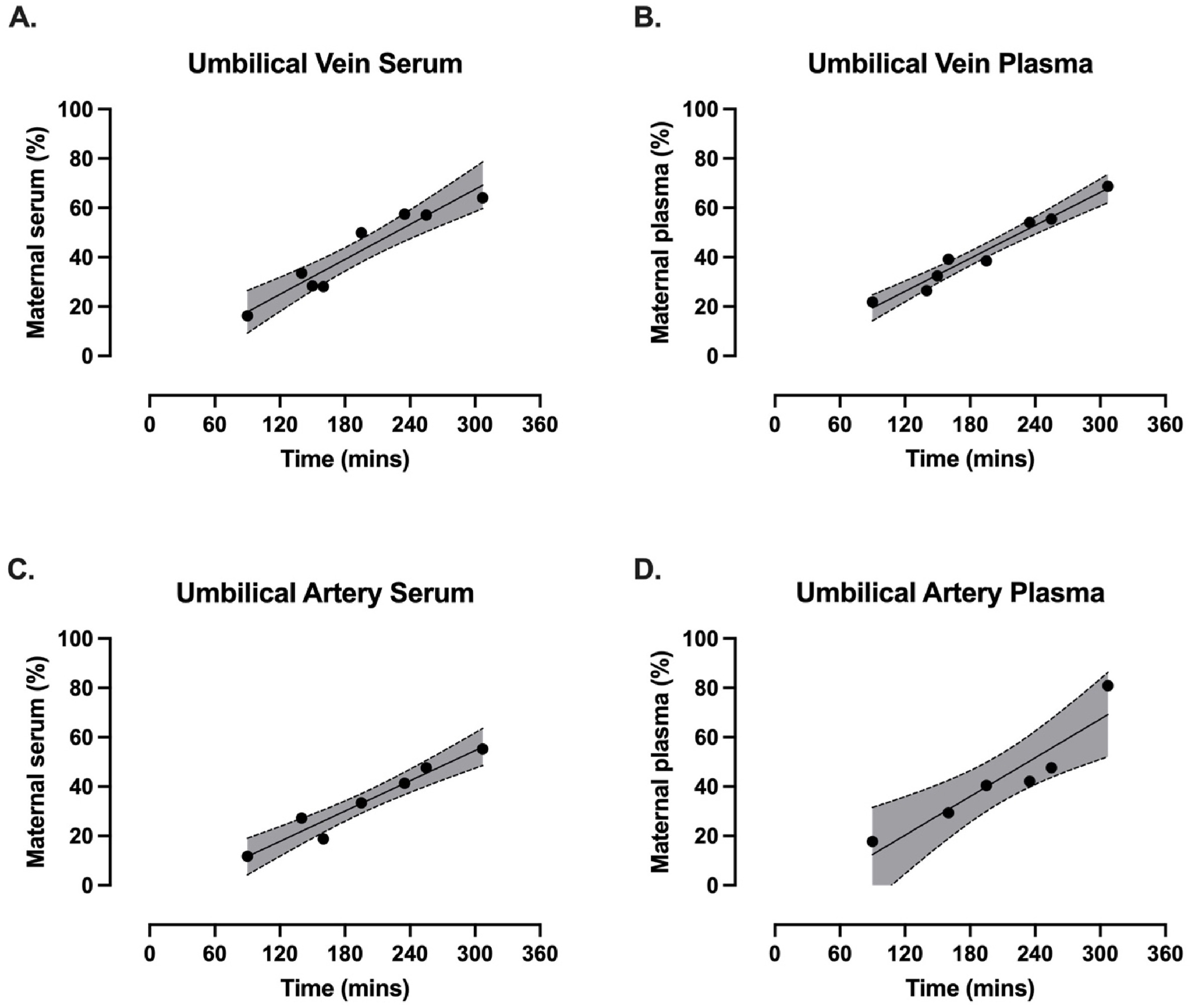
Unlike in the maternal circulation, sulforaphane levels did not show an obvious peak at the 2–3 h timepoint in the fetal umbilical vein serum and plasma or the umbilical artery serum and plasma.

A linear regression indicated that the percentage of fetal sulforaphane relative to the maternal concentration increased over time, showing progressive transfer from maternal to fetal circulation.

This is the first study to demonstrate the successful maternal-fetal transfer of sulforaphane through the placenta and into breast milk following exposure to a broccoli sprout extract during and after pregnancy. No adverse events or outcomes were reported from any of the participants, supporting the reassuring safety profile of an acute exposure to a broccoli sprout extract in pregnancy.

https://www.sciencedirect.com/science/article/pii/S0143400425006964 “Assessing the transplacental passage and breastmilk levels of broccoli sprout-derived sulforaphane”


1. These researchers incorrectly termed a commercially available broccoli sprout powder as an extract. Grinding up broccoli sprouts produces a different product than does processing broccoli seeds or sprouts using solvents into extracts.

2. They asserted the broccoli sprout powder was a 21 mg sulforaphane dose. A more realistic explanation should have been provided, since:

  • No sulforaphane measurements were taken to back their assertion, which is understandable because the powder contained glucoraphanin, sulforaphane’s precursor, and sulforaphane wouldn’t be expected to be found in the powder; and
  • Conversion of broccoli spout powder to sulforaphane would be dependent on each subject’s gut microbiota, which is different for each individual.

Here’s what How long does sulforaphane keep? said for the same broccoli sprout powder product:

“Per the manufacturer, each capsule contained 700 mg of 100% whole broccoli sprout powder, including active myrosinase and 21 mg of glucoraphanin, which upon full conversion to SFN would yield ∼8 mg, equaling ∼24 mg of SFN total per three-capsule dose. We note that full conversion to SFN, even with active myrosinase in the supplement, is not expected.”

3. Characterizing this minimal dose as “an acute exposure” mixed up its meaning with the common meaning of acute – “extremely sharp or severe; intense.”

4. Someday, researchers will be interested and forward-thinking enough about their field to plan ahead and investigate occurrences such as why both the highest and lowest maternal blood sulforaphane content didn’t translate into correspondingly ranked umbilical cord blood sulforaphane content.

5. Since blood contains up to 18,000 compounds, I don’t see where any other maternal blood compound wouldn’t pass to the fetus, unless it is definitively shown that the placenta specifically blocks it. It’s time to discard and disclaim any “safe and effective” propaganda with respect to pregnant women and breastfeeding mothers.

I found this study by it citing Eat broccoli sprouts for longevity.

Practice what you preach, or shut up

A 2025 review subject was sulforaphane and brain health. This paper was the latest in a sequence where the retired lead author self-aggrandized his career by citing previous research.

He apparently doesn’t personally do what these research findings suggest people do. The lead author is a few weeks older than I am, and has completely white hair per an interview (Week 34 comments). I’ve had dark hair growing in (last week a barber said my dark hair was 90%) since Week 8 of eating broccoli sprouts every day, which is a side effect of ameliorating system-wide inflammation and oxidative stress.

If the lead author followed up with what his research investigated, he’d have dark hair, too. Unpigmented white hair and colored hair are both results of epigenetics.

Contrast this lack of personal follow-through of research findings with Dr. Goodenowe’s protocol where he compared extremely detailed personal brain measurements at 17 months and again at 31 months. He believes enough in his research findings to personally act on them, and demonstrate to others how personal agency can enhance a person’s life.

It’s every human’s choice whether or not we take responsibility for our own one precious life. I’ve read and curated on this blog many of this paper’s references. Five years ago for example:

So do more with their information than just read.

https://www.mdpi.com/2072-6643/17/8/1353 “Sulforaphane and Brain Health: From Pathways of Action to Effects on Specific Disorders”

The largest cause of coincidences, Part 2

Part 1 was informative, but this 2.5 hour interview with Dr. Suzanne Humphries provided a dozen times more information on health care and other subjects. Probably couldn’t have been on YouTube six months ago for more than a few minutes until it would have been censored.

I came across this interview by reading Why Is What We Feed Infants So Unhealthy?

“As I was finishing this article, Joe Rogan made the remarkable decision earlier this week to bring Suzanne Humphries onto his show to discuss the centuries of lies we’ve been told about vaccines (which amongst other things inspired this Substack) where she not only did that but also focused on the importance of breast feeding and the increased susceptibility formula fed infants have to vaccine injuries.”

I don’t specifically search for breast feeding topics, but my electronic services and devices seem to find them for me. Such as this suggestion:

Failed aging paradigms

A 2024 paper with 81 coauthors presented different views of aging:

“This article highlights the lack of consensus among aging researchers on fundamental questions such as the definition, causes, and onset of aging as well as the nature of rejuvenation. Our survey revealed broad disagreement and no majority opinion on these issues.

We obtained 103 responses (∼20% of which were submitted anonymously). The respondents included 29.8% professors, 25% postdoctoral fellows, 22.1% graduate students, 13.5% industry professionals, and 9.6% representing other categories (a total of eight additional groups).

When does aging begin? At 20 years (22%), gastrulation (18%), conception (16.5%), gametogenesis (13%), 25 years (11%), birth (8%), 13 years (5%), and 9 years (4%). Nobody chose the only remaining option (30 years).

m_pgae499f3

It is clear from responses that aging remains an unsolved problem in biology. While most scientists think they understand the nature of aging, apparently their understanding differs. Where some may stress the importance of targeting underlying mechanisms, others focus on ameliorating the phenotypes.”

https://academic.oup.com/pnasnexus/article/3/12/pgae499/7913315?login=false “Disagreement on foundational principles of biological aging”


I’ll assert that these researchers were unable to incorporate information outside of their chosen paradigm. This would explain why only 18% understood the embryonic stage of gastrulation as aging’s start, although the 2022 paper Epigenetic profiling and incidence of disrupted development point to gastrulation as aging ground zero in Xenopus laevis provided epigenetic clock evidence that:

“It is not birth, marriage, or death, but gastrulation which is truly the most important time in your life.”


I’ve cited Josh Mitteldorf’s work about aging a few times. His paradigm of aging is in his 2017 book Cracking the Aging Code: The New Science of Growing Old – And What It Means for Staying Young that:

“Aging has an evolutionary purpose: to stabilize populations and ecosystems.”

However, there isn’t evidence of such causal inheritance mechanisms that would begin an organism’s aging during embryogenesis, i.e., that an embryo’s development of aging elements at gastrulation is causally affected by population and ecosystem factors.


Dr. Goodenowe recently had a casual conversation Episode 8 – Perpetual Health, Exploring The Science Behind Immortality where he asserted items such as:

“What we’re all fighting is entropy. Entropy is the tendency of all things to reach a level of randomness. Aging is not a disease. It’s just apathy and entropy. The body just doesn’t care – people don’t pay attention.

This notion that we are programmed for death is wrong. We’re not programmed to die. We actually teach ourselves to die. The body learns how to die, so as your function decreases, it adjusts. It appears to be programmed because of the association with chronological age.”

I haven’t seen any of his papers that put these and his other assertions up for review. For example, I doubt the entropy-caused randomness assertion would survive peer review per Stochastic methylation clocks?:

“Entropic theories of aging have never been coherent, but they are nevertheless experiencing a resurgence in recent years, primarily because neo-Darwinist theories of aging are all failing. I find this ironic, because the neo-Darwinist theories arose precisely because scientists realized that the Second Law of Thermodynamics does not apply to living systems.”


The funny thing about failed aging paradigms is that quite a few of their treatments improve healthspan, but not lifespan. If they don’t “target aging underlying mechanisms” they “ameliorate aging phenotypes.” None so far have positively affected both human healthspan and lifespan.

PXL_20241129_174732711.MP~2

An elevator pitch for plasmalogen precursors

An excerpt from the latest video at Dr. Goodenowe’s Health Matters podcast, Episode 7 “The Truth about Parkinson’s”, starting at 50:30:

“What’s exciting about this community medicine focus that we’ve switched to which basically says: How do we develop technologies in a way that they can be incorporated into a community model versus a pharmaceutical drug model? People can actually do I would say self-experiment just the way you self-experiment with your own diet because these are fundamentally dietary nutrition molecules.

Could you give me an elevator pitch because there are probably people listening who are thinking what is this plasmalogen precursor and for sure how is it having this dramatic effect?

Plasmalogens are the most important nutrient that nobody knows about. Normally you don’t know about it because the body is usually pretty good at making them. What makes plasmalogens unique is that your body makes them kind of like cannon fodder, the first group of people that go into war. Your body throws them out for destruction. They absorb oxidative stress and get destroyed in the process.

They’re stored in your cell membranes. 50% of the membranes of your heart are these plasmalogen molecules. When your heart gets inflamed, what your heart does is it dumps these plasmalogens out of its membranes to douse the flame of inflammation. After inflammation is under control, your body naturally builds these things back up again.

But if you have an inability to make enough plasmalogens, these inflammation events knock you down and keep you down. So plasmalogen precursors are critical for maintaining high levels of plasmalogens across your body, not just in your brain (30% of the lipids in your brain) but in your heart, your lungs, your kidneys.”


PXL_20241117_185248742~2

Brain restoration with plasmalogens, Part 2

This September 2024 presentation adds data points and concepts to Part 1:

supplementation

  1. “Your brain is dynamically connected to and adaptively responsive to its environment.
  2. You are in control of this environment (nutrition, stimulation, adversity).
  3. Need to measure the environment (lab testing, physiology) and adaptive response to the environment (MRI) to optimize your environment (nutrition, lifestyle) to achieve optimal brain structure, function, health, and longevity.

neurovascular

From a global cortical volume and thickness perspective, 17 months of high dose plasmalogens reversed about 15 years of predicted brain deterioration. 31 months reversed almost 20 years. So you can get more out of life.”

https://drgoodenowe.com/immortal-neurology-building-maintaining-an-immortal-brain/


Dr. Goodenowe also added case studies of two patients:

1. A 50-year-old woman with MS who had been legally blind in one eye for 32 years who regained sight in that eye after eight months of supplementation.

“This is the adaptability of the human brain. Her eye is not actually impaired. What’s impaired is the ability, the adaptability of the brain to the signal of light, to actually start interpreting what that light signal is.”

2. A 61-year-old man with dementia from firefighting work for the U.S. Navy in a toxic environment with head injuries after nine months of supplementation.

“The brain can heal itself is the point of the story. His executive function skills in everyday life are getting better.”

How to choose your medical professional

Two+ decades ago (before smart phones) I wrote a series of short books entitled How To Choose Your  Lawyer, ..Accountant, ..Financial Advisor. My customers were mainly public libraries.

This is a short post on choosing doctors, although I’ve fired all my doctors and don’t have one. Everything that’s happened this decade has made me wonder why I trusted doctors in the first place.

1. It takes certain behavioral quirks for doctors to assert they know better than you do about what is good for you. These behaviors usually have nothing to do with these doctors’ patients, but patients somehow believe doctors.

These behaviors are almost always doctors’ act-outs of early-life traumas of unfulfilled needs. Pain keeps people from feeling their actual histories, though, so we don’t deal with our real histories therapeutically until we absolutely have to.

If your doctor listens to you at all, it’s only because they are constantly vigilant for some way to fulfill their own unsatisfied needs. But that neither resolves anything for them, as an early need can’t be satisfied years later, nor has anything to do with what you need from a medical professional.

2. If you’ve read extensively about an area and have questions, a doctor may know less than you. That won’t keep them from gaslighting you due to 1. above, but it does keep you from getting what you need from them. Discussing facts you know with a medical professional who is intentionally ignorant about a medical subject gets you nowhere.

3. If your doctor has not publicly disclaimed their advocacy of this decade’s misguided genetic therapy, they are compromised and can’t be trusted. It doesn’t matter what else they said, because they weren’t honest about what they knew or should have known, as revealed by their actions or inactions.

For example, two studies published in June 2024 established that:

  • Neurologic issues (68% increase in depression, and a 44% increase in anxiety / dissociative / stress-related / somatoform disorders) followed COVID gene therapy: https://www.nature.com/articles/s41380-024-02627-0 “Psychiatric adverse events following COVID-19 vaccination: a population-based cohort study in Seoul, South Korea” (2,027,353 people)
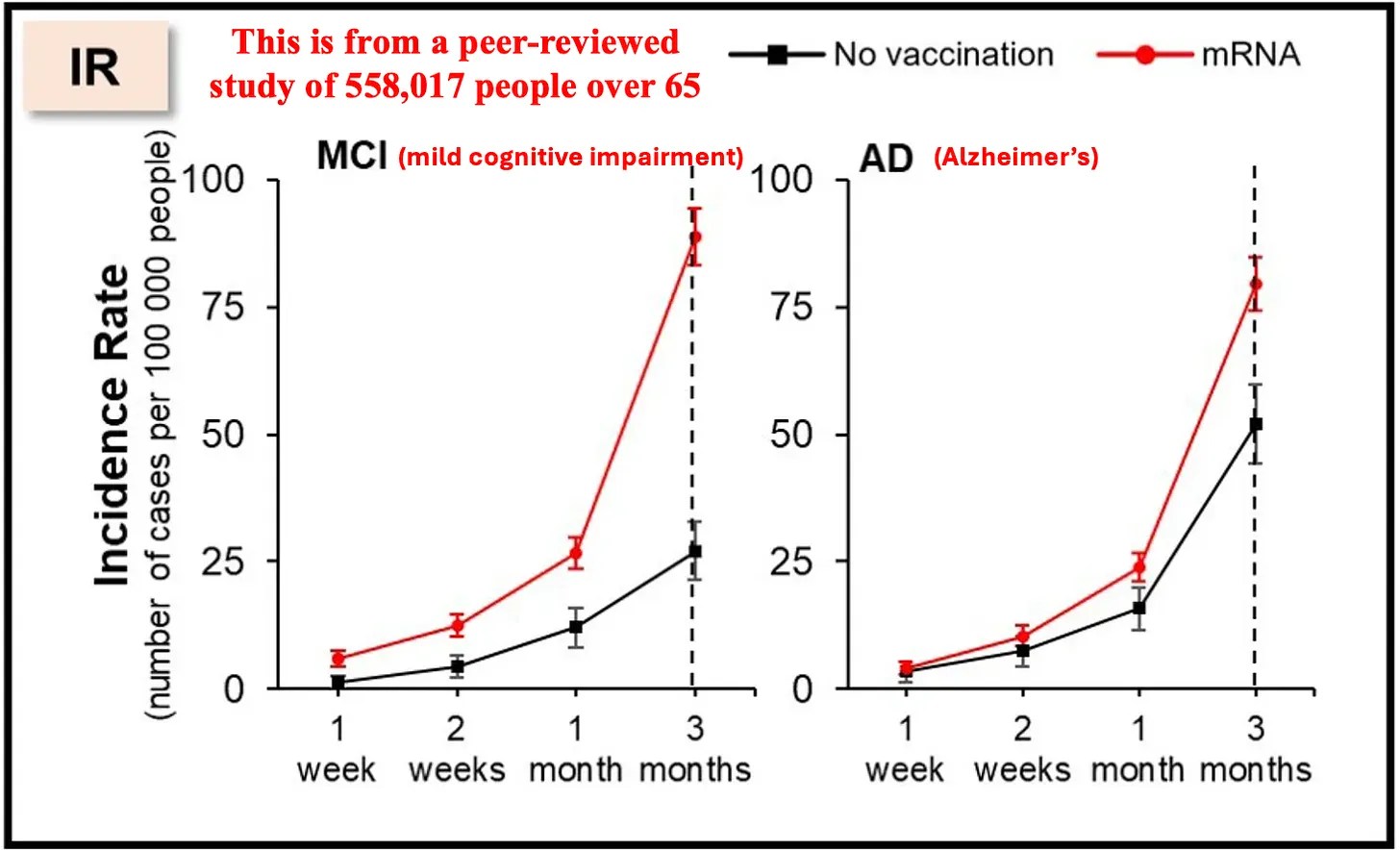
  • COVID gene therapy increased the risk of mild cognitive impairment 138% and the risk of Alzheimer’s by 23%: https://academic.oup.com/qjmed/advance-article-abstract/doi/10.1093/qjmed/hcae103/7684274 “A potential association between COVID-19 vaccination and development of Alzheimer’s disease” (558,017 people). These graphics showed rapidly increasing MCI and AD incidences. The study’s analysis showed incidence increases could not have happened by chance.

ea3f75cb-a071-4cc9-9bd8-0609d0ad8961_1466x890

A doctor’s only honest response to this malfeasance is to publicly apologize, and tell their trusting patients they will make it up to them by providing free healthcare to help mitigate results of their unprofessional conduct. If they tell you something else, it’s a distraction from consequences that are beyond words.

Consequences of perinatal stress

A 2024 rodent study followed up earlier studies of perinatal stress:

“Stress is a multisystemic and multiscale reaction experienced by living beings in response to a wide range of stimuli, encompassing a highly complex order of biological and behavioral responses in mammals, including humans. In the present study, we evaluated changes in mRNA levels in 88 regions of interest (ROIs) in male rats both exposed to perinatal stress and not exposed.

Depending on critical life stage (e.g., perinatal life, infancy, childhood, adolescence, aging), duration, and type of stressor, different effects can be detected by examining behavioral and physiological functions. Stress is related to several cognitive processes, including spatial and declarative memory (involving the hippocampus), fear and memories of emotionally charged events (involving the amygdala), and executive functions and fear extinction (involving the prefrontal cortex).

This PRS paradigm is a well-characterized animal model in which offspring is exposed to stress during pregnancy and after birth because of receiving defective maternal care. Offspring exhibit behavioral hyperreactivity, as well as increased susceptibility to drug addiction and decreased risk-taking behavior.

Starting from day 11 of gestation until delivery, pregnant females were subjected to restraint in a transparent plastic cylinder and exposed to bright light during three daily sessions of 45 min. Since gestational stress induces a <40% reduction of maternal behavior in stressed mothers, we refer to the whole procedure as Perinatal Stress.

Intercorrelation between the orbitofrontal cortex (OFC) and various brain regions such as the thalamus and amygdala were found disrupted in the PRS group. These functional correlations appear to be associated with regulation of executive functions, goal-directed behavior, and directed attention. Also, discrete functional links between the OFC and limbic regions and striatum were lost in the PRS group.

Decreased expression of the Homer1a gene across multiple brain regions after perinatal stress exposure may derange normal architecture of glutamatergic synapses during neurodevelopment and after birth. Changes at the glutamatergic synapse have been considered pivotal in adaptive stress behaviors.

Our results show that PRS preferentially reinforces the centrality of subcortical nodes, resulting in increased centrality of structures such as amygdala, caudate-putamen, and nucleus accumbens, suggestive of reduced cortical control over these regions. In conclusion, when analyzing Homer gene expression after stress exposure not only in terms of quantitative changes compared to the control group, but also as a basis for conducting brain connectivity graph analysis, we observed that perinatal stress could significantly affect the functional connectivity of brain regions implicated in modeling pathophysiology of severe psychiatric disorders.”

https://www.sciencedirect.com/science/article/pii/S0278584624001003 “Perinatal stress modulates glutamatergic functional connectivity: A post-synaptic density immediate early gene-based network analysis”


PXL_20240528_094419674

Maintaining your myelin, Part 1

Three papers on myelin and oligodendrocytes, starting with a 2023 review:

“Myelin is the spiral ensheathment of axons by a lipid and cholesterol-rich glial cell membrane that reduces capacitance and increases resistance of the axonal membrane. Axonal myelination speeds up nerve conduction velocity as a function of axon diameter.

While myelination proceeds rapidly after birth in the peripheral nervous system, central myelination is a spatially and temporally more regulated process. Ongoing myelination of the human brain has been documented at up to 40 years of age. This late myelination in the adult cortex is followed by exhaustion of oligodendrocyte precursor cells (OPC) with senescence and a gradual loss of myelin integrity in the aging brain.

The brain is well known for its high energy demands, specifically in gray matter areas. In white matter tracts, energy consumption is lower. Myelination poses a unique challenge for axonal energy generation where myelin sheaths cover more than 95% of the axonal surface areas.

Oligodendrocytes help support axonal integrity. Oligodendrocytes survive well in the absence of mitochondrial oxidative phosphorylation, and without signs of myelin loss, cell death, neurodegeneration or secondary inflammation.

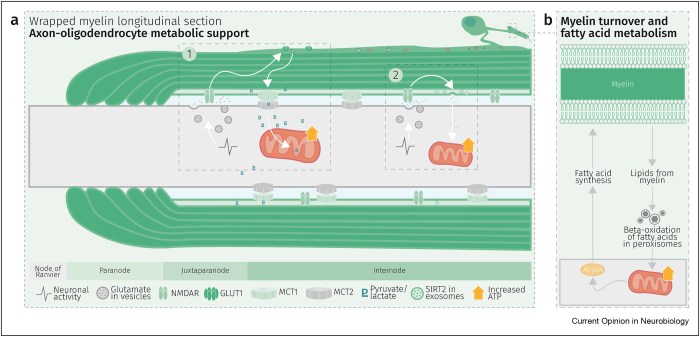
Glycolysis products of oligodendroglial origin are readily metabolized in axonal mitochondria. Oligodendroglial metabolic support is critical for larger and faster-spiking myelinated axons that also have a higher density of mitochondria. An essential requirement for the direct transfer of energy-rich metabolites from oligodendrocytes to the myelinated axonal compartment is ‘myelinic channels’ within the myelin sheath.

Interactions of oligodendrocytes and myelin with the underlying axon are complex and exceed the transfer of energy-rich metabolites. Continuous turnover of myelin membranes by lipid degradation and fatty acid beta-oxidation in mitochondria and peroxisomes leads to recycling of acetate residues by fatty acid synthesis and membrane biogenesis.

1-s2.0-S0959438823001071-gr2_lrg

In human multiple sclerosis (MS) and its animal model myelin oligodendrocyte glycoprotein-experimental autoimmune encephalomyelitis (MOG-EAE), acute inflammatory demyelination is followed by axonal degeneration in lesion sites that is mechanistically not fully understood. It is widely thought that demyelination and the lack of an axon-protective myelin sheath in the presence of numerous inflammatory mediators are the main causes of axon loss.

But unprotected axons improve rather than worsen the overall clinical phenotype of EAE mice which exhibited the same degree of autoimmunity. Thus, ‘bad myelin is worse than no myelin’ because MS-relevant myelin injuries perturb the integrity of myelinic channels and metabolic support.

Dysfunctional or injured oligodendrocytes that do not allow for compensation by any other cell types turn the affected myelin ensheathment into a burden of the underlying axonal energy metabolism, which causes irreversible axon loss. Any loss of myelin integrity, as seen acutely in demyelinating disorders or more gradually in the aging brain, becomes a risk factor for irreversible neurodegeneration.”

https://www.sciencedirect.com/science/article/pii/S0959438823001071 “Expanding the function of oligodendrocytes to brain energy metabolism”


A 2024 review focused on myelin and oligodendrocyte plasticity:

“This review summarizes our current understanding of how myelin is generated, how its function is dynamically regulated, and how oligodendrocytes support the long-term integrity of myelinated axons.

Apart from its unique ultrastructure, there are several other exceptional features of myelin. One is certainly its molecular composition. Another is its extraordinary stability. This was compellingly illustrated when 5000-year-old myelin with almost intact ultrastructure was dissected from a Tyrolean Ice Man.

Myelin is a stable system in contrast to most membranes. However, myelin is compartmentalized into structurally and biochemically distinct domains. Noncompacted regions are much more dynamic and metabolically active than tightly compacted regions that lack direct access to the membrane trafficking machinery of oligodendrocytes.

The underlying molecular basis for stability of myelin is likely its lipid composition with high levels of saturated, long chain fatty acids, together with an enrichment of glycosphingolipids (∼20% molar percentage of total lipids) and cholesterol (∼40% of molar percentage of total lipids). In addition, myelin comprises a high proportion of plasmalogens (ether lipids) with saturated long-chain fatty acids. In fact, ∼20% of the fatty acids in myelin have hydrocarbon chains longer than 18 carbon atoms (∼1% in the gray matter) and only ∼6% of the fatty acids are polyunsaturated (∼20% in gray matter).

With maturation of oligodendrocytes, the plasma membrane undergoes major transformations of its structure. Whereas OPCs are covered by a dense layer of large and negatively charged self-repulsive oligosaccharides, compacted myelin of fully matured oligodendrocytes lacks most of these glycoprotein and complex glycolipids.

Schematic depiction of an oligodendrocyte that takes up blood-derived glucose and delivers glycolysis products (pyruvate/lactate) via monocarboxylate transporters (MCT1 and MCT2) to myelinated axons. Oligodendrocytes and myelin membranes are also coupled by gap junctions to astrocytes, and thus indirectly to the blood–brain barrier.

oligodendrocyte

Adaptive myelination refers to dynamic events in oligodendroglia driven by extrinsic factors such as experience or neuronal activity, which subsequently induces changes in circuit structure and function. Understanding how these adaptive changes in neuron-oligodendroglia interactions impact brain function remains a pressing question for the field.

Transient social isolation during adulthood results in chromatin and myelin changes, but does not induce consequent behavioral alterations. When mice undergo a social isolation paradigm during early life development, they similarly exhibit deficits in prefrontal cortex function and myelination, but these deficiencies do not recover with social reintroduction. This implicates a critical period for social deprivation effects on myelin dynamics. Experience-dependent changes in myelin dynamics may depend on not only the age, brain region, and cell type studied, but also the specific myelin structural change assessed.

Local synaptic neurotransmitter release along an axon not only affects the number of OPCs and oligodendrocytes associated with that axon and local synthesis of myelin proteins, but also drives preferential selection of active axons for myelination over the ensheathment of electrically silenced neighboring axons. Neuronal activity–induced plasticity may preferentially impact brain regions that remain incompletely myelinated compared to more fully myelinated tracts.

Whereas the myelin sheath has been regarded for a long time as an inert insulating structure, it has now become clear that myelin is metabolically active with cytoplasmic-rich pathways, myelinic channels, for movement of macromolecules into the periaxonal space. The myelin sheath and its subjacent axon need to be regarded as one functional unit, which are not only morphological but also metabolically coupled.”

https://cshperspectives.cshlp.org/content/early/2024/04/15/cshperspect.a041359 “Oligodendrocytes: Myelination, Plasticity, and Axonal Support” (not freely available) Thanks to Dr. Klaus-Armin Nave for providing a copy.


A 2024 rodent study investigated oligodendrocyte precursor cell transcriptional and epigenetic changes:

“We used single-cell RNA sequencing (scRNA-seq), single-cell ATAC sequencing (scATAC-seq), and single-cell spatial transcriptomics to characterize murine cortical OPCs throughout postnatal life. One group (active, or actOPCs) is metabolically active and enriched in white matter. The second (homeostatic, or hOPCs) is less active, enriched in gray matter, and predicted to derive from actOPCs. Relative to developing OPCs, both actOPCs and hOPCs are less active metabolically and have less open chromatin.

In adulthood, these two groups are transcriptionally but not epigenetically distinct, indicating that they may represent different states of the same OPC population. If that is the case, then one model is that the parenchymal environment maintains adult OPCs within an hOPC state, whereas those OPCs recruited into white matter or exposed to demyelinated axons may transition toward an actOPC state in preparation for making new oligodendrocytes. We do not yet know the functional ramifications of these differences, but this finding has clear implications for the development of therapeutic strategies for adult remyelination.

opcs

Another finding is that developing but not adult actOPC chromatin is preferentially open for binding motifs associated with neural stem cells, transit-amplifying precursors, and neurogenesis. Although this may simply reflect their origin as the immediate progeny of neonatal neural precursor cells, it may also explain why developing but not adult OPCs have the capacity to make neurons in culture.

If we could, at least in part, reverse the global chromatin shutdown that occurs between development and adulthood, then perhaps adult OPCs may reacquire the ability to make neurons or become better able to generate new oligodendrocytes for remyelination.”

https://www.cell.com/stem-cell-reports/fulltext/S2213-6711(24)00077-8 “Single-cell approaches define two groups of mammalian oligodendrocyte precursor cells and their evolution over developmental time”

Continued in Part 2.


PXL_20240414_103442372

What can be done today to fulfill early unmet needs?

Got agitated earlier this week watching Tucker Carlson’s freely-available interview with a maniac who thinks he’s graduated into a higher state by worshiping the Great AI (Artificial Intelligence, aka Automated Internet, inhabited solely by robots) which will dictate every aspect of what to do with his life. Nevermind that behind the Great AI curtain are the same people who have lied to billions of us, especially during every day of this decade.

Are his current set of beliefs better than previous ones he had of putting a chip into everybody’s brain? What’s wrong with getting to live your own life?

5000

What I saw expressed in the interview was an exhausting pursuit of substitutes for feeling loved. I doubt that many others saw the same, because feeling unloved is so devastating we’ll do anything to avoid it.

But re-experiencing early memories and feelings of unmet needs in a therapeutic setting is the way to keep them from subsequently running our lives. Otherwise, we’ll develop unfulfilling substitutes for what we missed, with misdirected ideas and beliefs accompanied by their unconscious act-outs.

While speaking with a mother who is doing a terrific job of meeting her six-month-old’s needs, I attempted to contrast this interview with the experiences she and her husband are giving their child. Maybe if they read this post, my poor explanation will become clearer.


Wild persimmon trees’ eclipse shadows

PXL_20240408_192336638

Building your plasmalogen savings account

A webinar from earlier this week with Dr. Goodenowe, a clinical trial facilitator, and a physician:

From the Q&A segment:

“Is there a particular age where it’s recommended to test for plasmalogen levels? And what levels would be considered normal?

That’s a good question. That actually raises this whole concept of optimal health and this concept of aging.

The best way to think about it – we talked about this paycheck-to-paycheck situation, where as long as our bills are paid every day, technically we think we’re normal. But we still feel this sense of health anxiety – if you will – like we just don’t know if my car breaks down, or my water heater breaks down, do I have enough money to pay these events in my life?

That’s what health feels like to a lot of people, because they’re just kind of getting by. From a health perspective, they’re considered normal, but they have no reserve capacity, and they have no vitality in terms of health.

Plasmalogens are a type of molecule that you build a savings account of, over years, over decades. Your heart builds them up, your brain builds them up, and you slowly accumulate them. Then when you get an oxidative stress like what’s happening now in today’s world with all the covid and myocarditis and brain fog – a lot of these things are being caused because that reserve of plasmalogens has been depleted.

We want plasmalogens for a longevity perspective. There are other situations that can have low plasmalogens, other things can really knock your plasmalogens down.

So you want to start early, you want to build a savings account, and you want to maintain it. Maintain health and function, and create a sustained surplus for optimal health, for optimal neuromuscular performance.”


PXL_20231207_185012059

Another reason to chew broccoli sprouts

This 2023 review explored a naturally produced antimicrobial:

“This review focuses on the role of abundant hypothiocyanous acid (HOSCN), a potent oxidant that kills bacteria but is non-toxic to human cells. Produced from thiocyanate (SCN) and hydrogen peroxide (H2O2) in a variety of body sites by peroxidase enzymes, HOSCN has been explored as an agent of food preservation, pathogen killing, and even improved toothpaste.

Lactoperoxidase (LPO) is considered the main producer of HOSCN, and is secreted in saliva, tears, breastmilk, and lacrima of mammals. LPO regulates the oral microbiome and keeps breastmilk free of pathogens during the first few weeks after delivery. LPO has long been understood to play a role in prevention of dental caries.

Thiocyanate is mostly acquired from diet. Many food plants contain glucosinolates – precursors to isothiocyanates – found in vegetables of order Brassicales (broccoli, cabbages, turnips, mustard, horseradish, etc.).

HOSCN is likely to exist at substantial concentrations in the oral cavity and the respiratory tract, and is probably present under any inflammatory circumstances. Oxidative damage caused by HOSCN is largely reversible, since HOSCN cannot oxidize thiols to sulfinic or sulfonic acid.

mmi15025-fig-0002-m

The study of bacterial HOSCN stress response is in its infancy. Results summarized above suggest overlaps with both ROS and RCS responses, particularly in the areas of redox homeostasis (e.g., glutathione metabolism), cysteine metabolism, and prevention of protein aggregation, but considerable work needs to be done to more fully characterize this response.”

https://onlinelibrary.wiley.com/doi/10.1111/mmi.15025 “Hypothiocyanite and host–microbe interactions”


PXL_20231130_190421232.MP

Plasmalogens, Part 3

The 2022 plasmalogen clinical trial mentioned in Parts 1 and 2 bypassed peroxisome metabolism of cognitively impaired people per discussion of the below diagram:

fcell-10-864842-g003

Increasing the body’s fasting state with time-restricted eating, and preventing muscle atrophy with resistance exercise, were offered as the two most important ways to improve peroxisomal function.

I didn’t find any relevant 2023 human studies (where I could access the full study) on different non-drug treatments that I was willing to do. A 2023 review outlined aspects of peroxisomes, to include a few older human studies:

“Peroxisomes are small, single-membrane-bound organelles, which are dynamic and ubiquitous. Peroxisomes directly interact with other organelles, such as endoplasmic reticulum, mitochondria, or lysosomes. Peroxisomes exert different functions in various cells through both catabolic and anabolic pathways.

The main functions of peroxisomes can be categorized as reactive oxygen species (ROS) metabolism, lipid metabolism, and ether-phospholipid biosynthesis. Peroxisomes also play important roles in inflammatory signaling and the innate immune response.”

1-s2.0-S2667325823001425-gr3_lrg

https://www.sciencedirect.com/science/article/pii/S2667325823001425 “Peroxisome and pexophagy in neurological diseases”


1. Since I haven’t recently tried the two main ways to improve peroxisomal function, I’ll give them a go over the next three months:

  • Expect to get my feeding timeframe to within eight hours. Don’t know about making it short like 6 hours, because my first meal of the day is 35 calories of microwaved cruciferous sprouts, then I wait an hour before eating anything else.
  • Resistance exercise progress should be measurable, as I recorded exercises during the first ten weeks of eating broccoli sprouts every day 3.5+ years ago.

2. Don’t know that I’ll recognize any cognitive improvements to the extent I did during Week 9.

  • I don’t have a young brain anymore, and I’m sure some decline could be measured in memory tests. But I’m not going to become a lab rat.
  • There’s an occasional annoyance that’s been going on for some time, especially when I’m distracted. It happens when I think of something to do, and it somehow becomes a short-term memory that I did it, instead of going into a Things To Do queue. It’s largely self-correcting. For example, regardless of what I paid, I’ll drive back to the grocery store self-checkout to retrieve a third bag that didn’t make it home. A pink-haired employee said young people leave their paid-for groceries behind all the time. It’s usually more of a reality disconnect for me than forgetfulness, because I have a memory that I performed the action. Definitely room for improvement.

3. Don’t know that I’d see biochemical changes such as some described in Part 1. Maybe I’ll move up an annual physical to compare it with the last one in May?

  • I already have very little oxidative stress, very little inflammation, low triglycerides, high HDL, and no major improvements are indicated on CBC / CMP / lipid panels.
  • Take supplements to ensure other things like acetylcholine neurotransmitter availability, one-carbon / methylation metabolism, vitamin / mineral adequacy.

4. I started the two Prodrome plasmalogen precursor supplements (ProdromeGlia and ProdromeNeuro) a week ago, and take their standard doses. My thought is that resultant plasmalogens won’t degrade very much if their primary use isn’t to immediately address oxidative stress and inflammation. That could give these extra plasmalogens a chance to make larger homeostatic contributions in myelin and membrane areas.

I don’t expect any particular effects to manifest. But I’m interested to see if these two areas would be affected:

  • My left ulnar nerve has been giving me problems for over five years, and several resistance exercises aggravate it. I’ve had two nerve continuity tests during that time to confirm. Numbness and pain are intermittent, though.
  • I still take acetaminophen several times a day for other pain.

None of the above treatments are specifically indicated. But if time-restricted feeding and/or extra plasmalogens have an effect on left ulnar or other pain, maybe I’ll be able to make better progress on resistance exercise.

Update #1 11/13/2023

Update #2 11/22/2023

Update #3 12/13/2023 comments

Update #4 1/30/2024

Update #5 3/31/2024