Amphibian epigenetic clocks

This 2023 study of two frog species expanded one of the cited studies in Epigenetic clocks so far in 2022 to include post-embryonic epigenetic clock measurements:

“We generated DNA methylation data from African clawed frogs (Xenopus laevis) and Western clawed frogs (Xenopus tropicalis) and built multiple epigenetic clocks. Dual species clocks were developed that apply to both humans and frogs (human-clawed frog clocks), supporting that epigenetic aging processes are evolutionary conserved outside mammals.

The two species underlying our Xenopus clocks have markedly different maximum lifespans (30.3 for X. laevis and 16 for X. tropicalis), and average ages of sexual maturity (1 year for laevis and 0.375 for tropicalis). When building our Xenopus clocks, we addressed this fact in two ways:

  • In our pan-clock, we used a log-linear transformation of age that effectively normalizes ages with respect to age at sexual maturity.
  • In our relative pan-clock, we instead estimate relative age (chronological age divided by maximum lifespan), which normalizes ages with respect to maximum lifespan.

We also created dual-species clocks, referred to as human-clawed frog clocks, for estimates of chronological age and relative age. Relative age is the ratio of chronological age to maximum lifespan, and takes on values between 0 and 1. Maximum lifespan observed for humans was 122.5 years.

The relative age clock allows for alignment and biologically meaningful comparison between species with different lifespans.

relative age

Previous studies in humans showed that a hallmark of age-related CpGs is their association with target sites of Polycomb repressive complex 2 (PRC2), which gain methylation with age. This feature is fully recapitulated in Xenopus, and physiological significance of this association is an important open question.

PRC2 plays a prominent role during embryonic development and consequently, many aging-clock-associated genes relate to developmental processes. Given its evolutionary conservation from frogs to humans, methylation status of PRC2 targets supports some critical causal relationship to systemic aging.

Since the association with PRC2 with aging stems from analyses of adult postmitotic cells, and of different tissue origin rather than from embryonic cells, it is tempting to speculate that adult methylation status will get important input during embryonic development, the very phase when PRC2 target gene expression is prominent.

Genes associated with both positive and negative age-related CpGs relate to neural processes, although in somewhat opposite direction. While DNAm increase is linked to neural developmental genes, DNAm decrease links to synaptic transmission, roughly corresponding to processes of immature vs. mature neuronal cells, respectively. This leads to the counter-intuitive suggestion that studying Xenopus neural development may yield new insights into biological aging.”

https://link.springer.com/article/10.1007/s11357-023-00840-3 “DNA methylation clocks for clawed frogs reveal evolutionary conservation of epigenetic aging”


I’ve seen dual-species epigenetic clocks – introduced in A rejuvenation therapy and sulforaphane – referenced elsewhere, most recently in Selective Breeding for High Intrinsic Exercise Capacity Slows Pan-Tissue Epigenetic Aging in Rats. These clocks still aren’t in wide use by researchers, though. Don’t know what it will take to persuade researchers to use dual-species relative age clocks in their model organism studies so that they can justifiably invoke human applicability.

PXL_20230601_182718629

Nrf2 Week #4: Aging

Two 2023 reviews of Nrf2 and aging, starting with Nrf2-mitochondria interactions:

“We discuss molecular mechanisms of interactions between Nrf2 and mitochondria that influence the rate of aging and lifespan. Nrf2 activity positively affects both mitochondrial dynamics and mitochondrial quality control.

Nrf2 influences mitochondrial function through regulation of nuclear genome-encoded mitochondrial proteins and changes in the balance of ROS or other metabolites. In turn, multiple regulatory proteins functionally associated with mitochondria affect Nrf2 activity and even form mutual regulatory loops with Nrf2. These loops enable fine-tuning of cellular redox balance and, possibly, of the cellular metabolism as a whole.

mtDNA-encoded signal peptides interact with nuclear regulatory systems, first of all, Nrf2, and are possibly involved in regulation of the aging rate. Interactions between regulatory cascades that link programs ensuring maintenance of cellular homeostasis and cellular responses to oxidative stress are a significant part of both aging and anti-aging programs.

Understanding these interactions will be of great help in searching for molecular targets to counteract aging-associated diseases and aging itself. Future research on Nrf2 signaling and ability of various substances that activate the Nrf2 pathway to prevent age-associated chronic diseases will provide further insight into the role of Nrf2 activation as a possible longevity-promoting intervention.”

https://link.springer.com/article/10.1134/S0006297922120057 “Transcription Factor Nrf2 and Mitochondria – Friends or Foes in the Regulation of Aging Rate” (not freely available) Thanks to Dr. Gregory A. Shilovsky for providing a copy.


The second review evaluated whether Nrf2 is a master regulator of aging:

“This paper briefly presents main mechanisms of mammalian aging and roles of inflammation and oxidative stress in this process. Mechanisms of Nrf2 activity regulation, its involvement in aging and development of the senescence-associated secretory phenotype are also discussed.

The age-related decrease in Nrf2 activity is of universal interspecies character:

  • Rodents with high Nrf2 activity have a longer lifespan than rodents with low activity.
  • Genetic knockout of Nrf2 usually leads to the increased senescent phenotype in a variety of animal organs and tissues, and also reduces lifespan of female mice.
  • There are also opposite examples, where Nrf2 knockout in aging mice reduced iron ions deposition in the brain, lowered the level of oxidative damage in the striatum, and also alleviated age-related motor dysfunction.

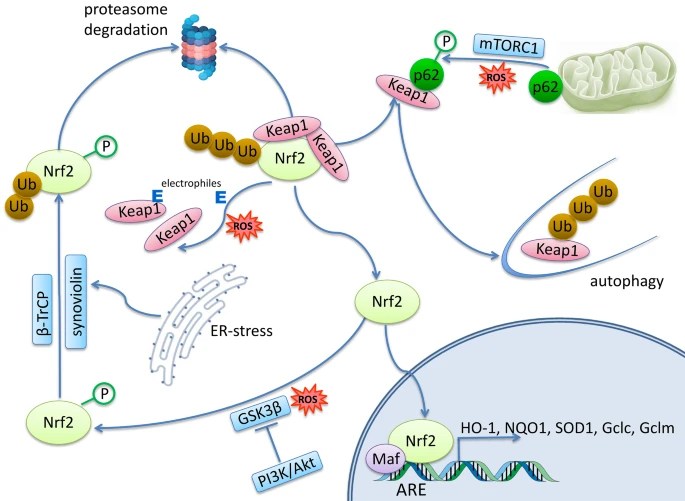
10541_2022_2401_Fig2

It would be incorrect to consider the effect of Nrf2 transcription factor at the organism level as exclusively antioxidant, anti-inflammatory, and, ultimately, anti-aging. Nrf2 controls many genes, products of which have complex, pleiotropic effects on the body:

  • No experiments that use Nrf2 chemical inducers as anti-aging drugs have been performed so far.
  • Nrf2 is not involved in life extension caused by caloric restriction.
  • Epigenetic clocks do not reveal transcription factors activity of which changes with aging.

Aging is accompanied by changes in gene expression profiles, which are tissue- and species-specific. These changes only to a small extent include genes controlled by Nrf2. At the moment, it cannot be concluded that Nrf2 is the master regulator of the aging process.”

https://link.springer.com/article/10.1134/S0006297922120045 “Does Nrf2 Play a Role of a Master Regulator of Mammalian Aging?”


PXL_20230520_182643299

Nrf2 Week #3: Epigenetics

To follow the Nrf2 Week #2 finding that chromatin accessibility parallels Nrf2 expression, this 2023 cell study explored how Nrf2 influences other epigenetic processes:

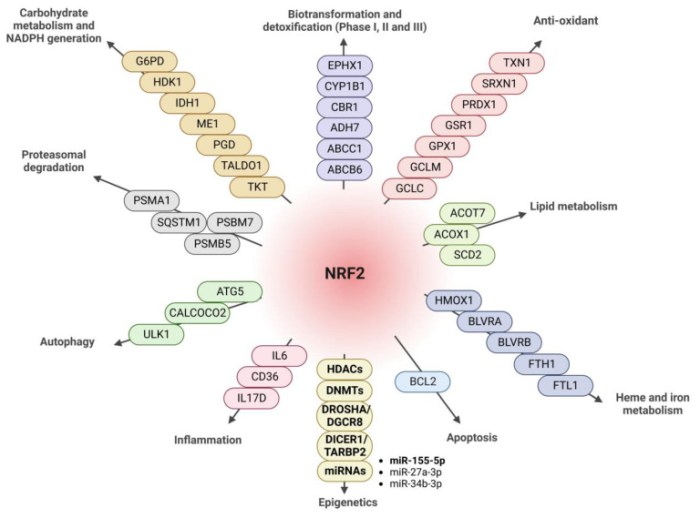
“We identified antioxidant response element sequences in promoter regions of genes encoding several epigenetic regulatory factors, such as histone deacetylases (HDACs), DNA methyltransferases (DNMTs), and proteins involved in microRNA biogenesis.

  • We treated cells with dimethyl fumarate (DMF), an activator of the NRF2 pathway through both the KEAP1 and GSK-3 pathways. NRF2 is able to modulate expression of HDAC1, HDAC2, HDAC3, and SIRT1 in different cell types.
  • DMF treatment induced DNMT1 and DNMT3b at both mRNA and protein levels. For DNMT3a, there was a slight induction of mRNA levels but not at the protein level.

antioxidants-12-00641-g007

  • Our data indicate that of all miRNAs analyzed, only miR-27a-3p, miR-27b-3p, miR-128-3p, and miR-155-5p associate with Nfe2l2 mRNA. NRF2 causes degradation of miR-155-5p, which is implicated in neuroinflammation and other pathologies, and is the main miRNA induced by LPS treatment in microglia. miR-155 alters expression of genes that regulate axon growth, supporting the bioinformatic prediction that miR-155 can regulate expression of genes involved in central nervous system development and neurogenesis.

Todate we only understand how epigenetic modifications affect expression and function of the NRF2 pathway. The fact that NRF2 can promote expression of type I HDACs, DNMTs, and proteins involved in miRNA biogenesis opens new perspectives on the spectrum of actions of NRF2 and its epigenetic influences.”

https://www.mdpi.com/2076-3921/12/3/641 “The Transcription Factor NRF2 Has Epigenetic Regulatory Functions Modulating HDACs, DNMTs, and miRNA Biogenesis”


PXL_20230515_185958612

Physical fitness and epigenetic clocks

This 2023 human study of 144 men average age 68 investigated relationships among physical fitness measurements and three epigenetic clocks:

“We investigated relationships between physical fitness and age-adjusted values from residuals of the regression of DNAm aging clocks to chronological age (DNAmAgeAcceleration: DNAmAgeAccel) and attempted to determine the relative contribution of physical fitness variables to DNAmAgeAccel in the presence of other lifestyle factors.

  • Volume of oxygen (VO2/kg) at ventilatory threshold and at Peak, fat free mass, calf circumference, serum HDL-C, daily intake of carbohydrates, iron, copper, vitamin C, and β-carotene were negatively related with DNAmAgeAccel.
  • Body fat, visceral fat area, and serum TG were positively related to DNAmAgeAccel.

figure 4

Frequent alcohol consumption and past- and current-smoking status were associated with accelerated DNAmAgeAccel, while a morning lifestyle was associated with deceleration of it. Multiple regression analysis suggested that – rather than physical fitness – serum triglycerides, carbohydrate intake, and smoking status were significantly associated with DNAmAgeAccel.

In conclusion, the contribution of cardiorespiratory fitness to DNAmAgeAccel was relatively low compared to lifestyle factors such as smoking. However, this study reveals a negative relationship between cardiorespiratory fitness and DNAmAgeAccel in older men.”

https://www.medrxiv.org/content/10.1101/2023.04.12.23288187v1.full-text “Associations between cardiorespiratory fitness and lifestyle-related factors with DNA methylation-based aging clocks in older men: WASEDA’S Health Study”


PXL_20230330_191228773

Peripheral vs. brain epigenetic measurements

This 2023 human study investigated associations of peripheral and brain epigenetic measurements:

“Evaluating DNA methylation of brain tissue is challenging owing to the issue of tissue specificity. Consequently, peripheral surrogate tissues are used, resulting in limited progress compared with other epigenetic studies.

Averaging data for each CpG across individuals, saliva–brain correlation (r = 0.90) was higher than that for blood–brain (r = 0.87) and buccal–brain (r = 0.88) comparisons. Among individual CpGs, blood had the highest proportion of CpGs correlated to the brain at nominally significant levels (19.0%), followed by saliva (14.4%) and buccal (9.8%). However, cross-database correlations of correlation coefficients revealed relatively low brain vs. blood: r = 0.27, saliva: r = 0.18, and buccal: r = 0.24.

The majority of methylation in the brain is most likely not synchronized with methylation in the periphery. Despite this, variable CpGs that correlate in the brain and periphery, although in small numbers, may have biological relevance, and could be useful for inferring brain methylation from peripheral tissues.

This study has six major limitations.”

https://www.nature.com/articles/s41398-023-02370-0 “Cross-tissue correlations of genome-wide DNA methylation in Japanese live human brain and blood, saliva, and buccal epithelial tissues”


Real science is messy. Hypotheses are experimentally reevaluated many, many times under varying conditions. I skip over studies where researchers don’t provide meaningful limitation clauses.

PXL_20230305_195313042

Sex hormones and epigenetic clocks

This 2023 human study investigated associations among sex hormones and epigenetic clocks:

“We studied associations between sex steroid hormones and DNA methylation-based (DNAm) biomarkers of age and mortality risk including Pheno Age Acceleration (AA), Grim AA, and DNAm-based estimators of Plasminogen Activator Inhibitor 1 (PAI1), and leptin concentrations.

Leptin is a peptide hormone and is associated with regulation of food intake and energy balance. Leptin also influences inflammatory processes, angiogenesis, lipolysis, and neuroplasticity.

PAI1 is a protein that is involved in tissue hemostasis. Previous studies that assessed associations between sex hormones and PAI1 protein concentrations in blood reported conflicting results.

DNAm PAI-1 was shown to be a better surrogate for lifespan than the actual plasma measure, and performs better than Grim AA regarding associations with the comorbidity-index. Another potential benefit of using DNAm-based biomarkers instead of plasma biomarkers is that the DNAm-based biomarkers represent a longer average estimate of biomarker concentration, and are not as affected by day-to-day variations that could bias results.

sex hormones and epigenetic clocks

Associations are represented by colored arrows with the lines’ thickness representing association strength. As the association was measured mainly cross-sectional, association directionality cannot be established.

  • Hormone levels were inversely associated with epigenetic estimators of mortality risk.
  • Sex Hormone Binding Globulin (SHBG) was associated with a decrease in DNAm PAI1 among men and women.
  • Higher testosterone and testosterone/estradiol ratio (TE) were associated with lower DNAm PAI and a younger epigenetic age in men.
  • A decrease in DNAm PAI1 is associated with lower mortality and morbidity risk indicating a potential protective effect of testosterone on lifespan and conceivably cardiovascular health via DNAm PAI1.”

https://www.medrxiv.org/content/10.1101/2023.02.16.23285997v1.full “Higher testosterone and testosterone/estradiol ratio in men are associated with better epigenetic estimators of mortality risk”


Similar to a coauthor’s outstanding A rejuvenation therapy and sulforaphane where he was the lead author, this study may stay in preprint a while because it challenges current paradigms.

Remember that every truth passes through three stages before it’s recognized:

  1. It’s ridiculed; then
  2. It’s opposed; then
  3. It’s regarded as self-evident.

There may be a long lag between Stages 2 and 3 to memory-hole a fading paradigm’s damage. Don’t expect apologies, remediation, or restitution.

PXL_20230216_204431695

The goddess of destiny

A 2023 human study investigated exercise, klotho gene, and epigenetic clock relationships:

“Named after the spinner of the thread of life, klotho (KL) is involved in the aging process and may act as an anti-aging hormone in mammals. We hypothesize that circulating KL is correlated with age-associated methylation of the KL gene promoter region, and this is one reason for age-related decline in circulating KL.

202 subjects between ages 37 and 85 were included in the study. A great percentage of volunteers participated in the World Rowing Masters Regatta in Velence, Hungary. They were considered to be the trained group (TRND): n = 131; 80 males: age 59.14 ± 10.8; 51 females: age 57.24 ± 9.4. Results were compared to the sedentary group (SED): n = 71; 27 males: age 55.63 ± 13.4; 44 females: age 61.91 ± 10.5.

Circulating level of KL showed a negative correlation with chronological age in the TRND group, but not in the SED group.

klotho and exercise

Examining the relationship between circulating KL level and PhenoAge and GrimAge, KL is associated with PhenoAge acceleration in the TRND group only. It appears that higher KL can decelerate the DNA methylation-based aging process assessed by PhenoAge.

The present study revealed that circulating KL level is associated with exercise status level and general strength level, and is greatly dependent upon exercise-induced DNA methylation.”

https://www.mdpi.com/2073-4425/14/2/525 “The Circulating Level of Klotho Is Not Dependent upon Physical Fitness and Age-Associated Methylation Increases at the Promoter Region of the Klotho Gene”


PXL_20230216_200008595

Ancient parasite DNA within us

Two 2023 papers on endogenous retroviruses (ERVs) and aging relationships, starting with the Introduction section of a comprehensive study:

“Several causal determinants of aging-related molecular changes have been identified, such as epigenetic alterations and stimulation of senescence-associated secretory phenotype (SASP) factors. Although the majority of these studies describe aging determinants originating primarily from protein-coding genes, the non-coding part of the genome has started to garner attention as well.

ERVs belonging to long terminal repeat (LTR) retrotransposons are a relic of ancient retroviral infection, fixed in the genome during evolution, comprising about 8% of the human genome. As a result of evolutionary pressure, most human ERVs (HERVs) accumulate mutations and deletions that prevent their replication and transposition function. However, some evolutionarily young subfamilies of HERV proviruses, such as the recently integrated HERVK, maintain open reading frames encoding proteins required for viral particle formation.

In this study, using cross-species models and multiple techniques, we revealed an uncharacterized role of endogenous retrovirus resurrection as a biomarker and driver for aging. Specifically, we identified endogenous retrovirus expression associated with cellular and tissue aging and that the accumulation of HERVK retrovirus-like particles (RVLPs) mediates the aging-promoting effects in recipient cells. More importantly, we can inhibit endogenous retrovirus-mediated pro-senescence effects to alleviate cellular senescence and tissue degeneration in vivo, suggesting possibilities for developing therapeutic strategies to treat aging-related disorders.”

https://www.cell.com/cell/fulltext/S0092-8674(22)01530-6 “Resurrection of endogenous retroviruses during aging reinforces senescence”


This first paper’s foreword summarized their many experiments and findings:

“The study found that HERVK transcripts, viral proteins, and RVLPs were highly activated in prematurely aged human mesenchymal progenitor cells (hPMCs). This was similarly observed in aged human primary fibroblasts and hPMCs. They also discovered that decreasing silencing epigenetic marks DNA methylation and H3K9me3 while increasing H3K36me3 enabled HERVK expression.

erv aging mechanism

These observations also raise several intriguing questions:

  • HERVK is occasionally activated and eventually suppressed under physiological conditions, for example, in human embryonic cells. It would be fascinating to probe the possibility of mimicking physiological conditions in order to turn off the positive feedback between HERVK and senescence.
  • ERVs are hallmarks of aging in different species, including human, primate, and mouse. Future quantification of the absolute physiological level of ERVs across a broad population of various ages might provide further insights into the relationship between ERVs and organismal age.”

https://academic.oup.com/lifemedi/advance-article/doi/10.1093/lifemedi/lnad001/6982772 “Endogenous retroviruses make aging go viral”


Previously curated papers on these subjects include:

A study of our evolutionary remnants

“Repressive epigenetic marks associated with ERVs, particularly LTRs, show a remarkable switch in silencing mechanisms, depending on evolutionary age:

  • Young LTRs tend to be CpG-rich and are mainly suppressed by DNA methylation, whereas
  • Intermediate age LTRs are associated predominantly with histone modifications, particularly histone H3 lysine 9 (H3K9) methylation.
  • Evolutionarily old LTRs are more likely inactivated by accumulation of loss-of-function genetic mutations.”

Starving awakens ancient parasite DNA within us

Reality is sometimes stranger than what fiction writers dream up. 🙂

PXL_20230209_210243470

Environmental signaling rescues aging muscle stem cells

This 2023 rodent study applied An environmental signaling paradigm of aging concepts to muscle stem cells:

“The stem cell niche environment represents an important therapeutic target to enhance tissue regeneration in aging. We decoupled age-related cell-intrinsic effects, niche-mediated cell-extrinsic effects, and changes in population dynamics of muscle stem cells (MuSCs) and two key muscle-resident cells in young and aged mice.

in vivo model

We showed that:

  1. Age-related reduction in MuSCs is not stochastic.
  2. Despite differences in transcriptomes of MuSC clusters, the effect of age on gene expression is largely uniform, suggesting that the niche environment has a fundamental role in age-related changes in MuSC gene expression.
  3. A significant fraction of changes in the transcriptome of aging MuSCs can be reversed by exposure to the young muscle environment, i.e. are niche-responsive. Given the high percentage [46.6% at a stringent cutoff of s-value < 0.05] of reversibility in gene expression, our findings indicate that age-related changes in the niche are principal drivers of resulting alterations in the MuSC transcriptome.
  4. Aging is correlated with changes at the level of chromatin accessibility and DNA methylation in MuSCs.

Plasticity of the MuSC transcriptome suggests that modulating the niche environment can be a powerful tool to restore stem cell-mediated endogenous muscle regeneration in aging. Consequently, as opposed to focusing solely on MuSCs themselves to mitigate effects of aging on MuSCs, bioengineering of the niche in its entirety may be a viable therapeutic option.”

https://www.nature.com/articles/s41467-023-36265-x “Transcriptional reprogramming of skeletal muscle stem cells by the niche environment”


This study destroyed extremely well-funded directed research efforts that detract from science, especially those promoting irreversibility of epigenetic changes (but: Rockefeller) and randomness of pro-aging programming (but: Harvard).

These researchers showed they could do more with their ideas and careers than maintain an outdated and easily disproved status quo.

Blinded by their paradigm?

This 2022 human study investigated another type of aging clock:

“The glycan clock of age, based entirely on immunoglobulin G (IgG) N-glycans, can predict biological age with high accuracy. Unlike DNA methylation, glycosylation of IgG does not predict chronological age with high accuracy.

Heritability analysis of plasma glycans revealed that the majority of traits have high heritability estimates, indicating a tight genetic control of glycosylation. To better understand genetic and environmental factors influencing glycan clock variation, we performed a heritability analysis on data from two cohorts included in the TwinsUK registry.

Glycosylation is a series of enzymatic reactions in which carbohydrates are attached to other molecules (e.g., proteins or lipids) resulting in formation of complex carbohydrates and glycoconjugates commonly referred to as ‘glycans.’ Glycosylation of IgG antibody is especially interesting as it dramatically affects its function, and acts as a molecular switch between pro- and anti-inflammatory immune responses.

Heritability of the glycan clock was estimated to decompose observed phenotypic variance into three latent sources of variation:

  • A—additive genetic variance [red] represents cumulative impact of genes;
  • C—shared/common environment variance [purple] results from influences to which both members of a twin pair are exposed; and
  • E—unique environment variance [green] is events occurring to one twin but not the other, and includes measurement error.

fcell-10-982609-g002

Despite tight genetic control of the IgG glycome:

  • Heritability analysis of the glycan clock revealed only a moderate genetic contribution averaging around 39% [A, left side].
  • Including age of the individuals as a covariate in heritability analysis averaged 71% heritability estimates [B, right side].
  • Mean time difference was 7.5 years for points 1 and 2, and 6 years for points 2 and 3.

Observed increase in the genetic component could be a consequence of chronological age as a shared environmental variance characteristic for every individual and determined by their genetic makeup and epigenetic regulation.”

https://www.frontiersin.org/articles/10.3389/fcell.2022.982609/full “Heritability of the glycan clock of biological age”


Although A rejuvenation therapy and sulforaphane was cited, these researchers missed its central premise: Pro-aging epigenetic programming is directional and not purely random. Contrasting their above graphic’s heritability estimates of 39% with the age-regressed, right side’s average 71% could hardly have been more clear in illustrating this fact.

This study instead stated “Aging in general leads to epigenetic mediated deregulation of genes.” This weak sauce accompanied speculations such as “supports the notion that the glycan clock can be rejuvenated by simple lifestyle choices.”

Researchers almost always want to claim being first in finding x, y, or z. These researchers could have done that in this glycan clock study by highlighting an outstanding finding. So what happened?

An alternate explanation to their paradigm blinding them could be sponsor expectations, peer pressures, etc. I’ll ask them about it, and will update here with their response.


PXL_20221231_185407365

Eat broccoli sprouts to epigenetically regulate histones

Five papers on beneficial effects from sulforaphane inhibiting histone deacetylases (HDACs), starting with a 2022 rodent cell study:

“Sulforaphane (SFN) has tissue specificity for subtypes of HDACs that are downregulated. For example:

  • In breast cancer cells, HDAC1-3 are inhibited by SFN to induce cell apoptosis;
  • In skin cells, HDAC1-4 are regulated by SFN [anti-skin cancer]; and
  • In the cochlea, SFN inhibits HDAC2, 4, and 5 [attenuates hearing loss].

In the present study, SFN significantly inhibited HDAC2, 3, and 5 expression and HDACs activity in cardiomyocytes, thereby increasing H3 acetylation levels in the Nrf2 promoter and upregulating Nrf2 expression. Mechanism by which SFN prevents Ang II-induced cardiomyocyte apoptosis:

  • Ang II activates oxidative stress by increasing ROS leading to inflammation, oxidative stress and fibrosis in cardiomyocytes.
  • SFN prevents Ang II-induced cardiomyocyte apoptosis by inhibiting HDACs to activate Nrf2 and downstream antioxidant genes.

aging-14-204247-g007

SFN activates Nrf2 by inhibiting HDACs expression and activation.”

https://www.aging-us.com/article/204247/text “Sulforaphane inhibits angiotensin II-induced cardiomyocyte apoptosis by acetylation modification of Nrf2”


A 2021 rodent study found:

“SFN significantly attenuated diabetes-induced renal fibrosis in vivo. SFN inhibited diabetes-induced increase in HDAC2 activity.

Bone morphologic protein 7 (BMP-7) has been shown to reduce renal fibrosis induced by transforming growth factor-beta1. SFN protects against diabetes-induced renal fibrosis through epigenetic up-regulation of BMP-7.”

dmj-2020-0168f7

https://e-dmj.org/journal/view.php?doi=10.4093/dmj.2020.0168 “Sulforaphane Ameliorates Diabetes-Induced Renal Fibrosis through Epigenetic Up-Regulation of BMP-7”


A 2019 human osteosarcoma cell study found:

“SFN inhibits mTOR in a concentration- and time-dependent manner. This inhibition occurs in the presence or in the absence of NRF2.

SFN inhibits HDAC6 and decreases catalytic activity of AKT, which partially explains the mechanism by which SFN inhibits mTOR.”

https://www.sciencedirect.com/science/article/pii/S0944711319302284 “The isothiocyanate sulforaphane inhibits mTOR in an NRF2-independent manner”


A 2022 review cited a 2018 cell study:

“HDAC expression and activity are dysregulated in various diseases including asthma, chronic obstructive pulmonary disease, cancer, cardiac hypertrophy, and neurodegenerative and psychological disorders. HDAC inhibitors could be a potential therapeutic target for many diseases.

In hypertension, aortic stiffness is usually increased and vascular smooth muscle cells (VSMCs) contribute to vascular stiffness. We used VSMCs to test the degree of acetylation of histones in this study.

Sulforaphane weakly inhibited HDAC2 and effectively inhibited HDAC9.”

https://www.sciencedirect.com/science/article/pii/S0006295222002052 “Zinc-dependent histone deacetylases: Potential therapeutic targets for arterial hypertension”

https://www.sciencedirect.com/science/article/abs/pii/S0753332217364636 “Inhibition of class IIa histone deacetylase activity by gallic acid, sulforaphane, TMP269, and panobinostat” (not freely available)


PXL_20221125_211516042

Do broccoli sprouts treat gout and kidney stones?

This 2022 rodent study investigated glucoraphanin’s effects on reducing uric acid:

“Hyperuricemia is a chronic disease characterized by abnormally elevated serum uric acid levels. Sulforaphane could lower uric acid by decreasing urate synthesis and increasing renal urate excretion in hyperuricemic rats.

A hyperuricemia model was established by administering feedstuffs with 4% potassium oxonate and 20% yeast. Forty male Sprague–Dawley rats were randomly divided into the normal control, hyperuricemia, allopurinol, and sulforaphane groups. Animals were treated by oral gavage for six consecutive weeks, and then phenotypic parameters, metabolomic profiling, and metagenomic sequencing were performed.

1-s2.0-S209012322200251X-ga1_lrg

We identified succinic acid and oxoglutaric acid as critical host-gut microbiome co-metabolites. Sulforaphane improved diversity of microbial ecosystems and functions, as well as metabolic control of the kidney. Sulforaphane exerted its renoprotective effect through epigenetic modification of Nrf2 and interaction between gut microbiota and epigenetic modification in hyperuricemic rats.

Limitations of this study include:

  1. We used glucoraphanin bioactivated with myrosinase for our experiments. Future experiments may directly involve sulforaphane.
  2. Bioinformatics analysis resulted in speculations that require further experimental testing.
  3. Further investigation of interactions between microbiota and the host epigenome is still needed.”

https://www.sciencedirect.com/science/article/pii/S209012322200251X “Sulforaphane-driven reprogramming of gut microbiome and metabolome ameliorates the progression of hyperuricemia”


It was a stretch to label treatment subjects as the “sulforaphane group” by claiming “Glucoraphanin (10 mg/kg) was metabolized to SFN by myrosinase as described in previous studies.” Both this and the referenced 2014 study “(RS)-glucoraphanin purified from Tuscan black kale and bioactivated with myrosinase enzyme protects against cerebral ischemia/reperfusion injury in rats” measured glucoraphanin and myrosinase, but not sulforaphane.

A human equivalent to this study’s daily glucoraphanin intake of 10 mg / kg weight would be (.162 x 10 mg) x 70 kg = 113 mg. Whether 10 mg was dry or wet weight wasn’t disclosed.

If 10 mg was wet, 113 mg is a little more than twice our model clinical trial’s average glucoraphanin intake of 51 mg fresh weight from eating 30 grams / day of super sprouts. In April 2020’s Understanding a clinical trial’s broccoli sprout amount, a study coauthor said:

“We considered 30 g and 60 g to be 1/2 and 1 portion per day, respectively, of broccoli sprouts. When we carried out tests with consumers, previous to the bioavailability studies, higher amounts per day were not easy to consume and to get eaten by participants.”

PXL_20221112_201430280

Broccoli sprouts activate the AMPK pathway, Part 4

Today someone viewed the 2020 Part 3 of Broccoli sprouts activate the AMPK pathway which lacked citations at the time. Checking again, here are three citing 2022 papers, starting with a review:

“Nrf2 is an important transcription factor that regulates expression of a large number of genes in healthy and disease states. Nrf2 regulates expression of several key components of oxidative stress, mitochondrial biogenesis, mitophagy, autophagy, and mitochondrial function in all organs of the human body, and in the peripheral and central nervous systems.

Overall, therapeutic drugs including sulforaphane that target Nrf2 expression and Nrf2/ARE pathway are promising. This article proposes additional research in Nrf2’s role within Parkinson’s disease, Huntington’s disease, and ischemic stroke in preclinical mouse models and humans with age-related neurodegenerative diseases.”

https://www.sciencedirect.com/science/article/pii/S1568163722001982 “Role of Nrf2 in aging, Alzheimer’s and other neurodegenerative diseases” (not freely available) Thanks to Dr. P. Hemachandra Reddy for providing a copy.


One of the Part 3 study’s coauthors contributed to this very detailed review:

“Due to observed overlapping cellular responses upon AMPK or NRF2 activation and common stressors impinging on both AMPK and NRF2 signaling, it is plausible to assume that AMPK and NRF2 signaling may interdepend and cooperate to readjust cellular homeostasis.

1-s2.0-S089158492200497X-gr3_lrg

The outcome and underlying signaling events of AMPK-NRF2 crosstalk may diverge between:

  1. in vitro and in vivo studies (one cell type in isolation vs inter-organ crosstalk in living organisms);
  2. Different cell types/organs/organisms of different cultivation conditions, genetic background, age or sex;
  3. Different stress-regimens (chronic vs acute, nature of stress (lipotoxicity, redox stress, xenobiotic, starvation, etc));
  4. Different modes of Nrf2 or AMPK activation and inhibition (genetic vs pharmacological, constitutive vs transient/intermittent, systemic vs organ-specific, electrophilic vs PPI, allosteric vs covalent, or pan vs subtype-specific);
  5. Different target genes with distinct promoter and enhancer structure; or
  6. Different timing of activation.

The latter should deserve increased attention as Nrf2 is one of the most cycling genes under control of the circadian clock. Feeding behavior, metabolism and hence AMPK activity follow and substantiate the biological clock, indicating an entangled circadian regulation of metabolic and redox homeostasis.”

https://www.sciencedirect.com/science/article/pii/S089158492200497X “AMPK and NRF2: Interactive players in the same team for cellular homeostasis?”


A third citing paper was a study of lens cells that provided an example of similar metformin effects noted in Part 2 of Broccoli sprouts activate the AMPK pathway:

“Loss of Nrf2 and Nrf2 antioxidant genes expression and activity in aging cells leads to an array of oxidative-induced deleterious responses, impaired function, and aging pathologies. This deterioration is proposed to be the primary risk factor for age-related diseases such as cataracts.

AMPK regulates energy at physiological levels during metabolic imbalance and stress. AMPK is a redox sensing molecule, and can be activated under cellular accumulation of reactive oxygen species, which are endogenously produced due to loss of antioxidant enzymes.

The therapeutic potential of AMPK activation has context-dependent beneficial effects, from cell survival to cell death. AMPK activation was a requisite for Bmal1/Nrf2-antioxidants-mediated defense, as pharmacologically inactivating AMPK impeded metformin’s effect.

Using lens epithelial cell lines (LECs) of human or mouse aging primary LECs along with lenses as model systems, we demonstrated that metformin could correct deteriorated Bmal1/Nrf2/ARE pathway by reviving AMPK-activation and transcriptional activities of Bmal1/Nrf2, resulting in increased antioxidants enzymatic activity and expression of Phase II enzymes. Results uncovered crosstalk between AMPK and Bmal1/Nrf2/antioxidants mediated by metformin for blunting oxidative/aging-linked pathobiology.”

https://www.mdpi.com/2073-4409/11/19/3021/htm “Obligatory Role of AMPK Activation and Antioxidant Defense Pathway in the Regulatory Effects of Metformin on Cellular Protection and Prevention of Lens Opacity”


PXL_20221027_185754842

If you were given a lens to see clearly, would you accept it?

Two papers, starting with a 2022 rodent study of maternal behaviors’ effects on offspring physiologies:

Early life adversity (ELA) is a major risk factor for development of pathology. Predictability of parental care may be a distinguishing feature of different forms of ELA.

We tested the hypothesis that changes in maternal behavior in mice would be contingent on the type of ELA experienced, directly comparing predictability of care in limited bedding and nesting (LBN) and maternal separation (MS) paradigms. We then tested whether predictability of ELA environment altered expression of corticotropin-releasing hormone (Crh), a sexually-dimorphic neuropeptide that regulates threat-related learning.

MS was associated with increased expression of Crh-related genes in males, but not females. LBN primarily increased expression of these genes in females, but not males.”

https://www.sciencedirect.com/science/article/pii/S2352289522000595 “Resource scarcity but not maternal separation provokes unpredictable maternal care sequences in mice and both upregulate Crh-associated gene expression in the amygdala”


I came across this first study by it citing a republished version of 2005 epigenetic research from McGill University:

“Early experience permanently alters behavior and physiology. A critical question concerns the mechanism of these environmental programming effects.

We propose that epigenomic changes serve as an intermediate process that imprints dynamic environmental experiences on the fixed genome, resulting in stable alterations in phenotype. These findings demonstrate that structural modifications of DNA can be established through environmental programming and that – in spite of inherent stability of this epigenomic marker – it is dynamic and potentially reversible.”

https://www.tandfonline.com/doi/full/10.31887/DCNS.2005.7.2/mmeaney “Environmental programming of stress responses through DNA methylation: life at the interface between a dynamic environment and a fixed genome”


This post commemorates the five-year anniversary of Dr. Arthur Janov’s death. Its title is taken from my reaction to his comment on Beyond Belief: Symptoms of hopelessness. Search his blog for mentions of the second paper’s coauthors, Drs. Meaney and Szyf.


Our lives are substantially a product of our parents’ actualized and unsatisfied needs. Our children and their children are reflections of us with our problems (unfelt needs) or elucidations (felt needs).

What if the price we pay for avoiding and pressuring down our feelings is: A wasted life?

What if the grand hypothesis worth proving is: For one’s life to have meaning, each individual has to regain their feelings?

PXL_20221010_104026908.NIGHT

Measuring epigenetic DNA causes

This 2022 human cell study investigated DNA methylation and aging:

“Models based on DNA methylation can be used to predict the age of biological samples, but their interpretability is limited due to the lack of causal inferences. Neither existing epigenetic clocks nor DNA methylation changes are enriched in causal CpG sites. Causal CpGs include similar numbers of sites that contribute to aging and protect against it, yet their combined contribution negatively affects age-related traits.

One general approach for developing anti-aging interventions is to identify molecular changes during aging and use these changes as targets to modulate the aging process. A similar idea has also been applied to evaluate potential longevity interventions. However, this logic is intrinsically flawed, as correlation does not imply causation, and age-related changes are not necessarily causal to age-associated declines.

We developed a framework for integrating causal knowledge into epigenetic clock models and constructed DamAge and AdaptAge that measure age-related damaging and adaptive changes, respectively. DamAge acceleration is associated with various adverse conditions (e.g., mortality risk), whereas AdaptAge acceleration is related to beneficial adaptations.

causality clocks

We found that transcription factor (TF)-binding sites of BRD4 and CREB1 are enriched with CpG sites whose methylation levels promote healthy longevity, and TF-binding sites for HDAC1 are enriched with CpG sites whose methylation levels decrease healthy longevity.

  • BRD4 contributes to cell senescence and promotes inflammation, and higher DNA methylation at BRD4 binding sites may inhibit the downstream effects of BRD4 and promote healthy longevity.
  • CREB1 is related to type II diabetes and neurodegeneration, and mediates the effect of calorie restriction. Our data suggest that higher methylation at CREB1-binding sites may support its longevity effects.
  • HDAC1 is a histone deacetylase, and its activity increases with aging and may promote age-related phenotypes. Increased DNA methylation at HDAC1 binding sites may causally inhibit healthy longevity.

Our causality-informed clock models provide novel insights into the aging mechanisms and testing interventions that delay aging and reverse biological age.”

https://www.biorxiv.org/content/10.1101/2022.10.07.511382v1 “Causal Epigenetic Age Uncouples Damage and Adaptation”


PXL_20221001_224441637_exported_1932